

The phrase types of jack fish covers far more than the familiar crevalle jack. The family Carangidae contains nearly 150 valid species, including jacks, trevallies, scads, runners, queenfishes, leatherjackets, pompanos, moonfishes, pilotfish, and amberjack relatives. This guide profiles 80 representative species with identification clues, habitat notes, fishing relevance, and practical field tips.
What Are the Main Types of Jack Fish?
The main groups include large predatory jacks and trevallies, smaller schooling scads, deep-bodied pompanos and moonfishes, elongated queenfishes and leatherjackets, and open-water runners. Most have a forked tail, a narrow tail base, and a strong swimming style. Exact identification depends on body depth, scutes, fin length, head shape, color, and location.
| Group | Examples | Typical Habitat | Fishing Relevance |
|---|---|---|---|
| True jacks and trevallies | Crevalle jack, giant trevally, bluefin trevally | Reefs, passes, beaches, estuaries, offshore structure | Powerful sport fish |
| Scads and runners | Round scad, mackerel scad, rainbow runner | Open coastal and offshore water | Bait, food, and light-tackle fishing |
| Pompanos and moonfishes | African pompano, Mexican moonfish | Beaches, reefs, coastal shelves | Food and sport species |
| Queenfishes and leatherjackets | Talang queenfish, Oligoplites species | Warm coastal water and estuaries | Fast inshore targets |
1. African Pompano
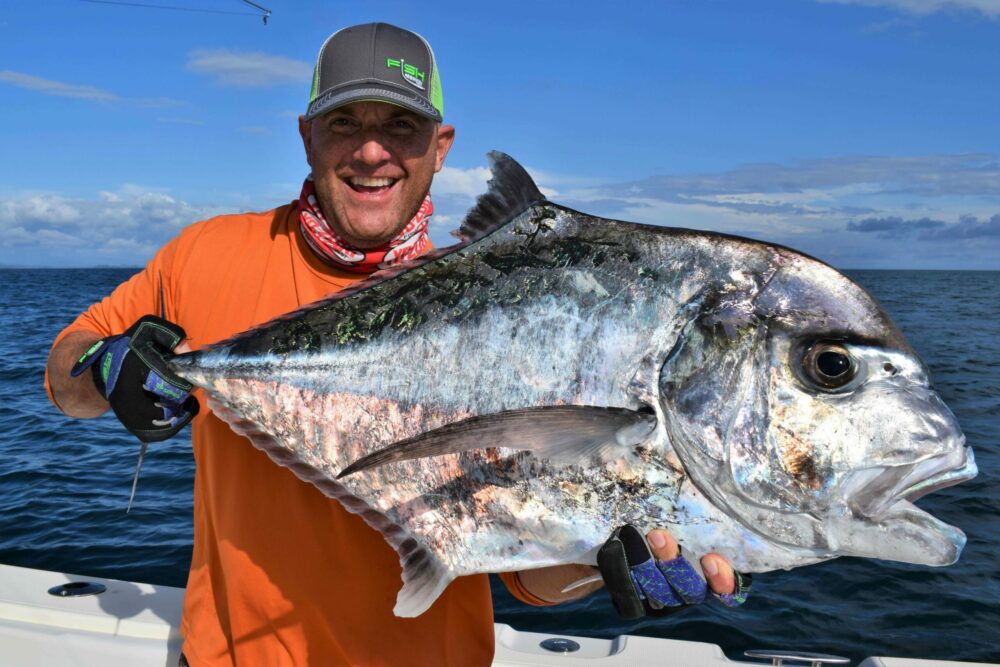
African Pompano (Alectis ciliaris) shows deep-bodied juvenile streamers and a powerful adult shape. It is associated with warm Atlantic and Indo-Pacific coastal waters and belongs to the broad carangid group commonly described as large jacks and open-water predators. In the field, the forked tail, narrow caudal peduncle, and lateral-line scutes are useful family-level clues. Feeding behavior varies from plankton picking to active pursuit of baitfish and crustaceans. Identification should combine body depth, fin shape, scutes, eye size, color marks, and geographic range rather than relying on color alone.
2. Smallmouth Scad
Smallmouth Scad (Alepes apercna) shows a small, streamlined body with scutes near the tail. It is associated with Indo-West Pacific coastal waters and belongs to the broad carangid group commonly described as schooling scads. Many members of this group school around baitfish, reefs, current lines, channels, or coastal structure. It is part of a fast-moving predatory family, although smaller scads often focus on plankton and tiny prey. Identification should combine body depth, fin shape, scutes, eye size, color marks, and geographic range rather than relying on color alone.
3. Shrimp Scad
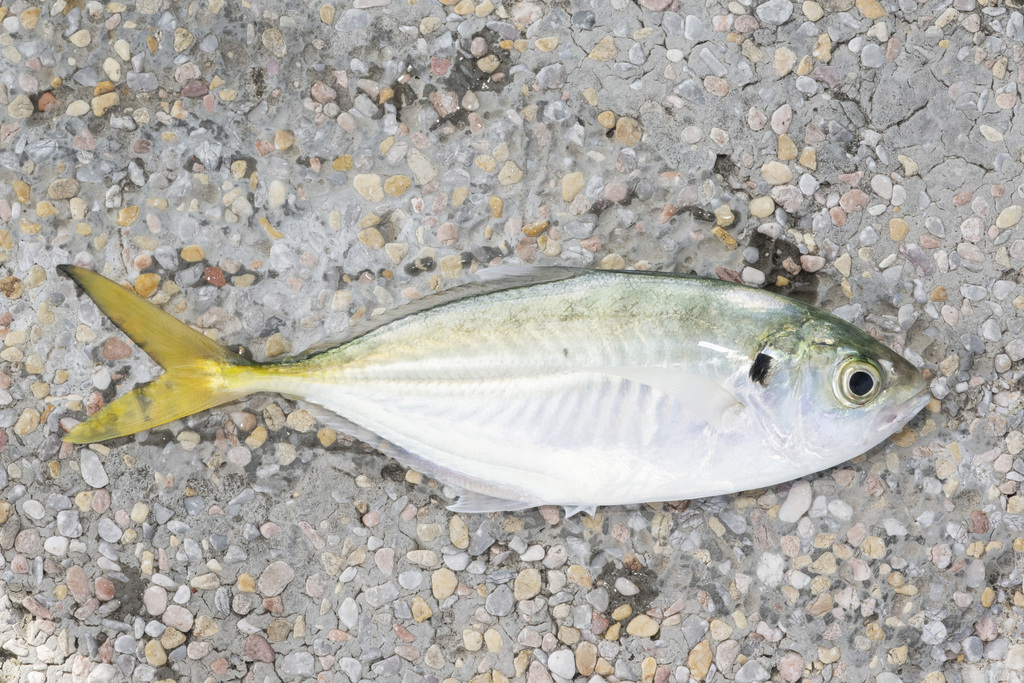
Shrimp Scad (Alepes djedaba) shows a small, streamlined body with scutes near the tail. It is associated with Indo-West Pacific coastal waters and belongs to the broad carangid group commonly described as schooling scads. Juveniles may use estuaries and sheltered bays before moving into more exposed coastal or offshore water. Its diet commonly includes small fish, shrimp, crabs, squid, or planktonic prey, depending on size and species. Identification should combine body depth, fin shape, scutes, eye size, color marks, and geographic range rather than relying on color alone.
4. Razorbelly Scad
Razorbelly Scad (Alepes kleinii) shows a small, streamlined body with scutes near the tail. It is associated with Indo-West Pacific coastal waters and belongs to the broad carangid group commonly described as schooling scads. Anglers value this body plan for speed, sudden direction changes, and long runs after hookup. Feeding behavior varies from plankton picking to active pursuit of baitfish and crustaceans. Identification should combine body depth, fin shape, scutes, eye size, color marks, and geographic range rather than relying on color alone.
5. Blackfin Scad
Blackfin Scad (Alepes melanoptera) shows a small, streamlined body with scutes near the tail. It is associated with Indo-West Pacific coastal waters and belongs to the broad carangid group commonly described as schooling scads. In the field, the forked tail, narrow caudal peduncle, and lateral-line scutes are useful family-level clues. It is part of a fast-moving predatory family, although smaller scads often focus on plankton and tiny prey. Identification should combine body depth, fin shape, scutes, eye size, color marks, and geographic range rather than relying on color alone.
6. Herring Scad
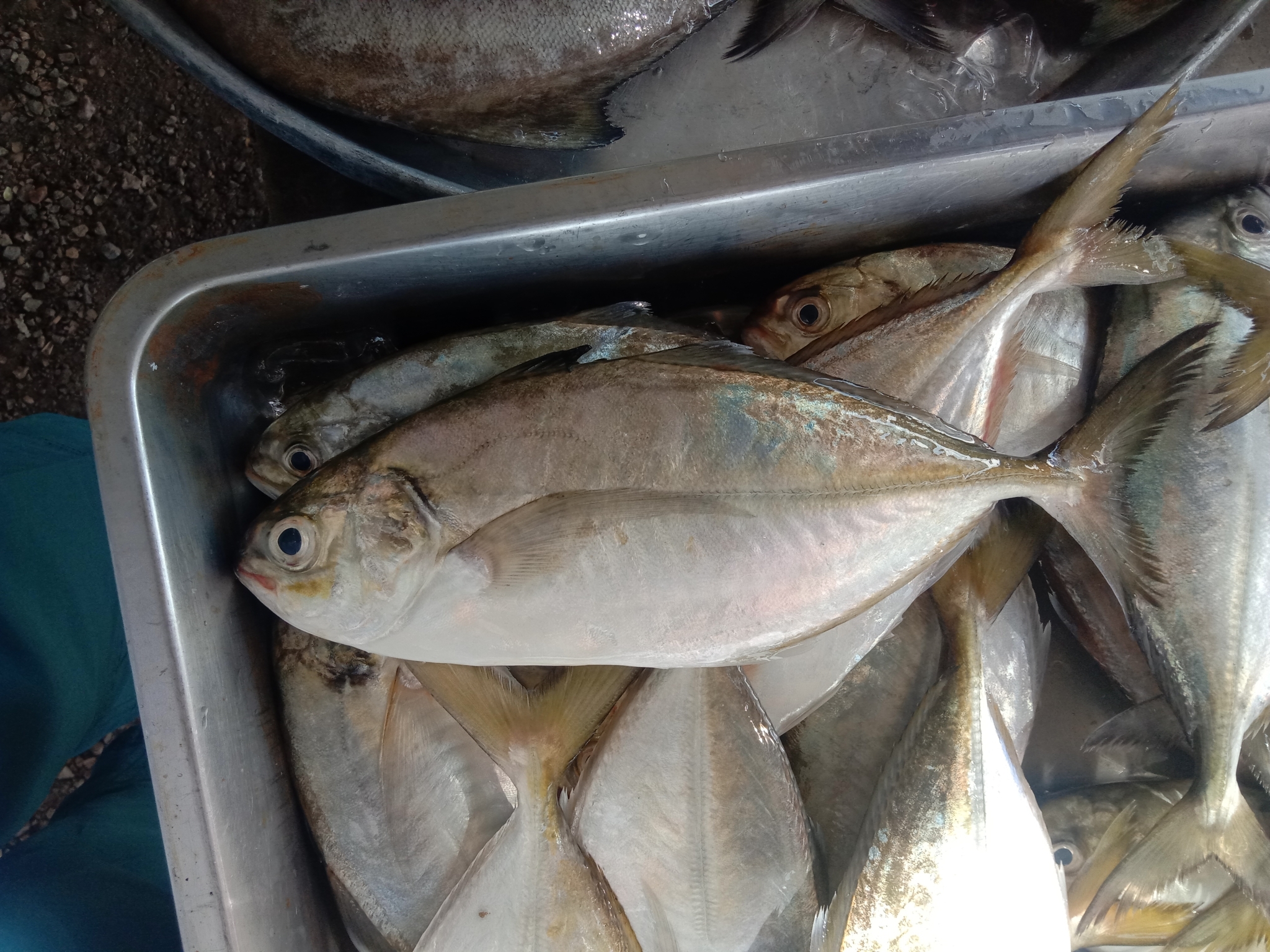
Herring Scad (Alepes vari) shows a small, streamlined body with scutes near the tail. It is associated with Indo-West Pacific coastal waters and belongs to the broad carangid group commonly described as schooling scads. Many members of this group school around baitfish, reefs, current lines, channels, or coastal structure. Its diet commonly includes small fish, shrimp, crabs, squid, or planktonic prey, depending on size and species. Identification should combine body depth, fin shape, scutes, eye size, color marks, and geographic range rather than relying on color alone.
7. Atropus armatus
Atropus armatus (Atropus armatus) shows a deep compressed body and long fin rays. It is associated with Indo-West Pacific inshore waters and belongs to the broad carangid group commonly described as small trevallies. Juveniles may use estuaries and sheltered bays before moving into more exposed coastal or offshore water. Feeding behavior varies from plankton picking to active pursuit of baitfish and crustaceans. Identification should combine body depth, fin shape, scutes, eye size, color marks, and geographic range rather than relying on color alone.
8. Cleftbelly Trevally
Cleftbelly Trevally (Atropus atropos) shows a deep compressed body and long fin rays. It is associated with Indo-West Pacific inshore waters and belongs to the broad carangid group commonly described as small trevallies. Anglers value this body plan for speed, sudden direction changes, and long runs after hookup. It is part of a fast-moving predatory family, although smaller scads often focus on plankton and tiny prey. Identification should combine body depth, fin shape, scutes, eye size, color marks, and geographic range rather than relying on color alone.
9. Atropus aurochs
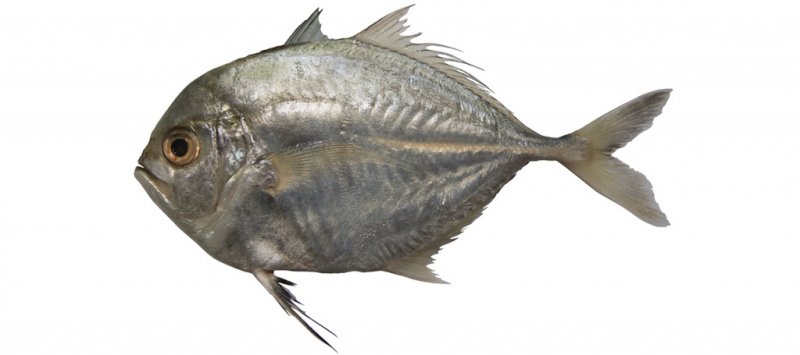
Atropus aurochs (Atropus aurochs) shows a deep compressed body and long fin rays. It is associated with Indo-West Pacific inshore waters and belongs to the broad carangid group commonly described as small trevallies. In the field, the forked tail, narrow caudal peduncle, and lateral-line scutes are useful family-level clues. Its diet commonly includes small fish, shrimp, crabs, squid, or planktonic prey, depending on size and species. Identification should combine body depth, fin shape, scutes, eye size, color marks, and geographic range rather than relying on color alone.
10. Atropus hedlandensis
Atropus hedlandensis (Atropus hedlandensis) shows a deep compressed body and long fin rays. It is associated with Indo-West Pacific inshore waters and belongs to the broad carangid group commonly described as small trevallies. Many members of this group school around baitfish, reefs, current lines, channels, or coastal structure. Feeding behavior varies from plankton picking to active pursuit of baitfish and crustaceans. Identification should combine body depth, fin shape, scutes, eye size, color marks, and geographic range rather than relying on color alone.
11. Atropus mentalis
Atropus mentalis (Atropus mentalis) shows a deep compressed body and long fin rays. It is associated with Indo-West Pacific inshore waters and belongs to the broad carangid group commonly described as small trevallies. Juveniles may use estuaries and sheltered bays before moving into more exposed coastal or offshore water. It is part of a fast-moving predatory family, although smaller scads often focus on plankton and tiny prey. Identification should combine body depth, fin shape, scutes, eye size, color marks, and geographic range rather than relying on color alone.
12. Yellowtail Scad
Yellowtail Scad (Atule mate) shows a slim silver body with a yellow tail. It is associated with Indo-Pacific coastal and island waters and belongs to the broad carangid group commonly described as schooling scads. Anglers value this body plan for speed, sudden direction changes, and long runs after hookup. Its diet commonly includes small fish, shrimp, crabs, squid, or planktonic prey, depending on size and species. Identification should combine body depth, fin shape, scutes, eye size, color marks, and geographic range rather than relying on color alone.
13. Vadigo
Vadigo (Campogramma glaycos) shows an elongated, fast-swimming body. It is associated with eastern Atlantic and Mediterranean waters and belongs to the broad carangid group commonly described as offshore jack relatives. In the field, the forked tail, narrow caudal peduncle, and lateral-line scutes are useful family-level clues. Feeding behavior varies from plankton picking to active pursuit of baitfish and crustaceans. Identification should combine body depth, fin shape, scutes, eye size, color marks, and geographic range rather than relying on color alone.
14. Carangichthys dinema
Carangichthys dinema (Carangichthys dinema) shows a compressed trevally form with strong fin and head characters. It is associated with Indo-West Pacific coastal waters and belongs to the broad carangid group commonly described as medium trevallies. Many members of this group school around baitfish, reefs, current lines, channels, or coastal structure. It is part of a fast-moving predatory family, although smaller scads often focus on plankton and tiny prey. Identification should combine body depth, fin shape, scutes, eye size, color marks, and geographic range rather than relying on color alone.
15. Carangichthys humerosus
Carangichthys humerosus (Carangichthys humerosus) shows a compressed trevally form with strong fin and head characters. It is associated with Indo-West Pacific coastal waters and belongs to the broad carangid group commonly described as medium trevallies. Juveniles may use estuaries and sheltered bays before moving into more exposed coastal or offshore water. Its diet commonly includes small fish, shrimp, crabs, squid, or planktonic prey, depending on size and species. Identification should combine body depth, fin shape, scutes, eye size, color marks, and geographic range rather than relying on color alone.
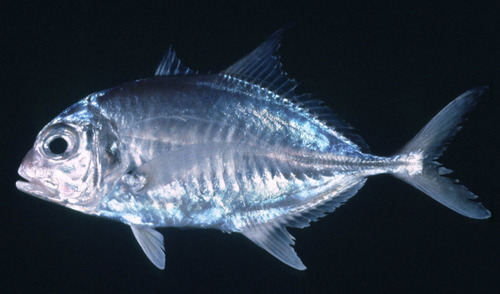
16. Carangichthys oblongus
Carangichthys oblongus (Carangichthys oblongus) shows a compressed trevally form with strong fin and head characters. It is associated with Indo-West Pacific coastal waters and belongs to the broad carangid group commonly described as medium trevallies. Anglers value this body plan for speed, sudden direction changes, and long runs after hookup. Feeding behavior varies from plankton picking to active pursuit of baitfish and crustaceans. Identification should combine body depth, fin shape, scutes, eye size, color marks, and geographic range rather than relying on color alone.
17. Carangoides praeustus
Carangoides praeustus (Carangoides praeustus) shows a deep trevally body and strong sickle-shaped fins. It is associated with Indo-West Pacific reefs and coasts and belongs to the broad carangid group commonly described as reef-associated trevallies. In the field, the forked tail, narrow caudal peduncle, and lateral-line scutes are useful family-level clues. It is part of a fast-moving predatory family, although smaller scads often focus on plankton and tiny prey. Identification should combine body depth, fin shape, scutes, eye size, color marks, and geographic range rather than relying on color alone.
18. Yellow Jack
Yellow Jack (Caranx bartholomaei) shows a muscular body, forked tail, and strong scutes along the rear lateral line. It is associated with tropical and subtropical Atlantic, Indian, or Pacific waters and belongs to the broad carangid group commonly described as true jacks and trevallies. Many members of this group school around baitfish, reefs, current lines, channels, or coastal structure. Its diet commonly includes small fish, shrimp, crabs, squid, or planktonic prey, depending on size and species. Identification should combine body depth, fin shape, scutes, eye size, color marks, and geographic range rather than relying on color alone.
19. Caranx bucculentus
Caranx bucculentus (Caranx bucculentus) shows a muscular body, forked tail, and strong scutes along the rear lateral line. It is associated with tropical and subtropical Atlantic, Indian, or Pacific waters and belongs to the broad carangid group commonly described as true jacks and trevallies. Juveniles may use estuaries and sheltered bays before moving into more exposed coastal or offshore water. Feeding behavior varies from plankton picking to active pursuit of baitfish and crustaceans. Identification should combine body depth, fin shape, scutes, eye size, color marks, and geographic range rather than relying on color alone.
20. Green Jack
Green Jack (Caranx caballus) shows a muscular body, forked tail, and strong scutes along the rear lateral line. It is associated with tropical and subtropical Atlantic, Indian, or Pacific waters and belongs to the broad carangid group commonly described as true jacks and trevallies. Anglers value this body plan for speed, sudden direction changes, and long runs after hookup. It is part of a fast-moving predatory family, although smaller scads often focus on plankton and tiny prey. Identification should combine body depth, fin shape, scutes, eye size, color marks, and geographic range rather than relying on color alone.

21. Pacific Crevalle Jack
Pacific Crevalle Jack (Caranx caninus) shows a muscular body, forked tail, and strong scutes along the rear lateral line. It is associated with tropical and subtropical Atlantic, Indian, or Pacific waters and belongs to the broad carangid group commonly described as true jacks and trevallies. In the field, the forked tail, narrow caudal peduncle, and lateral-line scutes are useful family-level clues. Its diet commonly includes small fish, shrimp, crabs, squid, or planktonic prey, depending on size and species. Identification should combine body depth, fin shape, scutes, eye size, color marks, and geographic range rather than relying on color alone.
22. Blue Runner
Blue Runner (Caranx crysos) shows a muscular body, forked tail, and strong scutes along the rear lateral line. It is associated with tropical and subtropical Atlantic, Indian, or Pacific waters and belongs to the broad carangid group commonly described as true jacks and trevallies. Many members of this group school around baitfish, reefs, current lines, channels, or coastal structure. Feeding behavior varies from plankton picking to active pursuit of baitfish and crustaceans. Identification should combine body depth, fin shape, scutes, eye size, color marks, and geographic range rather than relying on color alone.
23. Longfin Crevalle Jack
Longfin Crevalle Jack (Caranx fischeri) shows a muscular body, forked tail, and strong scutes along the rear lateral line. It is associated with tropical and subtropical Atlantic, Indian, or Pacific waters and belongs to the broad carangid group commonly described as true jacks and trevallies. Juveniles may use estuaries and sheltered bays before moving into more exposed coastal or offshore water. It is part of a fast-moving predatory family, although smaller scads often focus on plankton and tiny prey. Identification should combine body depth, fin shape, scutes, eye size, color marks, and geographic range rather than relying on color alone.
24. Blacktip Trevally
Blacktip Trevally (Caranx heberi) shows a muscular body, forked tail, and strong scutes along the rear lateral line. It is associated with tropical and subtropical Atlantic, Indian, or Pacific waters and belongs to the broad carangid group commonly described as true jacks and trevallies. Anglers value this body plan for speed, sudden direction changes, and long runs after hookup. Its diet commonly includes small fish, shrimp, crabs, squid, or planktonic prey, depending on size and species. Identification should combine body depth, fin shape, scutes, eye size, color marks, and geographic range rather than relying on color alone.
25. Crevalle Jack
Crevalle Jack (Caranx hippos) shows a muscular body, forked tail, and strong scutes along the rear lateral line. It is associated with tropical and subtropical Atlantic, Indian, or Pacific waters and belongs to the broad carangid group commonly described as true jacks and trevallies. In the field, the forked tail, narrow caudal peduncle, and lateral-line scutes are useful family-level clues. Feeding behavior varies from plankton picking to active pursuit of baitfish and crustaceans. Identification should combine body depth, fin shape, scutes, eye size, color marks, and geographic range rather than relying on color alone.
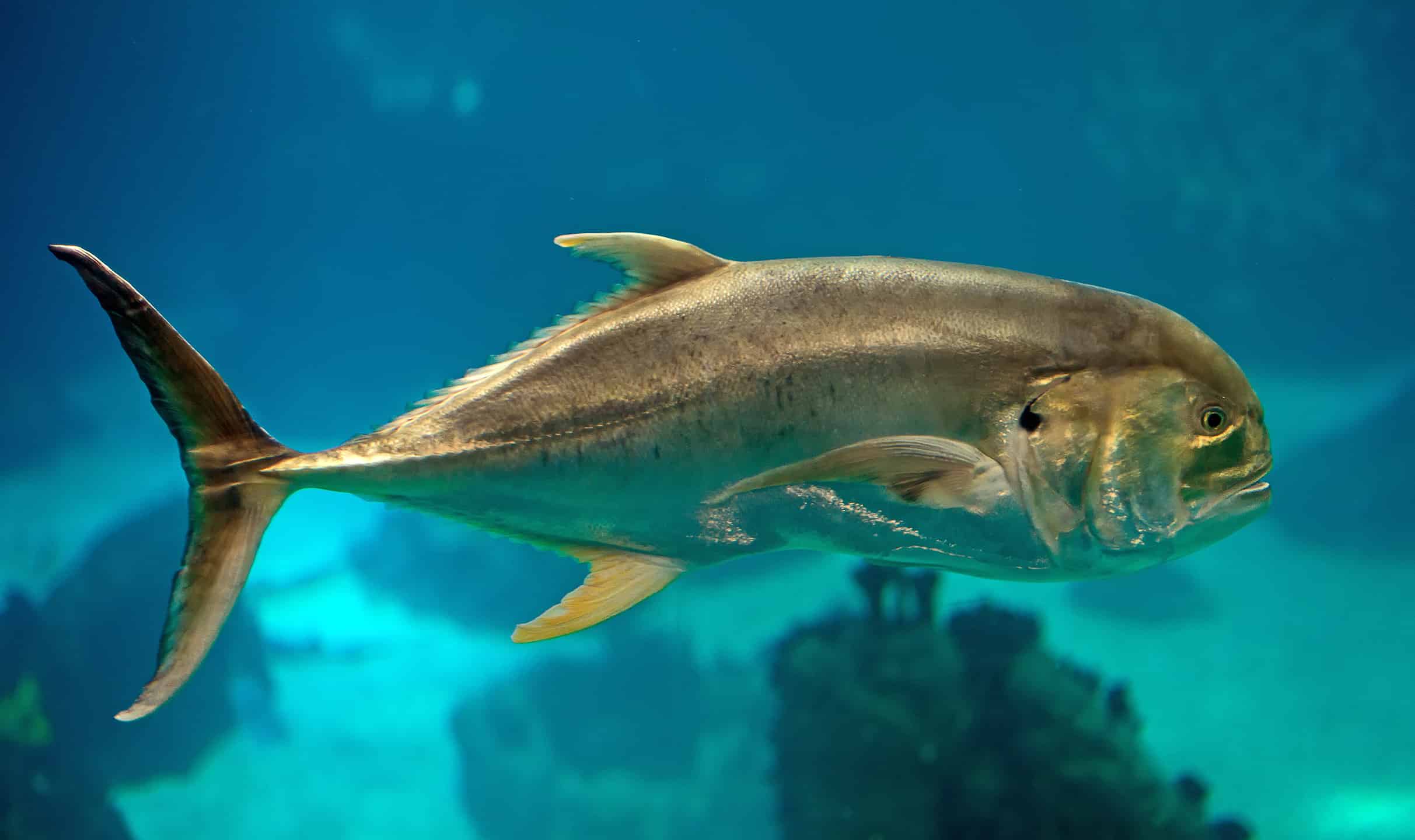
26. Giant Trevally
Giant Trevally (Caranx ignobilis) shows a muscular body, forked tail, and strong scutes along the rear lateral line. It is associated with tropical and subtropical Atlantic, Indian, or Pacific waters and belongs to the broad carangid group commonly described as true jacks and trevallies. Many members of this group school around baitfish, reefs, current lines, channels, or coastal structure. It is part of a fast-moving predatory family, although smaller scads often focus on plankton and tiny prey. Identification should combine body depth, fin shape, scutes, eye size, color marks, and geographic range rather than relying on color alone.
27. Horse-eye Jack
Horse-eye Jack (Caranx latus) shows a muscular body, forked tail, and strong scutes along the rear lateral line. It is associated with tropical and subtropical Atlantic, Indian, or Pacific waters and belongs to the broad carangid group commonly described as true jacks and trevallies. Juveniles may use estuaries and sheltered bays before moving into more exposed coastal or offshore water. Its diet commonly includes small fish, shrimp, crabs, squid, or planktonic prey, depending on size and species. Identification should combine body depth, fin shape, scutes, eye size, color marks, and geographic range rather than relying on color alone.
28. Black Jack
Black Jack (Caranx lugubris) shows a muscular body, forked tail, and strong scutes along the rear lateral line. It is associated with tropical and subtropical Atlantic, Indian, or Pacific waters and belongs to the broad carangid group commonly described as true jacks and trevallies. Anglers value this body plan for speed, sudden direction changes, and long runs after hookup. Feeding behavior varies from plankton picking to active pursuit of baitfish and crustaceans. Identification should combine body depth, fin shape, scutes, eye size, color marks, and geographic range rather than relying on color alone.
29. Bluefin Trevally
Bluefin Trevally (Caranx melampygus) shows a muscular body, forked tail, and strong scutes along the rear lateral line. It is associated with tropical and subtropical Atlantic, Indian, or Pacific waters and belongs to the broad carangid group commonly described as true jacks and trevallies. In the field, the forked tail, narrow caudal peduncle, and lateral-line scutes are useful family-level clues. It is part of a fast-moving predatory family, although smaller scads often focus on plankton and tiny prey. Identification should combine body depth, fin shape, scutes, eye size, color marks, and geographic range rather than relying on color alone.
30. Brassy Trevally
Brassy Trevally (Caranx papuensis) shows a muscular body, forked tail, and strong scutes along the rear lateral line. It is associated with tropical and subtropical Atlantic, Indian, or Pacific waters and belongs to the broad carangid group commonly described as true jacks and trevallies. Many members of this group school around baitfish, reefs, current lines, channels, or coastal structure. Its diet commonly includes small fish, shrimp, crabs, squid, or planktonic prey, depending on size and species. Identification should combine body depth, fin shape, scutes, eye size, color marks, and geographic range rather than relying on color alone.
31. False Scad
False Scad (Caranx rhonchus) shows a muscular body, forked tail, and strong scutes along the rear lateral line. It is associated with tropical and subtropical Atlantic, Indian, or Pacific waters and belongs to the broad carangid group commonly described as true jacks and trevallies. Juveniles may use estuaries and sheltered bays before moving into more exposed coastal or offshore water. Feeding behavior varies from plankton picking to active pursuit of baitfish and crustaceans. Identification should combine body depth, fin shape, scutes, eye size, color marks, and geographic range rather than relying on color alone.
32. Bar Jack
Bar Jack (Caranx ruber) shows a muscular body, forked tail, and strong scutes along the rear lateral line. It is associated with tropical and subtropical Atlantic, Indian, or Pacific waters and belongs to the broad carangid group commonly described as true jacks and trevallies. Anglers value this body plan for speed, sudden direction changes, and long runs after hookup. It is part of a fast-moving predatory family, although smaller scads often focus on plankton and tiny prey. Identification should combine body depth, fin shape, scutes, eye size, color marks, and geographic range rather than relying on color alone.
33. Senegal Jack
Senegal Jack (Caranx senegallus) shows a muscular body, forked tail, and strong scutes along the rear lateral line. It is associated with tropical and subtropical Atlantic, Indian, or Pacific waters and belongs to the broad carangid group commonly described as true jacks and trevallies. In the field, the forked tail, narrow caudal peduncle, and lateral-line scutes are useful family-level clues. Its diet commonly includes small fish, shrimp, crabs, squid, or planktonic prey, depending on size and species. Identification should combine body depth, fin shape, scutes, eye size, color marks, and geographic range rather than relying on color alone.
34. Bigeye Trevally
Bigeye Trevally (Caranx sexfasciatus) shows a muscular body, forked tail, and strong scutes along the rear lateral line. It is associated with tropical and subtropical Atlantic, Indian, or Pacific waters and belongs to the broad carangid group commonly described as true jacks and trevallies. Many members of this group school around baitfish, reefs, current lines, channels, or coastal structure. Feeding behavior varies from plankton picking to active pursuit of baitfish and crustaceans. Identification should combine body depth, fin shape, scutes, eye size, color marks, and geographic range rather than relying on color alone.
35. Tille Trevally
Tille Trevally (Caranx tille) shows a muscular body, forked tail, and strong scutes along the rear lateral line. It is associated with tropical and subtropical Atlantic, Indian, or Pacific waters and belongs to the broad carangid group commonly described as true jacks and trevallies. Juveniles may use estuaries and sheltered bays before moving into more exposed coastal or offshore water. It is part of a fast-moving predatory family, although smaller scads often focus on plankton and tiny prey. Identification should combine body depth, fin shape, scutes, eye size, color marks, and geographic range rather than relying on color alone.
36. Cocinero
Cocinero (Caranx vinctus) shows a muscular body, forked tail, and strong scutes along the rear lateral line. It is associated with tropical and subtropical Atlantic, Indian, or Pacific waters and belongs to the broad carangid group commonly described as true jacks and trevallies. Anglers value this body plan for speed, sudden direction changes, and long runs after hookup. Its diet commonly includes small fish, shrimp, crabs, squid, or planktonic prey, depending on size and species. Identification should combine body depth, fin shape, scutes, eye size, color marks, and geographic range rather than relying on color alone.
37. Atlantic Bumper
Atlantic Bumper (Chloroscombrus chrysurus) shows a thin, deep body with a strongly curved lateral line. It is associated with Atlantic or eastern Pacific coastal waters and belongs to the broad carangid group commonly described as bumpers. In the field, the forked tail, narrow caudal peduncle, and lateral-line scutes are useful family-level clues. Feeding behavior varies from plankton picking to active pursuit of baitfish and crustaceans. Identification should combine body depth, fin shape, scutes, eye size, color marks, and geographic range rather than relying on color alone.
38. Pacific Bumper
Pacific Bumper (Chloroscombrus orqueta) shows a thin, deep body with a strongly curved lateral line. It is associated with Atlantic or eastern Pacific coastal waters and belongs to the broad carangid group commonly described as bumpers. Many members of this group school around baitfish, reefs, current lines, channels, or coastal structure. It is part of a fast-moving predatory family, although smaller scads often focus on plankton and tiny prey. Identification should combine body depth, fin shape, scutes, eye size, color marks, and geographic range rather than relying on color alone.
39. Aka Scad
Aka Scad (Decapterus akaadsi) shows a slender fusiform body built for schooling in open water. It is associated with tropical and temperate oceans and belongs to the broad carangid group commonly described as scads and round scads. Juveniles may use estuaries and sheltered bays before moving into more exposed coastal or offshore water. Its diet commonly includes small fish, shrimp, crabs, squid, or planktonic prey, depending on size and species. Identification should combine body depth, fin shape, scutes, eye size, color marks, and geographic range rather than relying on color alone.
40. Koheru
Koheru (Decapterus koheru) shows a slender fusiform body built for schooling in open water. It is associated with tropical and temperate oceans and belongs to the broad carangid group commonly described as scads and round scads. Anglers value this body plan for speed, sudden direction changes, and long runs after hookup. Feeding behavior varies from plankton picking to active pursuit of baitfish and crustaceans. Identification should combine body depth, fin shape, scutes, eye size, color marks, and geographic range rather than relying on color alone.

41. Redtail Scad
Redtail Scad (Decapterus kurroides) shows a slender fusiform body built for schooling in open water. It is associated with tropical and temperate oceans and belongs to the broad carangid group commonly described as scads and round scads. In the field, the forked tail, narrow caudal peduncle, and lateral-line scutes are useful family-level clues. It is part of a fast-moving predatory family, although smaller scads often focus on plankton and tiny prey. Identification should combine body depth, fin shape, scutes, eye size, color marks, and geographic range rather than relying on color alone.
42. Mackerel Scad
Mackerel Scad (Decapterus macarellus) shows a slender fusiform body built for schooling in open water. It is associated with tropical and temperate oceans and belongs to the broad carangid group commonly described as scads and round scads. Many members of this group school around baitfish, reefs, current lines, channels, or coastal structure. Its diet commonly includes small fish, shrimp, crabs, squid, or planktonic prey, depending on size and species. Identification should combine body depth, fin shape, scutes, eye size, color marks, and geographic range rather than relying on color alone.
43. Shortfin Scad
Shortfin Scad (Decapterus macrosoma) shows a slender fusiform body built for schooling in open water. It is associated with tropical and temperate oceans and belongs to the broad carangid group commonly described as scads and round scads. Juveniles may use estuaries and sheltered bays before moving into more exposed coastal or offshore water. Feeding behavior varies from plankton picking to active pursuit of baitfish and crustaceans. Identification should combine body depth, fin shape, scutes, eye size, color marks, and geographic range rather than relying on color alone.
44. Japanese Scad
Japanese Scad (Decapterus maruadsi) shows a slender fusiform body built for schooling in open water. It is associated with tropical and temperate oceans and belongs to the broad carangid group commonly described as scads and round scads. Anglers value this body plan for speed, sudden direction changes, and long runs after hookup. It is part of a fast-moving predatory family, although smaller scads often focus on plankton and tiny prey. Identification should combine body depth, fin shape, scutes, eye size, color marks, and geographic range rather than relying on color alone.
45. Decapterus muroadsi
Decapterus muroadsi (Decapterus muroadsi) shows a slender fusiform body built for schooling in open water. It is associated with tropical and temperate oceans and belongs to the broad carangid group commonly described as scads and round scads. In the field, the forked tail, narrow caudal peduncle, and lateral-line scutes are useful family-level clues. Its diet commonly includes small fish, shrimp, crabs, squid, or planktonic prey, depending on size and species. Identification should combine body depth, fin shape, scutes, eye size, color marks, and geographic range rather than relying on color alone.
46. Round Scad
Round Scad (Decapterus punctatus) shows a slender fusiform body built for schooling in open water. It is associated with tropical and temperate oceans and belongs to the broad carangid group commonly described as scads and round scads. Many members of this group school around baitfish, reefs, current lines, channels, or coastal structure. Feeding behavior varies from plankton picking to active pursuit of baitfish and crustaceans. Identification should combine body depth, fin shape, scutes, eye size, color marks, and geographic range rather than relying on color alone.
47. Indian Scad
Indian Scad (Decapterus russelli) shows a slender fusiform body built for schooling in open water. It is associated with tropical and temperate oceans and belongs to the broad carangid group commonly described as scads and round scads. Juveniles may use estuaries and sheltered bays before moving into more exposed coastal or offshore water. It is part of a fast-moving predatory family, although smaller scads often focus on plankton and tiny prey. Identification should combine body depth, fin shape, scutes, eye size, color marks, and geographic range rather than relying on color alone.
48. Decapterus smithvanizi
Decapterus smithvanizi (Decapterus smithvanizi) shows a slender fusiform body built for schooling in open water. It is associated with tropical and temperate oceans and belongs to the broad carangid group commonly described as scads and round scads. Anglers value this body plan for speed, sudden direction changes, and long runs after hookup. Its diet commonly includes small fish, shrimp, crabs, squid, or planktonic prey, depending on size and species. Identification should combine body depth, fin shape, scutes, eye size, color marks, and geographic range rather than relying on color alone.
49. Roughear Scad
Roughear Scad (Decapterus tabl) shows a slender fusiform body built for schooling in open water. It is associated with tropical and temperate oceans and belongs to the broad carangid group commonly described as scads and round scads. In the field, the forked tail, narrow caudal peduncle, and lateral-line scutes are useful family-level clues. Feeding behavior varies from plankton picking to active pursuit of baitfish and crustaceans. Identification should combine body depth, fin shape, scutes, eye size, color marks, and geographic range rather than relying on color alone.
50. Rainbow Runner
Rainbow Runner (Elagatis bipinnulata) shows a long torpedo-shaped body with bright horizontal stripes. It is associated with tropical oceans worldwide and belongs to the broad carangid group commonly described as fast pelagic runners. Many members of this group school around baitfish, reefs, current lines, channels, or coastal structure. It is part of a fast-moving predatory family, although smaller scads often focus on plankton and tiny prey. Identification should combine body depth, fin shape, scutes, eye size, color marks, and geographic range rather than relying on color alone.

51. Euprepocaranx dorsalis
Euprepocaranx dorsalis (Euprepocaranx dorsalis) shows a deep silver body with specialized fin and jaw traits. It is associated with eastern Pacific and belongs to the broad carangid group commonly described as moonfish-like carangids. Juveniles may use estuaries and sheltered bays before moving into more exposed coastal or offshore water. Its diet commonly includes small fish, shrimp, crabs, squid, or planktonic prey, depending on size and species. Identification should combine body depth, fin shape, scutes, eye size, color marks, and geographic range rather than relying on color alone.
52. Blue Trevally
Blue Trevally (Ferdauia ferdau) shows a robust trevally shape with blue or spotted tones. It is associated with Indo-Pacific reefs and coastal waters and belongs to the broad carangid group commonly described as medium trevallies. Anglers value this body plan for speed, sudden direction changes, and long runs after hookup. Feeding behavior varies from plankton picking to active pursuit of baitfish and crustaceans. Identification should combine body depth, fin shape, scutes, eye size, color marks, and geographic range rather than relying on color alone.
53. Island Trevally
Island Trevally (Ferdauia orthogrammus) shows a robust trevally shape with blue or spotted tones. It is associated with Indo-Pacific reefs and coastal waters and belongs to the broad carangid group commonly described as medium trevallies. In the field, the forked tail, narrow caudal peduncle, and lateral-line scutes are useful family-level clues. It is part of a fast-moving predatory family, although smaller scads often focus on plankton and tiny prey. Identification should combine body depth, fin shape, scutes, eye size, color marks, and geographic range rather than relying on color alone.
54. Orangespotted Trevally
Orangespotted Trevally (Flavocaranx bajad) shows orange-yellow spots and a deep compressed body. It is associated with Indo-West Pacific reefs and belongs to the broad carangid group commonly described as spotted trevallies. Many members of this group school around baitfish, reefs, current lines, channels, or coastal structure. Its diet commonly includes small fish, shrimp, crabs, squid, or planktonic prey, depending on size and species. Identification should combine body depth, fin shape, scutes, eye size, color marks, and geographic range rather than relying on color alone.
55. Golden Trevally
Golden Trevally (Gnathanodon speciosus) shows a yellow-gold body with dark bars in juveniles. It is associated with Indo-Pacific reefs and lagoons and belongs to the broad carangid group commonly described as tooth-reduced trevallies. Juveniles may use estuaries and sheltered bays before moving into more exposed coastal or offshore water. Feeding behavior varies from plankton picking to active pursuit of baitfish and crustaceans. Identification should combine body depth, fin shape, scutes, eye size, color marks, and geographic range rather than relying on color alone.
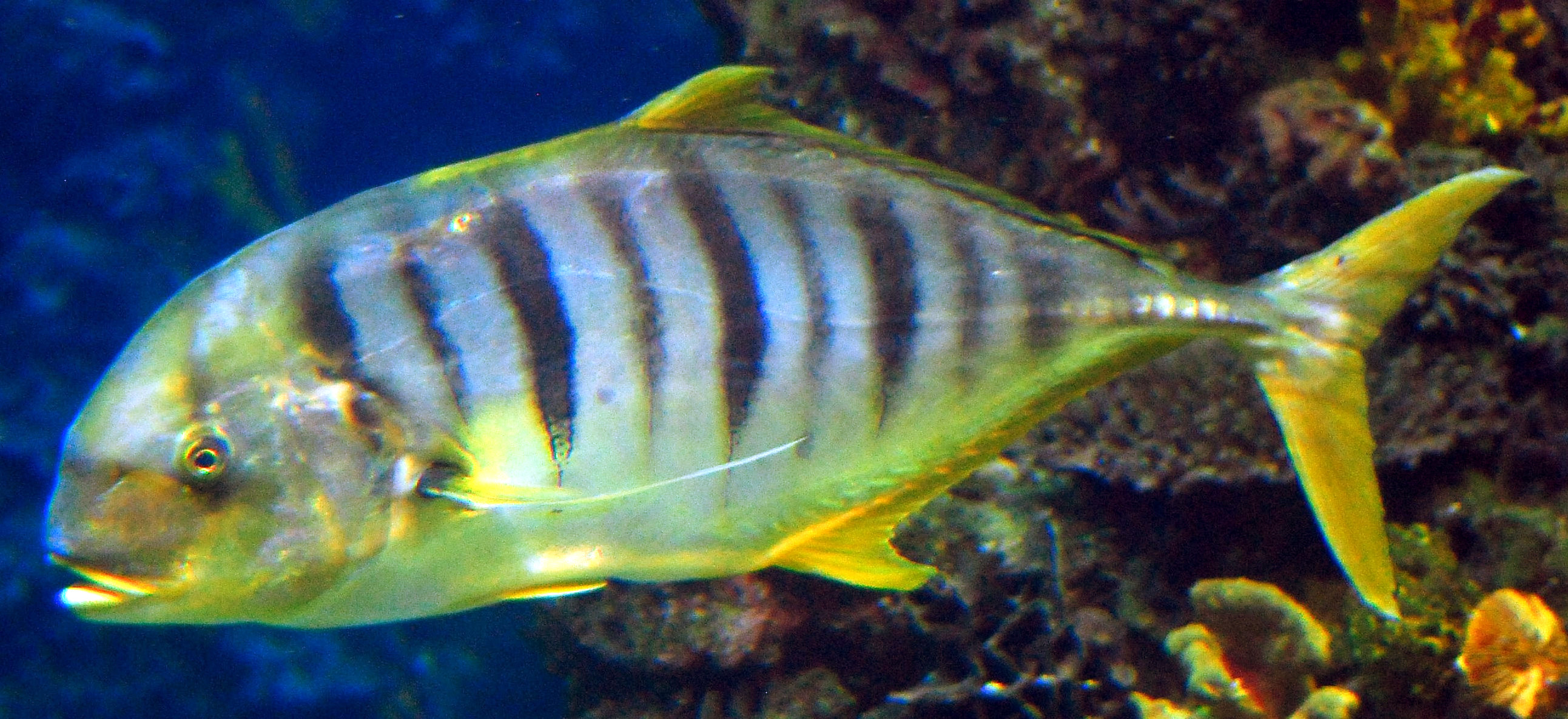
56. Bluntnose Jack
Bluntnose Jack (Hemicaranx amblyrhynchus) shows a small jack body with clear fin and snout markings. It is associated with Atlantic or eastern Pacific coasts and belongs to the broad carangid group commonly described as inshore jacks. Anglers value this body plan for speed, sudden direction changes, and long runs after hookup. It is part of a fast-moving predatory family, although smaller scads often focus on plankton and tiny prey. Identification should combine body depth, fin shape, scutes, eye size, color marks, and geographic range rather than relying on color alone.
57. Bicolor Jack
Bicolor Jack (Hemicaranx bicolor) shows a small jack body with clear fin and snout markings. It is associated with Atlantic or eastern Pacific coasts and belongs to the broad carangid group commonly described as inshore jacks. In the field, the forked tail, narrow caudal peduncle, and lateral-line scutes are useful family-level clues. Its diet commonly includes small fish, shrimp, crabs, squid, or planktonic prey, depending on size and species. Identification should combine body depth, fin shape, scutes, eye size, color marks, and geographic range rather than relying on color alone.
58. Yellowfin Jack
Yellowfin Jack (Hemicaranx leucurus) shows a small jack body with clear fin and snout markings. It is associated with Atlantic or eastern Pacific coasts and belongs to the broad carangid group commonly described as inshore jacks. Many members of this group school around baitfish, reefs, current lines, channels, or coastal structure. Feeding behavior varies from plankton picking to active pursuit of baitfish and crustaceans. Identification should combine body depth, fin shape, scutes, eye size, color marks, and geographic range rather than relying on color alone.
59. Blackfin Jack
Blackfin Jack (Hemicaranx zelotes) shows a small jack body with clear fin and snout markings. It is associated with Atlantic or eastern Pacific coasts and belongs to the broad carangid group commonly described as inshore jacks. Juveniles may use estuaries and sheltered bays before moving into more exposed coastal or offshore water. It is part of a fast-moving predatory family, although smaller scads often focus on plankton and tiny prey. Identification should combine body depth, fin shape, scutes, eye size, color marks, and geographic range rather than relying on color alone.
60. Kaiwarinus equula
Kaiwarinus equula (Kaiwarinus equula) shows a compact silvery body and sharply forked tail. It is associated with Indo-West Pacific and belongs to the broad carangid group commonly described as coastal trevallies. Anglers value this body plan for speed, sudden direction changes, and long runs after hookup. Its diet commonly includes small fish, shrimp, crabs, squid, or planktonic prey, depending on size and species. Identification should combine body depth, fin shape, scutes, eye size, color marks, and geographic range rather than relying on color alone.
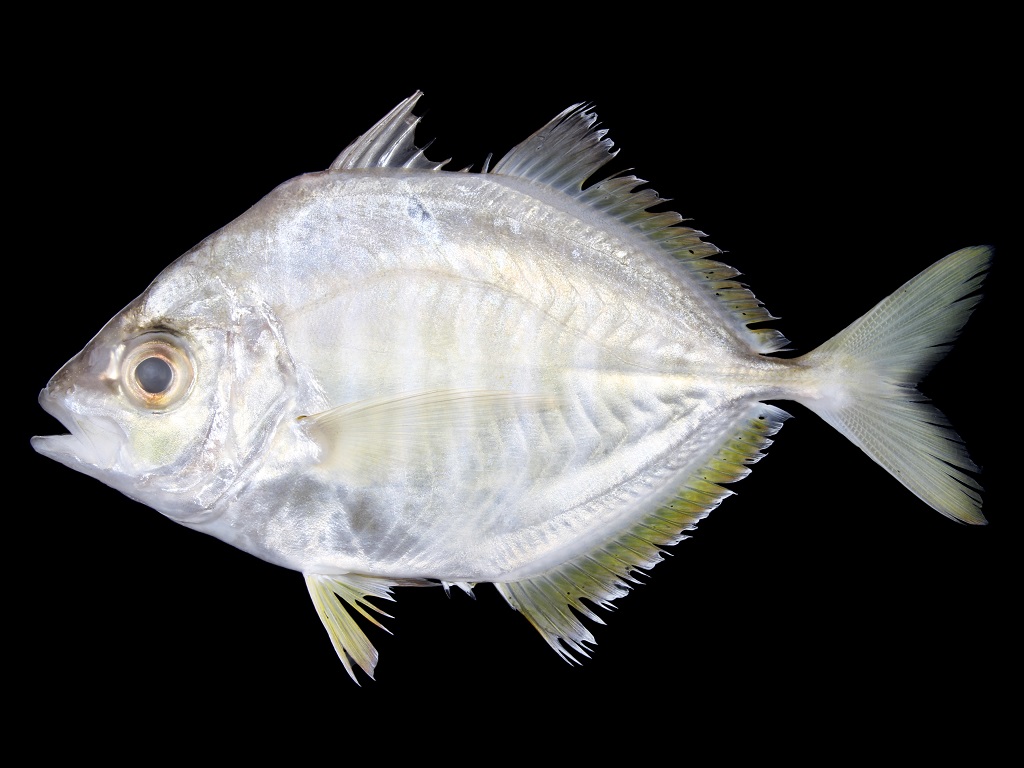
61. Leerfish
Leerfish (Lichia amia) shows a long powerful body and deeply forked tail. It is associated with eastern Atlantic and Mediterranean and belongs to the broad carangid group commonly described as large coastal predators. In the field, the forked tail, narrow caudal peduncle, and lateral-line scutes are useful family-level clues. Feeding behavior varies from plankton picking to active pursuit of baitfish and crustaceans. Identification should combine body depth, fin shape, scutes, eye size, color marks, and geographic range rather than relying on color alone.
62. Torpedo Scad
Torpedo Scad (Megalaspis cordyla) shows a torpedo-like body and strongly keeled tail region. It is associated with Indo-West Pacific and belongs to the broad carangid group commonly described as fast schooling scads. Many members of this group school around baitfish, reefs, current lines, channels, or coastal structure. It is part of a fast-moving predatory family, although smaller scads often focus on plankton and tiny prey. Identification should combine body depth, fin shape, scutes, eye size, color marks, and geographic range rather than relying on color alone.
63. Pilotfish
Pilotfish (Naucrates ductor) shows dark vertical bars and a streamlined open-water body. It is associated with warm oceans worldwide and belongs to the broad carangid group commonly described as pilotfishes. Juveniles may use estuaries and sheltered bays before moving into more exposed coastal or offshore water. Its diet commonly includes small fish, shrimp, crabs, squid, or planktonic prey, depending on size and species. Identification should combine body depth, fin shape, scutes, eye size, color marks, and geographic range rather than relying on color alone.
64. Large-scale Leatherjacket
Large-scale Leatherjacket (Oligoplites altus) shows an elongated body, low profile, and sharp fin spines. It is associated with American tropical coasts and estuaries and belongs to the broad carangid group commonly described as leatherjackets. Anglers value this body plan for speed, sudden direction changes, and long runs after hookup. Feeding behavior varies from plankton picking to active pursuit of baitfish and crustaceans. Identification should combine body depth, fin shape, scutes, eye size, color marks, and geographic range rather than relying on color alone.
65. Oligoplites palometa
Oligoplites palometa (Oligoplites palometa) shows an elongated body, low profile, and sharp fin spines. It is associated with American tropical coasts and estuaries and belongs to the broad carangid group commonly described as leatherjackets. In the field, the forked tail, narrow caudal peduncle, and lateral-line scutes are useful family-level clues. It is part of a fast-moving predatory family, although smaller scads often focus on plankton and tiny prey. Identification should combine body depth, fin shape, scutes, eye size, color marks, and geographic range rather than relying on color alone.
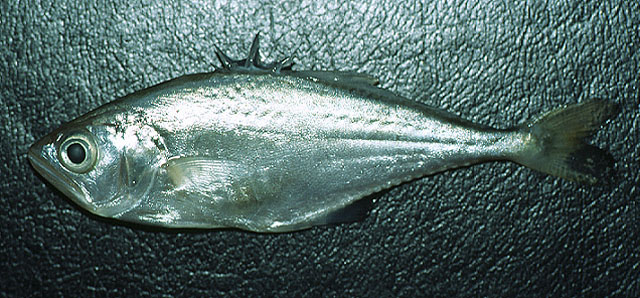
66. Oligoplites refulgens
Oligoplites refulgens (Oligoplites refulgens) shows an elongated body, low profile, and sharp fin spines. It is associated with American tropical coasts and estuaries and belongs to the broad carangid group commonly described as leatherjackets. Many members of this group school around baitfish, reefs, current lines, channels, or coastal structure. Its diet commonly includes small fish, shrimp, crabs, squid, or planktonic prey, depending on size and species. Identification should combine body depth, fin shape, scutes, eye size, color marks, and geographic range rather than relying on color alone.
67. Oligoplites saliens
Oligoplites saliens (Oligoplites saliens) shows an elongated body, low profile, and sharp fin spines. It is associated with American tropical coasts and estuaries and belongs to the broad carangid group commonly described as leatherjackets. Juveniles may use estuaries and sheltered bays before moving into more exposed coastal or offshore water. Feeding behavior varies from plankton picking to active pursuit of baitfish and crustaceans. Identification should combine body depth, fin shape, scutes, eye size, color marks, and geographic range rather than relying on color alone.
68. Leatherjacket
Leatherjacket (Oligoplites saurus) shows an elongated body, low profile, and sharp fin spines. It is associated with American tropical coasts and estuaries and belongs to the broad carangid group commonly described as leatherjackets. Anglers value this body plan for speed, sudden direction changes, and long runs after hookup. It is part of a fast-moving predatory family, although smaller scads often focus on plankton and tiny prey. Identification should combine body depth, fin shape, scutes, eye size, color marks, and geographic range rather than relying on color alone.
69. Fringefin Trevally
Fringefin Trevally (Pantolabus radiatus) shows a small deep-bodied trevally with extended fin rays. It is associated with Indo-West Pacific and belongs to the broad carangid group commonly described as fringefin trevallies. In the field, the forked tail, narrow caudal peduncle, and lateral-line scutes are useful family-level clues. Its diet commonly includes small fish, shrimp, crabs, squid, or planktonic prey, depending on size and species. Identification should combine body depth, fin shape, scutes, eye size, color marks, and geographic range rather than relying on color alone.
70. Mexican Moonfish
Mexican Moonfish (Paraselene orstedii) shows a highly compressed moon-shaped body. It is associated with eastern Pacific and belongs to the broad carangid group commonly described as moonfishes. Many members of this group school around baitfish, reefs, current lines, channels, or coastal structure. Feeding behavior varies from plankton picking to active pursuit of baitfish and crustaceans. Identification should combine body depth, fin shape, scutes, eye size, color marks, and geographic range rather than relying on color alone.

71. Black Pomfret
Black Pomfret (Parastromateus niger) shows a deep dark body with long dorsal and anal fins. It is associated with Indo-West Pacific and belongs to the broad carangid group commonly described as black pomfrets. Juveniles may use estuaries and sheltered bays before moving into more exposed coastal or offshore water. It is part of a fast-moving predatory family, although smaller scads often focus on plankton and tiny prey. Identification should combine body depth, fin shape, scutes, eye size, color marks, and geographic range rather than relying on color alone.
72. Parona Leatherjacket
Parona Leatherjacket (Parona signata) shows an elongated leatherjacket form. It is associated with southwestern Atlantic and belongs to the broad carangid group commonly described as temperate coastal carangids. Anglers value this body plan for speed, sudden direction changes, and long runs after hookup. Its diet commonly includes small fish, shrimp, crabs, squid, or planktonic prey, depending on size and species. Identification should combine body depth, fin shape, scutes, eye size, color marks, and geographic range rather than relying on color alone.
73. Longnose Trevally
Longnose Trevally (Platycaranx chrysophrys) shows a deep body with genus-specific head and fin proportions. It is associated with Indo-West Pacific and belongs to the broad carangid group commonly described as reef and coastal trevallies. In the field, the forked tail, narrow caudal peduncle, and lateral-line scutes are useful family-level clues. Feeding behavior varies from plankton picking to active pursuit of baitfish and crustaceans. Identification should combine body depth, fin shape, scutes, eye size, color marks, and geographic range rather than relying on color alone.
74. Malabar Trevally
Malabar Trevally (Platycaranx malabaricus) shows a deep body with genus-specific head and fin proportions. It is associated with Indo-West Pacific and belongs to the broad carangid group commonly described as reef and coastal trevallies. Many members of this group school around baitfish, reefs, current lines, channels, or coastal structure. It is part of a fast-moving predatory family, although smaller scads often focus on plankton and tiny prey. Identification should combine body depth, fin shape, scutes, eye size, color marks, and geographic range rather than relying on color alone.
75. Shadow Trevally
Shadow Trevally (Platycaranx talamparoides) shows a deep body with genus-specific head and fin proportions. It is associated with Indo-West Pacific and belongs to the broad carangid group commonly described as reef and coastal trevallies. Juveniles may use estuaries and sheltered bays before moving into more exposed coastal or offshore water. Its diet commonly includes small fish, shrimp, crabs, squid, or planktonic prey, depending on size and species. Identification should combine body depth, fin shape, scutes, eye size, color marks, and geographic range rather than relying on color alone.
76. Juan Fernández Trevally
Juan Fernández Trevally (Pseudocaranx chilensis) shows a clean silver trevally body with a strong forked tail. It is associated with temperate and subtropical oceans and belongs to the broad carangid group commonly described as white and skipjack trevallies. Anglers value this body plan for speed, sudden direction changes, and long runs after hookup. Feeding behavior varies from plankton picking to active pursuit of baitfish and crustaceans. Identification should combine body depth, fin shape, scutes, eye size, color marks, and geographic range rather than relying on color alone.
77. White Trevally
White Trevally (Pseudocaranx dentex) shows a clean silver trevally body with a strong forked tail. It is associated with temperate and subtropical oceans and belongs to the broad carangid group commonly described as white and skipjack trevallies. In the field, the forked tail, narrow caudal peduncle, and lateral-line scutes are useful family-level clues. It is part of a fast-moving predatory family, although smaller scads often focus on plankton and tiny prey. Identification should combine body depth, fin shape, scutes, eye size, color marks, and geographic range rather than relying on color alone.
78. Pseudocaranx dinjerra
Pseudocaranx dinjerra (Pseudocaranx dinjerra) shows a clean silver trevally body with a strong forked tail. It is associated with temperate and subtropical oceans and belongs to the broad carangid group commonly described as white and skipjack trevallies. Many members of this group school around baitfish, reefs, current lines, channels, or coastal structure. Its diet commonly includes small fish, shrimp, crabs, squid, or planktonic prey, depending on size and species. Identification should combine body depth, fin shape, scutes, eye size, color marks, and geographic range rather than relying on color alone.
79. Skipjack Trevally
Skipjack Trevally (Pseudocaranx wrighti) shows a clean silver trevally body with a strong forked tail. It is associated with temperate and subtropical oceans and belongs to the broad carangid group commonly described as white and skipjack trevallies. Juveniles may use estuaries and sheltered bays before moving into more exposed coastal or offshore water. Feeding behavior varies from plankton picking to active pursuit of baitfish and crustaceans. Identification should combine body depth, fin shape, scutes, eye size, color marks, and geographic range rather than relying on color alone.
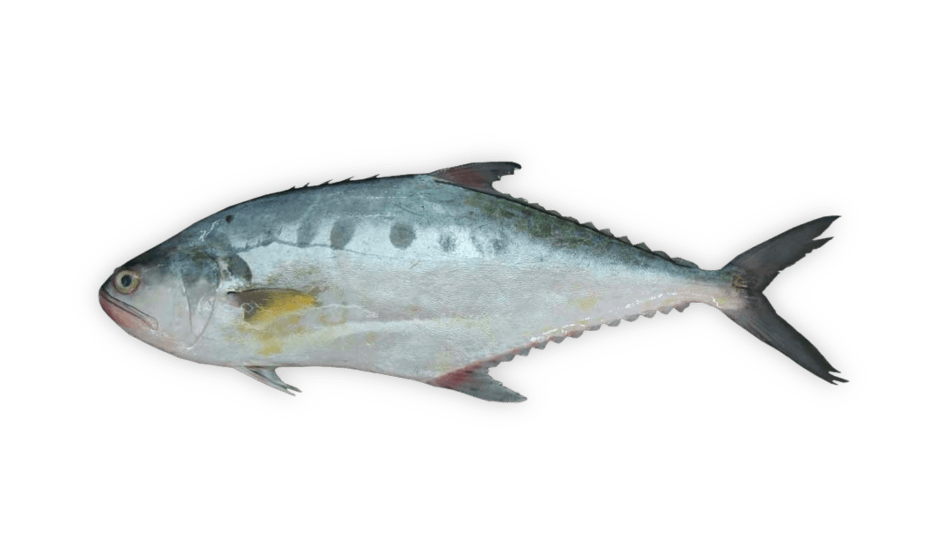
80. Talang Queenfish
Talang Queenfish (Scomberoides commersonnianus) shows a long, sleek body with prominent teeth and finlets. It is associated with Indo-West Pacific coastal waters and belongs to the broad carangid group commonly described as queenfishes. Anglers value this body plan for speed, sudden direction changes, and long runs after hookup. It is part of a fast-moving predatory family, although smaller scads often focus on plankton and tiny prey. Identification should combine body depth, fin shape, scutes, eye size, color marks, and geographic range rather than relying on color alone.
How Are These Types of Jack Fish Classified?
Jack fish belong to Carangidae. Modern classifications divide the family into many genera based on skeletal traits, fin structure, scutes, body depth, jaw form, and genetic evidence. The word “jack” is therefore a practical common name, not a narrow scientific category. Trevallies, scads, pompanos, runners, queenfishes, and amberjacks are all close carangid relatives.
Where Do Jack Fish Live?
Carangids occur in the Atlantic, Indian, and Pacific oceans. Some species patrol open water, current lines, offshore banks, and floating debris. Others use reefs, beaches, rocky headlands, seagrass, mangroves, bays, and estuaries. Small juveniles often prefer protected nursery habitat, while larger adults move to deeper or more exposed areas.
How to Identify Different Types of Jack Fish
- Look for a deeply forked tail and narrow caudal peduncle.
- Feel or visually check for hard scutes along the rear lateral line when legal and safe.
- Compare body depth: scads are usually slender, while moonfishes and pompanos are deeper.
- Study pectoral-fin length and the shape of the dorsal and anal fins.
- Note distinctive marks such as bars, spots, yellow fins, blue edges, or a dark opercular spot.
- Use local range because many similar-looking species occur in different oceans.
- Photograph both sides and record length before releasing an unfamiliar fish.
Fishing Tips and Notes
Match tackle to the likely species. Small scads and bumpers suit light spinning gear, while giant trevally, crevalle jack, and large queenfish require strong leaders, reliable knots, and controlled drag. Search moving water, bait schools, reef edges, points, passes, jetties, and current seams. Metal jigs, surface plugs, spoons, soft plastics, and live bait can all work. Handle fish quickly, support the body, and release unwanted fish before exhaustion.
Safety, Sustainability, and Conservation Notes
Check local size limits, closed seasons, bag limits, and protected areas. Some carangids accumulate ciguatoxins in tropical regions, especially large reef predators, so follow local consumption advisories. Avoid keeping more than needed, use circle hooks when appropriate, and reduce fight time. Never assume that every silver jack is abundant; species-level management and local stock condition matter.
Fun Facts About Jack Fish
- Carangidae includes nearly 150 valid species.
- The family includes jacks, trevallies, scads, runners, pompanos, and queenfishes.
- Giant trevally can hunt around reefs, passes, and even shallow flats.
- Rainbow runners are built for sustained open-water speed.
- Pilotfish are famous for swimming near sharks and ships.
- Some juvenile African pompanos have long trailing fin filaments.
- Scads often form large schools and are important forage fish.
- Many jack species have hard scutes near the tail.
- Color can fade quickly after a fish leaves the water.
- Several species are major commercial and recreational fish.
Final Thoughts on Types of Jack Fish
These 80 types of jack fish demonstrate the remarkable range of Carangidae, from tiny schooling scads to powerful trevallies and sleek queenfishes. Reliable identification comes from combining shape, fins, scutes, markings, habitat, and geographic range. For anglers, learning the family improves lure choice, handling, legal compliance, and appreciation of fast-moving coastal ecosystems.
Frequently Asked Questions
1. What is a jack fish?
A jack fish is generally a member of the family Carangidae, which includes jacks, trevallies, scads, pompanos, runners, queenfishes, and related species.
2. How many species are in the jack family?
Current fish databases recognize roughly 147 valid species in Carangidae, although taxonomy can change with new revisions.
3. What is the most famous jack fish?
The crevalle jack and giant trevally are among the best-known because of their power, broad ranges, and popularity with sport anglers.
4. Are trevallies jack fish?
Yes. Trevally is a common name used for many carangids, especially Indo-Pacific species.
5. Are scads jack fish?
Scads are smaller schooling members of the same family and share many jack-like features.
6. What do jack fish eat?
Large species often eat fish, squid, shrimp, and crabs. Smaller scads may feed heavily on zooplankton and tiny fishes.
7. Where are jack fish found?
They occur in warm and temperate waters of the Atlantic, Indian, and Pacific oceans.
8. Do jack fish enter freshwater?
Most are marine, but juveniles of some species enter estuaries, brackish lagoons, and lower river reaches.
9. How can I identify a crevalle jack?
Look for a robust body, steep head, forked tail, dark opercular spot, and yellowish fins, while confirming the regional range.
10. What is the difference between a jack and a pompano?
Pompanos are generally deeper-bodied and often have fewer prominent scutes, while many true jacks are more robust predators with obvious rear lateral-line scutes.
11. What is the difference between a jack and a scad?
Scads are usually smaller, slimmer, and more strongly schooling, while the word jack often refers to larger predatory carangids.
12. Are jack fish good to eat?
Many species are valued food fish, but quality varies. Follow local ciguatera and contamination advisories, especially for large tropical reef predators.
13. Can jack fish cause ciguatera poisoning?
Large tropical carangids can sometimes carry ciguatoxins. Risk is regional, so local public-health advice is essential.
14. What tackle is best for jack fishing?
Use tackle matched to size: light spinning gear for small scads and juvenile jacks, and heavy rods, leaders, hooks, and reels for large trevallies.
15. What lures catch jack fish?
Surface plugs, metal jigs, spoons, soft plastics, diving minnows, and flies can all work when matched to local bait.
16. When is the best time to catch jacks?
Dawn, dusk, strong tidal movement, and periods when bait is concentrated around structure are often productive.
17. Why do jacks fight so hard?
They have muscular bodies, efficient forked tails, high oxygen demand, and a lifestyle built around fast pursuit in moving water.
18. Do jack fish school?
Many species school, especially juveniles and scads. Large adults of some trevallies may become solitary or form smaller groups.
19. What is the largest jack fish?
Greater amberjack and giant trevally are among the family’s largest familiar members, though maximum size depends on the measurement and species.
20. What is a blue runner?
The blue runner, Caranx crysos, is a widespread Atlantic carangid often found around reefs, wrecks, buoys, and offshore structure.
21. What is a yellow jack?
The yellow jack, Caranx bartholomaei, is a western Atlantic species with yellow to golden tones, especially on the fins and lower body.
22. What is a bar jack?
The bar jack, Caranx ruber, is a Caribbean and western Atlantic species recognized by a dark stripe along the upper body and dorsal-fin area.
23. What is a horse-eye jack?
Caranx latus is a strong schooling jack with a large eye, dark tail, and western Atlantic distribution.
24. Are pilotfish really jacks?
Yes. The pilotfish, Naucrates ductor, belongs to Carangidae.
25. Is black pomfret a jack relative?
Yes. Parastromateus niger is classified within Carangidae even though its common name is black pomfret.
26. How do I release a large jack safely?
Keep the fish in the water when possible, support it horizontally, remove the hook quickly, and revive it in clean moving water before release.
27. Do jack fish have teeth?
Tooth size varies. Queenfishes and large predatory jacks have useful grasping teeth, while some scads and golden trevally have reduced dentition.
28. Why do jack fish have scutes?
Scutes are hardened scales along part of the lateral line that stiffen and protect the rear body.
29. Can jack fish live in home aquariums?
Most grow too large and are too active for home tanks. A few juveniles appear in public aquariums, but long-term space requirements are substantial.
30. Are all silver fish with forked tails jacks?
No. Mackerels, mullets, herrings, tunas, and many other fish can look similar at a glance.
31. How can beginners avoid misidentifying jacks?
Use several features at once and compare a regional field guide instead of relying on one color mark.
32. Do jack fish migrate?
Many make seasonal or feeding movements between nurseries, reefs, coastal zones, and offshore areas.
33. Are jack populations sustainable?
Status varies by species and region. Responsible harvest, accurate identification, and compliance with local rules are essential.
34. Why are common names for jacks confusing?
The same species may have different regional names, and words such as jack, trevally, scad, and pompano overlap across countries.
35. What should I record for a jack identification?
Record location, date, habitat, total length, body profile, fin colors, spots or bars, eye size, and the shape of the lateral line and scutes.