

In seafood and culinary training, types of round fish are fish that swim upright with an eye on each side of the head and a backbone running through the center. The term does not mean that every fish has a circular body. It mainly distinguishes familiar symmetrical fish such as cod, salmon, tuna, snapper, and mackerel from flatfish such as sole and flounder.
This guide compares 40 practical round fish by body form, flavor, texture, cooking method, buying clues, and safety or sustainability considerations. It includes lean white fish, rich oily fish, small schooling fish, freshwater choices, and firm steak-like species so readers can select the right fish for frying, grilling, steaming, roasting, smoking, or stewing.
What Are the Main Types of Round Fish?
The main culinary round-fish groups include lean white fish such as cod and haddock, oily fish such as salmon and mackerel, large pelagic fish such as tuna and swordfish, firm reef and coastal fish such as snapper and grouper, and freshwater fish such as trout, tilapia, and catfish. Their body plan is broadly symmetrical, but flavor, fat, bone structure, sustainability, and best cooking method differ considerably.
Quick Comparison of the 40 Types of Round Fish
| No. | Common Name | Scientific Name | Group | Best Identification Clue |
|---|---|---|---|---|
| 1 | Atlantic Cod | Gadus morhua | White lean fish | the chin barbel and pale side line |
| 2 | Pacific Cod | Gadus macrocephalus | White lean fish | the mottled brown body and chin barbel |
| 3 | Haddock | Melanogrammus aeglefinus | White lean fish | the black thumbprint behind the pectoral fin |
| 4 | Alaska Pollock | Gadus chalcogrammus | White lean fish | the slender cod-like profile |
| 5 | Pacific Whiting | Merluccius productus | White lean fish | the long soft body and large mouth |
| 6 | European Hake | Merluccius merluccius | White lean fish | the large toothed mouth and tapered body |
| 7 | Sablefish | Anoplopoma fimbria | Rich oily round fish | the dark skin and high-fat white flesh |
| 8 | Lingcod | Ophiodon elongatus | Firm white round fish | the enormous mouth and mottled body |
| 9 | Atlantic Salmon | Salmo salar | Oily round fish | the silver body with sparse spots |
| 10 | Chinook Salmon | Oncorhynchus tshawytscha | Oily round fish | the black gums and spotted tail |
| 11 | Coho Salmon | Oncorhynchus kisutch | Oily round fish | the pale gums and upper-tail spotting |
| 12 | Rainbow Trout | Oncorhynchus mykiss | Oily freshwater round fish | the rosy stripe and spotted tail |
| 13 | Arctic Char | Salvelinus alpinus | Oily cold-water round fish | pale spots rather than dark trout-like spots |
| 14 | European Sea Bass | Dicentrarchus labrax | Lean to moderate-fat white fish | the silver body and two dorsal fins |
| 15 | Striped Bass | Morone saxatilis | Firm white round fish | the continuous horizontal stripes |
| 16 | Barramundi | Lates calcarifer | Firm white round fish | the large sloping mouth and silver body |
| 17 | Red Snapper | Lutjanus campechanus | Firm white round fish | the red body and red iris |
| 18 | Yellowtail Snapper | Ocyurus chrysurus | Lean white round fish | the bright yellow tail and lateral stripe |
| 19 | Gilthead Sea Bream | Sparus aurata | Moderate-fat white fish | the gold bar across the forehead |
| 20 | Red Grouper | Epinephelus morio | Firm white round fish | the heavy body and oversized mouth |
| 21 | Nile Tilapia | Oreochromis niloticus | Lean freshwater round fish | the deep body and striped tail |
| 22 | Channel Catfish | Ictalurus punctatus | Freshwater white round fish | the barbels and deeply forked tail |
| 23 | Atlantic Mackerel | Scomber scombrus | Oily round fish | the wavy blue-black back pattern |
| 24 | King Mackerel | Scomberomorus cavalla | Large oily round fish | the long body and sharply pointed first dorsal fin |
| 25 | Atlantic Herring | Clupea harengus | Small oily round fish | the silver sides and small schooling-fish shape |
| 26 | European Sardine | Sardina pilchardus | Small oily round fish | the compact silver body and single short dorsal fin |
| 27 | European Anchovy | Engraulis encrasicolus | Small oily round fish | the oversized mouth on a tiny silver fish |
| 28 | Yellowfin Tuna | Thunnus albacares | Large oily pelagic round fish | the long yellow fins and finlets |
| 29 | Albacore Tuna | Thunnus alalunga | Large oily pelagic round fish | the exceptionally long pectoral fins |
| 30 | Atlantic Bluefin Tuna | Thunnus thynnus | Large oily pelagic round fish | the massive muscular tuna profile |
| 31 | Mahi-Mahi | Coryphaena hippurus | Lean pelagic round fish | the high blunt forehead and long dorsal fin |
| 32 | Swordfish | Xiphias gladius | Large meaty round fish | the sword-shaped bill |
| 33 | Cobia | Rachycentron canadum | Firm rich round fish | the broad head and dark lateral bands |
| 34 | Greater Amberjack | Seriola dumerili | Firm oily round fish | the amber eye stripe and deeply forked tail |
| 35 | Bluefish | Pomatomus saltatrix | Strong-flavored oily round fish | the sharp teeth and blue-green back |
| 36 | Atlantic Croaker | Micropogonias undulatus | Lean white round fish | the chin barbel and croaking sound |
| 37 | Red Mullet | Mullus barbatus | Small flavorful round fish | the paired chin barbels |
| 38 | Monkfish | Lophius piscatorius and related Lophius species | Firm white round fish | the huge mouth and thick tapering tail |
| 39 | Striped Mullet | Mugil cephalus | Moderate-fat coastal round fish | the blunt head and horizontal body stripes |
| 40 | Wahoo | Acanthocybium solandri | Lean pelagic round fish | the long narrow body with cobalt bars |
1. Atlantic Cod
Atlantic Cod (Gadus morhua) is a white lean fish round fish with it has a symmetrical body, eyes on opposite sides of the head, and a central backbone. The flesh is mild, clean, and flaky with large white flakes. It works especially well for baking, frying, poaching, chowders, fish cakes, and gentle roasting.

Choose translucent moist flesh without drying or strong odor. Stock status and sourcing vary by region, so check current seafood guidance. The practical identification clue is the chin barbel and pale side line.
2. Pacific Cod
In seafood markets, Pacific Cod (Gadus macrocephalus) is treated as a round fish because it is a classic cylindrical cod with three dorsal fins and a chin barbel. The flesh is mild, slightly sweet, and firm-flaked. It works especially well for fish tacos, frying, baking, steaming, and soups.
Look for firm moist fillets and clear species labeling. Do not assume Atlantic and Pacific cod have identical fishery status. The practical identification clue is the mottled brown body and chin barbel.
3. Haddock
Haddock (Melanogrammus aeglefinus) is a familiar white lean fish species whose body and fillet structure fit the round-fish category. The flesh is mild, slightly sweet, and finer-flaked than many cod. It works especially well for smoking, baking, frying, chowders, and fish pies.
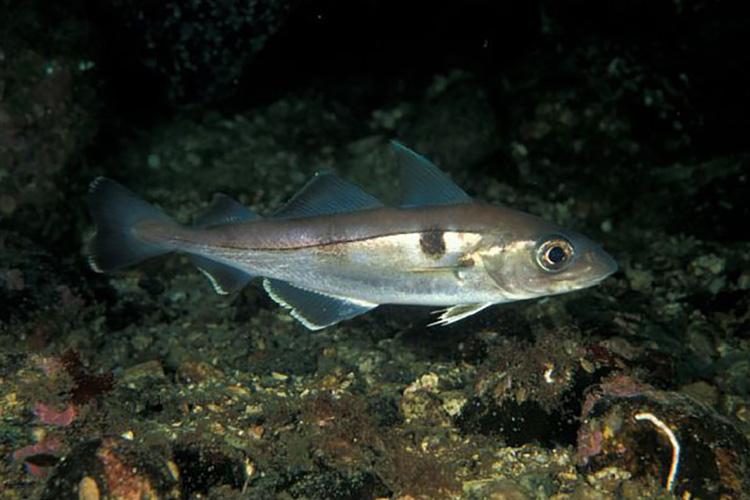
Fresh fillets should look moist and pearly, while smoked haddock should be evenly cured. Added salt can be high in smoked products. The practical identification clue is the black thumbprint behind the pectoral fin.
4. Alaska Pollock
Among culinary round fish, Alaska Pollock (Gadus chalcogrammus) is recognized by it is a slender cod relative with a symmetrical body and three dorsal fins. The flesh is mild, delicate, and soft-flaked. It works especially well for fish sandwiches, surimi, baking, breading, and quick pan cooking.

Frozen fillets are common and should remain well sealed without heavy ice damage. Pollock and pollack are different common names that may refer to different species. The practical identification clue is the slender cod-like profile.
5. Pacific Whiting
Pacific Whiting (Merluccius productus) is a white lean fish round fish with it has a long tapered body, large mouth, and eyes on both sides of the head. The flesh is very mild, tender, and fine-textured. It works especially well for fish cakes, surimi, pan frying, steaming, and delicate baked dishes.

Handle chilled flesh gently because the texture is softer than cod. Avoid overcooking because it can lose moisture quickly. The practical identification clue is the long soft body and large mouth.
6. European Hake
In seafood markets, European Hake (Merluccius merluccius) is treated as a round fish because it has an elongated round-fish body with a large head and sharp teeth. The flesh is mild, subtly sweet, and soft to medium-firm. It works especially well for pan roasting, stewing, baking, grilling in a basket, and poaching.
Seek firm glossy flesh and intact skin when buying portions. Hake species and sustainability differ by fishing area. The practical identification clue is the large toothed mouth and tapered body.
7. Sablefish
Sablefish (Anoplopoma fimbria) is a familiar rich oily round fish species whose body and fillet structure fit the round-fish category. The flesh is rich, buttery, moist, and silky. It works especially well for miso roasting, broiling, smoking, grilling, and slow baking.
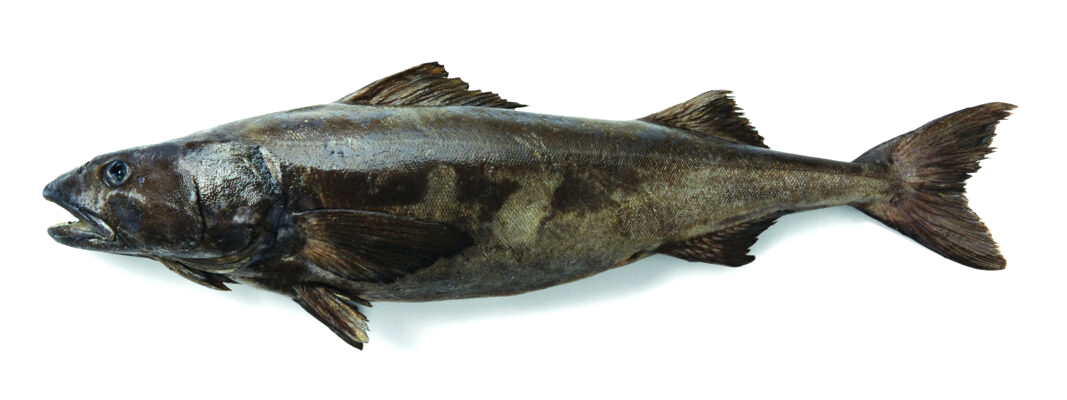
Good fillets feel dense and moist with clean white flesh under dark skin. It is often called black cod but is not a true cod. The practical identification clue is the dark skin and high-fat white flesh.
8. Lingcod
Among culinary round fish, Lingcod (Ophiodon elongatus) is recognized by it has a long mottled body, huge mouth, and eyes on opposite sides of the head. The flesh is mild, lean, and firm with large flakes. It works especially well for roasting, grilling, frying, steaming, and fish tacos.
Choose thick firm portions with no drying around the edges. The raw flesh may appear blue-green in some fish but usually turns white when cooked. The practical identification clue is the enormous mouth and mottled body.
9. Atlantic Salmon
Atlantic Salmon (Salmo salar) is a oily round fish round fish with it has a streamlined symmetrical body adapted for active swimming. The flesh is rich, buttery, and moderately firm. It works especially well for roasting, grilling, poaching, smoking, curing, and pan searing.
Look for moist flesh, clean aroma, and accurate farmed or wild labeling. In some markets, wild Atlantic salmon is protected and retail fish is farm-raised. The practical identification clue is the silver body with sparse spots.
10. Chinook Salmon
In seafood markets, Chinook Salmon (Oncorhynchus tshawytscha) is treated as a round fish because it has a powerful torpedo-shaped body and a black gum line. The flesh is very rich, high-fat, and succulent. It works especially well for grilling, roasting, smoking, broiling, and slow cooking.
Deep-colored flesh should be moist and spring back gently when pressed. Availability and sustainability vary by run and fishery. The practical identification clue is the black gums and spotted tail.
11. Coho Salmon
Coho Salmon (Oncorhynchus kisutch) is a familiar oily round fish species whose body and fillet structure fit the round-fish category. The flesh is medium-rich, clean, and moderately firm. It works especially well for pan searing, grilling, roasting, smoking, and baking.
Choose portions with even color and no gaping between muscle flakes. Avoid confusing it with Chinook when buying whole fish. The practical identification clue is the pale gums and upper-tail spotting.
12. Rainbow Trout
Among culinary round fish, Rainbow Trout (Oncorhynchus mykiss) is recognized by it has a streamlined body, pink side stripe, and many dark spots. The flesh is delicate, mildly nutty, and tender. It works especially well for whole roasting, pan frying, smoking, grilling, and baking in foil.
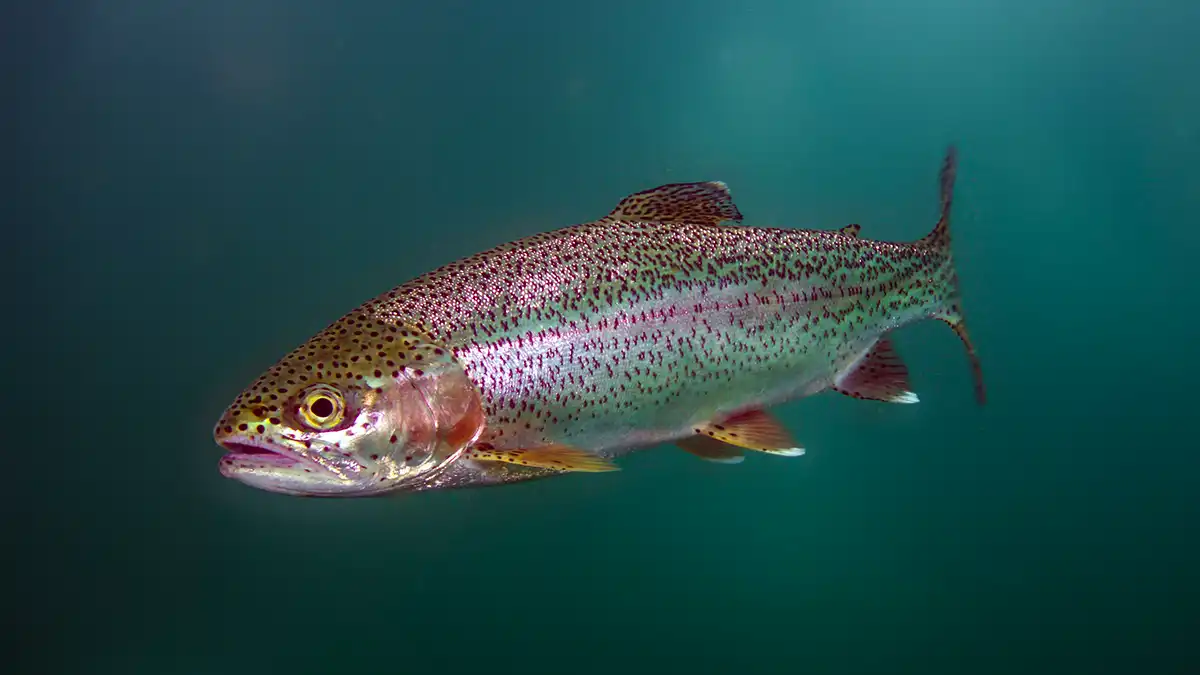
Whole trout should have bright eyes, red gills, and firm skin. Remove pin bones carefully when serving children. The practical identification clue is the rosy stripe and spotted tail.
13. Arctic Char
Arctic Char (Salvelinus alpinus) is a oily cold-water round fish round fish with it has a salmon-like symmetrical body with pale spots on a darker background. The flesh is between salmon and trout, rich but relatively delicate. It works especially well for pan searing, roasting, curing, smoking, and gentle grilling.
Choose bright moist flesh and skin without dull dry patches. Farmed and wild products may differ in color and fat. The practical identification clue is pale spots rather than dark trout-like spots.
14. European Sea Bass
In seafood markets, European Sea Bass (Dicentrarchus labrax) is treated as a round fish because it has an elongated silver round-fish body with two distinct dorsal fins. The flesh is mild, clean, and slightly sweet with firm flakes. It works especially well for whole roasting, grilling, steaming, salt baking, and pan searing.
Whole fish should have clear eyes and tight shiny scales. Market names such as branzino may refer to farmed European sea bass. The practical identification clue is the silver body and two dorsal fins.
15. Striped Bass
Striped Bass (Morone saxatilis) is a familiar firm white round fish species whose body and fillet structure fit the round-fish category. The flesh is clean, mildly sweet, and medium-firm. It works especially well for roasting, grilling, baking, pan searing, and chowders.

Check whether the fish is wild or farmed and where it was harvested. Consumption advisories may apply to fish from particular rivers or coasts. The practical identification clue is the continuous horizontal stripes.
16. Barramundi
Among culinary round fish, Barramundi (Lates calcarifer) is recognized by it has a deep silver body, large mouth, and symmetrical head. The flesh is mild, buttery, and moist with medium flakes. It works especially well for grilling, steaming, pan searing, baking, and curries.
Look for transparent supply information because wild and farmed sources differ. Skin crisps well but should be thoroughly scaled. The practical identification clue is the large sloping mouth and silver body.
17. Red Snapper
Red Snapper (Lutjanus campechanus) is a firm white round fish round fish with it has a rosy-red symmetrical body, pointed snout, and sloping forehead. The flesh is mild, slightly sweet, and firm. It works especially well for whole roasting, grilling, baking, steaming, and soups.
Verify species because red-colored fish are sometimes mislabeled as red snapper. Fishery rules and stock conditions are regional. The practical identification clue is the red body and red iris.
18. Yellowtail Snapper
In seafood markets, Yellowtail Snapper (Ocyurus chrysurus) is treated as a round fish because it has a streamlined silver-pink body with a bright yellow side stripe and tail. The flesh is mild, delicate, and lightly sweet. It works especially well for pan searing, ceviche where safe, roasting, grilling, and steaming.
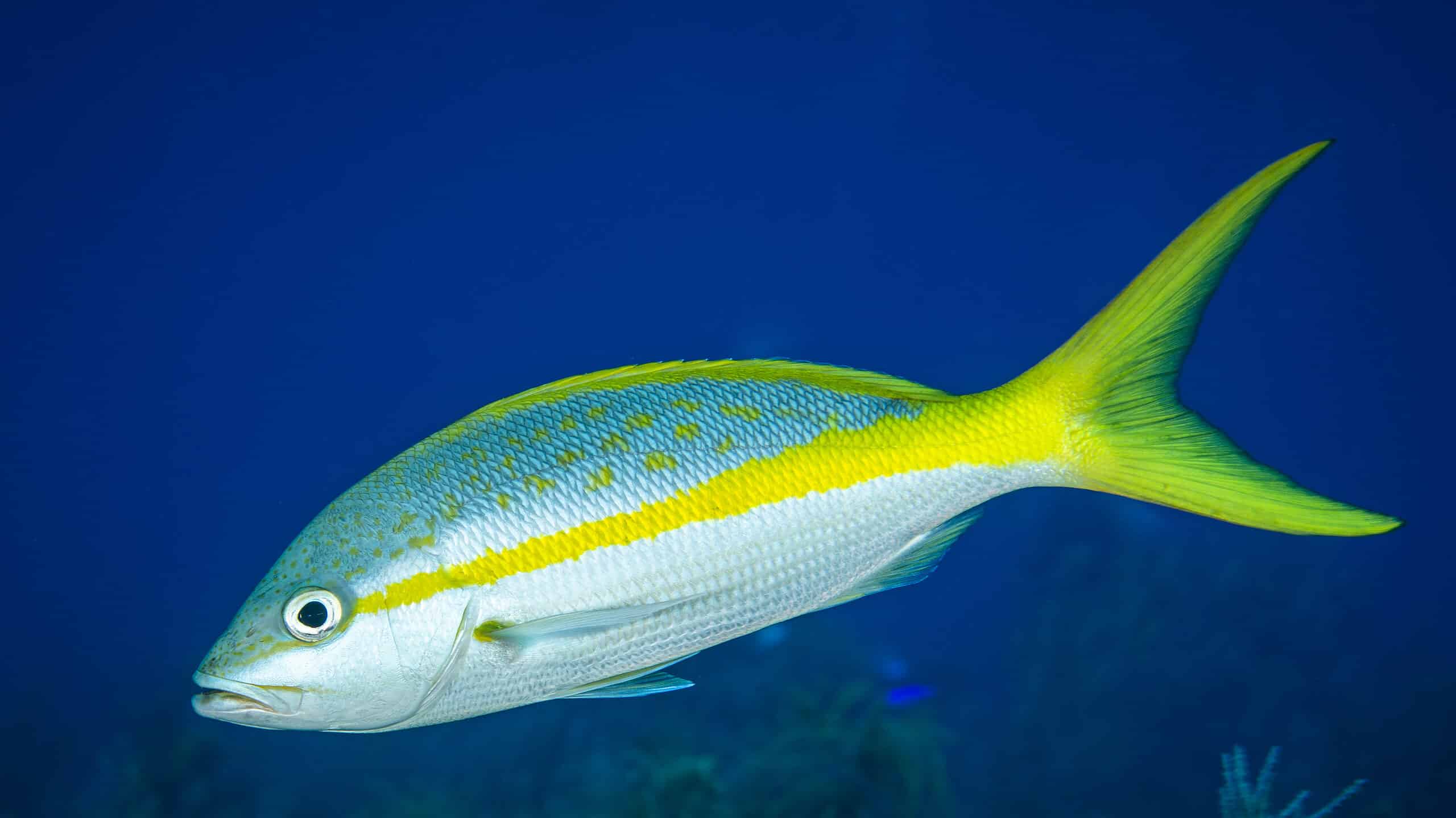
The yellow stripe should be vivid and the flesh should smell clean. Raw preparations require appropriate parasite controls and food-safety practices. The practical identification clue is the bright yellow tail and lateral stripe.
19. Gilthead Sea Bream
Gilthead Sea Bream (Sparus aurata) is a familiar moderate-fat white fish species whose body and fillet structure fit the round-fish category. The flesh is mild, juicy, and slightly sweet. It works especially well for whole grilling, roasting, salt baking, steaming, and Mediterranean-style baking.
Look for tight scales, clear eyes, and a visible golden forehead mark. Remove the strong dorsal spines carefully. The practical identification clue is the gold bar across the forehead.
20. Red Grouper
Among culinary round fish, Red Grouper (Epinephelus morio) is recognized by it has a stout symmetrical body, large mouth, and reddish mottling. The flesh is mild, moist, and firm with large flakes. It works especially well for grilling, roasting, frying, soups, and thick stews.
Purchase accurately labeled grouper from traceable sources. Grouper species differ in conservation status and may be vulnerable to mislabeling. The practical identification clue is the heavy body and oversized mouth.
21. Nile Tilapia
Nile Tilapia (Oreochromis niloticus) is a lean freshwater round fish round fish with it has a deep symmetrical body with a long dorsal fin. The flesh is very mild, lean, and moderately firm. It works especially well for pan frying, baking, steaming, curries, and fish tacos.

Choose responsibly farmed products with clean packaging and firm flesh. Mild flavor makes freshness and proper chilling especially important. The practical identification clue is the deep body and striped tail.
22. Channel Catfish
In seafood markets, Channel Catfish (Ictalurus punctatus) is treated as a round fish because it has a scaleless cylindrical body, whisker-like barbels, and a forked tail. The flesh is mild, sweet, and moist. It works especially well for frying, blackening, grilling, baking, and stews.
Farm-raised fillets should be clean smelling and evenly trimmed. The skin is normally removed, and whole fish have sharp fin spines. The practical identification clue is the barbels and deeply forked tail.
23. Atlantic Mackerel
Atlantic Mackerel (Scomber scombrus) is a familiar oily round fish species whose body and fillet structure fit the round-fish category. The flesh is rich, savory, and distinctly oily. It works especially well for grilling, broiling, smoking, pickling, and pan frying.
Buy very fresh because the high oil content deteriorates quickly. Keep cold and cook or preserve promptly. The practical identification clue is the wavy blue-black back pattern.
24. King Mackerel
Among culinary round fish, King Mackerel (Scomberomorus cavalla) is recognized by it has a long streamlined body, pointed head, and often faint spots in juveniles. The flesh is rich, firm, and strongly flavored. It works especially well for grilling, smoking, broiling, and sturdy kebabs.
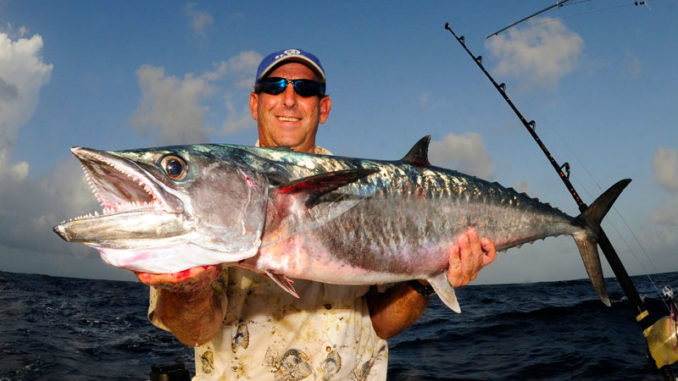
Choose traceable fish and portions with moist dense flesh. Large king mackerel can be high in mercury and is restricted for certain consumers under public-health advice. The practical identification clue is the long body and sharply pointed first dorsal fin.
25. Atlantic Herring
Atlantic Herring (Clupea harengus) is a small oily round fish round fish with it has a slender silver body with a blue-green back and forked tail. The flesh is rich, savory, and tender. It works especially well for pickling, smoking, grilling, frying, and curing.
Fresh herring should have bright silver skin and a clean marine smell. Salt content can be high in cured products. The practical identification clue is the silver sides and small schooling-fish shape.
26. European Sardine
In seafood markets, European Sardine (Sardina pilchardus) is treated as a round fish because it has a compact silver body, single dorsal fin, and blue-green back. The flesh is rich, full, and tender with edible small bones when canned. It works especially well for grilling whole, broiling, frying, canning, and tomato-based dishes.
Fresh sardines should be stiff, glossy, and intact; canned choices should be undamaged. They spoil quickly when fresh, so maintain a strict cold chain. The practical identification clue is the compact silver body and single short dorsal fin.
27. European Anchovy
European Anchovy (Engraulis encrasicolus) is a familiar small oily round fish species whose body and fillet structure fit the round-fish category. The flesh is intensely savory when cured and milder when fresh. It works especially well for curing, sauces, frying, grilling, and seasoning dishes.
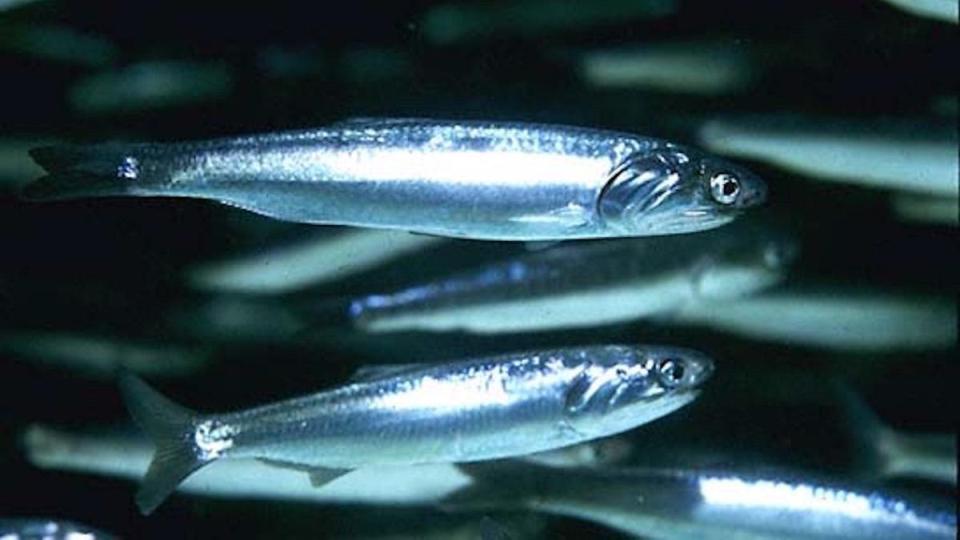
Check salt level and oil quality in preserved products. Cured anchovies are concentrated in sodium. The practical identification clue is the oversized mouth on a tiny silver fish.
28. Yellowfin Tuna
Among culinary round fish, Yellowfin Tuna (Thunnus albacares) is recognized by it has a torpedo body and long bright yellow dorsal and anal finlets. The flesh is meaty, clean, and moderately rich. It works especially well for searing, grilling, broiling, confit, and properly controlled raw preparations.
Color alone is not a freshness guarantee; use reputable chilled supply. Mercury guidance and raw-fish safety should be followed. The practical identification clue is the long yellow fins and finlets.
29. Albacore Tuna
Albacore Tuna (Thunnus alalunga) is a large oily pelagic round fish round fish with it has very long pectoral fins extending far back along the body. The flesh is mild, rich, and firm with pale flesh. It works especially well for canning, grilling, searing, poaching in oil, and salads.
Look for traceable fishery or canned sourcing information. Serving frequency should follow local mercury advice. The practical identification clue is the exceptionally long pectoral fins.
30. Atlantic Bluefin Tuna
In seafood markets, Atlantic Bluefin Tuna (Thunnus thynnus) is treated as a round fish because it has a thick torpedo body built for fast continuous swimming. The flesh is very rich, dense, and fatty in premium cuts. It works especially well for searing, grilling, carefully managed raw service, and confit.

Only buy fully traceable legally harvested fish. The species has a complex conservation history and premium demand encourages fraud. The practical identification clue is the massive muscular tuna profile.
31. Mahi-Mahi
Mahi-Mahi (Coryphaena hippurus) is a familiar lean pelagic round fish species whose body and fillet structure fit the round-fish category. The flesh is mild, slightly sweet, and firm. It works especially well for grilling, broiling, pan searing, tacos, and kebabs.
Fresh fillets should be pinkish and moist, not dull or browned. Its brilliant skin color fades quickly after capture and is not the only freshness test. The practical identification clue is the high blunt forehead and long dorsal fin.
32. Swordfish
Among culinary round fish, Swordfish (Xiphias gladius) is recognized by it has a powerful symmetrical body and a long flattened sword-like upper jaw. The flesh is mild, dense, and steak-like. It works especially well for grilling, broiling, pan searing, and kebabs.
Choose firm moist steaks with a clean aroma and traceable origin. Large swordfish can contain high mercury, so follow public-health guidance. The practical identification clue is the sword-shaped bill.
33. Cobia
Cobia (Rachycentron canadum) is a firm rich round fish round fish with it has a long dark body, broad flattened head, and pale horizontal side bands. The flesh is rich, buttery, and firm. It works especially well for grilling, pan roasting, smoking, baking, and sturdy raw preparations under proper controls.

Look for pearly firm flesh and clear farmed or wild labeling. Do not confuse cobia with remoras, which have a suction disc on the head. The practical identification clue is the broad head and dark lateral bands.
34. Greater Amberjack
In seafood markets, Greater Amberjack (Seriola dumerili) is treated as a round fish because it has a powerful streamlined body and an amber stripe running through the eye. The flesh is rich, meaty, and firm. It works especially well for grilling, broiling, smoking, and controlled raw service.
Purchase from a trusted supplier because several Seriola species share market names. Large wild amberjack from some tropical areas may carry ciguatera risk. The practical identification clue is the amber eye stripe and deeply forked tail.
35. Bluefish
Bluefish (Pomatomus saltatrix) is a familiar strong-flavored oily round fish species whose body and fillet structure fit the round-fish category. The flesh is full, oily, and assertive. It works especially well for grilling, smoking, broiling, baking with acidic flavors, and pâté.
Use very fresh fish because its oils oxidize rapidly. Bleeding and immediate chilling improve quality. The practical identification clue is the sharp teeth and blue-green back.
36. Atlantic Croaker
Among culinary round fish, Atlantic Croaker (Micropogonias undulatus) is recognized by it has a silver-bronze body, slightly arched back, and a small chin barbel. The flesh is mild, sweet, and tender. It works especially well for whole frying, baking, grilling, and soups.
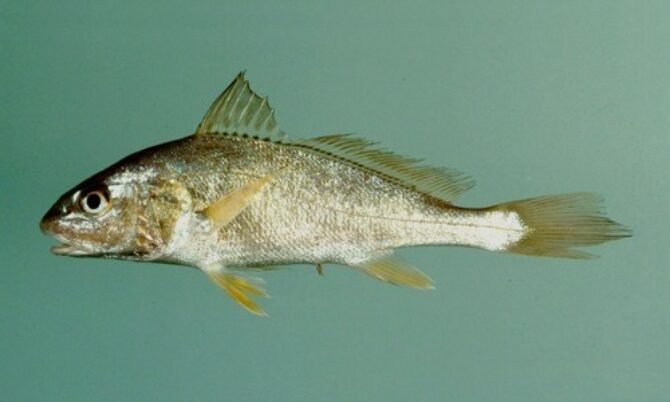
Small whole fish should have clear eyes and resilient flesh. Fine bones require attentive eating or careful filleting. The practical identification clue is the chin barbel and croaking sound.
37. Red Mullet
Red Mullet (Mullus barbatus) is a small flavorful round fish round fish with it has a rosy-red body and two sensory barbels beneath the chin. The flesh is distinctive, sweet, and rich for a small lean-looking fish. It works especially well for pan frying, grilling, roasting whole, and Mediterranean preparations.
Choose bright red skin, clear eyes, and intact delicate flesh. It is not a true mullet despite the common name. The practical identification clue is the paired chin barbels.
38. Monkfish
In seafood markets, Monkfish (Lophius piscatorius and related Lophius species) is treated as a round fish because it has a very broad flattened head but a bilaterally symmetrical tail and skeletal structure rather than the twisted anatomy of a flatfish. The flesh is mild, dense, and slightly sweet with lobster-like firmness. It works especially well for roasting, grilling, stews, curries, and bacon-wrapped preparations.
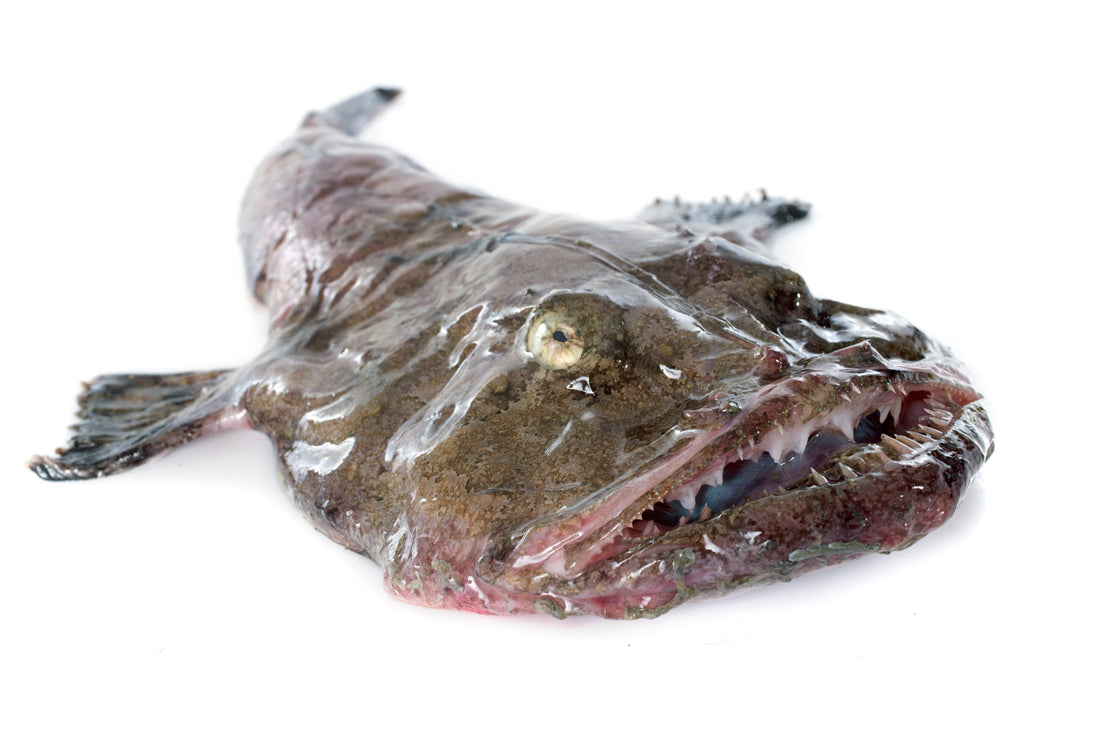
Most retail portions are skinned tail meat; choose translucent firm flesh. The tough membrane should be removed to prevent curling and chewiness. The practical identification clue is the huge mouth and thick tapering tail.
39. Striped Mullet
Striped Mullet (Mugil cephalus) is a familiar moderate-fat coastal round fish species whose body and fillet structure fit the round-fish category. The flesh is mild to earthy depending on water quality and handling. It works especially well for grilling, smoking, baking whole, frying, and roe preparations.

Source from clean waters and reputable handlers because flavor reflects habitat. Regional harvest areas and contamination advisories matter. The practical identification clue is the blunt head and horizontal body stripes.
40. Wahoo
Among culinary round fish, Wahoo (Acanthocybium solandri) is recognized by it has an extremely long streamlined body with blue vertical bars. The flesh is mild, clean, and firm. It works especially well for grilling, searing, broiling, smoking, and tacos.

Choose firm pale flesh and avoid dry edges. Lean steaks can dry quickly if overcooked. The practical identification clue is the long narrow body with cobalt bars.
How Are These Types of Round Fish Classified?
Round fish is a market and butchery term rather than a formal taxonomic rank. A cod, salmon, tuna, sea bream, and catfish are not close relatives simply because all are round fish. Chefs and fishmongers also group them by flesh and culinary behavior.
- Lean white round fish cook quickly and benefit from moisture or careful timing.
- Oily round fish remain succulent and work well for grilling, roasting, smoking, or curing.
- Small oily fish have strong flavor, delicate flesh, and often edible bones when canned.
- Firm pelagic fish can be cut into steaks and tolerate direct high heat.
- Whole portion fish such as trout, sea bream, and snapper are well suited to roasting or grilling.
- Freshwater round fish vary from delicate trout to mild farmed tilapia and catfish.
Where Are Round Fish Commonly Used?
Round fish appear in nearly every seafood cuisine. Northern European cooking uses cod, haddock, herring, mackerel, and salmon. Mediterranean dishes feature sea bream, sea bass, anchovies, sardines, red mullet, and tuna. Tropical and subtropical cuisines commonly use snapper, grouper, barramundi, mahi-mahi, cobia, and kingfish.
Preparation follows texture. Delicate whiting suits quick cooking, dense swordfish tolerates grilling, fatty salmon handles smoking, and whole sea bream retains moisture during roasting.
How to Identify Different Types of Round Fish
- Body orientation: the fish swims upright rather than lying permanently on one side.
- Eyes: one eye sits on each side of the head.
- Backbone: the main skeleton runs centrally and usually yields two primary fillets.
- Skin and scales: check pattern, scale size, lateral line, and fin placement.
- Mouth and head: barbels, bills, teeth, forehead shape, and jaw size are useful clues.
- Flesh: compare color, oil content, flake size, firmness, and connective tissue.
- Label: verify the accepted market and scientific name because substitutions occur.
Cooking and Buying Tips
Choose cooking heat according to fat and thickness. Lean fillets need shorter cooking or added moisture; oily fish tolerate stronger dry heat; thick steaks benefit from controlled searing followed by gentler finishing. Whole fish cooks more evenly when scaled, gutted, dried, and lightly scored.
Buy from a seller who maintains a cold, clean display and can identify the source. For frozen fish, avoid torn packaging, heavy freezer burn, large ice crystals, or signs that the product thawed and refroze.
Safety, Sustainability, and Conservation Notes
Follow local mercury and contaminant advice, especially for large long-lived predators such as king mackerel, swordfish, some tuna, and large amberjack. People who are pregnant, nursing, young, or otherwise included in advisory groups should use official serving guidance.
Seafood sustainability is fishery-specific. A species can be well managed in one region and depleted in another. Check current source, capture method, farm system, and traceability. Keep raw fish cold, prevent cross-contamination, and use parasite-control standards for uncooked dishes.
Fun Facts About Round Fish
- Round fish normally yield two main fillets.
- Flatfish commonly yield four fillets.
- Sablefish is called black cod but is not a true cod.
- Monkfish has a flattened head but is not a true flatfish.
- Tuna can maintain high cruising speeds with a torpedo-shaped body.
- Mackerel and herring are rich in natural oils.
- Arctic char combines traits familiar to salmon and trout eaters.
- Some lingcod have blue-green raw flesh that turns pale when cooked.
- Anchovies taste much milder fresh than when heavily cured.
- A whole fish often stays moister than a thin skinless fillet.
Final Thoughts on Types of Round Fish
Understanding types of round fish helps shoppers and cooks move beyond a single generic seafood category. Identify whether the fish is lean, oily, delicate, firm, small, or steak-like, then select a cooking method that protects its texture. Accurate labeling, cold storage, contaminant guidance, and current sustainable sourcing information are just as important as flavor.
Frequently Asked Questions
1. What is a round fish?
A round fish is a culinary and fish-processing category for a fish that normally swims upright, has an eye on each side of the head, and has a central backbone.
2. Is a round fish always circular?
No. The word round contrasts the fish with flatfish. Round fish may be cylindrical, oval, deep-bodied, or elongated.
3. What is the difference between round fish and flatfish?
Round fish have bilateral upright bodies and eyes on opposite sides of the head. Adult flatfish lie on one side and usually have both eyes on the upper side.
4. Are salmon round fish?
Yes. Salmon have symmetrical upright bodies, an eye on each side, and a central backbone, so they are classed as round fish in culinary preparation.
5. Is cod a round fish?
Yes. Cod is a classic white round fish and is commonly cut into fillets, loins, steaks, or portions.
6. Is tuna a round fish?
Yes. Tuna are highly streamlined round fish with symmetrical bodies and central backbones.
7. Is monkfish a round fish?
In culinary classification, monkfish is generally treated as a round fish rather than a flatfish, even though its head is broad and flattened.
8. Are rays round fish?
No. Rays are dorsoventrally flattened cartilaginous fishes and are not part of the standard culinary round-fish category.
9. How many fillets come from a round fish?
A conventional round fish usually yields two main side fillets, one from each side of the backbone.
10. How many fillets come from a flatfish?
A flatfish commonly yields four fillets, two from the upper side and two from the lower side.
11. What is a round-dressed fish?
A round-dressed fish is generally sold with the internal organs removed while retaining the head, tail, and overall whole-fish shape, though trade terminology can vary.
12. What are examples of white round fish?
Cod, haddock, hake, pollock, whiting, grouper, snapper, sea bass, tilapia, and catfish are common examples.
13. What are examples of oily round fish?
Salmon, trout, char, mackerel, herring, sardines, anchovies, tuna, bluefish, and sablefish are examples with meaningful fat content.
14. Are all white fish lean?
No. White flesh does not always mean low fat. Sablefish has white flesh but is notably rich and oily.
15. Which round fish is best for frying?
Cod, haddock, pollock, catfish, croaker, tilapia, and whiting are popular frying choices because their flesh cooks quickly and accepts coatings.
16. Which round fish is best for grilling?
Salmon, mackerel, tuna, swordfish, mahi-mahi, cobia, barramundi, and whole sea bream hold up well on a grill when handled correctly.
17. Which round fish is best for steaming?
Sea bass, snapper, barramundi, sea bream, trout, and many mild white fish work well with gentle steaming.
18. Which round fish is best for smoking?
Salmon, trout, mackerel, herring, sablefish, bluefish, and some tuna are common smoking choices.
19. How can I tell whether a whole round fish is fresh?
Look for clear bright eyes, red or pink gills, firm flesh, tight shiny skin, intact scales where present, and a clean mild smell.
20. What should fresh fish smell like?
Fresh fish should smell mild and clean, often slightly marine. A strong sour, ammonia-like, or rotten odor is a warning sign.
21. How should fresh round fish be stored?
Keep it very cold, ideally on drained ice in the refrigerator, and prevent meltwater from pooling around the flesh. Cook promptly.
22. Can round fish be frozen?
Yes. Wrap it airtight, freeze it rapidly, label it, and thaw it in the refrigerator to preserve texture and reduce food-safety risk.
23. Why does fish become dry when cooked?
Fish proteins tighten quickly. High heat or excessive cooking time squeezes out moisture, especially in lean species.
24. How do I know when fish is cooked?
The flesh should become opaque and separate into moist flakes, but safe endpoint guidance depends on preparation and local food-safety recommendations.
25. Can round fish be eaten raw?
Only fish specifically handled and frozen or otherwise controlled for raw consumption should be used. Fresh appearance alone does not make a fish safe for sashimi or ceviche.
26. Does lemon juice cook fish safely?
Acid changes texture and appearance but does not reliably eliminate all parasites or pathogens. Ceviche still requires properly sourced and handled fish.
27. What are pin bones?
Pin bones are small intramuscular bones that may remain in a fillet after the main skeleton is removed. They can be pulled with clean fish tweezers.
28. Should fish skin be removed?
Not always. Clean scaled skin can become crisp and helps protect the flesh during cooking. Thick, tough, or membrane-covered skin may need removal.
29. How can I choose sustainable round fish?
Check current regional seafood guides, certification where meaningful, fishing method, stock status, farm practices, and traceability rather than relying only on species name.
30. Why do seafood advisories change?
Fish populations, harvest rules, contamination data, and management performance change over time and differ by location, so current local guidance is necessary.