

North Carolina is home to a remarkable variety of turtles, from freshwater pond turtles and terrestrial box turtles to five species of sea turtles that visit the coast. This guide to the types of turtles in North Carolina explains how to recognize each species, where it lives, what it eats, and how to observe it responsibly.
What Are the Main Types of Turtles in North Carolina?
North Carolina has 20 recognized turtle species representing six families. They include freshwater turtles, land turtles, and marine turtles. Some are widespread, while others are coastal visitors or species with limited ranges. The most familiar examples include the Eastern Box Turtle, Common Snapping Turtle, Painted Turtle, Yellow-bellied Slider, and Loggerhead Sea Turtle.
1. Eastern Box Turtle
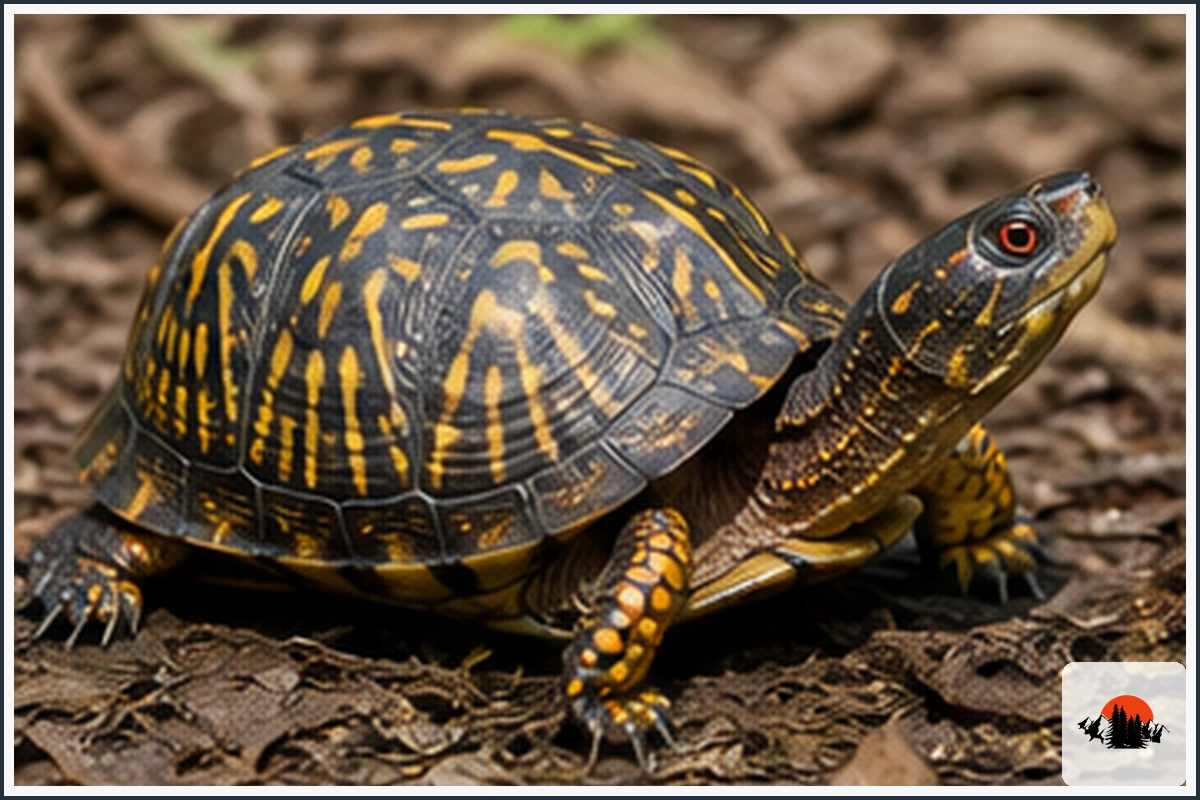
Scientific name: Terrapene carolina carolina. The Eastern Box Turtle is North Carolina’s best-known land turtle. It has a high, domed shell with brown or black coloring and yellow, orange, or reddish patterns. Its hinged plastron allows it to close the shell tightly when threatened.
These turtles live in forests, woodland edges, fields, and brushy habitats across much of the state. They eat a varied diet of berries, mushrooms, insects, worms, slugs, and other small food items. Adults commonly measure 4.5 to 7 inches in shell length.
Eastern Box Turtles are slow-moving and may occupy a small home range for many years. They are protected nongame wildlife in North Carolina, so they should never be collected from the wild.
2. Common Snapping Turtle
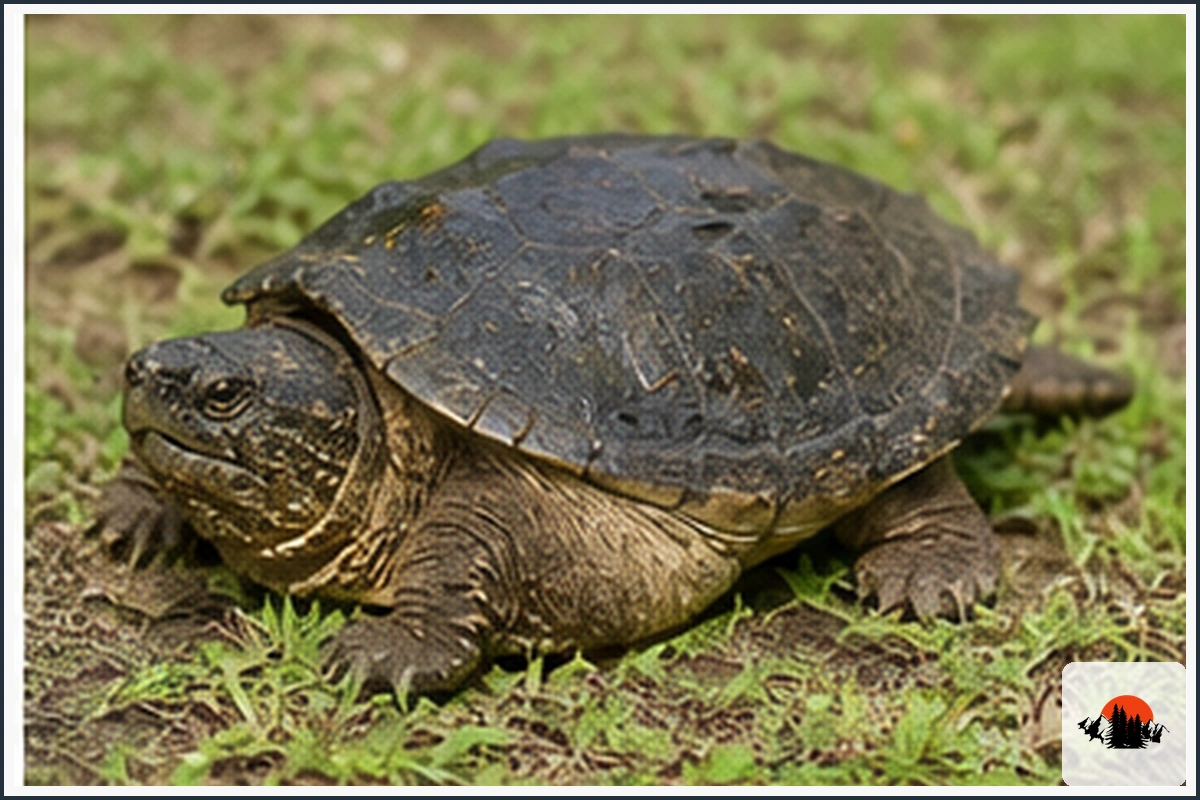
Scientific name: Chelydra serpentina. The Common Snapping Turtle has a large head, powerful jaws, a rough shell, and a long saw-toothed tail. Its shell is often brown, gray, or olive and may be covered with algae.
It lives in ponds, lakes, swamps, slow rivers, and muddy wetlands. Snapping turtles eat fish, crayfish, frogs, snakes, insects, carrion, aquatic plants, and other available food. Adults can exceed 14 inches in shell length.
These turtles are generally shy in water but can defend themselves aggressively on land. Never pick one up by the tail; if it must be moved from a road, use extreme caution and keep it pointed in the direction it was traveling.
3. Eastern Mud Turtle
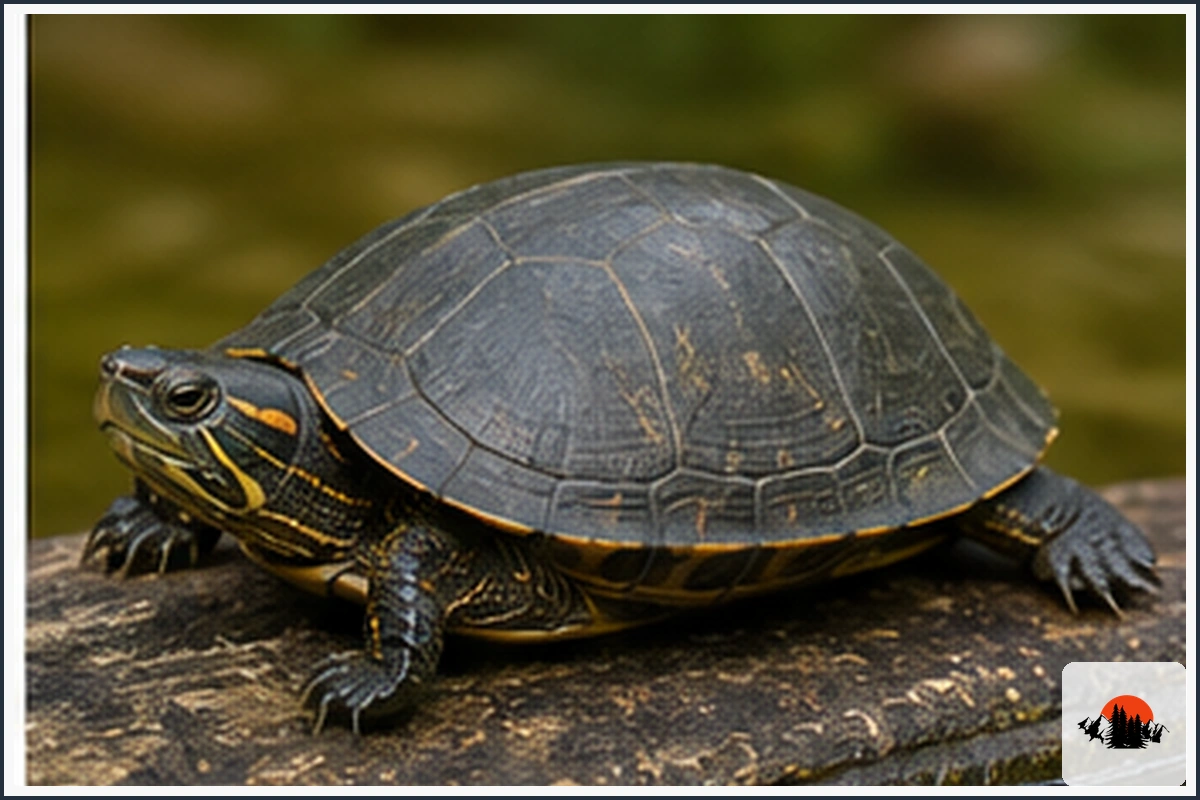
Scientific name: Kinosternon subrubrum. The Eastern Mud Turtle is a small aquatic turtle with a smooth, dark shell and a yellowish or lightly marked head. Its shell usually measures about 3 to 5 inches.
It prefers shallow ponds, swamps, marshes, ditches, and slow-moving waters with soft bottoms. It feeds on aquatic insects, worms, snails, crayfish, small fish, carrion, and plant material.
Eastern Mud Turtles spend much of their time in shallow water or buried in soft mud. Their small size and dark coloring can make them difficult to spot among wet leaves and bottom debris.
4. Eastern Musk Turtle
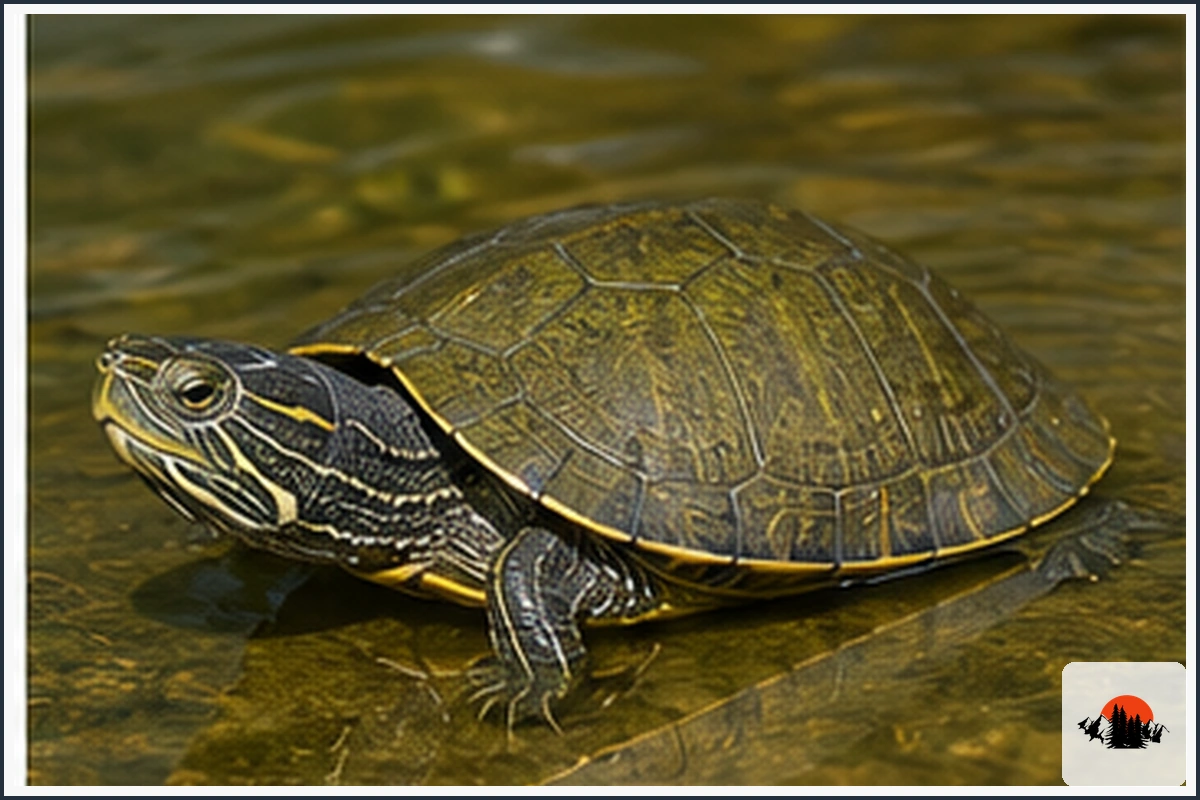
Scientific name: Sternotherus odoratus. Also called the Stinkpot, the Eastern Musk Turtle is a small turtle with a dark, often streaked shell and two yellow lines on the head and neck. Adults usually reach only 3 to 5 inches.
It inhabits ponds, swamps, lakes, slow streams, and quiet backwaters. The species eats snails, mussels, insects, crayfish, small aquatic animals, and some plant matter.
When handled, it may release a strong-smelling fluid from glands near the shell. It is mainly aquatic and often climbs onto logs or branches to bask.
5. Spotted Turtle
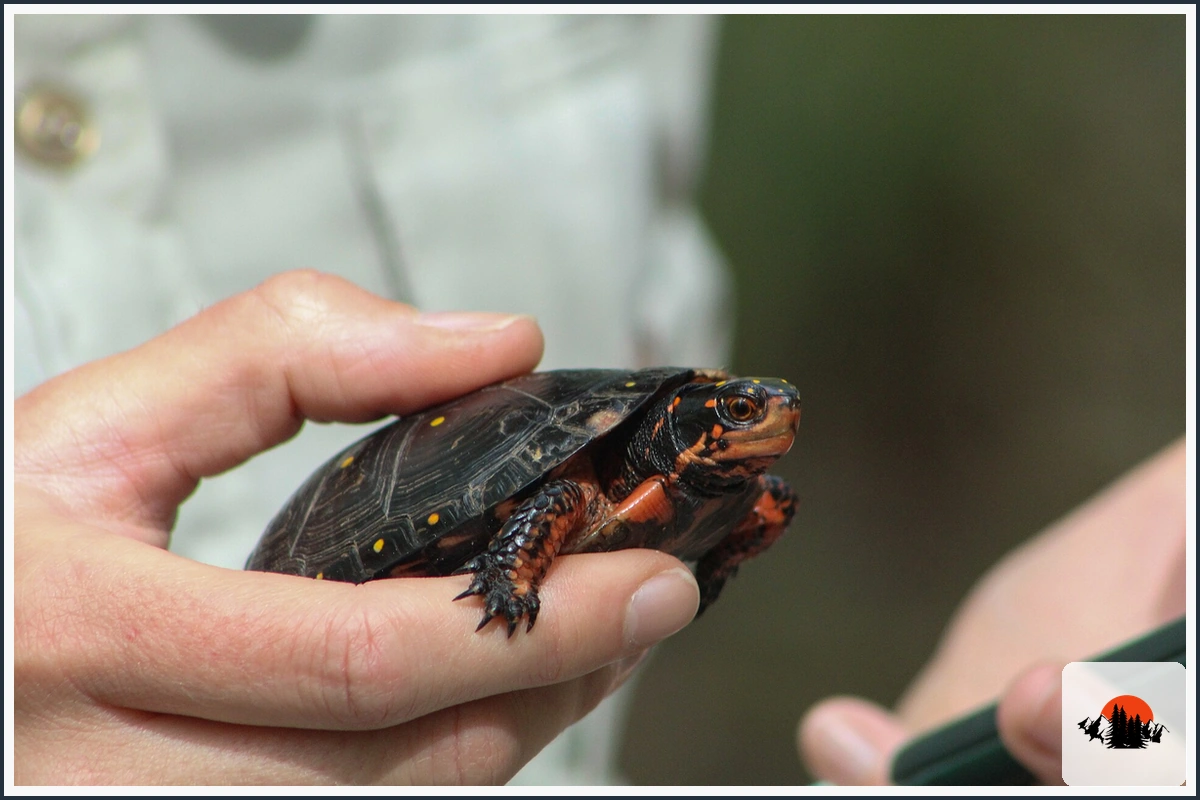
Scientific name: Clemmys guttata. The Spotted Turtle is recognizable by its black shell decorated with yellow spots. Young turtles may have one spot per shell scute, while adults can develop many spots or occasionally lose them with age.
It lives in shallow wetlands, marshes, boggy edges, swamps, and small ponds with abundant vegetation. Its diet includes insects, worms, snails, crayfish, frogs, and aquatic plants.
Spotted Turtles are small, usually 3 to 5 inches long. They depend on healthy wetlands and can be vulnerable to habitat loss, illegal collection, and road mortality.
6. Painted Turtle
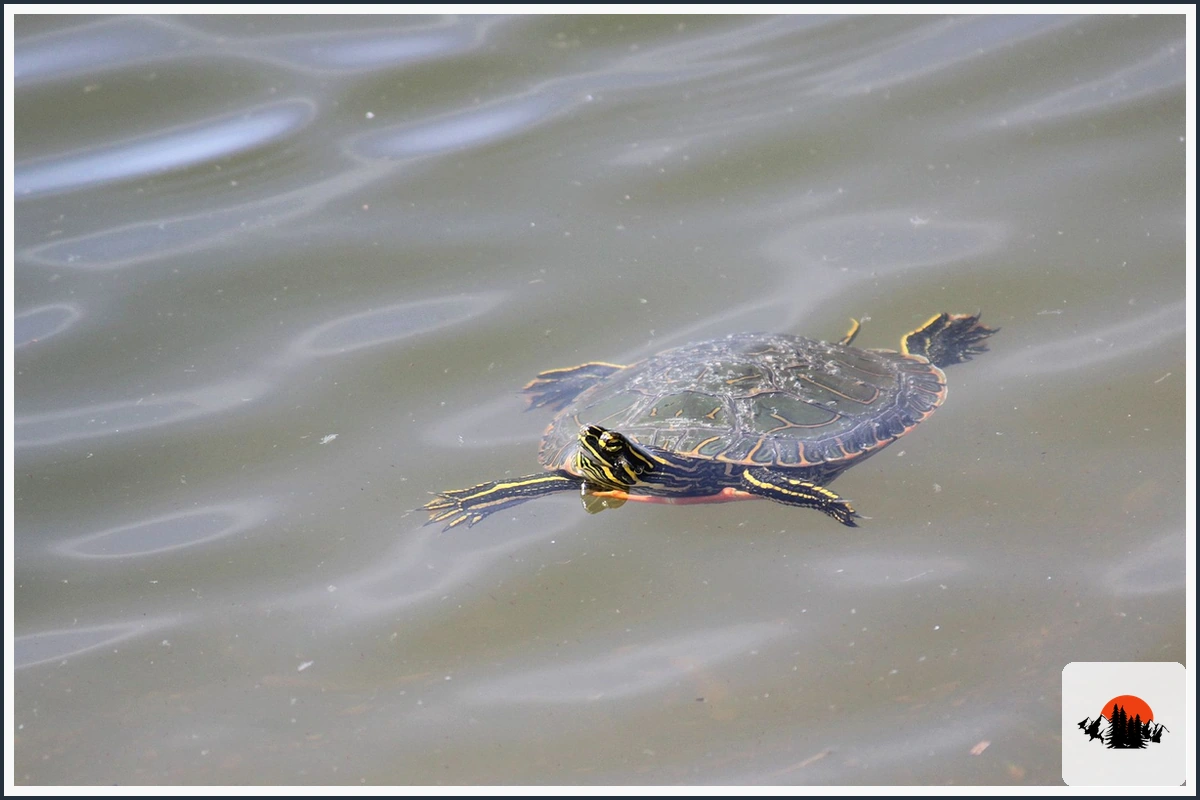
Scientific name: Chrysemys picta. Painted Turtles have smooth, dark shells with red or orange markings along the edges. Their heads and necks often show yellow stripes, and the lower shell may be brightly colored.
They occur in ponds, lakes, marshes, slow streams, and farm wetlands. Painted Turtles eat aquatic plants, insects, snails, tadpoles, small fish, and carrion. Adults are commonly 5 to 8 inches long.
They frequently bask on logs in groups. In North Carolina, the species is represented by regional forms, including the Eastern Painted Turtle and Southern Painted Turtle.
7. Eastern Painted Turtle
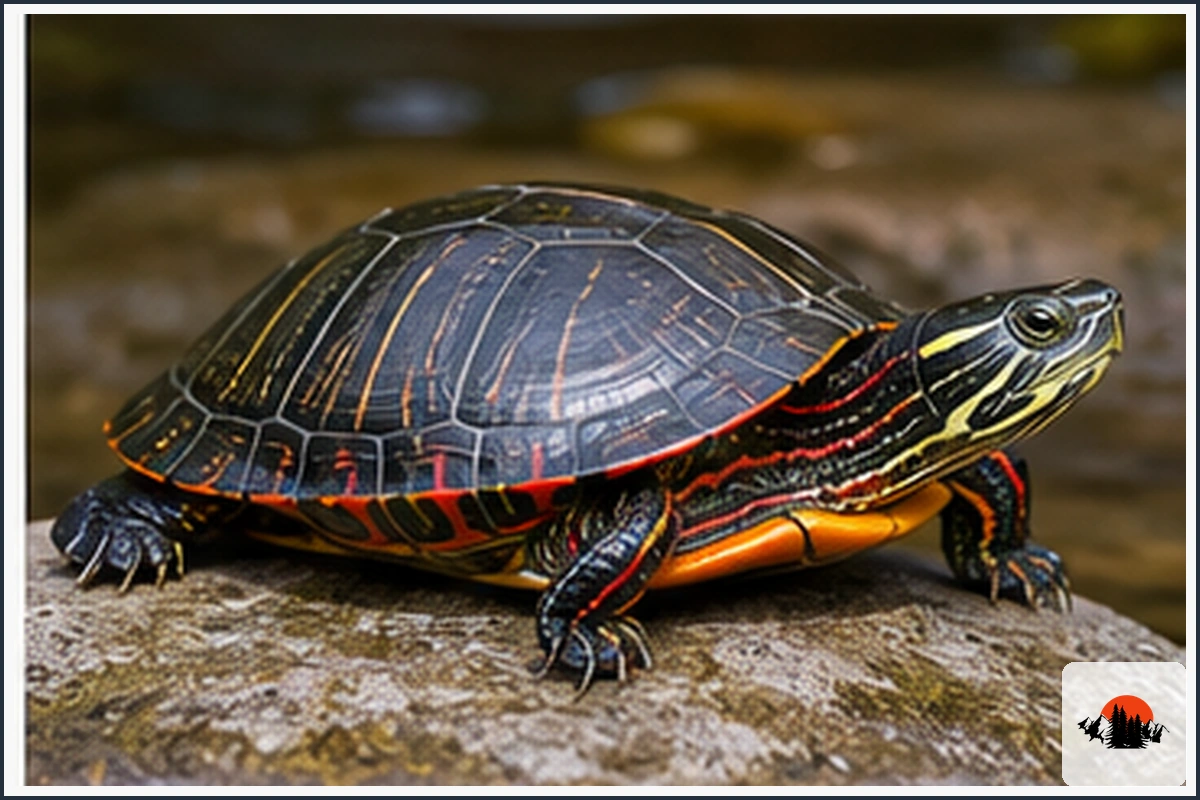
Scientific name: Chrysemys picta picta. The Eastern Painted Turtle has a dark, smooth carapace with reddish marginal markings and a yellow-striped head and neck. Its lower shell is often yellow or orange with a dark central pattern.
It is associated with quiet freshwater habitats, including ponds, marshes, lakes, and slow-moving streams. It eats aquatic vegetation, insects, worms, snails, and small aquatic animals.
This turtle is a strong basker and may be seen on partially submerged logs during sunny weather. Its range is more strongly associated with eastern and northeastern North Carolina.
8. Southern Painted Turtle
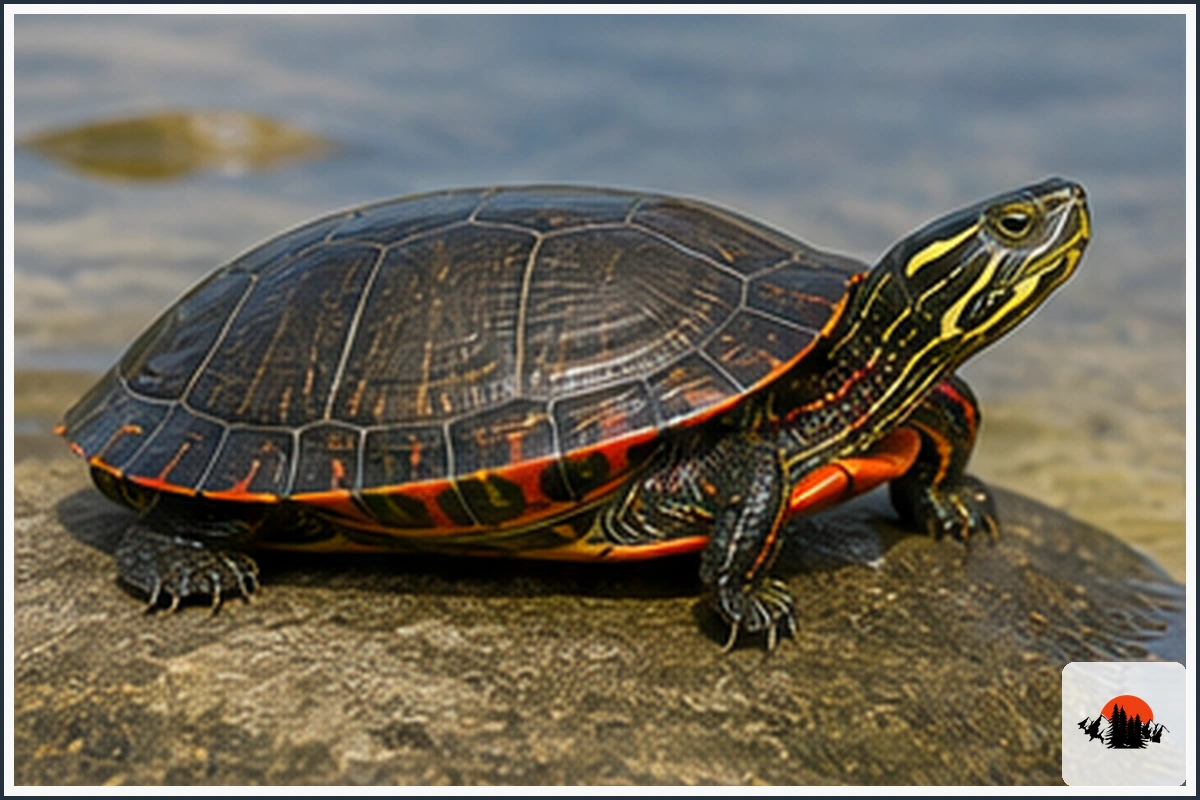
Scientific name: Chrysemys picta dorsalis. The Southern Painted Turtle is usually identified by a broad reddish or orange stripe running down the center of its otherwise dark shell. Yellow stripes also appear on the head and neck.
It lives in slow waters, ponds, swamps, and marshes, especially in the southeastern part of the state. Its diet includes plants, insects, snails, worms, and small aquatic prey.
Southern Painted Turtles often bask in open sunlight but quickly slide into the water when disturbed. Adults generally reach about 4 to 7 inches in shell length.
9. Yellow-bellied Slider
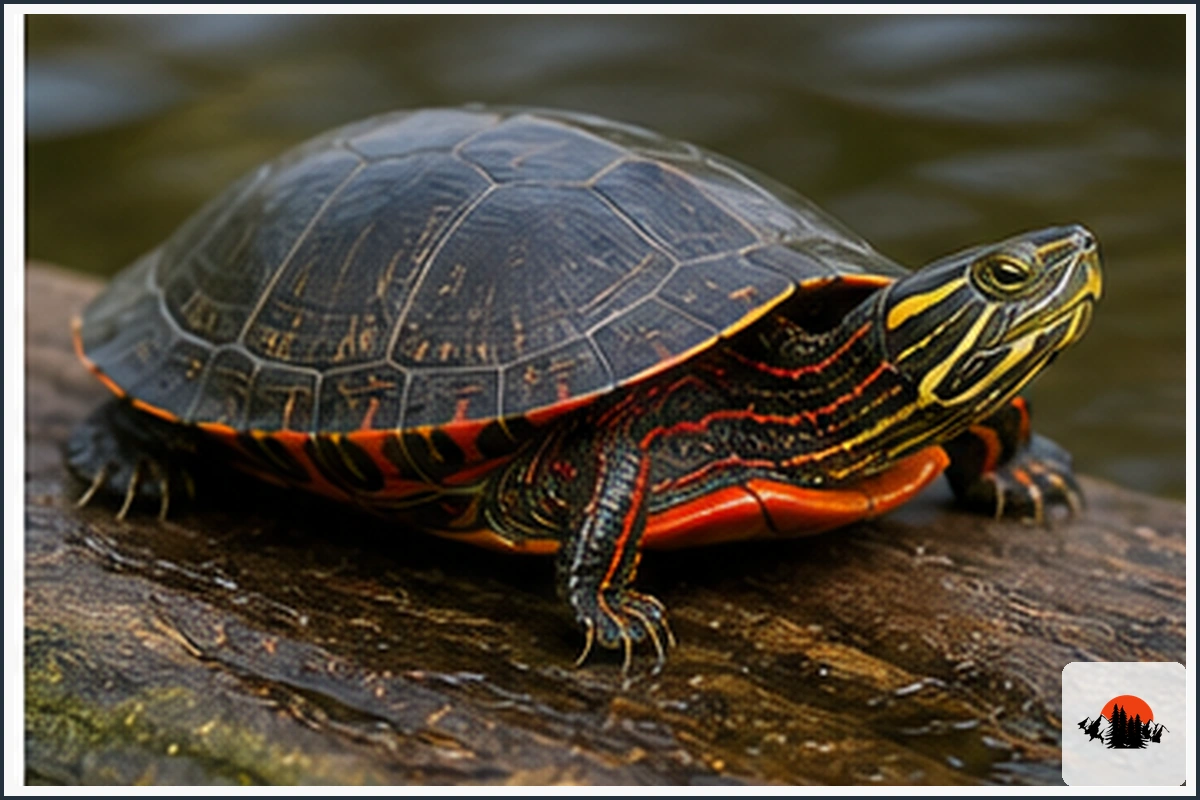
Scientific name: Trachemys scripta scripta. The Yellow-bellied Slider has a dark, oval shell, yellow stripes on the head and neck, and a yellow plastron often marked with dark spots. Adults usually measure 5 to 12 inches.
It prefers ponds, lakes, marshes, canals, and slow rivers with suitable basking sites. Young turtles eat more insects and other animal foods, while adults consume more aquatic vegetation.
Yellow-bellied Sliders are common baskers. Released pet sliders can compete with native turtles and should never be abandoned in local waterways.
10. River Cooter
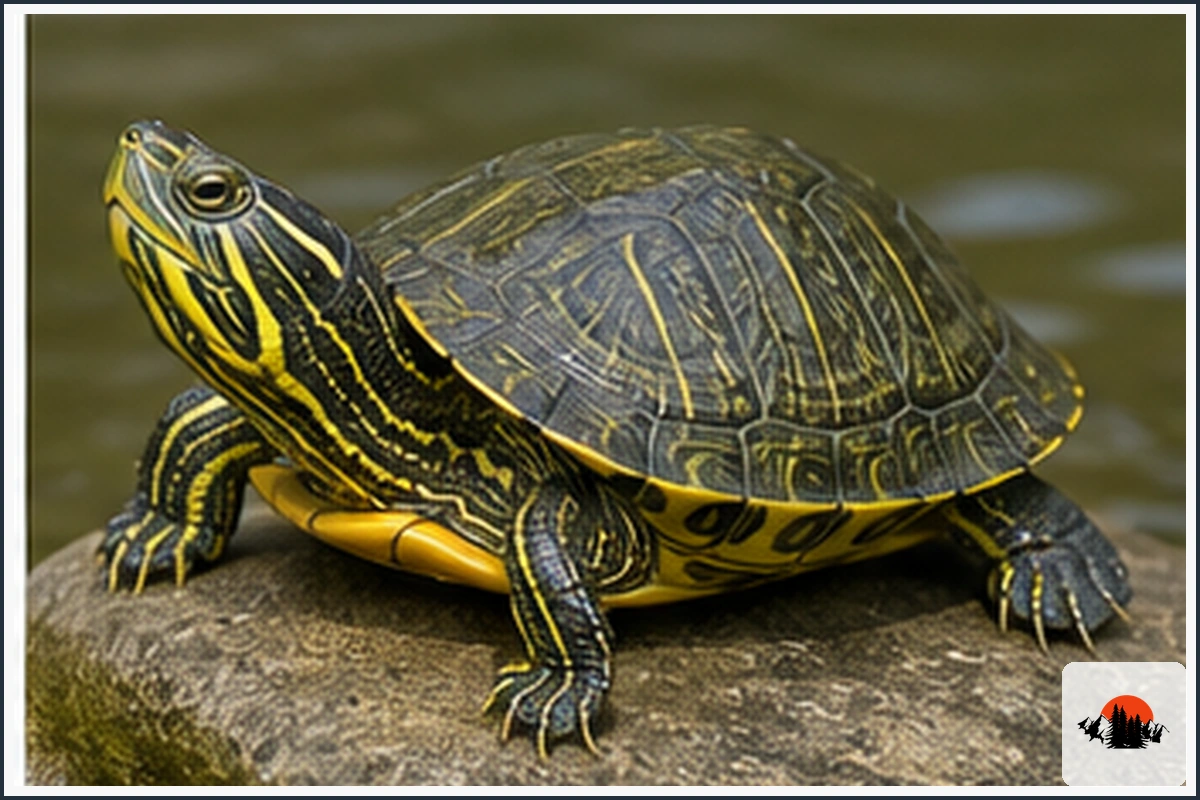
Scientific name: Pseudemys concinna. The River Cooter is a large freshwater turtle with a dark, patterned shell and yellow or orange markings on the head and legs. Adults may reach 10 to 14 inches.
It is found in rivers, large streams, lakes, and connected backwaters. River Cooters are primarily herbivorous as adults and feed on aquatic plants, algae, and leafy vegetation, although young turtles may consume more animal matter.
They are powerful swimmers and often bask on logs, rocks, or exposed banks. Clean waterways and abundant aquatic vegetation are important to this species.
11. Florida Cooter
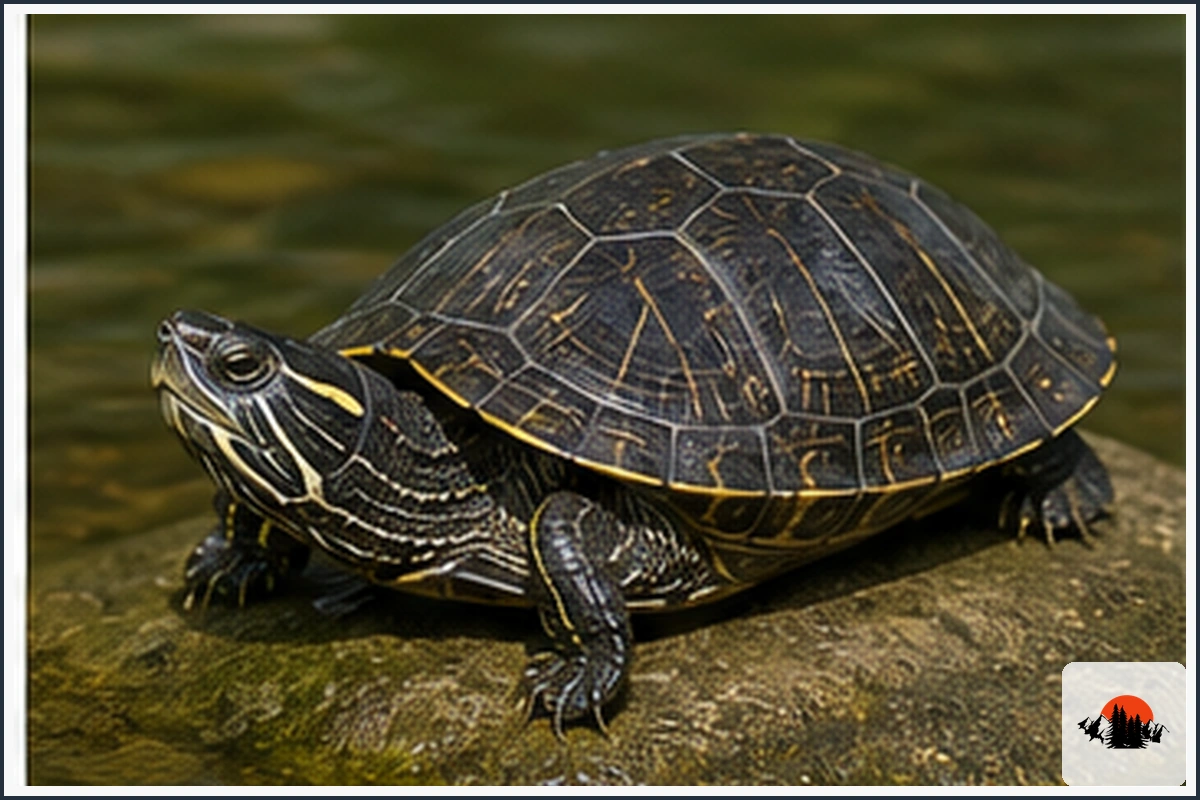
Scientific name: Pseudemys floridana. The Florida Cooter is a large aquatic turtle with a smooth, dark shell and yellow or reddish markings. Its head usually has yellow striping, and adults can grow to around 12 inches.
In North Carolina, it is most closely associated with the southeastern coastal plain. It inhabits ponds, swamps, slow rivers, and wetlands. Its diet consists mostly of aquatic plants, though young individuals eat more insects and other small animals.
Florida Cooters spend considerable time basking and may share logs with painted turtles and sliders.
12. Chicken Turtle
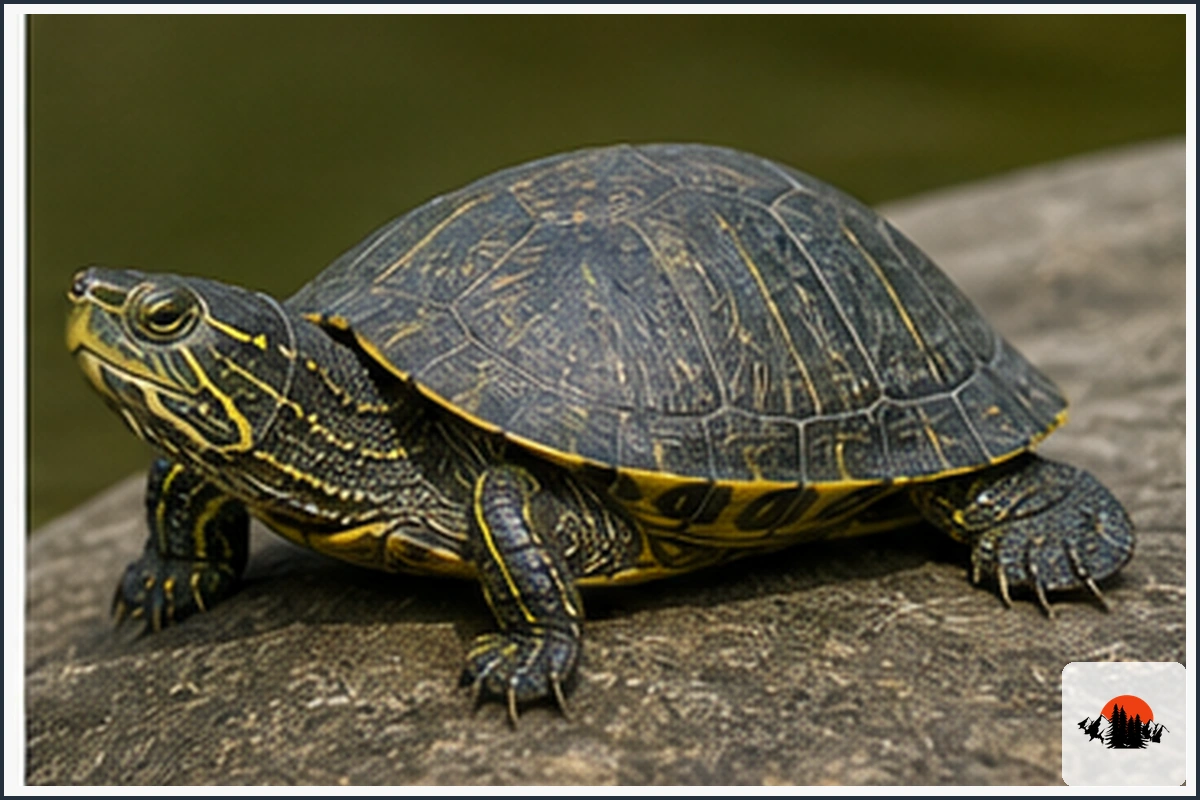
Scientific name: Deirochelys reticularia. The Chicken Turtle has a long neck, a narrow head, a webbed appearance, and a shell with a netlike pattern of yellow lines. Its shell is usually 5 to 10 inches long.
It prefers shallow, heavily vegetated ponds, swamps, marshes, and seasonal wetlands. It eats crayfish, insects, tadpoles, fish, frogs, snails, and aquatic plants.
Chicken Turtles are unusual because they may travel overland between isolated wetlands. They can be difficult to find because they often remain hidden in dense vegetation.
13. Carolina Diamondback Terrapin
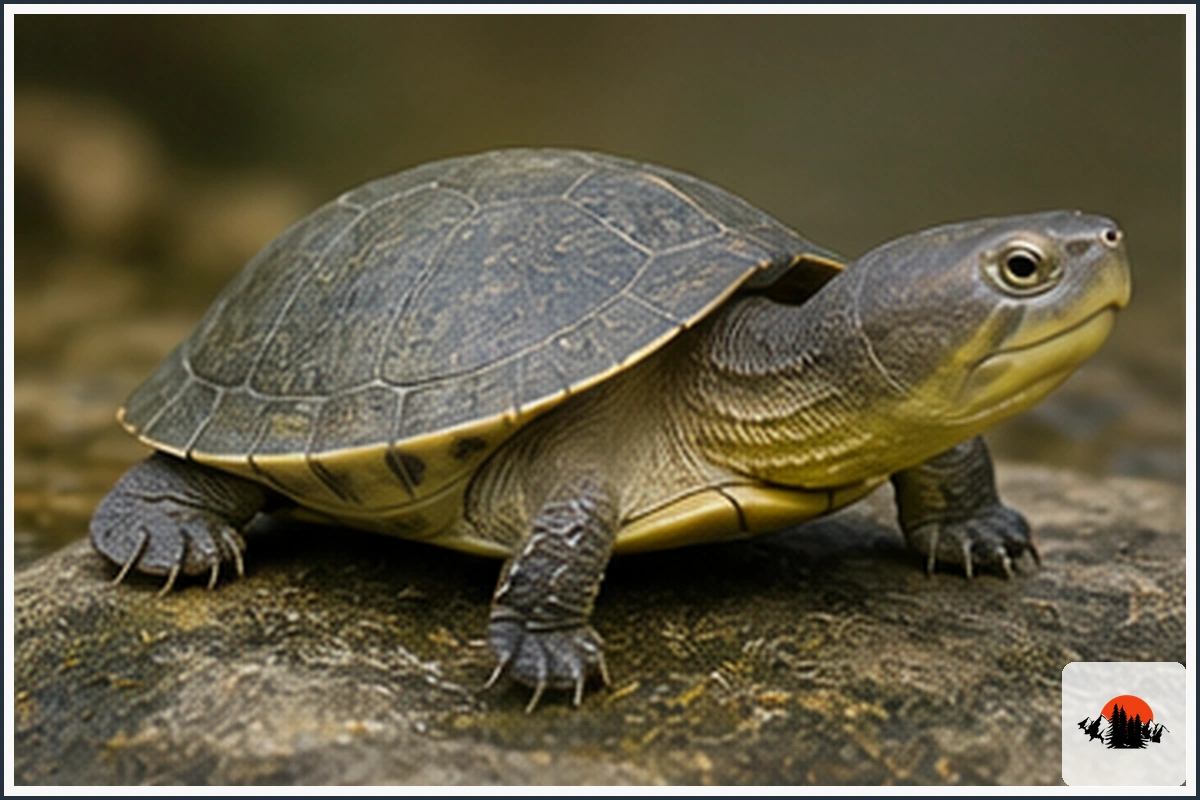
Scientific name: Malaclemys terrapin centrata. The Carolina Diamondback Terrapin has a gray or brown shell with concentric ridges and a light-colored head marked with dark speckles. Adults commonly measure 5 to 9 inches.
It lives in coastal salt marshes, tidal creeks, estuaries, and brackish lagoons. Its diet includes crabs, snails, mussels, fish, and other small marine animals.
This turtle is adapted to changing salinity and is the only North American turtle that spends its entire life in brackish coastal waters. Threats include drowning in crab pots, road mortality, shoreline development, and habitat loss.
14. Loggerhead Sea Turtle
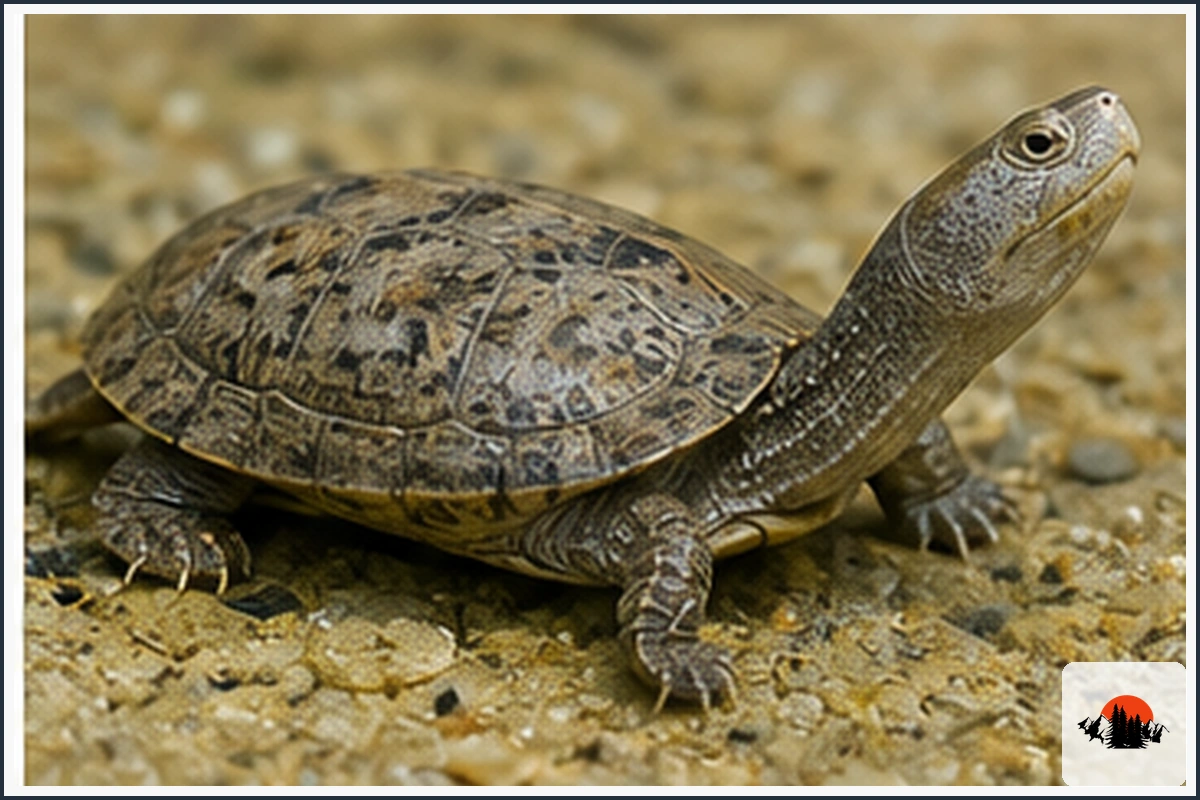
Scientific name: Caretta caretta. The Loggerhead is a large sea turtle with a reddish-brown shell, a broad head, and powerful jaws. Adults may weigh hundreds of pounds, although young turtles are much smaller.
Loggerheads use North Carolina’s coastal waters for feeding and migration. They eat crabs, mollusks, jellyfish, and other marine animals. Females come ashore to nest on sandy beaches during the warmer months.
Artificial lighting, fishing gear, plastic debris, and disturbed nesting beaches can harm this species. Nesting turtles and hatchlings must be observed from a distance without lights or flash.
15. Green Sea Turtle
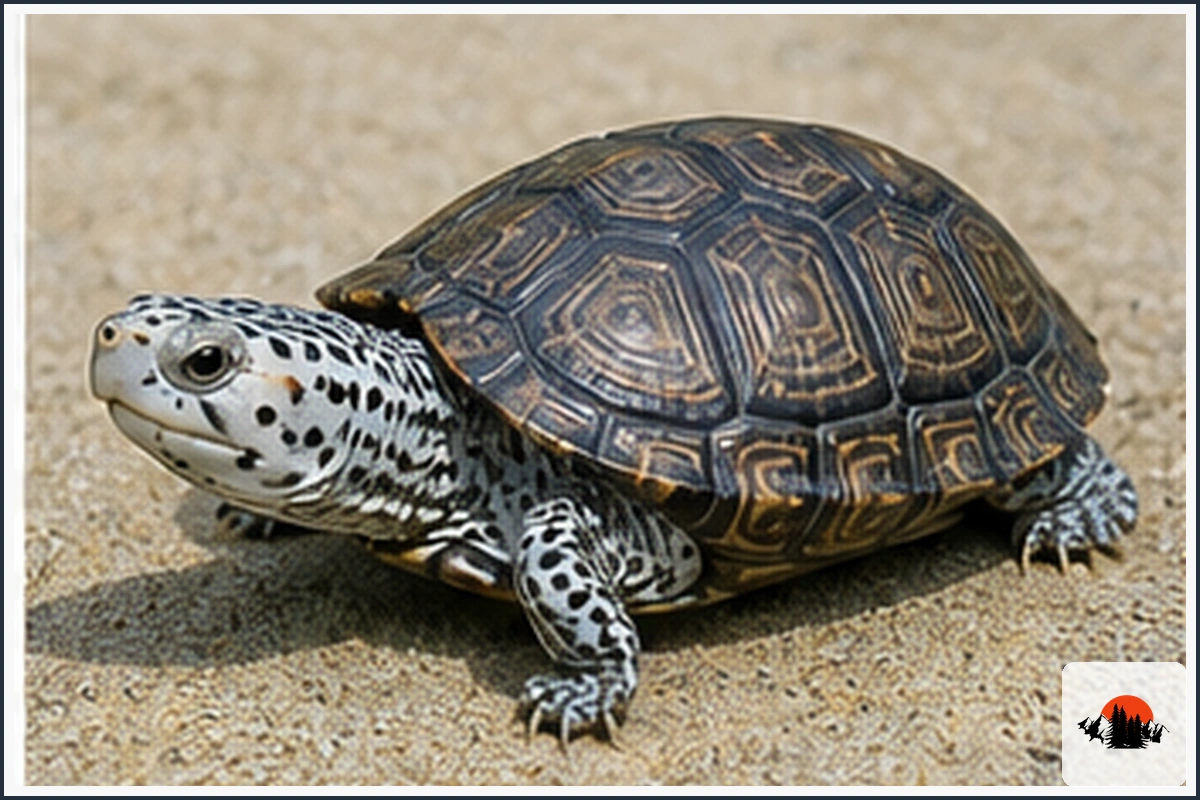
Scientific name: Chelonia mydas. Green Sea Turtles have a smooth, oval shell that may be olive, brown, or patterned. Their name refers to the color of their body fat, not necessarily the shell.
They visit North Carolina waters and beaches during seasonal movements. Adults often feed on seagrasses and algae, while younger turtles may eat more animal matter. They can grow to more than 3 feet in shell length.
Green Sea Turtles are affected by habitat degradation, fishing interactions, marine debris, and loss of nesting beaches.
16. Kemp’s Ridley Sea Turtle
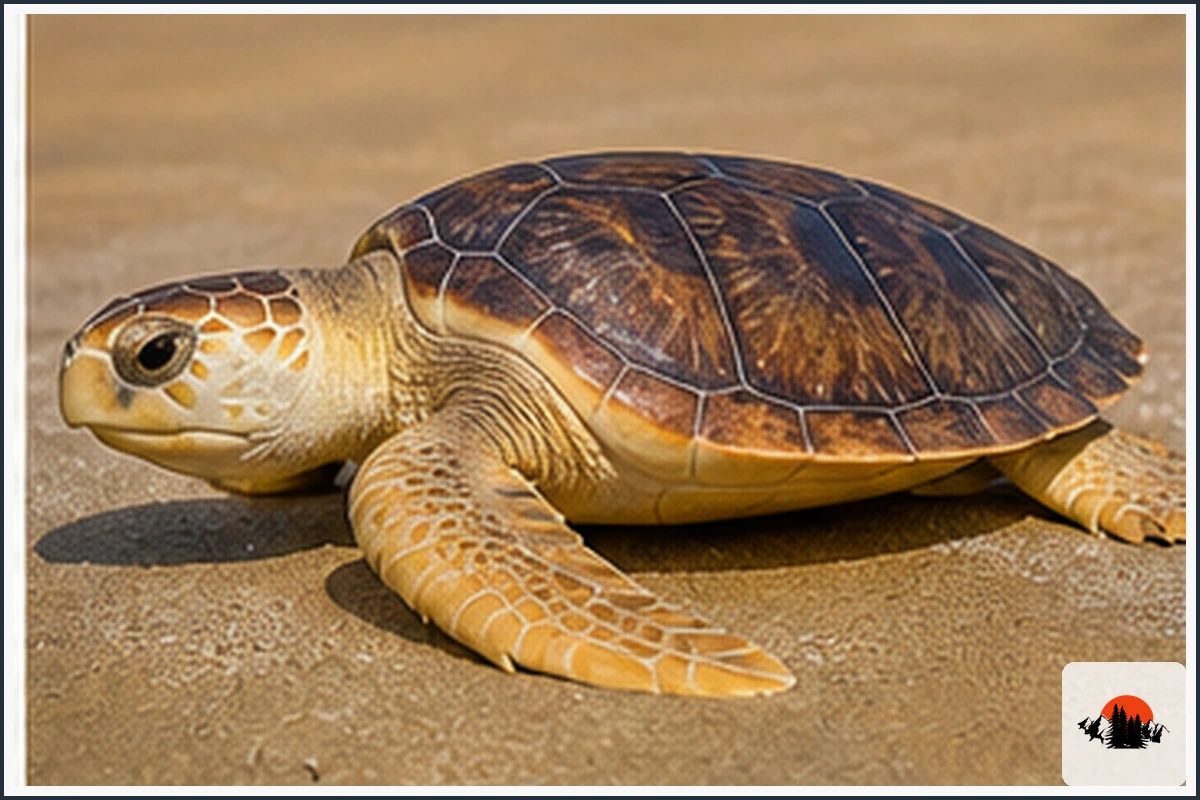
Scientific name: Lepidochelys kempii. Kemp’s Ridley is the smallest sea turtle species in the world. It has a nearly circular gray-green shell as an adult and a triangular head.
It may be found in North Carolina’s coastal waters, where it feeds mainly on crabs and other bottom-dwelling animals. Adults usually measure about 2 feet in shell length.
Kemp’s Ridleys are critically endangered and face serious threats from fishing gear, coastal development, pollution, and reduced nesting success. Any stranded or nesting turtle should be reported to trained wildlife responders.
17. Leatherback Sea Turtle
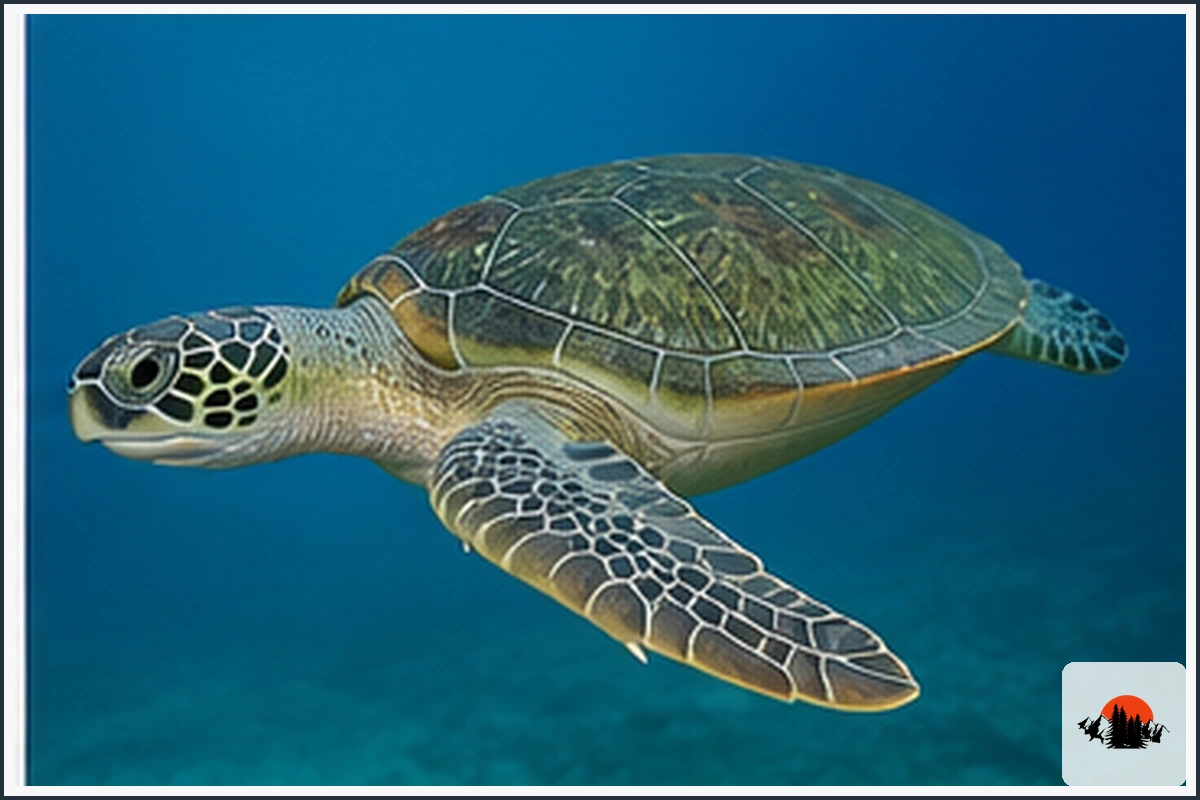
Scientific name: Dermochelys coriacea. The Leatherback is the largest living sea turtle. Instead of a hard shell, it has a flexible, leathery covering with raised ridges. Adults can exceed 6 feet in length and weigh more than 1,000 pounds.
Leatherbacks migrate through North Carolina waters and occasionally nest along the coast. They specialize in eating jellyfish and other soft-bodied marine animals.
Plastic bags and other floating debris can resemble jellyfish, making marine litter especially dangerous. Their large size and long-distance migrations make coastal conservation important.
18. Hawksbill Sea Turtle
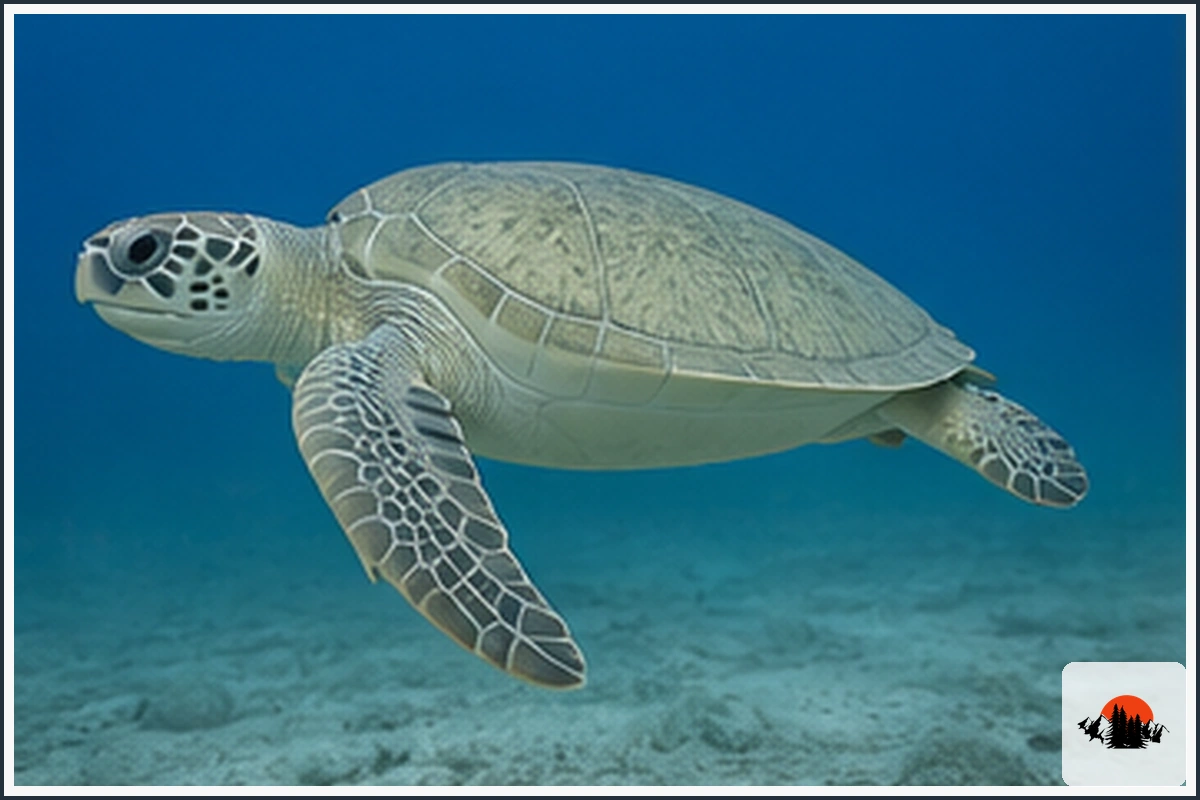
Scientific name: Eretmochelys imbricata. The Hawksbill has a narrow, pointed beak and overlapping shell scutes that create a distinctive serrated appearance. Its shell may show attractive amber, brown, and gold patterns.
Hawksbills are rare visitors to North Carolina waters. They are associated with warm marine habitats and feed largely on sponges, along with other small marine organisms.
This species is critically endangered worldwide. Historic harvesting for its shell, along with habitat loss, pollution, and fishing threats, has caused major declines.
19. Atlantic Green Turtle
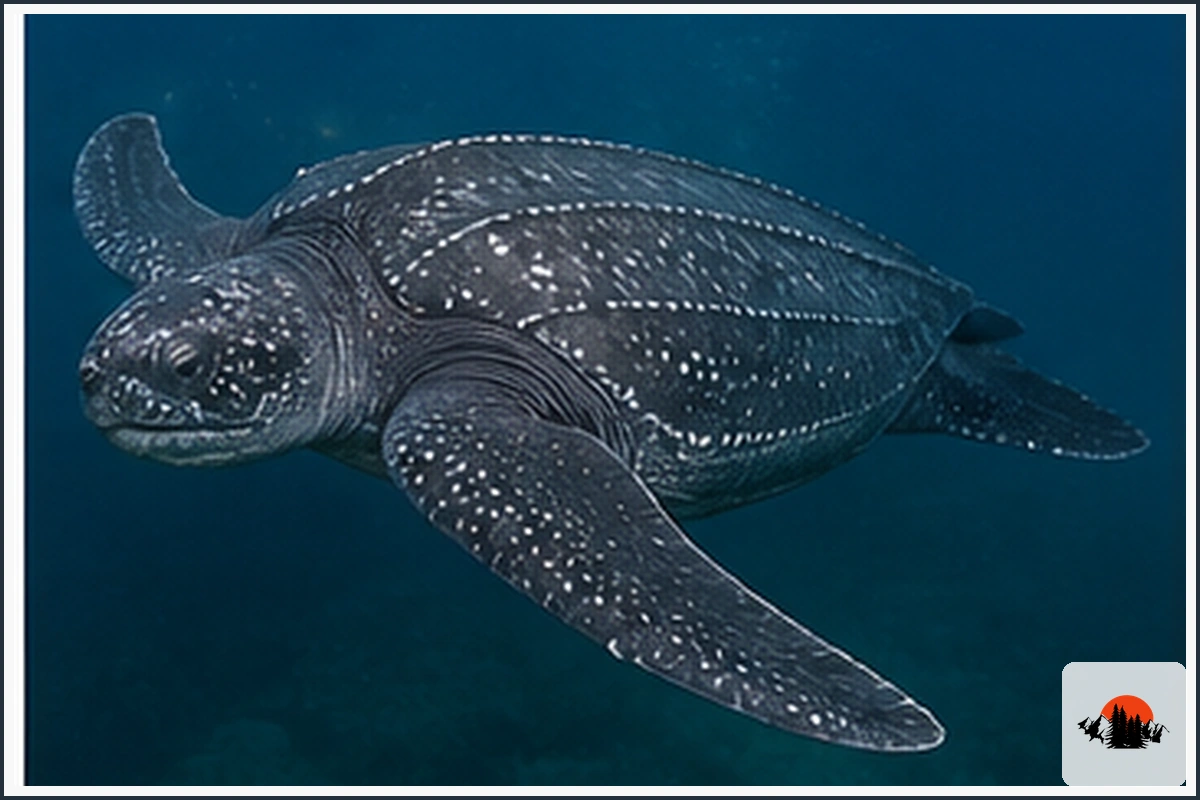
Scientific name: Chelonia mydas mydas. The Atlantic Green Turtle is the regional form of the Green Sea Turtle found in the western Atlantic. It has a smooth oval shell, a blunt head, and paddle-shaped front flippers.
Individuals may move through North Carolina waters during migration and feeding periods. Adults commonly graze on seagrasses and algae in shallow coastal habitats, while juveniles have a broader diet.
Protecting seagrass beds, reducing marine debris, and preventing accidental capture are important conservation measures for this turtle.
20. Atlantic Loggerhead Turtle
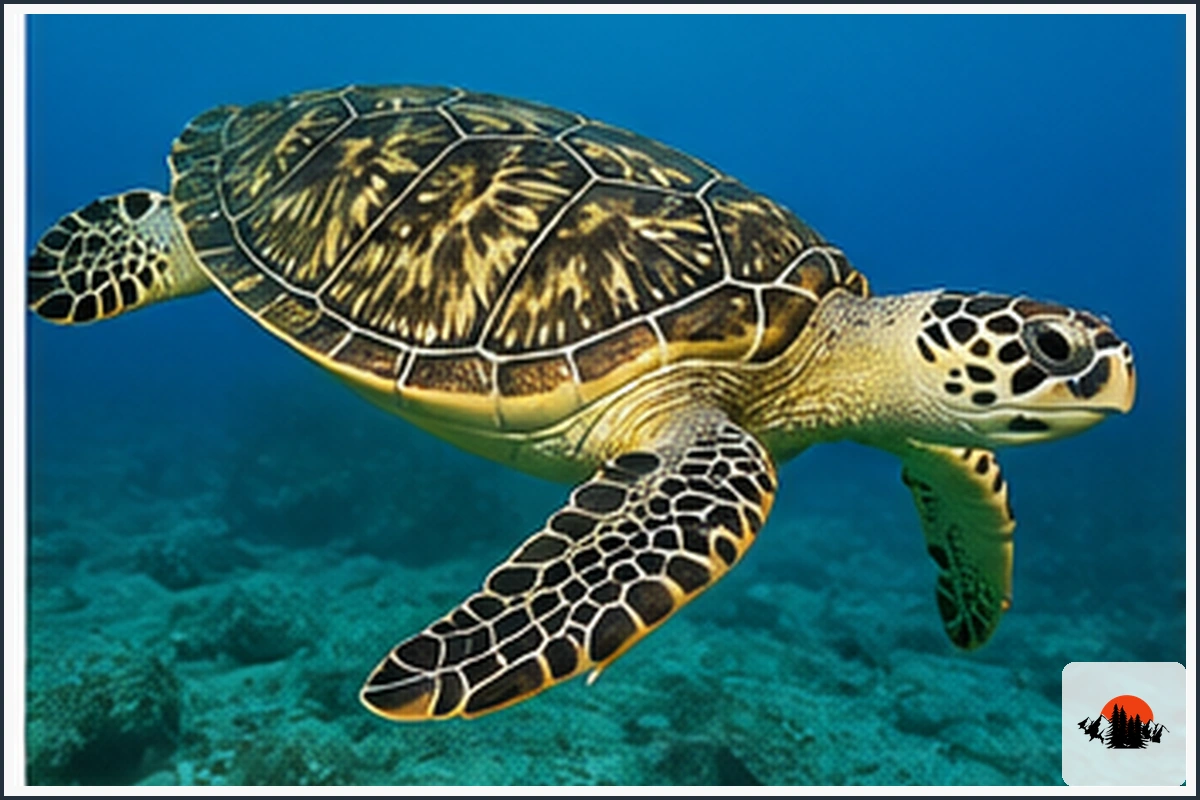
Scientific name: Caretta caretta caretta. The Atlantic Loggerhead is the regional form of the Loggerhead Sea Turtle found along the western Atlantic coast. It is identified by its large head, reddish-brown shell, and strong jaws.
These turtles feed in coastal waters and nest on sandy beaches in North Carolina. Their diet includes hard-shelled prey such as crabs, whelks, and mollusks.
Beach lighting, fishing gear, vehicle traffic, and disturbance near nests can reduce survival. Keep beaches dark and quiet during nesting season.
How Are These Turtles Classified?
North Carolina turtles can be grouped by their habitat and evolutionary family:
- Land turtles: The Eastern Box Turtle spends most of its life on land.
- Freshwater turtles: Snapping turtles, mud turtles, musk turtles, painted turtles, sliders, cooters, and Chicken Turtles live in ponds, rivers, wetlands, and swamps.
- Brackish-water turtles: The Carolina Diamondback Terrapin lives in tidal salt marshes and estuaries.
- Sea turtles: Loggerheads, Green Sea Turtles, Kemp’s Ridleys, Leatherbacks, and Hawksbills use offshore waters, coastal feeding areas, or sandy nesting beaches.
- Shell types: Most turtles have a hard bony shell, while the Leatherback has a flexible, leathery carapace.
Where Do These Turtles Live?
North Carolina’s varied geography creates habitat for many turtle species. Mountain and piedmont forests support Eastern Box Turtles, while rivers, farm ponds, swamps, and wetlands support freshwater turtles. The coastal plain contains extensive marshes and estuaries used by Diamondback Terrapins. Offshore waters and sandy beaches provide seasonal habitat for sea turtles.
| Habitat | Typical Turtles |
|---|---|
| Forests and fields | Eastern Box Turtle |
| Ponds and wetlands | Painted Turtle, Sliders, Mud Turtle, Musk Turtle |
| Rivers and large streams | Snapping Turtle, River Cooter |
| Salt marshes and estuaries | Diamondback Terrapin |
| Coastal waters and beaches | Sea turtles |
What Do North Carolina Turtles Eat?
Turtle diets vary widely. Box Turtles eat fruits, fungi, insects, and other forest-floor foods. Snapping Turtles are opportunistic feeders that consume fish, frogs, carrion, and plants. Painted Turtles, sliders, and cooters eat a combination of aquatic plants and small animals, with adults of many species becoming more herbivorous. Sea turtles have specialized diets, including jellyfish, seagrass, algae, crabs, sponges, and mollusks.
How to Identify Different Types of Turtles in North Carolina
- Look at the shell: Note whether it is smooth, ridged, domed, spotted, striped, or leathery.
- Check the size: A small spotted turtle looks very different from a large snapping turtle or Leatherback.
- Examine the head: Yellow stripes, a pointed beak, a broad snapping-turtle head, or a long neck can be important clues.
- Consider the habitat: Forests, ponds, rivers, salt marshes, and beaches support different species.
- Observe basking behavior: Painted Turtles, sliders, and cooters commonly bask on logs and banks.
- Notice the season: Sea turtles are more likely to be encountered along the coast during nesting and migration periods.
- Do not rely on one marking: Compare shell shape, head markings, location, and behavior together.
Outdoor Tips for Finding and Observing These Turtles
- Use binoculars or a camera with a zoom lens instead of approaching closely.
- Search sunny logs and banks for basking turtles, especially during mild weather.
- Walk slowly around wetlands and forest edges, where turtles may be crossing.
- Never remove a turtle from its habitat or take it home as a pet.
- If helping a turtle cross a road, move it only when safe and in the direction it was already traveling.
- Keep dogs away from nesting beaches and avoid disturbing sea turtle nests.
- Do not touch hatchlings or use flashlights and flash photography near nesting sea turtles.
Safety, Sustainability, and Conservation Notes
Several North Carolina turtles face threats from habitat loss, roads, illegal collection, fishing gear, pollution, and climate-related changes. Never handle sea turtles, disturb nests, or interfere with hatchlings. Avoid buying wild-caught turtles, and never release aquarium turtles into ponds or rivers. Released pets may spread disease or compete with native species.
Check current North Carolina wildlife regulations before collecting, fishing, trapping, or handling any turtle. Report injured or stranded sea turtles to local wildlife authorities or trained marine animal responders rather than attempting to rehabilitate them yourself.
Fun Facts About Turtles in North Carolina
- North Carolina is home to 20 recognized turtle species.
- The Eastern Box Turtle can close its hinged shell for protection.
- The Leatherback is the largest living sea turtle.
- Kemp’s Ridley is the smallest sea turtle species.
- Diamondback Terrapins are adapted to brackish coastal water.
- Snapping Turtles can use their long tails for balance and defense.
- Many freshwater turtles bask to warm their bodies and support normal metabolism.
- Some North Carolina sea turtles travel thousands of miles during migration.
- Sea turtle hatchlings use natural light near the horizon to find the ocean.
- Box Turtles may remain in the same general area for many years.
Final Thoughts on Types of Turtles in North Carolina
The types of turtles in North Carolina range from forest-dwelling Eastern Box Turtles to giant Leatherbacks traveling through coastal waters. Learning shell patterns, habitat clues, behavior, and seasonal movements makes identification easier while encouraging responsible wildlife observation. Protecting wetlands, forests, rivers, marshes, and beaches gives these remarkable reptiles a better chance to thrive.
Frequently Asked Questions
1. How many turtle species live in North Carolina?
North Carolina is home to 20 recognized turtle species, including freshwater turtles, a land turtle, a Diamondback Terrapin, and five sea turtle species.
2. What is the most common land turtle in North Carolina?
The Eastern Box Turtle is the state’s best-known terrestrial turtle and occurs in forests, fields, and woodland edges.
3. What is the largest turtle in North Carolina?
The Leatherback Sea Turtle is the largest turtle species found in North Carolina waters and can weigh more than 1,000 pounds.
4. What is the smallest sea turtle found in North Carolina?
Kemp’s Ridley is the smallest sea turtle species and may occur in North Carolina’s coastal waters.
5. Are there snapping turtles in North Carolina?
Yes. Common Snapping Turtles live in ponds, swamps, lakes, rivers, and other freshwater habitats across the state.
6. What does an Eastern Box Turtle look like?
It has a high-domed shell with yellow, orange, or reddish markings and a hinged lower shell that can close tightly.
7. Are Eastern Box Turtles dangerous?
Eastern Box Turtles are not generally dangerous, but they can bite if handled improperly. The best practice is to observe them without touching them.
8. Can I keep a wild turtle as a pet?
Wild turtles should not be collected as pets. Collection may be illegal, and removing adults can harm local populations.
9. What turtles live in North Carolina ponds?
Painted Turtles, Yellow-bellied Sliders, Eastern Mud Turtles, Eastern Musk Turtles, and snapping turtles may occur in ponds and wetlands.
10. What turtle has yellow stripes on its head?
Yellow-bellied Sliders, painted turtles, and several other freshwater turtles may have yellow head stripes. Habitat and shell markings help separate them.
11. What turtle has spots on its shell?
The Spotted Turtle has a black shell covered with yellow spots, although the number and brightness of spots can vary.
12. What is the difference between a turtle and a terrapin?
The terms overlap, but “terrapin” is often used for turtles that live in brackish or coastal water. The Diamondback Terrapin is North Carolina’s best example.
13. Where can I see sea turtles in North Carolina?
Sea turtles may be seen in coastal waters or nesting on sandy beaches, but they are protected and should always be observed from a respectful distance.
14. When do sea turtles nest in North Carolina?
Sea turtle nesting generally occurs during the warmer months, with timing varying by species and beach conditions.
15. What should I do if I find an injured sea turtle?
Do not touch or move it unless directed by trained responders. Contact local wildlife officials, a sea turtle stranding network, or an authorized marine animal rescue group.
16. What should I do if a turtle is crossing the road?
If it is safe, guide the turtle across in the direction it was already traveling. Do not carry it to a different location.
17. Do North Carolina turtles hibernate?
Many freshwater and land turtles become inactive during cold weather. They may shelter in mud, leaf litter, underwater areas, or protected ground sites.
18. What do freshwater turtles eat?
Depending on the species, freshwater turtles eat aquatic plants, algae, insects, snails, crayfish, fish, frogs, carrion, and other small animals.
19. What do Eastern Box Turtles eat?
Eastern Box Turtles eat berries, mushrooms, insects, worms, slugs, carrion, and other foods found on the forest floor.
20. Are turtles good swimmers?
Aquatic turtles such as sliders, cooters, painted turtles, and snapping turtles are capable swimmers. Eastern Box Turtles are primarily land animals.
21. Can turtles breathe underwater?
Turtles must breathe air, although some aquatic species can absorb limited oxygen through specialized skin areas while resting underwater.
22. Why do turtles bask?
Basking helps turtles warm their bodies, dry their shells, and support normal physiological functions.
23. Are Diamondback Terrapins freshwater turtles?
No. Diamondback Terrapins are adapted to brackish water in salt marshes, tidal creeks, and estuaries.
24. Are all North Carolina sea turtles endangered?
All sea turtles found along North Carolina’s coast face conservation concerns, and several species have significant legal protection because of population declines.
25. Why are plastic bags dangerous to sea turtles?
Floating plastic bags can resemble jellyfish, a common food of Leatherback and other sea turtles. Ingested plastic can cause injury or starvation.
26. Can I release a pet turtle into a North Carolina pond?
No. Released pets can spread disease, disrupt native ecosystems, and may not survive. Contact a legitimate animal placement or wildlife organization instead.
27. What is the difference between a slider and a painted turtle?
Both bask in freshwater habitats, but sliders often have prominent yellow head stripes and a larger body, while painted turtles commonly show red or orange shell-edge markings.
28. What is the difference between a mud turtle and a musk turtle?
Both are small aquatic turtles, but musk turtles often have distinctive yellow head stripes and may release a strong odor when handled. Mud turtles usually have a smoother, more uniformly dark appearance.
29. Do turtles carry diseases?
Turtles can carry Salmonella and other microorganisms. Wash your hands after contact and supervise children around reptiles.
30. How can I help North Carolina turtles?
Protect wetlands, keep beaches dark during nesting season, avoid litter, drive carefully near wetlands, never collect wild turtles, and report injured wildlife to appropriate authorities.