

Doves are among the most widely recognized and peaceful birds in the world, often symbolizing calmness and harmony across cultures. Belonging to the pigeon family (Columbidae), doves are found in a wide range of environments including woodlands, grasslands, farmlands, deserts, and urban areas. Their ability to adapt to human-altered landscapes is one of the key reasons they are so successful across nearly every continent.
Understanding what doves eat is essential for both wildlife enthusiasts and backyard bird watchers. Their diet plays a major role in their survival, migration patterns, breeding success, and overall health. Unlike many birds that rely heavily on insects or animal prey, doves are primarily granivores, meaning their diet is dominated by seeds and grains. However, they are also opportunistic feeders and will consume fruits, berries, and occasionally small insects when available.
The feeding behavior of doves is closely tied to the environment. In natural habitats, they forage on the ground, carefully picking up seeds dropped by grasses and wild plants. In agricultural and suburban areas, they often feed on cultivated grains such as wheat, corn, and rice. This adaptability allows them to thrive even in changing landscapes.
Another important aspect of dove nutrition is their reliance on soft, easily digestible foods. Because doves do not have strong beaks for cracking hard shells like some birds, they prefer smaller seeds such as millet, canary seed, and grass seeds. They also swallow small stones to help grind food in their gizzard, aiding digestion.
This article explores 30 foods that doves commonly eat in the wild and in human-influenced environments. From seeds and grains to fruits and occasional insects, each food type plays a role in supporting their energy needs, reproduction, and survival throughout the year.
In the next sections, we will break down each food category in detail and explain how doves use these resources to thrive in diverse ecosystems.
What Do Doves Eat in the Wild?
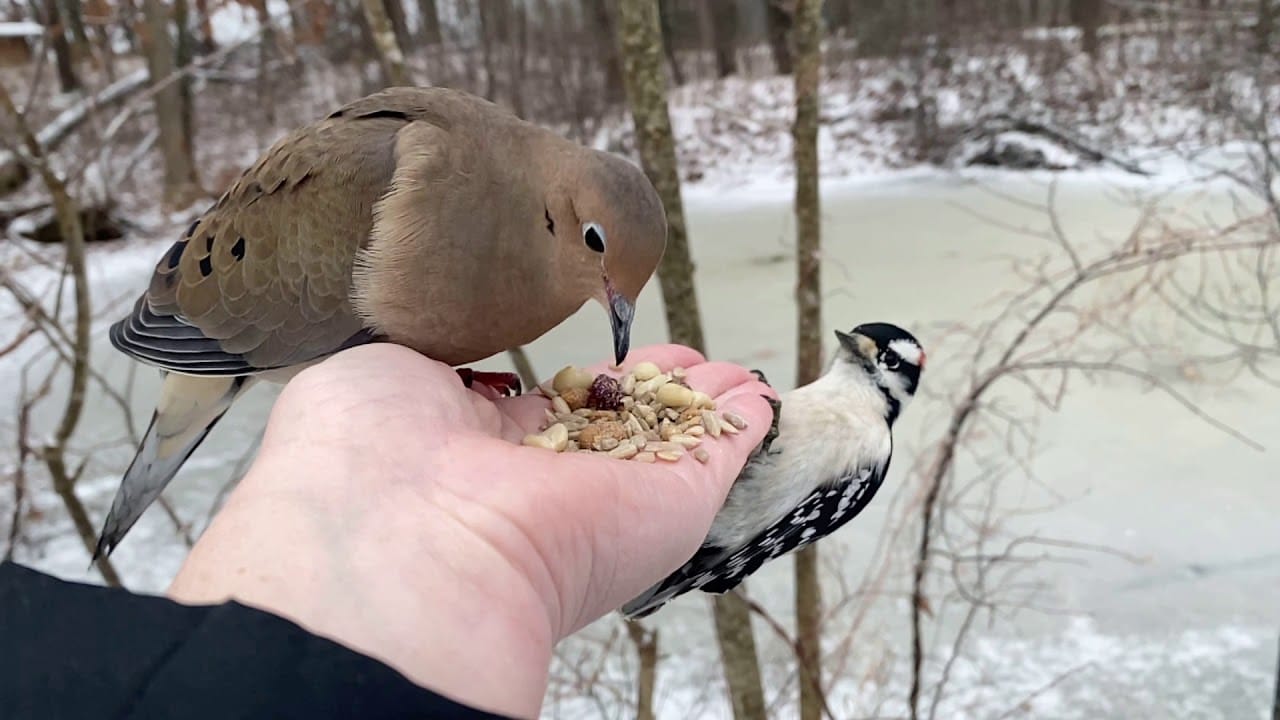
1. Millet Seeds
Millet seeds are one of the most important and preferred foods in the dove diet. These small, soft seeds are easy for doves to pick up and swallow, making them ideal for their simple beak structure. In the wild, millet often grows in grasslands and open fields, where doves forage on the ground in small flocks.
Nutritionally, millet provides a balanced source of carbohydrates and moderate protein, giving doves steady energy for daily activity such as flight, nesting, and migration. Because millet seeds are abundant and easy to digest, they form a reliable base food throughout the year.
Doves often target areas with dense grass seed production, and millet naturally resembles many wild grass seeds, making it a naturally attractive food source. In agricultural regions, cultivated millet also becomes a major dietary component.
2. Sunflower Seeds
Sunflower seeds are highly nutritious and widely consumed by doves, especially in areas where sunflower plants are cultivated or grow wild. These seeds are rich in healthy fats, protein, and essential minerals.
Doves typically feed on smaller sunflower seeds or broken pieces, as their beaks are not designed for heavy shell cracking. They often rely on naturally exposed seeds or those partially opened by other animals or environmental factors.
Sunflower seeds provide long-lasting energy, especially important during colder months or migration periods when energy demands increase. Their high fat content makes them a valuable winter food source.
3. Safflower Seeds
Safflower seeds are another important food source for doves in both wild and semi-wild environments. These seeds are slightly harder than millet but still accessible to doves due to their adaptable feeding behavior.
They are rich in fats, fiber, and protein, supporting energy balance and overall health. Safflower plants often grow in dry, open habitats where doves are commonly found foraging.
Doves may prefer safflower seeds when softer seeds are scarce, demonstrating their flexible feeding strategy.
4. Cracked Corn
Cracked corn is a widely consumed grain among doves, particularly in agricultural and suburban environments. Because whole corn kernels are too hard, doves rely on broken or cracked pieces that are easier to digest.
This food provides a strong carbohydrate source, helping doves maintain energy for flight and daily activity. In farming areas, spilled grain often becomes an important feeding opportunity.
Cracked corn is especially valuable in winter when natural seed sources are limited, making it a key survival food in colder climates.
5. Wheat
Wheat is one of the most widely available grains consumed by doves. It is commonly found in agricultural fields, harvested areas, and grain storage sites.
Doves feed on fallen wheat seeds directly from the ground. Wheat provides carbohydrates and moderate protein, supporting daily energy needs and reproductive health.
Because wheat is abundant in human-altered landscapes, it plays a significant role in supporting urban and rural dove populations.
6. Rice
Rice is another important grain in the dove diet, especially in regions where rice farming is common. Doves feed on both raw and partially processed rice grains found in fields or storage areas.
Rice is rich in carbohydrates and provides quick energy, making it a useful food source during migration or periods of high activity.
Doves often forage in rice paddies after harvest, taking advantage of leftover grains scattered on the ground.
7. Barley
Barley is a hardy grain that doves consume when available in agricultural fields or wild grain patches. It is slightly tougher than some other seeds but still accessible due to its small size.
Barley provides a combination of carbohydrates, fiber, and small amounts of protein. This supports digestion and sustained energy release.
In colder climates, barley becomes an important fallback food when softer seeds are scarce.
8. Oats
Oats are another grain commonly eaten by doves, particularly in farming regions. They are slightly softer than barley and easier to consume.
Oats provide energy-rich carbohydrates and some protein, making them a balanced food source. Doves often feed on oats left behind after harvesting or processing.
Their widespread availability makes oats a dependable food for both wild and urban dove populations.
9. Sorghum
Sorghum is a drought-resistant grain that grows in warmer climates and is often consumed by doves in dry regions. It is small enough for doves to handle easily and is commonly found in agricultural landscapes.
This grain provides carbohydrates and essential nutrients that support energy and endurance. Doves may rely heavily on sorghum in arid environments where other seeds are less available.
Sorghum’s resilience in harsh climates indirectly supports dove populations in challenging ecosystems.
10. Canary Seed
Canary seed is a small, nutrient-rich seed that is highly favored by doves due to its size and digestibility. It is often found in grasslands and cultivated bird seed mixes.
This seed provides a balanced mix of carbohydrates, fats, and protein, making it ideal for maintaining energy levels throughout the day.
Doves often select canary seeds when feeding alongside other small seed-eating birds, highlighting their preference for soft and easily consumed food sources.
11. Grass Seeds
Grass seeds are one of the most natural and important food sources for wild doves. In their native habitats such as grasslands, savannas, and open fields, doves spend a large portion of their day foraging directly on the ground, picking up seeds that fall naturally from grasses as they mature. This feeding behavior is highly efficient because grass seeds are widely distributed and constantly replenished throughout growing seasons.
Nutritionally, grass seeds provide a steady supply of carbohydrates along with moderate protein and fiber. These nutrients are essential for maintaining daily energy levels, supporting flight activity, and sustaining reproductive health during breeding seasons. Unlike high-fat foods, grass seeds offer slow-release energy, making them ideal for long foraging periods.
Doves are especially adapted to feeding in areas where grasses are diverse, allowing them to consume a variety of seed types depending on the region. Their ability to locate and efficiently harvest these tiny seeds gives them a survival advantage in both natural and agricultural ecosystems.
12. Wild Weed Seeds
Wild weed seeds form a surprisingly important part of a dove’s natural diet, especially in disturbed habitats, roadsides, and farmland edges where weeds thrive. Plants such as dandelions, thistles, and pigweed produce abundant seeds that are easily accessible to ground-feeding birds like doves.
These seeds are typically small, lightweight, and highly digestible, making them ideal for doves, which lack strong crushing beaks. Weed seeds often contain a balanced mix of fats, carbohydrates, and micronutrients that support long-term energy needs.
One of the key advantages of weed seeds is their availability throughout much of the year. Because weeds grow quickly and reproduce in large quantities, they provide a stable food source even when cultivated crops are not present. This makes them especially important in transitional seasons like spring and autumn.
13. General Grains
Grains as a category include wheat, barley, oats, rye, and other cereal crops that doves frequently consume in both wild and human-influenced environments. These grains are among the most energy-dense foods in the dove diet and are especially important in agricultural regions.
Doves typically feed on spilled or leftover grains in fields after harvesting. This opportunistic behavior allows them to take advantage of human agriculture without needing to directly interact with cultivated crops during growth stages.
Grains provide a strong carbohydrate base, which is essential for maintaining energy during long flights, migration, and breeding. While they are not particularly high in fat, their abundance makes them a reliable staple food.
14. Peanuts
Peanuts are a high-energy food occasionally consumed by doves when available in broken or shelled form. In the wild, doves may encounter peanuts near agricultural areas, storage sites, or bird feeding stations.
Peanuts are extremely rich in fats and protein, making them a concentrated energy source. However, whole peanuts are often too large or hard for doves to consume, so they rely on crushed or fragmented pieces.
When accessible, peanuts can significantly boost a dove’s energy reserves, especially during winter months or migration periods when calorie demands are high. Their nutrient density makes them a valuable but less naturally common food source compared to seeds and grains.
15. Hemp Seeds
Hemp seeds are small, oil-rich seeds that are highly nutritious and favored by many seed-eating birds, including doves. In natural environments, hemp-like wild plants or cultivated fields may provide access to these seeds.
They are particularly high in healthy fats and protein, making them an excellent energy source. These nutrients support feather growth, reproduction, and overall body maintenance.
Doves are able to easily consume hemp seeds due to their soft shell and small size. This makes them an efficient food source that requires little effort to process or digest.
16. Flax Seeds
Flax seeds are another nutrient-rich seed occasionally consumed by doves. These seeds are known for their high omega-3 fatty acid content, along with fiber and protein.
In the wild, flax seeds may be encountered in agricultural settings or mixed with other wild seeds. Their small size makes them easy for doves to pick up and swallow whole.
Flax seeds contribute to energy balance and may support feather quality and overall health. Although not a primary food source, they are beneficial when available in mixed seed environments.
17. Rapeseed
Rapeseed, also known as canola seed, is a small oil-rich seed that doves may consume in farming regions where it is cultivated. These seeds are often spilled during harvest or processing, creating feeding opportunities.
Rapeseed is high in fats, making it a valuable energy source, particularly during colder seasons when birds require more calories to maintain body temperature.
Doves benefit from its energy density, although they typically consume it opportunistically rather than as a staple food.
18. Chia Seeds
Chia seeds are highly nutritious seeds that may be consumed by doves in environments where they are present. Although more commonly associated with cultivated human diets, they resemble many small wild seeds that doves naturally eat.
They are rich in fiber, omega-3 fatty acids, and protein, making them a compact but powerful energy source.
Doves benefit from their small size and easy digestibility, although chia seeds are not a widespread natural food source in most wild habitats.
19. Sesame Seeds
Sesame seeds are oil-rich seeds that doves may encounter in agricultural or human-influenced environments. They are small, lightweight, and easy to consume.
These seeds provide high levels of fat and moderate protein, supporting energy needs during active periods such as breeding or migration.
Because sesame seeds are often associated with cultivated crops, they are more commonly part of an opportunistic diet rather than a natural staple food.
20. Millet Grass Seeds
Millet grass seeds are one of the most important natural food sources for doves, closely related to cultivated millet but occurring in wild grass environments. These seeds are highly abundant and form a core part of the diet in many regions.
They are soft, small, and easy to digest, making them ideal for ground-feeding birds. Nutritionally, they provide carbohydrates for energy and small amounts of protein for body maintenance.
Doves often prefer millet grass seeds over harder grains, which is why millet-based birdseed mixes are commonly used in bird feeding.
21. Berries
Berries are a seasonal but important food source for doves, especially during late summer and autumn when fruiting plants are abundant. Although doves are primarily seed eaters, they readily consume soft fruits when available, particularly in wooded edges, hedgerows, and suburban gardens.
Berries provide a mix of natural sugars, water content, vitamins, and antioxidants. These nutrients are valuable for maintaining hydration and energy levels, especially during warmer months or migration periods. Unlike seeds, which provide slow-release energy, berries offer quick energy due to their sugar content.
Doves typically feed on berries that are small and easy to swallow whole, such as those found on low shrubs or vines. This feeding behavior allows them to supplement their diet when seed availability fluctuates seasonally.
22. Blackberries
Blackberries are one of the most commonly consumed wild fruits by doves in temperate regions. These fruits grow in dense clusters on bramble bushes, often forming thick hedgerows that provide both food and shelter for wildlife.
Nutritionally, blackberries are rich in vitamins C and K, antioxidants, and natural sugars. For doves, they serve as a valuable energy supplement when seed sources become limited in late summer.
Doves usually feed directly from the bush, plucking ripe berries one by one. Their ability to exploit berry-producing shrubs gives them an advantage in mixed woodland and agricultural-edge habitats.
23. Blueberries
Blueberries are another highly nutritious fruit consumed by doves in regions where they grow naturally or are cultivated. These small, soft berries are easy for doves to swallow whole, making them ideal seasonal food.
Blueberries are packed with antioxidants, fiber, and natural sugars. These nutrients support immune health and provide quick energy, especially during breeding and migration periods when energy demands are high.
Doves often feed in berry-rich habitats where multiple fruiting plants are available, allowing them to mix berries with seeds for a balanced diet.
24. Strawberries
Strawberries are occasionally eaten by doves, especially in gardens, farms, or wild areas where they grow close to the ground. Their bright color and strong scent make them easy to locate.
These fruits provide hydration, vitamin C, and carbohydrates. Although not a staple food, strawberries are consumed opportunistically when ripe and accessible.
Doves may peck at soft sections of strawberries, particularly in early morning or late afternoon when foraging activity peaks.
25. Figs
Figs are a highly energy-rich fruit consumed by doves in warmer climates where fig trees grow naturally. They are particularly important in Mediterranean and tropical regions.
Figs contain high levels of natural sugars, fiber, and minerals such as potassium and calcium. These nutrients help support energy balance and digestion in doves.
Doves often feed directly on ripe figs still attached to trees, taking advantage of their soft texture and high nutritional value.
26. Grapes
Grapes are another fruit consumed by doves, especially in agricultural regions and vineyards. Their soft skin and juicy interior make them easy to eat.
Grapes provide hydration and quick energy through natural sugars. They are especially useful during hot weather when water intake is important.
Doves may feed on fallen grapes or peck at clusters still on vines, depending on accessibility.
27. Cherries
Cherries are consumed by doves in regions where cherry trees are present. These fruits are seasonal and provide a rich source of sugars and antioxidants.
Doves typically eat ripe cherries that are easily accessible on lower branches or those that have fallen to the ground. The soft flesh makes them suitable for quick consumption.
Although not a primary food source, cherries contribute to dietary diversity in fruit-rich environments.
28. Dates
Dates are highly energy-dense fruits found in arid and semi-arid regions. Doves in desert or Mediterranean climates may consume them when available.
Dates are rich in natural sugars, fiber, and minerals, making them an excellent energy source for survival in harsh environments.
Their soft texture allows doves to consume them easily, often picking up fallen fruit beneath date palms.
29. Acorns
Acorns are a seasonal food source consumed by doves, particularly in oak-dominated forests. Although harder than most seeds they typically prefer, broken or softened acorns can still be eaten.
Acorns provide carbohydrates, fats, and some protein, making them a useful fallback food during autumn and winter.
Doves usually rely on cracked acorns or those partially processed by other wildlife, rather than whole hard nuts.
30. Insects (Occasional Protein Source)
Although doves are primarily seed and grain eaters, they occasionally consume insects as a supplementary protein source. This behavior is more common during breeding seasons when nutritional demands are higher.
Insects such as small beetles, ants, and larvae may be consumed opportunistically while foraging on the ground. These protein-rich foods support chick development and overall body maintenance.
While not a major part of their diet, insects provide essential amino acids that seeds alone may not fully supply.
This occasional insect consumption highlights the dove’s flexible and adaptive feeding strategy in different ecological conditions.
Conclusion
Doves are highly adaptable, ground-feeding birds with a diet that is primarily built around seeds and grains, but also includes fruits, berries, and occasional animal protein. This flexible feeding strategy is one of the key reasons they are found in such a wide range of habitats, from wild grasslands and forests to farms, cities, and suburban gardens.
Across the 30 foods discussed, it is clear that seeds form the foundation of their nutrition. Millet, grass seeds, wheat, rice, and other grains provide the carbohydrates and steady energy needed for daily survival. These foods are easy to digest and perfectly suited to the dove’s simple beak structure and ground-foraging behavior.
Seasonal foods such as berries, figs, grapes, and cherries play an important role in supplementing their diet, especially during warmer months when fruit is abundant. These foods supply hydration, vitamins, and quick energy, helping doves maintain strength during breeding and migration periods.
Although less frequent, insects and small protein sources also contribute to their overall nutrition, particularly when raising chicks. This additional protein supports growth and development during the most demanding stages of their life cycle.
Overall, doves are opportunistic yet selective feeders that rely on soft, easily accessible food sources. Their ability to thrive in both natural and human-altered environments is closely tied to their flexible diet and simple feeding requirements.
By understanding what doves eat, we gain insight into how to support them in the wild—whether through preserving natural seed-producing plants or providing safe supplemental food in urban areas.
Frequently Asked Questions (FAQ) About What Doves Eat
1. What do doves eat in the wild?
Doves in the wild mainly eat seeds and grains. Their natural diet includes millet, grass seeds, wheat, barley, and other small plant seeds they find on the ground. They also eat fruits and berries when available, especially in warmer seasons. This combination allows them to survive in both natural and human-altered environments.
2. Are doves herbivores or omnivores?
Doves are primarily granivores (seed eaters), but they are technically omnivores because they occasionally consume insects and small invertebrates. However, the vast majority of their diet is plant-based, especially seeds and grains.
3. What seeds do doves like most?
Doves prefer small, soft seeds such as millet, canary seed, grass seeds, and cracked grains. These are easy to swallow and digest, making them ideal for their feeding style. They also readily consume sunflower and safflower seeds when broken or accessible.
4. Do doves eat sunflower seeds?
Yes, doves eat sunflower seeds, especially when the shells are cracked or partially removed. These seeds are rich in fats and provide high energy, making them valuable during colder months or breeding periods.
5. Do doves eat rice?
Yes, doves eat rice both in wild and agricultural environments. They feed on spilled grains in rice fields or harvested areas. Rice provides carbohydrates that help maintain energy levels for flight and daily activity.
6. Do doves eat corn?
Doves eat cracked corn rather than whole kernels because their beaks are not strong enough to break hard shells. Cracked corn is an important energy source, especially in winter or farming regions.
7. Do doves eat wheat?
Yes, wheat is one of the most commonly consumed grains by doves. They feed on fallen wheat seeds in fields after harvest, gaining carbohydrates and energy for survival.
8. Do doves eat oats and barley?
Yes, both oats and barley are part of the dove diet. These grains provide carbohydrates and fiber, supporting digestion and long-term energy needs.
9. Do doves eat fruit?
Yes, doves eat fruits such as grapes, figs, cherries, and strawberries. Fruits are not their main food but provide hydration, sugars, and vitamins when available.
10. Do doves eat berries?
Yes, berries like blackberries and blueberries are commonly eaten. They are rich in antioxidants and natural sugars, which help doves maintain energy during breeding and migration.
11. Do doves eat insects?
Doves rarely eat insects, but they may consume small insects or larvae occasionally, especially when raising chicks that need extra protein.
12. Why do doves mostly eat seeds?
Doves have evolved to feed on seeds because they are abundant, easy to find on the ground, and provide a steady energy source. Their beaks are designed for picking up small food items rather than tearing meat.
13. Do doves drink water?
Yes, doves regularly drink water. They prefer shallow water sources and often drink by sucking water rather than tilting their heads like many birds.
14. Do doves eat at bird feeders?
Yes, doves frequently visit bird feeders that offer millet, cracked corn, and mixed seeds. They prefer ground or tray feeders due to their ground-feeding behavior.
15. Are doves picky eaters?
Doves are not very picky but do prefer small, soft seeds. They will avoid very hard or large seeds unless they are broken into smaller pieces.
16. Do doves eat bread?
While doves may eat bread if offered, it is not a natural or healthy food for them. Bread lacks essential nutrients and should not be a major part of their diet.
17. Do doves eat in groups?
Yes, doves often feed in flocks. Group feeding helps them stay alert to predators and locate food more efficiently.
18. How do doves find food?
Doves use sight to locate seeds and grains on the ground. They forage by walking slowly and pecking at visible food items in open areas.
19. Do doves eat in the morning or evening?
Doves typically feed early in the morning and late afternoon when temperatures are cooler and predators are less active.
20. Do doves eat during winter?
Yes, doves continue feeding in winter but rely more on grains, seeds, and human-provided food sources when natural vegetation is scarce.
21. What is the main food of doves?
The main food of doves is seeds, especially small grass seeds and grains like millet and wheat.
22. Do doves eat acorns?
Doves may occasionally eat broken or softened acorns, but they are not a preferred food due to their hardness.
23. Do doves eat peanuts?
Yes, but only in crushed or broken form. Whole peanuts are too large and hard for doves to eat safely.
24. Do doves eat weeds?
Yes, wild weed seeds are an important natural food source in disturbed habitats and open fields.
25. Do doves eat grass seeds?
Yes, grass seeds are one of the most natural and important foods for wild doves.
26. Do doves eat in cities?
Yes, doves adapt well to urban areas and feed on spilled grains, seeds, and human-provided food.
27. Do doves eat crops?
Doves may feed on agricultural crops like wheat, rice, and corn, especially after harvest when grains are exposed.
28. Do doves eat insects for protein?
Yes, insects are occasionally consumed to provide protein, especially during breeding season.
29. Do baby doves eat the same food as adults?
Baby doves are fed crop milk by parents initially, then gradually transition to soft seeds regurgitated by adults.
30. What is crop milk?
Crop milk is a nutrient-rich substance produced by both male and female doves to feed their chicks during early development.
31. Do doves eat alone or together?
Doves often feed together in small flocks, which helps protect them from predators.
32. Do doves migrate for food?
Some dove species migrate seasonally to find better food sources, especially in colder climates.
33. Do doves store food?
No, doves do not store food. They must find fresh food daily.
34. Can doves survive without seeds?
No, seeds are essential for their survival, as they provide most of their energy and nutrition.
35. Do doves eat spoiled food?
Doves generally avoid spoiled or rotten food and prefer fresh seeds and grains.
36. Do doves eat flowers?
They do not typically eat flowers but may consume seeds produced by flowering plants.
37. Do doves eat nuts?
They can eat small broken nuts but prefer softer seeds over hard nuts.
38. How much do doves eat daily?
Doves eat small amounts frequently throughout the day to maintain energy levels for flight and activity.
39. Do doves eat at night?
No, doves are diurnal and feed only during daylight hours.
40. What helps attract doves to gardens?
Providing millet, cracked corn, and clean water can attract doves to gardens and yards.
41. Are doves important for ecosystems?
Yes, doves help with seed dispersal and serve as prey for larger predators, supporting ecological balance.
42. Do doves compete with other birds for food?
Yes, they often compete with pigeons, sparrows, and other seed-eating birds.
43. Do doves eat more in breeding season?
Yes, food intake increases to support egg production and chick feeding.
44. Can doves recognize food sources?
Yes, doves learn to recognize reliable feeding areas and return to them regularly.
45. Do doves eat seasonal foods?
Yes, they shift from seeds in winter to more fruits and berries in summer.
46. Are doves affected by pesticide use?
Yes, pesticides can reduce seed availability and harm their food supply indirectly.
47. Do doves prefer wild or cultivated food?
They eat both, but cultivated grains are often easier to access in human environments.
48. Do doves eat gravel or stones?
Yes, they swallow small stones to help grind food in their gizzard for digestion.
49. What is the most important food for doves?
Seeds, especially millet and grass seeds, are the most important food source.
50. Why are doves successful birds?
Their simple, flexible diet and ability to adapt to human environments make them highly successful worldwide.
Read more: