

Ravens are among the most intelligent and adaptable birds in the natural world. Belonging to the corvid family, they are closely related to crows but are larger, more powerful, and often display even more complex problem-solving behavior. Found across the Northern Hemisphere, ravens thrive in environments ranging from remote mountains and forests to coastal cliffs and human settlements.
One of the main reasons ravens are so successful as a species is their extremely flexible diet. Unlike many birds that specialize in a narrow range of foods, ravens are opportunistic omnivores. This means they will eat almost anything they can find, depending on season, habitat, and availability. Their ability to switch between animal-based and plant-based food sources allows them to survive in harsh environments where other species struggle.
Understanding what ravens eat is important for several reasons. Ecologically, ravens play a key role as both scavengers and predators. They help clean up carrion, control small animal populations, and even influence seed dispersal through their fruit consumption. In human-dominated landscapes, they also adapt quickly to new food sources, including agricultural waste and urban leftovers.
In the wild, ravens consume a wide variety of foods such as carrion, small mammals, insects, birds, reptiles, amphibians, fish, fruits, seeds, and even shellfish. Their powerful beaks allow them to tear flesh, crack shells, and access food sources that many other birds cannot exploit. Combined with their intelligence, ravens are highly efficient foragers capable of learning new feeding strategies throughout their lives.
This article explores 30 foods that ravens commonly eat in the wild, breaking down their diet in detail and explaining how each food type supports their survival. From scavenging carcasses to hunting small prey and foraging for plant matter, ravens demonstrate one of the most diverse diets in the bird world.
Let’s begin by exploring the most important category in their diet: carrion and animal-based food sources.
What Do Ravens Eat in the Wild?
1. Carrion
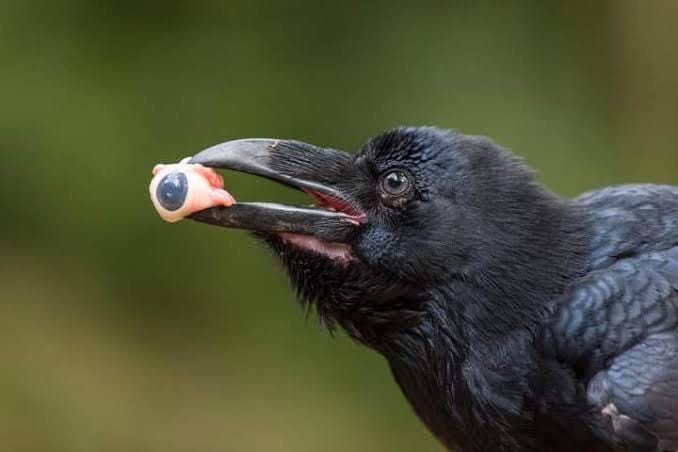
Carrion is one of the most important food sources in the raven diet and plays a central role in their ecological function as scavengers. Ravens are highly efficient at locating dead animals in the wild, often detecting carcasses from long distances using their sharp eyesight and opportunistic behavior. Unlike many birds that avoid decaying matter, ravens actively rely on carrion as a reliable energy source, especially in harsh environments where live prey is harder to find.
Carrion provides a rich mixture of protein, fat, and minerals that support survival during winter months or food shortages. Ravens are often among the first scavengers to arrive at a carcass, using their intelligence to avoid danger and competition from larger predators. They may feed alone or in groups, sometimes coordinating with other scavengers.
Their role in consuming carrion is ecologically significant because it helps prevent the spread of disease by rapidly removing decomposing animal remains from the environment. This makes ravens an essential part of natural cleanup systems in ecosystems.
2. Dead Mammals
Dead mammals, including deer, rabbits, and other wildlife, are a major component of the raven diet. These food sources are especially important during winter or in remote regions where hunting success may be limited.
Ravens use their intelligence to locate carcasses by following predators such as wolves or observing animal behavior that signals a recent kill. Once a dead mammal is found, ravens feed on soft tissue, fat deposits, and sometimes even tougher muscle fibers using their strong, curved beaks.
This food source provides high caloric value, making it critical for energy storage and survival. It also reduces waste in natural ecosystems by recycling nutrients back into the food chain.
3. Roadkill
Roadkill is a common and easily accessible food source for ravens in areas near human infrastructure. Animals struck by vehicles often become available scavenging opportunities for ravens, who quickly learn to associate roads with food availability.
Ravens demonstrate remarkable intelligence by observing traffic patterns and timing their approach safely. They often feed on roadkill during low-traffic periods, reducing the risk of collision with vehicles.
This behavior highlights their adaptability to human-altered environments and their ability to exploit new ecological niches created by modern development.
4. Fish
Fish are an important part of the raven diet, especially in coastal, riverine, and lakeside habitats. Ravens may catch fish directly from shallow water or scavenge dead or dying fish washed ashore.
They are opportunistic feeders and may steal fish from other birds such as gulls or ospreys when possible. Fish provide high levels of protein and healthy fats, making them an excellent energy source.
This dietary flexibility allows ravens to thrive in aquatic environments as well as terrestrial ones, expanding their range significantly.
5. Small Birds
Small birds are occasionally hunted by ravens, particularly weak, injured, or nest-bound individuals. Although not a primary food source, they are part of the raven’s opportunistic predatory behavior.
Ravens may ambush small birds on the ground or raid nesting areas when the opportunity arises. Their intelligence allows them to identify vulnerable targets and act quickly.
This predatory behavior demonstrates their role not only as scavengers but also as active hunters when conditions allow.
6. Bird Eggs
Bird eggs are a highly nutritious food source targeted by ravens, especially during the breeding season when nests are abundant. Ravens are known to raid nests of other bird species to consume eggs.
They use their strong beaks to break eggshells and consume the nutrient-rich contents inside. Eggs provide concentrated protein and fats that are highly beneficial for energy and reproduction.
This behavior can impact local bird populations but also reflects the raven’s opportunistic feeding strategy.
7. Nestlings
Nestlings, or baby birds, are another occasional food source for ravens. They are typically targeted when nests are exposed or unprotected.
Ravens are intelligent enough to identify nesting sites and may return repeatedly if food is available. Nestlings provide soft, protein-rich meat that is easy to digest.
Although this behavior may seem aggressive, it is part of their natural role in regulating bird populations and maintaining ecological balance.
8. Rodents
Rodents such as voles and shrews are commonly eaten by ravens when available. These small mammals are often found in fields, forests, and even urban areas.
Ravens either hunt rodents directly or scavenge them when already dead. Their opportunistic nature allows them to exploit both active and passive food sources.
Rodents provide essential protein and fat, supporting energy needs throughout the year.
9. Mice
Mice are one of the most frequently consumed small mammals in the raven diet. They are abundant in many environments and relatively easy for ravens to catch or scavenge.
Ravens may hunt mice in open fields or near human settlements where rodent populations are high. Their intelligence allows them to exploit rodent activity patterns effectively.
Mice provide a steady source of nutrition, especially in agricultural landscapes.
10. Rats
Rats are another important prey item for ravens, particularly in urban and semi-urban environments. Their larger size compared to mice makes them a more substantial food source.
Ravens may hunt rats directly or scavenge them when found dead. They often take advantage of waste areas, landfills, and city environments where rats are abundant.
This adaptability demonstrates the raven’s ability to thrive in human-dominated landscapes while maintaining a diverse diet.
11. Rabbits
Rabbits are one of the larger mammal prey items that ravens may consume, though they are typically taken when young, weak, injured, or already dead. In most cases, ravens do not actively hunt healthy adult rabbits, but they are highly opportunistic and will quickly exploit any vulnerability in a rabbit population.
Ravens locate rabbits through visual scanning of grasslands, forest edges, and agricultural fields. They may also follow predators such as foxes or raptors to scavenge leftovers from a kill. This behavior is a hallmark of raven intelligence—they often use other animals as indirect food indicators.
From a nutritional perspective, rabbits provide a dense source of protein and fat, especially in muscle and organ tissue. This makes them extremely valuable in colder months when energy demands are higher. Ravens typically feed on soft tissues first and may tear into carcasses using their strong, curved beaks.
Although not a primary food source, rabbits are significant in areas where small mammal populations are high. Their availability reinforces the raven’s role as both scavenger and occasional predator.
12. Squirrels
Squirrels are another medium-sized mammal that ravens occasionally consume. Like rabbits, squirrels are more often scavenged than actively hunted, although weak juveniles or injured individuals may be targeted opportunistically.
Ravens are highly observant and often track squirrel activity in forests, parks, and suburban environments. They may wait for squirrels to be exposed on the ground or vulnerable near nesting sites before attempting a strike.
Squirrel meat provides a rich combination of protein and fat, especially important for sustaining energy during colder seasons. Ravens are capable of tearing into carcasses to access muscle tissue and internal organs, which are the most nutrient-dense parts.
This food source highlights the raven’s adaptability in both wild and urban ecosystems, where squirrels are abundant and frequently encountered.
13. Frogs
Frogs are an important amphibian food source for ravens, especially in wetland, marsh, and riverbank environments. They are most commonly eaten during warmer months when amphibian activity is high.
Ravens catch frogs by spotting movement near water edges or in damp vegetation. They use quick strikes to capture them before they can escape into water or cover.
Frogs provide moderate levels of protein and moisture, making them a useful hydration source as well as nutrition. Their soft bodies make them easy to swallow and digest.
Although not a major food source year-round, frogs contribute to seasonal dietary diversity and demonstrate the raven’s ability to exploit aquatic ecosystems.
14. Toads
Toads are closely related to frogs but are often more toxic and less frequently consumed. However, ravens may still eat them when other food sources are limited or when they learn to avoid toxic glands.
Ravens typically handle toads cautiously, sometimes pecking or flipping them to avoid defensive secretions. Their intelligence allows them to adapt feeding strategies based on experience and environmental conditions.
Despite chemical defenses, some toads still provide usable nutrition, particularly protein. However, they are less preferred compared to frogs or other amphibians.
This selective feeding behavior shows the raven’s ability to assess risk versus reward in prey selection.
15. Snakes
Snakes are a common reptile prey item for ravens, especially small or juvenile individuals. They are found in a variety of habitats including grasslands, forests, and rocky areas.
Ravens may attack snakes directly or scavenge them after death. Their strong beaks allow them to kill smaller snakes or tear apart larger ones when already weakened.
Snakes provide high-quality protein and fats, making them a valuable food source when available. Ravens often avoid larger, more dangerous snakes unless they are clearly vulnerable.
This interaction highlights the raven’s boldness and intelligence when handling potentially dangerous prey.
16. Lizards
Lizards are frequently consumed by ravens in warmer climates where reptile populations are higher. They are small, fast-moving prey that require quick reflexes to capture.
Ravens typically hunt lizards by ambushing them on rocks, logs, or open ground. Their opportunistic nature allows them to exploit moments when lizards are basking in the sun and less alert.
Lizards provide protein and are relatively easy to digest. Although not a primary food source, they contribute to the overall diversity of the raven diet.
Their presence in the diet reflects the raven’s ability to adapt to different ecological zones.
17. Insects
Insects are one of the most abundant and widely consumed food sources for ravens. They are especially important during warmer months when insect populations peak.
Ravens consume a wide range of insects, including both flying and ground-dwelling species. They often forage in fields, forests, and even urban areas where insects are plentiful.
Insects provide protein and essential nutrients, particularly for juvenile ravens still developing strength and coordination.
Their abundance makes them a reliable and easily accessible food source across almost all habitats.
18. Beetles
Beetles are a major insect component of the raven diet due to their widespread presence and diversity. Ravens consume both adult beetles and larvae depending on availability.
They often find beetles under logs, in soil, or among vegetation. Their strong beaks allow them to crush harder exoskeletons that other birds might avoid.
Beetles provide protein and fats, contributing to energy balance and seasonal survival needs.
This food source is especially important in forested and agricultural regions.
19. Grasshoppers
Grasshoppers are a seasonal but highly nutritious food source for ravens. They are most abundant in grasslands, fields, and open habitats during warm months.
Ravens catch grasshoppers on the ground or in short flight. Their jumping behavior makes them visible and relatively easy to track.
Grasshoppers are rich in protein and provide quick energy, making them especially useful during breeding and growth periods.
They are an important part of the insect-based portion of the raven diet.
20. Caterpillars
Caterpillars are soft-bodied insect larvae that provide an excellent food source for ravens, especially during spring and early summer when they are abundant on vegetation.
Ravens locate caterpillars by observing leaf movement or damage patterns on trees and shrubs. They pluck them directly from plants or forage on the ground where they fall.
Caterpillars are rich in protein, moisture, and essential nutrients, making them especially valuable for feeding young ravens during development stages.
Their abundance during nesting season makes them a naturally synchronized food source for reproduction cycles.
21. Earthworms
Earthworms are a highly accessible and nutritious food source for ravens, especially in moist soils, gardens, agricultural fields, and forest floors. After rainfall, earthworms often surface, making them easy targets for opportunistic foraging.
Ravens locate earthworms visually by watching soil movement or probing soft ground with their beaks. Their intelligence allows them to quickly learn which areas produce the highest worm activity, such as recently irrigated land or shaded, damp environments.
Nutritionally, earthworms are rich in protein, amino acids, and moisture, making them especially valuable for hydration as well as energy. They are soft-bodied and easy to digest, which makes them suitable for both adult ravens and juveniles.
Although individually small, earthworms are often consumed in large numbers when conditions are favorable. This makes them a consistent and reliable part of the raven’s opportunistic feeding strategy.
22. Grubs
Grubs, the larval stage of beetles and other insects, are one of the most energy-dense invertebrate foods in the raven diet. They are commonly found underground in soil, decaying wood, or compost-rich environments.
Ravens extract grubs by pecking at soil, digging shallowly, or taking advantage of disturbed ground created by other animals or human activity. Their problem-solving skills allow them to identify productive feeding spots efficiently.
Grubs are extremely rich in fats and protein, providing high caloric value in a small package. This makes them especially important during breeding season and cold weather when energy demands increase.
Because they are hidden beneath the surface, grubs require intelligence and persistence to locate, reinforcing the raven’s reputation as a skilled forager.
23. Crickets
Crickets are a widely consumed insect in the raven diet, found in grasslands, fields, forest edges, and even urban environments. Their abundance and movement make them relatively easy prey for intelligent birds like ravens.
Ravens catch crickets both on the ground and in short flight bursts. They often hunt them visually, tracking movement in vegetation before making a quick strike.
Crickets provide a strong nutritional profile, including protein, fats, and essential minerals. These nutrients support muscle maintenance and energy production in both adult ravens and growing juveniles.
Because crickets are active across multiple seasons, they provide a consistent supplementary food source in many habitats.
24. Snails
Snails are slow-moving mollusks that ravens consume opportunistically, particularly in moist environments such as wetlands, gardens, and forest floors. Their slow mobility makes them easy to capture once located.
Ravens typically break or peck snail shells using their strong beaks to access the soft body inside. They may also drop snails from heights onto hard surfaces to crack the shells open, demonstrating problem-solving behavior.
Snails provide protein, calcium, and moisture, contributing to both nutritional and hydration needs. The calcium content is especially beneficial for bone development and eggshell formation in breeding birds.
Although not a primary food source, snails are a valuable supplemental item when available.
25. Mussels
Mussels are a marine food source commonly consumed by ravens in coastal environments. They are typically found attached to rocks in intertidal zones, where ravens have learned specialized feeding techniques.
One of the most well-known behaviors involves dropping mussels from heights onto rocks to break their shells. This demonstrates the raven’s advanced tool-like problem-solving abilities and understanding of cause and effect.
Mussels are rich in protein, minerals, and healthy fats, making them a highly nutritious food source. Once opened, ravens consume the soft internal tissue.
This feeding strategy highlights the intelligence and adaptability of ravens in exploiting marine ecosystems.
26. Clams
Clams are another shellfish species consumed by ravens, particularly in coastal mudflats and beaches. Like mussels, they are protected by hard shells that require innovative feeding strategies.
Ravens often drop clams from heights or use rocks as tools to crack them open. This behavior shows their ability to learn and refine feeding techniques over time.
Clams provide dense nutrition, including protein, iron, and other essential minerals. They are especially valuable in coastal regions where other food sources may be limited.
Their inclusion in the diet demonstrates how ravens exploit both terrestrial and marine food systems.
27. Fruits
Fruits are an important seasonal food source for ravens, especially during late summer and autumn when many plants produce ripe berries and soft fruits. They are commonly found in forests, fields, and urban green spaces.
Ravens consume fruits directly from trees and shrubs, often swallowing them whole. Fruits provide natural sugars, hydration, and essential vitamins that help sustain energy levels.
While not as protein-rich as animal-based foods, fruits are crucial for maintaining energy balance during times when insects or prey animals are less available.
They also play a role in seed dispersal, making ravens important contributors to plant ecosystem regeneration.
28. Berries
Berries are a highly favored fruit category in the raven diet due to their abundance and ease of consumption. Species such as blackberries, elderberries, and juniper berries are commonly eaten in the wild.
Ravens feed on berries directly from bushes and trees, often visiting fruiting plants repeatedly when resources are plentiful.
Berries are rich in antioxidants, vitamins, and carbohydrates, providing quick energy and supporting immune health. They are especially important during migration and seasonal transitions.
Their widespread availability makes them a reliable food source across many habitats.
29. Seeds
Seeds are a supplemental plant-based food source for ravens, particularly in agricultural and grassland environments. They are often consumed when other food sources are scarce.
Ravens may pick seeds directly from plants or forage on the ground where seeds accumulate. Although small, seeds can provide carbohydrates and trace nutrients.
They are not a primary dietary component but contribute to energy intake during lean periods.
Their role in the diet highlights the raven’s omnivorous flexibility.
30. Grains
Grains are commonly consumed by ravens in agricultural areas where crops such as wheat, corn, and barley are available. These environments provide a consistent and abundant food source.
Ravens forage in fields or feed on leftover grains after harvest. They often adapt quickly to human agriculture, exploiting new feeding opportunities created by farming activities.
Grains provide carbohydrates that help sustain energy levels, particularly during winter or migration periods when other food sources decline.
This adaptability to human-altered landscapes is one of the key reasons ravens are so widespread and successful as a species.
Conclusion
Ravens are among the most adaptable and intelligent birds on Earth, and their diet reflects this remarkable versatility. From scavenging carrion and roadkill to hunting small animals and foraging for fruits, seeds, and grains, ravens demonstrate an extraordinary ability to survive in almost any environment.
As true omnivores, they do not rely on a single food source. Instead, they shift their feeding behavior based on season, habitat, and opportunity. In colder months, carrion and animal remains become crucial for energy. During warmer periods, insects, small vertebrates, and plant materials such as berries and fruits play a larger role in their nutrition.
Ravens also stand out for their problem-solving skills in feeding. Their use of tools, ability to drop shellfish to crack them open, and tendency to follow predators to find food all highlight advanced intelligence rarely seen in birds. This behavioral flexibility allows them to thrive in wilderness areas, agricultural lands, and even urban environments.
Ecologically, ravens play an important dual role. As scavengers, they help clean up carrion and reduce the spread of disease. As opportunistic predators, they help regulate populations of small animals and insects. Additionally, their consumption of fruits and berries contributes to seed dispersal, supporting plant regeneration in natural ecosystems.
Overall, understanding what ravens eat reveals not only their dietary diversity but also their critical role in maintaining ecological balance. Their ability to exploit nearly every available food source ensures their success as one of the most widespread and resilient bird species in the world.
Frequently Asked Questions (FAQ) About What Ravens Eat
1. What do ravens eat in the wild?
Ravens are highly adaptable omnivores, meaning they eat both animal and plant-based foods. In the wild, their diet includes carrion, small mammals, birds, insects, fruits, seeds, and even shellfish. Their food choices depend heavily on season, habitat, and availability, which allows them to survive in diverse environments from mountains to cities.
2. Are ravens carnivores or omnivores?
Ravens are classified as omnivores. While they often feed on meat such as carrion or small animals, they also consume plant materials like berries, grains, and fruits. This flexibility is one of the main reasons they are so widely distributed across the Northern Hemisphere.
3. Do ravens eat carrion?
Yes, carrion is one of the most important food sources for ravens. They actively search for dead animals and often arrive quickly at carcasses. This scavenging behavior helps them survive in harsh environments and also plays an important ecological role in cleaning up dead matter.
4. Do ravens hunt live animals?
Yes, although scavenging is more common, ravens do hunt live animals when the opportunity arises. They may catch small mammals, birds, reptiles, and amphibians, especially if the prey is weak, young, or exposed.
5. Do ravens eat roadkill?
Yes, ravens frequently feed on roadkill. They quickly learn that roads can provide easy food sources and often wait safely nearby for vehicles to pass before feeding on animal remains.
6. Do ravens eat fish?
Yes, ravens eat fish when available. They may catch fish in shallow water or scavenge dead fish along shorelines. Coastal and river habitats often provide reliable fish-based food sources.
7. Do ravens eat small birds?
Yes, ravens occasionally prey on small birds, especially young or injured individuals. They may also steal eggs or nestlings from bird nests when opportunities arise.
8. Do ravens eat bird eggs?
Yes, bird eggs are a highly nutritious food source for ravens. They raid nests and consume eggs for their high protein and fat content, especially during breeding season.
9. Do ravens eat rodents?
Yes, ravens eat rodents such as mice, rats, and voles. They may hunt or scavenge them depending on availability in their environment.
10. Do ravens eat rabbits?
Ravens may consume rabbits, usually young, injured, or dead ones. They rarely hunt healthy adult rabbits but will take advantage of vulnerable individuals or carcasses.
11. Do ravens eat insects?
Yes, insects are an important part of their diet, especially in warmer months. They eat beetles, grasshoppers, caterpillars, crickets, and many other insect species.
12. Do ravens eat earthworms?
Yes, earthworms are commonly eaten after rain when they surface. They are easy to find and provide protein and moisture.
13. Do ravens eat grubs?
Yes, grubs are a high-energy food source. Ravens dig or probe soil to find these larvae, which are rich in fats and protein.
14. Do ravens eat crickets?
Yes, crickets are frequently eaten due to their abundance and nutritional value, especially in grasslands and fields.
15. Do ravens eat snails?
Yes, ravens consume snails by breaking their shells or dropping them on hard surfaces to access the meat inside.
16. Do ravens eat mussels?
Yes, coastal ravens eat mussels and often drop them onto rocks to crack the shells open. This shows their problem-solving abilities.
17. Do ravens eat clams?
Yes, clams are eaten similarly to mussels. Ravens use height and gravity to break shells and access the food inside.
18. Do ravens eat fruits?
Yes, ravens eat many types of fruit, especially in late summer and autumn. Fruits provide energy and hydration when animal prey is less available.
19. Do ravens eat berries?
Yes, berries such as blackberries, elderberries, and juniper berries are commonly consumed and provide essential carbohydrates and antioxidants.
20. Do ravens eat seeds?
Yes, ravens occasionally eat seeds, especially in agricultural areas or when other foods are limited.
21. Do ravens eat grains?
Yes, ravens consume grains like wheat, corn, and barley, particularly in farming regions where these are readily available.
22. Why are ravens considered scavengers?
Ravens are considered scavengers because they frequently feed on carrion and animal remains. This behavior helps recycle nutrients in ecosystems.
23. Are ravens dangerous predators?
Ravens are not dangerous to large animals, but they can prey on small or vulnerable creatures such as nestlings, insects, and rodents.
24. Do ravens eat other ravens?
Rarely, ravens may engage in cannibalistic behavior under extreme conditions, but this is not common.
25. Do ravens store food?
Yes, ravens are known to cache food. They hide surplus food in various locations and retrieve it later when needed.
26. How do ravens find food?
Ravens use their intelligence, vision, and memory. They also observe other animals, especially predators, to locate food sources.
27. Do ravens follow wolves for food?
Yes, ravens often follow wolves to feed on remains of their kills, showing a well-known ecological relationship.
28. Do ravens eat dead animals?
Yes, dead animals are one of their most important food sources and provide rich nutrition.
29. Do ravens eat insects in winter?
Insects are less available in winter, so ravens rely more on carrion, plant food, and human food sources during colder months.
30. Do ravens eat human food?
Yes, in urban environments ravens often eat discarded human food, demonstrating their adaptability.
31. Do ravens eat garbage?
Yes, ravens are commonly found foraging in landfills and trash areas where food waste is abundant.
32. Are ravens picky eaters?
No, ravens are not picky. They are highly opportunistic and eat almost anything edible they encounter.
33. Do ravens eat amphibians?
Yes, ravens eat frogs and toads when available, especially in wetland environments.
34. Do ravens eat snakes?
Yes, ravens may consume small snakes, particularly when they are vulnerable or already dead.
35. Do ravens eat lizards?
Yes, lizards are part of their reptile diet in warmer regions.
36. Do ravens eat squirrels?
Yes, ravens may consume squirrels, especially young or injured ones.
37. Do ravens eat carrion in winter more?
Yes, carrion becomes especially important in winter when other food sources are limited.
38. Do ravens eat more meat or plants?
They generally consume more animal-based food, but plant foods become important seasonally.
39. Do ravens eat at night?
No, ravens are diurnal and primarily feed during daylight hours.
40. How much do ravens eat daily?
Ravens eat based on availability and may consume large meals when food is abundant, then go without food for periods.
41. Do ravens compete with other birds for food?
Yes, ravens often compete with crows, eagles, and other scavengers.
42. Do ravens steal food?
Yes, ravens are known to steal food from other animals, including birds and mammals.
43. Are ravens intelligent hunters?
Yes, they are among the most intelligent birds and use problem-solving to access food.
44. Do ravens eat toxic food?
They generally avoid toxic foods, but their intelligence helps them learn what is safe to eat.
45. Do ravens eat fish from rivers?
Yes, especially in shallow water or when fish are stranded.
46. Do ravens eat during breeding season more?
Yes, food demand increases significantly when feeding chicks.
47. Do ravens eat in groups?
Yes, they may feed in groups, especially at large food sources like carcasses.
48. Do ravens eat alone?
Yes, they also feed alone depending on food availability and competition.
49. What is the most important food for ravens?
Carrion is one of the most important and reliable food sources for ravens.
50. Why are ravens so successful?
Their flexible diet, intelligence, and adaptability allow them to survive in nearly any environment.
51. What makes raven diet unique?
The combination of scavenging, hunting, and plant feeding makes ravens one of the most versatile feeders in the bird world.