

Sea anemones are one of the most fascinating and diverse groups of marine invertebrates. Found in oceans across the world, these colorful creatures belong to the order Actiniaria and are well-known for their striking tentacles, symbiotic relationships with clownfish, and crucial role in coral reef ecosystems. In this guide, we explore 30 remarkable types of Sea anemone, highlighting their unique features, habitats, and behaviors. This comprehensive review of types of Sea anemone will help marine enthusiasts, divers, and aquarium hobbyists understand and appreciate these captivating creatures.
1. Giant Green Anemone (Anthopleura xanthogrammica)
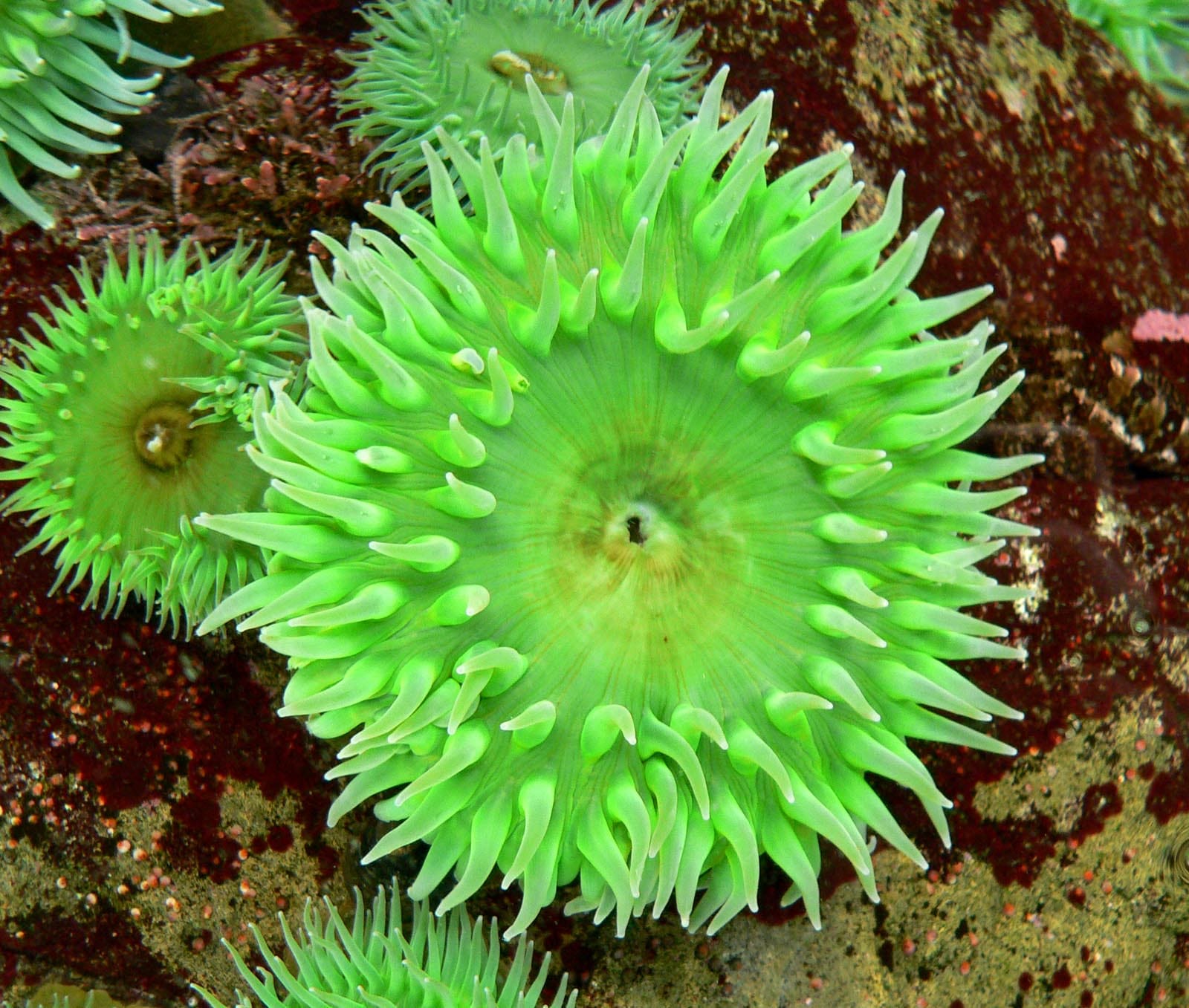
The Giant Green Anemone is a dominant species along the Pacific coast, easily recognized by its large, bright green oral disc and thick tentacles. Reaching up to 38 cm in diameter, it often inhabits rocky intertidal zones where sunlight is plentiful. These anemones rely on both photosynthesis through symbiotic algae and predation to meet their nutritional needs.
Giant Green Anemones display fascinating behaviors such as retracting their tentacles to avoid predators or environmental stress. They often host small organisms like shrimp and crabs that gain protection within their tentacles. Their vibrant color and size make them a favorite among divers and marine photographers.
Reproduction occurs both sexually and asexually. Spawning happens in spring and summer, with larvae dispersing in ocean currents before settling. Asexual reproduction allows them to clone themselves and maintain local populations. Studying Giant Green Anemones provides insight into the complex dynamics of intertidal ecosystems.
2. Beadlet Anemone (Actinia equina)
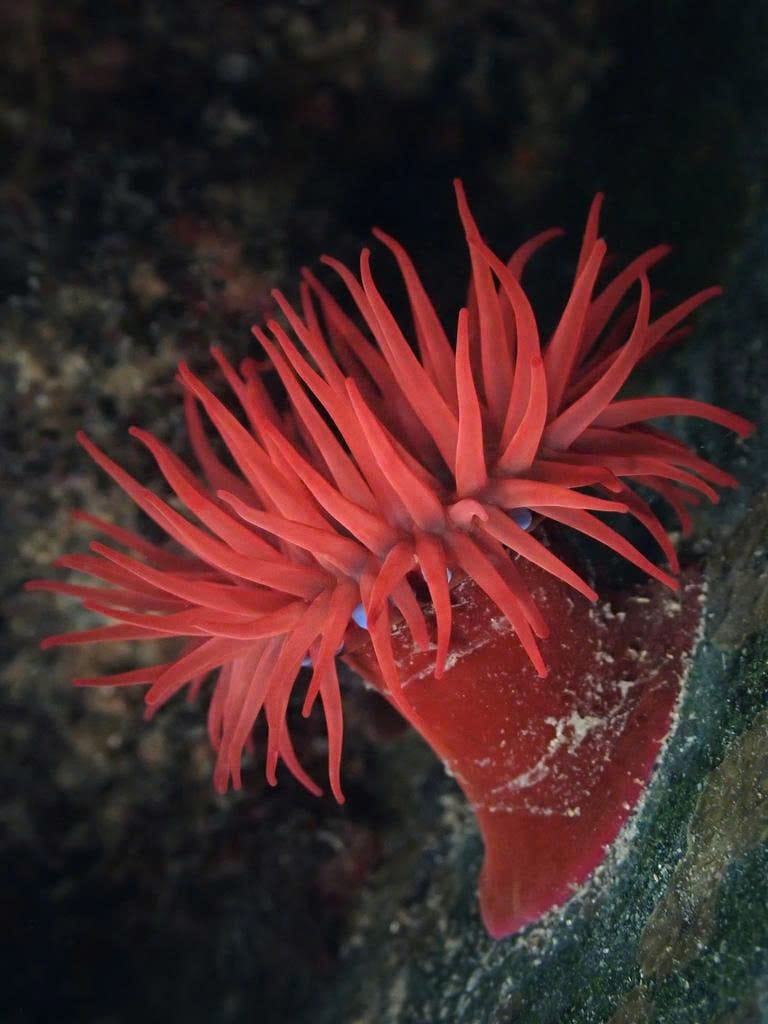
The Beadlet Anemone is a hardy species that thrives in harsh intertidal zones, tolerating exposure to air during low tides. Its red or green body is adorned with bead-like protrusions, which give the species its common name. Beadlet Anemones are relatively small, usually measuring 2–5 cm in diameter, yet they are highly resilient.
These anemones capture prey using stinging cells called nematocysts, paralyzing small invertebrates before drawing them into the central mouth. They are mostly solitary but can be found in clusters on rocky shores. Beadlet Anemones are excellent study organisms for understanding predator-prey dynamics and the adaptations needed for survival in intertidal habitats.
Beadlet Anemones reproduce through fission and sexual reproduction. During fission, a single individual splits into two, creating genetically identical clones. Sexual reproduction contributes to genetic diversity and population resilience. Their adaptability and ecological significance make Beadlet Anemones a cornerstone species in many temperate marine environments.
3. Strawberry Anemone (Actinia fragacea)
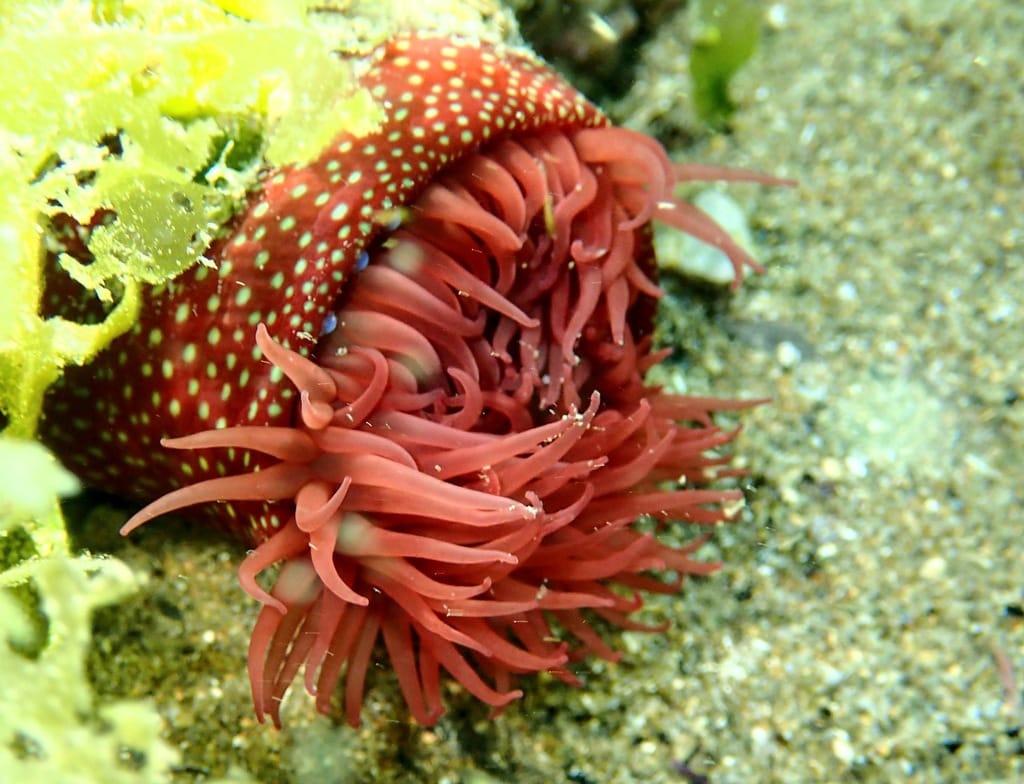
Strawberry Anemones are named for their bright red coloration with small green or blue spots resembling strawberries. Common along European coasts, these anemones prefer rocky crevices where water flow is moderate. They are slow-moving predators, capturing small fish and plankton using their venomous tentacles.
These anemones demonstrate seasonal behaviors, including partial burial in sand during cold months. Strawberry Anemones can live several years and exhibit territorial behavior, competing for optimal space on the substrate. Their vivid coloration serves both as camouflage among algae and as a warning to potential predators.
Reproduction is mostly sexual, with external fertilization. The larvae drift with currents before settling on suitable substrates. Strawberry Anemones contribute to the biodiversity of intertidal zones and are an essential food source for specialized marine predators.
4. Snakelocks Anemone (Anemonia viridis)
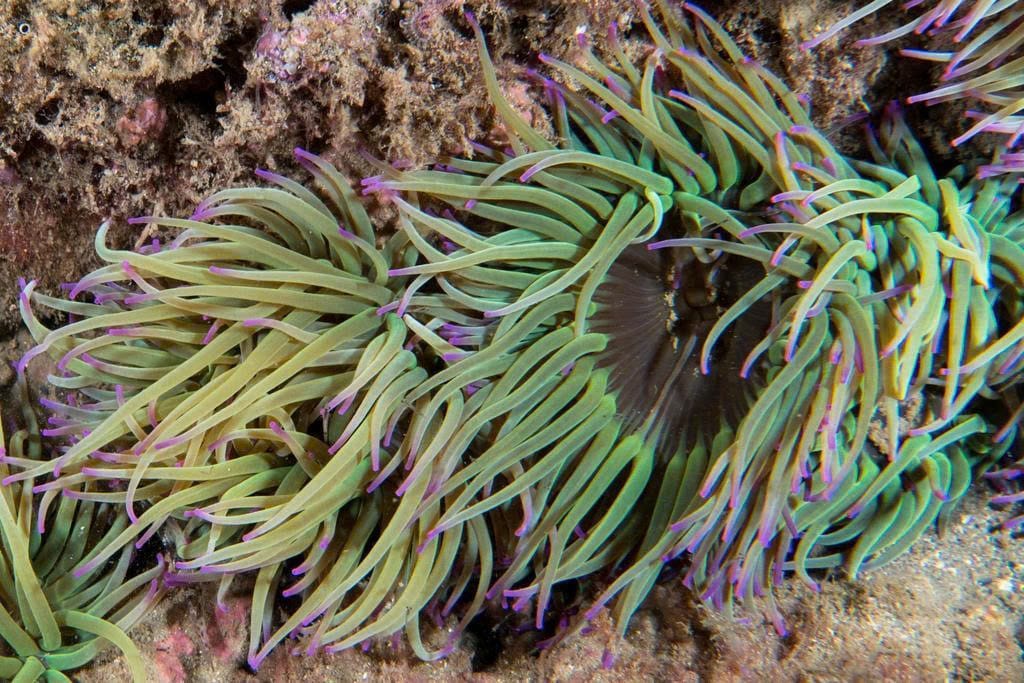
Snakelocks Anemones are easily recognizable due to their long, green, snake-like tentacles tipped with purple hues. They inhabit shallow subtidal zones and attach firmly to rocks. Symbiotic algae provide energy through photosynthesis, supplementing their predatory diet.
Snakelocks Anemones have a symbiotic relationship with certain species of shrimp and small fish, offering shelter in exchange for cleaning services. They can retract their tentacles quickly when disturbed, showcasing remarkable reflexes for a sessile organism. The species is also popular in marine aquaria due to its striking appearance.
Reproduction occurs through both fragmentation and sexual reproduction. Fragmentation allows anemones to create clones, enhancing local population stability, while sexual reproduction ensures genetic diversity. Observing Snakelocks Anemones provides valuable insight into the intricate balance of marine ecosystems.
5. Rose Anemone (Anthopleura rosea)
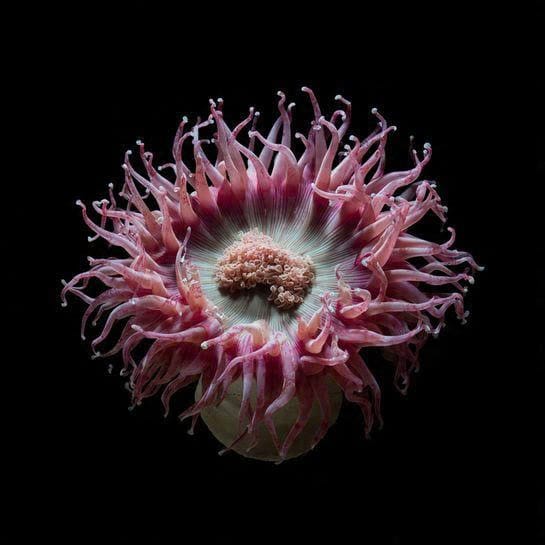
Rose Anemones are noted for their delicate pink or reddish tentacles, often forming clusters on rocky shores and shallow subtidal zones. Typically smaller than the Giant Green Anemone, Rose Anemones grow up to 10 cm in diameter and feed on small invertebrates and plankton.
Their tentacles contain stinging cells that immobilize prey before ingestion. Rose Anemones also maintain mutualistic relationships with certain symbiotic organisms, offering shelter while benefiting from nutrients provided by their guests. These anemones are particularly sensitive to water quality, making them indicators of environmental health.
Reproductive strategies include both sexual and asexual methods, with the latter allowing them to reproduce efficiently in stable habitats. Rose Anemones are studied for their adaptability to changing intertidal conditions and their contribution to reef biodiversity.
6. Bartholomea Anemone (Bartholomea annulata)
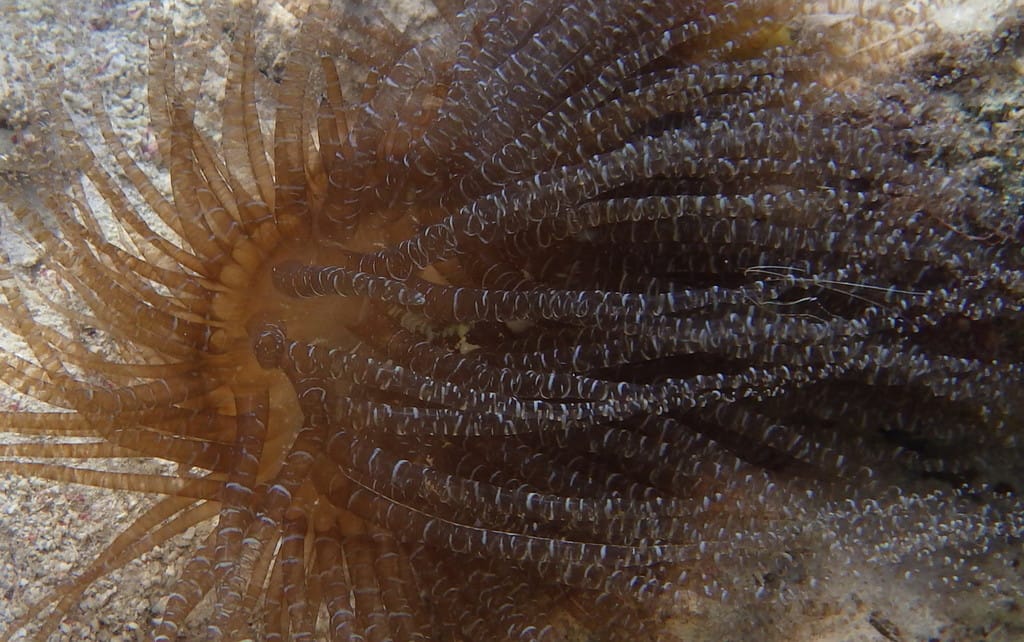
The Bartholomea Anemone, commonly called the “Ringed Anemone,” is a medium-sized species inhabiting tropical Western Atlantic reefs. Its translucent white body with pinkish rings makes it visually striking. It grows up to 20 cm in diameter and attaches firmly to coral or rock substrates, providing shelter for small clownfish and shrimp.
This anemone is both a predator and a symbiont, using stinging tentacles to capture plankton while hosting mutualistic fish. Bartholomea Anemones demonstrate slow movements, yet their tentacles are highly responsive to touch and water movement. They are particularly sensitive to changes in water chemistry, making them important indicators of reef health.
Reproduction occurs through both sexual spawning and asexual fission, allowing populations to expand locally. Their ecological role as both predator and shelter provider underscores their significance in reef ecosystems and aquaria alike.
7. Mottled/Christmas Anemone (Urticina crassicornis)
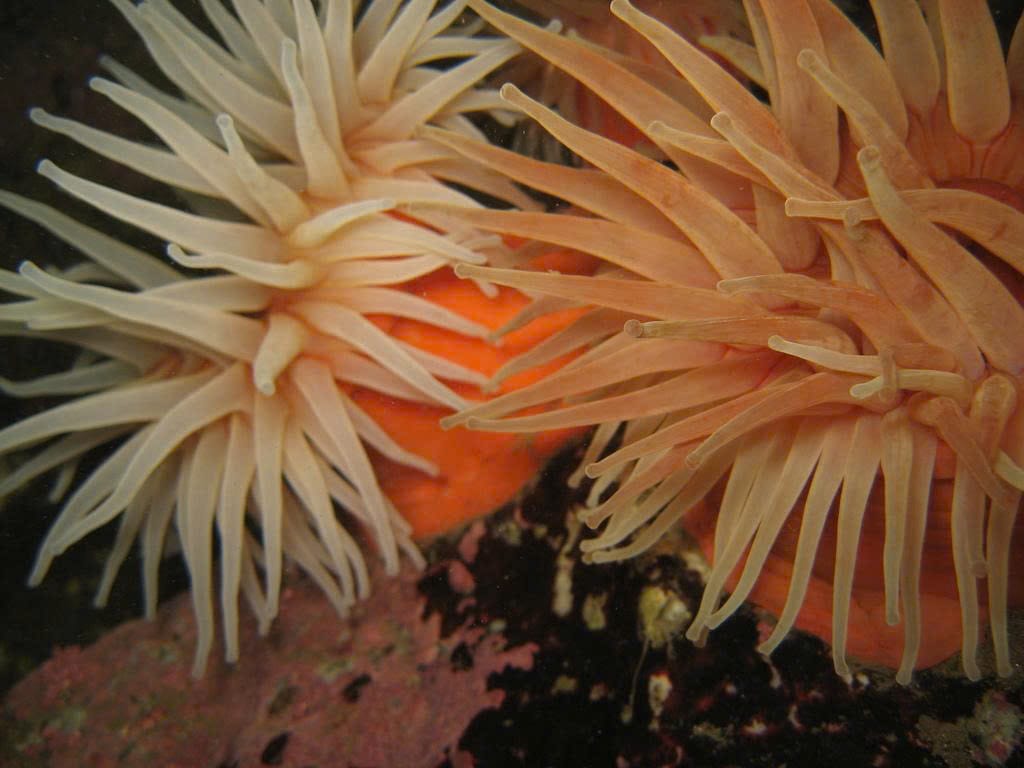
The Mottled Anemone, or Christmas Anemone, features striking red and white mottled patterns resembling festive decorations, hence its common name. Found in the North Atlantic, it prefers colder, subtidal zones attached to rocks or boulders. Adults can reach up to 30 cm in diameter, displaying robust, fleshy tentacles.
This species is highly predatory, feeding on fish, crustaceans, and plankton. Its stinging cells are potent enough to deter most predators, while juveniles often cluster for protection. The Christmas Anemone is important for maintaining ecological balance, controlling small invertebrate populations on rocky reefs.
Reproduction occurs through spawning in summer months and asexual splitting in localized habitats. Researchers study Urticina crassicornis for its resilience to cold-water conditions and its unique reproductive strategies.
8. Rock Flower Anemone (Epicystis crucifer)
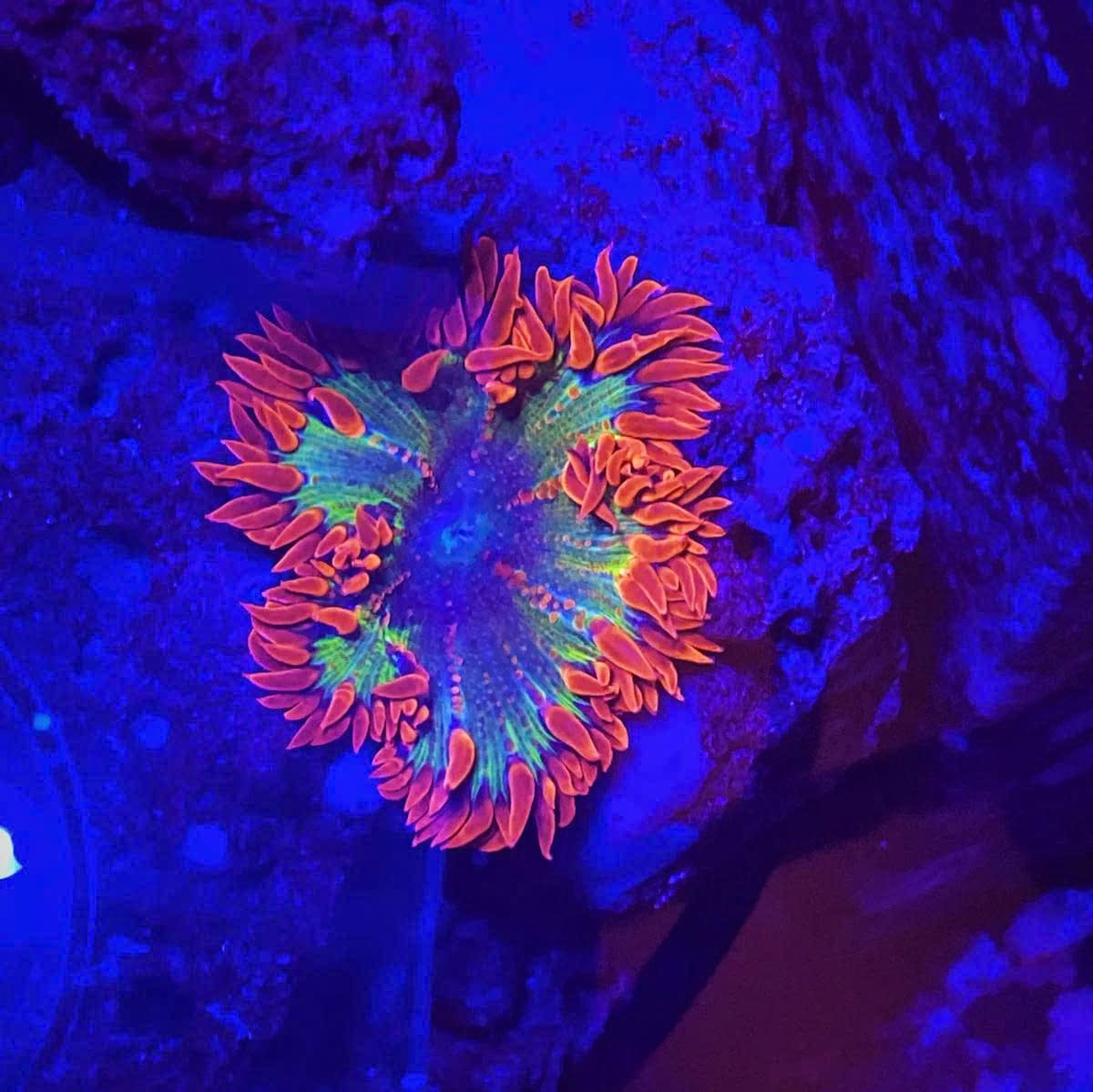
Rock Flower Anemones are popular in marine aquaria due to their vibrant colors and hardy nature. They can range from purple to pink, green, and even fluorescent shades. Native to the Indo-Pacific, these anemones attach to rock surfaces in shallow reef zones and can reach 15–20 cm in diameter.
Rock Flower Anemones feed on small invertebrates, using their stinging tentacles to immobilize prey. They are mostly sedentary but can slowly glide across rock surfaces when necessary. These anemones are also known for their tolerance to varying water conditions, making them a favorite among aquarists.
Reproduction occurs sexually via broadcast spawning and asexually through budding. Rock Flower Anemones demonstrate mutualistic relationships with certain shrimp and fish, enhancing reef biodiversity and maintaining ecosystem balance.
9. Carpet Anemone (Stichodactyla gigantea)
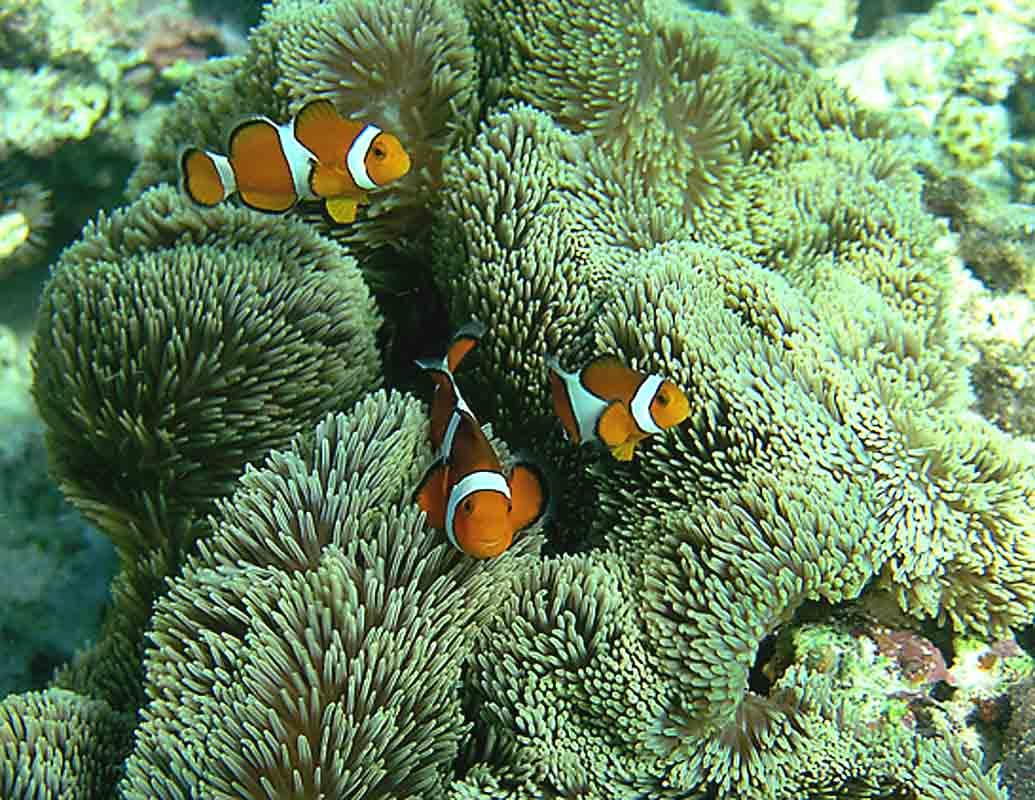
The Carpet Anemone is one of the largest sea anemones, covering up to 1 meter of substrate in tropical Indo-Pacific reefs. Its broad oral disc and vibrant green, brown, or bluish tentacles create a “carpet” effect. It is famously known for hosting clownfish, which gain protection among its tentacles.
Carpet Anemones are active predators, capturing small fish and plankton. Their symbiotic algae provide additional energy through photosynthesis. They are sensitive to water quality and light, requiring stable conditions in both natural and captive environments.
These anemones reproduce sexually and asexually, contributing to reef diversity. Observing Carpet Anemones in their natural habitat showcases the intricate relationships between predator, prey, and symbiotic species in coral reef ecosystems.
10. Tube Anemone (Cerianthus membranaceus)
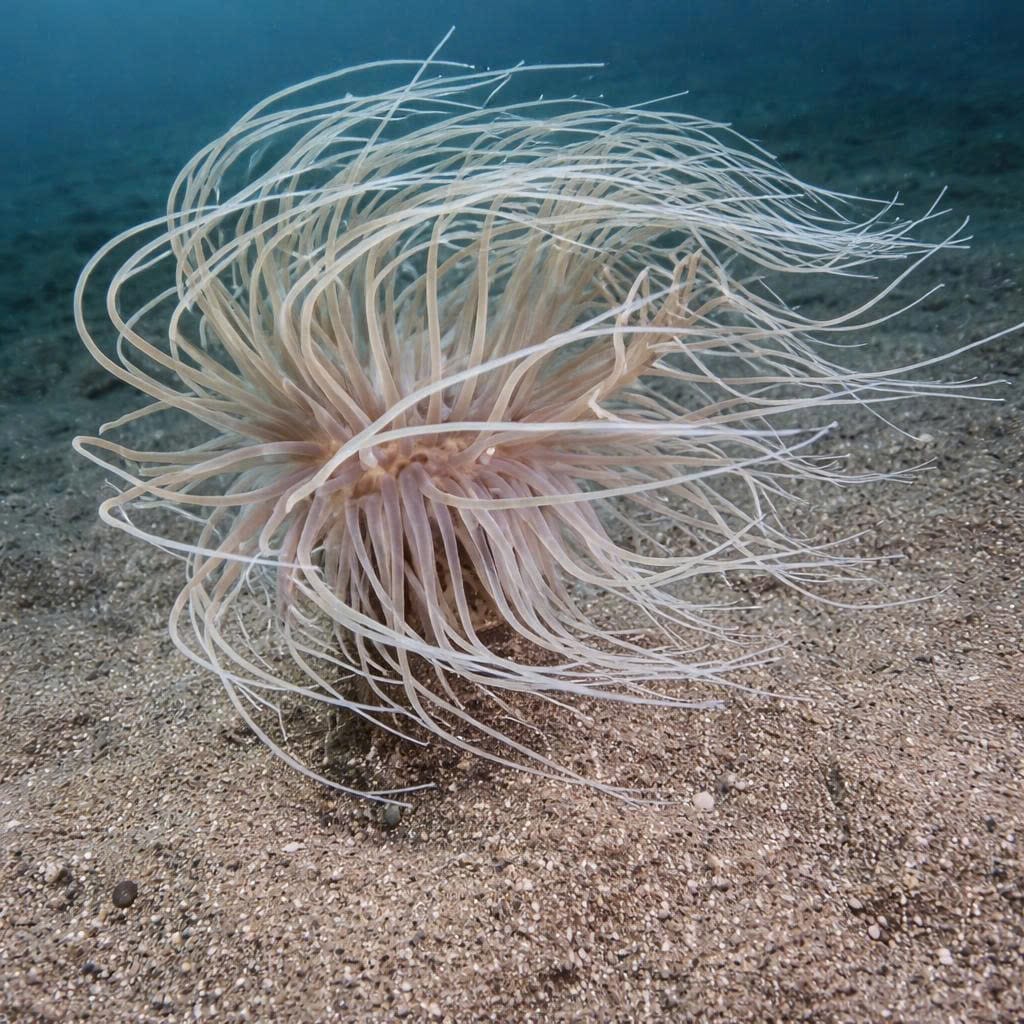
Tube Anemones differ from typical reef anemones by living buried in sand or mud, creating long, protective tubes. Cerianthus membranaceus can reach 30 cm in tentacle length and displays striking patterns and colors, ranging from white to purple or orange. They inhabit shallow coastal areas of the Mediterranean and Indo-Pacific.
These anemones extend their tentacles into open water to capture plankton and small fish. Their burrowed lifestyle offers protection from predators and allows them to quickly retract into their tubes when threatened. Tube Anemones are important for benthic ecosystems, enhancing habitat complexity for other invertebrates.
Reproduction occurs through gamete release into the water column, allowing larvae to disperse widely. Tube Anemones illustrate unique adaptations for a sedentary lifestyle while maintaining effective predatory capabilities.
11. Long Tentacle Anemone (Macrodactyla doreensis)
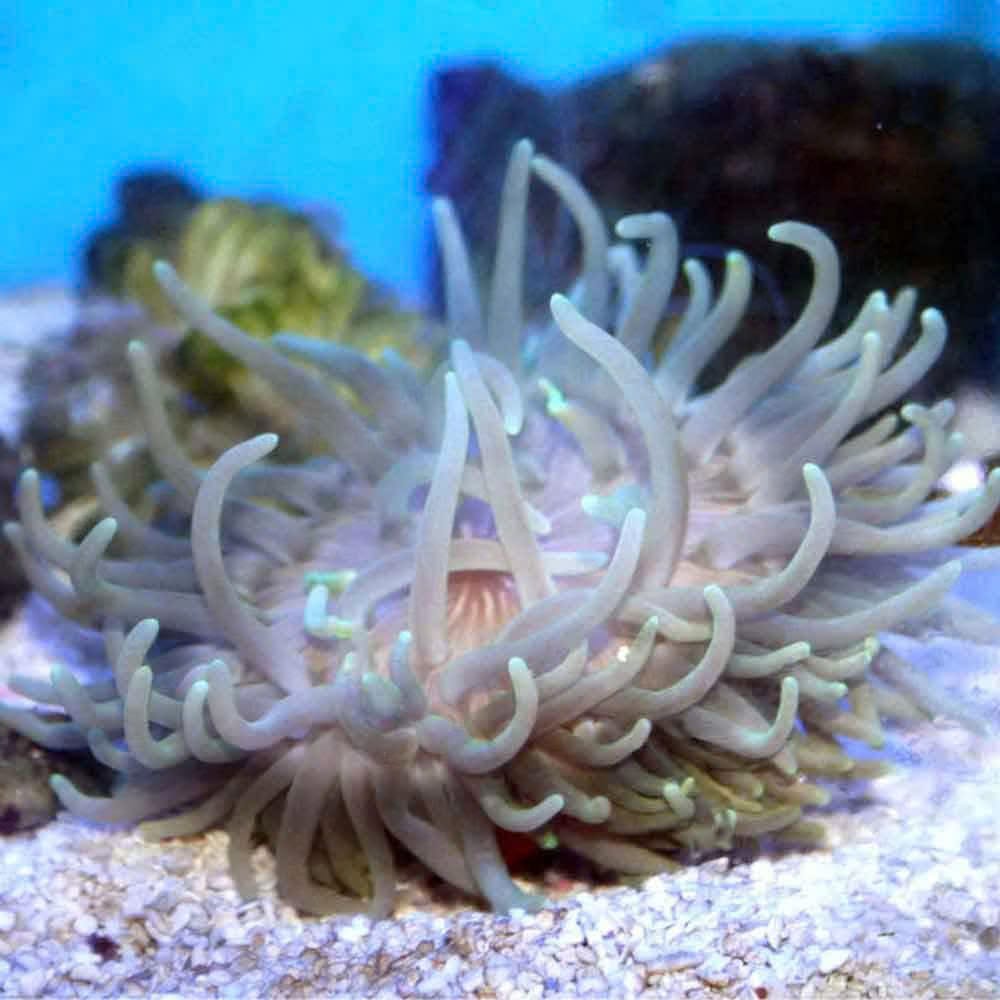
Long Tentacle Anemones are easily recognized by their extended, flowing tentacles, which can reach up to 1 meter in length. Native to Southeast Asia, they inhabit sandy or rubble areas near coral reefs. These anemones host symbiotic clownfish, which find refuge among the tentacles.
They are active predators, using tentacles to paralyze prey like shrimp and small fish. Long Tentacle Anemones exhibit interesting behavioral patterns, including tentacle retraction in response to threats and periodic expansion to maximize prey capture. Their presence enhances reef biodiversity by providing shelter and predation pressure.
Reproduction occurs sexually and asexually. These anemones are studied for their symbiotic relationships and their impressive ability to adapt to varying reef environments.
12. Sebae Anemone (Heteractis crispa)
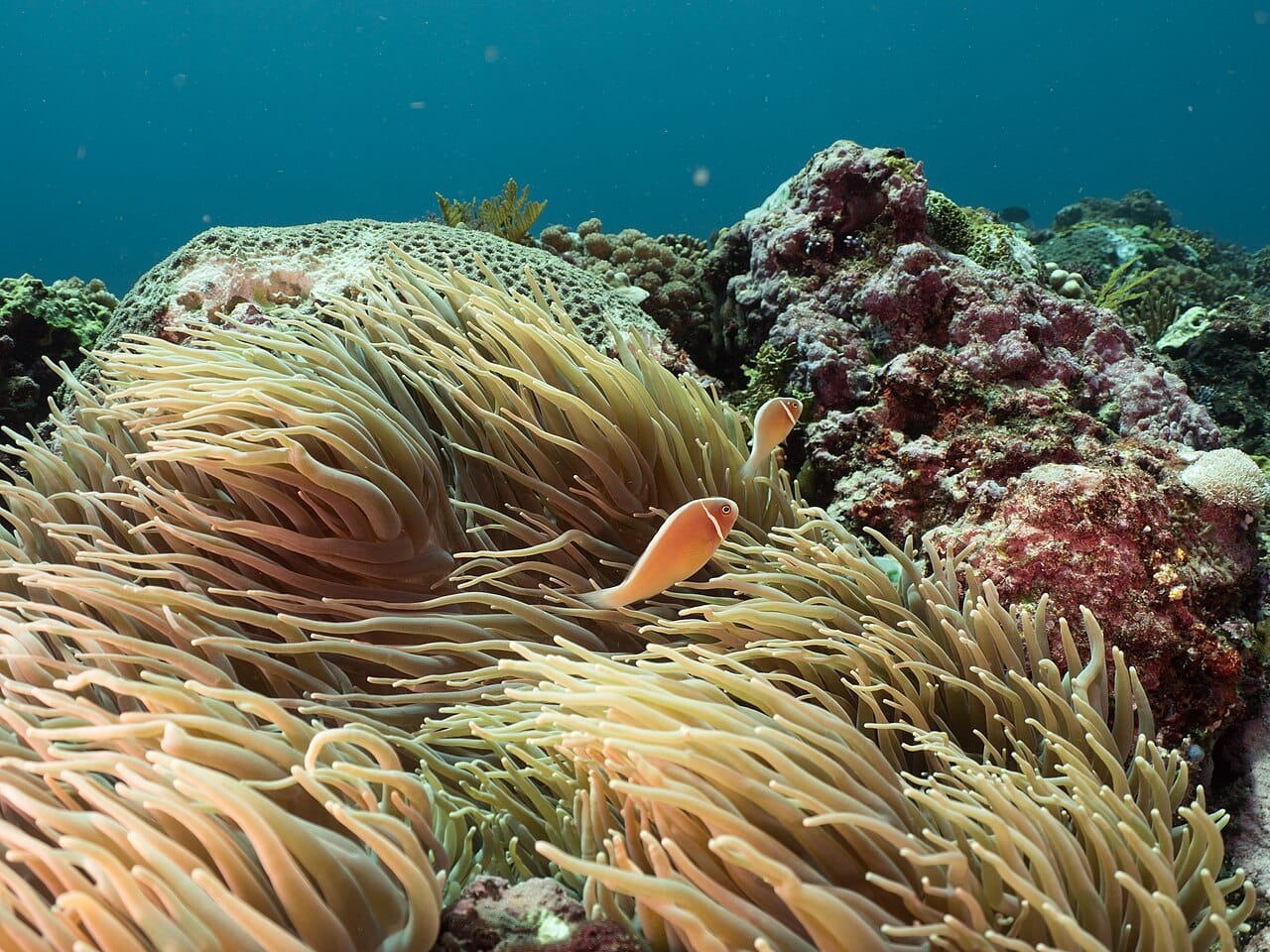
Sebae Anemones are large, colorful species found in the Indo-Pacific, commonly hosting multiple clownfish species. With tentacles that can reach over 30 cm, they are highly effective predators while providing shelter for symbiotic organisms. Their colors range from purple to brown, often with fluorescent tips.
Sebae Anemones feed on small fish and plankton, using both tentacle stings and mucus to immobilize prey. They are sensitive to water quality, light, and flow, making them indicators of healthy reef ecosystems. These anemones are popular in advanced aquaria due to their beauty and ecological importance.
Sexual reproduction occurs via gametes released into the water, while asexual budding allows for local population expansion. Their role as both predator and host species highlights the complexity of reef interactions.
13. Ritteri/Magnificent Anemone (Radianthus magnifica)
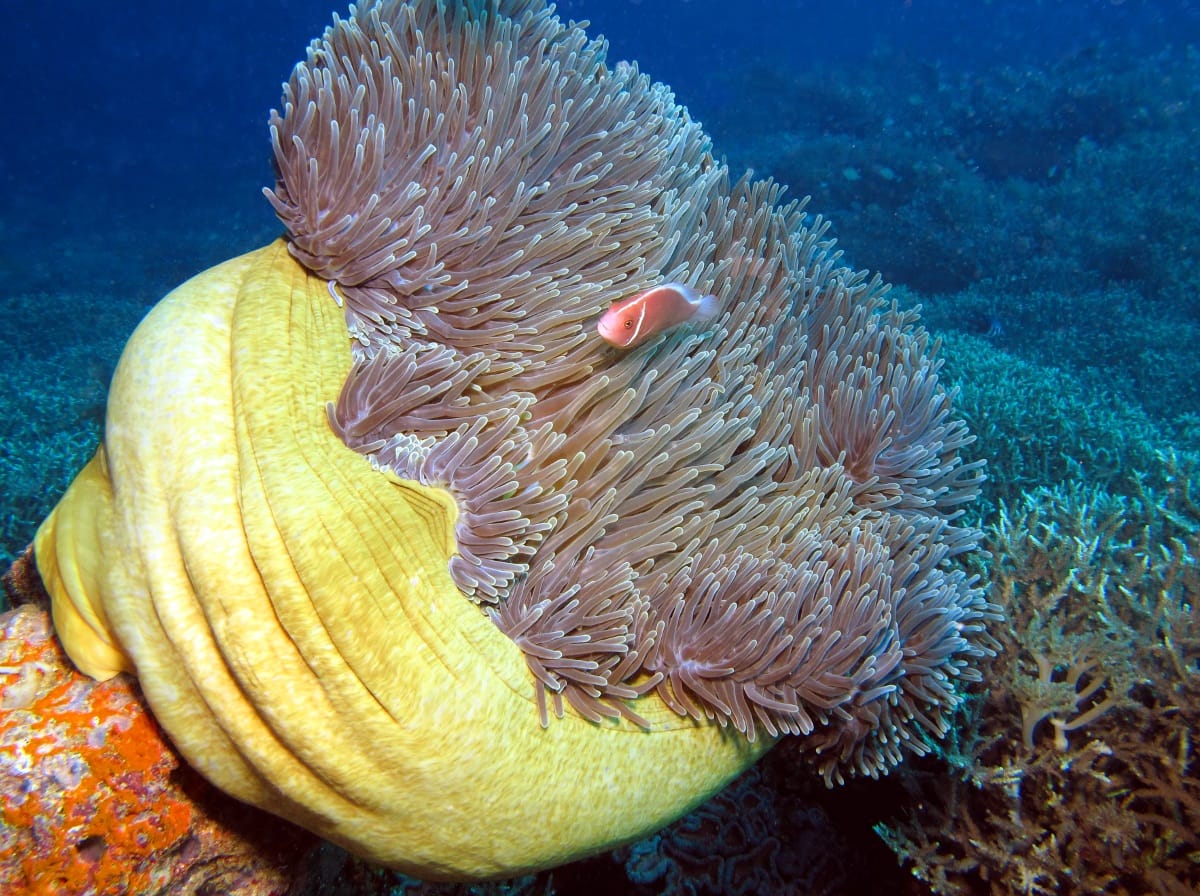
Magnificent Anemones are a showpiece species, with wide oral discs and long tentacles displaying hues of green, purple, or brown. Native to the Indo-Pacific, they prefer shallow reef flats and lagoons. These anemones are well-known for hosting clownfish, which form long-term symbiotic relationships.
They feed on plankton, small fish, and invertebrates, capturing prey with stinging cells along their tentacles. Magnificent Anemones exhibit retraction and expansion behaviors in response to environmental cues, showcasing adaptability and intelligence for a sessile organism.
Reproduction occurs sexually via larval dispersal and asexually through fragmentation. Their ecological importance is immense, providing shelter, predation, and contributing to reef complexity and biodiversity.
14. Mini‑Maxi Carpet Anemone (Stichodactyla tapetum)

Mini‑Maxi Carpet Anemones are medium-sized carpet-type anemones, reaching up to 50 cm in oral disc diameter. They inhabit tropical Indo-Pacific reefs and display a range of colors, from brown and green to purple. These anemones often host clownfish and shrimps, forming dynamic reef communities.
Their tentacles contain potent stinging cells to capture small fish and plankton. Mini‑Maxi Carpet Anemones are sensitive to light and water flow, expanding tentacles during high feeding periods and retracting when threatened. Their symbiotic relationships enrich reef biodiversity and ecosystem health.
Reproduction occurs sexually and asexually. They provide a window into the delicate balance of predator-prey dynamics and symbiotic interactions on coral reefs, making them both visually stunning and ecologically significant.
15. Pink Tip Anemone (Condylactis aurantiaca)
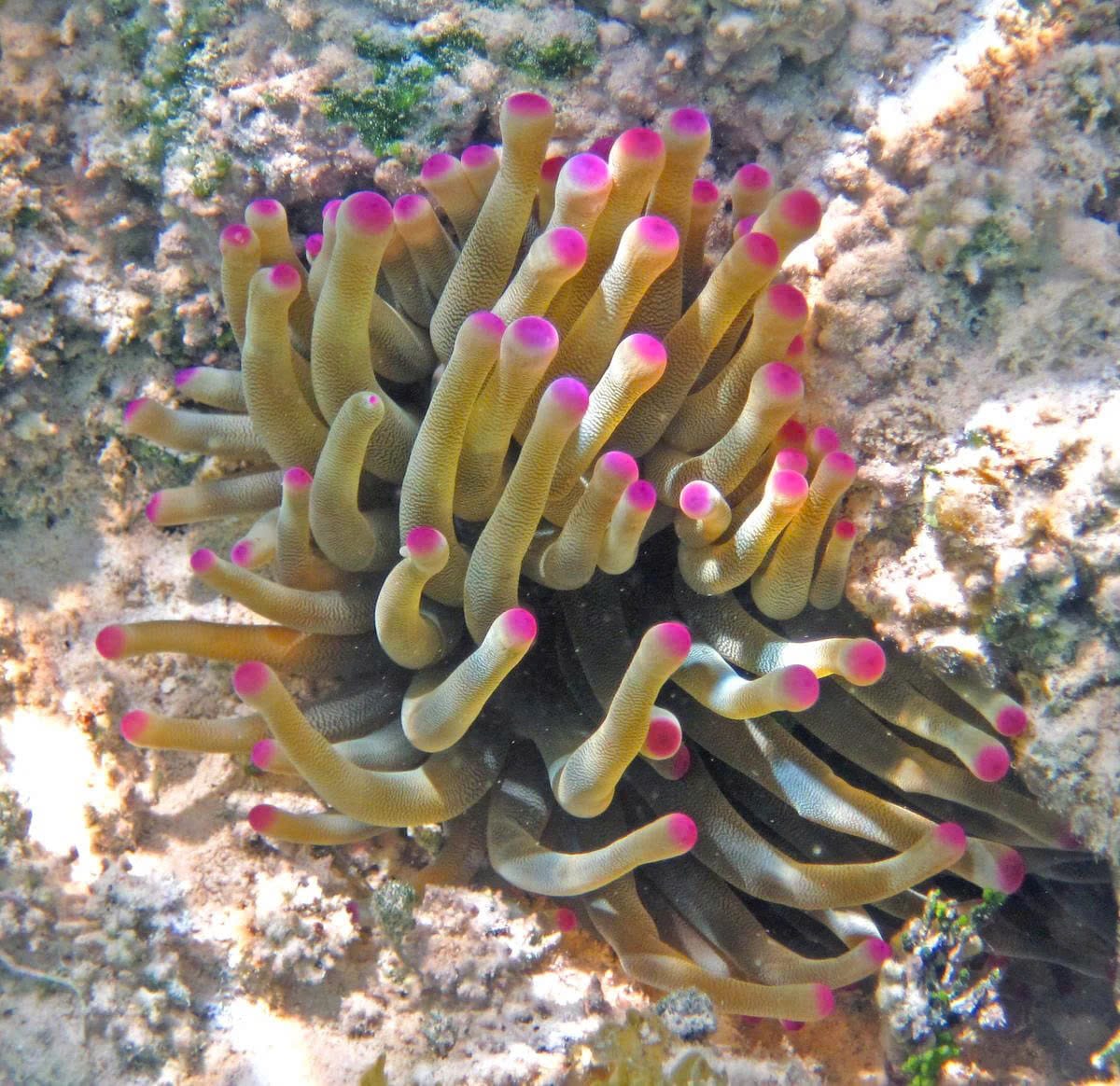
Pink Tip Anemones are notable for their pink or orange tentacle tips contrasting against a green or brown body. Native to the Mediterranean, these anemones inhabit rocky substrates and shallow subtidal zones. They feed on plankton and small invertebrates, relying on stinging tentacles for prey capture.
Pink Tip Anemones often engage in symbiotic relationships with small fish, providing shelter while benefiting from nutrient exchange. Their tentacles are highly responsive, retracting quickly when disturbed, and expanding to optimize feeding.
Reproduction occurs both sexually, via larval dispersal, and asexually through budding. Pink Tip Anemones are indicators of environmental health, and their vibrant appearance makes them a favorite among divers and marine enthusiasts.
16. Green Carpet Anemone (Stichodactyla haddoni)
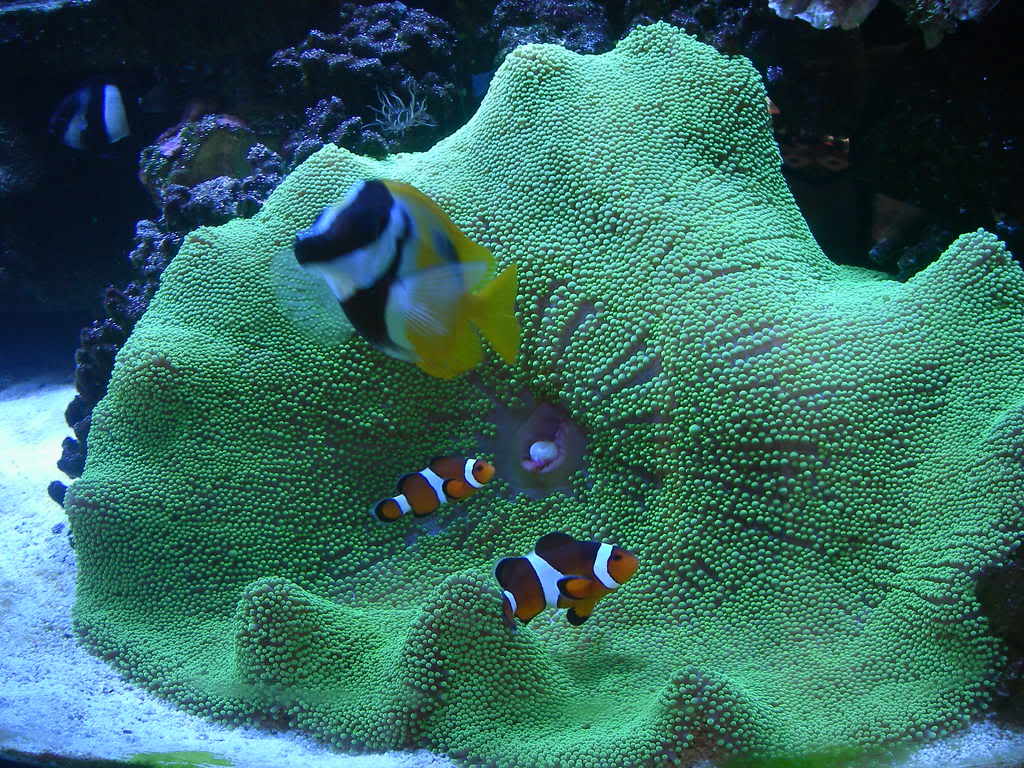
The Green Carpet Anemone is a spectacular reef inhabitant with a broad oral disc that can span up to one meter. Its green, brown, or bluish tentacles create a carpet-like effect, providing shelter to clownfish and other symbiotic species. Found throughout the Indo-Pacific, this anemone thrives in shallow coral reefs with moderate water flow.
As a predator, it captures small fish and plankton with stinging cells along its tentacles. Symbiotic algae supplement its nutrition through photosynthesis. Green Carpet Anemones retract their tentacles when threatened and expand during feeding, demonstrating remarkable behavioral adaptations.
Reproduction occurs sexually through gametes and asexually via fragmentation. These anemones are critical to reef biodiversity, serving as both predators and protective hosts for various marine organisms.
17. Glass Anemone (Aiptasia pallida)
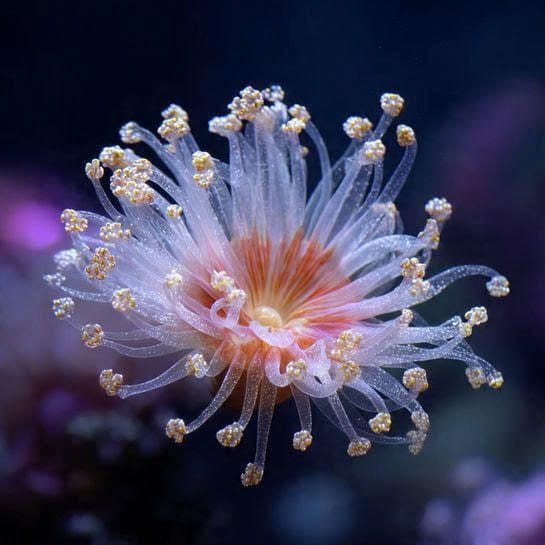
Glass Anemones are small, translucent species often considered pests in aquaria due to their rapid reproduction. They inhabit shallow waters and attach to rocks, coral, or artificial surfaces. Their nearly invisible tentacles are equipped with stinging cells to capture plankton and tiny invertebrates.
Despite their diminutive size, Glass Anemones reproduce efficiently both sexually and asexually, making them resilient colonizers. They are highly adaptable to different water conditions and exhibit fascinating interactions with other invertebrates in their habitat.
Understanding Glass Anemones offers insight into invertebrate behavior, ecological balance, and challenges in aquarium management.
18. Fire Anemone (Actinodendron plumosum)
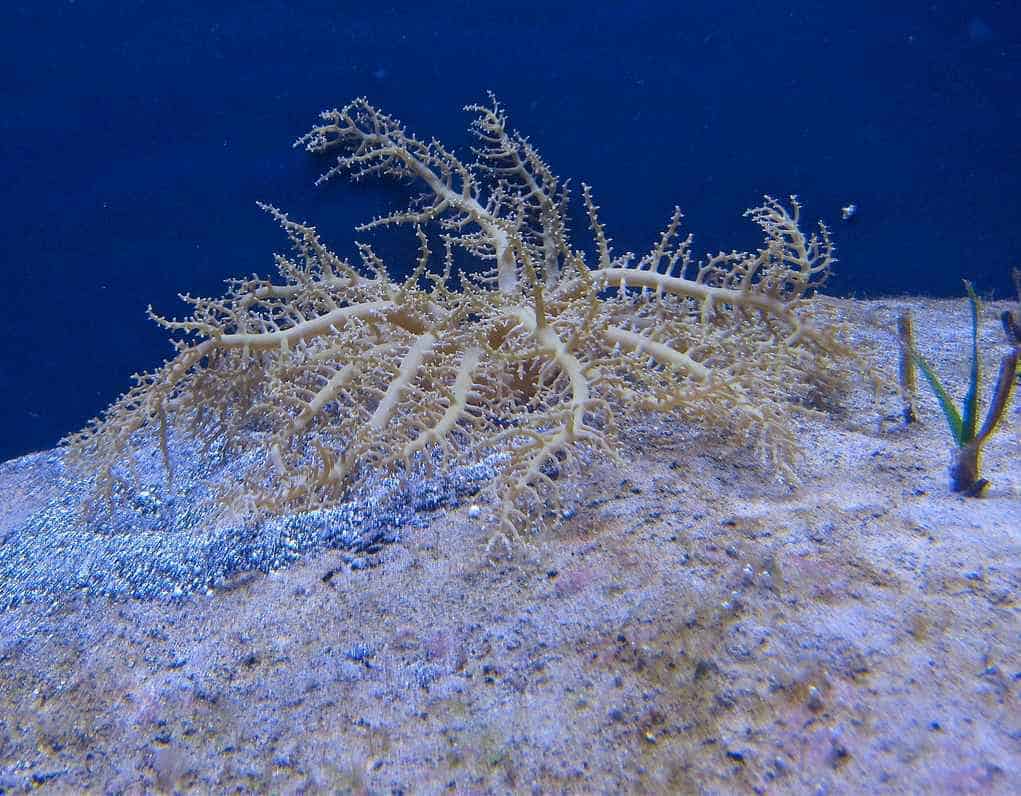
Fire Anemones are highly venomous species known for their feathery, flowing tentacles and vibrant red or brown coloration. Native to the Indo-Pacific, they inhabit coral rubble and sandy substrates. Their stings are potent enough to deter predators and capture prey effectively.
These anemones are primarily carnivorous, feeding on small fish and invertebrates. Their tentacles display continuous movement, increasing prey capture efficiency. Fire Anemones are solitary but may aggregate where conditions are favorable.
Reproduction is both sexual and asexual. Observing Fire Anemones provides insight into predator-prey dynamics and the importance of venom in marine ecosystems.
19. Sunburst Anemone (Anthopleura sola)
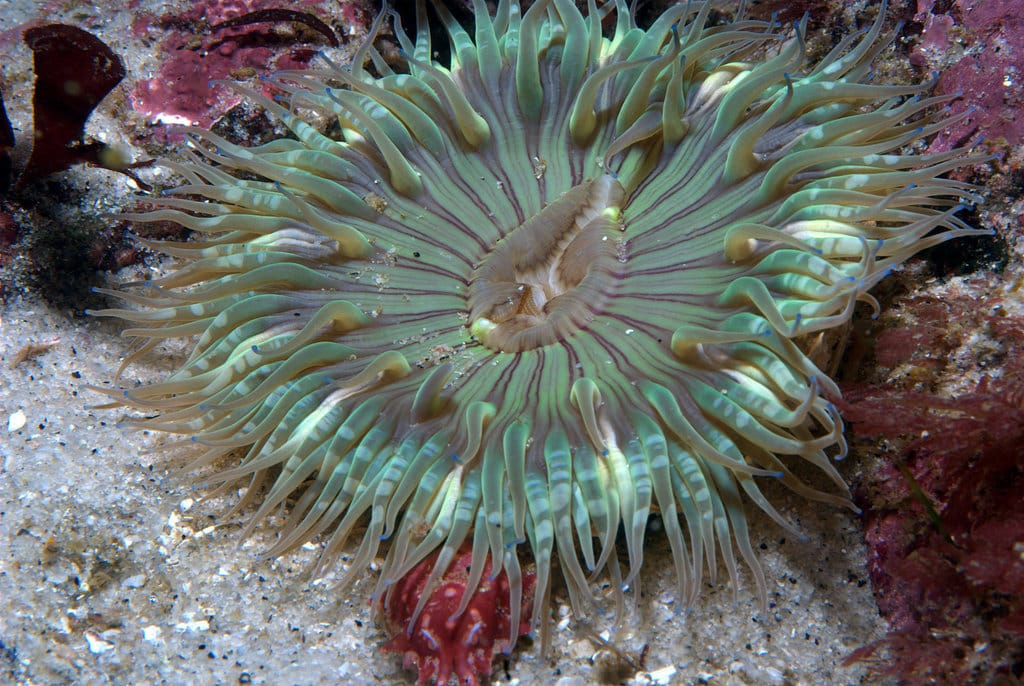
Sunburst Anemones are recognized by their radiant orange or yellow tentacles, which create a sunburst pattern on rocky substrates. Found along the Pacific coast of North America, they prefer intertidal zones with moderate water flow. Their colorful appearance attracts marine photographers and divers alike.
These anemones are carnivorous, feeding on plankton and small invertebrates. They retract their tentacles during low tides or when disturbed, displaying adaptive behavior for survival in variable environments. Sunburst Anemones also support small symbiotic organisms, enriching the local ecosystem.
Reproduction occurs through spawning and asexual splitting, allowing both genetic diversity and local population maintenance. These anemones highlight the complexity of intertidal ecosystems and their delicate ecological balance.
20. Beaded Sea Anemone (Heteractis aurora)
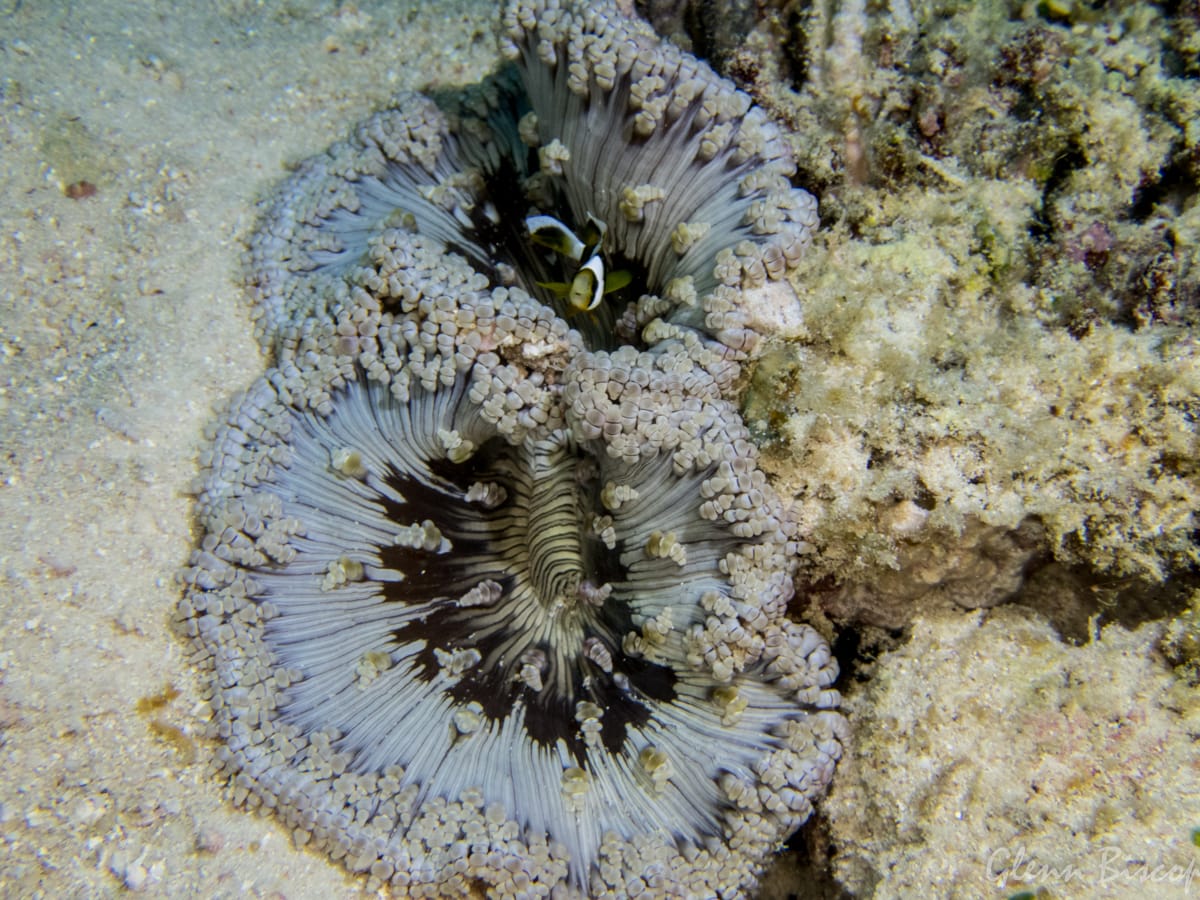
Beaded Sea Anemones are striking species with green to brown tentacles tipped with bright bead-like structures. They inhabit tropical Indo-Pacific reefs, often in sandy or rubble areas. These anemones host clownfish, providing protection while benefiting from nutrient exchange.
They feed on plankton and small invertebrates using stinging cells along their tentacles. Beaded Sea Anemones exhibit defensive behaviors, retracting tentacles and changing color in response to stress. Their presence enhances reef biodiversity by supporting symbiotic organisms.
Reproduction occurs sexually via larval dispersal and asexually through fragmentation. Beaded Sea Anemones exemplify the intricate balance between predator, prey, and symbiont in coral reef ecosystems.
21. Christmas Tree Anemone (Corynactis viridis)
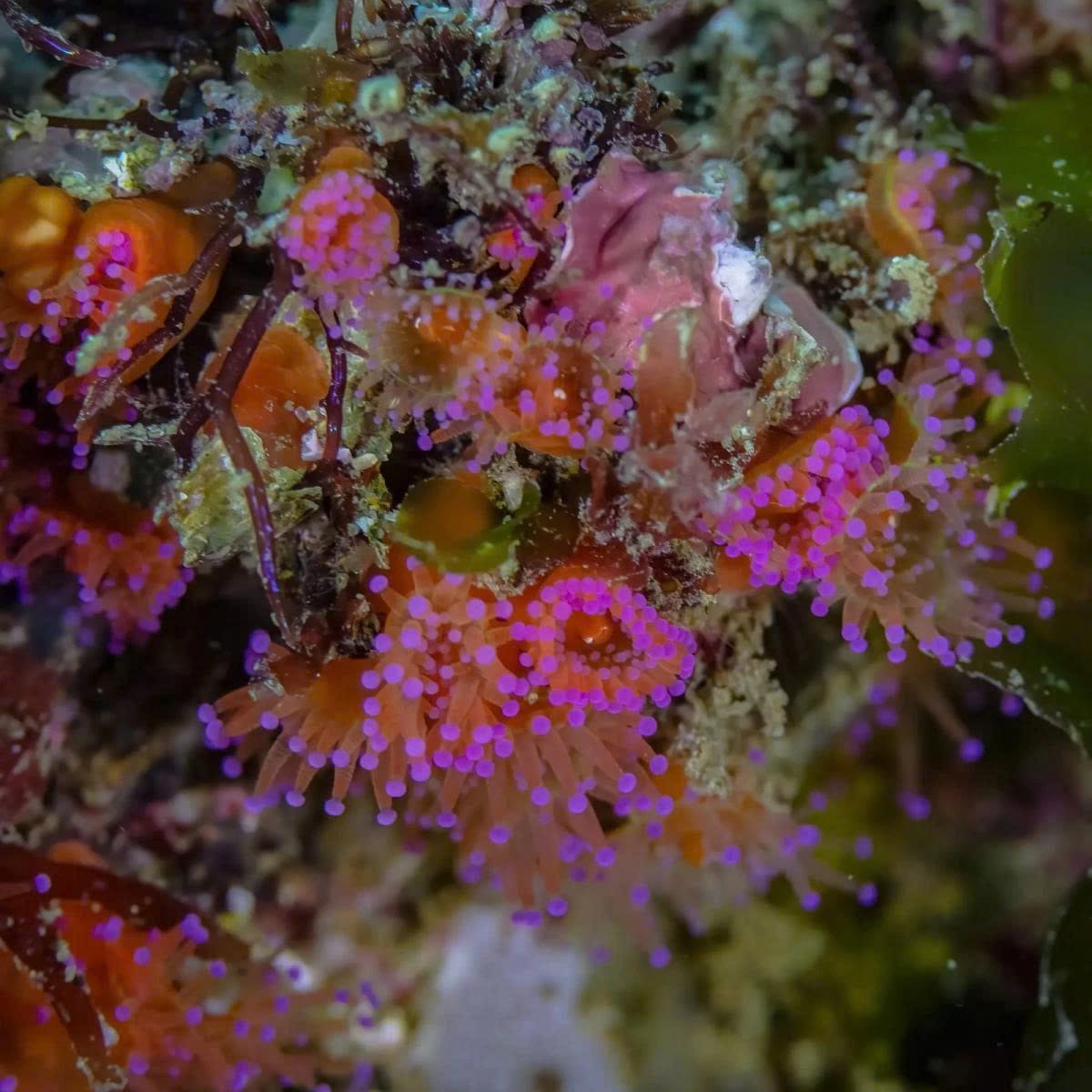
Christmas Tree Anemones are small, brightly colored anemones with clusters of tentacles resembling festive decorations. Native to temperate Atlantic waters, they attach to rocky substrates in subtidal zones. Their size and vibrant coloration make them noticeable inhabitants despite their small stature.
These anemones capture plankton and small invertebrates using stinging tentacles. They often grow in dense colonies, creating microhabitats for other organisms. Christmas Tree Anemones are studied for their reproductive strategies and colony dynamics.
They reproduce both sexually and asexually, ensuring colony expansion and genetic diversity. Their ecological role as both predator and habitat provider highlights their importance in temperate marine ecosystems.
22. Starlet Sea Anemone (Edwardsia timida)
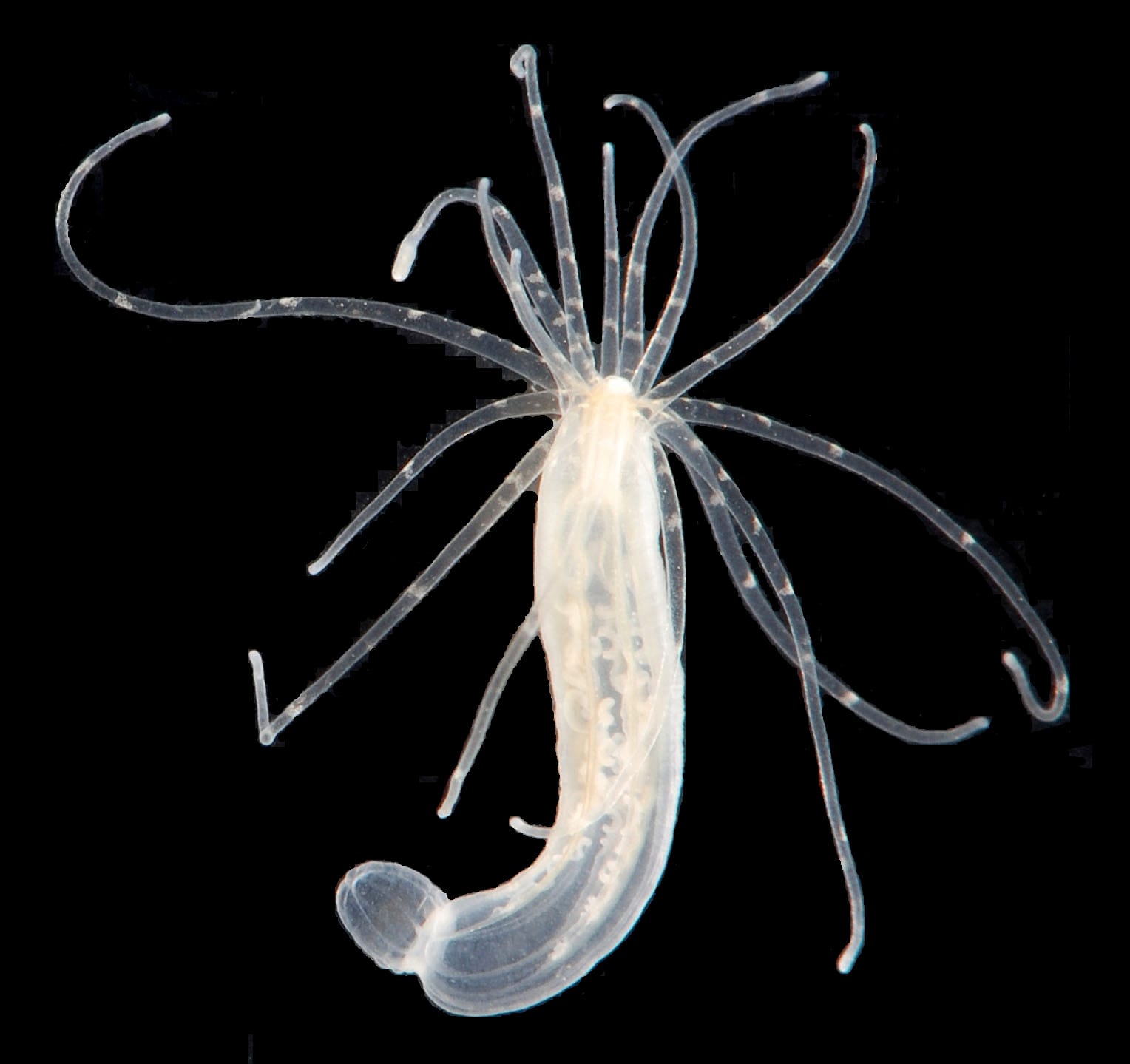
Starlet Sea Anemones are delicate, burrowing species often found in sandy or muddy substrates. They remain partially buried, extending slender tentacles to capture plankton. These anemones are small, usually only a few centimeters in length, yet play a crucial role in benthic ecosystems.
Feeding involves extending tentacles into water currents to immobilize tiny prey. Starlet Sea Anemones are sensitive to sediment composition and water quality, making them indicators of healthy benthic habitats. Their cryptic lifestyle reduces predation risk and increases survival rates.
Reproduction occurs via gamete release into the water column, and some species reproduce asexually. Studying Starlet Anemones provides insight into sediment-associated marine life and ecosystem health.
23. Dahlia Anemone (Urticina species)
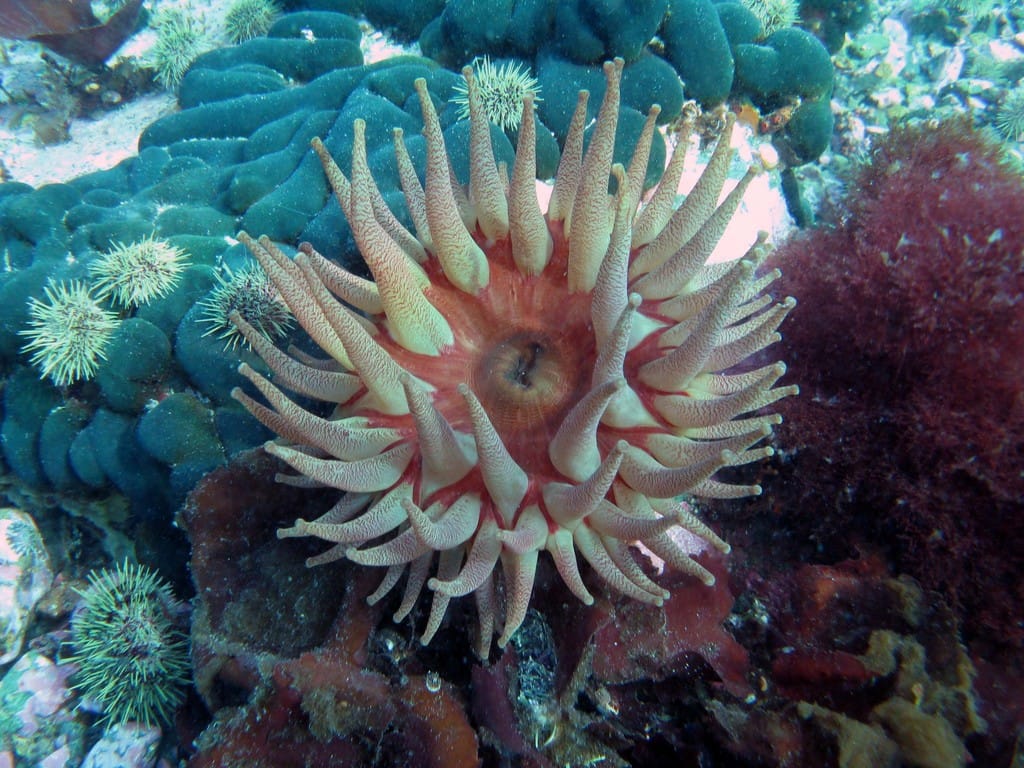
Dahlia Anemones are colorful, hardy species inhabiting North Atlantic rocky shores. Their tentacles, often red or pink, radiate outward from a central disc resembling flower petals. They feed on small fish and invertebrates using potent stinging cells.
These anemones are mostly solitary but occasionally cluster in favorable microhabitats. They exhibit remarkable flexibility, retracting tentacles when threatened and expanding during feeding. Dahlia Anemones support ecological balance by controlling invertebrate populations and providing shelter for small organisms.
Reproduction occurs sexually through gamete dispersal and asexually through fission. Their vibrant appearance and ecological significance make them notable species for marine enthusiasts and researchers alike.
24. Fat Anemone (Cribrinopsis crassa)
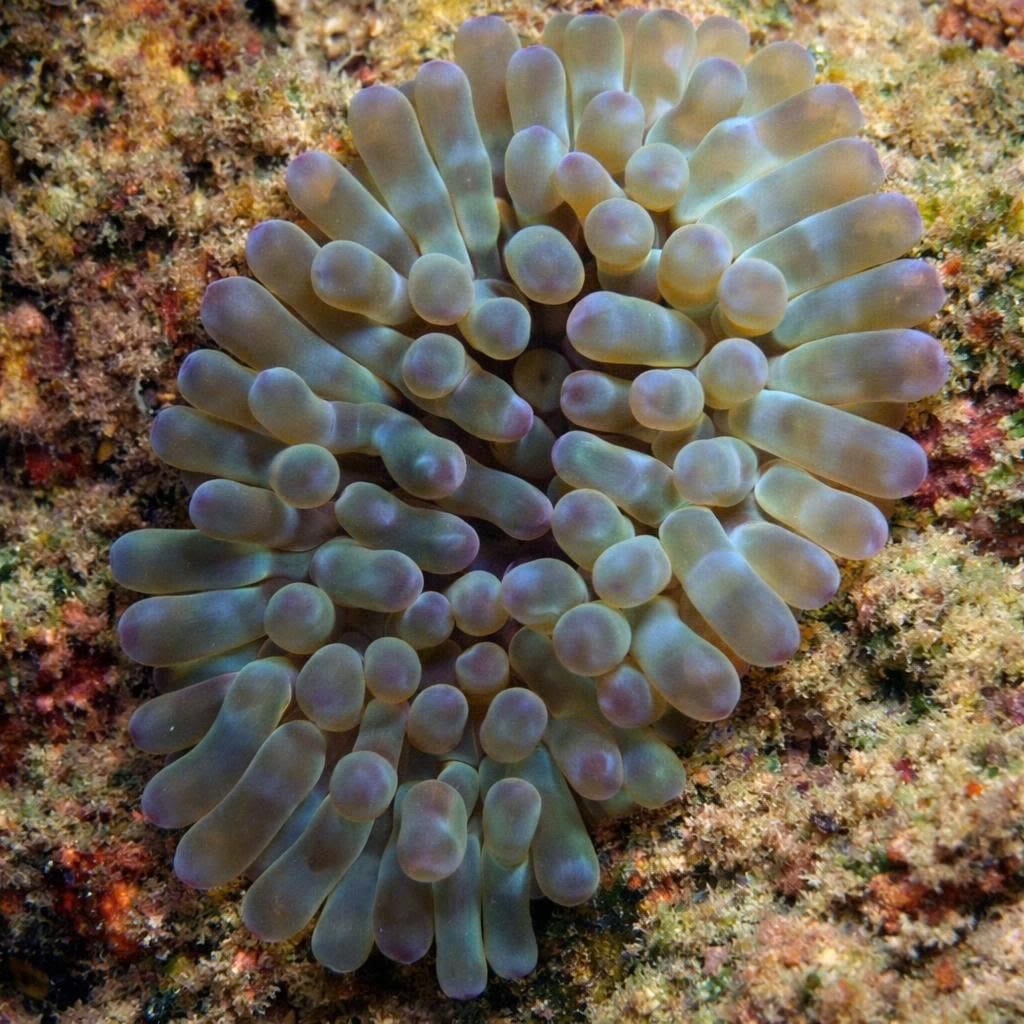
Fat Anemones are robust species characterized by thick tentacles and a broad base. Found in temperate and cold waters, they attach to rocky or sandy substrates. They capture plankton and small invertebrates with stinging cells, feeding actively during high tides.
These anemones display limited movement but can adjust tentacle orientation to optimize prey capture. Their size and defensive stinging cells deter predators, while their presence enhances local biodiversity.
Reproduction occurs sexually and asexually. Fat Anemones illustrate adaptations to colder environments, demonstrating the wide ecological range of sea anemones.
25. Golden Anemone (Condylactis aurantiaca variant)
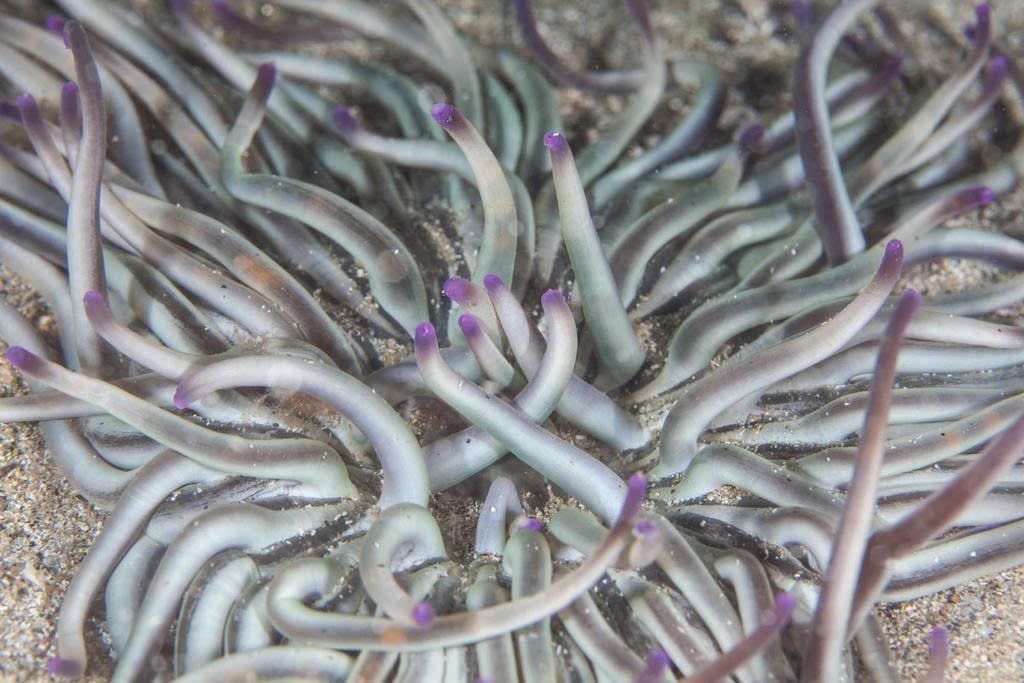
Golden Anemones are visually striking with bright yellow or gold tentacles. Native to the Mediterranean, they attach to rocky substrates in shallow subtidal zones. They feed on plankton and small invertebrates, using stinging cells to immobilize prey.
These anemones host symbiotic organisms, including shrimps and small fish, benefiting from nutrient exchange and protection. Golden Anemones retract tentacles when threatened and expand when feeding, demonstrating behavioral adaptability.
Reproduction occurs both sexually and asexually. Their vibrant appearance and ecological role make them important contributors to Mediterranean reef biodiversity.
26. Columbia Sand Anemone (sandy substrate species)
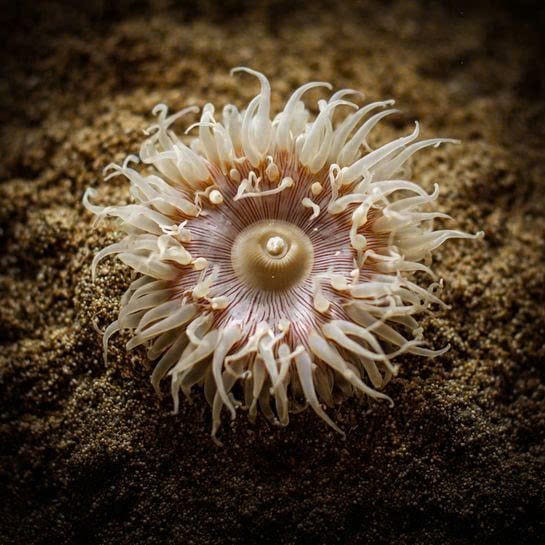
Columbia Sand Anemones inhabit sandy substrates, burying their basal disc while extending tentacles to capture plankton. Their burrowing behavior provides protection and helps aerate the substrate, benefiting other benthic organisms.
They are small to medium-sized and feed on tiny invertebrates. Their cryptic lifestyle reduces predation risk, and they play an important role in maintaining healthy sandy ecosystems.
Reproduction occurs sexually via larval dispersal and asexually through budding. Columbia Sand Anemones exemplify adaptations to sedimentary habitats and benthic ecosystem functions.
27. Lemon Anemone (colorful carpet-type species)
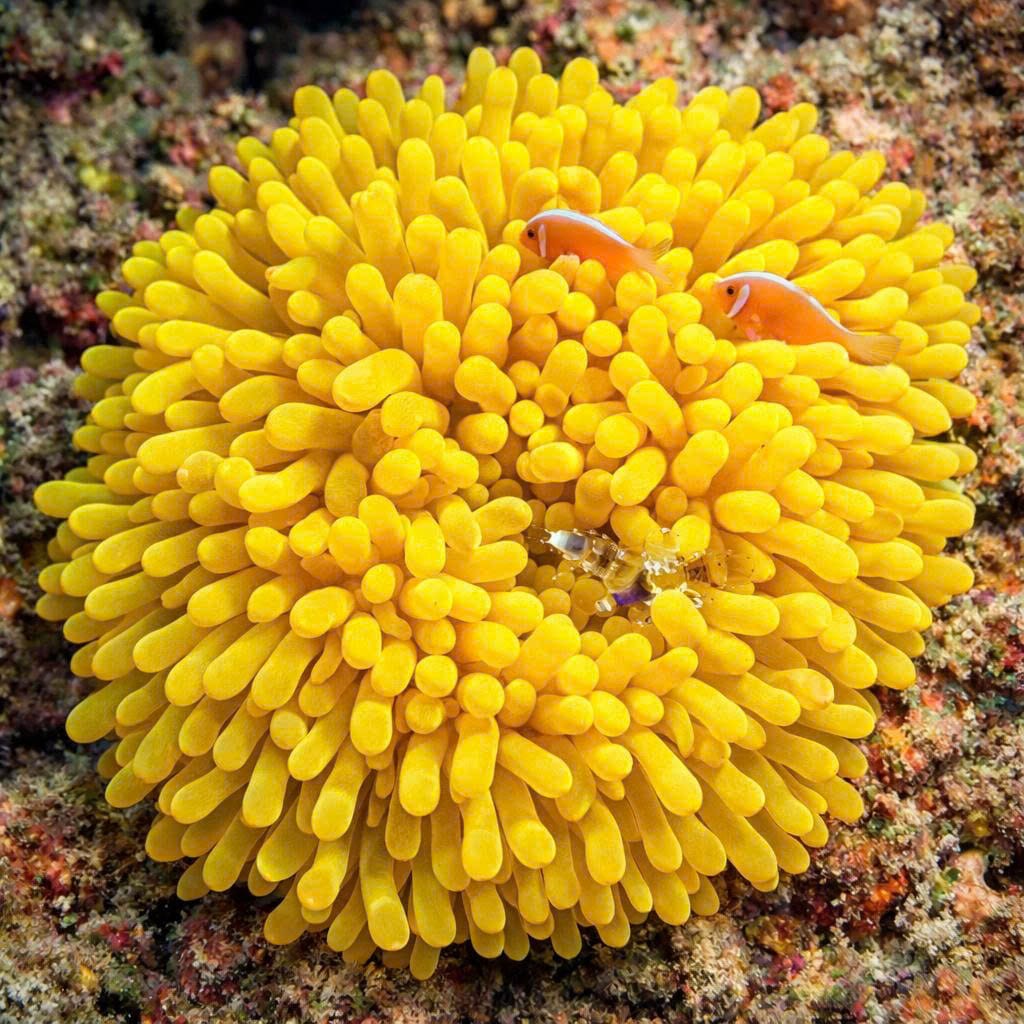
Lemon Anemones are small, carpet-type anemones with vibrant yellow or lemon-colored tentacles. Found in tropical reefs, they attach to rock or coral substrates and provide shelter for clownfish and shrimps.
They feed on plankton and small invertebrates. Tentacle movement enhances prey capture efficiency, and symbiotic relationships enrich reef biodiversity. Their bright coloration also serves as a warning to potential predators.
Reproduction occurs sexually and asexually. Lemon Anemones are popular in aquaria for their color and symbiotic interactions.
28. Trumpet Anemone (Aiptasia couchii)
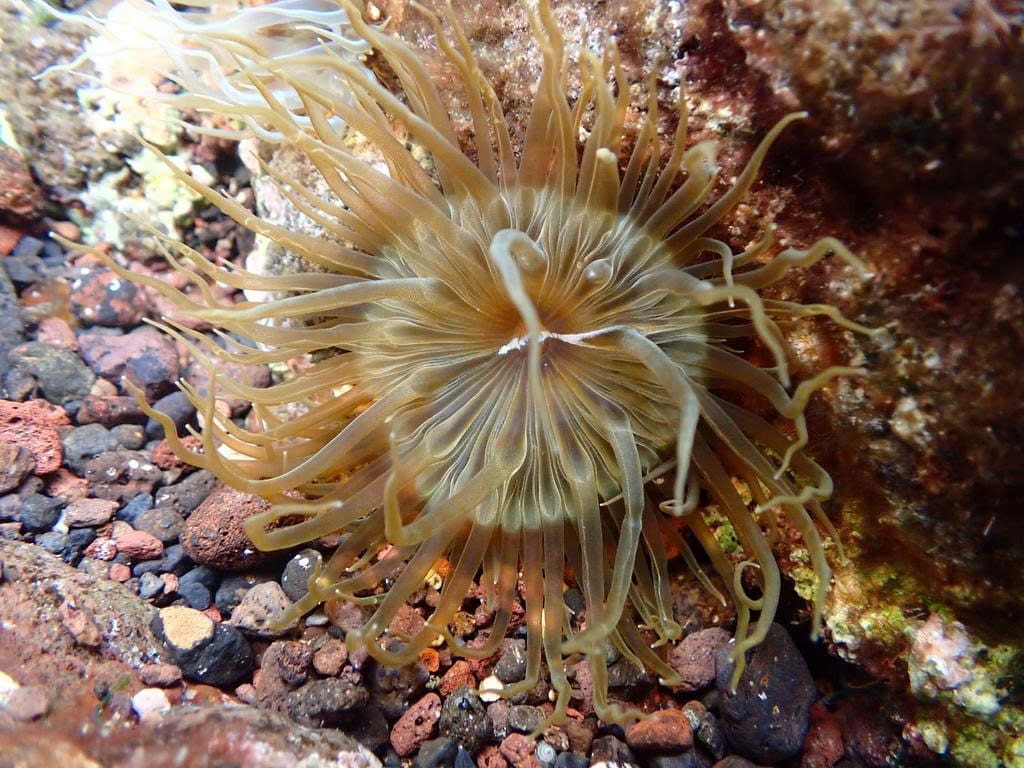
Trumpet Anemones are elongated species with translucent, trumpet-shaped bodies. They inhabit sandy or rocky substrates and are highly predatory despite their small size. Their stinging cells capture plankton and small invertebrates efficiently.
They reproduce quickly via asexual methods, making them common colonizers. Observing Trumpet Anemones highlights the diversity of feeding strategies among sea anemones and their impact on benthic ecosystems.
29. Gem Anemone (Bunodactis verrucosa)
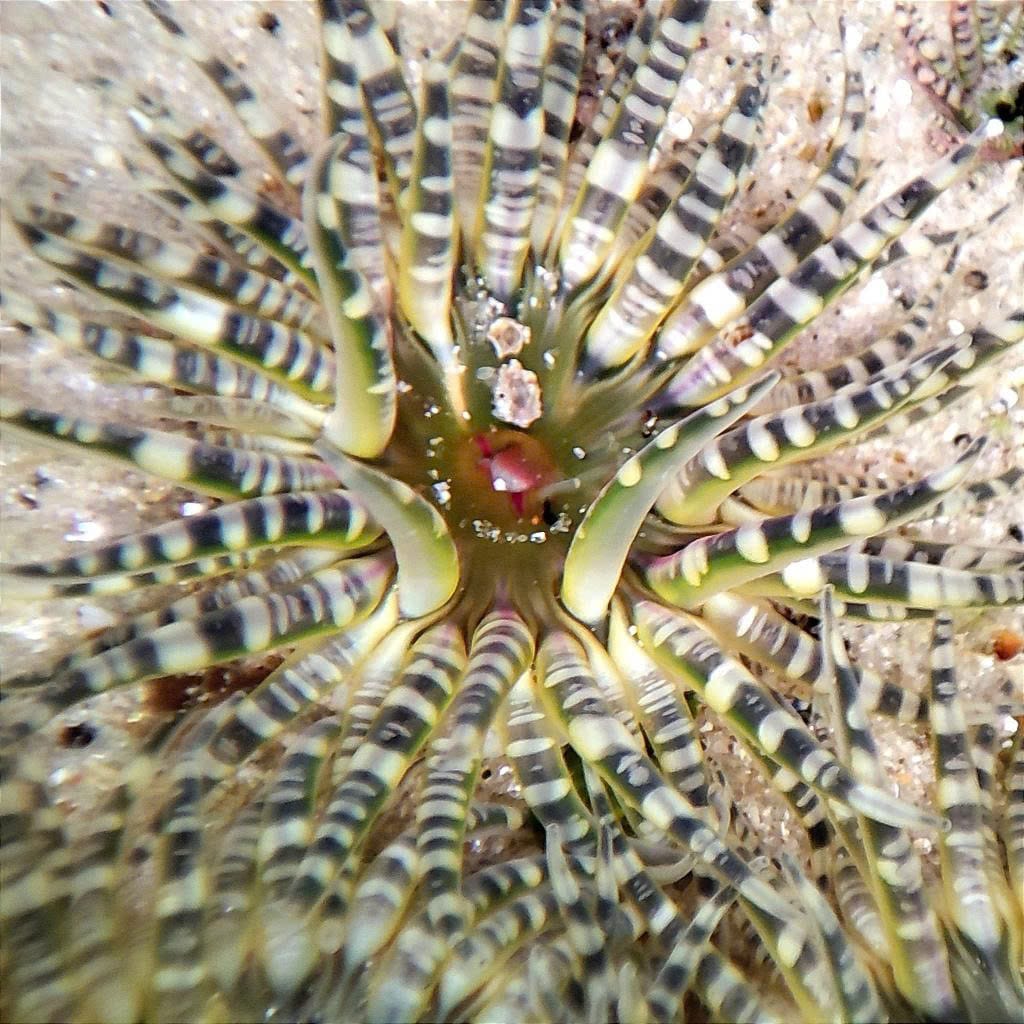
Gem Anemones are medium-sized, vividly colored anemones with bright tentacle tips resembling precious gems. Native to temperate Atlantic waters, they attach to rocky substrates in subtidal zones. They feed on small invertebrates, playing a key role in local food webs.
Gem Anemones exhibit retraction behavior when threatened and expansion during feeding. Sexual and asexual reproduction ensures population stability. Their presence enriches biodiversity and supports complex ecological interactions.
30. Cloak Anemone (Calliactis palliata)
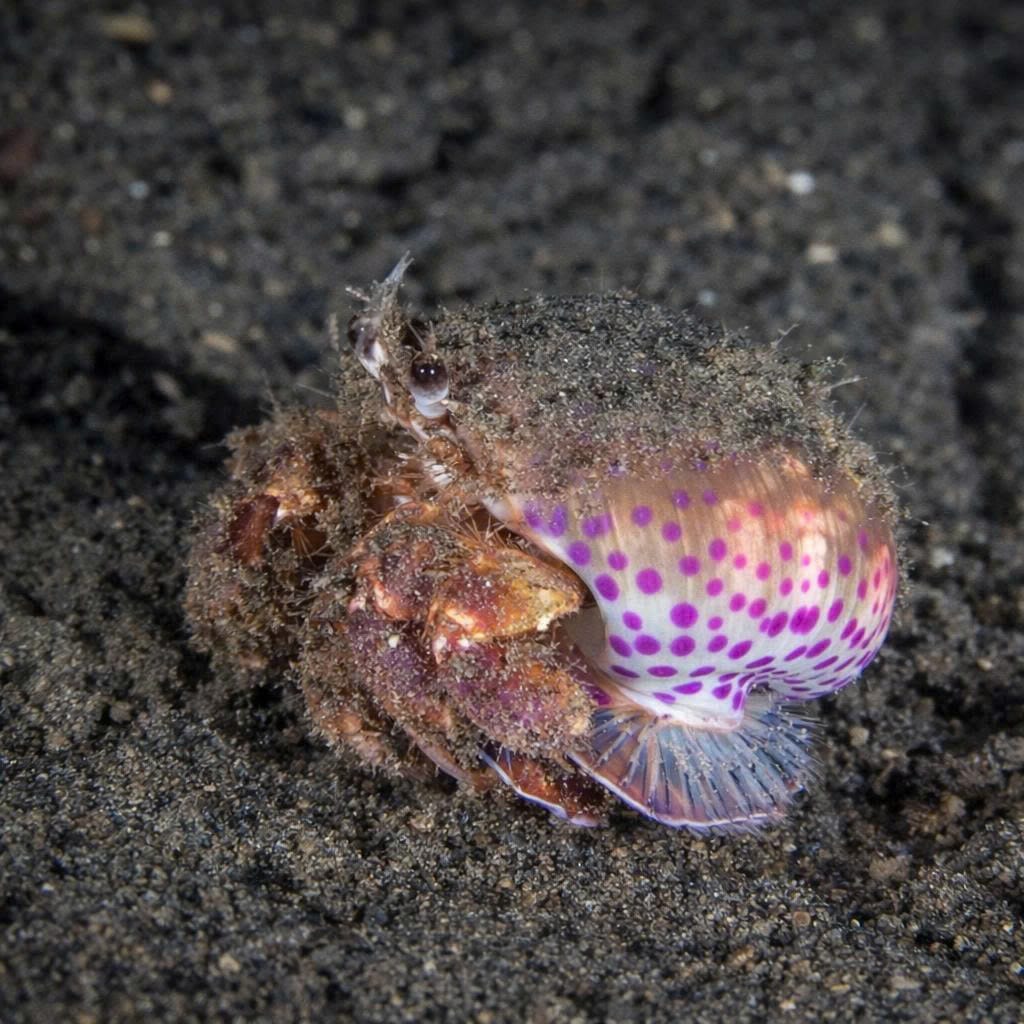
Cloak Anemones are unique species often found attached to gastropod shells, forming a “cloak” over the shell surface. They feed on plankton and small invertebrates using stinging tentacles and host small symbiotic organisms for mutual benefit.
These anemones reproduce sexually and asexually, enhancing survival and adaptability. Cloak Anemones illustrate the diversity of sea anemone habitats and behaviors, from substrate attachment to shell colonization, making them fascinating subjects for marine study.
Conclusion
Sea anemones are among the most captivating and diverse creatures of the marine world. From the giant, vibrant Green Carpet Anemone to the delicate, cryptic Starlet Sea Anemone, each species showcases unique adaptations, colors, and behaviors that make them indispensable to reef ecosystems. Throughout this guide, we have explored 30 remarkable types of Sea anemone, highlighting their feeding strategies, symbiotic relationships, habitats, and reproduction methods.
These anemones play crucial roles in maintaining ecological balance, providing shelter for clownfish and other small organisms, controlling prey populations, and contributing to the biodiversity of both tropical and temperate marine environments. Understanding these fascinating creatures not only enriches our appreciation of ocean life but also emphasizes the importance of conserving their delicate habitats.
Whether you are a marine enthusiast, diver, or aquarium hobbyist, learning about the various types of Sea anemone offers insight into the complexity and beauty of underwater ecosystems. By studying their behaviors, interactions, and survival strategies, we gain a deeper respect for these extraordinary marine invertebrates and the vital roles they play beneath the waves.
Frequently Asked Questions (FAQ) About Sea Anemones
1. What is a sea anemone?
A sea anemone is a marine invertebrate belonging to the order Actiniaria. They are closely related to corals and jellyfish, characterized by a central mouth surrounded by stinging tentacles.
2. How many types of sea anemone are there?
There are hundreds of species worldwide, each with unique colors, shapes, and sizes. In this guide, we focused on 30 notable types of sea anemone.
3. Where do sea anemones live?
Sea anemones are found in oceans worldwide, from tropical coral reefs to cold temperate waters, often attached to rocks, sand, or coral substrates.
4. What do sea anemones eat?
Sea anemones are carnivorous. They feed on plankton, small fish, and invertebrates using their stinging tentacles to immobilize prey.
5. Are sea anemones dangerous?
Most sea anemones are harmless to humans, but some species, like Fire Anemones, have venomous stings that can cause irritation or mild pain.
6. Do sea anemones move?
Sea anemones are mostly sessile, attaching to a substrate. However, some species can slowly glide, crawl, or detach and float to new locations.
7. How do sea anemones reproduce?
Sea anemones reproduce both sexually (by releasing gametes) and asexually (through budding or splitting), ensuring population growth and genetic diversity.
8. What is the symbiotic relationship between clownfish and sea anemones?
Clownfish live among anemone tentacles, gaining protection from predators. In return, they provide the anemone with nutrients through waste and help keep it clean.
9. Can sea anemones survive in aquariums?
Yes, many species can survive in marine aquariums with proper lighting, water flow, and temperature, though some are more sensitive than others.
10. What is the lifespan of a sea anemone?
Sea anemone lifespans vary by species, ranging from a few years to several decades in the wild.
11. What colors do sea anemones come in?
Sea anemones display a variety of colors, including red, green, purple, yellow, orange, and even fluorescent shades, depending on species and habitat.
12. How big can sea anemones get?
Sizes range from small species a few centimeters wide to giant species like Carpet Anemones that can reach over 1 meter in diameter.
13. Do all sea anemones host clownfish?
No, only specific species, like Carpet Anemones and Sebae Anemones, form symbiotic relationships with clownfish.
14. How do sea anemones capture prey?
Sea anemones use stinging cells called nematocysts in their tentacles to paralyze prey, which is then moved to the central mouth for digestion.
15. Can sea anemones sting humans?
Yes, while most stings are harmless, some species like Fire Anemones can cause irritation or mild pain.
16. What role do sea anemones play in ecosystems?
Sea anemones provide shelter for symbiotic species, control invertebrate populations, and contribute to coral reef biodiversity.
17. Are sea anemones endangered?
Some species are threatened by habitat destruction, pollution, and climate change, though many are currently stable in healthy reef ecosystems.
18. How do sea anemones breathe?
Sea anemones absorb oxygen directly from the surrounding water through diffusion across their body surfaces.
19. Do sea anemones have a skeleton?
No, sea anemones are soft-bodied animals without bones. Their structure is supported by water pressure within their bodies.
20. What are the most popular sea anemones in aquariums?
Popular species include Carpet Anemones, Bubble Tip Anemones, Sebae Anemones, and Rock Flower Anemones due to their colors and symbiotic relationships.
21. Can sea anemones move to escape predators?
Some species can slowly glide or detach and float with currents, but most rely on stinging tentacles for protection.
22. What is a Tube Anemone?
Tube Anemones live buried in sand or mud and extend tentacles into the water to capture plankton. They are sedentary but highly effective predators.
23. How do sea anemones communicate?
Sea anemones communicate chemically and through tentacle movement, mainly responding to environmental cues and the presence of prey or predators.
24. Can sea anemones regenerate?
Yes, many species can regenerate lost tentacles or even portions of their body, especially after injury or fragmentation.
25. How do sea anemones get energy?
Sea anemones obtain energy through predation and, for some species, via symbiotic algae that photosynthesize within their tissues.
26. Are sea anemones related to corals?
Yes, both are cnidarians and share similar body structures, including stinging cells and radial symmetry.
27. How do sea anemones reproduce asexually?
Asexual reproduction occurs through budding, fission, or fragmentation, allowing local population growth without gamete production.
28. Can sea anemones live in freshwater?
No, sea anemones are strictly marine organisms and cannot survive in freshwater environments.
29. What is the difference between carpet and tube anemones?
Carpet Anemones spread over surfaces with broad oral discs and tentacles, while Tube Anemones live buried in sediment with tentacles extending outward.
30. How do symbiotic algae help sea anemones?
Algae provide nutrients through photosynthesis, supplementing the anemone’s diet and contributing to its vibrant colors.
31. Can sea anemones be kept with fish?
Yes, many species are compatible with reef fish, especially clownfish, but care must be taken to prevent predation on smaller invertebrates.
32. What is the most venomous sea anemone?
Fire Anemones (Actinodendron plumosum) are among the most venomous, capable of delivering painful stings to humans and prey.
33. How fast do sea anemones grow?
Growth rates vary by species, water temperature, and nutrient availability. Carpet-type anemones may take several years to reach full size.
34. Can sea anemones survive without symbiotic algae?
Yes, they can capture prey for energy, but symbiotic algae provide supplemental nutrition and enhance growth and color.
35. Do all sea anemones sting?
Yes, all have stinging cells, but the potency varies from mild (harmless to humans) to strong (causing irritation or pain).
36. How do sea anemones attach to surfaces?
They use a muscular basal disc that secretes adhesive mucus to anchor to rocks, coral, or shells.
37. Can sea anemones tolerate pollution?
Some species are sensitive to pollutants and changes in water quality, which can cause bleaching or mortality.
38. What predators eat sea anemones?
Predators include certain fish, sea stars, nudibranchs, and some crabs. Their stinging tentacles provide primary defense.
39. Are sea anemones solitary or colonial?
Most species are solitary, but some, like Christmas Tree Anemones, form colonies or dense aggregations.
40. How do anemones capture large prey?
Large prey is stung and immobilized with tentacles, then slowly moved toward the central mouth for digestion.
41. What is the ecological importance of sea anemones?
They provide habitat, contribute to biodiversity, regulate invertebrate populations, and maintain reef ecosystem health.
42. Can sea anemones live in captivity long-term?
Yes, with proper care, stable water conditions, and adequate lighting, many species thrive for years in aquariums.
43. How do sea anemones defend themselves?
Primarily with stinging cells in their tentacles, retraction, and, in some species, mobility to escape threats.
44. What is the difference between tropical and temperate sea anemones?
Tropical anemones often have bright colors, symbiotic relationships with clownfish, and reef habitats, while temperate species are smaller, less colorful, and inhabit rocky intertidal zones.
45. How do sea anemones interact with other marine species?
They form symbiotic relationships, provide shelter, prey on small organisms, and compete for space with other sessile animals.
46. Can sea anemones survive extreme temperatures?
Most species are sensitive to temperature changes; tropical species are vulnerable to warming waters, while temperate species tolerate cooler conditions.
47. How do sea anemones sense their environment?
They respond to touch, light, and chemical signals using nerve nets spread throughout their body, allowing them to react to prey and predators.
48. Are sea anemones easy to identify?
Identification relies on tentacle structure, color, size, oral disc shape, and habitat. Some species are challenging to distinguish without close observation.
49. What are the most colorful sea anemones?
Species like Carpet Anemones, Magnificent Anemones, and Beaded Sea Anemones are known for vivid greens, purples, reds, and fluorescent hues.
50. Can sea anemones regenerate lost tentacles?
Yes, most species can regenerate tentacles or even portions of their oral disc, especially after predation or physical damage.
51. Why are sea anemones important for marine conservation?
They support biodiversity, provide habitat for symbiotic species, indicate reef health, and contribute to ecological balance, making them essential in marine conservation efforts.
Read more: 35 Types of Angelfish (Pictures And Identification)