

Sea otters are among the most fascinating marine mammals on Earth. Floating effortlessly on their backs, cracking open shells with rocks, and grooming their dense fur with remarkable care, these animals are far more than just charming coastal inhabitants. They are highly specialized predators with a diet that plays a critical role in maintaining the balance of marine ecosystems.
Understanding what sea otters eat is not just an exercise in curiosity—it is essential for appreciating their ecological importance. Unlike many marine mammals that rely on blubber for insulation, sea otters depend on their incredibly dense fur and a high-calorie diet to survive in cold ocean waters. To maintain their body temperature and energy levels, they must consume a significant amount of food daily—often up to 25% of their body weight.
What makes sea otters especially unique is their feeding behavior. They are one of the few animal species known to use tools regularly in the wild. By selecting rocks to crack open hard-shelled prey such as clams, mussels, and crabs, they demonstrate problem-solving abilities rarely seen in marine animals. This behavior allows them to access a wide variety of nutrient-rich foods that other predators cannot easily exploit.
Their diet primarily consists of bottom-dwelling marine organisms, also known as benthic invertebrates. These include shellfish, crustaceans, and echinoderms—organisms that live on or near the ocean floor. However, sea otters are opportunistic feeders, meaning their food choices can vary depending on location, season, and availability. In some regions, they may consume more fish, while in others, they focus almost entirely on invertebrates.
One of the most important aspects of the sea otter’s diet is its impact on the environment. Sea otters are considered a keystone species, meaning their presence has a disproportionately large effect on their ecosystem. For example, by feeding heavily on sea urchins, they prevent these spiny creatures from overgrazing kelp forests. Healthy kelp forests, in turn, provide shelter and food for countless marine species, from fish to invertebrates and even seabirds.
Without sea otters, entire coastal ecosystems can collapse. Areas where otters have disappeared often see a surge in sea urchin populations, leading to the destruction of kelp forests and a dramatic loss of biodiversity. This makes the sea otter not just a predator, but a guardian of marine life.
In this comprehensive guide, we will explore 30 foods that sea otters love the most, breaking down each category in detail. You will learn not only what they eat, but also how they hunt, why certain foods are essential to their survival, and how their feeding habits shape the underwater world.
Let’s dive deeper into the wild diet of sea otters and uncover the incredible variety of foods that sustain these remarkable animals.
What Do Sea Otters Eat in the Wild?
1. Clams
Clams are one of the most important and frequently consumed foods in a sea otter’s diet. Found buried beneath sandy or muddy seafloors, clams provide a rich source of protein, essential minerals, and energy. Sea otters locate clams using their sensitive whiskers and dexterous front paws, often diving repeatedly to the ocean bottom to dig them out.
Once a clam is retrieved, the otter brings it to the surface and uses a rock as a tool to crack the shell open. This behavior highlights their intelligence and adaptability. Clams are especially valuable because they are abundant in coastal habitats and relatively easy to harvest once detected. Their high caloric value makes them an efficient food choice, helping sea otters meet their demanding daily energy requirements.
2. Mussels
Mussels are another staple in the sea otter diet, often found clinging tightly to rocks in intertidal and subtidal zones. These shellfish are packed with nutrients such as protein, omega-3 fatty acids, and essential vitamins. Sea otters typically pry mussels off rocks using their strong forelimbs and then crack them open with tools or by striking them against hard surfaces.
Mussels are particularly important because they form dense clusters, allowing otters to gather multiple prey items in a single dive. This efficiency reduces energy expenditure while maximizing intake. Their availability year-round makes them a reliable food source across many regions.
3. Abalone
Abalone are large marine snails with a single, flat shell that clings tightly to rocky surfaces. They are considered a prized food for sea otters due to their high nutritional value and substantial size. However, harvesting abalone requires strength and skill, as they adhere firmly to rocks.
Sea otters use a combination of force and leverage to detach abalone, often prying them loose with their paws. Once obtained, the shell is cracked open using a rock. Because of their size and caloric density, a single abalone can provide a significant energy boost, making it a highly efficient meal.
4. Oysters
Oysters are nutrient-dense shellfish that offer sea otters a rich supply of zinc, protein, and other essential nutrients. Found attached to hard surfaces in coastal waters, oysters can be challenging to open due to their tough shells.
Sea otters overcome this by using rocks as anvils, repeatedly striking the shell until it breaks. Oysters are not always as abundant as other shellfish, but when available, they provide a valuable addition to the otter’s varied diet.
5. Scallops
Scallops are unique among shellfish because they can swim by rapidly opening and closing their shells. Despite this mobility, sea otters are skilled hunters and can capture them effectively. Scallops are rich in protein and relatively easy to digest, making them a beneficial food source.
Unlike some other shellfish, scallops may not always require tools to open, depending on their size and shell strength. Their soft tissue provides a quick and energy-rich meal, especially useful for otters needing immediate nourishment.
6. Snails
Marine snails, also known as gastropods, are common prey for sea otters. These slow-moving creatures are easy to capture and are found in a variety of habitats, from rocky shores to kelp forests. Snails provide a steady source of nutrients, including protein and calcium.
Sea otters typically crush snail shells using rocks or their strong teeth. Because snails are abundant and require relatively little effort to catch, they serve as a reliable backup food when other prey is scarce.
7. Limpets
Limpets are small, cone-shaped mollusks that cling tightly to rocks. Their strong grip makes them difficult to remove, but sea otters have adapted techniques to dislodge them. Using their paws, otters apply force or leverage to pry limpets off the surface.
Although small, limpets are nutritious and often consumed in large quantities. Their presence in intertidal zones makes them easily accessible during certain tides, adding variety to the otter’s diet.
8. Chitons
Chitons are primitive marine mollusks with eight overlapping shell plates. They are commonly found on rocky substrates and are well-camouflaged against their surroundings. Sea otters locate chitons by touch and sight, using their keen senses to identify prey.
Once collected, chitons are crushed or pried apart. They may not be as calorie-dense as larger shellfish, but their abundance makes them a consistent part of the diet in certain habitats.
9. Crabs
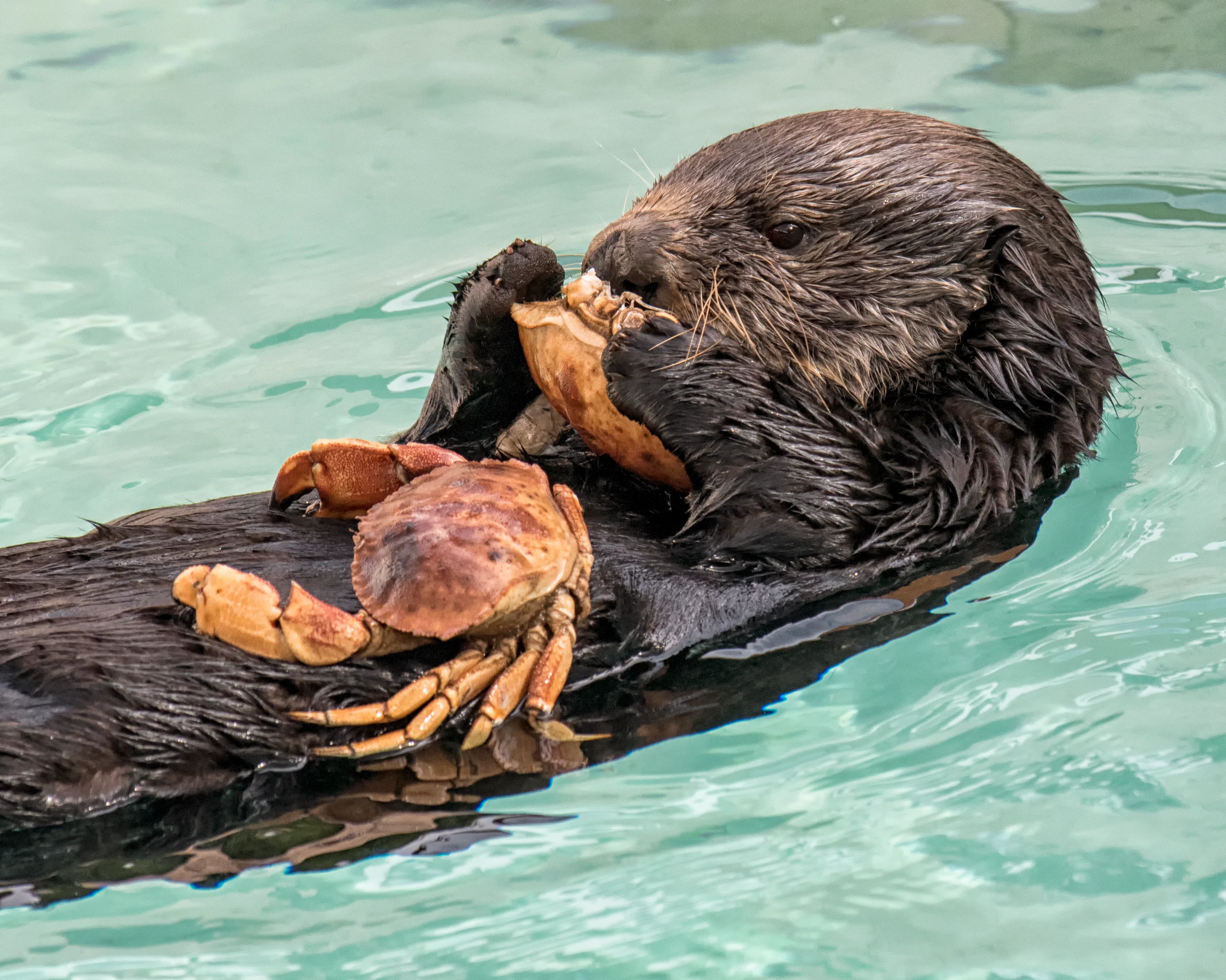
Crabs are a highly favored food among sea otters, offering a rich source of protein and fats. These crustaceans are found in a variety of environments, including sandy bottoms, rocky crevices, and kelp forests. Sea otters are skilled at capturing crabs, often flipping over rocks or probing crevices to find them.
Once caught, crabs are brought to the surface and broken open using rocks. The otter carefully extracts the meat, consuming both the body and claws. Crabs are particularly valuable due to their high energy content and widespread availability.
10. Dungeness Crabs
Dungeness crabs are a larger and more energy-rich type of crab commonly found along the Pacific coast. They are especially prized by sea otters for their size and nutritional value. Catching these crabs requires strength and precision, as they can be more mobile and defensive than smaller species.
Sea otters use their powerful jaws and tools to break through the thick shell. A single Dungeness crab can provide a substantial meal, making it a highly efficient food source. Their presence in coastal ecosystems makes them an important component of the sea otter’s diet.
11. Hermit Crabs
Hermit crabs are a fascinating and opportunistic food source for sea otters. Unlike true crabs, hermit crabs occupy abandoned shells from other marine animals, such as snails. This unique behavior provides them with protection, but it also presents an interesting challenge for predators like sea otters. Fortunately, sea otters are highly intelligent and adaptable hunters, capable of overcoming this defense with ease.
Sea otters typically locate hermit crabs while foraging along the seafloor, especially in rocky or sandy habitats where discarded shells are abundant. Using their sensitive forepaws, they can detect movement or subtle differences in texture that indicate a hermit crab is inside a shell. Once found, the otter retrieves the crab and brings it to the surface.
To access the meat, sea otters may use a rock to crack the shell or repeatedly strike it against a hard surface. In some cases, they may simply pull the crab out if the shell opening allows. This demonstrates their problem-solving ability and flexibility in feeding techniques.
From a nutritional standpoint, hermit crabs provide a solid source of protein and essential nutrients. While they are smaller than many other prey items, their abundance makes them a valuable addition to the otter’s diet. Sea otters often consume multiple hermit crabs in a single feeding session to meet their high energy demands.
In ecosystems where larger prey is scarce, hermit crabs can become an important fallback food. Their availability throughout the year ensures that sea otters have a reliable source of nourishment, even in changing environmental conditions.
12. Shrimp
Shrimp are small but nutritionally rich crustaceans that play a consistent role in the sea otter diet. Found in a wide range of marine environments—from shallow coastal waters to deeper offshore zones—shrimp are both abundant and relatively easy to catch.
Sea otters hunt shrimp by diving to the seafloor and using their agile paws to scoop them up. Their quick reflexes allow them to capture these fast-moving creatures efficiently. Unlike hard-shelled prey such as clams or crabs, shrimp do not require tools to consume, making them a convenient and energy-efficient food source.
Despite their small size, shrimp are packed with protein, omega-3 fatty acids, and essential minerals. These nutrients are crucial for maintaining the otter’s metabolism and supporting its active lifestyle. Because sea otters need to consume large quantities of food daily, shrimp are often eaten in significant numbers during a single feeding period.
Shrimp are particularly important in areas where other prey types are less abundant. Their widespread distribution ensures that sea otters can find them in various habitats, contributing to dietary diversity and resilience.
Additionally, shrimp are easy to digest, providing quick energy. This makes them especially useful for younger or less experienced otters that may struggle with tougher prey items.
13. Prawns
Prawns are closely related to shrimp but are generally larger and more robust, making them an even more rewarding meal for sea otters. These crustaceans inhabit similar environments, including coastal waters, estuaries, and seafloor habitats rich in vegetation and shelter.
Sea otters locate prawns through tactile exploration and visual cues. Once captured, prawns are consumed quickly, as they lack the hard protective shells that characterize many other prey species. This reduces the energy required for processing food, allowing otters to maximize their intake efficiency.
Nutritionally, prawns are an excellent source of protein, vitamins, and minerals. Their larger size means that each individual prawn provides more energy than smaller crustaceans, making them a valuable component of the diet.
In regions where prawns are abundant, they can become a primary food source. Sea otters may repeatedly forage in the same areas to take advantage of dense prawn populations. This behavior highlights their ability to adapt their feeding strategies based on local conditions.
Prawns also contribute to the overall balance of the otter’s diet by offering variety. A diverse diet helps ensure that sea otters receive all the nutrients they need to thrive in their challenging marine environment.
14. Sea Urchins
Sea urchins are one of the most ecologically significant foods in the sea otter diet. These spiny echinoderms are abundant in many coastal ecosystems and provide a rich source of nutrients. However, their importance extends far beyond their nutritional value.
Sea otters play a crucial role in controlling sea urchin populations. Without predation, sea urchins can multiply rapidly and overgraze kelp forests, leading to the destruction of these vital habitats. By consuming large numbers of sea urchins, sea otters help maintain the balance of marine ecosystems.
To eat a sea urchin, an otter uses a rock to crack open the hard outer shell, known as the test. Inside, the soft tissue is rich in nutrients and energy. Although the spines provide some defense, they are no match for the otter’s skill and determination.
Sea urchins are high in fats and proteins, making them an excellent energy source. In areas where they are abundant, they can form a significant portion of the sea otter’s diet.
The relationship between sea otters and sea urchins is a classic example of predator-prey dynamics and highlights the otter’s role as a keystone species in marine ecosystems.
15. Sand Dollars
Sand dollars are flat, burrowing echinoderms related to sea urchins. They are commonly found in sandy seabeds, where they live just beneath the surface. While not as widely consumed as some other prey, they still contribute to the sea otter’s diverse diet.
Sea otters locate sand dollars by digging into the sand with their forepaws. Once uncovered, these creatures are easily consumed due to their relatively fragile structure. Unlike hard-shelled mollusks, sand dollars do not require extensive processing.
Nutritionally, sand dollars provide protein and other essential nutrients, although they may not be as energy-dense as larger prey items. Their value lies in their availability and ease of capture.
In habitats where sand dollars are abundant, sea otters may consume them regularly as part of a varied diet. This flexibility allows otters to adapt to different environments and food availability.
Including sand dollars in their diet demonstrates the opportunistic nature of sea otters and their ability to exploit a wide range of food sources.
16. Sea Stars
Sea stars, also known as starfish, are another echinoderm occasionally eaten by sea otters. These slow-moving creatures are found on the seafloor, often clinging to rocks or other surfaces.
Sea otters capture sea stars by hand, using their dexterous paws to detach them from surfaces. Although sea stars have a tough outer texture, they are relatively easy to consume compared to heavily armored prey.
From a nutritional perspective, sea stars provide protein and other nutrients, though they are not typically a primary food source. Instead, they serve as a supplementary item that adds variety to the otter’s diet.
Sea stars are particularly useful when more preferred prey is scarce. Their presence ensures that sea otters have alternative food options, helping them maintain their energy intake.
This adaptability is key to the survival of sea otters in diverse and changing marine environments.
17. Sea Cucumbers
Sea cucumbers are soft-bodied echinoderms that inhabit the ocean floor. Unlike their spiny relatives, they lack hard external defenses, making them an easy target for sea otters.
Sea otters find sea cucumbers by foraging along the seabed, often in sandy or muddy areas. Once located, these creatures are quickly consumed without the need for tools or extensive processing.
Although not as energy-dense as shellfish or crustaceans, sea cucumbers provide important nutrients, including proteins and trace minerals. Their soft texture makes them easy to digest, offering a quick source of nourishment.
Sea cucumbers are often eaten as part of a varied diet, especially in habitats where other prey types are less abundant. Their availability helps ensure that sea otters can continue feeding even when preferred foods are limited.
This ability to consume a wide range of prey highlights the adaptability and resilience of sea otters.
18. Octopus
Octopuses are among the most intelligent and elusive prey that sea otters hunt. These cephalopods are known for their camouflage, agility, and ability to hide in crevices, making them a challenging target.
Sea otters rely on their keen senses and persistence to locate octopuses. Once found, they use their strong paws to extract the animal from its hiding place. This often requires skill and determination, as octopuses can resist capture.
Octopus meat is highly nutritious, rich in protein and essential nutrients. Its soft body makes it relatively easy to consume once captured, providing a substantial energy boost.
Although not a primary food source in all regions, octopuses add variety and nutritional diversity to the sea otter’s diet. Their inclusion demonstrates the otter’s ability to hunt a wide range of prey types.
This versatility is a key factor in the sea otter’s success as a predator.
19. Squid
Squid are fast-swimming cephalopods that are less commonly eaten by sea otters compared to bottom-dwelling prey. However, in areas where squid are abundant, they can become an important part of the diet.
Sea otters catch squid through quick, agile movements, often near the surface or in midwater. Unlike shellfish, squid do not require tools to process, making them a convenient food source.
Squid are rich in protein and provide essential nutrients that support the otter’s metabolism. Their soft bodies are easy to digest, offering quick energy.
While not always a primary food item, squid contribute to dietary diversity and help sea otters adapt to different environments and prey availability.
This flexibility ensures that sea otters can thrive in a variety of marine ecosystems.
20. Marine Worms
Marine worms, including various species of polychaetes, are small but abundant creatures found in ocean sediments. They are an often-overlooked but valuable component of the sea otter’s diet.
Sea otters locate marine worms by digging into the seabed with their paws. These worms are easy to capture and require no processing, making them an efficient food source.
Although individually small, marine worms can be consumed in large numbers, providing a steady intake of protein and nutrients. Their abundance ensures that sea otters have access to food even in less productive environments.
Marine worms are particularly important as a supplementary food, helping to round out the otter’s diet and provide variety.
This ability to utilize even small and seemingly insignificant prey highlights the adaptability and resourcefulness of sea otters in the wild.
21. Rockfish
Rockfish are among the more commonly consumed fish species in the sea otter’s diet, particularly in regions where benthic invertebrates are less abundant. These fish typically inhabit rocky reefs and kelp forests, making them accessible to sea otters that forage along the ocean floor. While sea otters are not primarily fish hunters, they will opportunistically prey on rockfish when the opportunity arises.
Sea otters use their agility and quick reflexes to catch rockfish, often ambushing them in crevices or among kelp fronds. Unlike shellfish, fish do not require tools to process, allowing otters to consume them quickly and efficiently. This makes rockfish a convenient food option when otters need a rapid energy intake.
Nutritionally, rockfish provide high-quality protein and essential fatty acids. These nutrients are crucial for maintaining muscle function, energy levels, and overall health. Fish also offer a different nutritional profile compared to invertebrates, helping to balance the otter’s diet.
Although fish like rockfish are not always the primary focus of sea otter foraging, they become more important in certain habitats. Their presence in kelp forests makes them a valuable supplemental food source that contributes to dietary diversity and adaptability.
22. Sculpin
Sculpin are small, bottom-dwelling fish that are well-camouflaged against the ocean floor. Their ability to blend into their surroundings makes them a challenging prey item, but sea otters are skilled hunters capable of detecting subtle movements and disturbances.
Sea otters typically find sculpin while exploring rocky or sandy substrates. Using their sensitive whiskers and dexterous paws, they can locate and capture these fish with precision. Once caught, sculpin are eaten whole, providing a quick and efficient source of nutrition.
Sculpin are rich in protein and contribute to the overall energy intake of sea otters. While they may not be as calorie-dense as larger prey, their abundance in certain areas makes them a reliable food source.
In ecosystems where invertebrate populations fluctuate, sculpin and other small fish help ensure that sea otters maintain a consistent food supply. This flexibility in diet is essential for survival in dynamic marine environments.
23. Capelin
Capelin are small schooling fish that are occasionally consumed by sea otters, particularly in northern regions. These fish are known for their seasonal spawning runs, during which they become highly abundant and easier to catch.
Sea otters take advantage of these periods of abundance by capturing capelin near the surface or along coastal areas. Their quick movements and schooling behavior make them an appealing target during these times.
Capelin are rich in fats and proteins, providing a valuable energy boost. Their high lipid content is especially beneficial for sea otters, which require substantial energy to maintain their body temperature in cold waters.
Although capelin are not a year-round staple, they play an important seasonal role in the sea otter diet. Their availability during spawning events allows otters to increase their energy intake and build reserves.
This opportunistic feeding behavior highlights the adaptability of sea otters and their ability to exploit temporary food resources.
24. Sand Lance
Sand lance are slender, eel-like fish that burrow into sandy seabeds. They are an important prey species for many marine predators, including sea otters. These fish are particularly abundant in certain coastal regions, making them a valuable food source.
Sea otters locate sand lance by digging into the sand or detecting movement beneath the surface. Once exposed, these fish are quickly captured and consumed.
Sand lance are rich in energy, containing both protein and fats that support the otter’s high metabolic needs. Their soft bodies make them easy to eat, requiring no tools or extensive processing.
In areas where sand lance populations are strong, they can become a significant part of the sea otter’s diet. Their availability helps ensure a steady food supply, especially when other prey types are less accessible.
This reliance on diverse prey species underscores the sea otter’s role as a versatile and adaptable predator.
25. Jellyfish
Jellyfish are an unusual but occasionally consumed food for sea otters. These gelatinous creatures are not as nutrient-dense as other prey, but they can still provide hydration and small amounts of protein.
Sea otters may encounter jellyfish while swimming near the surface. Due to their slow movement, jellyfish are easy to capture. However, their low caloric value means they are typically eaten opportunistically rather than as a primary food source.
Despite their limited nutritional benefits, jellyfish can serve as a supplementary food during times when more energy-rich prey is scarce. Their abundance in certain seasons or regions makes them a convenient, if not ideal, option.
This behavior demonstrates the opportunistic nature of sea otters, which are willing to consume a wide range of prey to meet their dietary needs.
26. Rays
Rays are rarely eaten by sea otters, but they can occasionally become part of the diet in specific परिस्थितations. These flat-bodied fish are typically found resting on the seafloor, where they blend into sandy environments.
Capturing a ray requires strength and precision, as they can be larger and more defensive than typical prey. Sea otters may target smaller or juvenile rays, which are easier to handle.
Rays provide a rich source of protein and fats, making them a high-energy meal when successfully captured. However, due to the effort required and potential risks, they are not a common food item.
The inclusion of rays in the diet highlights the sea otter’s ability to exploit a wide range of prey, even those that are less typical or more challenging to catch.
27. Sharks
Sharks are extremely rare prey for sea otters and are usually only consumed opportunistically. In most cases, sea otters do not actively hunt sharks due to their size and predatory nature. However, small or juvenile sharks may occasionally be targeted.
More often, sea otters may scavenge dead or weakened sharks rather than hunting them directly. This behavior allows them to take advantage of available resources without unnecessary risk.
Shark meat is rich in protein and fats, providing substantial energy. However, due to the rarity of such events, sharks do not play a significant role in the overall diet.
This occasional feeding behavior reflects the opportunistic feeding strategy of sea otters, which can adapt to unusual circumstances when necessary.
28. Marine Slugs
Marine slugs, also known as nudibranchs, are soft-bodied invertebrates found in a variety of marine habitats. These colorful creatures are slow-moving and relatively easy for sea otters to capture.
Sea otters typically consume marine slugs whole, as they lack hard shells or defenses. While some species may contain toxins, sea otters appear to selectively feed on those that are safe to eat.
Marine slugs provide protein and other nutrients, although they are not as energy-dense as shellfish or crustaceans. Their value lies in their availability and ease of capture.
Including marine slugs in their diet demonstrates the sea otter’s adaptability and willingness to exploit diverse food sources.
29. Barnacles
Barnacles are small crustaceans that attach themselves permanently to hard surfaces such as rocks, shells, and even marine animals. While they are not a primary food source, sea otters may consume them when other prey is scarce.
Sea otters remove barnacles by scraping or prying them off surfaces. Due to their small size, many barnacles must be consumed to provide a meaningful amount of nutrition.
Despite their size, barnacles contain protein and essential nutrients. Their abundance in certain areas makes them a useful supplementary food.
This feeding behavior highlights the resourcefulness of sea otters and their ability to make use of even the smallest available খাদ sources.
30. Tube Worms
Tube worms are marine invertebrates that live in protective tubes on the seafloor. These organisms are often found in sandy or muddy environments and can be abundant in certain क्षेत्रों.
Sea otters locate tube worms by probing the seabed with their paws. Once found, they extract the worms from their tubes and consume them directly. This process requires minimal effort compared to cracking open hard shells.
Tube worms provide protein and other nutrients, contributing to the overall balance of the sea otter’s diet. While not a primary food source, they are an important supplementary item that adds variety.
The inclusion of tube worms in the diet underscores the sea otter’s ability to exploit a wide range of prey types, ensuring survival in diverse and changing marine environments.
Conclusion
Sea otters have one of the most diverse and fascinating diets among marine mammals. From hard-shelled clams and crabs to soft-bodied octopus and even occasional fish, their feeding habits reflect both intelligence and adaptability. By consuming a wide variety of prey—primarily benthic invertebrates—they are able to meet the intense energy demands required to survive in cold ocean environments.
One of the most remarkable aspects of sea otter feeding behavior is their use of tools. Cracking open shells with rocks not only demonstrates advanced problem-solving skills but also allows them to access nutrient-rich food sources that many other predators cannot. This ability gives sea otters a unique advantage in coastal ecosystems.
Beyond their survival, sea otters play a critical ecological role. As a keystone species, their diet directly influences the health of marine habitats. By controlling populations of sea urchins and other herbivorous invertebrates, they help protect kelp forests—vital ecosystems that support a wide range of marine life. Without sea otters, these environments can quickly become unbalanced, leading to a loss of biodiversity.
Their opportunistic feeding strategy also highlights their resilience. Whether consuming shellfish, crustaceans, echinoderms, or fish, sea otters are capable of adjusting their diet based on availability. This flexibility is essential for survival in ever-changing ocean conditions.
In summary, understanding what sea otters eat provides valuable insight into both their behavior and their importance in the natural world. They are not just skilled hunters—they are essential guardians of coastal ecosystems. Protecting sea otters ultimately means preserving the delicate balance of life beneath the ocean’s surface.
Frequently Asked Questions (FAQ) About What Sea Otters Eat
1. What do sea otters eat the most?
Sea otters primarily eat marine invertebrates, with shellfish such as clams, mussels, and crabs making up the majority of their diet. These foods are abundant in coastal habitats and provide high levels of protein and calories. In many regions, sea urchins are also a major food source, especially because they are easy to find and rich in nutrients. The exact diet varies depending on location, but most sea otters rely heavily on bottom-dwelling prey.
2. Do sea otters eat fish?
Yes, sea otters do eat fish, but fish are not usually their primary food source. They tend to prefer invertebrates because they are easier to catch and more energy-efficient to consume. However, in areas where shellfish are less available, sea otters may rely more on fish such as rockfish, sculpin, and sand lance. Their diet is flexible, allowing them to adapt to different environments.
3. How much food does a sea otter eat per day?
Sea otters eat a large amount of food each day—typically around 20% to 25% of their body weight. This high intake is necessary because they do not have a thick layer of blubber like other marine mammals. Instead, they rely on their metabolism and dense fur to stay warm, which requires a constant supply of energy from food.
4. Why do sea otters eat so much?
Sea otters have an extremely high metabolism to maintain their body temperature in cold ocean water. Since they lack insulating blubber, they must burn calories rapidly to stay warm. This is why they need to consume such large quantities of food every day, often spending several hours foraging and eating.
5. Do sea otters use tools to eat?
Yes, sea otters are one of the few animals known to use tools regularly. They often use rocks to crack open hard shells like clams, mussels, and crabs. They may carry these rocks in loose skin pouches under their arms and use them repeatedly as anvils. This behavior shows advanced intelligence and problem-solving skills.
6. What is a sea otter’s favorite food?
Sea otters do not have a single favorite food, but many populations show a strong preference for sea urchins, crabs, and clams. These foods are high in energy and relatively abundant, making them ideal for meeting the otter’s dietary needs. Preferences can vary depending on what is most available in their habitat.
7. Do sea otters eat sea urchins?
Yes, sea otters frequently eat sea urchins. In fact, they play a critical role in controlling sea urchin populations. By consuming large numbers of these spiny creatures, sea otters help protect kelp forests from overgrazing, maintaining a healthy marine ecosystem.
8. Can sea otters eat sharks?
Sea otters rarely eat sharks. While they may occasionally consume small or juvenile sharks, this is not common. More often, they might scavenge dead sharks rather than actively hunting them. Sharks are not a regular part of their diet.
9. Do sea otters eat octopus?
Yes, sea otters can and do eat octopus. These intelligent cephalopods are more challenging to catch, but sea otters are capable hunters. Octopus provides a rich source of protein and adds variety to their diet.
10. Where do sea otters find their food?
Sea otters typically forage along the ocean floor in coastal areas, including kelp forests, rocky reefs, and sandy seabeds. They dive underwater to search for prey, using their sensitive whiskers and paws to locate food hidden beneath the surface.
11. How do sea otters hunt for food?
Sea otters hunt by diving to the seafloor and using their front paws to search for prey. They may dig into sediment, flip over rocks, or explore crevices. Once they find food, they bring it to the surface to eat, often using tools if needed.
12. Do sea otters eat plants?
Sea otters are primarily carnivorous and do not rely on plants as a food source. However, they may occasionally ingest small amounts of plant material accidentally while feeding on animals. Their diet is almost entirely composed of marine animals.
13. Do sea otters eat jellyfish?
Yes, sea otters may eat jellyfish occasionally. However, jellyfish are not very nutritious compared to other prey, so they are usually consumed only when other food sources are scarce.
14. Do sea otters eat clams?
Clams are one of the most common foods in a sea otter’s diet. They are rich in nutrients and relatively easy to find. Sea otters often use rocks to crack open clam shells to access the meat inside.
15. Do sea otters eat crabs?
Yes, crabs are a major part of the sea otter diet. They provide a high amount of protein and fat. Sea otters use tools or their strong teeth to break open crab shells and extract the meat.
16. Are sea otters picky eaters?
Sea otters are not picky eaters. They are opportunistic predators and will eat a wide range of prey depending on what is available in their environment. This flexibility helps them survive in different habitats.
17. Do baby sea otters eat the same food?
Young sea otters initially rely on their mother’s milk. As they grow, they learn to eat solid food by observing their mothers. Eventually, they consume the same types of prey as adult otters.
18. How do sea otters open shells?
Sea otters often use rocks as tools to crack open shells. They place the shell on their chest and strike it repeatedly with a rock until it breaks open. This technique allows them to access food that would otherwise be difficult to eat.
19. Do sea otters store food?
Sea otters do not store food long-term, but they do have loose skin under their arms where they can temporarily hold food and tools while foraging. This allows them to gather multiple prey items in a single dive.
20. Do sea otters eat every day?
Yes, sea otters must eat every day to survive. Their high metabolism requires a constant intake of food, and they spend a large portion of their day foraging and eating.
21. What happens if sea otters cannot find food?
If sea otters cannot find enough food, they may become weak and vulnerable to disease or predators. Food scarcity can also impact reproduction and survival rates, making a stable food supply essential for their populations.
22. Do sea otters compete for food?
Sea otters may compete for food in areas where resources are limited. However, they often spread out while foraging to reduce competition. Their diverse diet also helps minimize direct competition.
23. Do sea otters eat during the day or night?
Sea otters are generally diurnal, meaning they are most active during the day. However, they may also forage at night depending on food availability and environmental conditions.
24. Do sea otters drink water?
Sea otters get most of their hydration from the food they eat. They can also drink seawater because their kidneys are adapted to process salt efficiently.
25. Why are sea otters important to the ecosystem?
Sea otters are a keystone species. By controlling populations of prey like sea urchins, they help maintain healthy kelp forests. These ecosystems support a wide range of marine life, making sea otters essential for ecological balance.
26. Do sea otters eat barnacles?
Yes, sea otters may eat barnacles, especially when other food sources are scarce. Although small, barnacles provide protein and can be consumed in large numbers.
27. Do sea otters eat shrimp?
Shrimp are commonly eaten by sea otters. They are easy to catch and provide valuable nutrients, making them a convenient food source.
28. Do sea otters eat mussels?
Mussels are a staple food for sea otters. They are abundant and form clusters, allowing otters to collect multiple prey items efficiently.
29. Do sea otters eat scallops?
Yes, sea otters eat scallops. These shellfish provide protein and are relatively easy to consume compared to harder-shelled prey.
30. Do sea otters eat snails?
Marine snails are part of the sea otter diet. They are easy to find and provide a steady source of nutrients.
31. Do sea otters eat limpets?
Yes, limpets are consumed by sea otters. They cling tightly to rocks, but otters can pry them off using their paws.
32. Do sea otters eat chitons?
Chitons are another type of mollusk eaten by sea otters. They are found on rocky surfaces and contribute to dietary variety.
33. Do sea otters eat sea stars?
Sea otters may eat sea stars occasionally. While not a primary food source, they provide additional nutrients.
34. Do sea otters eat sea cucumbers?
Yes, sea cucumbers are part of their diet. These soft-bodied animals are easy to consume and provide essential nutrients.
35. Do sea otters eat marine worms?
Marine worms are eaten by sea otters, especially when other prey is limited. They are abundant and easy to catch.
36. Do sea otters eat sand dollars?
Sea otters may eat sand dollars by digging them out of the seabed. They are not a primary food but contribute to a varied diet.
37. Do sea otters eat prawns?
Prawns are similar to shrimp and are eaten by sea otters. They provide protein and are relatively easy to capture.
38. Do sea otters eat hermit crabs?
Yes, sea otters eat hermit crabs by breaking open or removing them from their borrowed shells.
39. Do sea otters eat tube worms?
Tube worms are occasionally eaten by sea otters. They are found in the seabed and are easy to extract and consume.
40. Do sea otters eat rays?
Rays are rarely eaten by sea otters. They may consume small or juvenile rays, but this is not common.
41. How do sea otters affect kelp forests?
Sea otters protect kelp forests by eating sea urchins, which would otherwise overgraze the kelp. This helps maintain biodiversity and ecosystem health.
42. Do sea otters eat every type of shellfish?
Sea otters eat a wide variety of shellfish, but not necessarily every type. Their diet depends on availability and ease of capture.
43. Can sea otters eat on land?
Sea otters usually eat while floating on their backs in the water. They rarely come onto land to feed.
44. Do sea otters eat alone?
Sea otters typically forage alone, even though they may rest in groups called rafts. This reduces competition for food.
45. How long do sea otters spend eating?
Sea otters spend several hours each day foraging and eating to meet their high energy needs.
46. Do sea otters change their diet?
Yes, sea otters adjust their diet based on seasonal changes and food availability. This adaptability is key to their survival.
47. Are sea otters top predators?
Sea otters are considered near the top of the food chain in their ecosystem, especially among invertebrate predators.
48. Do sea otters eat dead animals?
Sea otters may occasionally scavenge dead animals, but they primarily hunt live prey.
49. What is the hardest food for sea otters to eat?
Hard-shelled prey like large clams or abalone can be challenging, but sea otters overcome this by using tools.
50. Why is the sea otter diet important to study?
Studying the sea otter diet helps scientists understand marine ecosystems, predator-prey relationships, and the health of coastal environments.
51. Do sea otters eat multiple types of food daily?
Yes, sea otters often eat a variety of foods in a single day. This diverse diet helps ensure they receive all necessary nutrients and adapt to changing conditions in their environment.
Read more: