

Bluebirds are among the most admired songbirds in North America, known for their vivid blue plumage, gentle behavior, and melodic calls. Species such as the Eastern Bluebird, Western Bluebird, and Mountain Bluebird are commonly found in open woodlands, farmlands, meadows, and suburban gardens where nesting sites and food sources are available.
Understanding what bluebirds eat is essential not only for bird enthusiasts but also for conservation efforts and backyard bird feeding. Their diet directly influences breeding success, migration patterns, and survival rates throughout the year. Because bluebirds are primarily insectivores, they play an important ecological role by naturally controlling insect populations in their habitats.
Unlike many generalist birds, bluebirds have relatively specific dietary preferences. During the warmer months, they rely heavily on protein-rich insects to support breeding and raising chicks. In colder seasons, when insects become scarce, they shift toward berries and other soft fruits to sustain their energy levels.
This adaptability allows bluebirds to survive in a variety of environments, but it also makes them sensitive to habitat changes and pesticide use. A reduction in insect populations or native berry-producing plants can significantly impact their food availability.
In this guide, we will explore 30 foods that bluebirds commonly eat in the wild, ranging from insects and larvae to berries and small fruits. Each food type plays a unique role in their survival, growth, and seasonal adaptation strategies.
Let’s begin by examining the most important part of the bluebird diet: insects and other protein-rich prey found in nature.
What Do Bluebirds Eat in the Wild?
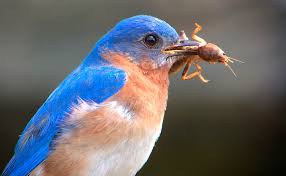
1. Caterpillars
Caterpillars are one of the most important protein sources for bluebirds, especially during the breeding season when adults need high-energy food to feed their growing chicks. These soft-bodied larvae are abundant in trees, shrubs, and garden vegetation, making them easy targets for foraging bluebirds.
Bluebirds typically hunt caterpillars by scanning leaves and branches from perches before swooping down to capture them. Their slow movement makes caterpillars relatively easy prey compared to flying insects. Once caught, they are quickly swallowed whole or brought back to the nest to feed nestlings.
Nutritionally, caterpillars are rich in protein, fats, and moisture, which are essential for rapid chick development. The high water content also helps reduce dehydration risks in warmer months.
Because caterpillars are seasonal, their abundance often aligns with nesting periods, making them a naturally timed food source that supports reproductive success in bluebird populations.
2. Grasshoppers
Grasshoppers are a common and energy-rich prey item for bluebirds found in open fields, meadows, and grassy habitats. Their size and abundance make them a valuable food source during warmer months.
Bluebirds hunt grasshoppers by spotting them on the ground or vegetation and quickly darting down to capture them. Their agility allows them to catch even moderately fast-moving insects with precision.
Grasshoppers provide high levels of protein and essential nutrients that support muscle development and energy maintenance. Adult bluebirds often consume them themselves, while larger specimens are fed to chicks.
Because grasshoppers thrive in sunny, open environments, they are especially important in rural and agricultural landscapes where bluebirds are commonly found.
3. Crickets
Crickets are another staple insect in the bluebird diet, known for their abundance and nutritional value. They are commonly found in grasslands, gardens, and forest edges where bluebirds forage.
Bluebirds locate crickets by listening for movement in vegetation and soil, then swoop down to capture them with quick strikes. Their relatively soft bodies make them easy to consume and digest.
Crickets are rich in protein, amino acids, and fats, making them ideal for both adult maintenance and chick growth. They are particularly important during nesting season when energy demands are high.
Their consistent availability across seasons makes crickets a reliable food source for bluebirds in many habitats.
4. Beetles
Beetles represent a diverse group of insects that bluebirds frequently consume. They are found in soil, under bark, and among vegetation, making them widely accessible.
Bluebirds hunt beetles by foraging on the ground or from low perches. While some beetles have hard shells, many species are soft enough for bluebirds to consume without difficulty.
Beetles provide essential protein and fats, supporting both daily energy needs and reproductive success. They are especially valuable in early spring when other insects may still be scarce.
Their diversity ensures that bluebirds can find suitable beetle species in nearly all parts of their range.
5. Spiders
Spiders are an important supplemental food source for bluebirds, especially in forest edges, shrubs, and garden environments where webs are common.
Bluebirds often pluck spiders directly from webs or vegetation. Their hunting strategy is quick and efficient, minimizing the risk of entanglement or escape.
Spiders provide protein and essential nutrients in smaller but highly digestible packages. They are particularly useful during nesting periods when adult bluebirds need frequent, easy-to-catch food for chicks.
Although not a primary food source, spiders contribute to dietary diversity and are readily available in most bluebird habitats.
6. Ants
Ants are frequently consumed by bluebirds, especially when they swarm or move in large numbers. They are commonly found in soil, under rocks, and on vegetation.
Bluebirds capture ants by pecking at the ground or snatching them in motion. While ants can defend themselves, their small size makes them easy prey for agile birds.
Ants provide protein and small amounts of fat, contributing to energy balance. During peak activity periods, they can become a significant food source.
Their abundance ensures that bluebirds can rely on ants when other insects are less available.
7. Wasps
Wasps are occasionally eaten by bluebirds, although they require careful hunting due to their ability to sting. Bluebirds typically target wasps when they are inactive or away from their nests.
They use quick strikes to capture wasps in mid-air or on vegetation, minimizing exposure to stings. Juvenile birds learn to avoid dangerous interactions through experience.
Wasps provide protein and energy, though they are not as commonly consumed as softer-bodied insects.
Their inclusion in the diet highlights the bluebird’s opportunistic feeding behavior.
8. Bees
Bees are another occasional prey item for bluebirds, though they are consumed less frequently due to their defensive nature. Bluebirds tend to target bees when they are grounded or weakened.
Catching bees requires precision and timing to avoid stings. Bluebirds often rely on quick strikes and immediate swallowing to reduce risk.
Bees provide protein but are not a primary food source compared to safer insects like caterpillars or crickets.
Their presence in the diet is mostly opportunistic.
9. Flies
Flies are one of the easiest prey items for bluebirds due to their abundance and slow flight patterns in certain environments. They are commonly found near livestock, water sources, and decaying organic matter.
Bluebirds catch flies in mid-air using agile flight maneuvers or by waiting near feeding areas. Their lightweight bodies make them easy to consume.
Flies provide quick bursts of energy but are lower in nutritional density compared to larger insects.
They are an important supplementary food source, especially in summer months.
10. Mosquitoes
Mosquitoes are frequently consumed by bluebirds, particularly in wetland and humid environments where these insects are abundant.
Bluebirds catch mosquitoes in flight or near vegetation, using quick reflexes to capture them efficiently. Their small size makes them easy to digest.
Although individually small, mosquitoes can be consumed in large quantities, contributing to daily energy intake.
They are an important part of natural insect control in bluebird habitats.
11. Moths
Moths are a common nocturnal insect that becomes an important food source for bluebirds during early morning and evening foraging. As moths rest on vegetation or walls after nighttime activity, they become easy targets for these alert songbirds.
Bluebirds capture moths either in short aerial chases or by picking them off surfaces. Their soft bodies make moths easy to swallow and highly digestible, especially compared to harder-bodied insects.
Nutritionally, moths provide a good balance of protein and fats, making them suitable for both adult maintenance and chick development. During peak breeding season, moths are often collected and delivered directly to nestlings.
Their seasonal abundance ensures they remain a consistent supplemental food source across many habitats.
12. Butterfly Larvae
Butterfly larvae, commonly known as caterpillars, are among the most energy-rich foods for bluebirds. These larvae are found feeding on leaves in gardens, meadows, and forest edges where bluebirds actively forage.
Bluebirds locate butterfly larvae visually by scanning foliage for movement or leaf damage. Once detected, they quickly pluck them from plants before they can drop or hide.
These larvae are packed with protein, moisture, and essential nutrients that support rapid growth in baby bluebirds. Because of their soft bodies, they are extremely easy to digest.
Their importance peaks during nesting season when adult birds need high-protein food sources for chicks.
13. Earthworms
Earthworms are a highly valuable food source for bluebirds, especially after rainfall when they surface from soil. They are commonly found in lawns, gardens, and moist ground areas.
Bluebirds spot earthworms while perched and quickly drop to the ground to capture them. Their flexible bodies make them easy to swallow whole or break into smaller pieces for chicks.
Earthworms provide protein, moisture, and minerals that support hydration and growth. They are especially important in spring when breeding activity begins.
Their abundance after rain makes them a predictable and reliable food source in many habitats.
14. Snails
Snails are occasionally eaten by bluebirds, particularly in damp environments such as gardens, wetlands, and forest edges. They are slow-moving and easy to locate on vegetation or ground surfaces.
Bluebirds typically break or peck open small snails to access the soft body inside. While not as common as insects, snails provide valuable nutrients when available.
They are rich in calcium and protein, which can contribute to bone development in growing chicks.
Snails are a supplementary but useful part of the bluebird diet.
15. Grubs
Grubs, the larval stage of beetles, are one of the most energy-dense foods available to bluebirds. They are found underground in soil, lawns, and decaying organic matter.
Bluebirds locate grubs by observing ground disturbance or probing soft soil areas. Once exposed, grubs are quickly captured and swallowed whole.
They are extremely rich in fat and protein, making them ideal for chick growth and adult energy replenishment.
Because grubs are often abundant in agricultural and suburban areas, they are a dependable food source year-round.
16. Insect Larvae
Insect larvae include a wide range of immature insects that serve as a crucial food category for bluebirds. These larvae are typically found in soil, wood, or vegetation.
Bluebirds actively search for larvae while foraging on the ground or among plants. Their soft bodies make them easy to consume and highly nutritious.
These larvae provide essential protein, supporting feather development, reproduction, and growth in young birds.
Their diversity ensures that bluebirds can find suitable prey across different environments.
17. Termites
Termites are highly abundant insects in many ecosystems and become especially important during swarm events. Bluebirds take advantage of these mass emergences to feed efficiently.
They catch termites in flight or on the ground, often consuming large quantities in a short time. Their small size makes them easy to ingest repeatedly.
Termites are rich in protein and fats, making them excellent energy sources during breeding and migration periods.
Their seasonal abundance creates feeding opportunities that bluebirds actively exploit.
18. Weevils
Weevils are small beetles commonly found in vegetation, grains, and plant stems. Bluebirds encounter them frequently while foraging in agricultural and garden environments.
They capture weevils by scanning plants and quickly picking them off leaves or stems. Despite their hard exoskeletons, many species are small enough to be eaten easily.
Weevils provide protein and help diversify the insect portion of the diet.
They are especially important in mixed farming landscapes where bluebirds thrive.
19. Pillbugs
Pillbugs, also known as roly-polies, are small crustaceans found in moist soil and under debris. Bluebirds occasionally feed on them when foraging near the ground.
They are slow-moving and easy to capture, making them suitable prey even for inexperienced juvenile birds.
Pillbugs provide moderate protein and moisture, contributing to hydration and energy balance.
They are a useful secondary food source in damp environments.
20. Sowbugs
Sowbugs are closely related to pillbugs and are commonly found in similar habitats such as leaf litter and moist soil. Bluebirds consume them opportunistically when available.
Like pillbugs, they are slow and easy to catch, making them a reliable food option during ground foraging.
Sowbugs offer protein and help supplement insect-based diets, especially in cooler or wetter conditions.
They contribute to dietary variety and ecological balance in bluebird habitats.
21. Salamanders
Salamanders are small amphibians that occasionally become part of a bluebird’s diet, especially in moist forest edges, wetlands, and shaded gardens. While they are not a primary food source, they are opportunistically consumed when encountered during ground foraging.
Bluebirds typically locate salamanders near damp soil, under logs, or in leaf litter where these amphibians hide during the day. When a salamander is exposed, the bluebird quickly strikes, using its agility to secure the prey before it can retreat underground or into water.
From a nutritional standpoint, salamanders provide a high level of protein and moisture content, which is beneficial for hydration and muscle development. This makes them especially useful during breeding seasons when adult birds require energy-rich food to feed nestlings.
However, salamanders are not as frequently consumed as insects or berries due to their limited availability and more secretive behavior. Their inclusion in the diet highlights the bluebird’s opportunistic feeding habits, especially in environments where amphibians are abundant.
In ecosystems with healthy moisture levels and dense ground cover, salamanders serve as a valuable supplemental prey item that contributes to dietary diversity.
22. Tree Frogs
Tree frogs are another amphibian occasionally consumed by bluebirds, particularly in humid or wooded environments where these frogs are common. Their presence near vegetation and water sources makes them accessible during foraging.
Bluebirds typically catch tree frogs when they are resting on leaves, branches, or near the ground. A quick, precise strike allows the bird to capture the frog before it can leap away.
Tree frogs provide protein and essential nutrients that support growth and energy needs. Because they are soft-bodied compared to many insects, they are relatively easy to digest once captured.
Although not a staple food, tree frogs become more important in regions where insect populations fluctuate seasonally or where amphibians are particularly abundant.
Their role in the diet reinforces the bluebird’s adaptability in consuming a variety of small vertebrates when opportunities arise.
23. Small Lizards
Small lizards are occasionally preyed upon by bluebirds in warmer climates where reptiles are more common. These fast-moving animals are typically found basking on rocks, fences, or open ground.
Bluebirds rely on quick reflexes and short bursts of flight to capture lizards before they can escape into cover. While lizards are more challenging than insects, experienced adult birds are capable of catching them successfully.
Lizards provide a higher protein content compared to many invertebrates, making them a valuable occasional food source. They also offer a substantial energy return for the effort involved in hunting.
However, due to their speed and defensive behavior, lizards are not a frequent dietary component. They are mostly consumed opportunistically when other prey is less available or when environmental conditions favor reptile activity.
The inclusion of small lizards in the diet demonstrates the bluebird’s ability to expand its feeding range beyond insects and fruit when necessary.
24. Berries
Berries are a crucial seasonal food source for bluebirds, especially during fall and winter when insect populations decline. They provide essential carbohydrates and natural sugars that help sustain energy levels during colder months.
Bluebirds consume berries from a variety of native plants, often visiting shrubs and trees that produce fruit in open habitats. They typically swallow berries whole, later digesting the pulp and seeds.
While berries are lower in protein compared to insects, they are rich in antioxidants, vitamins, and hydration, which support immune function and overall health.
Berry consumption becomes particularly important during migration and overwintering periods when energy conservation is critical. Without sufficient fruit availability, bluebirds may struggle to maintain body condition.
Berries play a key ecological role in linking plant reproduction with bird feeding behavior, making them an essential part of the ecosystem cycle.
25. Blueberries
Blueberries are among the most favored fruits consumed by bluebirds due to their size, sweetness, and nutritional content. These berries are commonly found in forest edges, gardens, and shrublands.
Bluebirds often feed on blueberries directly from bushes, picking them individually or in small clusters. Their soft texture makes them easy to consume and digest.
Blueberries provide carbohydrates, antioxidants, and hydration, all of which help sustain energy during non-breeding seasons. They are especially valuable when insects are scarce.
In addition to their nutritional benefits, blueberries also play an important ecological role in seed dispersal, as birds help spread the plant across different habitats.
Their high preference among bluebirds makes them one of the most important native fruit sources in their diet.
26. Blackberries
Blackberries are another important fruit consumed by bluebirds, particularly in late summer and early fall when they ripen in abundance. These berries grow in dense thickets that are often frequented by foraging birds.
Bluebirds feed on blackberries by picking ripe fruit directly from vines. Their dark color and soft interior make them easy to identify and consume.
Blackberries are rich in natural sugars, vitamins, and antioxidants, providing a quick energy source that supports migration and seasonal survival.
Because blackberry bushes are widespread in many habitats, they offer a reliable food source across large geographic ranges.
They are especially important in transitional seasons when insect availability begins to decline.
27. Elderberries
Elderberries are small, dark fruits produced by shrubs commonly found in woodlands and open fields. Bluebirds often feed on them during late summer and early autumn.
These berries are consumed whole and provide a mix of carbohydrates, vitamins, and antioxidants. Their clustered growth makes them easy for birds to harvest efficiently.
Elderberries are particularly valuable for energy storage before migration, helping bluebirds build fat reserves for long-distance travel.
They are also an important part of native plant ecosystems, supporting both wildlife and plant regeneration through seed dispersal.
Their seasonal availability makes them a key transitional food source in the bluebird diet.
28. Dogwood Berries
Dogwood berries are small fruits produced by flowering dogwood trees and shrubs. These berries are commonly found in woodland edges and suburban landscapes where bluebirds frequently forage.
Bluebirds consume dogwood berries during late summer and fall when they are fully ripe. The soft texture and moderate sweetness make them easy to digest.
These berries provide carbohydrates and essential nutrients that support energy needs during seasonal changes. They are particularly useful when insect populations decline.
Dogwood berries also play an important ecological role in forest regeneration through seed dispersal by birds.
Their availability in both natural and urban environments makes them a consistent food source for bluebirds.
29. Juniper Berries
Juniper berries are small, bluish-purple fruits produced by juniper shrubs and trees. They are commonly found in dry, open habitats where bluebirds may forage during colder months.
Bluebirds consume juniper berries when other fruit sources are limited. These berries provide essential carbohydrates and help sustain energy during winter conditions.
Although slightly resinous in flavor, they are still an important survival food due to their availability in harsh environments.
Juniper berries are especially valuable in regions where bluebirds overwinter and require reliable fruit sources.
Their role in the diet highlights the adaptability of bluebirds to seasonal food scarcity.
30. Mulberries
Mulberries are large, soft fruits that are widely consumed by bluebirds during late spring and summer. They grow on mulberry trees in both wild and cultivated environments.
Bluebirds feed on ripe mulberries directly from branches, often consuming multiple fruits in a single visit due to their abundance.
Mulberries are rich in natural sugars, vitamins, and water content, making them an excellent energy source during warm months.
They are particularly important during breeding season when adult birds require extra energy for feeding chicks and maintaining activity levels.
Because mulberry trees produce large quantities of fruit, they are one of the most reliable seasonal food sources for bluebirds in many regions.
Conclusion
Bluebirds are highly adaptable songbirds with a diet that shifts throughout the year based on seasonal availability. Their feeding behavior is a clear reflection of their ecological role as both insect predators and fruit consumers, allowing them to thrive in diverse environments ranging from open meadows to suburban backyards.
During spring and summer, bluebirds rely heavily on protein-rich insects such as caterpillars, beetles, crickets, and spiders. This insect-based diet is especially important during breeding season, as it provides the nutrients needed for egg production, chick growth, and rapid nestling development. Without access to sufficient insects, bluebird populations can struggle to reproduce successfully.
As the seasons change and insect populations decline, bluebirds transition to a fruit-based diet. Berries such as blueberries, blackberries, elderberries, and dogwood berries become essential energy sources during fall and winter. These fruits supply carbohydrates, antioxidants, and hydration, helping bluebirds survive colder temperatures and migration periods.
Bluebirds also demonstrate opportunistic feeding behavior, occasionally consuming small amphibians, reptiles, and other invertebrates when available. This flexibility ensures they can adapt to varying environmental conditions and food availability across their range.
Overall, understanding what bluebirds eat highlights their importance in maintaining ecological balance. By controlling insect populations and aiding in seed dispersal through fruit consumption, bluebirds contribute significantly to healthy ecosystems.
Supporting native habitats, planting berry-producing shrubs, and reducing pesticide use are effective ways to help sustain bluebird populations and ensure they continue to thrive in the wild.
Frequently Asked Questions (FAQ) About What Bluebirds Eat
1. What do bluebirds eat in the wild?
Bluebirds primarily eat insects such as caterpillars, beetles, crickets, and grasshoppers during spring and summer. In fall and winter, they shift to eating berries and soft fruits. Their diet changes seasonally based on food availability, making them flexible but still strongly dependent on natural habitats with healthy insect and berry populations.
2. Are bluebirds insectivores or omnivores?
Bluebirds are considered omnivores, but they are strongly insect-focused. During the breeding season, up to 80–90% of their diet consists of insects and other small invertebrates. In colder months, they rely more heavily on fruits and berries to survive when insects are scarce.
3. What insects do bluebirds eat the most?
Bluebirds commonly eat caterpillars, crickets, grasshoppers, beetles, spiders, ants, and flies. These insects are easy to catch and provide high levels of protein, which is essential for growth, feather development, and reproduction.
4. Do bluebirds eat worms?
Yes, bluebirds eat earthworms, especially after rain when worms come to the surface. Worms are rich in protein and moisture, making them a valuable food source for both adults and chicks.
5. Do bluebirds eat berries?
Yes, berries are a crucial part of the bluebird diet in fall and winter. They eat blueberries, blackberries, elderberries, mulberries, dogwood berries, and juniper berries. These fruits provide energy when insects are not available.
6. Do bluebirds eat seeds?
Bluebirds do not typically rely on seeds as a major food source. They prefer soft-bodied insects and fruits. However, they may occasionally consume small seeds indirectly while feeding on berries.
7. What do baby bluebirds eat?
Baby bluebirds are fed almost entirely on soft insects such as caterpillars, beetle larvae, and spiders. Parents avoid hard or dry foods because chicks need high-protein, easy-to-digest meals for rapid growth.
8. Do bluebirds eat mealworms?
Yes, bluebirds readily eat mealworms, especially in backyard feeding setups. Mealworms are high in protein and closely resemble natural insect larvae in their diet.
9. Do bluebirds eat mosquitoes?
Yes, bluebirds eat mosquitoes and other small flying insects. Although each mosquito provides little nutrition, they are consumed in large quantities when available.
10. Do bluebirds eat spiders?
Yes, spiders are an important supplemental food source. Bluebirds often pluck spiders from webs or vegetation, especially during nesting season when they need frequent food for chicks.
11. Do bluebirds eat ants?
Yes, ants are commonly eaten by bluebirds, particularly when they are abundant. They are small but provide protein and are easy to capture on the ground.
12. Do bluebirds eat wasps or bees?
Bluebirds may occasionally eat wasps and bees, but they usually avoid them due to their ability to sting. They target these insects only when they are vulnerable or inactive.
13. Do bluebirds eat caterpillars?
Yes, caterpillars are one of the most important foods for bluebirds, especially during breeding season. They are soft, nutrient-rich, and ideal for feeding chicks.
14. Do bluebirds eat grasshoppers?
Yes, grasshoppers are frequently eaten, particularly in open fields and meadows. They provide a large amount of protein and are relatively easy for bluebirds to catch.
15. Do bluebirds eat crickets?
Yes, crickets are a staple insect in the bluebird diet. They are abundant, nutritious, and provide excellent energy for both adults and growing chicks.
16. Do bluebirds eat beetles?
Yes, bluebirds eat beetles, especially smaller species. Beetles provide protein and are widely available in many habitats.
17. Do bluebirds eat flies?
Yes, flies are commonly eaten due to their abundance and easy capture, especially near farms, gardens, and water sources.
18. Do bluebirds eat mosquitoes?
Yes, mosquitoes are eaten regularly in wet environments. They are small but often consumed in large numbers.
19. Do bluebirds eat snails?
Yes, bluebirds occasionally eat snails. They provide calcium and protein, although they are not a primary food source.
20. Do bluebirds eat amphibians?
Yes, small amphibians like frogs and salamanders may be eaten when available, especially in wet habitats.
21. Do bluebirds eat lizards?
Yes, small lizards are occasionally consumed in warmer climates. They are more difficult prey but provide high nutritional value.
22. Do bluebirds eat termites?
Yes, bluebirds eat termites, especially during swarming events when they become easy to catch in large numbers.
23. Do bluebirds eat earthworms?
Yes, earthworms are an excellent food source after rainfall and are often fed to chicks due to their softness and protein content.
24. Why do bluebirds eat insects?
Insects provide the high protein content needed for growth, feather development, and reproduction. Without insects, bluebirds cannot successfully raise healthy chicks.
25. Why do bluebirds eat berries in winter?
Berries provide essential carbohydrates and energy when insects are scarce in cold weather. They help bluebirds survive winter and migration periods.
26. Do bluebirds change their diet by season?
Yes, bluebirds eat mostly insects in spring and summer, then switch to berries and fruits in fall and winter.
27. Do bluebirds hunt on the ground?
Yes, bluebirds often hunt insects on the ground, especially grasshoppers, beetles, and worms.
28. Do bluebirds catch insects in the air?
Yes, they can catch flying insects like flies and mosquitoes mid-air using quick flight movements.
29. Are bluebirds picky eaters?
No, bluebirds are not picky but they do prefer soft-bodied insects and ripe fruits over hard or dry food.
30. Do bluebirds eat human-provided food?
Yes, they will eat mealworms and specially designed bird feed in backyard feeders if natural food is limited.
31. Can bluebirds survive without insects?
No, insects are essential for breeding success and long-term survival, especially during nesting season.
32. Do bluebirds eat during migration?
Yes, they rely heavily on berries and insects to fuel migration journeys.
33. What berries are best for bluebirds?
Blueberries, elderberries, mulberries, and dogwood berries are among the most important natural fruit sources.
34. Do bluebirds eat poisonous insects?
They generally avoid toxic or highly defensive insects, focusing on safer prey.
35. How do bluebirds find food?
They use visual hunting from perches, scanning open areas for movement before swooping down.
36. Do bluebirds eat in groups?
No, bluebirds are mostly solitary or family-based feeders, not flock feeders.
37. Do bluebirds compete for food?
Yes, they may compete with other insect-eating birds for feeding territories.
38. Do bluebirds eat at bird feeders?
Yes, especially when mealworms or fruit is offered in backyard feeders.
39. What helps attract bluebirds?
Mealworms, berry-producing shrubs, and open grassy habitats attract bluebirds effectively.
40. Do pesticides affect bluebird food?
Yes, pesticides reduce insect populations, which negatively impacts bluebird survival and reproduction.
41. Are bluebirds helpful to ecosystems?
Yes, they help control insect populations and support seed dispersal through fruit consumption.
42. Do bluebirds eat harmful insects?
Yes, they consume many pest insects, making them beneficial for agriculture and gardens.
43. Do bluebirds eat night insects?
Yes, they may eat nocturnal insects like moths during early morning or evening hours.
44. Do bluebirds eat aquatic insects?
Yes, they consume insects near water sources, including aquatic larvae.
45. Do bluebirds eat more in winter?
They often increase fruit consumption in winter to maintain energy levels.
46. Do bluebirds store food?
No, bluebirds do not store food and must forage daily.
47. What happens if bluebirds cannot find food?
They may migrate, relocate, or suffer population decline if food sources are insufficient.
48. Do bluebirds drink water?
Yes, they drink water regularly, especially during warm weather and breeding season.
49. Do bluebirds eat at night?
No, they are diurnal and only feed during daylight hours.
50. Why are bluebirds important?
Bluebirds help control insect populations and maintain ecological balance while also dispersing native plant seeds.
51. What is the main food source for bluebirds?
The main food source is insects, especially during breeding season when protein demand is highest.
Read more: