

Sloths are some of the most charming animals in the rainforest. Known for their slow moves and gentle faces, these tree-dwellers have captured human hearts for centuries. In this guide to Types of Sloths, you will meet the different sloth species found in Central and South America, learn how to tell them apart, and discover what makes each one special in its own quiet way. If you have ever wondered why sloths move so slowly, sleep so much, or smile all the time, you are in the right place. This article is written in a friendly, simple style so anyone can enjoy learning about sloths, whether you are a student, a nature lover, or just curious about life in the treetops.
Types of Sloths: A Friendly Guide to These Tree-Loving Mammals
Sloths belong to two main groups: three-toed sloths and two-toed sloths. The names come from the number of claws on their front feet. Even though they look similar, these groups differ in behavior, diet, and even personality. Let’s meet the first five amazing sloths on our list.
1. Brown-Throated Three-Toed Sloth (Bradypus variegatus)
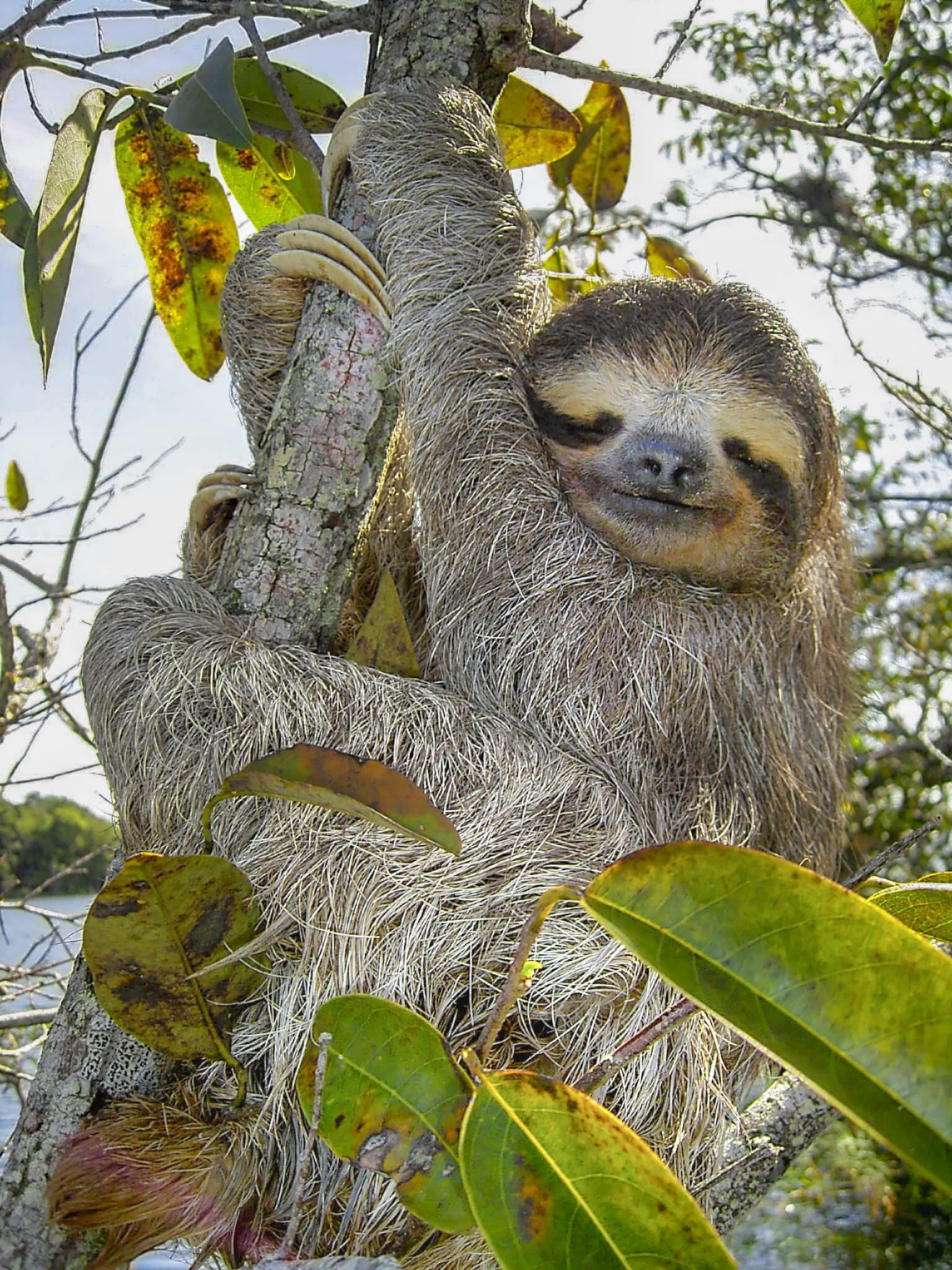
Meet the most common three-toed sloth
The brown-throated three-toed sloth is the sloth most people picture when they hear the word “sloth.” It lives in rainforests from Honduras all the way down to Brazil. With its soft gray-brown fur and dark eye patches that look like a gentle mask, this sloth seems to wear a calm smile all day long.
Appearance and identification
This sloth has three long claws on each front limb and a round head with a short snout. The throat area often looks darker or brownish, giving it its name. Its fur may appear green at times because tiny algae grow in it. That green tint works like camouflage, helping the sloth blend into leafy branches.
Habitat and range
You can find this species in lowland rainforests, mangroves, and even some dry forests. It prefers tall trees where it can hang, nap, and munch on leaves without coming down often. Think of it as a quiet neighbor who never leaves the tree apartment.
Diet and feeding habits
Leaves make up most of its diet, especially from cecropia trees. Leaves are not rich in energy, which is one reason this sloth moves so slowly. Its stomach works like a slow cooker, taking days to digest one meal. Talk about taking your time with dinner!
Behavior and lifestyle
Brown-throated sloths sleep about 15 hours a day. When awake, they move carefully, one limb at a time. They are excellent swimmers too, paddling through rivers when needed. On the ground they look clumsy, but in trees they are true masters.
Reproduction and young
Females usually give birth to one baby after about six months. The baby clings to its mother’s belly and learns the art of slow living by watching her. For months, they are almost never apart.
Why this sloth matters
This species plays a role in forest health by trimming leaves and hosting algae and insects in its fur. It’s like a tiny moving garden in the canopy.
2. Pale-Throated Three-Toed Sloth (Bradypus tridactylus)
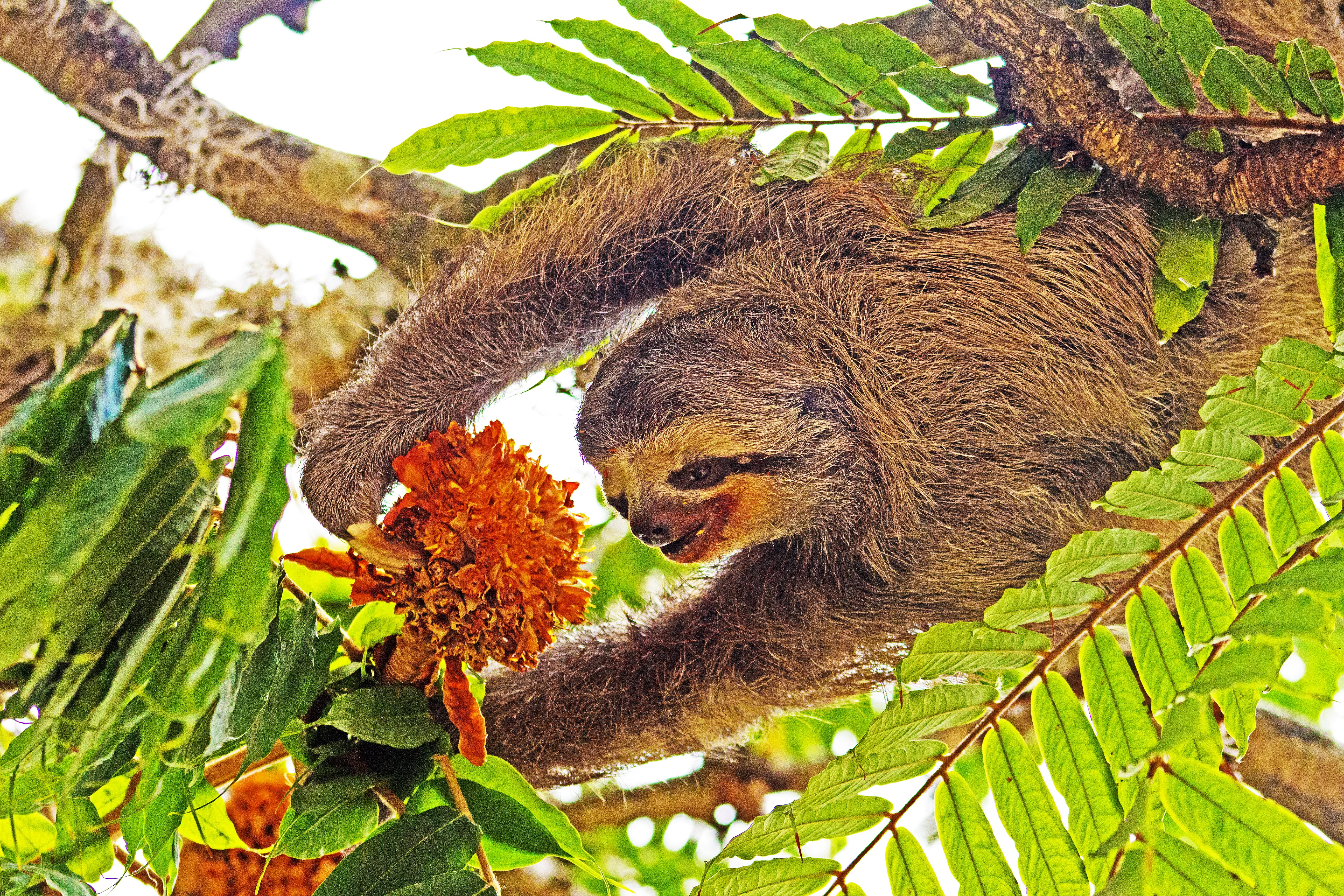
A shy forest ghost of the Guianas
The pale-throated three-toed sloth lives mainly in northern South America, especially in Guyana, Suriname, and French Guiana. It looks similar to its brown-throated cousin but has a lighter-colored throat and face.
Appearance and clues
Its fur is pale gray to light brown, with a creamy throat patch. The dark eye markings still give it that gentle “sleepy mask” look. Males often have a bright orange or yellow patch on their back, which makes them easier to spot if you’re lucky enough to see one.
Where it lives
This sloth prefers dense tropical rainforests with tall, connected canopies. It spends nearly its whole life in trees, rarely touching the ground unless nature really calls.
Food choices
Leaves again rule the menu, but this species may also nibble on buds and young shoots. It sticks to a small set of favorite trees, like having a favorite café you visit every day.
Daily life
Quiet and calm, this sloth avoids attention. It moves mostly at night or during cloudy days. When danger appears, it freezes, trusting its camouflage more than speed.
Family life
Mothers raise one baby at a time. The baby rides along, learning which leaves are safe to eat. It’s a slow classroom in the sky.
Conservation notes
Habitat loss is the main threat. Protecting rainforests helps keep this gentle climber safe.
3. Pygmy Three-Toed Sloth (Bradypus pygmaeus)
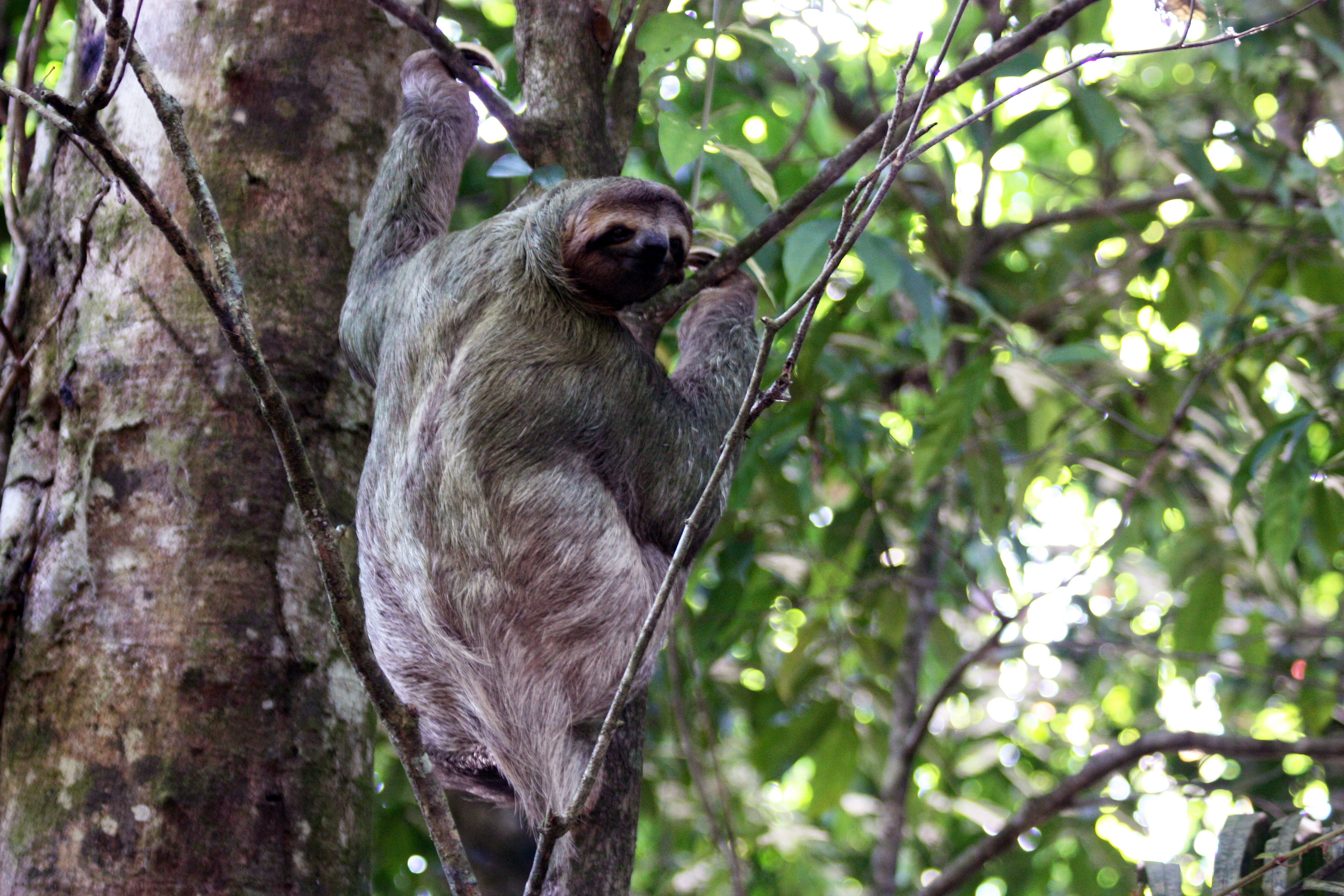
The tiny island treasure
This is the smallest and rarest of all sloths. The pygmy three-toed sloth lives only on Isla Escudo de Veraguas, a small island off the coast of Panama. Imagine an animal found nowhere else on Earth — that’s this little sloth.
How to spot it
It looks like a mini version of other three-toed sloths, with a shorter face and smaller body. Adults weigh about half as much as other species. Its fur often looks gray with a greenish tone.
Island home
This sloth lives mostly in red mangrove forests. The tangled roots and salty air make a strange but perfect home. It rarely leaves this habitat, making its world very small.
What it eats
Mangrove leaves form most of its diet. These leaves are tough and low in energy, which fits well with the sloth’s slow pace.
Behavior
It follows the same relaxed lifestyle: lots of hanging, sleeping, and gentle climbing. Because it lives on a tiny island, it has fewer predators but more risk from human activity.
Why it needs help
With such a small population and limited space, this species is at high risk. Protecting its mangrove forest is key to its future.
4. Maned Three-Toed Sloth (Bradypus torquatus)
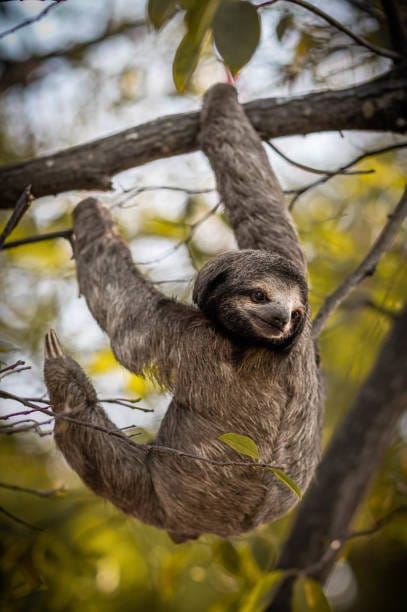
The sloth with a furry collar
The maned three-toed sloth stands out thanks to the dark mane of fur around its neck and shoulders. It lives in the Atlantic forests of eastern Brazil, far from the Amazon.
Looks and markings
This species has a darker face and a thick “collar” of longer fur that looks like a scarf. Its body is slightly larger and sturdier than other three-toed sloths.
Forest home
Atlantic forests are rich but heavily threatened. These sloths depend on tall trees and connected branches to move around without coming down.
Food and feeding
Leaves again form the main diet, but this sloth may choose from a wider mix of tree species. It’s like sampling different dishes from the same slow buffet.
Personality
It tends to be more active during the day than other sloths. Still, “active” is a relative word here. Think slow yoga, not sprinting.
Conservation story
Because its forest home is shrinking, this species is considered at risk. Conservation programs in Brazil are working to protect remaining habitats.
5. Linnaeus’s Two-Toed Sloth (Choloepus didactylus)
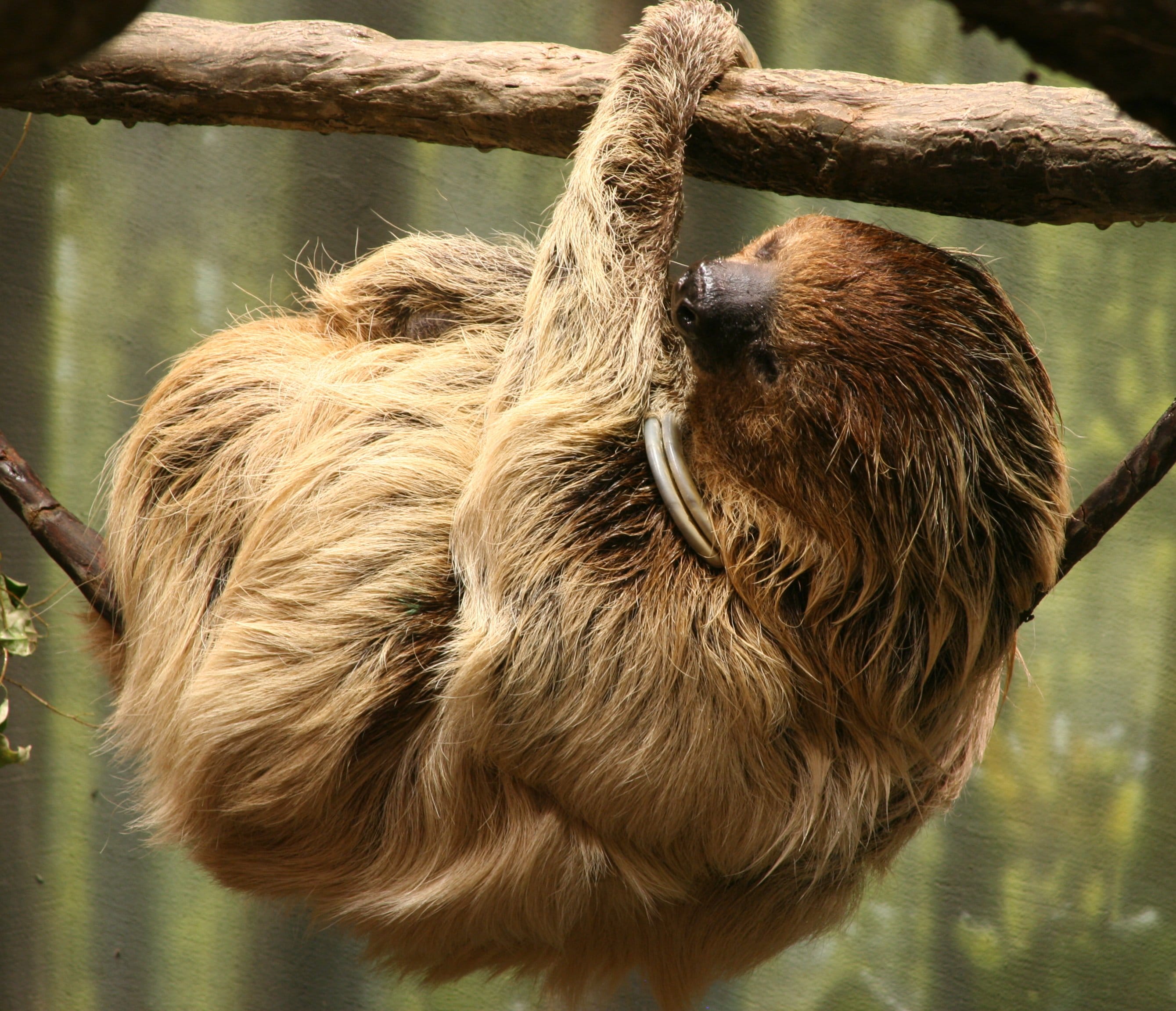
The bigger, night-loving sloth
Now we meet the two-toed sloths. Linnaeus’s two-toed sloth lives in northern South America. Despite the name, it actually has two claws on the front limbs but three on the back.
How it looks
This sloth has a longer snout, bigger body, and thicker fur than three-toed sloths. Its face looks more like a teddy bear, with bright, curious eyes.
Where it hangs out
It prefers dense rainforests and is more active at night. While three-toed sloths nap in daylight, this one starts its day after sunset.
Diet differences
Besides leaves, it eats fruits, flowers, and sometimes small animals like insects. This richer diet gives it a bit more energy and slightly faster moves.
Behavior
Two-toed sloths are better climbers and can hang by one limb while reaching for food. They are still slow, but with a bit more confidence in their steps.
Raising young
Like other sloths, mothers carry one baby at a time. The bond is strong, and the baby learns by copying mom’s every move.
Why it’s special
This sloth shows how different sloths can be, even when they look similar at first glance.
6. Hoffmann’s Two-Toed Sloth (Choloepus hoffmanni)

The adaptable climber of Central America
Hoffmann’s two-toed sloth is one of the most flexible members of the sloth family. You can find it from Nicaragua and Costa Rica down through Panama and into parts of western South America. If sloths had passports, this one would have the most stamps.
How to recognize it
This sloth has shaggy brown fur that can look golden in sunlight. Like other two-toed sloths, it has two claws on the front limbs and three on the back. Its face is round with a pink nose and bright eyes that seem full of quiet curiosity.
Habitat and range
Hoffmann’s sloth lives in many forest types: rainforests, cloud forests, and even some dry forests. It is happy both near the coast and high in the mountains. This wide range shows how well it can adapt to different homes.
What’s on the menu
This species enjoys a mixed diet of leaves, fruits, flowers, and buds. Sometimes it may eat small insects too. Because of this richer food, it has a bit more energy than leaf-only sloths, though it still keeps life at a slow, steady pace.
Daily routine
Mostly active at night, Hoffmann’s sloth spends daylight hours curled up in a leafy fork of branches. At night, it moves through the canopy like a careful explorer, using strong arms to reach new feeding spots.
On the ground and in water
Coming down to the ground is rare, but when it does, it crawls slowly, looking like a moving rug. In water, though, it surprises many people by swimming quite well, using long arms to paddle across rivers.
Family life
Females give birth to a single baby after about 11 months. The baby clings tightly to mom’s chest, riding along for weeks as she feeds and rests.
Conservation outlook
While still fairly widespread, this sloth faces threats from forest loss and roads. Protecting forest corridors helps keep populations connected.
7. Southern Two-Toed Sloth (Choloepus didactylus – Southern Population)
A rainforest teddy bear of the Amazon
Sometimes considered part of Linnaeus’s two-toed sloth, the southern population stands out in size and habitat. It lives deep in the Amazon Basin, where tall trees and heavy rains shape daily life.
Looks and build
This sloth is larger than most three-toed sloths, with thick, woolly fur that ranges from gray to dark brown. Its long snout and strong jaws help it handle a wide mix of foods.
Forest home
It prefers untouched rainforest with towering trees. Here, it can move from branch to branch without ever needing to touch the ground, like a slow-motion acrobat.
Feeding habits
Leaves still play a big role, but fruits and flowers are welcome treats. Think of leaves as the main meal and fruits as dessert.
Behavior
This sloth is mostly nocturnal. At night, it becomes more alert, sniffing around for ripe fruit. During the day, it rests quietly, often high above the forest floor.
Role in the ecosystem
By eating fruits and passing seeds, this sloth helps spread new trees across the forest. Even slow animals can make a big difference.
Status
Large areas of the Amazon still support this species, but logging and land clearing are growing concerns.
8. Northern Two-Toed Sloth (Choloepus didactylus – Northern Population)
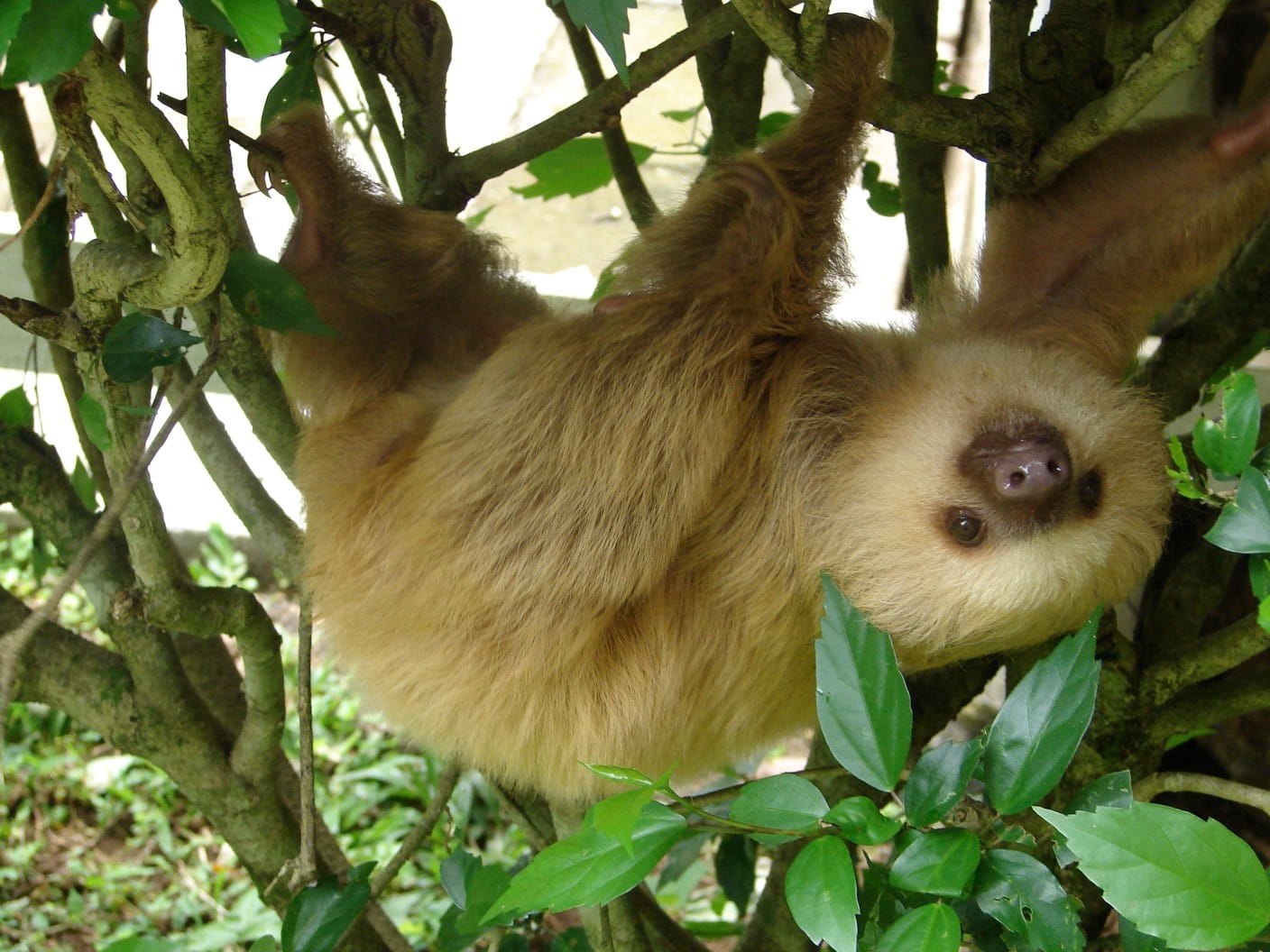
The gentle neighbor of river forests
In northern parts of South America, two-toed sloths live near rivers and flooded forests. This population has adapted to life where water and trees mix.
How it stands out
It looks similar to other two-toed sloths but often has slightly lighter fur. Algae can give it a greenish glow, helping it blend in with mossy branches.
Where it lives
River-edge forests and swampy areas are common homes. These sloths may need to swim more often than others to move between trees.
Diet
Along with leaves, they enjoy fruits found near waterways. Seasonal foods shape their movements through the forest.
Movement and skills
This sloth is a strong swimmer. Watching one glide across a quiet river feels like seeing a slow canoe with fur.
Challenges
Flooding forests depend on healthy river systems. Pollution and dams can change these habitats, making life harder for tree-loving animals.
9. Costa Rican Two-Toed Sloth (Choloepus hoffmanni – Costa Rica Population)
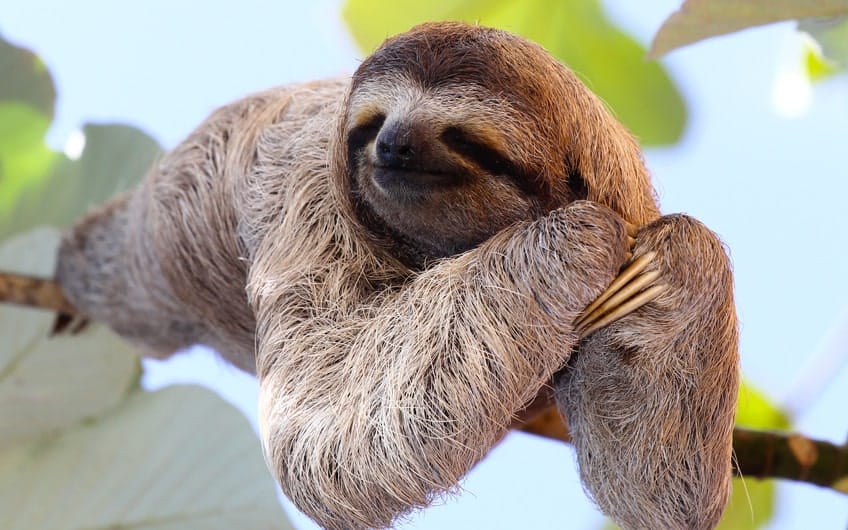
A favorite of wildlife lovers
In Costa Rica, two-toed sloths are famous. Many people spot them during jungle tours, hanging calmly while tourists whisper in excitement below.
Looks
This population often has light brown to golden fur, with a friendly-looking face. Each sloth’s coat pattern is slightly different, like a natural fingerprint.
Living space
They live in rainforests, secondary forests, and even near towns where trees remain. This shows how they can live close to humans if trees are protected.
Food choices
A wide menu of leaves, fruits, and flowers helps them survive in changing forests.
Interaction with humans
Rescue centers in Costa Rica often care for injured sloths. Many stories tell of sloths saved from roads and power lines, then returned to the wild.
Why they matter
These sloths help teach people about rainforest conservation. Once you meet a sloth, it’s hard not to care.
10. Amazonian Three-Toed Sloth (Bradypus variegatus – Amazon Population)
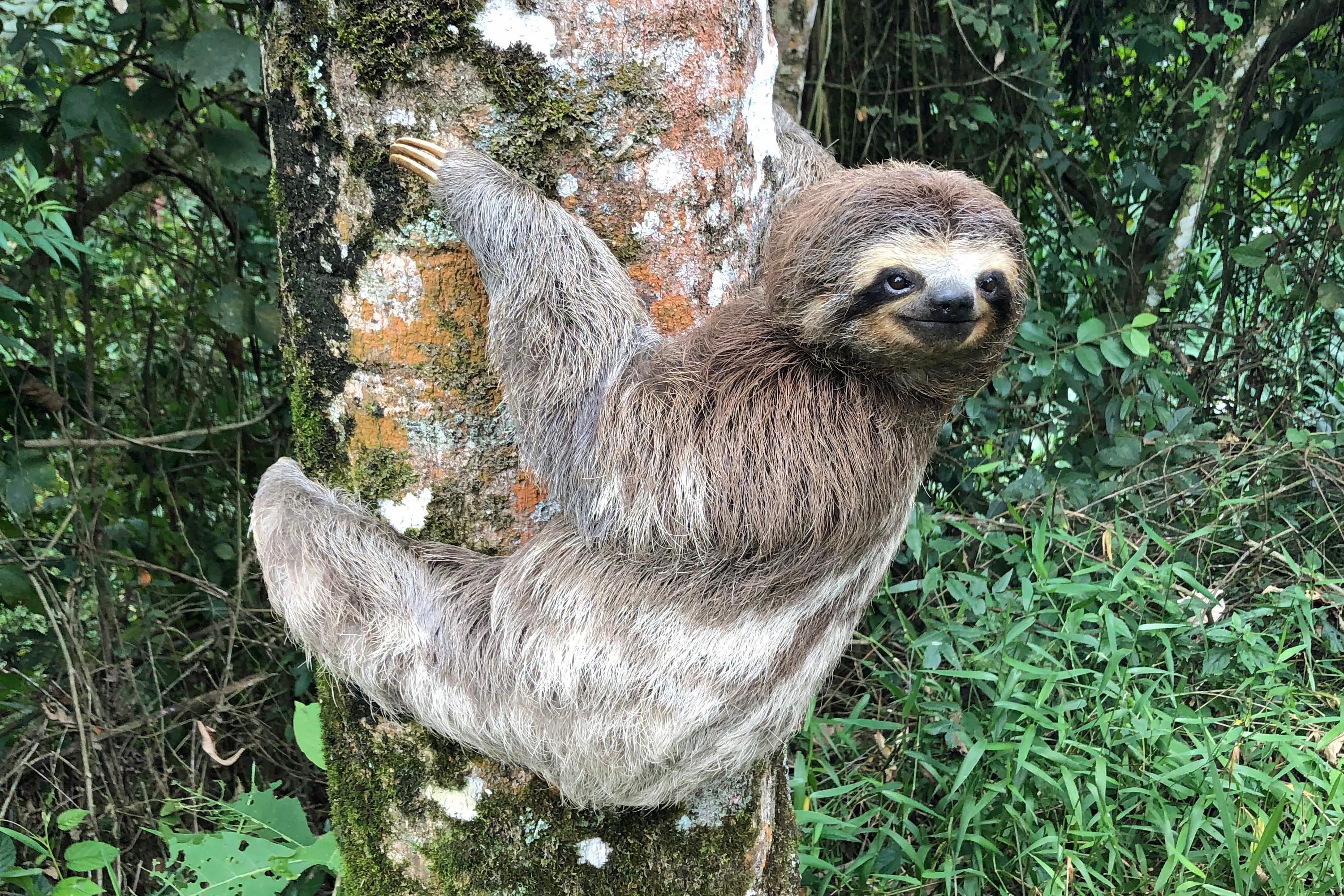
The classic sloth of the deep rainforest
To finish our list of the Types of Sloths, we return to the three-toed sloth living in the heart of the Amazon. This population represents the image many people hold of a sloth in the wild.
Identification
With three long claws, a rounded face, and a soft smile, this sloth looks like a living plush toy. Its fur often hosts algae, giving it a green tint that matches rainforest leaves.
Habitat
Tall, wet forests with thick canopies are its home. Here, it can stay hidden from eagles and other predators.
Diet
Mostly leaves, especially from favorite tree species. It sticks to a simple menu, trusting its slow stomach to do the hard work.
Life in the canopy
This sloth spends almost its entire life upside down, hanging from branches. Coming down happens about once a week, usually for a bathroom break.
Connection to nature
Its fur shelters algae, beetles, and moths, turning the sloth into a tiny moving habitat. It’s like a quiet apartment building for forest insects.
Final thoughts on this sloth
Calm, patient, and perfectly suited to its leafy life, this sloth reminds us that slow can still be strong.
Conclusion: Why Sloths Steal Our Hearts
From tiny island dwellers to big rainforest climbers, the Types of Sloths show us how many ways there are to live a slow and peaceful life. Each sloth plays a part in keeping forests healthy, spreading seeds, and reminding us to take a breath in our busy world. If this guide made you smile or taught you something new, share it with a friend, support rainforest conservation, or keep learning about wildlife. The next time life feels rushed, think of a sloth hanging calmly in the trees — and slow down, just a little.
Frequently Asked Questions About Sloths
1. What are sloths?
Sloths are slow-moving mammals that live in trees in Central and South America.
2. How many types of sloths are there?
There are about 10 commonly recognized Types of Sloths, grouped into two-toed and three-toed sloths.
3. What is the difference between two-toed and three-toed sloths?
They differ in the number of claws on their front limbs, diet, and some behaviors.
4. Are two-toed sloths faster than three-toed sloths?
They are slightly more active, but still very slow compared to most animals.
5. Where do sloths live?
Sloths live in tropical rainforests, cloud forests, and mangroves of Central and South America.
6. Do sloths ever come down from trees?
Yes, but usually only about once a week to go to the bathroom.
7. What do sloths eat?
Most sloths eat leaves, while some also enjoy fruits, flowers, and buds.
8. Why do sloths move so slowly?
Their leaf-based diet gives little energy, so slow movement helps save power.
9. How long do sloths sleep?
Sloths sleep around 12 to 15 hours a day.
10. Can sloths swim?
Yes, sloths are good swimmers and can cross rivers when needed.
11. Are sloths dangerous to humans?
No, sloths are gentle and avoid conflict, though they may defend themselves if handled.
12. Do sloths bite?
They rarely bite, but can if they feel threatened.
13. How long do sloths live?
In the wild, many sloths live 20 to 30 years.
14. Do sloths live alone?
Yes, sloths are mostly solitary except for mothers with babies.
15. How many babies do sloths have?
Usually just one baby at a time.
16. How do baby sloths stay with their mothers?
They cling to their mother’s chest or belly for weeks.
17. What predators hunt sloths?
Main predators include jaguars, harpy eagles, and large snakes.
18. Why do sloths have green fur?
Algae grow in their fur, helping them blend in with leaves.
19. Are sloths blind?
No, but their eyesight is not very strong.
20. Can sloths see in the dark?
Two-toed sloths see better at night than three-toed sloths.
21. Do sloths make sounds?
They are usually quiet but can hiss, squeak, or call softly.
22. How big are sloths?
Most are about the size of a small dog, weighing 4 to 8 kilograms.
23. Why do sloths hang upside down?
Their bodies are built to rest and move easily in that position.
24. Do sloths drink water?
They get most water from leaves, but may lick rain or drink when possible.
25. Are sloths endangered?
Some species are at risk due to habitat loss, while others are more stable.
26. What is the rarest sloth?
The pygmy three-toed sloth is considered the rarest.
27. Can sloths be kept as pets?
No, sloths are wild animals and do not make good pets.
28. How do sloths digest food?
They have slow stomachs that can take days to digest leaves.
29. Why do sloths come down to poop?
Scientists think it helps fertilize trees or support insects in their fur.
30. Do sloths groom themselves?
They groom very little, relying on algae and insects living in their fur.
31. Are sloths related to anteaters?
Yes, they belong to the same group of mammals called xenarthrans.
32. How old are sloths as a species?
Their ancestors lived millions of years ago, including giant ground sloths.
33. What colors are sloths?
They are usually brown, gray, or beige, sometimes green from algae.
34. How do sloths stay safe?
They rely on camouflage and staying still to avoid predators.
35. Do sloths get sick often?
In the wild, they are fairly healthy if their habitat is safe.
36. Can sloths move fast if they need to?
They can move a bit faster in danger, but never very fast.
37. Why do people love sloths so much?
Their calm faces and slow lifestyle make them seem friendly and relaxing.
38. What is the biggest threat to sloths?
Deforestation and human activity are the biggest dangers.
39. How can we help sloths?
Support rainforest conservation and wildlife rescue programs.
40. Are sloths important to forests?
Yes, they help spread seeds and support small ecosystems in their fur.
41. Do sloths like rain?
They don’t mind it and often stay still while rain falls on them.
42. Can sloths smile?
Their face shape makes it look like they smile, even when relaxed.
43. What is the main lesson sloths teach us?
Slow living can be peaceful and perfectly fine in the right place.
Read more: 19 Types of Badgers (Pictures And Identification)