

Jackals are among the most fascinating wild canines, found across Africa, Asia, and parts of Europe. If you’re curious about the diverse world of canids, learning about the types of jackal offers insight into their behavior, habitat, and ecological role. These medium-sized predators are adaptable, intelligent, and often misunderstood. In this article, we will explore 10 distinct types of jackals, detailing their physical characteristics, behavior, diet, and distribution, providing a thorough educational guide for wildlife enthusiasts. Whether you are a beginner or a seasoned nature lover, this guide will give you a friendly, in-depth look at these remarkable animals.
Types of Jackal: The First Five Species
1. Golden Jackal (Canis aureus)
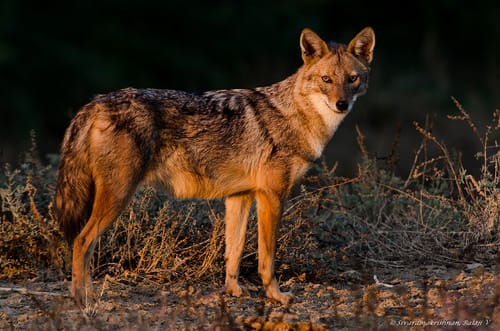
The Golden Jackal, also known as the Common Jackal or Asiatic Jackal, is perhaps the most widely recognized species in the types of jackal group. It inhabits vast areas of North and East Africa, the Middle East, and South Asia. Golden Jackals are medium-sized canines, usually weighing between 6 to 14 kilograms, with a body length of 70 to 85 cm. Their coats range from golden-brown to silvery-gray, often with darker markings on their back and tail. Despite their relatively small size compared to wolves, Golden Jackals are highly adaptable, thriving in savannas, deserts, and even human-altered landscapes.
Golden Jackals are opportunistic omnivores. They feed on small mammals, birds, insects, and fruits, which makes them crucial to controlling rodent populations and maintaining ecological balance. Socially, they are known for forming monogamous pairs and sometimes hunting cooperatively. Golden Jackals communicate through vocalizations, body language, and scent marking. Their iconic howl, often mistaken for a coyote or wolf, serves to establish territory and bond with mates. Fascinatingly, Golden Jackals are capable of remarkable adaptability; some have been observed scavenging near human settlements, while others thrive in completely wild environments.
The reproductive behavior of Golden Jackals is also intriguing. Breeding pairs often stay together for life, and females give birth to litters of three to six pups after a gestation period of about 63 days. Both parents are involved in raising the pups, teaching them hunting and survival skills. This strong parental care contributes to the species’ resilience and adaptability. The Golden Jackal plays a vital ecological role, not only as a predator but also as a scavenger, helping to clean the environment.
2. Black-backed Jackal (Canis mesomelas)
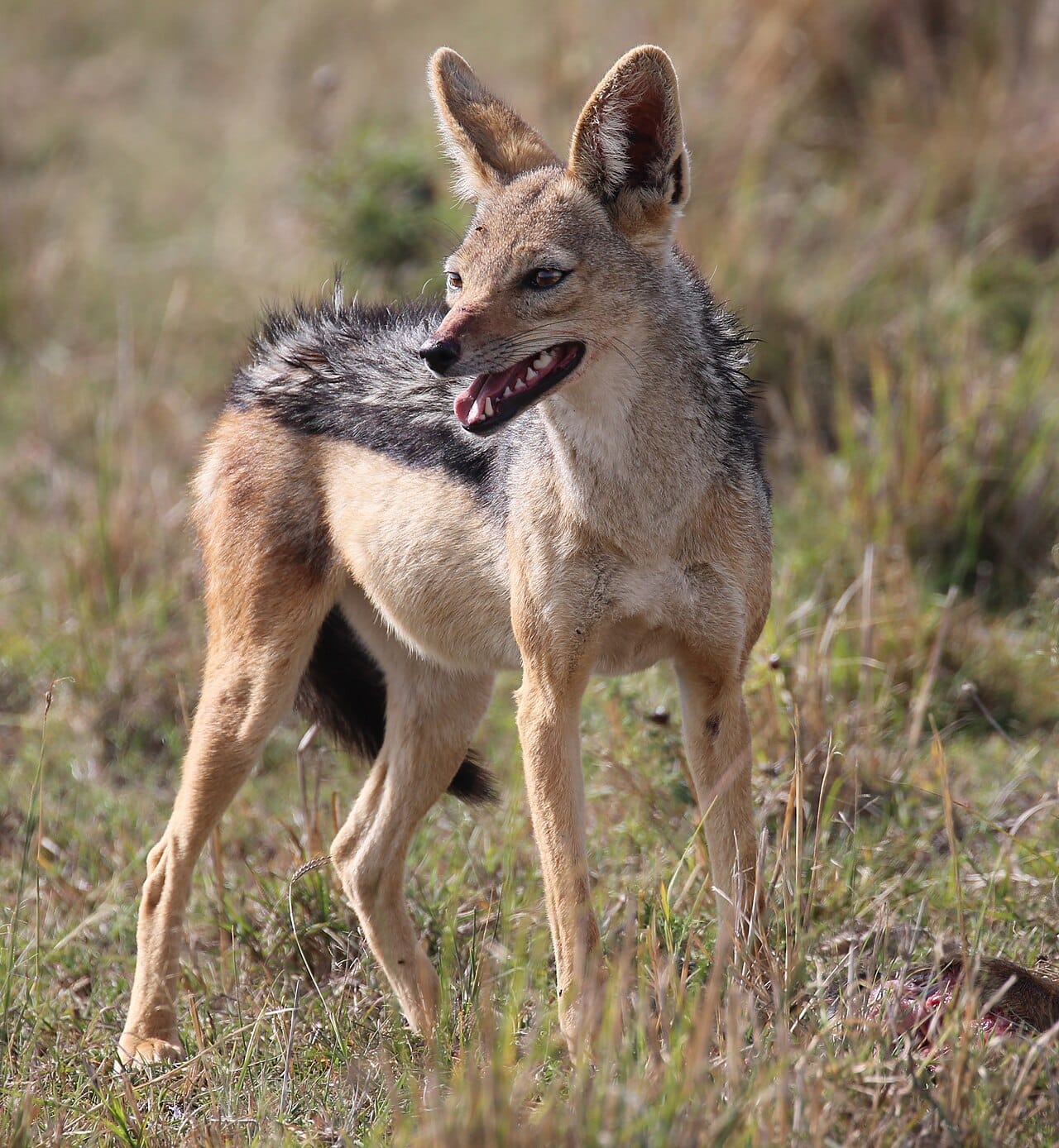
The Black-backed Jackal is native to eastern and southern Africa and is easily distinguished by the striking black saddle that runs along its back. This jackal species is slightly smaller than the Golden Jackal, weighing between 6 and 13 kilograms, with a body length of 60 to 80 cm. Their coat varies from reddish-tan to golden-brown on the flanks and legs, contrasting sharply with the black or dark brown fur covering their back. The tail is bushy with a characteristic black tip, a feature that helps in identification. Black-backed Jackals are highly adaptable, living in savannas, grasslands, deserts, and even scrublands.
Behaviorally, Black-backed Jackals are versatile hunters. They prey on rodents, birds, reptiles, and small antelopes, demonstrating remarkable hunting intelligence. They also scavenge carcasses left by larger predators, playing an essential role in nutrient cycling. Black-backed Jackals are monogamous, forming long-term pair bonds. Pairs defend territories vigorously, using vocalizations like high-pitched howls and yelps to ward off intruders. Interestingly, they sometimes hunt in small family groups, especially when targeting larger prey. This cooperative behavior highlights their social intelligence and adaptability.
Black-backed Jackals are also known for their keen senses. Their sharp eyesight, acute hearing, and excellent sense of smell make them proficient hunters, able to detect prey and danger alike. They are primarily nocturnal but may be active during the day, especially in areas with minimal human disturbance. Conservation-wise, Black-backed Jackals are currently not endangered, but habitat fragmentation and human-wildlife conflict can affect their populations locally. Their ecological role is invaluable—they maintain balance in ecosystems by controlling small mammal populations and cleaning up carrion.
3. Side-striped Jackal (Canis adustus)
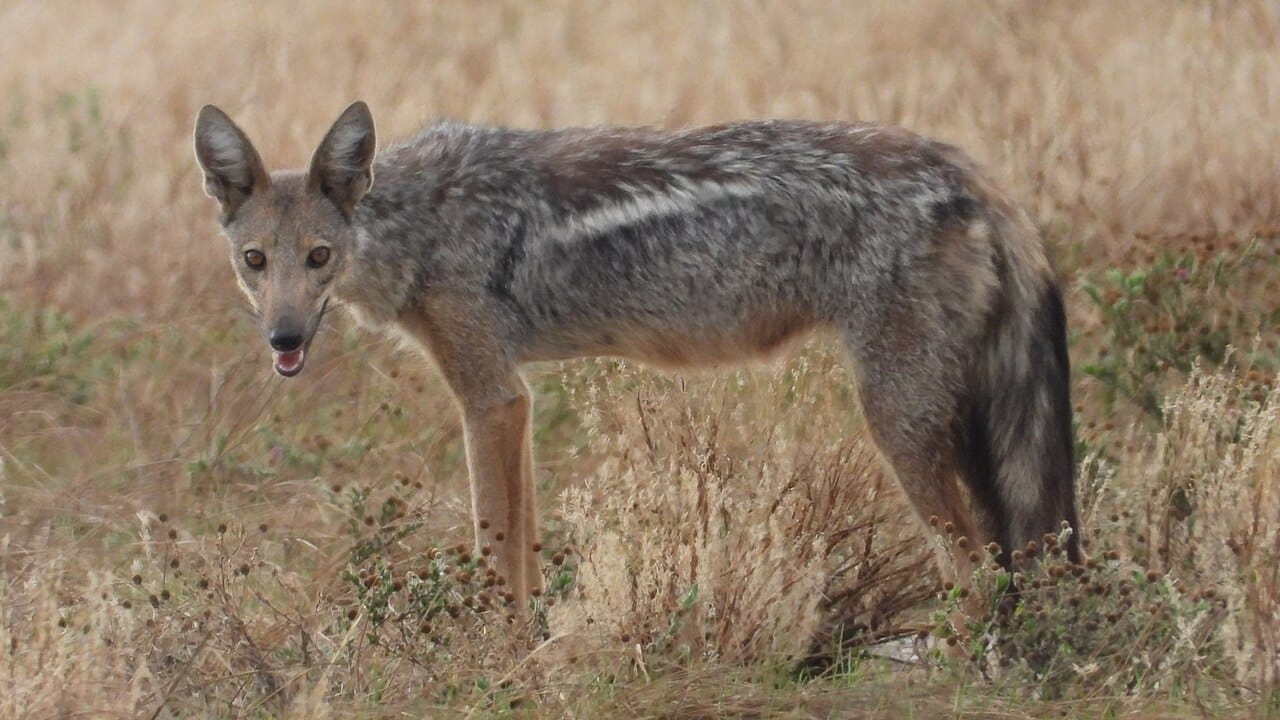
The Side-striped Jackal is native to central and southern Africa and is named for the distinctive white or pale stripe running along its flanks. This species is slightly larger than the Black-backed Jackal, weighing between 7 to 15 kilograms, with a body length of 60 to 90 cm. Their coat is a blend of gray, brown, and black shades, helping them blend seamlessly into woodland and grassland habitats. Unlike the Black-backed Jackal, the Side-striped Jackal has a more subdued, less contrasting coloration, which offers camouflage in its dense bush and forest environments.
Side-striped Jackals are omnivorous and highly adaptable, feeding on small mammals, birds, insects, fruits, and occasionally carrion. Their diet flexibility allows them to survive in a variety of environments, from woodlands to savannas. Socially, they are less aggressive than other jackals and are often observed in monogamous pairs or small family units. They communicate through vocalizations, scent marking, and body language. Their howls are softer than those of Black-backed Jackals, often described as melodic and less threatening.
Reproduction in Side-striped Jackals involves strong parental investment. Females give birth to 2 to 4 pups, which both parents nurture and protect. The pups learn essential survival skills such as hunting, foraging, and recognizing threats from a young age. Ecologically, Side-striped Jackals contribute to seed dispersal through fruit consumption and help maintain prey populations in balance. Despite being adaptable, they are sensitive to habitat destruction and may face local population declines due to human encroachment. Observing Side-striped Jackals in the wild offers a glimpse into the subtle, intelligent behaviors of these elusive canids.
4. Ethiopian Wolf (Canis simensis)
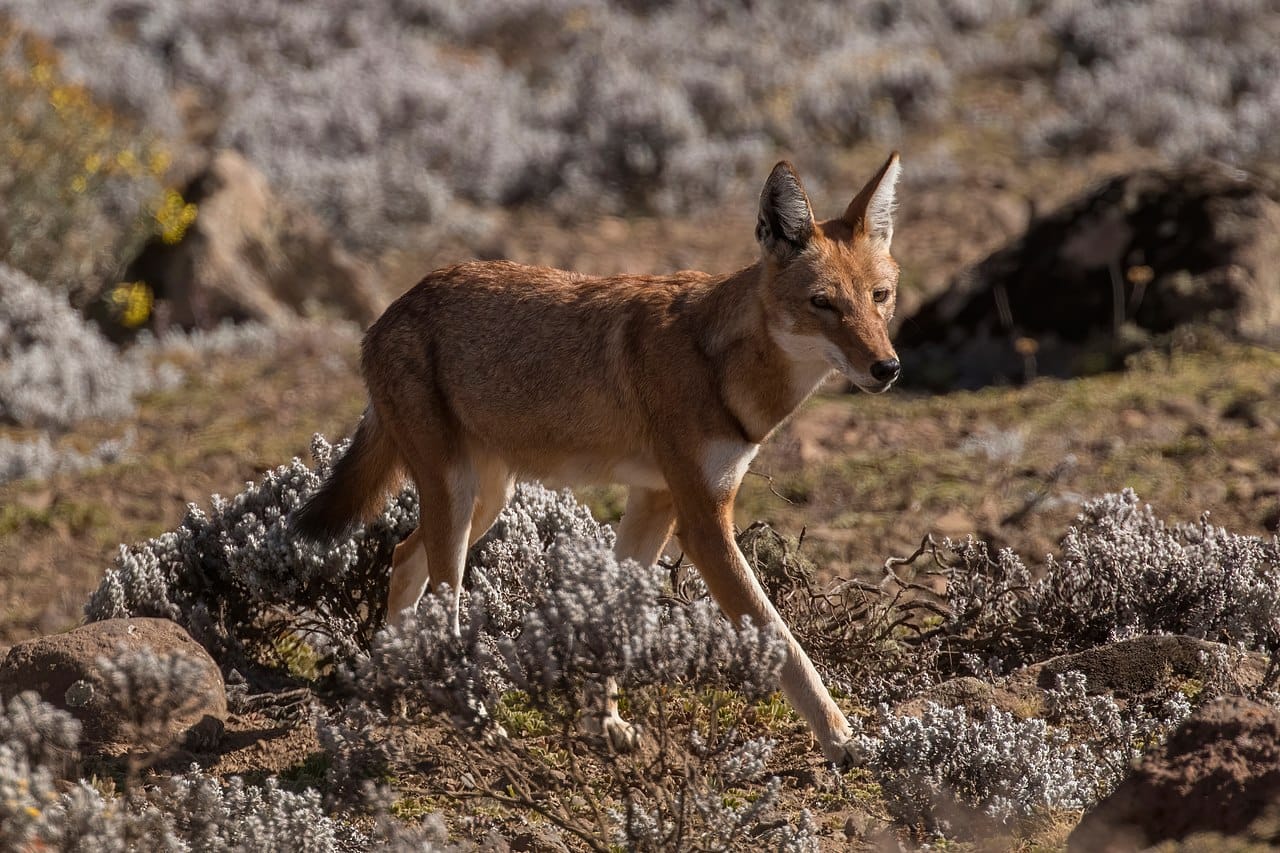
The Ethiopian Wolf, sometimes referred to historically as the Abyssinian Jackal, is one of the rarest canids in the world. Endemic to the highlands of Ethiopia, this species is highly specialized and differs significantly from other jackals. Weighing between 11 to 19 kilograms, with a slender body length of 80 to 110 cm, the Ethiopian Wolf has a striking reddish coat with white underparts, long legs, and a narrow muzzle. These physical adaptations help them navigate the mountainous terrains where they hunt. Unlike the widespread Golden or Black-backed Jackals, Ethiopian Wolves have a very limited range and are critically endangered, with fewer than 500 individuals estimated in the wild.
Ethiopian Wolves are specialized hunters, primarily preying on rodents, which make up over 90% of their diet. They employ cooperative hunting strategies within packs, using coordinated movements to flush and catch prey efficiently. Their social structure is also complex, with alpha pairs leading packs and helping care for the young. Vocal communication, including high-pitched whines and howls, is used to coordinate hunts and maintain social bonds. These wolves are highly territorial, defending hunting grounds vigorously against rivals and predators.
Breeding is seasonal, with females giving birth to 2 to 6 pups in underground dens. Both parents, along with other pack members, play active roles in rearing and teaching the pups essential hunting techniques. Ethiopian Wolves are indicators of ecosystem health in their highland habitats. Conservation efforts focus on habitat protection, preventing disease transmission from domestic dogs, and community engagement. Despite their limited numbers, Ethiopian Wolves exhibit remarkable intelligence, adaptability, and social cooperation, making them a fascinating species for wildlife enthusiasts studying types of jackal and related canids.
5. African Golden Wolf (Canis anthus)
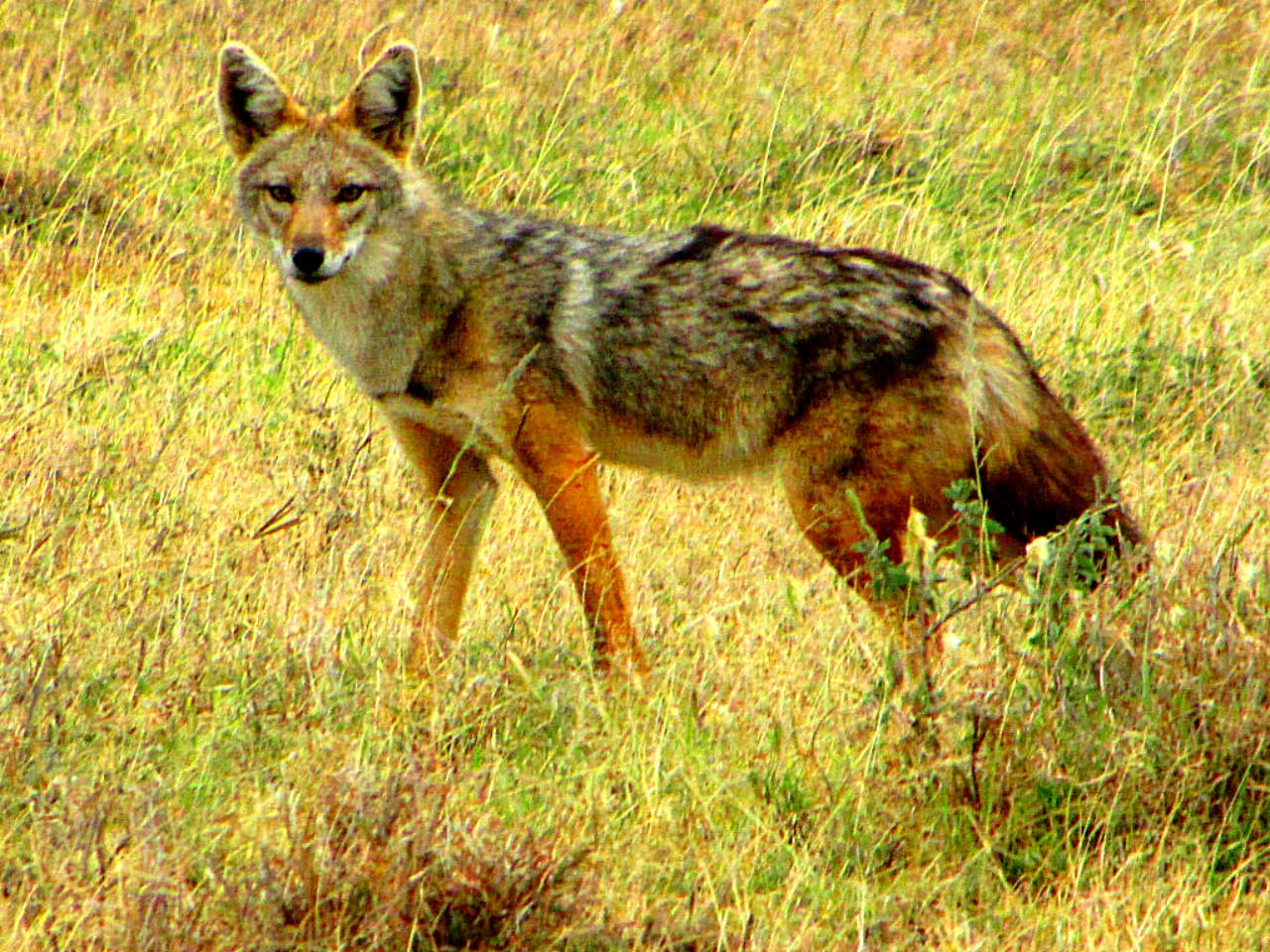
The African Golden Wolf is a relatively recent recognition in the taxonomy of canids. Previously considered a subspecies of the Golden Jackal, genetic studies have established it as a distinct species. Found in North and East Africa, African Golden Wolves have a coat that varies from tawny to grayish-golden, often with darker markings along the back. They are medium-sized canines, weighing between 7 to 15 kilograms, and are slightly more robust than Golden Jackals. Their ears are relatively large, aiding in acute hearing, and their bushy tails end in dark tips, characteristic of the jackal family.
Behaviorally, African Golden Wolves are opportunistic omnivores, feeding on small mammals, birds, insects, fruits, and carrion. They play a key role in ecosystem balance, controlling rodent populations and scavenging remains left by larger predators. Socially, they are monogamous, forming pairs that defend territories ranging from 5 to 20 square kilometers. Vocal communication is crucial, with howls and barks used to signal territory and coordinate with mates. They are agile and intelligent, able to adapt to changing environments, from semi-arid savannas to human-dominated landscapes.
Reproductive behavior involves strong parental care. Females typically give birth to 2 to 5 pups, which both parents feed and protect. Young wolves learn hunting and survival skills within the family unit. Conservation-wise, African Golden Wolves are currently not considered endangered, but habitat destruction, hunting, and disease from domestic dogs pose challenges. Studying African Golden Wolves provides valuable insight into canid evolution and adaptation, offering a fascinating perspective on the types of jackal and their ecological significance.
6. Senegal Jackal (Canis aureus senegalensis)

The Senegal Jackal is a subspecies of the Golden Jackal found predominantly in West Africa. Distinguished by its slightly smaller size and more slender build, this jackal typically weighs between 6 and 12 kilograms, with a body length ranging from 65 to 80 cm. Its coat is usually a mix of sandy-brown and gray, with a faint dorsal stripe that runs along the spine. This coloration provides excellent camouflage in the savannas and semi-arid regions it inhabits. Senegal Jackals are highly adaptable and can thrive near both wild and human-dominated landscapes, although they generally prefer remote areas for hunting and denning.
In terms of behavior, Senegal Jackals are versatile and opportunistic. They feed on small mammals, birds, reptiles, insects, and occasionally fruits. Scavenging is also common, particularly near human settlements where food waste provides an easy meal. These jackals are primarily nocturnal, although they may be active during the early morning or late evening hours. Socially, Senegal Jackals form monogamous pairs, often staying together for several years, and they may raise pups cooperatively with older offspring. Communication is achieved through howls, yelps, and scent marking, which help maintain territory boundaries and strengthen pair bonds.
The reproductive cycle of the Senegal Jackal includes a gestation period of approximately 60–65 days, after which females give birth to 2–5 pups. Both parents share the responsibility of feeding, grooming, and protecting the young. Pups learn vital survival skills such as hunting small prey, avoiding predators, and navigating their environment from their parents. Senegal Jackals play a critical ecological role by regulating small animal populations and cleaning up carrion, ensuring a balanced ecosystem. Despite human encroachment, they continue to demonstrate resilience and adaptability, embodying the intelligence and versatility that define types of jackal.
7. Eurasian Jackal (Canis aureus moreoticus)
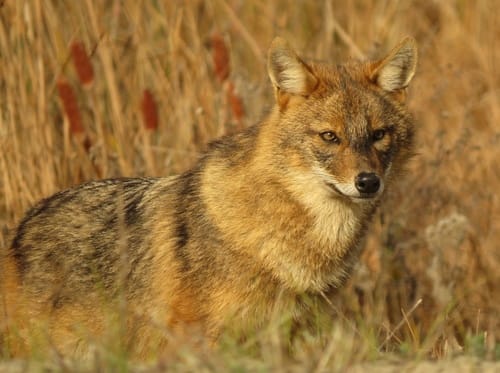
The Eurasian Jackal, also known as the European Golden Jackal, is native to parts of southeastern Europe and western Asia. This species represents the expansion of the Golden Jackal into Europe, where it has adapted remarkably well to temperate and Mediterranean habitats. Eurasian Jackals are medium-sized, with weights ranging from 7 to 14 kilograms and body lengths of 70 to 85 cm. Their fur tends to be slightly darker than African Golden Jackals, with a mix of golden-brown, gray, and black markings along the back. The tail is bushy with a dark tip, and the ears are large and pointed, enhancing their hearing capabilities.
Eurasian Jackals are highly adaptable omnivores, feeding on rodents, birds, amphibians, fruits, and small invertebrates. They have also been observed scavenging near agricultural areas, occasionally feeding on crops and livestock remains. This adaptability has allowed them to expand their range into areas with human activity without significant conflict. Eurasian Jackals are primarily crepuscular, active during dawn and dusk, which helps them avoid predators and human disturbance. Socially, they live in monogamous pairs and establish clearly defined territories, using howls and scent markings to communicate with neighboring packs.
Reproduction involves a gestation period of roughly 63 days, with females giving birth to 2–5 pups. Both parents actively participate in nurturing the young, teaching them essential survival skills such as hunting techniques, scent recognition, and social interaction. Eurasian Jackals are ecologically important, controlling rodent populations and cleaning up carrion. Their presence indicates healthy ecosystems, as they thrive only where prey is abundant and habitats remain intact. Studying Eurasian Jackals provides valuable insights into the expansion of jackal species into new regions, offering a fascinating example of adaptation and survival among the types of jackal.
8. Indian Jackal (Canis aureus indicus)
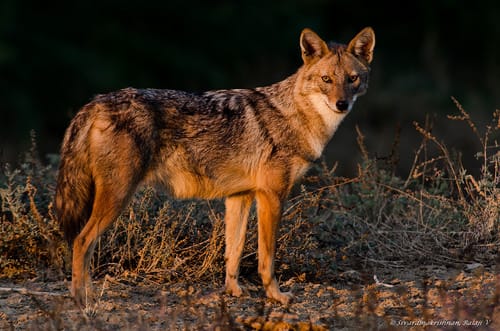
The Indian Jackal is a subspecies of the Golden Jackal native to the Indian subcontinent, including India, Nepal, Bangladesh, and Pakistan. It is recognized for its slightly smaller frame and lighter build compared to its African relatives, typically weighing between 6 and 12 kilograms and measuring 65–80 cm in body length. Its coat varies from golden-yellow to grayish-brown, often with subtle darker streaks along the back. The tail is bushy with a dark tip, and the ears are sharp and upright, ideal for detecting prey in dense vegetation. Indian Jackals inhabit a variety of ecosystems, including forests, grasslands, scrublands, and even urban peripheries.
Behaviorally, Indian Jackals are opportunistic omnivores. Their diet includes rodents, birds, reptiles, insects, fruits, and human refuse. They are known for their intelligence and adaptability, often employing cunning strategies to hunt and scavenge food. Indian Jackals are primarily nocturnal but may occasionally be seen during daylight hours, especially in areas with minimal human interference. Socially, they form monogamous pairs, and family units may include pups from previous litters that help with hunting and protection. Communication is achieved through vocalizations, including howls, yelps, and barks, as well as scent marking.
The reproductive cycle of Indian Jackals involves a gestation period of about 60–65 days, with females producing 2–5 pups per litter. Parents invest heavily in nurturing the young, teaching them survival skills essential for hunting, foraging, and avoiding predators. Ecologically, Indian Jackals contribute to controlling rodent populations, dispersing seeds through fruit consumption, and scavenging carrion. Their ability to thrive in human-dominated landscapes makes them an excellent example of the resilience and adaptability found within types of jackal. Observing Indian Jackals offers a glimpse into how wildlife can coexist alongside humans while maintaining essential ecological roles.
9. Sri Lankan Jackal (Canis aureus naria)
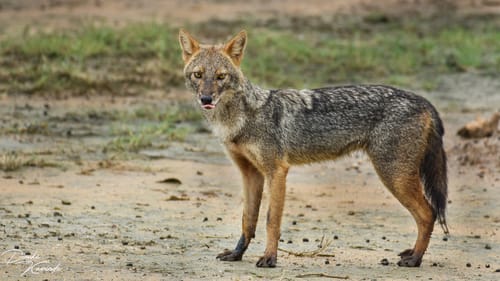
The Sri Lankan Jackal is a subspecies of the Golden Jackal found exclusively on the island of Sri Lanka. It is slightly smaller than other Golden Jackal subspecies, weighing between 5.5 and 11 kilograms and measuring 60–75 cm in body length. Its coat is a warm golden-brown with lighter underparts, and the tail is bushy with a dark tip. Adapted to tropical and subtropical environments, the Sri Lankan Jackal inhabits grasslands, forests, and scrublands, often avoiding highly urbanized areas. Its coloration provides excellent camouflage against the island’s varied landscapes.
In terms of behavior, the Sri Lankan Jackal is an omnivore and opportunistic feeder. It hunts small mammals, birds, reptiles, and insects, and scavenges fruit and carrion when available. These jackals are primarily nocturnal but may be active in the early morning or late evening. Socially, they are known to form monogamous pairs, which may be accompanied by older offspring from previous litters who assist in hunting and pup care. Vocalizations, including howls and yelps, are used to maintain territory and communicate with family members.
Reproduction involves a gestation period of around 60–65 days, producing litters of 2–4 pups. Both parents actively care for the young, teaching hunting techniques and survival strategies necessary for the wild. Ecologically, the Sri Lankan Jackal helps control small animal populations, disperses seeds, and maintains the balance of its local ecosystem. As a subspecies, it offers unique insights into island adaptation and the diversity of types of jackal found worldwide. Observing the Sri Lankan Jackal highlights the intelligence, adaptability, and ecological importance of these fascinating canids.
10. Pannonian Jackal (Canis aureus ecsedensis)
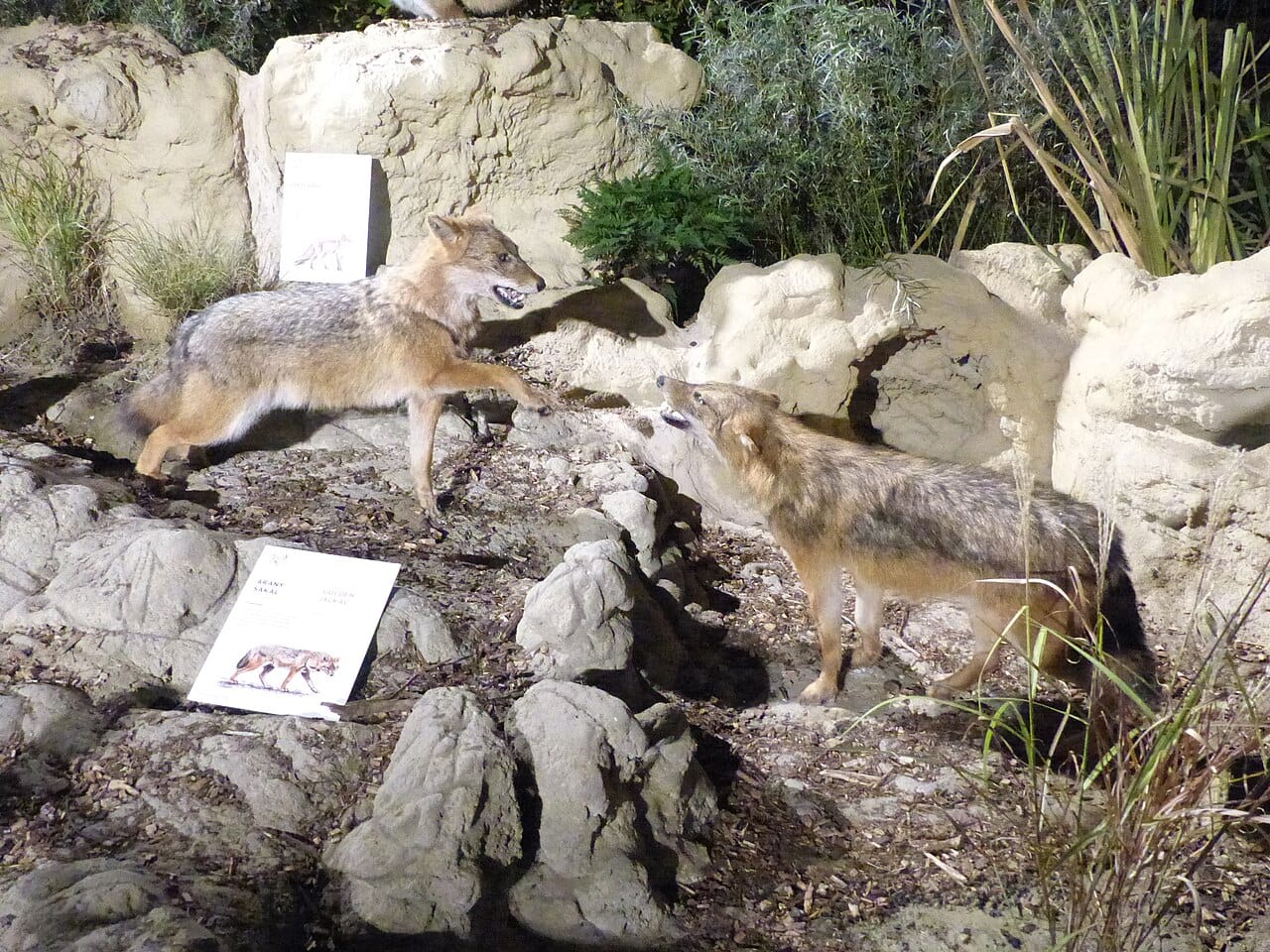
The Pannonian Jackal is a rare subspecies of the Golden Jackal found historically in the Pannonian Basin of Central Europe, including areas of Hungary and surrounding regions. This jackal is medium-sized, typically weighing between 6 and 12 kilograms and measuring 65–80 cm in body length. Its fur is golden-brown with gray undertones and a subtle dark dorsal stripe. The Pannonian Jackal was adapted to open plains, wetlands, and forest edges, making it a versatile inhabitant of the region’s diverse landscapes. Although historical records suggest it was once more widespread, modern populations are limited, and some consider it extinct or very rare.
Behaviorally, the Pannonian Jackal was an opportunistic omnivore, feeding on rodents, birds, insects, fruits, and carrion. Its social structure likely mirrored that of other Golden Jackal subspecies, with monogamous pairs forming stable territories. Communication would have included vocalizations such as howls, yelps, and barks, along with scent marking. Reproductive patterns likely involved gestation periods of 60–65 days and litters of 2–5 pups, with both parents actively involved in nurturing the young.
Ecologically, the Pannonian Jackal played a crucial role in maintaining ecosystem balance by controlling small animal populations and cleaning up carrion. Its historical presence provides insight into the adaptability and spread of jackal species across diverse regions. Studying this rare subspecies enhances our understanding of the evolutionary diversity and ecological significance of types of jackal worldwide. Although sightings are now rare, the Pannonian Jackal remains an important symbol of the resilience and ecological value of canids in Central Europe.
Conclusion
Jackals are remarkable members of the canid family, showcasing a combination of intelligence, adaptability, and ecological importance across diverse regions of Africa, Asia, and Europe. From the widely recognized Golden Jackal to the rare and specialized Ethiopian Wolf, each species has unique characteristics, behaviors, and habitat preferences that make them fascinating to study. The ten species reviewed in this guide — including the Black-backed, Side-striped, African Golden, Senegal, Eurasian, Indian, Sri Lankan, and Pannonian Jackals — illustrate the incredible diversity within the types of jackal group.
These jackals are not only vital predators but also essential scavengers and ecosystem regulators. Their diets, ranging from small mammals and birds to fruits and carrion, allow them to maintain balance in their habitats, control rodent populations, and assist in seed dispersal. Socially, most jackal species form monogamous pairs, exhibiting strong parental care and cooperative hunting strategies that highlight their intelligence and adaptability. Observing these canids in the wild provides valuable insights into the complexity of predator-prey dynamics and the resilience of wildlife in ever-changing environments.
Conservation of jackals and their habitats is crucial, especially for rare or endangered species like the Ethiopian Wolf or localized subspecies such as the Pannonian Jackal. By understanding their behavior, ecological roles, and environmental needs, humans can better support conservation efforts and ensure these fascinating animals continue to thrive. Whether you are a wildlife enthusiast, researcher, or beginner interested in the natural world, learning about the types of jackal offers a deeper appreciation of the intricate balance of life and the remarkable adaptability of these wild canines. By exploring their diversity and ecological significance, we not only enrich our knowledge of nature but also gain a greater understanding of the importance of preserving wildlife for future generations.
Frequently Asked Questions About Types of Jackal
1. What are jackals?
Jackals are medium-sized wild canines found in Africa, Asia, and parts of Europe. They are intelligent, adaptable predators and scavengers that play a crucial role in their ecosystems.
2. How many types of jackal are there?
There are several types of jackal, but the most recognized include the Golden Jackal, Black-backed Jackal, Side-striped Jackal, Ethiopian Wolf, African Golden Wolf, Senegal Jackal, Eurasian Jackal, Indian Jackal, Sri Lankan Jackal, and Pannonian Jackal.
3. What is the difference between a jackal and a coyote?
Jackals are smaller and more slender than coyotes and are native to Africa, Asia, and Europe, whereas coyotes are native to North and Central America. Jackals also tend to form monogamous pairs, while coyotes may have larger family groups.
4. Where do jackals live?
Jackals inhabit diverse habitats such as savannas, forests, deserts, and grasslands. Some species, like the Eurasian Jackal, have even adapted to human-altered environments.
5. What do jackals eat?
Jackals are omnivores. Their diet includes small mammals, birds, insects, fruits, and carrion. They are opportunistic feeders, adapting to the food available in their habitat.
6. Are jackals dangerous to humans?
Generally, jackals avoid humans and are not considered dangerous. However, they may scavenge near villages or attack small livestock if threatened or hungry.
7. How can you identify different types of jackal?
Different jackal species can be identified by their size, coat color, patterns, ear shape, tail bushiness, and habitat. For example, the Black-backed Jackal has a distinctive dark saddle on its back.
8. What is the Golden Jackal?
The Golden Jackal (Canis aureus) is the most widespread jackal species, found in Africa, the Middle East, and South Asia. It is golden-brown in color and highly adaptable.
9. What is the Black-backed Jackal?
The Black-backed Jackal (Canis mesomelas) is native to eastern and southern Africa. It is known for the black stripe along its back and its reddish-tan body.
10. What is the Side-striped Jackal?
The Side-striped Jackal (Canis adustus) has a pale stripe along its sides and lives in central and southern Africa. It is slightly larger than the Black-backed Jackal and prefers woodlands.
11. Is the Ethiopian Wolf a jackal?
While sometimes historically called the Abyssinian Jackal, the Ethiopian Wolf (Canis simensis) is a distinct canid species. It is highly specialized and endangered.
12. What is the African Golden Wolf?
The African Golden Wolf (Canis anthus) was once considered a subspecies of the Golden Jackal but is now recognized as a separate species found in North and East Africa.
13. What is the Senegal Jackal?
The Senegal Jackal (Canis aureus senegalensis) is a West African subspecies of the Golden Jackal. It is smaller and adapted to savannas and semi-arid regions.
14. What is the Eurasian Jackal?
The Eurasian Jackal (Canis aureus moreoticus) inhabits parts of southeastern Europe and western Asia and is an expansion of the Golden Jackal into temperate regions.
15. What is the Indian Jackal?
The Indian Jackal (Canis aureus indicus) is a subspecies of the Golden Jackal found in India, Nepal, Bangladesh, and Pakistan. It adapts well to both wild and urban areas.
16. What is the Sri Lankan Jackal?
The Sri Lankan Jackal (Canis aureus naria) is endemic to Sri Lanka. It is slightly smaller than other Golden Jackal subspecies and inhabits forests, grasslands, and scrublands.
17. What is the Pannonian Jackal?
The Pannonian Jackal (Canis aureus ecsedensis) is a rare or possibly extinct subspecies of the Golden Jackal that lived in Central Europe, particularly in Hungary.
18. How do jackals hunt?
Jackals hunt both alone and in pairs. They primarily feed on rodents, birds, and insects. Some species also hunt cooperatively in family units.
19. Do jackals howl?
Yes, most jackal species use howling as a form of communication to establish territory, find mates, or coordinate with family members.
20. Are jackals social animals?
Many jackal species are monogamous and form pairs. Some species, like the Ethiopian Wolf, live in small packs with cooperative hunting strategies.
21. How long do jackals live?
In the wild, jackals generally live 8–10 years, although some may live longer in captivity.
22. How do jackals raise their young?
Jackals usually give birth to 2–6 pups, which are nurtured by both parents. Older offspring sometimes help teach survival skills to the new generation.
23. Are jackals nocturnal?
Most jackal species are nocturnal or crepuscular, meaning they are active at night or during dawn and dusk, although some may be seen during the day in quiet areas.
24. What is the ecological role of jackals?
Jackals control rodent populations, disperse seeds, and scavenge carrion, maintaining balance in ecosystems and preventing the spread of disease.
25. Can jackals live near humans?
Some jackal species, especially Golden Jackals, have adapted to human-altered environments and may scavenge near villages or farms.
26. Are jackals endangered?
Most jackal species are not endangered, but some, like the Ethiopian Wolf, are critically endangered due to habitat loss and disease.
27. How big do jackals get?
Jackals are medium-sized canids, typically weighing 6–19 kilograms and measuring 60–110 cm in body length, depending on the species.
28. How fast can jackals run?
Jackals are agile runners and can reach speeds up to 16–24 mph (25–40 km/h) while hunting or evading predators.
29. Do jackals mate for life?
Most jackal species form monogamous pairs that mate for life, often cooperating to raise multiple litters over several years.
30. How do jackals communicate?
Jackals use vocalizations, body language, and scent marking to communicate with mates, family members, and rivals.
31. What predators hunt jackals?
Large predators such as leopards, lions, hyenas, and eagles may prey on jackals, especially pups or weakened individuals.
32. Can jackals climb trees?
No, jackals are terrestrial animals and do not climb trees. They rely on speed, agility, and stealth to hunt and escape predators.
33. How do jackals survive in deserts?
Desert-dwelling jackals, like some African Golden Wolves, conserve water, hunt at night, and feed on small animals and fruits to survive harsh conditions.
34. Do jackals scavenge?
Yes, jackals are opportunistic feeders and will scavenge carcasses left by larger predators, playing an important ecological role.
35. Are jackals territorial?
Yes, most jackal species defend territories using howls, scent marking, and patrolling, ensuring sufficient food and breeding space.
36. How can I see jackals in the wild?
Jackals can be observed in national parks and wildlife reserves within their native ranges, often at dawn or dusk when they are most active.
37. What do jackals eat in urban areas?
In urban areas, jackals may scavenge human waste, garbage, discarded food, or even small domestic animals.
38. How do jackals help the environment?
Jackals regulate prey populations, remove carrion, and disperse seeds through fruit consumption, contributing to healthy ecosystems.
39. What are the differences between jackal species?
Differences include size, coat color, dorsal stripes, ear shape, habitat, diet, and social behavior.
40. Can jackals interbreed with other canids?
In some cases, jackals may hybridize with domestic dogs or wolves, but this is rare and usually occurs in overlapping habitats.
41. Do jackals live in packs?
Most jackals form monogamous pairs, but some species, like the Ethiopian Wolf, form small packs for cooperative hunting.
42. How intelligent are jackals?
Jackals are highly intelligent, using problem-solving skills, cooperation, and cunning strategies to hunt and survive.
43. Are jackals nocturnal or diurnal?
Most jackals are nocturnal, active at night or twilight. Some may be diurnal in areas with little human disturbance.
44. How do jackals avoid predators?
Jackals rely on speed, stealth, camouflage, and alertness to evade larger predators.
45. Can jackals swim?
Jackals are capable swimmers, though they rarely enter water unless necessary for hunting or crossing rivers.
46. Do jackals howl like wolves?
Yes, jackals howl, but their howls are usually higher-pitched and shorter than those of wolves. Howling is used for communication and territory marking.
47. How do jackals adapt to human presence?
Jackals can become nocturnal in urban areas, feed on human waste, and avoid direct contact while thriving near settlements.
48. What is the lifespan of a jackal in captivity?
In captivity, jackals may live up to 14–16 years, benefiting from regular food and veterinary care.
49. Can jackals climb fences?
Jackals can jump moderate heights but cannot scale high vertical fences like some cats. They are skilled at finding gaps or low obstacles.
50. Why are jackals important to ecosystems?
Jackals control prey populations, scavenge carrion, disperse seeds, and maintain ecological balance, making them a keystone species in many habitats.
51. Can jackals survive in cold climates?
Some jackal species, like the Eurasian Jackal, have adapted to colder climates by growing thicker coats and modifying their behavior.
52. Do jackals dig dens?
Yes, jackals dig dens for raising pups, sheltering from extreme weather, and hiding from predators. Dens are often in secluded areas.
53. How do jackals communicate with pups?
Parents use vocalizations, body language, and play to teach pups hunting, social, and survival skills.
54. Are jackals territorial all year?
Yes, most jackals maintain territories throughout the year to secure food resources and safe breeding areas.
55. How do jackals affect agriculture?
While jackals primarily hunt wild prey, they may sometimes prey on small livestock or poultry, leading to conflicts with farmers.
Read more: 5 Types of Koala (Pictures And Identification)