

The song thrush is one of the most recognizable woodland and garden birds, known for its beautiful, repetitive singing and its distinctive spotted chest. Found across Europe, Asia, and introduced regions, this bird thrives in a variety of habitats, from dense forests to suburban gardens. Despite its delicate appearance, the song thrush is a highly adaptable feeder with a surprisingly varied diet.
Understanding what song thrushes eat is essential for appreciating their role in nature and supporting their populations. Their feeding habits influence everything from insect control to seed dispersal, making them a key part of many ecosystems. For bird lovers, gardeners, and conservationists, knowing their diet also helps create environments that attract and sustain these birds.
What Do Song Thrushes Eat in the Wild?
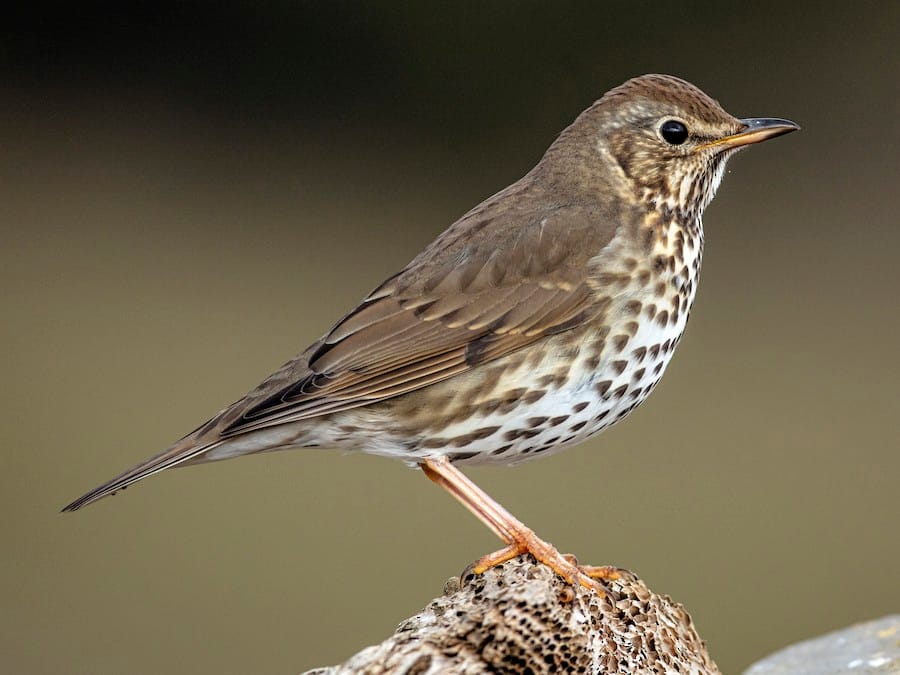
Song thrushes are omnivorous birds with a strong preference for invertebrates and soft fruits. In the wild, they forage primarily on the ground, using their keen eyesight to locate prey hidden beneath leaves, soil, or vegetation. Their diet shifts throughout the year depending on availability, with insects and worms dominating in warmer months and fruits becoming more important in autumn and winter.
One of the most fascinating aspects of the song thrush’s feeding behavior is its use of “anvils” — hard surfaces like stones where it breaks open snail shells. This unique habit highlights both the bird’s intelligence and its specialized adaptation for accessing certain food sources.
Below are 30 of the most common foods song thrushes love, each playing a vital role in their survival and ecological impact.
1. Earthworms
Earthworms are one of the most important food sources for song thrushes, especially during the breeding season when protein demand is high. These birds are expert ground foragers, using their sharp eyesight to detect subtle movements in soil and leaf litter.
Once located, the thrush quickly pulls the worm from the ground with its beak, often shaking it to remove excess soil. Earthworms provide rich protein and moisture, making them ideal for both adult birds and growing chicks.
In wet environments such as gardens, lawns, and woodlands, earthworms form the backbone of the song thrush’s diet.
2. Snails
Snails are a signature food of song thrushes and one of the most distinctive elements of their feeding behavior. These birds are known to use “anvils,” which are hard surfaces like stones, to break snail shells open.
This behavior allows them to access the soft body inside the shell, which is rich in nutrients. Snails are especially important during dry periods when earthworms are less available.
This adaptation demonstrates the intelligence and problem-solving ability of the song thrush in obtaining food.
3. Slugs
Slugs are another common invertebrate in the song thrush diet. Unlike snails, slugs lack shells, making them easier to consume. Thrushes often find them under leaves, logs, or in damp soil.
They provide hydration and protein, especially useful during dry or warm conditions when other prey may be less accessible.
Slugs are an important part of natural pest control in gardens where song thrushes are present.
4. Beetles
Beetles are widely consumed by song thrushes and provide a reliable source of protein throughout the year. These insects are often found in soil, under bark, or among leaf litter.
Song thrushes use their beaks to flip over debris and expose hidden beetles, which they quickly capture and swallow.
Beetles help diversify the bird’s diet and contribute to its overall nutritional intake.
5. Caterpillars
Caterpillars are especially important during spring and summer when they are abundant. These soft-bodied larvae are easy to digest and rich in protein, making them ideal for feeding chicks.
Song thrushes often forage in shrubs and trees to locate caterpillars hiding on leaves and stems.
Their consumption helps regulate insect populations and supports healthy plant ecosystems.
6. Insects
General insects form a broad category in the song thrush diet, including a wide variety of small arthropods. These provide essential nutrients and are easily available in most habitats.
Thrushes are opportunistic feeders and will consume any suitable insect they encounter while foraging on the ground.
This flexibility allows them to adapt to changing environmental conditions.
7. Insect Larvae
Insect larvae are soft, nutrient-rich food sources that song thrushes actively seek out. These larvae are often found in soil, decaying wood, or plant material.
Because they are easy to digest and high in fat and protein, they are especially valuable during breeding season.
Larvae contribute significantly to chick development and adult energy reserves.
8. Spiders
Spiders are a small but important part of the song thrush diet. They are often found in vegetation, under logs, or among leaf litter.
Thrushes consume spiders quickly and efficiently, benefiting from their protein content.
Although not a primary food source, spiders add dietary variety and nutritional balance.
9. Ants
Ants are widely available and are consumed opportunistically by song thrushes. They are often picked from soil surfaces or disturbed nests.
While individually small, ants can be eaten in large quantities, contributing to overall energy intake.
They are particularly useful when other larger prey is scarce.
10. Flies
Flies are quick-moving insects that song thrushes catch when they land on vegetation or the ground. These insects are abundant in most environments, making them a reliable food source.
Flies provide protein and are especially important during warmer months when insect activity increases.
Their availability ensures song thrushes can maintain energy levels throughout the breeding season.
11. Woodlice
Woodlice are small crustaceans commonly found under logs, stones, and leaf litter. Song thrushes frequently forage in these damp microhabitats to locate them. These creatures provide a steady source of protein and moisture, especially in shaded woodland areas.
Although small, woodlice are consumed in large quantities when available. Their soft bodies make them easy to digest, and they are particularly important in wet environments where other insects may be less active.
This makes woodlice a dependable part of the thrush’s ground-feeding diet.
12. Millipedes
Millipedes are slow-moving detritivores found in soil and leaf litter. Song thrushes often uncover them while foraging through the forest floor.
While some millipedes produce defensive chemicals, thrushes have adapted to handle and consume them safely. They provide protein and contribute to dietary diversity.
Millipedes are more commonly eaten during moist conditions when they are more active and easier to find.
13. Centipedes
Centipedes are carnivorous arthropods that are occasionally eaten by song thrushes. They are typically found under rocks, bark, or soil debris.
Because centipedes can be fast and sometimes defensive, thrushes must act quickly to capture them. They provide a rich source of protein and fat.
Though less frequently consumed than other invertebrates, they are still an important opportunistic food.
14. Small Worms
Small worms, including juvenile earthworms and similar invertebrates, are a key part of the thrush’s diet. They are often easier to access than larger worms and are abundant in moist soils.
Song thrushes detect them by listening for subtle soil movements and pecking precisely at the ground.
These worms provide essential nutrients that support energy needs during active feeding periods.
15. Grubs
Grubs are beetle larvae found in soil and decaying plant matter. They are highly nutritious and rich in fats, making them a valuable food source.
Song thrushes dig or probe into the soil to locate grubs, often in gardens and grassy areas.
Their high energy content makes them especially important during breeding season.
16. Berries
Berries are a vital food source, especially in autumn and winter when insects are less available. Song thrushes consume a wide variety of wild berries found in hedgerows and woodlands.
These fruits provide sugars, vitamins, and antioxidants that help sustain energy during colder months.
Berries also play a role in seed dispersal, as thrushes spread seeds through their droppings.
17. Blackberries
Blackberries are one of the most commonly eaten fruits by song thrushes. They are abundant in hedgerows and provide high-energy sugars.
Thrushes often feed heavily on blackberries in late summer and early autumn to prepare for colder seasons.
Their soft texture and rich nutrients make them an ideal seasonal food source.
18. Raspberries
Raspberries are another favored fruit of song thrushes. They are soft, juicy, and easy to consume directly from bushes.
These berries provide hydration and quick energy, making them especially useful during migration periods.
Thrushes may return repeatedly to raspberry bushes until the fruit is depleted.
19. Strawberries
Wild and cultivated strawberries are occasionally eaten by song thrushes. They are attractive due to their sweetness and bright color.
While not a primary wild food source, they are commonly consumed in gardens where available.
Strawberries offer sugars and moisture that help maintain energy levels.
20. Blueberries
Blueberries are nutrient-rich fruits consumed by song thrushes when available in woodland habitats. They are packed with antioxidants and natural sugars.
Thrushes often feed in berry patches, helping spread seeds across different areas.
Their high energy value makes them especially important during seasonal transitions.
21. Elderberries
Elderberries are a highly important seasonal food for song thrushes, especially in late summer and autumn. These small, dark berries grow in clusters and provide rich sugars and antioxidants that help birds build energy reserves for colder months.
Song thrushes often feed extensively on elderberry bushes, consuming large quantities in a short period. This helps them prepare for seasonal food shortages.
In addition to nutrition, elderberries also support seed dispersal as thrushes spread seeds across wide areas.
22. Hawthorn Berries
Hawthorn berries are another key autumn food source. These small red fruits remain on trees well into winter, providing a reliable backup food when other sources are scarce.
Song thrushes feed on hawthorn berries during colder months when insect activity is low. They provide carbohydrates and essential nutrients for survival.
Their availability makes them crucial for wintering thrush populations.
23. Rowan Berries
Rowan berries are bright orange-red fruits that are highly attractive to song thrushes. They are rich in sugars and are often consumed in large flocks when available.
These berries are especially important in mountainous and northern regions where other food sources may be limited.
Rowan berries help sustain thrushes during migration and early winter periods.
24. Fruits (General)
Beyond specific berries, song thrushes consume a wide variety of wild and cultivated fruits. These include soft, ripe fruits that are easy to peck and digest.
Fruits provide quick energy through natural sugars and help maintain hydration, especially in dry conditions.
This flexible fruit-eating behavior allows song thrushes to adapt to changing environments and seasonal availability.
25. Apples
Apples are commonly eaten by song thrushes, especially when they become soft or fall to the ground. The birds peck into the flesh to access the sweet interior.
They are an important food in orchards and gardens where fallen fruit is available.
Apples provide hydration and energy, making them useful during colder months.
26. Pears
Pears are similar to apples and are consumed when ripe and soft. Song thrushes feed on exposed fruit surfaces, especially those damaged by insects or weather.
Their high sugar content makes them a valuable energy source during autumn.
Pears also help sustain birds in human-modified environments like gardens and orchards.
27. Cherries
Cherries are seasonal fruits eaten by song thrushes when available. They are typically consumed for their sweet flesh, with birds avoiding the hard pit.
These fruits provide quick energy and hydration during warm months.
Cherries are particularly attractive when trees are heavily laden with ripe fruit.
28. Seeds
Although not a primary food source, seeds are occasionally eaten by song thrushes, especially when other foods are scarce.
Seeds provide carbohydrates and can be found in many habitats, including grasslands and woodland edges.
They are most commonly consumed during winter when insect populations decline.
29. Suet
Suet is a high-energy fat source that is often consumed by song thrushes in colder months. It is especially useful when natural food sources are limited.
Bird feeders often provide suet blocks, which attract thrushes along with other bird species.
This energy-dense food helps maintain body heat and survival during winter.
30. Mealworms
Mealworms are an excellent protein source and are commonly eaten by song thrushes, especially in garden environments.
They closely mimic natural insect larvae and are highly nutritious, making them ideal for supporting breeding birds and chicks.
Mealworms are frequently used in bird feeding stations to attract and sustain song thrush populations.
Seasonal Diet Changes
Song thrushes adjust their diet throughout the year. In spring and summer, they rely heavily on insects, worms, and larvae to support breeding and chick development. In autumn, fruits and berries become dominant as birds prepare for migration or winter survival.
During winter, when invertebrates are scarce, they depend more on berries, seeds, and human-provided foods such as suet and mealworms. This seasonal flexibility is key to their survival across different climates.
Feeding Behavior & Foraging Techniques
Song thrushes are ground foragers, using their excellent vision and hearing to locate prey beneath leaves and soil. They are particularly skilled at breaking snail shells using stones as tools, a behavior that demonstrates problem-solving ability.
Their sharp beaks allow them to quickly extract worms and insects, while their adaptability enables them to switch between animal and plant foods as needed.
Ecological Role of Song Thrushes
Song thrushes play an important ecological role by controlling insect populations and dispersing seeds through fruit consumption. Their feeding habits help maintain balance in ecosystems and promote plant growth.
By consuming pests such as slugs and snails, they also provide natural pest control in gardens and agricultural areas.
Fun Facts About Song Thrush Feeding
- Song thrushes use stones as “anvils” to break snail shells.
- They often repeat songs by mimicking patterns of their environment.
- They can eat hundreds of snails in a single feeding session.
- They switch diets dramatically between seasons.
- They help spread berry seeds across forests and hedgerows.
Conclusion
Song thrushes are highly adaptable birds with a diverse diet that includes worms, insects, snails, fruits, and berries. Their ability to shift between animal and plant-based foods allows them to survive in changing environments throughout the year.
By understanding what song thrushes eat, we gain insight into their ecological importance and how to support their populations through habitat protection and responsible feeding practices.
Read more: