
Best Hunting Arrows: 5 Carbon Arrow Options Compared
Choosing the wrong arrow can turn a well-tuned bow into a frustrating setup: inconsistent flight, damaged vanes, poor penetration, or a missed opportunity in the field. The best hunting arrows need to match your bow’s draw weight, draw length, and required spine while balancing speed, durability, and weight.
That balance is the real decision. Lighter arrows may fly faster, while heavier shafts can offer greater stability and energy retention; construction, diameter, fletching, and insert design also affect accuracy and reliability. In this guide, we compare hunting arrows for compound and recurve bows, explain compatibility and safety considerations, and cover inspection, maintenance, and common buying mistakes.
Whether you want a dependable all-around setup, a heavier arrow for penetration, or an affordable option for practice and hunting, the picks below will help narrow the field. Start with the Quick Picks to see which arrows best fit your priorities.
Before ordering, confirm your draw length, bow draw weight, finished arrow length, point weight, nock fit, and manufacturer spine chart. A qualified archery technician can help verify those details, especially when changing from one arrow model or point configuration to another.
As an Amazon Associate I earn from qualifying purchases.
Quick Picks
- Best Overall: Carbon Express Maxima Photon SD Fletched Arrows — A well-rounded factory-fletched option with multiple spine choices.
- Best for a Heavy Hunting Setup: Easton FMJ MAX 5MM Fletched Arrows — Worth considering when your setup and spine chart support a heavier arrow design.
- Best Budget-Oriented Hunting Option: Gold Tip Airstrike Hunting Arrows — A six-pack factory-fletched option for archers seeking a simpler hunting arrow package.
- Best for Flexible Practice Use: 32″ Pure Carbon Archery Arrows — Removable-tip design and several spine choices may suit practice and setup experimentation.
- Best Entry-Level Multipurpose Option: TIGER ARCHERY 30″ Carbon Arrows — A basic carbon-arrow package for compatible compound, recurve, and target applications.
Best Hunting Arrows Comparison
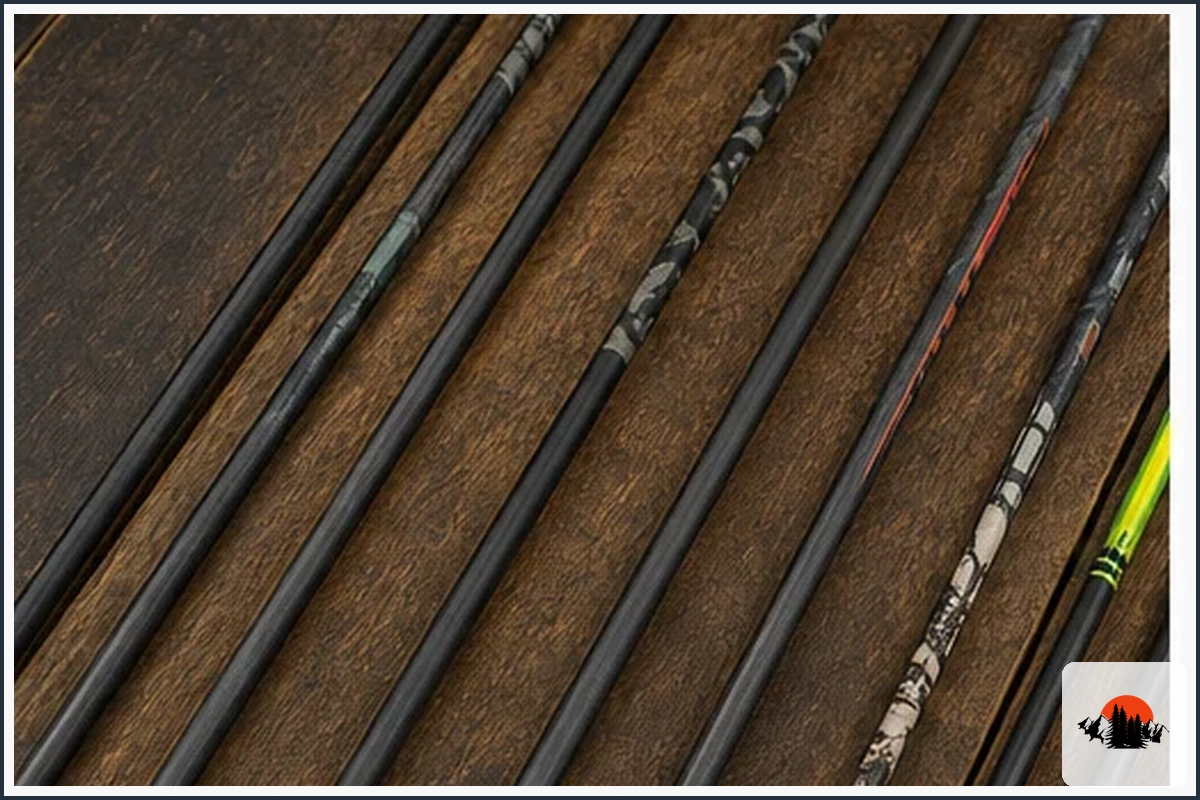
| Product | Best For | Length | Spine Information | Fletching | Design Consideration | Check Price |
|---|---|---|---|---|---|---|
| Carbon Express Maxima Photon SD | General bowhunting | Verify selected variation | .300, .350, .400 | 2-inch Quadel Raptor X vanes | Factory-fletched micro-diameter design | Check Price On Amazon |
| Gold Tip Airstrike | Budget-conscious hunting setups | Verify current listing | 300 spine listing | 2-inch vanes | Factory-fletched hunting package | Check Price On Amazon |
| Easton FMJ MAX 5MM | Hunters prioritizing a heavier arrow design | Verify selected variation | Verify spine before ordering | Fletched | 5mm full-metal-jacket construction | Check Price On Amazon |
| 32″ Pure Carbon Archery Arrows | Practice and adaptable setups | 32 inches | 300, 350, 400 | Verify current listing | Removable-tip design | Check Price On Amazon |
| TIGER ARCHERY 30″ Carbon Arrows | Entry-level target and compatible hunting use | 30 inches | Verify selected variation | Verify current listing | Compound and recurve compatibility should be confirmed | Check Price On Amazon |
1. Best Overall: Carbon Express Maxima Photon SD Fletched Arrows with 2-Inch Quadel Raptor X Vanes

The Carbon Express Maxima Photon SD is the strongest all-around choice in this group because the supplied listing identifies a factory-fletched hunting arrow and offers .300, .350, and .400 spine options. That range gives bowhunters more opportunity to select a shaft that matches their specific bow setup instead of relying on one generic spine.
Key Features
- Six-arrow package.
- 2-inch Quadel Raptor X vanes.
- Available listing options include .300, .350, and .400 spine.
- Factory-fletched configuration.
- Micro-diameter hunting-arrow design described in available product coverage.
The factory fletching simplifies setup, but it does not eliminate the need to check nock fit, insert condition, arrow length, and broadhead compatibility. Its value is highest for hunters who want a ready-to-tune arrow rather than a bare shaft project.
As with every arrow here, the selected spine must be matched to draw weight, draw length, arrow length, point weight, and bow cam system. A .300 arrow is not automatically appropriate for every high-poundage bow, and a lighter-spined option should not be selected by appearance alone.
Pros
- Offers three listed spine choices for better setup matching.
- Arrives factory-fletched with 2-inch vanes.
- Designed specifically around hunting-arrow use.
- Six-arrow package is practical for replacing damaged shafts or building a small hunting set.
Cons
- Exact finished length and component details depend on the selected variation.
- Micro-diameter components may require careful insert and accessory compatibility checks.
- Six arrows provide limited spare capacity for frequent practice.
Who It’s Best For
This is the best fit for bowhunters who want factory-fletched carbon arrows with more than one spine option and who are prepared to verify their complete arrow build before hunting.
Inspect each shaft for cracks, damaged vanes, loose inserts, or bent components after practice and before carrying broadheads. Store arrows where heat, crushing, and sharp contact cannot damage the shaft.
2. Gold Tip Airstrike Hunting Arrows 2-Inch Vanes, 300 Spine

The Gold Tip Airstrike is a straightforward hunting-arrow package built around a listed 300 spine and 2-inch vanes. Its appeal is simplicity: the arrows are already fletched, and the six-pack format is convenient for hunters who need a small replacement set or are building a consistent arrow group.
Key Features
- Six-arrow package.
- 300 spine listing.
- 2-inch vanes.
- Factory-fletched hunting configuration.
- Intended for compatible compound-bow hunting setups.
The main limitation is the narrower listed spine choice compared with the Carbon Express option. Buyers need to confirm that 300 spine is correct for their bow, arrow length, and point weight. A qualified technician or the manufacturer’s spine chart is the appropriate reference when the setup is near a spine boundary.
The Airstrike can also make sense for practice before a hunt, but avoid assuming that a target-only setup and a broadhead setup will tune identically. Broadhead shape and weight can change flight, so confirm broadhead grouping at a safe range before hunting.
Pros
- Factory-fletched for a simpler starting setup.
- 2-inch vanes provide a compact hunting-oriented profile.
- Six arrows are useful for a small replacement group.
- Clear 300 spine designation in the supplied listing.
Cons
- Listed spine availability is narrower than several competing options here.
- Exact length, insert, and point details should be verified before ordering.
- May not suit bows requiring a different spine.
Who It’s Best For
This arrow is best for a hunter whose bow setup falls correctly within the manufacturer’s 300-spine recommendation and who wants a simple factory-fletched six-pack.
Check every vane after target practice, particularly if arrows contact one another. Replace any shaft with visible damage rather than attempting to use it for hunting.
3. Easton FMJ MAX 5MM Fletched Arrows — 6 Pack

The Easton FMJ MAX 5MM is the specialized option in this comparison. Its full-metal-jacket construction and 5mm designation will interest hunters who are evaluating a heavier or more substantial arrow design, but the product should be selected only after checking the complete bow-and-arrow system.
Key Features
- Six fletched arrows.
- 5mm full-metal-jacket arrow design.
- Factory-fletched configuration.
- Hunting-oriented construction.
- Exact spine and component details should be confirmed for the selected variation.
A heavier arrow can influence trajectory, sight marks, front-of-center balance, tuning, and broadhead flight. Those changes are not automatically advantages or disadvantages; they depend on the bow, draw weight, arrow length, point weight, and the hunter’s priorities.
This arrow is therefore less suitable for casual substitution. Confirm that your rest, insert system, nocks, broadheads, and spine chart all support the selected version. If you are changing arrow diameter or total arrow mass, retune rather than assuming the previous settings remain correct.
Pros
- Full-metal-jacket construction provides a distinct alternative to basic carbon shafts.
- Factory fletching reduces initial assembly work.
- 5mm format is a clear design choice for hunters comparing arrow diameters.
- Six-arrow package supports a consistent hunting group.
Cons
- Exact spine and finished specifications must be verified for the selected variation.
- Changing to this arrow design may require retuning the bow.
- Diameter and component compatibility should be confirmed before ordering accessories.
Who It’s Best For
The FMJ MAX is best for experienced bowhunters who understand arrow-system matching and specifically want to evaluate a 5mm full-metal-jacket design.
Inspect the jacket, shaft, nock, insert, and fletching after impacts. Follow Easton’s current care and inspection guidance, and ask an archery technician to evaluate any shaft that has suffered a hard or questionable impact.
4. 32-Inch Pure Carbon Archery Arrows, Spine 300, 350, 400, Removable Tips

These 32-inch pure carbon arrows are the most adaptable-looking option in the group, with listed 300, 350, and 400 spine choices and removable tips. That flexibility can be useful for practice or for archers who want to configure components, but it also places more responsibility on the buyer.
Key Features
- 32-inch arrow length listed.
- 300, 350, and 400 spine choices listed.
- Pure carbon shaft design.
- Removable-tip configuration.
- Exact fletching and included component details should be verified on the selected variation.
Long arrows are not automatically appropriate for every bow. The finished arrow should be cut and configured according to the bow, draw length, rest position, point choice, and manufacturer guidance. Do not shorten or modify shafts without understanding how the change affects spine and safe operation.
The removable-tip design may be convenient, but confirm thread size and component compatibility before fitting hunting points. Broadheads should be installed, stored, and transported safely, with local regulations checked before hunting.
Pros
- Three listed spine options provide useful selection flexibility.
- 32-inch length may accommodate archers who need a longer shaft before professional cutting.
- Removable tips allow component changes when compatibility is confirmed.
- Carbon construction keeps the design familiar to many bowhunters.
Cons
- Long shafts may require professional cutting or careful draw-length verification.
- Fletching and included-accessory details are not fully clear from the supplied information.
- Removable components create additional compatibility and inspection requirements.
Who It’s Best For
This option is best for archers who understand shaft sizing and want multiple spine choices for practice or a properly configured hunting build. Beginners should have a pro shop verify length, spine, inserts, nocks, and points before use.
Check that removable tips remain secure and that no shaft has splintering, deep scratches, or impact damage. Do not shoot an arrow with a loose or questionable component.
5. TIGER ARCHERY 30-Inch Carbon Arrows for Compound, Recurve Bow, Hunting, and Target

The TIGER ARCHERY 30-inch carbon arrows are positioned as a multipurpose option for compound bows, recurve bows, hunting, and target use. That broad positioning makes them attractive to newer archers, but compatibility should be treated as a question to verify rather than a guarantee for every bow.
Key Features
- 30-inch arrow length listed.
- Carbon shaft construction.
- Marketed for compound, recurve, hunting, and target applications.
- Exact spine, fletching, nock, and point details should be confirmed for the selected variation.
A multipurpose arrow can work well when the bow and arrow specifications match, but hunting adds requirements beyond basic target practice. Confirm the arrow’s spine, finished length, point compatibility, and total mass before using hunting broadheads.
For beginners, this product is best approached as a starting point for a verified setup rather than a universal replacement arrow. A local archery shop can check draw length, clearance, nock fit, and paper-tuning results.
Pros
- 30-inch length may suit many developing archers before final sizing.
- Carbon construction is familiar and widely supported by common accessories.
- Broad target and hunting positioning may suit one compatible practice setup.
- Can be considered by both compound and recurve users after compatibility checks.
Cons
- Exact selected spine and component specifications need verification.
- Broad compatibility claims do not replace a bow-specific spine chart.
- May require professional setup work before responsible hunting use.
Who It’s Best For
This arrow is best for beginners or recreational archers who want a basic carbon option and are willing to verify the complete configuration with a qualified archery technician.
Use field points for appropriate practice targets and keep broadheads covered when not in use. Replace arrows after suspected damage instead of relying only on a quick visual glance.
How to Choose the Best Hunting Arrows
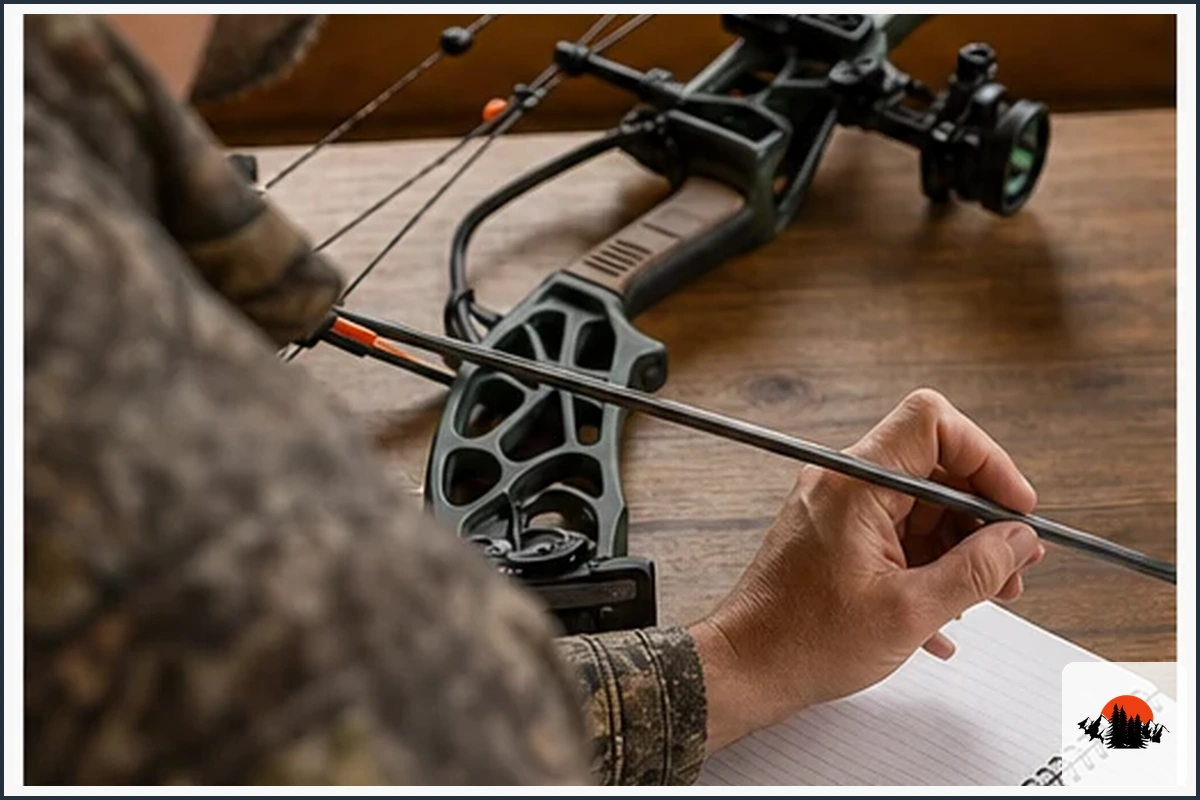
- Start with the bow’s specifications. Record draw weight, draw length, cam system, arrow rest, and manufacturer recommendations.
- Choose the correct spine. Spine depends on draw weight, arrow length, point weight, and the bow’s characteristics. Use a current manufacturer chart or consult an archery technician.
- Confirm finished length. A shaft that is too long can change tuning and handling; cutting too short can create clearance and safety concerns.
- Check total arrow mass. Point, insert, nock, vane, and shaft weight all contribute to the finished arrow.
- Match components. Confirm nocks, inserts, points, broadheads, and adapters use compatible dimensions and threads.
- Decide whether factory fletching matters. Fletched arrows save setup time, while bare or configurable shafts provide more customization but require more knowledge.
- Test with the actual hunting point. Broadheads can group differently from field points, so verify flight safely before the season.
Arrow Safety and Hunting Compatibility
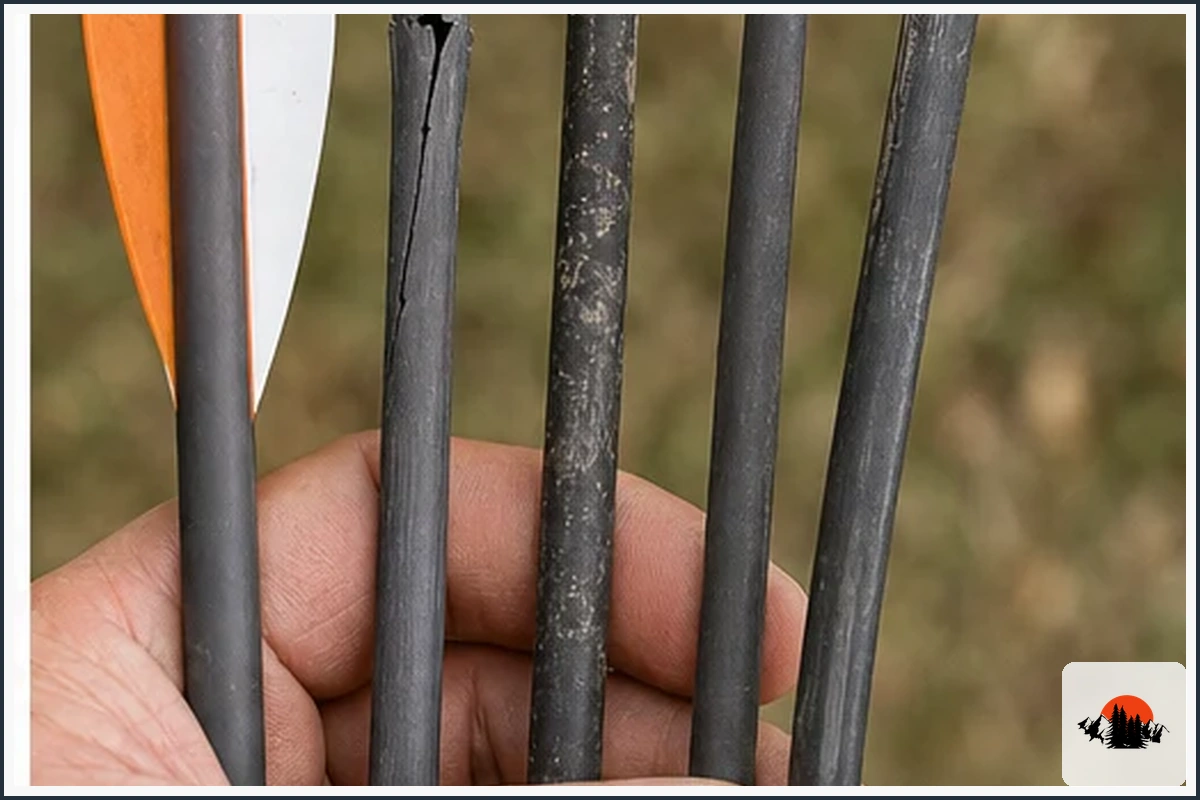
Use arrows only within the bow and arrow manufacturer’s recommendations. Never shoot a shaft that is cracked, splintered, deeply scratched, bent, loose at the insert, or damaged around the nock. Carbon damage can be difficult to see, so questionable arrows should be inspected by a qualified professional or discarded.
Broadheads are sharp hunting tools. Keep them covered during transport, install them with appropriate care, and follow local hunting regulations for legal equipment, seasons, licenses, and game species. Practice with suitable targets that can safely stop the complete arrow.
Archery equipment does not replace ethical shot selection, hunter education, or recovery planning. Confirm your backstop, maintain a safe shooting lane, identify the target and what lies beyond it, and avoid shooting when conditions make a clean, responsible shot unlikely.
Maintenance and Inspection
- Wipe dirt and moisture from shafts after use.
- Inspect vanes for lifting, tears, and impact damage.
- Check nocks and inserts for looseness before every shooting session.
- Store arrows in a protective tube or quiver away from crushing loads and excessive heat.
- Confirm broadheads remain tight without overtightening or damaging components.
- Replace damaged arrows rather than attempting unapproved repairs.
- Retune the bow after changing arrow model, shaft length, point weight, or major components.
Common Arrow-Buying Mistakes
- Choosing spine based only on draw weight.
- Assuming every 30- or 32-inch arrow should be shot at its listed length.
- Ignoring point and broadhead weight when checking spine.
- Using target arrows for hunting without confirming hunting-point compatibility.
- Failing to inspect carbon shafts after hard impacts.
- Assuming factory fletching means the arrow is already tuned to the bow.
- Ordering a variation without checking nock, insert, spine, and length details.
Troubleshooting Poor Arrow Flight
Inconsistent groups: Check shooting form, arrow damage, nock fit, rest clearance, and bow timing before changing components.
Broadheads group differently: Confirm broadhead alignment, point weight, vane clearance, and bow tuning. Do not assume field-point groups predict broadhead performance.
Arrows appear weak or stiff: Recheck spine using the manufacturer’s chart with actual arrow length and point weight. Have a technician evaluate the setup.
Vanes contact the bow: Check rest setup, nock orientation, clearance, and vane profile. Stop shooting until the cause is corrected.
Loose tips or inserts: Stop using the arrow and verify compatible components and manufacturer-approved installation procedures.
Frequently Asked Questions
1. What are the best hunting arrows?
The best hunting arrows are those correctly matched to the bow, draw weight, draw length, arrow length, point weight, and intended broadhead. In this comparison, the Carbon Express Maxima Photon SD is the strongest overall option because it combines factory fletching with multiple listed spine choices.
2. Is a heavier hunting arrow always better?
No. Arrow mass affects trajectory, sight marks, tuning, and bow performance. Choose a finished arrow weight that fits the bow manufacturer’s guidance and your hunting requirements.
3. What arrow spine should I use?
Use the spine recommended by the manufacturer’s current chart after entering draw weight, draw length, arrow length, point weight, and bow type. When uncertain, consult a qualified archery technician.
4. Are carbon arrows suitable for hunting?
Carbon arrows can be suitable when the exact shaft and components are compatible with the bow and legal hunting setup. Inspect them carefully for damage before shooting.
5. Are factory-fletched arrows already tuned?
No. Factory fletching simplifies preparation, but tuning still depends on the bow, rest, nock fit, arrow length, point weight, and shooting setup.
6. How many arrows should a hunter carry?
Carry enough for practice, possible follow-up needs, and damaged or lost shafts. The exact number depends on the hunt, terrain, quiver, and local requirements.
7. Can I use field points for hunting?
Field points are for appropriate practice targets. Hunting requires legal hunting points or broadheads compatible with the arrow and game species.
8. Can I use broadheads on any carbon arrow?
Only when the arrow’s insert, point system, spine, total mass, and bow setup support them. Verify compatibility before installation.
9. Are 2-inch vanes good for hunting arrows?
Two-inch vanes can provide a compact fletching profile, but their suitability depends on the arrow, broadhead, bow clearance, and tuning.
10. What makes the Carbon Express Maxima Photon SD appealing?
Its supplied listing identifies factory fletching, 2-inch Quadel Raptor X vanes, and .300, .350, and .400 spine options.
11. Who should consider the Gold Tip Airstrike?
It suits a hunter whose bow is correctly matched to the listed 300 spine and who wants a factory-fletched six-arrow package.
12. Is the Easton FMJ MAX suitable for beginners?
It can be used by beginners only after a technician verifies the setup. Its different construction makes careful component and tuning checks especially important.
13. What is the advantage of the 32-inch Pure Carbon arrows?
The listed length and multiple spine choices may provide flexibility before professional sizing. They still require careful setup verification.
14. Are TIGER ARCHERY arrows hunting-ready?
They may suit a compatible hunting setup, but buyers should verify spine, length, points, nocks, and other components before using them with broadheads.
15. Should I cut a 32-inch arrow?
Do not cut it casually. Arrow length affects spine and safety. Have a qualified archery technician determine and cut the proper finished length.
16. How does arrow length affect spine?
A longer shaft generally behaves differently from a shorter shaft under the same bow load. Use the manufacturer’s chart with the actual finished length.
17. Does draw length determine arrow length?
Draw length is an important factor, but arrow length also depends on rest position, bow design, clearance, point, and safe manufacturer recommendations.
18. How do I know if a carbon arrow is damaged?
Look for cracks, splinters, deep scratches, crushed areas, loose components, and unusual sounds during a careful inspection. When uncertain, stop using it and seek professional advice.
19. Can carbon arrows be repaired?
Do not attempt unapproved structural repairs. Replace damaged shafts or ask the manufacturer or a qualified archery professional for guidance.
20. Should hunting arrows be tested with broadheads?
Yes. Safely verify broadhead flight and grouping before hunting, using an appropriate backstop and a controlled range.
21. Do heavier arrows penetrate better?
Arrow mass can affect momentum and penetration, but results depend on the complete setup, broadhead, impact, angle, and target. No arrow guarantees a particular outcome.
22. Does a smaller diameter arrow reduce wind drift?
A smaller diameter may reduce exposed surface area, but actual flight depends on the full arrow design, wind, speed, tune, and shooting conditions.
23. What is front-of-center balance?
Front-of-center describes how much arrow mass is positioned ahead of the arrow’s balance point. It changes with shaft, insert, point, and broadhead selection.
24. Can I mix arrows from different brands?
You can practice with different arrows, but do not assume they will tune or group identically. Keep hunting arrows consistent whenever possible.
25. Should all hunting arrows weigh the same?
A consistent hunting group is desirable. Check finished arrow weight and component consistency when building or replacing arrows.
26. How should arrows be stored?
Use a protective quiver or tube and keep arrows away from crushing pressure, excessive heat, moisture, and sharp objects.
27. How often should arrows be inspected?
Inspect them before every shooting session and after hard impacts, target collisions, transport, or suspected damage.
28. Can I use hunting arrows for target practice?
Yes, if the target safely stops them and the points are appropriate. Broadheads require targets specifically designed to handle them.
29. Why do broadheads make arrows fly differently?
Broadheads change the front profile, drag, and often total weight. That can expose tuning problems not visible with field points.
30. What should I do if an arrow keeps hitting sideways?
Stop and check nock fit, vane clearance, rest alignment, bow timing, arrow damage, and spine. A technician should evaluate persistent problems.
31. Are removable tips useful?
They can make component changes easier, but only when thread size, insert design, point weight, and manufacturer compatibility are confirmed.
32. Are longer arrows safer?
Not automatically. Length must be appropriate for the bow and draw setup. Excessively short or incorrectly configured arrows can create serious clearance and safety concerns.
33. How do I choose between 300, 350, and 400 spine?
Use the manufacturer’s spine chart with your actual bow and arrow measurements. Do not choose solely by speed, arrow weight, or a friend’s setup.
34. Are these arrows suitable for recurve bows?
The TIGER ARCHERY listing is described for compound and recurve use, but exact spine and length still require verification for the particular recurve bow.
35. Do arrows need to be matched to the broadhead?
Yes. Confirm the broadhead’s weight, attachment system, insert, shaft diameter, and legal hunting suitability.
36. What is the safest way to carry broadhead arrows?
Use a secure quiver with protective covers and keep broadheads away from hands, clothing, bowstrings, and other equipment.
37. Should I use a pro shop for arrow setup?
A qualified archery shop is especially helpful when selecting spine, cutting shafts, installing components, tuning the bow, or changing broadhead weight.
38. Can I rely on Amazon’s selected variation information?
Verify the selected variation, length, spine, included parts, and current manufacturer specifications before ordering because listings can change.
39. What is the best arrow for a beginner?
A factory-fletched arrow with clearly identified spine choices can simplify the process, but a beginner should still have the complete setup checked by a technician.
40. How many arrows come in these packages?
The supplied listings identify six-arrow packages for the Carbon Express, Gold Tip, and Easton options. Confirm the current listing for the other products before ordering.
41. Can damaged vanes be replaced?
Vanes may be replaceable with proper equipment and adhesive, but the shaft must first be confirmed sound and the replacement must preserve clearance and tuning.
42. Can I leave arrows in a hot vehicle?
Extended heat can affect equipment and adhesives. Store arrows in a protected, temperature-controlled location whenever practical.
43. Why do arrows group differently after changing points?
Point weight changes dynamic spine, total mass, and front-of-center balance. Retune and confirm grouping after changing points.
44. What should I do after an arrow strikes another arrow?
Remove both arrows and inspect them carefully for cracks, splits, crushed areas, loose components, and vane damage before further use.
45. Can hunting arrows be used in any bow?
No. The arrow must match the bow’s draw weight, draw length, rest, cam or limb design, point weight, and manufacturer requirements.
46. What should I verify before ordering?
Verify spine, finished length, shaft diameter, nock, insert, point thread, vane configuration, package quantity, and the selected variation.
47. Do all carbon arrows have the same durability?
No. Construction, diameter, impact history, component quality, and use conditions all affect durability. Inspect every shaft regularly.
48. What is the best overall product here?
The Carbon Express Maxima Photon SD is the best overall choice in this supplied group because it combines factory fletching with multiple listed spine options.
49. What if I cannot confirm a product’s spine?
Do not guess. Contact the manufacturer, verify the listing variation, or choose an arrow with clearly documented specifications.
50. When should I get professional help?
Ask an archery technician for help with spine selection, shaft cutting, component installation, tuning, persistent flight problems, or any questionable arrow damage.
Conclusion
For most bowhunters comparing these supplied options, Carbon Express Maxima Photon SD Fletched Arrows are the strongest overall choice because the listing combines factory fletching with .300, .350, and .400 spine options. Their main trade-off is the need to verify the selected variation and component compatibility.
The Easton FMJ MAX 5MM Fletched Arrows are the more specialized choice for hunters evaluating a full-metal-jacket design, while the TIGER ARCHERY 30-Inch Carbon Arrows are a simpler multipurpose option when their specifications match the bow.
Always verify current listing details, size, spine, included components, availability, and compatibility before ordering. Safe arrow selection, qualified tuning, inspection, and responsible shot judgment matter more than any single product label.