
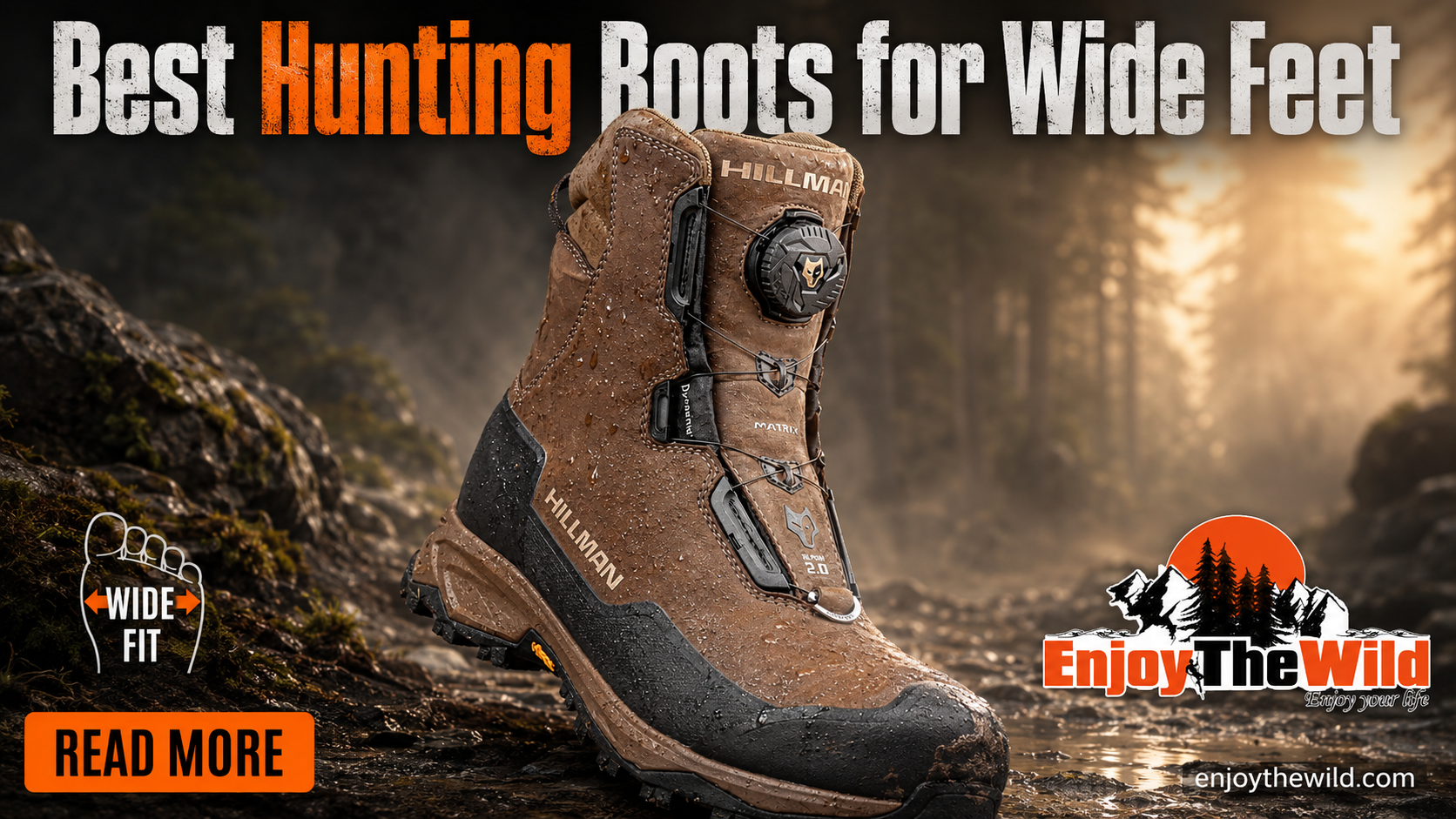
Finding the best hunting boots for wide feet is not only about buying a larger size. A boot can be long enough and still feel painful if the toe box is narrow, the instep is tight, or the heel fit is sloppy. For hunters, poor boot fit can mean hot spots, blisters, cold toes, reduced balance, and a shorter day in the field.
This guide compares 10 hunting boots and outdoor boots that make sense for wide-footed hunters. Some are true lace-up hunting boots, some are tall rubber boots for mud and wet grass, and some are hiking-style boots that work well for scouting, turkey hunting, early-season deer hunting, and camp use. The goal is to help you choose based on terrain, season, support, weather resistance, insulation, comfort, and value.
Before buying, always check the current Amazon listing for width options, sizing charts, return policy, and recent buyer feedback. Wide feet vary: some hunters need a wider toe box, some need more instep height, and others need a wide forefoot with a secure heel. The best hunting boots for wide feet should give your toes room to move while still keeping your foot stable on uneven ground.
As with all hunting gear, choose footwear that supports responsible field use. Follow local hunting laws, buy the proper licenses, respect legal seasons, avoid trespassing, and hunt ethically.
Quick Picks:
- Best Overall: Danner Pronghorn 8-Inch Waterproof Hunting Boot on Amazon
- Best Leather Pick: Irish Setter Wingshooter 9-Inch Waterproof Hunting Boot on Amazon
- Best Premium Pick: Kenetrek Mountain Extreme 400 Insulated Hunting Boot on Amazon
- Best Rubber Boot: LaCrosse Alphaburly Pro 18-Inch Waterproof Hunting Boot on Amazon
- Best Lightweight Pick: KEEN Targhee IV Mid Waterproof Hiking Boot on Amazon
Comparison Table: Best Hunting Boots for Wide Feet
| Product | Best For | Material | Wide-Fit Note | Weight / Profile | Key Features | Weather Resistance | Check Price |
|---|---|---|---|---|---|---|---|
| Danner Pronghorn 8-Inch Waterproof Hunting Boot | Best Overall | Leather and textile upper, waterproof hunting design | Often considered a traditional hunting boot choice; check current wide-width availability | Midweight field boot | Waterproof-focused hunting design, Supportive 8-inch height, Field-ready outsole | Wet grass, mud, cool-weather hunts | Check Price on Amazon |
| Irish Setter Wingshooter 9-Inch Waterproof Hunting Boot | Best Leather Pick | Leather upper with waterproof hunting construction | Roomier leather feel for many users; check wide-size options | Supportive upland-style boot | Classic leather hunting boot style, 9-inch support, Waterproof-focused design | Wet fields, cool mornings, upland cover | Check Price on Amazon |
| Kenetrek Mountain Extreme 400 Insulated Hunting Boot | Best Premium Mountain Boot | Premium leather mountain boot construction | Available in multiple widths on Kenetrek; confirm Amazon listing before purchase | Heavy-duty mountain boot | Tall mountain-hunting support, Insulated cold-weather build, Rugged leather construction | Cold weather, mountain hunts, rough terrain | Check Price on Amazon |
| Rocky BearClaw 3D LTT Waterproof Hunting Boot | Best Rugged Value | Leather and rugged outsole hunting construction | Check current wide-size availability; lace-up design helps adjust fit | Supportive rugged boot | Aggressive outsole design, Waterproof-focused hunting build, Supportive lace-up fit | Wet leaves, hills, rough timber, colder hunts | Check Price on Amazon |
| LaCrosse Alphaburly Pro 18-Inch Waterproof Hunting Boot | Best Rubber Boot | Rubber and neoprene pull-on hunting boot | Roomy pull-on style; check calf and foot fit carefully | Tall rubber hunting boot | Tall waterproof coverage, Pull-on rubber design, Easy mud cleanup | Mud, marsh edges, wet grass, stand hunting | Check Price on Amazon |
| Muck Boot Arctic Pro Tall Waterproof Hunting Boot | Best Cold-Weather Rubber Boot | Rubber and neoprene insulated pull-on boot | Forgiving neoprene feel; confirm sizing and calf room | Tall insulated rubber boot | Cold-weather pull-on design, Tall waterproof protection, Neoprene flexibility | Cold, snow, mud, wet winter conditions | Check Price on Amazon |
| TIDEWE Rubber Neoprene Hunting Boots | Best Budget Rubber Pick | Rubber and neoprene hunting boot construction | Roomy rubber-boot style; check current sizing chart | Tall pull-on field boot | Budget-friendly rubber hunting style, Waterproof-focused coverage, Neoprene upper feel | Wet fields, light marsh use, muddy stand access | Check Price on Amazon |
| HISEA Apollo Pro 400G Insulated Hunting Boots | Best Affordable Insulated Pick | Rubber/neoprene style insulated hunting boot | Pull-on fit; check sizing details for wide feet | Insulated tall boot | Insulated hunting design, Tall waterproof-style coverage, Rubber/neoprene build | Cold mornings, wet ground, muddy access routes | Check Price on Amazon |
| KEEN Targhee IV Mid Waterproof Hiking Boot | Best Lightweight Wide-Toe Option | Leather/textile hiking boot construction | Known for a roomier toe-box feel; check wide options and current listing | Light-to-midweight hiker | Roomy toe-box style, Waterproof hiking design, Comfort-first mid height | Mild hunts, scouting, dry-to-wet trails | Check Price on Amazon |
| Merrell Moab 3 Mid Waterproof Wide Width Hiking Boot | Best Beginner-Friendly Hiker | Leather/mesh hiking boot construction | Wide-width versions are commonly offered; verify current Amazon size options | Light-to-midweight hiking boot | Beginner-friendly hiking design, Wide-width option, Waterproof version available | Moderate trails, scouting, camp, light wet conditions | Check Price on Amazon |
The best option depends on how and where you hunt. Lace-up leather boots usually give the most adjustable fit for wide feet, tall rubber boots are better for wet stand access and muddy ground, and hiking-style boots can be more comfortable for scouting or warm-weather walking. Wide-footed hunters should focus on toe-box room, heel hold, arch support, sock thickness, waterproofing, and the ability to return or exchange the boot if the fit is not right indoors.’
1. Danner Pronghorn 8-Inch Waterproof Hunting Boot on Amazon
Short Overview
The Danner Pronghorn 8-Inch Waterproof Hunting Boot is a strong first pick for hunters who want a familiar lace-up hunting boot rather than a bulky rubber boot.
It is a practical choice for wide-footed hunters because the lace system allows more fine-tuning across the forefoot, instep, and ankle than a pull-on boot.
For deer hunting, turkey hunting, scouting, and general outdoor use, this style gives you a good balance of support, weather protection, and walking comfort.
The mid-height profile helps support the ankle without feeling as tall or restrictive as knee-high swamp boots.
Hunters with wide feet should pay close attention to current size options and user feedback before ordering because availability can change by color and model year.
The Pronghorn line is especially appealing for buyers who want a more traditional boot feel with a rugged outsole and enough structure for uneven ground.
It is not the lightest option in this list, but many hunters prefer a more supportive boot when walking through brush, field edges, logging roads, and rocky ground.
It is best for hunters who want one dependable boot for a wide range of fair-to-wet conditions instead of a specialty boot for only one season.
If you have wide feet and usually struggle with tight toe boxes, try the boot indoors first with the socks you actually wear in the field.
Key Features
- Waterproof-focused hunting design
- Supportive 8-inch height
- Field-ready outsole
- Leather/textile construction
- Good option for mixed terrain
Pros
- Traditional hunting boot feel
- Laces help adjust pressure over wide feet
- Good all-around profile for deer and turkey seasons
- More supportive than many lightweight hikers
Cons
- Wide sizes may not be available in every listing
- May require break-in time
- Not as easy to clean as full rubber boots
Who It’s Best For
Hunters who want a serious all-around waterproof hunting boot with adjustable laces, ankle support, and a more traditional field feel.
2. Irish Setter Wingshooter 9-Inch Waterproof Hunting Boot on Amazon
Short Overview
The Irish Setter Wingshooter 9-Inch Waterproof Hunting Boot is a strong option for hunters who like the feel of leather and want a boot that can handle long days on foot.
Wide-footed hunters often prefer leather boots because leather can feel more forgiving than rigid synthetic shells after break-in.
This boot style makes sense for upland hunters, pheasant hunters, small-game hunters, and anyone who spends more time walking than sitting in one stand.
The 9-inch height adds more coverage than a basic hiker while still remaining easier to lace and adjust than a tall rubber boot.
For wide feet, the main benefit is adjustability: you can loosen the forefoot slightly while keeping the heel and ankle secure.
That matters because a boot that is wide in the toe but sloppy in the heel can still create blisters on long walks.
The Wingshooter is not the best choice for deep mud or flooded trails where a knee-high rubber boot is smarter.
However, for drier cover, farm lanes, timber edges, and field hunting, it gives buyers a classic, comfortable, and versatile setup.
Before buying, compare the current Amazon listing details carefully and choose the width that matches your actual foot measurement, not just your normal casual shoe size.
Key Features
- Classic leather hunting boot style
- 9-inch support
- Waterproof-focused design
- Comfortable for walking hunts
- Good crossover for upland and field use
Pros
- Leather can feel more forgiving after break-in
- Good walking-hunt profile
- Adjustable lace fit
- Classic hunting style
Cons
- Leather needs care after wet hunts
- Not ideal for deep swamp conditions
- Break-in may be needed for sensitive feet
Who It’s Best For
Upland hunters and field hunters who want a leather boot that can be adjusted for wider feet and long walking days.
3. Kenetrek Mountain Extreme 400 Insulated Hunting Boot on Amazon
Short Overview
The Kenetrek Mountain Extreme 400 is the premium choice in this list for hunters who need more support than a basic whitetail boot.
It is built for steep country, heavy packs, rocky trails, and colder conditions where a soft lightweight boot can feel underbuilt.
Wide-footed hunters should consider this boot because Kenetrek offers multiple width options through its product line, although the exact Amazon listing must be checked before purchase.
The 400-gram insulated design makes it more appealing for cold mornings, glassing sessions, late-season hunts, and mountain weather.
Because this is a serious mountain boot, it will feel stiffer than a casual hiking boot and may require a real break-in period.
That stiffness can be a positive for hunters carrying weight or sidehilling across uneven ground because it adds structure underfoot.
It is not the best pick for budget buyers, warm early-season hunts, or hunters who only walk short distances to a blind.
However, for elk, mule deer, sheep-style terrain, or demanding western hunts, it offers the support and durability many hunters want.
If your feet are wide, do not size up randomly; compare Kenetrek sizing guidance, Amazon width options, sock thickness, and return policy before wearing them outside.
Key Features
- Tall mountain-hunting support
- Insulated cold-weather build
- Rugged leather construction
- Supportive midsole for pack loads
- Designed for steep terrain
Pros
- Excellent support for rough terrain
- Premium construction approach
- Good cold-weather hunting profile
- Useful for serious western hunters
Cons
- Premium pick may cost more
- Stiffer than casual boots
- Too much boot for mild backyard-style use
Who It’s Best For
Hunters with wide feet who need a premium insulated mountain boot for steep terrain, cold weather, and heavy-duty support.
4. Rocky BearClaw 3D LTT Waterproof Hunting Boot on Amazon
Short Overview
The Rocky BearClaw 3D LTT Waterproof Hunting Boot is a practical choice for hunters who want a rugged outsole and a supportive lace-up fit.
For wide feet, the lace-to-toe style can be helpful because it allows more control over how tight the boot feels across the forefoot and instep.
This boot is especially useful for hunters who walk through uneven timber, hilly ground, and mixed trails where outsole bite matters.
It has a more traditional heavy-duty hunting feel than lightweight hiking-style boots, so it is better suited for support than speed.
Buyers who have wide feet should check the exact Amazon listing for width options and read fit feedback before ordering.
A wide boot still needs to hold the heel securely because heel slip can cause blisters even when the toe box feels roomy.
The BearClaw is a good match for hunters who want a dependable boot without jumping straight into ultra-premium mountain boot pricing.
It may not be ideal for warm-weather hunts if you prefer maximum breathability, and it may feel bulky compared with hiking boots.
For hunters who value traction, ankle structure, and a rugged build, it deserves a serious look.
Key Features
- Aggressive outsole design
- Waterproof-focused hunting build
- Supportive lace-up fit
- Durable field style
- Good for mixed ground
Pros
- Aggressive field-ready outsole
- Supportive lace-up fit
- Good value for rugged use
- Better structure than many soft boots
Cons
- Can feel bulky to lightweight-boot users
- May need break-in
- Not the coolest choice for hot weather
Who It’s Best For
Hunters who need a rugged, supportive, wide-friendly hunting boot for rough ground and mixed terrain.
5. LaCrosse Alphaburly Pro 18-Inch Waterproof Hunting Boot on Amazon
Short Overview
The LaCrosse Alphaburly Pro 18-Inch Waterproof Hunting Boot is one of the more useful options for hunters who regularly deal with mud, wet grass, shallow water, and messy access trails.
It is not a traditional wide-width lace-up boot, but the rubber and neoprene construction can feel more forgiving for some wide-footed hunters than narrow leather boots.
The tall shaft gives better splash protection than 8-inch boots, which is helpful for deer hunters walking through low spots or wet field edges before daylight.
A rubber boot is also easier to clean after muddy hunts and is often preferred by hunters who want a scent-control-friendly setup.
The tradeoff is that pull-on boots cannot be adjusted across the forefoot like lace-up boots, so fit is very important.
If your foot is wide but your heel is narrow, test the boot indoors to make sure your heel does not slide excessively.
This boot is a better pick for stand hunting, blind hunting, food plots, marsh edges, and wet ground than for long mountain hikes.
It may feel warm during early-season hunts and may not give the same sidehill support as a structured mountain boot.
For wet whitetail country, though, it is one of the most practical styles to compare.
Key Features
- Tall waterproof coverage
- Pull-on rubber design
- Easy mud cleanup
- Good scent-control style for deer hunting
- Adjustable upper on many versions
Pros
- Excellent wet-ground coverage
- Easy to clean after mud
- Good for deer stand access
- Roomier pull-on feel for many users
Cons
- Less adjustable than lace-up boots
- Not ideal for steep mountain terrain
- Can feel warm in hot weather
Who It’s Best For
Deer hunters and wet-ground hunters who want a tall rubber boot that may feel more forgiving than narrow lace-up boots.
6. Muck Boot Arctic Pro Tall Waterproof Hunting Boot on Amazon
Short Overview
The Muck Boot Arctic Pro Tall Waterproof Hunting Boot is a strong cold-weather choice for hunters who want warmth, easy cleanup, and tall waterproof coverage.
Wide-footed users often consider Muck-style rubber boots because the neoprene shaft and pull-on design can feel less restrictive than narrow lace-up uppers.
This style is useful for cold deer blinds, winter scouting, farm chores, waterfowl access, and wet camp conditions.
It is not the right boot for every hunter because tall insulated rubber boots can feel heavy and warm when the weather is mild.
The biggest fit question for wide feet is whether the footbed gives enough room without creating too much heel movement.
Because you cannot tighten the forefoot with laces, try the boot with your real hunting socks and walk indoors before committing.
For hunters who sit in cold conditions more than they hike aggressively, this boot can make long still periods more comfortable.
It also works well as a camp, truck, and chore boot because mud and snow rinse off more easily than they do from leather.
If your priority is cold-weather comfort and waterproof coverage, it is a practical option to compare.
Key Features
- Cold-weather pull-on design
- Tall waterproof protection
- Neoprene flexibility
- Easy cleanup
- Useful for blinds and chores
Pros
- Warm cold-weather profile
- Tall waterproof coverage
- Forgiving neoprene feel
- Easy to clean
Cons
- Less precise fit than lace-up boots
- Can be too warm for early season
- Not ideal for technical sidehilling
Who It’s Best For
Hunters who sit in cold blinds, cross muddy ground, or want a tall insulated boot with a forgiving pull-on feel.
7. TIDEWE Rubber Neoprene Hunting Boots on Amazon
Short Overview
TIDEWE Rubber Neoprene Hunting Boots are a budget-minded choice for hunters who need tall waterproof coverage without paying premium leather-boot money.
They can work well for wide-footed hunters who prefer a roomier pull-on feel, but exact fit varies by size and sock thickness.
This type of boot is especially practical for wet grass, muddy field edges, food plot access, and general outdoor chores around hunting season.
Because it is a rubber-style boot, it is easier to rinse clean than leather and fabric boots after mud-heavy days.
The tradeoff is that you do not get the same precise ankle and forefoot adjustment as a lace-up boot.
Hunters with wide feet should check the current Amazon sizing chart and avoid assuming that a tall rubber boot automatically fits every foot shape.
This boot is best for hunters who need practical waterproof coverage and are shopping with value in mind.
It is not the most technical choice for mountain hunts, long sidehills, or heavy pack loads.
For budget deer hunting, wet stand access, and casual outdoor use, it can be a sensible option.
Key Features
- Budget-friendly rubber hunting style
- Waterproof-focused coverage
- Neoprene upper feel
- Easy cleanup
- Useful for mud and wet grass
Pros
- Budget-friendly option
- Good wet-ground coverage
- Simple pull-on design
- Easy to clean after muddy use
Cons
- Less supportive than lace-up mountain boots
- Fit may vary by foot shape
- Not a premium long-distance hiking boot
Who It’s Best For
Budget-minded hunters who want tall waterproof rubber boots for wet access trails, food plots, and muddy outdoor chores.
8. HISEA Apollo Pro 400G Insulated Hunting Boots on Amazon
Short Overview
The HISEA Apollo Pro 400G Insulated Hunting Boots are made for hunters who want warmth, waterproof-style protection, and value in a tall pull-on boot.
For wide feet, the appeal is the more forgiving rubber and neoprene style compared with narrow lace-up boots, but sizing still matters.
This boot makes the most sense for deer hunters who cross wet ground, sit in blinds, or need a cold-weather boot for less technical terrain.
It is also practical for camping, chores, and early-morning outdoor work when the ground is muddy or frosty.
Because it is insulated, it may be more boot than you want for warm weather or fast hiking.
The pull-on design is simple, but it does not let you fine-tune forefoot pressure like a lace-up boot.
Wide-footed buyers should compare the product chart, review photos, and return policy before wearing the boots outdoors.
This is a good pick when you want a warm, tall, waterproof-style hunting boot without choosing the most expensive premium option.
It is best for practical field use, not technical mountain performance.
Key Features
- Insulated hunting design
- Tall waterproof-style coverage
- Rubber/neoprene build
- Good for stand hunting
- Value-focused option
Pros
- Good value for insulated coverage
- Tall protection for wet ground
- Simple pull-on use
- Useful for cold stand hunting
Cons
- Less adjustable than lace-up boots
- Can be warm in mild weather
- Not built for technical mountain hunts
Who It’s Best For
Hunters who want an affordable insulated boot for cold, wet stand hunting and general outdoor use.
9. KEEN Targhee IV Mid Waterproof Hiking Boot on Amazon
Short Overview
The KEEN Targhee IV Mid Waterproof Hiking Boot is not a traditional camo hunting boot, but it is a useful choice for hunters who prioritize comfort and a wider toe-box feel.
Many hunters with wide feet use hiking-style boots for scouting, spring turkey, early deer season, and light-duty field use because they feel less bulky than insulated hunting boots.
The Targhee style is especially appealing when you want toe room, moderate support, and a boot that can move naturally on trails.
It is not the best choice for deep mud, freezing sits, or heavy western pack loads.
However, it can be excellent for hunters who walk logging roads, scout trail cameras, hike into public land, or want an all-around outdoor boot.
Because it is lighter than many hunting boots, it may reduce fatigue during warmer seasons and short-to-medium walking days.
Wide-footed buyers should still check the exact Amazon listing because wide sizing and color availability can change.
This is the best pick in the list for hunters who want comfort first and do not need tall rubber coverage or heavy insulation.
Pair it with quality wool socks and gaiters when brush, burrs, or wet grass are expected.
Key Features
- Roomy toe-box style
- Waterproof hiking design
- Comfort-first mid height
- Good for scouting
- Versatile trail outsole
Pros
- Roomier toe-box reputation
- Comfortable for scouting and light hunts
- Less bulky than tall hunting boots
- Good general outdoor crossover
Cons
- Not a tall rubber boot
- Not ideal for deep mud or extreme cold
- Less hunting-specific than camo boots
Who It’s Best For
Hunters with wide feet who want a lighter hiking-style boot for scouting, turkey hunting, warm-season use, and general outdoor walking.
10. Merrell Moab 3 Mid Waterproof Wide Width Hiking Boot on Amazon
Short Overview
The Merrell Moab 3 Mid Waterproof Wide Width Hiking Boot is a beginner-friendly option for hunters who want comfort, easy walking, and a commonly available wide-width hiking boot.
It is not a purpose-built insulated hunting boot, but many hunters use hiking boots for scouting, light upland walks, public-land access, camping, and warm-weather hunts.
For wide feet, the main advantage is that wide-width versions are often easier to find than they are in some hunting-specific boots.
The mid-height design gives more ankle coverage than a shoe while staying more flexible than stiff mountain boots.
This boot is a smart choice for new hunters who do not yet need a specialized rubber boot, snake boot, or high-dollar mountain boot.
It may not be warm enough for cold late-season sitting, and it is not ideal for standing water or deep mud.
However, for moderate trails and general outdoor use, it gives buyers a comfortable and practical starting point.
Hunters with very wide feet should compare the wide option carefully, read fit reviews, and try the boot with field socks.
If your hunting style includes lots of walking in mild conditions, this is one of the easiest picks to justify.
Key Features
- Beginner-friendly hiking design
- Wide-width option
- Waterproof version available
- Comfortable trail profile
- Good for scouting and camp use
Pros
- Wide-width option is commonly available
- Comfortable for beginners
- Versatile for hiking, scouting, and camp
- Less expensive than many premium hunting boots
Cons
- Not a dedicated insulated hunting boot
- Not ideal for deep water or heavy mud
- Less ankle support than mountain boots
Who It’s Best For
New hunters, campers, and scouts with wide feet who want a comfortable waterproof hiking boot for mild-to-moderate outdoor use.
Buying Guide: How to Choose Hunting Boots for Wide Feet
When choosing the best hunting boots for wide feet, start with fit before features. Waterproofing, insulation, camo, and outsole design all matter, but none of them help if the boot crushes your toes or lets your heel slide. Wide feet can mean different things. Some hunters need extra room across the ball of the foot. Others need a higher-volume boot because the top of the foot feels squeezed. Some need both. Measure both feet, shop for the larger foot, and compare the brand’s sizing guidance before ordering.
Do not solve a width problem by automatically sizing up. Going longer can create heel slip, toe impact on downhill walks, and poor ankle control. A better strategy is to look for boots offered in wide widths, boots known for a roomier toe box, or lace-up designs that let you adjust pressure across the forefoot. If you wear thick wool socks, liner socks, orthotic inserts, or aftermarket insoles, include those in your fitting test. A boot that fits with thin casual socks may feel too tight with real hunting socks.
Terrain should guide the boot type. For whitetail hunting on farms, food plots, creek bottoms, and wet field edges, a tall rubber boot can be very practical. Rubber boots are easier to clean, provide strong wet-ground coverage, and are popular with deer hunters who want to reduce odor absorption. For upland hunting, turkey hunting, scouting, and public-land walking, a lace-up leather or hiking-style boot may be better because it flexes naturally and gives better heel control. For western elk, mule deer, and steep mountain hunts, choose a boot with stronger ankle support, a stable midsole, and enough structure for sidehilling and carrying weight.
Season matters just as much as terrain. Early-season hunters often need breathability and lighter weight more than heavy insulation. Mid-season hunters may want waterproofing, moderate warmth, and a sole that grips wet leaves or soft mud. Late-season hunters sitting in cold blinds may prefer insulated rubber boots or heavier insulated lace-up boots. If you buy too much insulation for warm weather, your feet may sweat, and wet socks can create discomfort later in the day. If you buy too little insulation for a cold stand hunt, your toes may get cold quickly because you are not generating much heat by walking.
Waterproofing is important, but it should be matched to how wet your hunts really are. A waterproof membrane in a lace-up boot can handle dew, damp leaves, and light mud, but a tall rubber boot is usually smarter for standing water, marsh edges, and deep muddy access routes. Waterproof boots also need care. Clean mud off after hunts, dry boots slowly at room temperature, and avoid placing leather boots directly against high heat. Heat can damage adhesives, leather, and waterproof materials. Remove insoles when drying so moisture can escape more easily.
Support is another major buying factor. A soft hiking boot can feel amazing in the store, but it may not support your foot well under a heavy pack or on rocky ground. A stiff mountain boot may feel excessive for short walks to a blind. Wide-footed hunters should look for a boot that gives forefoot room without feeling unstable. The heel should stay planted, the arch should feel supported, and your toes should not hit the front when walking downhill. If the boot feels painful indoors, it will usually feel worse after several hours outside.
Outsole design affects traction and noise. Deep aggressive lugs can grip mud, leaves, and loose soil, but they may hold more debris and feel clunky on hard ground. Lower-profile hiking outsoles can be quieter and more comfortable on trails, but they may not bite as well in sloppy conditions. Hunters who move slowly through dry leaves may also care about boot noise and flexibility. Rubber boots can be quiet in wet cover but may slap or squeak if the fit is loose.
Consider boot height. A 6-inch or mid-height hiking boot can be comfortable for scouting and warm-weather walks, but it gives less protection from wet grass, burrs, brush, and ankle twists. An 8- to 10-inch lace-up hunting boot gives more coverage and support while still allowing adjustability. A 16- to 18-inch rubber boot gives the most wet-ground coverage but can feel warmer, heavier, and less precise. Choose the height that matches your actual hunting conditions instead of buying the tallest boot by default.
Maintenance affects long-term value. Leather boots need cleaning, drying, and conditioning. Rubber boots should be rinsed, dried, and stored away from direct sunlight and chemicals. Waterproof membranes can lose effectiveness if boots are neglected. Insoles should be removed and dried after wet or sweaty hunts. If odor control matters to you, store boots away from fuel, smoke, food odors, and household chemicals. Good boot care makes a quality pair last longer and helps preserve comfort.
Finally, buy with a realistic return plan. Try boots indoors on clean floors with your hunting socks. Walk up and down stairs if possible, kneel, squat, and simulate the movements you make in the field. Check for toe pinch, heel lift, arch pain, pressure on the top of the foot, and rubbing near the ankle bones. If the boot does not fit properly indoors, exchange it before wearing it outside. The right boot should feel secure, roomy where your foot needs room, and supportive enough for your style of hunting.
Final Recommendation
For most hunters looking for the best hunting boots for wide feet, the Danner Pronghorn 8-Inch Waterproof Hunting Boot on Amazon is the best overall place to start because it offers a traditional hunting boot profile with lace-up adjustability, waterproof-focused construction, and all-around field versatility.
If you prefer leather and long walking hunts, compare the Irish Setter Wingshooter 9-Inch Waterproof Hunting Boot on Amazon. If you hunt steep country or need serious cold-weather support, the Kenetrek Mountain Extreme 400 Insulated Hunting Boot on Amazon is the premium pick. For wet deer hunting, mud, and stand access, the LaCrosse Alphaburly Pro 18-Inch Waterproof Hunting Boot on Amazon is the best rubber boot to compare.
Budget buyers should compare the TIDEWE and HISEA options, while hunters who want a lighter scouting boot should look closely at KEEN and Merrell. Always check current Amazon size options, width availability, return policy, and recent buyer feedback before ordering. Choose the boot that fits your feet, terrain, season, and hunting style rather than choosing based on brand name alone.
FAQs About Hunting Boots for Wide Feet
1. What are the best hunting boots for wide feet?
The best hunting boots for wide feet are boots that provide enough room in the toe box and forefoot while still holding the heel securely. For many hunters, lace-up hunting boots with wide-size options are the safest place to start because they let you adjust pressure across the foot. Rubber boots can also work well for wide feet if the footbed is roomy, but they are less adjustable. The right choice depends on your terrain, weather, season, and how much walking you do.
2. Should I buy a larger size if my hunting boots feel narrow?
You should not automatically buy a longer size just because a boot feels narrow. Sizing up may give your toes more side room, but it can also create heel slip, toe impact, and poor stability. It is usually better to look for a true wide width, a naturally wider toe box, or a different brand shape. Try boots indoors with your hunting socks before using them outside.
3. Are rubber hunting boots good for wide feet?
Rubber hunting boots can be good for wide feet when the foot shape is roomy enough, but they are not adjustable like lace-up boots. They are excellent for mud, wet grass, scent-control routines, and deer stand access. The downside is that a poor fit can lead to heel slip or rubbing. Always check the sizing chart and return policy before wearing rubber boots outdoors.
4. Are leather hunting boots better for wide feet?
Leather hunting boots can be a good choice for wide feet because quality leather may become more forgiving as it breaks in. However, leather should not feel painfully tight when new. The boot still needs the right width, toe-box shape, and heel hold. Leather boots also need care after wet hunts to preserve comfort, structure, and long-term durability.
5. What boot height is best for wide-footed hunters?
The best height depends on your hunting style. Mid-height boots are good for scouting and light walking. Eight- to ten-inch boots give more ankle support and brush protection. Tall rubber boots are best for mud, wet grass, and shallow water. Wide-footed hunters should focus on fit first, then choose the height that matches terrain and weather.
6. Do wide hunting boots prevent blisters?
Wide hunting boots can help prevent blisters if your current boots are too narrow, but width alone does not solve every blister problem. Heel slip, rough seams, wet socks, poor break-in, and wrong lacing can also create hot spots. A good hunting boot should let your toes spread naturally while keeping the heel stable and the arch supported.
7. How should hunting boots fit wide feet?
Hunting boots for wide feet should feel snug but not tight. Your toes should have room to move, and the sides of your forefoot should not feel crushed. Your heel should stay secure when walking uphill or downhill. Try them with your real hunting socks and insoles, then walk indoors long enough to notice pressure points before committing.
8. Are hiking boots acceptable for hunting?
Hiking boots can be acceptable for hunting when the terrain, weather, and hunting style match the boot. They are often comfortable for scouting, early-season hunts, turkey hunting, and public-land walks. They may not be ideal for deep mud, freezing sits, snake protection, or heavy mountain pack loads unless designed for those conditions.
9. What is the difference between wide and extra-wide hunting boots?
Wide boots give more room across the forefoot than standard boots. Extra-wide boots provide even more width and may also feel higher-volume through the foot. Brands define these widths differently, so always check the specific size chart. A hunter with a wide forefoot but narrow heel may need a different boot than someone with a wide foot overall.
10. Can I use insoles in wide hunting boots?
Yes, many hunters use aftermarket insoles in wide hunting boots for better arch support, cushioning, or heel stability. Insoles take up space, so test them inside the boot before field use. If your boot is already tight, a thicker insole may make the fit worse. If your boot has extra volume, the right insole can improve comfort.
11. Are insulated hunting boots good for wide feet?
Insulated hunting boots can work well for wide feet if the boot has enough internal volume. Insulation takes up space, so a boot that fits in an uninsulated version may feel tighter when insulated. For cold stand hunting, insulation is useful. For warm walking hunts, too much insulation can cause sweaty feet and discomfort.
12. How much toe room should wide hunting boots have?
You should have enough toe room to wiggle your toes without sliding around inside the boot. Your toes should not hit the front when walking downhill or kneeling. Many outdoor fitters suggest leaving a small amount of length for movement and foot swelling, but the boot should still hold the heel securely.
13. Should wide-footed hunters choose lace-up or pull-on boots?
Lace-up boots usually offer better fit control for wide feet because you can adjust tension across different parts of the foot. Pull-on rubber boots are simpler and better for wet ground, but they cannot be tightened. Choose lace-up boots for walking support and pull-on boots for mud, wet grass, and easy cleanup.
14. What socks work best with wide hunting boots?
Moisture-wicking wool or wool-blend hunting socks are usually a strong choice. Avoid cotton socks because they hold moisture and can increase friction. If your boots are already snug, very thick socks may create pressure. If your boots have extra room, thicker socks or liner socks may improve fit and comfort.
15. Do hunting boots stretch over time?
Some leather hunting boots may soften and mold slightly to your feet, but you should not rely on major stretching to fix a bad fit. Rubber boots and many synthetic boots may not stretch much. If a boot painfully squeezes your foot indoors, it is usually better to exchange it than hope it changes dramatically.
16. What features matter most for wide hunting boots?
The most important features are toe-box room, heel hold, arch support, waterproofing, traction, boot height, insulation level, and return flexibility. Wide feet need space, but hunters also need stability on uneven ground. A boot that is roomy but sloppy can be just as uncomfortable as a boot that is too narrow.
17. Are expensive hunting boots worth it for wide feet?
Expensive hunting boots can be worth it if they fit correctly and match your terrain. Premium boots often offer better materials, structure, support, and repair options. However, price alone does not guarantee comfort for wide feet. A mid-priced boot that fits your foot shape is better than a premium boot that pinches or slips.
18. Can wide hunting boots be too wide?
Yes, hunting boots can be too wide. If your foot slides side to side, your balance and comfort may suffer. Too much movement can also cause blisters. Wide-footed hunters should look for enough toe and forefoot room without losing heel security or ankle stability.
19. How do I test hunting boot fit at home?
Try the boots indoors on a clean floor with your hunting socks and any insoles you plan to use. Walk, climb stairs, kneel, squat, and stand still for several minutes. Check for pressure along the sides of the foot, heel lift, toe impact, arch pain, and rubbing near the ankle. Do not wear them outside until you are sure you will keep them.
20. What hunting boots are best for wide feet in cold weather?
For cold weather, look for insulated boots with enough internal room for your toes and socks. Tall insulated rubber boots can work well for stand hunting, while insulated lace-up boots are better for walking and rough terrain. Avoid boots that are so tight that they restrict circulation because tight boots can make feet feel colder.
21. What hunting boots are best for wide feet in warm weather?
For warm weather, choose lighter boots with breathable materials, moderate height, and enough toe room. Heavy insulation is usually unnecessary unless you hunt cold mornings. Hiking-style waterproof boots can work for scouting and early-season hunts, but they may not be best for deep mud or wet marsh conditions.
22. Are waterproof boots always the best choice for hunting?
Waterproof boots are very useful for wet grass, mud, rain, and cold conditions. However, they can be warmer and less breathable than non-waterproof boots. In hot, dry climates, breathability may matter more. Choose waterproof boots when wet conditions are likely and breathable boots when heat and sweat are the main concerns.
23. How do I break in wide hunting boots?
Break in hunting boots gradually. Wear them indoors first, then on short walks, then on longer outdoor walks before hunting season. Use the socks and insoles you will use in the field. Do not take brand-new stiff boots on a long hunt without testing them first. Stop using them if they create serious pain or numbness.
24. Can lacing help wide feet feel better in hunting boots?
Yes, lacing can help. You can loosen pressure over the forefoot while keeping the ankle secure. Some hunters use window lacing to reduce pressure on the top of the foot or heel-lock lacing to reduce heel slip. The goal is to improve comfort without making the boot unstable.
25. Should wide-footed hunters avoid narrow brands?
If a brand consistently feels narrow on your feet, it may not be the right shape for you. However, many brands offer different lasts, widths, and models. Do not judge only by brand name. Check the exact model, available widths, user feedback, and size chart before buying.
26. Are wide hunting boots heavier?
Wide hunting boots are not always heavier, but heavy-duty hunting boots may weigh more because of leather, insulation, rubber, taller shafts, or aggressive soles. The extra support can be worth it in rough terrain. For scouting or warm-weather walking, lighter wide hiking boots may be more comfortable.
27. What outsole is best for wide hunting boots?
The best outsole depends on terrain. Aggressive lugs help in mud, wet leaves, and loose soil. A more moderate hiking outsole can be quieter and more comfortable on trails. Mountain boots need stable soles for rocks and sidehilling. Wet rubber boots need traction that works in mud without feeling unstable.
28. Can I wear wide hunting boots for camping?
Yes, many wide hunting boots work well for camping, especially waterproof hiking boots, rubber boots, and insulated boots in cold weather. For camp comfort, avoid overly stiff boots unless you need them for rough terrain. A lighter boot may be better around camp, while a rugged hunting boot is better for field use.
29. Can I wear wide hunting boots for fishing?
Some hunting boots work for bank fishing, pond edges, and muddy access paths, but they are not a replacement for waders or specialized fishing footwear. Rubber hunting boots can be useful around wet ground. Always follow local fishing regulations and choose footwear that gives safe traction near slippery banks.
30. Do wide hunting boots help with foot swelling?
Wide boots can help if your feet swell during long walks or warm weather, but they still need proper heel hold. Feet often swell during long outdoor days, so a boot that feels tight at home may become painful later. Try boots later in the day when your feet are naturally a bit larger.
31. What is the best boot style for deer hunters with wide feet?
For deer hunters with wide feet, tall rubber boots are often practical for wet access routes, scent-control routines, and muddy field edges. Lace-up waterproof boots are better if you walk long distances or hunt hill country. Choose based on terrain, stand location, season, and how much support you need.
32. What is the best boot style for upland hunters with wide feet?
Upland hunters usually benefit from lace-up leather or lightweight hunting boots because they walk a lot. A wide toe box, secure heel, and comfortable flex are more important than tall waterproof coverage. The boot should support long walking days without rubbing the forefoot or creating heel blisters.
33. What is the best boot style for western hunters with wide feet?
Western hunters with wide feet should consider supportive mountain boots offered in wide widths. Look for ankle support, a stable midsole, strong traction, and a fit that holds the heel on steep ground. Premium mountain boots may require break-in, so test them before the hunt.
34. Can women with wide feet use men’s hunting boots?
Some women with wide feet consider men’s hunting boots because they may offer more width and size options. However, heel shape, arch position, and volume can differ. Women should compare size conversions carefully and test fit indoors before using them outside. Women-specific wide options may fit better when available.
35. How important is arch support in wide hunting boots?
Arch support is very important because wide feet still need structure. A boot with toe room but poor arch support can cause fatigue during long walks. Some hunters use aftermarket insoles to improve support. If you have foot pain, consult a qualified professional rather than relying on boot advice alone.
36. How important is heel hold in wide hunting boots?
Heel hold is critical. A wide boot that lets your heel lift with every step can create blisters and reduce stability. Your toes need room, but the heel should stay controlled. Lace-up boots usually make heel hold easier to adjust than pull-on rubber boots.
37. Are wide hunting boots good for flat feet?
Wide hunting boots can help some hunters with flat feet, but width and arch support are different issues. Flat-footed hunters may need supportive insoles or boots with better midfoot structure. If you have recurring pain, get professional fitting advice. Do not choose a boot only because it says wide.
38. Are wide hunting boots good for high insteps?
Some wide boots also have more volume over the top of the foot, which can help high insteps. However, not every wide boot is high-volume. Lace-up boots are often better because you can reduce pressure over the instep. Pull-on rubber boots may be difficult if the opening or instep area is tight.
39. Should I choose insulated or uninsulated wide hunting boots?
Choose insulated boots for cold sits, snow, and late-season hunts. Choose uninsulated or lightly insulated boots for warm weather, active walking, and early-season hunts. Wide-footed hunters should remember that insulation reduces internal space, so an insulated boot may feel tighter than a similar uninsulated boot.
40. Can wide hunting boots be used for survival kits?
A dependable pair of wide waterproof boots can be useful for emergency preparedness, camping, and survival-focused outdoor use. However, footwear should be broken in before being relied on. Store boots in a cool, dry place and inspect them regularly. A survival boot should fit well, protect your feet, and match your local weather.
41. How do I clean wide hunting boots after muddy hunts?
Let mud dry slightly, brush off heavy debris, then clean according to the boot material. Rubber boots can usually be rinsed with water. Leather boots need gentler cleaning and conditioning. Remove insoles and dry boots slowly. Avoid direct high heat because it can damage materials and waterproof construction.
42. How do I store hunting boots between seasons?
Clean and dry your boots completely before storage. Store them in a cool, dry place away from direct sunlight, fuel, smoke, and harsh chemicals. Remove insoles if moisture is present. For leather boots, use appropriate care products. For rubber boots, avoid folding or crushing the shaft for long periods.
43. Should wide-footed hunters use gaiters?
Gaiters can be useful with hiking-style or lace-up hunting boots because they keep debris, snow, burrs, and wet grass away from your socks and pants. They do not make a narrow boot wider, but they can improve field comfort. Gaiters are especially helpful when using lower or mid-height boots in brush.
44. Are camo hunting boots necessary?
Camo boots are not always necessary. Fit, comfort, waterproofing, traction, and noise control usually matter more. Many successful hunters wear brown, leather, rubber, or hiking-style boots. Camo may be useful for some setups, but a comfortable boot that lets you move safely is more important than pattern alone.
45. What should I check on Amazon before buying hunting boots?
Check the exact size and width options, current product photos, return policy, recent buyer reviews, answered questions, and whether the listing is for the exact model you want. Avoid assuming all colors or variants have the same fit. If the product page offers multiple versions, verify that your selected size, width, insulation, and height are correct.
46. Why do my wide hunting boots still hurt?
Your boots may hurt because of poor arch support, heel slip, tight instep, stiff break-in, thick socks, wrong size, or an incompatible foot shape. Wide width only solves one part of fit. If pain continues, try a different last, a different insole, or professional fitting advice.
47. How much should I spend on hunting boots for wide feet?
Spend enough to get a boot that fits correctly and matches your hunting conditions. Budget boots can work for occasional use and mild terrain. Premium boots may be worth it for mountain hunts, heavy use, and harsh weather. The best value is not the cheapest boot; it is the boot that keeps your feet comfortable and lasts for your intended use.
48. Do hunting boot brands use the same wide sizing?
No, wide sizing can feel different between brands and even between models from the same brand. One brand’s wide may feel roomy in the toe box, while another may feel wider through the whole boot. Always read the current size chart and recent reviews for the specific model.
49. Can waterproof hunting boots cause sweaty feet?
Yes, waterproof hunting boots can feel warmer and less breathable than non-waterproof boots. This can lead to sweat, especially in warm weather or during active walking. Moisture-wicking socks, proper insulation choice, and drying boots between hunts can help. Choose breathability over waterproofing when conditions are mostly hot and dry.
50. Are wide hunting boots safe for climbing tree stands?
Wide hunting boots can be used around tree stands if they fit securely and provide good traction, but always follow tree stand safety practices and manufacturer instructions. Avoid bulky boots that make climbing awkward. Use a safety harness where required and never climb with muddy, slippery soles.
51. Can I hunt ethically with hiking-style boots?
Yes, ethical hunting is about legal seasons, proper licensing, safe behavior, clean shot decisions, landowner permission, and respect for wildlife. Hiking-style boots can be perfectly acceptable if they support safe movement in your terrain. Choose footwear that helps you move responsibly and avoid injury.
52. How do I know if a hunting boot is too narrow?
A hunting boot is too narrow if your toes feel squeezed, the sides of your forefoot burn, your feet go numb, or you develop hot spots along the outside of the foot. Tightness may get worse as your feet swell. If loosening the laces does not fix the problem, you likely need a wider or differently shaped boot.
53. How do I know if a hunting boot is too loose?
A hunting boot is too loose if your heel lifts, your foot slides on side slopes, your toes hit the front when walking downhill, or your socks bunch up. Too much movement can cause blisters and poor stability. A good wide boot gives room in the right places without feeling sloppy.
54. Are wide hunting boots good for older hunters?
Wide hunting boots can be helpful for older hunters who need more toe room, comfort, and stability. Easy pull-on rubber boots can be convenient, while supportive lace-up boots may be better for uneven terrain. Older hunters should prioritize secure footing, manageable weight, and a fit that does not create pressure or numbness.
55. Can I use wide hunting boots for work?
Some hunting boots can be used for outdoor work, chores, farming, or property maintenance, but they may not meet workplace safety requirements. If your job requires safety toes, electrical hazard protection, or slip certification, choose work boots designed for that purpose. Hunting boots are best used for hunting and outdoor recreation unless the specs match your work needs.
READ MORE:
Best Shooting Ear Protection