

The name “polecat” applies to several small carnivorous mammals in the weasel family, Mustelidae. The different types of polecats occur across Europe, Asia, Africa, and North America, where they occupy habitats ranging from damp woodlands and farmland to open steppes, deserts, and prairie dog colonies.
Polecats do not form one single scientific group. The name is used for related species in several genera, including Mustela, Ictonyx, Poecilictis, and Vormela. The black-footed ferret is also historically known as the American polecat. This guide covers all six mammals commonly associated with the polecat name while explaining why skunks are not true polecats.
What Are the Main Types of Polecats?
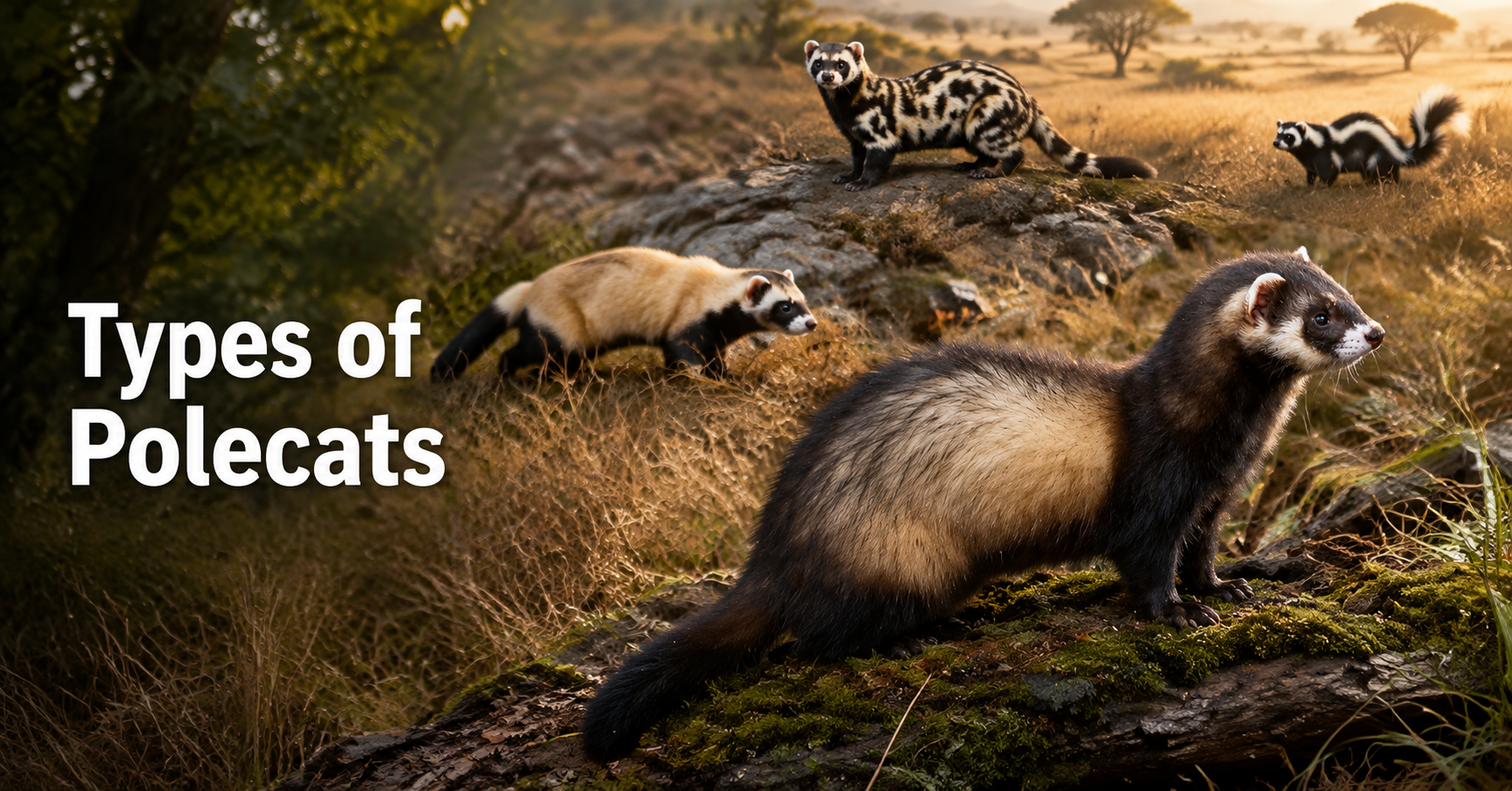
The six commonly recognized types of polecats are the European polecat, steppe polecat, marbled polecat, striped polecat, Saharan striped polecat, and American polecat, better known as the black-footed ferret. All six belong to the family Mustelidae, but they are divided among four genera and two subfamilies. Despite the American nickname “polecat” for skunks, true skunks belong to a different family.
| Common Name | Scientific Name | General Range | Key Identification Feature |
|---|---|---|---|
| European polecat | Mustela putorius | Europe and parts of western Eurasia | Dark coat with a pale facial mask |
| Steppe polecat | Mustela eversmanii | Eastern Europe and Central Asia | Pale yellow coat with dark legs and mask |
| Marbled polecat | Vormela peregusna | Southeastern Europe through Central Asia | Bold mottled yellow, brown, black, and white coat |
| Striped polecat | Ictonyx striatus | Much of sub-Saharan Africa | Black coat with prominent white stripes |
| Saharan striped polecat | Poecilictis libyca | North Africa and the Sahara | Pale body with dark longitudinal stripes |
| American polecat | Mustela nigripes | Central North American grasslands | Buff coat with black feet, mask, and tail tip |
1. European Polecat
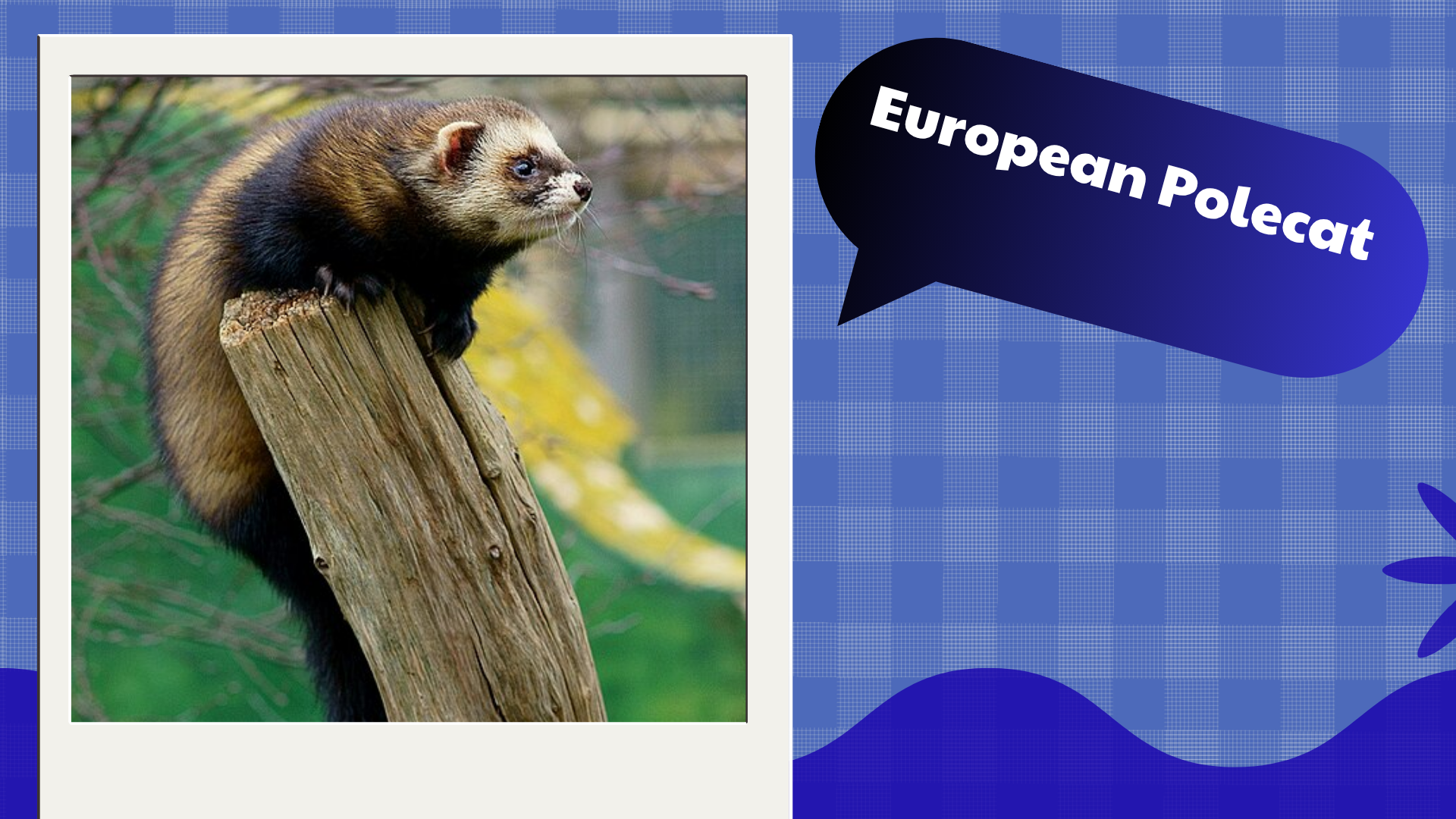
The European polecat, Mustela putorius, is the animal most often meant when the word “polecat” is used without another description. It is also called the western polecat and is closely related to the domestic ferret.
This species has a long, flexible body, short legs, a relatively broad head, and small rounded ears. Its coat is usually dark brown or nearly black along the legs and underside. Pale underfur often shows through the darker guard hairs, producing a grizzled appearance. The face has a characteristic mask formed by dark fur around the eyes and lighter markings on the muzzle, cheeks, and ear margins.
European polecats occur across much of Europe and extend into western Eurasia. They use varied habitats, including woodland edges, wetlands, river valleys, farmland, hedgerows, grasslands, and marshes. Dense ground cover is valuable because it provides protected travel routes and resting places.
Unlike highly specialized predators, European polecats eat whatever suitable prey is locally abundant. Their diet can include rodents, rabbits, amphibians, birds, eggs, reptiles, and carrion. Frogs may become particularly important in wet landscapes. Most hunting takes place on the ground, but polecats can also swim and enter burrows.
European polecats are generally solitary and often most active at night or around twilight. During the day, they rest in rabbit burrows, hollow trees, dense vegetation, abandoned structures, or other sheltered places. When threatened, they can release a powerful-smelling secretion from their anal scent glands.
The domestic ferret is closely connected to the European polecat and can interbreed with it. This creates identification difficulties in regions where escaped ferrets and polecat-ferret hybrids occur. A wild-looking animal with an unusual pale, cream, or patchy coat may require genetic testing for a confident identification.
2. Steppe Polecat
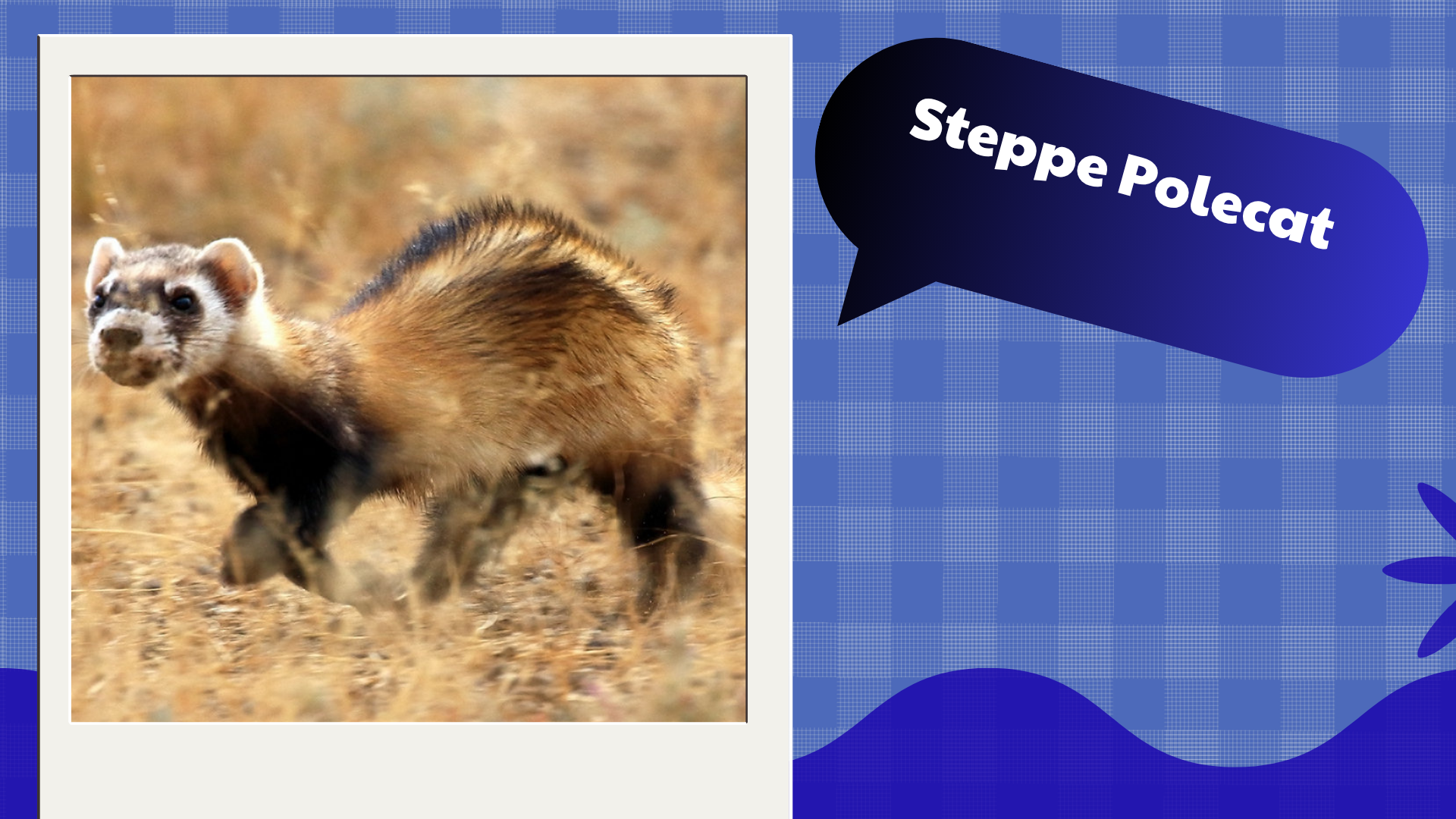
The steppe polecat, Mustela eversmanii, is also known as the masked polecat or white polecat. It resembles the European polecat in body shape but is usually paler and is strongly associated with open grasslands and steppe environments.
Its coat is generally yellowish, cream, or straw-colored, with darker guard hairs creating a frosted appearance across parts of the back. The legs, underside, tail tip, and facial mask are dark. This contrast between a pale body and blackish extremities makes it easier to distinguish from the darker European polecat.
The steppe polecat ranges across parts of Central and Eastern Europe and continues through Central Asia toward Mongolia and China. It favors open country, including natural steppe, pasture, semi-desert, and agricultural landscapes containing healthy populations of burrowing rodents.
Ground squirrels are especially important prey in many areas. The polecat may also hunt hamsters, voles, pikas, birds, reptiles, and other small animals. Its narrow body allows it to enter rodent tunnels, where it can hunt or take over a burrow for shelter.
Steppe polecats may shift their activity areas when local prey becomes scarce. This gives the species a somewhat nomadic pattern compared with animals that maintain a small permanent territory. Individuals are usually solitary outside the breeding season.
The species is widely distributed, but regional populations can decline when native grasslands are converted, rodent colonies are destroyed, or poisons are used to control burrowing mammals. A polecat may be harmed directly by toxic bait or indirectly by eating contaminated prey.
In areas where the European and steppe polecats meet, identification can be challenging. Body color and habitat offer useful clues, but coat variation and possible hybridization mean that appearance alone may not always provide a definitive answer.
3. Marbled Polecat
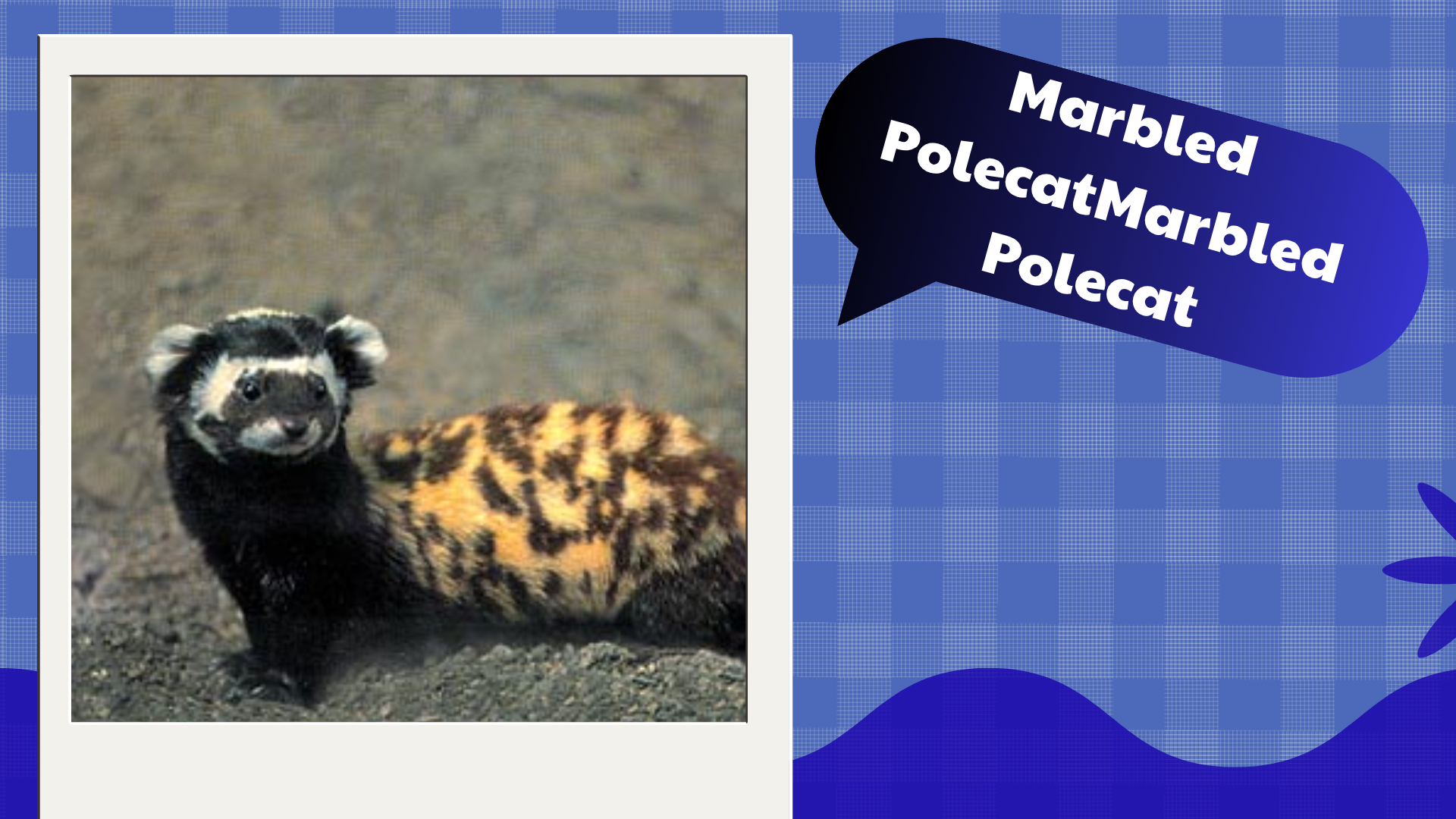
The marbled polecat, Vormela peregusna, is the most colorful of the different types of polecats. It is the only living species in the genus Vormela and belongs to a different mustelid subfamily from the European and steppe polecats.
Its upper body displays an elaborate mixture of yellow, cream, reddish brown, and dark irregular patches. The face is marked with contrasting black and white bands, while the legs and underside are dark. It also has noticeably large ears and a long, bushy tail. This striking pattern makes the marbled polecat difficult to confuse with other members of the group.
The species occurs from southeastern Europe across the Middle East and Central Asia, reaching parts of western China and neighboring regions. It favors open, relatively dry habitats such as steppe, semi-desert, rocky valleys, grassland, and arid scrub. It may also enter cultivated land where prey and shelter remain available.
Marbled polecats hunt rodents, including ground squirrels, gerbils, hamsters, and voles. They may also eat birds, reptiles, insects, and other small animals. Strong forefeet and claws help them dig, but they frequently use burrows originally excavated by their prey.
When alarmed, a marbled polecat may raise its body, arch its back, fluff its tail, hiss, and expose its teeth. If the warning fails, it can release an intensely scented secretion. The bold coat likely functions as warning coloration, advertising that the animal has an effective chemical defense.
The marbled polecat is considered vulnerable to extinction. Major concerns include the conversion of natural steppe, declining rodent populations, desertification in parts of its range, and secondary poisoning from rodenticides. Its wide geographic distribution does not necessarily mean it is common, because populations can be sparse and difficult to monitor.
4. Striped Polecat
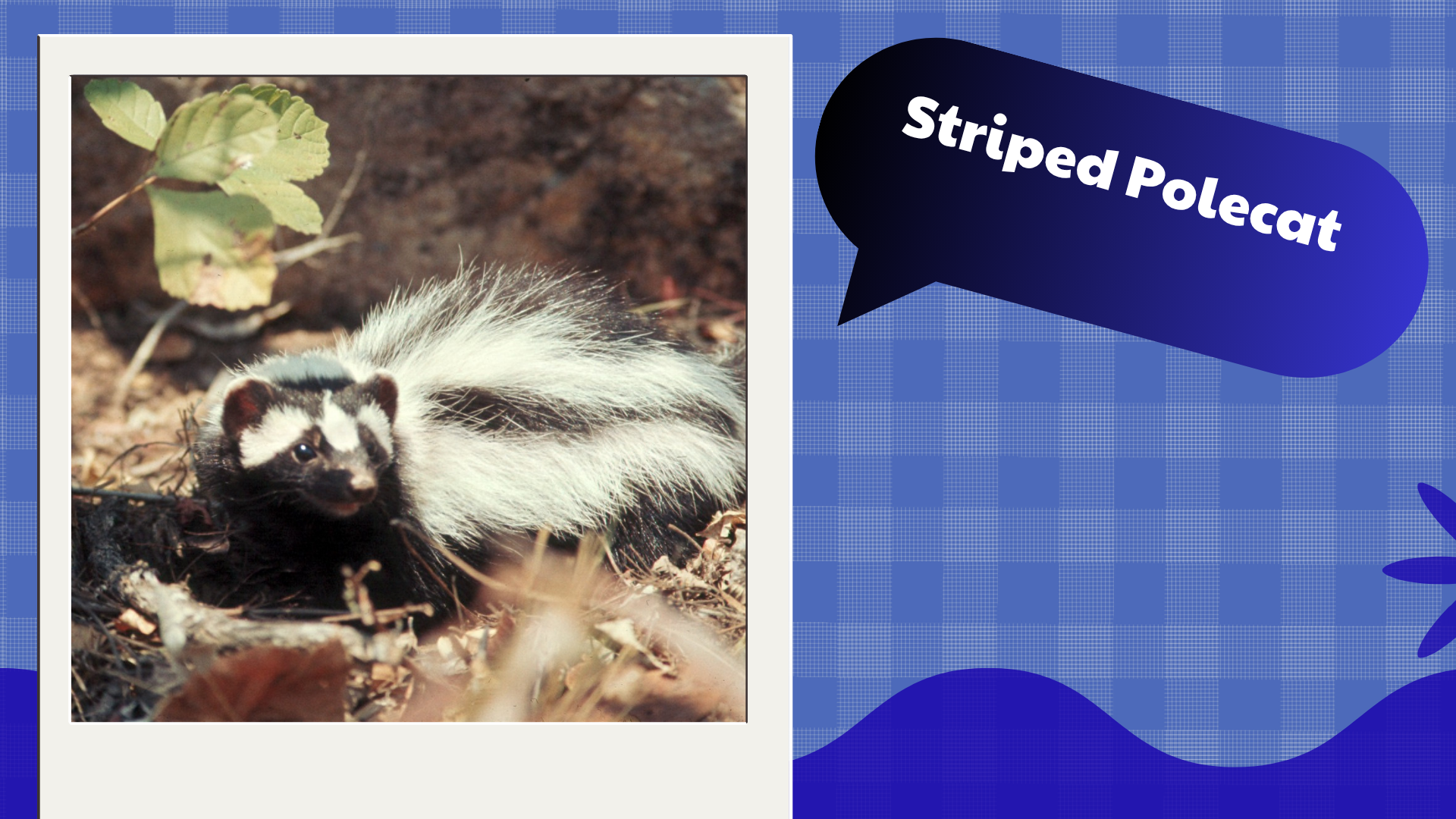
The striped polecat, Ictonyx striatus, is widely known as the zorilla. Although its black-and-white coat resembles that of a skunk, it is a mustelid rather than a member of the skunk family.
This African species usually has a black body crossed by strong white stripes running from the head toward the tail. White areas may also appear on the face and forehead. Its tail is long and bushy, while the body remains relatively slender and low to the ground.
Striped polecats occur across large portions of sub-Saharan Africa. They occupy savannas, grasslands, shrublands, semi-arid areas, open woodland, and some agricultural environments. Their broad range and flexible habits allow them to survive in many landscapes as long as prey and hiding places remain available.
The diet includes rodents, insects, amphibians, reptiles, birds, eggs, and other small animals. Striped polecats usually forage alone and are primarily nocturnal. During daylight hours, they may shelter in burrows, rock crevices, hollow logs, or dense vegetation.
Chemical defense is one of the species’ most remarkable adaptations. When threatened, the striped polecat may turn its rear toward an attacker, lift its tail, hiss, and release a foul-smelling secretion. The bold black-and-white pattern serves as a visible warning to potential predators.
Despite the similarity, a striped polecat is not simply an African skunk. Skunks belong to Mephitidae, while the striped polecat belongs to Mustelidae. The resemblance is an example of different animal groups evolving similar warning colors and scent-based defenses.
The striped polecat is generally considered widespread, but local threats can include road mortality, persecution, habitat changes, and accidental poisoning. Its secretive nighttime behavior means it is often overlooked even where it is present.
5. Saharan Striped Polecat
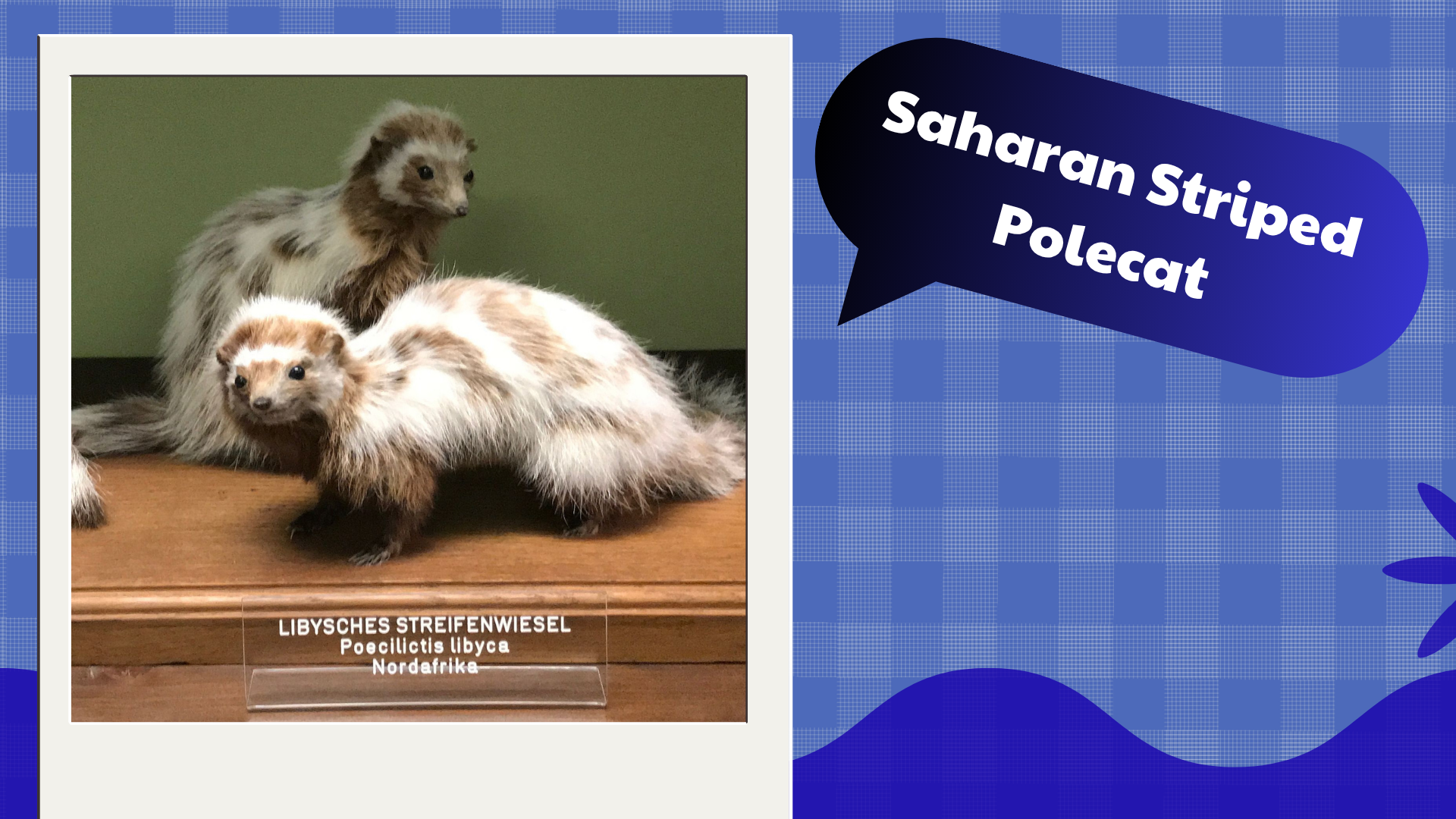
The Saharan striped polecat, Poecilictis libyca, is also known as the Saharan striped weasel. Older references frequently use the scientific name Ictonyx libycus, but current mammal taxonomy places it in the genus Poecilictis.
This species has a pale cream, white, or sandy body crossed by several dark stripes. The markings provide strong contrast but are generally narrower and more numerous than the broad white stripes of the zorilla. Its feet and underside are dark, and the tail is relatively bushy.
As its name suggests, the Saharan striped polecat lives in North Africa and the Sahara region. Its distribution includes dry landscapes in countries such as Morocco, Algeria, Tunisia, Libya, Egypt, Mauritania, Mali, Niger, Chad, and Sudan, although it is not uniformly present throughout every country.
The species survives in deserts, semi-deserts, dry grasslands, rocky areas, and sparse scrub. It is mostly nocturnal, an important adaptation in an environment where daytime temperatures may be extreme. Burrows and other protected shelters help it avoid heat and predators.
Saharan striped polecats feed on small mammals, reptiles, birds, eggs, insects, and other available prey. Their elongated bodies and strong claws help them investigate burrows and search beneath surface cover.
Like the striped polecat, this species possesses well-developed scent glands and uses contrasting coloration as a warning. If approached, it may raise its tail and adopt a defensive posture before releasing an offensive secretion.
Because the Saharan striped polecat is elusive and lives in sparsely surveyed environments, important gaps remain in knowledge about its population size, movements, and local conservation needs. Desert habitat degradation, roads, persecution, and poisoning are potential concerns in parts of its range.
6. American Polecat
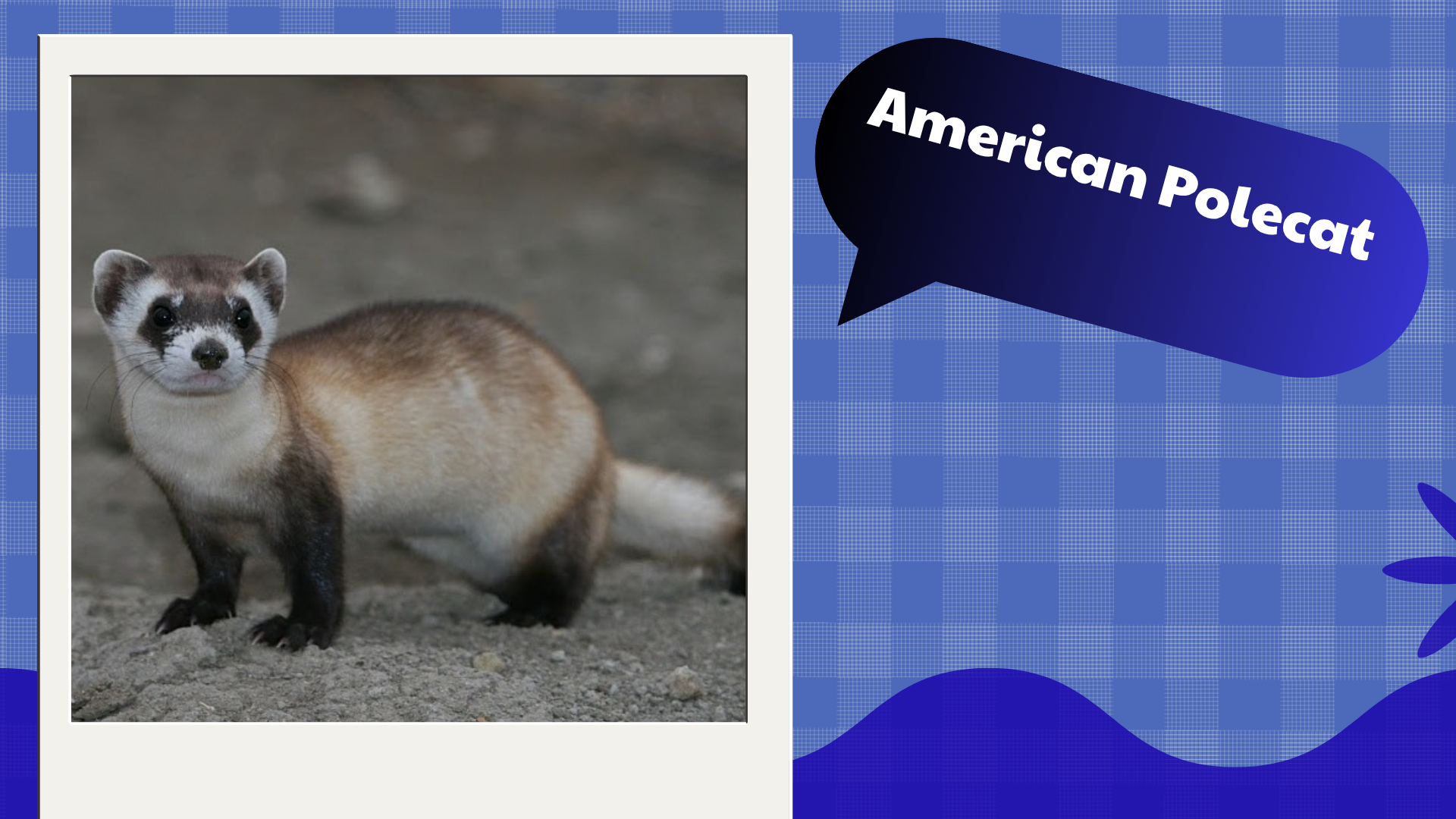
The American polecat is better known as the black-footed ferret, Mustela nigripes. “American polecat” is a historical alternative name rather than the name most wildlife agencies use today. It is included because it is closely related to Mustela polecats and regularly appears in lists of polecat species.
Black-footed ferrets have long, slender bodies covered in pale yellowish or buff fur. As their name indicates, their feet are black. They also have a dark facial mask, a black tail tip, and dark markings around the ears. These features resemble those of the pale steppe polecat.
This species is native to the grasslands of central North America. Its life is closely connected to prairie dogs. Black-footed ferrets use prairie dog burrows for shelter, raise their young underground, and rely heavily on prairie dogs as prey.
Black-footed ferrets are primarily nocturnal and usually solitary. Their elongated bodies allow them to move through underground tunnel systems. Above ground, they often travel between burrow entrances while searching for prey or mates.
The destruction and poisoning of prairie dog colonies caused an enormous decline in black-footed ferrets. Sylvatic plague and canine distemper created additional pressure. The species was once believed extinct until a small population was discovered near Meeteetse, Wyoming, in 1981.
A captive-breeding and reintroduction program saved the species from complete extinction. Ferrets have since been released at protected sites in the United States, Canada, and Mexico. However, the black-footed ferret remains endangered and dependent on intensive conservation management.
Among the six animals in this guide, it is the most conservation-dependent. Protecting large, connected prairie dog colonies and managing disease are essential for its long-term recovery.
How Are These Wild Animals Classified?
All six animals belong to the order Carnivora and family Mustelidae, which also includes weasels, otters, badgers, martens, and wolverines. However, “polecat” is a common-name category rather than a formal taxonomic rank.
| Species | Family | Subfamily | Genus |
|---|---|---|---|
| European polecat | Mustelidae | Mustelinae | Mustela |
| Steppe polecat | Mustelidae | Mustelinae | Mustela |
| American polecat | Mustelidae | Mustelinae | Mustela |
| Striped polecat | Mustelidae | Ictonychinae | Ictonyx |
| Saharan striped polecat | Mustelidae | Ictonychinae | Poecilictis |
| Marbled polecat | Mustelidae | Ictonychinae | Vormela |
The European, steppe, and American polecats are close relatives within Mustela. The striped, Saharan striped, and marbled polecats belong to the separate but related Ictonychinae branch.
Where Do These Wild Animals Live?
Collectively, polecats occupy parts of four continents. Each species is adapted to a different combination of climate, prey, and ground cover.
- Europe: European, steppe, and marbled polecats occur in different parts of the continent.
- Asia: Steppe and marbled polecats extend across broad areas of Central and western Asia.
- Africa: Striped polecats dominate many sub-Saharan regions, while Saharan striped polecats occupy northern deserts.
- North America: Black-footed ferrets survive in selected prairie dog ecosystems.
Many polecats depend on burrows, either by digging their own shelters or using tunnels created by rodents and rabbits. Access to small vertebrate prey is another major factor determining whether a habitat can support them.
How to Identify Different Types of Polecats
- Dark brown coat and pale mask: Most likely a European polecat.
- Pale yellow coat with dark legs: Suggests a steppe polecat.
- Multicolored mottled back: Identifies a marbled polecat.
- Broad white stripes on a black body: Typical of the striped polecat or zorilla.
- Narrow dark stripes on a pale body: Characteristic of the Saharan striped polecat.
- Buff body with black feet: Identifies the black-footed ferret.
- Large rounded ears: Especially noticeable on the marbled polecat.
- Location: Geographic range is one of the best ways to narrow an identification.
- Habitat: Prairie dog colonies strongly suggest black-footed ferrets, while open Eurasian steppe favors steppe polecats.
- Defensive display: African striped species and marbled polecats may display their tails and contrasting patterns when threatened.
Polecat vs. Ferret
A polecat is a wild animal, while the familiar domestic ferret is a domesticated form with a long history of living alongside people. Domestic ferrets are closely related to European polecats and may have European polecat ancestry, steppe polecat ancestry, or a combination reflected in their domestication history.
Ferrets occur in many selectively bred colors, including white, cream, sable, and patterned forms. Wild European polecats have a more consistent dark coat and masked face. Ferrets also tend to be more tolerant of people, although escaped animals can behave cautiously.
Polecat-ferret hybrids occur in parts of Europe. They can display an intermediate appearance, making visual identification difficult. Wildlife surveys sometimes use skull measurements or genetic testing to separate wild polecats, domestic ferrets, and hybrids.
Polecat vs. Skunk
In parts of the United States, people informally call a skunk a “polecat.” Scientifically, however, skunks are not polecats.
| Feature | Polecats | Skunks |
|---|---|---|
| Family | Mustelidae | Mephitidae |
| Examples | European polecat, steppe polecat, zorilla | Striped skunk, spotted skunk, hog-nosed skunk |
| Body shape | Usually long and slender | Often more heavily built |
| Defensive scent | Present in several species | Highly developed and capable of accurately directed spray |
| Distribution | Europe, Asia, Africa, and North America | Primarily the Americas |
The striped polecat’s resemblance to a skunk results from similar defensive adaptations, not membership in the same family.
What Do Polecats Eat?
All polecats are carnivorous, although individual species differ in their preferred prey. Common foods include:
- Mice, voles, rats, and hamsters
- Ground squirrels and prairie dogs
- Rabbits and young hares
- Frogs and other amphibians
- Small reptiles
- Birds and eggs
- Large insects and other invertebrates
- Carrion when available
The black-footed ferret is the most specialized feeder because it depends heavily on prairie dogs. European and striped polecats generally have broader diets that change with location and season.
Outdoor Tips for Finding and Observing These Species
- Study the local range. Determine which polecat species could realistically occur in the region.
- Search near burrows. Many species hunt, rest, or reproduce in underground shelters.
- Look around twilight or after dark. Most polecats are nocturnal or crepuscular.
- Use a trail camera. A remotely operated camera can document secretive animals without disturbing them.
- Scan habitat edges. Polecats often travel along hedgerows, field margins, washes, and vegetation boundaries.
- Observe from a distance. Never corner or attempt to handle a wild mustelid.
- Avoid dens. Repeated disturbance can cause a mother to move or abandon a shelter.
- Do not use bait. Feeding can change behavior and expose animals to people, pets, or roads.
- Control dogs. Dogs may chase polecats or receive a strong defensive scent discharge.
- Follow local rules. Some species and habitats are strictly protected.
Safety, Sustainability, and Conservation Notes
Polecats usually avoid humans, but they can defend themselves with sharp teeth, claws, hissing, and strong-smelling secretions. Never pick up a wild polecat, even if it appears slow or injured. Contact a licensed wildlife rehabilitator or local authority instead.
Rodenticides are a serious concern because several polecats specialize in hunting rodents. A poisoned rodent may pass harmful chemicals to the predator that eats it. Habitat-friendly rodent management and careful pesticide use can reduce this risk.
Protecting grasslands, wetlands, hedgerows, desert scrub, and connected wildlife corridors benefits polecats. Road mortality can also be reduced through wildlife crossings and by slowing down on rural roads at night.
The black-footed ferret and marbled polecat require particular conservation attention. The former depends on protected prairie dog ecosystems, while the latter is threatened by steppe conversion, prey declines, and secondary poisoning.
Fun Facts About Polecats
- “Polecat” is a common name rather than a formal taxonomic group.
- Every true polecat covered here belongs to the weasel family, Mustelidae.
- The domestic ferret is closely related to the European polecat.
- The marbled polecat is the only living species in the genus Vormela.
- The striped polecat is also called a zorilla.
- A zorilla is not a skunk despite its black-and-white coat.
- Many polecats can release strong-smelling secretions when threatened.
- Steppe polecats frequently hunt ground squirrels inside their burrows.
- Black-footed ferrets depend heavily on prairie dogs for both food and shelter.
- Conservation breeding saved the black-footed ferret from extinction.
Final Thoughts on Types of Polecats
The six types of polecats covered in this guide demonstrate how one common name can connect several related but scientifically distinct animals. European, steppe, and American polecats belong to Mustela, while striped, Saharan striped, and marbled polecats occupy other genera within Mustelidae.
Coat patterns provide the quickest visual clues: European polecats are dark and masked, steppe polecats are pale, marbled polecats are boldly mottled, and African striped species use dramatic warning patterns. Range and habitat should always be considered alongside appearance. Observing these secretive predators responsibly helps protect both the animals and the ecosystems that support them.
Frequently Asked Questions
1. What is a polecat?
A polecat is a small carnivorous mammal in the weasel family. The name is applied to several related species rather than one formal taxonomic group.
2. How many types of polecats are there?
Six living species are commonly associated with the polecat name when the black-footed ferret, historically called the American polecat, is included.
3. What are the six types of polecats?
They are the European polecat, steppe polecat, marbled polecat, striped polecat, Saharan striped polecat, and American polecat or black-footed ferret.
4. Are polecats cats?
No. Polecats belong to Mustelidae, the family containing weasels, ferrets, badgers, otters, martens, and wolverines.
5. Why are they called polecats?
The exact origin of the English name is debated. It may be connected to an older term meaning “chicken cat,” referring to the animal’s reputation for entering poultry enclosures.
6. Is a polecat the same as a skunk?
No. Skunks belong to Mephitidae, while polecats belong to Mustelidae. “Polecat” is only an informal nickname for skunks in some American dialects.
7. Do polecats spray like skunks?
Several polecat species can release foul-smelling secretions from anal glands. However, their defensive system and behavior are not identical to those of true skunks.
8. What is the most common polecat?
The answer depends on location. European polecats are widespread in parts of Eurasia, while striped polecats occupy a broad range across sub-Saharan Africa.
9. What is the rarest polecat?
The black-footed ferret is among the rarest and most conservation-dependent. Its wild populations rely on carefully managed prairie dog habitats.
10. Which polecat is the most colorful?
The marbled polecat has the most elaborate coat, combining yellow, cream, brown, black, and white markings in an irregular pattern.
11. Where do European polecats live?
They inhabit much of Europe and parts of western Eurasia, using wetlands, woodland edges, farmland, grassland, river valleys, and hedgerows.
12. Where do steppe polecats live?
Steppe polecats occur from parts of Eastern Europe across Central Asia. They are strongly associated with open grassland, steppe, and semi-desert.
13. Where do marbled polecats live?
Their range extends from southeastern Europe through the Middle East and Central Asia toward western China and surrounding regions.
14. Where do striped polecats live?
Striped polecats, or zorillas, occur across much of sub-Saharan Africa in grasslands, savannas, shrublands, and open woodland.
15. Where do Saharan striped polecats live?
They inhabit North African deserts and dry landscapes across parts of the Sahara and neighboring semi-arid regions.
16. Where do American polecats live?
Black-footed ferrets live at selected conservation sites within the central North American grasslands, closely associated with prairie dog colonies.
17. What do polecats eat?
Most eat rodents, rabbits, amphibians, reptiles, birds, eggs, and insects. The exact diet depends on species, habitat, and season.
18. Do polecats eat chickens?
A polecat may enter an unsecured poultry enclosure, although wild prey usually forms most of its diet. Secure housing is the best way to prevent conflict.
19. Are polecats nocturnal?
Most are primarily nocturnal or most active around dusk and dawn. Activity patterns can change with temperature, prey, season, and human disturbance.
20. Where do polecats sleep?
They use rodent or rabbit burrows, rock crevices, hollow logs, dense vegetation, abandoned structures, and other protected shelters.
21. Can polecats dig?
Yes. Many polecats have strong claws and can dig, although they often save energy by occupying burrows made by other animals.
22. Can polecats swim?
Most polecats can swim when necessary. European polecats living near wetlands may regularly search for amphibians around water.
23. Can polecats climb trees?
They can climb to some extent, but most polecats hunt and travel primarily on or beneath the ground.
24. Are polecats dangerous to humans?
They normally avoid people. A cornered, injured, or handled polecat may bite, scratch, hiss, or release a defensive odor.
25. What should you do if you see a polecat?
Remain quiet, observe from a distance, control pets, and leave the animal an unobstructed escape route. Do not approach or feed it.
26. Are polecats protected?
Protection varies among species and countries. Some are legally protected, while others may be subject to different regional wildlife rules.
27. Are polecats endangered?
Conservation status differs by species. Black-footed ferrets are endangered, and marbled polecats are vulnerable, while several other species remain more widespread.
28. What threatens polecats?
Major threats include habitat loss, rodent poisoning, prey declines, road collisions, persecution, disease, and fragmentation of natural landscapes.
29. Why are rodenticides dangerous to polecats?
Polecats may eat rodents that have consumed poison. This secondary exposure can injure or kill predators even when they never encounter the bait directly.
30. Is a ferret a type of polecat?
The domestic ferret is closely related to the European polecat but is treated as a domesticated animal rather than another wild polecat species.
31. Can polecats and ferrets breed?
European polecats and domestic ferrets can interbreed. Their offspring may show a mixture of wild and domesticated physical characteristics.
32. How can you distinguish a polecat from a ferret?
Wild European polecats usually have dark, relatively consistent coats and strongly defined facial masks. Domestic ferrets occur in a much wider selection of colors and patterns.
33. What is a polecat-ferret hybrid?
It is the offspring of a European polecat and a domestic ferret. Some hybrids are difficult to identify without detailed measurements or genetic analysis.
34. What is a zorilla?
Zorilla is another name for the striped polecat, Ictonyx striatus, an African mustelid with bold black-and-white markings.
35. Is a zorilla a skunk?
No. It resembles a skunk and uses a similar chemical defense, but it belongs to the weasel family rather than the skunk family.
36. What is the difference between a striped and Saharan striped polecat?
The striped polecat generally has a black body with broad white stripes and occurs mainly south of the Sahara. The Saharan species is paler, more narrowly striped, and lives in North Africa.
37. What was the old scientific name of the Saharan striped polecat?
Many older sources call it Ictonyx libycus. Current mammal taxonomy places it in a separate genus as Poecilictis libyca.
38. Why does the marbled polecat have such bright markings?
The contrasting coat likely warns predators about its defensive behavior and strong scent secretion. This is known as warning coloration.
39. Do polecats live alone?
Most are solitary outside the breeding season. Females live with their dependent young until the juveniles become independent.
40. How do polecats communicate?
They use scent markings, body postures, hisses, calls, and direct physical signals. Scent is especially important for solitary animals.
41. How do polecats defend themselves?
They may hiss, bare their teeth, raise their fur, arch their backs, display contrasting markings, bite, or release foul-smelling secretions.
42. Why are black-footed ferrets called American polecats?
The name reflects their close relationship and physical similarity to Eurasian polecats. Today, black-footed ferret is the preferred and more widely recognized common name.
43. Why do black-footed ferrets need prairie dogs?
Prairie dogs provide most of their food and create the burrow systems used for shelter, hunting, and raising young.
44. Were black-footed ferrets once extinct?
They were believed extinct until a small wild population was discovered in Wyoming in 1981. Captive breeding descendants later supported reintroduction programs.
45. Can polecats be kept as pets?
Wild polecats are not suitable pets and may be protected by law. People interested in a companion animal should research responsibly bred domestic ferrets and local ownership rules.
46. How large are polecats?
Size varies among species and between sexes. Most have elongated bodies and short legs, and males are generally larger than females.
47. How long do polecats live?
Lifespan varies by species and environment. Wild animals often face disease, predation, roads, food shortages, and other hazards that shorten their lives.
48. Do polecats hibernate?
No. They remain active throughout the year, although severe weather may keep them inside sheltered burrows for extended periods.
49. How can farmers protect poultry from polecats?
Use sturdy wire, lock birds inside secure housing at night, close gaps, bury fencing where necessary, and remove food that attracts rodents or predators.
50. Why are polecats ecologically important?
They help regulate populations of rodents and other small animals. Their presence also contributes to the natural balance and diversity of predator communities.