
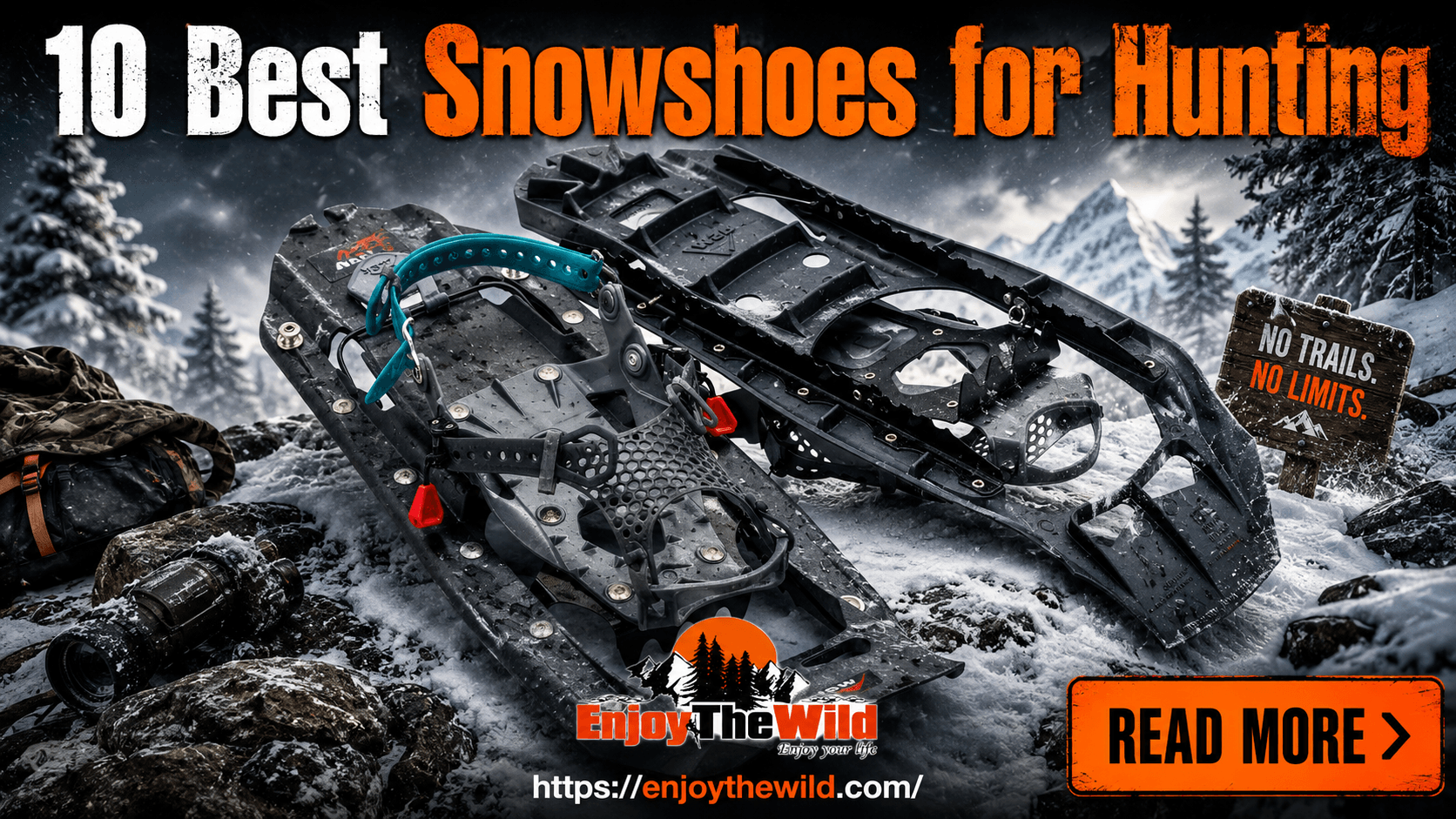
Finding the best snowshoes for hunting is different from choosing a casual pair for packed winter trails. Hunters often carry heavier gear, move through quiet timber, cross rolling hills, break trail in fresh snow, climb icy slopes, and need enough flotation to stay efficient while wearing winter boots and a loaded pack.
This guide compares 10 snowshoes that fit winter hunting, backcountry scouting, shed hunting, predator hunting, late-season access, trapping routes, and cold-weather outdoor travel. The list includes technical backcountry snowshoes, all-terrain snowshoes, budget-friendly kits, lightweight aluminum-frame models, composite-deck snowshoes, and options with aggressive traction for steep or uneven terrain.
The products were compared based on flotation, traction, binding security, durability, weight, terrain suitability, packability, ease of use with gloves, load support, brand reputation, Amazon availability, and overall field value. Because hunting often means extra gear weight, always consider your body weight plus boots, winter clothing, pack, firearm or bow, optics, food, water, and emergency gear when choosing a snowshoe size.
Snowshoes are useful winter tools, but they do not replace safe hunting preparation. Always follow hunting seasons, licensing rules, land-access laws, firearm or bow safety practices, avalanche awareness where relevant, local weather warnings, and ethical hunting standards. In avalanche terrain, get proper training and carry the correct rescue gear.
Quick Picks:
- Best Overall: MSR Lightning Ascent Backcountry & Mountaineering Snowshoes on Amazon
- Best Budget Option: G2 30 Inch Mountain Terrain Snowshoes on Amazon
- Best Premium Pick: Atlas Range-MTN Snowshoe on Amazon
- Best for Beginners: MSR Evo Trail Snowshoes on Amazon
- Best for Deep Snow Access: LaCrosse Alphaburly Pro 18” 800G Waterproof Hunting Boot on Amazon
| Product | Best For | Material / Frame | Size / Load Notes | Key Features | Hunting Use Notes | Check Price |
|---|---|---|---|---|---|---|
| MSR Lightning Ascent Backcountry & Mountaineering Snowshoes | Best Overall | Aluminum frame with technical traction | Available in multiple sizes; verify load range | 360-degree traction frame, Paragon binding, DTX crampons | Excellent for steep, icy, and off-trail hunting access | Check Price on Amazon |
| MSR Evo Explore Lightweight Men’s All-Terrain Snowshoes | Best All-Terrain MSR Pick | Composite deck | Check current size and user weight recommendation | Paradigm bindings, Televator heel risers, durable traction | Good for breaking trail, trekking, and winter hunting approaches | Check Price on Amazon |
| MSR Evo Trail Snowshoes | Best Beginner-Friendly Pick | Injection-molded composite deck | 22-inch pair; check load range and tail compatibility | Steel crampons, traction rails, Paraglide binding, durable deck | Good for packed snow, rolling terrain, and beginner winter hunters | Check Price on Amazon |
| Tubbs Flex VRT Snowshoe – Men’s | Best Natural-Gait Option | Composite Flex deck | Verify size and recommended load before buying | Torsion Deck, VRT technology, Boa-style fit system, traction features | Useful for hunters who want mobility on uneven snow | Check Price on Amazon |
| Tubbs Flex TRK Hiking Snowshoe | Best Value Trail Snowshoe | Composite Flex deck | Verify size and load rating | Torsion Deck, rotating toe cord, QuickPull binding | Good for moderate hunting access routes and packed-to-variable snow | Check Price on Amazon |
| Atlas Range-MTN Snowshoe | Best Premium Technical Pick | Aluminum and synthetic fabric | Available in different sizes; check load range | Boa Closure System, Reactiv-Trac frame, X-TRAC crampon | Strong choice for technical terrain and backcountry hunting routes | Check Price on Amazon |
| Atlas Helium-MTN Snowshoe | Best Backcountry Mobility Pick | Composite-style Helium platform | Verify size and recommended load | Backcountry-focused design, technical traction, off-grid mobility | Good for hunters who need traction and mobility beyond packed trails | Check Price on Amazon |
| TSL Symbioz Hyperflex Original Snowshoes | Best Flexible Terrain Adaptation | Flexible alloy steel-style frame listed | Check model size and weight recommendation | Hyperflex design, ergonomic binding, terrain-conforming frame | Useful for rolling terrain, variable snow, and hunters who want a natural stride | Check Price on Amazon |
| Wildhorn Outfitters Sawtooth Snowshoes | Best Lightweight Recreational Pick | Aluminum frame | Available in multiple sizes; verify load range | Lightweight frame, adjustable bindings, sleek trail design | Best for moderate snow, scouting, cabin access, and lighter hunting loads | Check Price on Amazon |
| G2 30 Inch Mountain Terrain Snowshoes with Trekking Poles | Best Budget Kit | Aluminum frame with plastic deck | 30-inch size; listing notes up to 250 pounds | Mountain terrain design, trekking poles, storage bag, traction rails | Good entry-level kit for casual winter hunting access and deep-snow practice | Check Price on Amazon |
The best snowshoes for hunting usually need more flotation and traction than basic trail snowshoes because hunters often carry gear and move off trail. MSR, Atlas, Tubbs, and TSL options are stronger choices for technical terrain, steep approaches, and serious winter travel. Wildhorn and G2 models can make sense for budget-conscious hunters, beginners, and moderate terrain, but buyers should verify load rating, binding fit, and durability expectations before relying on them far from the trailhead.
1. MSR Lightning Ascent Backcountry & Mountaineering Snowshoes on Amazon
Short Overview
The MSR Lightning Ascent is the best overall pick for hunters who need serious traction, reliable bindings, and backcountry-ready performance. It is designed for aggressive winter travel, which makes it useful for hunters who climb icy ridges, cross sidehills, break trail through timber, or carry a winter pack into remote areas. The product listing describes 360-degree Traction Frames, durable steel DTX crampons, and Paragon bindings that wrap securely around winter boots. That combination is helpful when hunters need grip on crust, hardpack, wind-scoured slopes, and uneven backcountry snow. Compared with budget aluminum snowshoes, the Lightning Ascent is more technical and better suited for difficult terrain. It also packs flatter than many bulky recreational snowshoes, which can matter when carrying them on a backpack before reaching snow. The main downside is that it costs more than beginner snowshoes. For serious late-season hunters, shed hunters, and backcountry users, it is one of the safest and most capable choices to compare.
Key Features
- Technical backcountry snowshoe design
- 360-degree traction frame for edge-to-edge grip
- Steel DTX crampons for bite on firm snow and icy surfaces
- Paragon binding designed to wrap securely around boots
- Multiple sizes available; verify load range before buying
Pros
- Excellent traction for steep and uneven terrain
- Strong choice for serious backcountry hunters
- Secure binding system for winter boots
- Good balance of technical performance and packability
Cons
- Premium price point
- More snowshoe than casual users may need
- Size selection matters when carrying heavy hunting gear
Who It’s Best For
This model is best for experienced hunters, backcountry hunters, mountain hunters, shed hunters, and winter explorers who need dependable traction and flotation in rugged terrain.
2. MSR Evo Explore Lightweight Men’s All-Terrain Snowshoes on Amazon
Short Overview
The MSR Evo Explore is a strong all-terrain pick for hunters who want a rugged snowshoe without jumping all the way to the Lightning Ascent. The listing describes it as built for hiking, breaking trail, trekking, and extended winter trips, which fits many winter hunting access routes. The Paradigm binding is designed for comfort and performance, while the Televator heel riser can reduce fatigue on steeper climbs. That is useful for hunters who need to conserve energy while carrying a pack, optics, layers, and hunting equipment. The composite deck is durable and practical for rough winter travel. Compared with basic recreational snowshoes, the Evo Explore is more appropriate for variable terrain. It is not as aggressive as the most technical mountaineering snowshoes, but it is easier to justify for hunters who need a dependable do-it-most option. For winter scouting, predator hunting, and backcountry approaches, this is a very practical pick.
Key Features
- All-terrain snowshoe design
- Paradigm binding system
- Televator heel risers for climbing efficiency
- Durable composite deck
- Designed for hiking, breaking trail, trekking, and extended winter travel
Pros
- Good balance of durability and usability
- Heel risers help on uphill hunting routes
- Suitable for varied terrain and winter approaches
- More capable than basic trail snowshoes
Cons
- Not as technical as MSR Lightning Ascent
- Composite decks may be noisier than some frame-and-deck models
- Hunters carrying heavy packs should verify load range carefully
Who It’s Best For
This snowshoe is best for hunters who need a durable all-terrain option for winter scouting, backcountry approaches, breaking trail, and mixed snow conditions.
3. MSR Evo Trail Snowshoes on Amazon
Short Overview
The MSR Evo Trail is a beginner-friendly snowshoe that still offers useful performance for hunters who stay on moderate terrain. The listing describes a 22-inch pair with steel crampons, traction rails, an injection-molded UniBody deck, and Paraglide bindings that work with many types of footwear. That makes it appealing for hunters who want a durable snowshoe for packed trails, rolling terrain, and shorter winter access routes. It is not the best pick for deep powder with a heavy hunting pack unless you use appropriate flotation options or choose a larger model if available. However, it is simple, durable, and easier to manage than many complicated snowshoe systems. The glove-friendly straps are useful when adjusting gear in cold weather. It is a good option for hunters who are new to snowshoes and want reliable traction without overspending. For extreme mountain hunting, choose a more technical model, but for moderate winter woods, the Evo Trail is a smart starting point.
Key Features
- 22-inch composite snowshoe design
- Steel crampons and traction rails
- Injection-molded UniBody deck
- Paraglide stretch mesh binding
- Glove-friendly straps and buckle tabs
Pros
- Beginner-friendly and easy to use
- Durable design for trail and rolling terrain
- Good value from a respected snowshoe brand
- Simple binding works with many winter boots
Cons
- Limited flotation for heavier hunters or heavy packs unless sizing is addressed
- Not ideal for very steep or technical terrain
- Composite deck may sound louder on crusty snow
Who It’s Best For
The MSR Evo Trail is best for beginner snowshoers, casual winter hunters, packed-trail users, and hunters who need a reliable snowshoe for moderate snow conditions.
4. Tubbs Flex VRT Snowshoe – Men’s on Amazon
Short Overview
The Tubbs Flex VRT is a good pick for hunters who want a natural walking feel and reliable traction over uneven snow. The listing highlights a Torsion Deck that allows articulation through the snowshoe body, which can help preserve a more natural gait while improving comfort. That matters when hunters travel through rolling timber, side slopes, old logging roads, and broken snow. The VRT design is intended to improve flotation while keeping the snowshoe responsive. The Boa-style closure can be convenient when making quick adjustments with gloves, although any dial-based system should be checked before long trips. Compared with basic entry-level snowshoes, this model is more refined and better suited for longer days. It is not the cheapest option, but the comfort-focused design makes sense for hunters who cover ground. For mobile winter hunters who do not want a stiff, awkward stride, the Flex VRT is worth comparing.
Key Features
- Torsion Deck for articulation and natural movement
- VRT technology for flotation and mobility
- Boa-style closure system
- Technical traction features for uneven snow
- Men’s snowshoe design with size options depending on availability
Pros
- Comfortable stride for longer hunting approaches
- Good traction and mobility on uneven terrain
- Convenient binding adjustment
- Useful for hunters who move often instead of sitting all day
Cons
- Dial systems may require extra care in snow and ice
- May cost more than basic recreational snowshoes
- Size and load range must be checked before buying
Who It’s Best For
The Tubbs Flex VRT is best for hunters who want comfort, mobility, and traction for rolling terrain, winter scouting, and longer snowshoe approaches.
5. Tubbs Flex TRK Hiking Snowshoe on Amazon
Short Overview
The Tubbs Flex TRK is a value-focused snowshoe for hunters who need dependable winter access without paying for a premium backcountry model. The listing describes a Torsion Deck, rotating toe cord, and QuickPull binding, all of which are useful for efficient movement in snow. This model is better suited for moderate hunting routes, packed trails, rolling terrain, cabin access, and winter scouting than technical alpine terrain. The rotating toe cord helps the tail drop and shed snow, which can make walking feel more efficient. The QuickPull binding is simple and beginner-friendly. It may not offer the same aggressive traction as high-end backcountry snowshoes, so hunters should be realistic about terrain. Still, for many winter woods and field access routes, it provides practical value. If you are new to hunting with snowshoes, the Flex TRK is an approachable choice.
Key Features
- Torsion Deck for natural movement
- Rotating toe cord to help shed snow
- QuickPull binding system
- Designed for hiking and trail snowshoeing
- Useful value option for moderate terrain
Pros
- Good value for trail and moderate hunting access
- Beginner-friendly binding design
- Comfortable walking feel for rolling terrain
- Practical for winter scouting and cabin access
Cons
- Not ideal for steep technical backcountry
- Less aggressive than premium mountaineering snowshoes
- Hunters carrying heavy gear should verify load rating
Who It’s Best For
This snowshoe is best for beginner to intermediate hunters who need a comfortable, practical snowshoe for moderate snow conditions, winter scouting, and access routes.
6. Atlas Range-MTN Snowshoe on Amazon
Short Overview
The Atlas Range-MTN Snowshoe is a premium technical option for hunters who need grip, adjustability, and confidence in difficult terrain. The Amazon listing describes a Boa Closure System for micro-adjusted fit, a Reactiv-Trac frame, and an X-TRAC crampon designed to bite into ice and hard-packed snow while still working in softer conditions. That feature set is useful for winter hunters who cross side slopes, climb wooded ridges, or move across mixed crust and powder. Compared with recreational snowshoes, the Range-MTN is more purpose-built for technical travel. The binding system can be convenient, but hunters should check it for snow and ice buildup before heading deep into the backcountry. Its premium design makes sense for serious users rather than occasional snowshoe walkers. It is a strong pick for hunters who need precision and control over simple flotation. For rugged winter hunting access, this is one of the best technical snowshoes to compare.
Key Features
- Boa Closure System for micro-adjusted fit
- Reactiv-Trac frame
- X-TRAC crampon for icy and hard-packed snow
- Low-profile technical design
- Available in multiple sizes; verify load range
Pros
- Strong technical traction for rugged terrain
- Precise binding fit
- Good for steep, icy, and uneven hunting approaches
- Premium design for serious winter travel
Cons
- Premium price range
- Dial-style closure should be checked in freezing conditions
- May be more technical than casual hunters need
Who It’s Best For
The Atlas Range-MTN is best for serious winter hunters, backcountry users, and anyone who needs technical traction and a secure fit for steep or variable terrain.
7. Atlas Helium-MTN Snowshoe on Amazon
Short Overview
The Atlas Helium-MTN Snowshoe is another strong choice for hunters who need backcountry mobility and technical snow travel. The Amazon listing describes the Helium-MTN as part of a backcountry category developed for steep and technical terrain, with superior mobility and durability for off-grid travel. That makes it relevant for hunters who need to get beyond packed routes and into winter timber, ridgelines, and remote basins. This model is designed for serious winter recreation rather than casual backyard walking. It can be useful for hunters who prioritize traction, mobility, and confidence when terrain is mixed. As always, buyers should confirm size and load range because hunting gear adds weight. The platform may feel more technical than needed for flat fields, but it is valuable when terrain gets difficult. For hunters who want a capable Atlas option with backcountry intent, the Helium-MTN is worth comparing.
Key Features
- Backcountry-focused Atlas design
- Built for steep and technical terrain according to listing
- Designed for mobility and durability
- Useful for off-grid winter travel
- Verify size and load rating before buying
Pros
- Good choice for off-trail hunters
- Built for difficult winter terrain
- More technical than casual trail snowshoes
- Useful for scouting, shed hunting, and winter access
Cons
- May be more expensive than basic snowshoes
- Not necessary for flat packed trails
- Exact fit and load details should be verified before buying
Who It’s Best For
This snowshoe is best for hunters who travel beyond packed trails and need a technical option for varied, steep, or backcountry snow conditions.
8. TSL Symbioz Hyperflex Original Snowshoes on Amazon
Short Overview
The TSL Symbioz Hyperflex Original is a flexible snowshoe option for hunters who want a more natural stride across uneven terrain. The listing describes a hyperflexible, lightweight design with ergonomic binding and terrain-adapting traction. That flexibility can be useful when crossing rolling ground, wooded approaches, and crusty patches where rigid snowshoes may feel awkward. Hunters who cover long distances may appreciate a snowshoe that moves more naturally with the foot. It is not necessarily the highest-flotation choice for very heavy loads or deep powder, so load range and sizing should be checked carefully. The binding system is more advanced than simple strap designs, which can improve fit but also requires users to understand the setup before heading out. It is a good pick for hunters who value mobility and comfort over maximum surface area. For mixed snow and rolling hunting terrain, the Symbioz Hyperflex is a unique option.
Key Features
- Hyperflex terrain-adapting design
- Ergonomic binding system
- Flexible frame concept
- Designed for grip on variable terrain
- Check size and weight recommendation before buying
Pros
- Natural stride feel for longer walks
- Good for rolling and uneven terrain
- More flexible than traditional rigid snowshoes
- Useful for hunters who move frequently
Cons
- Not always ideal for heavy hunting packs in deep powder
- Advanced binding setup may take practice
- Load range must be checked carefully
Who It’s Best For
This model is best for hunters who want a flexible, comfortable snowshoe for rolling terrain, variable snow, and active winter travel.
9. Wildhorn Outfitters Sawtooth Snowshoes on Amazon
Short Overview
The Wildhorn Outfitters Sawtooth Snowshoes are a practical lightweight option for hunters who need a recreational snowshoe for moderate winter travel. The listing describes lightweight aluminum construction and a design made for snowshoeing adventures. These are best for hunters who travel on rolling terrain, cabin routes, packed snow, or moderate winter scouting routes rather than steep technical backcountry. The Sawtooth can make sense for newer hunters who want an affordable way to access snowy ground without buying a premium technical model. It is also useful as a backup pair or for occasional winter access. The main limitation is that recreational snowshoes may not provide the traction, durability, or flotation needed for heavy loads in difficult terrain. Buyers should choose the right size for total load and snow conditions. For moderate use and lighter hunting loads, this is a value-friendly option.
Key Features
- Lightweight aluminum-frame construction
- Adjustable binding design
- Available in multiple sizes depending on listing
- Designed for recreational snowshoeing
- Good for moderate terrain and general winter access
Pros
- Affordable and beginner-friendly
- Lightweight enough for casual access routes
- Useful for scouting, cabin trips, and moderate hunting terrain
- Good option for occasional snowshoe users
Cons
- Not the best choice for steep technical terrain
- May not support very heavy hunting loads in deep powder
- Bindings and traction are less advanced than premium models
Who It’s Best For
The Wildhorn Sawtooth is best for beginner snowshoers, occasional winter hunters, and outdoor users who need a lightweight snowshoe for moderate terrain.
10. G2 30 Inch Mountain Terrain Snowshoes with Trekking Poles on Amazon
Short Overview
The G2 30 Inch Mountain Terrain Snowshoes are a budget-friendly kit option for hunters who want snowshoes, poles, and a carrying setup in one purchase. The listing describes a 30-inch snowshoe with trekking poles, traction rails, EVA foam padding, a flexible pivot bar, and a tote bag. It also lists a 250-pound maximum weight recommendation for this model, which may be useful for hunters who need more flotation than smaller snowshoes. Because hunters often carry gear, always compare that load rating against your total winter weight. This kit is best for casual winter hunting access, practice sessions, cabin trails, snowy farm routes, and moderate terrain. It is not the same as a premium technical backcountry snowshoe, so buyers should be realistic about rugged use. Still, it offers strong value for beginners who want to try snowshoeing for hunting without spending heavily. For budget-conscious hunters, it is a practical entry point.
Key Features
- 30-inch snowshoe size
- Listing notes up to 250 pounds maximum weight recommendation
- Trekking poles included
- Flexible pivot bar and traction rails
- Storage/tote bag included
Pros
- Budget-friendly kit with poles included
- Longer 30-inch size helps with flotation
- Good for beginners and casual winter access
- Useful for moderate hunting routes and snowy chores
Cons
- Not as technical as MSR, Atlas, Tubbs, or TSL premium models
- May not be ideal for steep icy terrain
- Durability expectations should match the budget category
Who It’s Best For
This kit is best for beginners, budget buyers, and hunters who need an affordable snowshoe setup for moderate winter access, farm routes, cabin travel, and casual hunting use.
Buying Guide: How to Choose the Best Snowshoes for Hunting
Start With Total Load
The first thing hunters should consider is total load, not just body weight. Snowshoe sizing should include your body weight plus winter boots, insulated clothing, pack, weapon or bow, optics, food, water, emergency gear, and any meat-hauling or trapping equipment. A snowshoe that works for a 180-pound hiker on packed trails may not provide enough flotation for a hunter carrying 30 to 50 pounds of gear in powder.
If you regularly hunt in deep, soft snow, longer snowshoes or compatible flotation tails may be important. If you mostly travel packed snowmobile tracks or firm crust, shorter and more maneuverable snowshoes may feel better. Bigger snowshoes float better, but they are harder to maneuver through brush and tight timber.
Choose the Right Snowshoe Type
Flat-terrain snowshoes are simple and beginner-friendly, but they may not offer enough traction for hunting in steep or icy terrain. Rolling-terrain snowshoes provide a better balance of flotation, traction, and comfort. Mountain or backcountry snowshoes are better for steep climbs, sidehills, crust, and off-trail travel.
For hunting, most buyers should look at rolling-terrain or backcountry snowshoes rather than the most basic recreational models. Hunters move through unpredictable terrain, and traction can be just as important as flotation.
Think About Traction
Traction matters because hunters often cross icy crust, frozen creek edges, steep timber, side slopes, and wind-packed snow. Look for toe crampons, heel crampons, side rails, perimeter traction, or aggressive traction frames. More traction helps with climbing and sidehilling, but it can also add weight.
Snowshoes are not a replacement for mountaineering crampons on serious ice. If you are entering technical alpine or avalanche terrain, get training and use the appropriate winter travel gear.
Binding Security Matters
Bindings should hold your hunting boots securely without pressure points. A poor binding can loosen, freeze, rub, or make your foot slide around. Strap bindings are simple and repairable, while Boa-style or dial systems are fast and comfortable but should be checked for snow and ice buildup.
Practice adjusting your bindings at home while wearing hunting boots and gloves. Do not wait until you are in freezing weather to learn the system.
Consider Noise
Hunters care about noise more than casual hikers. Composite decks can be durable, but they may sound louder on crusty snow. Aluminum-frame models with synthetic decking may be quieter in some conditions, though this varies by snow surface and walking style. In frozen crust, every snowshoe can make noise.
Do not choose a snowshoe only because it is quiet in soft powder. Consider traction, load range, and durability first. Quiet movement also depends on pace, snow condition, clothing noise, and how carefully you walk.
Match Snowshoes to Terrain
For flat fields, logging roads, and packed trails, basic or mid-range snowshoes may work well. For thick timber, choose a size that balances flotation with maneuverability. For mountains, look for aggressive traction, heel risers, and secure bindings. For deep powder, flotation becomes more important, especially with a hunting pack.
If your terrain changes often, choose an all-terrain or backcountry model rather than a simple flat-terrain recreational snowshoe.
Check Heel Risers for Climbing
Heel risers help reduce calf fatigue on climbs by supporting your heel when walking uphill. Hunters who climb ridges, glassing points, or steep logging roads may appreciate this feature. It is less important for flat fields or short access routes.
Think About Packability
Sometimes hunters carry snowshoes on a pack until they reach deeper snow. If that sounds like your hunt, pay attention to weight, profile, and how easily the snowshoes strap to a backpack. Large 36-inch snowshoes float well, but they can be awkward in brush or on a pack.
Do Not Ignore Poles
Trekking poles can improve balance when carrying a hunting pack on snowshoes. They help on climbs, descents, sidehills, and creek crossings. Some budget kits include poles, but serious users may prefer stronger adjustable winter poles with snow baskets.
Safety and Responsible Hunting
Snowshoes can help you access winter terrain, but they also make it easier to travel into colder, more remote areas. Carry navigation tools, a headlamp, emergency layers, fire-starting tools, water, food, first aid, and communication gear. Check weather before leaving. In avalanche country, get training, check local avalanche forecasts, and carry beacon, shovel, and probe with partners who know how to use them.
Follow legal hunting seasons, license requirements, land boundaries, firearm or bow safety rules, and ethical hunting practices. Do not use snowshoes to access restricted areas, closed wildlife zones, or private land without permission.
Final Recommendation
The best overall choice is the MSR Lightning Ascent Backcountry & Mountaineering Snowshoes on Amazon because they offer strong traction, secure bindings, and technical backcountry performance for serious winter hunting access.
For hunters who want a durable all-terrain option, the MSR Evo Explore on Amazon is a strong alternative. Beginners should compare the MSR Evo Trail on Amazon. For technical terrain, the Atlas Range-MTN on Amazon is a premium pick. Budget buyers can compare the G2 30 Inch Mountain Terrain Snowshoes on Amazon.
Choose based on total load, snow depth, terrain, traction needs, binding fit, and how far you plan to travel. Check current size options and availability on Amazon before buying, and share this guide with hunting partners who need reliable winter access gear.
Frequently Asked Questions
1. What are the best snowshoes for hunting overall?
The best snowshoes for hunting overall are usually backcountry or all-terrain models with strong flotation, aggressive traction, and secure bindings. The MSR Lightning Ascent is a strong overall choice for serious hunters because it is designed for rugged terrain, sidehilling, and technical winter travel.
2. What makes snowshoes good for hunting?
Good hunting snowshoes should support your total load, provide enough flotation in soft snow, grip on icy or steep terrain, work with winter hunting boots, and stay secure while carrying gear. Hunters also benefit from durable construction and bindings that are easy to adjust with gloves.
3. Are regular hiking snowshoes good enough for hunting?
Regular hiking snowshoes can work for short, packed, or moderate routes. However, hunting often involves heavier loads and off-trail travel, so all-terrain or backcountry snowshoes are usually better for serious winter hunting.
4. What size snowshoes do I need for hunting?
Choose size based on total weight, including body weight, boots, clothing, pack, weapon or bow, optics, food, water, and emergency gear. Deeper snow and heavier loads usually require more surface area for flotation.
5. Are longer snowshoes better for hunting?
Longer snowshoes provide better flotation in deep powder and with heavier loads, but they are harder to maneuver in timber and brush. Hunters should balance flotation with mobility based on terrain.
6. Are shorter snowshoes better in the woods?
Shorter snowshoes can be easier to maneuver through trees, brush, blowdowns, and tight trails. They may not float as well in deep powder, especially with heavy hunting gear.
7. What are the best snowshoes for deep snow hunting?
For deep snow, choose larger snowshoes or models that accept flotation tails. Look for adequate load support, durable decking, and bindings that hold heavy winter boots securely.
8. What are the best snowshoes for mountain hunting?
Mountain hunting requires aggressive traction, secure bindings, heel risers, and good sidehill stability. MSR Lightning Ascent, Atlas Range-MTN, and Atlas Helium-MTN are examples of snowshoes to compare for mountain terrain.
9. Do hunters need heel risers on snowshoes?
Heel risers are useful if you climb hills, ridges, or steep logging roads. They reduce calf strain on long climbs. They are less important for flat fields and short access routes.
10. Are snowshoes useful for deer hunting?
Yes, snowshoes can help deer hunters access stands, blinds, public land, bedding-area edges, and snowy travel routes. Always follow legal seasons, property boundaries, and ethical hunting practices.
11. Are snowshoes useful for predator hunting?
Snowshoes can be useful for predator hunters who travel through snowy fields, timber, and remote calling locations. Choose a model that balances flotation, quiet movement, and traction.
12. Are snowshoes useful for shed hunting?
Yes, snowshoes can help shed hunters cover snowy winter and early spring ground more efficiently. They can reduce post-holing and fatigue when searching ridges, fields, and bedding areas.
13. Can snowshoes help with trapping routes?
Snowshoes can help trappers access lines in deep snow, but load support and traction are important. Trappers carrying tools and gear should choose a size that supports total pack weight.
14. Are aluminum snowshoes good for hunting?
Aluminum-frame snowshoes are common, lightweight, and useful for many hunting conditions. They often provide good flotation and can be quieter than some hard composite decks depending on snow conditions.
15. Are composite snowshoes good for hunting?
Composite snowshoes can be very durable and provide good traction, but they may be noisier on hard crust. They can be excellent for rugged use if the traction and load rating match your needs.
16. What is the best snowshoe traction for hunting?
Look for toe crampons, heel crampons, side rails, perimeter traction, or traction frames. Hunters crossing icy slopes or sidehills need more aggressive traction than casual flat-trail users.
17. Are snowshoes safe on ice?
Snowshoes can grip firm snow and some icy surfaces, but they are not a replacement for mountaineering crampons on serious ice. Avoid terrain that exceeds your skill and equipment.
18. Can snowshoes be used in avalanche terrain?
Snowshoes can be used in avalanche terrain only with proper training, partners, avalanche forecast awareness, and rescue gear. Carry a beacon, shovel, and probe when appropriate, and know how to use them.
19. What bindings are best for hunting snowshoes?
The best bindings hold winter hunting boots securely, adjust easily with gloves, and do not create pressure points. Strap systems are simple and repairable, while Boa-style systems are fast but should be checked for ice buildup.
20. Do snowshoe bindings fit hunting boots?
Many snowshoe bindings fit insulated hunting boots, but not all. Always check boot compatibility and test your boots in the bindings before using the snowshoes on a hunt.
21. Should I practice with snowshoes before hunting?
Yes. Practice walking, turning, climbing, descending, and adjusting bindings before hunting. Snowshoe movement feels different from normal walking and can be tiring at first.
22. Are snowshoes noisy when hunting?
They can be noisy, especially on crusty snow or icy surfaces. Move slowly, avoid dragging your feet, and choose routes where snow conditions allow quieter travel when possible.
23. Are snowshoes better than skis for hunting?
Snowshoes are easier for many hunters because they work well in timber, brush, uneven terrain, and stop-and-go movement. Skis may be faster in open country but require more skill and space.
24. Do I need trekking poles with hunting snowshoes?
Trekking poles improve balance, especially when carrying a pack, climbing hills, or crossing uneven snow. Hunters traveling in deep snow or rough terrain should strongly consider poles with snow baskets.
25. What is the best budget snowshoe for hunting?
The G2 30 Inch Mountain Terrain Snowshoe kit is a budget option to compare because it includes poles and a carrying setup. Budget buyers should still verify load rating, traction, and durability before relying on any snowshoe far from the trailhead.
26. Are premium snowshoes worth it for hunting?
Premium snowshoes are worth it if you hunt in steep, icy, deep, or remote terrain. Better traction, bindings, and durability can make winter travel safer and less tiring.
27. What is the best snowshoe for beginners?
The MSR Evo Trail is a good beginner-friendly option because it is simple, durable, and useful for moderate terrain. Beginners should avoid overly technical terrain until they have experience.
28. What is the best snowshoe for heavy hunters?
Heavy hunters or hunters carrying large packs should look for larger snowshoes with higher load ratings. Always include gear weight when checking manufacturer load recommendations.
29. Should I choose 22-inch, 25-inch, 30-inch, or 36-inch snowshoes?
Shorter snowshoes are easier to maneuver, while longer snowshoes float better in deep snow and heavy loads. Hunters in timber may prefer shorter models, while deep-powder hunters may need longer ones.
30. Can snowshoe tails help hunters?
Yes, compatible flotation tails can increase surface area when carrying extra hunting gear or traveling in deeper snow. Check whether your snowshoe model supports tails before buying.
31. Are snowshoes good for packed trails?
Yes, but you may not need large backcountry models for packed trails. Smaller, lighter snowshoes can work well on packed routes, while deep snow and heavy loads require more flotation.
32. Are snowshoes good for powder snow?
Snowshoes are designed to help in powder, but performance depends on size, load, and snow depth. Very soft snow requires larger snowshoes or flotation tails, especially for hunters carrying gear.
33. Are snowshoes good for wet snow?
They can work in wet snow, but wet snow is heavy and can stick to decks and bindings. Durable materials, good traction, and proper snowshoe technique help.
34. What should I wear with hunting snowshoes?
Wear waterproof insulated boots, moisture-managing socks, gaiters if needed, layered clothing, gloves, and weather-appropriate outerwear. Avoid cotton in cold wet conditions.
35. Do I need gaiters with snowshoes?
Gaiters can help keep snow out of your boots and protect your lower legs. They are useful in deep powder, brush, and wet snow.
36. Can I carry a rifle or bow while snowshoeing?
You can carry hunting equipment while snowshoeing, but always follow firearm or bow safety rules. Keep safe muzzle direction, obey local laws, and use secure carry methods appropriate for your terrain.
37. Can snowshoes help retrieve game?
Snowshoes can help you travel in deep snow, but retrieving game adds major weight and difficulty. Plan ahead, bring partners when needed, and avoid overloading yourself in dangerous conditions.
38. How do I maintain hunting snowshoes?
Rinse off dirt and road salt, dry them before storage, inspect bindings, check crampons, tighten hardware if the manufacturer allows, and store them away from heat and sunlight.
39. How long do snowshoes last?
Lifespan depends on materials, terrain, frequency of use, and maintenance. Premium models can last many seasons if cared for, while budget models may wear faster under heavy use.
40. Can snowshoe bindings break in cold weather?
Any binding can fail if damaged, iced up, or used beyond its design. Practice repairs, inspect straps and buckles, and consider carrying small repair items on long trips.
41. What should I carry when hunting with snowshoes?
Carry navigation tools, headlamp, emergency layers, fire starter, food, water, first aid, communication gear, knife or multitool, repair items, and avalanche gear if terrain requires it.
42. Can I snowshoe hunt alone?
Solo winter hunting adds risk. If you go alone, tell someone your route and return time, carry emergency gear, check weather, and avoid terrain beyond your skill level.
43. Are snowshoes good for public land hunting?
Yes, snowshoes can help public land hunters access areas that are difficult to reach in deep snow. Always confirm property boundaries, closures, and legal access routes.
44. Can snowshoes damage trails?
Snowshoes are generally low impact on snow, but users should follow local trail rules. Avoid sensitive wildlife areas, closed habitat zones, and restricted winter ranges.
45. Are snowshoes allowed everywhere?
No. Some areas have restrictions, closures, or specific winter travel rules. Check local land manager guidance before using snowshoes for hunting access.
46. How do I walk quietly in snowshoes?
Move slowly, place each step deliberately, avoid crusty snow when possible, and practice turning without clacking frames together. Snow conditions often matter more than the snowshoe model.
47. Do snowshoes make tracking animals easier?
They can help you move through deep snow and follow tracks, but they also leave large prints and can make noise. Use them as a mobility tool, not a guarantee of stealth.
48. Are white snowshoes better for hunting?
Color is less important than flotation, traction, and binding security. In some situations, neutral colors may blend better, but performance should come first.
49. Should hunters buy snowshoe kits with poles?
Kits can be a good value for beginners, but serious hunters may prefer higher-quality snowshoes and separate winter trekking poles. Check pole strength, baskets, and adjustability.
50. What is the biggest mistake when buying hunting snowshoes?
The biggest mistake is buying based only on price or length without considering total load, terrain, traction, and binding compatibility with hunting boots.
51. Can kids use hunting snowshoes?
Kids can use properly sized snowshoes for supervised winter travel, but hunting situations require extra safety. Match size to weight and keep routes short and safe.
52. Are women-specific snowshoes different?
Some women-specific snowshoes have narrower decks and bindings designed for smaller boots. Many snowshoes are unisex, so the best choice depends on gait, boot size, weight, and terrain.
53. Should I buy snowshoes on Amazon?
Amazon can be convenient for comparing models, sizing, and availability. Always verify the exact product page, size, load rating, seller, return policy, and current listing details before buying.
54. Can snowshoes replace winter boots?
No. Snowshoes attach to winter boots; they do not replace them. You still need warm, waterproof boots that fit securely in the snowshoe binding.
55. What is the safest way to choose the best snowshoes for hunting?
The safest approach is to choose snowshoes based on total load, terrain, snow depth, traction needs, binding compatibility, and your experience level. Practice before the hunt, carry emergency gear, follow hunting laws, and avoid terrain beyond your skills.