

There are only two widely recognized types of alpacas: Huacaya and Suri. Both belong to the same domesticated species, Vicugna pacos, but their fleeces grow in remarkably different ways. Huacayas have dense, crimped fiber that creates a fluffy silhouette, while Suris grow smooth, lustrous locks that hang close to the body.
This guide explains how to tell the two alpaca types apart, how their fiber differs, where alpacas originated, and what responsible care involves. It also clears up common confusion about alpaca colors, fiber grades, llamas, and so-called Peruvian, Bolivian, or Chilean alpaca breeds.
What Are the Main Types of Alpacas?
The two main types of alpacas are Huacaya and Suri. The distinction is based primarily on fleece structure rather than color, size, or country of origin. Huacaya fiber grows outward with visible crimp, giving the animal a rounded, teddy-bear appearance. Suri fiber forms long, silky locks that drape downward and often appear shiny.
Huacaya vs. Suri Alpacas at a Glance
| Feature | Huacaya Alpaca | Suri Alpaca |
|---|---|---|
| Fleece growth | Grows outward from the body | Hangs downward in locks |
| Texture | Crimped, dense, and springy | Smooth, lustrous, and flowing |
| Overall appearance | Rounded and fluffy | Sleek and draped |
| Fiber preparation | Commonly carded or combed | Often carefully combed to preserve length |
| Common fiber uses | Yarn, knitwear, felt, blankets, and many general textiles | Draping garments, woven fabric, specialty yarn, and lustrous textiles |
| Relative abundance | More common worldwide | Less common worldwide |
1. Huacaya Alpaca
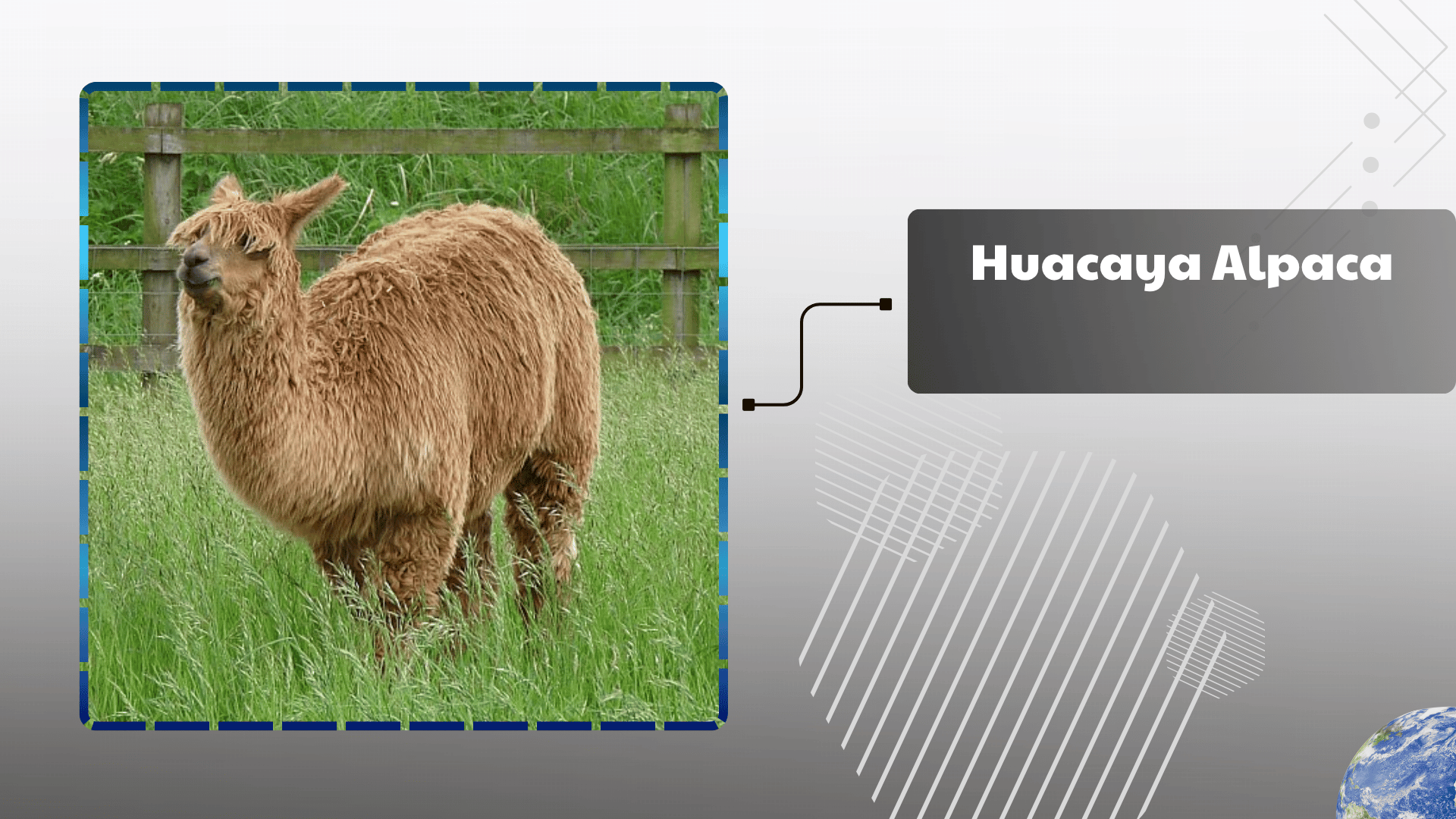
The Huacaya is the more familiar of the two alpaca types. Its fleece grows roughly perpendicular to the skin, creating a full, rounded outline. The fibers usually show crimp, a repeating wave that gives a well-prepared fleece loft, cohesion, and elasticity. When a Huacaya has not recently been shorn, its neck, body, and legs can look exceptionally plush.
Fleece quality cannot be judged from fluffiness alone. Fiber producers also examine fineness, uniformity, staple length, density, strength, and the amount of coarse guard hair. A fine fleece may feel soft against the skin, while a coarser fleece may be better suited to rugs, sturdy outerwear, or other durable goods. Age, nutrition, genetics, health, and the part of the body from which fiber is collected all influence the final material.
Huacaya fiber is versatile. Depending on its grade and preparation, it can be spun into yarn for hats, scarves, sweaters, socks, blankets, and many other products. Its crimp helps fibers hold together during processing. That does not mean every Huacaya fleece behaves identically; two animals of the same type can produce very different fiber.
Color is separate from type. Huacayas may be white, beige, fawn, brown, gray, black, or patterned. A white Huacaya and a black Huacaya are still the same fleece type. Breed registries and shows may use detailed color categories, but those categories should not be presented as additional breeds.
For identification, look at an unshorn area on the body rather than relying on the face, legs, or a recently clipped coat. Huacaya fleece rises away from the skin and usually looks matte to softly reflective. After shearing, the difference between Huacaya and Suri can be less obvious from a distance, so fiber structure and regrowth provide better clues.
2. Suri Alpaca
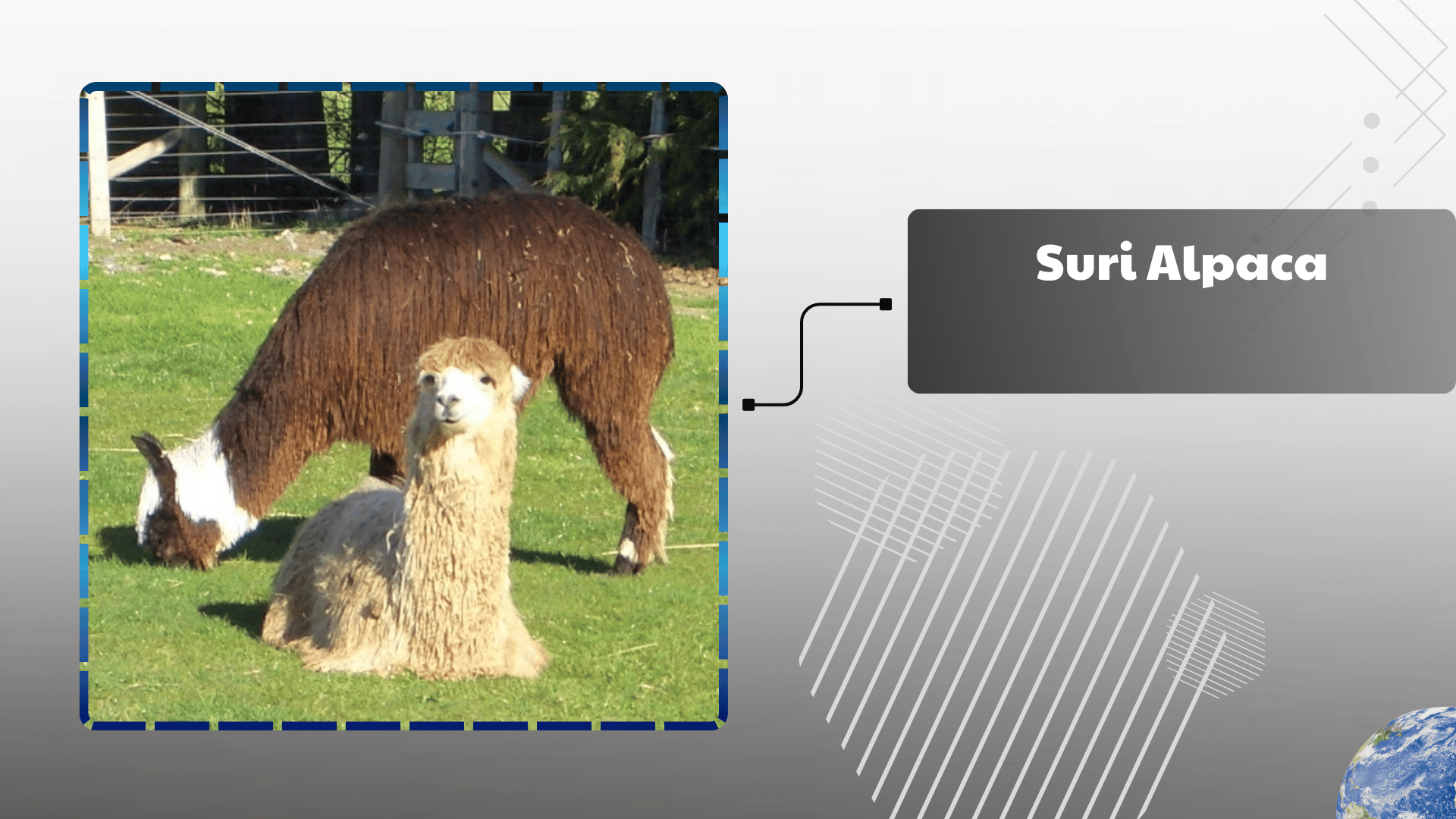
The Suri alpaca is recognized by long, distinct locks that hang downward along the body. Instead of forming the puffy coat associated with Huacayas, Suri fleece follows the animal’s outline. High-quality locks may begin close to the skin and remain organized along their length. Their smooth fiber surface reflects light, producing the luster for which Suri fleece is especially valued.
Suri locks may resemble loose waves, pencils, or tightly twisted spirals. Lock style varies, and no single curl shape by itself proves overall quality. Fiber evaluation also considers fineness, uniformity, density, lock consistency, length, strength, and freedom from excessive coarse fiber. A shiny coat is visually striking, but useful textile fiber must also perform well when handled and processed.
Because Suri fleece has relatively little crimp and a fluid drape, it is prized for fabrics and garments that benefit from smoothness and sheen. It can be spun into specialty yarn or used in woven textiles, scarves, shawls, and other pieces designed to showcase its luster. Processing methods are often chosen to maintain fiber alignment and preserve the character of the locks.
Suris occur in a broad natural color range, including white, fawn, brown, gray, and black. As with Huacayas, color does not create a separate alpaca type. Nor does the term baby alpaca identify a breed: in textile labeling, it generally refers to a fine grade of fiber and does not necessarily mean that the fleece came from a cria.
The easiest field mark is the direction of the coat. On an animal carrying several months of growth, Suri fiber parts into hanging locks and moves with the body. The topline may appear more visible than on a fluffy Huacaya. Recently shorn Suris can be harder to identify, so ask the owner or wait for enough regrowth to examine the lock pattern.
How Are the Two Types of Alpacas Classified?
Huacaya and Suri are fleece or breed types within one domestic alpaca species, Vicugna pacos. They are members of the camel family, Camelidae, and are South American camelids. Their close relatives include llamas, vicuñas, and guanacos.
Several labels commonly mistaken for additional alpaca types describe something else:
- White, fawn, brown, gray, and black describe natural fleece colors.
- Solid, pinto, appaloosa, and other pattern terms describe coat markings, with terminology varying among breeders and registries.
- Peruvian, Bolivian, and Chilean may describe ancestry or geographic origin, not separate modern breeds.
- Baby, royal, superfine, and similar textile terms refer to fiber grades or commercial categories, not breeds.
- Cria, dam, sire, and wether describe age, sex, or breeding status.
Both Huacayas and Suris can produce fiber in many colors and quality grades. This is why a useful classification begins with fleece structure, then considers color, pattern, sex, age, pedigree, and fiber measurements separately.
Where Do Alpacas Come From and Live Today?
Alpacas were domesticated in the Andes of South America thousands of years ago and remain deeply connected to Andean communities and textile traditions. Their historic range centers on high-elevation regions of Peru, Bolivia, and neighboring areas. Generations of selection produced animals adapted to cool, dry highlands and valued for fine fiber.
Domestic herds now live in many countries, including the United States, Canada, the United Kingdom, Australia, and New Zealand. Managed alpacas are not simply placed in any open field. They need secure fencing, suitable forage, clean water, shade, shelter from severe weather, parasite management, and care suited to the local climate.
Heat can be a serious challenge because alpacas carry dense fleece. Owners in warm or humid regions must plan shearing, shade, ventilation, cool water, and other veterinarian-guided heat-stress precautions. Cold regions require dry shelter and protection from wind and wet conditions, especially for newborn crias, recently shorn animals, and individuals in poor condition.
How to Identify Different Types of Alpacas
- Fleece direction: Huacaya fiber stands outward; Suri fiber hangs downward.
- Fiber structure: Huacaya fleece usually has noticeable crimp; Suri fleece forms organized locks with little crimp.
- Silhouette: Huacayas look rounded and plush, while Suris look narrower and more draped.
- Luster: Suri locks are known for strong sheen; Huacaya fleece usually has a softer visual brightness.
- Movement: Suri locks swing individually as the animal walks; a Huacaya coat tends to move as a denser mass.
- Color: Never use color alone. Both types occur in many natural colors and patterns.
- After shearing: Identification can be difficult until the coat regrows, so check records or examine protected fiber areas.
- Body shape: Do not rely on apparent body width because heavy Huacaya fleece can make the animal look larger than it is.
Understanding Alpaca Colors and Patterns
Alpacas offer one of the broadest natural color palettes among fiber-producing livestock. Registration systems may divide that palette into numerous named shades, commonly moving from white and beige through fawn and brown to gray and black. Exact labels and the treatment of patterns can differ between organizations.
A coat may be solid, show spots or patches, or combine fibers in ways that create a gray appearance. Color breeders consider inheritance, uniformity, and breeding goals, while fiber artists may value either a consistent shade or a naturally varied fleece. White fiber is easy to dye, but naturally colored fiber can be used without dye. Neither option is inherently superior; intended use and fiber quality matter more.
How Alpaca Fiber Is Evaluated
Type is only the beginning of fiber assessment. Producers and judges may consider several connected traits:
- Fineness: Fiber diameter strongly influences softness and suitable end uses.
- Uniformity: Similar fiber diameter throughout a fleece improves consistency.
- Staple or lock length: Useful length supports processing and spinning choices.
- Density: More usable fiber over a given area can increase fleece yield.
- Strength: Weak fibers may break during processing.
- Crimp or lock structure: Huacaya crimp and Suri lock organization are assessed differently.
- Luster or brightness: Light reflection contributes to the visual character of finished textiles.
- Guard hair: Coarse fibers can reduce comfort in garments worn next to the skin.
- Cleanliness: Hay, seeds, dust, and stains add work and may reduce usable yield.
Micron count is helpful, but it should not be used alone. A fine fiber that is weak, short, or highly variable may be less useful than a slightly coarser but strong and uniform fleece. Good evaluation matches each fleece to a realistic end product.
Responsible Alpaca Care Tips
Alpacas are herd animals and need compatible alpaca companions. Human attention, goats, or other livestock do not fully replace the security of their own kind. New owners should plan for a group and learn normal herd behavior before bringing animals home.
- Provide appropriate forage: Base the diet on suitable pasture or hay, then adjust supplements with veterinary or qualified livestock guidance.
- Supply fresh water: Keep water clean, accessible, and available in every season.
- Use species-appropriate minerals: Mineral needs vary by region and forage. Avoid guessing or using feeds formulated for another species without professional advice.
- Maintain safe fencing: Fencing should prevent escape, reduce predator risk, and avoid openings that can trap a head or leg.
- Offer shelter and shade: Protect the herd from wind, cold rain, intense sun, and dangerous heat.
- Shear on a suitable schedule: Most fiber alpacas are shorn annually, timed for climate and animal welfare.
- Monitor condition: Dense fleece can hide weight loss, skin problems, and injuries. Use hands-on body-condition checks.
- Plan routine health care: Work with a camelid-experienced veterinarian on vaccination, parasite control, toenails, teeth, reproduction, and emergencies.
- Handle calmly: Quiet movement, patient training, and appropriate facilities reduce stress and injury.
Needs vary with age, pregnancy, climate, forage, and local disease risks. Internet checklists cannot replace an established relationship with a veterinarian who knows the herd and region.
Alpaca vs. Llama: What Is the Difference?
Alpacas and llamas are related domestic South American camelids, but they are not the same animal. Llamas are generally larger, with longer faces and prominent, curved ears. Alpacas are smaller and were selected primarily for fiber, whereas llamas have a long history as pack animals as well as fiber and guardian animals.
Ear shape offers a quick visual clue: alpaca ears are usually shorter and straighter, while llama ears are longer and often described as banana-shaped. Size, face shape, and coat should be considered together because individual animals and crosses can blur a single feature. A llama with long wool is still not a Suri alpaca.
Ethical Observation, Welfare, and Sustainability
Visitors should observe alpacas quietly, follow farm rules, and allow animals to choose whether to approach. Alpacas may dislike being touched on the head, and crowding or chasing them can create unnecessary stress. Never enter an enclosure, feed an unfamiliar animal, or bring a dog near a herd without permission.
Responsible fiber production begins with animal welfare. Shearing is important for comfort and heat management, but it should be performed by trained people using calm restraint and safe equipment. Producers should also minimize contamination, sort fleece thoughtfully, and choose processing methods that make good use of different fiber grades rather than wasting coarser material.
Alpacas are domesticated livestock rather than a wild species with a standard wild conservation status. Sustainability therefore depends on farm practices: stocking land at an appropriate level, protecting soil and waterways, managing manure, sourcing feed responsibly, and maintaining healthy animals. Buyers can ask how animals are cared for and whether fiber can be traced to responsible farms.
Fun Facts About Alpacas
- Both Huacaya and Suri alpacas belong to the species Vicugna pacos.
- A baby alpaca is called a cria.
- Alpacas communicate with body posture and a range of soft vocal sounds, including humming.
- They often use communal dung piles, which can simplify pasture cleanup.
- Alpacas have padded feet with toenails rather than solid hooves.
- Their upper front teeth meet a firm dental pad instead of another row of incisors.
- Alpaca fleece occurs in many natural shades from white to black.
- Huacaya fiber grows with crimp, while Suri fiber forms hanging locks.
- Alpacas are herd animals and should not live alone.
- Dense fleece can conceal body condition, making hands-on checks important.
Final Thoughts on Types of Alpacas
The two true types of alpacas are Huacaya and Suri. Huacayas carry dense, crimped fleece that produces a fluffy outline, while Suris grow lustrous locks that hang along the body. Colors, patterns, fiber grades, and countries of ancestry add variety, but they do not create additional breeds. Whether you are visiting a farm, selecting fiber, or considering a herd, begin with fleece direction and structure, then look at the animal’s health, behavior, pedigree, and individual fiber quality.
Frequently Asked Questions
1. How many types of alpacas are there?
There are two recognized alpaca types: Huacaya and Suri. They are distinguished mainly by how their fleece grows and is structured. Both are the same domestic species, Vicugna pacos.
2. Are Huacaya and Suri different species?
No. Huacaya and Suri are two fleece or breed types within the same alpaca species. Their most obvious difference is that Huacaya fleece grows outward with crimp, while Suri fleece hangs in locks.
3. Which alpaca type is more common?
Huacaya is much more common worldwide. Exact percentages vary by country, registry, and year, so a universal figure should be treated cautiously. Suri herds are smaller but well established in several countries.
4. What does a Huacaya alpaca look like?
A Huacaya usually looks fluffy, rounded, and plush because its crimped fleece grows away from the body. Its apparent bulk often comes from fiber rather than body size.
5. What does a Suri alpaca look like?
A Suri has long, organized locks that fall downward along the body. The coat looks sleek and draped, and the locks often reflect light with noticeable luster.
6. What is the easiest way to tell Huacaya and Suri apart?
Look at the direction and organization of the fleece. Huacaya fiber stands outward as a dense coat, whereas Suri fiber separates into hanging locks. Recently shorn animals may require records or closer inspection.
7. Can Huacaya and Suri alpacas have the same colors?
Yes. Both can be white, beige, fawn, brown, gray, black, or patterned. Color identifies a shade or marking, not the fleece type.
8. Are white and black alpacas different breeds?
No. White and black are color descriptions. A white alpaca may be either Huacaya or Suri, and the same is true of a black alpaca.
9. Is a Peruvian alpaca a separate type?
Not in the same sense as Huacaya or Suri. Peruvian may describe origin, ancestry, or a breeding line. Peru has an exceptionally important role in alpaca history, culture, and fiber production, but geographic labels do not add a third fleece type.
10. Is baby alpaca a breed?
No. In textiles, baby alpaca generally describes a fine fiber grade rather than a breed. The label does not always mean the fiber was taken from a newborn or very young cria.
11. Which alpaca has the softest fleece?
Either type can produce very soft fiber. Softness depends heavily on fiber diameter, uniformity, guard hair, and processing. Type alone cannot identify the softest individual fleece.
12. Which alpaca fiber is shinier?
Suri fiber is particularly known for luster because its smooth locks reflect light. Huacaya fiber has brightness too, but its crimped structure produces a loftier, less draped appearance.
13. Is Huacaya fiber better for yarn?
Huacaya fiber is widely used for yarn because its crimp helps fibers cohere and creates loft. Suri fiber can also make beautiful yarn, especially when a spinner wants smoothness, drape, and shine. The best choice depends on the project.
14. What is Suri fiber used for?
Suri fiber is used in specialty yarn, woven fabric, scarves, shawls, garments, and other textiles that benefit from luster and drape. Coarser or less uniform fiber can be directed to durable non-skin-contact uses.
15. Do all Huacaya alpacas have strong crimp?
No. Crimp style and definition vary with genetics, age, fleece area, and individual quality. Huacaya fleece is characteristically crimped, but not every animal displays it to the same degree.
16. Do all Suri alpacas have identical locks?
No. Suri locks vary in thickness, twist, wave, density, and consistency. Breeders and fiber judges examine the complete fleece rather than using one lock shape as the only quality measure.
17. How large are alpacas?
Adult alpacas commonly stand roughly 32 to 39 inches at the shoulder and often weigh about 100 to 200 pounds, although sex, age, breeding, and body condition cause variation. Their fleece can make them look considerably larger.
18. How long do alpacas live?
With suitable nutrition, preventive care, shelter, and veterinary support, many alpacas live around 15 to 20 years. Individual lifespan varies with health, genetics, environment, and management.
19. What do alpacas eat?
Alpacas are grazing herbivores whose diets are generally based on appropriate pasture and hay. Water, minerals, and any concentrates must be managed for local forage conditions and individual needs with qualified guidance.
20. Can an alpaca live alone?
No. Alpacas are strongly social herd animals and need compatible alpaca companions. Keeping one alone can cause distress, and another livestock species or frequent human contact is not a complete substitute.
21. Do alpacas need shelter?
Yes. They need access to protection from severe wind, cold rain, intense sun, and heat. Shelter design should suit local weather, herd size, drainage, ventilation, and predator risks.
22. How often are alpacas shorn?
Most fiber alpacas are shorn once each year. Timing depends on climate and welfare needs, and owners should ensure that animals are protected if cold or wet weather follows shearing.
23. Are Suri alpacas harder to care for?
Their fundamental needs are similar to those of Huacayas. However, long Suri locks may collect debris and require handling or fleece-management choices tailored to the intended fiber use. Climate and individual health matter more than stereotypes.
24. Are alpacas the same as llamas?
No. Alpacas and llamas are related but distinct domestic camelids. Llamas are generally larger and have longer, curved ears, while alpacas are smaller and were selected especially for fiber.
25. Can alpacas and llamas breed?
They can produce hybrids, but deliberate breeding requires careful welfare, reproductive, and genetic considerations. A hybrid is not a third alpaca type and should be accurately identified.
26. Are alpacas friendly?
Alpacas are often calm and curious, but they are not automatically cuddly. Temperament depends on the individual, handling, socialization, health, and situation. Visitors should let the animal approach and follow the handler’s instructions.
27. Do alpacas spit?
Yes, but spitting is most often part of communication between alpacas, especially around food, space, or conflict. A stressed or poorly handled alpaca may also spit toward a person, so calm, respectful handling matters.
28. Can alpacas tolerate hot weather?
They can live in warm regions when properly managed, but dense fleece increases heat-stress risk. Timely shearing, shade, ventilation, cool clean water, observation, and a local veterinary heat plan are essential.
29. What should beginners check before buying alpacas?
Beginners should arrange suitable land, fencing, shelter, companions, feed, transport, handling facilities, and access to a camelid-experienced veterinarian. They should also review health records, body condition, temperament, pedigree, reproductive status, and fiber goals.
30. Which type of alpaca is best for beginners?
Neither type is automatically best for every beginner. Huacayas may be easier to find and offer familiar, versatile fiber, while Suris may suit owners focused on lustrous locked fleece. Healthy animals, a reputable mentor, manageable temperament, and strong local support are more important than type alone.