

There are many types of betta fish, and most aquarium keepers identify them by tail shape, color, pattern, scale texture, and body form. The fish most people call a betta is the Siamese fighting fish, Betta splendens, a small tropical freshwater fish that has been selectively bred into many beautiful domestic varieties. This guide explains the most useful betta types for beginners, hobbyists, and nature-loving readers who want to identify bettas more accurately and care for them responsibly.
Instead of listing every possible color mix as a separate fish, this article focuses on 42 practical and recognizable betta varieties. You will learn how to tell a halfmoon from a delta, why a plakat often swims better than a heavy rosetail, what koi and marble patterns mean, and which care notes matter most for each type.
What Are the Main Types of Betta Fish?
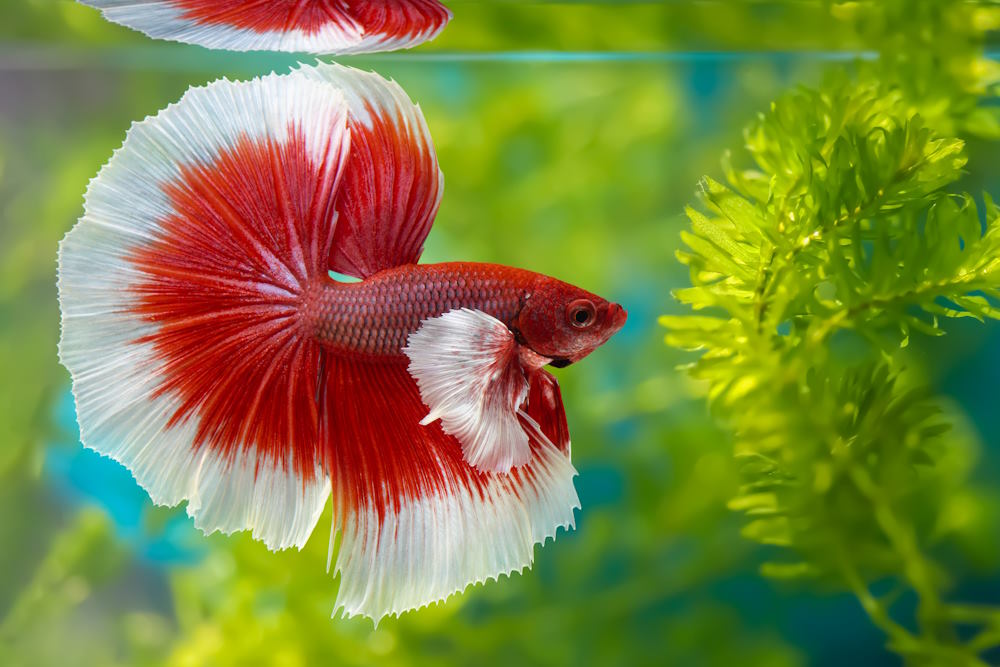
The main types of betta fish are tail-shape types, color types, pattern types, scale types, and body-size types. Popular tail shapes include veiltail, crowntail, halfmoon, plakat, doubletail, delta, and elephant ear. Popular color and pattern types include red, blue, marble, koi, butterfly, dragon scale, galaxy koi, and copper. Most bettas can be described by combining these traits, such as a koi plakat, blue halfmoon, or dragon scale halfmoon plakat.
Types of Betta Fish Comparison Table
| Type | Scientific Name | Main Group | Typical Habitat | Size | Key Feature |
|---|---|---|---|---|---|
| Veiltail Betta | Betta splendens | Tail shape | Captive freshwater aquariums; descended from Southeast Asian bettas | About 2.5–3 in | Long, drooping, asymmetrical tail |
| Crowntail Betta | Betta splendens | Tail shape | Captive freshwater aquariums | About 2.5–3 in | Spiky fin rays that look like a crown |
| Combtail Betta | Betta splendens | Tail shape | Captive freshwater aquariums | About 2.5–3 in | Mild crown-like edging on the fins |
| Halfmoon Betta | Betta splendens | Tail shape | Captive freshwater aquariums | About 2.5–3 in | Tail spreads close to 180 degrees |
| Over-Halfmoon Betta | Betta splendens | Tail shape | Captive freshwater aquariums | About 2.5–3 in | Tail spread can exceed 180 degrees |
| Rosetail Betta | Betta splendens | Tail shape | Captive freshwater aquariums | About 2.5–3 in | Ruffled fins with rose-petal branching |
| Feathertail Betta | Betta splendens | Tail shape | Captive freshwater aquariums | About 2.5–3 in | Extreme ruffled fins with feather-like edges |
| Plakat Betta | Betta splendens | Tail shape | Captive freshwater aquariums; resembles shorter-finned wild forms | About 2.5–3 in | Short fins and strong swimming ability |
| Halfmoon Plakat Betta | Betta splendens | Tail shape | Captive freshwater aquariums | About 2.5–3 in | Short fins with a broad halfmoon-style tail spread |
| Doubletail Betta | Betta splendens | Tail shape | Captive freshwater aquariums | About 2.5–3 in | Caudal fin divided into two lobes |
| Delta Tail Betta | Betta splendens | Tail shape | Captive freshwater aquariums | About 2.5–3 in | Triangular tail spread narrower than a halfmoon |
| Super Delta Betta | Betta splendens | Tail shape | Captive freshwater aquariums | About 2.5–3 in | Wider delta tail approaching halfmoon spread |
| Half-Sun Betta | Betta splendens | Tail shape | Captive freshwater aquariums | About 2.5–3 in | Halfmoon spread with crowntail-like ray extensions |
| Elephant Ear Betta | Betta splendens | Fin shape | Captive freshwater aquariums | About 2.5–3 in | Large pectoral fins, also called Dumbo betta |
| Spade Tail Betta | Betta splendens | Tail shape | Captive freshwater aquariums | About 2.5–3 in | Tail broad at base and tapering to a point |
| Round Tail Betta | Betta splendens | Tail shape | Captive freshwater aquariums | About 2.5–3 in | Rounded caudal fin with softer outline |
| Super Red Betta | Betta splendens | Color | Captive freshwater aquariums | About 2.5–3 in | Rich red coloration across body and fins |
| Royal Blue Betta | Betta splendens | Color | Captive freshwater aquariums | About 2.5–3 in | Deep blue coloration with iridescent shine |
| Turquoise or Green Betta | Betta splendens | Color | Captive freshwater aquariums | About 2.5–3 in | Blue-green iridescence that changes with light angle |
| Yellow Betta | Betta splendens | Color | Captive freshwater aquariums | About 2.5–3 in | Yellow to golden body or fins |
| Orange Betta | Betta splendens | Color | Captive freshwater aquariums | About 2.5–3 in | Orange body, fins, or spotted orange pattern |
| Black Melano Betta | Betta splendens | Color | Captive freshwater aquariums | About 2.5–3 in | Deep black coloration |
| Opaque White Betta | Betta splendens | Color | Captive freshwater aquariums | About 2.5–3 in | Solid white or milky body and fins |
| Cellophane Betta | Betta splendens | Color | Captive freshwater aquariums | About 2.5–3 in | Nearly transparent or flesh-toned fins and body |
| Copper Betta | Betta splendens | Color | Captive freshwater aquariums | About 2.5–3 in | Metallic copper, bronze, or steel-like shine |
| Mustard Gas Betta | Betta splendens | Color pattern | Captive freshwater aquariums | About 2.5–3 in | Dark body with yellow or orange fins |
| Marble Betta | Betta splendens | Color pattern | Captive freshwater aquariums | About 2.5–3 in | Irregular patches that may change over time |
| Koi Betta | Betta splendens | Color pattern | Captive freshwater aquariums | About 2.5–3 in | Koi-like patches of red, orange, black, white, or yellow |
| Galaxy Koi Betta | Betta splendens | Color pattern | Captive freshwater aquariums | About 2.5–3 in | Koi pattern with iridescent speckling |
| Butterfly Betta | Betta splendens | Color pattern | Captive freshwater aquariums | About 2.5–3 in | Fins show distinct color bands, often with pale edges |
| Dragon Scale Betta | Betta splendens | Scale pattern | Captive freshwater aquariums | About 2.5–3 in | Thick, bright scaling over the body |
| Samurai Betta | Betta splendens | Scale pattern | Captive freshwater aquariums | About 2.5–3 in | Partial dragon-like scaling, often on top of the body |
| Alien Betta | Betta splendens complex hybrid line | Hybrid-style appearance | Captive freshwater aquariums; influenced by wild betta appearance | About 2–3 in | Wild-looking body with metallic blue, green, or copper patterning |
| Giant Betta | Betta splendens | Body size | Captive freshwater aquariums | Often larger than standard domestic bettas | Selectively bred larger body size |
| Wild-Type Betta splendens | Betta splendens | Wild-type form | Shallow, vegetated freshwater habitats in Southeast Asia | About 2.5–3 in | Shorter fins and more natural green, brown, or muted tones |
| Nemo Betta | Betta splendens | Color pattern | Captive freshwater aquariums | About 2.5–3 in | Orange, red, yellow, and white patchwork pattern |
| Candy Betta | Betta splendens | Color pattern | Captive freshwater aquariums | About 2.5–3 in | Bright multicolor patches with a sweet, candy-like look |
| Grizzle Betta | Betta splendens | Color pattern | Captive freshwater aquariums | About 2.5–3 in | Fine speckling or mixed color flecks over the body and fins |
| Dalmatian Betta | Betta splendens | Color pattern | Captive freshwater aquariums | About 2.5–3 in | Spotted pattern, often on orange or pale fins |
| Multicolor Betta | Betta splendens | Color pattern | Captive freshwater aquariums | About 2.5–3 in | Three or more visible colors without one strict pattern |
| Pastel Betta | Betta splendens | Color | Captive freshwater aquariums | About 2.5–3 in | Soft pale shades such as pink, lavender, cream, or baby blue |
| Platinum Betta | Betta splendens | Color | Captive freshwater aquariums | About 2.5–3 in | Bright metallic white or silver-white sheen |
1. Veiltail Betta
Scientific name: Betta splendens. Main identification feature: Long, drooping, asymmetrical tail.
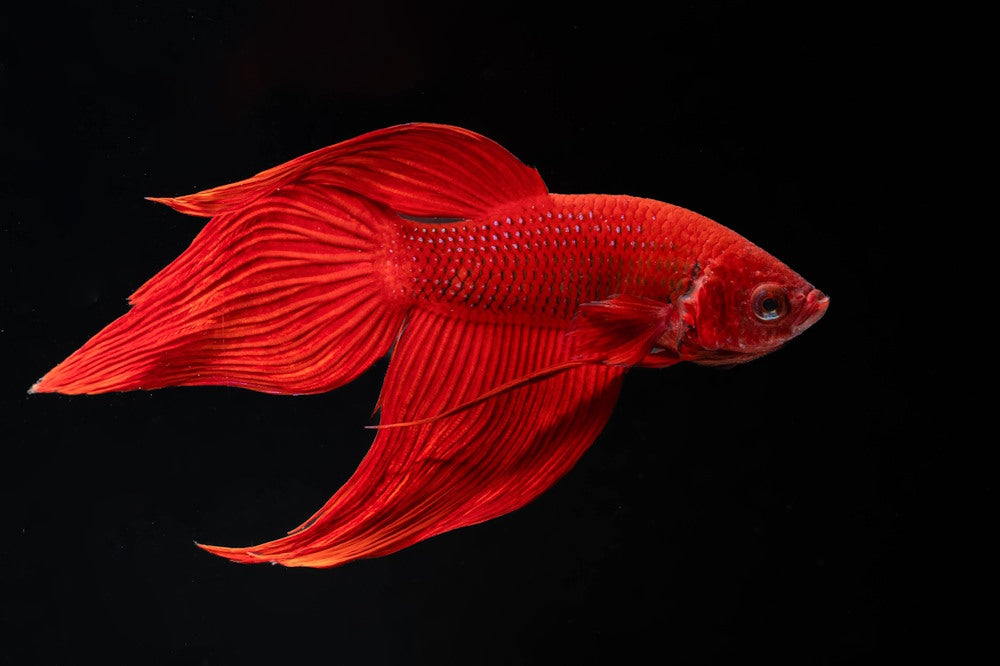
The veiltail betta is one of the most familiar betta varieties in the aquarium hobby. Its tail is long, soft, and downward-sweeping, giving the fish a graceful curtain-like look when it turns in the water. Many beginners first meet bettas through this type because veiltails are widely bred and commonly seen in pet shops.
A veiltail is best identified by the way the caudal fin trails behind the body instead of opening into a perfect fan. It may appear in red, blue, multicolor, marble, or many other color forms. Because the fins are long but not as heavy as some show strains, veiltails are usually easier swimmers than extreme rosetails or feathertails. Keep the current gentle, avoid sharp decorations, and check the edges of the fins often for tearing or fin rot.
2. Crowntail Betta
Scientific name: Betta splendens. Main identification feature: Spiky fin rays that look like a crown.
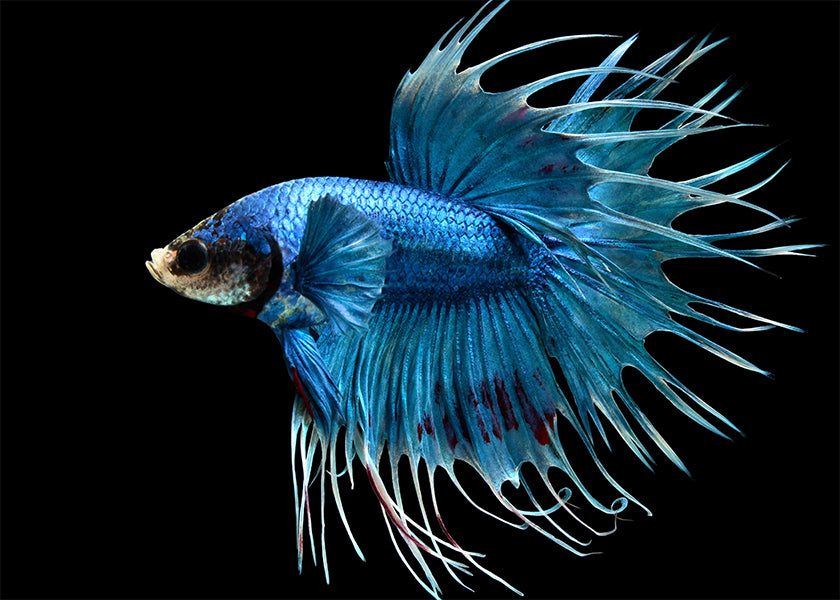
The crowntail betta is easy to recognize because the fin rays extend beyond the webbing, creating a spiked or crown-like outline. When the fish flares, the tail can look dramatic and almost flame-shaped. This variety is popular with aquarists who want a bold betta that looks different from the smoother halfmoon or veiltail forms.
Good crowntails have clear, even ray extension rather than ragged damage. Beginners should learn this difference because poor water quality or fin nipping can make a normal betta look frayed. Crowntails do best in clean, warm, low-flow aquariums with soft plants and open swimming space. The reduced webbing can make the fins look delicate, so stable water quality is especially important.
3. Combtail Betta
Scientific name: Betta splendens. Main identification feature: Mild crown-like edging on the fins.
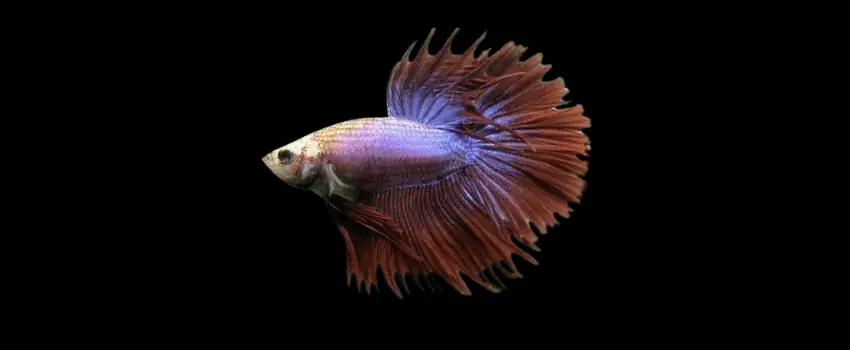
A combtail betta looks like a softer version of a crowntail. The rays extend slightly past the fin webbing, but the spikes are not as deep or pronounced. This gives the tail a combed edge rather than a full crown. Many combtails come from breeding crowntail lines with other fin types.
This variety is useful for beginners because it shows crown-style texture without always having the very dramatic ray reduction of a crowntail. Identification is easiest when the fish flares: look for small, regular points around the tail, dorsal fin, and anal fin. Like other long-finned bettas, combtails need gentle filtration and smooth tank decor so the fin edges stay clean and undamaged.
4. Halfmoon Betta
Scientific name: Betta splendens. Main identification feature: Tail spreads close to 180 degrees.
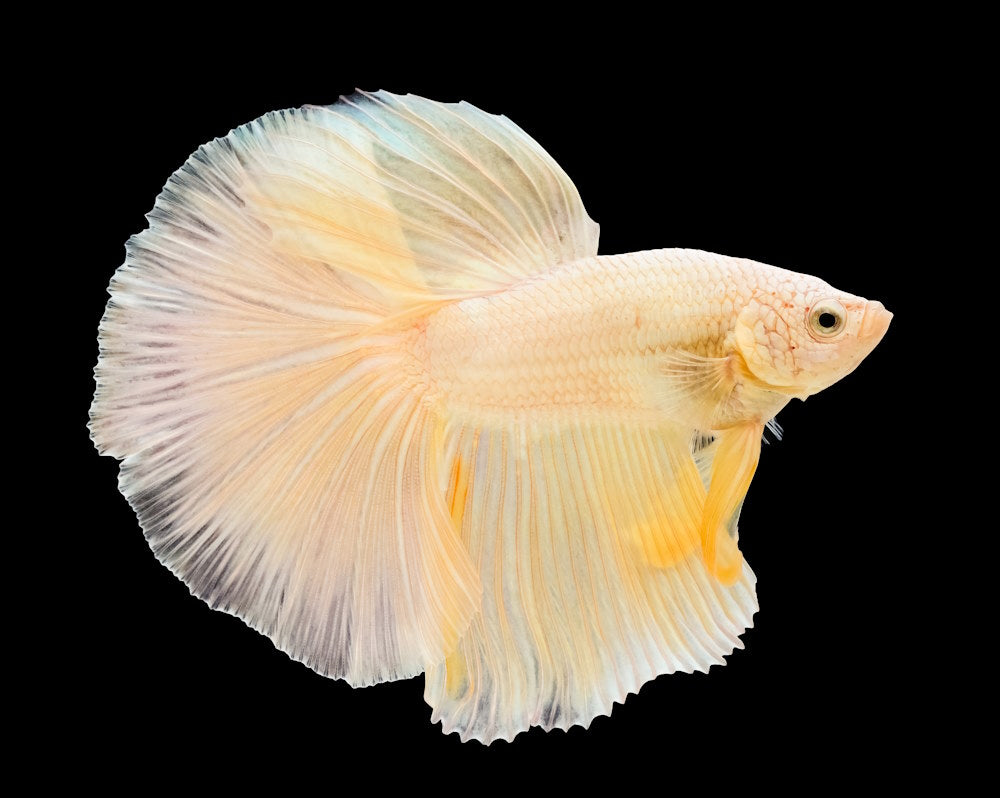
The halfmoon betta is one of the most admired show-style bettas. Its caudal fin opens into a broad semicircle that can approach 180 degrees when the fish flares. The best examples have straight, clean tail edges and a balanced look between the dorsal, caudal, and anal fins.
Halfmoons are stunning, but their broad fins can be heavier than simpler tail forms. They may tire in strong current, so a sponge filter or adjustable low-flow filter is often better than a powerful outlet. When choosing a halfmoon, look for active swimming, intact fin edges, and a body that is not bent or overly burdened by finnage. A healthy halfmoon should still move confidently, not just drift under the weight of its tail.
5. Over-Halfmoon Betta
Scientific name: Betta splendens. Main identification feature: Tail spread can exceed 180 degrees.
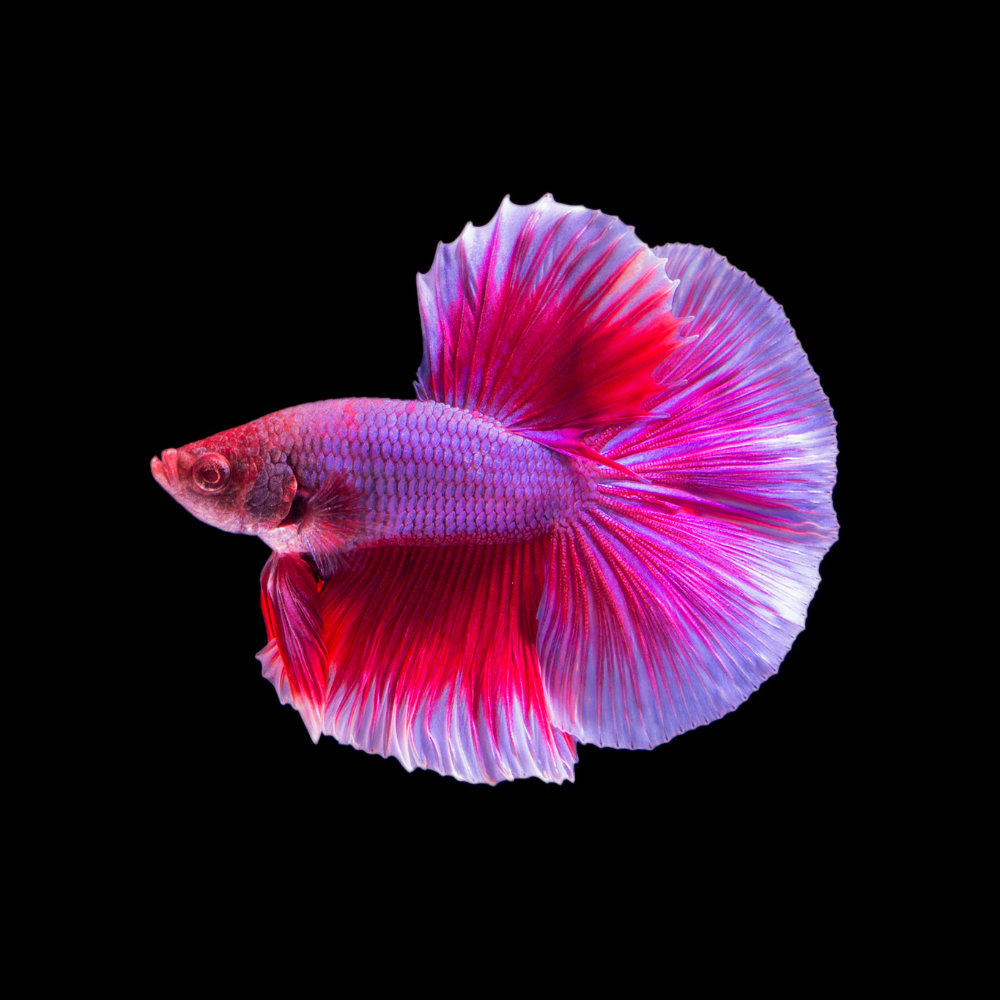
An over-halfmoon betta is bred for a tail spread that goes beyond the classic halfmoon angle. At full display, the caudal fin can appear wider than a semicircle, creating an impressive fan shape. This makes the fish a strong visual centerpiece in a planted aquarium or photo setup.
The tradeoff is that extreme finnage can reduce swimming efficiency. Over-halfmoons need calm water, resting spots near the surface, and careful observation for fin curling, tears, or fatigue. They are best for keepers who enjoy detailed maintenance and can keep water parameters stable. If the fish struggles to swim, the beauty of the tail is no longer a benefit to the animal.
6. Rosetail Betta
Scientific name: Betta splendens. Main identification feature: Ruffled fins with rose-petal branching.

The rosetail betta is a dramatic halfmoon-related type with extra branching in the fin rays. This creates overlapping, ruffled fin edges that can resemble rose petals. Under good lighting, a rosetail can look almost like a moving flower in the aquarium.
Rosetails are beautiful but not the easiest choice for a first betta. The extra fin branching may make the fins heavy and more prone to folding, tearing, or trapping debris. These fish need excellent water quality, low current, and smooth aquascaping. Choose a rosetail only if it is active and able to reach the surface comfortably, because bettas must access surface air.
7. Feathertail Betta
Scientific name: Betta splendens. Main identification feature: Extreme ruffled fins with feather-like edges.
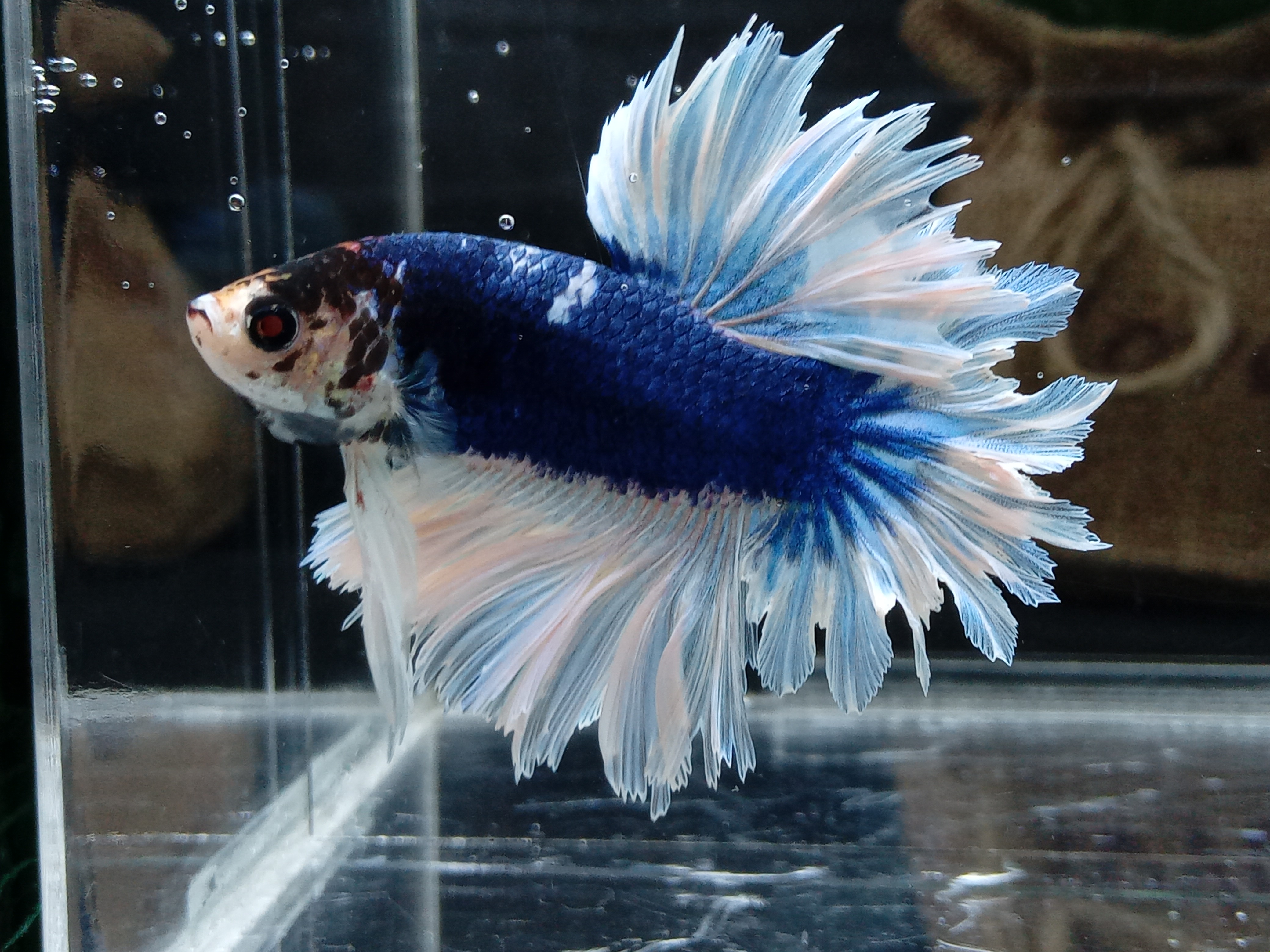
The feathertail betta is an extreme form related to rosetail lines. Its fins show heavy branching and an irregular, feathered outline. The result can be striking, especially when the fish is still or flaring, but the shape is also one of the more delicate betta forms.
Because the fins are highly elaborate, feathertails are best kept by aquarists who prioritize welfare over appearance. Use a spacious tank, very gentle flow, clean warm water, and broad resting leaves. Avoid chasing the fish for display photos, because heavy-finned bettas can become stressed quickly. If a feathertail is clamped, inactive, or unable to swim normally, the setup needs attention immediately.
8. Plakat Betta
Scientific name: Betta splendens. Main identification feature: Short fins and strong swimming ability.

The plakat betta has short fins and a compact, athletic look. This form is closer in outline to many wild-type bettas than the long-finned ornamental strains. Plakats are often active swimmers and may look more powerful than veiltails, halfmoons, or rosetails.
A plakat is a good choice for keepers who want a hardy-looking betta with less risk of fin dragging. However, short fins do not mean the fish is automatically peaceful. Males can still be territorial, and some plakats are very bold. Provide a secure lid, warm water, plants, and visual breaks so the fish can patrol without becoming constantly stressed.
9. Halfmoon Plakat Betta
Scientific name: Betta splendens. Main identification feature: Short fins with a broad halfmoon-style tail spread.
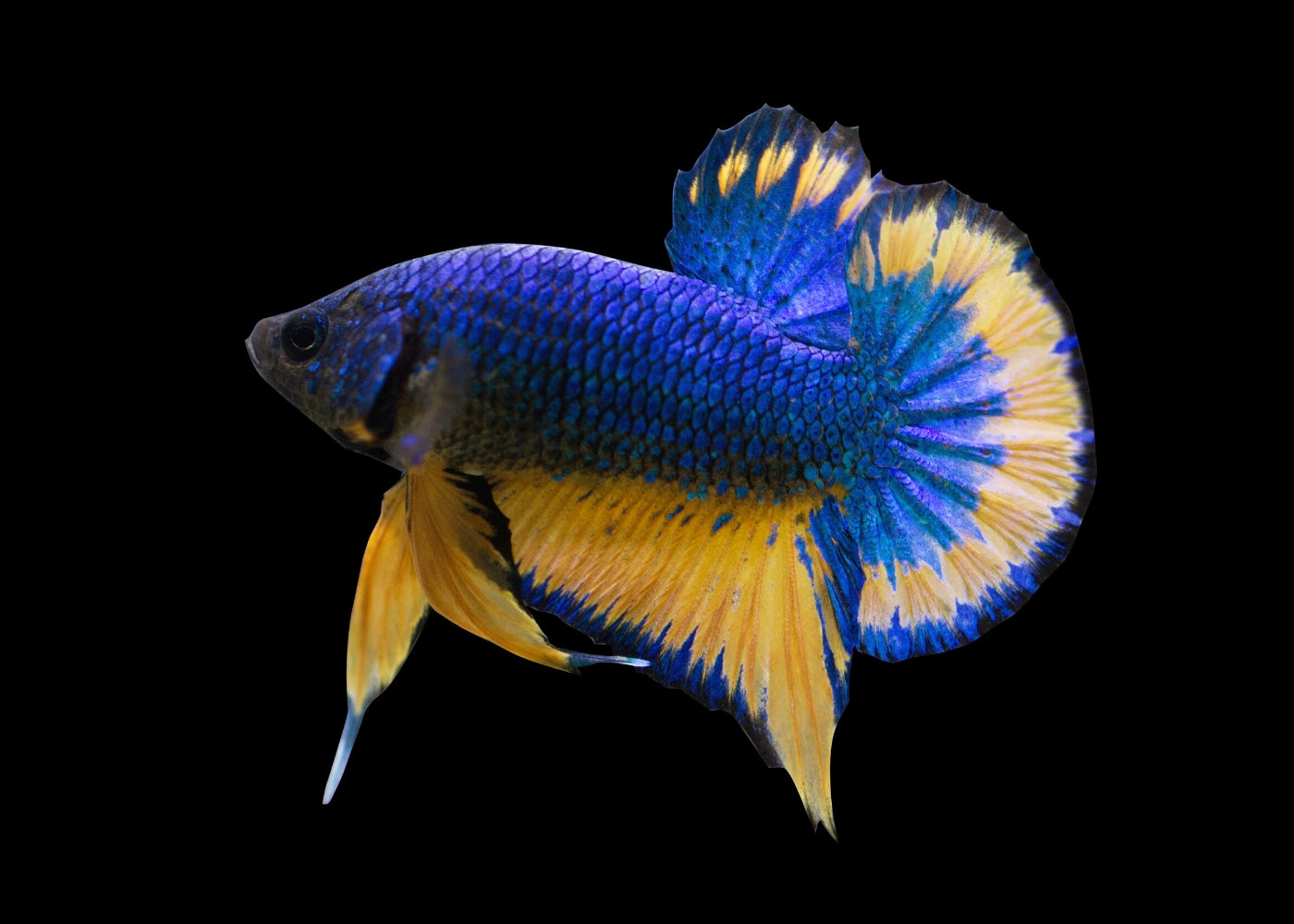
The halfmoon plakat combines the short-fin strength of a plakat with the broad tail angle of a halfmoon. It is often abbreviated as HMPK in the aquarium hobby. When the fish flares, the tail opens wide, but the fin length remains practical and compact.
This type is popular because it balances beauty with swimming ability. A healthy halfmoon plakat should move quickly, turn easily, and display without seeming weighed down. Identification depends on both traits: short finnage and a wide, symmetrical caudal spread. Give it enough room to explore because this variety is often more active than many long-finned bettas.
10. Doubletail Betta
Scientific name: Betta splendens. Main identification feature: Caudal fin divided into two lobes.
The doubletail betta has a caudal fin split into two distinct lobes. Many also show a broader dorsal fin, which can make the whole fish look fuller and more symmetrical. A good doubletail appears balanced rather than simply having a torn tail.
This variety needs careful selection because some doubletail lines can be associated with shorter bodies or spinal issues. Look for a fish that swims straight, has a smooth back line, and uses both tail lobes evenly. In the aquarium, the same care rules apply: warm water, gentle flow, soft plants, and no sharp rocks or plastic edges that could catch the fins.
11. Delta Tail Betta
Scientific name: Betta splendens. Main identification feature: Triangular tail spread narrower than a halfmoon.
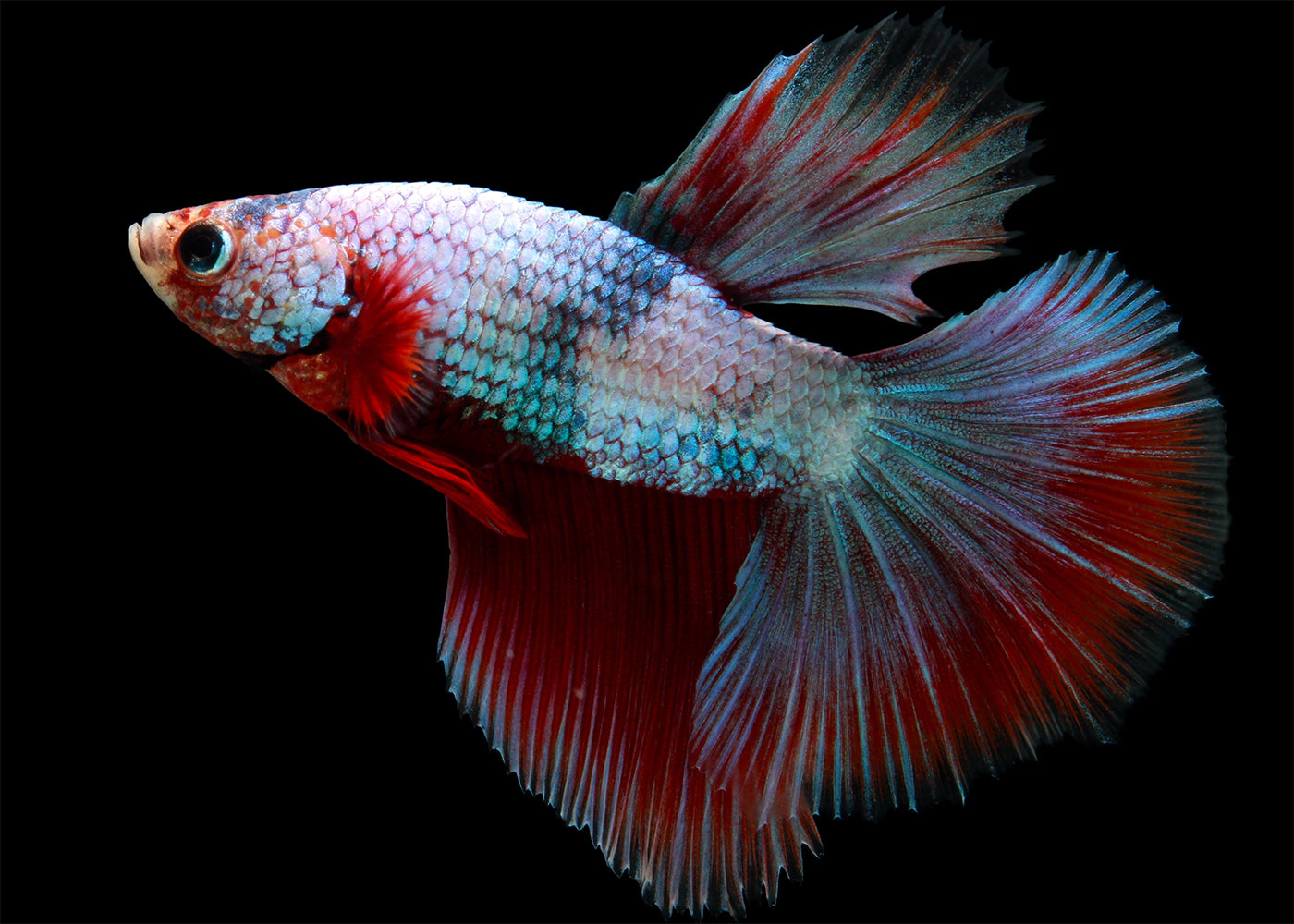
A delta tail betta has a triangular caudal fin that widens from the body toward the outer edge. The name comes from the Greek letter delta, which resembles a triangle. Delta tails are usually less extreme than halfmoons, making them attractive without always carrying the same fin weight.
This type is useful for readers trying to tell similar bettas apart. If the tail opens wide but does not reach the full halfmoon semicircle, it may be a delta. Good delta tails look clean, even, and proportional to the body. They are a pleasant middle ground for aquarists who want a broad tail but prefer a fish that still swims comfortably.
12. Super Delta Betta
Scientific name: Betta splendens. Main identification feature: Wider delta tail approaching halfmoon spread.

The super delta betta sits between a delta and a halfmoon. Its tail spreads wider than a standard delta but usually does not make a perfect 180-degree halfmoon. This makes it a common label for fish with impressive fan-shaped tails that fall just short of halfmoon standards.
When identifying a super delta, watch the fish during a natural flare rather than judging it while it is resting. The tail should open broadly, with straight or gently curved edges. Care is similar to other long-finned varieties: keep flow gentle, maintain clean water, and avoid fin-nipping tank mates. A super delta can be a good display fish without being as extreme as over-halfmoon forms.
13. Half-Sun Betta
Scientific name: Betta splendens. Main identification feature: Halfmoon spread with crowntail-like ray extensions.
The half-sun betta combines two dramatic traits: a broad halfmoon-style tail and a crowntail-like edge. The result can look like a rising sun, with the tail opening wide while the fin rays create pointed details around the margin.
This type is less common than veiltail, crowntail, or halfmoon bettas. Identification depends on both the overall tail spread and the ray extension. Because the fin shape is complex, keep the tank simple and safe: gentle filtration, smooth hiding places, and stable temperature. If the fin edge begins to look uneven, compare it with earlier photos so you can tell natural ray extension from damage.
14. Elephant Ear Betta
Scientific name: Betta splendens. Main identification feature: Large pectoral fins, also called Dumbo betta.
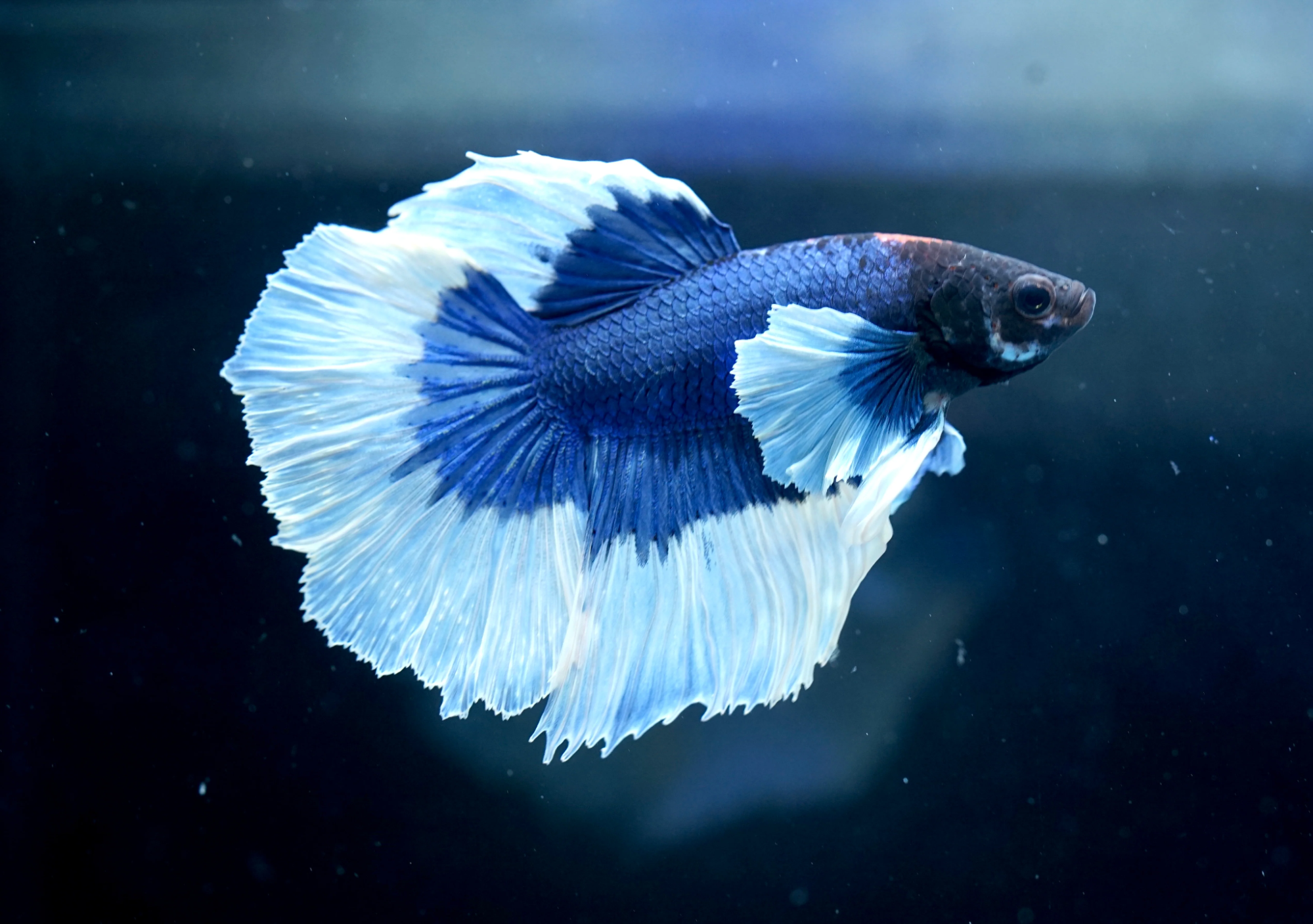
The elephant ear betta, also called the dumbo betta, is named for its oversized pectoral fins. These side fins move like little fans beside the body and can be white, pastel, blue, red, or patterned. The tail may be halfmoon, plakat, delta, or another form, so elephant ear describes the pectoral fins rather than the caudal tail alone.
This variety is especially charming because the fish appears to paddle through the water with large side fins. Those fins can also be targets for nipping, so choose tank mates carefully or keep the betta alone. A calm aquarium with soft plants and open swimming lanes helps the fish use its large pectorals without scraping them against decor.
15. Spade Tail Betta
Scientific name: Betta splendens. Main identification feature: Tail broad at base and tapering to a point.
The spade tail betta has a caudal fin shaped like a playing-card spade. It is wider near the body and tapers toward a central point. This form is not as commonly discussed as halfmoon or crowntail bettas, but it is a useful identification category for fish with a pointed, balanced tail outline.
Spade tails are often appreciated because the tail can look elegant without being extremely heavy. To identify one, view the fish from the side when it is relaxed and again when it flares. The pointed end should be part of the natural fin shape, not the result of a tear. As always, clean water and smooth decor are the best protection for the tail edge.
16. Round Tail Betta
Scientific name: Betta splendens. Main identification feature: Rounded caudal fin with softer outline.
A round tail betta has a caudal fin with a rounded, simple outline rather than a sharp spade, drooping veil, or wide halfmoon fan. It is often seen in shorter-finned or less exaggerated bettas and can look closer to a natural fish shape than highly ornamental forms.
This type may not always be sold under a special label, but recognizing it helps readers avoid forcing every betta into a show category. Round tails can be attractive, active, and practical. The care needs are the same as other domestic bettas, but the lower fin burden can make swimming easier. For a beginner, a healthy round tail may be a better choice than a fragile extreme-finned fish.
17. Super Red Betta
Scientific name: Betta splendens. Main identification feature: Rich red coloration across body and fins.
The super red betta is bred for strong, saturated red color. A high-quality red fish should look vivid on the body and fins, without large washed-out patches unless it is intentionally patterned. Red is one of the classic betta colors and appears in many tail types, including plakat, halfmoon, crowntail, and veiltail.
Color alone does not determine care. A super red halfmoon may need more fin protection than a super red plakat, while both need warm, clean water and a protein-rich diet. When choosing a red betta, look for clear eyes, smooth scales, active movement, and fins that are open rather than clamped. Avoid buying only for color if the fish looks weak or stressed.
18. Royal Blue Betta
Scientific name: Betta splendens. Main identification feature: Deep blue coloration with iridescent shine.
The royal blue betta is one of the most recognizable blue color forms. Under aquarium lighting, the body and fins can glow with a rich blue tone that shifts slightly as the fish moves. Blue bettas may be solid, multicolor, marble, butterfly, or dragon scale depending on the pattern layered over the base color.
Identification is mostly visual, but lighting matters. A blue fish may look darker in a dim tank and brighter under full-spectrum aquarium light. Do not use excessive lighting just to intensify color; bettas need a regular day-night rhythm and places to rest. Healthy royal blue bettas should keep their color, appetite, and curiosity when water conditions are stable.
19. Turquoise or Green Betta
Scientific name: Betta splendens. Main identification feature: Blue-green iridescence that changes with light angle.
Turquoise and green bettas are admired for their iridescent color. The fish may look blue-green, teal, emerald, or metallic depending on lighting and viewing angle. True green can be harder to find than common blue, but many turquoise bettas give a beautiful green impression in a planted aquarium.
Because iridescent colors shift, take time to observe the fish from different angles before deciding how to describe it. A turquoise halfmoon, green alien, or teal plakat may all be marketed differently by sellers. The best approach is to note the visible color, tail type, and pattern instead of relying only on store labels. A dark background and live plants often make green tones stand out naturally.
20. Yellow Betta
Scientific name: Betta splendens. Main identification feature: Yellow to golden body or fins.
Yellow bettas can range from pale lemon to deeper golden yellow. Some are nearly solid yellow, while others carry yellow fins with darker bodies, marble markings, or multicolor patterns. A clean yellow betta can look especially bright in a planted tank because the warm color contrasts with green leaves.
When identifying a yellow betta, separate true yellow from gold, orange, or mustard gas patterns. Young fish and marble lines may also change color over time. Feed a quality betta diet, keep the water clean, and avoid overusing color-enhancing claims from products. Good care supports natural color, but genetics decide the main shade.
21. Orange Betta
Scientific name: Betta splendens. Main identification feature: Orange body, fins, or spotted orange pattern.

Orange bettas are less common than red or blue bettas and can be very eye-catching. The color may appear as a solid tangerine shade, a softer peach tone, or part of a koi, marble, or dalmatian pattern. Orange is often most impressive under balanced lighting that does not wash out warm colors.
Some orange bettas develop speckles or changing patches as they age, especially if they carry marble genetics. This is why photographing the fish when you bring it home can be helpful. If the color changes but the fish remains active, eating, and free of lesions, the shift may be natural pattern development rather than illness. Sudden dullness with clamped fins, however, should prompt a water-quality check.
22. Black Melano Betta
Scientific name: Betta splendens. Main identification feature: Deep black coloration.
Black bettas are striking because they contrast strongly with green plants, pale sand, and bright tank lighting. The term melano is often used for deep black lines, although hobby naming can vary. Some black bettas are solid, while others have blue, copper, red, or marble influences.
A healthy black betta should still show clear body shape, open fins, and normal behavior. Very dark color can make it harder to see early signs of injury, so inspect the fish closely during feeding. Look at fin edges, scales, eyes, and breathing rate. Black bettas can be kept like other domestic bettas, but good lighting and observation are useful for routine health checks.
23. Opaque White Betta
Scientific name: Betta splendens. Main identification feature: Solid white or milky body and fins.
The opaque white betta has a milky white appearance that may cover the body and fins. Some are pure-looking white, while others show hints of pastel, metallic, or cellophane influence. A white betta can look elegant in a natural aquascape, especially against dark wood or green plants.
White fish require careful observation because pale color can make stress stripes, wounds, or mild discoloration easier to notice. At the same time, normal iridescence or slight cream tones should not be confused with disease. The fish should be active, responsive, and able to swim without clamping its fins. Keep the aquarium clean because dirt and algae show quickly around pale fish and pale decor.
24. Cellophane Betta
Scientific name: Betta splendens. Main identification feature: Nearly transparent or flesh-toned fins and body.
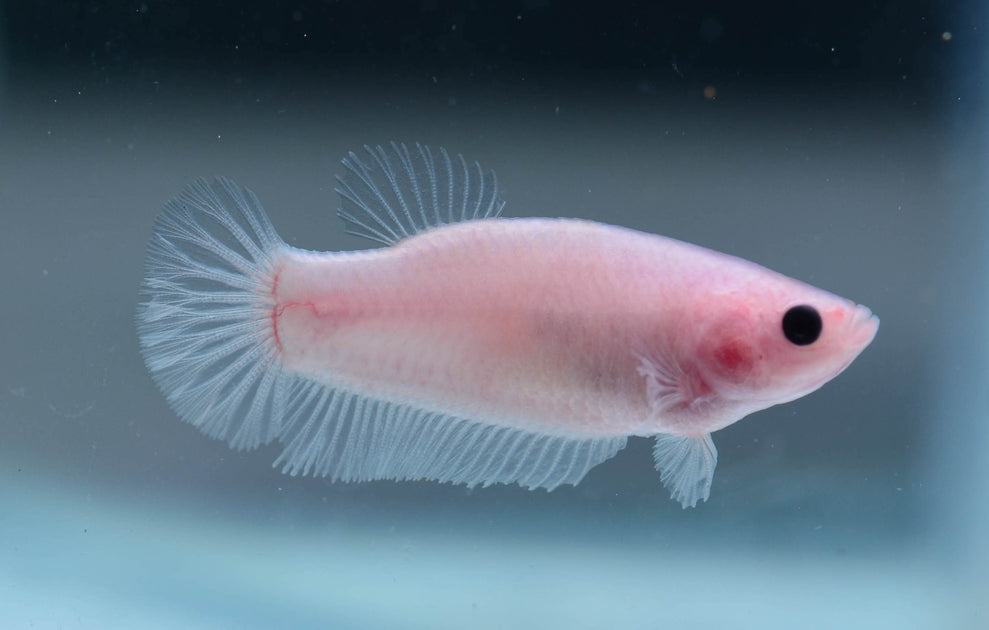
A cellophane betta has little visible pigment, giving the fins and sometimes the body a translucent or flesh-toned look. This variety is subtle compared with bright red or blue bettas, but it is interesting for keepers who enjoy unusual genetics and delicate appearances.
Cellophane should not be confused with a sick, faded fish. The key is behavior and overall condition. A healthy cellophane betta will still be alert, eat well, hold its fins normally, and show smooth scales. Because the pale body can reveal internal tones, changes may look dramatic. Stable water quality and a calm environment help prevent stress-related fading or clamping.
25. Copper Betta
Scientific name: Betta splendens. Main identification feature: Metallic copper, bronze, or steel-like shine.
The copper betta is known for metallic shine. Depending on the light, it may look bronze, silver, lavender, blue, or greenish. This reflective quality makes copper bettas very photogenic, but it can also make color labels confusing because the same fish may appear different from one angle to another.
Copper can combine with marble, dragon scale, halfmoon, plakat, or other traits. For identification, describe both the metallic layer and the body pattern. A copper plakat, for example, is different from a copper halfmoon in swimming style and fin-care needs. Use moderate lighting and avoid mirror overstimulation; the fish does not need to flare constantly to show its shine.
26. Mustard Gas Betta
Scientific name: Betta splendens. Main identification feature: Dark body with yellow or orange fins.
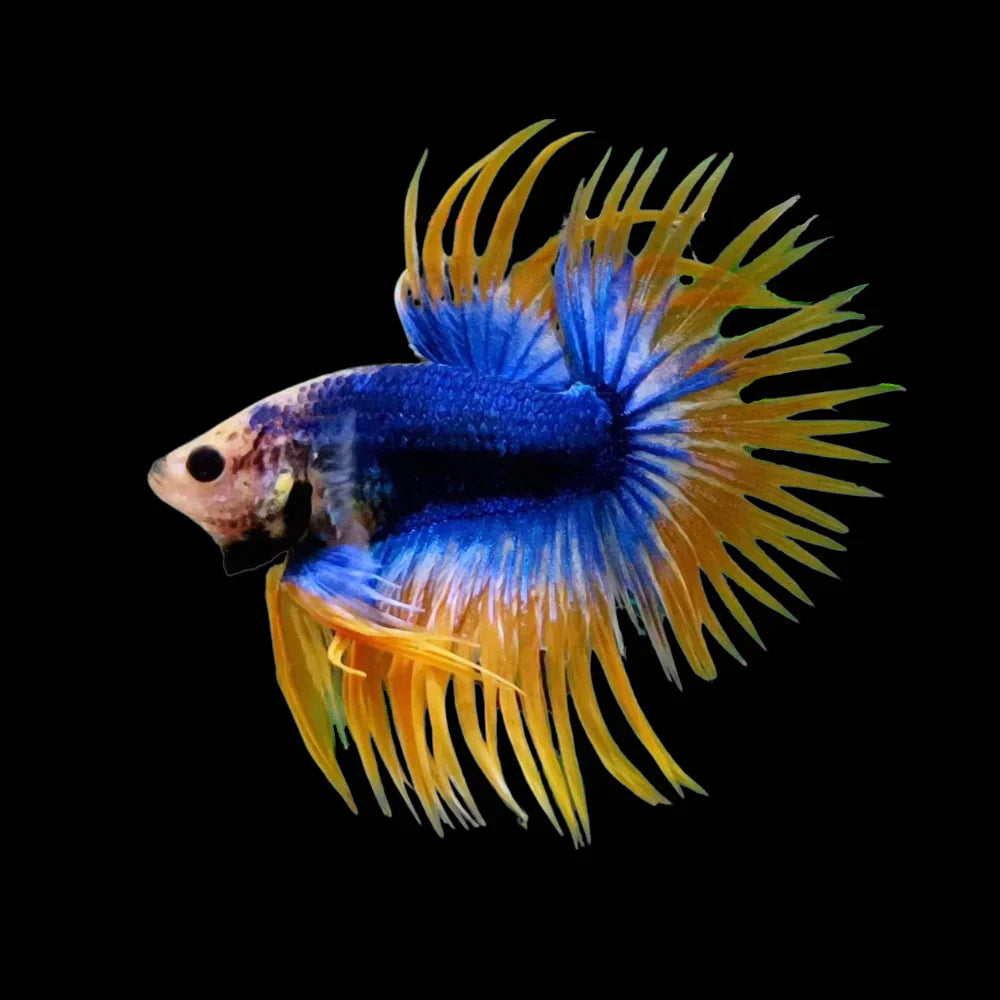
The mustard gas betta is a popular bicolor pattern usually described as a darker blue, green, or blackish body with yellow to orange fins. The contrast between cool body color and warm fins gives the fish a bold, high-impact look.
Because sellers may use the name loosely, focus on the pattern rather than the label. A true-looking mustard gas betta should show a strong two-tone effect, not just a random multicolor mix. Like other colorful bettas, it may appear in different tail forms. The care priority is not the color name but the fish’s health: clean water, stable warmth, good food, and a tank that does not damage the fins.
27. Marble Betta
Scientific name: Betta splendens. Main identification feature: Irregular patches that may change over time.
The marble betta is famous for unpredictable color patches. A marble fish may show white, blue, black, red, yellow, or other colors in irregular patterns, and those patches can shift as the fish matures. This makes marble bettas exciting for aquarists who enjoy watching a fish change over time.
Marbling is one reason two photos of the same betta taken months apart may look surprisingly different. Not every color change is dangerous, but sudden fading combined with lethargy, clamped fins, or appetite loss is a warning sign. Keep a simple photo record and judge changes alongside behavior. A healthy marble betta should remain active and curious even if its pattern evolves.
28. Koi Betta
Scientific name: Betta splendens. Main identification feature: Koi-like patches of red, orange, black, white, or yellow.
The koi betta is a marble-based pattern inspired by the patchy look of koi carp. These bettas often show red, orange, black, white, and yellow markings on a compact body, especially in plakat lines. A good koi betta looks like a tiny living painting, with uneven but attractive patches.
Koi bettas are not actual koi and should not be treated like pond fish. They are still tropical bettas that need warm freshwater aquariums, access to surface air, and careful feeding. Because many koi bettas are plakats, they can be active and confident swimmers. Watch for changing colors over time, which is common in marble-related lines.
29. Galaxy Koi Betta
Scientific name: Betta splendens. Main identification feature: Koi pattern with iridescent speckling.
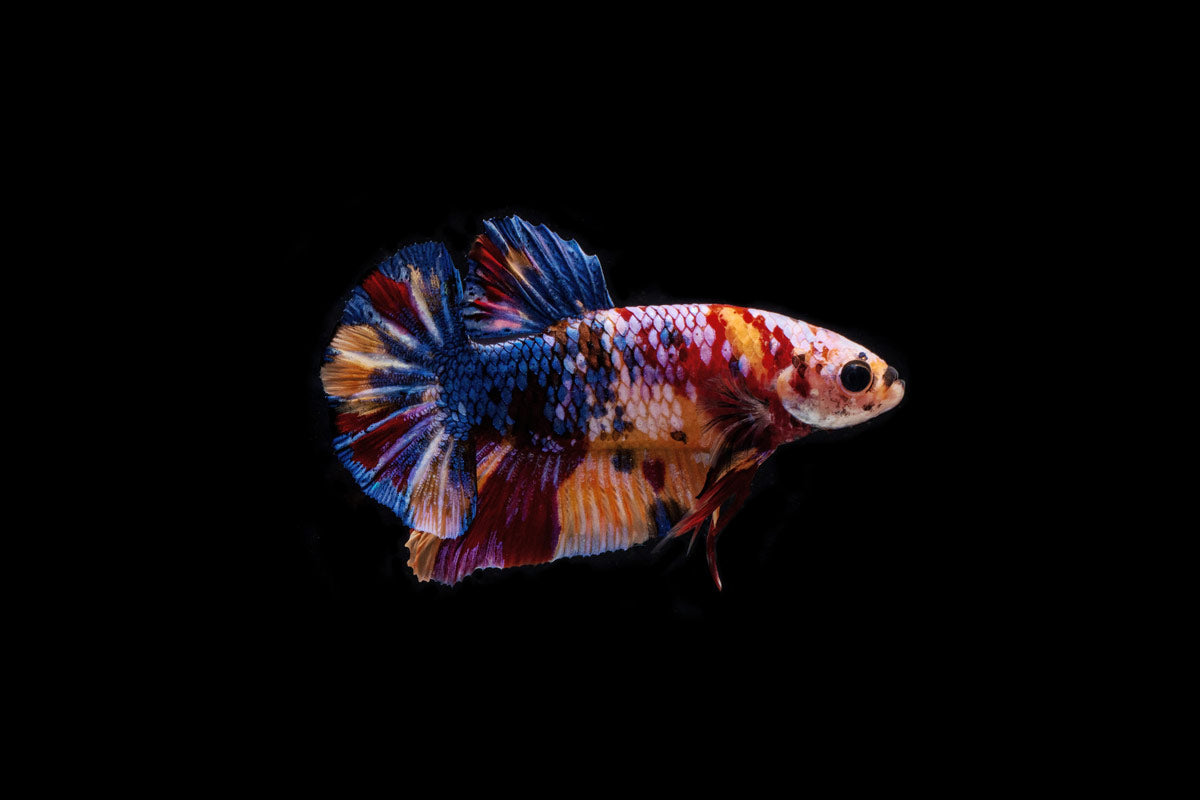
The galaxy koi betta builds on the koi look by adding shiny, iridescent speckles or patches. These reflective spots can look like stars scattered over a koi-style base pattern. Galaxy koi plakats are especially popular because the short fins keep the body pattern easy to see.
This variety is usually selected for appearance, but health should come first. Choose a fish with smooth scales, normal breathing, clear eyes, and balanced swimming. Heavy metallic or dragon-type scaling can sometimes make it harder to notice subtle body issues, so inspect the fish from both sides. In a planted tank, galaxy koi bettas often stand out best under moderate, natural-looking light.
30. Butterfly Betta
Scientific name: Betta splendens. Main identification feature: Fins show distinct color bands, often with pale edges.
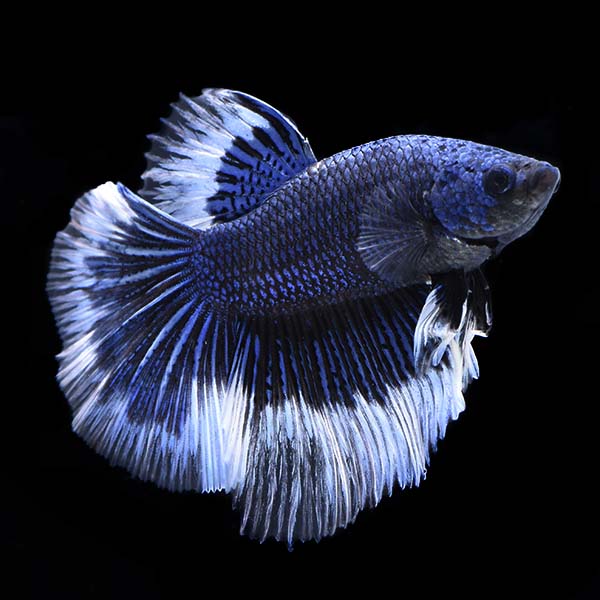
The butterfly betta has a banded fin pattern, often with a stronger body color near the base of the fins and a clear, white, or contrasting band toward the edges. The pattern can appear on halfmoons, veiltails, plakats, and other tail types.
A clean butterfly pattern is easiest to see when the fins are fully open. Look for a noticeable separation between color zones rather than random marbling. Because the pale fin edge can make damage more visible, butterfly bettas should be kept away from fin-nipping fish and sharp decorations. Smooth plants, soft resting spots, and stable water help preserve the crisp fin pattern.
31. Dragon Scale Betta
Scientific name: Betta splendens. Main identification feature: Thick, bright scaling over the body.
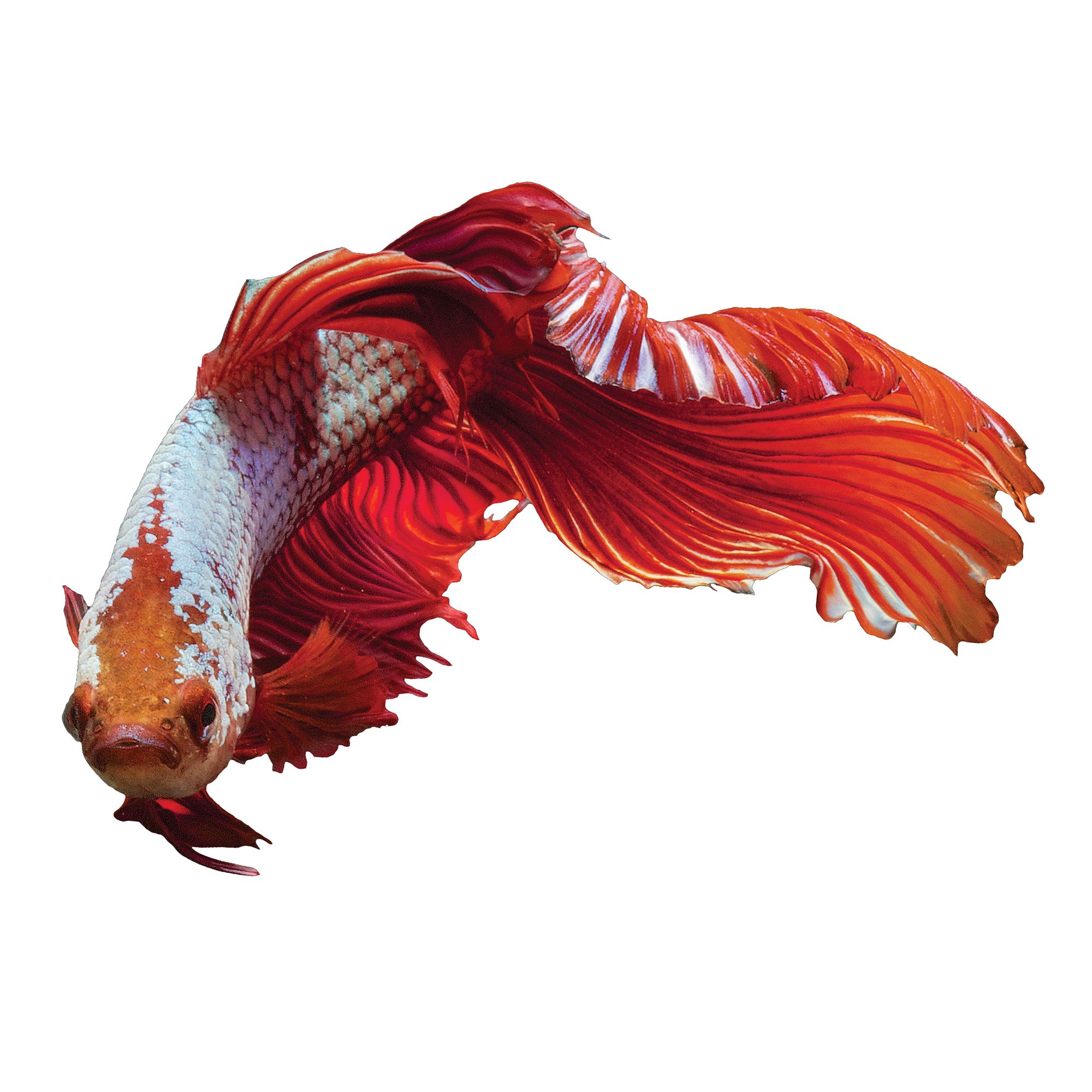
The dragon scale betta has a heavy, armor-like layer of pale or metallic scaling over the body. The scales may look white, silver, copper, or platinum against a darker base. This gives the fish a bold, textured appearance that is very different from smooth solid-color bettas.
Dragon scale is a body-scale trait rather than a tail shape, so it can appear in plakats, halfmoons, and other forms. Keepers should observe the eyes and face carefully because heavy scaling in some lines may grow over sensitive areas. Choose fish with clear, unobstructed eyes and normal feeding behavior. A dragon scale betta can be stunning, but the fish should never be selected for extreme scaling at the expense of comfort.
32. Samurai Betta
Scientific name: Betta splendens. Main identification feature: Partial dragon-like scaling, often on top of the body.
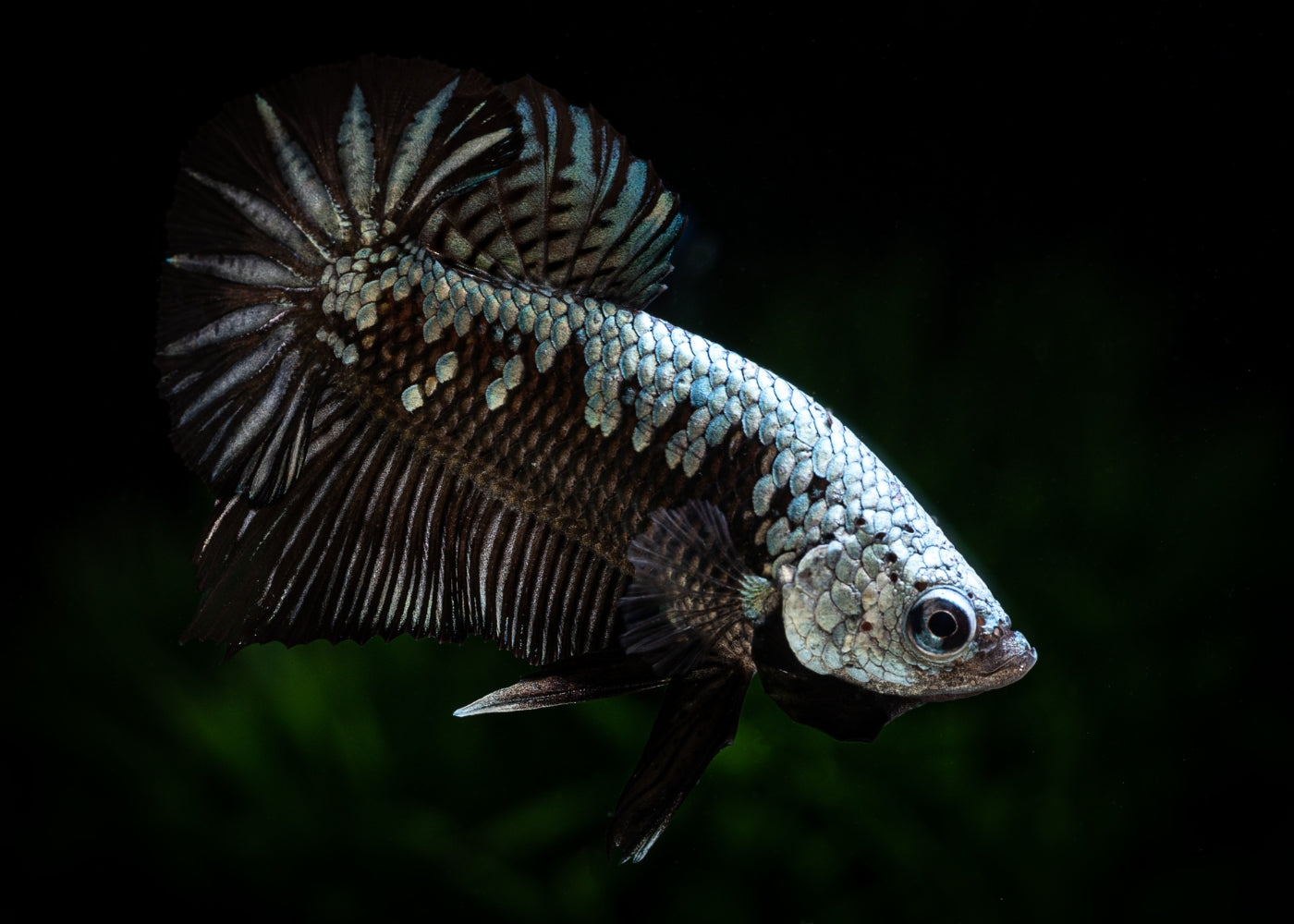
The samurai betta is often described as a dragon-scale style pattern with metallic scaling concentrated over part of the body, commonly along the top or front. Many samurai bettas have a dark base with bright silver, white, or metallic scales that create a mask-like or armor-like effect.
Because hobby names vary, samurai may overlap with dragon, black dragon, or metallic plakat labels. The practical identification point is the partial, high-contrast scaling. As with dragon scale bettas, check that the eyes are clear and not covered by excessive scale growth. A healthy samurai betta should swim, feed, and explore normally, not just look impressive in a sales photo.
33. Alien Betta
Scientific name: Betta splendens complex hybrid line. Main identification feature: Wild-looking body with metallic blue, green, or copper patterning.
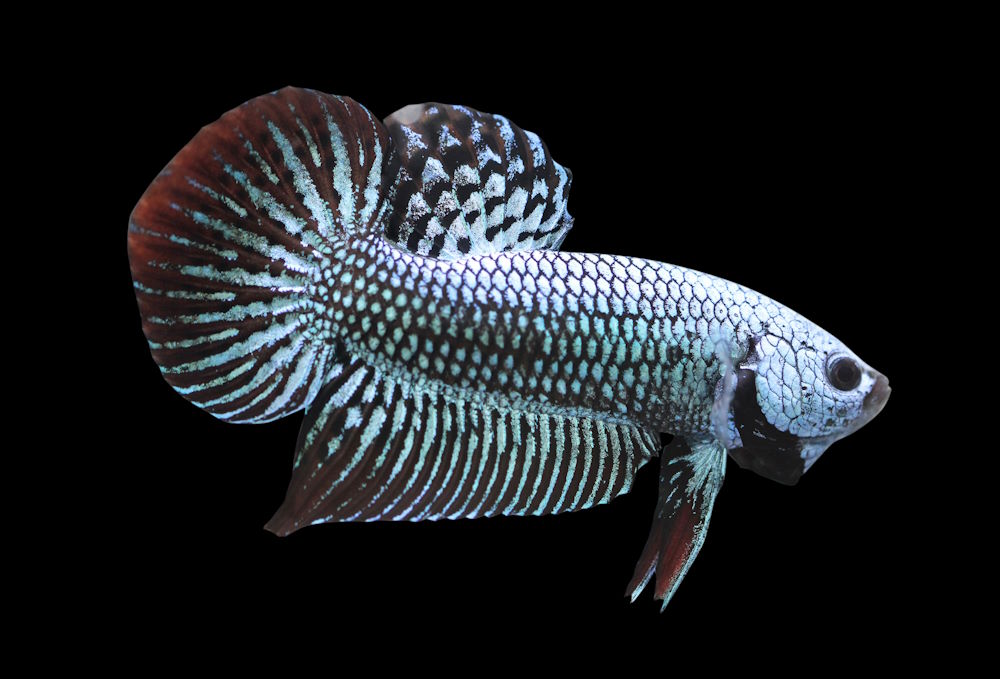
The alien betta is a modern hobby type known for a wild-looking body, strong iridescence, and patterned scales. Many alien bettas have blue, green, copper, or black tones that give them a sleek, natural yet metallic appearance. They are usually short-finned and active, making the body pattern easy to appreciate.
Alien bettas are often described as hybrid lines connected with the Betta splendens complex rather than a separate wild species sold under one simple scientific name. This matters because buyers should not assume every alien betta is a pure wild fish. Care is similar to domestic bettas: warm, clean water, a secure lid, protein-rich food, and low stress. Their active nature makes planted aquariums especially suitable.
34. Giant Betta
Scientific name: Betta splendens. Main identification feature: Selectively bred larger body size.
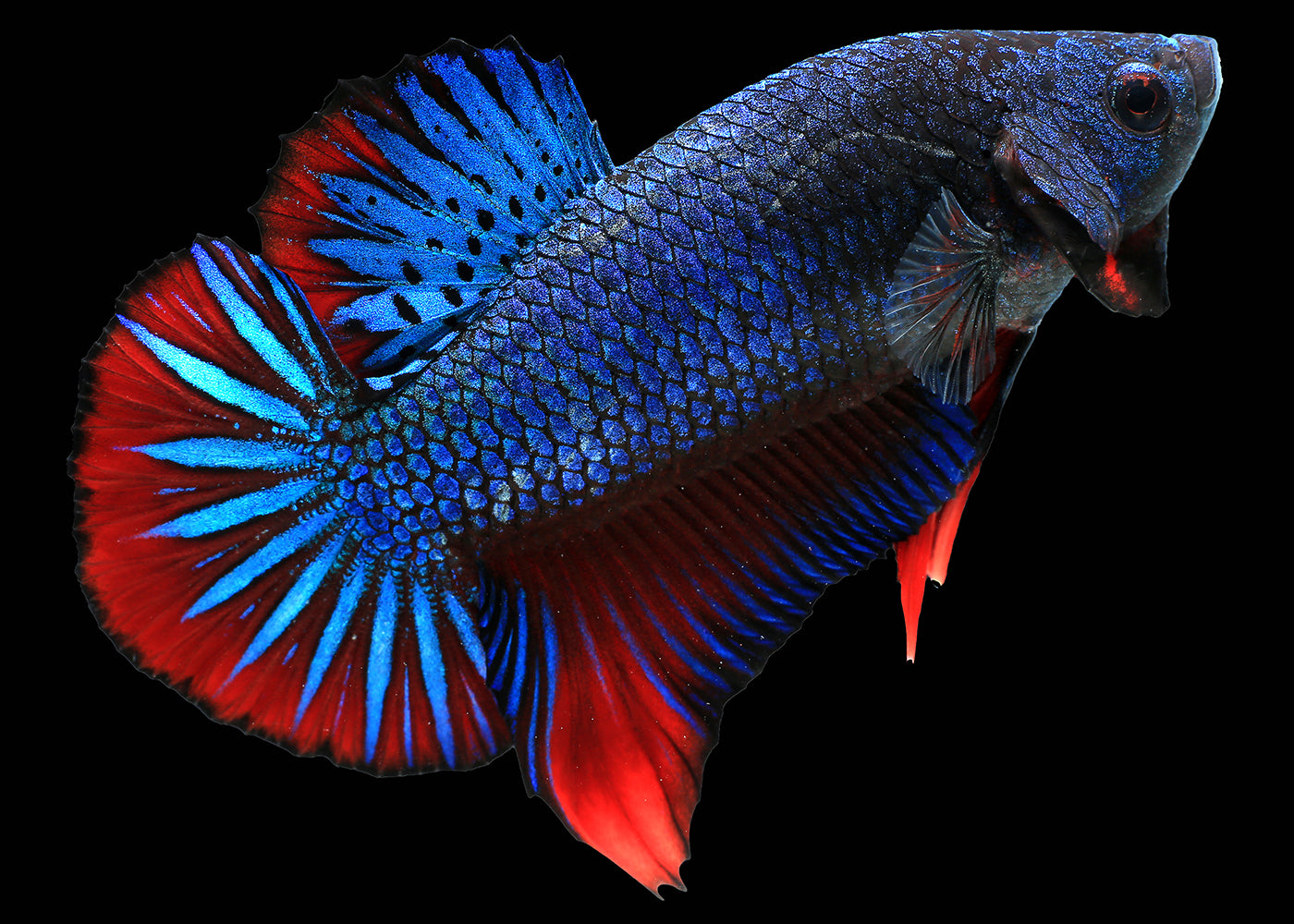
The giant betta is selected for larger body size rather than a specific color or tail shape. Giant lines may appear as plakats, halfmoons, or other forms, but the key feature is a bigger, heavier body compared with a standard domestic betta.
Because they are larger, giant bettas benefit from more swimming room and careful feeding. A cramped bowl is not appropriate for any betta, and it is especially limiting for a big-bodied fish. Provide a heated, filtered aquarium with open space, resting areas, and a secure lid. Watch body condition closely: a giant betta should look strong, not bloated, and should be able to swim without struggling.
35. Wild-Type Betta splendens
Scientific name: Betta splendens. Main identification feature: Shorter fins and more natural green, brown, or muted tones.
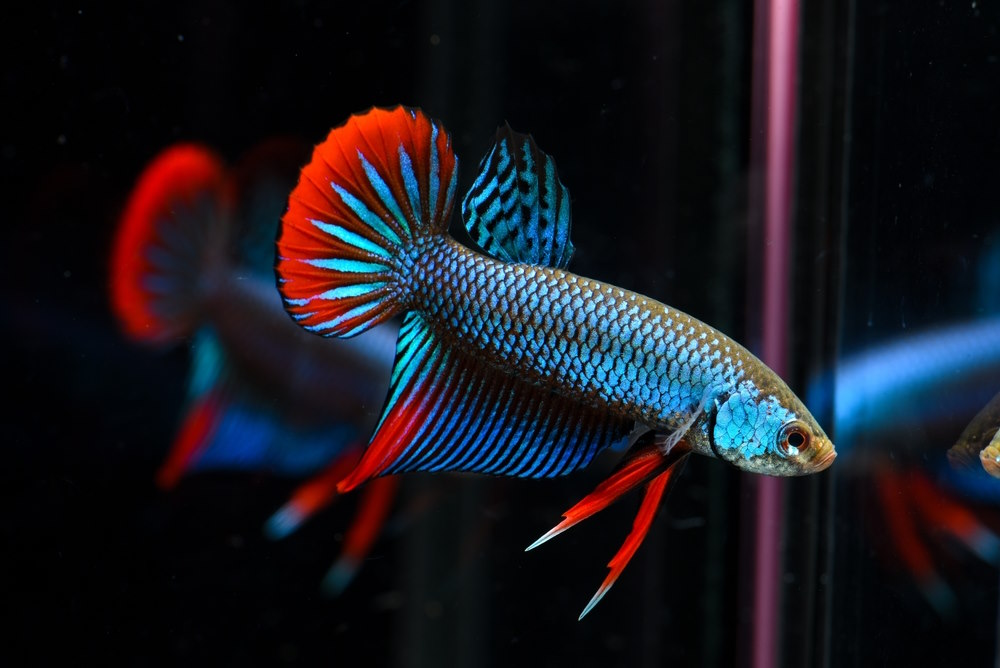
Wild-type Betta splendens looks different from many pet-store bettas. Instead of huge fins and intense solid colors, wild-type fish tend to have shorter fins, slimmer outlines, and more natural tones such as brown, green, blue-green, or red highlights. Their beauty is subtle and closer to the fish’s original form.
This type is important because it reminds readers that ornamental bettas are the result of selective breeding. Wild-type or wild-derived bettas may need more careful sourcing, species knowledge, and conservation awareness. Never release domestic or wild bettas into local waterways. If keeping wild-type fish, learn the exact species or line, provide cover, maintain water quality, and buy from responsible breeders rather than questionable wild collection.
36. Nemo Betta
Scientific name: Betta splendens. Main identification feature: Orange, red, yellow, and white patchwork pattern.
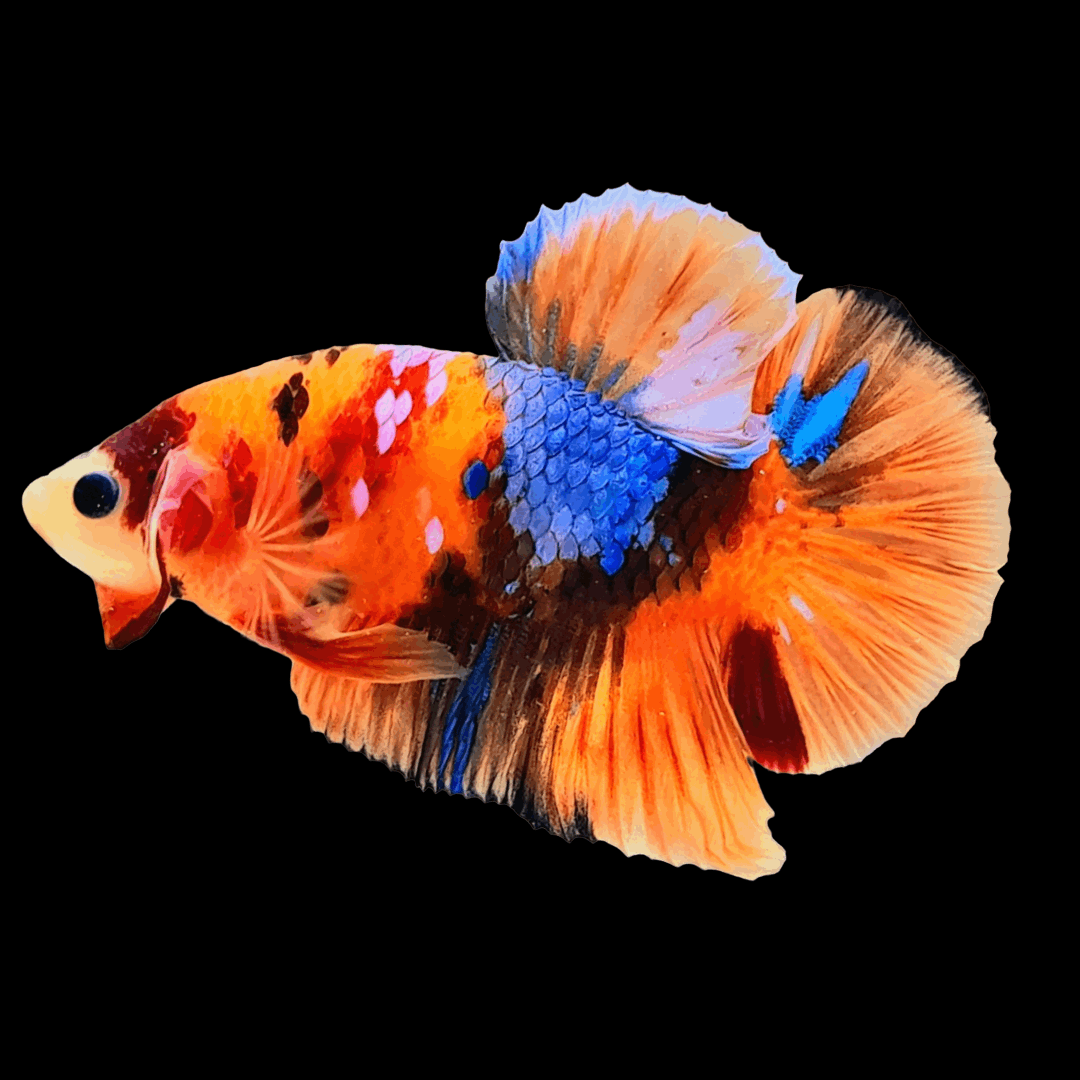
The nemo betta is a colorful marble-related pattern often showing orange, red, yellow, and white patches. The name comes from the bright clownfish-like impression, not from any relationship to marine clownfish. Nemo bettas are especially common in plakat lines, where the short fins make the body colors stand out.
Like koi bettas, nemo bettas can change as they mature. Some develop stronger red or orange, while others gain pale or dark patches. This makes them fun to observe but difficult to describe permanently. Keep the fish in a stable aquarium and track changes through photos. A normal pattern shift should not come with gasping, clamping, scratching, or refusal to eat.
37. Candy Betta
Scientific name: Betta splendens. Main identification feature: Bright multicolor patches with a sweet, candy-like look.
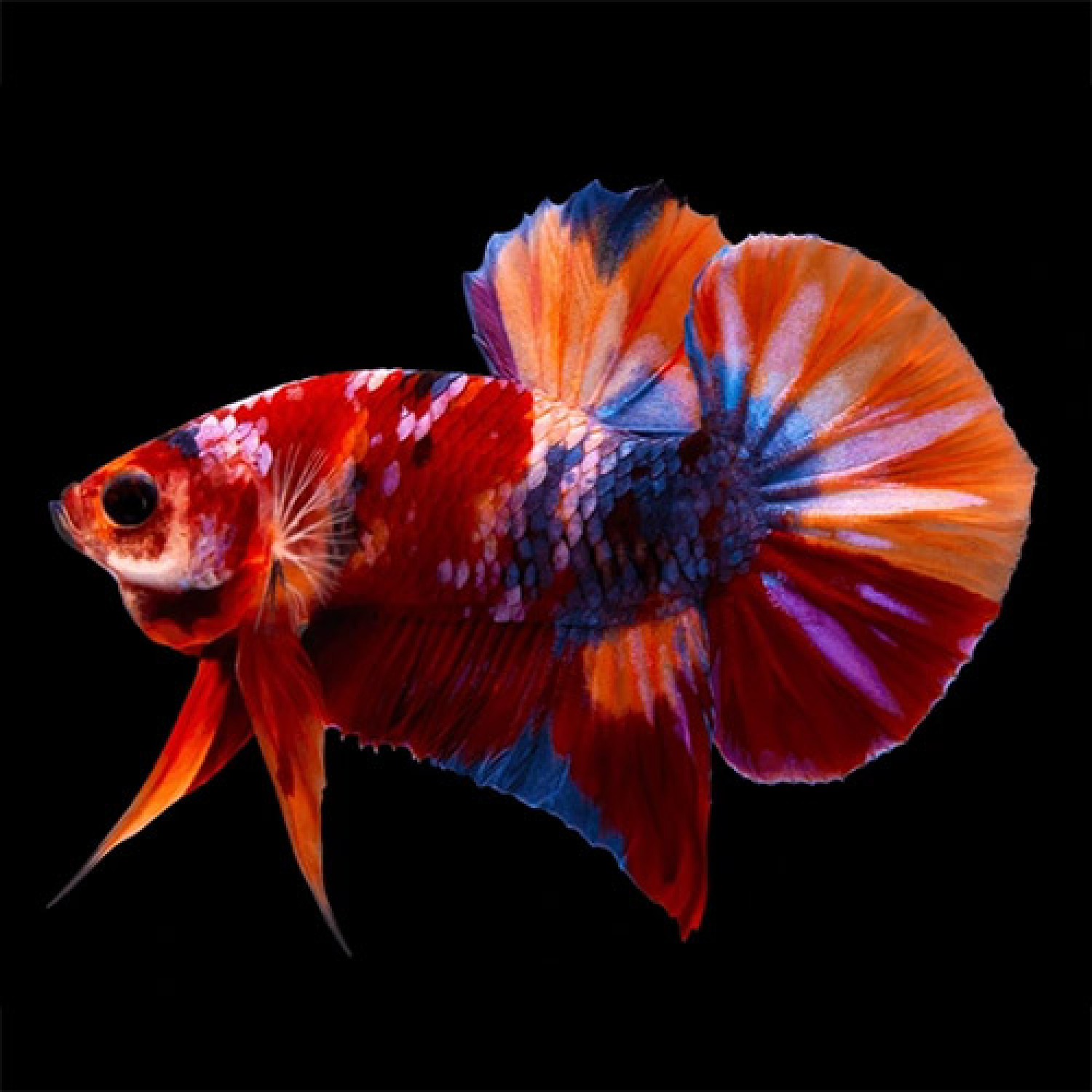
Candy bettas are bright multicolor fish that often combine red, yellow, orange, blue, white, or pastel tones. The name is a hobby label for a cheerful, candy-like color mix rather than a separate biological species. Many candy bettas are related to marble, koi, or nemo-style lines.
Because the label is flexible, two sellers may use it for different-looking fish. To identify one clearly, describe the visible colors and tail type: for example, candy halfmoon plakat or candy galaxy koi. Care should focus on the fish’s body condition and behavior, not the marketing name. Bright colors are enjoyable, but a healthy appetite, intact fins, and stable swimming matter more.
38. Grizzle Betta
Scientific name: Betta splendens. Main identification feature: Fine speckling or mixed color flecks over the body and fins.
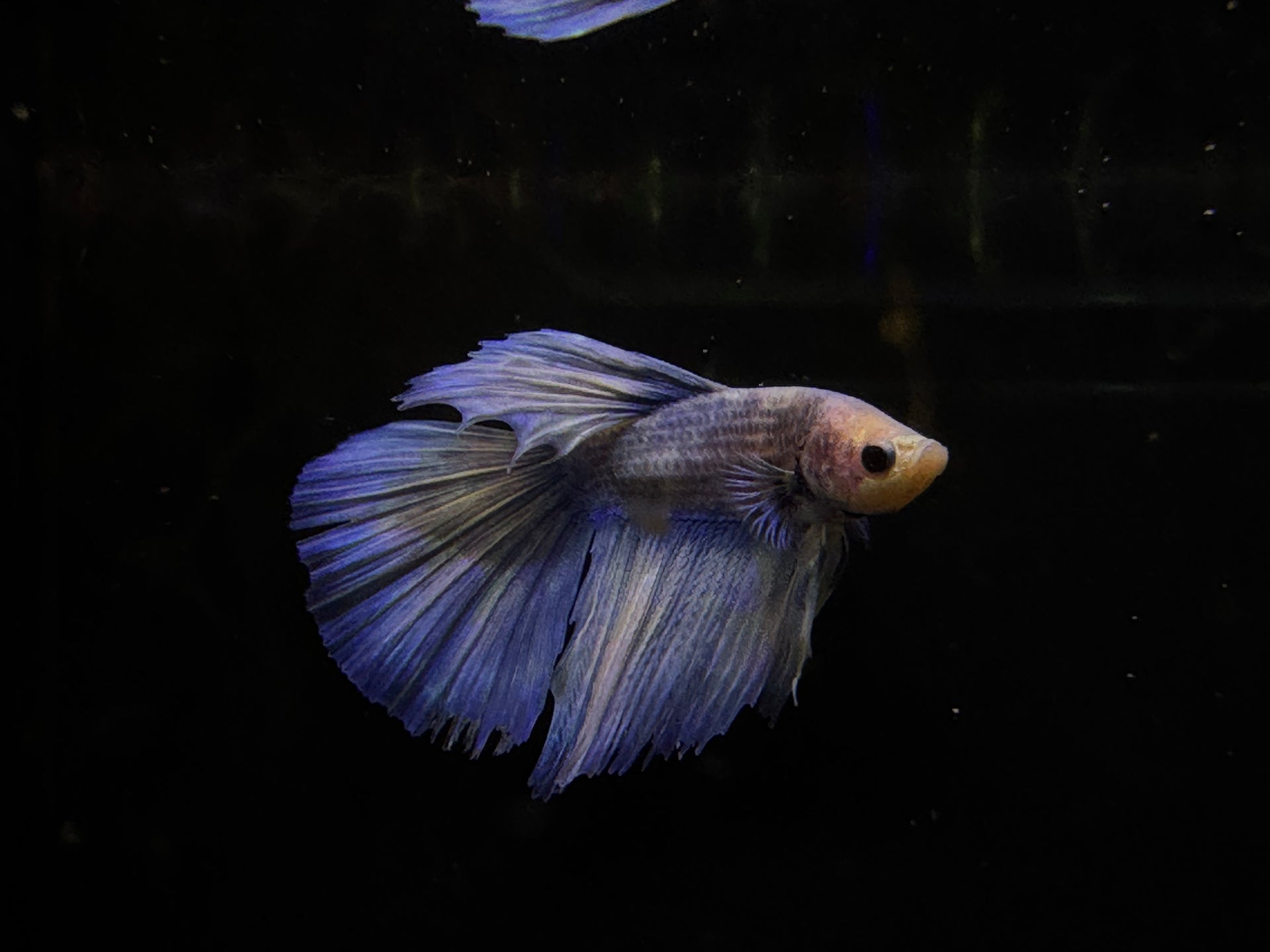
The grizzle betta has a speckled or flecked appearance, often with small bits of color distributed across a lighter or contrasting base. It can look softer than koi or marble patterns because the color is broken into finer marks rather than large patches.
Grizzle patterns are best appreciated up close. Under strong light, the fish may show tiny blue, red, black, or iridescent details that are easy to miss at a distance. Since speckling can be confused with disease by new keepers, learn the difference between normal pigment spots and raised grains, fuzzy growth, or salt-like parasites. Normal grizzle color lies flat in the skin and fins, while illness usually changes texture or behavior.
39. Dalmatian Betta
Scientific name: Betta splendens. Main identification feature: Spotted pattern, often on orange or pale fins.
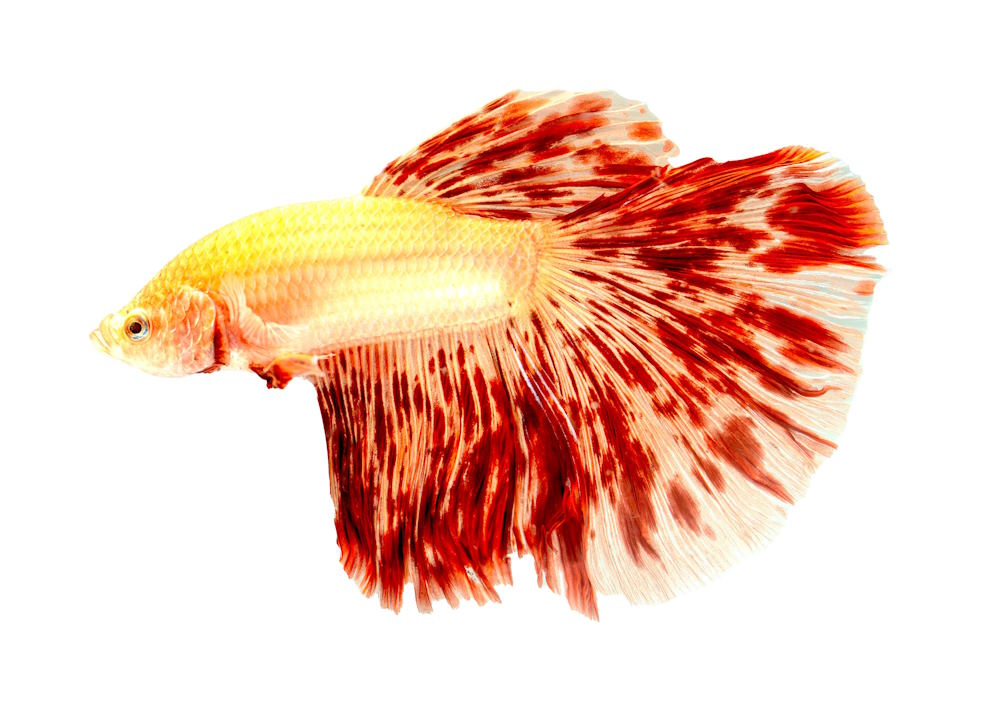
The dalmatian betta is named for its spotted pattern. Orange dalmatian bettas are especially recognizable, with darker spots scattered over orange fins or body areas. The spots may be neat and obvious, or they may blend into a broader marble or multicolor pattern.
A dalmatian pattern should look like flat pigmentation, not raised bumps. New aquarists should be careful not to confuse natural spots with parasites or fungal growth. If the fish is active and the spots are part of the color layer, they are usually just pattern. If the spots appear suddenly as white grains, fuzzy patches, or sores, test the water and seek fish-health guidance.
40. Multicolor Betta
Scientific name: Betta splendens. Main identification feature: Three or more visible colors without one strict pattern.
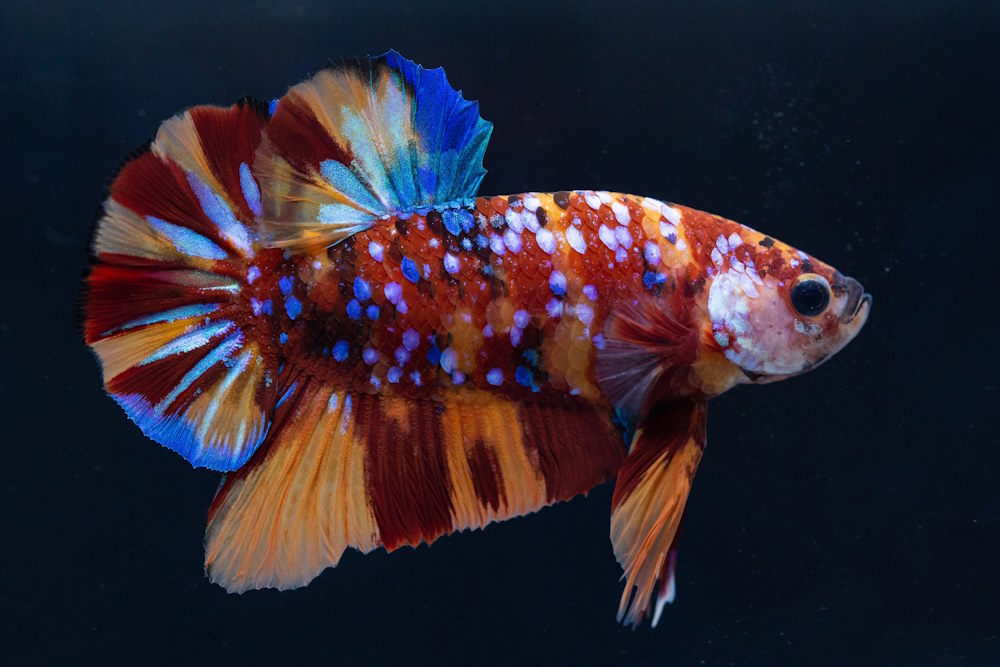
A multicolor betta shows several colors without fitting neatly into a single pattern name such as butterfly, koi, or mustard gas. It may combine red, blue, white, black, yellow, metallic, or iridescent areas across the body and fins. Many pet bettas are best described as multicolor because their appearance is attractive but not show-standard.
This category is helpful because hobby labels can be confusing. Instead of forcing a fish into a rare-sounding name, describe what you actually see. A blue-red multicolor veiltail and a copper-red multicolor plakat are both multicolor, but they look and swim differently. For care, the tail form and health condition matter more than the color mix.
41. Pastel Betta
Scientific name: Betta splendens. Main identification feature: Soft pale shades such as pink, lavender, cream, or baby blue.
Pastel bettas have soft, gentle colors rather than intense red, black, or royal blue. Common pastel impressions include pale pink, lavender, cream, soft yellow, and baby blue. They are popular for calm-looking aquascapes and minimalist tanks where bright colors might feel too strong.
Because pastel fish are pale, stress and color changes can be easier to notice. However, not every pale area means sickness; pastel coloration is often genetic. Check behavior first. A healthy pastel betta explores, eats, responds to movement, and holds its fins normally. Use natural decor and avoid harsh light, which can wash out the subtle color and make the fish feel exposed.
42. Platinum Betta
Scientific name: Betta splendens. Main identification feature: Bright metallic white or silver-white sheen.

The platinum betta has a bright metallic white or silver-white appearance. Compared with a simple opaque white betta, platinum usually has more shine and a reflective finish. It can look very clean and elegant, especially as a halfmoon plakat or dragon-influenced form.
A platinum fish can show dirt, stress marks, or fin damage quickly, so maintenance matters. Keep the water clear, avoid rough decor, and provide shaded resting spots. Since reflective scaling may change how the fish looks under different lights, judge health by activity, appetite, breathing, and fin posture rather than shine alone. A beautiful platinum betta should still behave like a comfortable, alert fish.
How Are These Types of Fish Classified?
Most domestic betta varieties are not classified like separate wild species. They are usually classified by visible aquarium traits. A single fish can belong to several categories at once because tail shape, color, pattern, and scale type can combine in many ways.
- Tail shape: Veiltail, crowntail, halfmoon, plakat, doubletail, delta, super delta, half-sun, spade tail, and round tail describe the shape or spread of the fins.
- Color: Red, blue, yellow, orange, black, white, cellophane, copper, pastel, and platinum describe the main visible color.
- Pattern: Marble, koi, galaxy koi, butterfly, nemo, candy, grizzle, dalmatian, and multicolor describe how colors are arranged.
- Scale type: Dragon scale and samurai describe heavier metallic-looking scaling across the body.
- Body form: Giant bettas are selected for larger size, while wild-type bettas are closer in appearance to natural forms.
Where Do These Fish Live?
Domestic betta fish live in freshwater aquariums around the world. Their wild relatives come from warm, shallow, slow-moving, and often heavily vegetated waters in Southeast Asia, including marshes, floodplains, canals, rice-field habitats, and quiet waterways. In the aquarium, the goal is not to copy a tiny puddle but to provide a stable, warm, clean, enriched freshwater environment.
A good betta aquarium should include open surface access, gentle filtration, safe plants or hides, and a secure lid because bettas can jump. Long-finned types especially need calm water and smooth decorations, while active short-finned types appreciate more swimming room.
How to Identify Different Types of Betta Fish
- Look at the tail spread: A halfmoon opens close to 180 degrees, a delta is triangular, and a veiltail droops downward.
- Check the fin rays: Crowntails and half-suns show ray extensions beyond the webbing.
- Notice fin length: Plakats have short fins, while halfmoons, veiltails, and rosetails have longer finnage.
- Observe the pectoral fins: Elephant ear bettas have unusually large side fins.
- Separate color from pattern: Blue is a color, koi is a pattern, and dragon scale is a scale trait.
- Watch for natural changes: Marble, koi, nemo, candy, and galaxy koi bettas may change color as they mature.
- Do not confuse damage with type: Torn fins, fin rot, or nipping are not the same as crowntail ray extensions.
Aquarium Care Notes
All betta types need responsible care. A beautiful tail or rare color does not reduce the need for clean water, stable warmth, and a suitable aquarium. Bettas are tropical freshwater fish, so they should be kept in a heated, filtered tank with gentle water movement and regular maintenance.
- Tank size: A single betta is best kept in a properly heated and filtered aquarium, commonly at least 5 gallons for easier stability.
- Water movement: Use gentle filtration because bettas, especially long-finned types, can struggle in strong current.
- Temperature: Keep the water warm and stable, and avoid sudden changes during water changes.
- Decor: Choose smooth hides, soft silk plants, or live plants. Avoid sharp plastic plants and jagged rocks.
- Food: Feed quality betta pellets and occasional protein-rich treats such as frozen or live foods.
- Tank mates: Never keep two male bettas together. Choose any community tank mates carefully and watch for fin nipping or stress.
Safety, Sustainability, and Conservation Notes
Betta fish are common in the aquarium trade, but responsible ownership still matters. Never release bettas into ponds, streams, canals, rice fields, or drainage systems. Released aquarium fish can die from unsuitable conditions or create ecological problems where the climate allows them to survive.
Buy from responsible sellers who keep fish in clean conditions and avoid selecting fish with extreme traits that clearly harm swimming or feeding. Wild-type and wild-derived bettas should be sourced carefully because wild habitats are affected by pollution, land-use change, and collection pressure in some areas. Aquarium keeping should support appreciation for nature, not careless disposal or poor breeding choices.
Fun Facts About Betta Fish
- The betta most people keep is usually Betta splendens, also called the Siamese fighting fish.
- Bettas have a labyrinth organ that lets them breathe air from the surface.
- A single betta can be described by tail, color, pattern, and scale type at the same time.
- Plakat bettas often swim more easily than very heavy-finned bettas.
- Marble and koi bettas may change pattern as they grow.
- Male bettas build bubble nests during breeding behavior.
- Crowntail bettas have natural ray extensions that should not be mistaken for torn fins.
- Elephant ear bettas are named for their large pectoral fins, not their tail.
- Wild-type bettas usually have shorter fins and subtler colors than many show bettas.
- A healthy betta should be active, alert, and able to reach the surface easily.
Final Thoughts on Types of Betta Fish
Learning the main types of betta fish makes it much easier to choose, identify, and care for these colorful freshwater fish. Tail shapes such as halfmoon, crowntail, plakat, and veiltail affect how a betta swims and how much fin protection it may need. Color and pattern types such as koi, marble, butterfly, dragon scale, copper, and galaxy koi make each fish visually unique, but health and responsible care should always come first.
If you are choosing your first betta, start with a healthy fish that swims well, eats confidently, and fits your aquarium setup. The best betta is not always the rarest or most expensive-looking one. It is the fish you can keep in clean, warm, enriched water for a healthy and enjoyable life.
Frequently Asked Questions
1. What are the main types of betta fish?
The main types of betta fish are usually grouped by tail shape, color, pattern, scale type, and body form. Common tail types include veiltail, crowntail, halfmoon, plakat, doubletail, delta, and elephant ear. Color and pattern types include red, blue, marble, koi, butterfly, dragon scale, and galaxy koi.
2. Are all betta fish the same species?
Most ornamental bettas sold for aquariums are domestic forms of Betta splendens, also called the Siamese fighting fish. Some hobby lines may include influence from related species in the Betta splendens complex, especially wild-looking or hybrid-style strains.
3. What is the easiest betta type for beginners?
A healthy veiltail, plakat, delta, or female betta is often easier for beginners than an extreme rosetail or feathertail. Simpler fins are less likely to drag, tear, or make swimming difficult.
4. Which betta fish has the biggest tail?
Halfmoon, over-halfmoon, rosetail, and feathertail bettas can have some of the largest and most dramatic tails. These fish are beautiful but may need extra care because heavy fins can make swimming harder.
5. What is a plakat betta?
A plakat betta is a short-finned betta. It often looks more athletic than long-finned varieties and can be a strong swimmer, but males can still be territorial and should not be housed with other male bettas.
6. What is the difference between a halfmoon and a delta betta?
A halfmoon betta has a tail that can open close to 180 degrees like a semicircle. A delta betta has a triangular tail spread that is wide but usually does not reach a full halfmoon angle.
7. What is a crowntail betta?
A crowntail betta has fin rays that extend beyond the webbing, creating a spiky crown-like edge. It should look evenly pointed, not ragged from injury or fin rot.
8. What is an elephant ear betta?
An elephant ear betta, also called a dumbo betta, has oversized pectoral fins on the sides of the body. The tail may be halfmoon, plakat, delta, or another type.
9. What is a koi betta?
A koi betta is a domestic betta with patchy colors inspired by koi carp patterns. It is still a tropical betta, not a pond koi, and it needs warm aquarium water.
10. Do marble bettas change color?
Many marble bettas can change color as they mature because their pattern is genetically unstable. Color change can be normal, but fading with poor appetite, clamped fins, or lethargy may signal stress or illness.
11. Which betta colors are most common?
Red and blue are among the most common betta colors. Multicolor, marble, white, yellow, orange, black, copper, and koi-style patterns are also popular in the aquarium trade.
12. What is the rarest betta fish color?
Rarity changes with breeding trends and local availability. True clean green, certain solid oranges, and high-quality black or pattern-specific lines may be harder to find than common red or blue bettas.
13. Are dragon scale bettas different from regular bettas?
Dragon scale bettas are domestic Betta splendens with thick, bright, armor-like scaling. They are not a separate species, but their scale pattern makes them visually distinct.
14. Can different types of male bettas live together?
No. Male bettas should not be kept together, even if they are different tail types or colors. They are territorial and may fight seriously.
15. Can female bettas live together?
Female bettas are usually less aggressive than males, but they can still fight. A female group requires a large, heavily planted tank, careful observation, and a backup plan if aggression occurs.
16. Do betta fish need a heater?
Bettas are tropical fish and usually do best in stable warm water. In cool homes, a heater and thermometer help prevent stress caused by low or fluctuating temperature.
17. Do betta fish need a filter?
A gentle filter helps maintain water quality. Bettas dislike strong current, so choose a low-flow filter, sponge filter, or baffled outlet.
18. Can bettas live in bowls?
Bettas may survive in small bowls for a while, but they are healthier in a heated, filtered aquarium with enough space to swim, explore, and maintain stable water quality.
19. What size tank is best for one betta?
Many experienced keepers recommend at least a 5-gallon aquarium for one betta. Larger tanks are easier to keep stable and give the fish more room for enrichment.
20. What do betta fish eat?
Bettas are carnivorous fish. A good diet usually includes quality betta pellets plus occasional frozen, freeze-dried, or live foods such as bloodworms, daphnia, or brine shrimp.
21. How often should I feed a betta?
Most adult bettas do well with small meals once or twice daily. Feed only what the fish can eat quickly and avoid overfeeding, because leftover food can pollute the water.
22. Why do bettas breathe air at the surface?
Bettas have a labyrinth organ that allows them to take oxygen from air at the surface. This does not mean they can live in dirty water; they still need clean, well-maintained aquariums.
23. Why does my betta flare?
Flaring is a display behavior used for territory, courtship, or reaction to reflections and perceived rivals. Occasional flaring is normal, but constant mirror exposure can stress the fish.
24. Which betta type swims best?
Plakat and halfmoon plakat bettas often swim more easily than heavy-finned types. Long-finned halfmoons, rosetails, and feathertails may need calmer water and more resting spots.
25. What decorations are safe for betta fish?
Use smooth decorations, soft silk plants, live plants, caves without sharp edges, and broad leaves near the surface. Avoid rough plastic plants and jagged rocks that can tear fins.
26. Can bettas live with other fish?
Some bettas can live with peaceful, non-nippy tank mates in a properly sized tank, but personality varies. Avoid fin nippers, aggressive fish, and fish that look too similar to bettas.
27. Can bettas live with shrimp or snails?
Some bettas tolerate snails or shrimp, while others chase or eat them. Provide hiding places and be ready to separate animals if the betta becomes aggressive.
28. How can I tell if a betta is healthy?
A healthy betta is alert, responsive, eating, breathing normally, and holding its fins open. Avoid fish with clamped fins, fuzzy patches, torn fins, bloating, or labored breathing.
29. How can I identify a betta tail type?
Watch the fish when it is relaxed and when it flares. Look at the caudal fin shape, tail angle, ray extension, fin length, pectoral fins, and whether the tail is split into two lobes.
30. Is a torn tail the same as a crowntail?
No. A crowntail has even ray extensions by genetics. A torn tail looks irregular, damaged, or uneven and may be caused by sharp decor, fighting, or fin rot.
31. Are betta fish good pets for kids?
Bettas can be good educational pets when adults help with feeding, water testing, and tank maintenance. They should not be treated as low-care decorations.
32. How long do betta fish live?
With good care, many bettas live about two to five years. Genetics, age at purchase, diet, water quality, and stress all affect lifespan.
33. Why is my betta losing color?
Color loss can come from stress, poor water quality, illness, aging, or normal marble-pattern changes. Check water parameters and behavior before assuming the cause.
34. What is the difference between color type and tail type?
Color type describes the shade or pattern, such as red, koi, marble, or copper. Tail type describes fin shape, such as halfmoon, veiltail, plakat, or crowntail.
35. Can a betta be more than one type?
Yes. A fish can be a blue halfmoon, a koi plakat, a dragon scale halfmoon plakat, or a butterfly veiltail. Most bettas are described by combining color, pattern, and tail shape.
36. Are wild bettas the same as pet bettas?
Wild bettas may refer to wild-type Betta splendens or other species in the Betta genus. They usually have shorter fins and subtler colors than domestic show bettas.
37. Should I release a betta into a pond or stream?
No. Never release aquarium fish into the wild. Released bettas may die, spread disease, or become invasive in suitable climates.
38. What is the best betta for a planted tank?
Plakats, halfmoon plakats, wild-type bettas, and many standard long-finned bettas can do well in planted tanks. Choose gentle flow, open surface access, and plants that do not tear fins.
39. Do betta fish recognize their owners?
Many bettas learn feeding routines and may approach when a familiar person comes near the tank. This is one reason they feel more interactive than many small aquarium fish.
40. What is the most beautiful type of betta fish?
Beauty is personal. Halfmoons, koi plakats, galaxy koi, dragon scales, crowntails, and elephant ears are often considered especially attractive, but the best betta is healthy and well suited to your tank.
Read more:
80 Types of Angler Fish: Species and ID Guide