

Anglerfish, often written as one word but commonly searched as types of angler fish, are some of the most unusual fish in the ocean. They belong to the order Lophiiformes, a diverse group known for using a modifs and hide like sponges, some crawl across the seafloor like bats or toads, and others drift through the deep ocean with glowing bait above their mouths.
This guide covers 80 real types of angler fish, including monkfish, goosefish, frogfish, batfish, sea toads, handfish, footballfish, seadevils, dreamers, whipnose anglers, and other deep-sea species. For each type, you will find the common name, scientific name, habitat, key features, and simple identification notes to help you understand how these strange fish differ from one another.
![Species New to Science: [Ichthyology • 2024] Synergistic Innovations enabled the Radiation of Anglerfishes (Lophiiformes) in the Deep Open Ocean](https://blogger.googleusercontent.com/img/b/R29vZ2xl/AVvXsEjZo0pDhyphenhyphendxwf_YRL-XkZ6uxUdicxZyn0zv5-LkoIlRezmnMBaKoq2HUBU6liGw6rpsDAemr-BjPTNYhteaanUUJ1Xhn29f5Jp6PyjP8s6smcsAHTIZiC33JpaMpfJiD58T6IUPqOnWp-FAPIqRNNqN2iRmEqpRFFXIh-nRWjV4zYP-dLYr8NAW2kZr2iOo/s1590/Lophioidei__2024-Brownstein_Zapfe___@ChaseBrownstein__sciArt_@jehimes.jpg)
What Are the Main Types of Angler Fish?
The main types of angler fish include shallow-water frogfish, bottom-dwelling monkfish and goosefish, seafloor-walking batfish, sea toads, handfish, and deep-sea anglerfish such as seadevils, dreamers, footballfish, and whipnose anglers. All true anglerfish share the famous lure system, although it looks very different from one family to another. Reef species often rely on camouflage, while deep-sea species often use bioluminescence. The most recognizable anglerfish are usually female deep-sea species with large mouths, sharp teeth, and a glowing esca at the end of a modified dorsal spine.
Comparison Table of Popular Types of Angler Fish
| Type | Scientific Name | Habitat | Size | Key Feature |
|---|---|---|---|---|
| European Angler | Lophius piscatorius | Northeast Atlantic seafloor | Large | Broad flat head and commercial monkfish value |
| American Goosefish | Lophius americanus | Northwest Atlantic bottom habitats | Large | Wide mouth and sand-camouflage ambush style |
| Blackbellied Angler | Lophius budegassa | Eastern Atlantic and Mediterranean | Medium to large | Dark belly and monkfish-like body |
| Commerson’s Frogfish | Antennarius commerson | Tropical reefs | Large for a frogfish | Heavy body and strong sponge-like camouflage |
| Warty Frogfish | Antennarius maculatus | Indo-Pacific reefs | Small to medium | Warty texture and bright variable colors |
| Striated Frogfish | Antennarius striatus | Tropical and subtropical waters | Small to medium | Hair-like filaments and striped pattern |
| Sargassumfish | Histrio histrio | Floating Sargassum weed | Small | Lives among drifting seaweed mats |
| Red-lipped Batfish | Ogcocephalus darwini | Galapagos seafloor | Small to medium | Bright red lips and walking-like fins |
| Spotted Batfish | Ogcocephalus nasutus | Western Atlantic sandy bottom | Small to medium | Triangular flattened body and bottom crawling |
| Smooth Handfish | Sympterichthys unipennis | Tasmanian waters | Small | Critically rare handfish form |
| Spotted Handfish | Brachionichthys hirsutus | Shallow Tasmanian seafloor | Small | Hand-like fins and spotted body |
| Painted Frogfish | Antennarius pictus | Indo-Pacific reefs | Small to medium | Colorful blotches and reef camouflage |
| Humpback Anglerfish | Melanocetus johnsonii | Deep ocean water column | Small to medium | Classic black seadevil shape with glowing lure |
| Pacific Footballfish | Himantolophus sagamius | Deep Pacific waters | Medium | Round body and complex lure |
| Kroyer’s Deep-Sea Angler | Ceratias holboelli | Deep Atlantic and polar waters | Large female | Extreme size difference between female and male |
| Triplewart Seadevil | Cryptopsaras couesii | Deep ocean | Small to medium | Known for sexual parasitism |
| Bulbous Dreamer | Oneirodes eschrichtii | Deep pelagic waters | Small | Rounded body and luminous lure |
| Prickly Dreamer | Spiniphryne gladisfenae | Deep Atlantic waters | Small | Spiny texture and ornate esca |
| Whipnose Angler | Gigantactis vanhoeffeni | Deep ocean | Small to medium | Very long fishing-rod-like lure |
| Bearded Seadevil | Linophryne lucifer | Deep ocean | Small | Luminous lure and chin barbel |
1. European Angler
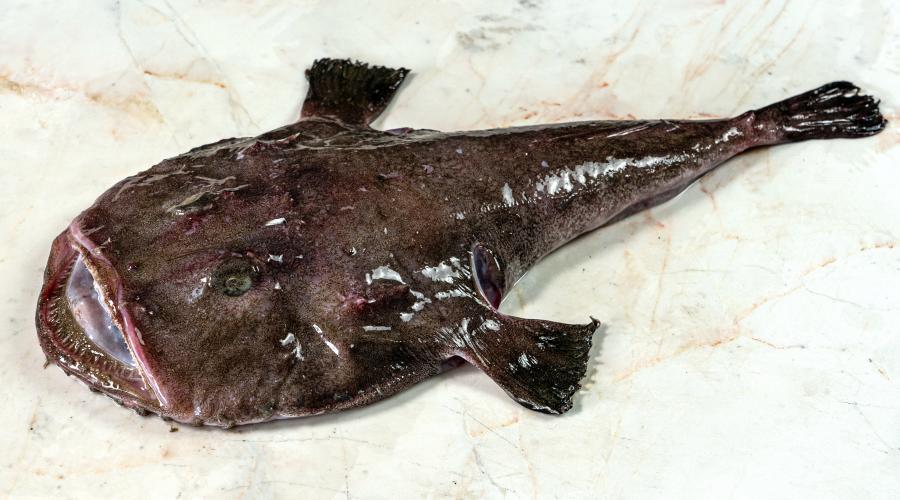
The European angler, Lophius piscatorius, is one of the best-known monkfish species. It has a broad, flattened head, a huge mouth, and a body built for lying motionless on sandy or muddy seafloors. Its lure sits above the mouth and helps draw curious prey close enough for a sudden strike. This species is found in the northeast Atlantic and nearby seas. Unlike many deep-sea anglerfish, the European angler is important in commercial fisheries, where its firm tail meat is often sold as monkfish.
2. American Goosefish
The American goosefish, Lophius americanus, is a bottom-dwelling anglerfish of the northwest Atlantic. It has a wide, flat body, mottled skin, and a large mouth filled with backward-pointing teeth. It hides on the seafloor and waits for fish, squid, and other prey to come close. Its rough coloration helps it blend into sand, gravel, and mud. This species is another commercially important monkfish, but for naturalists it is also a great example of how anglerfish use patience, camouflage, and a lure rather than speed.
3. Blackbellied Angler
The blackbellied angler, Lophius budegassa, is a monkfish found in parts of the eastern Atlantic and the Mediterranean region. It looks similar to other Lophius species but is often recognized by the darker underside that gives it its common name. It lives close to the seabed and feeds by ambush, using its lure and enormous mouth to capture prey quickly. This fish matters to seafood markets in parts of Europe, but in a wildlife guide it is most useful as a classic example of a flat-bodied seafloor angler.
4. Yellow Goosefish
The yellow goosefish, Lophius litulon, is a western Pacific monkfish species. It is commonly associated with sandy and muddy bottom habitats where it can settle into the substrate and wait for prey. Like other goosefish, it has a flattened body, an oversized mouth, and a lure that resembles a small moving bait. Its yellowish or brownish tones help it disappear against the seafloor. This species is also harvested as food in parts of East Asia, so it connects both wildlife identification and seafood knowledge.
5. Blackfin Goosefish
The blackfin goosefish, Lophius gastrophysus, is found in the western Atlantic, especially in warmer coastal and shelf waters. It is a large-headed ambush predator with a flattened profile and a broad mouth. The fish spends much of its time close to the bottom, where it relies on camouflage instead of active chasing. Its dark fin markings help separate it from some related species. For beginners, it is easiest to remember this fish as a tropical-to-subtropical relative of the better-known monkfish and goosefish.
6. Devil Anglerfish
The devil anglerfish, Lophius vomerinus, is a southern African monkfish species. It has the same general body plan as other goosefish: flat head, giant mouth, mottled skin, and a fishing-lure spine. It is usually found on the continental shelf and slope, where it hunts small fish and invertebrates. Its name sounds dramatic, but its biology is practical and efficient. The fish simply waits, blends into the bottom, and strikes when prey comes near. This is one of the more regionally important monkfish types.
7. Blackmouth Angler
Lophiodes caulinaris, often described as a blackmouth or slender angler species, belongs to a group of goosefish-like anglerfish with long bodies and bottom-dwelling habits. It is usually found in deeper marine habitats than many coastal anglers. Compared with the broad-headed Lophius monkfish, Lophiodes species often look more elongated and delicate. Identification usually requires close attention to fin rays, body shape, and head details. For general readers, the key point is that not all monkfish-like anglerfish are the same genus.
8. Nares Anglerfish
Lophiodes naresi is another member of the goosefish family. It lives on or near deep seafloor habitats, where its body shape and lure help it capture small fish and crustaceans. Like many deepwater anglerfish, it is not commonly seen by casual divers or aquarium keepers. Most people encounter this type through scientific records, trawl surveys, or identification guides. Its value in this list is to show how the monkfish-style body plan extends beyond the familiar market species into many lesser-known deepwater forms.
9. Miacanthus Anglerfish
Lophiodes miacanthus is a lesser-known anglerfish in the family Lophiidae. It has a flattened head, expandable mouth, and lure-bearing dorsal spine typical of the group. This kind of fish is adapted for life near the bottom, where it can remain still and almost invisible until prey approaches. Because many Lophiodes species are similar at first glance, accurate identification often depends on technical characters. For beginner readers, the important feature is its goosefish-like hunting strategy rather than bright color or reef behavior.
10. Mutilus Anglerfish
Lophiodes mutilus is a deepwater anglerfish with the flattened, bottom-hugging profile typical of its family. It is not a colorful reef frogfish or a glowing black seadevil; instead, it represents the more practical seafloor ambush design of the monkfish relatives. Its camouflage helps it settle into the ocean floor, and its large mouth allows it to swallow prey quickly. This species is a useful reminder that many types of angler fish are rarely photographed alive but are still important parts of deep marine ecosystems.
11. Brown Anglerfish
Lophiodes infrabrunneus is often associated with deeper marine bottom habitats. Its scientific name suggests brownish coloration, which fits the general camouflage pattern seen in many seafloor anglerfish. The fish is built to blend in, not to swim long distances after prey. It waits with its mouth ready, using its lure and body shape to turn the seafloor into a hunting blind. This type is best understood as one of the many specialized anglerfish that live quietly below the depth most people ever explore.
12. Schaefer’s Anglerfish
Schaefer’s anglerfish, Sladenia shaefersi, is a rare member of the monkfish family from the western Atlantic. It has the flattened head and big mouth of a goosefish but belongs to a different genus from the familiar Lophius species. It lives in deepwater habitats and has been recorded from slope environments rather than shallow reefs. Its body is adapted for ambush on the bottom, where it can wait for prey to pass. This species is especially interesting because deep-sea observations have helped show it in its natural setting.
13. Gardiner’s Anglerfish
Sladenia gardineri is a deepwater anglerfish in the family Lophiidae. It is not commonly known outside scientific circles, but it shares the broad head, large mouth, and bottom-dwelling lifestyle of other monkfish relatives. The species is associated with deeper parts of the Indo-Pacific region. For identification, scientists look at the structure of the head, fins, and lure rather than simple color alone. For nature readers, it shows how anglerfish diversity stretches across many ocean basins and depth zones.
14. Remiger Anglerfish
Sladenia remiger is another rare Sladenia species. It belongs to the same broad group as monkfish and goosefish but is much less familiar to the public. It lives on the seafloor in deeper marine areas and uses camouflage and a lure to catch prey. Species like this remind us that anglerfish are not only strange-looking deep-sea icons; they are also diverse bottom predators spread across many habitats. Accurate identification usually depends on scientific keys rather than casual observation.
15. Blackmouth Goosefish
Lophiomus setigerus, sometimes called the blackmouth goosefish, is found in the Indo-West Pacific. It has a broad, flattened head and a body that suits life near the seabed. Its mouth is large, and its lure helps bring prey into striking range. This species is also known in some regional seafood markets, but its biology is classic anglerfish behavior: sit, wait, lure, and strike. It is a good example of how monkfish-like anglerfish can be both ecologically fascinating and economically important.
16. Commerson’s Frogfish
Commerson’s frogfish, Antennarius commerson, is one of the largest and most impressive frogfish. It lives on tropical reefs and can resemble sponges, rocks, or coral growths. Instead of swimming often, it usually walks or creeps using modified pectoral fins. Its lure looks like a small bait animal, and it can strike prey extremely fast. This species is popular among underwater photographers because it can vary in color and is often found sitting in plain sight while still being surprisingly hard to see.
17. Warty Frogfish
The warty frogfish, Antennarius maculatus, is a favorite among divers in the Indo-Pacific. It has a short, lumpy body covered with wart-like bumps that help it blend into reef surfaces. Its colors can include white, yellow, orange, red, brown, and black, often with patches that break up its outline. The fish waits quietly and uses its lure to attract small fish or shrimp. Warty frogfish are excellent examples of camouflage so strong that a beginner may stare directly at one without recognizing it as a fish.

18. Painted Frogfish
The painted frogfish, Antennarius pictus, is another colorful reef anglerfish. It often has blotches, spots, and irregular markings that make it look like sponge-covered reef structure. This species is found widely across the Indo-Pacific and is often seen by divers in coral-rich habitats. Its body shape is compact, and its lure helps it hunt without moving far. The painted frogfish is useful for beginners because it shows how anglerfish can be bright and beautiful while still using camouflage as their main survival tool.
19. Striated Frogfish
The striated frogfish, Antennarius striatus, is also called the hairy frogfish because many individuals have long skin filaments. These hair-like structures help the fish blend with algae, hydroids, weeds, and textured reef habitats. It can be found in warm seas around the world. Its stripes and shaggy outline make it one of the easiest frogfish to remember, although it can still be hard to spot underwater. The striated frogfish is an ambush predator that uses stillness, disguise, and a lure to catch prey.
20. Shaggy Frogfish
The shaggy frogfish, Antennarius hispidus, has a rough, bristly appearance that helps it disappear against reef and rubble backgrounds. It is usually associated with tropical Indo-Pacific waters. This species is often confused with other hairy or filament-covered frogfish, so identification may require careful attention to pattern, body shape, and lure details. Like other frogfish, it is not a strong continuous swimmer. It prefers to sit, creep, and wait. Its hunting style makes it one of the most patient predators on the reef.
21. Longlure Frogfish
The longlure frogfish, Antennarius multiocellatus, is found in the western Atlantic, including Caribbean habitats. Its name comes from its relatively long lure, which it waves to attract small prey. It may be brown, yellow, red, or mottled, helping it blend with sponges and reef surfaces. This species is a good one for divers in the Caribbean to learn because it demonstrates the classic frogfish shape: stocky body, large mouth, leg-like fins, and patient ambush behavior. It is more often noticed by trained eyes than by casual snorkelers.
22. Leopard Frogfish
The leopard frogfish, Antennarius pardalis, is an eastern Atlantic species known for spotted or leopard-like markings. Like other frogfish, it has a compact body and uses a lure to tempt prey. Its pattern helps break up the body outline, making it look less like a fish and more like part of the reef or bottom. This species is a useful reminder that frogfish are not limited to the Indo-Pacific and Caribbean. Several types live along African coasts and other warm-water regions.
23. Dwarf Frogfish
The dwarf frogfish, Antennarius pauciradiatus, is a small western Atlantic frogfish. Its small size makes it especially difficult to detect in reef, rubble, and seagrass-like habitats. Despite being small, it has the same ambush tools as larger frogfish: camouflage, a lure, and an expandable mouth. The species is useful for learning that anglerfish do not need to be large to be effective predators. Many small frogfish can swallow prey surprisingly large compared with their own body size.
24. Randall’s Frogfish
Randall’s frogfish, Antennarius randalli, is a tropical Indo-Pacific species. It is not as famous as the warty or painted frogfish, but it shares the same general body plan and hunting method. It sits still among reef structures and uses its lure to draw prey close. Its coloration can vary, so identification is not always simple from color alone. For divers and fish enthusiasts, it is a good reminder to look at shape, lure, fin position, and habitat rather than depending only on bright or unusual patterns.
25. Brackish-Water Frogfish
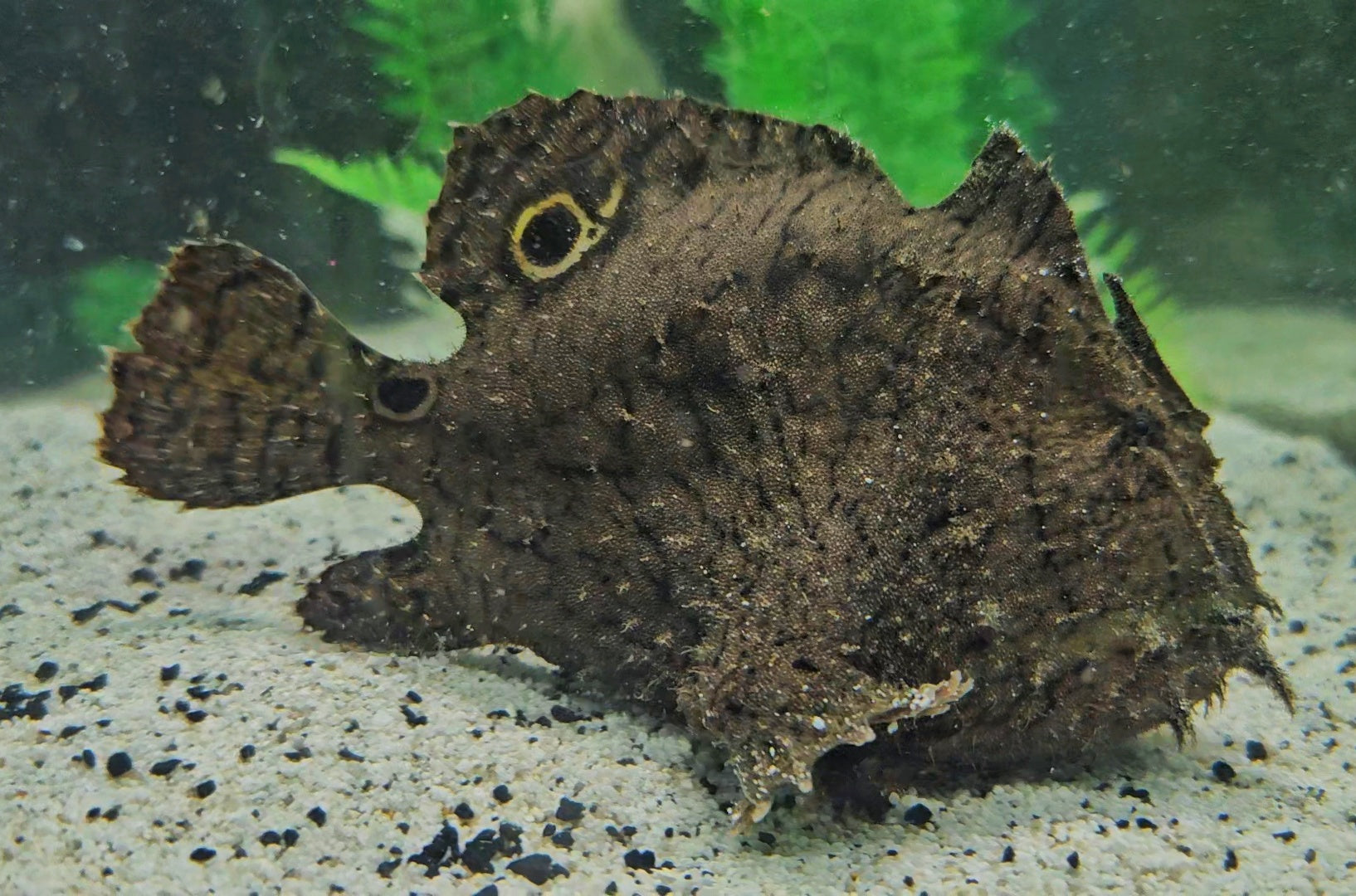
The brackish-water frogfish, Antennarius biocellatus, is unusual because it can be associated with coastal and brackish environments rather than only clear coral reefs. It occurs in parts of the Indo-West Pacific. Its ability to live near estuaries and shallow coastal habitats makes it stand out from many reef-focused frogfish. Like its relatives, it relies on camouflage and an angling lure. This species is important for readers because it shows that anglerfish can occupy more varied habitats than many people expect.
26. Indian Frogfish
The Indian frogfish, Antennarius indicus, is associated with the Indian Ocean region. It has a squat frogfish body, textured skin, and a lure used to attract prey. Its habitat may include reefs, rubble, and other shallow marine environments where camouflage is valuable. Because many frogfish change color or match their surroundings, the Indian frogfish can be challenging to separate from close relatives without detailed knowledge. Still, it represents the strong diversity of frogfish across tropical oceans.
27. Rough Angler
The rough angler, Antennarius scaber, is a western Atlantic frogfish species. Its rough skin texture and mottled appearance help it blend into reef and bottom habitats. It is another example of how frogfish turn camouflage into a hunting strategy. Rather than chasing prey, it holds position and depends on the lure to bring food close. For beginners, the rough angler is best identified by its frogfish shape, western Atlantic range, and textured body surface, though expert confirmation may require more precise features.
28. Sargassumfish
The sargassumfish, Histrio histrio, is one of the most unusual shallow-water anglerfish because it lives among floating Sargassum seaweed. Its body, color, and fin shape help it hide in drifting weed mats, where it hunts small fish and crustaceans. It can grip and move through the weed using its modified fins. This fish is important for ocean learners because it shows how anglerfish are not always bottom dwellers. Some live in floating habitats that move with currents across the open sea.
29. Coin-Bearing Frogfish
The coin-bearing frogfish, Antennatus nummifer, is a small reef-associated anglerfish found in Indo-Pacific waters. Its rounded markings and compact body help it blend into complex reef backgrounds. Like many frogfish, it can be overlooked because it does not behave like a typical swimming fish. It may sit still for long periods, only moving its lure or shifting position slowly. This species is a good example of the smaller frogfish that reward careful observation by divers, photographers, and naturalists.
30. Scarlet Frogfish
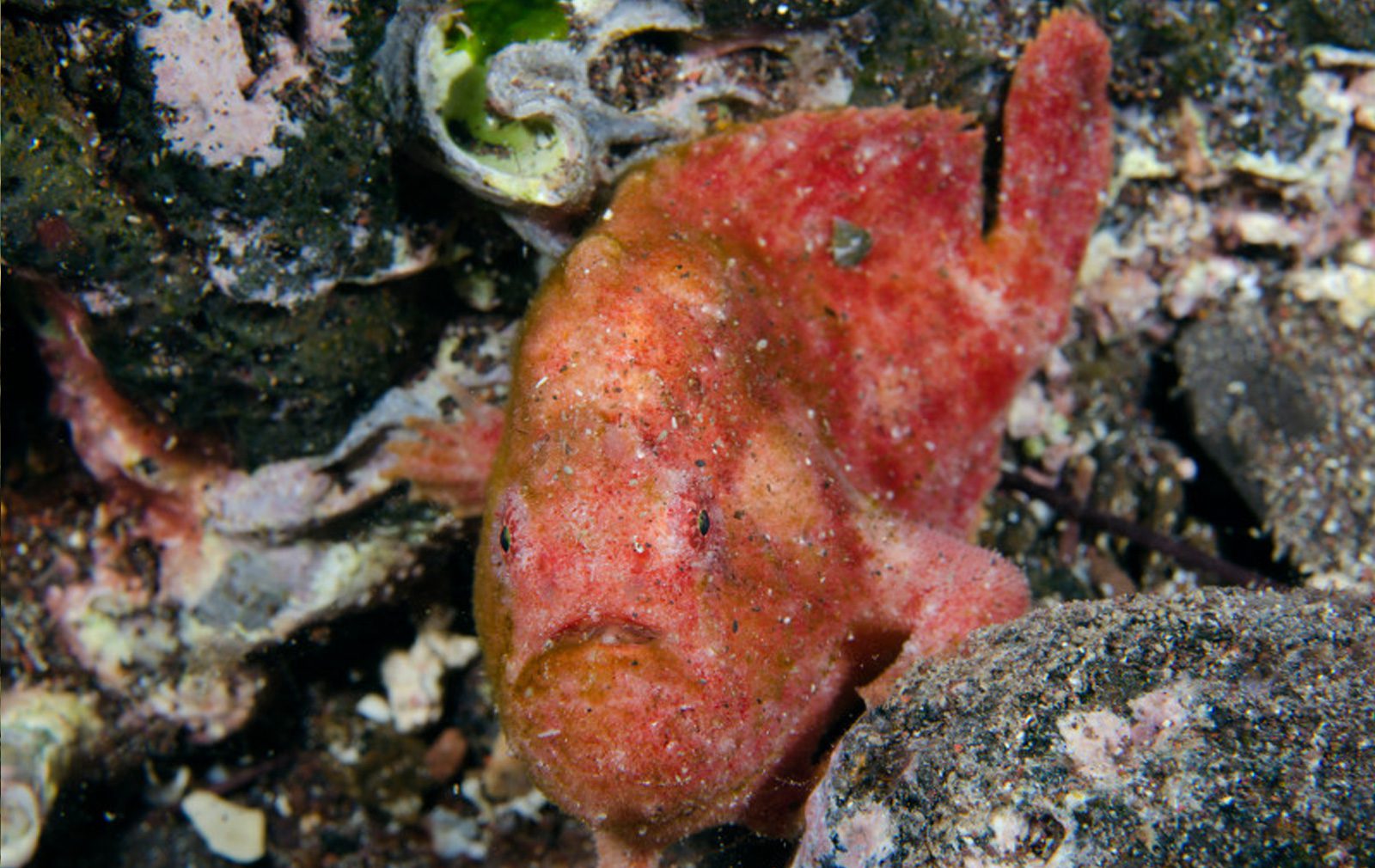
The scarlet frogfish, Antennatus coccineus, is a colorful frogfish that may appear red, orange, yellow, or mottled depending on its surroundings. It is found in tropical Indo-Pacific waters. Despite its bright appearance, it can be very well camouflaged among sponges, corals, and algae. Its lure and fast strike make it a highly effective predator. For beginners, this species is a useful reminder that bright color underwater does not always mean visibility; in the right habitat, red or orange can disappear surprisingly well.
31. Doreh Frogfish
The Doreh frogfish, Antennatus dorehensis, is a small Indo-Pacific frogfish. It has the typical frogfish combination of a stocky body, modified walking fins, and a lure above the mouth. It is usually associated with reef or rubble habitats where it can sit concealed. Many small frogfish are hard to identify casually because color varies and individuals may look different depending on age, location, and background. Still, this species helps show the rich variety within the smaller reef anglerfish.
32. Flagellated Frogfish
Antennatus flagellatus is a frogfish species named for features associated with its lure or filament-like structures. It belongs to a group of small camouflaged anglerfish that live in warm marine environments. Like other frogfish, it depends on stealth rather than speed. It may rest in a sponge-like pose and wait for small prey to approach. This type is useful in a complete anglerfish guide because it shows how scientific identification often focuses on small lure and fin details that casual observers may miss.
33. Tuberculated Frogfish
Antennatus tuberosus is a small frogfish with a textured body surface. The rough or tubercle-like skin helps it look less like a fish and more like a piece of reef life. Its body is compact, its mouth is large for its size, and its lure is used to attract prey within striking distance. This species is part of the broader frogfish group where camouflage can be so effective that movement is often the first clue that the animal is alive.
34. Glauert’s Anglerfish
Glauert’s anglerfish, Allenichthys glauerti, is a small frogfish-like anglerfish associated with Australian waters. It belongs to the family Antennariidae and is part of the fascinating group of bottom-dwelling reef anglers. This species is not as commonly known as the warty frogfish, but it is important for understanding regional anglerfish diversity. Its body shape, lure, and camouflaged lifestyle fit the frogfish pattern, while its limited range makes it especially interesting for Australian marine biodiversity.
35. Hutchins’ Anglerfish
Hutchins’ anglerfish, Lophiocharon hutchinsi, is another small anglerfish from the western Pacific and Australian region. It occurs in shallow habitats such as sandy mud, seagrass, and sponge-associated areas. Its small size and bottom-dwelling behavior make it difficult to notice. Like other frogfish relatives, it uses a lure and waits for prey to come close. This species is a strong example of how some anglerfish are not terrifying deep-sea giants but small, secretive coastal predators.
36. Three-Spot Anglerfish
The three-spot anglerfish, Lophiocharon trisignatus, is a small western Pacific frogfish relative. It is known for markings that help separate it from similar species. It lives close to the bottom in shallow coastal habitats and uses camouflage to avoid detection. Its lure is generally less dramatic than that of many deep-sea anglerfish, but it serves the same basic function: bringing prey close enough for a sudden strike. For identification, look for body shape, habitat, and the distinctive pattern suggested by its common name.
37. Psychedelic Frogfish
The psychedelic frogfish, Histiophryne psychedelica, is one of the most visually striking anglerfish. It has swirling, fingerprint-like patterns that can make it look almost painted. Found in Indonesian waters, it attracted attention because of its unusual appearance and behavior. It moves along the bottom rather than swimming in a typical fish-like way. Its flattened face, bright pattern, and small range make it memorable. This species is a favorite example of how anglerfish diversity can be both scientifically important and visually surprising.
38. Cryptic Anglerfish
Histiophryne cryptacanthus is a frogfish relative with a secretive, bottom-dwelling lifestyle. The name suggests hidden or cryptic features, which fits the camouflaged nature of many frogfish. It is associated with Australian and western Pacific habitats. Like related species, it has a compact body and uses modified fins to rest or move on the bottom. It matters in this guide because it shows that many anglerfish are local, specialized, and easily missed unless observers know where and how to look.
39. Bougainville’s Anglerfish
Histiophryne bougainvilli is another small anglerfish in the frogfish family. It is connected with Indo-Pacific marine habitats and is known mainly to specialists, divers, and fish taxonomists. It has a camouflaged body and a lifestyle built around slow movement and sudden feeding. Compared with famous deep-sea anglerfish, it is much less dramatic in appearance, but it still belongs to the same larger order. This helps readers understand that anglerfish include both shallow reef species and deep ocean forms.
40. Glover’s Anglerfish
Glover’s anglerfish, Rhycherus gloveri, is an Australian frogfish relative. It is a small, cryptic species that lives close to the bottom and blends into its surroundings. Its body can look rough, lumpy, or sponge-like, making it difficult to identify at first glance. The species is important for regional marine conservation and biodiversity awareness because many local anglerfish have limited ranges. For beginners, it is best remembered as a small Australian anglerfish with strong camouflage and a benthic lifestyle.

41. Tasselled Anglerfish
The tasselled anglerfish, Rhycherus filamentosus, is named for its filament-like body structures. These tassels help break up its outline and improve camouflage among algae, sponges, and reef growth. It is associated with southern Australian waters. Like other frogfish relatives, it hunts from a resting position and uses its lure to attract prey. The tasselled body makes this species especially interesting for identification because its disguise is not only based on color but also on three-dimensional body texture.
42. Prickly Anglerfish
Echinophryne crassispina, commonly known as a prickly anglerfish, is an Australian member of the frogfish family. It has a rough, spiny texture that helps it blend with reef and bottom environments. Its pectoral fins are adapted for bottom contact, and its body is built for ambush feeding. This species is a useful example of how anglerfish camouflage often involves more than color. Shape, texture, and posture all work together to hide the fish from both prey and predators.
43. Mitchell’s Anglerfish
Mitchell’s anglerfish, Echinophryne mitchellii, is another small Australian frogfish relative. It is associated with rocky reefs and bottom habitats where camouflage is essential. Its rough body surface and benthic behavior make it look like part of the seafloor. Like many anglerfish, it does not need to swim fast. It waits for the right moment and attacks with a rapid gulp. This type is a strong example of local anglerfish diversity in temperate Australian waters.
44. Butler’s Frogfish
Butler’s frogfish, Tathicarpus butleri, is an unusual anglerfish from northern Australian waters. It has long, distinctive fins and a body shape that looks different from many compact frogfish. This species is especially interesting because it represents a more unusual branch within the frogfish relatives. It lives in shallow marine habitats and uses camouflage and ambush tactics. For readers, Butler’s frogfish shows that even within the frogfish group, body shapes can vary widely.
45. Boschma’s Frogfish
Lophichthys boschmai, known as Boschma’s frogfish, is a small anglerfish in the broader frogfish group. It is not commonly encountered by casual observers, but it is important taxonomically. Its body is compact, camouflaged, and adapted for ambush feeding. Like other frogfish, it uses a modified dorsal spine as a lure. This species helps complete the picture of anglerfish diversity by showing that many types are small, rare, and known mainly from regional records and scientific study.
46. Red-Fingered Anglerfish
The red-fingered anglerfish, Porophryne erythrodactylus, is a recently described Australian anglerfish known for reddish fin or finger-like features. It is a small, sponge-associated species that can be hard to see because its skin markings and posture mimic the surrounding habitat. This fish is a good example of how new anglerfish species can still be recognized through careful research. It also shows why close observation of small reef habitats can reveal animals that were overlooked for years.
47. Red-Lipped Batfish
The red-lipped batfish, Ogcocephalus darwini, is one of the most recognizable batfish. It is famous for its bright red lips and flattened body. Found around the Galapagos region, it lives on the seafloor and uses its modified fins to move in a walking-like way. Unlike frogfish, batfish often have a hard, triangular or disc-like body. Their lure is less obvious to beginners but still part of the anglerfish system. This species is popular because it looks strange, memorable, and almost cartoon-like.
48. Shortnose Batfish
The shortnose batfish, Ogcocephalus nasutus, lives in the western Atlantic and Caribbean region. It has a flattened body, pointed snout, and bottom-walking behavior. Its coloration helps it blend into sandy and rubble habitats. Batfish are not strong open-water swimmers; they are adapted for life on the seafloor. The shortnose batfish is a useful species for divers and naturalists because it shows the batfish body plan clearly: flat, angular, bottom-oriented, and very different from the round deep-sea seadevils.
49. Longnose Batfish
The longnose batfish, Ogcocephalus corniger, is another western Atlantic batfish. Its longer snout helps separate it from shorter-snouted relatives. It rests on the bottom and moves with pectoral and pelvic fins that look almost like legs. This species feeds on small bottom animals and uses camouflage to stay hidden. Batfish are anglerfish, but their lure is not always the dramatic glowing lantern people imagine. Instead, their strange shape and seafloor lifestyle make them one of the most distinctive anglerfish groups.
50. Roughback Batfish
Ogcocephalus parvus is a small batfish species with a flattened body and bottom-dwelling habits. Like other batfish, it is adapted to rest on or crawl over the seafloor rather than swim through open water. Its rough or textured surface helps with camouflage. It may feed on small crustaceans, worms, or other bottom organisms. For readers learning different types of angler fish, this species helps show the difference between batfish and frogfish: both are benthic, but batfish are often flatter and more angular.
51. Pancake Batfish
The pancake batfish, often represented by Halieutichthys aculeatus and related species, has a very flat body that looks almost like a small pancake on the seafloor. It lives in western Atlantic and Gulf region habitats. Its body is adapted for bottom life, and it can move with short walking-like motions. Pancake batfish gained public attention because some species live in areas affected by human activity. They are important reminders that strange seafloor fish can be vulnerable to habitat disturbance.
52. Louisiana Pancake Batfish
Halieutichthys intermedius, often called the Louisiana pancake batfish, is a small, flattened anglerfish from the Gulf of Mexico region. It has a wide, low body and spends its life close to the seafloor. Its shape helps it settle into bottom habitats where it can feed on small animals. This species is useful in conservation discussions because Gulf seafloor habitats can be affected by fishing pressure, pollution, and energy development. It shows that anglerfish conservation is not only a deep-sea issue.
53. Spiny Pancake Batfish
Halieutichthys bispinosus is another pancake batfish species. It has a flattened body and spiny features that help distinguish it from close relatives. Like other batfish, it lives on the seafloor and uses modified fins for movement. Its camouflage makes it difficult to notice unless the observer is looking carefully. Pancake batfish are especially useful for teaching beginners that anglerfish can look like flat bottom creatures, not only toothy deep-sea predators with glowing lures.
54. Starry Handfish
The starry handfish, Halieutaea stellata, is a batfish-like anglerfish from Indo-Pacific waters. It has a flattened body and markings that can resemble stars or speckles. The fish lives close to the seafloor and moves using its fins rather than swimming continuously. It feeds on small animals near the bottom. This species is a good example of the broad variety within batfish relatives, where body shapes can range from triangular to round and patterns can be surprisingly decorative.
55. Deepsea Batfish
Dibranchus atlanticus is a deepwater batfish found in Atlantic habitats. It has the flattened, benthic form typical of its family but lives deeper than many reef or coastal batfish. Its body is adapted for low-light, bottom environments where movement is slow and food may be scattered. Deepwater batfish are not often seen alive by divers, but they are important parts of slope and deep-sea ecosystems. This species shows that the batfish branch of anglerfish extends well beyond shallow tropical waters.
56. Tremendous Batfish
Dibranchus tremendus is a batfish with a memorable scientific name. Like other Dibranchus species, it is a deepwater bottom dweller with a flattened body and modified fins. It hunts small organisms on or near the seafloor and relies on camouflage. Because deepwater batfish are rarely observed in natural conditions, many details of behavior are harder to study than in shallow frogfish. Still, their body structure clearly places them among the bottom-adapted types of angler fish.
57. Giant Triangular Batfish
The giant triangular batfish, Malthopsis gigas, is a batfish known for its angular body shape. Although called giant, it is not giant compared with large monkfish; the name is relative to related batfish. Its flattened body and long snout help it fit a bottom-dwelling lifestyle. Batfish like this often look more like strange armored shapes than typical fish. This species is useful for identification because it highlights the triangular batfish form within the anglerfish order.
58. Longsnout Batfish
Malthopsis longirostris is a batfish with a notably long snout. It lives on the seafloor and is adapted for creeping rather than active swimming. The long snout and flattened body are important clues for identification. Like other batfish, it feeds on small benthic animals and uses camouflage to remain unnoticed. This species helps readers understand that many anglerfish families are identified not by color but by body architecture, snout shape, fin placement, and bottom-living behavior.
59. Spotted Handfish
The spotted handfish, Brachionichthys hirsutus, is one of the most conservation-famous anglerfish. It lives in shallow Tasmanian waters and uses hand-like fins to walk across the seafloor. Its spotted pattern helps with camouflage, but its small range makes it vulnerable. Unlike many deep-sea anglerfish, this species lives in relatively shallow coastal habitat where human impacts can matter greatly. It is an important reminder that some types of angler fish are rare and need active habitat protection.
60. Smooth Handfish
The smooth handfish, Sympterichthys unipennis, is a Tasmanian handfish known for its extreme rarity. Handfish are anglerfish relatives with unusual fins that allow them to move across the bottom in a walking motion. This species is often discussed in conservation because it has not been reliably seen in modern times. It shows how vulnerable small, localized seafloor fish can be when their habitat changes. For readers, the smooth handfish is one of the clearest examples of why marine biodiversity records matter.

61. Ziebell’s Handfish
Ziebell’s handfish, Brachiopsilus ziebelli, is another rare Tasmanian handfish. It has a benthic lifestyle and uses modified fins to move over the seafloor. Its limited distribution makes it difficult to study and potentially vulnerable to habitat changes. Unlike the dramatic deep-sea anglerfish of popular imagination, this species is small, local, and easily overlooked. It belongs in a complete guide because handfish are among the most unusual anglerfish relatives and some of the most conservation-sensitive.
62. Pink Handfish
The pink handfish, Thymichthys politus, is a rare handfish from Tasmanian waters. It has a pinkish body and hand-like fins used for walking along the bottom. Because it is rarely observed, every confirmed record is valuable to researchers. Its lifestyle is slow, benthic, and highly specialized. The pink handfish is important for readers because it changes the common image of anglerfish. Not all anglerfish are black, toothy, or deep-sea; some are small coastal fish with unusual walking fins.
63. Red Handfish
The red handfish, Thymichthys verrucosus, is a critically rare Tasmanian handfish. It is small, brightly colored, and strongly tied to specific shallow seafloor habitats. It moves with hand-like fins and does not travel long distances. This limited mobility can make the species vulnerable when local habitat quality declines. The red handfish is one of the most important conservation examples among anglerfish because it shows how a species can be fascinating, beautiful, and at serious risk at the same time.
64. Humpback Anglerfish
The humpback anglerfish, Melanocetus johnsonii, is one of the classic black seadevils. Female fish have a rounded black body, large mouth, sharp teeth, and a glowing lure. It lives in deep ocean waters, usually far below the sunlight zone. The female is much larger and more recognizable than the male. This species is often used in books, videos, and illustrations to represent deep-sea anglerfish. Its strange shape is not random; it is an efficient design for life in dark, food-scarce water.
65. Murray’s Black Seadevil
Melanocetus murrayi is another black seadevil in the genus Melanocetus. It shares the dark body, large mouth, and deep pelagic lifestyle of its close relatives. Like other deep-sea anglerfish, the female uses a luminous lure to attract prey in darkness. These fish often live at depths where sunlight does not reach, so bioluminescence becomes an important communication and hunting tool. Murray’s black seadevil is a good reminder that the famous black seadevil image represents a group, not just one species.
66. Black Seadevil
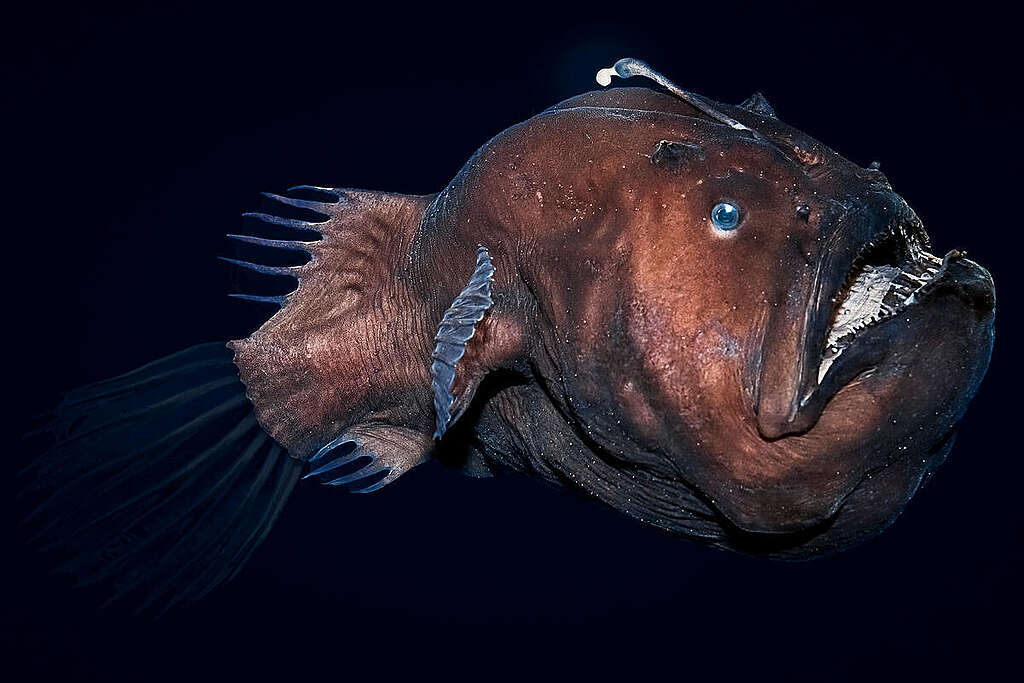
Melanocetus niger is a black seadevil species with a compact, dark body and a lure-bearing spine. It belongs to the deep-sea anglerfish group where females are the most visible and distinctive form. Its mouth can open wide to capture prey in a habitat where meals may be rare. Like many deep-sea species, it is poorly known compared with coastal fish. It matters in this guide because it helps show the diversity within the black seadevils, a group many people mistakenly treat as a single animal.
67. Pacific Footballfish
The Pacific footballfish, Himantolophus sagamius, is a deep-sea anglerfish with a rounded body and a complex lure. It belongs to the footballfish family, whose females are globe-shaped and often covered with small prickles or textured skin. This species is best known from deep Pacific waters and occasional rare strandings. The female’s lure helps attract prey in dark water. Pacific footballfish are fascinating because they look almost unreal, yet their features are practical adaptations to deep-sea life.
68. Greenland Footballfish
The Greenland footballfish, Himantolophus groenlandicus, is another member of the footballfish family. It has a rounded body, large mouth, and prominent lure. Despite the common name, footballfish species can have broad oceanic distributions. They live in deep water and are rarely seen alive. Their strange form is linked to survival in the open deep sea, where predators must make the most of rare prey encounters. The Greenland footballfish is especially useful for explaining why many deep-sea anglerfish look round, dark, and oversized in the head.
69. Albinares Footballfish
Himantolophus albinares is a footballfish species known from deep ocean habitats. Like other Himantolophus species, the female has a bulky body and a lure used for attracting prey. Footballfish identification often depends on lure structure, skin details, and measurements rather than simple color. These details can be difficult to observe in the wild because the fish live far below normal diving depth. This species adds to the rich variety of deep-sea anglerfish with rounded bodies and specialized light organs.
70. Kroyer’s Deep-Sea Angler
Kroyer’s deep-sea angler, Ceratias holboelli, is a large deep-sea anglerfish in the warty seadevil family. Females can be much larger than males, and the species is known for extreme sexual dimorphism. Like other ceratioid anglerfish, it has a lure and a large mouth suited for capturing prey in dark water. The male’s life is very different from the female’s, and in some related anglerfish groups males attach to females for reproduction. This species is one of the most dramatic examples of deep-sea anglerfish biology.
71. Tentacled Seadevil
Ceratias tentaculatus is a warty seadevil species with a deep-sea lifestyle. It has the general features people associate with deep-sea anglerfish: dark body, big jaws, sharp teeth, and a lure. Its name points to tentacle-like structures or lure features that help distinguish it from relatives. This fish lives in deep pelagic habitats, where light is scarce and prey may be widely spaced. Its body is built to conserve energy and take advantage of prey that comes within reach.
72. Triplewart Seadevil
The triplewart seadevil, Cryptopsaras couesii, is one of the best-known examples of sexual parasitism among anglerfish. Females are much larger, while males are tiny and may attach to females as part of reproduction. The female has a deep-sea anglerfish body with a lure and large mouth. This species helps explain why anglerfish became famous not only for glowing bait but also for extraordinary mating strategies. It is a powerful example of how life in the deep sea can drive unusual adaptations.
73. Two-Spined Seadevil
Diceratias bispinosus, often called a two-spined seadevil, is a deep-sea anglerfish in the family Diceratiidae. The name reflects important spine or lure-related features. Like many ceratioids, the female is the more recognizable form, with a large mouth and lure adapted for dark water. It lives in deep pelagic habitats and is rarely encountered alive. This species is useful for showing how deep-sea anglerfish families are separated by details of the lure, fins, and head structures.
74. Pileated Seadevil
Diceratias pileatus is another diceratiid seadevil. It shares the deep-sea lifestyle of related species, using a lure to attract prey in very low light. Its body is compact and adapted for ambush feeding rather than long-distance pursuit. Species like this are not usually known from casual observation; they are studied through specimens, deep-sea sampling, and occasional imagery. For readers, it helps fill out the seadevil branch of anglerfish diversity beyond the few famous species.
75. Bulbous Dreamer
The bulbous dreamer, Oneirodes eschrichtii, belongs to the dreamer family, one of the most diverse groups of deep-sea anglerfish. It has a small, rounded body and a luminous lure. Dreamers are named in a way that fits their strange appearance, and many species differ in the structure of the esca. The bulbous dreamer is a good representative of this group because it shows the classic deep pelagic anglerfish form: small body, large mouth, dark habitat, and specialized lure.
76. Carlsberg’s Dreamer
Oneirodes carlsbergi is a dreamer species found in deep ocean habitats. It belongs to a family where many species look similar at first glance but differ in lure shape and fine anatomical details. The female uses a bioluminescent esca to attract prey. Like other dreamers, it is a predator of small fish and crustaceans in deep pelagic waters. This species is a useful example of why deep-sea anglerfish identification often requires expert examination rather than a quick look at body color.
77. Prickly Dreamer
The prickly dreamer, Spiniphryne gladisfenae, is a deep-sea anglerfish in the dreamer family. It is known for spiny or prickly features and a specialized lure. It lives in the deep Atlantic and is rarely seen by the public. Like other dreamers, the female is the form most people imagine when thinking of deep-sea anglerfish. This species is especially interesting because the details of its lure help separate it from related species. It shows how evolution has produced many variations on the same angling strategy.
78. Whipnose Angler
The whipnose angler, Gigantactis vanhoeffeni, belongs to a family known for extremely long lures. In some whipnose anglers, the lure can be longer than the body, giving the fish a strange fishing-rod appearance. These deep-sea predators live in dark open water and use their extended illicium to attract prey. The whipnose angler is one of the clearest examples of how the anglerfish lure can vary dramatically. It is not just a glowing bulb; in some species it becomes a long, flexible hunting tool.
79. Long-Thread Whipnose Angler
Gigantactis macronema is a whipnose angler notable for its very long lure. The name points to a large or long thread-like structure, which fits the group’s most distinctive feature. It lives in deep pelagic waters and is rarely observed in its natural environment. Its body is relatively small compared with the length of its lure. This species is useful for readers because it shows one of the most extreme lure designs among anglerfish, proving that the “fishing rod” can be highly specialized.
80. Bearded Seadevil
The bearded seadevil, Linophryne lucifer, is a deep-sea anglerfish with both a lure and a chin barbel. This gives it two fascinating light-related or sensory-looking features: the typical anglerfish esca and a beard-like structure below the mouth. It lives in dark ocean depths and uses its adaptations to find food where prey is scarce. The bearded seadevil is one of the most memorable types of angler fish because it looks like a creature designed for darkness, patience, and surprise.

How Are These Types of Fish Classified?
Anglerfish are classified in the order Lophiiformes. Within this order, scientists separate species into families and genera based on body shape, lure structure, fin placement, skeleton details, habitat, and evolutionary relationships. For beginners, the easiest way to understand anglerfish classification is to group them by lifestyle and appearance.
- Monkfish and goosefish: These are mostly bottom-dwelling species with broad, flat heads and large mouths. They include species such as Lophius piscatorius and Lophius americanus.
- Frogfish: These are reef or shallow-water anglers with compact bodies, strong camouflage, and leg-like fins. They include many Antennarius species.
- Batfish: These are flattened seafloor anglers that often look triangular, disc-shaped, or pancake-like. They use modified fins to move across the bottom.
- Handfish: These rare bottom-dwellers have hand-like fins and are strongly associated with Australian and Tasmanian waters.
- Deep-sea ceratioids: These include black seadevils, footballfish, dreamers, whipnose anglers, and bearded seadevils. Many females have glowing lures and strong sexual dimorphism.
- Sea toads and related forms: These are bottom-dwelling anglerfish with rounded bodies and deepwater habits.
Where Do These Fish Live?
Anglerfish live in many marine habitats, from shallow reefs to the deepest parts of the open ocean. Frogfish often live on coral reefs, sponge gardens, rubble slopes, and weed-covered coastal areas. Monkfish and goosefish usually live on sandy, muddy, or gravelly seafloors, where they can bury or flatten themselves against the bottom. Batfish and handfish also live close to the seafloor, using their fins to crawl or walk rather than swim continuously.
Deep-sea anglerfish live in mesopelagic and bathypelagic zones where sunlight is weak or absent. In these habitats, bioluminescence becomes especially useful. A glowing lure can attract prey, help with species recognition, and possibly assist males in finding females. Some species are widely distributed across oceans, while others have narrow regional ranges. This is why habitat is one of the most important clues when identifying different types of angler fish.
How to Identify Different Types of Fish in the Anglerfish Group
- Body shape: Flat and broad usually suggests monkfish, goosefish, or batfish. Round and dark often suggests deep-sea seadevils or footballfish. Compact and lumpy often suggests frogfish.
- Lure position: Most anglerfish have a modified dorsal fin spine, but its length, shape, and visibility vary widely.
- Habitat: Reef species are often frogfish, sandy shelf species may be monkfish, and open deep-sea species may be ceratioid anglers.
- Movement: Frogfish and handfish often appear to walk. Batfish crawl across the bottom. Deep-sea forms drift or swim slowly in the water column.
- Color and texture: Reef species may be bright or sponge-like. Bottom species are often brown, gray, or mottled. Deep-sea species are often dark.
- Mouth size: A huge expandable mouth is common across many anglerfish, but it is especially dramatic in deep-sea species.
- Special features: Red lips, hand-like fins, hair-like filaments, chin barbels, and extremely long lures can help separate groups.
Outdoor Tips for Finding and Observing These Species
Most people will not see deep-sea anglerfish in the wild, but reef frogfish, batfish, and some bottom-dwelling anglers can be observed by divers, snorkelers, and underwater photographers in the right regions. The best approach is slow observation. Look carefully at sponges, algae-covered rocks, coral rubble, floating Sargassum, sandy bottoms, and areas where small fish gather.
- Move slowly and scan for shapes that do not quite match the background.
- Look for small eye movement, lure movement, or fin movement.
- Do not touch or disturb camouflaged fish.
- Use a local field guide because many species are regional.
- For photography, keep a respectful distance and avoid stressing the animal with repeated close flashes.
- When beachcombing, report unusual deep-sea strandings to local marine authorities or museums instead of taking specimens home.
Safety, Sustainability, and Conservation Notes
Anglerfish are fascinating, but they also remind us that marine life depends on healthy habitats. Some monkfish and goosefish are harvested commercially, so sustainable fishery management matters. Some handfish have very small ranges and are highly vulnerable to habitat damage. Deep-sea anglerfish are difficult to study, and many species remain poorly known because their habitats are remote.
- Follow local fishing laws and size limits for monkfish or goosefish species.
- Choose seafood from responsibly managed fisheries when available.
- Do not collect frogfish, handfish, or rare bottom species from the wild without legal permission.
- Support reef protection because frogfish depend on healthy habitat structure.
- Protect seafloor habitats from pollution, destructive fishing practices, and unnecessary disturbance.
- Report rare sightings, especially handfish or unusual stranded deep-sea species, to local experts.
Fun Facts About Angler Fish
- Anglerfish get their name from the way they “fish” for prey using a modified fin spine as bait.
- The lure is called the esca, while the stalk-like part is called the illicium.
- Many deep-sea female anglerfish have glowing lures powered by bioluminescent bacteria.
- Not all anglerfish live in the deep sea; many frogfish live on shallow tropical reefs.
- Frogfish can look like sponges, algae, rocks, or coral pieces.
- Batfish often move across the seafloor with fin motions that look like walking.
- Some handfish are among the rarest marine fish known.
- Male deep-sea anglerfish are often much smaller than females.
- Some deep-sea anglerfish males attach to females as part of reproduction.
- Anglerfish can swallow surprisingly large prey because of their expandable mouths.
Final Thoughts on Types of Angler Fish
The many types of angler fish show how one basic idea, a fish using a built-in lure, can evolve into many different forms. Monkfish hide on sandy bottoms, frogfish disappear among reefs, batfish crawl over the seafloor, handfish walk on fin-like hands, and deep-sea seadevils glow in darkness. Some are important seafood species, some are rare conservation priorities, and others are mysterious animals that scientists are still learning about. The more you study anglerfish, the easier it becomes to see them not as monsters, but as highly specialized predators shaped by habitat, depth, camouflage, and patience.
Frequently Asked Questions
1. What is an anglerfish?
An anglerfish is a fish in the order Lophiiformes that uses a modified fin spine as a lure. The lure helps attract prey close to the mouth. Anglerfish include monkfish, frogfish, batfish, handfish, and many deep-sea species.
2. Is angler fish the same as anglerfish?
Yes. “Anglerfish” is the standard spelling, but many people search for “angler fish” as two words. Both usually refer to the same group of lure-bearing fish.
3. How many types of angler fish are there?
There are far more than 80 recognized anglerfish species. This guide uses 80 practical examples because the group is large and includes many families, genera, and deep-sea species.
4. What are the main groups of anglerfish?
The main groups include monkfish and goosefish, frogfish, batfish, handfish, sea toads, black seadevils, footballfish, dreamers, whipnose anglers, and bearded seadevils.
5. Do all anglerfish have a glowing lure?
No. Many deep-sea female anglerfish have bioluminescent lures, but shallow-water frogfish and monkfish usually do not glow. They still use a lure, but it may look like a small worm, shrimp, or baitfish instead of a light.
6. Where do anglerfish live?
Anglerfish live in oceans around the world. Some live on shallow reefs, some on sandy or muddy seafloors, and many live in deep open-ocean habitats far below sunlight.
7. Are anglerfish dangerous to humans?
Anglerfish are not usually dangerous to humans. Deep-sea species live far beyond normal swimming or diving depths. Reef frogfish should not be touched, but they are not aggressive toward people.
8. Can anglerfish be eaten?
Some monkfish and goosefish species are eaten and sold as seafood. However, many anglerfish are not used for food, especially small frogfish, rare handfish, and deep-sea species.
9. What does monkfish have to do with anglerfish?
Monkfish are a type of anglerfish, usually in the family Lophiidae. They are broad, flat, bottom-dwelling predators and are among the most commercially important anglerfish.
10. Are frogfish types of angler fish?
Yes. Frogfish belong to the anglerfish order and use a lure to attract prey. They usually live in warm shallow waters and are famous for sponge-like camouflage.
11. Are batfish types of angler fish?
Yes. Batfish are anglerfish relatives that live on the seafloor. They often have flattened bodies and use their fins to move in a walking or crawling motion.
12. What is the most famous anglerfish?
The humpback anglerfish, Melanocetus johnsonii, is one of the most famous because it matches the popular image of a black deep-sea fish with sharp teeth and a glowing lure.
13. What is the strangest type of anglerfish?
Many people consider the bearded seadevil, whipnose angler, and triplewart seadevil among the strangest because of their glowing lures, unusual reproduction, and bizarre body shapes.
14. Why do anglerfish have big mouths?
A large expandable mouth helps anglerfish capture prey quickly. In the deep sea, food can be rare, so being able to swallow large prey is a major advantage.
15. Why are female deep-sea anglerfish larger than males?
In many deep-sea anglerfish, females grow much larger because they hunt and produce eggs, while males are specialized for finding females. In some species, males attach to females during reproduction.
16. Do male anglerfish really attach to females?
In some deep-sea anglerfish groups, males attach to females and may become physically connected. This is called sexual parasitism and is one of the most unusual reproductive strategies in fish.
17. Do all male anglerfish fuse with females?
No. Sexual parasitism occurs in some deep-sea anglerfish, not in all anglerfish. Frogfish, monkfish, batfish, and many other species do not reproduce in that extreme way.
18. What do anglerfish eat?
Anglerfish are carnivores. Depending on the species and habitat, they may eat fish, shrimp, crabs, squid, worms, and other small marine animals.
19. How do frogfish catch prey?
Frogfish sit still, wave their lure, and wait for prey to approach. When prey is close, they open their mouth rapidly and suck the prey in with a powerful gulp.
20. Can frogfish change color?
Some frogfish can change color over time to better match their surroundings. This change is not instant like a cartoon effect, but it can help them blend into sponges, algae, and reef backgrounds.
21. What is a footballfish?
A footballfish is a deep-sea anglerfish in the family Himantolophidae. Females often have rounded bodies, large mouths, and complex lures.
22. What is a black seadevil?
A black seadevil is a deep-sea anglerfish in the genus Melanocetus. These fish are dark, round-bodied predators with large jaws and luminous lures.
23. What is a dreamer anglerfish?
Dreamers are deep-sea anglerfish in the family Oneirodidae. They are highly diverse and often identified by the structure of their luminous lure.
24. What is a whipnose angler?
A whipnose angler is a deep-sea anglerfish with an extremely long lure. In some species, the lure can be longer than the fish’s body.
25. What is a handfish?
A handfish is an anglerfish relative with modified fins that look and function somewhat like hands. Many handfish live around Tasmania and are conservation-sensitive.
26. Are anglerfish good aquarium fish?
Some frogfish appear in specialized marine aquariums, but they are not beginner fish. They require expert care, careful feeding, appropriate tank mates, and responsible sourcing.
27. Can deep-sea anglerfish live in aquariums?
Deep-sea anglerfish are not practical aquarium animals. Their depth, pressure, temperature, and feeding needs make them extremely difficult to keep alive outside specialized scientific conditions.
28. Why are anglerfish so ugly-looking?
Their appearance is based on function, not beauty. Big mouths, camouflage, lures, dark color, and strange body shapes help them survive in habitats where stealth and energy efficiency matter.
29. Are anglerfish blind?
Anglerfish are not all blind. Some deep-sea species have reduced or specialized eyes, while males of some species have well-developed senses to locate females. Shallow-water frogfish can see prey and surroundings.
30. How deep do anglerfish live?
Depth depends on the species. Some frogfish live in shallow reefs, monkfish may live on continental shelves and slopes, and many deep-sea anglerfish live hundreds to thousands of meters below the surface.
31. What is the largest type of anglerfish?
Large monkfish and goosefish are among the biggest anglerfish. Some deep-sea species also have large females, but many famous deep-sea anglerfish are smaller than people imagine.
32. What is the smallest type of anglerfish?
Some deep-sea males are extremely tiny compared with females, and some small frogfish are only a few centimeters long. Exact size depends on the species and life stage.
33. Do anglerfish swim?
Yes, but many do not swim like fast open-water fish. Frogfish creep, batfish crawl, handfish walk on fins, monkfish lie on the bottom, and deep-sea species often drift or swim slowly.
34. Why are deep-sea anglerfish black?
Dark coloration helps many deep-sea species remain hard to see in low-light environments. In the deep sea, black or very dark skin can help hide the fish from prey and predators.
35. Are anglerfish endangered?
Conservation status varies widely. Some species are common or commercially managed, while some handfish are extremely rare and threatened. Many deep-sea species are still poorly known.
36. Are red-lipped batfish real anglerfish?
Yes. The red-lipped batfish belongs to the anglerfish order. It does not match the classic glowing deep-sea image, but it is still a true anglerfish relative.
37. Why do batfish look like they walk?
Batfish have modified fins that help them move across the seafloor. This walking-like motion is useful for bottom habitats where swimming continuously is not necessary.
38. What is the difference between monkfish and frogfish?
Monkfish are usually larger, flatter, and associated with seafloor habitats and fisheries. Frogfish are usually smaller, reef-associated, more colorful or sponge-like, and popular with divers and photographers.
39. What is the difference between frogfish and batfish?
Frogfish are compact and often lumpy or sponge-like, while batfish are usually flatter, more angular, and more strongly adapted for crawling on the seafloor.
40. Why are anglerfish hard to study?
Many anglerfish live in deep, remote, or highly camouflaged habitats. Deep-sea species are difficult to observe alive, and shallow species can be hard to notice because they blend into their surroundings.
41. What should I look for when identifying an anglerfish?
Look at body shape, habitat, lure position, color, texture, fin movement, mouth size, and special features such as red lips, hand-like fins, hair-like filaments, or long lures.
42. Are all anglerfish marine fish?
Almost all recognized anglerfish are marine. Some species may occur near brackish coastal habitats, but the group is overwhelmingly ocean-based.
43. Do anglerfish use their lure only for hunting?
The lure is mainly associated with attracting prey, but in some deep-sea species it may also help with species recognition or mate-finding. The exact role can vary by species.
44. Why do some anglerfish look like sponges?
Many frogfish live among sponges and reef growth. A sponge-like body shape helps them hide from prey and predators while they wait for food.
45. What is the best-known edible anglerfish?
Monkfish, especially species in the genus Lophius, are the best-known edible anglerfish. Their tail meat is firm and commonly used in seafood dishes.
Read more:
80 Types of Bass Fish: Identification Guide