
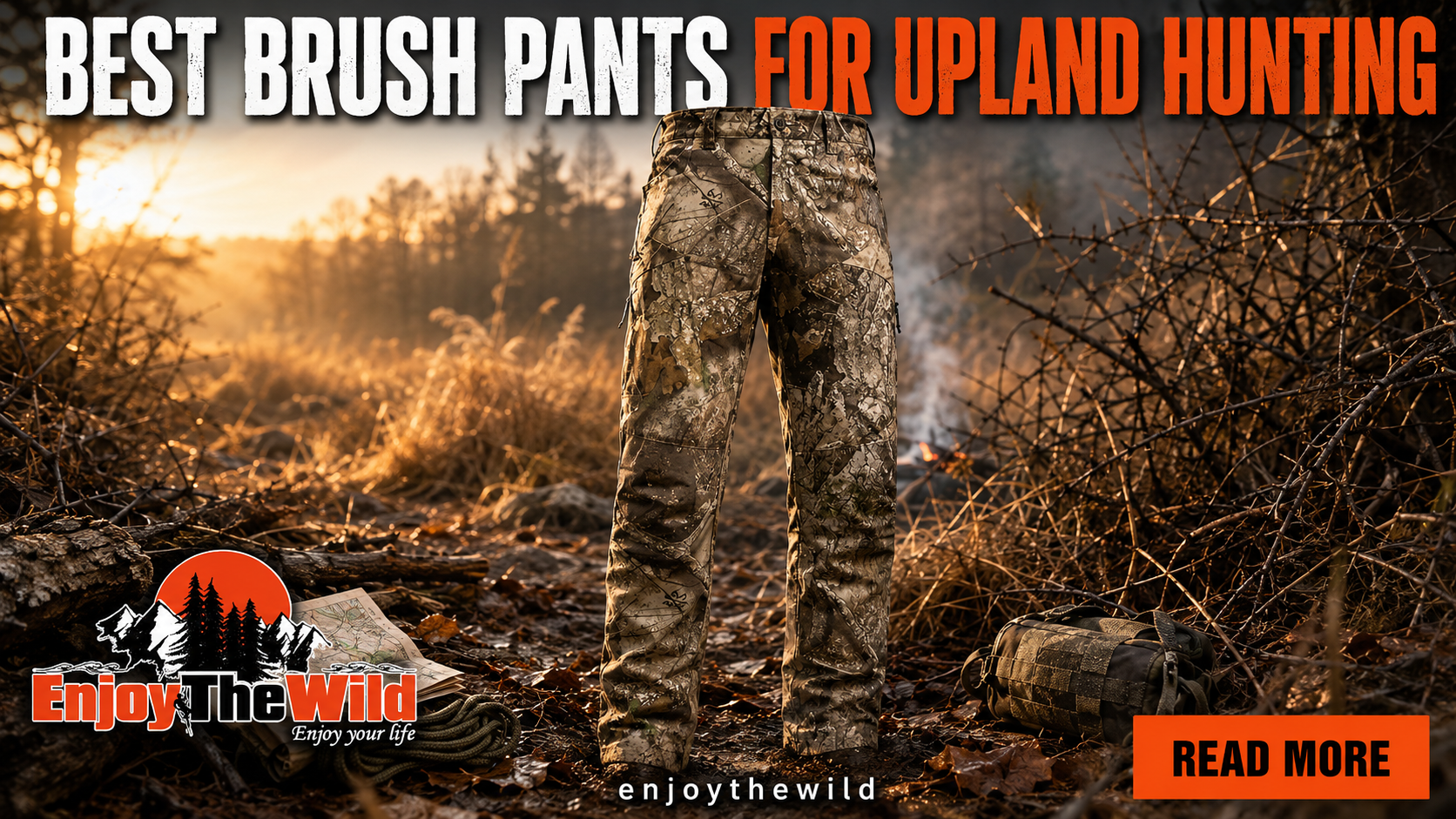
The best brush pants for upland hunting protect your legs from briars, thorns, grass, crop stubble, brushy fence lines, cactus, blackberry canes, and rough field edges while still letting you walk comfortably behind dogs all day. Upland hunters often cover miles through uneven terrain, so a good pair of pants needs to balance protection, mobility, breathability, weather resistance, and quiet field performance.
This guide is written for pheasant hunters, quail hunters, grouse hunters, chukar hunters, woodcock hunters, rabbit hunters, dog handlers, public-land walkers, and beginners building a practical upland hunting clothing system. Upland hunting generally refers to hunting land-based game birds such as pheasant, quail, grouse, woodcock, prairie chicken, chukar, and partridge, often with pointing or flushing dogs. :contentReference[oaicite:0]{index=0}
Brush pants are not a substitute for safe firearm handling, hunter education, legal compliance, dog control, blaze orange rules, landowner permission, or good judgment. Hunting laws, seasons, bag limits, licensing, public-land access, private-land permission, and legal equipment rules vary by location, so always check your state wildlife agency before hunting. :contentReference[oaicite:1]{index=1}
Quick Picks
- Best Overall: First Lite Sawbuck Brush Pant
- Best Premium Option: Filson Oil Finish Double Tin Cloth Pants
- Best for Long Upland Walks: PYKE Gear Dakota Upland Pant
- Best Budget Option: Gamehide Briar Proof Upland Pants
- Best Heavy-Briar Protection: Dan’s Hunting Gear Briarproof Upland Pants
Product Comparison Table: Best Brush Pants for Upland Hunting
| Product | Best For | Key Features | Important Notes | Check Details |
|---|---|---|---|---|
| First Lite Sawbuck Brush Pant | Best overall | Hunting-focused fit, brush-facing protection, modern upland design | Good balance of mobility and protection for mixed upland cover | Check Details |
| PYKE Gear Dakota Upland Pant | Long walks behind dogs | Upland-oriented design, active fit, brush protection | Premium field pant; check size and availability before buying | Check Details |
| Orvis Missouri Breaks Field Pants | Classic upland field use | Field-pant layout, upland walking comfort, brush-facing panels | Good for pheasant, quail, and grouse hunters who walk all day | Check Details |
| Filson Oil Finish Double Tin Cloth Pants | Premium heavy-brush protection | Waxed cotton style, rugged double-front build, traditional durability | Protective but can feel stiff, warm, and heavier than technical pants | Check Details |
| Gamehide Briar Proof Upland Pants | Budget upland hunting | Briar-resistant front, traditional field style, value-focused design | Good beginner option, but not as refined as premium pants | Check Details |
| Dan’s Hunting Gear Briarproof Upland Pants | Rabbit cover and thick briars | Briarproof-style construction, rugged field use, traditional hunting fit | Best when protection matters more than lightweight packability | Check Details |
| Wrangler Upland Jeans | Affordable casual upland use | Jean-style fit, reinforced front concept, accessible price point | Best for light-to-moderate cover, not extreme briars | Check Details |
| Beretta Thorn Resistant Pants | Premium shooting and upland crossover | Field-focused design, thorn-resistant concept, refined fit | Good for hunters who also value shooting-sport styling | Check Details |
| Huntworth Upland Pants | Value field hunting | Hunting-oriented build, field-friendly colors, brush-panel style | Useful for beginners and occasional upland hunts | Check Details |
| Browning Upland Pants | Traditional upland hunters | Upland styling, field use, brush-facing protection depending on model | Model details vary; check current listing carefully | Check Details |
| Carhartt Rugged Flex Double-Front Work Pant | Workwear crossover | Durable workwear fabric, double-front utility style, affordable option | Not a dedicated upland pant; best for scouting and light cover | Check Details |
| Wrangler Riggs Workwear Ranger Pant | Budget workwear backup | Rugged work-pant fabric, utility pocket layout, easy everyday use | Good for chores and scouting, but not true briarproof upland gear | Check Details |
Best Brush Pants for Upland Hunting Reviews
1. First Lite Sawbuck Brush Pant
The First Lite Sawbuck Brush Pant is the best overall choice for many upland hunters because it blends modern hunting comfort with useful brush protection. It is a strong fit for pheasant fields, quail cover, grouse woods, mixed public land, and hunters who want one pair of pants that can handle more than one upland season.
Key Features
- Hunting-focused pant design made for walking through brush and field cover.
- Brush-facing protection in high-contact areas.
- Modern fit that supports hiking, kneeling, climbing, and dog handling.
Pros
- Good balance between leg protection and mobility.
- More field-specific than standard work pants or hiking pants.
- Useful for pheasant, quail, grouse, woodcock, and mixed-cover hunts.
Cons
- Costs more than basic budget upland pants.
- May not be as thorn-proof as very heavy waxed or briarproof pants.
Field Notes
This is the kind of upland pant that makes sense when you walk a lot but still need front-leg protection. It is not the lightest hiking pant or the heaviest briar pant, which is exactly why many hunters will like it. For very aggressive thorns, add gaiters or consider heavier briarproof pants.
Safety and Legal Notes
Good pants can reduce scratches, but they do not replace blaze orange, safe zones of fire, dog awareness, landowner permission, or hunter education. Always know where your partners, dogs, roads, houses, and property boundaries are before taking a shot.
Best For
Best for upland hunters who want one versatile pair of field pants for regular pheasant, quail, grouse, and public-land hunting.
2. PYKE Gear Dakota Upland Pant
The PYKE Gear Dakota Upland Pant is built for hunters who walk long days behind dogs. It is a strong choice for serious upland hunters who need protection from cover but do not want overly stiff, heavy pants that make every mile feel harder.
Key Features
- Purpose-built upland design for active walking.
- Brush-facing construction for field cover and briars.
- Comfort-focused fit for dog handlers and high-mileage hunters.
Pros
- Excellent for hunters who cover miles in pheasant or quail country.
- More upland-specific than generic work pants.
- Good match for hunters who want protection without too much bulk.
Cons
- Premium price may be too high for occasional hunters.
- Availability can vary by size and retailer.
Field Notes
For long upland days, comfort matters as much as protection. Pants that are too stiff can cause fatigue, hot spots, and poor mobility. The Dakota is best for hunters who walk enough to notice those differences.
Safety and Legal Notes
Long upland walks require planning. Carry water for yourself and your dog, basic first aid, navigation, a light source, and a way to communicate. Do not rely on clothing alone to manage heat, cold, dehydration, or injury risk.
Best For
Best for serious upland hunters, dog handlers, and anyone who walks long distances in bird country.
3. Orvis Missouri Breaks Field Pants
The Orvis Missouri Breaks Field Pants are a classic-style upland option for hunters who want comfort, field function, and brush protection in one pant. They are well suited for pheasant fields, grouse woods, quail plantations, and mixed grass-and-brush terrain.
Key Features
- Field-pant design made for upland walking.
- Brush protection in areas that contact cover most often.
- Practical fit for hunters who carry a vest, belt, or bird bag.
Pros
- Good upland-specific design for classic bird hunting.
- Comfortable enough for repeated walking days.
- More refined than many basic briar pants.
Cons
- May not be the cheapest option.
- May not be as heavy-duty as traditional waxed briar pants in extreme thorns.
Field Notes
These pants are best for the hunter who wants a comfortable field pant first and a heavy briar shield second. They make sense in moderate upland cover where movement, pocket access, and walking comfort matter.
Safety and Legal Notes
Upland hunting often involves dogs and multiple hunters. Keep safe spacing, control muzzle direction, clearly communicate bird flushes, and avoid shots when dogs, partners, roads, or buildings may be in the zone of fire.
Best For
Best for classic upland bird hunters who want a polished field pant for pheasant, quail, and grouse cover.
4. Filson Oil Finish Double Tin Cloth Pants
The Filson Oil Finish Double Tin Cloth Pants are the premium choice for hunters who want old-school toughness. They are not the lightest or softest pants, but they are built for hunters who push through serious briars, brush, farm edges, timber cuts, and wet abrasive cover.
Key Features
- Heavy-duty waxed cotton-style construction.
- Double-front design for rough use and abrasion resistance.
- Traditional rugged field and workwear profile.
Pros
- Excellent for thick briars and punishing cover.
- Strong long-term durability potential when properly maintained.
- Good for hunters who value traditional field gear.
Cons
- Can feel stiff, heavy, and warm.
- Not ideal for hot-weather, high-mileage upland hunts.
Field Notes
These pants make the most sense when the cover is nasty and leg protection matters more than breathability. They may require break-in time. Wear them before opening day so you know how they feel with your boots, belt, vest, and base layers.
Safety and Legal Notes
Heavy pants can restrict movement if sized poorly. Test stepping over fences, kneeling, sitting, and climbing before hunting. Always unload firearms before crossing fences or obstacles and follow safe firearm handling rules.
Best For
Best for premium heavy-brush protection, rabbit cover, rough farm edges, and hunters who prioritize toughness over low weight.
5. Gamehide Briar Proof Upland Pants
Gamehide Briar Proof Upland Pants are a practical budget choice for hunters who want dedicated upland protection without spending premium money. They are a good entry point for pheasant hunters, rabbit hunters, and beginners who are tired of tearing regular pants in cover.
Key Features
- Briar-resistant front-panel style.
- Traditional upland hunting fit.
- Budget-friendly design for occasional and beginner hunters.
Pros
- More protective than ordinary jeans or hiking pants.
- Good price-to-function value for new upland hunters.
- Useful for pheasant fields, light briars, and rabbit cover.
Cons
- May not feel as comfortable or refined as premium pants.
- May be less breathable than lightweight technical options.
Field Notes
This is a sensible first pair of upland brush pants. It may not be the most advanced option, but it gives beginners a real upgrade over denim or basic work pants.
Safety and Legal Notes
Budget gear still needs testing. Check the fit while walking, bending, kneeling, and stepping over cover. A poor fit can create tripping, snagging, or movement problems.
Best For
Best for budget-minded upland hunters, beginners, and occasional pheasant or rabbit hunts.
6. Dan’s Hunting Gear Briarproof Upland Pants
Dan’s Hunting Gear Briarproof Upland Pants are built for hunters who regularly face thick briars and rough cover. They are a strong choice for rabbit hunters, grouse hunters, coon hunters, and upland hunters who care more about leg protection than technical stretch or ultralight weight.
Key Features
- Briarproof-style construction for heavy cover.
- Traditional hunting-pant design.
- Useful for thickets, brush, blackberry, multiflora rose, and field edges.
Pros
- Strong choice for thick-cover hunters.
- More protective than standard hiking pants.
- Good for hunters who regularly enter briars, thorns, and rough vegetation.
Cons
- May feel heavier and warmer than technical upland pants.
- Traditional fit may not suit every hunter.
Field Notes
These pants are for hunters who know their cover is rough. If your upland hunting is mostly open grass, they may be more protection than you need. If your hunt includes thick rabbit cover or brushy grouse cuts, they make much more sense.
Safety and Legal Notes
Heavy cover hides holes, fences, dogs, and partners. Move deliberately, communicate clearly, and avoid unsafe shots through brush. Brush pants do not make poor visibility safe.
Best For
Best for heavy briars, rabbit cover, grouse thickets, and traditional thick-cover hunting.
7. Wrangler Upland Jeans
Wrangler Upland Jeans are a practical choice for hunters who prefer a familiar jean-style fit but want more field usefulness than regular denim. They are best for light-to-moderate upland cover, casual pheasant hunts, and hunters who want affordable pants that can also handle outdoor chores.
Key Features
- Jean-style fit that feels familiar to many hunters.
- Field-oriented design depending on current model.
- Affordable option for casual upland use.
Pros
- Easy transition for hunters used to jeans.
- Often more affordable than premium upland pants.
- Useful for scouting, chores, and occasional bird hunting.
Cons
- Not ideal for heavy briars or wet conditions.
- May not offer the same mobility as technical hunting pants.
Field Notes
These pants are best when you want value and simplicity. They are not the first pick for serious thorn country, but they are much better suited to field use than ordinary jeans.
Safety and Legal Notes
Jean-style hunting pants may hold moisture and dry slowly. In cold or wet weather, use moisture-management layers and avoid cotton next to skin when exposure risk is high.
Best For
Best for casual upland hunters, light cover, farm chores, and budget field use.
8. Beretta Thorn Resistant Pants
Beretta Thorn Resistant Pants are a strong option for hunters who want a more refined shooting and upland crossover pant. They are best for hunters who split time between upland hunting, sporting clays, field training, and traditional shooting environments.
Key Features
- Thorn-resistant field-pant concept.
- Refined fit suitable for hunting and shooting-sport crossover use.
- Practical for upland cover, field days, and dog training.
Pros
- Good fit for hunters who value a cleaner field style.
- Useful for upland hunting and shooting practice.
- More polished than rugged workwear pants.
Cons
- May cost more than basic briar pants.
- May not be as heavy-duty as traditional briarproof pants in extreme cover.
Field Notes
This is a good option for hunters who want field protection without a bulky look or feel. It makes sense for managed upland land, dog training, and moderate brush.
Safety and Legal Notes
When moving between hunting and shooting practice, follow all range rules, transport laws, and firearm safety practices. Keep firearms unloaded when not actively hunting or shooting where legally allowed and safe.
Best For
Best for upland hunters who also spend time at the range, training dogs, or shooting clays.
9. Huntworth Upland Pants
Huntworth Upland Pants are a value-focused option for hunters who want practical hunting clothing without jumping into premium pricing. They are suitable for beginners, occasional pheasant hunters, and anyone who wants a dedicated field pant for upland cover.
Key Features
- Hunting-oriented field design.
- Upland-friendly color and fabric combinations depending on model.
- Practical layout for walking, sitting, and moving through cover.
Pros
- Good value for casual or new hunters.
- Better field fit than ordinary work pants.
- Useful for light-to-moderate upland cover.
Cons
- May not be ideal for extreme briars.
- Model details and materials can vary, so check current listings carefully.
Field Notes
Huntworth is a practical option if you are building your first upland clothing system. Pair the pants with good boots, quality socks, and blaze orange gear before spending more on specialty accessories.
Safety and Legal Notes
Beginners should prioritize safe firearm handling, hunter education, dog awareness, and legal compliance over buying the most expensive clothing. Gear helps comfort; training helps safety.
Best For
Best for beginners and occasional upland hunters who want a value-focused field pant.
10. Browning Upland Pants
Browning Upland Pants are a traditional choice for hunters who want a recognizable hunting brand and a field-oriented pant design. Depending on the current model, they can work well for pheasant hunting, quail hunting, dog training, and general field use.
Key Features
- Traditional upland hunting style.
- Field-friendly layout for walking and cover protection.
- Useful for hunters who prefer established hunting brands.
Pros
- Good for traditional upland setups.
- Often available in hunting-friendly colors and designs.
- Useful for moderate cover and general bird hunting.
Cons
- Specific features vary by model and season.
- May not be as technical as newer premium upland pants.
Field Notes
Browning upland pants are worth considering if you want a familiar field style. Check the exact product listing for fabric, reinforcement, fit, and whether the pants match your cover type.
Safety and Legal Notes
Do not choose clothing based only on brand. Confirm that the pants allow safe movement with your boots, vest, firearm, dog leash, and layers.
Best For
Best for traditional upland hunters who want a straightforward hunting pant from a familiar brand.
11. Carhartt Rugged Flex Double-Front Work Pant
The Carhartt Rugged Flex Double-Front Work Pant is not a dedicated upland hunting pant, but it can work as a durable crossover option for scouting, chores, dog training, and light field cover. It is best for hunters who want rugged everyday utility more than specialized briar protection.
Key Features
- Double-front workwear construction.
- Durable fabric for chores, scouting, and rough outdoor use.
- Stretch comfort in some versions depending on model.
Pros
- Affordable and versatile beyond hunting season.
- Good for stand work, farm work, dog training, and scouting.
- More durable than many casual pants.
Cons
- Not built specifically for upland hunting.
- May not be quiet, breathable, or thorn-resistant enough for serious bird cover.
Field Notes
This is a useful crossover pant, not a dedicated briar pant. It is fine for moderate cover and off-season work, but serious upland hunters will usually prefer purpose-built brush panels and a field-specific fit.
Safety and Legal Notes
Workwear colors may not meet visibility requirements. Add legal blaze orange or blaze pink where required and check your state’s rules before hunting.
Best For
Best for hunters who want durable pants for chores, scouting, dog work, and light upland cover.
12. Wrangler Riggs Workwear Ranger Pant
The Wrangler Riggs Workwear Ranger Pant is another budget workwear crossover. It is not designed specifically for upland hunting, but it can be useful for hunters who need a rugged pant for scouting, truck work, trail clearing, dog training, and occasional light-cover hunts.
Key Features
- Rugged work-pant build.
- Utility pocket layout.
- Affordable, everyday-wear design.
Pros
- Good value for hunters on a budget.
- Useful outside hunting season.
- Practical for chores, scouting, and light brush.
Cons
- Not a true upland brush pant.
- May not protect enough from briars, cactus, or thorny hedgerows.
Field Notes
This pant makes sense as a utility backup, not as the top choice for serious upland cover. If you hunt a few casual field edges each year, it may be enough. If you follow dogs through thick cover weekly, buy dedicated upland pants.
Safety and Legal Notes
Large utility pockets can snag on brush if overloaded. Keep essential items secure and avoid carrying sharp tools in ways that can injure you during a fall.
Best For
Best for budget hunters who want rugged work pants for light field use, scouting, and off-season outdoor tasks.
How to Choose the Best Brush Pants for Upland Hunting
Choose the Right Type
There are four main types of upland brush pants: lightweight field pants, briar-resistant upland pants, heavy briarproof pants, and workwear crossover pants. Lightweight field pants are best for warm weather and long walks. Briar-resistant upland pants are the best all-around choice for most pheasant, quail, and grouse hunters. Heavy briarproof pants are best for rabbit cover and thorny thickets. Workwear crossover pants are best for budget buyers, scouting, and light cover.
Match the Gear to Your Hunting Style
Pheasant hunters often need pants that handle grass, crop stubble, cattails, and fence lines. Grouse and woodcock hunters need pants that handle timber cuts, alder tangles, wet leaves, and young growth. Quail hunters may care more about breathability and mobility. Rabbit hunters usually need heavier briar protection. Chukar hunters should prioritize mobility, boot compatibility, and uphill comfort.
Check Fit, Sizing, and Comfort
Upland pants should allow a full walking stride without binding at the knees, crotch, or seat. You should be able to step over logs, kneel by a dog, climb through fence crossings safely, sit in a truck, and walk all day without hot spots. Check waist, rise, inseam, cuff opening, thigh room, and whether the pants fit over base layers.
Consider Weight and Packability
Most upland hunters wear brush pants rather than pack them, so comfort over distance matters more than packability. Heavy waxed pants protect well but can feel hot and tiring. Lightweight pants walk better but may not handle briars. The right weight depends on cover density, temperature, and how many miles you usually cover.
Look at Materials and Durability
Common materials include canvas, waxed cotton, nylon blends, polyester blends, and double-front workwear fabrics. Tougher fabrics resist abrasion better, but they may also be stiffer and noisier. Reinforced fronts, durable cuffs, strong stitching, and secure pockets are important for upland hunting.
Think About Weather Protection
Some brush pants resist dew, light rain, and wet grass, but do not assume they are fully waterproof unless the manufacturer clearly says so. For wet upland hunts, consider gaiters, waterproof boots, rain pants, or a separate shell layer. For cold weather, choose pants with room for base layers. For warm weather, prioritize breathability.
Check Compatibility
Your pants should work with upland boots, gaiters, blaze orange vests, bird vests, shell loops, dog training gear, base layers, belts, rain jackets, and packs. Test the full setup before the hunt. Pants that feel fine at home may rub under a vest belt or catch on tall boots after five miles.
Understand Safety and Legal Requirements
Upland pants do not make a hunt legal or safe. Check hunting seasons, licenses, bag limits, public-land rules, private-land permission, blaze orange requirements, firearm transport rules, dog regulations, and local restrictions. Hunting seasons define when specific animals can legally be hunted and commonly include dates, areas, and bag limits. :contentReference[oaicite:2]{index=2}
Understand the Product’s Limits
No brush pant can guarantee total protection from thorns, ticks, snakes, cold, water, falls, or hunting accidents. Pants are only one part of a complete hunting system. Use proper boots, socks, layers, visibility, navigation, first aid, and safe field behavior.
Important Hunting, Outdoor, and Firearm Safety Tips Before You Buy
- Follow local hunting laws, public land rules, private land access rules, firearm safety rules, dog handling rules, and manufacturer instructions.
- Check season dates, licenses, bag limits, legal equipment rules, blaze orange requirements, transport rules, and storage laws before hunting.
- Carry navigation, first aid, water, weather protection, communication tools, a light source, and a trip plan.
- Practice walking, kneeling, climbing, and crossing obstacles in your pants before relying on them in the field.
- Do not use outdoor gear as a substitute for training, judgment, preparation, and safe hunting practices.
- Keep firearms pointed in a safe direction, keep your finger off the trigger until ready, and know your target and what is beyond it.
- Wear blaze orange or blaze pink where required and when hunting near other people.
- Store firearms, ammunition, knives, and sharp tools securely away from children and unauthorized users.
- Contact a qualified firearms instructor, local wildlife agency, land manager, or local authority if you are unsure about safe setup or legal requirements.
Common Mistakes to Avoid
The most common mistake is choosing pants for the wrong kind of cover. A lightweight technical pant may feel great in open quail country but fail in greenbrier. A heavy waxed pant may protect well in rabbit cover but feel too hot for early-season pheasants. Start with your terrain, then choose the pants.
- Buying based only on price instead of cover type and walking distance.
- Choosing regular jeans for thorny upland cover.
- Buying heavy briar pants for hot-weather long walks.
- Ignoring fit over base layers and tall boots.
- Choosing loud fabric for close-range hunting.
- Assuming water-resistant pants are fully waterproof.
- Forgetting blaze orange or blaze pink requirements.
- Not testing pants with your vest, belt, boots, and gaiters.
- Overloading cargo pockets until they snag on brush.
- Waiting until opening day to break in stiff pants.
- Ignoring tick prevention and post-hunt checks.
- Thinking pants can replace safe firearm handling or legal compliance.
Troubleshooting Common Problems
| Problem | Possible Cause | What to Do |
|---|---|---|
| Briars still scratch your legs | Pants are too light for the cover | Choose heavier briarproof pants or add upland chaps/gaiters |
| Pants feel too hot | Fabric is too heavy or layers are too warm | Use lighter upland pants in warm weather and reduce insulation |
| Knees bind while walking | Wrong size or poor mobility cut | Try a different size or choose pants with better articulation |
| Cuffs catch on brush | Inseam too long or leg opening too wide | Check inseam, boot fit, and consider gaiters |
| Fabric is too noisy | Stiff canvas, waxed finish, or poor layering | Break pants in before hunting or choose quieter fabric for close-range hunts |
| Pants soak through in wet grass | Fabric is not waterproof or water-resistant finish has worn down | Use gaiters, rain pants, or manufacturer-approved treatment when appropriate |
| Waist rubs under vest belt | Belt, button, or waistband conflicts with upland vest | Test with your vest and adjust belt style or pant fit |
| Pocket edges tear | Pockets snag on brush or are overloaded | Carry fewer items in pockets and repair small tears early |
When to Get Professional Help
Contact the gear manufacturer if your pants fail early, sizing is unclear, seams separate, fabric panels delaminate, zippers fail, or care instructions are confusing. Contact a boot fitter or experienced hunting shop if your pants do not work with your boots, gaiters, socks, or base layers.
Contact a qualified firearms instructor if you are new to upland hunting, hunting with dogs, hunting in groups, or carrying a shotgun in moving field conditions. Contact your local wildlife agency, conservation officer, or land manager if you have questions about seasons, licenses, bag limits, public access, private land permission, blaze orange rules, transport rules, or legal equipment.
Seek medical help quickly for deep punctures, severe allergic reactions, suspected tick-borne illness, snakebite, heat illness, hypothermia symptoms, eye injuries, serious falls, or dog-related field injuries.
Maintenance and Care Tips
- Brush off burrs, seeds, thorns, mud, and plant debris after each hunt.
- Follow the manufacturer’s washing and drying instructions.
- Dry pants fully before storage to reduce odor, mildew, and fabric damage.
- Inspect cuffs, knees, crotch seams, pocket edges, and front panels before each season.
- Repair small tears early before they spread in the field.
- Reapply wax or water-resistant treatment only if the manufacturer recommends it.
- Avoid high heat unless the care label allows it.
- Store pants away from fuel, solvents, strong odors, and sharp tools.
- Check for ticks before putting pants in your vehicle or home.
- Replace pants when fabric damage reduces protection or creates a safety issue.
Final Verdict
The best brush pants for upland hunting depend on your cover, climate, budget, and how many miles you walk. For most hunters, the First Lite Sawbuck Brush Pant is the best overall option because it balances protection, mobility, and modern hunting comfort. For long walks behind dogs, the PYKE Gear Dakota Upland Pant and Orvis Missouri Breaks Field Pants are strong choices. For heavy briars and traditional thick cover, Filson Double Tin Cloth Pants and Dan’s Hunting Gear Briarproof Upland Pants make sense. For beginners and budget hunters, Gamehide, Huntworth, Wrangler, Browning, Carhartt, and Wrangler Riggs options can work when matched to the right terrain.
Choose your pants based on real field conditions, not just brand or price. The right upland pants should protect your legs, move comfortably, work with your boots and vest, and support safe responsible hunting. Always follow local laws, wear required visibility, practice safe firearm handling, maintain your gear, and respect dogs, landowners, wildlife, and other hunters.
Frequently Asked Questions
1. What are the best brush pants for upland hunting?
The best brush pants for upland hunting are protective, comfortable, and matched to your cover. First Lite Sawbuck is a strong overall choice, while PYKE, Orvis, Filson, Gamehide, and Dan’s Hunting Gear all fit different needs.
2. How do I know if upland brush pants are worth buying?
They are worth buying if you hunt pheasants, quail, grouse, rabbits, or woodcock in briars, grass, brush, crop stubble, or rough field edges. They protect better than jeans or regular hiking pants.
3. What makes upland pants different from regular hunting pants?
Upland pants are usually built for walking through cover. They often have reinforced fronts, field-friendly colors, better brush protection, and a fit designed for long miles behind dogs.
4. Are brush pants the same as briar pants?
Not always. Briar pants are usually heavier and more protective. Brush pants can include lighter options made for grass, saplings, moderate thorns, and upland walking.
5. What are the best pants for pheasant hunting?
For pheasant hunting, choose pants with front-leg protection, good walking comfort, boot compatibility, and enough durability for grass, cattails, crop stubble, and fence lines.
6. What are the best pants for quail hunting?
Quail hunters often need lightweight, breathable pants with moderate brush protection because many quail hunts involve warmer weather and lots of walking.
7. What are the best pants for grouse hunting?
Grouse hunters should look for pants with strong brush protection, good mobility, and durable fabric for timber cuts, young growth, wet leaves, and alder tangles.
8. What are the best pants for rabbit hunting?
Rabbit hunters usually need heavier briarproof pants because rabbit cover often includes blackberry, greenbrier, multiflora rose, and thick brush.
9. Can I wear jeans for upland hunting?
You can, but jeans are usually not ideal. They can tear, hold moisture, restrict movement, and provide limited thorn protection compared with upland brush pants.
10. Are work pants good for upland hunting?
Work pants can work for light cover, scouting, and chores. Dedicated upland pants are usually better for long walks, briars, dog handling, and repeated field use.
11. Are waxed pants good for upland hunting?
Waxed pants can be excellent in heavy brush and wet vegetation, but they may feel warm, stiff, and heavy on long walks.
12. Are lightweight upland pants durable enough?
Lightweight pants can work well in grass and light brush, but they may not last in heavy briars. Match weight to terrain.
13. Are heavy briar pants too hot?
They can be hot in early season or warm climates. Heavy briar pants are better for cool weather, thick cover, and hunts where protection matters more than breathability.
14. Should upland pants be waterproof?
Not always. Waterproof pants can get hot during long walks. For wet grass and dew, water resistance may help. For steady rain, use rain pants or a shell layer.
15. Should upland pants be breathable?
Yes, especially if you walk several miles. Breathability helps reduce sweat buildup and discomfort during active hunts.
16. Are brush pants quiet?
Some are quiet, while heavy canvas or waxed pants can be noisier. Noise matters more for deer and turkey than for many upland bird hunts.
17. Do brush pants protect from thorns?
Good brush pants reduce thorn scratches and fabric damage, but no pants can guarantee complete thorn protection in all cover.
18. Do brush pants protect from ticks?
They reduce skin exposure, but they do not eliminate tick risk. Use tick prevention, tuck layers when appropriate, and check yourself and dogs after hunts.
19. Do brush pants protect from snakes?
No standard brush pant should be treated as snake-proof unless the manufacturer clearly states that. Use snake boots or snake gaiters where needed.
20. What material is best for upland brush pants?
Canvas, reinforced nylon blends, waxed cotton, and double-front fabrics are common. The best material depends on cover, temperature, weight, noise, and comfort needs.
21. Should I choose canvas or synthetic upland pants?
Canvas is often tough and traditional. Synthetic blends may dry faster and move better. Choose canvas for rough briars and synthetics for mobility and breathability.
22. Should upland pants have stretch?
Stretch helps when walking, climbing, and kneeling. However, very stretchy fabric may not always be as briar-resistant as heavier reinforced material.
23. Should upland pants have reinforced knees?
Reinforced knees are useful if you kneel by dogs, crawl under brush, climb through cover, or hunt rough terrain.
24. Should upland pants have cargo pockets?
Cargo pockets can be useful, but large pockets can snag on brush. Low-profile or zippered pockets are often better in thick cover.
25. What fit is best for upland pants?
The best fit allows full walking stride, room for base layers, and safe movement without sagging, binding, or catching on brush.
26. Should I size up in brush pants?
Size up only if you need room for base layers. Too much extra fabric can snag, sag, or rub during long walks.
27. What inseam should I choose?
Choose an inseam that covers your boots without dragging. Pants that are too long can catch on brush or create tripping issues.
28. What boots work best with upland pants?
Use upland boots with good traction, ankle support, and break-in comfort. Make sure pant cuffs fit cleanly over or around the boots.
29. Should I wear gaiters with brush pants?
Gaiters can help keep seeds, snow, moisture, ticks, and debris away from boots and lower legs. They are useful in wet grass and rough cover.
30. Are upland chaps better than brush pants?
Chaps can add serious front-leg protection over lighter pants. Brush pants are simpler and often more comfortable for all-day wear.
31. What are the best budget brush pants for upland hunting?
Gamehide, Huntworth, Wrangler, Carhartt, and Wrangler Riggs options can be good budget choices depending on cover and walking distance.
32. What are the best premium brush pants for upland hunting?
First Lite, PYKE, Orvis, Filson, Beretta, and Dan’s Hunting Gear all offer premium or specialized options for different upland needs.
33. Are Filson pants good for upland hunting?
Filson tin cloth-style pants can be excellent for heavy brush and briars, but they may be warmer and heavier than some hunters want for long walks.
34. Are First Lite Sawbuck pants good for upland hunting?
Yes, they are a strong all-around choice for hunters who want a modern field pant with brush protection and walking comfort.
35. Are PYKE upland pants good for long walks?
Yes, PYKE upland pants are designed with walking hunters in mind and are a good choice for dog handlers and high-mileage upland hunts.
36. Are Orvis field pants good for upland hunting?
Yes, Orvis field pants are a good fit for classic upland hunting where comfort, field style, and brush protection all matter.
37. Are Carhartt pants good for upland hunting?
Carhartt pants can work for light cover and scouting, but they are not as specialized as true upland brush pants.
38. Are Wrangler pants good for upland hunting?
Wrangler upland or workwear pants can be good budget options for casual hunts, but heavy briars may require more protective pants.
39. What color should upland pants be?
Tan, brown, green, gray, and blaze-accented designs can all work. During some seasons, required blaze orange or blaze pink matters more than pant color.
40. Do I need blaze orange pants?
Usually a blaze orange vest and hat are more common, but rules vary. Check your state’s blaze orange or blaze pink requirements before hunting.
41. Are camo pants necessary for upland hunting?
Camo is usually less important for upland birds than comfort, visibility, safety, and brush protection. Many upland hunters wear earth tones with blaze orange.
42. Are upland pants good for deer hunting?
They can be useful for deer scouting and brushy access routes, but deer hunters may prefer quieter pants for close-range sits.
43. Are upland pants good for turkey hunting?
They can work, but turkey hunters should prioritize quiet fabric. Some heavy brush pants may be too noisy for close birds.
44. Are upland pants good for bow hunting?
They can work for brushy access routes, but bowhunters should check noise, fit, and whether the pants interfere with kneeling, sitting, or drawing.
45. Are upland pants good for waterfowl hunting?
They can help in wet fields and brushy edges, but waders or waterproof rain pants are usually better for standing water.
46. Are upland pants good for backcountry hunting?
Some lighter upland pants can work, but backcountry hunters often need lower weight, faster drying, and more stretch than heavy briar pants provide.
47. Can women wear men’s upland pants?
Yes, but fit may not be ideal. Women should check waist, hip, rise, inseam, thigh room, and mobility before buying.
48. Are women’s upland pants available?
Some brands offer women’s hunting pants or smaller sizes. Fit and movement matter more than the label.
49. Can youth hunters wear adult brush pants?
Only if they fit safely. Oversized pants can cause tripping, snagging, and poor movement. Youth hunters need proper supervision and legal compliance.
50. How do I clean upland brush pants?
Brush off debris, follow the care label, wash as recommended, and dry fully before storage. Waxed or treated fabrics may require special care.
51. Can I put brush pants in the dryer?
Only if the care label allows it. High heat can damage some fabrics, stretch fibers, coatings, or treatments.
52. How should I store upland pants?
Store them clean and dry in a cool place away from direct heat, sunlight, fuel, solvents, and strong odors.
53. When should I replace upland brush pants?
Replace them when tears, worn panels, failed seams, poor fit, or lost protection make them unreliable or unsafe.
54. What should I do before hunting in new brush pants?
Try them with your boots, socks, base layers, belt, vest, and jacket. Walk, kneel, sit, climb, and check for rubbing or noise.
55. What is the final buying advice for upland brush pants?
Buy lightweight pants for warm open country, briar-resistant upland pants for most bird hunting, heavy briarproof pants for thorns, and workwear pants only for budget or light-cover use. Match the pants to your terrain, weather, and walking distance.