

Robins are among the most charming and recognizable birds in the world, spanning continents and habitats. From the American Robin hopping across lawns to the European Robin flitting through gardens, these birds captivate birdwatchers with their bright plumage and melodious songs. This guide explores Types of Robins across different regions, highlighting their unique features, behaviors, and habitats. Whether you are a beginner birdwatcher or an experienced naturalist, you will gain a clear understanding of these fascinating songbirds, their ecological roles, and how to identify them in the wild.
1. American Robin
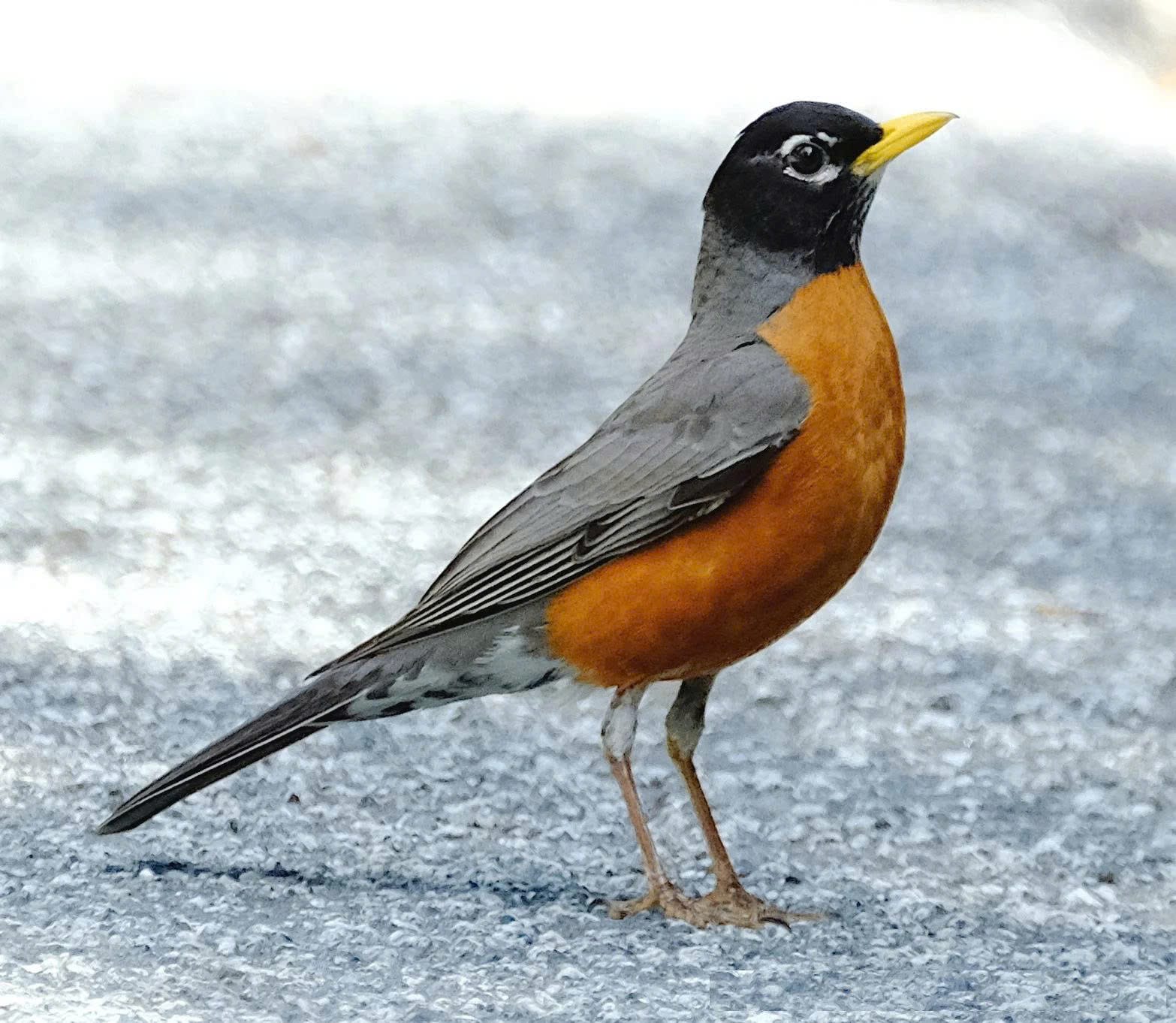
The American Robin (Turdus migratorius) is a familiar sight across North America, easily recognized by its rusty orange breast and gray upper parts. This bird is primarily a ground feeder, often seen hopping across lawns in search of worms, insects, and berries. During spring, males sing melodic songs from treetops to defend territories and attract mates. Nesting occurs in trees, shrubs, or even on building ledges, with females building neat cup-shaped nests using grass, twigs, and mud.
American Robins migrate seasonally, with northern populations moving south during winter. They are known for their adaptability, thriving in urban, suburban, and rural habitats. Observers often notice their alert posture, quick hopping steps, and occasional tail flicks. They play an essential role in insect population control and seed dispersal. Their vibrant color and cheerful songs make them a symbol of spring across much of North America.
2. European Robin
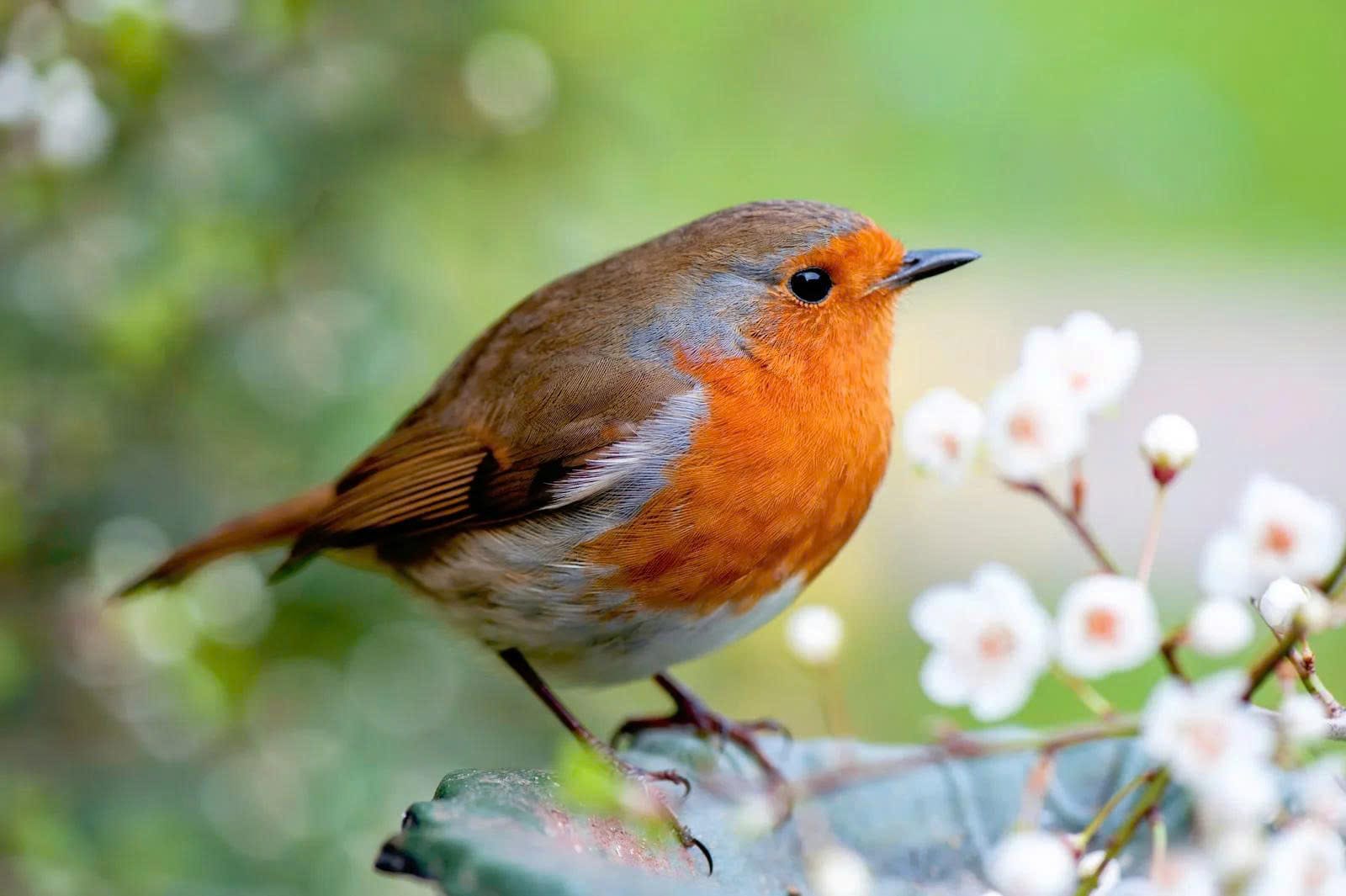
The European Robin (Erithacus rubecula) is a small, round-bodied bird with an iconic orange-red face and breast contrasted against brownish upperparts. Common throughout Europe, it inhabits woodlands, gardens, and hedgerows. European Robins are highly territorial; males and females defend their territories vigorously year-round, often singing a sweet, melodious song. They primarily feed on insects, worms, and berries, foraging on the ground and among leaf litter.
European Robins are known for their boldness around humans, often approaching gardens to hunt for food scraps or insects. Nesting usually occurs in concealed spots such as tree roots, hedges, or garden structures. Their adaptability to urban and rural areas, combined with their fearless approach to humans, makes them a favorite among birdwatchers. Observing a European Robin provides insights into territorial behavior, feeding patterns, and the important role of song in communication.
3. Rufous‑Backed Robin
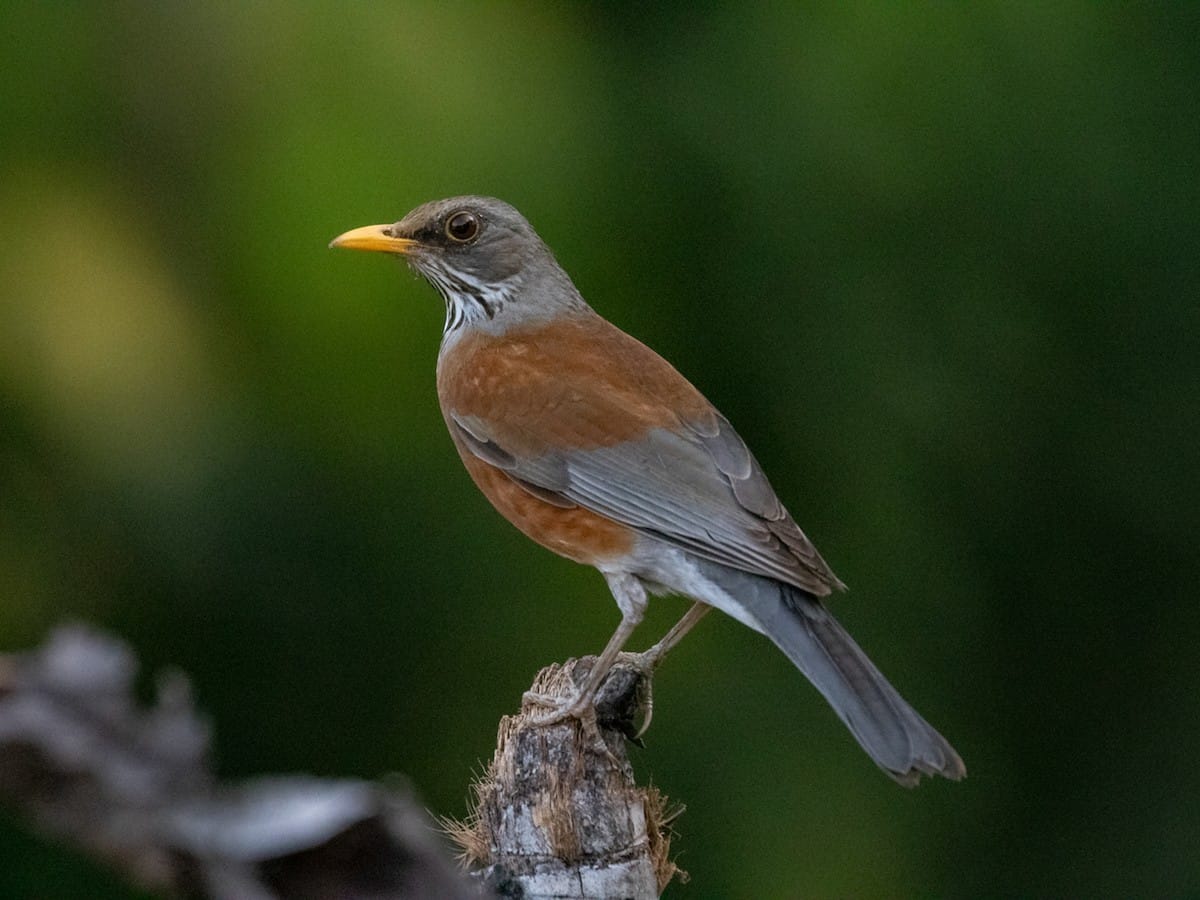
The Rufous‑Backed Robin (Turdus rufopalliatus) inhabits western Mexico and nearby regions. Its striking rufous-colored back, gray head, and orange underparts make it visually distinct. This medium-sized bird is primarily insectivorous but supplements its diet with fruits and berries. Rufous‑Backed Robins are often found near forests, open woodlands, and cultivated areas, demonstrating adaptability to both natural and semi-urban environments.
They are migratory within their range, moving according to seasonal availability of food and breeding conditions. Nesting occurs in low shrubs or tree branches, with the female crafting a sturdy nest lined with soft materials. Observing this species offers an opportunity to study foraging behavior, territorial disputes, and vocal communication. Their bold plumage and active feeding behavior make them noticeable and enjoyable for bird enthusiasts exploring Mexican habitats.
4. White‑Throated Robin
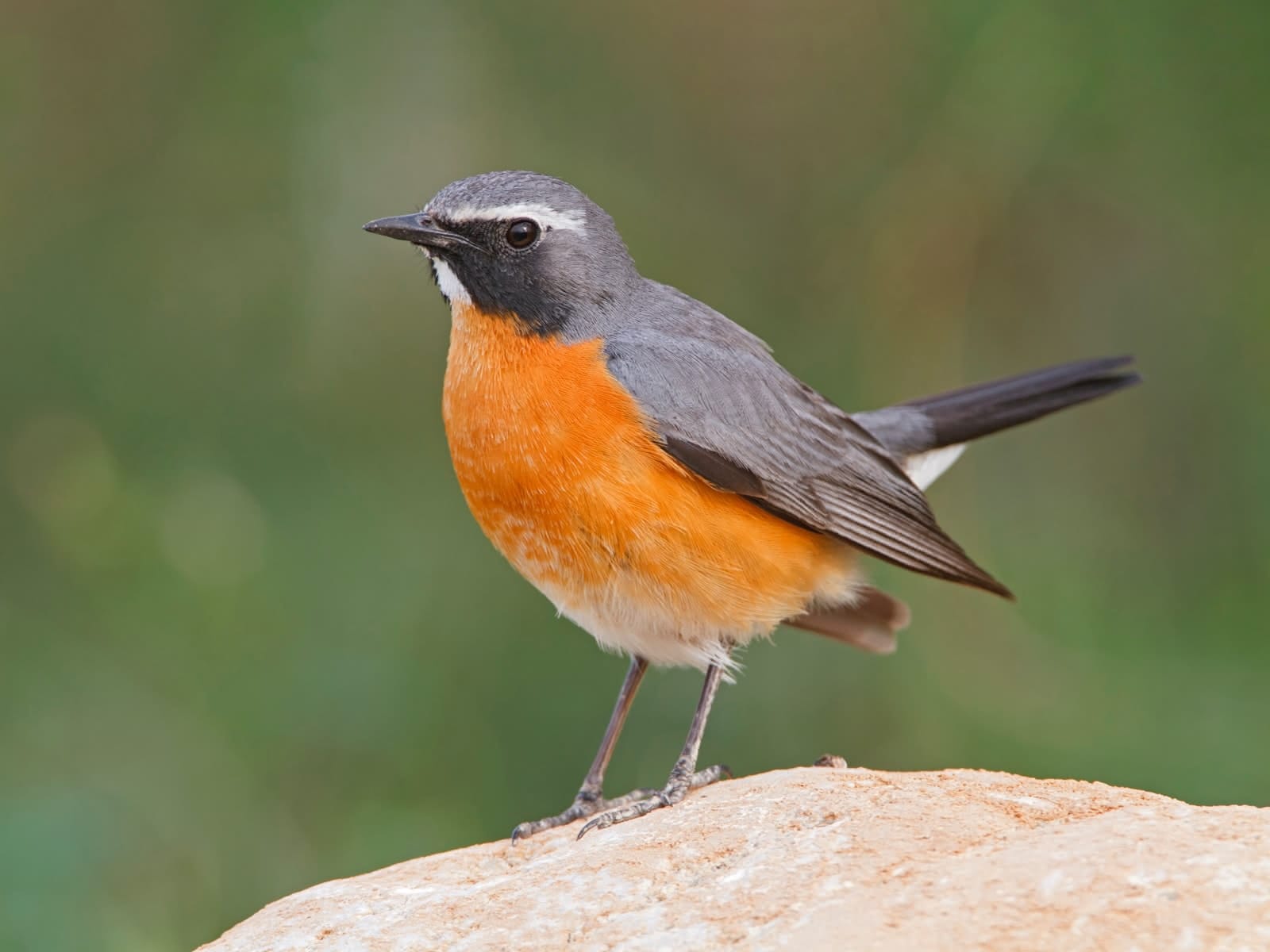
The White‑Throated Robin (Irania gutturalis) is a migratory species found across parts of the Middle East and southwestern Asia. Males are notable for their bright white throat, contrasting sharply with their dark gray body and chestnut sides, while females are more subdued in coloration. This species inhabits scrublands, rocky slopes, and forest edges, feeding primarily on insects and occasionally berries.
During the breeding season, males sing elaborate songs to attract mates and mark territories. Nesting occurs in shrubs or low vegetation, with carefully constructed cup-shaped nests. White‑Throated Robins are active and alert, often observed hopping or flitting between perches. Their migratory behavior highlights the challenges faced by many songbirds in finding food and suitable breeding grounds. Observing their interactions in the wild demonstrates adaptability, territoriality, and ecological significance in controlling insect populations.
5. Siberian Blue Robin
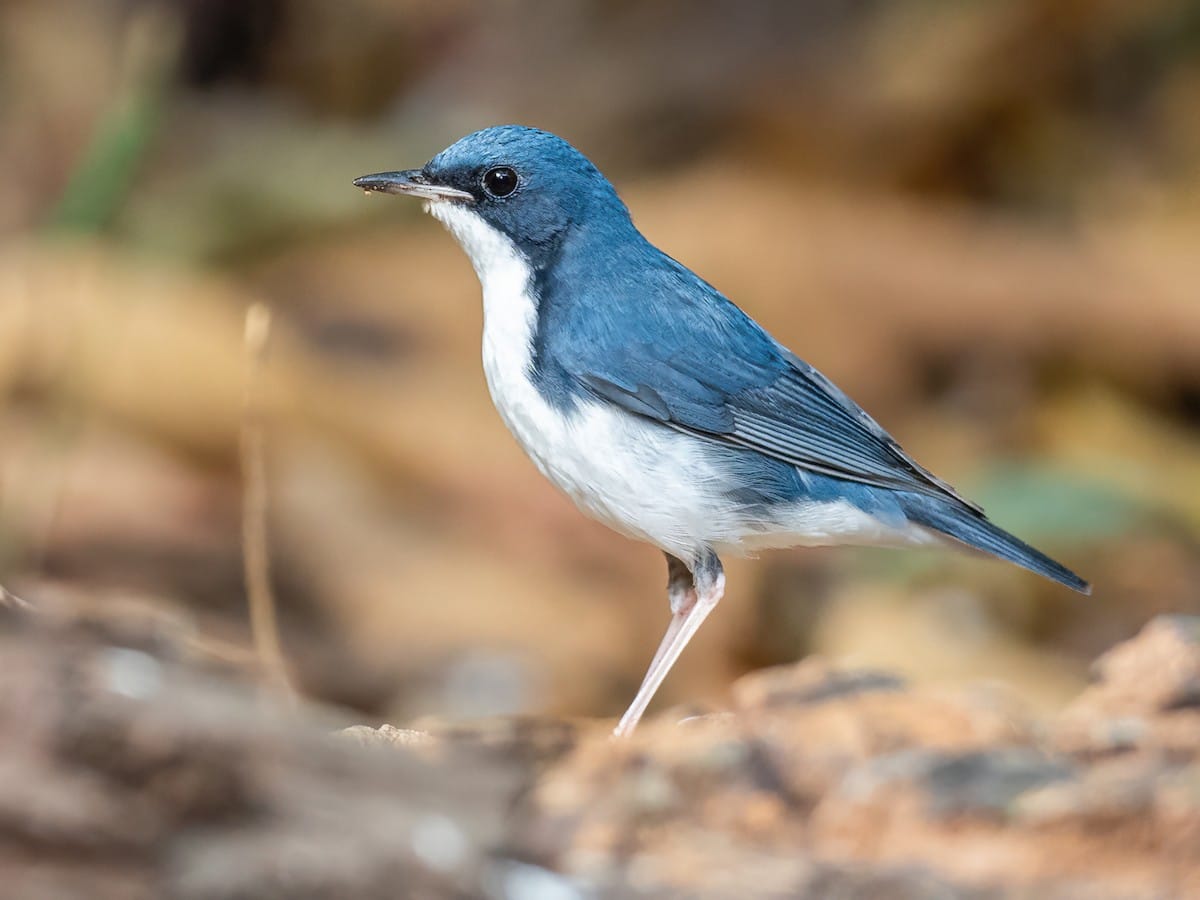
The Siberian Blue Robin (Larvivora cyane) is a small, elusive songbird inhabiting the forests of eastern Siberia, northern China, and Japan. Males display striking blue plumage on the upperparts with lighter underparts, while females are brownish and more camouflaged. They are primarily insectivorous, hunting for insects, larvae, and small invertebrates along the forest floor and undergrowth. Siberian Blue Robins are migratory, wintering in Southeast Asia and showing impressive navigational abilities.
Nesting occurs in low shrubs or mossy ground locations, with both parents participating in raising the young. Their shy nature and preference for dense understory make them challenging to observe, but their song is distinctive, consisting of a series of melodious whistles. Studying Siberian Blue Robins provides insights into migration patterns, habitat selection, and foraging strategies of forest-dwelling songbirds. Their elegant plumage and secretive behavior captivate birdwatchers and ornithologists alike.
6. Black Robin
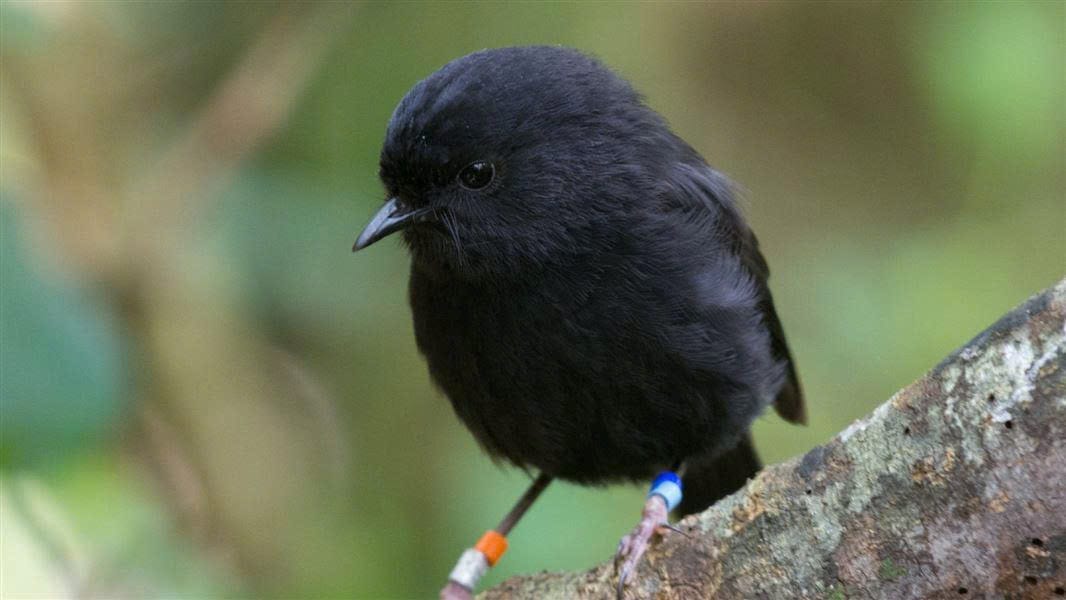
The Black Robin (Petroica traversi) is one of the rarest robins in the world, endemic to the Chatham Islands of New Zealand. Males are predominantly black with subtle hints of blue, while females are dark brownish-black, giving them a somber yet elegant appearance. Black Robins inhabit shrublands and open forests, often near the coast. They are insectivorous, feeding on beetles, spiders, and other small invertebrates, which they skillfully catch while hopping across leaf litter or gleaning from low vegetation.
Conservation efforts have been critical to their survival, as the species was once down to fewer than 10 individuals in the 1980s. Intensive breeding programs, predator control, and habitat restoration have brought numbers back to around 250 birds. Observing Black Robins offers a profound lesson in resilience and human-assisted conservation. Their shy and territorial nature, combined with distinctive foraging behavior, makes them a captivating subject for ornithologists and bird enthusiasts exploring the Chatham Islands.
7. Flame Robin
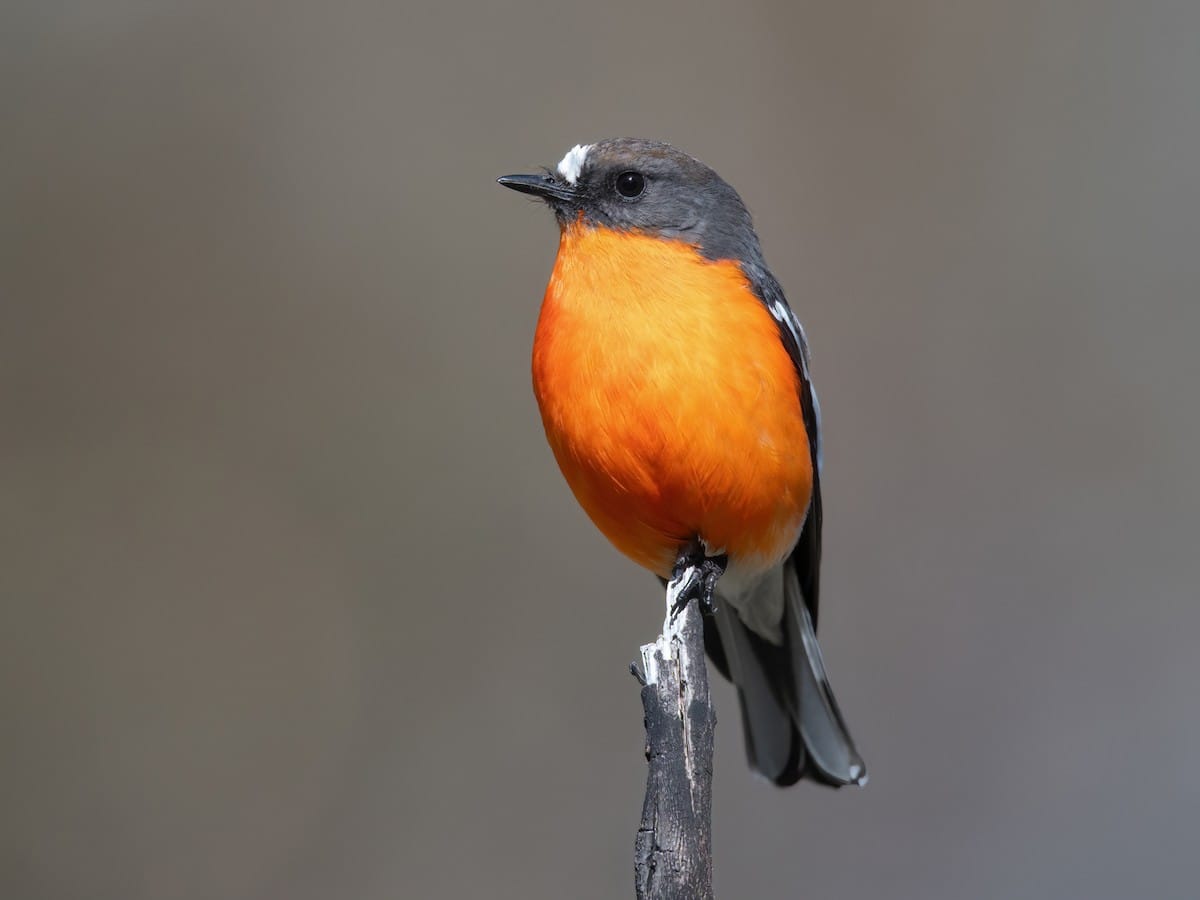
The Flame Robin (Petroica phoenicea) is a small, brightly colored bird native to southeastern Australia. Males are particularly striking, with vivid orange-red breasts contrasted against dark gray or black upperparts, while females are more subdued with grayish underparts. Flame Robins inhabit open forests, grasslands, and woodland edges, often perching conspicuously on low branches or fence posts to survey their territory.
These robins feed primarily on insects and small invertebrates, which they capture by sallying from perches or hopping across open ground. Nesting occurs in tree hollows, rock crevices, or among dense shrubs, with the female constructing a compact cup-shaped nest. Flame Robins display seasonal movements, often descending to lower altitudes during winter. Their vibrant color, energetic behavior, and melodic calls make them a favorite among Australian birdwatchers and photographers. Studying their behavior provides insight into territoriality, feeding ecology, and mating displays among small passerines.
8. Red‑capped Robin
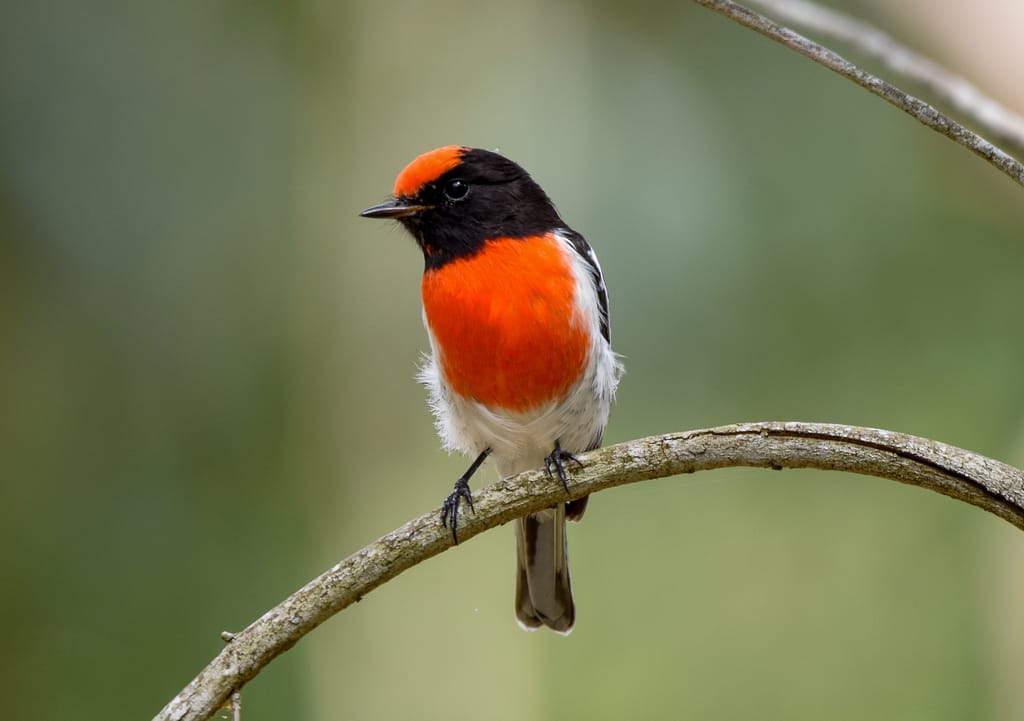
The Red‑capped Robin (Petroica goodenovii) is widespread across Australia, recognized by the brilliant red cap on the male’s head, contrasting with dark gray to black body feathers. Females are less brightly colored, typically grayish-brown with subtle red tinges. These robins inhabit dry woodlands, shrublands, and grasslands, often favoring areas with sparse understory for hunting insects.
They are primarily insectivorous, gleaning insects from foliage, ground litter, and tree bark. During the breeding season, males perform conspicuous displays, singing and hopping to defend territories and attract mates. Nesting usually occurs in low shrubs, with females constructing a delicate cup-shaped nest lined with fine grasses. Red‑capped Robins are hardy and adaptable birds, thriving even in semi-arid environments. Observing their hunting techniques, vocalizations, and courtship behaviors offers a window into the survival strategies of small insectivorous birds in challenging habitats.
9. Rose Robin
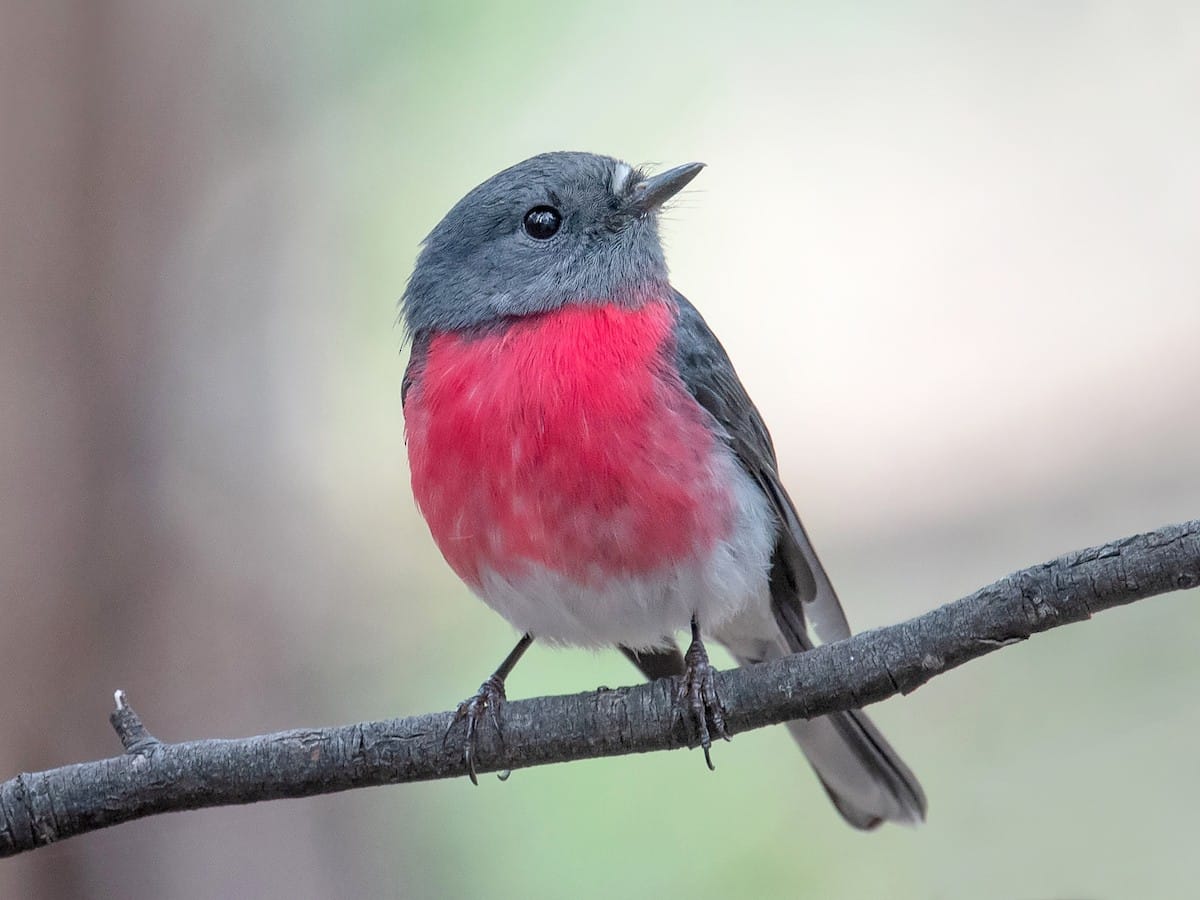
The Rose Robin (Petroica rosea) is a delicate, medium-sized bird native to southeastern Australia. Male Rose Robins are easily recognized by their pale pink breast, dark gray upperparts, and distinctive white markings around the face and throat, while females are more muted with grayish-brown plumage. They favor moist, tall forests, particularly near streams, where they forage actively for insects and small arthropods.
Rose Robins are known for their quiet, unobtrusive behavior, often perching motionless on branches before darting quickly to catch prey. Nesting occurs in tree forks or dense foliage, with small cup-shaped nests carefully lined with fine materials. These birds are migratory within their range, adjusting altitude and habitat depending on seasonal conditions. Birdwatchers value Rose Robins for their subtle beauty, melodic calls, and the challenge of observing them in dense forest canopies. Studying this species provides insights into habitat specialization, foraging strategies, and the importance of riparian forest ecosystems for insectivorous songbirds.
10. Snow Mountain Robin
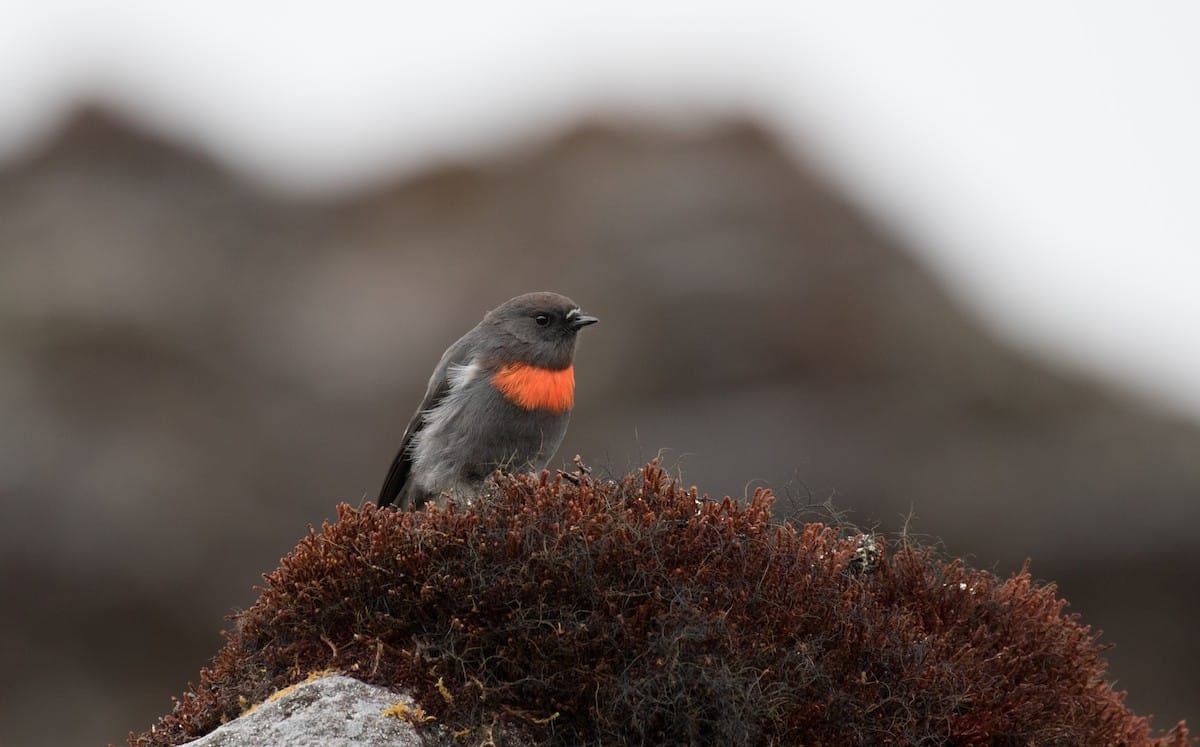
The Snow Mountain Robin (Petroica archboldi) is a rare and localized species found in the high-altitude forests of New Guinea. Males display striking black plumage with a bright white belly, while females are slightly duller with grayish tones. These robins inhabit mossy forests and shrublands at elevations exceeding 3,000 meters, where temperatures are cooler and vegetation is dense. They forage for insects, spiders, and other small invertebrates among leaf litter and low shrubs.
Snow Mountain Robins are elusive and difficult to observe due to their remote habitats and shy nature. Breeding habits remain partially undocumented, but nests are likely constructed in concealed spots to protect from harsh weather and predators. Their high-altitude specialization makes them vulnerable to habitat disturbances such as deforestation and climate change. Observing this species provides a rare opportunity to study adaptation, foraging behavior, and ecological specialization in isolated mountain environments. Snow Mountain Robins embody the resilience of small passerines thriving in challenging habitats.
11. Pacific Robin
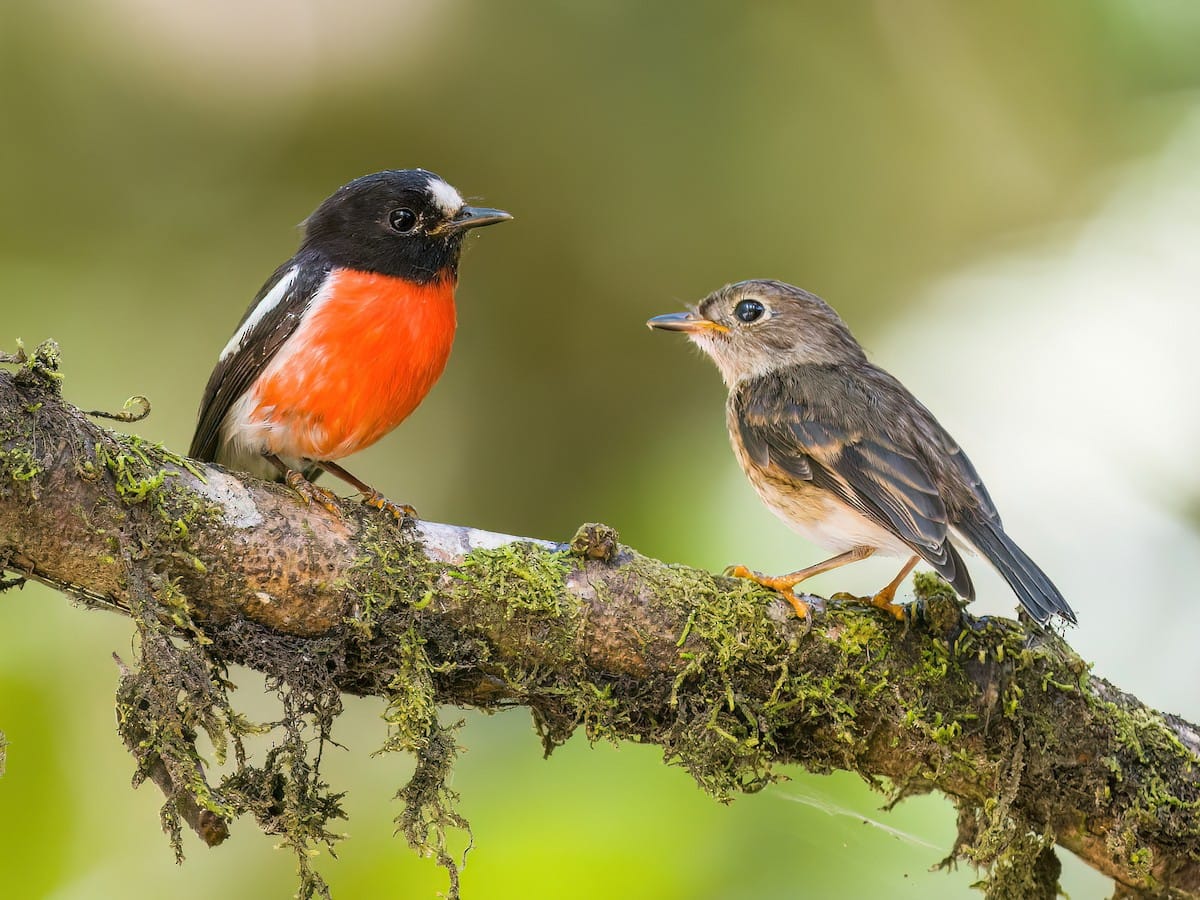
The Pacific Robin (Petroica pusilla) is a small, vibrant bird found across many islands in the southwestern Pacific, including Fiji, Vanuatu, and Samoa. Males typically exhibit dark upperparts with a bright reddish-orange chest, while females have subtler gray-brown tones. These robins prefer forested habitats, particularly montane and lowland rainforests, where they forage for insects and small invertebrates.
Pacific Robins are agile hunters, often seen hopping along forest floors or perching quietly before darting to catch prey. Nesting occurs in low branches or tree forks, with females constructing delicate cup-shaped nests lined with fine moss and plant fibers. Their territorial calls are soft but persistent, helping maintain boundaries and attract mates. Observing Pacific Robins offers insight into island adaptation, foraging strategies in dense forest habitats, and how isolation can shape plumage and behavior across different island populations.
12. Subalpine Robin
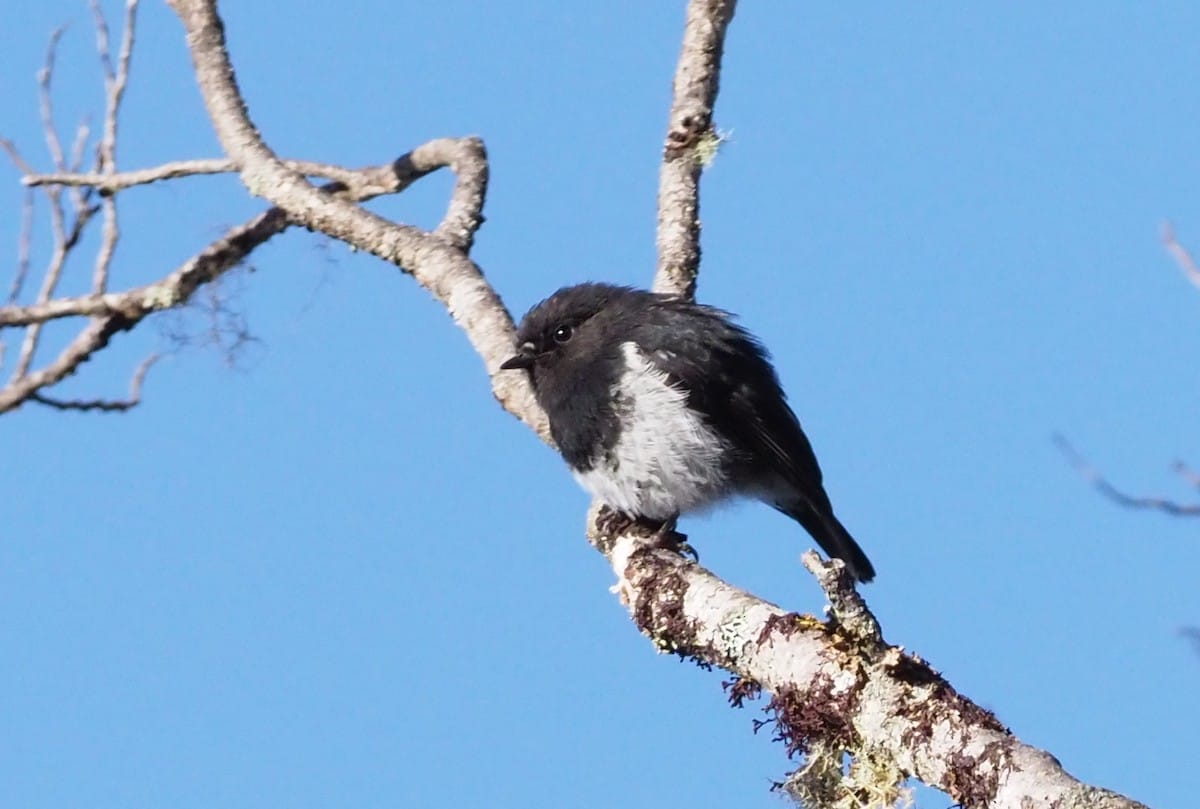
The Subalpine Robin (Petroica bivittata) is native to the mountainous regions of southeastern Australia. Males are known for their deep red-orange breast contrasted against dark gray or black upperparts, while females display softer brownish-gray plumage. Subalpine Robins inhabit montane forests and open woodlands, often at elevations ranging from 900 to 1,800 meters. These birds are primarily insectivorous, catching insects mid-air or gleaning from foliage.
During the breeding season, males engage in conspicuous displays, singing melodiously from elevated perches to defend territories and attract females. Nesting occurs in concealed shrubs or tree forks, with the female constructing a neat cup-shaped nest lined with moss and soft plant material. Their adaptation to cooler, high-altitude habitats illustrates resilience in seasonal environments. Observing Subalpine Robins provides a window into highland ecology, foraging techniques, and the subtle variations in song and plumage among mountain-dwelling passerines.
13. Olive‑yellow Robin
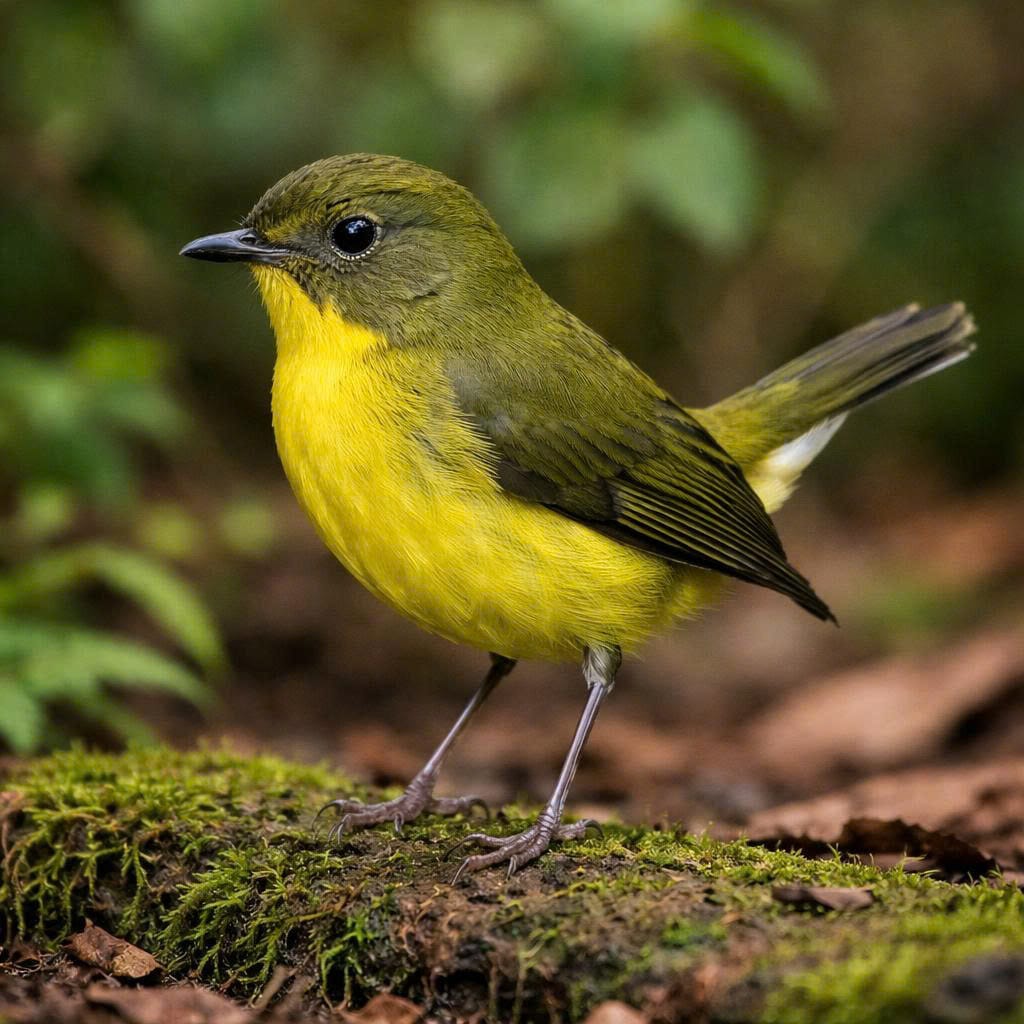
The Olive‑yellow Robin (Poecilodryas albispecularis) is a small, colorful bird endemic to the lowland and montane forests of northern Australia and parts of New Guinea. Males showcase olive-green upperparts with bright yellow underparts, while females are generally duller with subtle gray tones. These robins forage actively for insects, spiders, and other small invertebrates, moving gracefully through dense undergrowth and low canopy layers.
Nesting occurs in low shrubs or tree forks, with females constructing cup-shaped nests lined with fine fibers. Olive‑yellow Robins are alert and agile, often observed hopping along branches or flicking their tails while scanning for prey. Their subtle plumage blends with foliage, providing effective camouflage against predators. Birdwatchers enjoy observing their foraging behavior and melodic calls, which offer insights into territory defense, feeding ecology, and reproductive strategies among forest-dwelling insectivores.
14. Black‑chinned Robin
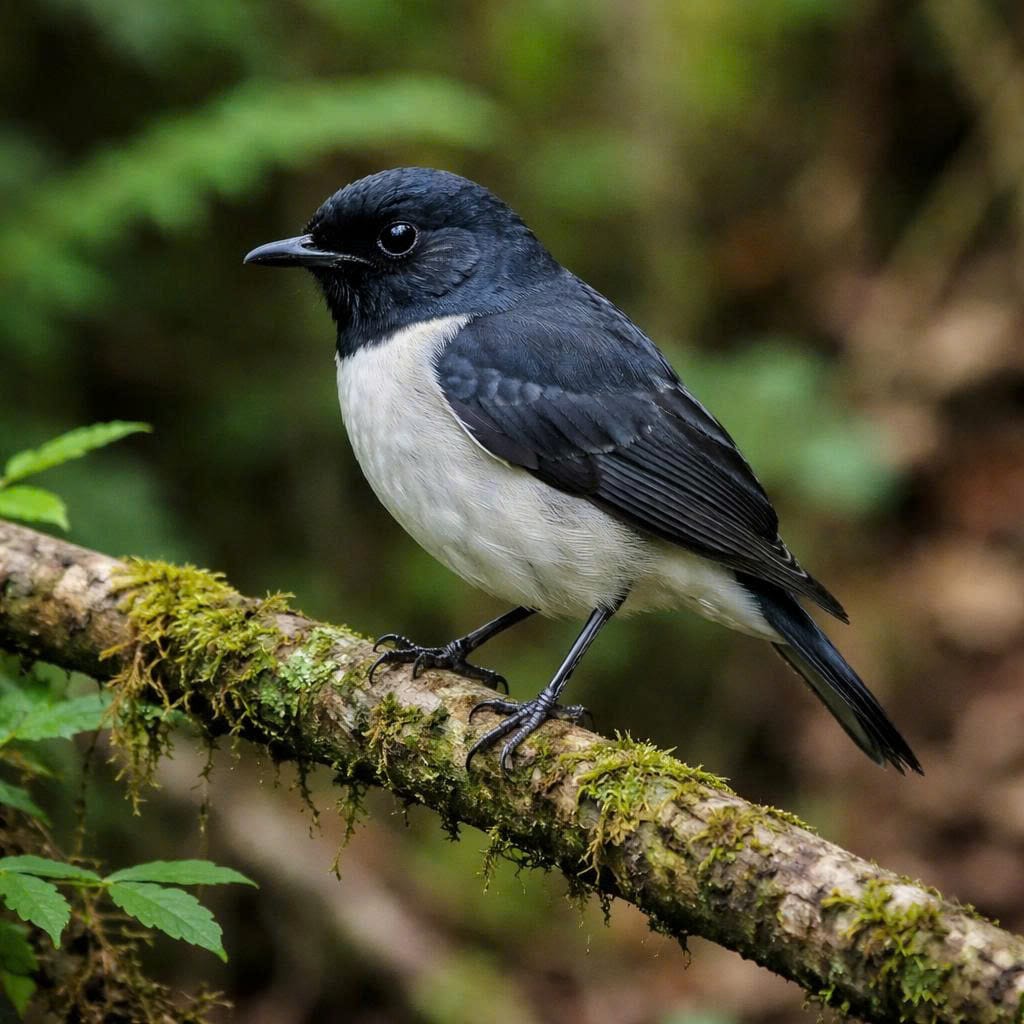
The Black‑chinned Robin (Poecilodryas brachyura) is a small passerine native to New Guinea, distinguished by its dark upperparts, pale underparts, and a small black patch under the chin in males. Females are more muted, with brownish-gray tones. They inhabit dense lowland and montane forests, often remaining hidden among thick undergrowth while hunting insects and small arthropods.
Black‑chinned Robins are quiet and inconspicuous, relying on stealth and agility to capture prey. Nesting behavior includes building cup-shaped nests in concealed spots within shrubs or low branches. Their vocalizations are soft but carry through dense foliage, serving as a means of communication and territorial marking. Studying this species provides insight into the adaptive strategies of understory insectivores, habitat specialization, and the evolutionary pressures that shape subtle plumage patterns for concealment.
15. Black‑sided Robin
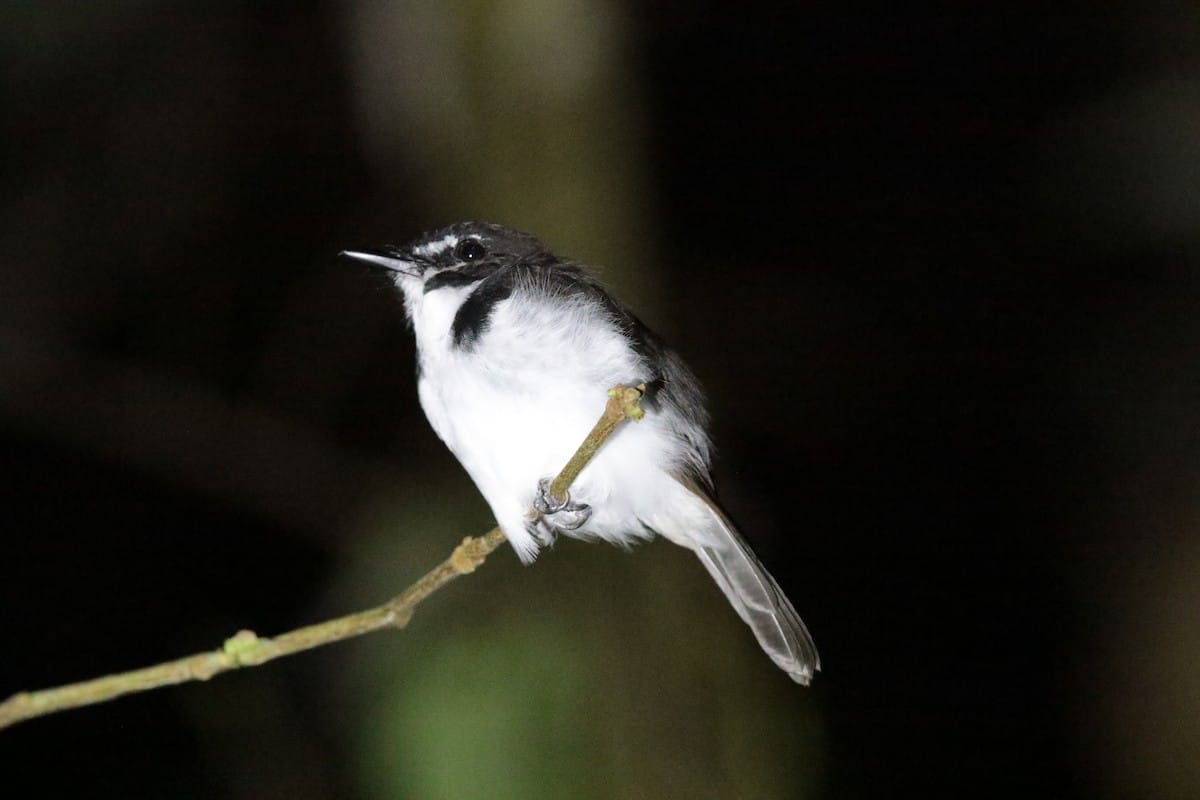
The Black‑sided Robin (Poecilodryas hypoleuca) is another New Guinean species, easily recognized by its dark upperparts and striking white underparts, with distinct black markings along the sides of its body. Males and females are similar in coloration, though females may have slightly softer tones. They inhabit mid-elevation forests, often preferring areas with dense undergrowth and abundant leaf litter for foraging.
These robins feed primarily on insects, including beetles, caterpillars, and spiders. They use both gleaning and short sallies to capture prey, demonstrating versatility in hunting techniques. Nesting occurs in sheltered locations among shrubs or low tree branches, with the female constructing a small cup-shaped nest lined with plant fibers. Observing Black‑sided Robins provides a glimpse into understory bird ecology, emphasizing stealth, territoriality, and the intricate balance of forest life in New Guinea. Their active foraging, alert posture, and subtle plumage patterns make them fascinating subjects for ornithologists and birdwatchers alike.
16. White‑winged Robin
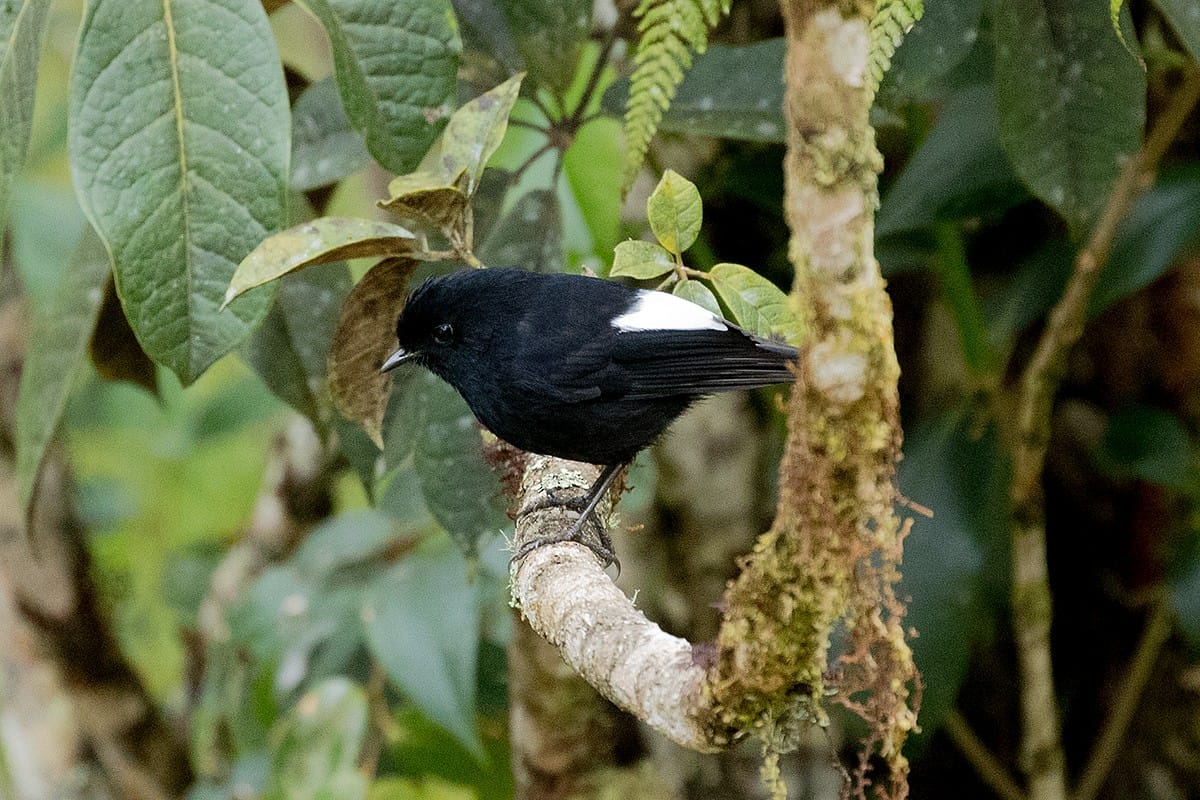
The White‑winged Robin (Peneothello sigillata) is a small, striking bird native to the forests of New Guinea. Males typically exhibit black or dark gray plumage with prominent white patches on the wings, while females are slightly duller but share the same distinctive wing markings. They prefer montane and mid-elevation forests, often foraging near the ground or in the understory for insects, spiders, and other small invertebrates.
White‑winged Robins are highly territorial, with males singing persistent, melodious calls to mark their territories and attract mates. Nesting occurs in shrubs or low tree branches, with females building cup-shaped nests lined with soft fibers and moss. Observing this species provides insights into foraging behavior, vocal communication, and reproductive strategies of montane passerines. Their striking wing markings, alert posture, and energetic hunting techniques make them a captivating subject for birdwatchers exploring New Guinea’s rich avifauna.
17. White‑rumped Robin
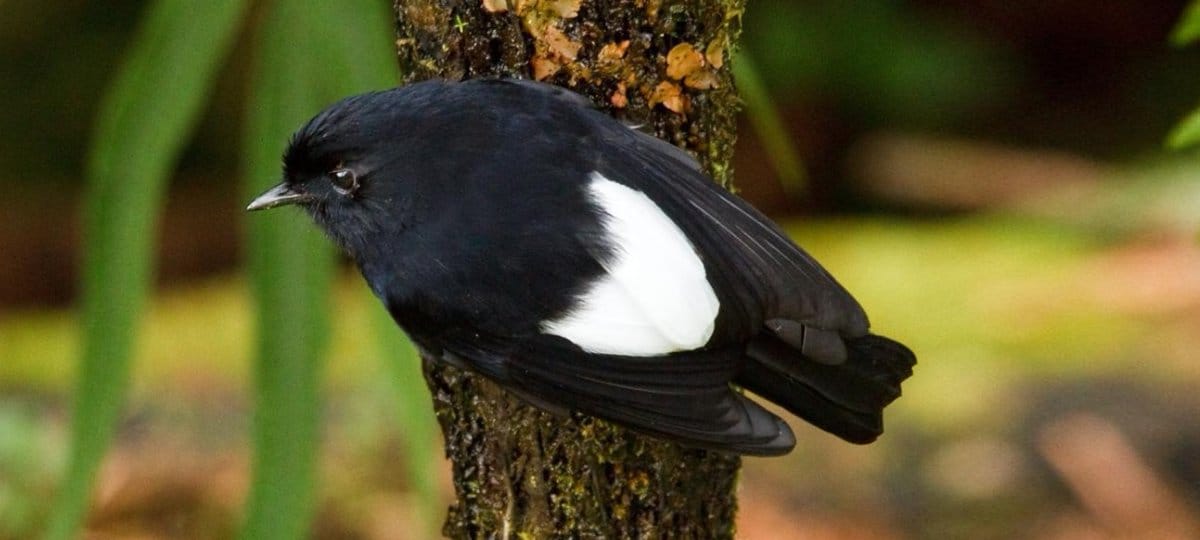
The White‑rumped Robin (Peneothello bimaculata) is another New Guinean species, easily identified by its contrasting white rump against dark gray or black body plumage. Males display a vivid contrast, while females are softer in tone but retain the characteristic white rump. These robins inhabit subtropical and tropical moist montane forests, favoring areas with dense undergrowth for foraging.
White‑rumped Robins feed primarily on insects and small arthropods, gleaning from foliage, leaf litter, and low branches. They are agile and alert, often flicking their tails while moving through vegetation. Nesting occurs in sheltered spots within shrubs or low trees, with a well-constructed cup-shaped nest. Observing White‑rumped Robins highlights the ecological importance of understory insectivores and the adaptations required for survival in dense forest habitats. Their bold rump markings also serve as a visual cue in communication and territorial displays among individuals.
18. Blue‑gray Robin
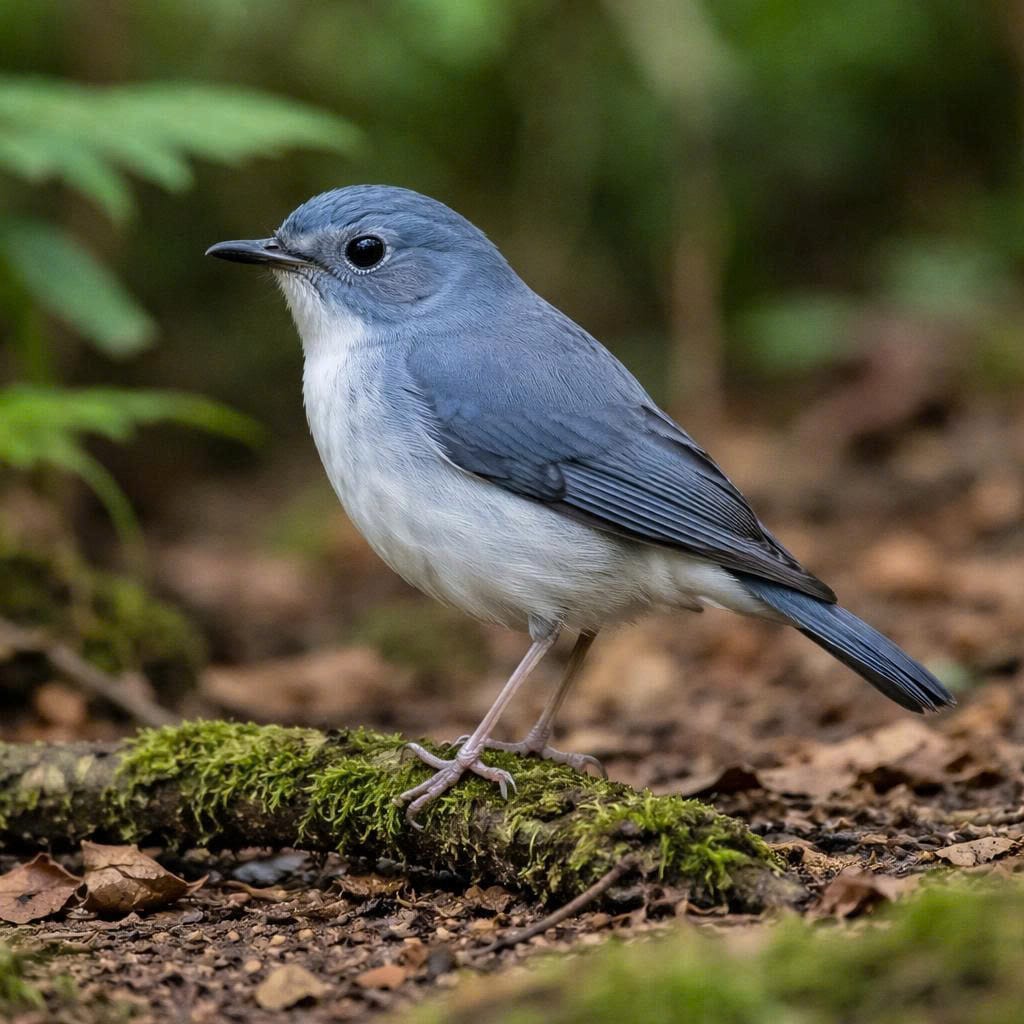
The Blue‑gray Robin (Pachycephalopsis poliosoma) is a small, insectivorous bird inhabiting the forests of New Guinea and surrounding islands. Males exhibit soft blue-gray plumage on upperparts and pale underparts, while females are slightly duller. This subtle coloration allows them to blend into shaded understory environments, providing effective camouflage against predators. They forage actively among shrubs and low trees, often making short flights to capture insects in mid-air or gleaning from leaves.
Blue‑gray Robins are territorial during the breeding season, with males singing short, melodious phrases from perches. Nesting typically occurs in low shrubs, with females crafting cup-shaped nests using moss, plant fibers, and small twigs. Observing this species provides insights into understory bird ecology, foraging strategies, and vocal communication in dense forest habitats. Their quiet behavior and unobtrusive movements make them challenging yet rewarding to study for bird enthusiasts and researchers.
19. Ashy Robin
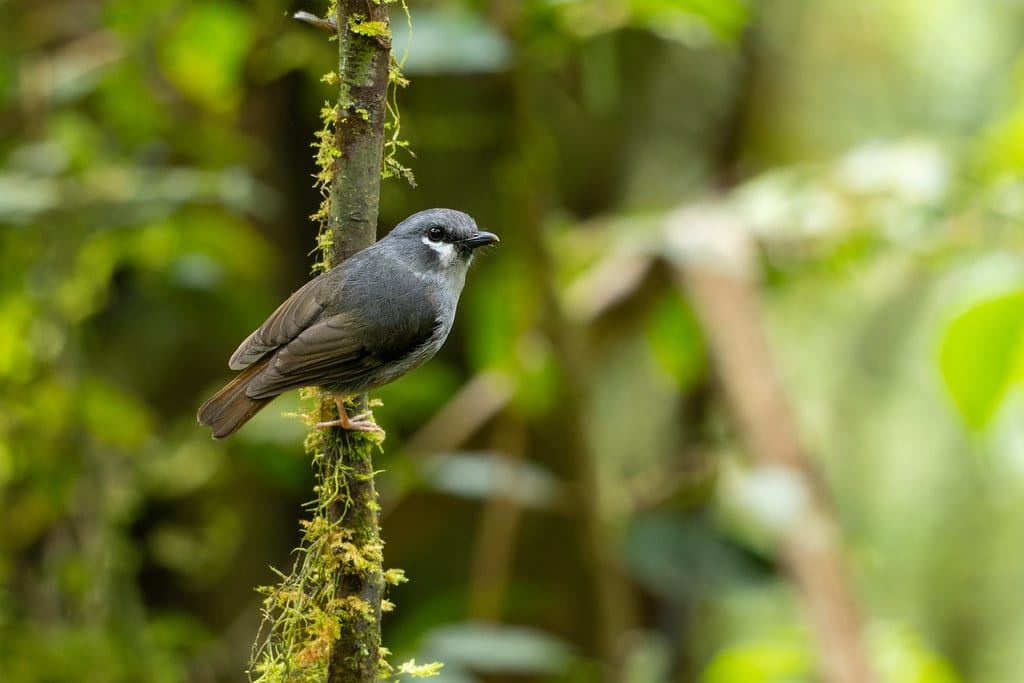
The Ashy Robin (Heteromyias albispecularis) is a medium-sized forest robin native to New Guinea, recognized by its grayish upperparts, pale underparts, and subtle white markings on the wings. Both males and females share similar coloration, which helps them blend seamlessly into the shaded forest understory. They inhabit montane and lowland forests, where they actively hunt for insects, spiders, and small invertebrates.
Ashy Robins are territorial and secretive, often moving quietly through leaf litter and low vegetation. Nesting occurs in shrubs or tree forks, with the female constructing a well-lined cup-shaped nest. Their vocalizations are soft but persistent, often serving to maintain territories and communicate with mates. Observing Ashy Robins highlights adaptations for survival in dense, shaded habitats, including stealth, camouflage, and precise foraging techniques. Their subtle beauty and delicate behavior make them a fascinating subject for birdwatchers exploring New Guinea’s forest ecosystems.
20. Green‑backed Robin
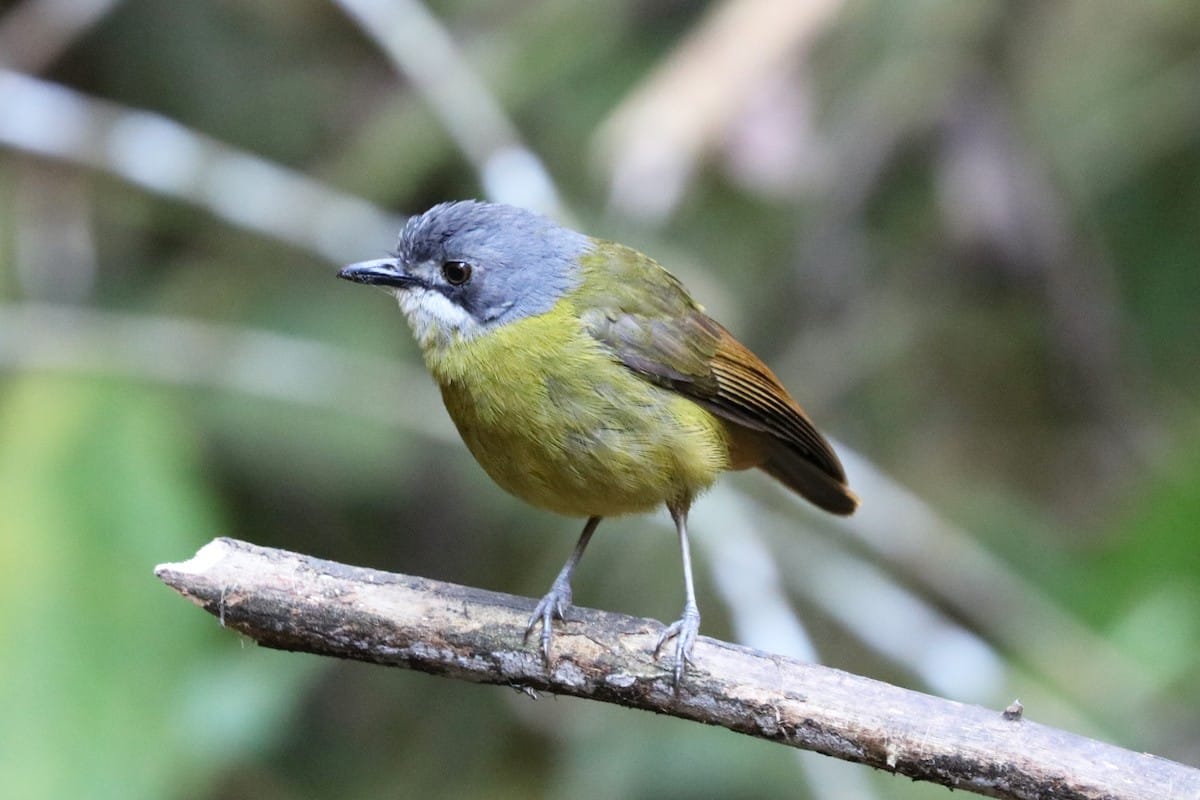
The Green‑backed Robin (Heteromyias armiti) is a small, vibrant species inhabiting the subtropical and tropical forests of New Guinea. Males display olive-green upperparts with pale underparts, while females are slightly duller but retain the characteristic green hue. They forage in the understory, actively searching for insects, spiders, and other small invertebrates among leaves and branches.
Green‑backed Robins are alert and agile, often hopping or flying short distances to capture prey. Nesting occurs in low shrubs or among tree roots, with females constructing cup-shaped nests lined with moss and soft plant fibers. Their vivid coloration provides both camouflage and visual signaling in dense forest habitats. Observing this species offers insights into foraging efficiency, territorial behavior, and adaptations to understory life in tropical forests. The Green‑backed Robin exemplifies the diversity and ecological specialization of forest-dwelling passerines in New Guinea.
21. White‑eyed Robin
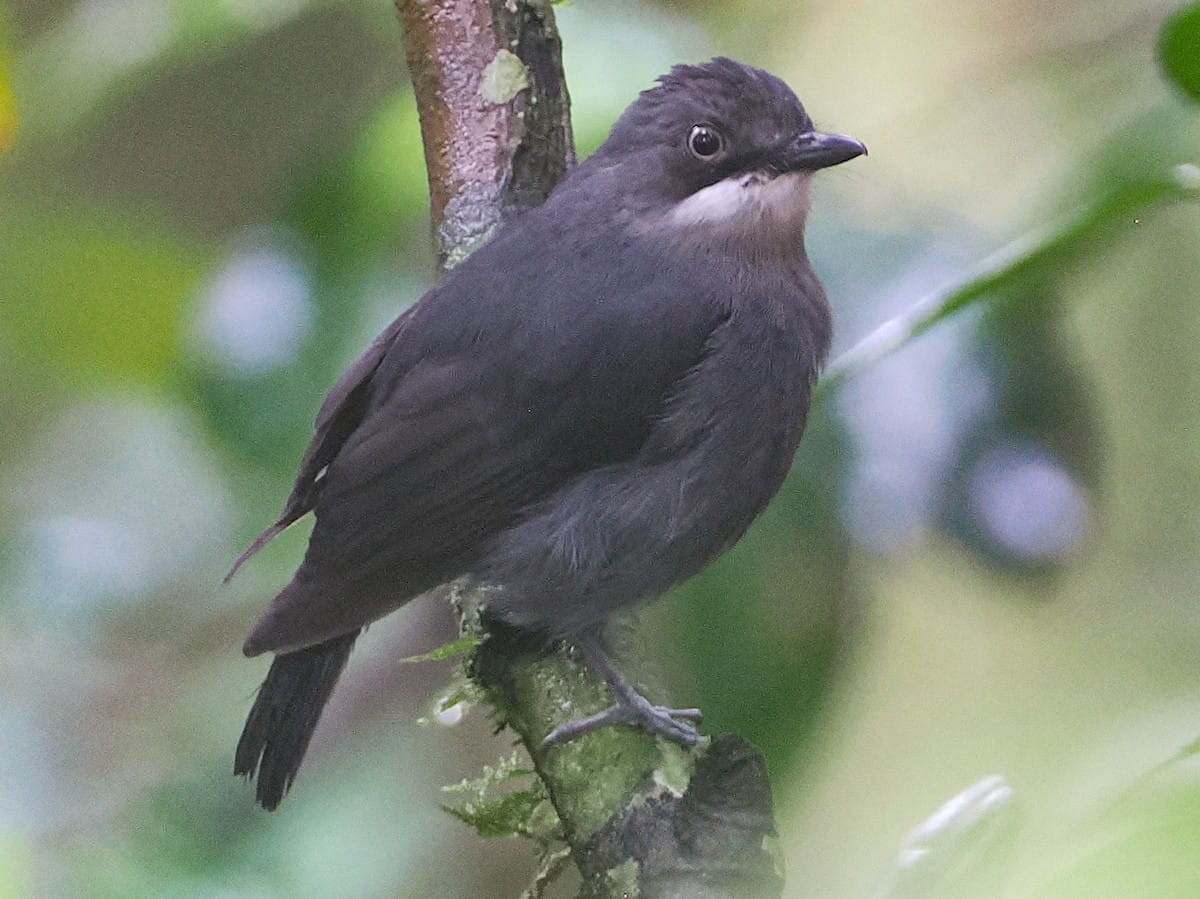
The White‑eyed Robin (Pachycephalopsis poliosoma) is a small forest bird found in New Guinea and nearby islands. Its most distinctive feature is the striking white eye-ring, contrasting sharply with dark gray to olive upperparts and paler underparts. These robins inhabit montane and lowland forests, often foraging in the understory for insects, spiders, and other small invertebrates.
White‑eyed Robins are highly alert and agile, moving quietly through dense vegetation while gleaning prey from leaves and branches. During the breeding season, males sing melodious, repetitive calls to defend territories and attract mates. Nesting occurs in sheltered spots such as low shrubs or tree forks, with females crafting cup-shaped nests lined with moss and plant fibers. Observing this species highlights the adaptive strategies of understory insectivores, including stealth, precise hunting, and subtle communication through song. Birdwatchers often note the charm of their bright white eyes against muted forest tones, which serve as a visual cue in social interactions and territorial displays.
22. White‑faced Robin
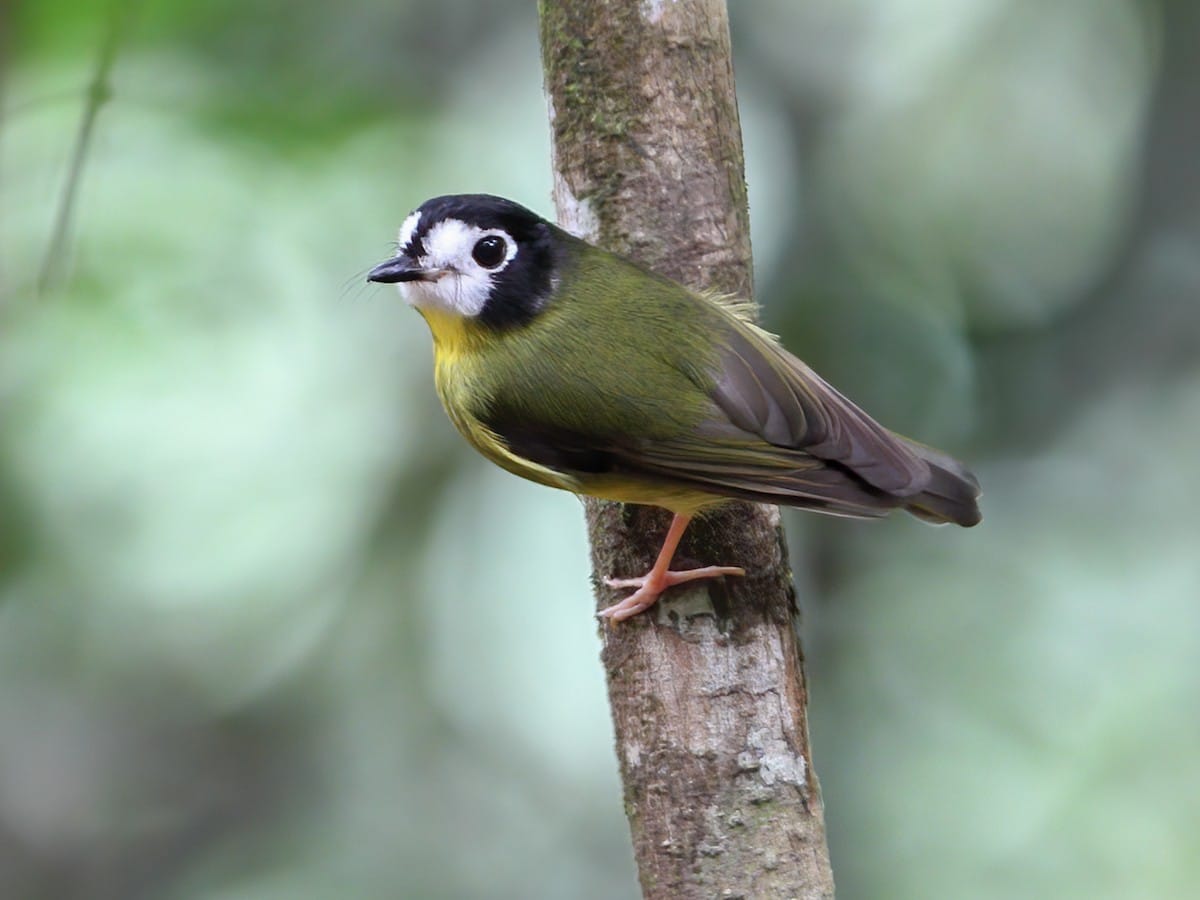
The White‑faced Robin (Tregellasia leucops) is a medium-sized passerine native to eastern Australia’s subtropical and tropical forests. Males and females share similar grayish-brown upperparts, white face, and pale underparts, giving the bird its name. They favor dense rainforest interiors and forest edges, foraging for insects and small invertebrates.
White‑faced Robins are quiet and deliberate foragers, often hopping along branches or perching motionlessly before darting to capture prey. Nesting occurs in tree forks or low shrubs, with females constructing compact cup-shaped nests lined with soft plant material. Their vocalizations are soft but carry through the forest understory, serving as territory markers and communication signals. Observing this species provides insights into the adaptations of rainforest robins, including camouflage, foraging efficiency, and social signaling in dense habitats. Bird enthusiasts are drawn to their subtle beauty and methodical behavior in tropical forest ecosystems.
23. Mangrove Robin
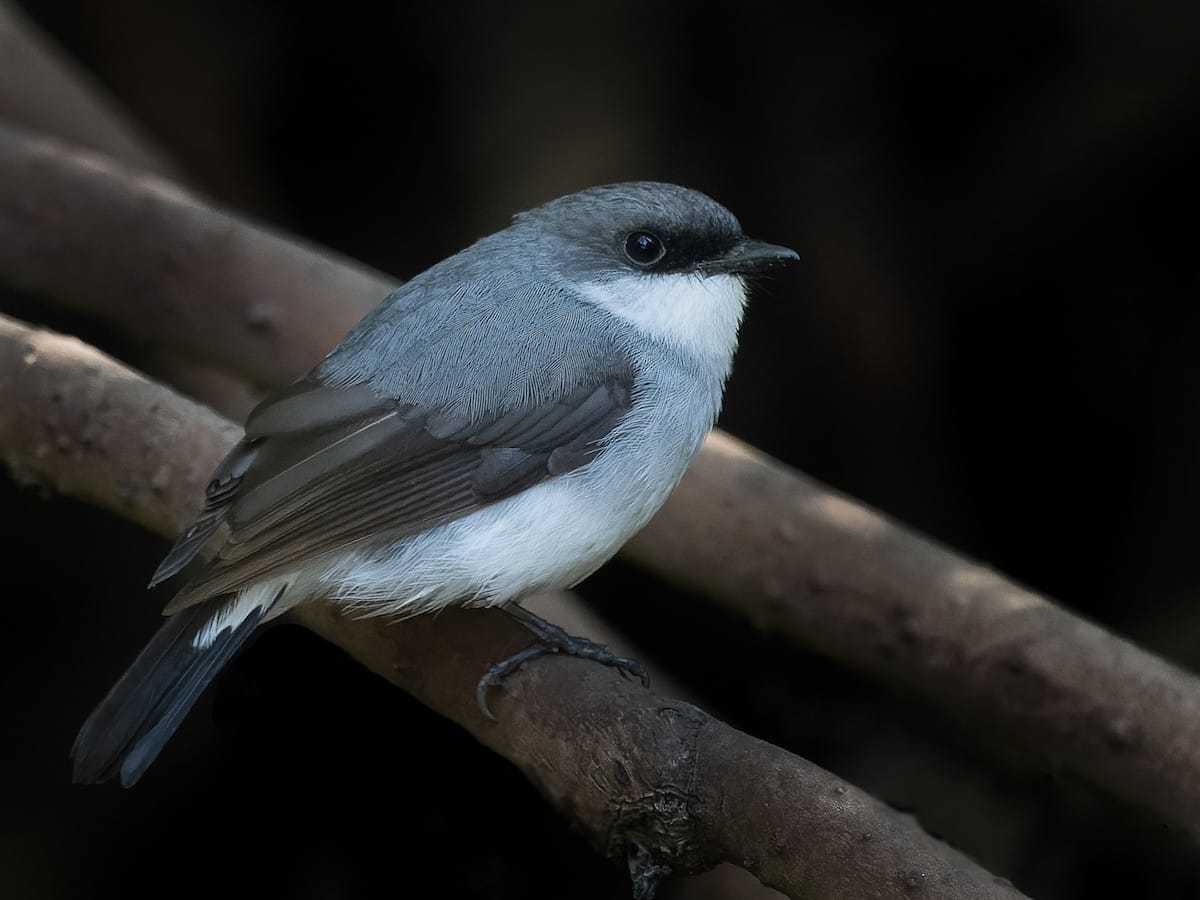
The Mangrove Robin (Peneothello pulverulenta) is an intriguing species endemic to coastal regions of Australia and Papua New Guinea. True to its name, this robin inhabits mangrove forests, tidal estuaries, and adjacent wetlands. Males display dark plumage with slight bluish sheen, while females are generally duller. These birds primarily feed on insects and crustaceans, foraging among leaf litter, mudflats, and low vegetation.
Mangrove Robins are territorial and vocal, with males using melodious songs to mark boundaries and attract mates. Nesting occurs in dense mangrove roots, low shrubs, or tree forks, with females constructing cup-shaped nests lined with plant fibers. Studying this species offers insight into ecological specialization, demonstrating how certain robins adapt to unique coastal habitats. Observing their foraging behavior, vocal communication, and social interactions provides a glimpse into the interplay between bird species and mangrove ecosystems, highlighting the importance of conserving these unique habitats.
24. Oriental Magpie Robin
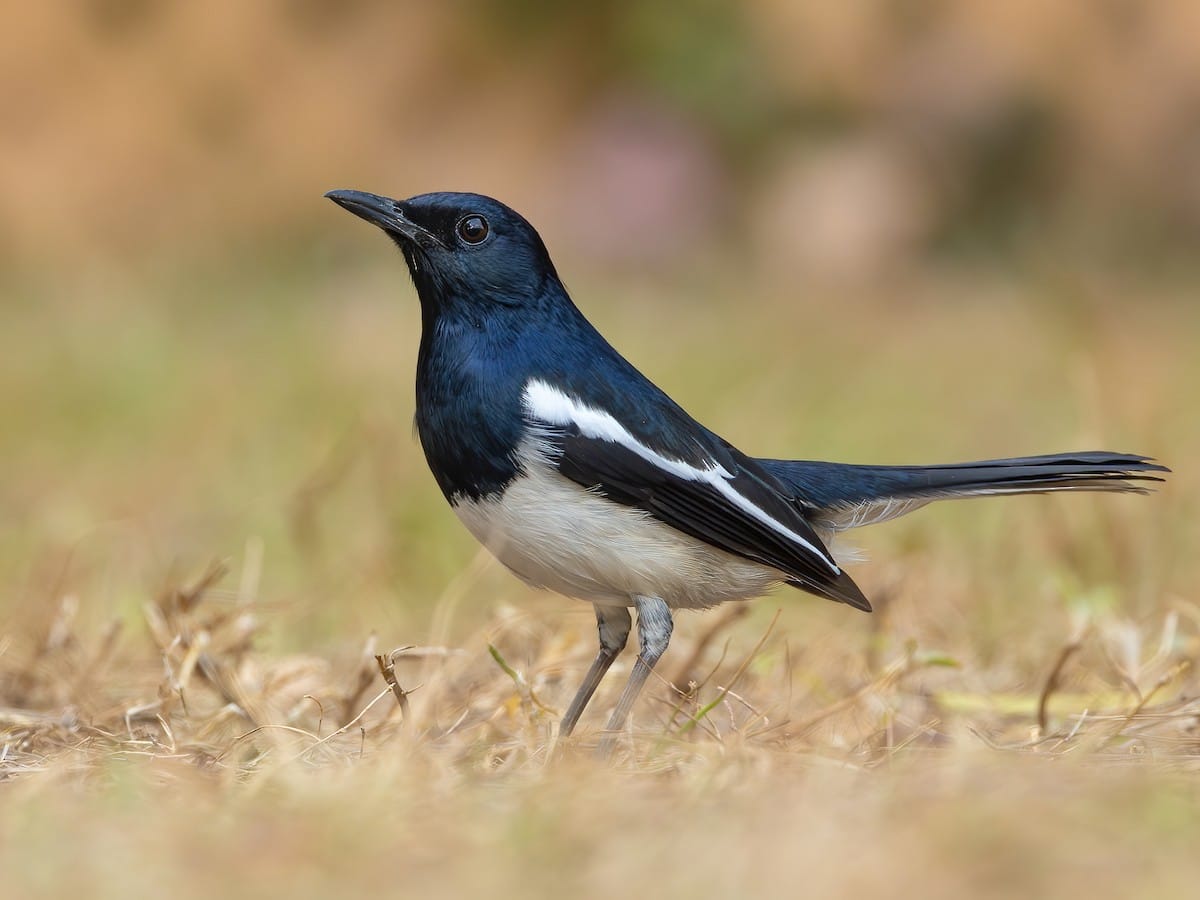
The Oriental Magpie Robin (Copsychus saularis) is a widely recognized species across South and Southeast Asia. Males are characterized by glossy black upperparts, white underparts, and striking white wing patches, while females are grayish with paler underparts. This robin favors gardens, forest edges, and urban parks, demonstrating remarkable adaptability to human-altered landscapes.
Oriental Magpie Robins are highly vocal, with males producing complex, melodious songs to defend territories and attract females. They forage on the ground and low shrubs for insects, small invertebrates, and occasionally fruits. Nesting occurs in tree cavities, walls, or other sheltered spots, with females constructing cup-shaped nests lined with soft fibers. Observing this species provides insight into urban adaptation, vocal learning, and social behaviors of passerines. Their bold, confident demeanor and melodious songs make them one of the most familiar and beloved robins in Asia.
25. Indian Robin
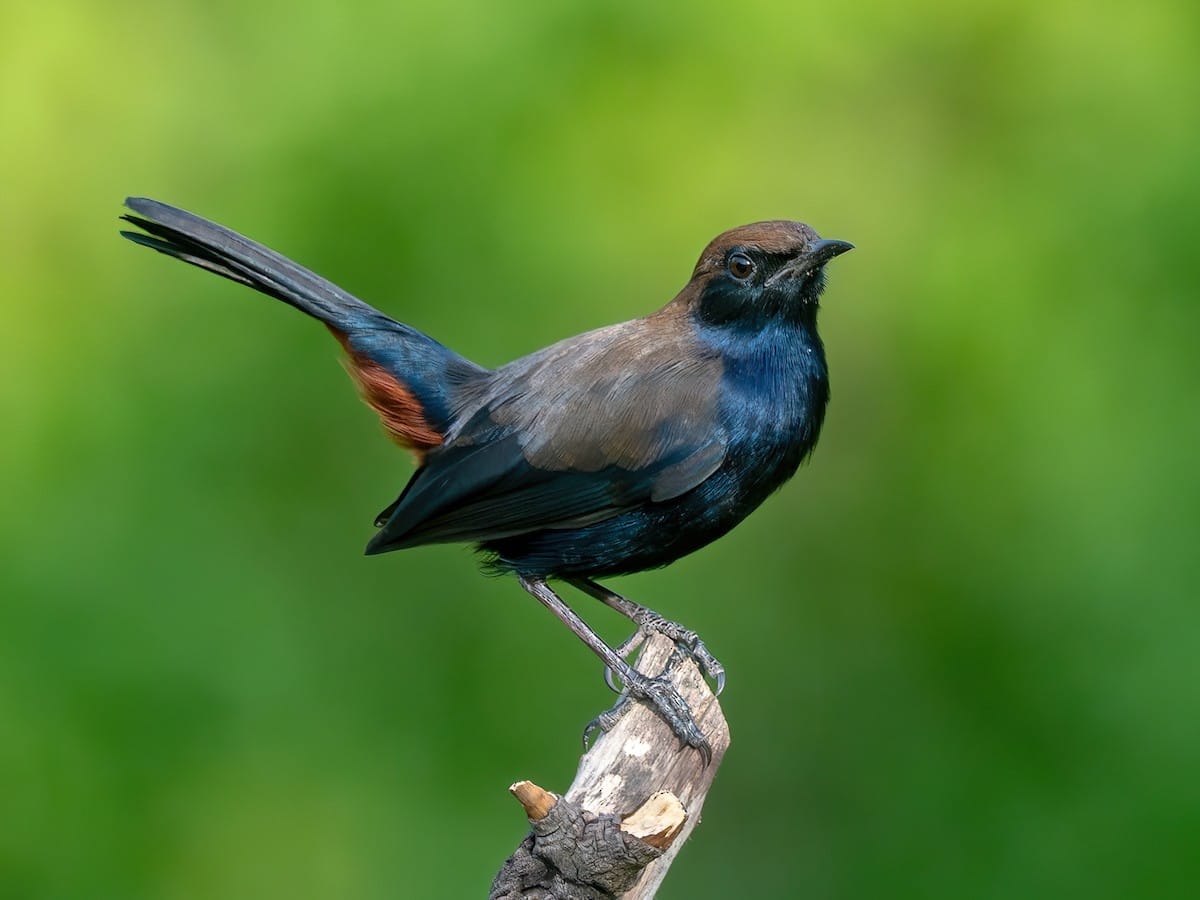
The Indian Robin (Saxicoloides fulicatus) is a small passerine widely distributed across the Indian subcontinent. Males are predominantly black with a characteristic reddish vent, while females are brownish with lighter underparts. They inhabit open scrublands, cultivated areas, and urban gardens, often perching conspicuously on shrubs, fences, or rooftops to scan for insects.
Indian Robins are active foragers, capturing insects, spiders, and small arthropods. Males sing melodiously from elevated perches during the breeding season to attract mates and defend territories. Nesting occurs in tree hollows, shrubs, or buildings, with females building cup-shaped nests lined with grasses and fibers. Observing Indian Robins offers insights into adaptation to human-modified landscapes, territoriality, and breeding behavior. Their striking plumage, alert posture, and energetic movements make them a favorite among birdwatchers and photographers in South Asia.
26. Japanese Robin
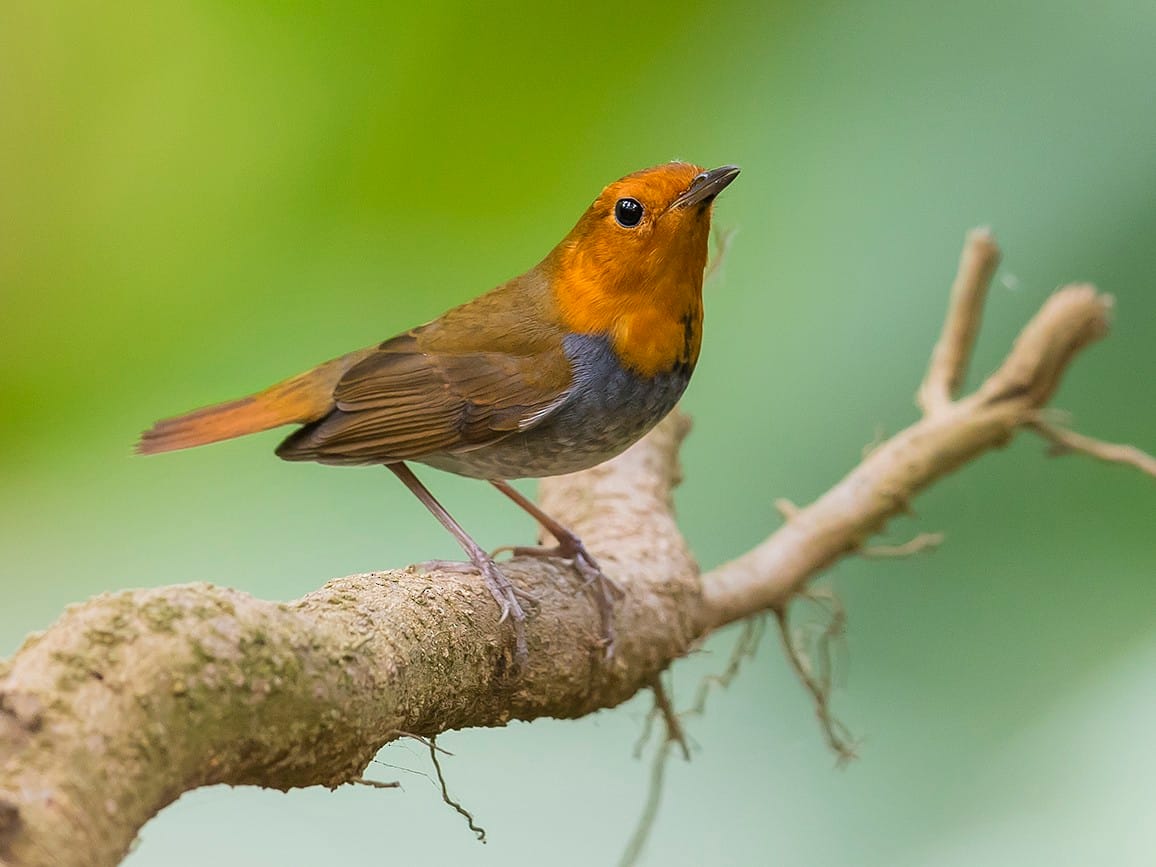
The Japanese Robin (Larvivora akahige) is a small forest-dwelling bird native to Japan and nearby islands. Males have vivid orange-red faces and breasts with olive-gray upperparts, while females are duller with muted tones. They inhabit dense undergrowth in forests, often near streams or moist areas, foraging for insects, spiders, and other small invertebrates.
Japanese Robins are territorial, with males singing a series of melodious notes from concealed perches. Nesting occurs in low shrubs, tree forks, or moss-covered banks, with females constructing delicate cup-shaped nests. Observing this species provides insights into adaptations to dense forest habitats, insectivorous foraging strategies, and territorial communication through song. Their bold coloration against muted forest tones makes them visually striking and rewarding to spot for bird enthusiasts.
27. Rufous‑tailed Robin
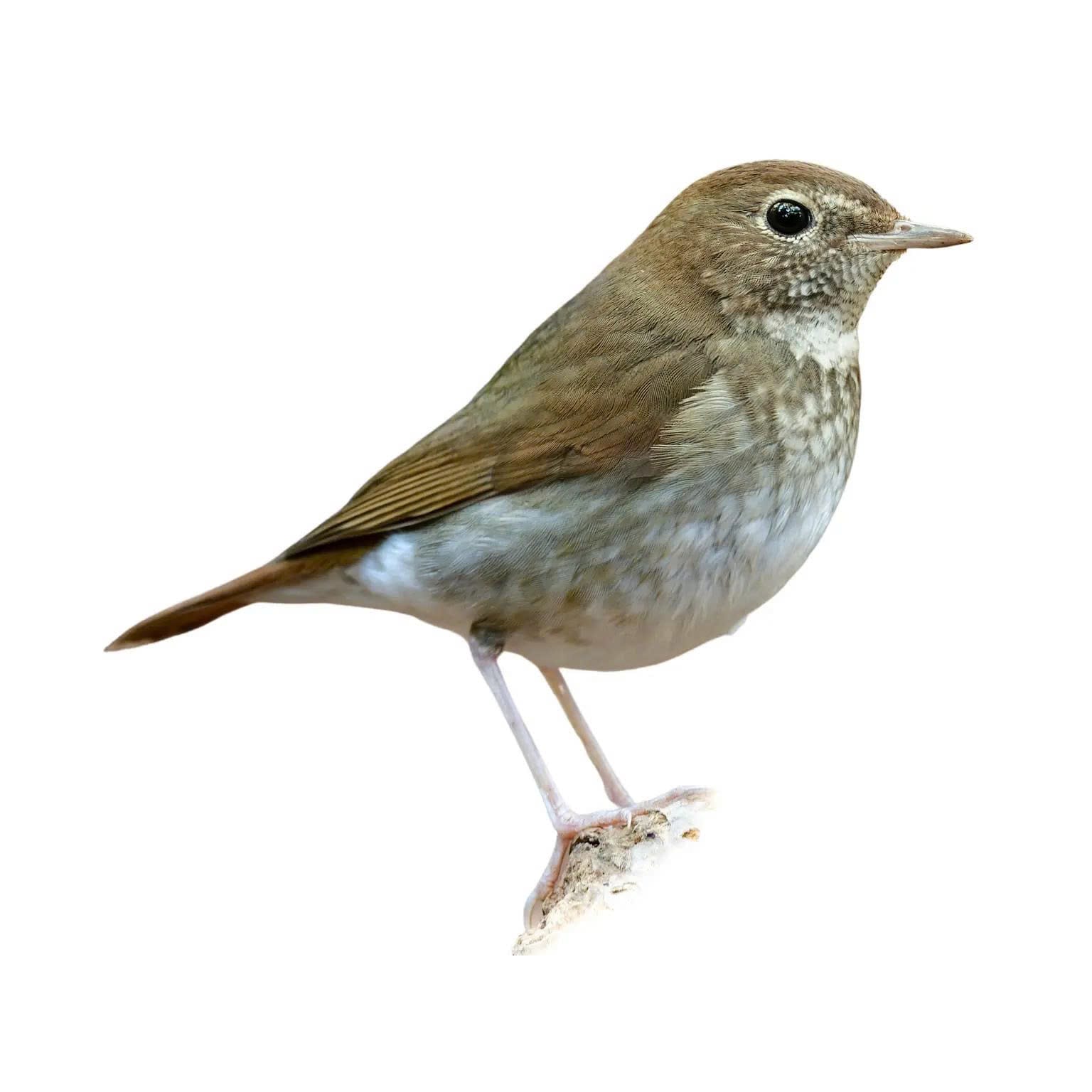
The Rufous‑tailed Robin (Larvivora sibilans) is a migratory species found across Siberia and East Asia, wintering in Southeast Asia. Males have bright orange-red tails, gray upperparts, and pale underparts, while females are slightly duller. They inhabit dense forests, often near streams or shaded areas, feeding primarily on insects, larvae, and small invertebrates.
During the breeding season, males sing persistently to defend territories and attract mates. Nesting occurs in low shrubs, tree forks, or forest floor vegetation, with females constructing compact cup-shaped nests lined with moss and plant fibers. Observing Rufous‑tailed Robins provides insight into long-distance migration, habitat specialization, and foraging strategies. Their vibrant tail, melodious song, and alert behavior make them a captivating subject for birdwatchers and ornithologists studying East Asian migratory species.
28. Scarlet Robin
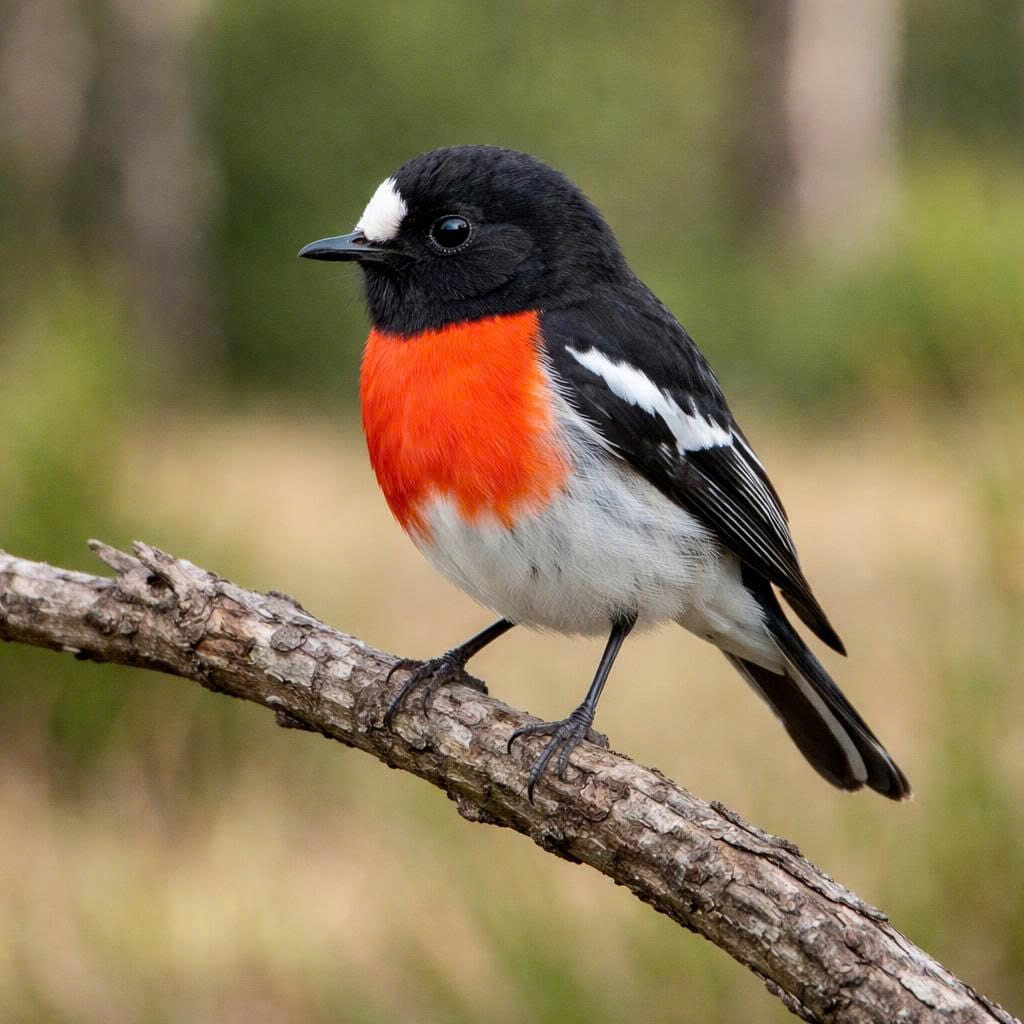
The Scarlet Robin (Petroica multicolor) is a small passerine endemic to southeastern Australia. Males exhibit bright scarlet breasts contrasted with black and white plumage, while females are muted brown with subtle orange tints. They inhabit open woodlands, forests, and shrublands, often perching on low branches or fence posts while scanning for insects.
Scarlet Robins feed primarily on insects, captured through short flights or gleaning from leaves and branches. Nesting occurs in low shrubs, tree forks, or among fallen branches, with females constructing cup-shaped nests. Observing Scarlet Robins highlights territoriality, foraging efficiency, and breeding behavior in temperate habitats. Their vibrant coloration and energetic hunting make them visually striking and popular among birdwatchers exploring Australian woodlands.
29. Hooded Robin
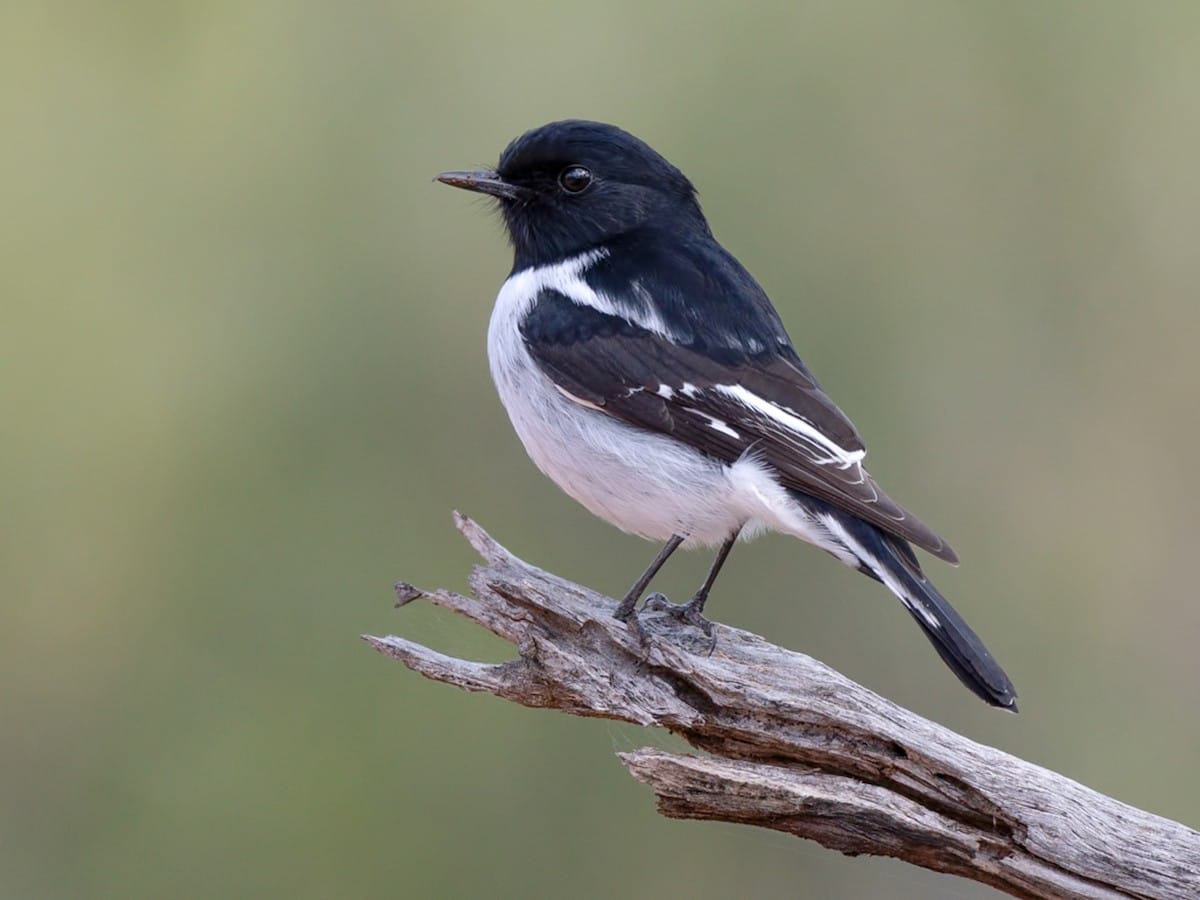
The Hooded Robin (Melanodryas cucullata) is a medium-sized bird native to Australia, recognized for its black hood and white underparts in males, while females are grayish-brown with subtle markings. They inhabit open forests, woodlands, and scrublands, often foraging on the ground for insects, spiders, and small arthropods.
Hooded Robins are territorial and vocal during the breeding season, with males using song to establish boundaries and attract mates. Nesting occurs in low shrubs, tree forks, or sheltered locations, with females constructing cup-shaped nests lined with grasses and fibers. Observing this species provides insight into the ecology of open woodland passerines, including foraging techniques, territory defense, and adaptation to semi-arid environments. Their distinctive hood and alert posture make them easy to identify in their natural habitats.
30. Buff‑sided Robin
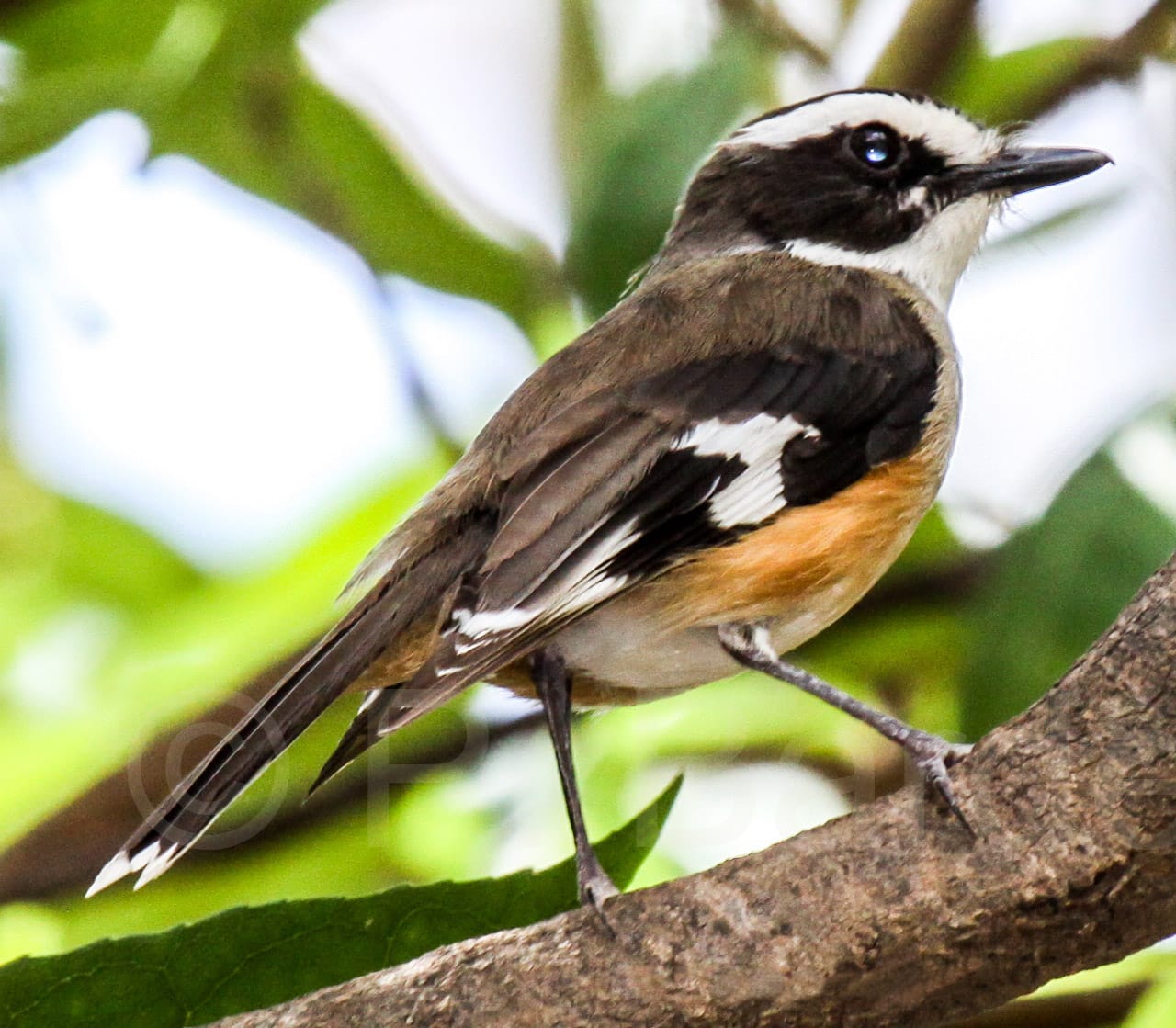
The Buff‑sided Robin (Poecilodryas cerviniventris) is native to northern Australia, inhabiting tropical savannas, woodland edges, and riparian zones. Males display olive-gray upperparts with buff-colored sides and pale underparts, while females are slightly duller. They are active foragers, hunting insects and small invertebrates by gleaning from shrubs, low branches, and leaf litter.
Buff‑sided Robins are territorial during the breeding season, with males singing melodious calls from exposed perches. Nesting occurs in low shrubs or tree forks, with females constructing cup-shaped nests lined with fine plant fibers. Observing this species provides insights into foraging behavior, habitat preference, and territoriality among savanna passerines. Their subtle coloration, alert behavior, and active foraging make them a fascinating subject for birdwatchers exploring northern Australian ecosystems.
31. White‑browed Robin‑Chat
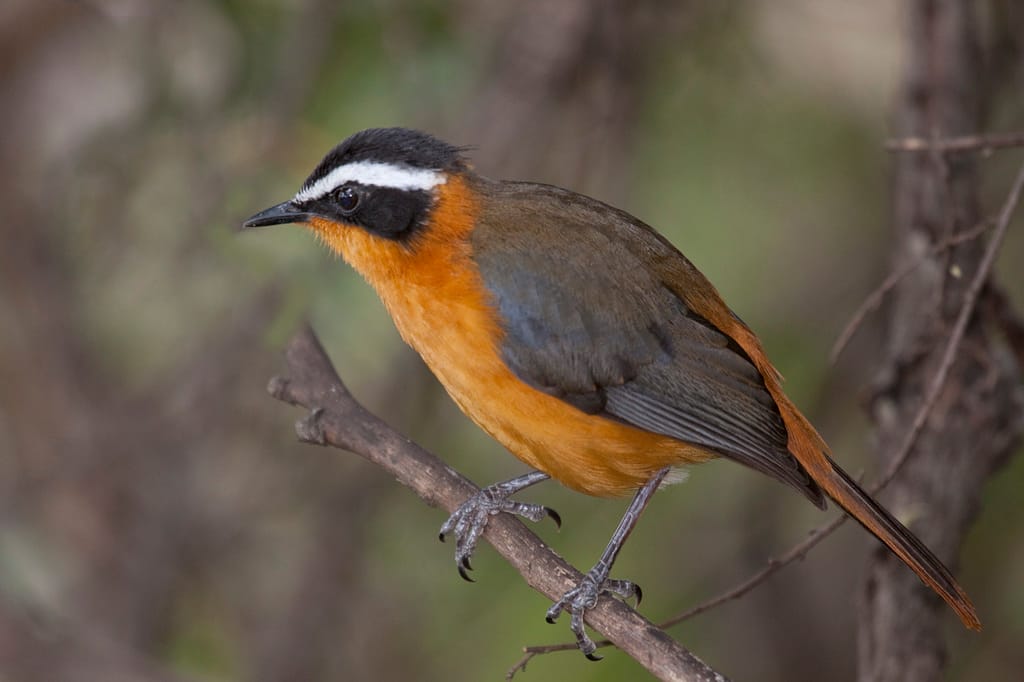
The White‑browed Robin‑Chat (Cossypha heuglini) is a striking bird native to sub-Saharan Africa. Its dark upperparts contrast sharply with a white eyebrow stripe and orange-buff underparts, creating a vivid visual signature. These robins inhabit dense thickets, riverine forests, and woodland edges, often foraging on the ground for insects, worms, and small invertebrates. Their bold white eyebrow serves as a key identification feature while navigating forested environments.
White‑browed Robin‑Chats are territorial and melodious, producing a variety of whistles and chattering calls. They construct cup-shaped nests in shrubs or low trees, lined with grasses and soft fibers. Observing this species provides insight into forest edge foraging, territoriality, and reproductive strategies. Birdwatchers are often captivated by their confident movements, bright markings, and complex vocalizations.
32. Snowy‑crowned Robin‑Chat
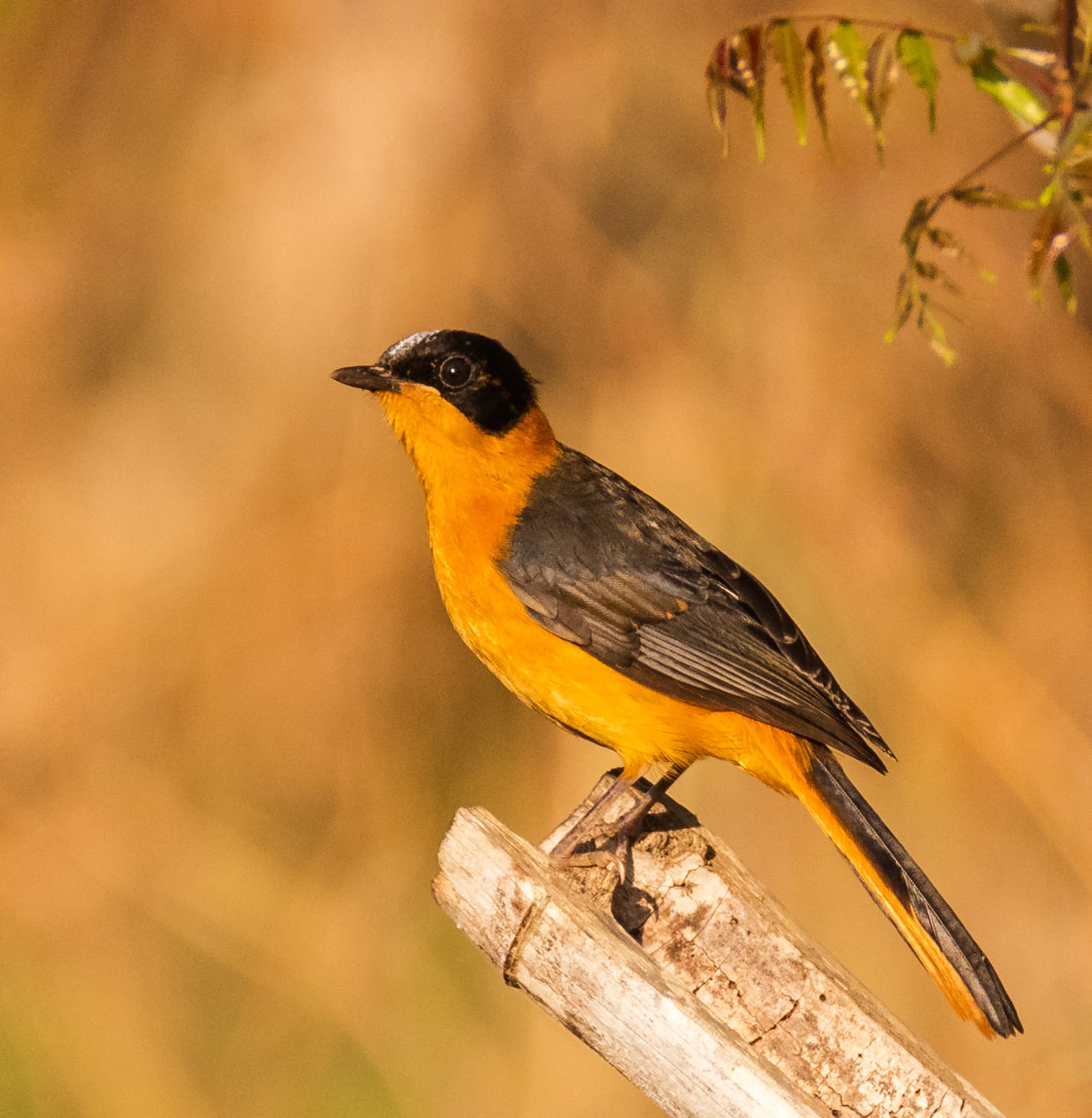
The Snowy‑crowned Robin‑Chat (Cossypha niveicapilla) is native to West and Central Africa, notable for its white crown, rich orange underparts, and grayish back. It inhabits moist forests, forest edges, and gardens, often near streams or shaded areas. This robin-chat feeds on insects, small invertebrates, and occasionally berries, foraging actively on the forest floor and in low vegetation.
They are highly vocal, with males producing melodious songs interspersed with mimicry of other species. Nesting occurs in shrubs, tree forks, or low thickets, with females constructing cup-shaped nests. Observing the Snowy‑crowned Robin‑Chat offers insight into ecological adaptation, foraging behavior, and vocal communication. Their striking crown and bold calls make them a favorite among African birdwatchers and researchers studying forest passerines.
33. White‑bellied Robin‑Chat
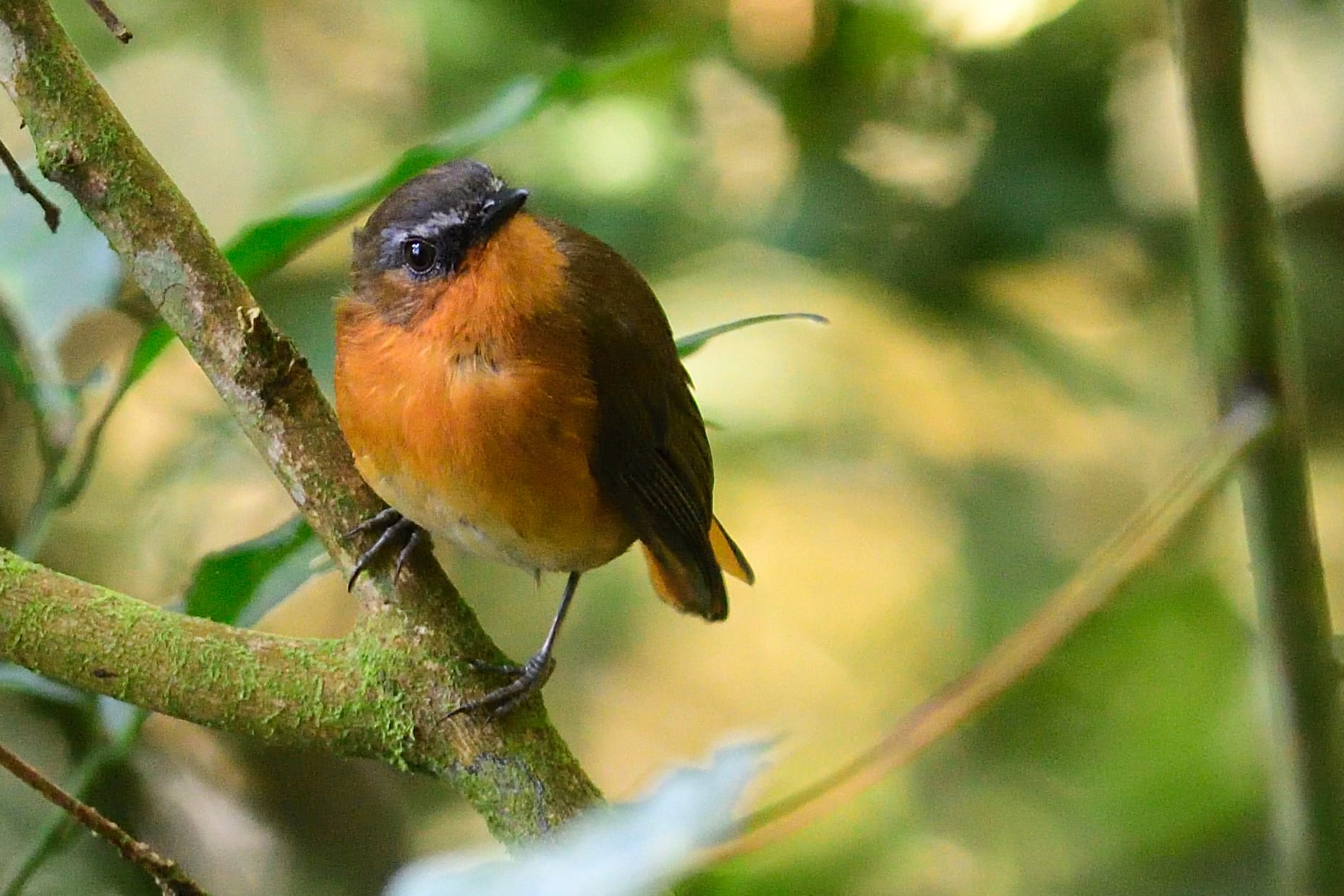
The White‑bellied Robin‑Chat (Cossypha humeralis) is a medium-sized bird found in Central and West African forests. Males have blackish upperparts with a bright white belly, orange underparts, and subtle wing patches. Females are slightly duller but maintain the distinctive white belly. These birds inhabit dense forests and forest edges, foraging for insects, spiders, and other small invertebrates.
White‑bellied Robin‑Chats are territorial, with males singing complex, melodious songs to defend territory and attract mates. Nesting occurs in shrubs, tree forks, or low vegetation, with a well-constructed cup-shaped nest lined with moss and fibers. Observing this species offers insights into understory foraging strategies, territoriality, and breeding behaviors in tropical African forests. Their striking belly contrasts and alert behavior make them a visually appealing and ecologically informative species to study.
34. Gray‑winged Robin‑Chat
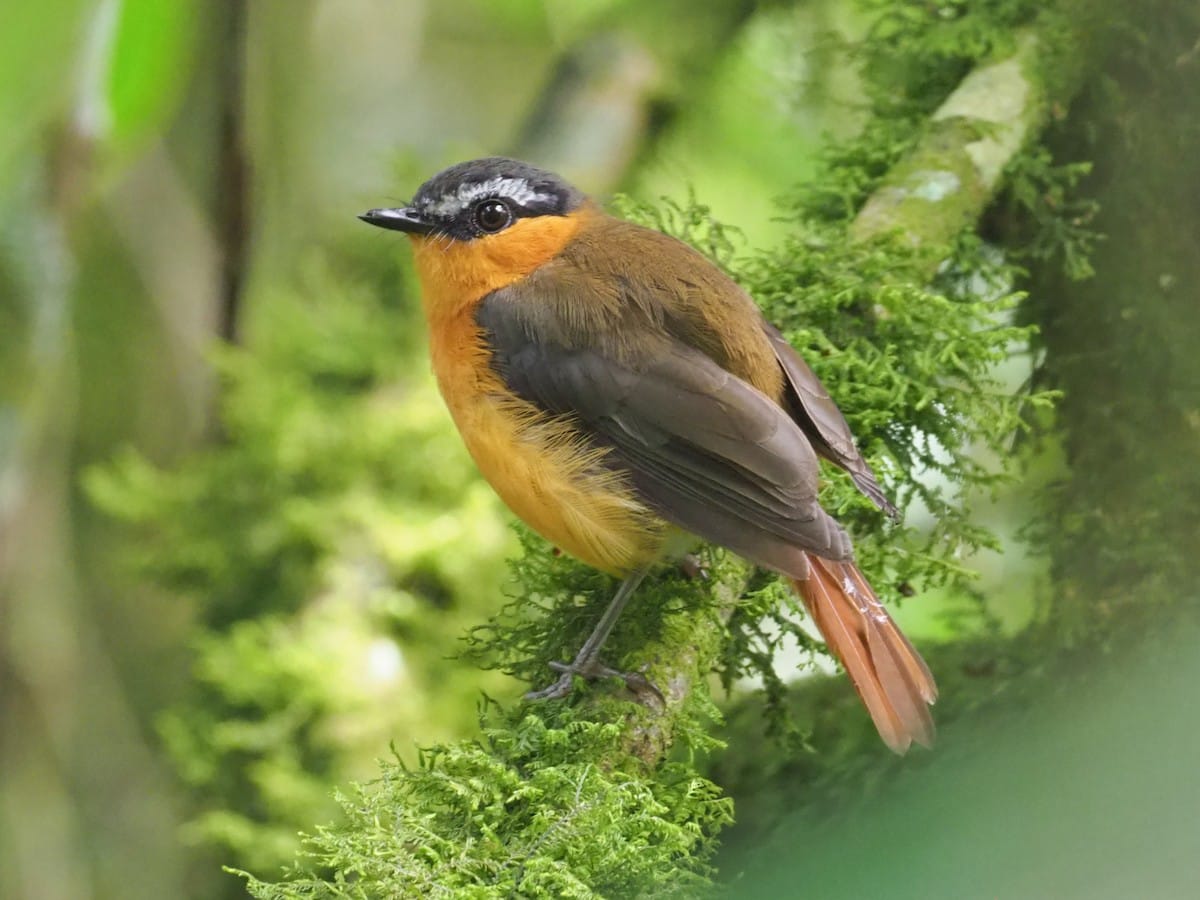
The Gray‑winged Robin‑Chat (Cossypha polioptera) is native to central African forests, recognized by its grayish wings, olive back, and orange underparts. Both sexes share similar coloration, aiding in camouflage within dense undergrowth. They inhabit lowland and montane forests, foraging actively for insects, larvae, and other small invertebrates among leaf litter and low branches.
Gray‑winged Robin‑Chats are secretive but vocal, with males producing varied whistles and trills. Nesting occurs in shrubs, low trees, or forest floor vegetation, with females building compact cup-shaped nests. Observing this species highlights adaptations for forest understory life, including stealth, camouflage, and precise foraging techniques. Birdwatchers value their subtle beauty and melodic songs while exploring central African forests.
35. Black Scrub‑Robin
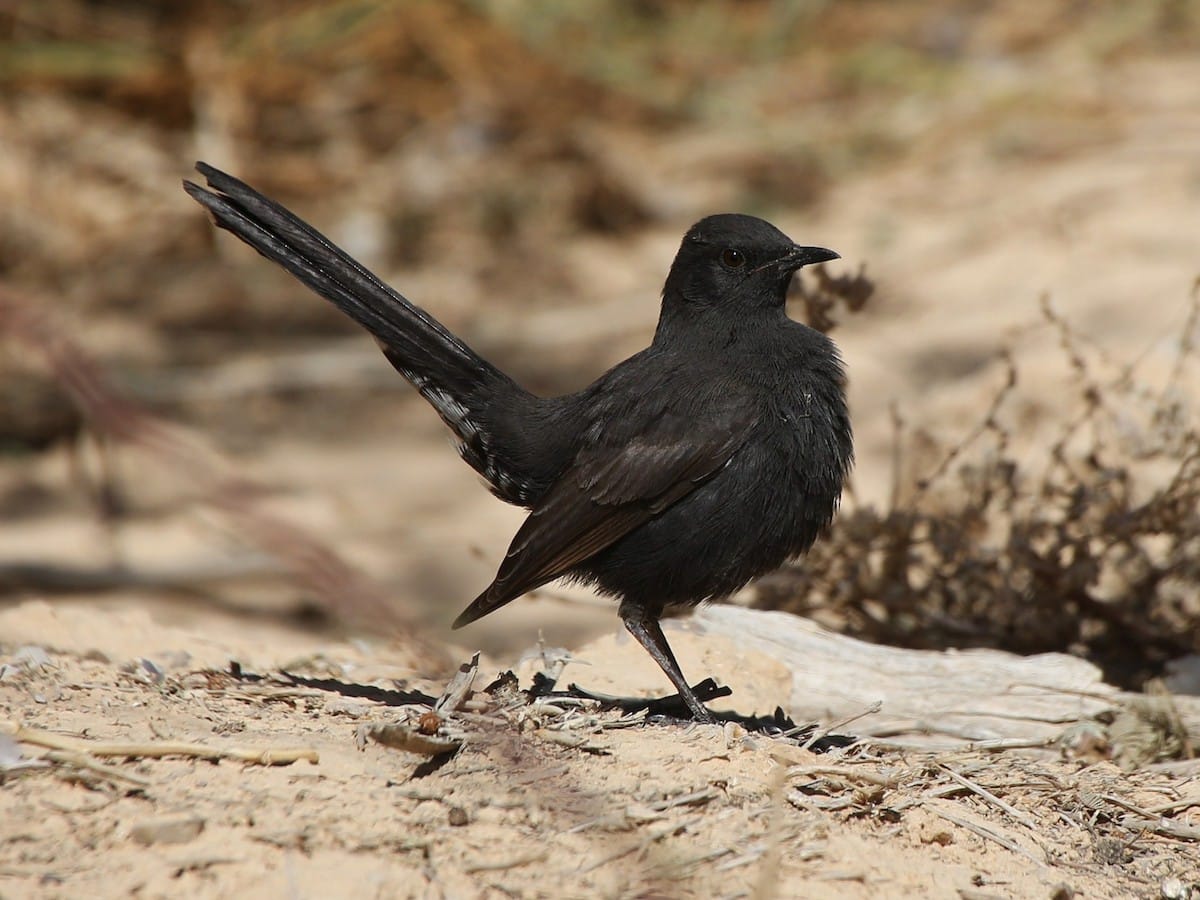
The Black Scrub‑Robin (Cercotrichas podobe) is a desert and semi-arid specialist found in North Africa and the Middle East. Males exhibit dark upperparts, contrasting with lighter underparts, while females are slightly duller. These robins inhabit scrublands, savannas, and arid river valleys, often perching conspicuously on bushes or low trees while scanning for insects and small arthropods.
Black Scrub‑Robins are territorial, with males singing repetitive, melodious calls during the breeding season. Nesting occurs in dense shrubs or low trees, with females constructing cup-shaped nests lined with grasses and fibers. Observing this species provides insight into adaptations to arid environments, foraging efficiency, and territorial behavior. Their alert posture, subtle plumage contrasts, and energetic foraging make them a fascinating subject for birdwatchers in dry landscapes.
36. Brown‑backed Scrub‑Robin
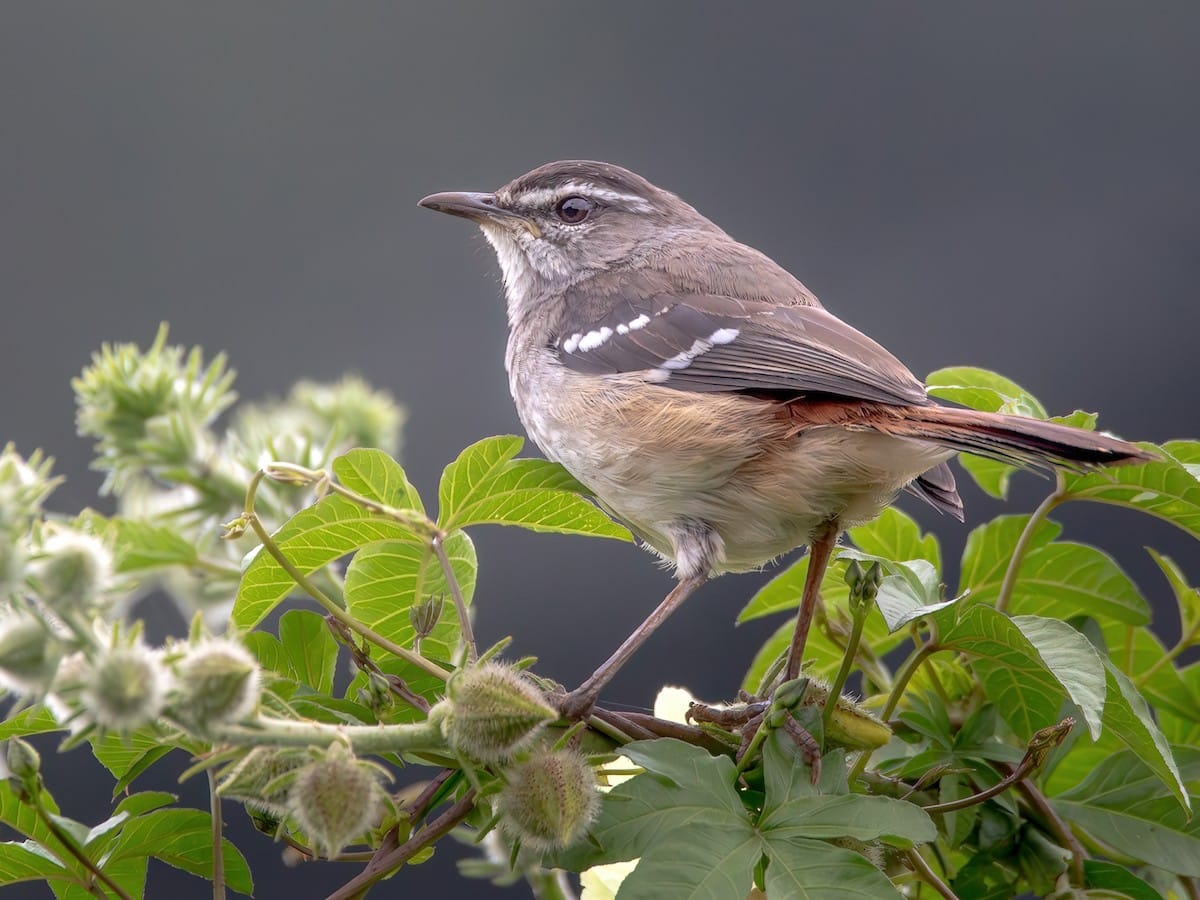
The Brown‑backed Scrub‑Robin (Cercotrichas hartlaubi) is native to eastern and southern Africa, inhabiting savannas, shrublands, and open woodlands. Males have brown upperparts, pale underparts, and subtle streaking, while females share similar coloration with slightly softer tones. They forage primarily on insects, gleaning from shrubs, leaf litter, and low branches.
These robins are territorial and vocal, with males singing melodious phrases to defend territories. Nesting occurs in dense shrubs or low trees, with females constructing cup-shaped nests. Observing this species highlights adaptations for survival in open woodland and savanna habitats, including foraging techniques, camouflage, and communication. Birdwatchers appreciate their subtle coloration, active hunting, and pleasant songs while exploring African landscapes.
37. Karoo Scrub‑Robin
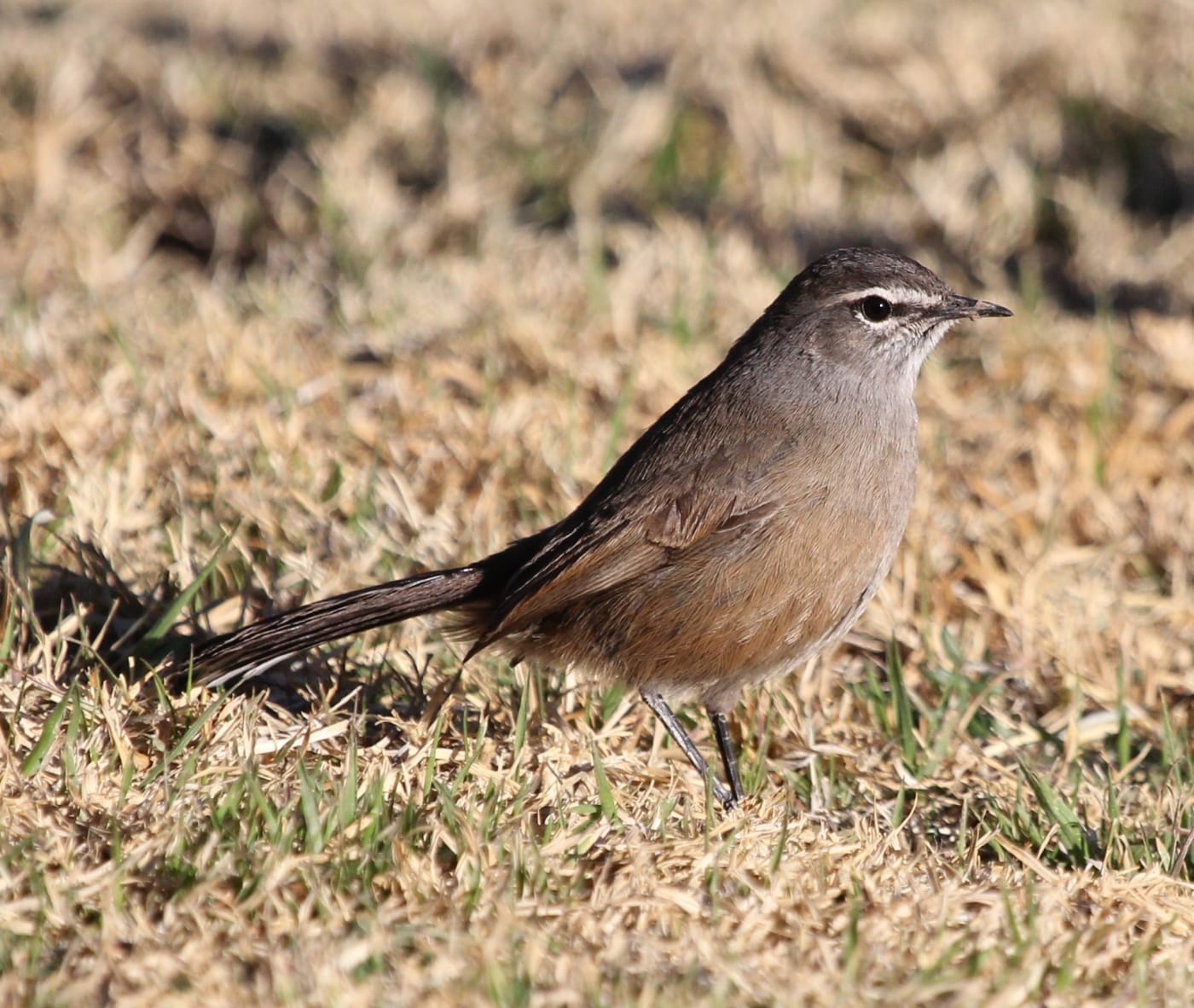
The Karoo Scrub‑Robin (Cercotrichas coryphaeus) is endemic to South Africa’s Karoo region, a semi-arid habitat with scrub and rocky outcrops. Males exhibit gray-brown upperparts, buff underparts, and subtle streaking, while females are slightly duller. They forage actively on the ground, capturing insects, spiders, and other invertebrates.
Karoo Scrub‑Robins are highly territorial, with males using melodic calls to establish boundaries. Nesting occurs in shrubs or low vegetation, with females constructing cup-shaped nests lined with plant fibers. Observing this species offers insight into adaptations to arid environments, including efficient foraging, territorial behavior, and reproductive strategies. Their alert posture and subtle plumage make them well-suited to the harsh Karoo landscape and visually intriguing for birdwatchers.
38. Bagobo Robin
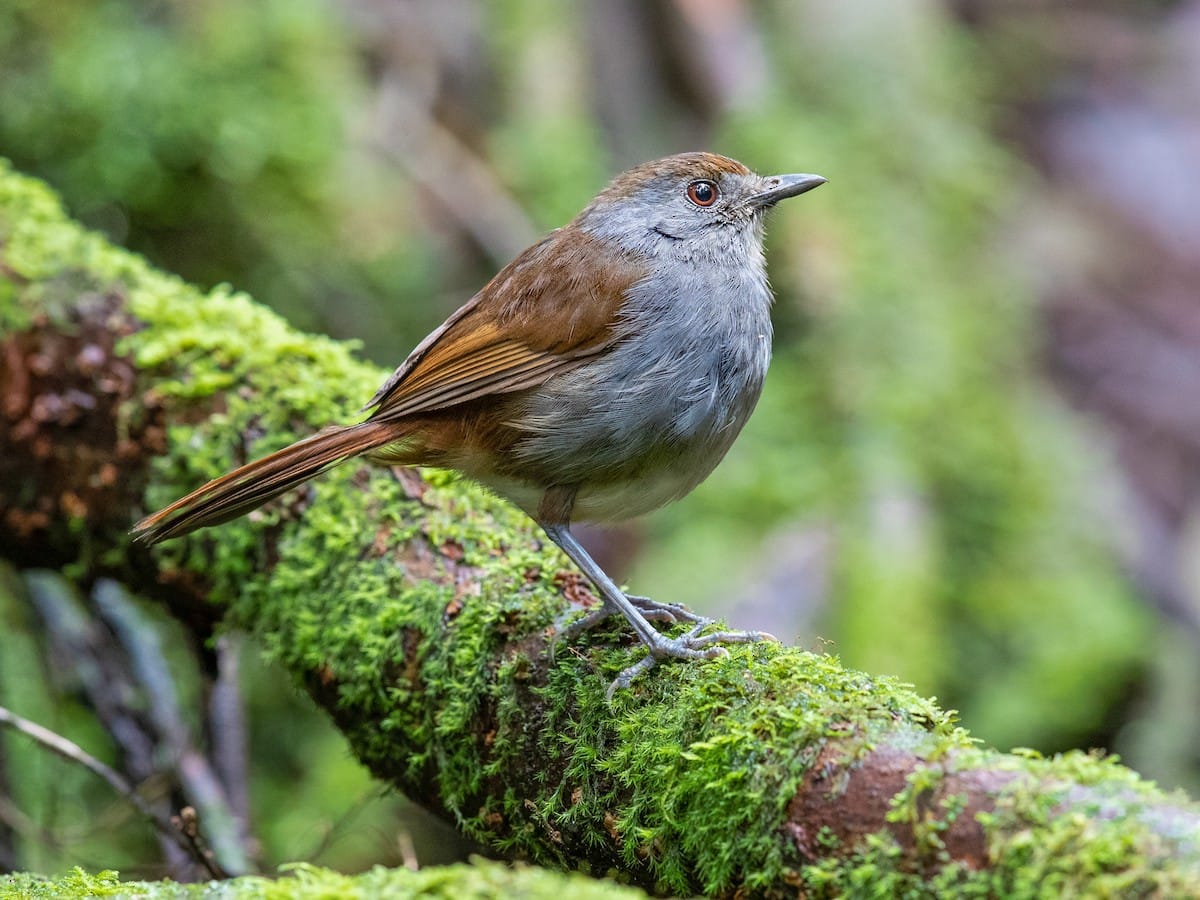
The Bagobo Robin (Leonardina bagobo) is endemic to the Philippines, particularly Mindanao. Males display olive-green upperparts, buff underparts, and subtle streaking, while females are slightly duller. They inhabit montane forests, often foraging in dense undergrowth for insects, spiders, and small arthropods.
Bagobo Robins are territorial, with males singing melodious whistles to defend territories. Nesting occurs in shrubs, tree forks, or low vegetation, with females constructing cup-shaped nests lined with moss and plant fibers. Observing this species provides insight into island forest ecology, insectivorous foraging strategies, and territorial communication. Their subtle plumage, alert behavior, and energetic hunting make them a captivating subject for bird enthusiasts in the Philippines.
39. White‑starred Robin
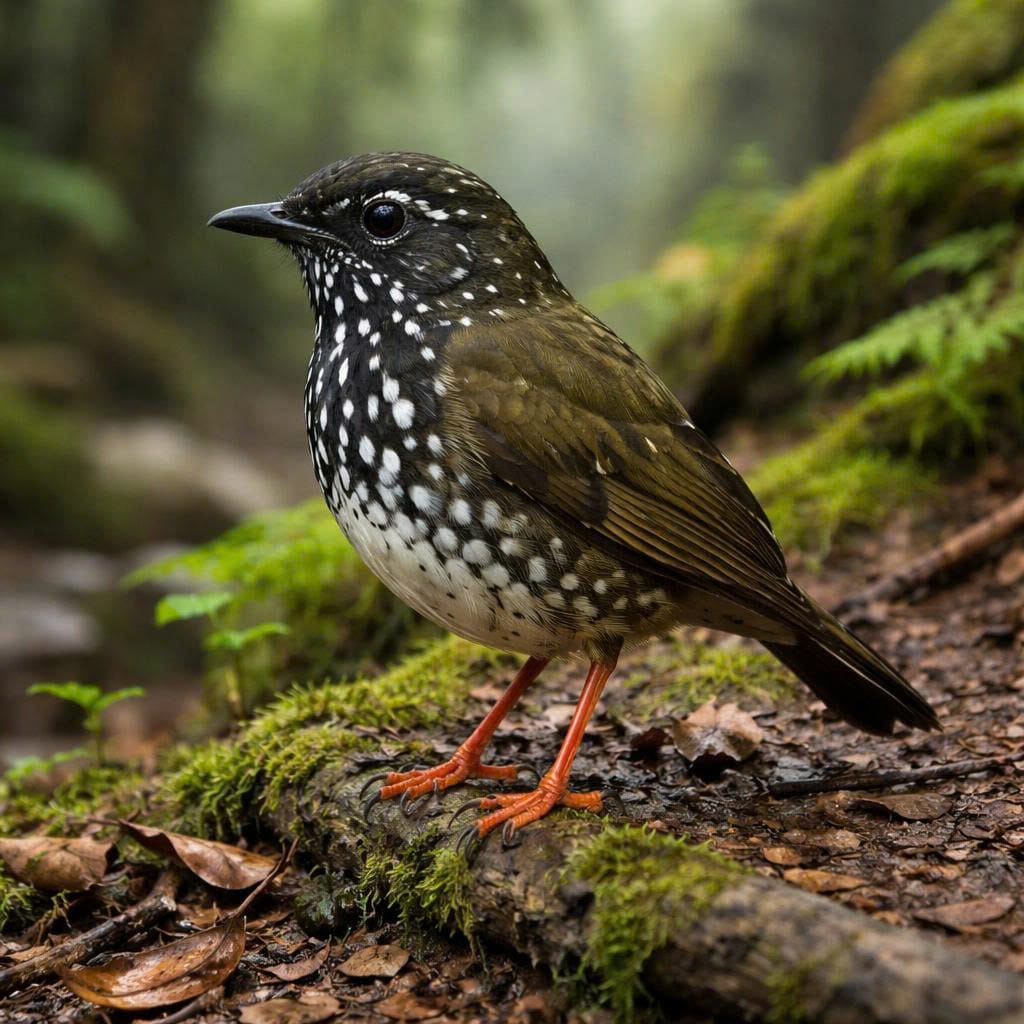
The White‑starred Robin (Pogonocichla stellata) is native to eastern and southern Africa, inhabiting montane forests and forest edges. Both sexes have olive-brown upperparts with white spotting across the head and breast, giving the “starred” appearance. They forage actively for insects, spiders, and small invertebrates among leaf litter and low vegetation.
White‑starred Robins are territorial, with males singing soft, melodic songs. Nesting occurs in low shrubs, tree forks, or moss-covered roots, with females constructing cup-shaped nests. Observing this species highlights adaptations for forest understory life, including camouflage, alert foraging, and subtle communication. Birdwatchers enjoy their striking spotting, quiet behavior, and melodious calls in montane African forests.
40. Okinawa Robin
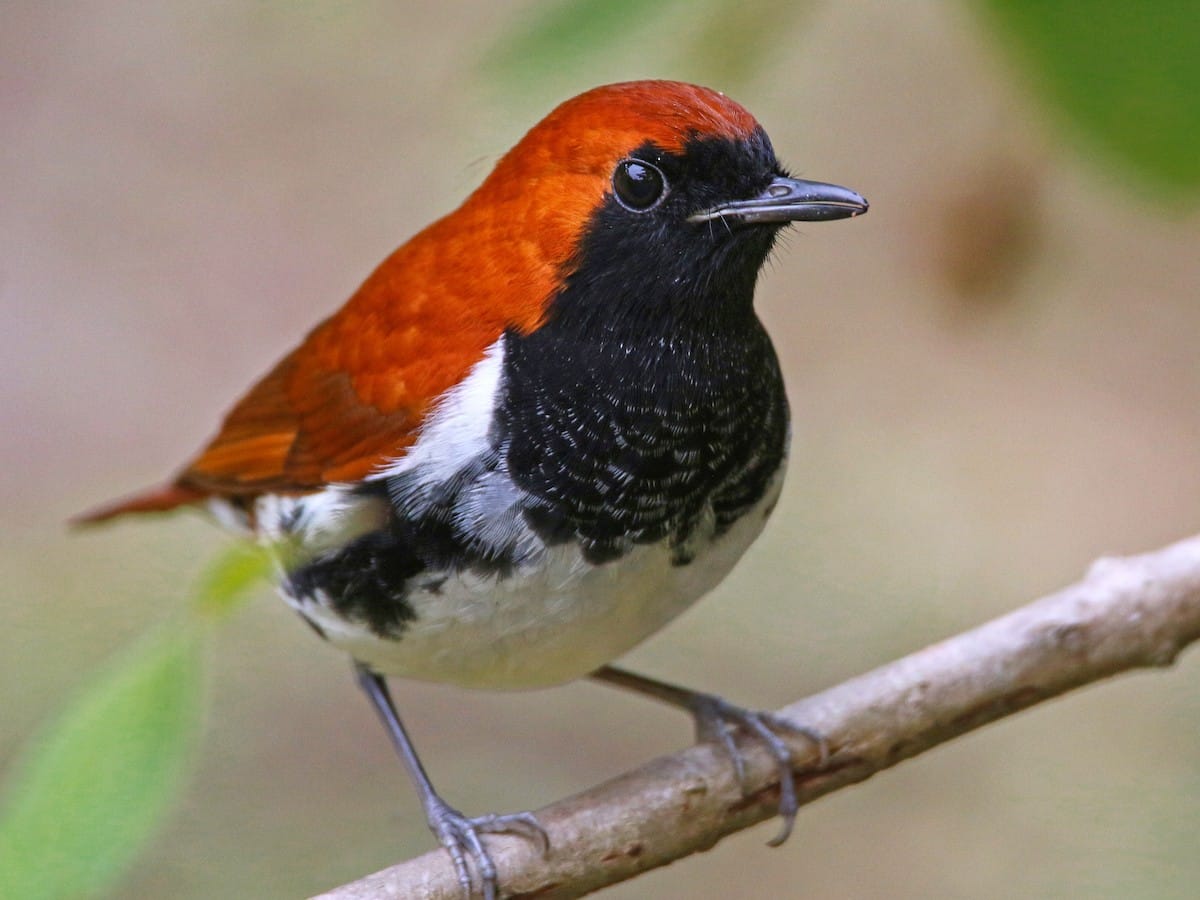
The Okinawa Robin (Larvivora namiyei) is endemic to Japan’s Okinawa Island, inhabiting subtropical forests with dense undergrowth. Males exhibit dark gray upperparts, bright orange breasts, and pale underparts, while females are duller but maintain subtle orange tones. They forage for insects and small arthropods, hopping through leaf litter and low vegetation.
Okinawa Robins are territorial, with males producing melodious whistles to attract mates and defend territories. Nesting occurs in shrubs or low tree forks, with females constructing cup-shaped nests lined with moss and plant fibers. Observing this species offers insight into island forest ecology, territorial behavior, and foraging strategies. Their striking coloration and alert movements make them a favorite among birdwatchers and conservationists in Japan.
41. Ryukyu Robin
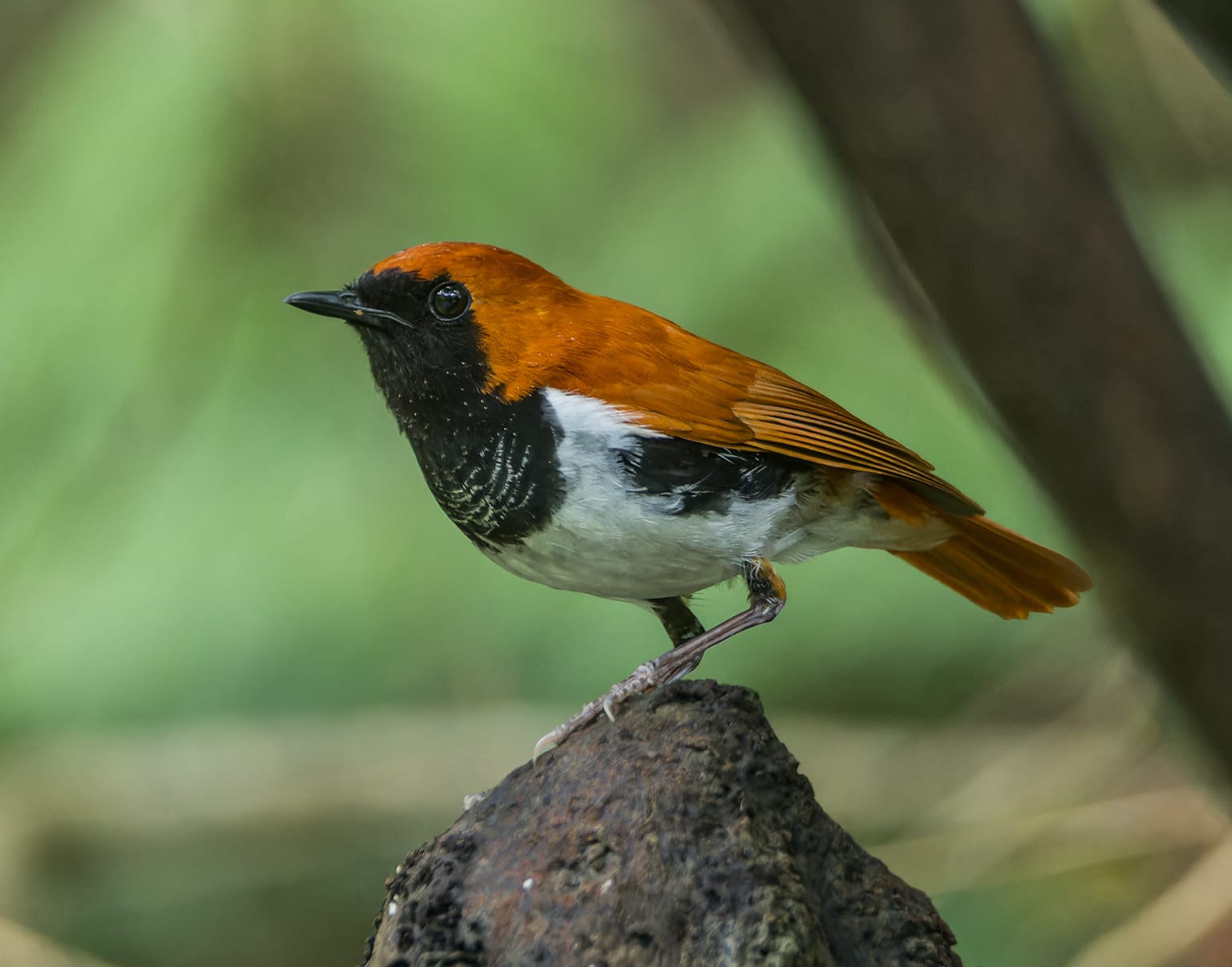
The Ryukyu Robin (Larvivora komadori) is endemic to Japan’s Ryukyu Islands. Males display vibrant red breasts, gray upperparts, and pale underparts, while females are duller with muted orange tones. These robins inhabit subtropical forests, often near streams or shaded areas, foraging actively for insects, spiders, and other small invertebrates.
Ryukyu Robins are territorial and vocal, with males singing persistent, melodious calls. Nesting occurs in low shrubs, tree forks, or moss-covered areas, with females constructing compact cup-shaped nests. Observing this species provides insight into island adaptations, understory foraging, and breeding strategies. Their vivid plumage and melodious song make them visually and aurally striking for bird enthusiasts exploring the Ryukyu Islands.
42. Izu Robin
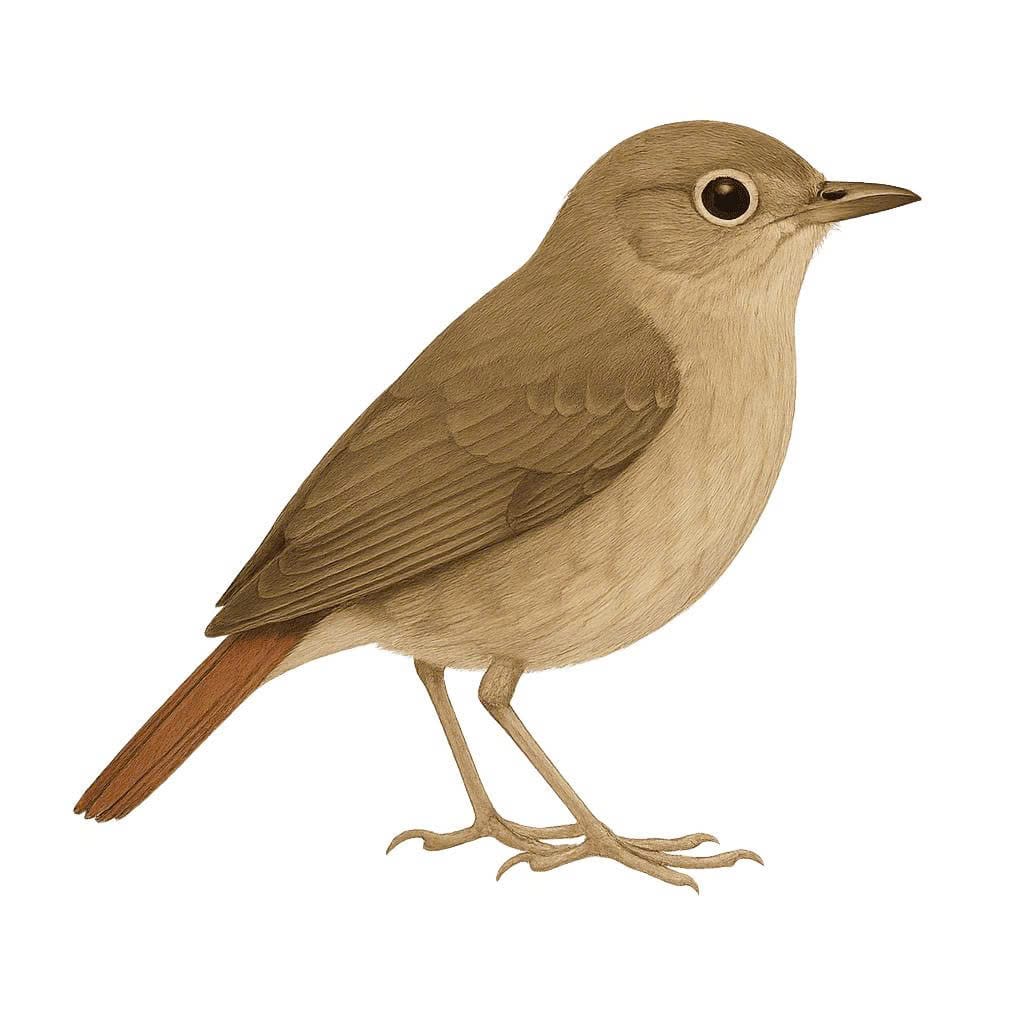
The Izu Robin (Larvivora tanensis) is endemic to Japan’s Izu Islands. Males exhibit red-orange breasts with grayish upperparts and pale underparts, while females are duller but maintain some orange tint. They inhabit subtropical forest understories, often near streams, where they forage for insects, larvae, and small arthropods.
Izu Robins are territorial during the breeding season, with males singing melodic whistles from concealed perches. Nesting occurs in shrubs, tree forks, or moss-covered forest floors, with females building cup-shaped nests. Observing this species highlights adaptations to small island habitats, foraging techniques, and vocal communication. Their vivid coloration and alert behavior make them rewarding for birdwatchers and researchers studying island passerines.
43. Clay‑colored Robin
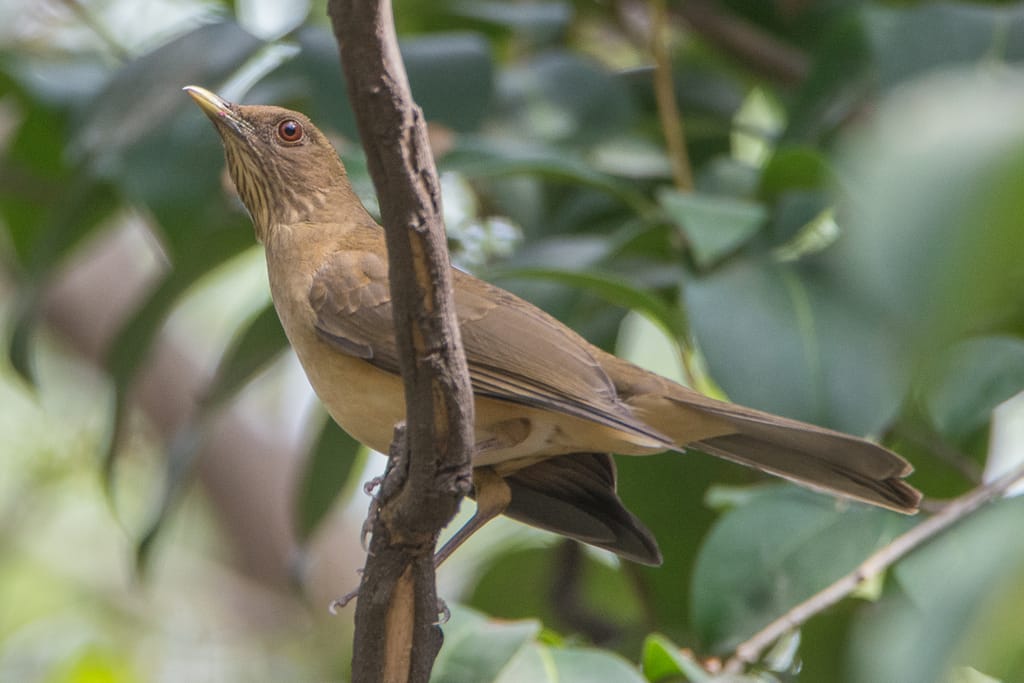
The Clay‑colored Robin (Turdus grayi) is native to Central America and northern South America. Males and females share similar warm, clay-brown plumage, with slightly paler underparts. These robins inhabit forests, gardens, and open woodlands, often foraging on the ground for insects, worms, and fruits.
Clay‑colored Robins are moderately territorial, with males singing melodious songs to defend feeding areas and attract mates. Nesting occurs in shrubs, low trees, or open areas, with females constructing cup-shaped nests lined with grasses and plant fibers. Observing this species provides insights into tropical forest and garden ecology, foraging behavior, and territorial dynamics. Their subtle clay coloration and active hunting make them a common yet charming sight for birdwatchers throughout Central America.
44. North Island Robin
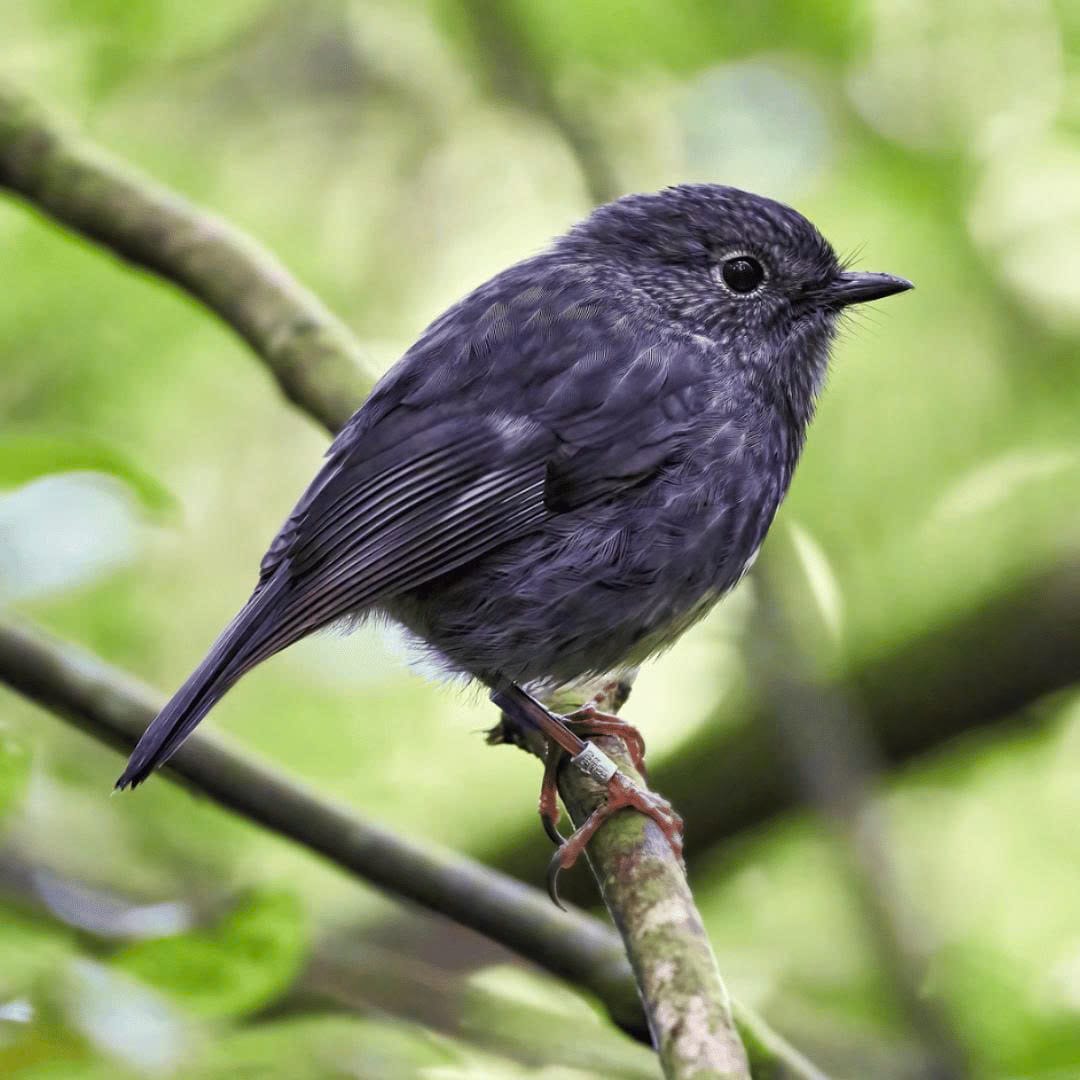
The North Island Robin (Petroica longipes) is endemic to New Zealand’s North Island, inhabiting native forests, regenerating woodlands, and forest edges. Males are dark gray to black above with pale underparts, while females are slightly lighter. They forage for insects, larvae, and small invertebrates, often hopping across leaf litter and low vegetation.
North Island Robins are highly territorial, with males singing melodious whistles to attract mates and mark boundaries. Nesting occurs in shrubs, tree forks, or low-lying roots, with females constructing cup-shaped nests lined with moss and plant fibers. Observing this species highlights adaptations to temperate forest understories, including stealth, alertness, and precise foraging techniques. Their charming behavior and melodious calls make them a favorite among New Zealand birdwatchers and ecologists studying endemic passerines.
45. South Island Robin
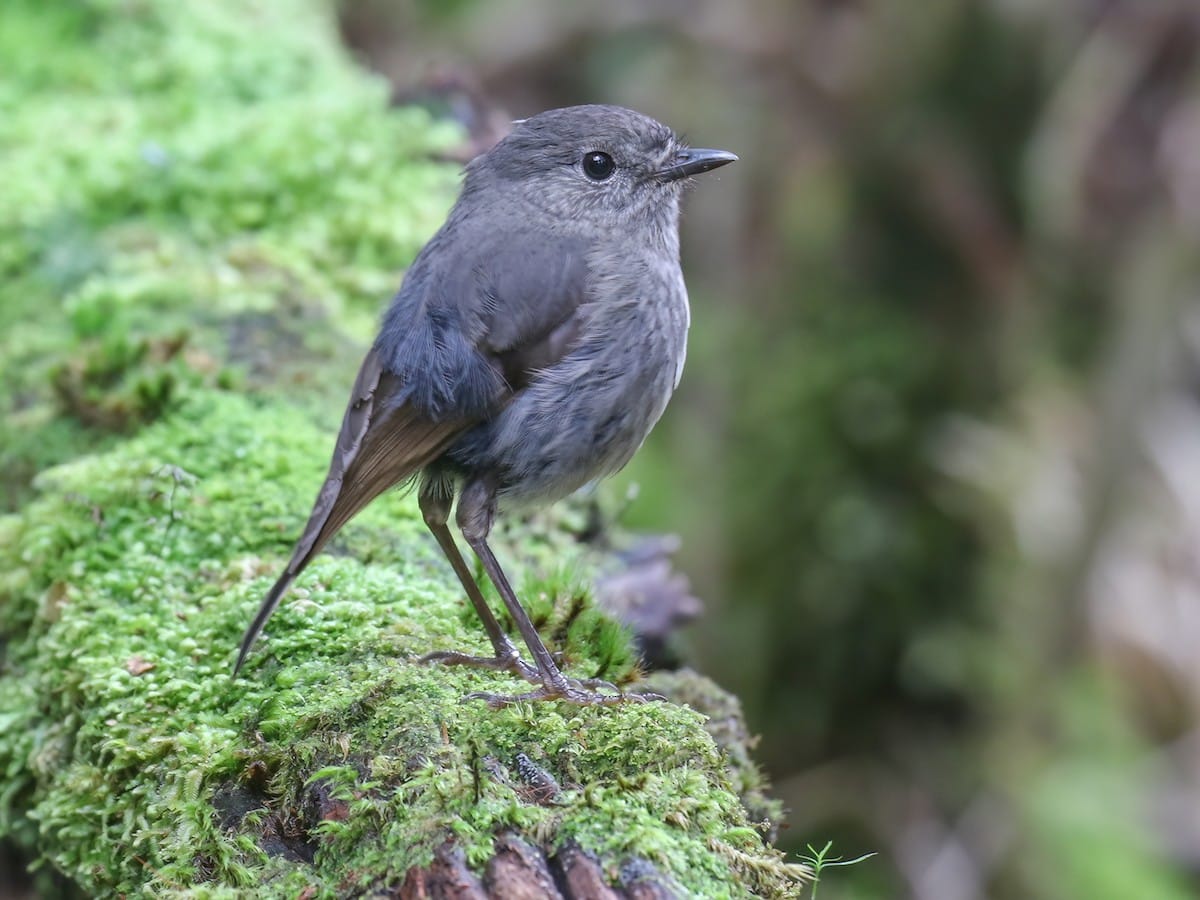
The South Island Robin (Petroica australis) is endemic to New Zealand’s South Island, inhabiting temperate forests, native bush, and forest edges. Males exhibit dark gray upperparts with pale underparts, while females are slightly lighter in tone. They actively forage on the forest floor and low vegetation, hunting insects, larvae, and other invertebrates with remarkable agility.
South Island Robins are territorial and vocal, with males singing melodious whistles to attract mates and maintain territories. Nesting occurs in shrubs, tree forks, or near roots, with females constructing well-lined cup-shaped nests. Observing this species provides insight into adaptations for temperate forest ecosystems, including foraging efficiency, territorial behavior, and reproductive strategies. Their alert posture, energetic movements, and subtle coloration make them a rewarding species for birdwatchers exploring South Island forests.
Conclusion
Exploring the diversity of Types of Robins reveals a fascinating array of species, each adapted to its unique habitat—from dense tropical forests and mangroves to arid scrublands and temperate woodlands. Across continents, robins display an impressive range of colors, behaviors, and vocalizations that reflect their ecological niches and evolutionary history. Some, like the Scarlet Robin or North Island Robin, captivate with vivid plumage, while others, such as the Black Scrub-Robin, impress with subtle camouflage and agile foraging strategies.
Understanding these birds enriches our appreciation of global biodiversity and emphasizes the importance of habitat conservation. Birdwatchers, researchers, and nature enthusiasts alike can enjoy observing their varied foraging techniques, territorial displays, and melodious songs. Whether in the forests of Africa, gardens of Asia, or woodlands of New Zealand, robins provide a glimpse into the delicate balance of ecosystems and the intricate adaptations that allow them to thrive.
By learning about these 45 fascinating robin species, we gain insight into the broader patterns of avian life and the remarkable adaptability of these small but charismatic birds. Next time you spot a robin perched on a branch or hopping across leaf litter, take a moment to appreciate the rich diversity encompassed by this incredible group. Protecting their habitats ensures that future generations can continue to experience the beauty, song, and wonder of robins around the world.
Frequently Asked Questions About Types of Robins
1. What are robins?
Robins are small to medium-sized songbirds known for their upright posture, melodic calls, and often colorful chests. The name “robin” is used for many different birds across the world, not just one single species.
2. How many Types of Robins are there in the world?
There are dozens of birds called robins worldwide. Depending on classification, bird guides often list more than 50 Types of Robins across different continents.
3. Are all robins closely related?
No. Many birds called robins belong to different families. They share similar looks and behaviors, but they are not always closely related in evolution.
4. Where are robins commonly found?
Robins live in Europe, Asia, Africa, Australia, and the Americas. They adapt to forests, gardens, grasslands, mountains, and even city parks.
5. What is the most famous robin species?
The European Robin and the American Robin are the most well-known, often appearing in folklore, songs, and garden scenes.
6. Do all robins have red chests?
No. While many robins show red or orange on the chest, others may be gray, brown, buff, or even white underneath.
7. Why are so many birds called robins?
The name was first used for the European Robin. When explorers saw similar birds elsewhere, they reused the name because of shared size and behavior.
8. Are robins good singers?
Yes. Most robins are known for clear, melodic songs used to mark territory and attract mates, especially at dawn and dusk.
9. What do robins usually eat?
Robins mainly eat insects, worms, spiders, and small invertebrates. Many species also enjoy fruits and berries when available.
10. Do robins migrate?
Some robins migrate long distances, while others stay in the same area year-round. It depends on species and climate.
11. Where do robins build their nests?
Robins often build cup-shaped nests in trees, shrubs, roots, banks, or even buildings. They use grass, mud, and soft fibers.
12. How many eggs do robins lay?
Most robins lay between two and five eggs per clutch, depending on species and environmental conditions.
13. Are robins territorial birds?
Yes. Many robins strongly defend their feeding and nesting areas, especially during the breeding season.
14. How long do robins live?
In the wild, many robins live between 2 and 6 years, though some individuals can survive much longer in safe conditions.
15. Can robins recognize humans?
Some robins seem to recognize people who regularly feed or pass through their territory, often showing less fear over time.
16. Are robins friendly to humans?
Robins can appear friendly, but they are wild birds. Their curiosity sometimes brings them close to people.
17. Do robins mate for life?
Some species may pair for a breeding season, but most robins do not form lifelong bonds.
18. What habitats do robins prefer?
Robins live in forests, woodland edges, gardens, scrublands, wetlands, and mountains, depending on the species.
19. Why do robins flick their tails?
Tail flicking may signal alertness, help flush insects, or communicate with other robins nearby.
20. Are robins active all day?
Robins are mostly active during daylight, especially early morning and late afternoon.
21. Do robins help control insects?
Yes. By feeding on insects and larvae, robins help keep pest populations in balance.
22. Can robins live in cities?
Many robins adapt well to urban areas, nesting in gardens, parks, and quiet neighborhoods.
23. Are robins protected birds?
In many countries, robins are protected by wildlife laws that make harming them or their nests illegal.
24. How can I attract robins to my garden?
You can attract robins by offering mealworms, berries, fresh water, and safe shrubs for shelter.
25. Do robins use bird feeders?
Some robins prefer ground feeding, but many will visit low feeders with soft food like fruit or insects.
26. What predators threaten robins?
Cats, snakes, larger birds, and some mammals prey on robins and their eggs.
27. Why do robins sing at dawn?
Dawn singing helps robins defend territory when sound travels far and before daytime noise begins.
28. Can robins be kept as pets?
No. Robins are wild birds, and keeping them as pets is illegal in many places and harmful to the birds.
29. Do robins return to the same place each year?
Many robins return to familiar breeding areas if conditions remain good.
30. How fast can robins fly?
Robins are agile flyers, able to make quick bursts of speed when chasing insects or escaping danger.
31. Are juvenile robins different from adults?
Yes. Young robins often have spotted or mottled plumage that looks very different from adults.
32. Do robins bathe often?
Robins enjoy bathing in shallow water to clean their feathers and stay healthy.
33. What does it mean when a robin visits your yard?
For many people, it simply means your yard offers food, water, or safe shelter for birds.
34. Are robins symbols in culture?
Yes. Robins often symbolize hope, renewal, and joy in many cultures and traditions.
35. Do robins sing all year?
They sing most during breeding season, but some species sing softly throughout the year.
36. Can robins survive cold winters?
Many robins adapt by changing diet, flocking, or migrating to warmer areas.
37. How do robins find worms?
Robins watch for movement and listen for sounds underground before pulling worms from the soil.
38. Are robins intelligent birds?
Robins show problem-solving skills, memory, and learning ability when finding food and defending territory.
39. Why are robins important to ecosystems?
They help control insects, spread seeds, and serve as part of food chains in many habitats.
40. What is the best time to watch robins?
Early morning is the best time to observe robins feeding and singing actively.
41. Can climate change affect robins?
Yes. Changes in temperature and seasons can shift migration times, food supply, and breeding success.
42. How can people help protect robins?
Protecting habitats, planting native plants, keeping cats indoors, and avoiding pesticides all help robins.
43. Why should we learn about Types of Robins?
Learning about Types of Robins helps us understand bird diversity and the role these birds play in healthy ecosystems.