

Gouramis range from tiny peat-swamp specialists to giant food fish that outgrow ordinary home aquariums. This guide to types of gourami fish covers 30 aquarium-relevant species and color forms, including peaceful community choices, territorial labyrinth fish, delicate blackwater species, and several giants.
The common name “gourami” is used broadly. Most species here belong to the labyrinth-fish family Osphronemidae, but kissing gourami belongs to a separate family and remains included because aquarium keepers universally recognize the name.
What Are the Main Types of Gourami Fish?
Popular beginner and intermediate choices include honey, pearl, thick-lipped, dwarf, three-spot, blue, gold, opaline, moonlight, sparkling, and croaking gouramis. Chocolate and licorice gouramis need specialist soft-water care. Kissing, giant, red-tail giant, snakeskin, and some combtails become too large or assertive for small community aquariums.
| Type | Scientific name | Adult size group | Temperament | Identification |
|---|---|---|---|---|
| Dwarf Gourami | Trichogaster lalius | Small | Peaceful to territorial | Bright blue and red striping |
| Honey Gourami | Trichogaster chuna | Small | Gentle | Golden breeding color in males |
| Thick-Lipped Gourami | Trichogaster labiosus | Small to medium | Usually peaceful | Thicker lips and warm orange-brown tones |
| Banded Gourami | Trichogaster fasciata | Medium | Usually peaceful | Vertical banding and elongated body |
| Pearl Gourami | Trichopodus leerii | Medium | Peaceful | Pearl-like spots and a dark horizontal stripe |
| Three-Spot Gourami | Trichopodus trichopterus | Medium | Semi-aggressive | Two visible body spots plus the eye as the third spot |
| Blue Gourami | Trichopodus trichopterus color morph | Medium | Semi-aggressive | Blue-gray form of the three-spot gourami |
| Gold Gourami | Trichopodus trichopterus color morph | Medium | Semi-aggressive | Golden-yellow three-spot morph |
| Opaline Gourami | Trichopodus trichopterus color morph | Medium | Semi-aggressive | Marbled blue pattern |
| Platinum Gourami | Trichopodus trichopterus color morph | Medium | Semi-aggressive | Pale silvery-white coloration |
| Moonlight Gourami | Trichopodus microlepis | Medium to large | Generally peaceful | Silvery body with a soft green-blue sheen |
| Snakeskin Gourami | Trichopodus pectoralis | Large | Generally peaceful | Fine dark reticulation and long body |
| Kissing Gourami | Helostoma temminckii | Large | Semi-aggressive | Thick protrusible lips and side-compressed body |
| Giant Gourami | Osphronemus goramy | Very large | Variable | Massive body and thick lips |
| Red-Tail Giant Gourami | Osphronemus laticlavius | Very large | Variable | Dark body with reddish fin margins |
| Chocolate Gourami | Sphaerichthys osphromenoides | Small | Shy | Chocolate-brown body with pale vertical bars |
| Samurai Gourami | Sphaerichthys vaillanti | Small | Shy | Females can show striking red and green patterning |
| Crossband Chocolate Gourami | Sphaerichthys selatanensis | Small | Shy | Crossbands and chocolate coloration |
| Croaking Gourami | Trichopsis vittata | Small | Peaceful to mildly territorial | Slender body and audible croaking sounds |
| Sparkling Gourami | Trichopsis pumila | Very small | Peaceful to mildly territorial | Iridescent blue-green spots and red-edged fins |
| Mekong Croaking Gourami | Trichopsis schalleri | Small | Peaceful to mildly territorial | Intermediate size with subtle iridescence |
| Paradise Fish | Macropodus opercularis | Medium | Territorial | Blue-red bands and flowing fins |
| Black Paradise Fish | Macropodus spechti | Medium | Territorial | Dark body with red fin edging |
| Roundtail Paradise Fish | Macropodus ocellatus | Medium | Territorial | Rounded tail and subdued pattern |
| Licorice Gourami | Parosphromenus deissneri | Very small | Shy | Dark body with vivid breeding fin colors |
| Ornate Licorice Gourami | Parosphromenus ornaticauda | Very small | Shy | Ornate red, blue, and dark fin pattern |
| Bintan Licorice Gourami | Parosphromenus bintan | Very small | Shy | Dark breeding dress with colorful fin bands |
| Giant Pikehead | Luciocephalus pulcher | Medium to large | Predatory | Long pike-like head and camouflage pattern |
| Indian Paradisefish | Pseudosphromenus cupanus | Small | Mildly territorial | Slender brown body with blue-green fin highlights |
| Ceylonese Combtail | Belontia signata | Medium to large | Assertive | Brown body with extended comb-like fins |
1. Dwarf Gourami
Dwarf Gourami (Trichogaster lalius) is a small labyrinth fish with a temperament best described as peaceful to territorial. Its most useful identification feature is bright blue and red striping.

Popular but should be sourced carefully because some commercial lines have health problems. Provide a covered aquarium with access to warm air above the water, stable filtration, plants or other visual barriers, and tankmates selected for the species’ adult size and behavior. Many gouramis breathe atmospheric air with a labyrinth organ, but that ability does not make them tolerant of dirty water.
2. Honey Gourami
Honey Gourami (Trichogaster chuna) is a small labyrinth fish with a temperament best described as gentle. Its most useful identification feature is golden breeding color in males.
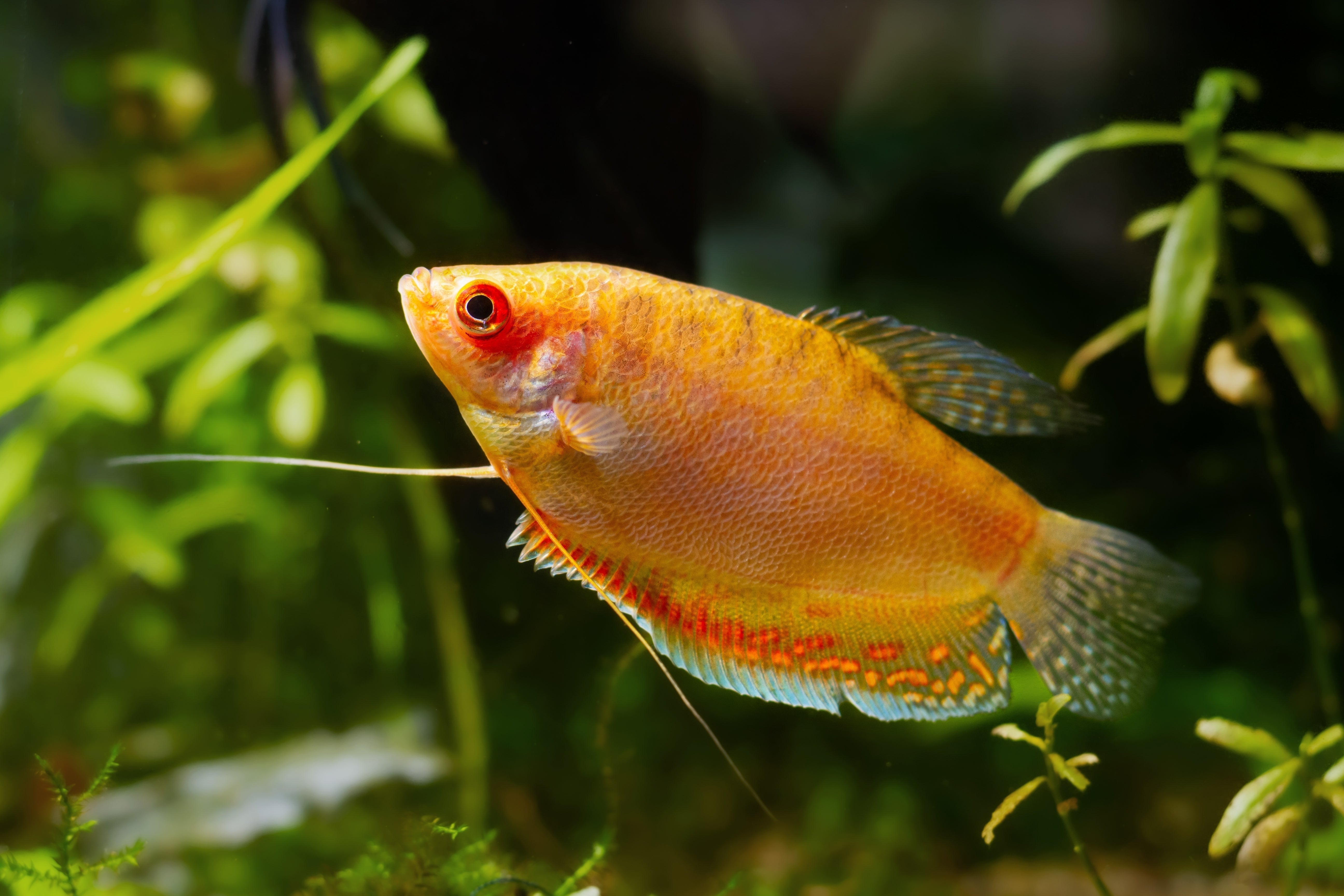
A calm choice for planted community aquariums with peaceful tankmates. Provide a covered aquarium with access to warm air above the water, stable filtration, plants or other visual barriers, and tankmates selected for the species’ adult size and behavior. Many gouramis breathe atmospheric air with a labyrinth organ, but that ability does not make them tolerant of dirty water.
3. Thick-Lipped Gourami
Thick-Lipped Gourami (Trichogaster labiosus) is a small to medium labyrinth fish with a temperament best described as usually peaceful. Its most useful identification feature is thicker lips and warm orange-brown tones.

Hardier and larger than many dwarf gouramis. Provide a covered aquarium with access to warm air above the water, stable filtration, plants or other visual barriers, and tankmates selected for the species’ adult size and behavior. Many gouramis breathe atmospheric air with a labyrinth organ, but that ability does not make them tolerant of dirty water.
4. Banded Gourami
Banded Gourami (Trichogaster fasciata) is a medium labyrinth fish with a temperament best described as usually peaceful. Its most useful identification feature is vertical banding and elongated body.

Also called Indian banded gourami; appreciate planted cover. Provide a covered aquarium with access to warm air above the water, stable filtration, plants or other visual barriers, and tankmates selected for the species’ adult size and behavior. Many gouramis breathe atmospheric air with a labyrinth organ, but that ability does not make them tolerant of dirty water.
5. Pearl Gourami
Pearl Gourami (Trichopodus leerii) is a medium labyrinth fish with a temperament best described as peaceful. Its most useful identification feature is pearl-like spots and a dark horizontal stripe.

A classic centerpiece fish for a quiet planted community. Provide a covered aquarium with access to warm air above the water, stable filtration, plants or other visual barriers, and tankmates selected for the species’ adult size and behavior. Many gouramis breathe atmospheric air with a labyrinth organ, but that ability does not make them tolerant of dirty water.
6. Three-Spot Gourami
Three-Spot Gourami (Trichopodus trichopterus) is a medium labyrinth fish with a temperament best described as semi-aggressive. Its most useful identification feature is two visible body spots plus the eye as the third spot.
Hardy, but adult males may be territorial. Provide a covered aquarium with access to warm air above the water, stable filtration, plants or other visual barriers, and tankmates selected for the species’ adult size and behavior. Many gouramis breathe atmospheric air with a labyrinth organ, but that ability does not make them tolerant of dirty water.
7. Blue Gourami
Blue Gourami (Trichopodus trichopterus color morph) is a medium labyrinth fish with a temperament best described as semi-aggressive. Its most useful identification feature is blue-gray form of the three-spot gourami.
Not a separate species; care is the same as other three-spot morphs. Provide a covered aquarium with access to warm air above the water, stable filtration, plants or other visual barriers, and tankmates selected for the species’ adult size and behavior. Many gouramis breathe atmospheric air with a labyrinth organ, but that ability does not make them tolerant of dirty water.
8. Gold Gourami
Gold Gourami (Trichopodus trichopterus color morph) is a medium labyrinth fish with a temperament best described as semi-aggressive. Its most useful identification feature is golden-yellow three-spot morph.
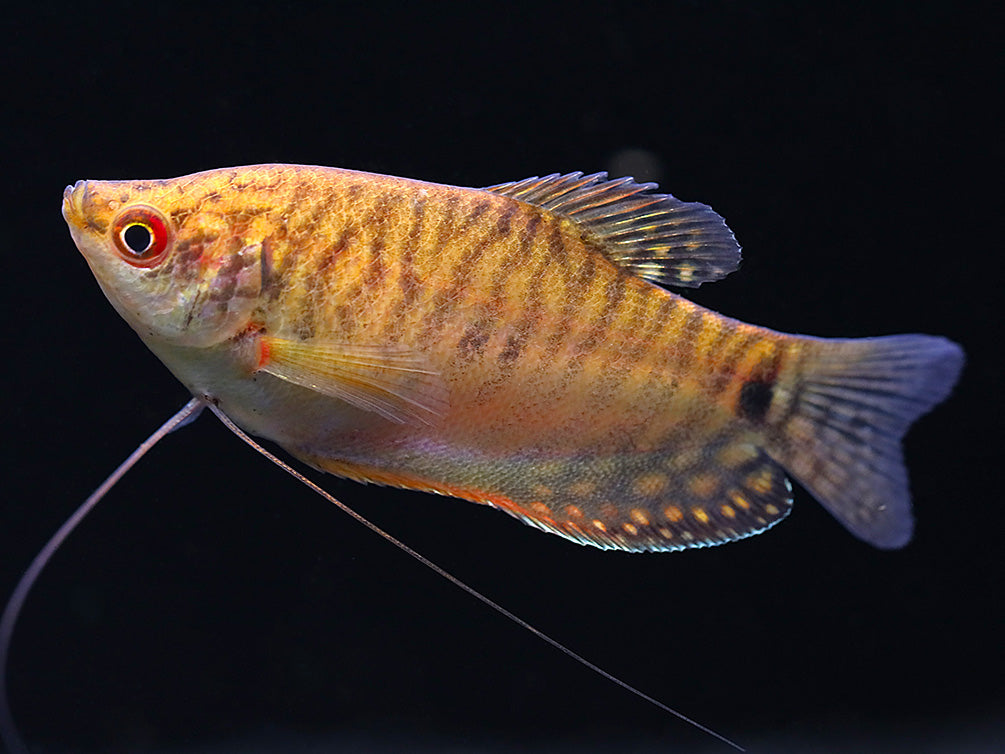
Bright color does not guarantee a peaceful temperament. Provide a covered aquarium with access to warm air above the water, stable filtration, plants or other visual barriers, and tankmates selected for the species’ adult size and behavior. Many gouramis breathe atmospheric air with a labyrinth organ, but that ability does not make them tolerant of dirty water.
9. Opaline Gourami
Opaline Gourami (Trichopodus trichopterus color morph) is a medium labyrinth fish with a temperament best described as semi-aggressive. Its most useful identification feature is marbled blue pattern.
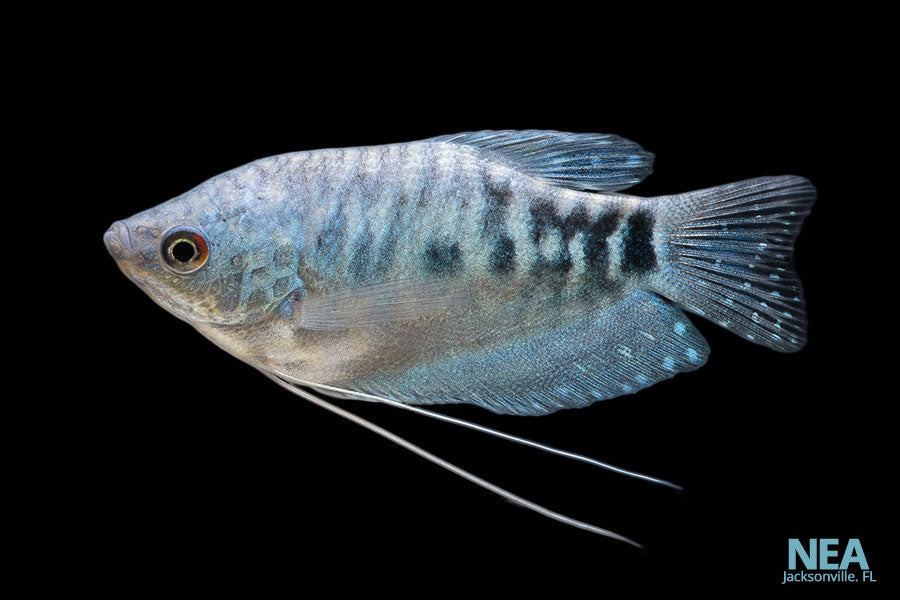
A robust fish that needs room and visual barriers. Provide a covered aquarium with access to warm air above the water, stable filtration, plants or other visual barriers, and tankmates selected for the species’ adult size and behavior. Many gouramis breathe atmospheric air with a labyrinth organ, but that ability does not make them tolerant of dirty water.
10. Platinum Gourami
Platinum Gourami (Trichopodus trichopterus color morph) is a medium labyrinth fish with a temperament best described as semi-aggressive. Its most useful identification feature is pale silvery-white coloration.
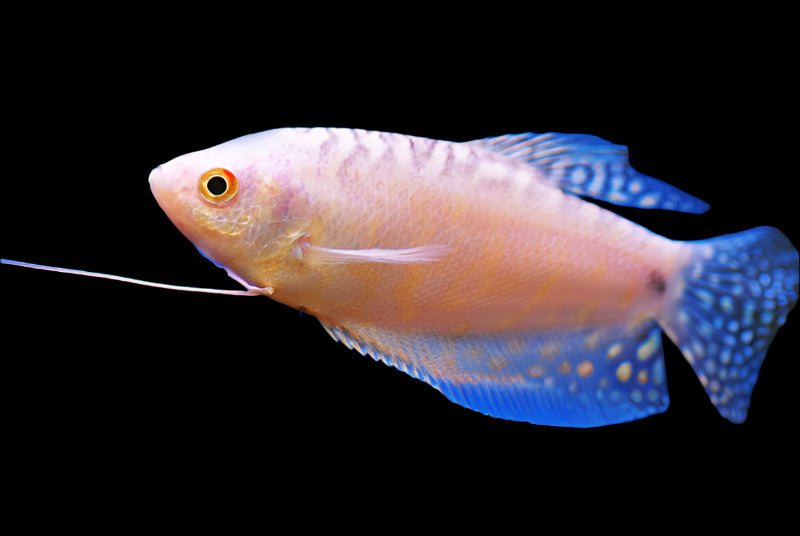
Best kept with sturdy, non-nipping companions. Provide a covered aquarium with access to warm air above the water, stable filtration, plants or other visual barriers, and tankmates selected for the species’ adult size and behavior. Many gouramis breathe atmospheric air with a labyrinth organ, but that ability does not make them tolerant of dirty water.
11. Moonlight Gourami
Moonlight Gourami (Trichopodus microlepis) is a medium to large labyrinth fish with a temperament best described as generally peaceful. Its most useful identification feature is silvery body with a soft green-blue sheen.
Needs more swimming space than dwarf species. Provide a covered aquarium with access to warm air above the water, stable filtration, plants or other visual barriers, and tankmates selected for the species’ adult size and behavior. Many gouramis breathe atmospheric air with a labyrinth organ, but that ability does not make them tolerant of dirty water.
12. Snakeskin Gourami
Snakeskin Gourami (Trichopodus pectoralis) is a large labyrinth fish with a temperament best described as generally peaceful. Its most useful identification feature is fine dark reticulation and long body.
A large food and aquarium species requiring substantial space. Provide a covered aquarium with access to warm air above the water, stable filtration, plants or other visual barriers, and tankmates selected for the species’ adult size and behavior. Many gouramis breathe atmospheric air with a labyrinth organ, but that ability does not make them tolerant of dirty water.
13. Kissing Gourami
Kissing Gourami (Helostoma temminckii) is a large labyrinth fish with a temperament best described as semi-aggressive. Its most useful identification feature is thick protrusible lips and side-compressed body.
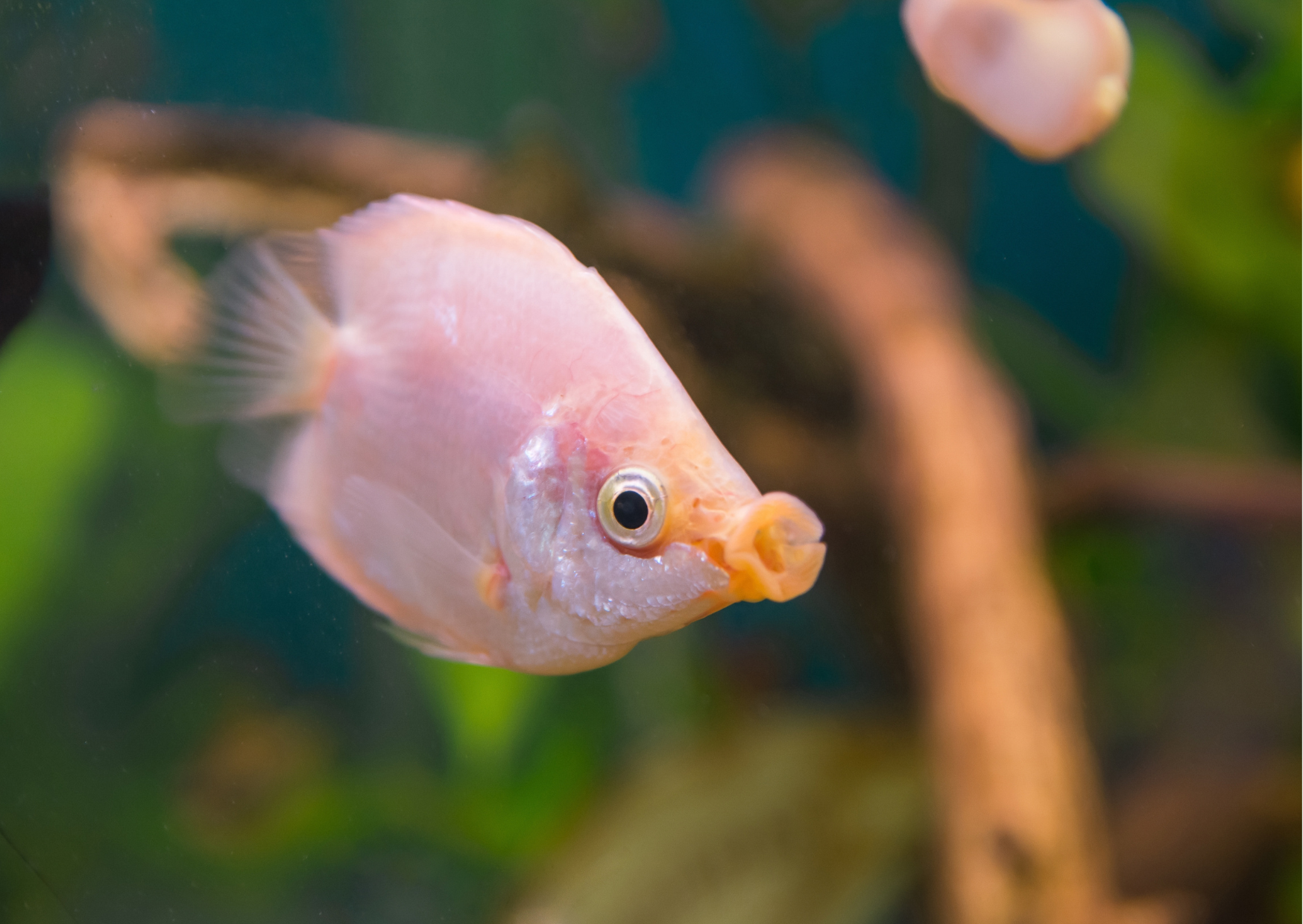
The “kiss” is usually a dominance contest, not affection. Provide a covered aquarium with access to warm air above the water, stable filtration, plants or other visual barriers, and tankmates selected for the species’ adult size and behavior. Many gouramis breathe atmospheric air with a labyrinth organ, but that ability does not make them tolerant of dirty water.
14. Giant Gourami
Giant Gourami (Osphronemus goramy) is a very large labyrinth fish with a temperament best described as variable. Its most useful identification feature is massive body and thick lips.
Requires a very large system and long-term commitment. Provide a covered aquarium with access to warm air above the water, stable filtration, plants or other visual barriers, and tankmates selected for the species’ adult size and behavior. Many gouramis breathe atmospheric air with a labyrinth organ, but that ability does not make them tolerant of dirty water.
15. Red-Tail Giant Gourami
Red-Tail Giant Gourami (Osphronemus laticlavius) is a very large labyrinth fish with a temperament best described as variable. Its most useful identification feature is dark body with reddish fin margins.
Rare in ordinary community aquariums because of adult size. Provide a covered aquarium with access to warm air above the water, stable filtration, plants or other visual barriers, and tankmates selected for the species’ adult size and behavior. Many gouramis breathe atmospheric air with a labyrinth organ, but that ability does not make them tolerant of dirty water.
16. Chocolate Gourami
Chocolate Gourami (Sphaerichthys osphromenoides) is a small labyrinth fish with a temperament best described as shy. Its most useful identification feature is chocolate-brown body with pale vertical bars.
A specialist soft-water fish that is sensitive to poor conditions. Provide a covered aquarium with access to warm air above the water, stable filtration, plants or other visual barriers, and tankmates selected for the species’ adult size and behavior. Many gouramis breathe atmospheric air with a labyrinth organ, but that ability does not make them tolerant of dirty water.
17. Samurai Gourami
Samurai Gourami (Sphaerichthys vaillanti) is a small labyrinth fish with a temperament best described as shy. Its most useful identification feature is females can show striking red and green patterning.
Best for experienced keepers with very soft, acidic water. Provide a covered aquarium with access to warm air above the water, stable filtration, plants or other visual barriers, and tankmates selected for the species’ adult size and behavior. Many gouramis breathe atmospheric air with a labyrinth organ, but that ability does not make them tolerant of dirty water.
18. Crossband Chocolate Gourami
Crossband Chocolate Gourami (Sphaerichthys selatanensis) is a small labyrinth fish with a temperament best described as shy. Its most useful identification feature is crossbands and chocolate coloration.
Needs quiet tankmates and stable blackwater-style conditions. Provide a covered aquarium with access to warm air above the water, stable filtration, plants or other visual barriers, and tankmates selected for the species’ adult size and behavior. Many gouramis breathe atmospheric air with a labyrinth organ, but that ability does not make them tolerant of dirty water.
19. Croaking Gourami
Croaking Gourami (Trichopsis vittata) is a small labyrinth fish with a temperament best described as peaceful to mildly territorial. Its most useful identification feature is slender body and audible croaking sounds.
Produces sound using specialized fin structures. Provide a covered aquarium with access to warm air above the water, stable filtration, plants or other visual barriers, and tankmates selected for the species’ adult size and behavior. Many gouramis breathe atmospheric air with a labyrinth organ, but that ability does not make them tolerant of dirty water.
20. Sparkling Gourami
Sparkling Gourami (Trichopsis pumila) is a very small labyrinth fish with a temperament best described as peaceful to mildly territorial. Its most useful identification feature is iridescent blue-green spots and red-edged fins.
Excellent for a mature, densely planted small aquarium. Provide a covered aquarium with access to warm air above the water, stable filtration, plants or other visual barriers, and tankmates selected for the species’ adult size and behavior. Many gouramis breathe atmospheric air with a labyrinth organ, but that ability does not make them tolerant of dirty water.
21. Mekong Croaking Gourami
Mekong Croaking Gourami (Trichopsis schalleri) is a small labyrinth fish with a temperament best described as peaceful to mildly territorial. Its most useful identification feature is intermediate size with subtle iridescence.
Less common than sparkling and croaking gouramis. Provide a covered aquarium with access to warm air above the water, stable filtration, plants or other visual barriers, and tankmates selected for the species’ adult size and behavior. Many gouramis breathe atmospheric air with a labyrinth organ, but that ability does not make them tolerant of dirty water.
22. Paradise Fish
Paradise Fish (Macropodus opercularis) is a medium labyrinth fish with a temperament best described as territorial. Its most useful identification feature is blue-red bands and flowing fins.

A hardy labyrinth fish, but often too aggressive for delicate communities. Provide a covered aquarium with access to warm air above the water, stable filtration, plants or other visual barriers, and tankmates selected for the species’ adult size and behavior. Many gouramis breathe atmospheric air with a labyrinth organ, but that ability does not make them tolerant of dirty water.
23. Black Paradise Fish
Black Paradise Fish (Macropodus spechti) is a medium labyrinth fish with a temperament best described as territorial. Its most useful identification feature is dark body with red fin edging.
Usually kept by aquarists prepared for assertive behavior. Provide a covered aquarium with access to warm air above the water, stable filtration, plants or other visual barriers, and tankmates selected for the species’ adult size and behavior. Many gouramis breathe atmospheric air with a labyrinth organ, but that ability does not make them tolerant of dirty water.
24. Roundtail Paradise Fish
Roundtail Paradise Fish (Macropodus ocellatus) is a medium labyrinth fish with a temperament best described as territorial. Its most useful identification feature is rounded tail and subdued pattern.
Tolerates cooler conditions than many tropical gouramis. Provide a covered aquarium with access to warm air above the water, stable filtration, plants or other visual barriers, and tankmates selected for the species’ adult size and behavior. Many gouramis breathe atmospheric air with a labyrinth organ, but that ability does not make them tolerant of dirty water.
25. Licorice Gourami
Licorice Gourami (Parosphromenus deissneri) is a very small labyrinth fish with a temperament best described as shy. Its most useful identification feature is dark body with vivid breeding fin colors.
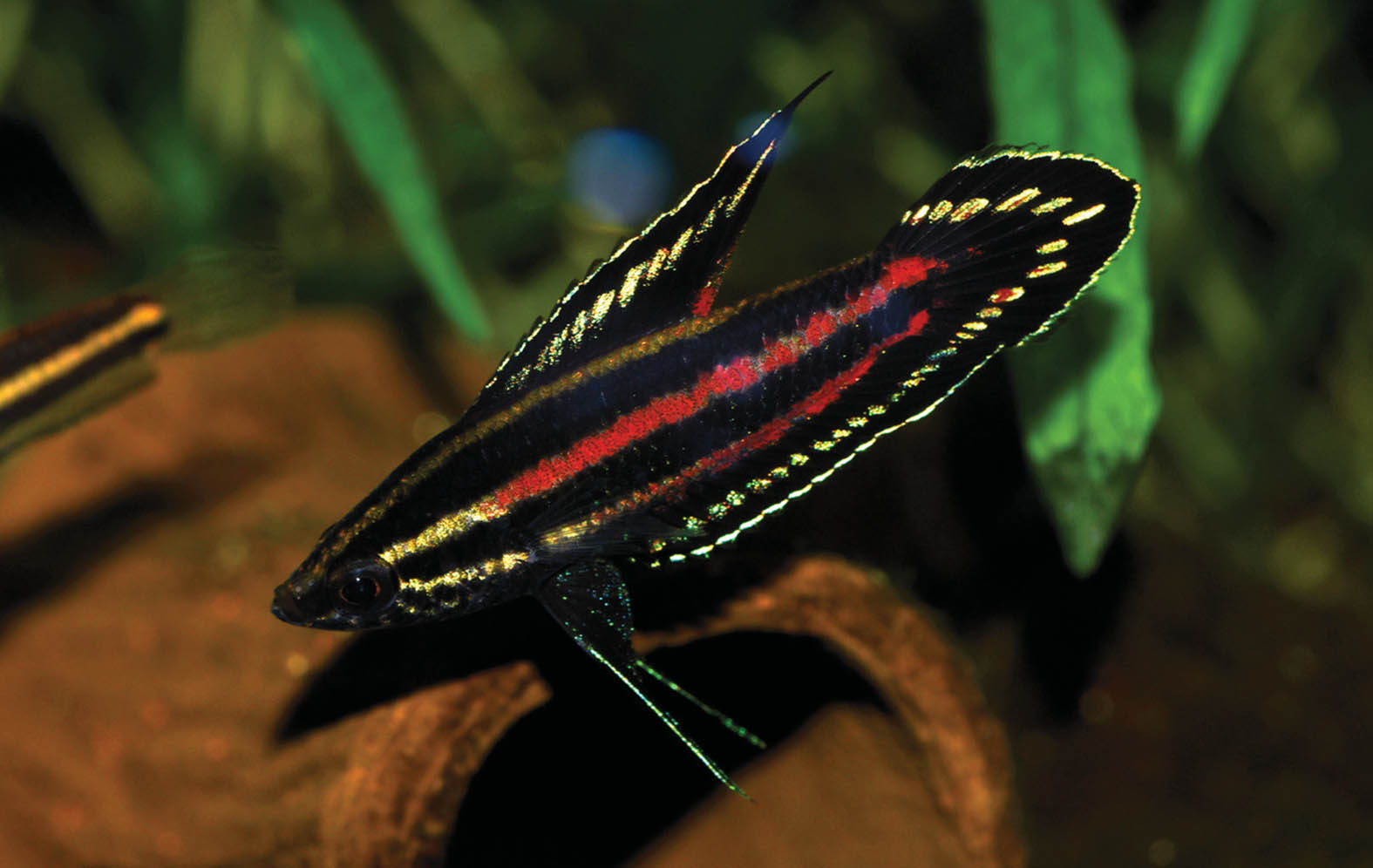
A peat-swamp specialist unsuitable for typical hard-water community tanks. Provide a covered aquarium with access to warm air above the water, stable filtration, plants or other visual barriers, and tankmates selected for the species’ adult size and behavior. Many gouramis breathe atmospheric air with a labyrinth organ, but that ability does not make them tolerant of dirty water.
26. Ornate Licorice Gourami
Ornate Licorice Gourami (Parosphromenus ornaticauda) is a very small labyrinth fish with a temperament best described as shy. Its most useful identification feature is ornate red, blue, and dark fin pattern.
Requires species-focused care and carefully sourced stock. Provide a covered aquarium with access to warm air above the water, stable filtration, plants or other visual barriers, and tankmates selected for the species’ adult size and behavior. Many gouramis breathe atmospheric air with a labyrinth organ, but that ability does not make them tolerant of dirty water.
27. Bintan Licorice Gourami
Bintan Licorice Gourami (Parosphromenus bintan) is a very small labyrinth fish with a temperament best described as shy. Its most useful identification feature is dark breeding dress with colorful fin bands.
Needs very soft acidic water and small live foods. Provide a covered aquarium with access to warm air above the water, stable filtration, plants or other visual barriers, and tankmates selected for the species’ adult size and behavior. Many gouramis breathe atmospheric air with a labyrinth organ, but that ability does not make them tolerant of dirty water.
28. Giant Pikehead
Giant Pikehead (Luciocephalus pulcher) is a medium to large labyrinth fish with a temperament best described as predatory. Its most useful identification feature is long pike-like head and camouflage pattern.
A specialized predator that is not suitable for small community fish. Provide a covered aquarium with access to warm air above the water, stable filtration, plants or other visual barriers, and tankmates selected for the species’ adult size and behavior. Many gouramis breathe atmospheric air with a labyrinth organ, but that ability does not make them tolerant of dirty water.
29. Indian Paradisefish
Indian Paradisefish (Pseudosphromenus cupanus) is a small labyrinth fish with a temperament best described as mildly territorial. Its most useful identification feature is slender brown body with blue-green fin highlights.

A less common bubble-nesting labyrinth fish. Provide a covered aquarium with access to warm air above the water, stable filtration, plants or other visual barriers, and tankmates selected for the species’ adult size and behavior. Many gouramis breathe atmospheric air with a labyrinth organ, but that ability does not make them tolerant of dirty water.
30. Ceylonese Combtail
Ceylonese Combtail (Belontia signata) is a medium to large labyrinth fish with a temperament best described as assertive. Its most useful identification feature is brown body with extended comb-like fins.
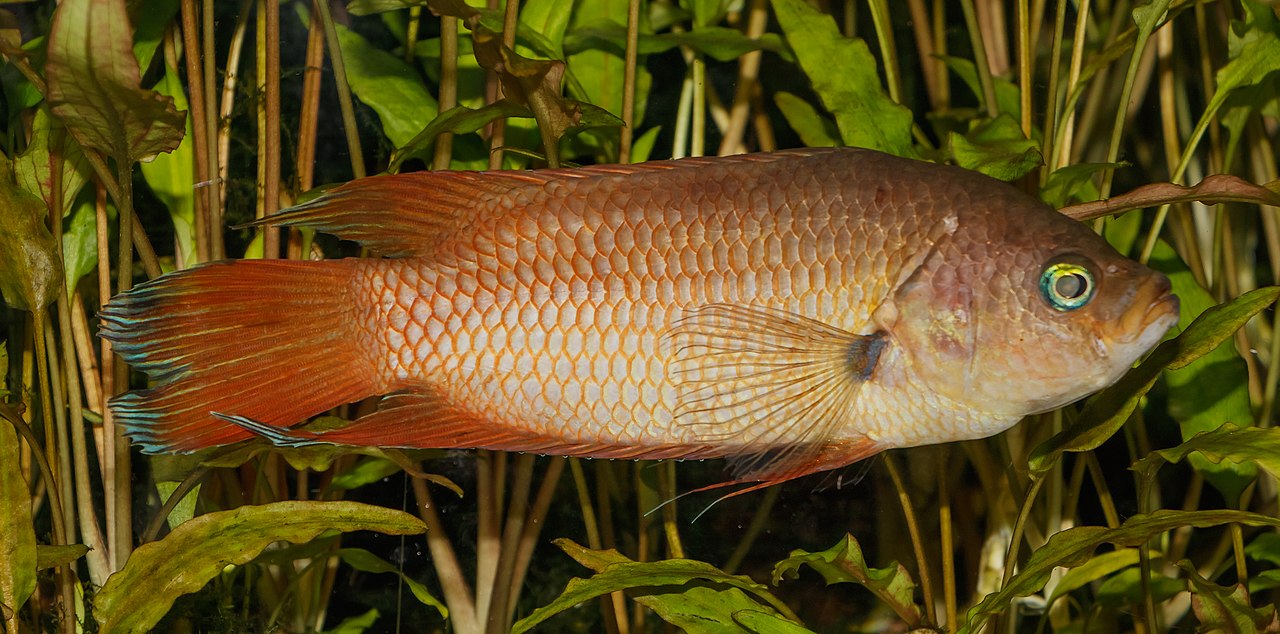
Needs space and carefully chosen robust tankmates. Provide a covered aquarium with access to warm air above the water, stable filtration, plants or other visual barriers, and tankmates selected for the species’ adult size and behavior. Many gouramis breathe atmospheric air with a labyrinth organ, but that ability does not make them tolerant of dirty water.
How Are These Types of Fish Classified?
| Group | Examples | Care pattern |
|---|---|---|
| Trichogaster | Dwarf, honey, thick-lipped, banded | Small bubble-nesters; generally suited to planted aquariums, with species-specific temperament. |
| Trichopodus | Pearl, three-spot, moonlight, snakeskin | Medium to large gouramis; three-spot forms can be assertive. |
| Sphaerichthys | Chocolate, samurai, crossband chocolate | Shy soft-water mouthbrooders for advanced keepers. |
| Trichopsis | Sparkling and croaking gouramis | Small sound-producing species suited to quiet planted tanks. |
| Parosphromenus | Licorice gouramis | Highly specialized peat-swamp fish needing very soft acidic water. |
| Large gouramis and relatives | Giant, red-tail giant, kissing, combtail | Need large aquariums and careful behavioral planning. |
Where Do These Fish Live?
Gouramis are native mainly to South and Southeast Asia. Habitats include rice fields, floodplains, canals, slow rivers, forest streams, peat swamps, ponds, and marshes. The group’s diversity explains why one universal water recipe is inappropriate: a hardy three-spot gourami and a licorice gourami come from very different environments.
How to Identify Different Types of Gourami Fish
- Body size: separate dwarf and sparkling species from moonlight, kissing, snakeskin, and giant gouramis.
- Pelvic feelers: many familiar gouramis have thread-like pelvic fins used to explore their surroundings.
- Pattern: pearl spots, three-spot markings, chocolate bars, or croaking-gourami iridescence are useful clues.
- Mouth shape: kissing gourami has thick protrusible lips; pikeheads have a long predatory snout.
- Color morph versus species: blue, gold, opaline, and platinum gouramis are forms of the three-spot gourami.
- Behavior and habitat: shy blackwater fish and bold open-water gouramis require very different setups.
Aquarium Care Notes
- Research the exact species before buying; common names alone can hide major differences in adult size.
- Cycle the aquarium fully and keep ammonia and nitrite at zero.
- Use a lid because gouramis surface to breathe and some jump.
- Provide plants, floating cover, wood, and line-of-sight breaks.
- Do not crowd multiple territorial males in a small aquarium.
- Feed a varied omnivorous diet, with appropriately sized foods for the species.
- Avoid strong surface turbulence for bubble-nesting species while still maintaining adequate filtration.
- Quarantine new fish and observe for appetite, breathing, sores, and abnormal swimming.
Safety, Sustainability, and Conservation Notes
Do not release gouramis into natural waterways. Some species have become invasive outside their native range, while peat-swamp specialists are threatened by habitat loss and poorly documented trade. Prefer captive-bred stock, especially for licorice, chocolate, and other sensitive species. Never buy a giant species without a realistic adult housing plan.
Fun Facts About Gourami Fish
- Gouramis can gulp atmospheric air using a labyrinth organ.
- Many species build bubble nests, while some chocolate gouramis mouthbrood.
- Croaking and sparkling gouramis can make audible sounds.
- A kissing gourami’s “kiss” is commonly a dominance display.
- Blue, gold, opaline, and platinum gouramis are color forms of one species.
- Giant gouramis can become true monster fish.
- Licorice gouramis are adapted to extremely soft peat-swamp water.
- Thread-like pelvic fins help many gouramis touch and investigate objects.
- Male coloration can intensify during courtship and territorial displays.
- Labyrinth breathing supplements gill respiration; it does not replace clean, oxygenated water.
Final Thoughts on Types of Gourami Fish
The right types of gourami fish depend on aquarium size, water chemistry, experience, and tankmate behavior. Honey, pearl, thick-lipped, and sparkling gouramis are often gentler choices, while three-spot morphs and paradise fish can be territorial. Chocolate and licorice gouramis belong in specialized soft-water setups, and giant species require exceptionally large long-term housing.
Frequently Asked Questions
1. What is a gourami fish?
A gourami is a freshwater labyrinth fish, usually from Asia, that can breathe atmospheric air as well as use its gills.
2. How many gourami species are there?
The broader gourami family contains well over one hundred species, although only a smaller number are common in aquariums.
3. Which gourami is best for beginners?
Honey, pearl, thick-lipped, and carefully sourced dwarf gouramis are common options, but tank size and local stock quality matter.
4. Which gourami is the most peaceful?
Honey and pearl gouramis are often among the gentler common species, although individuals vary.
5. Are gouramis aggressive?
Some are peaceful, while others are territorial or predatory. Males can become more aggressive during breeding.
6. Can two male gouramis live together?
Sometimes in a large, structured tank, but many species may fight. Research the exact species and provide visual barriers.
7. Can different gourami species live together?
It is possible in spacious aquariums, but similar body shape, territorial behavior, and water needs can create conflict.
8. Do gouramis need to be kept in pairs?
No universal rule applies. Some do well singly, others in carefully balanced groups, and breeding pairs may become territorial.
9. Do gouramis need a heater?
Most common aquarium gouramis are tropical and need stable warm water, though some paradise fish tolerate cooler conditions.
10. Do gouramis need a lid?
Yes. A lid reduces jumping and helps maintain warm humid air above the surface.
11. Why do gouramis go to the surface?
They regularly gulp air with their labyrinth organ. Constant gasping may still indicate poor water quality or illness.
12. Do gouramis need an air pump?
Not always, but filtration and oxygenation remain important. Surface breathing does not eliminate the need for good water quality.
13. What do gouramis eat?
Most aquarium species are omnivores that accept quality prepared food plus frozen or live foods; specialists may need small live foods.
14. Can gouramis live with bettas?
Usually this is risky because both are territorial labyrinth fish with similar body signals.
15. Can gouramis live with guppies?
Some peaceful gouramis can, but large or aggressive species may chase guppies and long fins may attract nipping.
16. Can gouramis live with shrimp?
Small shrimp and shrimplets may be eaten, especially by larger gouramis.
17. How long do gouramis live?
Lifespan varies greatly by species, genetics, size, and care; many common species can live for several years.
18. How large do gouramis get?
Sparkling gouramis stay tiny, while giant gouramis become extremely large. Always check the scientific name.
19. What is the difference between blue, gold, and opaline gourami?
They are color morphs of the three-spot gourami, Trichopodus trichopterus.
20. What are the three spots on a three-spot gourami?
Two dark body spots plus the eye are traditionally counted as three.
21. Why do kissing gouramis kiss?
The behavior is usually a test of strength or dominance rather than affection.
22. Are dwarf gouramis hardy?
They can be, but some mass-produced lines have serious health issues. Source carefully and quarantine.
23. What is dwarf gourami disease?
The term commonly refers to a viral disease associated with some dwarf-gourami stocks. There is no reliable home cure, so prevention and sourcing matter.
24. Are honey gouramis the same as gold gouramis?
No. Honey gourami is a small species; gold gourami is a color morph of the larger three-spot gourami.
25. Why is my gourami hiding?
New surroundings, bright light, aggressive tankmates, sparse cover, illness, or unsuitable water may cause hiding.
26. Why is my gourami chasing other fish?
It may be defending territory, breeding, competing for food, or reacting to crowding.
27. Do gouramis build bubble nests?
Many do, especially males in Trichogaster, Trichopodus, and related groups, but not every species uses the same breeding strategy.
28. What is a chocolate gourami?
It is a small, shy soft-water gourami that usually needs warm, acidic, very clean conditions.
29. Why are licorice gouramis difficult?
They often require extremely soft acidic water, quiet surroundings, small live foods, and careful species identification.
30. Can gouramis live in hard water?
Some hardy species adapt, while chocolate and licorice gouramis generally do poorly in hard alkaline water.
31. How often should I change gourami tank water?
Perform regular partial changes based on stocking, feeding, filtration, and test results while avoiding sudden parameter swings.
32. Why are my gourami’s feelers touching other fish?
The thread-like pelvic fins are sensory structures used to explore the environment and investigate tankmates.
33. Can gouramis jump?
Yes. Use a secure lid and cover equipment gaps.
34. Should I buy a giant gourami for a small tank?
No. Giant gouramis require very large long-term housing and should not be purchased as temporary small-tank fish.
35. Can aquarium gouramis be released outdoors?
No. Release can spread invasive species and disease and may be illegal.