

Flamingos are among the most recognizable birds on Earth, known for their long legs, curved bills, and shades of pink that seem borrowed from a tropical sunset. When people search for Types of Flamingos, they usually want clear names, simple ways to tell species apart, and a friendly guide that brings these birds to life. This article explores the main kinds of flamingos found across the globe, from vast African lakes to high Andean salt flats. You will learn how each species looks, where it lives, and what makes its lifestyle special. Whether you are a bird lover, a student, or just curious, this guide offers a calm, easy way to understand flamingos and appreciate why they continue to fascinate people of all ages.
Types of Flamingos
1. Greater Flamingo (Phoenicopterus roseus)
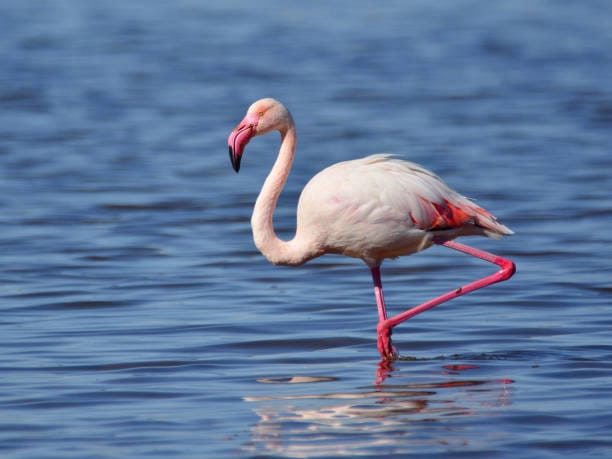
The Greater Flamingo is the giant of the flamingo family and often the first image that comes to mind when people think about flamingos. With a height that can reach nearly five feet, this bird stands tall and proud, like a pink sentinel guarding shallow waters. Its plumage is usually pale pink with deeper rosy shades on the wings, while the long legs are pinkish and the bill shows a bold mix of black and pale colors. One glance at a flock, and you can see why it has inspired painters, photographers, and birdwatchers for generations.
This species has the widest distribution of all flamingos. Greater Flamingos live across parts of southern Europe, Africa, the Middle East, and South Asia. You might spot them in famous places such as the Camargue wetlands in France, the Rift Valley lakes of East Africa, or coastal lagoons in India. They favor shallow saltwater or brackish lakes where food is plentiful and predators are easier to watch. These wide-open spaces suit their social nature, as they prefer to live in large groups that can number in the thousands.
Like all flamingos, their color comes from their diet. Greater Flamingos feed mainly on algae, small crustaceans, and tiny invertebrates. Their specialized bills act like sieves. They dip their heads upside down into the water and sweep side to side, filtering food from the mud. It looks a bit odd at first, but after watching for a while, one might think they are quietly “vacuuming” the lake floor. The more carotenoid-rich food they eat, the pinker they become, which explains why birds in rich feeding grounds glow brighter.
Breeding season is when the Greater Flamingo truly puts on a show. Large colonies gather, and the birds perform synchronized displays. Heads twist, wings stretch, and calls echo across the water. It feels almost like a carefully practiced dance, though every bird seems to know its part by instinct. They build cone-shaped mud nests, each one just high enough to keep the egg above shallow water. Both parents share duties, taking turns incubating and later feeding the chick with a special crop milk.
Chicks hatch with gray or white down and straight bills, a far cry from their elegant parents. Over time, their bills curve, and their feathers slowly take on pink hues. Watching a group of young flamingos grow is a lesson in patience. Nature, after all, enjoys taking its time with beauty. These young birds may take several years to reach full adult color.
The Greater Flamingo is generally stable in numbers, but it still faces challenges. Wetland loss, pollution, and disturbance at breeding sites can affect colonies. Protecting key habitats is vital, not only for flamingos but also for countless other waterbirds that share these ecosystems. When wetlands thrive, flamingos do too.
For many people, seeing a Greater Flamingo in the wild is unforgettable. The way they stand on one leg, seemingly lost in thought, has sparked jokes about their “yoga skills.” In reality, this posture helps conserve body heat. So next time you see one balancing calmly, imagine it quietly saving energy while enjoying the warm sun. It is a simple reminder that even the most graceful poses often have practical reasons behind them.
2. American Flamingo (Phoenicopterus ruber)
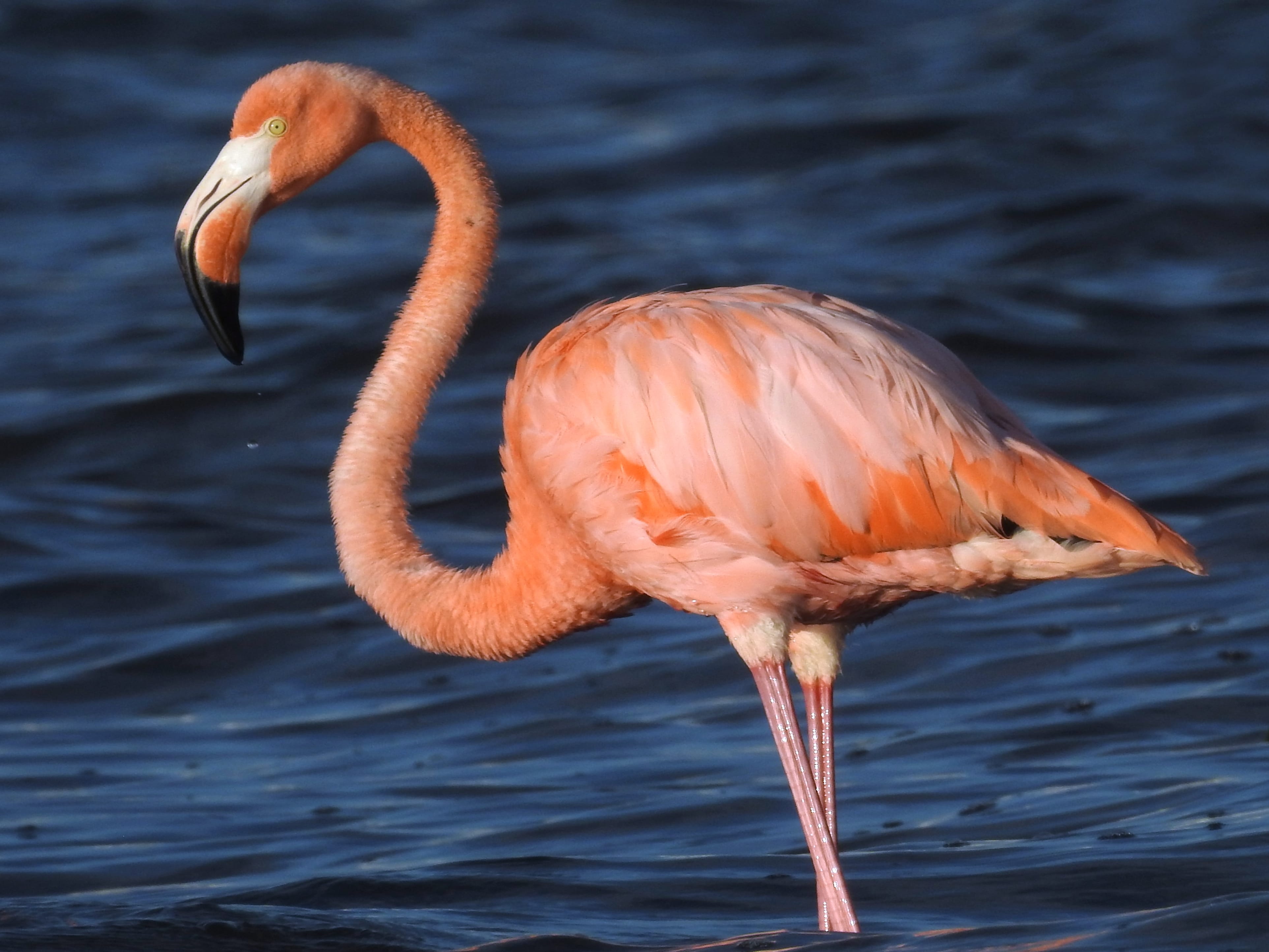
The American Flamingo, also called the Caribbean Flamingo, is often considered the most colorful of all flamingos. Its feathers glow with rich shades of coral and red, especially in adults that feed in nutrient-rich waters. Compared to the paler Greater Flamingo, this species looks as if it has turned the color dial a little higher. Its bill shows a deep black tip, and the legs are bright pink, giving it a bold and lively appearance.
This flamingo lives mainly in the Caribbean region, parts of Central America, northern South America, and the southern edges of Florida. Coastal lagoons, salt flats, and shallow bays are its favorite haunts. In these warm, sunlit places, flocks gather to feed and rest, often forming pink lines along the water’s edge. For travelers visiting islands like Cuba or the Bahamas, spotting American Flamingos can feel like a postcard scene coming to life.
American Flamingos feed on small crustaceans, insects, and algae, much like their relatives. Their intense color comes from a diet especially rich in pigments. In zoos or managed habitats, caretakers sometimes add supplements to mimic this natural effect, helping birds maintain their famous pink glow. Without the right food, even a flamingo can fade, which shows just how closely color and diet are linked.
These birds are highly social and prefer the company of others. Flocks can include hundreds or even thousands of individuals. Living in groups offers safety, as many eyes can spot danger more quickly. It also plays a role in breeding. When the time comes, colonies gather and perform group displays, with necks stretching skyward and wings flashing black and red. It is noisy, busy, and full of energy, like a lively town meeting by the water.
Nesting follows the familiar flamingo pattern. Mud mounds rise from shallow water, each holding a single egg. Parents take turns sitting and later feeding the chick. Young birds are gray at first, blending in with the muddy surroundings. Over months and years, they slowly gain pink feathers, as if nature is painting them little by little.
In the past, American Flamingos were hunted for their feathers and meat, which caused serious declines in some areas. Today, legal protection and conservation efforts have helped many populations recover. Still, habitat loss and human disturbance remain concerns. Healthy coastal wetlands are key to their future, and protecting these areas benefits both wildlife and people.
There is something cheerful about watching American Flamingos feed together. Heads dip, feet shuffle in the water, and soft calls pass through the flock. It feels almost like a friendly gathering at a beach café, except the menu is shrimp and algae. Their bright color and relaxed manner remind us why flamingos have become symbols of tropical charm around the world.
3. Chilean Flamingo (Phoenicopterus chilensis)
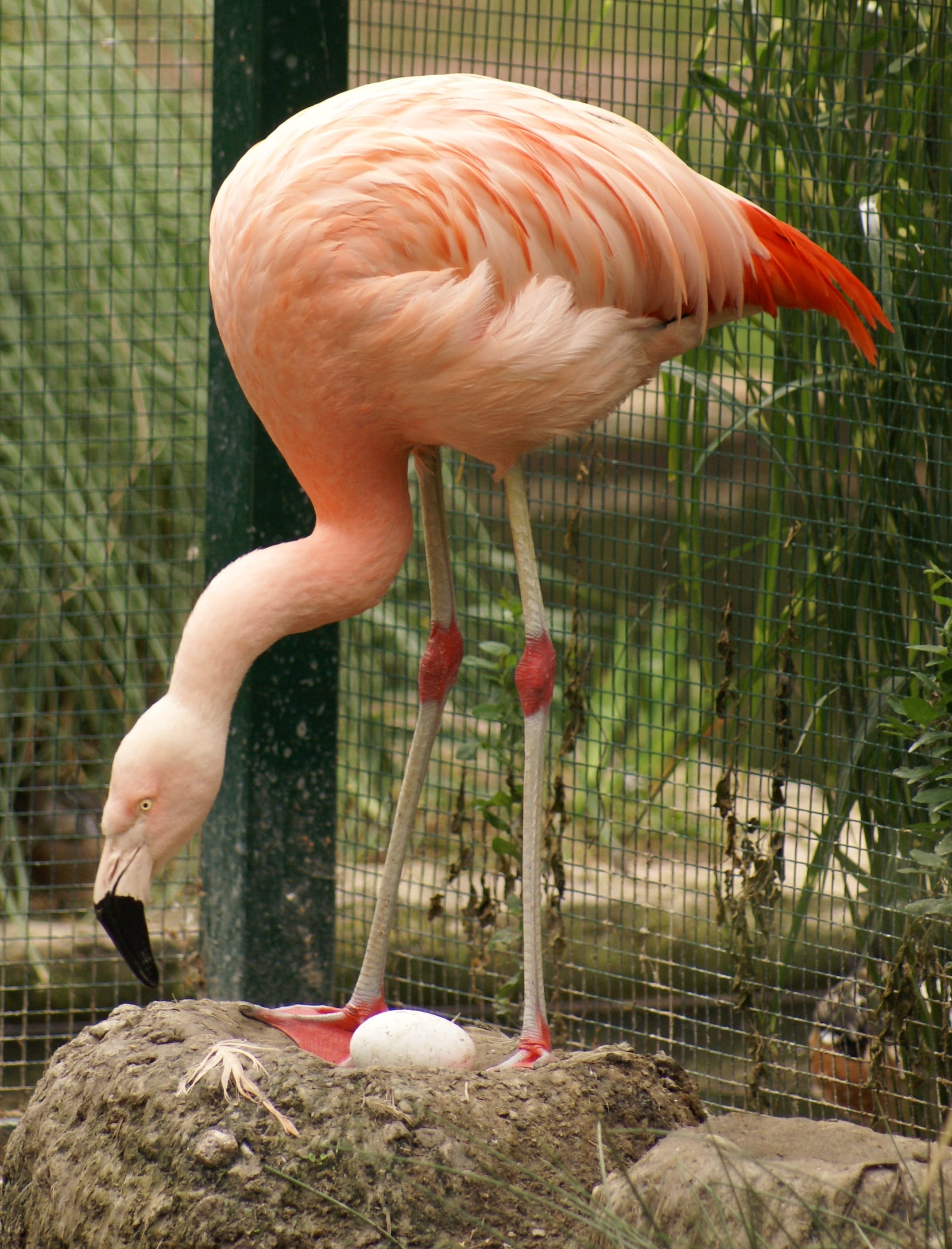
The Chilean Flamingo brings a softer, more subtle beauty to the flamingo family. Its feathers are pale pink, sometimes with a hint of gray, and its legs show a distinctive pattern: pink above, fading to gray below, with pink joints that look like gentle highlights. This mix of colors makes it easy to tell apart from other large flamingos, once you know what to look for.
This species lives mainly in southern South America, especially in Chile, Argentina, Bolivia, and parts of Peru. It favors shallow lakes, salt flats, lagoons, and even estuaries along the coast. Some populations migrate seasonally, moving to lower altitudes during colder months. So if one were following Chilean Flamingos across the map, it might feel like tracking travelers who enjoy both mountain views and seaside breezes.
Chilean Flamingos feed on small invertebrates, insects, and algae found in muddy bottoms. Their bills, like those of other flamingos, are well suited for filtering tiny food items from water and sediment. They often feed by slowly walking through shallow water, stirring up the mud with their feet before dipping their heads to eat. It looks like a calm, methodical routine, as if each bird has its own quiet rhythm.
These flamingos are social birds and usually form flocks, though often smaller than those of Greater or American Flamingos. During breeding season, colonies gather in remote wetlands where disturbance is low. Mud nests rise from the flats, and pairs work together to protect their egg. The scene can be busy but also peaceful, with birds standing close, calling softly, and keeping watch.
Chicks start life with gray down and straight bills. Over time, their feathers turn pale pink, and their bills curve into the classic flamingo shape. It takes patience to watch this transformation, but it is part of what makes observing wildlife so rewarding. Each stage tells a story of growth and survival.
The Chilean Flamingo is listed as Near Threatened in some assessments, mainly because of habitat loss, water pollution, and changes to wetlands. Mining, agriculture, and urban growth can alter the shallow lakes they depend on. Conservation programs in South America aim to protect key sites and monitor populations, helping this gentle-looking bird keep its place in the landscape.
There is a quiet charm to the Chilean Flamingo. It may not shout with bright reds, but its soft tones and calm behavior give it a peaceful presence. Watching a group standing in still water, reflected like pink brushstrokes on a mirror, one might feel time slow down a little. Moments like that remind us why people return to wetlands again and again, hoping to catch another glimpse of these graceful birds.
4. Lesser Flamingo (Phoeniconaias minor)
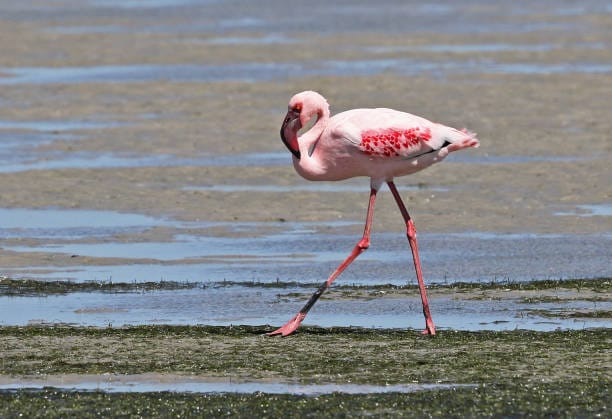
The Lesser Flamingo may be the smallest flamingo species, but it makes up for size with personality and numbers. Its feathers are a deeper pink than many of its larger relatives, often tinged with bright carmine, and its bill is dark red with a black tip. Slim legs and a more compact body give it a delicate look, yet when thousands gather together, the scene becomes anything but small.
This species is found mainly in Africa and parts of India. It is especially famous for its massive flocks on alkaline lakes in the African Rift Valley, such as Lake Nakuru and Lake Bogoria in Kenya. These lakes can turn pink from a distance, not because of the water itself, but because of the countless flamingos feeding along the shores. It is one of those sights that people describe as “hard to believe until you see it.”
Lesser Flamingos have a very specialized diet. They feed mainly on microscopic blue-green algae that thrive in salty, alkaline waters. Their bills are finely adapted to filter these tiny organisms, almost like a natural sieve built for a very specific job. This tight link between bird and food means they depend heavily on healthy lake conditions. When water quality changes, flamingos feel it quickly.
Social life is intense for Lesser Flamingos. Flocks can number in the hundreds of thousands, making them one of the most numerous waterbirds in the world when conditions are right. Living in such crowds brings safety but also noise. Calls echo constantly, and the air seems alive with movement as birds take off and land in waves. It is a bit like standing in the middle of a bustling market, except everyone has wings.
Breeding usually takes place at a few key sites, often remote salt flats or islands where predators are scarce. When water levels are suitable, birds gather to nest in large colonies, building mud mounds and laying a single egg each. If conditions change too much, they may skip breeding altogether, showing just how closely their life cycle is tied to the environment.
Despite their large numbers, Lesser Flamingos face serious threats. Pollution, water diversion, and industrial development can damage the alkaline lakes they rely on. Because they use only a handful of breeding sites, any disturbance at these places can have wide effects. Conservation groups work to protect these habitats, knowing that the future of the species depends on them.
Watching Lesser Flamingos feed is a lesson in teamwork. Heads dip and sweep in near-perfect unison, creating ripples that spread across the water. It almost looks like a choreographed routine, as if someone called out, “All together now!” Their energy and color bring life to otherwise stark landscapes, proving that even harsh places can host remarkable beauty.
5. Andean Flamingo (Phoenicoparrus andinus)
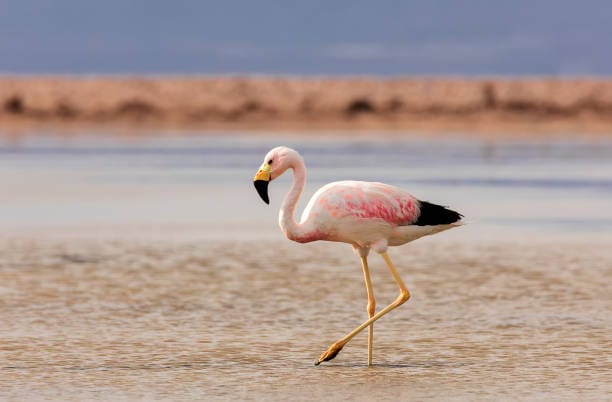
The Andean Flamingo is one of the rarest and most striking members of the flamingo family. It lives high in the Andes Mountains of South America, often at elevations above 10,000 feet. Here, the air is thin, nights are cold, and the landscape feels closer to the sky than to the sea. In this dramatic setting, the Andean Flamingo stands out with its pale pink body, bright yellow legs, and a bill marked with bold black lines.
This species is found mainly in remote regions of Peru, Bolivia, Chile, and Argentina. It prefers high-altitude salt lakes and wetlands, places that can seem harsh and empty at first glance. Yet these lakes hold the algae and small organisms that flamingos need. For people lucky enough to visit, seeing Andean Flamingos against a backdrop of snow-capped peaks feels like stepping into a postcard from another world.
Feeding habits are similar to those of other flamingos, though the Andean Flamingo often targets specific types of algae and tiny invertebrates suited to cold, salty waters. Using its specialized bill, it filters food while slowly walking through shallow areas. Each step stirs up sediment, making the next mouthful easier to find. It is quiet, steady work, well matched to the calm of mountain lakes.
Andean Flamingos are usually seen in smaller groups compared to some other species, sometimes mixed with Chilean and James’s Flamingos. These mixed flocks add to the challenge of identification, but leg color and bill patterns help tell them apart. For birdwatchers, spotting the yellow legs of an Andean Flamingo can feel like finding a hidden treasure in a sea of pink.
Breeding takes place in remote highland wetlands, where birds build mud nests much like their relatives. The harsh climate means the breeding window is short, and success depends heavily on stable water levels and food availability. Both parents care for the chick, feeding it crop milk until it can start filtering food on its own.
The Andean Flamingo is considered vulnerable, with a relatively small global population. Mining, water extraction, and climate change threaten the delicate balance of high-altitude wetlands. Because these ecosystems are limited and fragile, even small changes can have big effects. Conservation efforts focus on protecting key lakes and working with local communities to manage water use.
There is something inspiring about the Andean Flamingo’s choice of home. While many birds seek mild climates, this one thrives where conditions seem tough. Watching it stand calmly in icy water, framed by mountains and open sky, one might think of a traveler who enjoys the road less taken. It reminds us that life finds ways to flourish in the most unexpected places.
“`html
6. James’s Flamingo / Puna Flamingo (Phoenicoparrus jamesi)
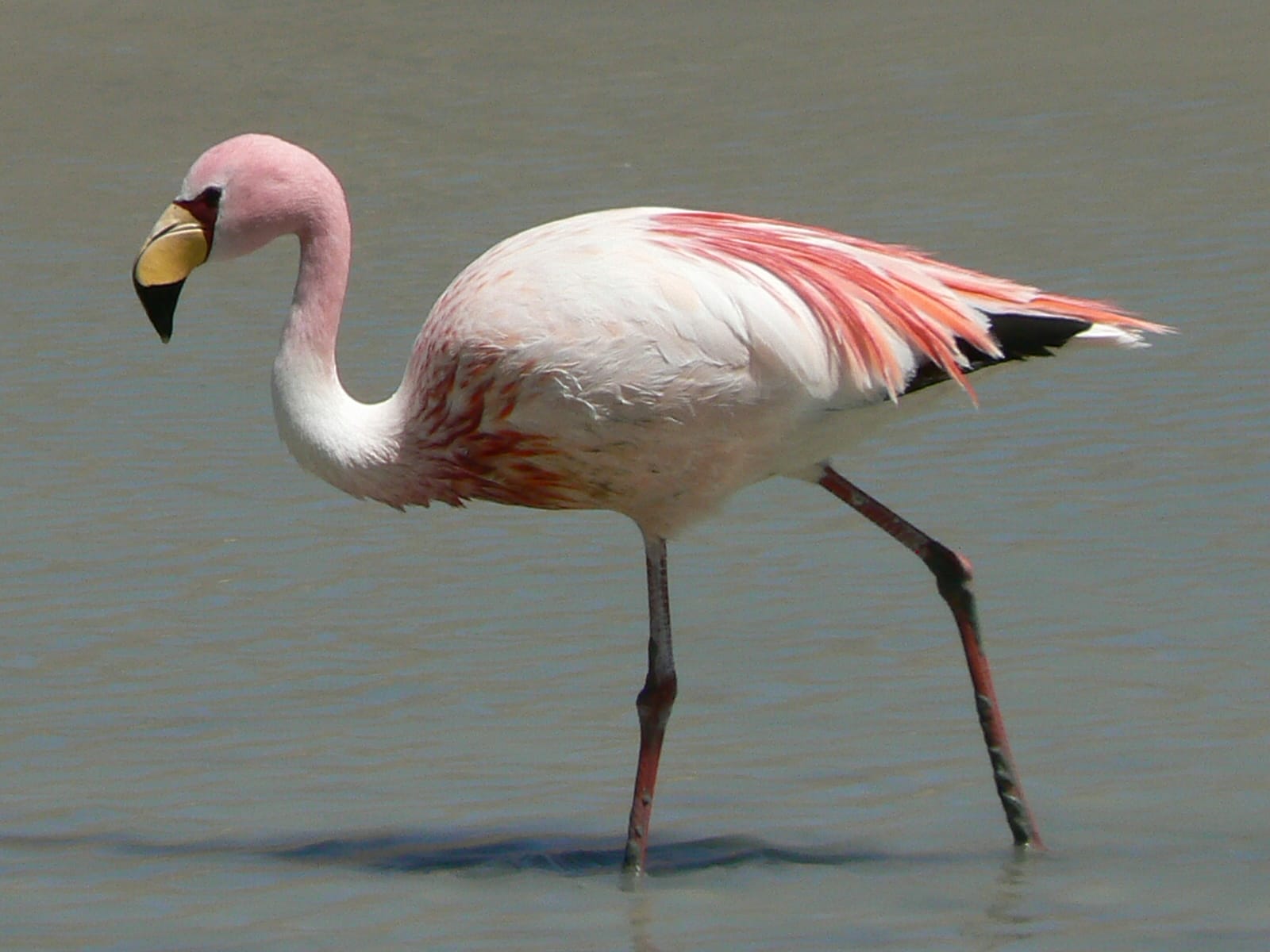
James’s Flamingo, also called the Puna Flamingo, is one of the most delicate-looking members of the flamingo family. At first glance, it may resemble the Andean Flamingo, but a closer look reveals its own charm. This species shows soft pink feathers, bright red streaks near the eyes, and a bill marked with a bold black tip. Its legs are reddish, giving it a slightly warmer tone than its highland neighbor. For birdwatchers in South America, spotting a James’s Flamingo often feels like finding a quiet gem among the salt lakes.
This flamingo lives high in the Andes of Peru, Bolivia, Chile, and Argentina. The name “Puna” comes from the high plateau region where it is most often found. These areas sit thousands of meters above sea level, where nights can freeze and winds sweep across open plains. Yet in these stark landscapes, shallow saline lakes provide food and shelter. When sunlight hits the water, reflections of pink birds and blue skies create scenes that feel almost unreal.
James’s Flamingos feed mainly on microscopic algae and tiny organisms that thrive in salty waters. Their bills are specially shaped to filter these fine particles, working like a natural sieve. Watching them feed is almost hypnotic. Heads dip upside down, bills sweep side to side, and the birds move slowly through the shallows. It is quiet work, more like careful gardening than hunting, and it suits their calm nature.
For many years, James’s Flamingo was thought to be extinct. It was only rediscovered in the mid-20th century, when small populations were found in remote Andean lakes. This story alone makes the species special. Imagine believing a bird lost forever, only to find it still standing in distant wetlands, going about its life as if nothing had happened. Since then, scientists have learned more about its habits, though much about its movements remains a mystery.
These flamingos often gather in mixed flocks with Andean and Chilean Flamingos. From a distance, it may look like a single pink crowd, but careful observation reveals subtle differences in size, color, and bill shape. This mix can be helpful, as safety comes in numbers, especially in open habitats where predators can be seen from far away.
Breeding usually takes place at a few remote sites when water levels are just right. Mud nests rise from the flats, each holding a single egg. Both parents share duties, taking turns warming the egg and later feeding the chick. Young birds start life in gray down and slowly gain color as they grow. The journey from dull gray to soft pink is a slow one, but it mirrors the patience needed to survive in high mountain environments.
James’s Flamingo is considered near threatened, mainly due to its small population and limited breeding sites. Mining, water use, and climate shifts can all affect the fragile lakes it depends on. Conservation efforts focus on protecting these high-altitude wetlands and monitoring bird numbers year after year. Every successful breeding season feels like a small victory for this once “lost” species.
There is a quiet magic to James’s Flamingo. It does not shout for attention with blazing colors or massive flocks. Instead, it stands as a symbol of resilience. Watching one glide across a still Andean lake, you might think of a traveler who prefers quiet roads and high places. It reminds us that even in thin air and cold winds, life finds a way to paint the world in gentle shades of pink.
7. Cope’s Flamingo (Phoenicopterus copei) †
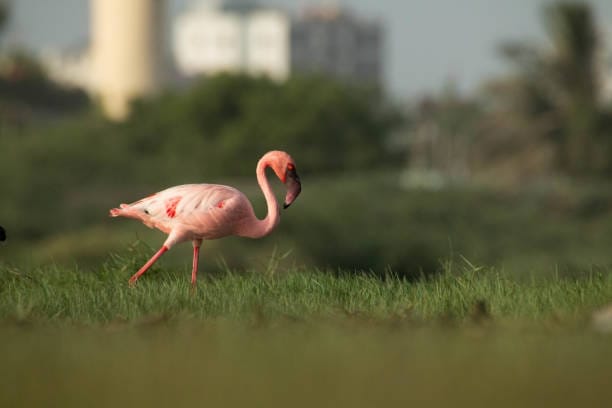
Cope’s Flamingo is an extinct species, known only from fossil remains, yet it holds an important place in the story of flamingos. This bird lived during the late Pleistocene epoch, tens of thousands of years ago, in what is now western North America. From fossil bones found in places like California and Mexico, scientists believe Cope’s Flamingo was even larger than today’s Greater Flamingo, making it a true giant among its kind.
Based on skeletal evidence, Cope’s Flamingo had long legs, a long neck, and a powerful bill adapted for filter feeding. Its size suggests it may have stood taller and looked more imposing than modern flamingos. While we cannot know its exact color, it likely shared the pink tones typical of flamingos, shaped by a diet rich in algae and small aquatic life.
During the time Cope’s Flamingo lived, large lakes covered parts of western North America. These ancient water bodies provided rich feeding grounds for waterbirds. Cope’s Flamingo probably walked the shores of these lakes, sweeping its bill through shallow waters much like flamingos do today. One can imagine flocks of tall pink birds moving across prehistoric landscapes, sharing space with mammoths, giant ground sloths, and other Ice Age animals.
The extinction of Cope’s Flamingo likely came as climates changed and large lakes dried up toward the end of the last Ice Age. As water sources shrank, so did feeding and breeding habitats. For a bird so closely tied to shallow lakes, these changes would have been hard to survive. Over time, the species disappeared, leaving only bones as clues to its existence.
Even though it is gone, Cope’s Flamingo helps scientists understand how flamingos evolved and adapted to different environments. By comparing fossil bones with those of modern species, researchers can trace changes in size, shape, and lifestyle. It is a bit like reading chapters of a long family history written in stone.
Learning about extinct flamingos also reminds us that nature is always changing. Species come and go as environments shift. While this is a natural process, today’s rapid changes make such losses more common. Cope’s Flamingo stands as a silent lesson from the past, showing how closely birds depend on stable wetlands.
When imagining Cope’s Flamingo, one might picture a towering pink figure standing beside an ancient lake at sunset, reflected in still water. Though no human ever saw it alive, its story lives on through science. In that way, Cope’s Flamingo still has a voice, whispering tales of a world long gone but not forgotten.
8. Stock’s Flamingo (Phoenicopterus stocki) †
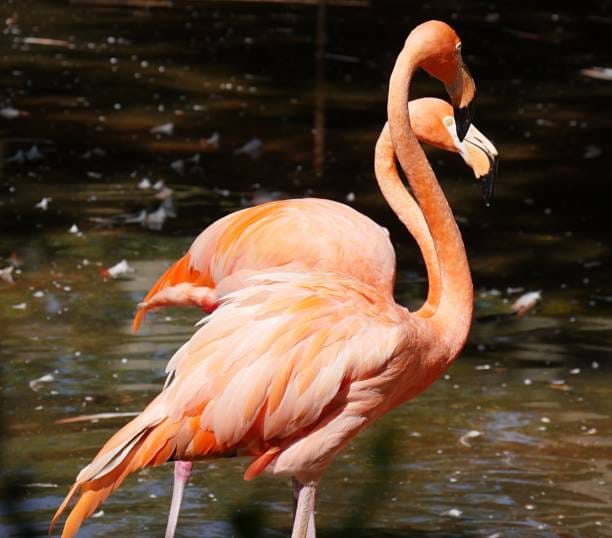
Stock’s Flamingo is another extinct member of the flamingo family, known from fossils found mainly in Mexico and parts of the southwestern United States. It lived during the Pliocene and early Pleistocene epochs, several million to hundreds of thousands of years ago. Named after the scientist who studied its remains, this species adds another piece to the puzzle of flamingo history.
Fossil evidence suggests that Stock’s Flamingo was similar in size to today’s Greater Flamingo, though with some differences in bone structure. Its long legs and neck point to a life spent wading through shallow waters, filtering food from muddy bottoms. Like modern flamingos, it likely depended on rich wetlands filled with algae and small aquatic creatures.
At the time Stock’s Flamingo lived, climates in parts of North America were warmer and wetter than today. Large lakes and wetlands spread across regions that are now much drier. These environments would have supported diverse bird life, including flamingos, ducks, and other waterfowl. Stock’s Flamingo was likely part of busy wetland communities, sharing feeding grounds with many other species.
As climates shifted and landscapes changed, these wetlands shrank or disappeared. For birds adapted to such habitats, survival became harder. Over long periods, populations declined, and eventually Stock’s Flamingo vanished. Its extinction was part of a broader pattern of change affecting many Ice Age animals.
What makes Stock’s Flamingo interesting is how closely it links ancient flamingos to modern ones. Its bones show features that bridge earlier forms and today’s species. In a sense, it stands like a stepping stone in flamingo evolution, helping scientists see how present-day flamingos came to be.
Though we cannot watch Stock’s Flamingo feed or fly, fossils allow researchers to reconstruct its life. Each bone tells a small part of the story: how it stood, how it moved, and how it might have lived. It is slow detective work, but it brings the past a little closer.
Thinking about Stock’s Flamingo invites reflection. Wetlands that once rang with calls of ancient birds are now silent or transformed. Yet modern flamingos still walk similar paths in other parts of the world. The story feels like a relay race, with life passing the torch from one age to the next.
9. Florida Flamingo (Phoenicopterus floridanus) †

The Florida Flamingo, known scientifically as Phoenicopterus floridanus, was an extinct species that once lived in what is now the southeastern United States. Fossils discovered in Florida and nearby regions show that flamingos were once more widespread in North America than they are today. This species lived during the Pliocene epoch, several million years ago.
From fossil remains, scientists believe the Florida Flamingo was similar in build to modern large flamingos, with long legs, a graceful neck, and a bill shaped for filter feeding. It likely shared many habits with today’s Greater and American Flamingos, wading through shallow waters in search of algae and tiny invertebrates.
During the Pliocene, Florida’s climate was warmer, and large wetlands and coastal lagoons were common. These environments would have been perfect for flamingos. One can imagine flocks of pink birds lining ancient shores, much like those seen today in parts of the Caribbean. In fact, the presence of this species hints that flamingos may once have been a familiar sight in regions where they are now rare or absent.
The disappearance of the Florida Flamingo probably followed changes in climate and sea levels that reshaped coastal landscapes. As wetlands shifted or vanished, suitable habitats declined. Over time, the species faded away, leaving behind only fossil traces.
The story of the Florida Flamingo adds depth to our understanding of flamingo distribution. It shows that these birds once ranged far beyond their current limits. Modern sightings of American Flamingos in southern Florida feel like echoes of this ancient past, a reminder that history sometimes leaves faint footprints in the present.
Studying fossils of this species helps scientists piece together how flamingos adapted to changing coastlines and climates. It also highlights how sensitive these birds are to environmental change. Wetlands are not just pretty landscapes; they are lifelines for species that depend on shallow waters.
When thinking of the Florida Flamingo, it is easy to picture warm coastal sunsets and quiet lagoons filled with ancient bird calls. Though the species is gone, its story enriches the tale of flamingos as travelers through time, shaping and reshaped by the lands they once called home.
10. Siamese Flamingo (Phoeniconaias siamensis) †
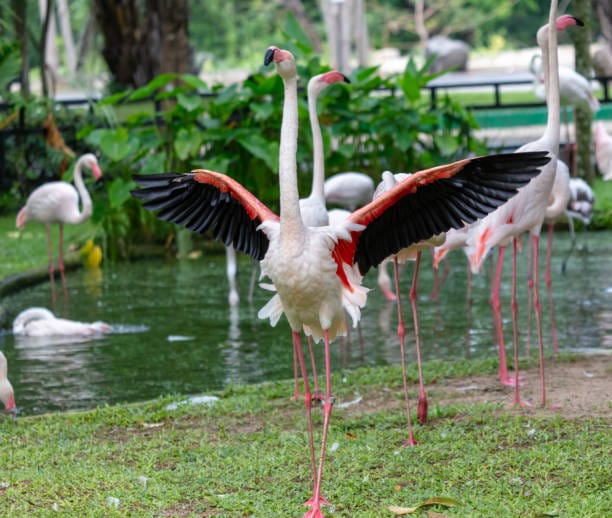
The Siamese Flamingo is an extinct species that lived in Southeast Asia during the Miocene epoch, millions of years ago. Fossils discovered in what is now Thailand reveal that flamingos once reached far into Asia, beyond the ranges of modern species. This bird is closely related to today’s Lesser Flamingo, sharing similar features that suggest a comparable lifestyle.
Based on fossil remains, the Siamese Flamingo was likely medium-sized, with a slim build and a bill well suited for filtering tiny algae from water. Its close link to the Lesser Flamingo hints that it may have fed on similar microscopic food in alkaline or shallow lakes. Even without feathers to study, scientists can infer much from bones about how this bird lived.
During the Miocene, Southeast Asia had warm climates and abundant wetlands. These environments supported diverse bird life, including early flamingos. The Siamese Flamingo probably lived in flocks, wading through shallow lakes much like modern flamingos do in Africa today. The scene would not have looked so different: pink birds, long legs, and calm waters reflecting the sky.
Over time, as climates shifted and landscapes changed, suitable habitats declined. The Siamese Flamingo disappeared, leaving behind fossils as its only record. Its extinction reminds us that flamingos, despite their elegance, have always depended on stable wetland ecosystems to survive.
This species is important because it shows how ancient and widespread the flamingo family once was. From Africa to the Americas and deep into Asia, flamingos left traces across continents. The Siamese Flamingo is proof that the story of flamingos is truly global and stretches far back in time.
By comparing fossils of this species with modern Lesser Flamingos, scientists gain clues about how specialized feeding habits evolved. It helps explain why today’s flamingos are so closely tied to particular types of lakes and food sources.
Imagining the Siamese Flamingo is like opening a window to a distant past. Picture ancient lakes under tropical skies, with slender pink birds sweeping their bills through calm waters. Though millions of years have passed, that image connects us to the deep history behind the flamingos we admire today.
“`
Conclusion
Flamingos are far more than just pink birds standing on one leg. Across this guide to the Types of Flamingos, we have seen how each species carries its own story, shaped by landscape, climate, and time. From the widespread Greater Flamingo of Europe, Africa, and Asia to the high-altitude Andean and James’s Flamingos of South America, today’s flamingos show remarkable adaptability to wetlands that range from warm coastal lagoons to icy mountain lakes. Each species uses the same clever filter-feeding method, yet each has found its own niche in the natural world.
The journey does not stop with living species. The extinct flamingos, such as Cope’s Flamingo, Stock’s Flamingo, the Florida Flamingo, and the Siamese Flamingo, remind us that flamingos once walked shores that no longer exist. Their fossil remains tell a quiet story of changing climates, shifting lakes, and the long passage of time. In a way, modern flamingos feel like living echoes of these ancient birds, carrying forward a lineage that has survived for millions of years.
What links all flamingos together is their deep connection to wetlands. These shallow waters are their kitchens, nurseries, and meeting places. When wetlands thrive, flamingos flourish. When they fade, flamingos struggle. This simple truth makes flamingos powerful symbols of wetland health. Protecting their habitats means protecting countless other species that share the same waters, from tiny invertebrates to large waterbirds.
There is also something quietly inspiring about flamingos. Whether standing calmly on one leg or gathering in lively flocks, they show how balance, cooperation, and patience shape survival in the wild. Watching a group feed together, sweeping their bills in unison, feels like nature’s own slow dance, steady and purposeful.
In the end, learning about flamingos is not just about names and identification. It is about understanding how life adapts, endures, and sometimes disappears when conditions change. The Types of Flamingos covered here offer a window into that story. And perhaps, the next time you see a flamingo—on a lake, in a photograph, or even as a garden statue—you will remember the rich natural history behind that graceful pink silhouette.
“`html
Frequently Asked Questions About Flamingos
1. What are flamingos?
Flamingos are tall wading birds known for their pink feathers, long legs, and curved bills. They live in shallow wetlands and feed mainly by filtering small organisms from water.
2. How many Types of Flamingos are there?
There are six living species of flamingos recognized today, and several extinct species known from fossils that help scientists understand their evolution.
3. Why are flamingos pink?
Flamingos get their pink color from carotenoid pigments in their food, such as algae and small crustaceans. Without this diet, their feathers would be pale or gray.
4. Are all flamingos the same color?
No. Some species are pale pink, while others, like the American Flamingo, can appear bright coral or reddish depending on diet and health.
5. Where do flamingos live?
Flamingos live in parts of Africa, Europe, Asia, North America, South America, and the Caribbean, mainly around shallow lakes, lagoons, and salt flats.
6. Do flamingos live in freshwater or saltwater?
Most flamingos prefer salty or brackish water, but some species also use freshwater wetlands when food is available.
7. What do flamingos eat?
They eat algae, tiny crustaceans like shrimp, insects, and other small invertebrates found in shallow water and mud.
8. How do flamingos feed?
Flamingos turn their heads upside down and sweep their bills through the water, filtering food with comb-like structures inside the bill.
9. Why do flamingos stand on one leg?
Standing on one leg helps flamingos conserve body heat and energy, especially when resting in cool water.
10. Can flamingos fly?
Yes. Despite their long legs, flamingos are strong fliers and can travel long distances between feeding and breeding sites.
11. How fast can flamingos fly?
Flamingos can fly at speeds of around 50 to 60 kilometers per hour during long flights.
12. Do flamingos migrate?
Some populations migrate or move seasonally to find better feeding or breeding conditions, especially in colder regions.
13. How long do flamingos live?
In the wild, flamingos can live 20 to 30 years, and some individuals in captivity have reached over 50 years.
14. Are flamingos social birds?
Yes. Flamingos are highly social and usually live in large flocks that can range from dozens to hundreds of thousands of birds.
15. Why do flamingos gather in big groups?
Living in groups helps protect them from predators and makes it easier to find mates during breeding season.
16. How do flamingos breed?
They build cone-shaped mud nests in shallow water and lay a single egg, which both parents take turns incubating.
17. What do baby flamingos look like?
Chicks hatch with gray or white down and straight bills. They slowly turn pink as they grow and change their diet.
18. Do flamingos feed their chicks?
Yes. Both parents produce a special crop milk rich in nutrients to feed their chicks during early life.
19. How long does it take for a flamingo to turn pink?
It can take several months to a few years for young flamingos to develop full pink coloration.
20. What is the largest flamingo species?
The Greater Flamingo is the largest living species, standing up to about 1.5 meters tall.
21. What is the smallest flamingo species?
The Lesser Flamingo is the smallest species, though it often forms the largest flocks.
22. Are flamingos endangered?
Some species are considered vulnerable or near threatened due to habitat loss, pollution, and human disturbance.
23. What are the main threats to flamingos?
Wetland destruction, water pollution, climate change, and disturbance at breeding sites are major threats to flamingos.
24. Do flamingos have predators?
Yes. Eggs and chicks may be taken by birds, mammals, or reptiles, while adults can be attacked by large predators in some regions.
25. Can flamingos swim?
Flamingos can swim if needed, but they prefer to walk and wade in shallow water.
26. Why do flamingos have long legs?
Long legs allow flamingos to wade into deeper water while keeping their bodies above the surface as they feed.
27. Are flamingos loud birds?
Yes. Flamingos make honking and grunting calls, especially in large colonies where constant communication is important.
28. Do flamingos mate for life?
Flamingos often form strong pair bonds for a breeding season, but they do not always stay with the same partner for life.
29. How can you tell different Types of Flamingos apart?
You can look at size, shade of pink, leg color, bill markings, and where the birds are found to identify species.
30. Are flamingos related to other birds?
Flamingos are most closely related to grebes, even though they look quite different.
31. Do flamingos live in cold places?
Some species live in high-altitude or cooler regions, such as the Andes, but most prefer warm climates.
32. Why are flamingos important to ecosystems?
They help control algae and small organisms in wetlands and act as indicators of wetland health.
33. Can flamingos survive without wetlands?
No. Flamingos depend on shallow wetlands for feeding and breeding, making these habitats essential for their survival.
34. Do flamingos change color if their diet changes?
Yes. Without enough carotenoid-rich food, their feathers can fade and become pale.
35. Are there flamingos in zoos?
Many zoos keep flamingos and provide special diets to help maintain their natural coloration and health.
36. What is the rarest living flamingo?
The Andean Flamingo is considered one of the rarest, with a small population limited to high mountain wetlands.
37. Have flamingos always existed?
Flamingos have existed for millions of years, and fossils show that ancient species once lived in many parts of the world.
38. Why did some flamingo species go extinct?
Changes in climate, shrinking lakes, and habitat loss likely caused some ancient flamingo species to disappear.
39. Can flamingos be kept as pets?
No. Flamingos are wild birds protected by law in many countries and need specialized care and large habitats.
40. Are plastic flamingos based on real birds?
Yes. The famous lawn ornaments are inspired by the real flamingo’s shape and color, though real birds are far more graceful.
41. What is the best time to see flamingos in the wild?
Early morning and late afternoon are often best, when flamingos are actively feeding and light is softer.
42. Do flamingos sleep standing up?
Yes. Flamingos often rest while standing on one leg, sometimes even while floating on water.
43. How far can flamingos travel?
Flamingos can fly hundreds of kilometers when moving between wetlands or during seasonal movements.
44. Why do flamingos perform group displays?
Group displays help synchronize breeding and allow birds to choose mates within large flocks.
45. Why are flamingos so popular with people?
Their bright colors, graceful shape, and calm behavior make flamingos symbols of beauty, balance, and tropical charm around the world.
Read more: 15 Types of Seahorses (Pictures And Identification)