

Dung beetles are one of the most important insects in natural ecosystems. If you are searching for types of dung beetles, this guide will help you understand their diversity, behavior, and ecological importance. These insects belong mainly to the Scarabaeinae family and are found across forests, deserts, grasslands, and farmlands around the world. They play a key role in recycling animal waste, improving soil fertility, and controlling parasites. In this article, we explore 30 different dung beetle species in a clear and beginner-friendly way. Each species is described based on appearance, habitat, and behavior to help wildlife lovers and beginners easily understand them.
30 Types of Dung Beetles – Wildlife Identification Guide

Dung beetles are not just simple insects that feed on dung. They are ecosystem engineers that shape soil health and help maintain balance in nature. Below, we begin with the first five important species of dung beetles found across different regions of the world.
1. Sacred Scarab (Scarabaeus sacer)
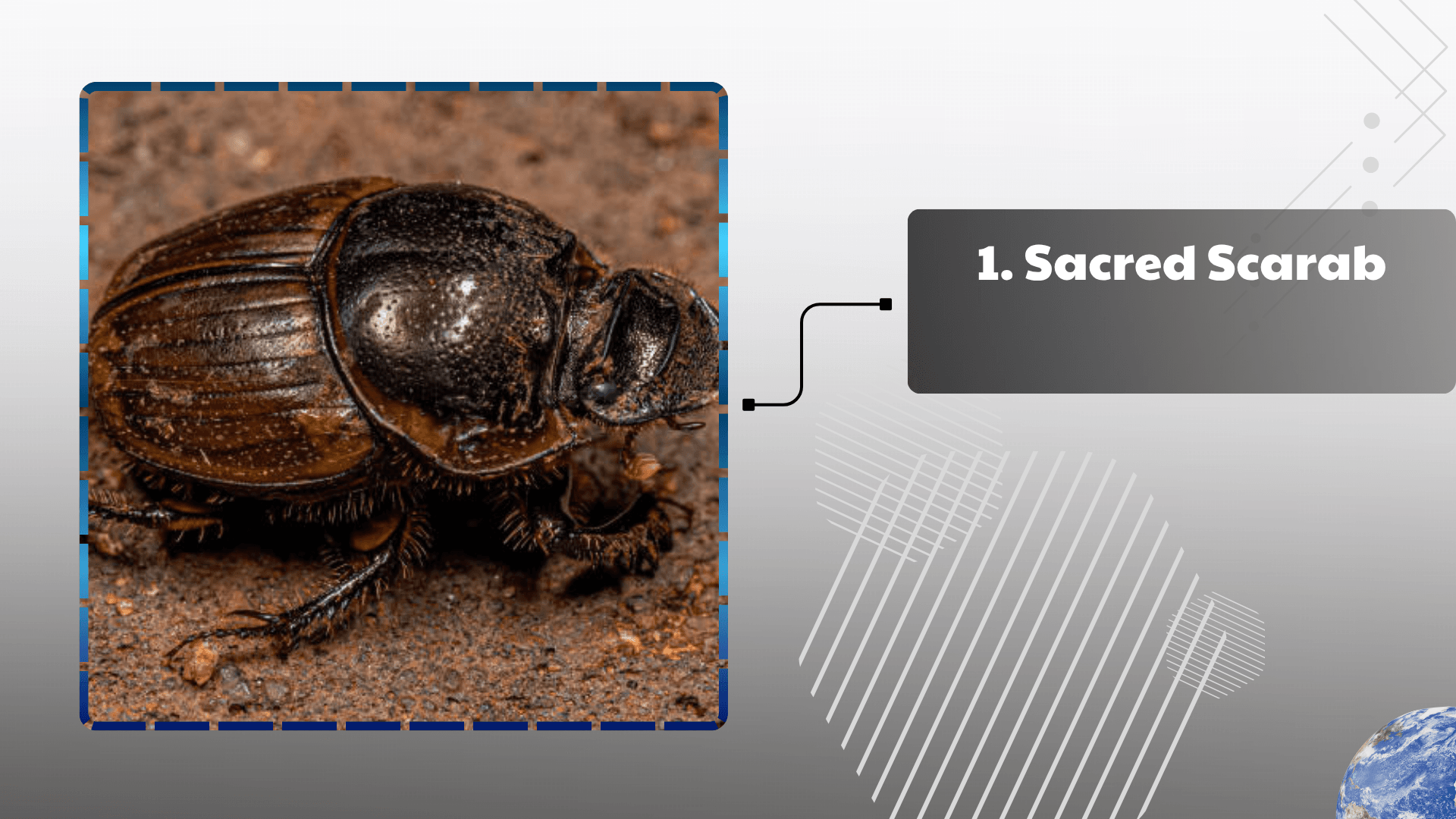
The Sacred Scarab is one of the most famous dung beetles in history. In ancient Egypt, it was considered a symbol of rebirth and transformation. This species has a round black body and strong front legs designed for rolling dung balls. It is well known for its unique behavior of shaping dung into perfect spheres and rolling them away for burial.
Sacred Scarabs usually live in dry and warm environments such as deserts and grasslands. They feed mainly on livestock dung and play a crucial role in recycling nutrients back into the soil. By burying dung, they also help reduce parasite spread and improve soil structure.
2. Rainbow Scarab (Phanaeus vindex)
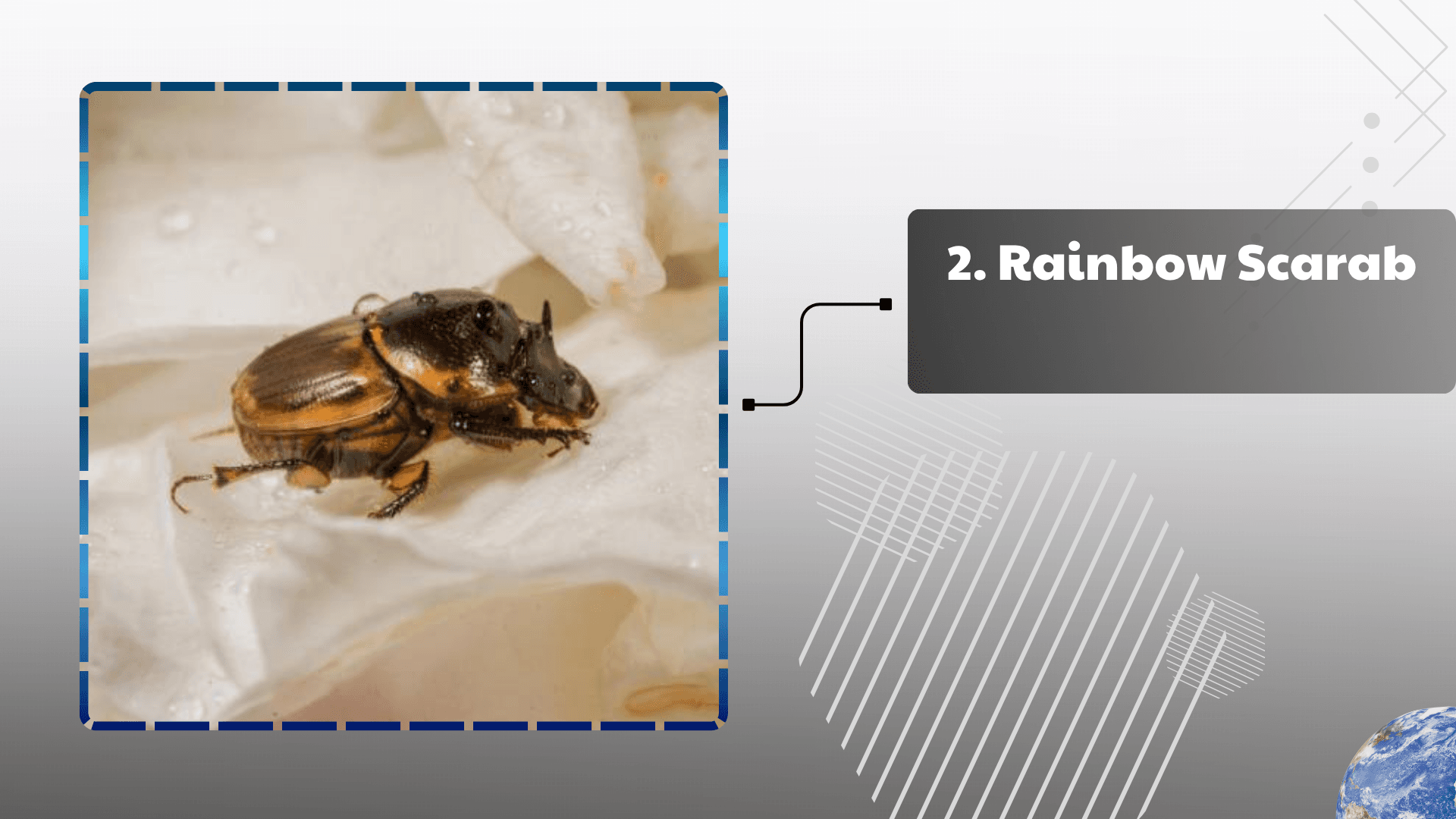
The Rainbow Scarab is one of the most visually striking types of dung beetles due to its metallic colors, which can appear green, blue, and red under sunlight. Unlike many other beetles, this species is often considered a “jewel beetle” of the dung beetle world.
It is commonly found in North and Central America. Rainbow Scarabs are tunneler beetles, meaning they dig beneath dung piles and bury waste directly into the soil. This helps enrich the soil and supports plant growth. They are also indicators of healthy ecosystems.
3. Minotaur Beetle (Typhaeus typhoeus)
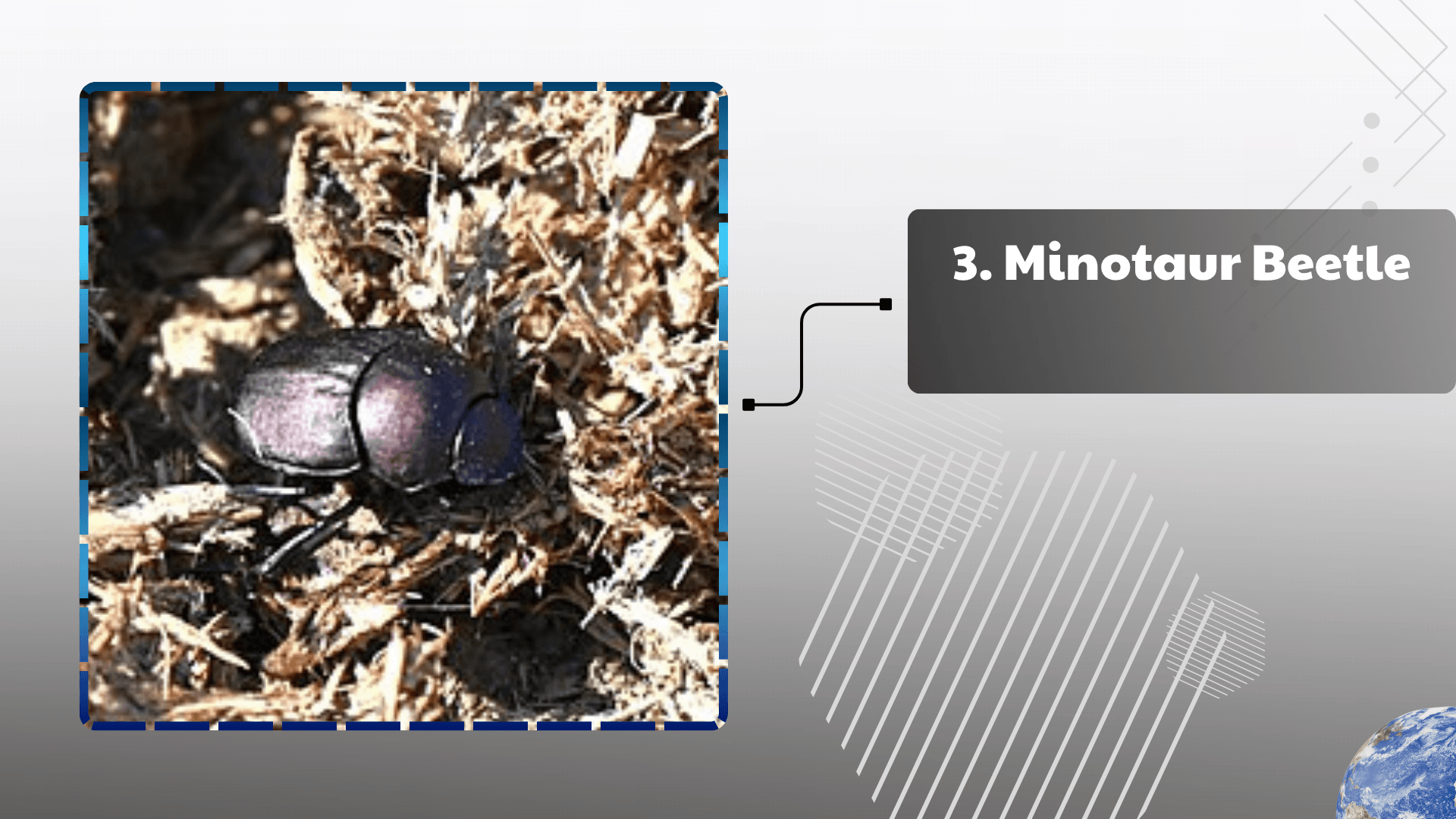
The Minotaur Beetle is a strong and armored dung beetle found mainly in Europe. It is easily identified by the three horn-like projections on the male’s head, giving it a mythical appearance.
This beetle does not roll dung. Instead, it digs deep tunnels under dung piles and stores food underground. It prefers sandy soils and open habitats such as grasslands. The Minotaur Beetle plays an important role in soil aeration and nutrient cycling.
4. Heliocopris Beetle (Heliocopris dominus)
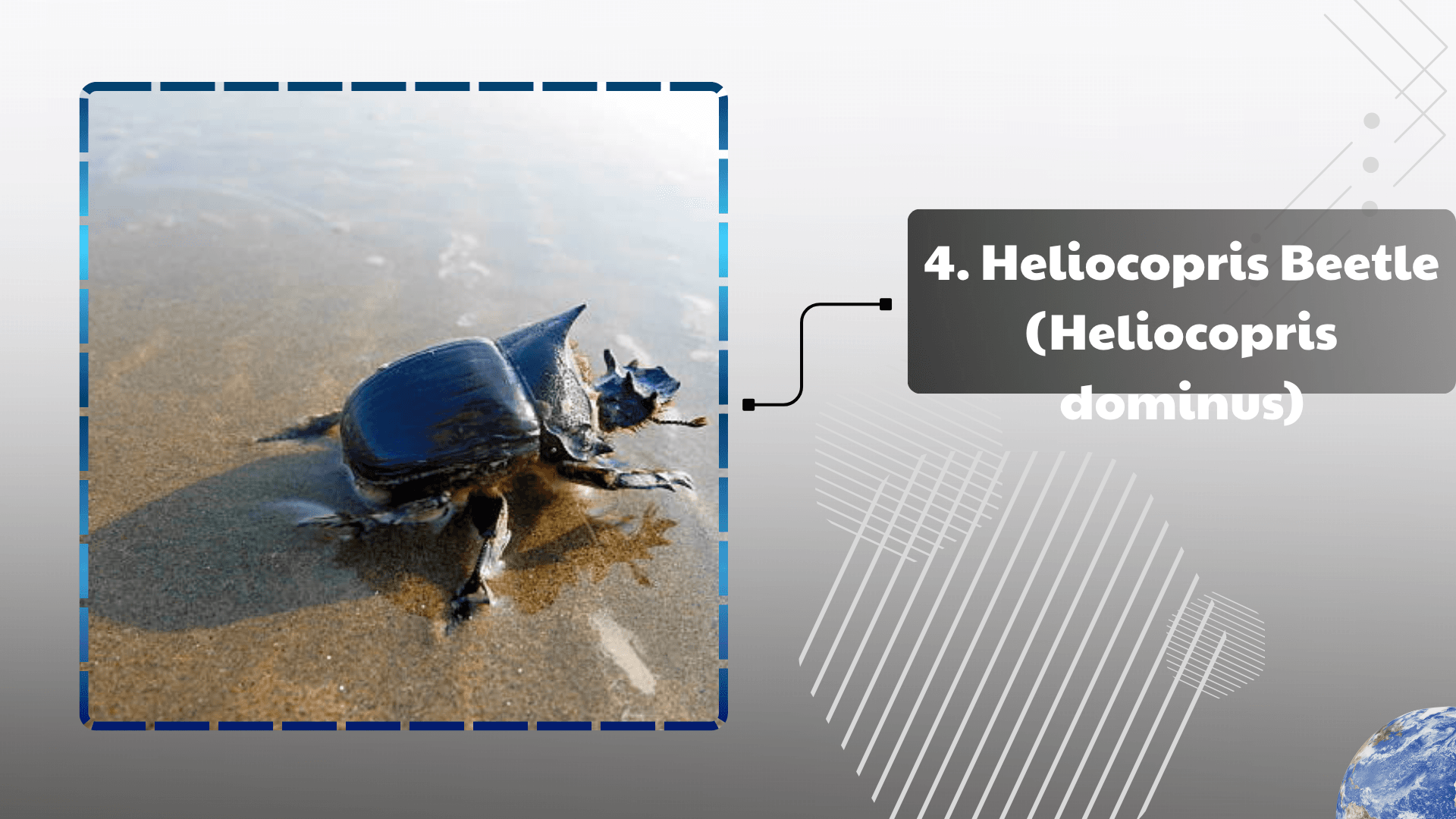
Heliocopris beetles are among the largest dung beetles in the world. They are mainly found in Africa and parts of Asia. These beetles are known for their incredible strength and ability to form extremely large dung balls.
They often use elephant dung to create food storage balls that are buried underground. These dung balls serve as food for their larvae. Their behavior helps recycle large amounts of organic waste in tropical ecosystems.
5. Onthophagus gazella
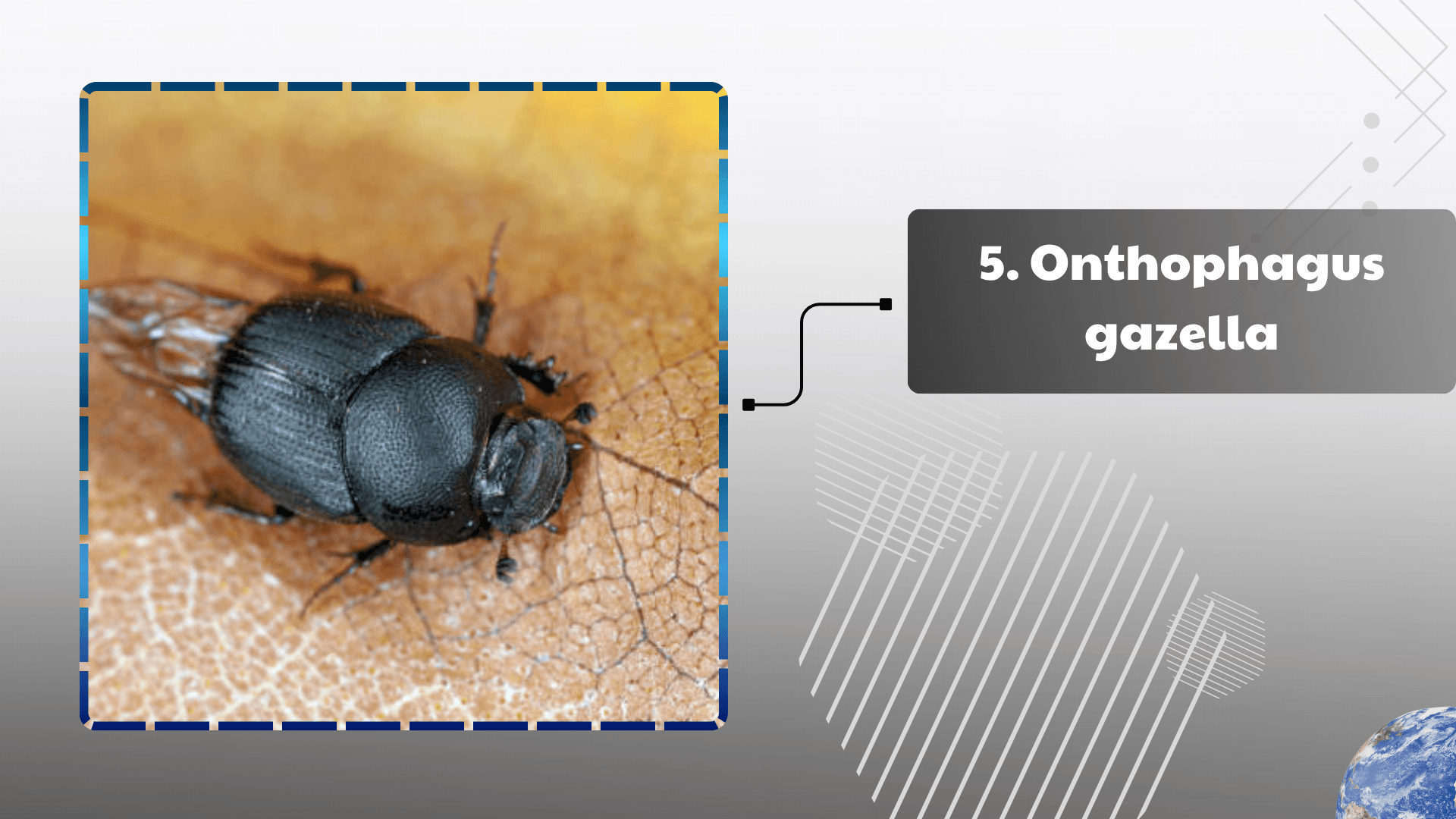
Onthophagus gazella is a small but highly efficient dung beetle species originally native to Africa. It has been introduced to other regions, including Australia, for agricultural benefits.
This species is a tunneler, meaning it quickly buries dung into the soil. It is widely used in livestock farming areas to reduce waste buildup, control flies, and prevent parasite development. Its fast activity makes it one of the most valuable dung beetles in agriculture.
6. Copris lunaris
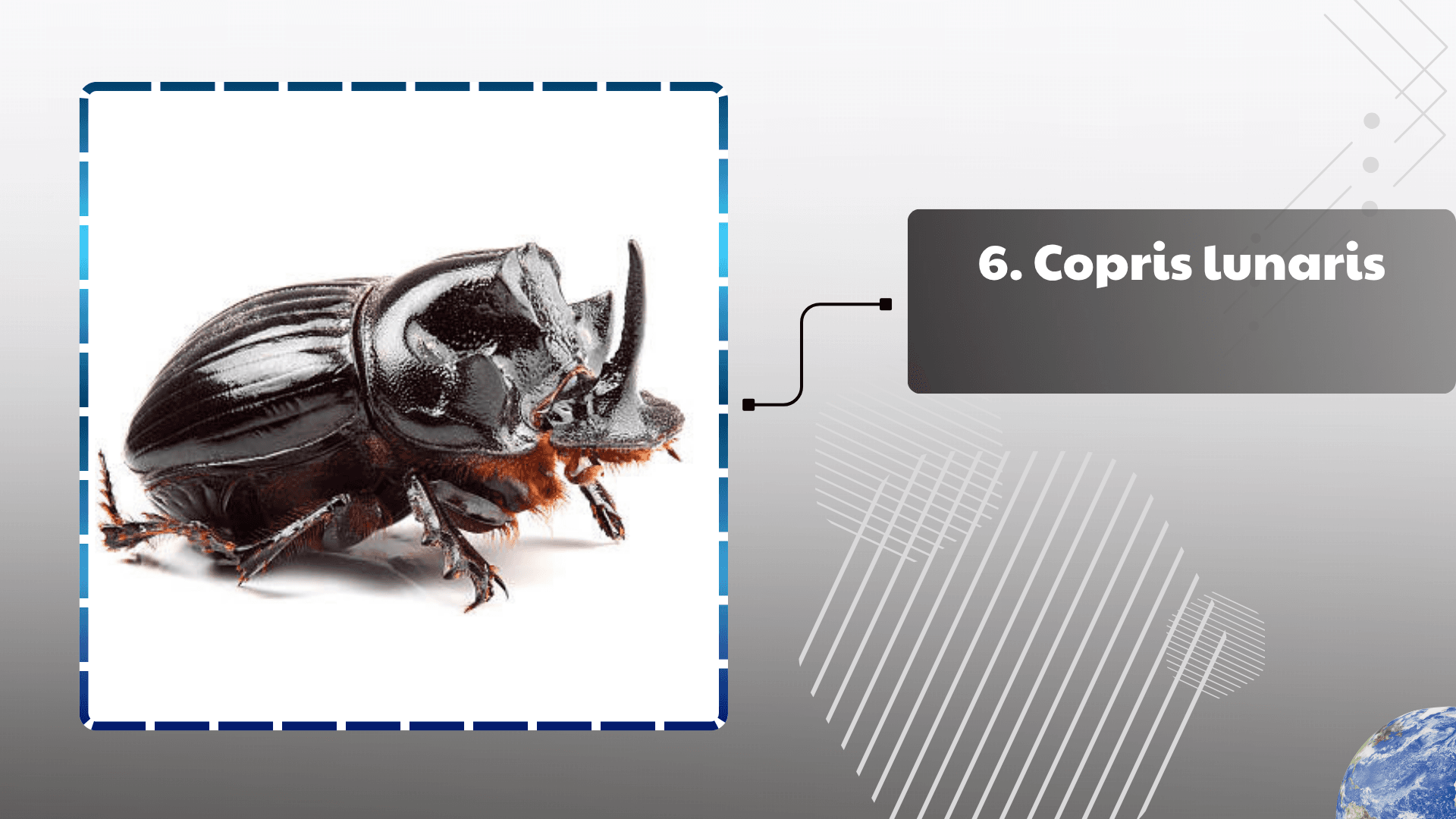
Copris lunaris is a medium-sized dung beetle commonly found in Europe and parts of Asia. It is known for its strong body and horned males, which use their horns for digging and competing with rivals. This species is a classic “tunneler beetle,” meaning it builds underground chambers beneath dung piles.
Once Copris lunaris finds a suitable dung source, it quickly buries portions of it into deep tunnels where it lays its eggs. The larvae feed on the stored dung, which provides a safe and nutrient-rich environment. This species is especially important in agricultural lands where livestock waste needs fast decomposition.
7. Geotrupes stercorarius (Dor Beetle)

Geotrupes stercorarius, commonly known as the Dor Beetle, is one of the most well-known dung beetles in Europe. It has a shiny black or dark blue body and a strong, compact shape. Unlike some dung beetles that act quickly, Dor Beetles are slower but very efficient burrowers.
They dig deep vertical tunnels under dung piles and transport dung underground for feeding and breeding. Dor Beetles also feed on decaying organic matter, not just fresh dung. Their tunneling activity improves soil aeration and helps water penetration in compact soils.
8. Phanaeus vindex
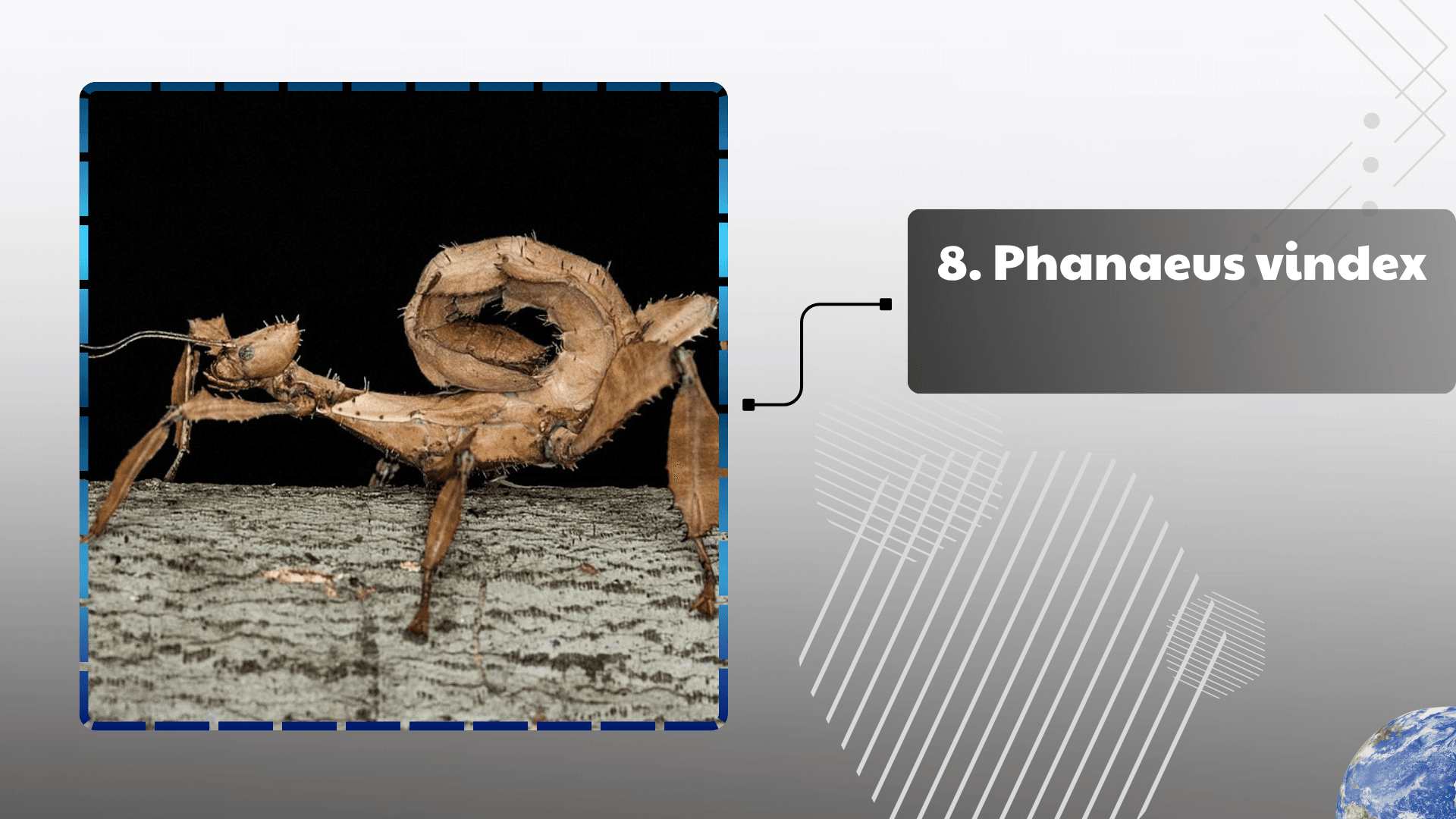
Phanaeus vindex, also known as the Rainbow Scarab, is one of the most colorful dung beetles in North America. It is famous for its metallic green, blue, and red body colors, making it one of the most visually stunning insects in the dung beetle group.
This species is a tunneler, meaning it does not roll dung but instead buries it directly into the soil. It prefers fresh dung from herbivores and is often found in grasslands and . Its activity significantly improves soil nutrient levels and reduces waste buildup in natural ecosystems.
9. Onitis alexis
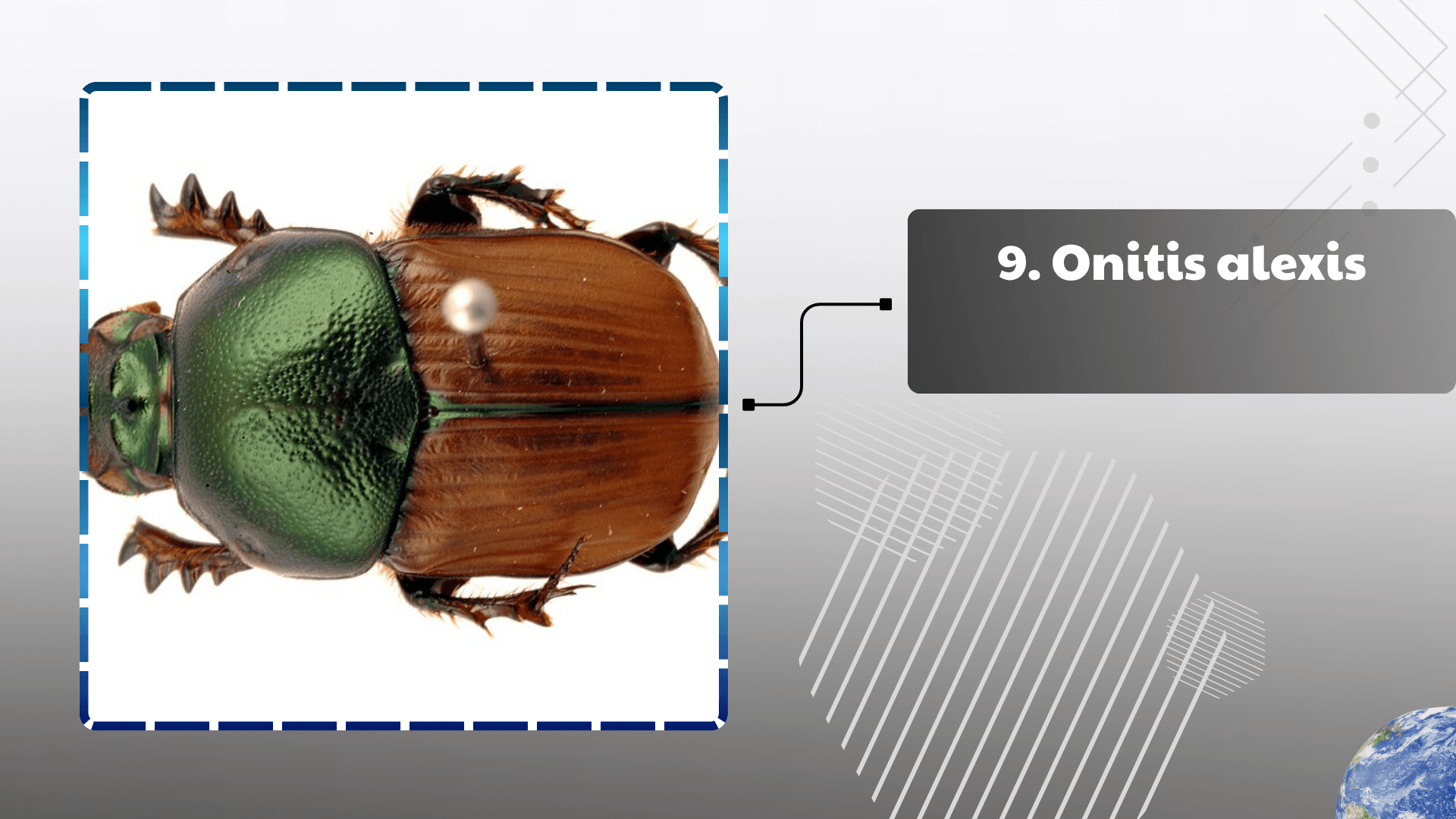
Onitis alexis is a robust dung beetle species found mainly in Africa and parts of southern Europe. It is known for its strong legs and fast movement when locating dung sources. This species is highly adaptable and can survive in dry and semi-dry environments.
It is both a tunneler and partial roller, depending on environmental conditions. Onitis alexis helps break down dung quickly, preventing parasite development and reducing fly populations. It is often used as a natural biological control agent in livestock regions.
10. Aphodius fimetarius

Aphodius fimetarius is a small dung beetle species widely distributed across Europe and North America. Unlike larger dung beetles, this species often lives directly inside dung rather than burying it deeply. It is considered a “dweller” type beetle.
This beetle feeds and breeds inside dung piles, helping to break them down from within. Although small in size, Aphodius fimetarius plays a very important ecological role by speeding up decomposition and supporting nutrient recycling in soils.
11. Deltochilum gibbosum

Deltochilum gibbosum is one of the more unusual dung beetles because it is not strictly a dung specialist. While many dung beetles rely only on animal waste, this species is known to occasionally behave as a predator, feeding on millipedes in addition to dung.
It is found mainly in tropical regions of Central and South America, especially in humid forest floors where organic matter is abundant. This beetle has a slightly curved, dark body and powerful legs that help it navigate leaf litter and soil. Its adaptability allows it to survive in environments where dung availability may be inconsistent.
Ecologically, Deltochilum gibbosum helps control decomposition processes both through scavenging dung and breaking down other organic materials. This dual role makes it an important contributor to nutrient cycling in tropical ecosystems.
12. Canthon pilularius
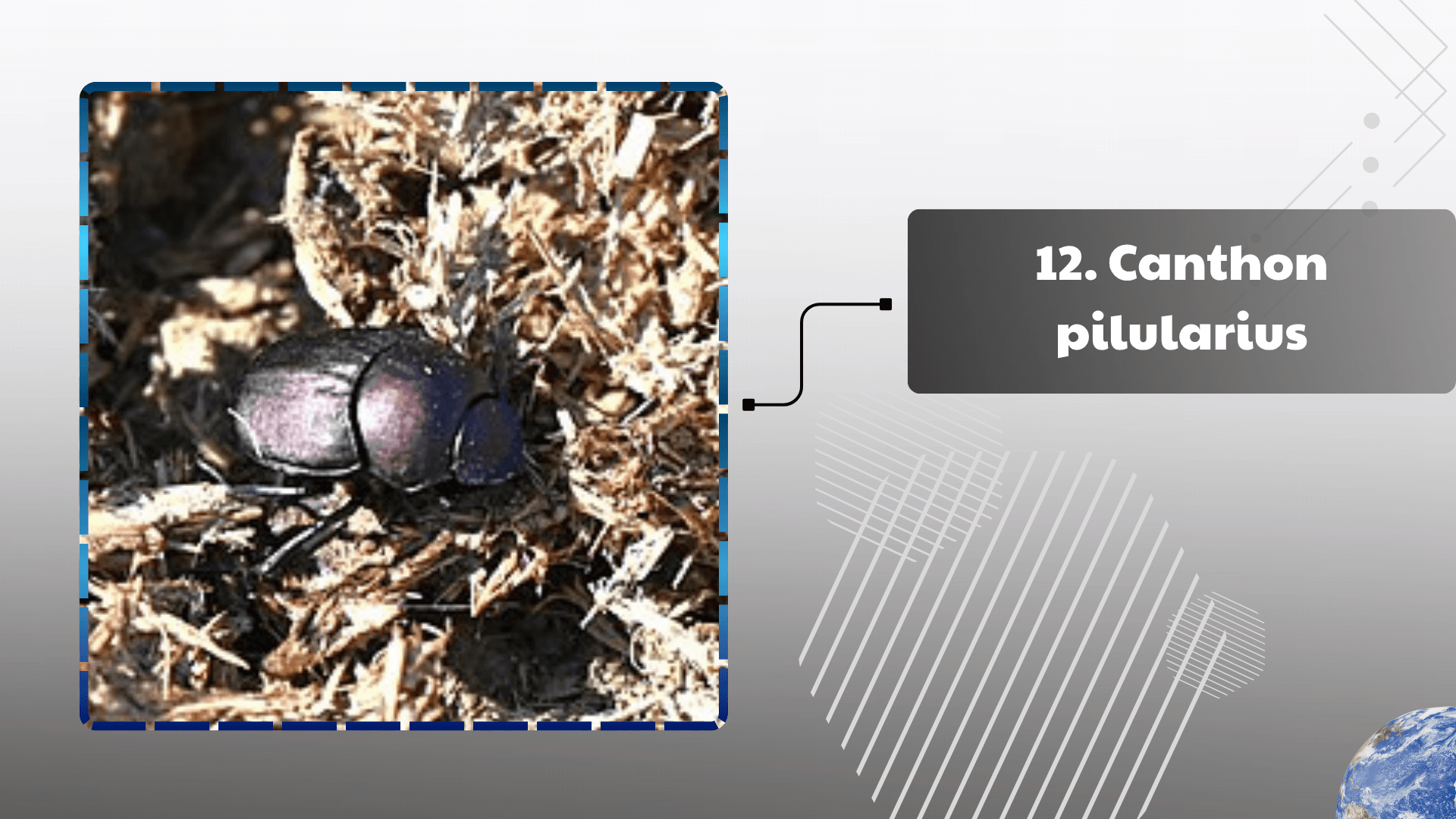
Canthon pilularius is a classic “roller dung beetle” found in North America. It is famous for its behavior of shaping dung into balls and rolling them away from the original source. This behavior reduces competition and protects the dung ball from being stolen by other insects.
The beetle has a compact, oval-shaped body and strong hind legs designed for pushing dung balls across the ground. It prefers open habitats such as grasslands, pastures, and agricultural fields where fresh dung from herbivores is readily available.
Once the dung ball is created, Canthon pilularius buries it in shallow soil where it serves as food for larvae. This process helps improve soil fertility and reduces parasite buildup in grazing areas.
13. Onthophagus tesselatus
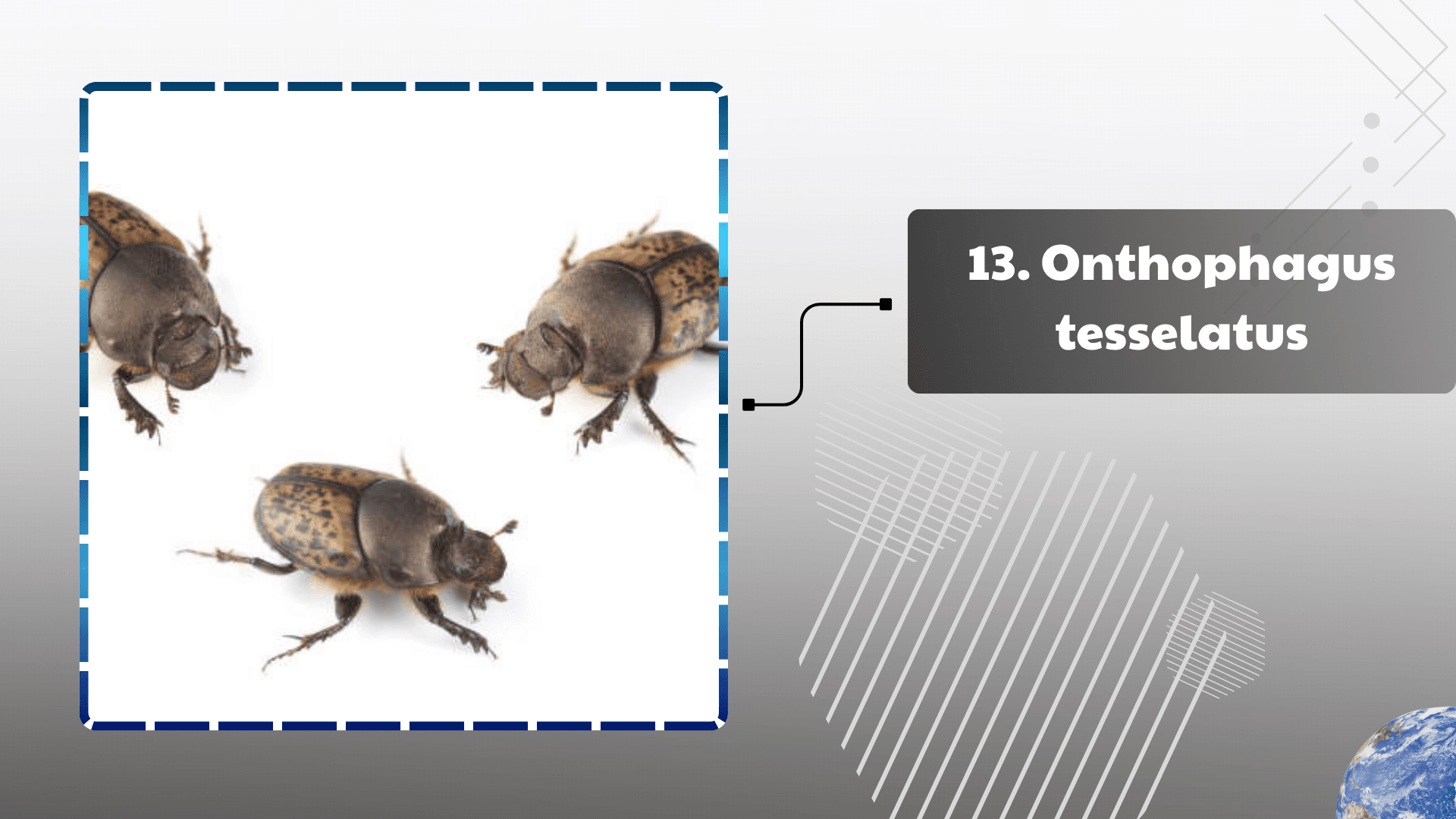
Onthophagus tesselatus is a small but highly efficient dung beetle species widely distributed in Asia. Despite its size, it is extremely active and can quickly locate and process dung in a short time.
This species is a tunneler, meaning it digs directly beneath dung piles and transports dung into underground chambers. Its body is often dark with subtle textured patterns that help it blend into soil environments.
Onthophagus tesselatus plays a crucial role in agricultural ecosystems by breaking down livestock waste rapidly. This reduces foul odor, limits fly breeding, and improves soil structure. It is especially valuable in warm and humid climates where decomposition must happen quickly.
14. Scarabaeus laticollis

Scarabaeus laticollis is a strong and well-adapted dung beetle found mainly in parts of Europe and North Africa. It is closely related to the sacred scarab but has a slightly broader body and different ecological preferences.
Like other members of its genus, it is a roller beetle that shapes dung into balls and transports them away for burial. Its front legs are specially adapted for cutting and shaping dung efficiently.
This species prefers sandy or loose soils, which make it easier to bury dung balls. Its activity helps maintain soil fertility and prevents dung accumulation in grazing environments, supporting healthier ecosystems.
15. Copris hispanus
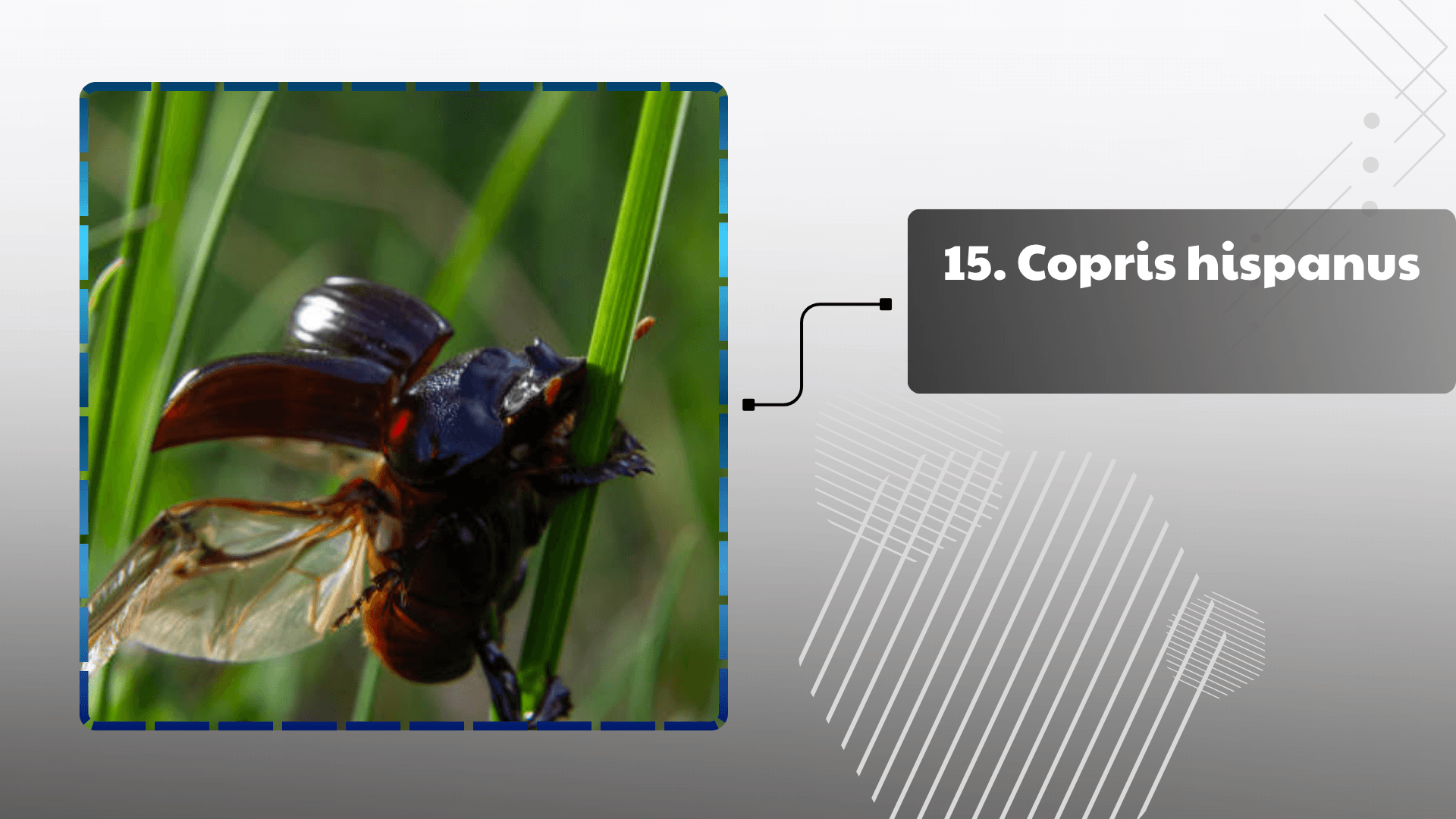
Copris hispanus is a large and powerful dung beetle species found in southern Europe, especially in Spain and surrounding regions. It is one of the more robust members of the Copris genus, known for its strong digging ability.
This beetle is a tunneler that creates deep underground chambers beneath dung piles. Males often have pronounced horns used for digging and competing with other males for territory and mates.
Copris hispanus prefers warm climates and open habitats where livestock dung is abundant. Its tunneling behavior significantly improves soil aeration, water infiltration, and nutrient distribution, making it an essential species in Mediterranean ecosystems.
16. Onthophagus binodis
Onthophagus binodis is a small but highly efficient dung beetle found mainly in Australia and nearby regions. It is easily recognized by the two distinct nodules (or bumps) on its thorax, which give it a slightly armored appearance.
This species is a tunneler, meaning it digs directly beneath dung piles and transports dung into underground chambers. It is particularly active in warm climates where livestock grazing is common. Despite its small size, Onthophagus binodis can quickly break down large amounts of dung.
Its ecological importance is significant in pasture systems, where it reduces dung accumulation, improves soil aeration, and limits the breeding of harmful flies and parasites. It is often considered a natural “clean-up crew” in grazing environments.
17. Typhaeus typhoeus (Minotaur Beetle)
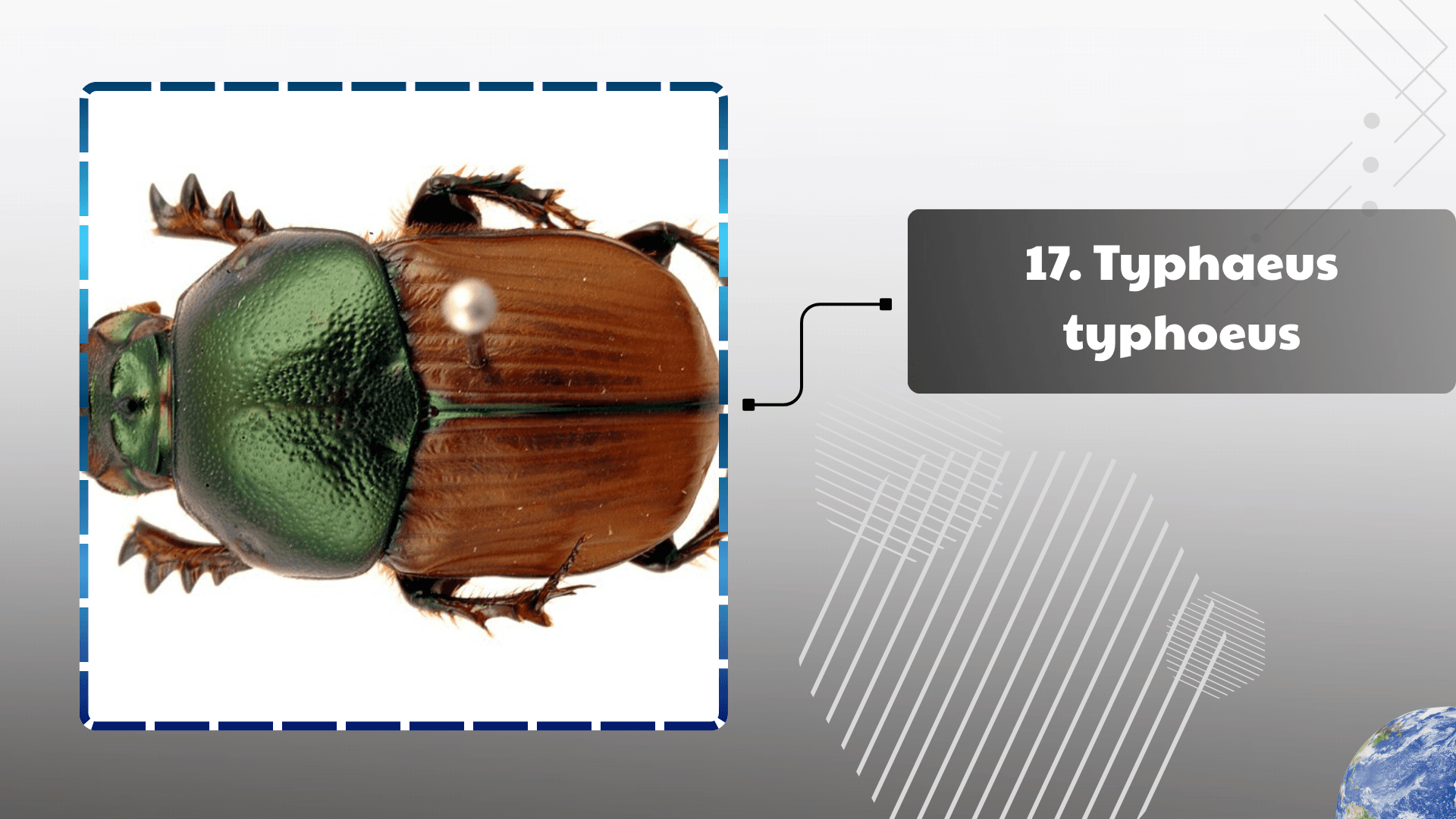
Typhaeus typhoeus, commonly known as the Minotaur Beetle, is one of the most visually striking dung beetles in Europe. Males possess three horn-like projections on their heads, giving them a mythical, armored appearance inspired by ancient legends.
Unlike roller beetles, this species is a deep tunneler. It digs vertical shafts beneath dung deposits and stores dung in underground chambers. These chambers are carefully prepared to provide food for developing larvae.
Minotaur Beetles prefer sandy soils and open habitats such as heathlands and dry grasslands. They are especially active in cooler seasons compared to many other dung beetles. Their digging activity improves soil structure, enhances drainage, and contributes to long-term ecosystem stability.
18. Scarabaeus sacer
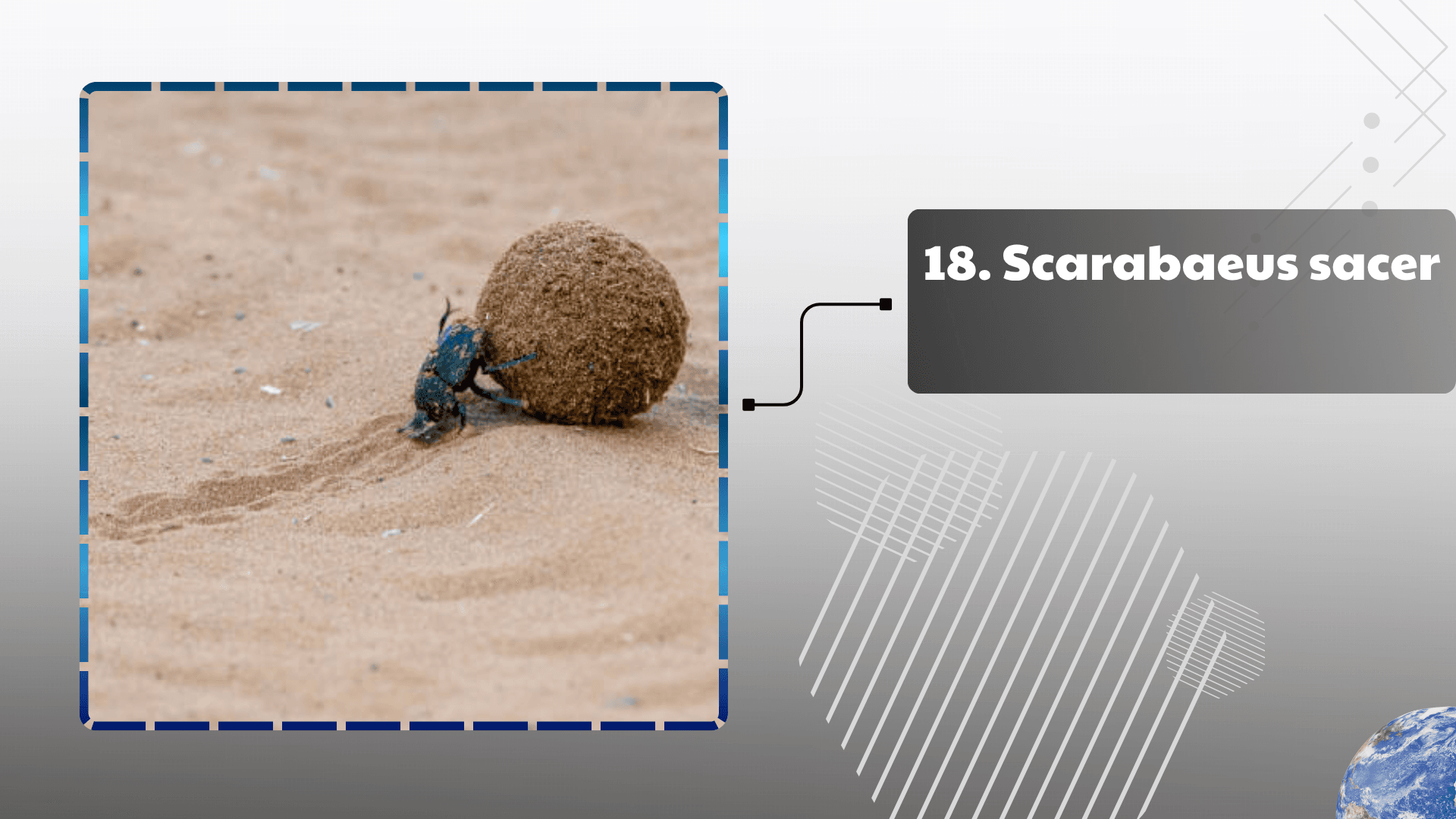
Scarabaeus sacer, also known as the Sacred Scarab, is one of the most historically famous dung beetles in the world. It was highly revered in Ancient Egyptian culture as a symbol of rebirth, transformation, and the sun’s daily cycle.
This beetle is a powerful roller species. It forms nearly perfect dung balls from animal waste and rolls them across the ground using its strong hind legs. Once a suitable location is found, it buries the dung ball underground where it serves as nourishment for its larvae.
Scarabaeus sacer thrives in hot, dry environments such as deserts and semi-arid grasslands. Its behavior not only helps recycle nutrients but also reduces surface waste buildup, making it a crucial species in arid ecosystems.
19. Onthophagus vacca

Onthophagus vacca is a widespread dung beetle species found across Europe and parts of Asia. It is relatively small but highly adaptable, making it one of the most common dung beetles in temperate regions.
This species is a tunneler and quickly buries dung beneath the soil surface. It prefers cattle and sheep dung and is often found in pastures and farmland areas. Its body is usually dark and compact, allowing it to move efficiently through soil and dung material.
Onthophagus vacca plays an essential role in agricultural ecosystems by reducing dung accumulation, improving nutrient cycling, and enhancing soil fertility. It is especially important in regions with intensive livestock farming.
20. Aphodius rufipes
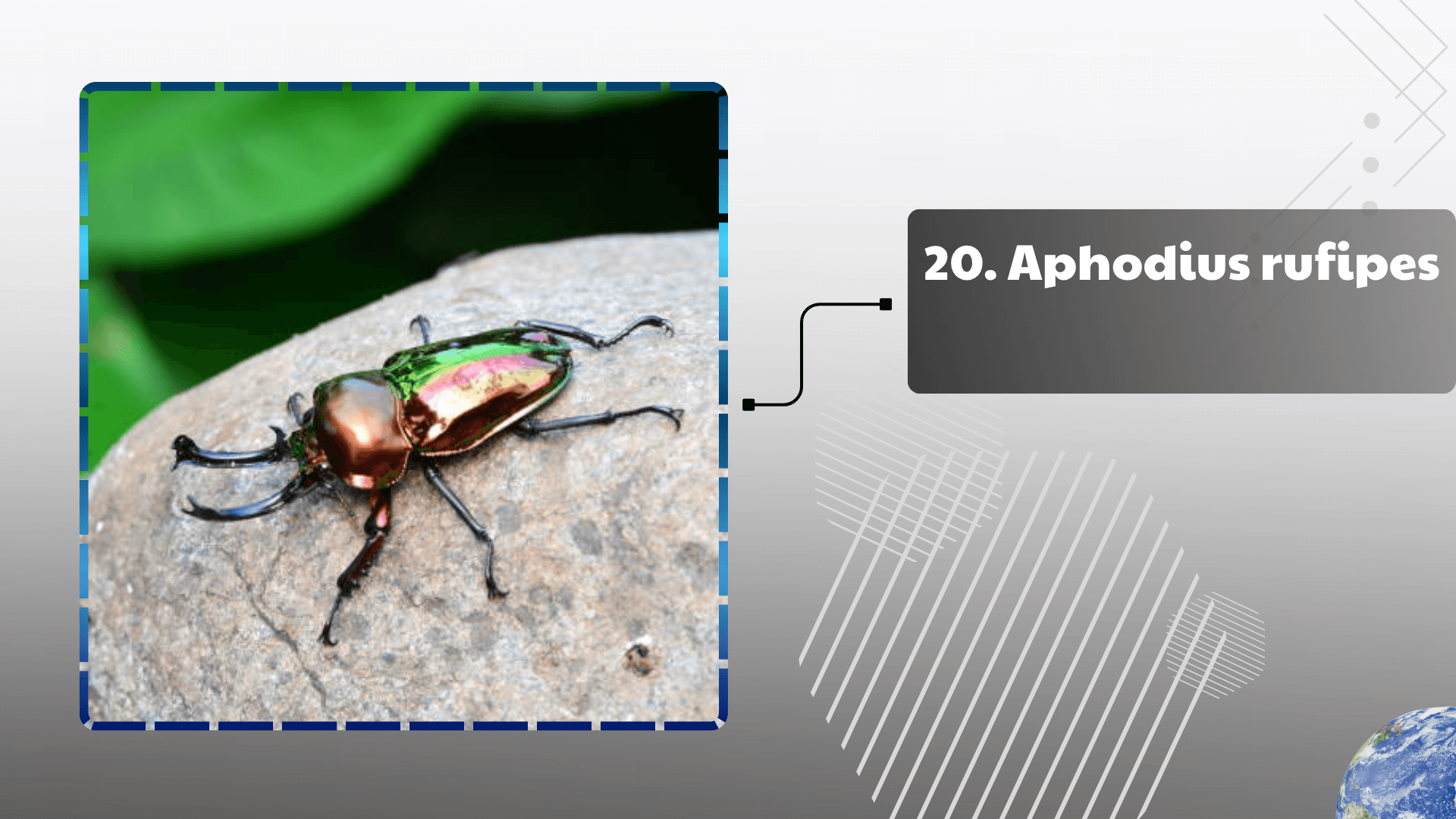
Aphodius rufipes is a small dung beetle species widely distributed across Europe and parts of Asia. Unlike larger tunneling or rolling beetles, this species is more of a “dweller,” meaning it lives and feeds directly inside dung piles.
Its reddish legs and dark body make it fairly easy to identify in the field. Aphodius rufipes does not move dung far or bury it deeply; instead, it helps break down dung from within, accelerating decomposition naturally.
This species is especially active in moist environments and plays a key role in early-stage dung decomposition. By breaking down dung internally, it helps other beetles and microorganisms complete the recycling process more efficiently.
21. Digitonthophagus gazella
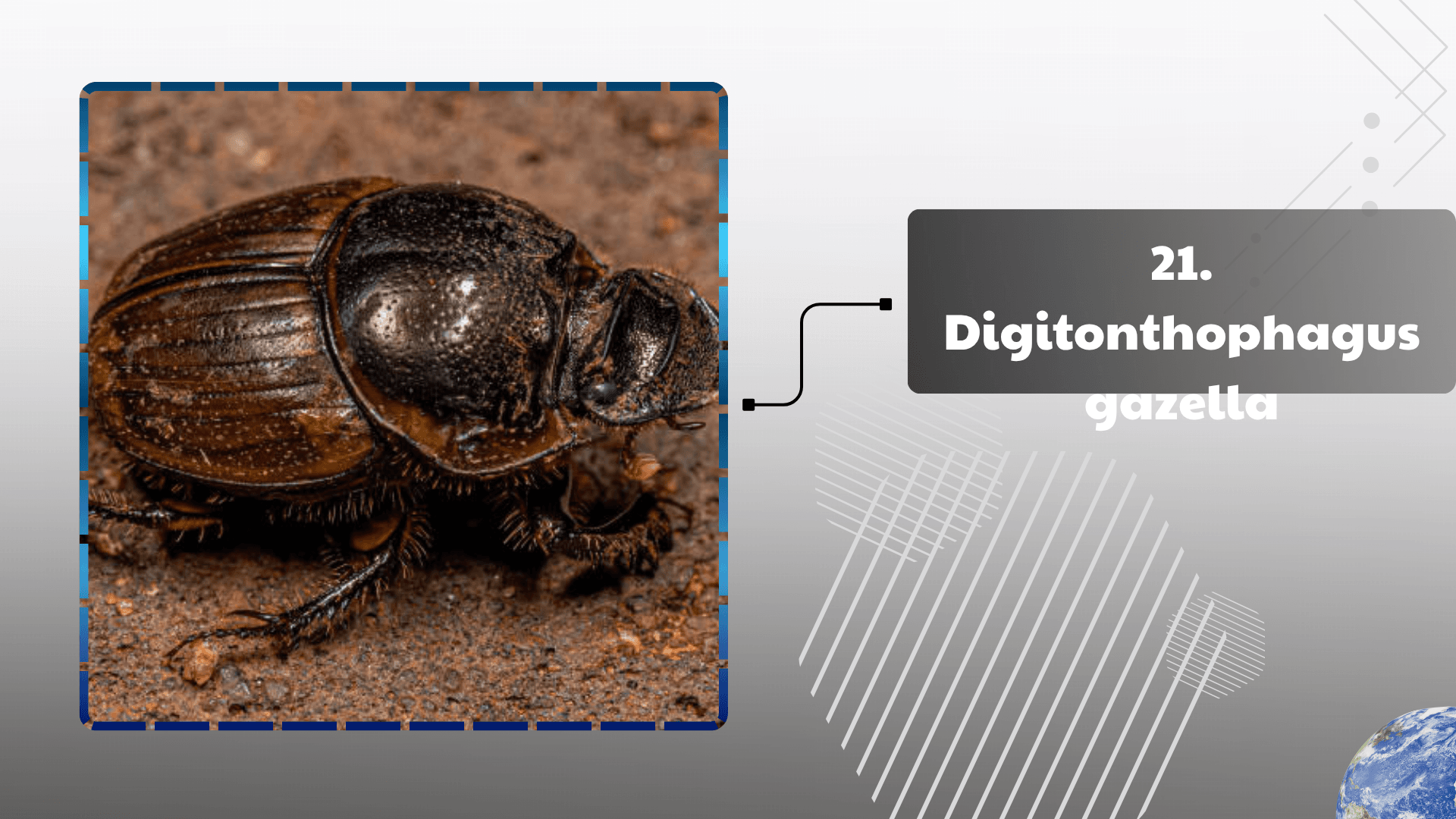
Digitonthophagus gazella is one of the most successful dung beetle species introduced for agricultural use around the world. Originally native to Africa, it has spread to many tropical and subtropical regions due to its ability to rapidly break down livestock dung.
This species is a highly efficient tunneler. It quickly locates fresh dung and buries it within minutes, reducing surface waste and preventing fly breeding. Its body is small, dark, and compact, allowing it to move easily through soil and dung material.
Digitonthophagus gazella is especially valuable in cattle farming areas. By accelerating dung decomposition, it improves pasture hygiene, reduces parasite load, and enhances soil fertility. It is often considered one of the most important biological control dung beetles in agriculture.
22. Euoniticellus intermedius
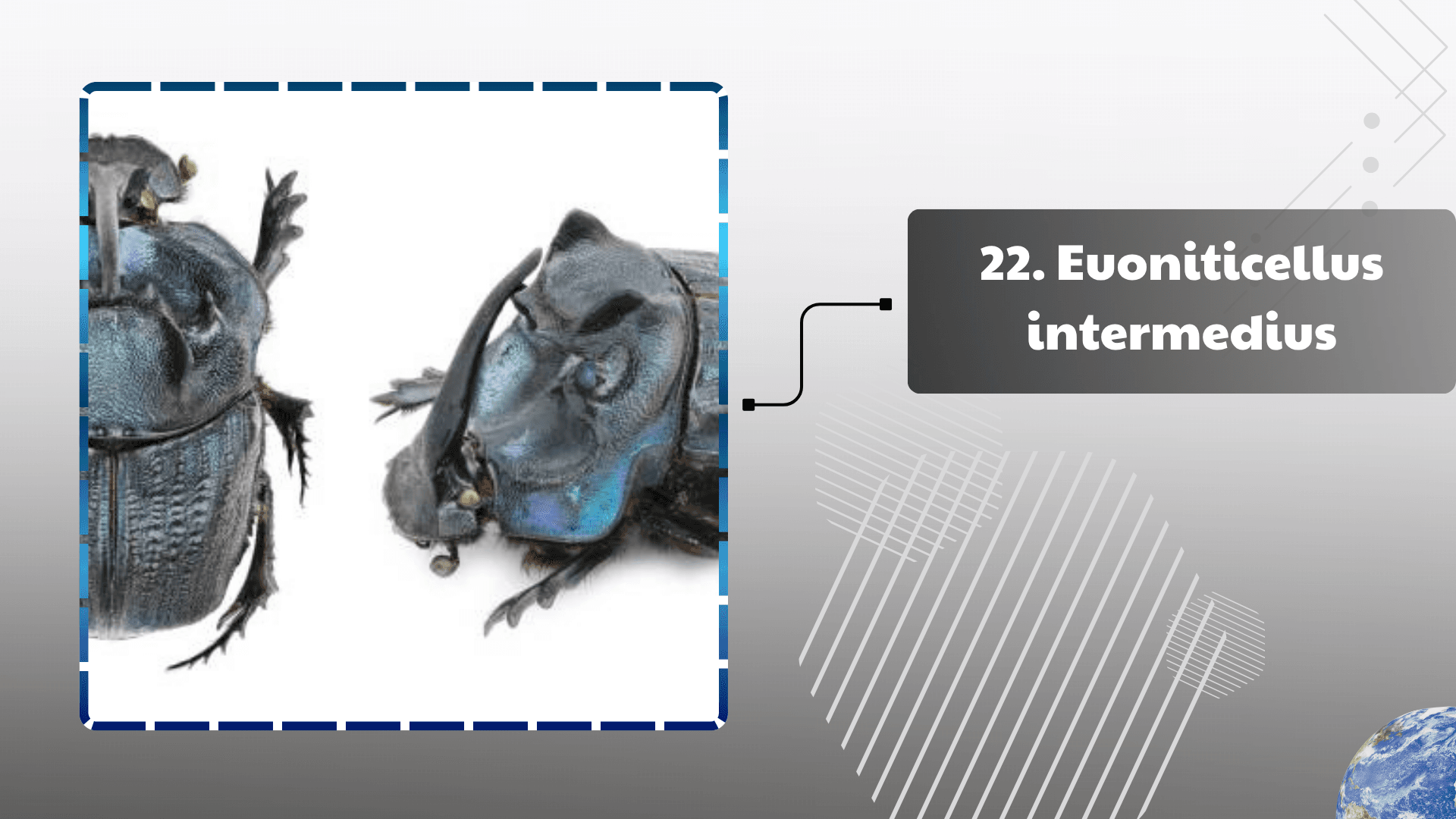
Euoniticellus intermedius is a medium-sized dung beetle found in Africa and introduced to other continents for ecological management purposes. It is well known for its adaptability to different climates and dung types.
This beetle is both a tunneler and a rapid processor of dung. It works quickly after dung deposition, breaking it into smaller pieces and burying it underground. Its activity helps reduce unpleasant odors and limits the spread of dung-borne parasites.
Euoniticellus intermedius thrives in open grasslands and agricultural fields. It plays a crucial role in maintaining soil quality and is often studied for its effectiveness in improving pasture ecosystems.
23. Sisyphus schaefferi
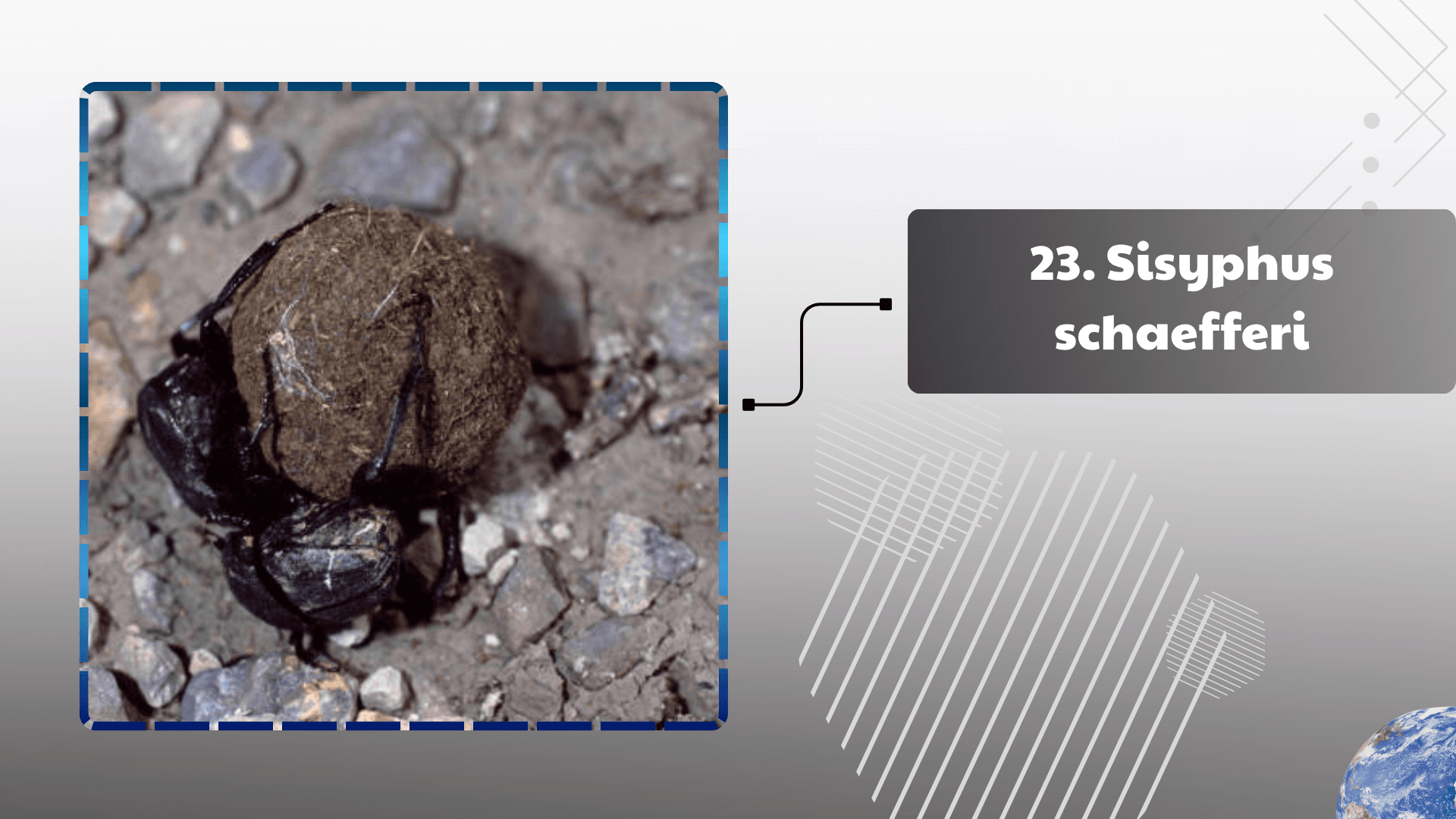
Sisyphus schaefferi is a fascinating roller dung beetle found mainly in Europe, Asia, and parts of Africa. It is named after the mythological figure Sisyphus due to its behavior of continuously rolling dung balls across the ground.
This species is a strong roller, using its long hind legs to push dung balls away from competition. It prefers open environments such as grasslands and agricultural areas where fresh dung is abundant.
Once a dung ball is formed, Sisyphus schaefferi rolls it in a straight line before burying it in shallow soil. This behavior helps reduce competition and ensures a safe food source for its larvae. It is a key contributor to nutrient recycling in open ecosystems.
24. Catharsius molossus
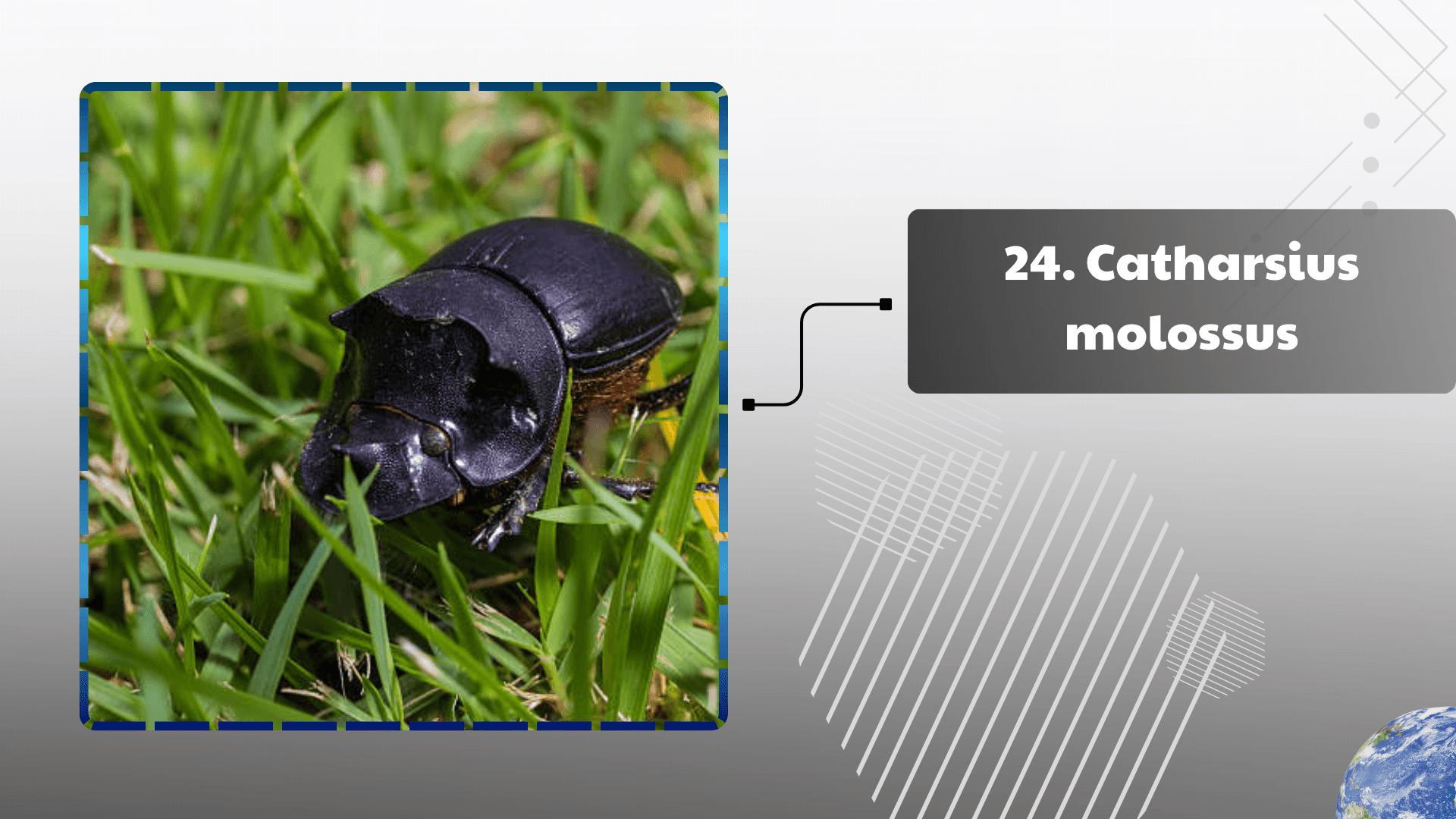
Catharsius molossus is a large and powerful dung beetle species found in Asia and parts of Africa. It is one of the more robust members of its group, known for its strong body and aggressive digging behavior.
This beetle is a tunneler that creates deep underground chambers beneath dung piles. It is often attracted to large dung sources such as those from cattle or buffalo. Males may show slight horn development used in digging and competition.
Catharsius molossus plays a significant ecological role in breaking down large quantities of organic waste. Its deep burrowing activity improves soil aeration and helps distribute nutrients deeper into the soil profile.
25. Heliocopris dominus
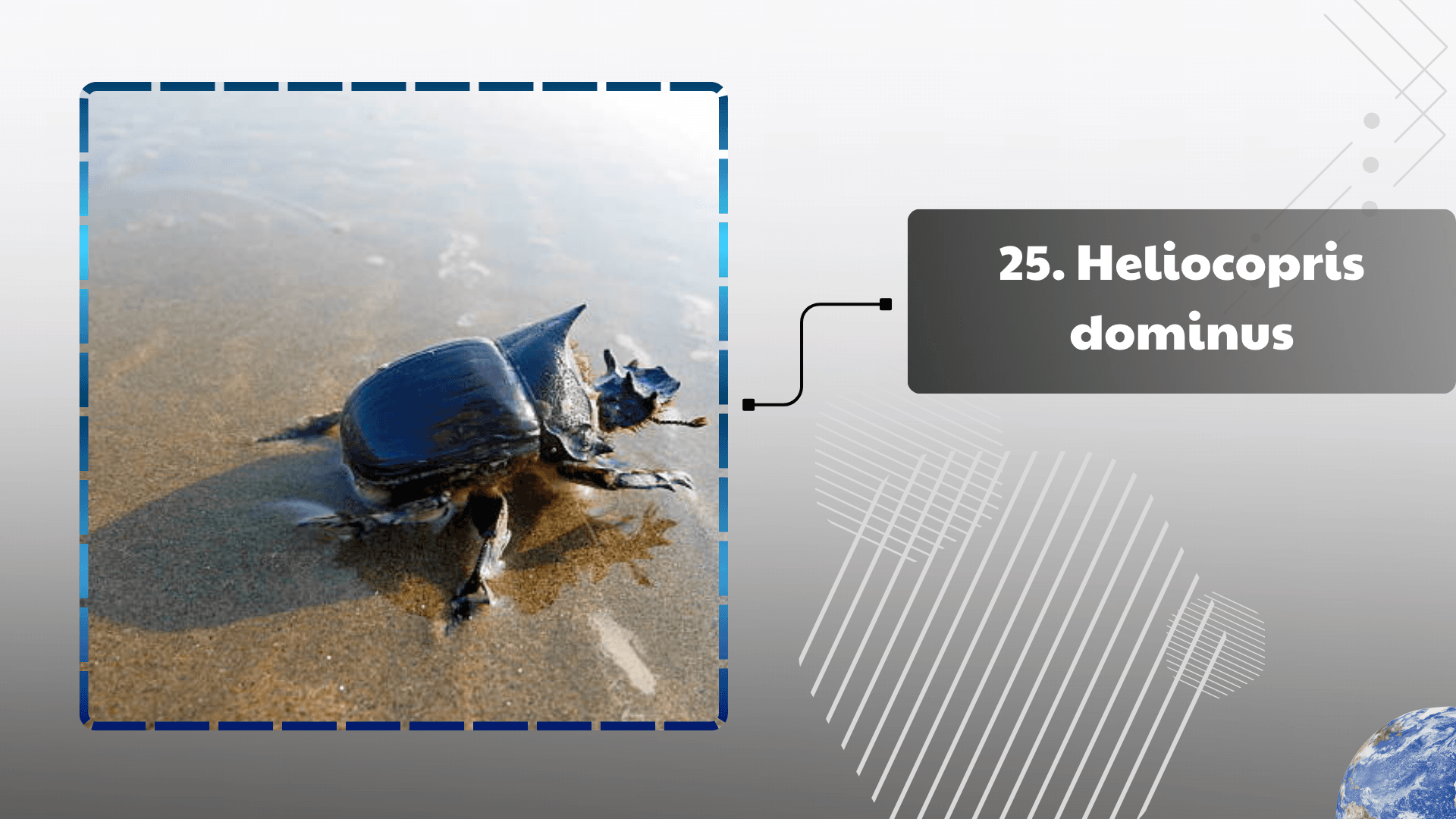
Heliocopris dominus is one of the largest dung beetle species in the world, mainly found in African savannas. It is famous for its incredible strength and ability to work with massive dung sources, including elephant dung.
This species is a deep tunneler that constructs extensive underground chambers. It forms large dung balls that can be significantly heavier than the beetle itself, which are then buried for larval development.
Heliocopris dominus is highly important in tropical ecosystems because it processes enormous amounts of waste from large herbivores. Its activity helps recycle nutrients, maintain soil structure, and support plant growth in savanna environments.
26. Euoniticellus fulvus

Euoniticellus fulvus is a small to medium-sized dung beetle widely distributed across parts of Europe and introduced regions. It is closely related to other agricultural dung beetles and is known for its efficiency in breaking down livestock waste.
This species is a tunneler, meaning it quickly buries dung beneath the soil surface. It prefers cattle dung and is often found in pastures, farmland, and open grasslands. Its body is compact and typically brownish or dark, allowing it to blend easily into soil environments.
Euoniticellus fulvus plays a key ecological role in improving soil fertility and reducing parasite loads in grazing areas. Its rapid dung processing helps maintain cleaner pastures and supports healthier livestock systems.
27. Onthophagus nuchicornis

Onthophagus nuchicornis is a widely distributed dung beetle found in Europe and parts of Asia. It is easily recognized by the small horn-like projection found on males, which is used in competition for mating and territory.
This species is a tunneler and is highly efficient at locating fresh dung. It quickly buries dung into underground chambers where it serves as food for larvae. It prefers a variety of dung types, especially from herbivores like cattle and sheep.
Onthophagus nuchicornis is very important in agricultural ecosystems because it helps reduce dung accumulation, improves soil aeration, and limits the spread of harmful insects. Its adaptability makes it one of the more resilient dung beetle species in temperate climates.
28. Aphodius rufipes
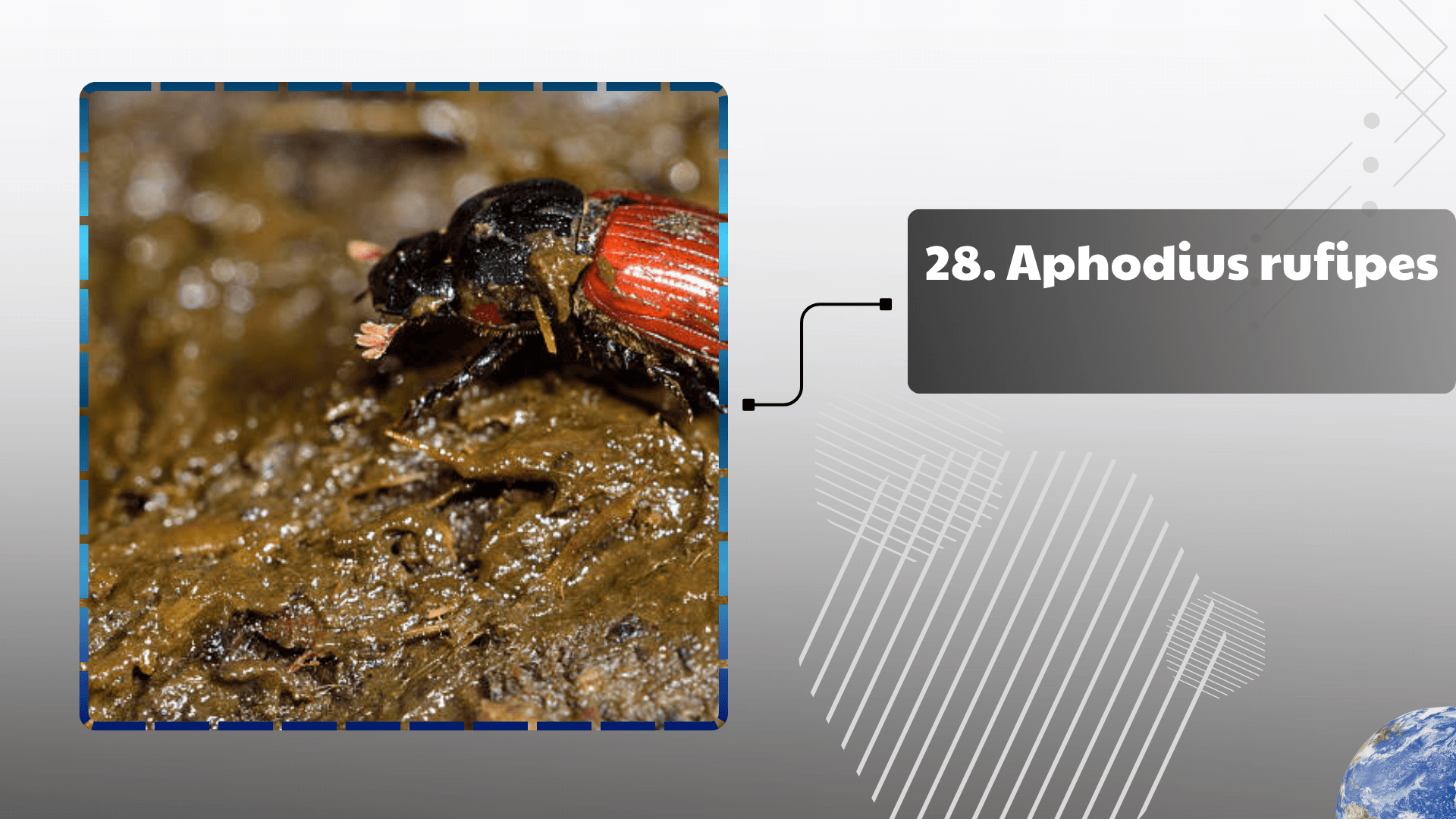
Aphodius rufipes is a small dung beetle species found across Europe and parts of Asia. Unlike many tunneling or rolling species, this beetle is primarily a dweller, meaning it lives inside dung rather than transporting it far.
Its reddish legs and dark body make it identifiable in the field. Aphodius rufipes feeds and reproduces directly within dung piles, helping accelerate decomposition from the inside out.
Although small in size, this species plays a crucial role in early-stage dung breakdown. It supports microbial activity and helps prepare dung for further decomposition by other insects and organisms.
29. Onthophagus joannae
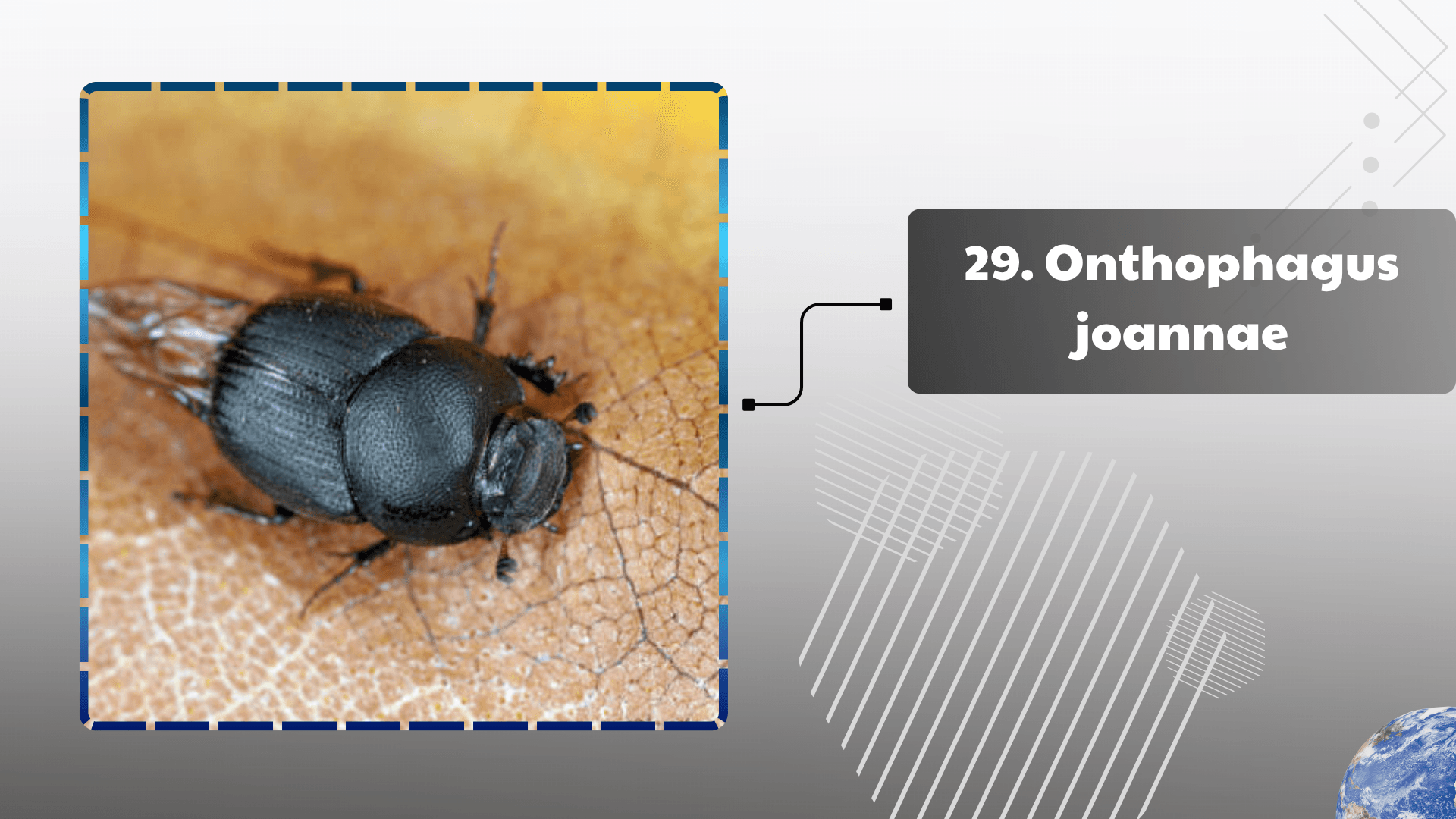
Onthophagus joannae is a lesser-known but ecologically important dung beetle found in parts of Europe. It belongs to a large genus known for its adaptability and rapid dung-processing abilities.
This species is a tunneler that works quickly beneath dung piles. It prefers warm seasons and is often found in open grasslands and farmland areas. Its compact body allows it to move efficiently through soil and dung material.
Onthophagus joannae contributes significantly to nutrient cycling by burying dung and enriching soil layers. It also helps reduce surface waste, making environments cleaner and less attractive to pests.
30. Scarabaeus viettei
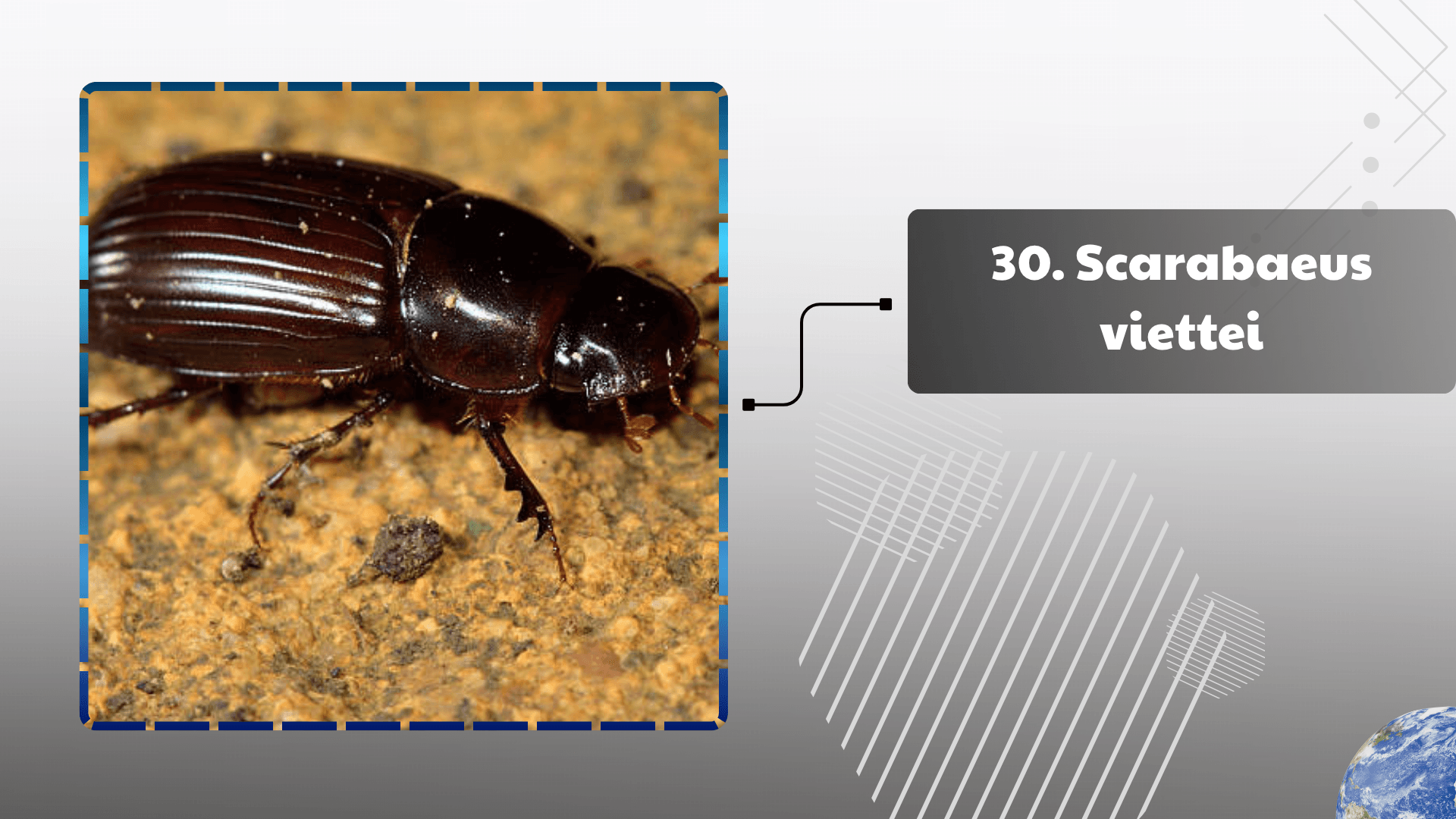
Scarabaeus viettei is a rare dung beetle species found mainly in specific African regions. It belongs to the same genus as the famous Sacred Scarab but has distinct ecological preferences and behaviors.
This species is a roller beetle, forming dung balls and transporting them away from the original source. It prefers dry and open environments where dung is scarce, making efficient use of available resources essential for survival.
Scarabaeus viettei plays an important role in desert and semi-arid ecosystems by recycling nutrients and preventing dung accumulation on the soil surface. Its behavior supports vegetation growth and soil stability in harsh environments.
Conclusion: Types of Dung Beetles
Dung beetles are far more than simple decomposer insects—they are essential engineers of ecosystems. Across all 30 types of dung beetles we explored, each species shows a unique survival strategy, whether rolling dung into protective balls, tunneling deep underground, or living directly inside dung piles to accelerate decomposition. Despite their differences, all dung beetles share one critical role: recycling organic waste back into the soil and keeping ecosystems balanced.
From the sacred symbolism of the Sacred Scarab to the massive strength of Heliocopris dominus, dung beetles demonstrate an extraordinary range of adaptations shaped by millions of years of evolution. They improve soil fertility, reduce harmful parasites, support plant growth, and help maintain healthy grazing lands for wildlife and livestock alike.
Understanding dung beetles gives us a deeper appreciation for nature’s hidden systems. These small insects quietly perform one of the most important ecological jobs on Earth, often without being noticed. Protecting their habitats means protecting the health of entire ecosystems.
So next time you see a dung beetle at work, will you see it as just an insect—or as one of nature’s most powerful recyclers shaping the world beneath our feet?
FAQ: Types of Dung Beetles (50+ Questions with Detailed Answers)
1. What are dung beetles?
Dung beetles are insects that feed on and recycle animal waste. They belong mainly to the Scarabaeinae family. These beetles play a vital ecological role by breaking down dung, improving soil fertility, and reducing harmful parasites and flies. Without dung beetles, natural ecosystems and farmland would struggle with waste accumulation and poor soil health.
2. Why are dung beetles important in nature?
Dung beetles are essential ecosystem engineers. They recycle nutrients by burying dung into the soil, which enriches plant growth. They also reduce greenhouse gases from decomposing waste and help control pest populations such as flies and parasitic worms. Their activity improves pasture quality and supports biodiversity.
3. How many types of dung beetles exist?
There are over 6,000 known species of dung beetles worldwide. They are found on every continent except Antarctica. These species vary widely in size, behavior, and habitat, but all share the common role of processing dung in ecosystems.
4. Where do dung beetles live?
Dung beetles live in a wide range of habitats, including grasslands, forests, deserts, savannas, and farmland. They are especially common in areas with large herbivores such as cattle, elephants, deer, and horses because these animals provide a steady supply of dung.
5. What do dung beetles eat?
Most dung beetles feed primarily on animal dung, which contains partially digested plant material and microorganisms. Some species may also feed on decaying organic matter, fungi, or even small insects. Their diet depends on the species and available resources in their environment.
6. Are dung beetles dangerous to humans?
No, dung beetles are completely harmless to humans. They do not bite, sting, or transmit diseases. In fact, they are beneficial insects that help improve hygiene in natural and agricultural environments by removing waste quickly.
7. How do dung beetles find dung?
Dung beetles use a strong sense of smell to locate dung from long distances. They can detect chemical signals in the air that lead them directly to fresh animal waste. Some species are so efficient that they arrive within minutes after dung is deposited.
8. What are the main types of dung beetle behavior?
Dung beetles are usually divided into three behavioral groups: rollers, tunnellers, and dwellers. Rollers shape dung into balls and move them away, tunnellers bury dung underground, and dwellers live directly inside dung piles.
9. What is a roller dung beetle?
A roller dung beetle forms dung into a ball and rolls it away from the original pile. This helps reduce competition and protects the food source for their larvae. The dung ball is later buried in soil where eggs are laid.
10. What is a tunneler dung beetle?
A tunneler dung beetle digs tunnels beneath dung piles and transports dung into underground chambers. These chambers serve as food storage for larvae. This behavior improves soil structure and nutrient distribution.
11. What is a dweller dung beetle?
A dweller dung beetle lives directly inside dung piles without moving it far. It feeds and reproduces within the dung, helping break it down faster from within. This accelerates decomposition naturally.
12. Do dung beetles fly?
Yes, most dung beetles are capable of flying. They use flight to locate fresh dung sources. Some species are strong flyers, while others prefer walking or short flights depending on their habitat and size.
13. How strong are dung beetles?
Dung beetles are among the strongest insects on Earth. Some species can pull or carry objects over 1,000 times their body weight. This incredible strength helps them move dung efficiently.
14. How long do dung beetles live?
The lifespan of dung beetles varies by species but typically ranges from several months to a few years. Their life cycle includes egg, larva, pupa, and adult stages, with most of their time spent underground.
15. How do dung beetles help agriculture?
Dung beetles improve agriculture by breaking down livestock waste, recycling nutrients into the soil, and reducing parasite and fly populations. This leads to healthier pastures and improved crop productivity.
16. Can dung beetles survive in deserts?
Yes, some species like the Sacred Scarab are adapted to dry environments. They can survive in deserts by efficiently using limited dung resources and burrowing to protect themselves from heat.
17. Do dung beetles have predators?
Yes, dung beetles are preyed upon by birds, reptiles, mammals, and larger insects. However, their underground behavior and quick dung-burying strategies help them avoid many predators.
18. Why do dung beetles roll dung balls?
Rolling dung balls helps dung beetles transport food away from competition and predators. It also provides a safe environment for laying eggs and raising larvae underground.
19. Are dung beetles found worldwide?
Yes, dung beetles are found on almost every continent except Antarctica. They are especially diverse in tropical regions where large herbivore populations are common.
20. What is the largest dung beetle species?
One of the largest dung beetles is Heliocopris species, found in Africa and Asia. These beetles can use elephant dung and create extremely large dung balls for reproduction.
21. How do dung beetles reproduce?
Dung beetles reproduce by laying eggs inside or near dung. After mating, the female prepares a dung ball or underground chamber where she deposits her eggs. When the larvae hatch, they feed on the dung provided by the parents. This ensures a safe and nutrient-rich environment for development.
22. What is the life cycle of a dung beetle?
Dung beetles go through complete metamorphosis: egg, larva, pupa, and adult. The larval stage is spent feeding on dung underground. After pupation, the adult emerges and continues the cycle. The entire process can take weeks to months depending on species and climate.
23. How fast can dung beetles remove dung?
In ideal conditions, dung beetles can break down and bury dung within hours to a few days. In areas with high beetle populations, a single dung pile can disappear extremely quickly, significantly improving pasture cleanliness.
24. Do dung beetles work alone or in groups?
Most dung beetles work individually, especially rollers and tunnellers. However, many species may gather at the same dung source, competing for access. Some ecosystems can host hundreds of beetles working simultaneously on one dung pile.
25. Why are dung beetles called ecosystem engineers?
They are called ecosystem engineers because they physically modify their environment by burying dung, aerating soil, and redistributing nutrients. These actions change soil structure and improve ecosystem health on a large scale.
26. Can dung beetles survive without dung?
No, most dung beetles depend heavily on dung for food and reproduction. Without dung, their populations decline quickly. Some species may temporarily survive on decaying organic matter, but dung is essential for their lifecycle.
27. Do dung beetles prefer specific animals?
Yes, many dung beetles prefer dung from specific animals such as cattle, horses, elephants, or deer. The nutrient content and texture of dung influence their preference and reproductive success.
28. Are dung beetles active at night or day?
Some dung beetles are nocturnal, while others are diurnal. Activity patterns depend on temperature, predators, and habitat conditions. In hot climates, many species prefer nighttime activity to avoid heat.
29. How do dung beetles avoid predators?
Dung beetles avoid predators by quickly burying dung, flying away, or staying hidden inside dung piles. Their dark coloration also helps them blend into soil and waste environments.
30. What role do dung beetles play in soil fertility?
Dung beetles significantly improve soil fertility by burying organic waste. This process adds nutrients like nitrogen and phosphorus into the soil, which helps plants grow healthier and stronger.
31. Are dung beetles affected by pesticides?
Yes, pesticides can harm dung beetle populations by reducing their numbers and disrupting reproduction. This can lead to poorer soil quality and increased waste accumulation in agricultural areas.
32. Can dung beetles fly long distances?
Some species can fly several kilometers in search of dung. Their flying ability allows them to locate fresh resources quickly, especially in environments where dung is scattered.
33. What happens if dung beetles disappear?
Without dung beetles, animal waste would accumulate rapidly, leading to increased parasites, reduced soil fertility, and disrupted ecosystems. Their absence would negatively impact agriculture and wildlife health.
34. Do dung beetles live underground?
Many dung beetles spend most of their life underground, especially tunneller species. They create burrows where they store dung and raise their young safely away from predators.
35. How do dung beetles communicate?
Dung beetles communicate mainly through chemical signals and pheromones. These help them locate mates and dung sources efficiently in complex environments.
36. What colors are dung beetles?
Dung beetles are usually black, brown, or metallic green and blue. Some species, like rainbow scarabs, display bright iridescent colors depending on light reflection.
37. Are dung beetles used in farming?
Yes, dung beetles are widely used in sustainable agriculture to manage livestock waste. Farmers benefit from improved soil health and reduced pest problems.
38. Do dung beetles make noise?
Dung beetles do not make audible sounds like crickets. However, they may produce faint noises while digging or moving through soil and dung.
39. How do dung beetles survive extreme heat?
Many species burrow deep into the ground or become active at night to avoid heat. Their underground lifestyle helps them stay cool and hydrated in harsh environments.
40. Are dung beetles social insects?
No, dung beetles are generally not social insects. They do not form colonies like ants or bees, although many may gather at dung sources temporarily.
41. What is the smallest dung beetle species?
Some Aphodius species are among the smallest dung beetles, measuring only a few millimeters in length. Despite their size, they play an important role in decomposition.
42. What is the strongest dung beetle?
Certain Onthophagus species are among the strongest insects in the world, capable of pulling weights many times their body mass. This strength helps them move dung efficiently.
43. Do dung beetles drink water?
Yes, dung contains moisture, which provides hydration. Some species may also drink dew or water droplets in humid environments.
44. How do dung beetles help birds?
By breaking down dung, dung beetles reduce fly populations, which benefits insect-eating birds. Cleaner environments also improve bird feeding conditions.
45. Can dung beetles survive winter?
In colder regions, dung beetles survive winter in larval or pupal stages underground. Some adults also hibernate in protected soil layers.
46. Are dung beetles endangered?
Some dung beetle species are threatened due to habitat loss, pesticide use, and declining large herbivore populations. Conservation efforts are important for their survival.
47. Do dung beetles have eyes?
Yes, dung beetles have compound eyes that help them detect movement and light. However, their sense of smell is more important for finding dung.
48. How do dung beetles navigate?
Some dung beetles use the sun, moon, and even the Milky Way for navigation. This helps them roll dung balls in straight lines away from competition.
49. Why are dung beetles important for wildlife?
They recycle nutrients, clean habitats, and support food chains by maintaining soil and plant health. Many animals indirectly depend on their activity.
50. Do dung beetles bite humans?
No, dung beetles do not bite or attack humans. They are harmless insects focused entirely on dung processing and reproduction.
51. Can dung beetles be kept in captivity?
Some species can be studied in controlled environments, but they require dung and specific conditions to survive. They are generally not kept as pets.
52. How do dung beetles affect climate?
By burying dung, they reduce methane and nitrous oxide emissions, which are greenhouse gases. This helps mitigate climate change effects in livestock areas.
53. What animals compete with dung beetles?
Flies, fungi, and other insects often compete for dung resources. Dung beetles usually outcompete them by quickly burying or consuming dung.
54. Are dung beetles found in cities?
They are mostly found in rural and natural areas, but some species can survive in suburban parks or green spaces where animals are present.
55. Why should we protect dung beetles?
Protecting dung beetles ensures healthy soil, clean ecosystems, and balanced nutrient cycles. Their decline would negatively affect agriculture, wildlife, and environmental stability.
Read more: