

Orangutans are among the most fascinating topics in wildlife because these great apes are some of our closest living relatives. Orangutans live only in the rainforests of Southeast Asia, mainly on the islands of Borneo and Sumatra. Known for their long arms, reddish hair, and thoughtful eyes, orangutans spend most of their lives in trees, moving like slow, careful acrobats through the canopy. In this guide, you’ll discover five types of orangutans, how to identify them, where they live, and what makes each one special. Whether you’re a student, a nature lover, or just curious, this article will help you understand orangutans in a simple, friendly way while showing why protecting them matters for the future of our planet.
1. Bornean Orangutan (Pongo pygmaeus)
Overview
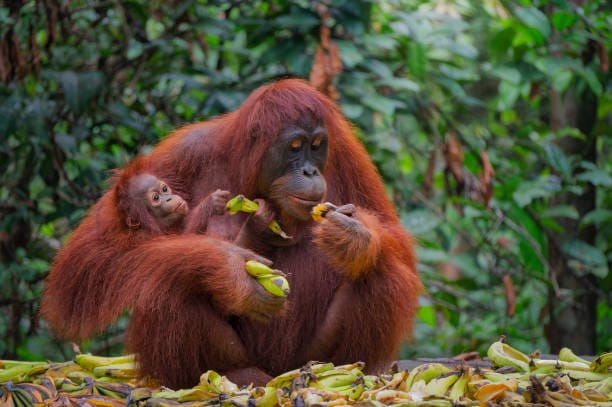
The Bornean Orangutan is the most widespread of all orangutans, found across the island of Borneo in Indonesia and Malaysia. When people imagine orangutans swinging through tall jungle trees, this is often the species they picture. Bigger and heavier than its Sumatran cousin, the Bornean Orangutan has a powerful build that matches its calm but determined personality.
Identification
- Large body with long, strong arms
- Shaggy reddish-brown fur
- Adult males develop wide cheek pads (flanges)
- Dark face with expressive eyes
Habitat
Bornean Orangutans live in lowland rainforests, swamp forests, and sometimes hill forests. They rely on tall trees for food and safety, building nests high above the ground to sleep each night. These forests are hot, wet, and full of life, like a green ocean stretching as far as the eye can see.
Behavior
Bornean Orangutans are mostly solitary. Mothers stay with their young for up to eight years, teaching them how to find food, build nests, and survive in the wild. Adult males usually roam alone, while females live with their offspring. They move slowly but surely, using their long arms like living ropes to pull themselves from branch to branch.
If you ever watch one eat, it feels like watching a relaxed picnic in the trees. They take their time, peeling fruit carefully, sometimes hanging upside down like a playful gymnast.
Diet
Their diet includes fruits, leaves, bark, flowers, insects, and occasionally bird eggs. Figs are a favorite, but when fruit is scarce, they turn to tougher foods like bark. Their strong jaws help them handle this rough menu.
Interesting Facts
- They can weigh up to 90 kg (200 lbs) in adult males.
- They build a new nest every night.
- Their arms can stretch over 2 meters from fingertip to fingertip.
Conservation
Bornean Orangutans are critically endangered. Forest loss from logging and palm oil plantations has taken away much of their home. Many young orangutans are rescued and raised in rehabilitation centers before being returned to the wild. Protecting forests is the key to their survival.
Think of them as quiet gardeners of the jungle. By spreading seeds through their droppings, they help new trees grow, keeping the forest alive.
2. Sumatran Orangutan (Pongo abelii)
Overview
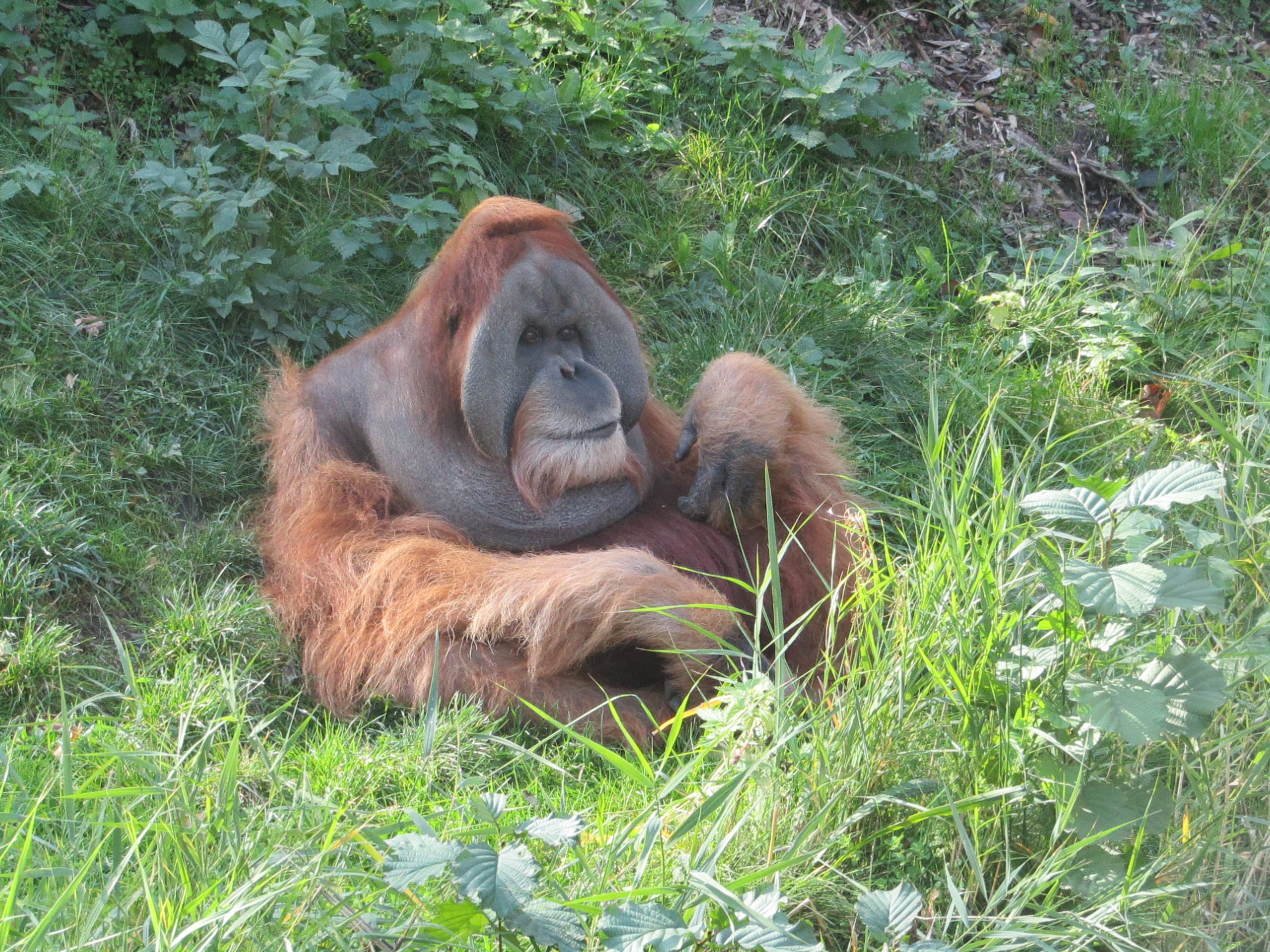
The Sumatran Orangutan lives only on the island of Sumatra in Indonesia. Slimmer and more agile than the Bornean species, it is known for its longer hair and lighter build. Many people say Sumatran Orangutans seem a bit more playful, like curious kids exploring their backyard.
Identification
- Thinner body than Bornean Orangutans
- Long, lighter reddish-orange fur
- Males have narrower cheek pads
- Often a longer beard in adult males
Habitat
They live in dense tropical rainforests, especially in northern Sumatra. These forests are rich in fruit trees and tall canopies, perfect for tree-dwelling apes that rarely come down to the ground.
Behavior
Sumatran Orangutans are more social than their Bornean relatives. You might see small groups feeding in the same area, especially when fruit is plentiful. Mothers are gentle teachers, guiding their young like patient schoolteachers in a leafy classroom.
They communicate with calls, facial expressions, and body movements. Adult males make long, loud calls that echo through the forest, almost like jungle music, to let others know where they are.
Diet
Fruit makes up most of their diet, along with leaves, insects, and sometimes small animals. Because Sumatra’s forests are rich in fruit, these orangutans enjoy a more fruit-heavy menu than other types.
Interesting Facts
- They are among the most tree-loving of all great apes.
- They use sticks to extract insects or seeds.
- They can remember fruiting seasons and travel long distances for food.
Conservation
Sumatran Orangutans are also critically endangered. Their forests are shrinking fast, mainly due to farming and development. Conservation groups work to protect remaining habitats and stop illegal hunting.
Losing them would be like losing a wise old storyteller from the forest. Each one carries knowledge passed down through generations.
3. Tapanuli Orangutan (Pongo tapanuliensis)
Overview
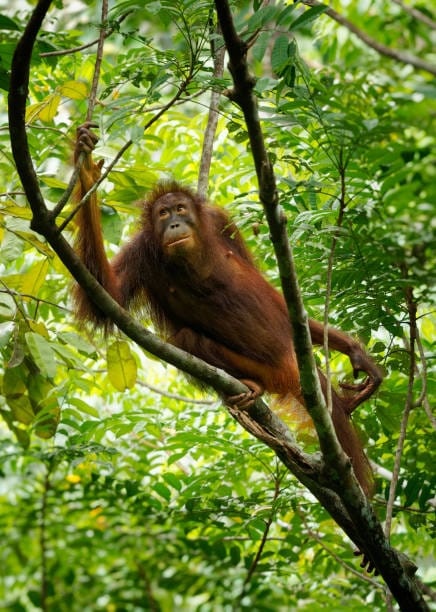
The Tapanuli Orangutan is the newest recognized species, described by scientists in 2017. It lives in a small area of southern Sumatra and is considered the rarest of all orangutans. Many people have never heard of it, making it like a hidden treasure of the jungle.
Identification
- Smaller head with frizzier hair
- Curly, cinnamon-colored fur
- Flatter face compared to other orangutans
Habitat
They live in hill forests and rugged terrain, often at higher elevations than other orangutans. These forests are cooler and harder to reach, which has helped them stay hidden for so long.
Behavior and Diet
Tapanuli Orangutans are shy and hard to observe. They eat fruits, leaves, insects, and seeds. Like other orangutans, they build nests every night and live mostly alone except for mothers with young.
Conservation
With fewer than 800 individuals left, this species faces a very serious future. Roads, mining, and forest clearing threaten their small home range. Protecting this area is vital if they are to survive.
4. Northwest Bornean Orangutan (Pongo pygmaeus pygmaeus)
Overview
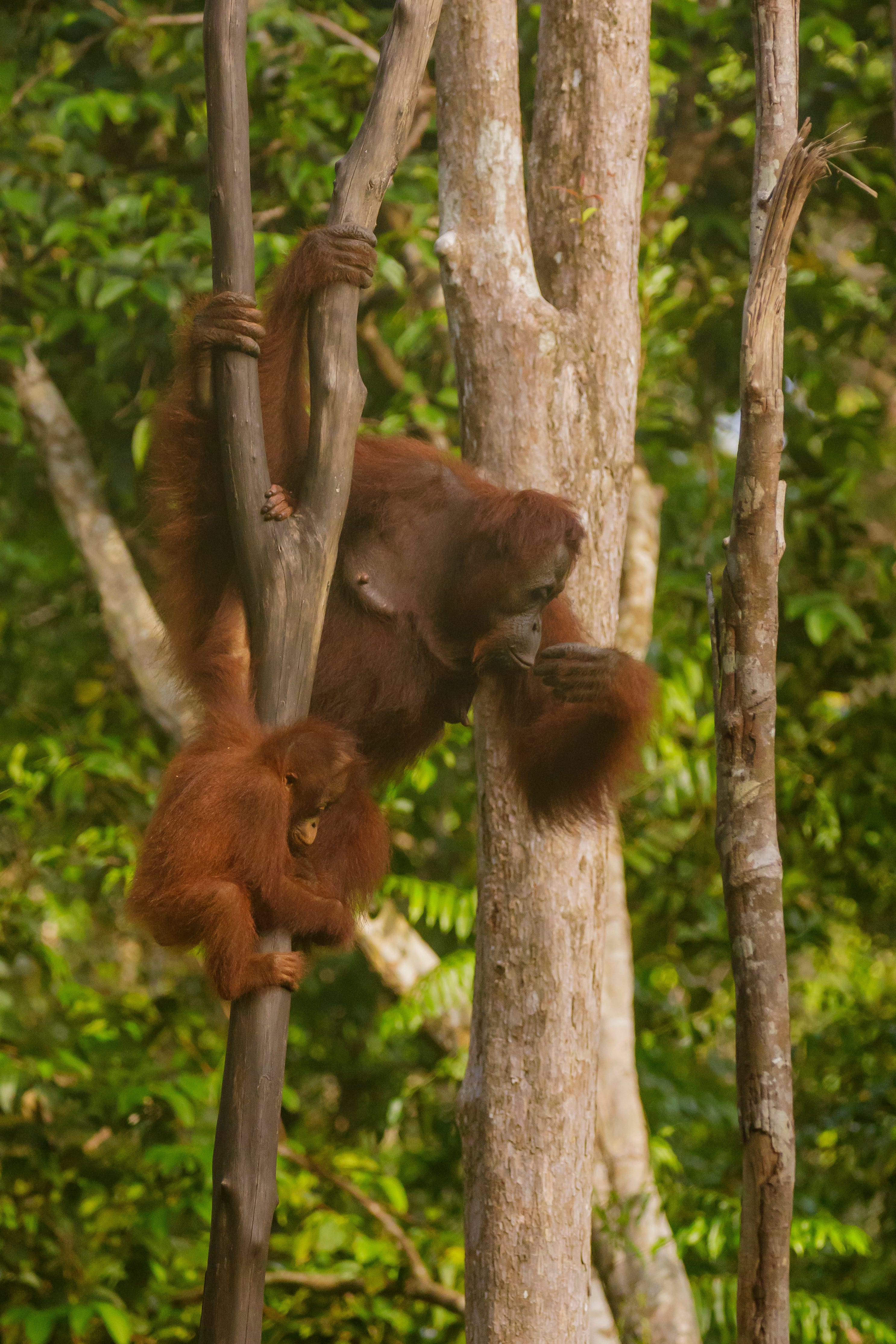
This is a subspecies of the Bornean Orangutan, found in the northwest part of Borneo. While similar in many ways to other Bornean orangutans, it shows differences in size, skull shape, and fur color.
Identification and Habitat
They have slightly darker fur and live in forests closer to coastal and river areas. Like their relatives, they are tree dwellers and skilled nest builders.
Behavior and Conservation
Solitary and calm, they feed mainly on fruit and forest plants. Habitat loss remains their biggest threat, making forest protection crucial.
5. Central Bornean Orangutan (Pongo pygmaeus wurmbii)
Overview
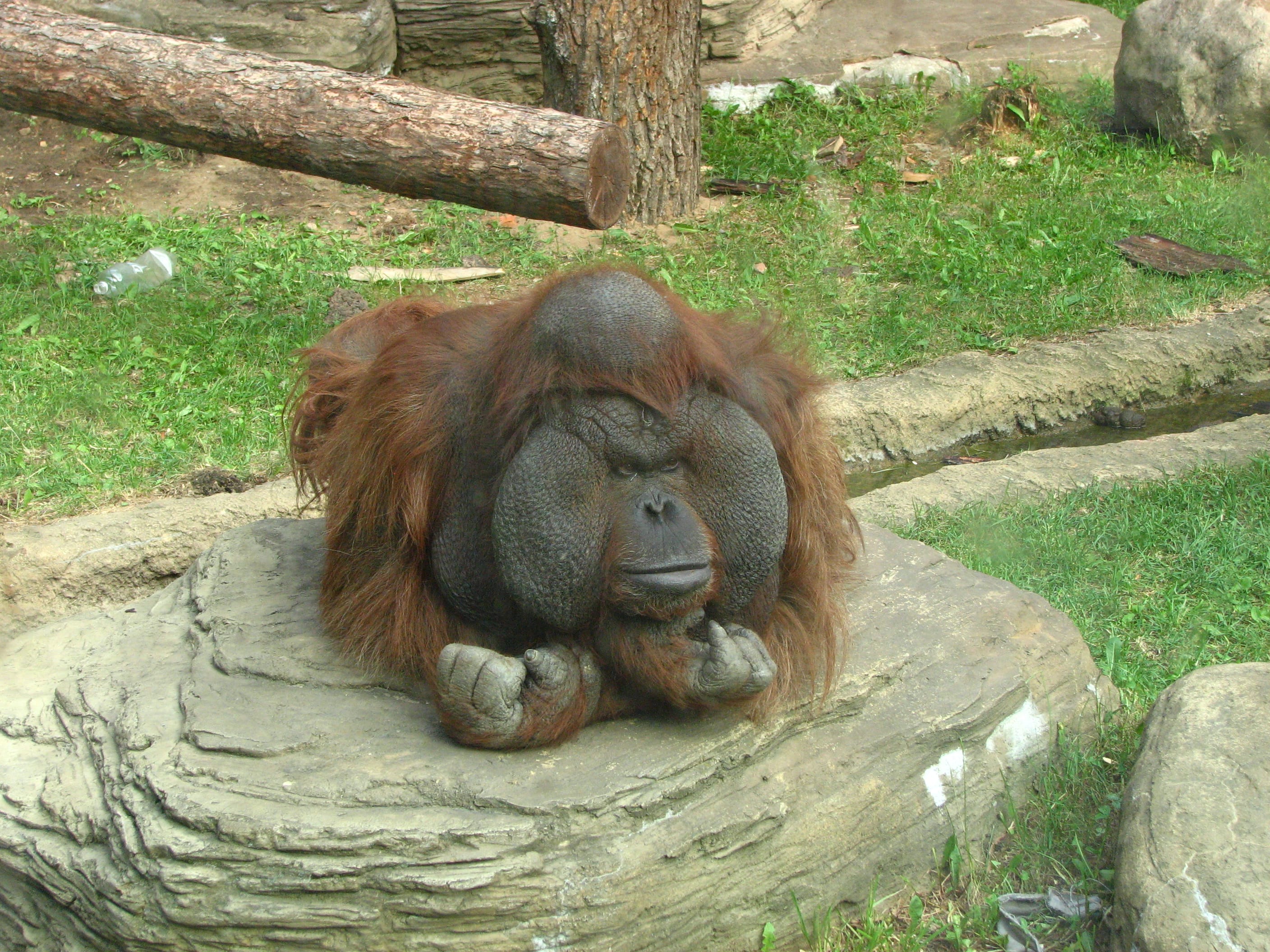
The Central Bornean Orangutan is another subspecies of the Bornean Orangutan, living in central parts of the island. It is one of the largest in size among orangutans.
Identification and Habitat
They often have darker faces and thicker fur. They inhabit swamp forests and lowland rainforests rich in fruit trees.
Behavior and Conservation
These orangutans live quiet lives high in the canopy, raising young slowly and carefully. Like all orangutans, they are threatened by deforestation and need strong protection efforts.
Conclusion
Learning about the Types of Orangutans helps us see just how diverse and remarkable these great apes are. From the powerful Bornean Orangutan to the rare Tapanuli Orangutan, each type tells a story of survival in the treetops. Orangutans remind us that forests are more than trees; they are homes filled with lives that depend on our choices. If this guide sparked your curiosity, consider supporting conservation efforts, sharing what you’ve learned, and staying curious about wildlife. After all, protecting orangutans today means future generations can still look up and see red-haired giants swinging through green skies.
Frequently Asked Questions About Types of Orangutans
1. What are orangutans?
Orangutans are great apes native to Southeast Asia, known for their reddish hair, long arms, and tree-dwelling lifestyle.
2. How many types of orangutans are there?
There are three main species of orangutans and several recognized subspecies, often grouped into five common types.
3. What does “Types of Orangutans” mean?
It refers to the different species and subspecies of orangutans found in Borneo and Sumatra.
4. Where do orangutans live?
They live in tropical rainforests on the islands of Borneo and Sumatra in Southeast Asia.
5. Are orangutans monkeys or apes?
Orangutans are apes, not monkeys, because they lack tails and have more complex behavior.
6. What is the largest type of orangutan?
The Central Bornean Orangutan is generally the largest in body size.
7. What is the rarest type of orangutan?
The Tapanuli Orangutan is the rarest, with fewer than 800 individuals left in the wild.
8. How can I tell different orangutans apart?
You can look at body size, fur length, face shape, and where they live.
9. Do all orangutans have cheek pads?
No, only fully grown adult males develop large cheek pads called flanges.
10. Why do orangutans have long arms?
Their long arms help them swing and climb through trees to find food and build nests.
11. What do orangutans eat?
They mainly eat fruit, but also leaves, bark, flowers, insects, and sometimes eggs.
12. Are orangutans social animals?
They are mostly solitary, except for mothers with their young.
13. How long do orangutans live?
In the wild, orangutans can live around 35 to 45 years.
14. Do orangutans live on the ground?
Most of their lives are spent in trees, though they may come down occasionally.
15. How smart are orangutans?
They are very intelligent and can use tools, solve problems, and learn by watching others.
16. Do orangutans build nests?
Yes, they build a new nest from branches and leaves every night to sleep.
17. Can orangutans swim?
They can swim if needed, but usually avoid deep water.
18. How often do orangutans have babies?
Females give birth about once every 7 to 9 years, one of the longest intervals among mammals.
19. How long do baby orangutans stay with their mothers?
Young orangutans stay with their mothers for up to 7 or 8 years to learn survival skills.
20. What sounds do orangutans make?
They make grunts, kisses, and long calls, especially adult males calling across the forest.
21. Are orangutans dangerous to humans?
They are usually shy, but can defend themselves if threatened or stressed.
22. Why are orangutans endangered?
Forest loss, illegal hunting, and the pet trade are the main reasons.
23. What is being done to protect orangutans?
Rescue centers, forest protection, and laws against hunting help conserve them.
24. What is a rehabilitation center?
It is a place where rescued orangutans are cared for and taught how to live in the wild again.
25. Can orangutans live in zoos?
Some live in zoos for education and conservation, but forests are their natural homes.
26. How heavy can an orangutan be?
Adult males can weigh up to 90 kilograms (about 200 pounds).
27. Do orangutans use tools?
Yes, they use sticks to get insects or seeds and leaves as gloves or umbrellas.
28. What is special about Tapanuli Orangutans?
They are the newest recognized species and live in a very small area of Sumatra.
29. Are Bornean and Sumatran Orangutans different?
Yes, Bornean Orangutans are larger, while Sumatran Orangutans are slimmer and more social.
30. Why are orangutans called “people of the forest”?
The word “orangutan” comes from Malay and means “person of the forest.”
31. How far can orangutans reach with their arms?
Their arm span can reach over 2 meters from fingertip to fingertip.
32. Do orangutans have predators?
Tigers, clouded leopards, and humans can be threats in some areas.
33. How do orangutans help the forest?
They spread seeds through their droppings, helping new trees grow.
34. Are orangutans active during the day or night?
They are mostly active during the day and sleep at night in nests.
35. Can orangutans recognize themselves?
Yes, they can pass mirror tests, showing self-awareness.
36. Do orangutans feel emotions?
They show emotions like joy, fear, and affection, especially between mothers and young.
37. How many orangutans are left in the wild?
There are fewer than 120,000 left across all types, and numbers are declining.
38. Can orangutans learn from humans?
Yes, in rescue centers they can learn simple tasks and behaviors from caretakers.
39. What happens if forests disappear?
Orangutans lose their homes and food, making survival very hard.
40. How can people help orangutans?
Support conservation groups, avoid products linked to forest loss, and share knowledge.
41. Why should we care about orangutans?
They are part of healthy forests, and protecting them also protects many other species.
42. Are orangutans closely related to humans?
Yes, they share about 97% of their DNA with humans.
Read more:
- 100 Types of Sharks (Pictures And Identification)
- 45 Types of Monkeys (Pictures And Identification)
- 3 Types of Monkeys in West Africa (Pictures and Identification)
- 3 Types of Monkeys in East Africa (Pictures and Identification)
- 7 Types of Baboons (Pictures And Identification)
- 6 Types of Chimpanzees (Pictures And Identification)
- 50 Types of Mammals (Pictures And Identification)
- 30 Types of Apes (Pictures And Identification)