

If you are searching for types of kingfishers, this complete wildlife guide will help you understand one of the most colorful and fascinating bird families on Earth. Kingfishers are small to medium-sized birds known for their brilliant plumage, sharp hunting skills, and strong association with water habitats. Found across rivers, lakes, forests, and coastal regions, they are expert fish hunters but many species also eat insects, reptiles, and small amphibians. In this article, we explore 35 different kingfisher species in a clear, beginner-friendly way. Each bird is reviewed based on appearance, habitat, behavior, and identification features to help birdwatchers and wildlife lovers easily recognize them in the wild.
35 Types of Kingfishers – Complete Wildlife Identification Guide

Kingfishers belong to a diverse bird family found across the world, especially in tropical and subtropical regions. Their bright colors and fast hunting style make them one of the most admired bird groups in wildlife observation. Below, we begin with the first five species in our full list of 35 kingfishers.
1. Common Kingfisher

The Common Kingfisher is one of the most widely recognized kingfishers in Europe, Asia, and North Africa. It has a small body, bright blue upper feathers, and orange underparts, making it easy to identify near freshwater habitats.
This species is highly dependent on clean rivers, lakes, and streams where it hunts small fish. It uses a “dive hunting” technique, waiting patiently on branches before plunging into the water at high speed. Its sharp beak is perfectly adapted for catching slippery prey.
The Common Kingfisher is a symbol of healthy waterways because it requires clear, unpolluted water to survive. Its presence often indicates a balanced aquatic ecosystem.
2. Belted Kingfisher

The Belted Kingfisher is a stocky, medium-sized bird found mainly in North America. Unlike many bird species where females are less colorful, female Belted Kingfishers are actually more vibrant, with an additional rusty band across their chest.
This bird prefers lakes, rivers, and coastal waters. It is known for its loud, rattling call that can often be heard before it is seen. It hunts by hovering above water before diving headfirst to catch fish.
Belted Kingfishers are territorial and often defend their hunting areas aggressively. They nest in burrows dug into riverbanks, which helps protect their eggs from predators.
3. Collared Kingfisher

The Collared Kingfisher is a widespread tropical species found across Asia, Australia, and the Pacific islands. It is easily recognized by its bright blue-green wings and distinctive white collar marking around its neck.
Unlike strictly river-dependent species, this kingfisher adapts well to coastal areas, mangroves, and even urban parks. It feeds on insects, crabs, and small reptiles in addition to fish.
Its adaptability makes it one of the most successful kingfisher species across island ecosystems. It is also known for its loud, repetitive call that echoes through tropical forests.
4. White-throated Kingfisher
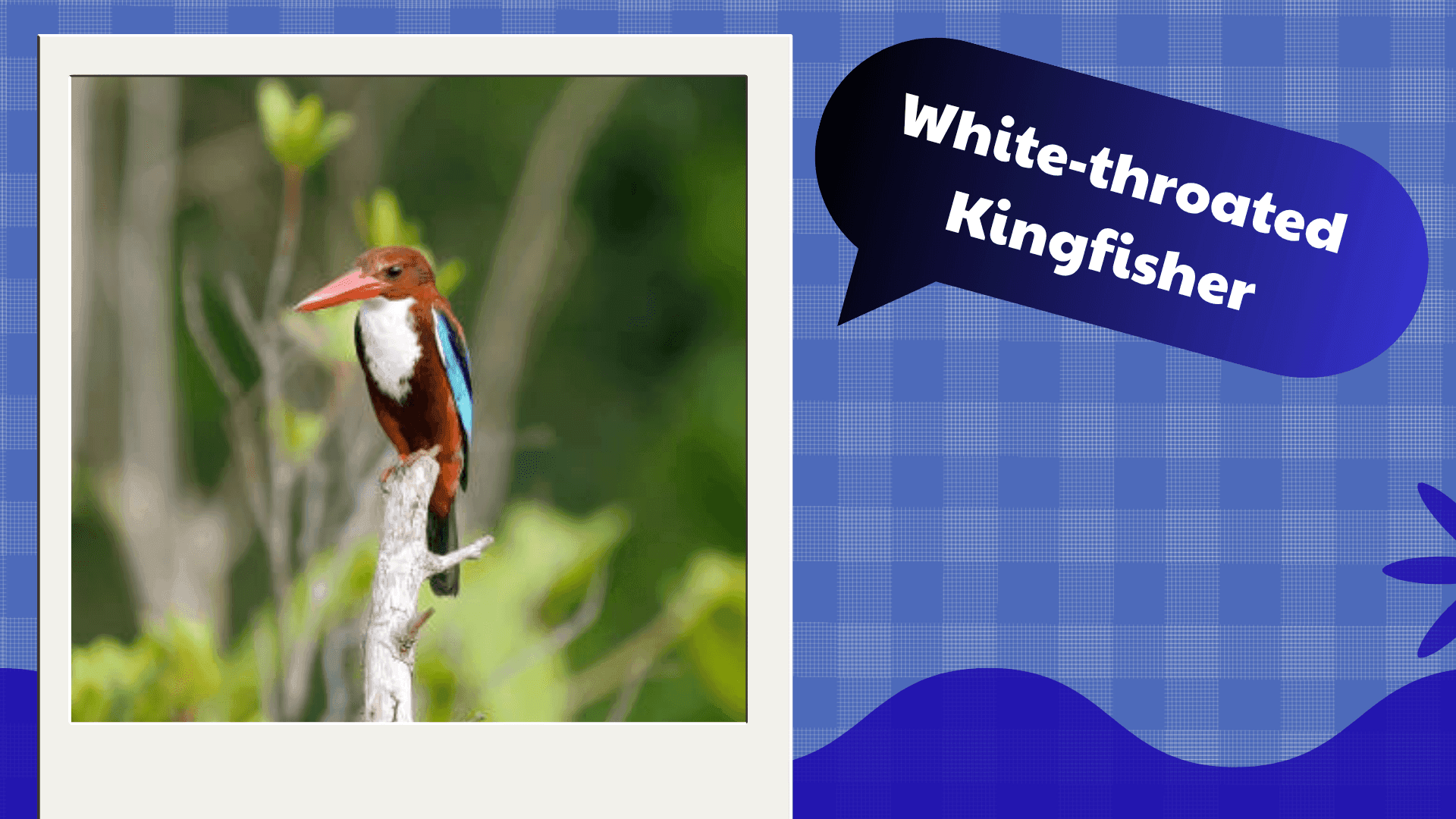
The White-throated Kingfisher is a striking bird found across South and Southeast Asia. It has a bright blue body, chestnut head, and a distinct white throat patch that makes identification easy even from a distance.
This species is not strictly dependent on water. It often hunts in farmland, grasslands, and forest edges, feeding on insects, small reptiles, and amphibians. It is highly adaptable and can survive in dry regions.
White-throated Kingfishers are often seen perched on wires or trees scanning the ground for prey. Their loud, harsh calls are commonly heard in rural landscapes.
5. Pied Kingfisher

The Pied Kingfisher is one of the few kingfishers that can hover in mid-air while hunting. Found across Africa and Asia, it has a black-and-white plumage pattern that makes it easily recognizable.
This species often hunts over lakes and slow-moving rivers, hovering above water before diving to catch fish. Its ability to remain stationary in flight is a rare skill among birds and gives it a unique hunting advantage.
Pied Kingfishers often live in colonies and may nest in riverbanks or sandy cliffs. They are highly social compared to many other kingfisher species.
6. Giant Kingfisher

The Giant Kingfisher is the largest kingfisher species in Africa and one of the most powerful fish hunters in the entire family. It has a bold black-and-white speckled pattern on its chest and a thick, heavy beak designed for catching larger prey.
This species is commonly found near rivers, lakes, and dams where fish are abundant. Unlike smaller kingfishers, it can handle relatively large fish, crustaceans, and even small reptiles. It hunts by diving from a perch or hovering briefly above water before striking.
Giant Kingfishers are highly territorial and often seen alone or in pairs. Their loud, deep calls echo across waterways, making them easier to detect than to observe closely.
7. Green Kingfisher

The Green Kingfisher is a small but striking species found in Central and South America. It has dark green upperparts with white spotting and a crisp white collar, giving it a clean and sharp appearance.
It prefers slow-moving streams, ponds, and mangrove edges where it can easily spot small fish and aquatic insects. Unlike larger kingfishers, it often hunts from low perches close to the water surface.
Despite its small size, the Green Kingfisher is an efficient predator. It plays an important role in controlling insect and fish populations in freshwater ecosystems.
8. Azure Kingfisher
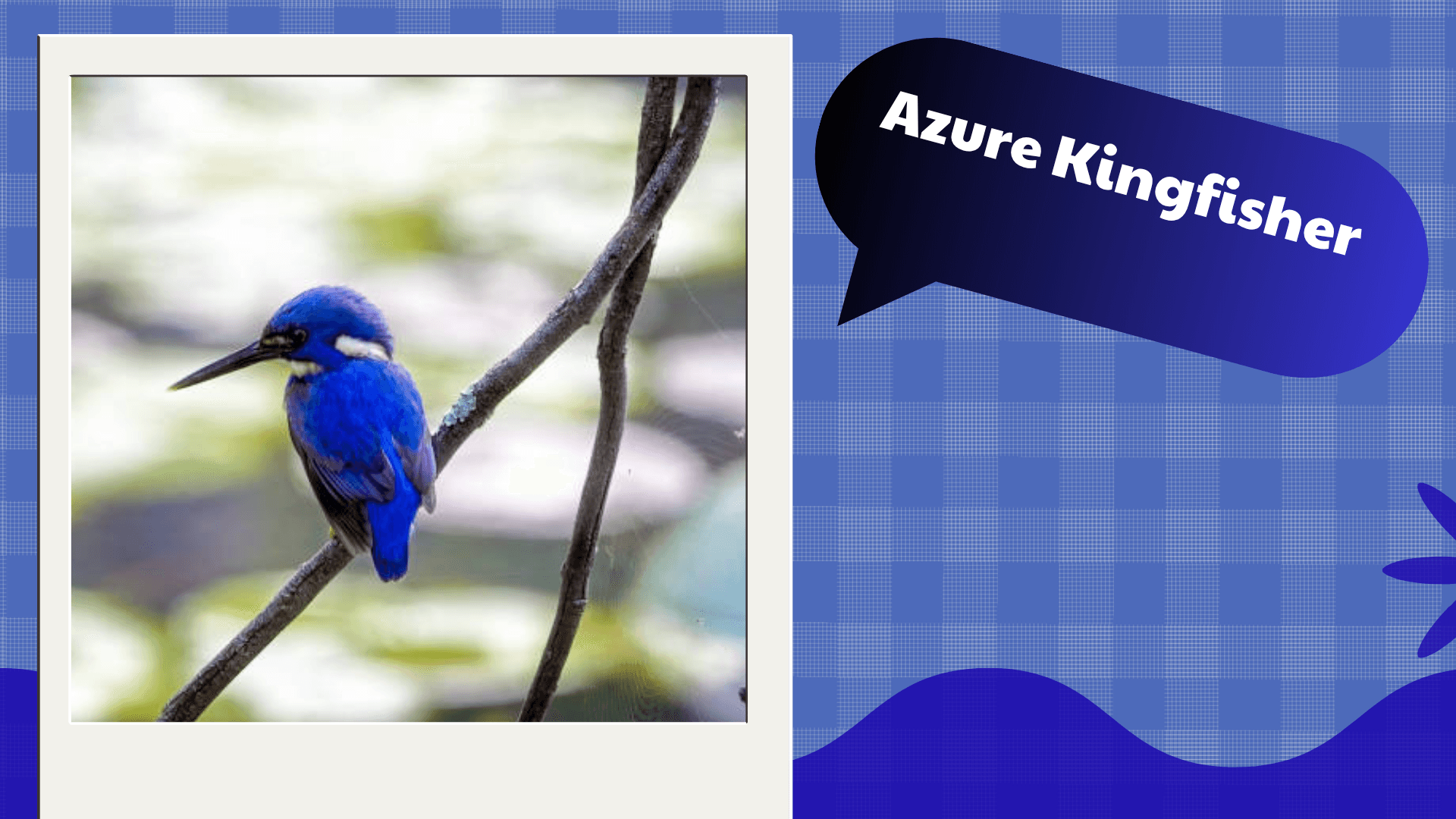
The Azure Kingfisher is one of the most visually stunning kingfishers, native to Australia and New Guinea. It has an intense electric-blue back and bright orange underparts that make it stand out in dense riverine vegetation.
This species prefers shaded freshwater habitats such as rainforest streams and slow-flowing rivers. It is highly secretive and often remains hidden among overhanging branches.
The Azure Kingfisher hunts small fish, aquatic insects, and freshwater crustaceans. It dives quickly into the water from low perches and returns to the same spot after each successful hunt.
9. Laughing Kookaburra
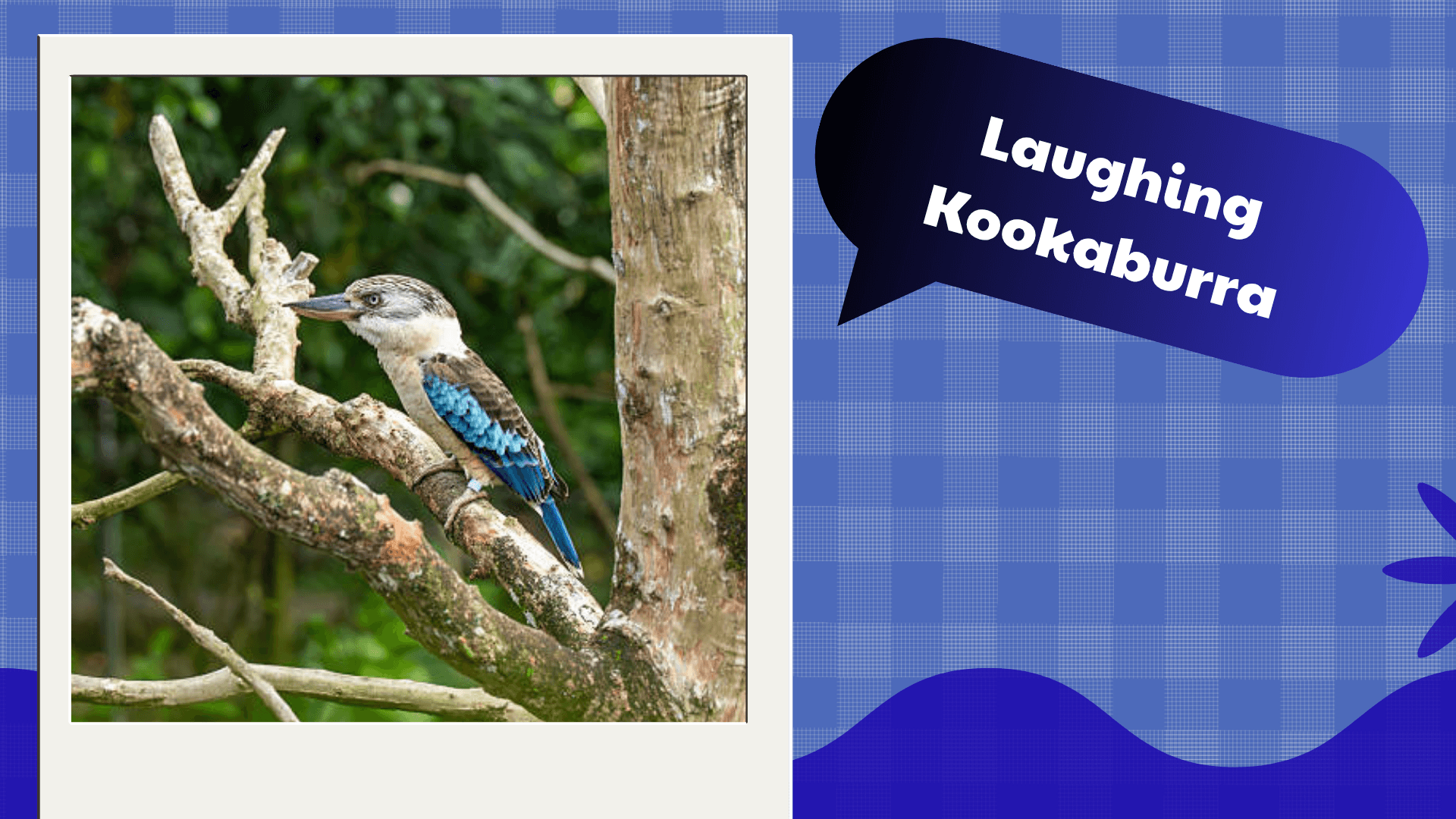
The Laughing Kookaburra is one of the most famous kingfishers in the world, known for its loud, laughing call that resembles human laughter. Native to Australia, it is much larger and more terrestrial than typical kingfishers.
Unlike river-dependent species, the Laughing Kookaburra hunts in woodlands, forests, and suburban areas. It feeds on insects, small reptiles, rodents, and even snakes.
This species is highly social and often lives in family groups. Its cooperative behavior helps protect territory and raise young successfully, making it one of the most intelligent members of the kingfisher family.
10. Sacred Kingfisher

The Sacred Kingfisher is a widely distributed species found in Australia, New Zealand, and parts of the Pacific Islands. It has turquoise-blue wings, a pale underbody, and a strong, straight beak.
This bird inhabits coastal mangroves, woodlands, and riverbanks. It is highly adaptable and can survive in both forested and semi-arid environments.
Sacred Kingfishers feed on insects, crabs, small reptiles, and fish. During breeding season, they excavate nests in termite mounds or soft riverbanks, providing safe shelter for their eggs and chicks.
11. Forest Kingfisher

The Forest Kingfisher is a beautiful tropical bird found mainly in Australia and New Guinea. It has a bright turquoise-blue back, white underparts, and a strong black eye stripe that gives it a sharp, focused look.
Despite its name, this species is not strictly limited to dense forests. It is often found in open woodland, savanna edges, and even urban parks. It prefers areas with scattered trees where it can perch and scan the ground for prey.
Forest Kingfishers feed mainly on insects, small reptiles, and occasionally fish. They hunt by dropping from a perch onto prey on the ground, showing impressive speed and accuracy. Their adaptability makes them successful across a wide range of habitats.
12. Stork-billed Kingfisher

The Stork-billed Kingfisher is one of the largest kingfishers in Asia. It has a massive red bill, blue-green upper body, and a pale buff underbelly, giving it a bold and powerful appearance.
This species prefers lowland rivers, lakes, mangroves, and coastal wetlands. Unlike smaller kingfishers, it can handle larger prey such as fish, frogs, crabs, and even small birds or reptiles.
It is a solitary and territorial bird, often seen perched silently near water. When it hunts, it uses a direct and forceful dive rather than hovering, relying on strength rather than precision hovering skills.
13. Ruddy Kingfisher

The Ruddy Kingfisher is a striking species known for its rich reddish-brown plumage. It is found in parts of South and Southeast Asia, often in dense forests near streams and rivers.
Unlike many brightly colored kingfishers, this species blends into forest shadows, making it harder to spot. It prefers low-light environments and is often more active during dawn and dusk.
It feeds on insects, small amphibians, and lizards. The Ruddy Kingfisher is also known for its deep, resonant calls that echo through forest valleys, especially during breeding season.
14. Black-capped Kingfisher

The Black-capped Kingfisher is one of the most colorful and distinctive kingfishers in Asia. It has a bright blue body, reddish underparts, and a black cap that contrasts sharply with its vibrant plumage.
This species is commonly found in mangroves, coastal forests, and inland wetlands. Unlike strictly aquatic kingfishers, it often hunts on land, feeding on crabs, insects, lizards, and small rodents.
Black-capped Kingfishers are migratory in some regions, moving seasonally in response to weather and food availability. Their loud, rolling calls are often heard before they are seen.
15. Blue-eared Kingfisher

The Blue-eared Kingfisher is a small, elegant bird found in Southeast Asia’s dense tropical forests. It is named after the bright blue patches near its ear area, which stand out against its orange underparts.
This species prefers shaded forest streams and slow-moving water bodies. It is highly secretive and often stays hidden in thick vegetation, making it difficult to observe in the wild.
It feeds mainly on small fish and aquatic insects. The Blue-eared Kingfisher relies on quick, precise dives from low branches, using stealth rather than speed to capture prey successfully.
16. Oriental Dwarf Kingfisher

The Oriental Dwarf Kingfisher is one of the smallest and most colorful kingfishers in the world. It has a brilliant mix of deep purple, orange, blue, and red tones, making it look almost like a jewel in motion.
This species is found in South and Southeast Asia, especially in dense tropical forests with streams and shaded water pools. Despite its tiny size, it is an efficient predator that feeds on insects, small frogs, and tiny fish.
The Oriental Dwarf Kingfisher is highly secretive and often stays hidden in thick vegetation. Its beauty is best appreciated during quick glimpses as it darts between forest shadows.
17. Brown-winged Kingfisher

The Brown-winged Kingfisher is a striking coastal species found mainly in Southeast Asia. It is easily identified by its brown wings, blue head, and bright reddish underparts.
Unlike river-focused kingfishers, this species prefers mangroves, coastal forests, and estuaries. It often perches quietly on branches near water, scanning for crabs, insects, and small reptiles.
This kingfisher is relatively shy and less frequently seen than other species, but its strong bill and patient hunting style make it a successful coastal predator.
18. Crested Kingfisher

The Crested Kingfisher is one of the largest river kingfishers found in Asia. It has a bold black-and-white spotted pattern and a noticeable shaggy crest on its head, giving it a powerful appearance.
It inhabits fast-flowing rivers and mountain streams where water is clear and oxygen-rich. It is highly specialized in catching fish, often diving from rocks or low branches into rushing water.
This species prefers colder, high-altitude environments compared to many tropical kingfishers. Its presence often indicates clean and healthy river ecosystems.
19. Shovel-billed Kingfisher

The Shovel-billed Kingfisher is one of the most unusual members of the kingfisher family. It has a uniquely shaped, wide, and flattened bill that resembles a shovel, adapted for digging and probing.
Found in New Guinea, this species is more terrestrial than aquatic kingfishers. It spends much of its time on the forest floor rather than near water.
It feeds on insects, worms, and small reptiles by digging through leaf litter and soil. Its behavior is very different from typical fish-hunting kingfishers, making it a fascinating evolutionary outlier.
20. Blue-winged Kingfisher

The Blue-winged Kingfisher is a small forest species found in parts of Southeast Asia. It has bright blue wings, orange underparts, and a relatively short tail compared to other kingfishers.
This bird prefers dense lowland forests near slow-moving streams and swampy areas. It is highly secretive and often remains hidden in shaded vegetation.
It feeds on small fish, insects, and amphibians, using quick, precise dives from low perches. Its vibrant coloration helps it stand out when briefly visible in dim forest light.
21. Malachite Kingfisher

The Malachite Kingfisher is one of the most beautiful small kingfishers in Africa. It has a brilliant metallic blue back, orange underparts, and a long sharp beak. Its vibrant coloration makes it easy to spot near freshwater habitats.
This species is commonly found along rivers, lakes, and marshes. It prefers calm, shallow waters where small fish and aquatic insects are abundant. It often perches very close to the water surface, waiting patiently before striking its prey with incredible speed.
Despite its small size, the Malachite Kingfisher is a highly efficient hunter. It plays an important role in controlling insect and fish populations in wetland ecosystems.
22. African Pygmy Kingfisher
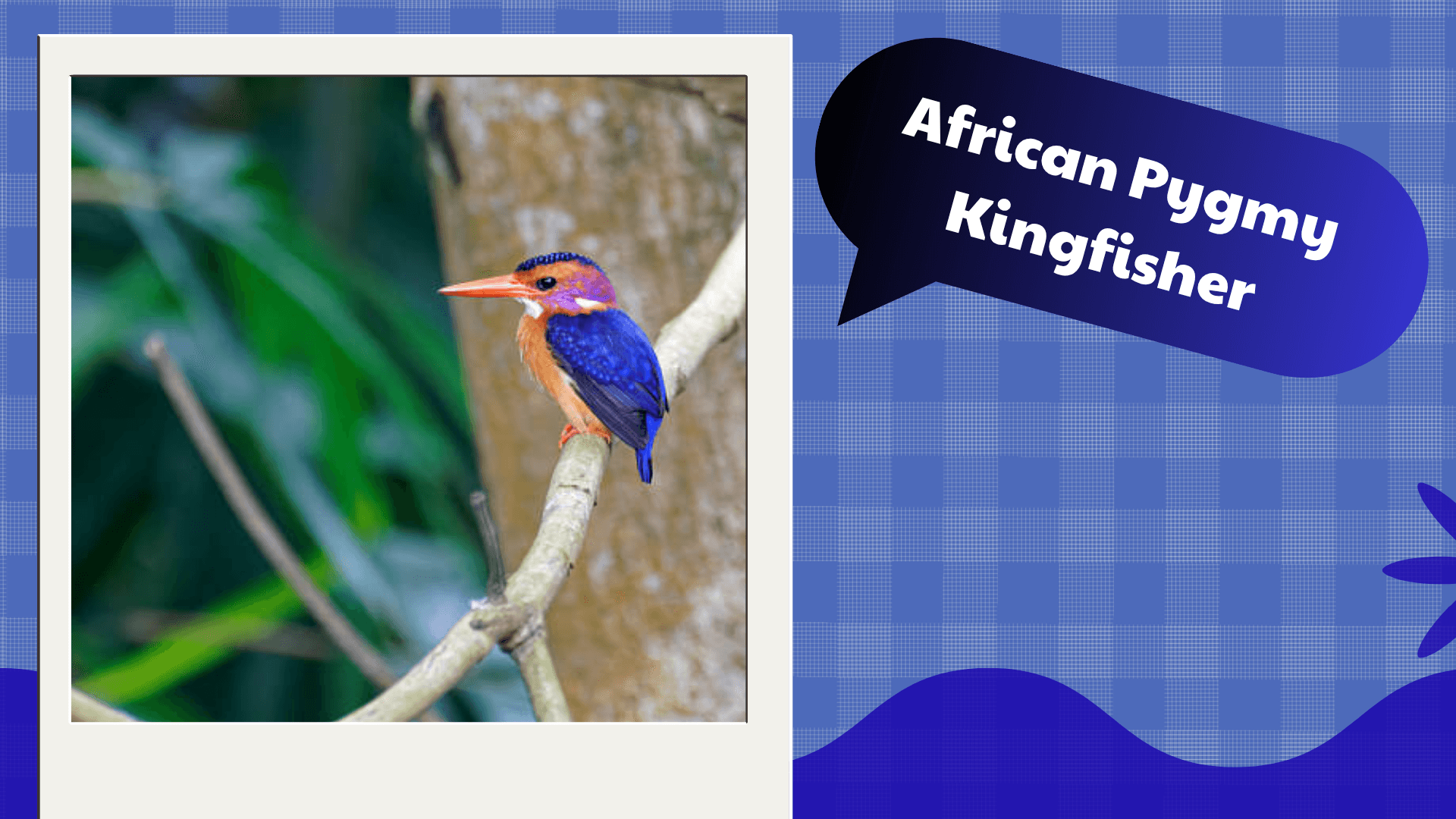
The African Pygmy Kingfisher is one of the smallest kingfisher species in Africa. It has a stunning combination of bright blue wings, orange underparts, and a fine black bill.
Unlike many water-dependent kingfishers, this species is often found in dry woodlands and savannas. It feeds mainly on insects, spiders, and small invertebrates rather than fish.
African Pygmy Kingfishers are often seen perched quietly on low branches. Their small size and fast movements make them difficult to observe, but their bright colors make them unforgettable when spotted.
23. Banded Kingfisher
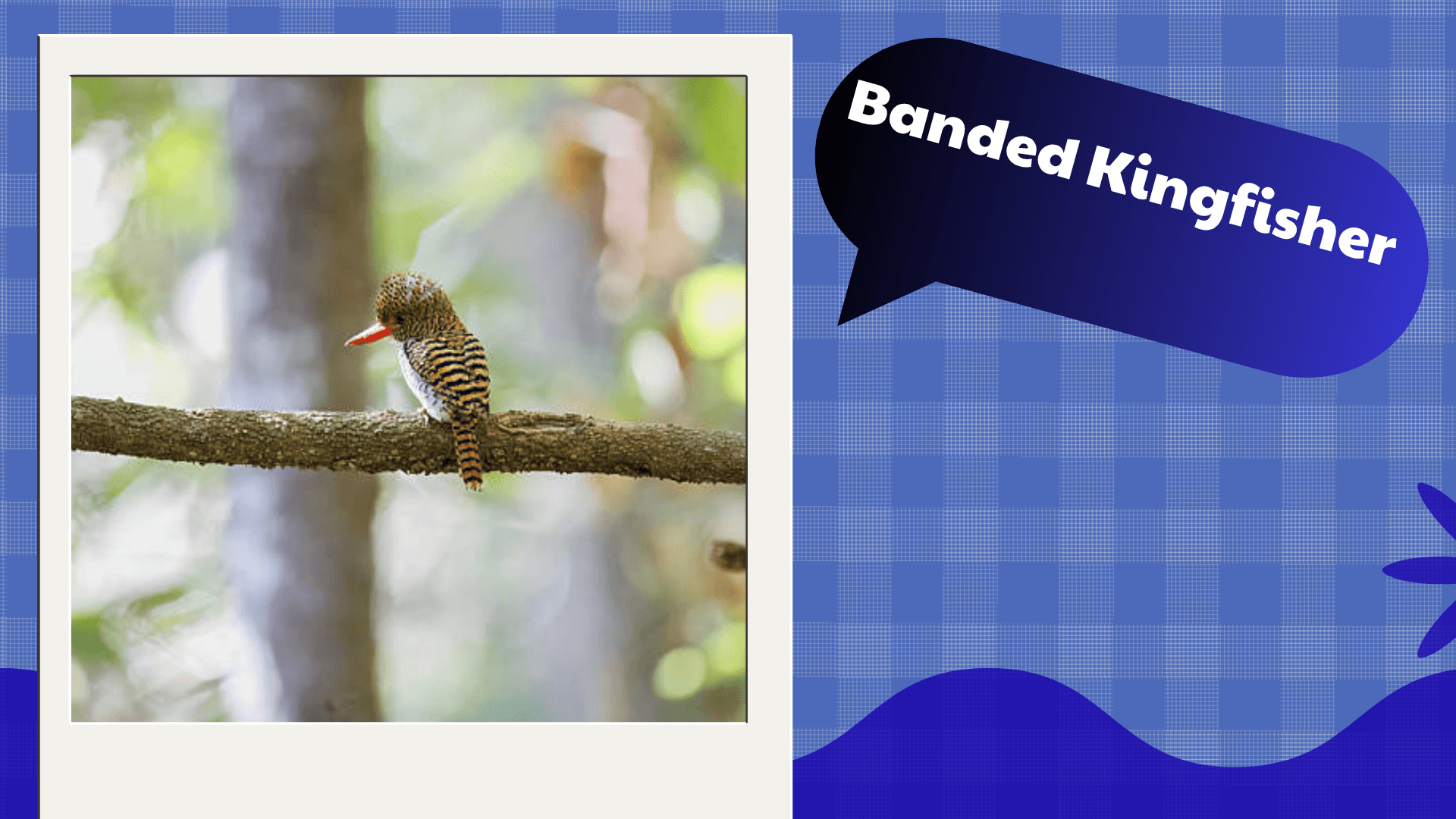
The Banded Kingfisher is a rare and striking species found in parts of Southeast Asia. It is named for the bold black and white banding pattern on its chest, which contrasts with its blue wings and reddish belly.
This bird prefers dense lowland forests and is usually found far from human activity. It is highly secretive and spends much of its time hidden in the canopy or mid-level forest layers.
It feeds on insects, small reptiles, and occasionally small amphibians. Due to its elusive nature, sightings of this species are considered special among birdwatchers.
24. Smyrna Kingfisher

The Smyrna Kingfisher, also known as the White-throated Kingfisher in some regions, is a large and bold bird found across the Middle East and parts of Asia. It has a strong red bill, blue wings, and a white throat patch.
This species is highly adaptable and can live in forests, farmland, and semi-urban areas. Unlike strictly aquatic kingfishers, it often hunts far from water.
It feeds on insects, lizards, rodents, and small snakes. Its loud calls and confident behavior make it one of the most noticeable kingfishers in open landscapes.
25. Chocolate-backed Kingfisher

The Chocolate-backed Kingfisher is a beautiful forest-dwelling species found in Central and West Africa. It is named for its rich brown back, which contrasts with its bright blue wings and tail.
This species prefers dense tropical rainforests, especially near streams and swampy areas. It is highly secretive and often remains hidden in the mid-canopy layer of the forest.
It feeds mainly on insects, small frogs, and other invertebrates. Its soft, high-pitched calls are often heard before it is seen, making it a mysterious presence in rainforest ecosystems.
26. Half-collared Kingfisher
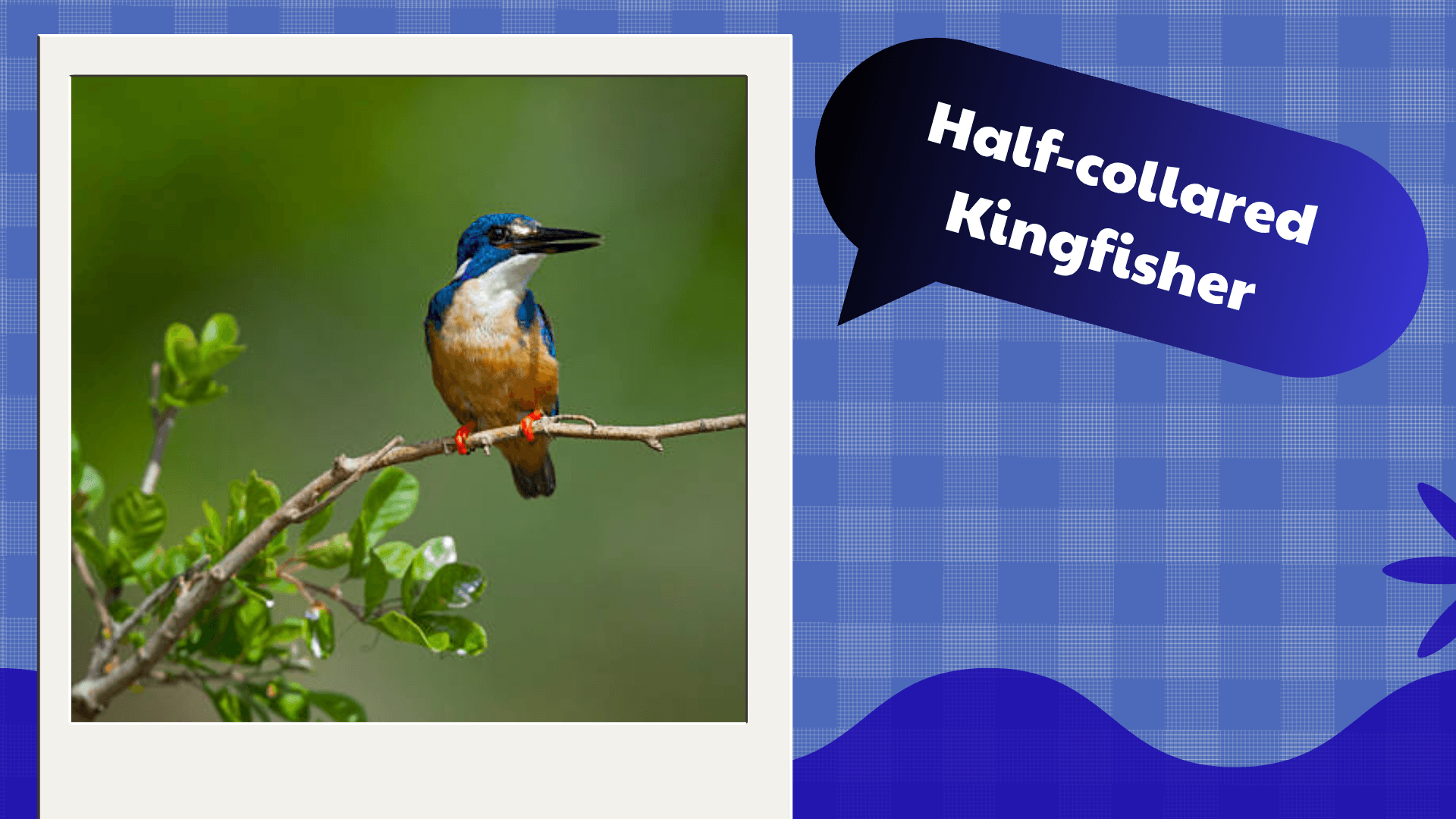
The Half-collared Kingfisher is a stunning African species known for its deep blue plumage and partial white collar marking. It is usually found along fast-flowing forest streams where water is clean and shaded by dense vegetation.
This species is a highly skilled hunter, feeding mainly on fish and aquatic insects. It waits silently on low branches before diving with precision into clear water. Its presence is often an indicator of high-quality freshwater habitats.
27. Grey-headed Kingfisher

The Grey-headed Kingfisher is widely distributed across sub-Saharan Africa. It has a grey head, bright blue wings, and a rusty-orange belly, making it visually distinctive.
Unlike many kingfishers, it is not strictly tied to water. It is often found in dry savannas and woodland areas where it hunts insects, lizards, and small rodents.
This adaptability allows it to survive in regions where water sources are limited, making it one of the most flexible African kingfishers.
28. Woodland Kingfisher

The Woodland Kingfisher is a loud and colorful species found across sub-Saharan Africa. It has bright blue wings, a white chest, and a strong reddish bill.
It prefers open woodland, savanna, and forest edges. It is highly territorial and often announces its presence with a loud, repetitive call.
This species feeds on insects, small reptiles, and amphibians, often hunting from exposed perches such as tree branches or fences.
29. Striped Kingfisher
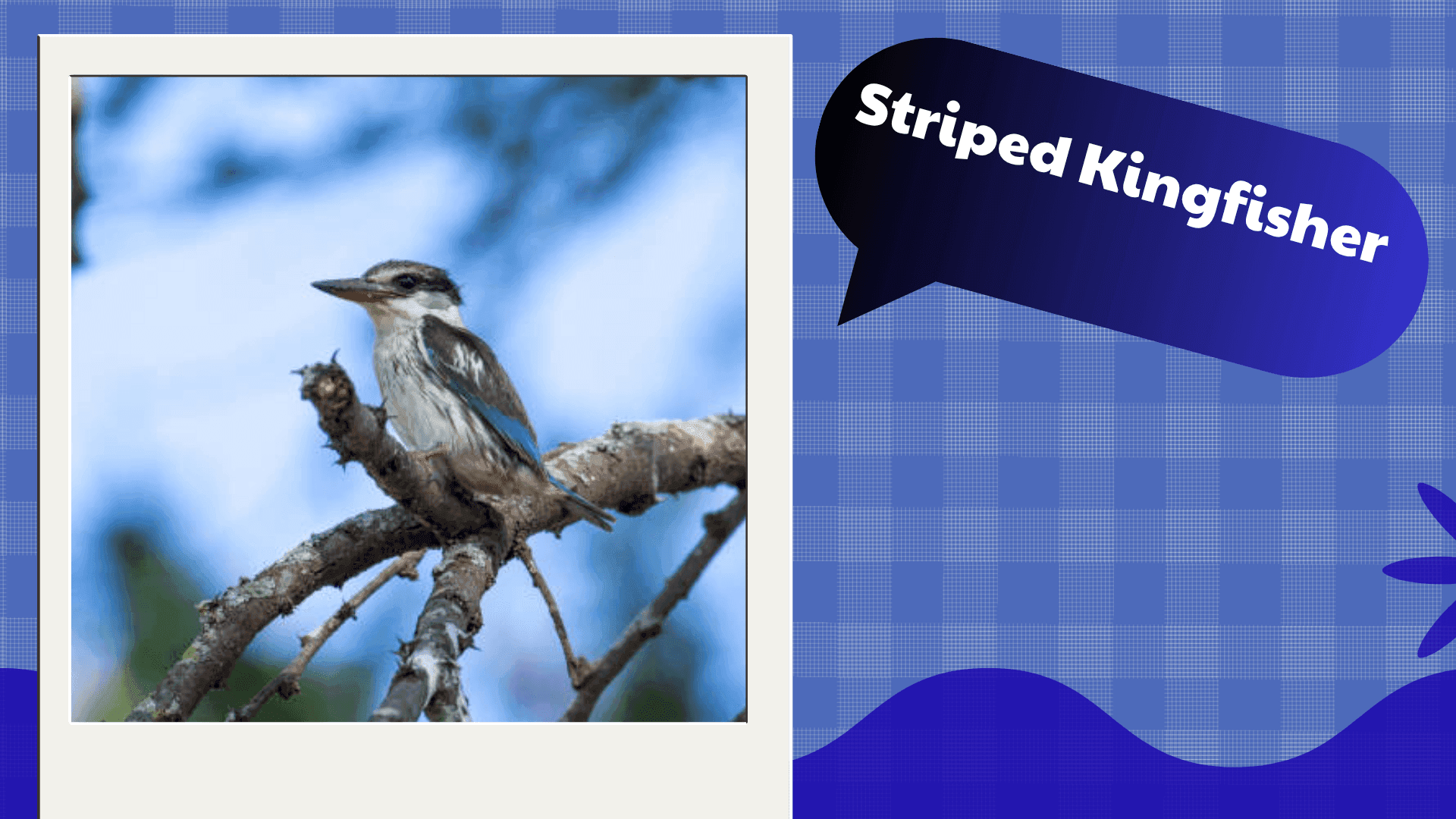
The Striped Kingfisher is a medium-sized African species known for its fine black striping across the head and chest. It has a more subdued coloration compared to other kingfishers.
It inhabits dry savannas and open bushland, where it hunts insects and small vertebrates on the ground rather than in water.
This species is often seen perched on shrubs or termite mounds, scanning the ground for movement before striking quickly.
30. Amazon Kingfisher
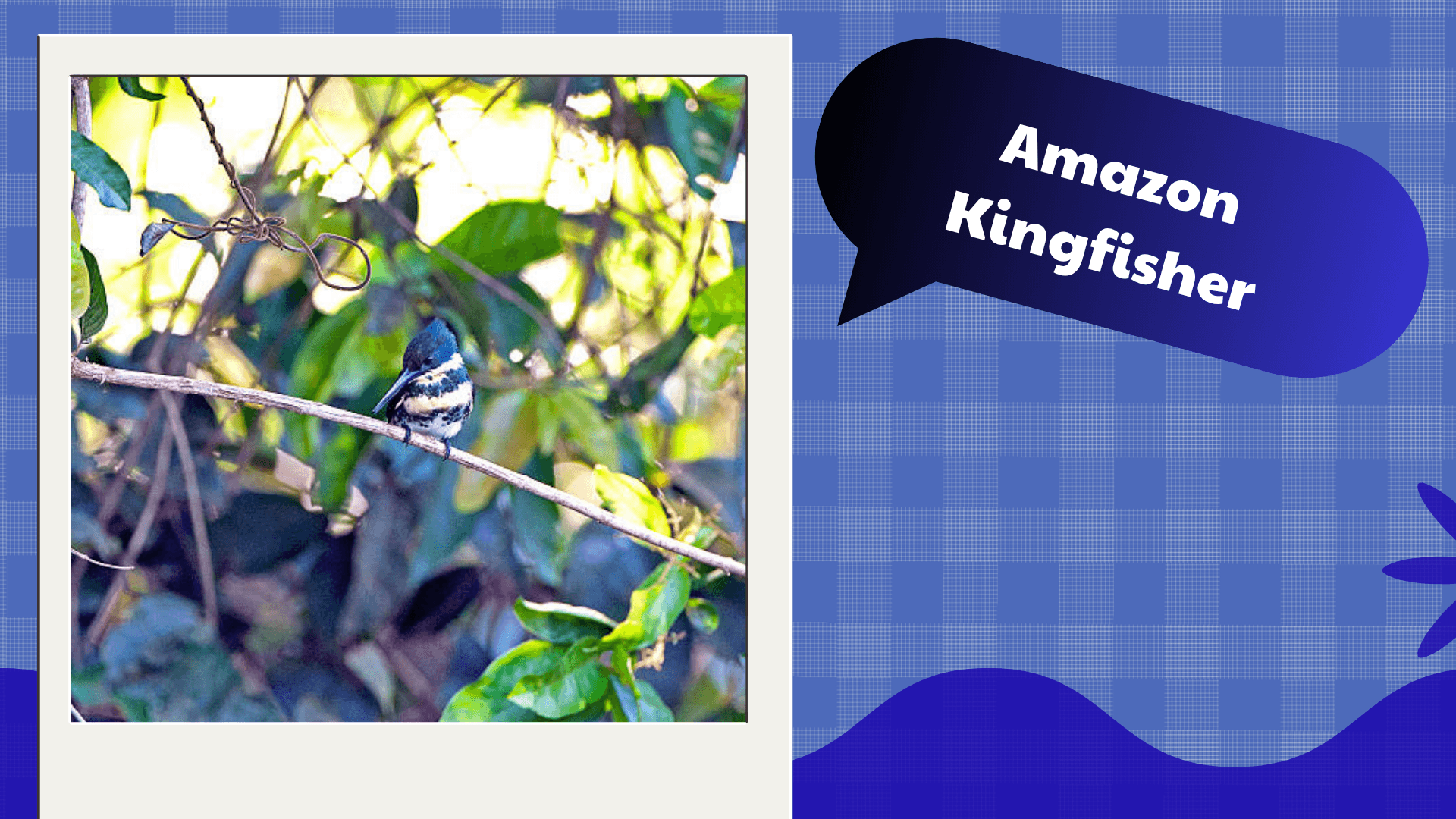
The Amazon Kingfisher is a large, powerful species found throughout Central and South America. It has a heavy bill, greenish-blue plumage, and a strong presence along rivers and lakes.
It is highly dependent on freshwater ecosystems and is often seen perched near slow-moving rivers, waiting to dive for fish.
This species is an efficient predator and plays an important role in controlling fish populations in tropical waterways.
31. Ringed Kingfisher

The Ringed Kingfisher is one of the largest kingfishers in the Americas. It has a thick bill, grey-blue upper body, and a distinctive rust-colored belly band.
It prefers large rivers, lakes, and coastal areas. It is capable of catching relatively large fish compared to smaller kingfisher species.
This bird is often territorial and can be seen perched high above water, scanning for prey before diving forcefully.
32. Shining-blue Kingfisher

The Shining-blue Kingfisher is a small African species with brilliant iridescent blue plumage. It is usually found in forested wetlands and shaded streams.
It is a shy bird that prefers dense vegetation and is often heard more than seen. It feeds mainly on small fish and aquatic insects.
Its shimmering feathers make it one of the most visually striking small kingfishers in its range.
33. Little Kingfisher
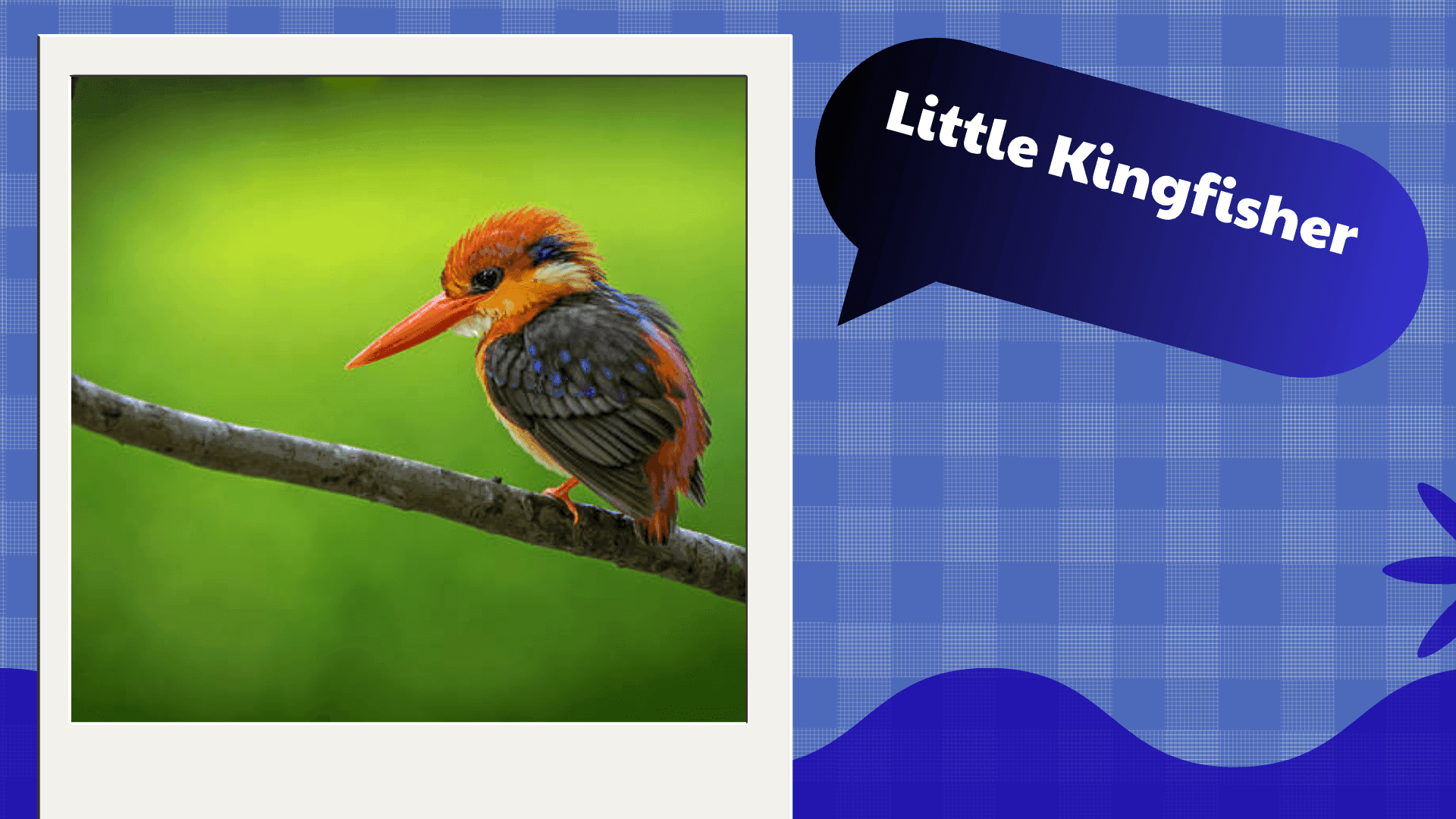
The Little Kingfisher is one of the smallest kingfisher species in the world, found in northern Australia and New Guinea. It has bright blue upperparts and white underparts.
It prefers mangroves, slow rivers, and swampy forest edges. It is highly secretive and often stays hidden in dense vegetation.
Despite its size, it is a skilled hunter of small fish and aquatic insects.
34. Cerulean Kingfisher

The Cerulean Kingfisher is a rare and visually striking species with bright sky-blue coloration. It inhabits tropical forests and river systems in parts of Asia and island regions.
It is typically solitary and prefers undisturbed habitats. It hunts from low perches and dives into shallow water to catch prey.
Its rarity and beauty make it a prized sighting for birdwatchers and wildlife photographers.
35. Sacred Kingfisher
The Sacred Kingfisher is found across Australia, New Zealand, and many Pacific islands. It has turquoise-blue wings, a pale chest, and a strong, straight beak.
This species is highly adaptable and can live in forests, wetlands, and coastal areas. It is known for nesting in termite mounds or tree hollows.
It feeds on insects, crabs, fish, and small reptiles, making it one of the most versatile hunters among kingfishers.
Final Conclusion: Types of Kingfishers
Across all 35 types of kingfishers, we see a remarkable story of adaptation, color diversity, and ecological specialization. From forest-dwelling insect hunters to powerful river fishers, kingfishers have evolved to thrive in almost every habitat where water or prey is available.
These birds are not only beautiful but also ecologically important, helping control insect and fish populations while serving as indicators of healthy ecosystems. Whether hidden in dense rainforest or perched beside open rivers, kingfishers remain one of the most fascinating bird families on Earth.
As you explore the natural world, keep an eye on rivers, wetlands, and forests—you might just spot one of these incredible birds in action, but how many of these kingfishers have you seen in the wild yourself?
FAQ: Types of Kingfishers (50+ Detailed Questions & Answers)
1. What are kingfishers?
Kingfishers are a family of brightly colored birds known for their sharp beaks, fast diving ability, and strong hunting skills. They belong to the family Alcedinidae and are found across rivers, forests, wetlands, and coastal regions worldwide. Most species are famous for catching fish, but many also eat insects, reptiles, and small amphibians.
2. Why are they called kingfishers?
The name “kingfisher” comes from their well-known behavior of catching fish with precision. Early observers saw their skillful fishing technique as “king-like,” leading to the name. Over time, it became a standard term for this bird family.
3. How many types of kingfishers exist?
There are around 90–120 species of kingfishers worldwide, depending on classification systems. In this guide, we explored 35 major and well-known species distributed across continents.
4. Where do kingfishers live?
Kingfishers live in diverse habitats including rivers, lakes, mangroves, forests, wetlands, savannas, and even urban parks. Their presence is closely linked to water availability, although some species live far from water sources.
5. What do kingfishers eat?
Most kingfishers eat fish, but many species also consume insects, crabs, frogs, lizards, small birds, and rodents. Their diet depends heavily on habitat and species specialization.
6. Are all kingfishers good at fishing?
No. While many species are expert fish hunters, some kingfishers rarely eat fish. Forest species often rely on insects and land-based prey instead of aquatic hunting.
7. How do kingfishers hunt?
Kingfishers typically hunt by perching quietly above water or open ground, then diving quickly to capture prey. Their sharp eyesight and fast reflexes allow them to strike with high accuracy.
8. Why are kingfishers so colorful?
Their bright colors come from microscopic feather structures that reflect light, not just pigments. This creates iridescent blues, greens, and oranges that change depending on lighting conditions.
9. Do kingfishers migrate?
Some kingfisher species migrate seasonally, especially those living in temperate regions. Others in tropical climates remain in the same area year-round due to stable food availability.
10. Are kingfishers social birds?
Most kingfishers are solitary and territorial. However, a few species, like kookaburras, are highly social and live in family groups.
11. How fast can kingfishers dive?
Kingfishers can dive at very high speeds, often exceeding 40 km/h. Their streamlined bodies help them cut through water efficiently when catching prey.
12. Do kingfishers build nests?
Yes, most kingfishers build nests in burrows dug into riverbanks, sandy cliffs, or termite mounds. These tunnels provide safety from predators and weather conditions.
13. How long do kingfishers live?
Kingfishers typically live 5–15 years in the wild depending on species and environmental conditions. Predation and habitat loss can affect lifespan.
14. What is the smallest kingfisher?
The African Pygmy Kingfisher and Little Kingfisher are among the smallest species, measuring only a few inches in length but still highly efficient hunters.
15. What is the largest kingfisher?
The Giant Kingfisher and Stork-billed Kingfisher are among the largest species, capable of hunting relatively large prey including bigger fish and crustaceans.
16. Are kingfishers aggressive?
Yes, many kingfishers are highly territorial and will defend their feeding and nesting areas aggressively against intruders, including other birds.
17. Do kingfishers have predators?
Yes, they are preyed upon by larger birds of prey, snakes, mammals, and sometimes larger fish when they dive into water.
18. Can kingfishers see underwater?
Yes, kingfishers have excellent vision that allows them to see prey underwater. Their eyes quickly adjust when entering and exiting water.
19. Why do kingfishers dive headfirst?
Diving headfirst reduces water resistance and allows them to maintain speed and accuracy when catching fish or aquatic prey.
20. Do kingfishers eat only live prey?
Yes, kingfishers primarily hunt live prey. They rely on movement detection, so they do not typically feed on dead animals.
21. How do kingfishers catch slippery fish?
Their sharp beaks and fast strike timing help them grip slippery fish. They often swallow prey head-first to prevent escape.
22. Do kingfishers live in cities?
Some adaptable species can live near urban rivers, parks, and reservoirs if food and nesting sites are available.
23. Are kingfishers endangered?
Most species are not endangered, but habitat destruction, pollution, and water pollution threaten some localized populations.
24. What affects kingfisher populations?
Key threats include habitat loss, water pollution, deforestation, and climate change affecting food availability.
25. How do kingfishers communicate?
They use loud calls, body posture, and territorial displays to communicate with other birds, especially during breeding seasons.
26. Do kingfishers use tools?
No, kingfishers do not use tools. Their hunting relies entirely on vision, speed, and precision diving techniques.
27. Why do kingfishers perch before hunting?
Perching allows them to scan water or ground for movement before making a precise attack on prey.
28. Can kingfishers swim?
No, kingfishers are not swimmers. They only dive briefly into water and quickly return to perches.
29. How do kingfishers avoid getting wet feathers?
Their feathers have water-resistant properties that help them shed water quickly after diving.
30. Do kingfishers reuse nests?
Some species reuse nesting sites, especially if conditions remain safe and stable, but many dig new burrows each season.
31. What makes kingfishers excellent hunters?
Kingfishers are excellent hunters because they combine sharp vision, fast reflexes, and precise diving ability. Their eyes are specially adapted to detect movement both above and below water. When they spot prey, they calculate distance quickly and strike with extreme accuracy. Their long, pointed beaks reduce water resistance, allowing them to catch prey efficiently without losing speed or balance.
32. How do kingfishers avoid injury when diving?
Kingfishers have compact, streamlined bodies that reduce impact when hitting water. Their skull structure is strong enough to absorb force, and their feathers are water-resistant, helping them re-emerge quickly. They also close their eyes just before impact, protecting them from debris and water pressure.
33. Why do kingfishers prefer clear water?
Clear water allows kingfishers to see prey more easily. In murky water, visibility is reduced, making hunting less efficient. Many species depend on clean rivers and lakes, so water clarity is often a strong indicator of habitat quality for these birds.
34. Do kingfishers hunt at night?
Most kingfishers are diurnal, meaning they hunt during the day. Their vision is adapted for daylight hunting, especially in bright or filtered light near water surfaces. Night hunting is very rare among kingfisher species.
35. How do kingfishers choose hunting spots?
Kingfishers select hunting perches based on visibility, prey availability, and safety. They prefer branches or rocks that provide a clear view of water or ground movement. These spots allow them to remain still while scanning for prey.
36. Why are some kingfishers not near water?
Not all kingfishers rely on fish. Forest and woodland species have adapted to feed on insects, reptiles, and small mammals. This allows them to live far from rivers or lakes, expanding their ecological range significantly.
37. What is the difference between forest and river kingfishers?
River kingfishers primarily hunt fish and depend on aquatic habitats. Forest kingfishers, on the other hand, hunt terrestrial prey like insects and lizards and often live in woodland or jungle environments.
38. How do kingfishers raise their young?
Kingfishers typically dig burrows in riverbanks, termite mounds, or soft soil. The female lays eggs inside the tunnel, and both parents often help feed the chicks after hatching. The nest provides protection from predators and weather.
39. How many eggs do kingfishers lay?
Most kingfishers lay between 3 to 7 eggs per clutch, depending on the species. Larger species may lay fewer eggs, while smaller species can lay slightly more.
40. How long does it take kingfishers to hatch?
Incubation usually lasts 2 to 4 weeks. After hatching, chicks remain in the nest for several weeks before becoming independent and learning to hunt.
41. Do both parents care for chicks?
Yes, in most species both male and female kingfishers participate in feeding and protecting the chicks. This shared responsibility increases survival rates.
42. Why do kingfishers dig tunnels?
Tunnels provide safe nesting areas away from predators and environmental risks. They also maintain stable temperature and humidity for developing eggs.
43. Can kingfishers live in cold climates?
Some species can survive in temperate or cold regions, but they prefer areas where water does not freeze completely, as frozen water limits feeding opportunities.
44. How do kingfishers adapt to different habitats?
Kingfishers adapt by changing diet, hunting style, and nesting behavior. Some species shift from fishing to insect hunting depending on habitat conditions.
45. What role do kingfishers play in ecosystems?
They help control fish, insect, and small animal populations. This maintains ecological balance and supports healthy aquatic and terrestrial ecosystems.
46. Are kingfishers territorial?
Yes, most kingfishers are highly territorial. They defend feeding and nesting areas aggressively to ensure access to food resources.
47. How do kingfishers mark territory?
They use loud vocal calls, visual displays, and aggressive chasing behavior to warn other birds to stay away from their territory.
48. Do kingfishers migrate long distances?
Some species migrate seasonally, especially in colder regions. Tropical species usually remain in the same area year-round due to stable food availability.
49. How fast can kingfishers fly?
Kingfishers are fast and direct flyers, often reaching speeds of 30–50 km/h in short bursts, especially during hunting or territorial defense.
50. Why are kingfishers considered indicator species?
They are sensitive to environmental changes, especially water quality. Their presence often indicates a healthy ecosystem, while their absence may signal pollution or habitat degradation.
51. What threats do kingfishers face?
Major threats include habitat destruction, water pollution, deforestation, and climate change. These factors reduce food availability and nesting sites.
52. Can kingfishers survive habitat loss?
Some adaptable species can survive in altered environments, but specialized species often decline rapidly when habitats are destroyed or degraded.
53. How do kingfishers interact with humans?
Kingfishers generally avoid humans but may live near human settlements if clean water and food sources are available. They are often admired for their beauty.
54. Why are kingfishers popular among birdwatchers?
Their bright colors, fast hunting behavior, and unique calls make them highly attractive to birdwatchers and wildlife photographers.
55. What is the most important fact about kingfishers?
The most important fact is that kingfishers are both predators and environmental indicators. They reflect the health of ecosystems and help maintain balance in nature through their hunting behavior.