

People often imagine weasels as small, sneaky animals darting through forests, but Ontario is home to several types of these quick hunters. If you’re curious about wildlife or trying to figure out what you saw near a trail, learning the main types of weasels in Ontario can help you. This guide gives you clear details about five species and close relatives found across the province, using simple explanations anyone can follow. The goal is to help you understand how each species looks, lives, and moves through the landscape. And by the end, you’ll see how varied these animals are, even though they all belong to the same family. If you’ve been searching for dependable information about the types of weasels in Ontario, this introduction sets you on the right path.
1. Short-Tailed Weasel (Ermine)
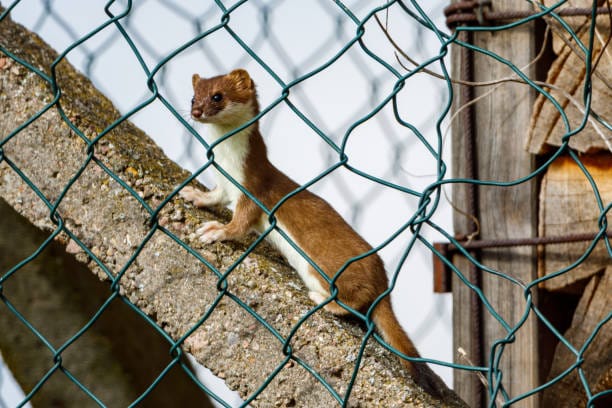
The short-tailed weasel, often called the ermine, is probably the one most people picture when they think of a classic weasel. It’s small, fast, and always alert, as if it has a built-in alarm system buzzing in the background. In summer, it wears a brown coat on top and white on the belly. In winter, many individuals shift into a full white coat. This seasonal change helps them blend into snow-covered ground, a useful skill for a predator that relies on speed and surprise. The only thing that stays the same is the jet-black tail tip, which almost looks like someone dipped the end in ink.
Even though they look cute, don’t let the size fool you. A short-tailed weasel is one of the boldest hunters in its size class. It chases mice through burrows, climbs after birds, and even takes on prey slightly larger than itself. It burns energy fast, so it needs regular meals. But instead of wandering aimlessly, it follows scent trails, listens for soft sounds, and checks every hole and log like a detective who never clocks out. People who observe them often describe them as “restless,” and honestly, that might be the most fitting word.
This weasel lives across much of Ontario, from rural fields to thick forests. It has a habit of slipping into barns or sheds where rodents hide, which is why farmers sometimes consider it helpful. Their movement is fun to watch: a bouncy hop that looks almost playful. But every little jump has purpose. Each pause is a moment of calculation. Think of it like watching someone play a fast-moving strategy game but with fur and sharp teeth.
The short-tailed weasel uses old burrows instead of digging deep homes. It doesn’t need fancy architecture; it only needs a safe spot to rest and raise young. Females give birth in spring, and the kits grow fast. By autumn, they’re ready to move on their own, though many stay close to familiar hunting areas. Their territory isn’t huge, but it’s defended well. If another weasel wanders through, sparks can fly.
Some people wonder if these animals are aggressive toward humans. The truth is, they aren’t looking for trouble. They’ll defend themselves if cornered, the same way any small predator would, but most of the time they slip away unseen. If you’ve ever caught a quick glimpse of something white dashing between snowbanks, it might have been an ermine living its busy life. When talking about types of weasels in Ontario, this species deserves first mention because it’s widespread and often the most recognized.
2. Long-Tailed Weasel
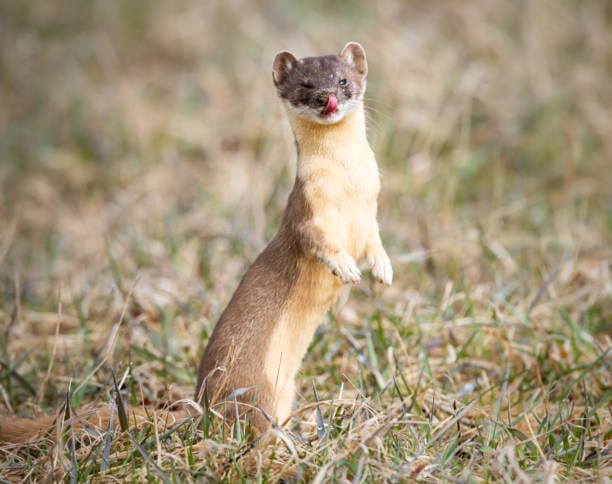
The long-tailed weasel stands taller and leaner than its short-tailed cousin. The tail, as the name says, is the giveaway. It makes up nearly half the body length and ends with a black tip. This makes the long-tailed weasel look a little like a stretched-out version of the ermine. In summer, the brown coat blends well with dry grass and woodland edges. In colder regions of Ontario, some individuals turn white in winter, though not as consistently as the ermine. The pattern depends on snow levels and local climate.
This species is bold. I’ve watched one chase a chipmunk across a log as if it were late for something important. The long-tailed weasel doesn’t give up easily. It slips through cracks, climbs rough bark, and uses its sharp senses to track prey. It eats mice, voles, shrews, birds, eggs, and even frogs. If it fits in the jaws, the weasel at least considers it. That’s how it stays fed in different seasons.
Long-tailed weasels prefer mixed landscapes. Forest edges, marsh borders, and abandoned fields all provide cover and food. They use fallen logs like highways and inspect rock piles the way someone might check storage rooms. They rarely stay still for more than a few seconds. You might see one stand tall on its hind legs to scan the area, then drop back down and dart off like a slingshot.
Their dens are simple. They sometimes take over rodent nests or slip beneath roots. Inside, they stash extra food. This habit may sound strange, but it helps them survive lean times. If winter storms come through, they already have a backup plan. Care for young begins in spring. The mother raises several kits, teaching them to hunt through play. Watching young weasels practice pouncing is charming, like watching miniature acrobats with too much energy.
People sometimes mistake this species for the short-tailed weasel because both turn white in winter. The best clue is the longer tail and larger body. The long-tailed weasel also behaves differently. It covers more ground and tends to explore open spaces with more confidence. Of all the weasels in Ontario, this one feels like the “adventurer” of the group—always testing boundaries, always moving, always curious about what lies beyond the next log.
3. Least Weasel
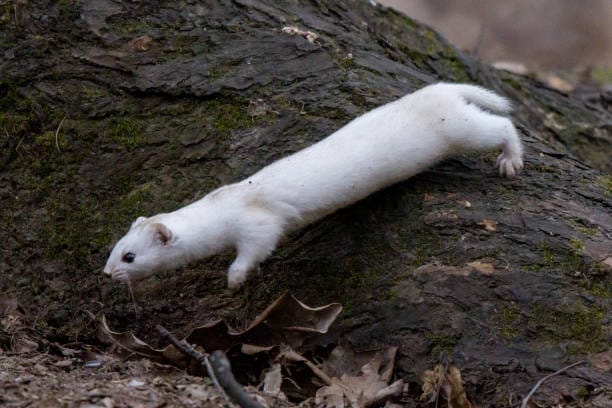
The least weasel is the smallest carnivore in the world, which sounds like bragging rights for something barely bigger than a hotdog. But this tiny hunter is fierce. It moves like a wind-up toy set to maximum speed. At first glance, you might not believe something so small could take down prey nearly its size, but the least weasel doesn’t seem bothered by limits. It knows exactly what it can do, and that confidence is part of what makes it interesting to watch.
In Ontario, the least weasel shows up in grassy fields, forest edges, and farms. It prefers areas with lots of rodents, since mice and voles make up most of its meals. Its coat is brown on top and white below during warm months. Some turn white in winter, depending on snow cover. Because it’s so small, it slides into tiny holes other predators can’t reach, giving it access to hiding places full of prey.
It doesn’t dig big homes. Instead, it borrows former rodent nests and makes minor adjustments. The main job is staying fed, so it keeps moving from one burrow to the next. If a mouse dives into a hole, the least weasel can follow with ease. This ability gives it a big advantage. It looks delicate, but it’s a serious hunter.
People rarely see this species because it moves fast and usually stays low to the ground. When spotted, it may freeze for a moment with bright eyes and a long body stretched like a ribbon. Then it vanishes. If you ever see a flash of brown dart between grass clumps and disappear faster than you can blink, you might have crossed paths with one.
Even though it’s tiny, it plays an important role. It helps control rodent populations naturally, which benefits farms and natural habitats. This species doesn’t challenge larger animals; it simply focuses on what it does best—finding small prey and staying out of danger. Among types of weasels in Ontario, the least weasel stands out because of its size and speed. Watching one feels like watching a small spark move through the grass.
4. Long-Tailed Weasel (Mustela frenata)

The Long-Tailed Weasel is one of the most talked-about members of the weasel family in North America, and Ontario is no exception. Many people only see a streak of brown or white slipping between rocks or diving into a brush pile, but this species has been part of the province’s ecosystem for generations. It’s quick, bold, and surprisingly clever for such a small animal. If you’ve ever watched one move, you’ll notice it doesn’t walk—it almost bounces with confidence, like it knows the woods better than anyone else.
This species gets its name from its tail, of course. It’s long—roughly half the length of its body—and tipped with black fur. That little black tip is more helpful than most people realize. It acts as a distraction for predators. Hawks and owls often strike at the moving tip instead of the weasel’s body, and that small shift can help the weasel escape. Nature has some strange tricks, and this is one of them.
Long-Tailed Weasels are known for switching “outfits” depending on the season. In summer they wear a coat of rich brown with pale underbellies, blending right into forest floors and farmland edges. Once winter rolls in, many individuals turn almost fully white. This changes how they hunt. In warmer months they slink under plants and fallen logs, using shadows for cover. In winter they hunt openly on the snow because they blend into the landscape. It’s like watching a magician fade in and out of sight.
Their diet is the reason farmers both respect and fear them a bit. They’re experts at hunting mice, voles, chipmunks, and even small rabbits. If a Long-Tailed Weasel moves into an old barn, you can bet the rodent population will shrink fast. But this is also why they sometimes get into trouble. Chickens and pet birds look a lot like prey to a hungry weasel, and that can lead to problems around rural homes. Most wildlife folks suggest tightening up coops rather than blaming the weasel. After all, the bird smells like food—it’s just following instincts.
One of the most interesting things about the Long-Tailed Weasel is how brave it is. You wouldn’t expect a small animal to chase prey larger than itself, but this one often does. There are stories from naturalists who watched them go after rabbits that weighed three or four times more than the weasel. They move fast, latch on with sharp little teeth, and don’t let go. It’s a bit shocking to witness, but it explains why weasels have survived across Canada for so long.
You might think such a fierce hunter would be aggressive toward people, but that’s rarely the case. They’re shy and prefer slipping away the moment someone gets close. If you ever spot one, it’ll probably freeze for a moment, stare at you with wide eyes, and then vanish like a ghost into the grass. That disappearing act is something people talk about for years.
This species has an important role in Ontario’s forests, wetlands, and farmlands. Without weasels, rodent numbers would explode, causing damage to crops and wild plant communities. Even larger predators benefit, because they rely on healthy ecosystems built from many small pieces working together. And yes, the Long-Tailed Weasel is one of those pieces.
People sometimes ask how to tell this species apart from the Short-Tailed Weasel. The easiest clue is in the tail. Long-Tailed Weasels have a tail that looks… well… long. It’s proportionally much bigger than that of the Short-Tailed Weasel. Their bodies also look slightly slimmer, and their heads feel narrower and more stretched. Once you get used to the differences, it becomes a bit like bird-watching. You just “know” which one you’re looking at.
Sometimes people worry that spotting a weasel means something is wrong in their yard. But honestly, having one around can be a blessing. If you hear scratching in the walls or see chewed seeds near the shed, a weasel is doing you a favor by clearing out the culprits. They’re fast, efficient, and quiet. A natural pest-control system that doesn’t send you a bill.
As Ontario changes—new developments, shifting habitats, increasing traffic—animals like the Long-Tailed Weasel have to adapt. And they do. They follow fencerows, riverbanks, culverts, and abandoned fields. They weave through the province like tiny shadows. You may never notice them, but they’re there, helping keep things in balance. Their presence is a sign that the landscape still has room for its smaller hunters, and that matters.
5. Least Weasel (Mustela nivalis)

The Least Weasel carries a name that sounds a bit unfair—like it drew the shortest straw. But this small predator is anything but weak. It’s the smallest carnivore in the world, yet it acts like it hasn’t been told that fact. Its size gives it advantages that larger animals could only dream of. It slips through gaps smaller than your fist, moves under snow tunnels made by voles, and darts across open ground with surprising speed. Watching it hunt leaves you with the impression that nature built it with a clear purpose.
In Ontario, the Least Weasel is more widespread than people assume, but it’s also easy to miss. It weighs little more than a small bird and is roughly the length of a smartphone. You’d think that would make it fragile, but its entire body is built for efficiency. Its long spine lets it twist quickly. Its small legs move like springs. And its sharp teeth—well, those are the tools that make rodents nervous.
This species often keeps the same coat pattern as the Short-Tailed Weasel, but the body is shorter and slimmer. In summer it has brown fur on top and pale fur underneath. In winter it usually turns white, though this depends on the region and the weather. Because Ontario experiences cold winters, most Least Weasels here wear that white coat for several months.
The Least Weasel hunts in tight spaces where bigger predators can’t go. Picture a vole tunnel barely wider than a finger. A fox can’t get in. An owl can’t reach. But a Least Weasel can slide right through and chase its prey like a snake with legs. It bites fast and rarely misses. Some farmers say that when voles start gnawing at crops or stored grains, a Least Weasel showing up is the “best surprise you didn’t ask for.”
These tiny hunters eat often because their metabolism runs fast. They can’t afford long breaks, so they stay on the move. They dart out at dusk, sprint over logs, sniff the air, and then vanish into holes. It’s a rhythm that keeps the surrounding ecosystem steady. Without species like this, Ontario would deal with rodent numbers that grow out of control, especially in areas with lots of grass and farmland.
Some people think a small animal like this would be scared of larger animals. That’s not the case. The Least Weasel has a bold streak. There are stories of them chasing prey right across open snow, even with ravens watching overhead. Their confidence comes from experience. They know how small they are, but they also know how fast they can escape.
You won’t often see one in your backyard unless you live near fields or mixed forests. And even then, spotting one is rare. They move fast and avoid trouble. If you do see one, it’ll likely stand still just long enough to decide if you’re a threat. Then it’ll disappear. That moment—seeing a wild animal stare right at you before slipping into the grass—sticks with people for years.
What makes the Least Weasel so important in Ontario is its pressure on vole populations. Voles can destroy small plants, tree seedlings, and crops. One weasel can eat many voles in a single day. It’s a reminder that the smallest creatures can shape entire landscapes.
Some people worry that Least Weasels attack pets or livestock, but this is mostly misunderstanding. A Least Weasel is too small to take down anything larger than a mouse. Chickens, rabbits, and cats are out of the question. If a Least Weasel is nearby, it’s almost always on rodent-control duty.
This species might not get as much attention as wolves or foxes, but it deserves respect. It shows how Ontario’s natural systems rely on both big and tiny workers. And even though it weighs almost nothing, its role carries real weight.
| Weasel Species | Scientific Name | Size | Tail Features | Habitat in Ontario | Diet | Activity Pattern |
|---|---|---|---|---|---|---|
| Short-tailed Weasel (Ermine) | Mustela erminea | 26–32 cm | Short tail with black tip | Forests, fields, farms, mixed woodlands | Mice, voles, birds, insects | Mostly dawn and dusk |
| Long-tailed Weasel | Mustela frenata | 30–45 cm | Long tail with black tip | Farmlands, meadows, forest edges | Rodents, rabbits, small birds | Active day and night |
| Least Weasel | Mustela rixosa | 20–25 cm | Very short tail, no black tip | Grasslands, old fields, mixed forests | Mice, voles, shrews | Mostly nocturnal |
| American Mink | Neovison vison | 45–70 cm | Medium-length, bushy | Wetlands, lakes, rivers | Fish, frogs, rodents, birds | Most active at night |
| Wolverine | Gulo gulo | 65–110 cm | Medium length, thick and strong | Northern boreal forests and tundra | Carcasses, small mammals, birds | Mainly daytime |
Conclusion
Ontario’s five weasel species may look small, but they shape the province’s forests, farms, and wetlands more than most people realize. Each one has its own habits, its own way of hunting, and its own part in keeping rodent numbers under control. When you learn how they move, how they find food, and how they survive harsh winters, you start to see the landscape a little differently. These animals aren’t loud or showy. They work quietly in the background, slipping through tunnels, dashing under roots, and living lives most of us never notice.
Getting to know the types of weasels in Ontario also helps clear up old myths. They don’t attack pets, they don’t cause problems for people, and they aren’t trying to sneak into homes for trouble. They’re simply doing what they’ve always done—hunting mice, voles, and other small creatures to survive. And in the process, they help farmlands stay healthier and forests stay balanced.
If you spot a weasel one day, take a second to appreciate the moment. These animals move fast and don’t give people many chances to watch them. And if you don’t see one in person, that’s fine too. Just knowing they’re out there—darting through snow tunnels, patrolling fields, or raising young in hidden dens—adds something special to the province’s wildlife story.
As you explore Ontario’s parks, trails, and rural areas, remember that these small predators play a big role in keeping the land healthy. And the more we understand them, the better we can protect the places they call home. Learning about weasels isn’t just for wildlife experts. It helps anyone who cares about clean forests, healthy ecosystems, and the animals that hold everything together.
Whether you’re reading out of curiosity, research, or a simple love for local wildlife, thanks for taking the time to learn about these five remarkable species. The more attention we give them, the better their future looks—and that benefits all of Ontario.
FAQ’s
1. What weasels live in Ontario?
Ontario is home to five mustelids often called weasels: the Short-tailed Weasel, Long-tailed Weasel, Least Weasel, American Mink, and Wolverine.
2. Are weasels common in Ontario?
Short-tailed and Long-tailed Weasels are fairly common, while the Least Weasel, mink, and Wolverine are harder to spot.
3. Where do weasels usually live in Ontario?
They use forests, wetlands, farmlands, and rocky areas. They like places with plenty of small prey and hiding spots.
4. Are weasels dangerous to humans?
No. They avoid people and don’t pose a threat unless handled.
5. What do weasels eat?
They hunt mice, voles, birds, insects, frogs, and sometimes rabbits.
6. Are weasels active during the day or night?
They are most active at dawn and dusk but can move around at any time.
7. Do Ontario weasels change color in winter?
Short-tailed, Long-tailed, and Least Weasels often turn white in snowy regions.
8. Do weasels climb trees?
Yes. They are surprisingly good climbers when looking for food or shelter.
9. How big are weasels in Ontario?
The Least Weasel can be as small as 20 cm long, while the Wolverine can reach over 1 meter.
10. Can weasels swim?
Yes. All Ontario mustelids swim well, especially mink.
11. What is the smallest weasel in Ontario?
The Least Weasel is the smallest carnivore on the planet.
12. What is the largest weasel-family animal in Ontario?
The Wolverine is the biggest mustelid in the province.
13. Do weasels attack pets?
It’s extremely rare. They target small wild prey, not pets.
14. Why do weasels have long bodies?
Their shape helps them chase prey into burrows and tunnels.
15. What sounds do weasels make?
They may hiss, chirp, squeak, or growl, depending on the situation.
16. Do weasels hibernate?
No. They stay active all year long.
17. How long do weasels live?
Most wild weasels live 2–3 years, though some live longer.
18. Do weasels build their own dens?
They usually take over burrows left by other animals.
19. Are weasels protected in Ontario?
Yes. Some, like the Wolverine, are listed as threatened.
20. Do weasels smell bad?
They can release a strong odor when scared, similar to other mustelids.
21. How do weasels hunt?
They rely on speed, sharp senses, and quick reflexes to catch prey.
22. Can weasels live near cities?
They may show up near rural towns, barns, or older buildings with shelter and food.
23. Do weasels live alone?
Yes. They are solitary for most of their lives.
24. How do you identify a Short-tailed Weasel?
It has a black-tipped tail and may turn white in winter in snowy areas.
25. How do you identify a Long-tailed Weasel?
It looks similar to a Short-tailed Weasel but has a noticeably longer tail.
26. How do you identify a Least Weasel?
It’s tiny, has no black tail tip, and looks very slender.
27. Why do weasels turn white in winter?
The color helps them blend in with snow and avoid predators.
28. Can weasels climb into chicken coops?
They can enter small gaps, so secure coops help prevent losses.
29. Do weasels store food?
Sometimes they stash extra prey for later meals.
30. How do weasels survive cold winters?
They hunt constantly, use thick fur, and sleep in warm dens.
31. Are mink considered weasels?
Mink are members of the same family, so many people group them with weasels.
32. Do Wolverines live across all of Ontario?
No. They’re found only in the far northern regions.
33. Are weasels good for the ecosystem?
Yes. They help control rodent populations naturally.
34. How fast can a weasel run?
They can sprint quickly for short bursts when chasing prey.
35. Are weasels social animals?
No. They prefer to hunt and travel alone.
36. What time of year do weasels have babies?
Most weasels give birth in spring.
37. How many babies does a weasel usually have?
Litters often range from 4 to 8 kits.
38. Do weasels mate for life?
No. They find new mates each season.
39. Do weasels make good pets?
No. They stay wild, even when raised in captivity.
40. What should I do if I see a wounded weasel?
Contact a local wildlife rescue center. Avoid picking it up.
41. How can I tell if a weasel lives near my home?
You might see tracks, droppings, or small prey remains.
42. Are weasels a threat to farm animals?
Only to very small poultry if coops aren’t secured. Otherwise, they help farmers by eating rodents.
43. What is the best way to observe weasels in the wild?
Stay quiet near field edges or forests at dawn or dusk and watch for quick movements.
Read more:
- 7 Best Hunting Boots for Deer Hunting: Top Waterproof & Insulated Picks
- 15 Types of Buffalo (Pictures And Identification)
- 20 Types of Weasels: Species Identification with Pictures
- 5 Types of Weasels in Michigan (Pictures and Identification)
- 5 Types of Weasels in New York | Identification & Facts
- 5 Types of Weasels in Vermont (Pictures And Identification)
- 6 Types of Weasels in Maine (Pictures and Identification)
- 5 Types of Weasels in Alberta | Identification & Facts
- 5 Types of Weasels in Pennsylvania (Pictures and Identification)
- 5 Types of Weasels in Wisconsin | Identification & Facts
- 8 Types of Weasels in Minnesota | Identification & Facts
- 5 Types of Weasels in Ohio | Identification & Facts