

Falcons are among the most admired birds of prey on Earth. Known for speed, sharp eyesight, and bold hunting skills, these birds have fascinated humans for thousands of years. In this guide to Types of Falcons, you’ll discover how different falcon species live, hunt, migrate, and adapt to landscapes ranging from frozen tundra to busy cities. Falcons are found on nearly every continent, each species shaped by climate, prey, and terrain.
This article breaks down 70 falcon species in clear, friendly language that works for beginners and bird lovers alike. Each falcon profile focuses on identification, behavior, habitat, diet, and conservation. If you’ve ever wondered how to tell one falcon from another—or why they matter so much in nature—you’re in the right place.
Types of Falcons: Detailed Species Reviews
1. Peregrine Falcon

The Peregrine Falcon is the superstar of the falcon family, famous for being the fastest animal on the planet. During a hunting dive, called a stoop, this falcon can reach speeds over 200 miles per hour. That speed isn’t just for show—it allows the bird to strike midair prey with stunning accuracy. Watching a Peregrine hunt is like seeing a feathered missile guided by instinct.
Physically, Peregrine Falcons are medium-sized birds with blue-gray backs, barred white underparts, and a dark helmet-shaped head. Their thick chest and pointed wings are built for speed. Once you’ve seen one fly, you’ll notice how confident and direct its movement feels, like it knows exactly where it’s going.
These falcons have one of the widest ranges of any bird species. They live on every continent except Antarctica. You can find them nesting on cliffs, mountains, coastal bluffs, and—surprisingly—city skyscrapers. Urban Peregrines treat tall buildings like artificial cliffs and hunt pigeons instead of wild birds. City life hasn’t slowed them down at all.
Diet is simple but demanding. Peregrines mostly eat other birds, including pigeons, ducks, and songbirds. They rarely scavenge. Hunting happens in open air, where speed and timing decide success. A missed strike usually means the falcon circles high again and tries once more.
Peregrine Falcons faced serious trouble in the mid-1900s due to pesticide use, especially DDT. Eggshell thinning caused population crashes. Thanks to conservation efforts and legal protection, they’ve made a strong comeback. Today, they serve as a hopeful reminder that wildlife can recover when given a fair chance.
2. Gyrfalcon

The Gyrfalcon is the heavyweight champion of the falcon group. It’s the largest falcon species in the world and looks every bit the Arctic ruler it is. Found mainly in cold northern regions, this bird feels right at home among ice, snow, and open tundra.
Gyrfalcons come in several color forms, ranging from nearly pure white to dark gray. This variation helps them blend into different Arctic landscapes. Their wings are broad, built more for power than extreme speed. Instead of lightning dives, they rely on strong flight and persistence.
Life in the Arctic is tough, but Gyrfalcons are tougher. They hunt ptarmigan, waterfowl, and small mammals. Sometimes they chase prey over long distances, wearing it down rather than striking instantly. It’s a slow burn compared to the Peregrine’s quick hit.
Unlike many falcons, Gyrfalcons often stay year-round in their territory. They build nests on cliff ledges or reuse old nests made by other birds. Breeding season is short, and timing matters—chicks must grow fast before winter returns.
Because they live in remote areas, Gyrfalcons are less visible to humans. Still, climate shifts and changing prey patterns pose challenges. These falcons remind us that even remote wildlife feels the ripple effects of environmental change.
3. Prairie Falcon

The Prairie Falcon is a bird of open spaces. If the landscape looks wide, dry, and endless, this falcon feels right at home. Native to western North America, it thrives in deserts, grasslands, and rocky plains where few trees interrupt the horizon.
In appearance, Prairie Falcons are sandy brown with pale underparts and dark markings under the wings. Their coloring blends perfectly with dry terrain, making them harder to spot until they take flight. Once airborne, they show strong, steady wingbeats.
Hunting style sets this falcon apart. Prairie Falcons often hunt close to the ground, chasing prey such as ground squirrels, small birds, and rodents. They use terrain to their advantage, flying low and fast to surprise animals that think they’re safe.
Nesting usually happens on cliffs, but Prairie Falcons don’t build nests in the traditional sense. Instead, they scrape shallow depressions on rock ledges. These simple nests work well in dry climates with few predators.
Prairie Falcons have adapted well to human-altered landscapes, but they still depend on open habitats. As grasslands shrink, maintaining healthy prey populations becomes more important than ever. These falcons act like guardians of the open sky, reminding us why wide spaces matter.
4. Laggar Falcon
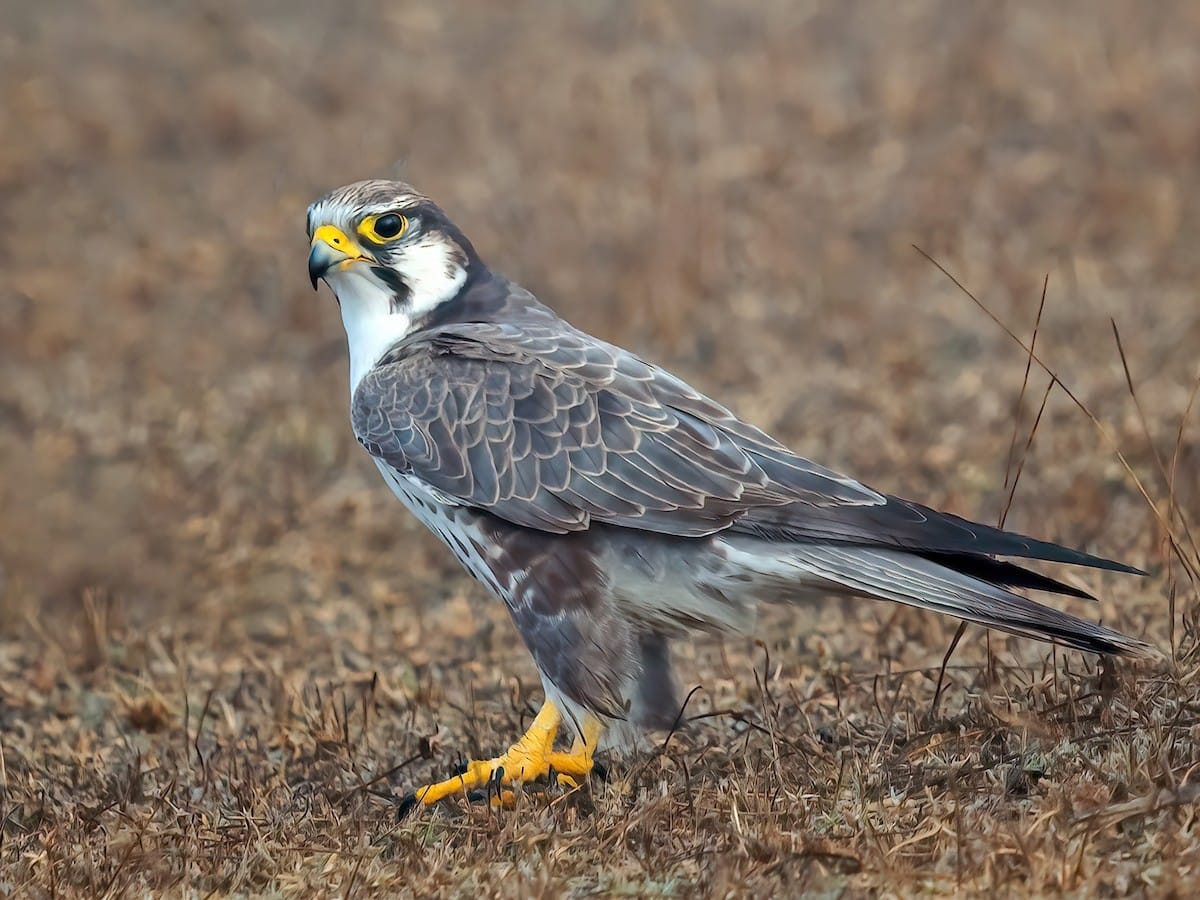
The Laggar Falcon is a striking bird of prey found mainly in South Asia. Known for its elegant flight and predatory skill, it inhabits arid plains, scrublands, and semi-desert regions. Unlike the urban-adapted Peregrine Falcon, Laggar Falcons prefer vast open spaces where they can soar and scan the ground for prey without obstruction.
Physically, Laggar Falcons are medium-sized with brownish-gray plumage, streaked underparts, and a slightly darker head. Their long, pointed wings enable quick bursts of speed and agile maneuvering. Watching a Laggar in flight is like seeing a perfectly tuned racing machine slicing the sky with precision.
Their diet mainly includes small birds, rodents, and occasionally reptiles. Laggar Falcons often hunt during daylight hours, diving with remarkable accuracy to strike prey on the ground or midair. This combination of speed and patience makes them effective hunters, even in the harshest of their habitats.
Laggar Falcons nest on cliff edges or rocky outcrops, preferring isolated locations to protect their young from predators. Breeding season is highly timed, ensuring that chicks hatch when food is abundant. Despite their elusive nature, human activity like agriculture and habitat loss has affected some populations. Conservation efforts are ongoing, highlighting the importance of protecting these magnificent birds.
5. Barbary Falcon

The Barbary Falcon is often referred to as a “desert Peregrine” because of its striking resemblance to the Peregrine Falcon. Native to North Africa and parts of the Middle East, it thrives in arid regions, cliffs, and canyons where it can spot prey from a distance. Its desert-adapted lifestyle sets it apart from other falcon species.
This falcon has sandy-brown plumage with dark streaking and a powerful, hooked beak. Its wings are pointed and built for fast, agile flight. Barbary Falcons are particularly adept at high-speed dives, making them exceptional hunters of birds and small mammals in open desert landscapes.
Barbary Falcons prefer nesting on cliffs, often reusing old nests of other birds. They have a strong territorial instinct, fiercely defending their nesting areas from intruders. Chicks fledge after several weeks of careful parental care, learning quickly how to hunt and survive in their harsh environment.
Though less known than the Peregrine Falcon, the Barbary Falcon plays a crucial role in desert ecosystems by controlling populations of smaller birds and rodents. Conservation monitoring has ensured that this species remains stable, though ongoing habitat threats highlight the need for continued protection.
6. Saker Falcon

The Saker Falcon is a large, powerful bird of prey found across Eurasia, from Eastern Europe to Central Asia. Known for its speed and hunting prowess, it is highly prized in falconry traditions, especially in the Middle East. Sakers occupy grasslands, deserts, and semi-open areas where prey is abundant and visibility is high.
Saker Falcons have robust bodies, broad wings, and strong talons. Their plumage ranges from light brown to chestnut, with streaked underparts. This camouflage helps them blend into open terrain, allowing stealth attacks on unsuspecting prey such as rabbits, hares, and medium-sized birds.
Hunting involves a mix of high-speed chases and low-level ambush tactics. Sakers are patient hunters, capable of pursuing prey over long distances or diving swiftly from above. Their versatility is a key factor in survival across diverse landscapes, from arid steppes to mountainous regions.
Saker Falcons nest on cliffs, tall trees, or even abandoned nests of other large birds. Breeding pairs are territorial, and the survival of chicks depends on abundant prey and minimal disturbance. Conservation programs, including captive breeding and habitat preservation, have helped stabilize populations in areas where hunting and habitat loss once caused declines.
7. Lanner Falcon

The Lanner Falcon inhabits Africa, parts of Europe, and the Middle East. Known for speed and endurance, it hunts small birds, mammals, and insects. Unlike Peregrines, Lanners often hunt in a combination of stoops and low-level chases, showcasing versatility in capturing prey.
This falcon has bluish-gray upperparts, barred underparts, and a slightly reddish face, giving it a distinctive appearance. Their wings are long and tapered, allowing agile and sustained flight. Watching a Lanner Falcon maneuver through trees or cliffs is like witnessing an acrobat in the sky.
Lanner Falcons nest on cliff ledges, buildings, or even in large trees. They are highly protective parents, often performing dramatic aerial displays to deter intruders. Chicks fledge after several weeks, learning essential hunting skills under the watchful eyes of their parents.
Lanner Falcons play a key ecological role by controlling small mammal and bird populations. Though widespread, they face threats from habitat destruction and human interference. Conservation initiatives are essential to ensure their continued presence in Africa and Eurasia.
8. Taita Falcon
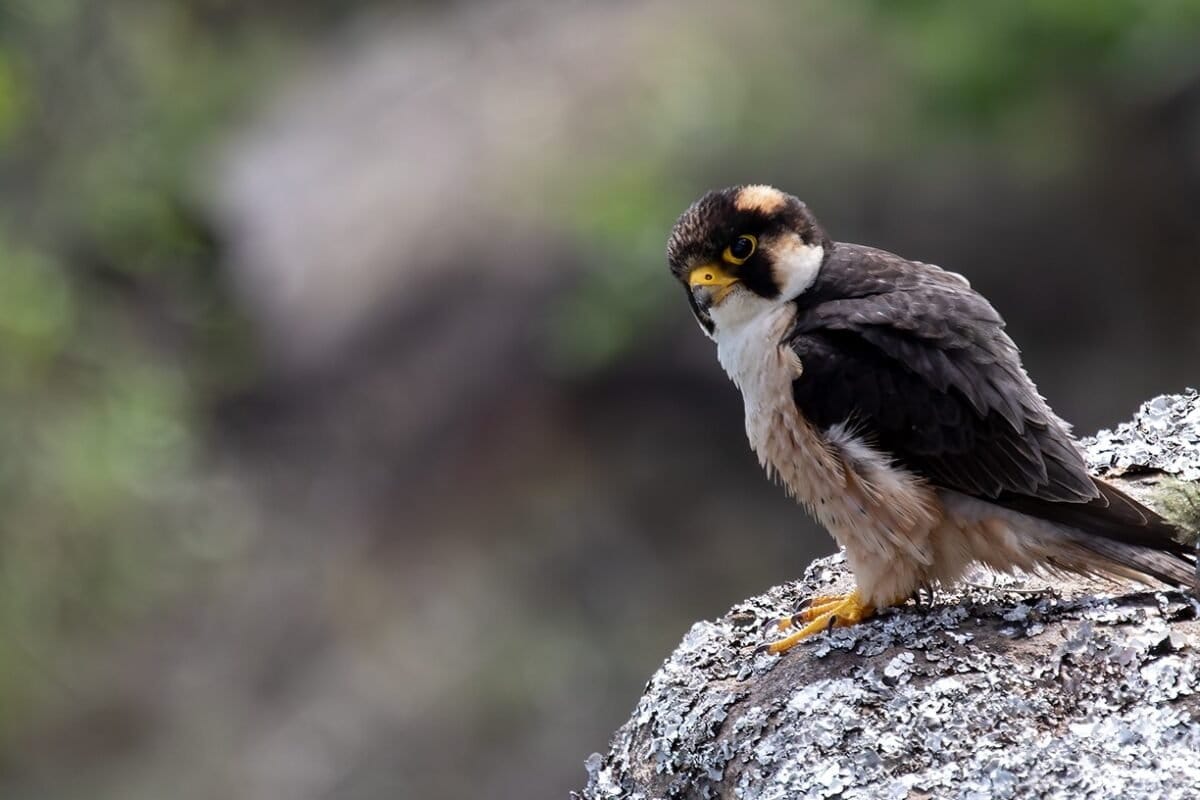
The Taita Falcon is a rare and elusive species native to mountainous regions of East Africa. Its rarity and secretive habits make sightings special for birdwatchers and researchers alike. Adapted to rugged cliffs and steep terrain, this falcon is agile and highly efficient in hunting small birds and insects.
Taita Falcons have dark brown upperparts, lighter underparts with subtle streaking, and a characteristic pale eyebrow stripe. Their wings are strong and pointed, designed for maneuverability rather than extreme speed. This enables them to navigate cliffs and ravines with remarkable precision.
Their nesting behavior is equally fascinating. Taita Falcons prefer isolated cliff faces, often in inaccessible locations to avoid predators. Breeding pairs are highly territorial, defending their small range vigorously. Due to their limited range and small population, they are considered vulnerable, making conservation efforts critical.
Despite being a lesser-known falcon, the Taita’s presence indicates a healthy montane ecosystem. Observing their hunting patterns and territorial behavior provides insight into how specialized falcons survive in niche habitats.
9. Orange-breasted Falcon
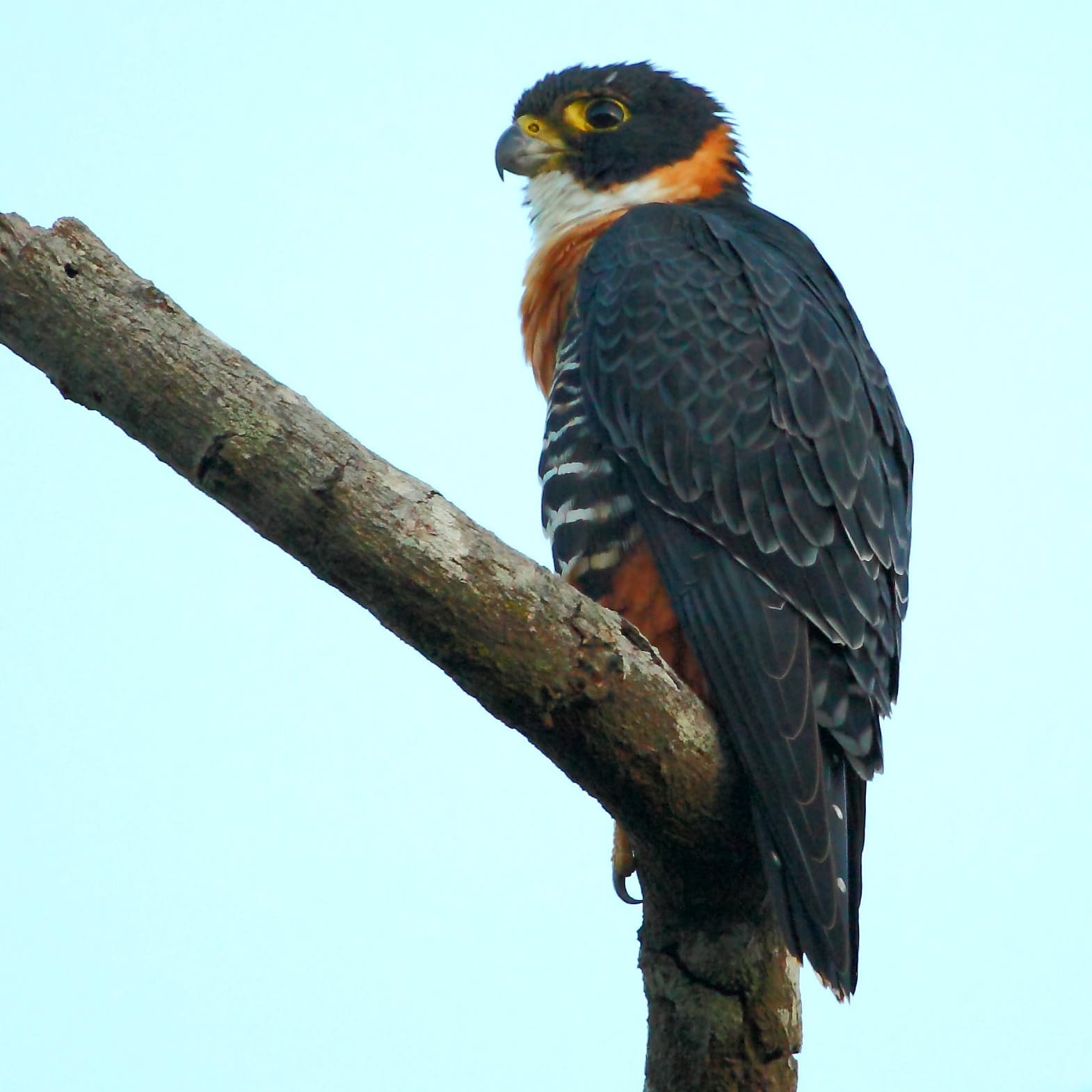
The Orange-breasted Falcon is a visually stunning predator native to Central and South America. Its colorful plumage and powerful build make it one of the most striking falcons in the Neotropics. Adapted to forests and open woodlands, it hunts medium-sized birds, bats, and small mammals with stealth and precision.
This falcon has dark upperparts with a bright orange breast and a dark mask over its eyes. The combination of color and agility makes it an apex hunter in its habitat. Its wings are long and pointed, designed for rapid pursuit and agile turns in dense forest environments.
Orange-breasted Falcons nest on cliff ledges, often in areas with minimal human disturbance. They are known for strong parental care, with both parents actively feeding and protecting the chicks. The breeding season is synchronized with prey availability, ensuring a higher chance of chick survival.
Although relatively rare, the Orange-breasted Falcon is an essential predator in its ecosystem, maintaining the balance of smaller bird and mammal populations. Conservation efforts focus on habitat preservation and monitoring, as deforestation threatens its survival.
10. Aplomado Falcon
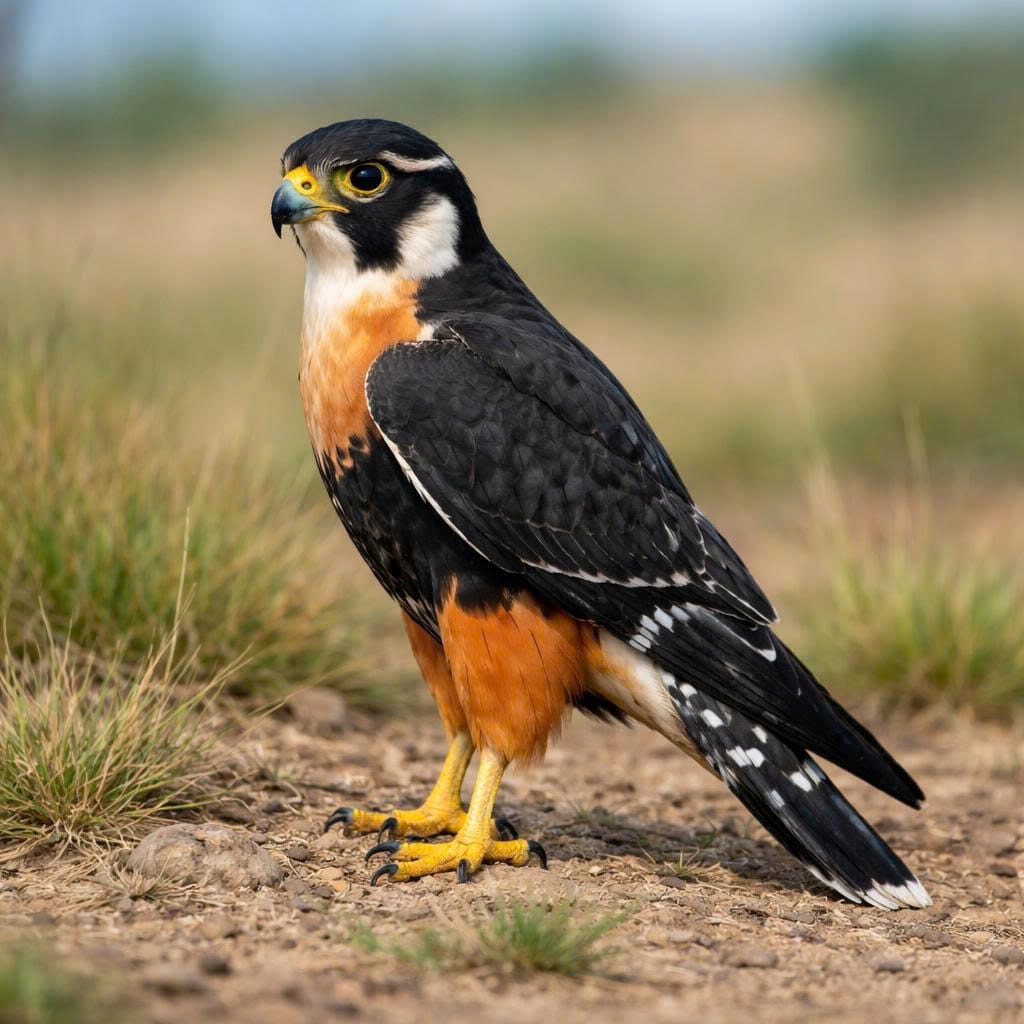
The Aplomado Falcon is a slender, graceful bird found in South and Central America, with a small population in the southwestern United States. Its long wings and tail allow incredible agility, making it a master of low-level hunting over grasslands and savannas.
Aplomado Falcons have striking black, white, and rufous plumage, which makes them easily identifiable in flight. They hunt insects, small birds, and mammals, often performing long, low glides before a rapid dive. Their hunting style is elegant, precise, and highly efficient.
Nesting occurs on trees or cliff ledges, and pairs are known for cooperative hunting and territorial defense. The chicks fledge within a few weeks, learning to hunt with the guidance of their parents. Their populations are closely monitored due to habitat loss, particularly in the U.S., where reintroduction programs have been successful.
Aplomado Falcons are a testament to the adaptability of falcons, thriving in both wild and managed landscapes. Observing their hunting techniques and social behavior provides valuable insight into how falcons maintain balance within ecosystems.
11. Merlin

The Merlin is a small but fierce falcon known for its speed, agility, and bold hunting style. Found across North America and parts of Eurasia, Merlins prefer open forests, grasslands, and coastal areas where small birds are abundant. Despite their modest size, they are relentless hunters capable of tackling prey much larger than themselves.
Merlins are compact, with dark streaked plumage and a robust build. Their wings are short and pointed, allowing rapid, agile flight through trees and across open terrain. Observing a Merlin hunt is like watching a miniature predator in full command of its environment, darting and weaving with precision.
These falcons feed primarily on small birds such as sparrows, finches, and starlings. They often pursue prey in direct chases, using speed and persistence rather than surprise alone. Merlins are also known to take small mammals, insects, and occasionally bats, demonstrating adaptability in diet.
Nesting usually occurs in abandoned crow or hawk nests, often in dense woodland areas. Merlins are highly territorial during breeding season, fiercely defending their chosen nest sites. The female incubates eggs while the male provides food, highlighting strong parental cooperation.
Despite being smaller than other falcons, Merlins play an important role in controlling populations of small birds and maintaining ecological balance. Conservation efforts have kept their populations stable, though habitat changes and urban expansion remain ongoing challenges.
12. Bat Falcon

The Bat Falcon is a sleek, dark falcon native to Central and South America, renowned for its acrobatic hunting and preference for twilight hours. As its name suggests, it is known to prey on bats, birds, and large insects, often hunting at dusk when other predators are less active.
Physically, Bat Falcons are small to medium-sized with striking black upperparts, rufous underparts, and a bold facial pattern that emphasizes their alert eyes. Their long wings and tail enable lightning-fast maneuvers, perfect for navigating forests and cliffside roosts where prey hides.
Bat Falcons hunt with incredible speed and stealth. They often swoop from perches to strike prey mid-flight or chase them across open spaces. Their diet diversity—from insects to birds and bats—demonstrates their adaptability, especially in regions with fluctuating food sources.
These falcons nest in tree cavities or cliff ledges, sometimes reusing abandoned nests of other birds. Both parents actively participate in raising chicks, which fledge quickly and begin practicing hunting skills under parental supervision.
Although not globally threatened, Bat Falcons face habitat loss due to deforestation. Protecting forests and riverine habitats ensures that these remarkable birds continue to thrive and maintain the balance of their ecosystems.
13. Eurasian Hobby
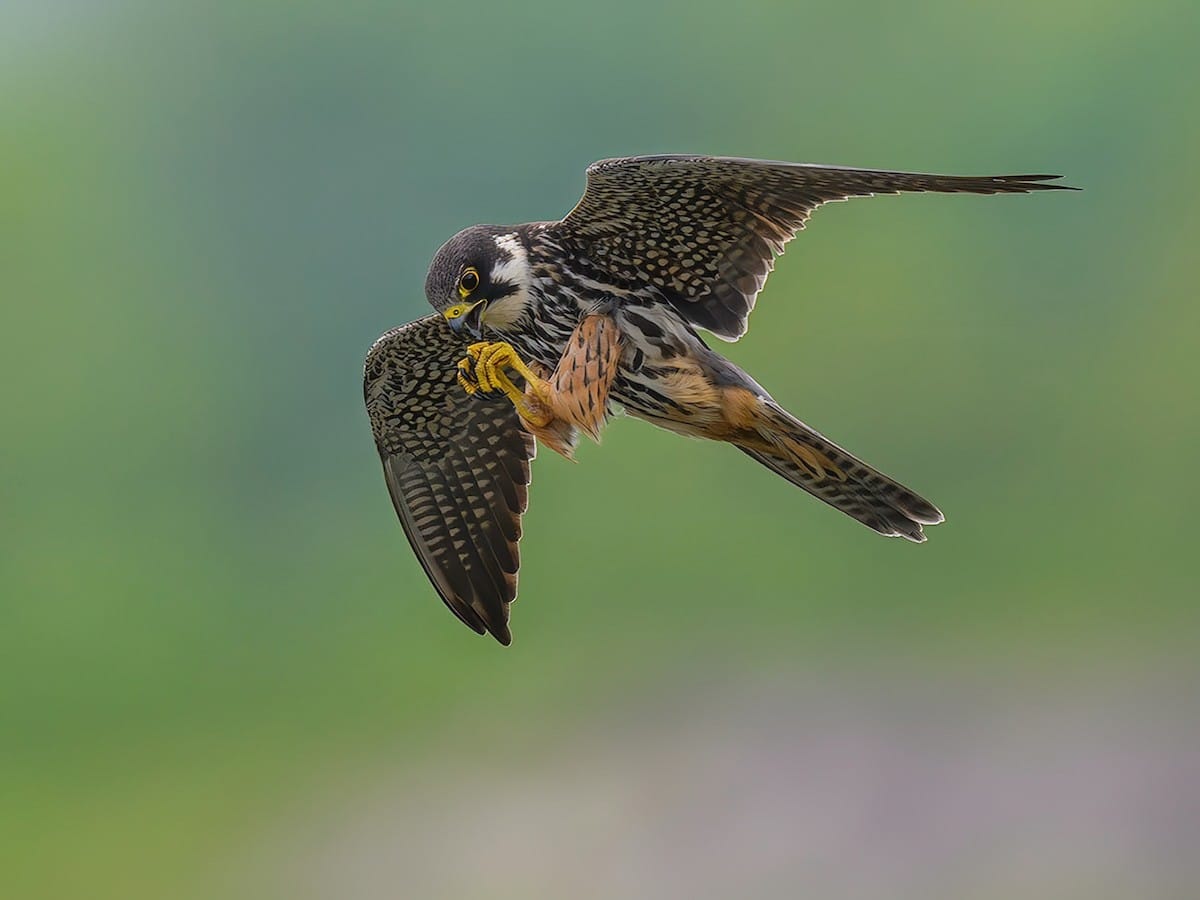
The Eurasian Hobby is a small, elegant falcon found throughout Europe, Asia, and parts of Africa during migration. Known for its swift, agile flight, it specializes in catching small birds and large insects on the wing, making it a spectacular hunter to observe.
Eurasian Hobbies have dark slate-gray upperparts, rufous underparts, and a characteristic facial stripe that accentuates their keen eyes. Their long, pointed wings allow rapid pursuit of prey, making them masters of aerial acrobatics.
These falcons often hunt during twilight, taking advantage of low light to surprise prey. They feed on swifts, starlings, and dragonflies, employing swift stoops and agile chases to capture food. Their hunting skill is a mix of speed, precision, and patience.
Nesting usually occurs in abandoned crow or hawk nests within forests or open woodland edges. Breeding pairs are highly territorial, and both parents share responsibilities in incubating eggs and feeding chicks.
The Eurasian Hobby’s adaptability has allowed it to occupy a range of habitats, from woodlands to urban parks. They are an example of how small falcons can thrive alongside human development while maintaining ecological roles as bird predators.
14. Oriental Hobby
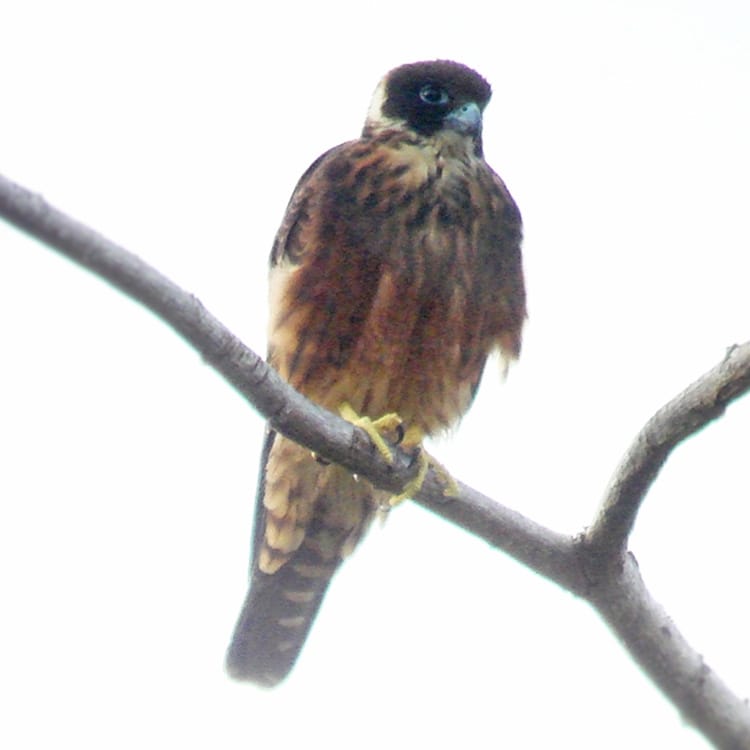
The Oriental Hobby inhabits South and Southeast Asia, from India to Indonesia. This medium-sized falcon is known for its graceful flight and ability to hunt a variety of prey, including small birds, bats, and large insects, often captured in dazzling aerial chases.
Oriental Hobbies have dark upperparts, rufous underparts, and distinctive facial markings. Their compact, pointed wings allow sudden bursts of speed and impressive maneuverability. Observing one swoop through forested areas or open plains is a reminder of how precise and elegant falcon hunting can be.
These falcons nest in tree cavities or abandoned nests of other raptors. Breeding pairs are territorial and cooperative, ensuring that chicks are fed and protected until fledging. Adaptation to diverse habitats—from forests to agricultural areas—demonstrates their resilience.
Oriental Hobbies are not currently threatened, but ongoing habitat destruction could impact local populations. Protecting nesting trees and hunting grounds is vital to maintaining healthy populations of this agile falcon.
15. African Hobby

The African Hobby is a small falcon found across sub-Saharan Africa. Known for its dusk hunting and quick flight, it primarily preys on insects, small birds, and bats. This species often hunts near open savannas, wetlands, and woodland edges, displaying impressive agility.
African Hobbies have dark slate-gray upperparts, rufous underparts, and a dark mask accentuating their alert eyes. Their pointed wings allow rapid aerial maneuvers, while their lightweight frame supports endurance during long hunting sessions.
These falcons nest in tree cavities or old stick nests, sometimes in urban areas if suitable trees are available. Both male and female contribute to feeding and raising chicks, ensuring high survival rates in challenging environments.
African Hobbies demonstrate the importance of small falcons in ecosystems, controlling populations of insects and small birds. Their presence reflects the health of savanna and woodland habitats.
16. Australian Hobby

The Australian Hobby is a medium-sized falcon found across much of Australia. This falcon is known for speed, agility, and bold hunting behavior, preying on birds, insects, and occasionally small mammals. It thrives in open woodlands, grasslands, and urban parks.
Australian Hobbies are slate-gray with rufous underparts and a subtle facial stripe. Their long, pointed wings enable fast, acrobatic flight, essential for catching birds in midair. Watching one hunt feels like observing a tiny fighter jet darting between trees and open skies.
Nesting usually occurs in tall trees, often in abandoned nests of other raptors. Breeding pairs are highly territorial, working together to raise chicks who quickly develop hunting skills. Their adaptability to human-modified landscapes has helped them maintain stable populations.
Australian Hobbies serve as vital controllers of bird and insect populations, illustrating the ecological role of medium-sized falcons in diverse habitats.
17. Red-necked Falcon

The Red-necked Falcon is native to Africa and parts of India, known for its distinctive reddish neck and fierce hunting tactics. Preferring open savannas and lightly wooded areas, it preys mainly on birds and small mammals.
This falcon has dark gray upperparts, rufous underparts, and a prominent red neck patch. Its wings are tapered for swift pursuit, allowing it to dart after prey with precision. The Red-necked Falcon is agile, swift, and highly skilled at ambushing unsuspecting animals.
Nesting occurs on tall trees, cliffs, or old stick nests. Breeding pairs exhibit strong parental care, protecting chicks and teaching hunting skills. Habitat loss and hunting can threaten local populations, making conservation awareness important for this species.
18. Sooty Falcon

The Sooty Falcon breeds in desert regions of North Africa and the Middle East, migrating to eastern and southern Africa during non-breeding seasons. This falcon’s dark plumage and slim profile make it well-adapted to hot, arid environments.
Sooty Falcons are slender with dark slate-gray feathers and pointed wings. Their hunting style involves swooping down on birds and insects with swift, low-level attacks. Despite harsh climates, they demonstrate remarkable endurance and hunting efficiency.
Nesting occurs on cliffs or rocky outcrops, with minimal vegetation. Pairs are protective of their chicks, which must fledge quickly in regions where food can be scarce. Migration patterns allow them to exploit seasonal prey availability across continents.
19. New Zealand Falcon

The New Zealand Falcon, or Kārearea, is endemic to New Zealand and highly regarded for its hunting prowess. Preferring forests, shrublands, and open country, it preys on birds, rabbits, and large insects. Its adaptability has allowed survival despite introduced predators and habitat change.
New Zealand Falcons are medium-sized with brown upperparts and pale, streaked underparts. Their wings are broad and pointed, enabling rapid, agile flight. Observing them dive through forest canopies or across open fields highlights their exceptional hunting skill.
Nesting occurs in trees or cliff faces, and pairs defend territory aggressively. Conservation programs, including predator control and habitat protection, are crucial to sustaining this endemic species.
20. Brown Falcon

The Brown Falcon is a versatile hunter found throughout Australia and parts of New Guinea. Unlike faster falcons, it hunts over open areas by gliding slowly and ambushing prey, which includes small mammals, birds, reptiles, and insects.
Brown Falcons are medium to large, with mottled brown plumage and long wings. Their flight appears calm yet precise, showing patience and efficiency. They often perch conspicuously, waiting for the right moment to strike.
Nesting occurs in trees, cliffs, or even urban structures. Pairs defend territory and care for chicks attentively. Brown Falcons demonstrate the value of adaptable hunting strategies in varied environments, from deserts to farmlands.
21. Black Falcon

The Black Falcon is a medium-sized raptor native to Australia, known for its sleek, dark plumage and formidable hunting skills. Unlike some other falcons that rely on rapid dives, the Black Falcon often hunts by soaring over open woodlands and grasslands, spotting prey from above and striking with precision. Its diet consists primarily of birds and small mammals, making it a vital predator in its ecosystem.
Black Falcons are uniformly dark brown to black, with subtle lighter streaking on their underparts. Their wings are long and pointed, giving them excellent maneuverability and the ability to glide for extended periods. Watching a Black Falcon soar is like seeing a shadow glide silently across the landscape, calm yet intensely focused.
Nesting usually occurs in tall trees, where they build simple stick nests. Pairs are highly territorial during the breeding season, defending their nests vigorously. Chicks fledge within a few weeks, quickly learning to hunt under the watchful eyes of their parents. Black Falcons thrive in remote areas, but habitat loss and human disturbance can affect local populations.
Despite their elusive nature, Black Falcons serve as top predators in their habitats, controlling populations of birds and small mammals. Observing their hunting techniques offers insight into the balance of open woodland ecosystems and the adaptability of medium-sized falcons.
22. Grey Falcon

The Grey Falcon is a rare and specialized predator found primarily in arid regions of Australia. It is smaller than the Black Falcon but is similarly adapted to soaring over open landscapes in search of prey. Its rarity and distinctive behavior make it a sought-after species for bird enthusiasts and researchers alike.
Grey Falcons have pale grey plumage with slightly darker wing feathers, providing camouflage in desert and savanna environments. Their wings are pointed, allowing agile flight and sudden dives to catch birds, mammals, and large insects. Observing a Grey Falcon in action showcases a predator perfectly adapted to harsh, open terrain.
These falcons nest in tall trees or cliff ledges, often in remote locations to avoid human interference. Breeding pairs are fiercely protective of their chicks, which develop hunting skills quickly. Grey Falcons are particularly sensitive to habitat changes, making conservation and monitoring efforts essential for maintaining stable populations.
Grey Falcons are a perfect example of how falcons adapt to extreme environments. Their hunting strategy, physical adaptations, and social behavior highlight the remarkable diversity within the falcon family.
23. American Kestrel
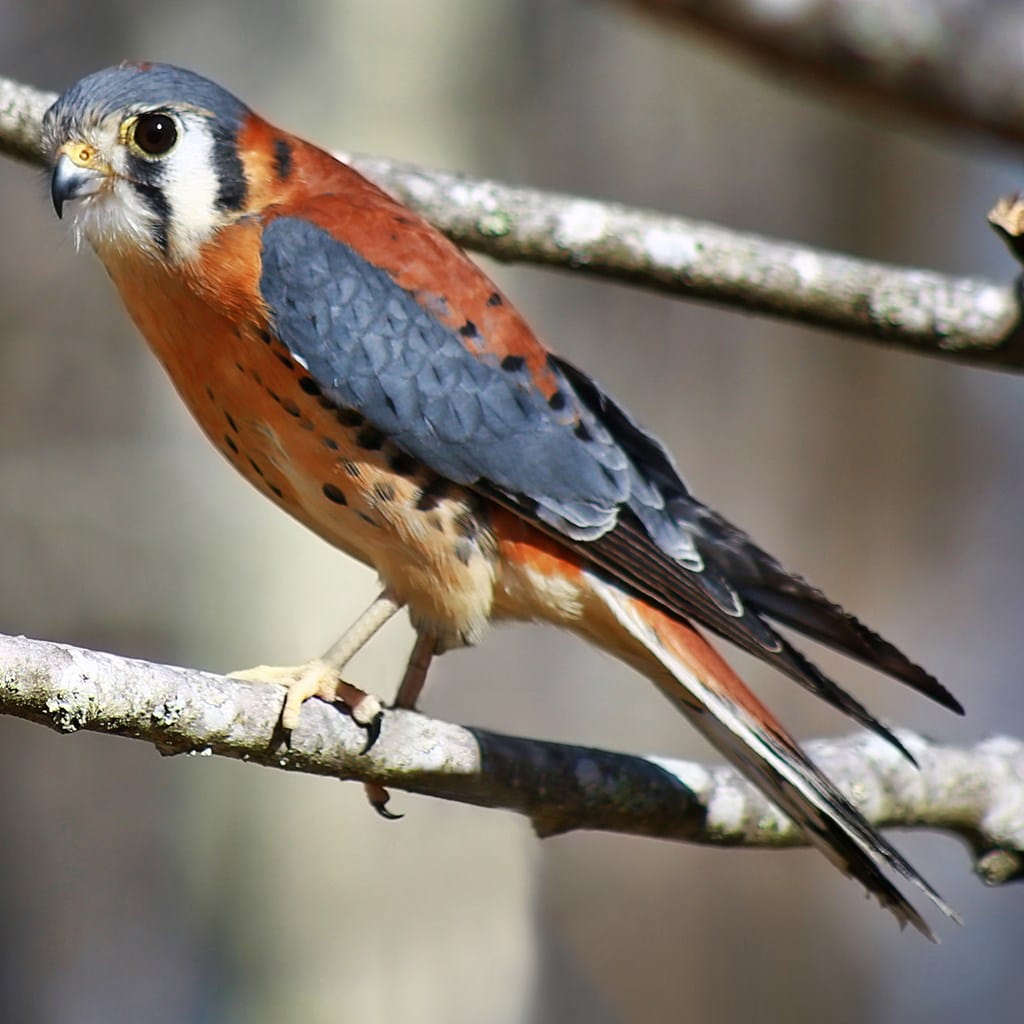
The American Kestrel is North America’s smallest falcon and one of the most colorful. Despite its size, it is an aggressive and highly skilled hunter, feeding on insects, small birds, and rodents. Often seen hovering in open fields, the American Kestrel exhibits unique hunting behavior among falcons.
American Kestrels have striking plumage: blue-gray wings, rufous backs and tails, and distinctive facial markings. Their small, pointed wings allow rapid flight and hovering capability, enabling them to spot and dive onto prey with precision. They are often the first raptors observed by beginner birdwatchers due to their conspicuous hunting style.
Nesting occurs in tree cavities, cliffs, or even artificial nest boxes. Pairs are highly territorial, and both parents contribute to raising chicks. Migration patterns vary; northern populations move south in winter, while southern populations remain year-round.
The American Kestrel’s adaptability to urban, suburban, and rural environments demonstrates its resilience. They are excellent indicators of healthy ecosystems, controlling pest populations and maintaining balance in grasslands and agricultural areas.
24. Common Kestrel
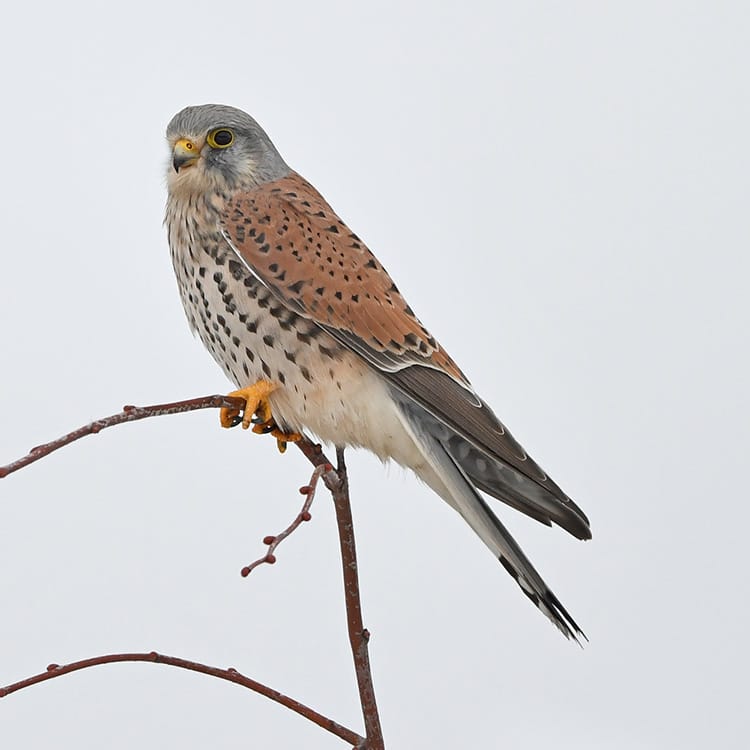
The Common Kestrel is widespread across Europe, Asia, and parts of Africa. This medium-sized falcon is known for its iconic hovering behavior, hunting small mammals, birds, and insects in open fields and grasslands. The Common Kestrel’s ability to hover distinguishes it from many other falcons.
Common Kestrels have rufous upperparts with black spots, pale underparts, and a distinctive facial “mustache.” Their wings are long and pointed, optimized for hovering and fast dives. Watching a kestrel hover in place, scanning for prey, is a mesmerizing example of precision hunting.
These falcons nest in tree cavities, cliffs, or abandoned buildings. Breeding pairs are attentive, raising chicks over several weeks until they are ready to hunt independently. Migration patterns depend on region; northern populations migrate south for winter, while southern populations remain local.
Common Kestrels are adaptable and thrive in human-altered landscapes, including farmlands and urban areas. They play a key ecological role by regulating small mammal populations and maintaining the health of grassland ecosystems.
25. Lesser Kestrel

The Lesser Kestrel is a small falcon closely related to the Common Kestrel but differs in size, coloration, and social behavior. Native to Europe, Africa, and Asia, it often nests in colonies, displaying remarkable communal breeding patterns among falcons.
Lesser Kestrels have pale blue-gray wings, reddish-brown backs, and subtle streaked underparts. Their wings are pointed, supporting agile flight and hovering when hunting insects and small birds. They often forage in open grasslands and farmlands, showing high adaptability to human-altered environments.
Colonial nesting provides protection from predators and allows efficient resource sharing. Pairs are attentive to chicks, which fledge after several weeks. Migration is common; European populations travel to Africa for the winter.
Lesser Kestrels are excellent examples of how social behavior and adaptability can ensure survival in diverse environments. Conservation efforts focus on protecting nesting colonies and maintaining insect-rich habitats.
26. Greater Kestrel
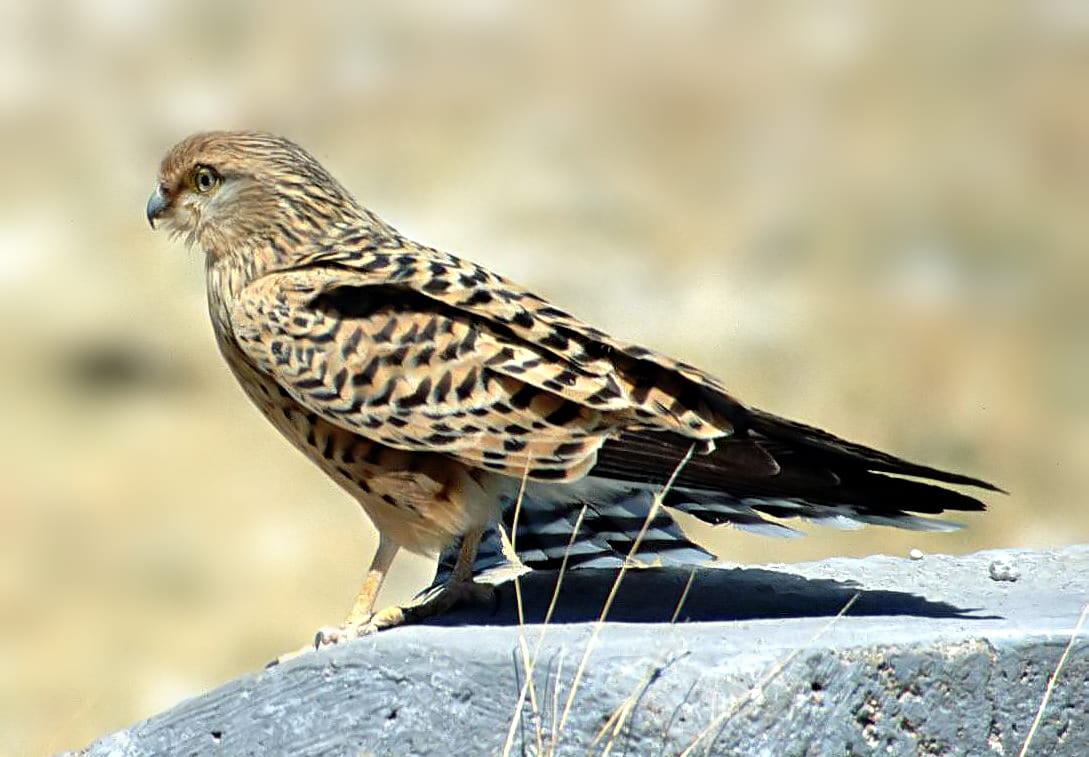
The Greater Kestrel is a larger relative of the Lesser Kestrel, inhabiting sub-Saharan Africa. It prefers open savannas and grasslands, hunting rodents, birds, and insects. Its size and strong flight allow it to cover vast territories in search of food.
Greater Kestrels have rufous upperparts with dark streaking, pale underparts, and a subtle facial mask. Their wings are long and broad, facilitating soaring flight and sudden stoops on unsuspecting prey. Observing them hunt reveals a combination of patience and sudden bursts of speed.
Nesting typically occurs in tree cavities or abandoned nests. Pairs are territorial, actively defending nesting sites from competitors. Chicks fledge after several weeks, learning to hunt under parental guidance. Greater Kestrels thrive in undisturbed grasslands but can be sensitive to habitat loss.
By controlling rodent populations, Greater Kestrels play a vital ecological role in their habitats, maintaining balance and contributing to healthy grassland ecosystems.
27. Fox Kestrel

The Fox Kestrel is a rare, medium-sized falcon found in arid and semi-arid regions of Africa. Its subtle reddish-brown plumage provides excellent camouflage against sandy terrain, making it a stealthy hunter of birds, rodents, and insects.
Fox Kestrels have long, pointed wings and a compact body, allowing rapid flight and agile maneuvers close to the ground. Observing a Fox Kestrel in action demonstrates their patience, as they often perch silently before a sudden, explosive chase.
They nest in cliffs, rocky outcrops, or abandoned structures. Breeding pairs show strong parental care, protecting eggs and chicks from predators. Their discreet behavior and habitat preferences make them less studied than other falcons, highlighting the importance of field research and conservation.
Fox Kestrels are a reminder of how falcons adapt to extreme, arid environments, and they contribute significantly to controlling local prey populations, supporting ecological balance in harsh landscapes.
28. Grey Kestrel

The Grey Kestrel inhabits the savannas and open woodlands of sub-Saharan Africa. It is known for its calm hunting style and preference for medium-sized prey, including rodents, birds, and large insects. Its subtle coloration helps it blend into dry environments.
Grey Kestrels have pale grey upperparts, lightly streaked underparts, and a compact body. Their wings are moderately long, allowing both hovering and rapid flight. Observers can spot them perched silently on trees or poles, patiently scanning for prey before striking with precision.
Nesting occurs in trees or cliff ledges, and pairs are attentive parents. Chicks develop quickly, ready to hunt within weeks. The Grey Kestrel’s adaptability to both natural and semi-urban environments highlights its resilience and ecological importance.
By hunting rodents and small birds, Grey Kestrels help maintain balance in grassland and savanna ecosystems, showcasing the essential role of medium-sized falcons in African habitats.
29. Dickinson’s Kestrel
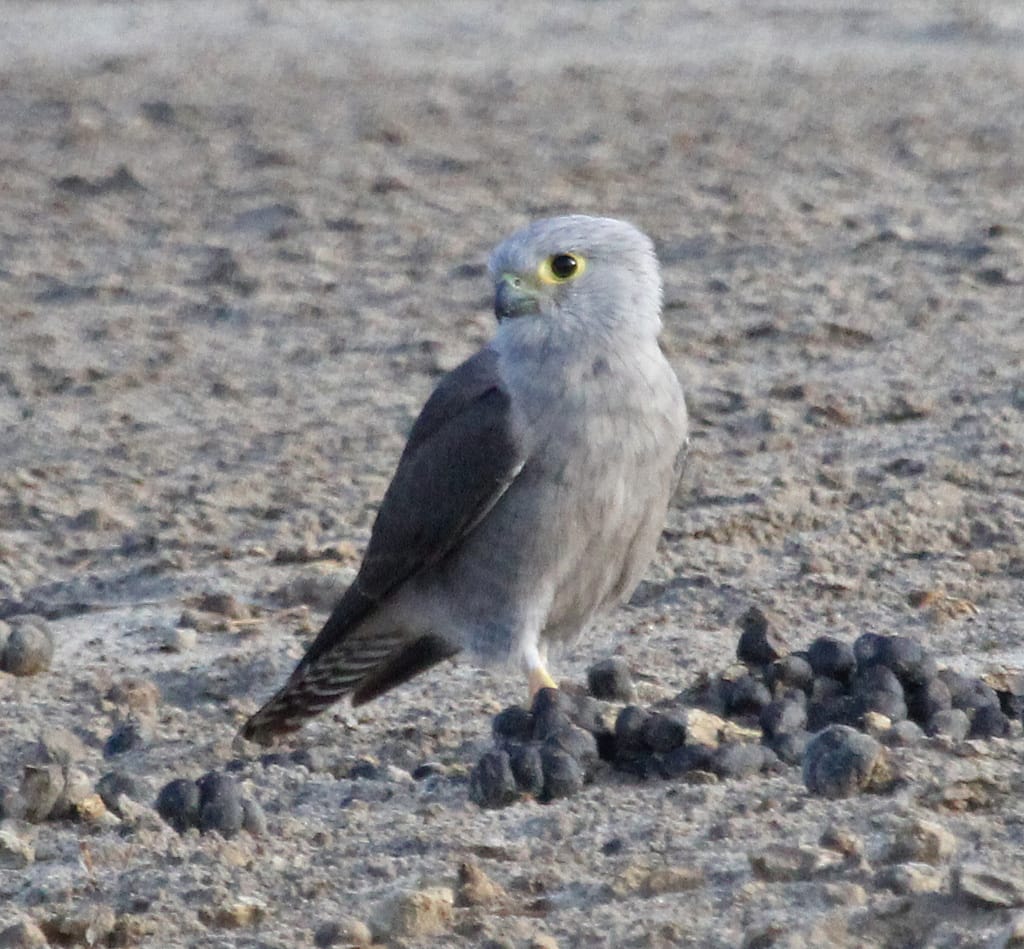
Dickinson’s Kestrel is a small, elusive falcon native to Madagascar. Its rarity and unique behavior make it an interesting species for ornithologists and wildlife enthusiasts. Preferring forest edges and open areas, it preys on insects and small birds.
This kestrel has dark upperparts, rufous underparts, and a subtle facial mask. Its wings are pointed, enabling agile flight through trees and over open fields. Dickinson’s Kestrel often hunts by perching quietly and swooping down on prey, demonstrating patience and precision.
Nesting occurs in tree cavities or abandoned nests. Both parents care for the chicks, ensuring rapid development. As an endemic species, Dickinson’s Kestrel is sensitive to habitat loss, making conservation critical for maintaining Madagascar’s unique biodiversity.
Dickinson’s Kestrel exemplifies the adaptability of small falcons to island habitats and their ecological role as insect and small bird predators in forested and open landscapes.
30. Rock Kestrel
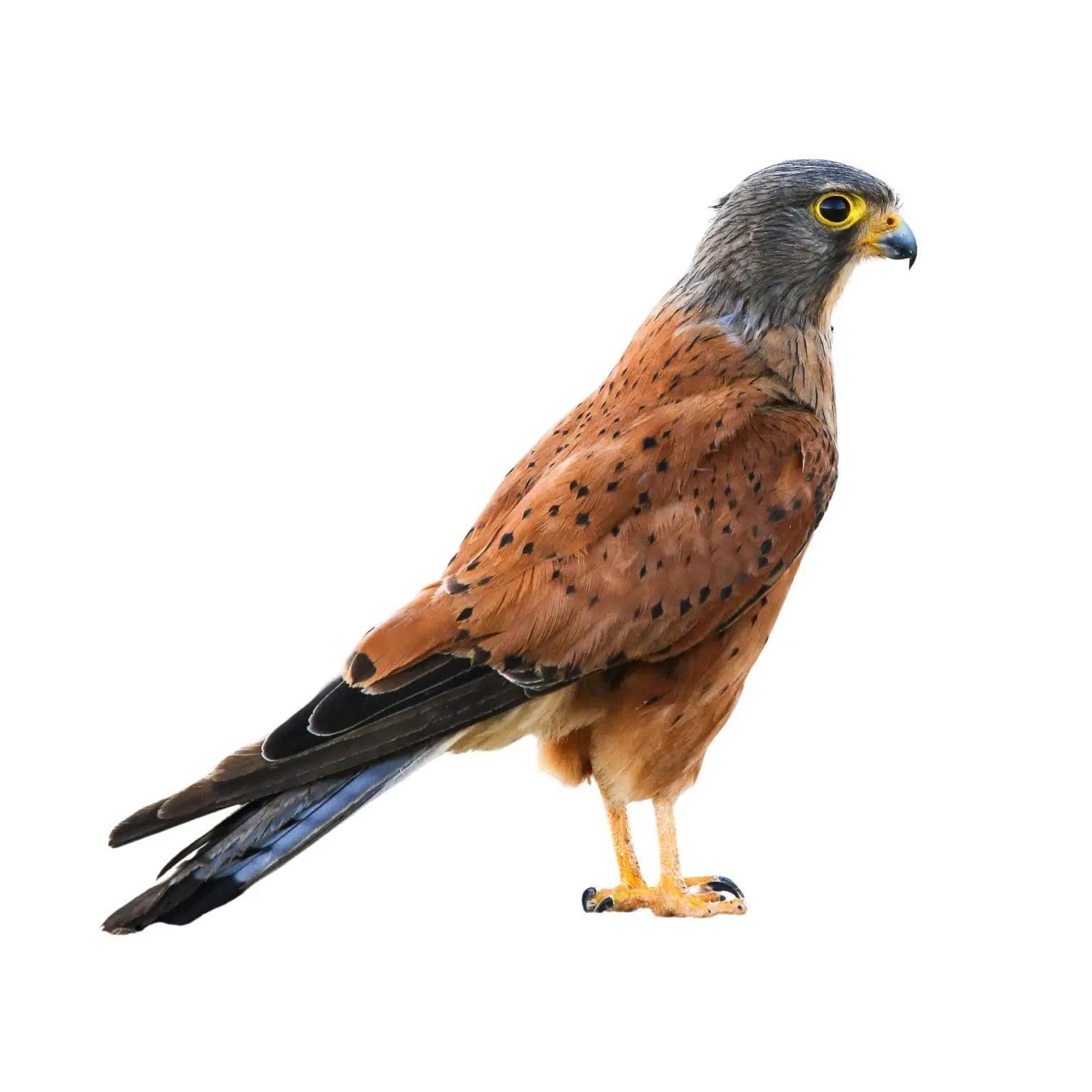
The Rock Kestrel inhabits southern Africa, preferring rocky outcrops, cliffs, and open savannas. Its diet includes birds, rodents, and insects. Adapted to rugged terrain, it hunts by perching on high vantage points and diving swiftly onto unsuspecting prey.
Rock Kestrels have rufous upperparts with streaked underparts and a subtle facial stripe. Their wings are pointed for fast flight and rapid maneuvers. Observing a Rock Kestrel hunt from a cliff is a lesson in patience and precision, as it carefully chooses the right moment to strike.
Nesting occurs on cliffs or rocky ledges, sometimes reusing abandoned nests. Pairs are attentive, ensuring chicks develop hunting skills quickly. Rock Kestrels are indicators of healthy rocky and open habitats, playing a vital role in controlling prey populations.
31. Nankeen Kestrel

The Nankeen Kestrel, native to Australia and parts of New Guinea, is a small, agile falcon admired for its graceful flight and exceptional hunting skills. Preferring open grasslands, farmland, and lightly wooded areas, it hunts small mammals, birds, and insects with remarkable efficiency.
Its plumage is a warm, cinnamon-brown with pale underparts and subtle streaking, giving it excellent camouflage in dry landscapes. The wings are long and pointed, allowing rapid chases and hovering over fields as it searches for prey. Watching a Nankeen Kestrel hover is like seeing a tiny acrobat suspended effortlessly in the sky.
Nesting typically occurs in tree cavities or abandoned nests of other raptors. Breeding pairs are highly territorial, diligently protecting eggs and chicks. The fledglings learn to hunt under parental guidance, rapidly developing skills needed for survival in diverse habitats.
Despite its small size, the Nankeen Kestrel plays a crucial ecological role by controlling insect and rodent populations. Its adaptability to both natural and human-altered landscapes demonstrates the resilience of medium-sized falcons.
32. Spotted Kestrel

The Spotted Kestrel is a medium-sized falcon inhabiting Southeast Asia, particularly Indonesia and surrounding islands. Known for its distinctive spotted plumage, it primarily hunts small birds, mammals, and insects in open fields and forest edges.
Spotted Kestrels have a sandy-brown body with prominent dark spots on the wings and chest. Their wings are pointed and allow rapid, agile flight. Observing one swoop down on prey is a testament to their skill and precision in hunting.
These falcons nest in trees, cliffs, or abandoned nests, with both parents contributing to chick rearing. Spotted Kestrels are often solitary but may tolerate the presence of other kestrels nearby if food is abundant.
The Spotted Kestrel is a vital predator in its ecosystem, controlling small animal populations. Conservation of open habitats and forest edges is essential to support their hunting and breeding success.
33. Malagasy Kestrel
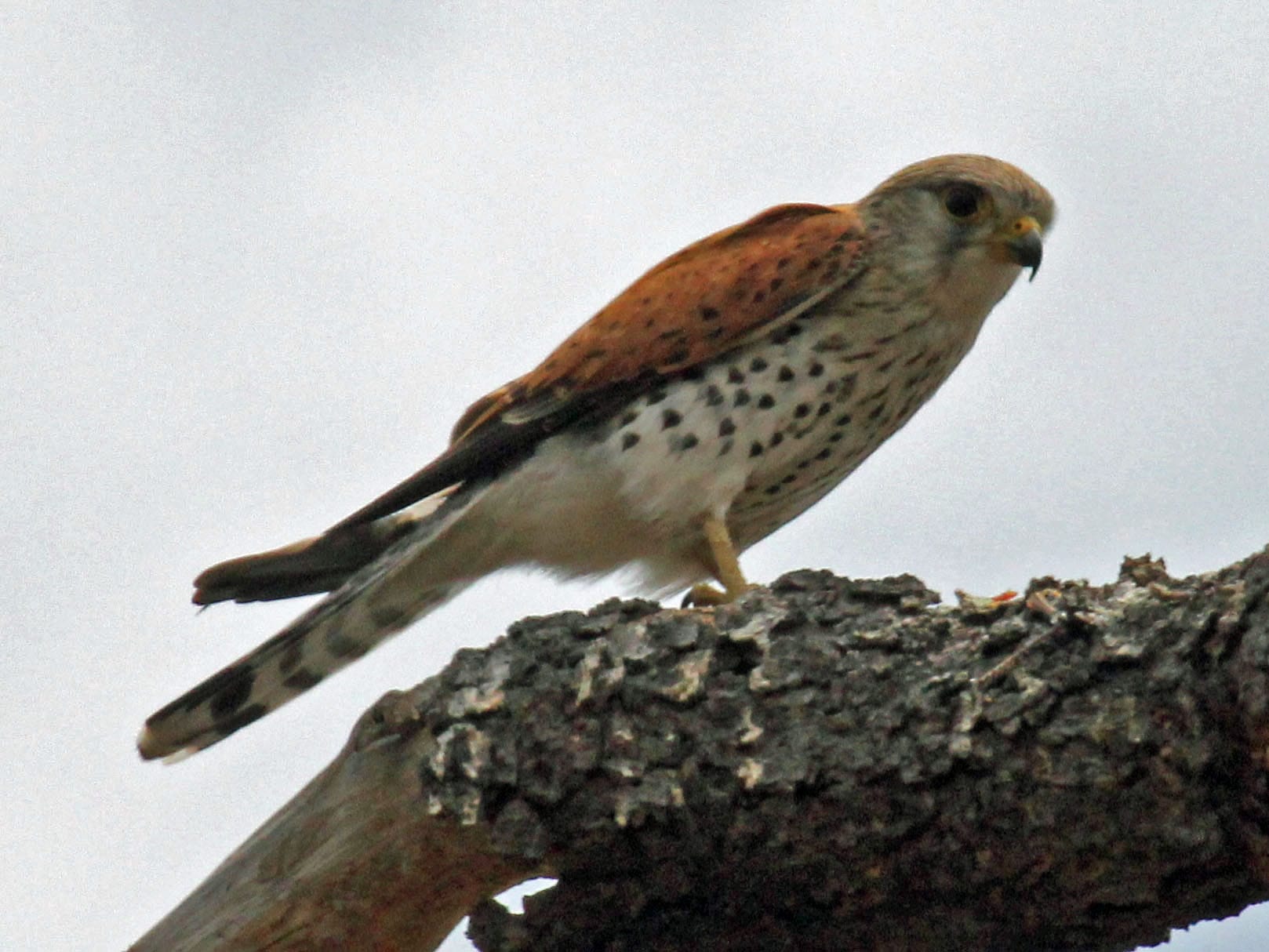
The Malagasy Kestrel is endemic to Madagascar, showcasing a remarkable adaptation to island life. Its small size and agile hunting make it an effective predator of insects, small birds, and rodents across forests, savannas, and agricultural lands.
This falcon has pale grey upperparts, rufous underparts, and a subtle facial pattern. Its wings are long and pointed, enabling fast flight and sudden dives. Observing a Malagasy Kestrel swoop after prey is a thrilling display of precision and speed.
Nesting occurs in tree hollows, cliff ledges, or abandoned nests. Breeding pairs are protective and cooperative, ensuring that chicks develop essential hunting skills. Habitat loss and deforestation can impact populations, making conservation efforts vital.
The Malagasy Kestrel plays a key role in maintaining ecological balance by controlling rodent and insect populations, illustrating how falcons adapt to island ecosystems.
34. Seychelles Kestrel
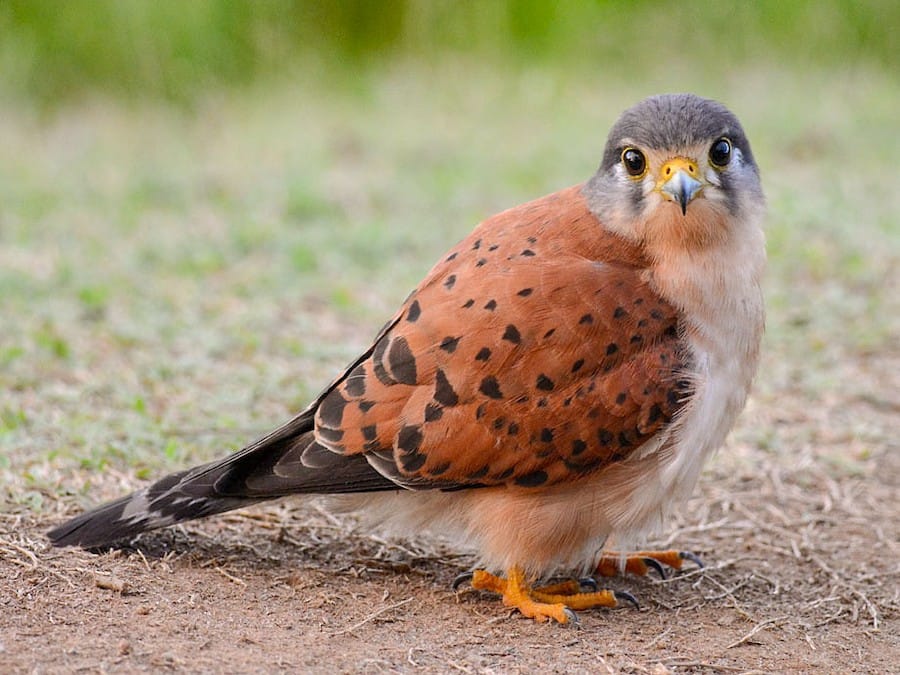
The Seychelles Kestrel is one of the rarest falcons in the world, found exclusively on the Seychelles islands. Despite its small population, it remains a highly effective predator of lizards, birds, and insects in the island’s forested and rocky habitats.
These falcons have pale grey and rufous plumage with dark streaks on the underparts. Their wings are pointed, allowing agile flight through forests and over cliffs. Observing their hunting is a rare opportunity to witness precision and skill in a small, endangered raptor.
Nesting occurs in tree hollows, cliff crevices, or abandoned nests. Breeding pairs are highly territorial, protecting their limited nesting sites. Conservation efforts, including habitat protection and monitoring, have helped stabilize their small populations.
The Seychelles Kestrel highlights the delicate balance of island ecosystems, showing how a single predator can influence prey populations and biodiversity.
35. Mauritius Kestrel

The Mauritius Kestrel is another critically endangered falcon, endemic to the island of Mauritius. Once considered the rarest bird in the world, conservation programs have helped its population recover. It hunts small birds, lizards, and insects in forested and semi-open habitats.
This kestrel has dark grey upperparts, pale underparts, and a subtle facial mask. Its long, pointed wings facilitate swift, agile flight, perfect for ambushing prey in dense vegetation. Observing its hunting style offers insight into a predator adapted to island life.
Nesting occurs in tree cavities or cliff crevices. Breeding pairs are protective and meticulous, ensuring chick survival. Conservation efforts, including captive breeding and habitat restoration, have been vital to this species’ survival.
The Mauritius Kestrel illustrates the power of human intervention to save a species, while also highlighting the important role of falcons as apex predators in island ecosystems.
36. Pygmy Falcon

The Pygmy Falcon is Africa’s smallest falcon, yet it exhibits bold hunting behavior and fascinating social habits. Found in eastern and southern Africa, it inhabits savannas, acacia woodlands, and thorny scrublands.
Pygmy Falcons have slate-gray upperparts, rufous underparts, and a subtle facial mask. Their short, pointed wings allow agile flight through trees and shrubs. Despite their size, they are fearless hunters, preying on insects, small birds, and reptiles.
Unlike most falcons, Pygmy Falcons are social, often nesting in colonies of sociable weavers or other birds. This cooperative behavior helps protect chicks and provides early hunting lessons. Breeding pairs are attentive, ensuring the survival of their tiny offspring.
As an indicator species, the Pygmy Falcon demonstrates the health of savanna and woodland ecosystems. Their presence helps control insect and small vertebrate populations, maintaining ecological balance.
37. White-rumped Falcon
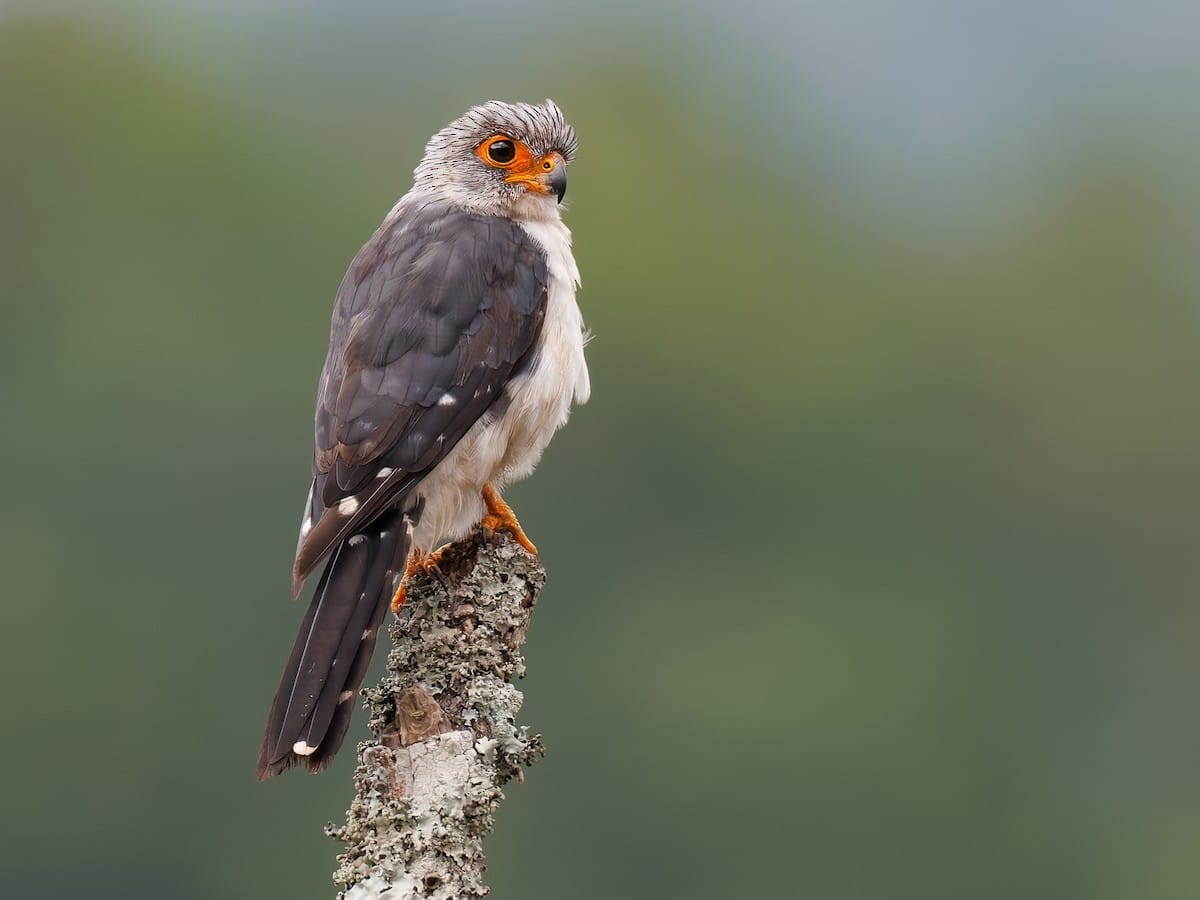
The White-rumped Falcon is native to Southeast Asia and is easily identified by its contrasting black upperparts and white rump. Preferring forest edges, grasslands, and open habitats, it preys on birds, insects, and small mammals.
This falcon has long, pointed wings, enabling fast, agile flight. Observers are often captivated by its speed and precision as it swoops to catch prey. Its white rump creates a striking visual cue during flight.
Nesting occurs in trees or cliff crevices. Breeding pairs work closely to raise chicks, teaching them hunting skills before fledging. Habitat conservation is critical, as deforestation can impact local populations.
White-rumped Falcons are important predators, regulating populations of small birds and insects, demonstrating the ecological value of medium-sized falcons in Southeast Asia.
38. Collared Falconet

The Collared Falconet is a tiny falcon found in South and Southeast Asia. Despite its diminutive size, it is a fierce predator of insects, small birds, and reptiles. Its small size allows it to hunt in dense forests and urban gardens alike.
Collared Falconets have striking black-and-white plumage, with a distinctive collar marking across the neck. Their short wings support agile flight through forested areas. Watching one hunt is an incredible display of speed and accuracy.
Nesting occurs in tree cavities, often reusing old woodpecker holes. Breeding pairs are cooperative and protective, ensuring chick survival. These falconets thrive in a variety of habitats, showing remarkable adaptability.
Collared Falconets play an important role in controlling insect and small bird populations, highlighting how even the smallest falcons can impact ecosystem balance.
39. Pied Falconet

The Pied Falconet, found in parts of South and Southeast Asia, is another tiny but agile falcon. Its diet consists mainly of insects and small birds. Preferring open forests, agricultural lands, and scrublands, it is adept at hunting in complex environments.
Pied Falconets are black-and-white with distinctive patterns, and their wings are short and pointed for quick, precise maneuvers. Observing their hunting technique is akin to watching a miniature acrobat perform daring aerial feats.
They nest in tree cavities and abandoned nests. Breeding pairs are attentive, teaching chicks to hunt efficiently. Habitat protection ensures continued survival in areas increasingly impacted by human activity.
Despite their size, Pied Falconets serve as effective controllers of insect and small bird populations, contributing to ecological balance in forested and agricultural landscapes.
40. Black-thighed Falconet
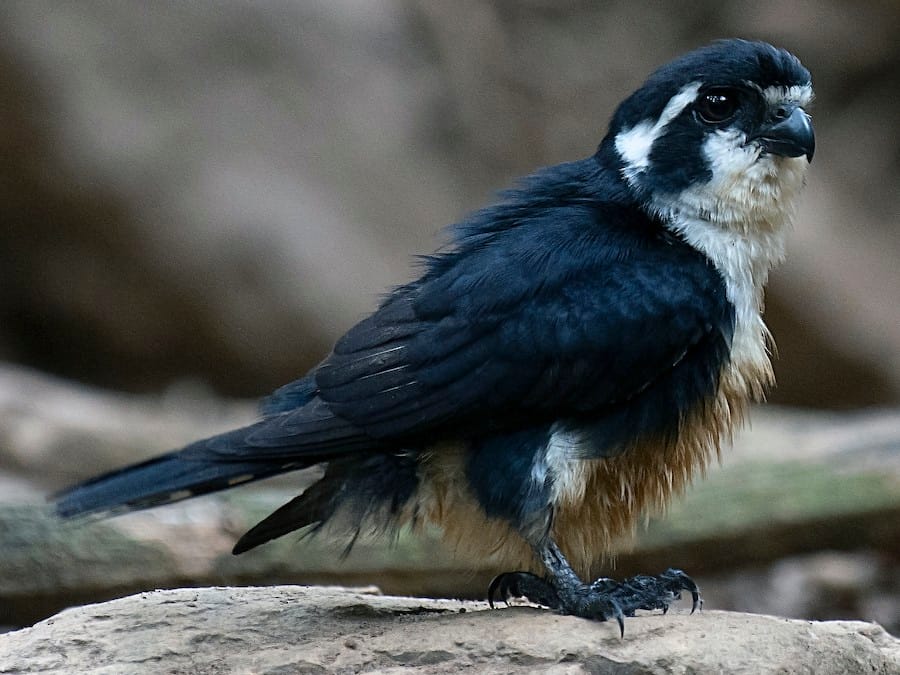
The Black-thighed Falconet is a diminutive falcon native to Southeast Asia. Its small size belies a fierce hunting instinct, preying on insects and small birds. Found in open forests, farmlands, and secondary growth areas, it is highly adaptable to different habitats.
This falconet has black upperparts with a distinctive dark thigh patch, and white underparts. Its wings are short and pointed, allowing rapid, agile flight. Watching a Black-thighed Falconet in action reveals impressive precision and determination.
Nesting occurs in tree cavities or abandoned nests, with both parents actively feeding and protecting chicks. These falconets demonstrate remarkable adaptability, thriving in both natural and modified landscapes.
As tiny predators, Black-thighed Falconets control insect and small bird populations, showing that even the smallest falcons play essential roles in maintaining ecological balance.
41. Philippine Falconet
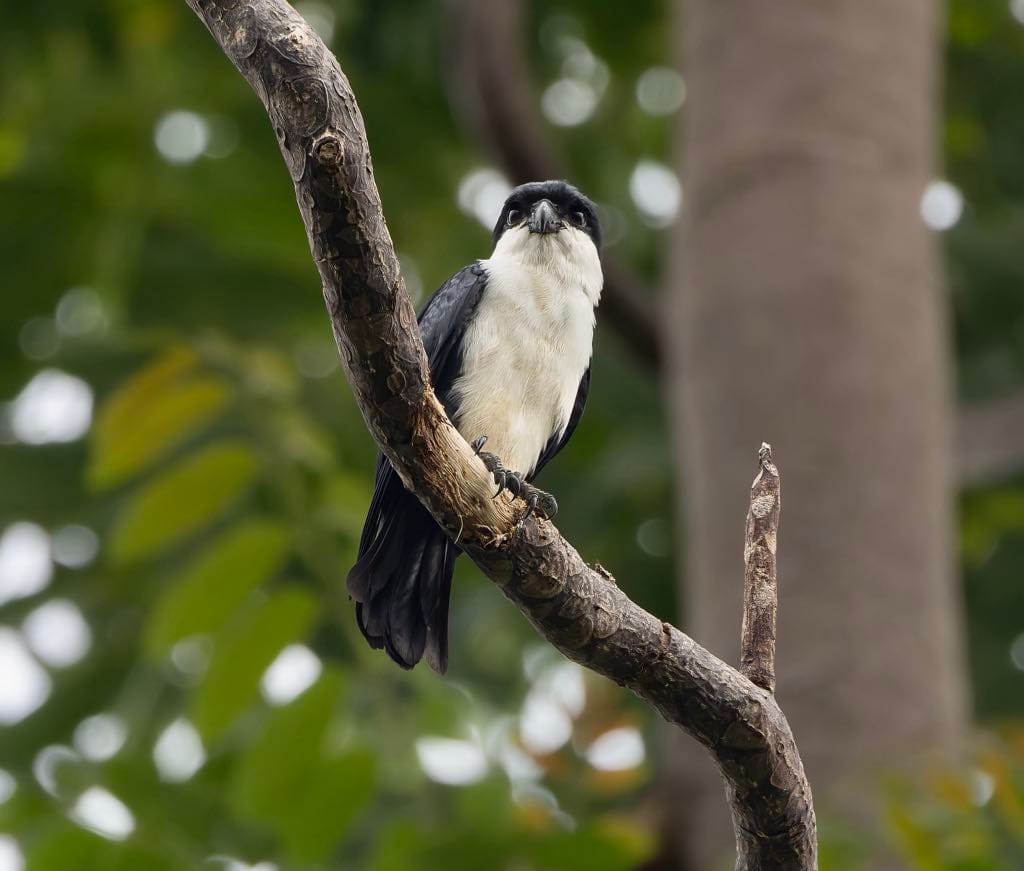
The Philippine Falconet is a tiny raptor endemic to the Philippines, remarkable for its diminutive size yet fierce hunting behavior. It inhabits forests, forest edges, and open woodland areas, preying on insects, small birds, and reptiles. Despite its size, it exhibits remarkable agility and precision in hunting.
These falconets have dark upperparts with a subtle facial mask and pale underparts. Their short, pointed wings allow quick maneuvers through dense forest canopies. Observing one swoop on prey demonstrates the effectiveness of size combined with speed and skill.
Nesting occurs in tree cavities, often reusing old holes. Breeding pairs are attentive and cooperative, feeding and protecting their chicks until they are ready to hunt independently. Conservation of forest habitats is vital for sustaining this endemic species.
The Philippine Falconet illustrates how even the smallest falcons play important ecological roles by controlling insect and small bird populations, maintaining balance in their native ecosystems.
42. White-fronted Falconet

The White-fronted Falconet is another tiny falcon found in Southeast Asia. Its name comes from the pale patch on its forehead, contrasting with dark upperparts and white underparts. Preferring open forests and agricultural lands, it hunts insects and small vertebrates with remarkable speed.
These falconets have short, pointed wings, ideal for agile flight through dense foliage or open spaces. Observing a White-fronted Falconet hover or dart after prey is a lesson in efficiency, patience, and precision in miniature falcons.
Nesting occurs in tree cavities or old nests, with both parents feeding and protecting chicks. They thrive in secondary forests and human-modified landscapes, demonstrating adaptability without compromising hunting efficiency.
White-fronted Falconets are small yet vital predators in their ecosystems, regulating insect populations and contributing to ecological stability in forest and farmland habitats.
43. Spot-winged Falconet
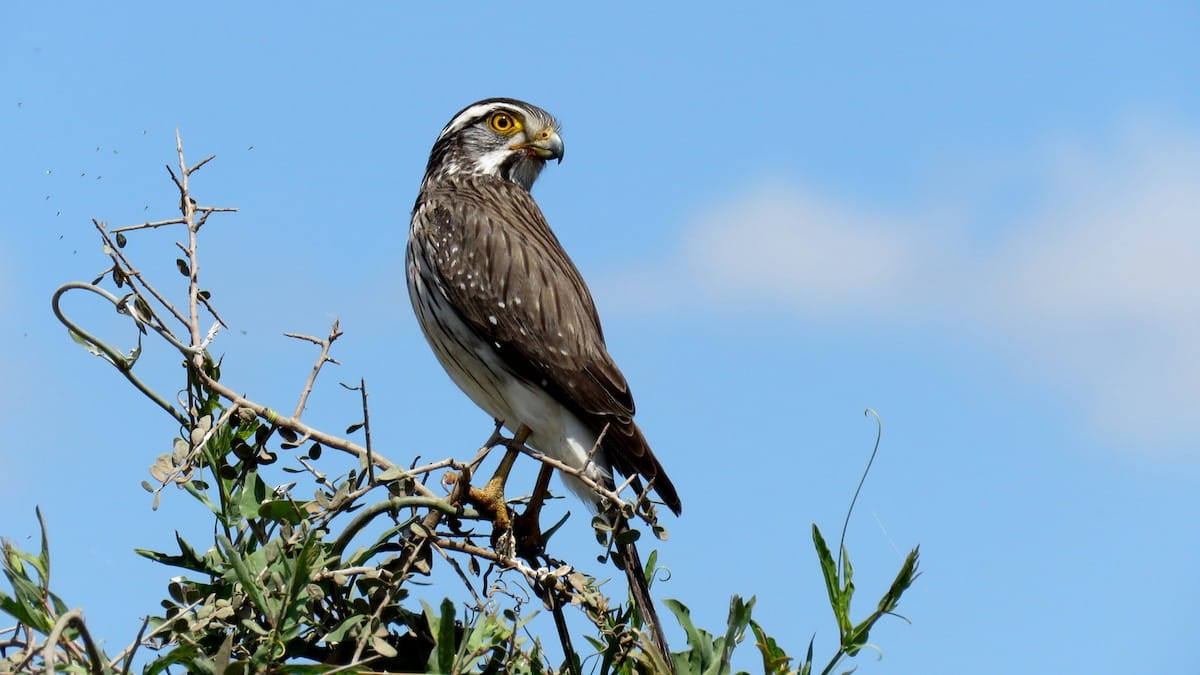
The Spot-winged Falconet, native to Southeast Asia, is renowned for its striking wing pattern and hunting prowess. It preys on insects, small birds, and reptiles, often darting quickly between trees or over open fields to capture its prey.
Spot-winged Falconets have dark upperparts with prominent white spots on the wings and pale underparts. Their short wings allow rapid maneuvers through complex environments. Watching one hunt demonstrates incredible precision and timing for such a tiny predator.
They nest in tree cavities or abandoned woodpecker holes, with breeding pairs actively raising and feeding chicks. Their ability to thrive in secondary forests and edge habitats showcases their adaptability to changing environments.
Spot-winged Falconets are essential for controlling small vertebrate populations, helping maintain balance in forest ecosystems and demonstrating the ecological importance of even the smallest falcons.
44. Laughing Falcon

The Laughing Falcon, found in Central and South America, is named for its distinctive, loud, and melodious call. It primarily hunts snakes, including venomous species, along with other reptiles, small birds, and mammals. Its hunting style and vocalizations make it a fascinating bird to observe.
Laughing Falcons are medium-sized, with brown upperparts, pale underparts, and a dark mask around the eyes. Their long, broad wings allow strong flight, while their robust beaks are perfectly designed for handling snakes and tough prey.
These falcons nest in tree cavities or cliffs. Breeding pairs are protective, with both parents caring for chicks and teaching hunting skills. Observing a Laughing Falcon hunting snakes is a rare glimpse of predator-prey dynamics in tropical forests.
Laughing Falcons play a critical ecological role by regulating snake populations, and their striking call makes them a memorable and important species in Central and South American forests.
45. Slaty-backed Forest Falcon

The Slaty-backed Forest Falcon is a medium-sized raptor found in Central and South American forests. It hunts birds, small mammals, and reptiles, using dense forest cover for stealthy ambushes. Its dark, slaty-gray plumage helps it blend into shaded environments.
These forest falcons have broad wings for maneuvering through dense foliage and a short tail for quick turns. Observing one glide silently between trees before a sudden strike is a masterclass in forest hunting tactics.
Nesting occurs in tree cavities or old nests of other birds. Both parents actively feed and protect chicks. Conservation of intact forest habitats is crucial, as these falcons depend on dense cover for hunting and breeding success.
Slaty-backed Forest Falcons maintain ecosystem balance by controlling populations of small birds, reptiles, and mammals, highlighting the importance of forest raptors in tropical environments.
46. Barred Forest Falcon

The Barred Forest Falcon, found across tropical America, is a stealthy predator of birds, reptiles, and small mammals. Its distinctive barred plumage helps camouflage it in forested habitats, making it an efficient ambush hunter.
These falcons have long wings for gliding between trees and a relatively short tail for maneuverability. Watching a Barred Forest Falcon silently approach its prey is a study in patience and calculated action.
Nesting occurs in tree cavities, often high above the forest floor. Breeding pairs show strong parental care, ensuring chick survival in competitive forest environments. Maintaining forest integrity is essential for the species’ continued success.
Barred Forest Falcons are key predators in tropical forests, controlling small vertebrate populations and maintaining ecosystem balance.
47. Collared Forest Falcon

The Collared Forest Falcon inhabits Central and South American forests, hunting birds, mammals, and reptiles. Its medium size and agile flight make it a formidable predator within dense forest habitats.
Collared Forest Falcons have dark upperparts with a subtle collar marking and pale underparts. Their broad wings enable silent flight and agile maneuvers, perfect for ambushing prey among dense vegetation.
They nest in tree cavities or cliff faces. Breeding pairs are attentive, feeding and protecting chicks until fledging. Conservation of forest habitats is vital, as deforestation threatens both prey availability and nesting sites.
These falcons play a significant role in controlling forest prey populations, highlighting the importance of medium-sized raptors in tropical ecosystems.
48. Plumbeous Forest Falcon

The Plumbeous Forest Falcon, native to South America, is a forest specialist hunting birds, small mammals, and reptiles. Its slate-gray plumage provides excellent camouflage in dense forests, aiding in ambush hunting.
Plumbeous Forest Falcons have broad wings and a short tail, allowing quick maneuvers in tight forest spaces. Observing their hunting tactics provides insight into the strategies of forest-adapted raptors.
Nesting occurs in tree cavities or natural hollows. Breeding pairs are protective, ensuring chicks learn essential hunting skills. Forest conservation is critical for their survival, as habitat loss impacts both prey and nesting opportunities.
These falcons maintain balance in tropical forest ecosystems by controlling prey populations, demonstrating the ecological significance of forest-adapted raptors.
49. Cryptic Forest Falcon

The Cryptic Forest Falcon is an elusive species inhabiting South American tropical forests. It preys on birds, mammals, and reptiles, using stealth and camouflage to surprise prey. Its secretive nature makes it one of the less-studied falcons in the region.
Cryptic Forest Falcons have dark plumage with subtle streaks, providing excellent concealment in shaded forest areas. Broad wings and a short tail allow agile flight through dense vegetation. Observers often detect it by movement or call rather than sight.
Nesting occurs in tree cavities or old nests. Both parents feed and protect chicks. Maintaining intact forest habitats is essential, as deforestation threatens this species’ hunting and breeding success.
Cryptic Forest Falcons contribute to ecosystem balance by regulating small vertebrate populations, exemplifying the role of elusive raptors in tropical forests.
50. Buckley’s Forest Falcon

Buckley’s Forest Falcon is native to South American forests and is known for its stealthy hunting of birds, small mammals, and reptiles. Preferring dense tropical forests, it uses cover to ambush prey with precision.
This falcon has dark upperparts and pale underparts, with a short tail and broad wings suitable for agile forest flight. Watching Buckley’s Forest Falcon glide silently through the canopy is a fascinating glimpse of a forest predator in action.
Nesting occurs in tree cavities or cliff crevices. Breeding pairs are highly attentive, ensuring chick survival. Conservation of primary forests is crucial to sustain this rare species.
Buckley’s Forest Falcon plays a vital role in tropical forest ecosystems by controlling populations of small vertebrates and maintaining ecological balance.
51. Lined Forest Falcon

The Lined Forest Falcon is a stealthy predator found in the dense forests of Central and South America. Preferring shaded forest interiors, it hunts birds, small mammals, and reptiles, often using cover to ambush its prey. Its elusive nature and secretive behavior make it a fascinating species for birdwatchers and researchers alike.
Lined Forest Falcons have brown upperparts with fine pale lines on the chest, providing effective camouflage in dappled forest light. Broad wings and a moderately long tail enable agile flight through dense foliage. Observing one glide silently among trees demonstrates their expert hunting skills.
They nest in tree cavities or abandoned nests of other birds. Both parents are active in feeding and protecting chicks. Forest conservation is crucial to ensure their prey and nesting sites remain abundant.
Lined Forest Falcons play a critical ecological role by controlling populations of birds, mammals, and reptiles, highlighting the importance of forest raptors in tropical ecosystems.
52. Crested Caracara
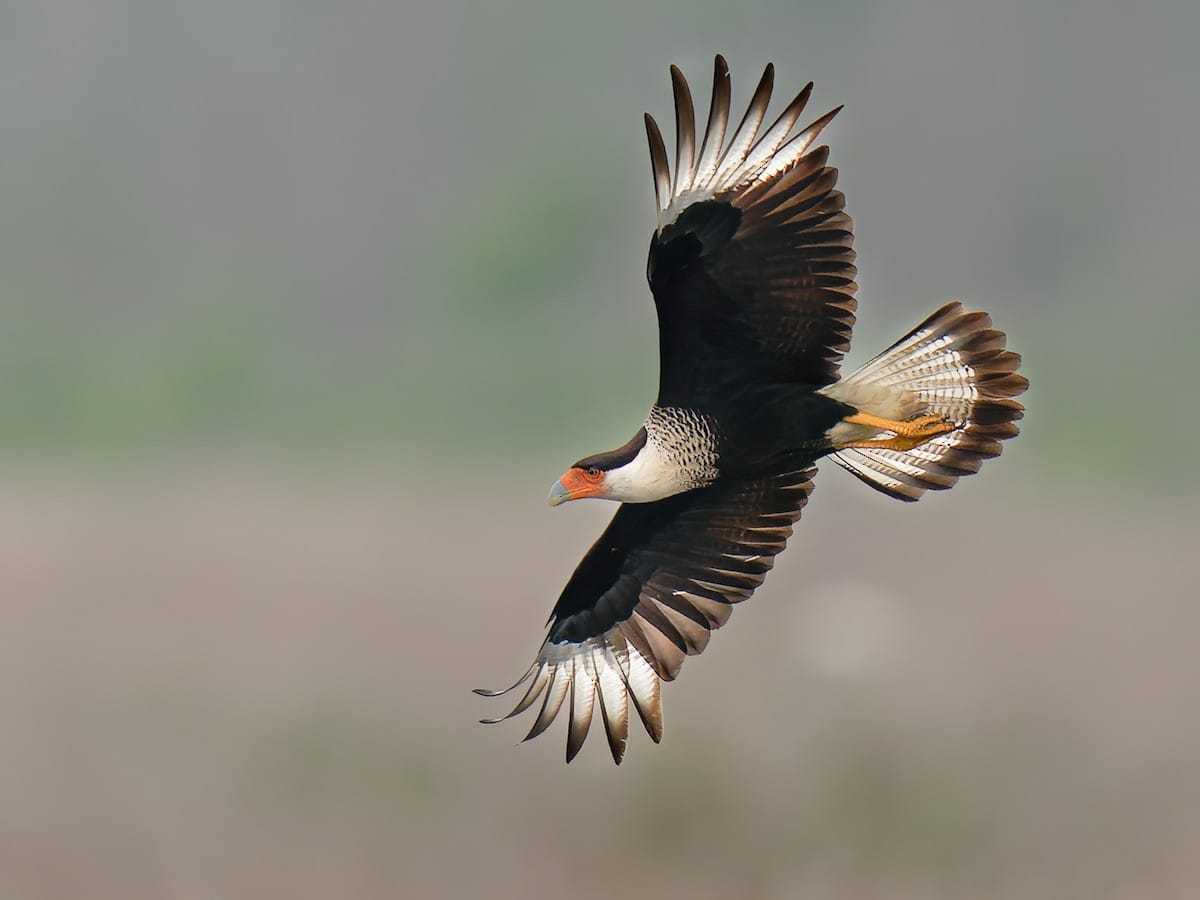
The Crested Caracara is a large and striking falcon-like bird found throughout the Americas, particularly in open grasslands, savannas, and semi-arid regions. Unlike many falcons, it often scavenges carrion but is also a capable hunter of small vertebrates and insects.
Crested Caracaras have black and white plumage with a prominent crest and bright orange facial skin. Broad wings allow soaring and gliding, while strong legs enable walking and hunting on the ground. Observing a Crested Caracara interact with carrion or chase prey is both entertaining and educational.
Nesting occurs in trees, cliffs, or low shrubs, with breeding pairs defending their territory vigorously. Chicks are fed a combination of scavenged and live prey, developing hunting skills under parental supervision.
Crested Caracaras contribute to ecosystem health by cleaning carrion and controlling small animal populations, showcasing their adaptability and ecological importance.
53. Northern Crested Caracara

The Northern Crested Caracara is a close relative of the Crested Caracara, inhabiting North and Central America. It exhibits similar feeding habits, combining scavenging with hunting small animals, insects, and reptiles. Its bold behavior and striking appearance make it easily recognizable.
This caracara has dark upperparts, white underparts, and a prominent crest, with orange facial skin. Long, broad wings enable soaring and gliding, while strong feet allow walking efficiently on open ground. Observing one hunt or forage provides insight into their versatile behavior.
Nesting occurs in tall trees or low cliffs. Breeding pairs cooperate in feeding and defending chicks. Their adaptability allows them to thrive in agricultural lands, savannas, and semi-open habitats.
Northern Crested Caracaras play an important ecological role by cleaning carrion and regulating small prey populations, demonstrating the ecological versatility of falcon-like birds.
54. Yellow-headed Caracara
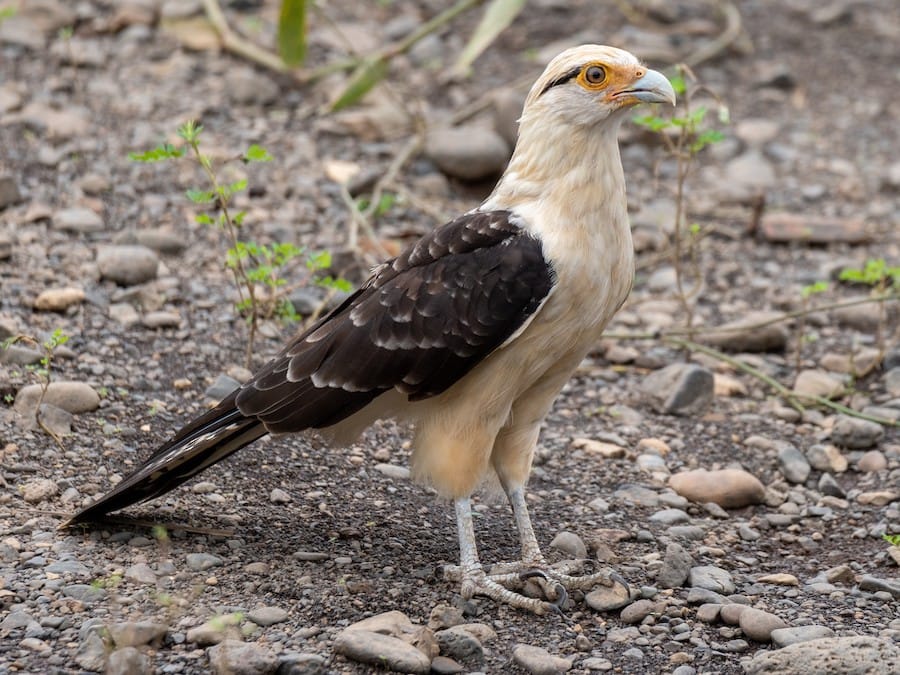
The Yellow-headed Caracara is a medium-sized bird found in South and Central America, known for its scavenging habits combined with opportunistic hunting. It inhabits open fields, pastures, and forest edges, preying on insects, small mammals, and carrion.
These birds have a distinctive yellow head and orange facial skin, contrasting with dark brown and pale plumage. Broad wings allow soaring flight, while strong legs facilitate foraging on the ground. Watching a Yellow-headed Caracara feed on carrion or chase small prey demonstrates their adaptability.
Nesting occurs in trees or shrubs, with both parents involved in raising chicks. Their social behavior often includes small flocks, providing additional protection and foraging efficiency.
Yellow-headed Caracaras help maintain ecological balance by scavenging and hunting small prey, highlighting the role of versatile raptors in tropical ecosystems.
55. Red-throated Caracara
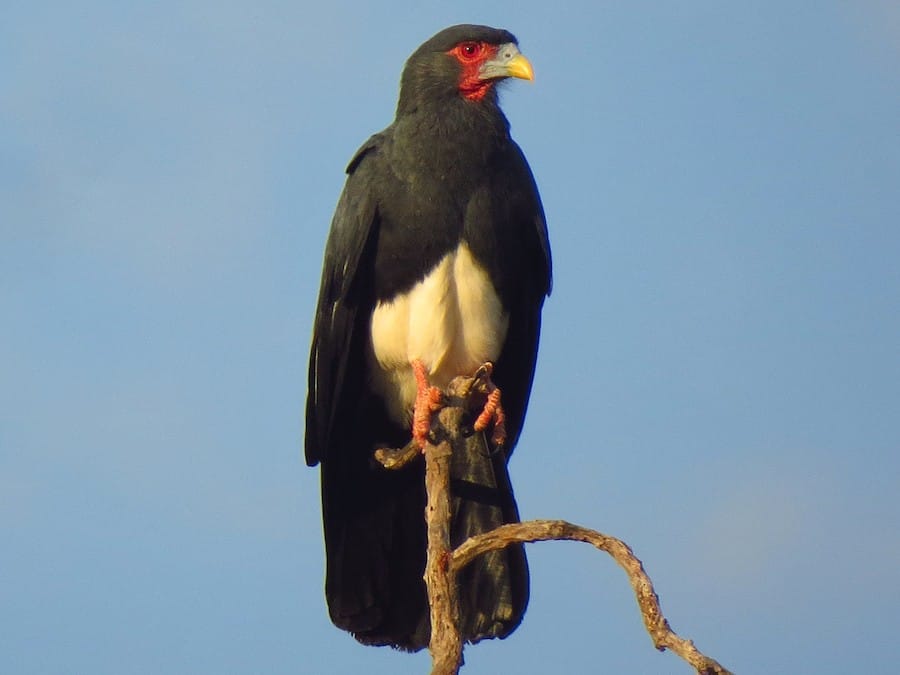
The Red-throated Caracara is a striking falcon-like bird native to the forests of Central and South America. Known for its vibrant red throat and bold hunting behavior, it preys primarily on social insects like wasps and bees, but occasionally small vertebrates.
Red-throated Caracaras have black plumage with a bright red throat, long wings, and a moderately long tail for agile flight. Observing one forage in forest canopies reveals a remarkable combination of courage and precision, as it raids insect nests with skill and speed.
They nest in tall trees, with breeding pairs fiercely guarding chicks. Their specialized diet and forest habitat highlight the need for conservation of primary forests to maintain their populations.
Red-throated Caracaras play an essential role in controlling insect populations, demonstrating how specialized falcon-like birds contribute to tropical forest ecosystem health.
56. Chimango Caracara

The Chimango Caracara is a small, adaptable bird found in southern South America, including Argentina, Chile, and Uruguay. It is an opportunistic feeder, consuming carrion, insects, small vertebrates, and agricultural scraps, thriving in both wild and human-altered landscapes.
Chimango Caracaras have brown plumage with pale underparts and a subtle facial pattern. Broad wings enable soaring and agile flight. Their bold, social behavior allows them to exploit a variety of food sources, often gathering in small groups.
Nesting occurs in trees, cliffs, or even buildings. Breeding pairs provide care and protection to chicks, ensuring fledging success. Their adaptability allows them to thrive across a range of habitats, from grasslands to urban areas.
By scavenging and hunting small prey, Chimango Caracaras contribute to ecosystem health, cleaning the environment and controlling insect and rodent populations.
57. Mountain Caracara

The Mountain Caracara is a large falcon-like bird native to the high Andes of South America. It thrives in alpine and mountainous environments, feeding on carrion, insects, small mammals, and occasionally eggs. Its adaptability to harsh terrain makes it a fascinating species to study.
Mountain Caracaras have dark upperparts, white underparts, and a prominent crest. Long wings facilitate soaring over rugged landscapes, while strong legs aid in ground foraging. Observing one navigate steep terrain demonstrates their remarkable agility and resilience.
Nesting occurs on cliffs or rocky outcrops. Breeding pairs are protective and cooperative, ensuring chicks survive in challenging environments. Conservation of mountain habitats is important to maintain prey availability and nesting sites.
Mountain Caracaras maintain ecological balance by scavenging carrion and controlling small vertebrate populations, highlighting their importance as high-altitude predators.
58. Striated Caracara

The Striated Caracara, native to the Falkland Islands and southern South America, is one of the most intelligent and bold falcon-like birds. Known for its curiosity and problem-solving skills, it preys on seabirds, eggs, small mammals, and carrion.
These caracaras have dark plumage with streaked underparts and a prominent facial mask. Long wings enable soaring, while strong feet aid in ground foraging. Observing one interact with humans or forage for food reveals impressive intelligence and adaptability.
Nesting occurs in cliffs or tree cavities. Breeding pairs are highly attentive, ensuring chicks learn hunting and foraging skills. Maintaining coastal and island habitats is essential for this species.
Striated Caracaras play an important ecological role by controlling seabird and small vertebrate populations, illustrating the versatility and intelligence of falcon-like predators.
59. White-throated Caracara

The White-throated Caracara is found in South American forests and savannas. It feeds on carrion, insects, and small vertebrates. Its foraging behavior is both opportunistic and strategic, allowing it to thrive in diverse environments.
White-throated Caracaras have dark plumage with a striking white throat and broad wings for soaring. Observing one navigate forest edges or open fields demonstrates their adaptability and hunting versatility.
Nesting occurs in trees or cliff ledges, with both parents contributing to chick development. Their presence in agricultural and forested areas highlights their role in controlling pests and cleaning carrion.
White-throated Caracaras are valuable for ecosystem health, regulating prey populations and maintaining balance in tropical and subtropical habitats.
60. Carunculated Caracara
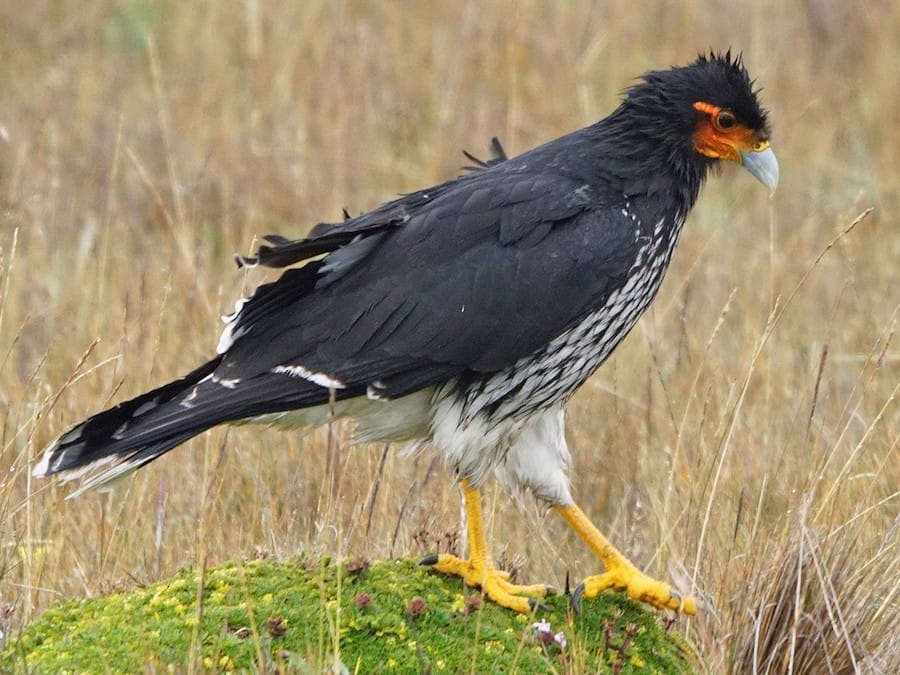
The Carunculated Caracara is a large falcon-like bird found in South American lowlands. Named for the small fleshy caruncles on its face, it is both a scavenger and hunter, consuming carrion, insects, and small vertebrates.
Carunculated Caracaras have dark brown plumage, pale underparts, and distinctive facial ornaments. Broad wings facilitate soaring, while strong legs allow ground foraging. Observing one feed on carrion or hunt small prey demonstrates their versatility and adaptability.
They nest in trees, cliffs, or rocky areas, with breeding pairs actively feeding and protecting chicks. Their adaptability enables survival across diverse lowland habitats, including agricultural areas.
Carunculated Caracaras contribute to ecosystem health by scavenging carrion and regulating small animal populations, illustrating the importance of falcon-like birds in tropical lowland ecosystems.
61. Southern Caracara

The Southern Caracara is a versatile falcon-like bird found across southern South America. It inhabits open grasslands, savannas, and semi-arid regions, often feeding on carrion, insects, and small vertebrates. Unlike many falcons, it frequently forages on the ground, showcasing its adaptability.
Southern Caracaras have dark brown plumage with pale underparts and a striking orange facial patch. Their broad wings allow soaring and agile flight, while strong legs help in walking and hunting on the ground. Observing one interact with carrion or hunt small animals is a fascinating display of behavioral versatility.
Nesting occurs in trees, cliffs, or low shrubs. Breeding pairs are cooperative and attentive, feeding and protecting chicks until they can fend for themselves. Maintaining open habitats and prey availability is essential for their continued success.
Southern Caracaras play a key ecological role by cleaning carrion and controlling small prey populations, demonstrating how falcon-like birds maintain balance in diverse ecosystems.
62. Guadalupe Caracara
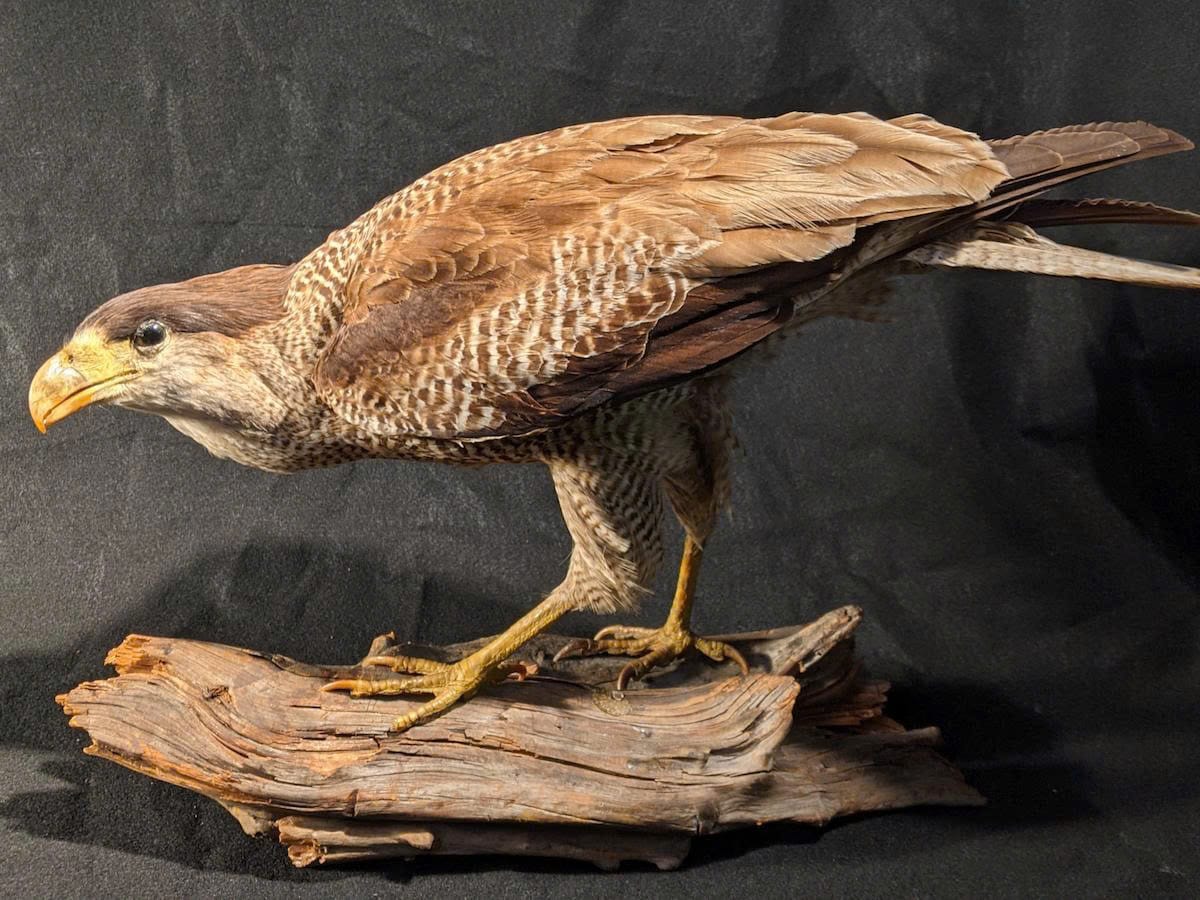
The Guadalupe Caracara was a large falcon-like bird endemic to Guadalupe Island, Mexico. Sadly, it became extinct in the 20th century due to hunting and habitat loss. Historically, it hunted rodents, insects, and carrion, thriving in the island’s semi-arid environment.
This caracara had dark brown plumage with pale underparts and a robust body built for ground foraging and short flights. Its intelligence and boldness were noted by early observers, allowing it to exploit diverse food sources effectively.
Nesting occurred on cliffs and rocky outcrops, providing protection for eggs and chicks. Its extinction highlights the fragility of island species and the importance of conservation measures for endemic birds.
The Guadalupe Caracara serves as a cautionary tale, reminding us that falcon-like birds play important ecological roles, and their loss can disrupt island ecosystems dramatically.
63. Laughing Kestrel
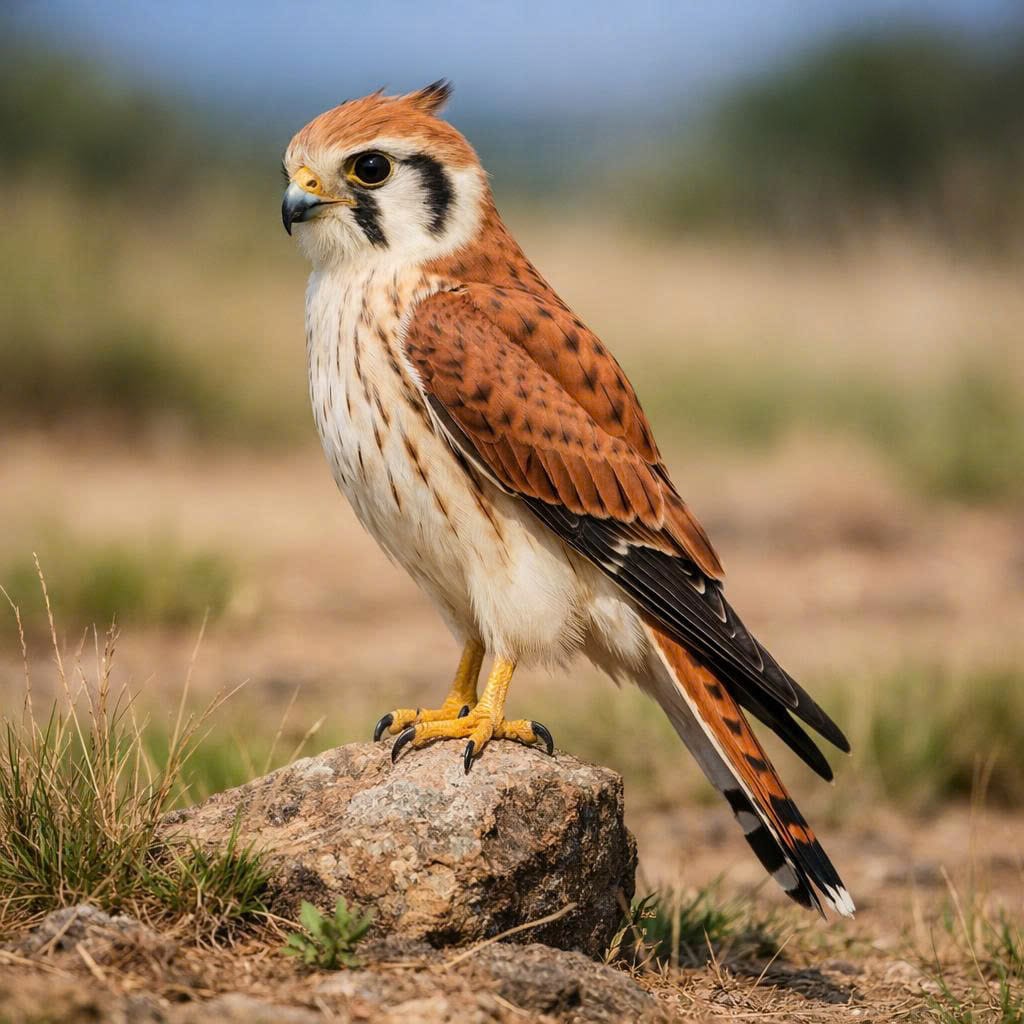
The Laughing Kestrel, native to parts of South America, is named for its distinctive, laughing-like call. It is a small, agile falcon that hunts insects, small birds, and rodents in open fields, grasslands, and savannas.
This kestrel has rufous upperparts, pale underparts, and subtle streaks on the chest. Its long, pointed wings allow hovering and rapid pursuit of prey, while its keen eyesight makes it an exceptional hunter. Observing a Laughing Kestrel hover before diving is a delight for bird enthusiasts.
Nesting occurs in tree cavities, cliffs, or abandoned nests. Breeding pairs cooperate in feeding and guarding chicks. Habitat conservation is crucial to maintain prey abundance and suitable nesting sites.
Laughing Kestrels are vital predators in their ecosystems, controlling insect and rodent populations while adding a touch of vocal charm to South American landscapes.
64. Savanna Falcon
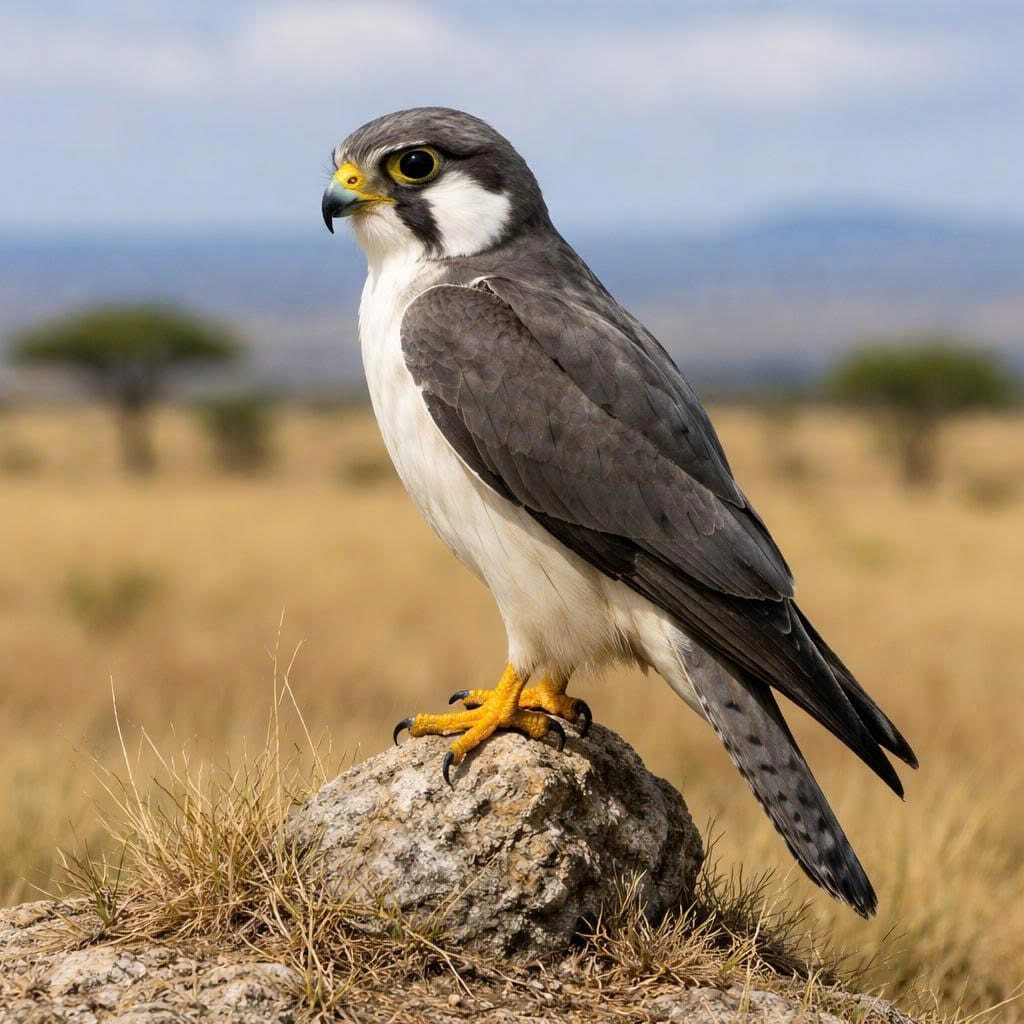
The Savanna Falcon is a medium-sized raptor found throughout sub-Saharan Africa. Preferring open savannas and grasslands, it hunts small mammals, birds, and insects with incredible agility and speed.
Savanna Falcons have grey-brown upperparts, pale underparts, and distinctive facial markings. Their long, pointed wings enable swift flight and hovering over fields as they search for prey. Watching one swoop down on a rodent demonstrates precision and athleticism in action.
Nesting occurs in trees, cliffs, or old nests of other raptors. Breeding pairs are protective, ensuring chick survival. Savanna Falcons thrive in open habitats, making them important indicators of healthy grassland ecosystems.
These falcons help regulate populations of small vertebrates and insects, playing a vital role in maintaining the balance of savanna ecosystems.
65. Desert Falcon

The Desert Falcon is adapted to arid and semi-arid environments, found in deserts and scrublands across Africa, the Middle East, and parts of Asia. It preys on small mammals, reptiles, and insects, demonstrating exceptional hunting skills in harsh conditions.
Desert Falcons have sandy-brown plumage for camouflage and long, pointed wings for agile flight. Their keen vision allows them to spot prey from great distances, and their fast, direct flight ensures a successful catch. Observing one hunt in desert landscapes is a lesson in survival and adaptation.
Nesting occurs in rocky outcrops, cliffs, or isolated trees. Breeding pairs are attentive, feeding and protecting chicks in challenging environments. Conservation of desert habitats is essential to support these falcons and their prey populations.
Desert Falcons maintain ecosystem balance by controlling small vertebrate populations and demonstrating how raptors adapt to extreme habitats.
66. Steppe Falcon
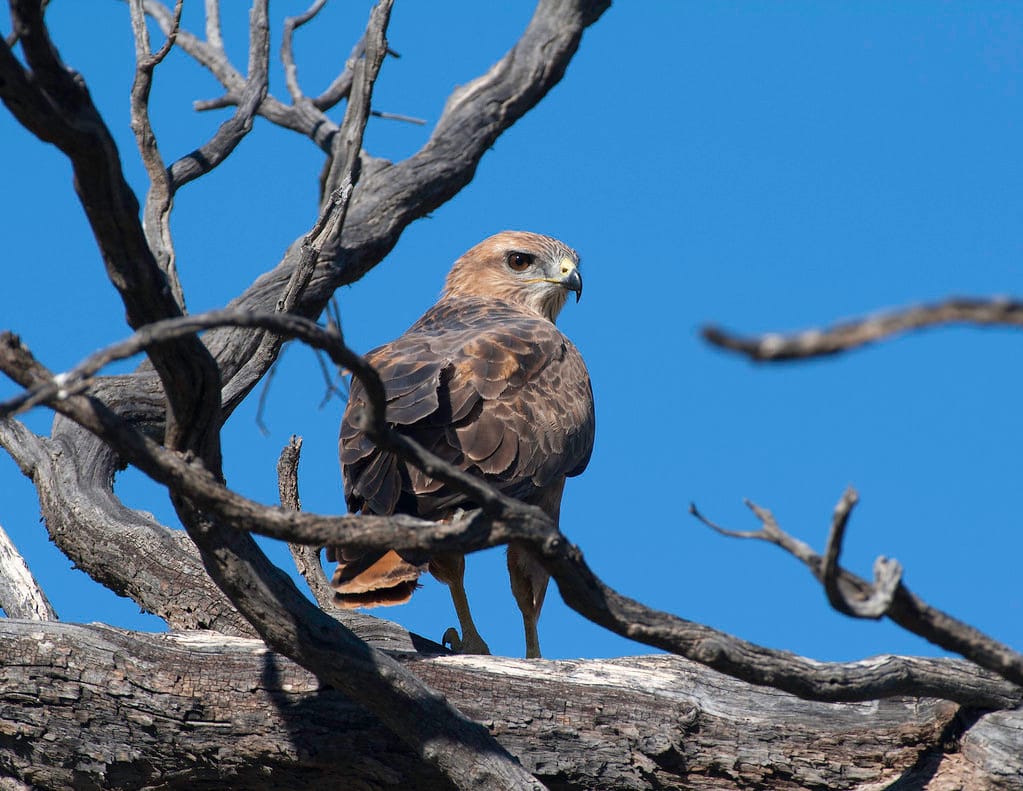
The Steppe Falcon is a migratory raptor found across Central Asia and Eastern Europe. It breeds in open grasslands and steppe regions, hunting birds, small mammals, and insects with precision and speed.
Steppe Falcons have grey-brown plumage with pale underparts, and long, pointed wings ideal for soaring and rapid dives. Their hunting style is dynamic, combining hovering and sudden stoops to catch prey. Observing one in action is a display of aerial agility.
Nesting occurs in trees, cliffs, or abandoned nests. Breeding pairs work together to feed and protect chicks. Migration requires conservation of both breeding and wintering habitats to ensure species survival.
Steppe Falcons contribute to ecological balance by controlling prey populations across grasslands and steppe regions, highlighting the importance of raptors in open ecosystems.
67. Highland Falcon
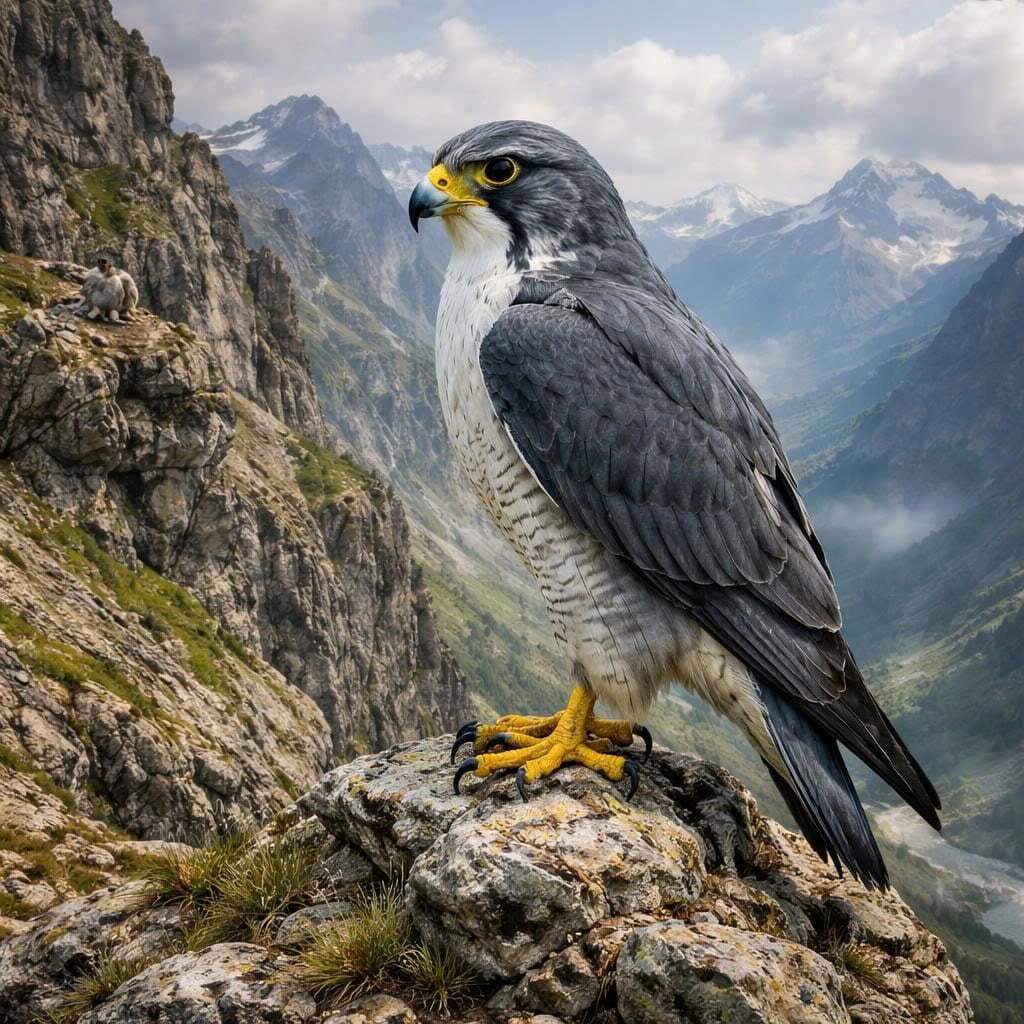
The Highland Falcon inhabits mountainous regions worldwide, adapted to hunting in rugged terrain and variable climates. Its diet consists of birds, small mammals, and reptiles, which it captures using stealth and powerful flight.
Highland Falcons have slate-grey plumage with pale underparts and a robust body built for strong, agile flight. Observing one navigate cliffs and valleys demonstrates remarkable skill and adaptability to challenging terrain.
Nesting occurs on cliff ledges or rocky outcrops. Breeding pairs protect and feed chicks, ensuring they develop hunting proficiency. Conservation of mountain habitats is vital for maintaining prey availability and nesting sites.
Highland Falcons play a crucial ecological role by controlling small vertebrate populations in high-altitude ecosystems, showcasing adaptability and hunting expertise.
68. Coastal Falcon
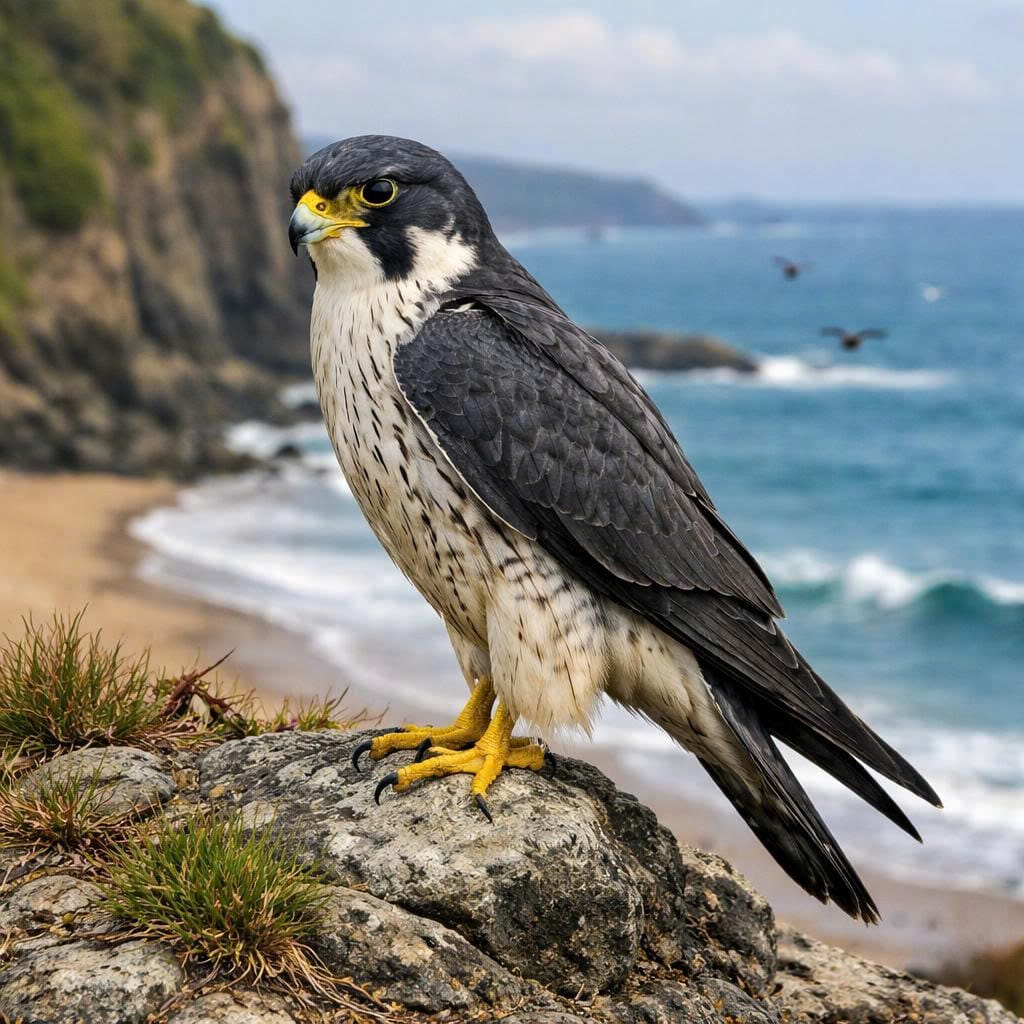
The Coastal Falcon is a medium-sized raptor found along shorelines and coastal forests. It preys on seabirds, small mammals, and crustaceans, demonstrating adaptability to both terrestrial and marine-influenced environments.
These falcons have dark upperparts and pale underparts with long wings for soaring over coastal areas. Observing one dive toward prey along cliffs or beaches showcases their speed and precision. Their hunting adaptability allows them to thrive in diverse coastal habitats.
Nesting occurs on cliffs or in trees near the shore. Breeding pairs cooperate to raise chicks, ensuring they are skilled in hunting along coastal environments. Protecting coastal habitats is crucial to support their survival.
Coastal Falcons help maintain ecological balance by controlling small vertebrate populations and regulating seabird and insect activity along shorelines.
69. Woodland Falcon
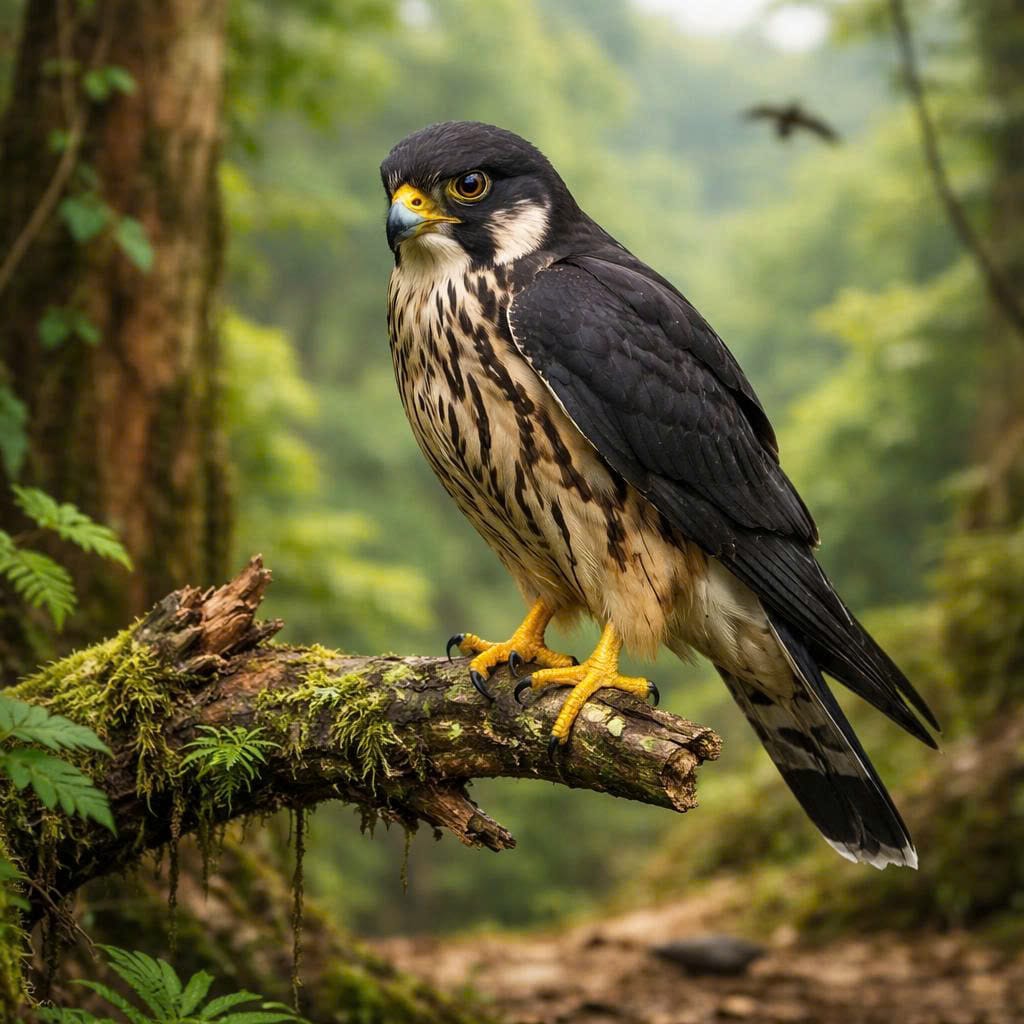
The Woodland Falcon inhabits forests and woodlands across tropical and subtropical regions. It hunts birds, mammals, and reptiles, often using forest cover to ambush prey efficiently.
Woodland Falcons have dark upperparts and streaked underparts, with broad wings and a short tail for maneuvering through dense forests. Observing one glide silently before a sudden stoop is a captivating display of stealth and skill.
Nesting occurs in tree cavities or abandoned nests. Breeding pairs are protective and attentive, ensuring chick survival. Forest conservation is essential for maintaining prey and nesting opportunities.
Woodland Falcons regulate small vertebrate populations, demonstrating their critical ecological role in forest ecosystems.
70. Island Falcon
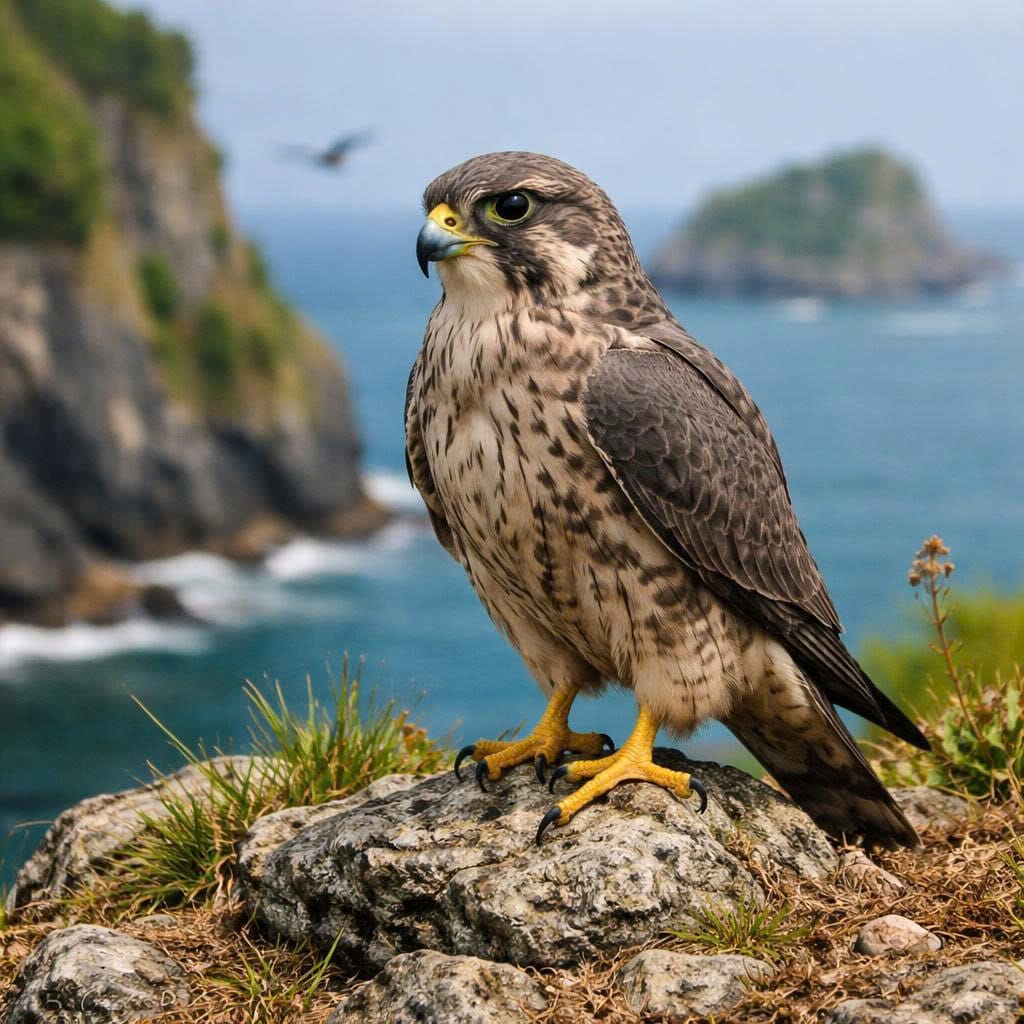
The Island Falcon is a rare, specialized falcon found on isolated islands worldwide. It hunts birds, small mammals, and insects, often exhibiting unique adaptations to island environments, such as reduced wing length or altered hunting behaviors.
Island Falcons have variable plumage depending on location but typically feature muted tones for camouflage. Short, agile wings allow precise maneuvering in limited spaces. Observing one hunt in island habitats is a glimpse into evolutionary adaptation and survival.
Nesting occurs in cliffs, trees, or rocky outcrops. Breeding pairs are protective, ensuring offspring survival in isolated habitats. Conservation of island ecosystems is critical due to vulnerability to habitat loss and invasive species.
Island Falcons maintain ecological balance by controlling prey populations and demonstrating the adaptability of falcon species to unique environments.
Frequently Asked Questions about Falcons
1. What are Falcons?
Falcons are birds of prey known for their speed, sharp vision, and hunting skills. They belong to the family Falconidae and can be found worldwide in diverse habitats.
2. What is the difference between a Falcon and a Hawk?
Falcons generally have long, pointed wings and faster flight, while hawks have broader wings suited for soaring. Falcons also typically hunt with rapid stoops and high-speed dives.
3. How many types of Falcons exist?
There are approximately 70 recognized types of falcons worldwide, ranging from small kestrels to large caracaras, each with unique hunting and habitat adaptations.
4. Where do Falcons live?
Falcons inhabit a variety of environments, including forests, grasslands, deserts, mountains, and coastal regions, depending on the species.
5. What do Falcons eat?
Falcons are carnivorous, feeding on birds, small mammals, reptiles, insects, and occasionally carrion. Their diet varies with habitat and species.
6. How fast can Falcons fly?
Some falcons, like the Peregrine Falcon, can reach speeds of over 200 mph during a hunting dive, making them the fastest birds on Earth.
7. How do Falcons hunt?
Falcons use keen eyesight to spot prey from a distance, then dive or swoop at high speed to catch it. Some species also hunt while hovering or walking on the ground.
8. Do Falcons migrate?
Many falcon species migrate seasonally, traveling long distances between breeding and wintering grounds. Migration depends on food availability and climate.
9. Are Falcons endangered?
Some falcon species are threatened due to habitat loss, hunting, and pesticide use, while others maintain stable populations. Conservation efforts are crucial for vulnerable species.
10. What is the smallest Falcon?
The smallest falcon is typically the Falco sparverius, known as the American Kestrel, weighing only 80–165 grams.
11. What is the largest Falcon?
The largest falcons are typically caracaras or species like the Gyrfalcon, which can weigh up to 2 kilograms and have a wingspan exceeding 1.5 meters.
12. How long do Falcons live?
Falcons can live 10–20 years in the wild, with longer lifespans observed in captivity due to protection from predators and consistent food sources.
13. Do Falcons mate for life?
Some falcon species form long-term pair bonds and may mate for life, while others may choose different partners each breeding season.
14. Where do Falcons build nests?
Falcons nest in trees, cliffs, rocky outcrops, or sometimes abandoned nests of other birds. Nest location varies with species and habitat.
15. How many eggs do Falcons lay?
Most falcons lay 2–5 eggs per breeding season, which are incubated by both parents for several weeks until hatching.
16. What colors are Falcons?
Falcon plumage varies widely, from rufous, brown, and grey tones to striking patterns of streaks, bars, and facial masks that aid camouflage.
17. Do Falcons hunt in groups?
Most falcons are solitary hunters, but some species like caracaras may forage or scavenge in small groups for efficiency.
18. Can Falcons be kept as pets?
Falconry is a legal practice in some countries, but keeping falcons as pets requires permits, training, and knowledge of their specialized needs.
19. How do Falcons communicate?
Falcons use vocal calls, body postures, and displays during mating, territorial disputes, and warning signals to communicate with others.
20. Do Falcons eat snakes?
Yes, certain falcon species, such as the Laughing Falcon, specialize in hunting snakes, including venomous ones.
21. Are Falcons nocturnal?
Most falcons are diurnal, hunting during daylight hours. However, some forest-adapted species may be crepuscular, active at dawn and dusk.
22. How do Falcons see prey from far away?
Falcons have exceptional vision, up to 8 times sharper than humans, allowing them to spot small prey from great distances while soaring high.
23. How do Falcons catch prey mid-air?
Falcons use high-speed stoops or swoops, striking birds or insects in mid-air with precision using their sharp talons.
24. Do Falcons eat fish?
Some falcon species, particularly coastal or island falcons, may opportunistically feed on fish, though it is not a primary food source.
25. Can Falcons survive in cities?
Yes, some species like Peregrine Falcons have adapted to urban environments, nesting on tall buildings and hunting pigeons and other birds.
26. What predators eat Falcons?
Falcons face predation from larger birds of prey, snakes, and mammals, especially when young or nesting.
27. How do Falcons clean their nests?
Falcons remove fecal sacs and leftover prey remains to maintain nest hygiene and reduce the risk of disease.
28. Are Falcons territorial?
Yes, many falcon species aggressively defend territories for hunting and nesting, often chasing away intruders with aerial displays.
29. How do Falcons adapt to deserts?
Desert falcons, like the Desert Falcon, have plumage that blends with sandy environments and hunt efficiently under extreme heat and limited water conditions.
30. Can Falcons swim?
Falcons are not adapted for swimming. If caught in water, they usually attempt to fly out immediately or cling to vegetation to escape.
31. What is a Peregrine Falcon?
The Peregrine Falcon is the fastest bird on Earth, capable of diving over 200 mph to catch other birds mid-flight. It inhabits diverse habitats worldwide.
32. How do Falcons reproduce?
Falcons mate seasonally, with courtship displays including aerial maneuvers, vocalizations, and feeding behaviors. Eggs are incubated until hatching, and chicks are fed by parents.
33. How long do Falcon chicks stay in the nest?
Falcon chicks typically fledge after 4–6 weeks but remain dependent on parents for hunting training for several more weeks.
34. Are Falcons social birds?
Most falcons are solitary, especially when hunting, though some scavenging species may form small social groups.
35. How do Falcons survive winter?
Migratory falcons travel to warmer regions, while resident species adapt by hunting available prey and conserving energy during colder months.
36. Do Falcons have natural camouflage?
Yes, plumage patterns, colors, and markings help falcons blend into their habitats, providing stealth for hunting and protection from predators.
37. Can Falcons turn their heads completely around?
No, unlike owls, falcons cannot rotate their heads fully but have excellent vision and neck flexibility to spot prey effectively.
38. How do falcons differ in size?
Falcons range from tiny species like the American Kestrel to large caracaras and Gyrfalcons, with significant differences in weight, wingspan, and hunting style.
39. Are all Falcons fast flyers?
Yes, while all falcons are adept fliers, speed varies by species. Peregrine Falcons are the fastest, while forest falcons rely more on maneuverability than speed.
40. What role do Falcons play in ecosystems?
Falcons regulate populations of birds, mammals, and insects, prevent overpopulation, and maintain ecological balance in diverse habitats.
41. Can Falcons be trained?
Yes, falcons have been trained for falconry for centuries, requiring skilled handlers and careful attention to diet, housing, and hunting practice.
42. What is the lifespan of a Falcon in captivity?
In captivity, falcons can live longer than in the wild, sometimes exceeding 20 years due to consistent food, veterinary care, and protection from predators.
43. How do Falcons impact human activities?
Falcons benefit humans by controlling pest birds and rodents. They also play cultural and recreational roles in falconry and birdwatching.
44. How can we identify different Falcons?
Identification depends on size, plumage color, wing shape, facial markings, and habitat. Learning key features helps distinguish between similar species.
45. Do Falcons attack humans?
Falcons generally avoid humans but may defend nests if approached too closely. They are not a threat under normal circumstances.
46. What is the diet of Caracaras?
Caracaras are opportunistic falcon-like birds that feed on carrion, insects, small vertebrates, and occasionally eggs, demonstrating adaptability in diverse habitats.
47. Why are forest Falcons secretive?
Forest Falcons rely on camouflage and stealth to hunt in dense habitats, making them elusive and difficult to observe.
48. How do Falcons benefit agriculture?
By hunting rodents and insect pests, falcons reduce crop damage and contribute to natural pest control in agricultural areas.
49. What are the main threats to Falcons?
Threats include habitat destruction, pesticide use, hunting, climate change, and collisions with man-made structures.
50. How can we help Falcon conservation?
Supporting habitat preservation, reducing pesticide use, participating in bird monitoring, and promoting awareness are key steps in falcon conservation.
51. Do Falcons use tools?
Unlike some birds, falcons do not use tools but rely on speed, agility, and keen eyesight to capture prey efficiently.
52. What is the role of falconry in conservation?
Falconry has helped maintain some captive populations, raise awareness about raptor biology, and support conservation programs globally.
Read more: 100 Types of Geckos (Pictures And Identification)