

Geckos are some of the most fascinating reptiles on our planet, with over 1,500 species scattered across the tropics, subtropics, and even temperate regions. From the tiny, almost invisible dwarf geckos to the massive, colorful day geckos of Madagascar, each type exhibits remarkable adaptations, behaviors, and patterns. In this guide, we will explore the Types of Geckos, helping you identify them, understand their habitats, and appreciate their incredible diversity. Whether you are a beginner enthusiast or a curious wildlife lover, this article offers clear, friendly, and in-depth insights into geckos around the world.
1. Leopard Gecko
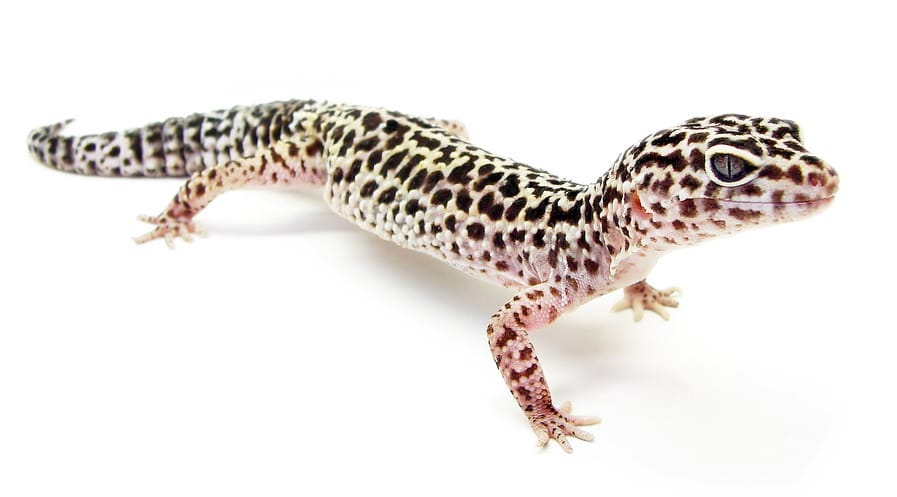
The Leopard Gecko (Eublepharis macularius) is one of the most popular geckos in the pet trade, but in the wild, it inhabits the rocky deserts of Afghanistan, Pakistan, and northwestern India. Known for its distinctive spotted pattern, the leopard gecko exhibits a palette of yellows, golds, and browns, with black spots resembling the fur of a leopard, hence the name. These geckos are nocturnal hunters, feeding primarily on insects and other invertebrates. Unlike many geckos, Leopard Geckos have movable eyelids, allowing them to blink and keep their eyes clean—a fascinating adaptation for desert life.
Leopard Geckos are remarkable for their tail, which serves multiple purposes: fat storage, balance, and even a defensive tool. When threatened by predators, they can detach their tail to distract the attacker, a process known as autotomy. Their calm temperament, combined with ease of care, makes them a favorite among reptile enthusiasts. Leopard Geckos also exhibit social behaviors such as tail-waving as a warning to other geckos, which reflects their surprisingly complex communication skills. Their ability to adapt to arid environments, hunt efficiently, and interact socially demonstrates why they are such an iconic representative of the Types of Geckos.
2. Crested Gecko
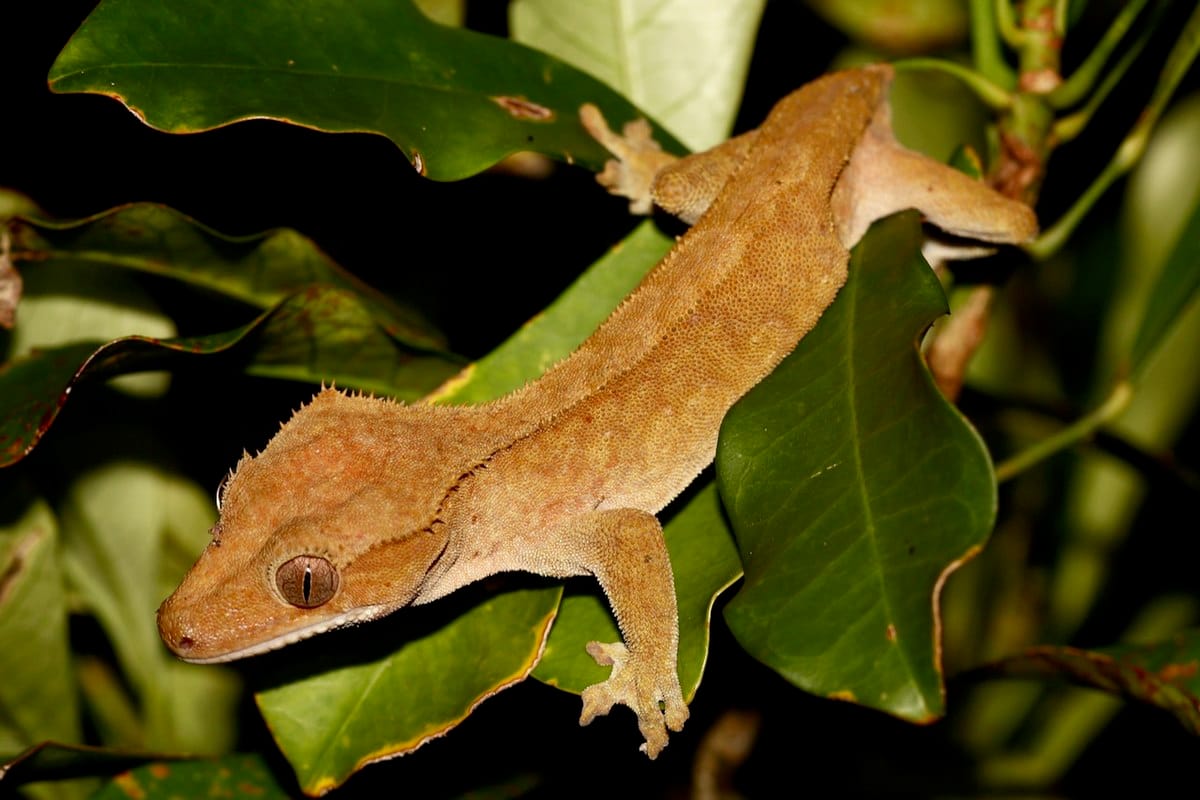
The Crested Gecko (Correlophus ciliatus) hails from the rainforests of New Caledonia and was once thought to be extinct until rediscovered in 1994. These geckos are known for their “eyelash” crests running from their eyes to their tails, giving them an almost mystical appearance. They are arboreal, spending much of their time climbing trees and shrubs, using specialized toe pads that allow them to cling to vertical surfaces with ease. Crested Geckos are primarily nocturnal and have a diet consisting of insects, fruits, and nectar.
Unlike leopard geckos, Crested Geckos cannot blink because they lack movable eyelids; instead, they lick their eyes to keep them clean. They are highly adaptable climbers and use their prehensile tails for balance and stability. Their striking appearance and gentle demeanor have made them popular pets, but in the wild, they play a crucial role in seed dispersal and insect population control. Crested Geckos also exhibit unique vocalizations, ranging from squeaks to chirps, which serve as communication signals during social interactions. Their combination of climbing prowess, vocal communication, and arboreal lifestyle demonstrates the fascinating diversity among Types of Geckos.
3. Gargoyle Gecko

The Gargoyle Gecko (Rhacodactylus auriculatus) is native to southern New Caledonia and gets its name from the bumpy, horn-like structures on its head that resemble the mythical gargoyle statues. These geckos are medium-sized, with robust bodies and prehensile tails that aid in climbing. Unlike their arboreal cousins, Gargoyle Geckos often spend time on the ground as well as in trees, showcasing a semi-arboreal lifestyle. Their diet consists of insects, small invertebrates, and fruit-based substances, which they lick from leaves and bark.
Gargoyle Geckos are nocturnal and display unique behaviors such as tail-waving when threatened or during social interactions. One remarkable feature is their ability to lose their tail when stressed, similar to Leopard Geckos, but unlike some gecko species, they do not regrow it completely. Their bumpy appearance, varied color patterns, and calm temperament make them an interesting species for both observation in the wild and keeping in captivity. By studying Gargoyle Geckos, we gain insight into the diversity and adaptability present across the Types of Geckos, highlighting how evolutionary pressures shape both behavior and morphology.
4. Madagascar Ground Gecko
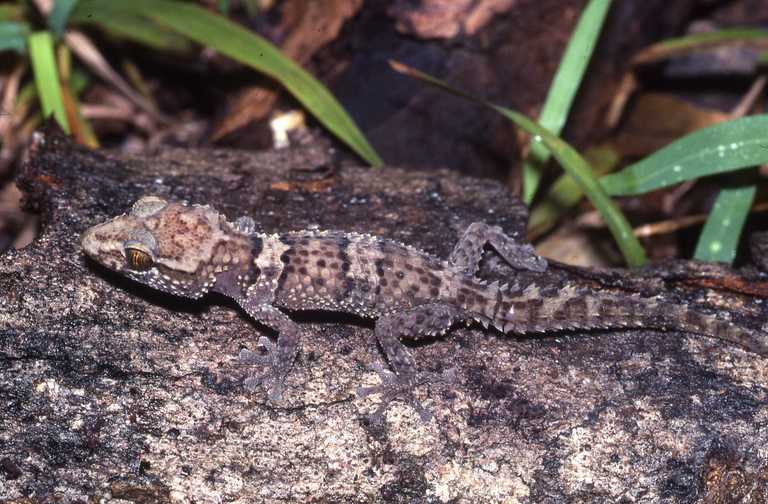
The Madagascar Ground Gecko (Paroedura pictus) is a terrestrial species found in southern Madagascar. Unlike arboreal geckos, this species spends most of its time on the ground, often hiding under rocks or leaf litter during the day. Their coloration—usually a mix of brown, beige, and cream with irregular spots—provides excellent camouflage against predators. These geckos are nocturnal and feed primarily on insects, spiders, and other small invertebrates.
Madagascar Ground Geckos are known for their relatively calm disposition and low maintenance, making them suitable for beginner herpetologists. In the wild, they contribute to insect population control and serve as prey for birds, snakes, and small mammals, highlighting their ecological role. Their climbing abilities are limited compared to arboreal species, but they exhibit remarkable agility on rough terrain. Observing Madagascar Ground Geckos allows enthusiasts to appreciate the adaptability of geckos across different habitats and how terrestrial lifestyles contrast with tree-dwelling counterparts within the Types of Geckos.
5. Tokay Gecko

The Tokay Gecko (Gekko gecko) is one of the largest gecko species, native to Southeast Asia, including the Philippines, Indonesia, and surrounding islands. Recognizable by its vibrant blue-gray skin with orange or red spots, the Tokay Gecko is both visually striking and vocally loud. Its namesake “to-kay” call can be heard during mating and territorial disputes. Tokay Geckos are primarily nocturnal predators, feeding on insects, small mammals, and occasionally other lizards.
Tokay Geckos are highly territorial and can be aggressive if threatened, unlike the more docile Leopard or Crested Geckos. They have strong jaws capable of delivering painful bites, which, combined with their adhesive toe pads, make them formidable climbers and hunters. These geckos have been traditionally used in Asian medicine, though this has contributed to declining wild populations. Studying the Tokay Gecko demonstrates the range of behaviors and adaptations present in Types of Geckos, from communication and territoriality to specialized feeding strategies.
6. Gold Dust Day Gecko

The Gold Dust Day Gecko (Phelsuma laticauda) is a small, diurnal species found in Madagascar and surrounding islands. Their bright green body, speckled with gold and red spots, makes them one of the most visually stunning geckos. Unlike most geckos, they are active during the day, feeding on insects, nectar, and fruit. Their vivid coloration serves both as camouflage in tropical foliage and as a signal to other geckos.
These geckos are highly territorial and communicate using visual displays, such as head-bobbing and push-ups. Gold Dust Day Geckos have specialized toe pads that allow them to cling to smooth surfaces, including glass, making them popular in captivity. Their social interactions, diurnal habits, and ecological role in pollination and insect control highlight the remarkable diversity within Types of Geckos, emphasizing how environment and lifestyle shape evolutionary adaptations.
7. Mediterranean House Gecko

The Mediterranean House Gecko (Hemidactylus turcicus) is a small, nocturnal gecko found in the Mediterranean region but widely introduced elsewhere, including North America. Known for its pale, semi-translucent skin and small body, this gecko often lives near human structures, feeding on insects attracted to lights. Their adaptability to urban environments sets them apart from more habitat-specific geckos.
Mediterranean House Geckos exhibit remarkable climbing abilities, using their adhesive toe pads to navigate walls and ceilings. They communicate through chirps and squeaks, especially during mating or territorial encounters. Their ability to thrive in human-dominated environments demonstrates how some geckos can adapt behaviorally and ecologically, contributing to insect control in urban settings. Understanding their habits provides insight into the diversity and adaptability present in the broader Types of Geckos category.
8. Satanic Leaf-tailed Gecko
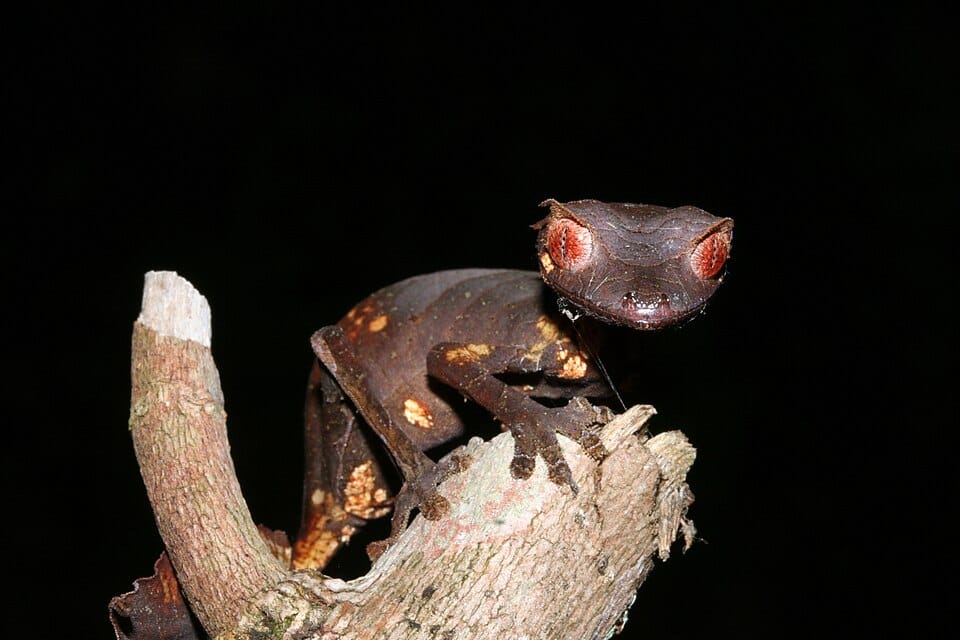
The Satanic Leaf-tailed Gecko (Uroplatus phantasticus) from Madagascar is one of the masters of camouflage in the gecko family. With a flattened body, leaf-shaped tail, and mottled coloration, this gecko blends seamlessly into the forest floor and tree bark. Nocturnal and arboreal, it hunts insects and small invertebrates with stealth and precision.
Their leaf-like tail serves both as camouflage and as a decoy for predators. When threatened, they can flatten their bodies against branches or leaves, remaining virtually invisible. These geckos are slow-moving but highly effective hunters, relying on patience and ambush tactics. Studying the Satanic Leaf-tailed Gecko highlights the evolutionary ingenuity present in Types of Geckos, demonstrating how morphology and behavior align with survival in specific ecological niches.
9. Fan-fingered Gecko

The Fan-fingered Gecko (Ptyodactylus spp.) is native to arid regions across North Africa and the Middle East. Named for the wide, fan-like toes that aid in climbing sandy or rocky surfaces, this gecko is nocturnal and primarily insectivorous. Its cryptic coloration, often sandy brown with subtle patterns, provides excellent camouflage against predators.
Fan-fingered Geckos are agile climbers and exhibit territorial behaviors, often vocalizing with chirps or squeaks. Their specialized toe structure allows them to scale vertical rocks and even ceilings in their rocky habitats. Observing this species provides insight into how geckos can evolve highly specialized physical traits to thrive in harsh, arid environments, adding to the fascinating diversity of Types of Geckos.
10. White-Lined Gecko

The White-Lined Gecko is a nocturnal species characterized by pale lines running along its body, aiding in camouflage and signaling. Found in Southeast Asia and surrounding islands, it inhabits forested areas and rocky crevices. Its diet consists mainly of insects, with occasional small invertebrates. These geckos exhibit social behaviors such as tail-waving and chirping to communicate territory and mating readiness.
White-Lined Geckos are excellent climbers and have adhesive toe pads typical of geckos, enabling them to scale smooth or uneven surfaces. Their subtle coloration and behaviors make them less conspicuous to predators, highlighting the role of camouflage in survival. Studying this species contributes to understanding the wide-ranging adaptations present in Types of Geckos, showcasing the balance between morphology, behavior, and ecological niche.
11. African Fat-Tailed Gecko
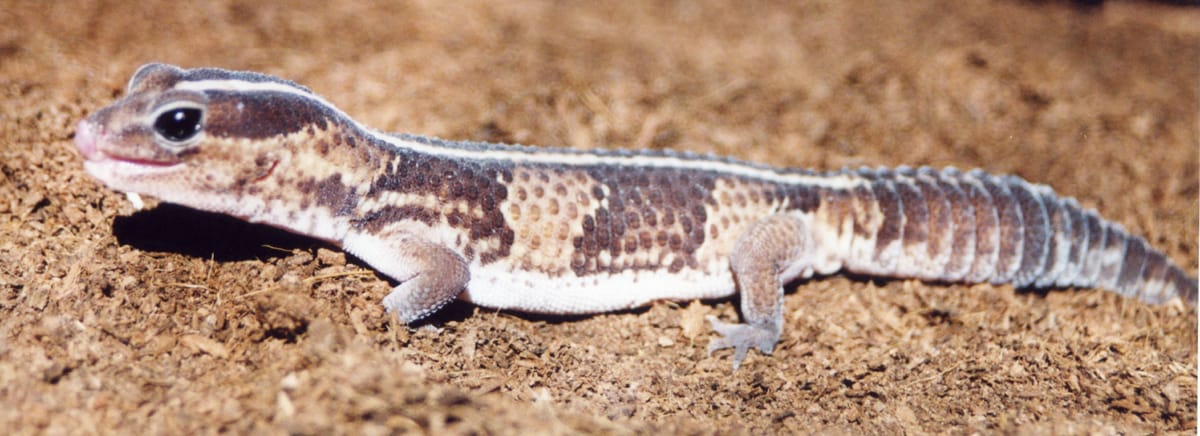
The African Fat-Tailed Gecko (Hemitheconyx caudicinctus) is a small but fascinating species native to West Africa, particularly Ghana, Togo, and Benin. This gecko earns its name from its plump, fleshy tail, which serves as a fat reservoir—a critical adaptation that helps it survive in harsh, arid conditions where food may not always be plentiful. Its coloration typically ranges from sandy beige to light brown, often adorned with darker bands or spots that provide natural camouflage among the rocky terrain and dry savannahs it calls home.
African Fat-Tailed Geckos are nocturnal insectivores. They hunt crickets, mealworms, and other small insects with remarkable precision, relying on both keen eyesight and a slow, deliberate stalking approach. Unlike many gecko species, they have movable eyelids, allowing them to blink, clean their eyes, and maintain moisture—a useful adaptation for life in dry habitats. In addition to storing fat, their tails can be used as a defensive mechanism; if threatened, they may shed their tail to distract predators, though regeneration takes time and energy.
Social behavior in African Fat-Tailed Geckos is subtle but interesting. They can recognize fellow geckos and exhibit mild forms of dominance interactions, often through tail waving or slight body posturing. These interactions help maintain territorial boundaries and reduce conflict. While primarily solitary, during the breeding season, males may actively seek out females, using a combination of vocalizations and scent cues to communicate readiness. Their relatively calm temperament and low-maintenance care requirements make them popular among pet owners, yet their role in the wild as insect population controllers remains invaluable.
Conservation-wise, African Fat-Tailed Geckos are not currently listed as endangered, but habitat loss due to urban expansion and agriculture poses potential threats. Understanding their ecological significance and behavior provides a lens into how geckos adapt to environmental pressures and how their physical traits, like the fat tail, serve both survival and reproductive strategies. The African Fat-Tailed Gecko exemplifies the remarkable diversity and adaptive ingenuity seen across the Types of Geckos, demonstrating that even relatively small reptiles possess complex behaviors and essential ecological roles.
12. Mourning Gecko

The Mourning Gecko (Lepidodactylus lugubris) is a small, fascinating species found throughout tropical regions, including the Indo-Pacific islands. Its name is derived from the pale, grayish color with subtle markings, which, to some, evoke a somber, “mourning” appearance. Mourning Geckos are parthenogenetic, meaning that females can reproduce without males—an incredible reproductive strategy that allows populations to establish quickly and adapt to isolated island environments.
Mourning Geckos are nocturnal and arboreal, often inhabiting trees, shrubs, and human dwellings. Their diet consists mainly of small insects, fruit flies, and nectar. They use their adhesive toe pads to cling to smooth surfaces, demonstrating the gecko family’s signature climbing ability. These geckos are relatively small, rarely exceeding three inches in length, which allows them to hide easily from predators such as birds and larger reptiles. Despite their diminutive size, they are energetic hunters and exhibit fascinating behaviors, including flicking their tongues to sense prey and using rapid movements to capture it.
Socially, Mourning Geckos exhibit complex interactions. Groups of females often share territories, and while conflicts are generally rare, they communicate through tail waving and chirping sounds to establish dominance or mating readiness. Their reproductive strategy combined with flexible social behavior allows them to thrive in environments where other species might struggle. In addition, their ability to survive in both natural and urban settings demonstrates impressive adaptability, a hallmark feature among the diverse Types of Geckos.
Though widely distributed, Mourning Geckos face minimal conservation concerns due to their reproductive strategy and resilience. However, understanding their life cycle and ecological contributions is important for appreciating the subtle yet crucial roles small geckos play in controlling insect populations and maintaining ecosystem balance. Observing Mourning Geckos offers insight into how evolution has produced unique reproductive strategies and behaviors among gecko species worldwide.
13. New Caledonian Giant Gecko (Leachie)
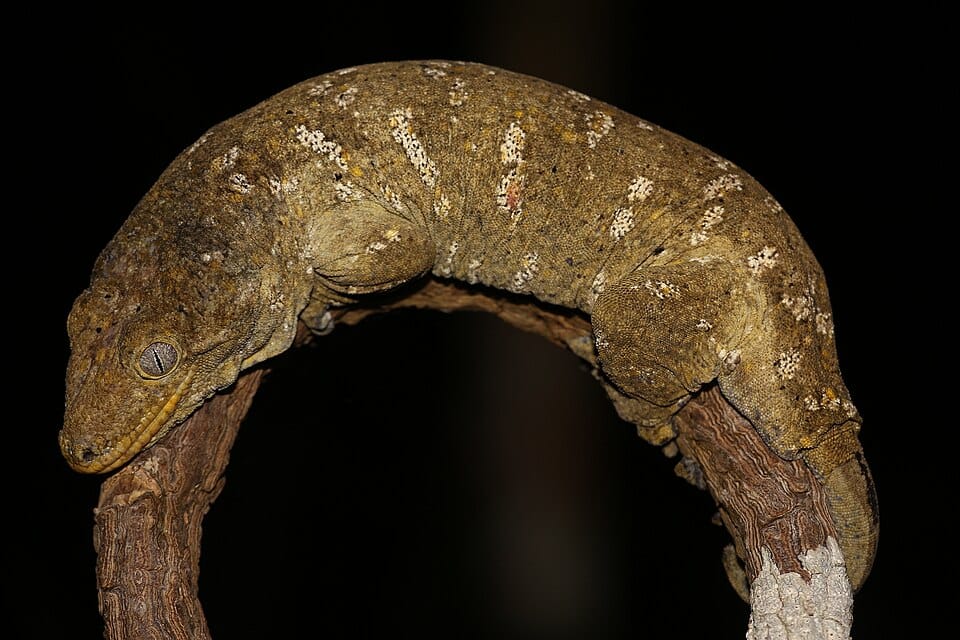
The New Caledonian Giant Gecko, commonly known as the Leachie (Rhacodactylus leachianus), is the largest gecko species in the world, native to New Caledonia. Adults can reach up to 36 centimeters (14 inches) in length, with robust bodies and powerful tails. Their coloration ranges from green to brown, with variations including spots, stripes, or blotches depending on the region. As nocturnal hunters, they feed on insects, small vertebrates, and fruit, showcasing a versatile diet.
Leachies are primarily arboreal but can also move along the ground when necessary. Their prehensile tails aid in balance and climbing, while their strong jaws allow them to capture larger prey. Unlike smaller geckos, they display remarkable territorial behavior, with males actively defending their space against rivals. They communicate using a range of vocalizations, from soft squeaks to loud barks, especially during breeding seasons. Their size, strength, and intelligence make them particularly captivating to both researchers and reptile enthusiasts.
Breeding in Leachies involves laying soft-shelled eggs, usually two at a time, which are often buried in moist soil or hidden among leaf litter. The incubation period varies depending on temperature and humidity, and hatchlings are relatively self-sufficient, quickly learning to hunt and climb. Conservation concerns exist due to habitat destruction, invasive species, and the pet trade, highlighting the need for responsible stewardship. Observing Leachies offers a rare glimpse into how size, strength, and complex behaviors evolve in geckos, contributing to our understanding of the Types of Geckos that thrive in isolated ecosystems.
14. Flying Gecko

Flying Geckos are a group of geckos belonging to the genus Ptychozoon, native to Southeast Asia. Known for their remarkable gliding ability, these geckos have flaps of skin along their sides, limbs, and tail, which allow them to glide from tree to tree. This adaptation helps them escape predators, hunt insects, and navigate dense forest canopies efficiently. Their coloration—often mottled brown with darker markings—provides excellent camouflage against bark and leaves.
Flying Geckos are nocturnal and arboreal, spending most of their lives in trees. They feed on insects and small invertebrates, using their sharp eyesight and stealth to capture prey. Despite their common name, they do not truly fly but can glide distances up to several meters, a capability that provides both survival and hunting advantages. Their adhesive toe pads allow them to cling to smooth surfaces, complementing their gliding adaptations. Flying Geckos are solitary and exhibit mild territorial behaviors, using body posturing and tail movements to signal other geckos.
In captivity, Flying Geckos are popular due to their unique appearance and behavior, but they require specialized care that mimics their natural humid, forested habitats. Studying Flying Geckos provides insight into the diversity of locomotion strategies among Types of Geckos, highlighting how evolution can produce dramatic physical adaptations for survival in specific ecological niches. Observing their gliding movements in the wild or in controlled environments offers a rare window into the creativity of nature in crafting functional adaptations.
15. Electric Blue Gecko

The Electric Blue Gecko (Lygodactylus williamsi) is a small, vibrantly colored gecko native to Tanzania’s Ukaguru Mountains. Males display brilliant electric blue coloration, while females are more subdued, usually brown or greenish, providing effective camouflage. These geckos inhabit small patches of forest and are highly territorial. Their diet mainly consists of insects, nectar, and fruit, making them both insectivores and occasional pollinators.
Electric Blue Geckos are diurnal, active during the day, which sets them apart from the majority of nocturnal geckos. Their bright colors serve dual purposes: attracting mates and warning rivals. Males perform elaborate display behaviors, including head-bobbing, tail-waving, and color flaring to assert dominance or attract females. These behaviors, combined with territorial defense, create a rich tapestry of social interactions rarely seen in smaller reptiles. Their specialized toe pads allow them to cling to leaves and smooth surfaces with precision, aiding in climbing and foraging.
Conservation-wise, Electric Blue Geckos are endangered due to habitat destruction, the pet trade, and limited geographic distribution. Conservation efforts focus on protecting forest patches and regulating trade. Studying this gecko emphasizes the importance of habitat preservation and showcases the diversity in behavior, coloration, and social structures among Types of Geckos. Observing them in the wild offers an unforgettable glimpse into how beauty, survival, and ecological function intertwine in these tiny reptiles.
16. Turnip-tailed Gecko

The Turnip-tailed Gecko (Thecadactylus rapicauda) is a nocturnal gecko native to Central and South America, including countries like Brazil, Costa Rica, and Panama. Named for its thick, bulbous tail resembling a turnip, this gecko uses its tail for fat storage, balance, and as a distraction against predators. Turnip-tailed Geckos are primarily insectivores, feeding on crickets, beetles, and moths, using stealth and patience to ambush prey.
These geckos are arboreal, often inhabiting tree trunks, branches, and foliage. They possess adhesive toe pads that allow for climbing smooth or rough surfaces with ease. Turnip-tailed Geckos are generally solitary, but during the breeding season, males actively seek females, displaying territorial behaviors such as tail flicking, vocalizations, and occasional mild combat. Their cryptic coloration and nocturnal habits provide effective camouflage against predators, while their keen senses ensure successful hunting.
Turnip-tailed Geckos contribute to controlling insect populations and serve as prey for larger predators, highlighting their ecological importance. Their adaptability and unique morphology underscore the incredible diversity within Types of Geckos, illustrating how physical traits and behaviors evolve to meet environmental challenges. Observing these geckos in natural habitats reveals fascinating insights into arboreal lifestyles and predator-prey dynamics among reptiles.
17. Peacock Day Gecko

The Peacock Day Gecko (Phelsuma quadriocellata) is a diurnal species native to Madagascar. Known for its striking green body with eye-like spots on the back, it earns its “peacock” name due to these ornamental markings. These geckos are active during the day, feeding on insects, nectar, and fruit, and are skilled climbers, often seen on tree trunks, branches, and leaves. Their bright coloration also serves as a warning to rivals and predators while attracting mates.
Peacock Day Geckos are highly territorial, with males defending their space through displays such as push-ups, head-bobbing, and tail-waving. These visual signals communicate dominance and help avoid physical confrontations. Females often deposit eggs in hidden crevices, leaving them to develop independently. Their role in pollination, seed dispersal, and insect control emphasizes the multifaceted ecological contributions of geckos. By observing Peacock Day Geckos, one can appreciate the interplay between vibrant coloration, territorial behavior, and ecological function within the Types of Geckos.
18. Viper Gecko

The Viper Gecko (Teratoscincus bedriagai) is a small, desert-dwelling gecko found in the Middle East and parts of Central Asia. Its name comes from its wide, triangular head and robust body, giving it a viper-like appearance. Viper Geckos are nocturnal hunters, preying primarily on insects, spiders, and scorpions. Their rough, granular skin provides excellent camouflage among desert sands and rocks.
Adapted to arid environments, Viper Geckos are capable of burrowing into loose sand to escape extreme temperatures and predators. Their large eyes enhance night vision, aiding in hunting and navigation. Viper Geckos are solitary, with limited social interaction except during the breeding season. Males engage in territorial displays to ward off rivals. Studying this species highlights how geckos can adapt both morphologically and behaviorally to extreme habitats, contributing to the wide variety of forms seen across the Types of Geckos.
19. Knob-tailed Gecko

The Knob-tailed Gecko (Nephrurus levis) is a nocturnal gecko native to Australia, named for its distinctive knob-like tail. This tail serves multiple purposes: fat storage, balance, and predator distraction. Knob-tailed Geckos are ground dwellers, hiding under rocks, logs, and leaf litter during the day, emerging at night to hunt insects and small invertebrates. Their coloration—typically sandy or reddish with subtle patterns—provides effective camouflage in arid regions.
Knob-tailed Geckos exhibit interesting defensive behaviors. When threatened, they may curl their tails over their back to appear larger or distract predators. They are generally solitary and show minimal social interactions, except during mating periods when males actively seek females. Studying their nocturnal hunting strategies, burrowing habits, and unique tail adaptations provides insight into how geckos have evolved to survive in harsh environments, adding depth to our understanding of the diversity among Types of Geckos.
20. Standing’s Day Gecko

Standing’s Day Gecko (Phelsuma standingi) is a large, diurnal gecko endemic to southwestern Madagascar. Known for its striking green body with red markings, it is among the largest day geckos, reaching lengths up to 30 cm. Active during daylight hours, Standing’s Day Geckos feed on insects, nectar, and fruit. They are arboreal, often seen on trees and large shrubs, and their vibrant colors aid in mate attraction and territorial signaling.
Males are highly territorial, performing displays like push-ups, head-bobbing, and color flaring to communicate dominance. Females deposit eggs in secure crevices, leaving them to incubate independently. This species plays a vital ecological role in pollination and insect control. Their behavior, coloration, and arboreal lifestyle illustrate how adaptation and natural selection shape the diversity found within Types of Geckos. Observing Standing’s Day Geckos offers a vivid glimpse into the dynamic lives of diurnal geckos in Madagascar’s forests.
21. Amerafrican House Gecko

The Amerafrican House Gecko (Hemidactylus mabouia) is a small, nocturnal species widely distributed across Africa and the Americas, having been introduced to many tropical and subtropical regions. Known for its adaptability, this gecko thrives in urban and suburban areas, often living on walls, ceilings, and inside homes. Its pale, grayish-brown skin provides excellent camouflage against concrete or stucco surfaces, helping it avoid predators while hunting insects drawn to artificial lights.
Amerafrican House Geckos primarily feed on small insects like flies, mosquitoes, and moths, making them natural pest controllers. Their adhesive toe pads allow them to climb vertical surfaces effortlessly, including smooth glass. Despite their small size, they are vocal, emitting chirps and squeaks during territorial disputes or mating. These geckos are generally solitary but may tolerate others if food is abundant. Their resilience and adaptability showcase how certain gecko species can exploit human-altered environments successfully.
From a conservation perspective, Amerafrican House Geckos face minimal threats due to their ability to thrive in varied habitats. Studying them provides insight into behavioral flexibility and ecological success among Types of Geckos. They illustrate how species can leverage human environments to their advantage while maintaining their natural hunting and social behaviors. Observing these geckos offers an engaging glimpse into urban wildlife dynamics and the subtle balance between adaptation and survival.
22. Common Four-Clawed Gecko

The Common Four-Clawed Gecko (Gehyra mutilata) is a nocturnal, arboreal species found across Southeast Asia, Australia, and the Pacific islands. Unlike most geckos with five digits, this species has only four clawed toes on its hind limbs, giving it its distinctive name. Its coloration ranges from pale gray to brown, often with mottled or spotted patterns, providing excellent camouflage against tree bark or rocky surfaces.
Common Four-Clawed Geckos are primarily insectivores, feeding on moths, beetles, and small spiders. Their climbing ability is enhanced by adhesive toe pads and flexible joints, enabling them to navigate smooth surfaces, leaves, and tree trunks efficiently. Though solitary and largely nocturnal, they exhibit subtle communication behaviors, including tail movements and soft vocalizations to deter rivals or attract mates. Breeding typically involves laying soft-shelled eggs in secure, hidden locations, with incubation influenced by temperature and humidity.
This gecko demonstrates remarkable adaptability, often inhabiting human structures when natural habitats are scarce. Studying the Common Four-Clawed Gecko provides insights into behavioral flexibility, arboreal survival strategies, and the diversity among Types of Geckos. Observing them in both natural and urban environments highlights their ability to thrive across a wide range of conditions, making them a fascinating subject for wildlife enthusiasts and researchers alike.
23. Western Banded Gecko

The Western Banded Gecko (Coleonyx variegatus) is a small, nocturnal species native to the deserts of the southwestern United States and northern Mexico. Named for the distinctive dark bands crossing its body, this gecko displays a striking pattern that provides camouflage among rocks, sand, and sparse vegetation. Its relatively small size, usually 3–5 inches, allows it to hide easily from predators such as snakes, birds, and larger lizards.
Western Banded Geckos are insectivores, feeding on beetles, crickets, and other small invertebrates. They exhibit nocturnal hunting behaviors, relying on keen eyesight and stealth to ambush prey. One of their unique traits is their burrowing habit—they often dig shallow burrows in sandy soil to escape extreme daytime heat and avoid predators. Their tails serve as fat storage and can be detached as a defensive tactic, though regeneration is slow.
During mating season, males actively patrol territories, using soft chirps and subtle body movements to communicate with rivals and attract females. The Western Banded Gecko’s combination of nocturnal activity, burrowing behavior, and adaptive camouflage illustrates the diversity and resilience seen among Types of Geckos. Observing this species offers valuable lessons in desert survival strategies and predator-prey dynamics.
24. Texas Banded Gecko

The Texas Banded Gecko (Coleonyx brevis) is a small, nocturnal species native to southern Texas and northern Mexico. Similar in appearance to the Western Banded Gecko, it features dark, bold bands across a pale body, providing effective camouflage in arid and semi-arid environments. Its habitats include rocky areas, desert scrub, and occasionally human structures. These geckos are primarily insectivores, feeding on beetles, crickets, and spiders.
Texas Banded Geckos are ground-dwelling but can climb small rocks or rough surfaces when necessary. Their nocturnal hunting strategy involves slow, deliberate stalking followed by rapid strikes to capture prey. They communicate subtly with tail movements and chirps, especially during mating season. Their tails also serve as fat storage, contributing to survival during periods of food scarcity. Observing their behavior provides insight into the adaptations necessary for life in harsh, arid environments.
As a species, the Texas Banded Gecko highlights the diversity of Types of Geckos in North America, demonstrating how specific physical traits and behaviors evolve to meet ecological challenges. Their survival strategies, modest size, and subtle social interactions make them a fascinating study for anyone interested in desert reptiles.
25. Indo-Pacific Gecko

The Indo-Pacific Gecko (Hemidactylus garnotii) is a nocturnal, widely distributed species found throughout the Indo-Pacific region. This gecko is parthenogenetic, meaning females can reproduce without males, which allows populations to establish quickly in isolated areas. They are often found near human habitation, feeding on insects attracted to artificial lights. Their small size, usually around three inches, and pale, translucent skin help them blend seamlessly into walls, ceilings, and other surfaces.
Indo-Pacific Geckos are arboreal and nocturnal hunters, relying on keen eyesight and sticky toe pads to navigate vertical surfaces. Despite their small size, they exhibit social behaviors, such as tail-waving and chirping, especially when encountering other geckos. Their parthenogenetic reproduction allows them to maintain populations even when mates are unavailable, showcasing a remarkable survival strategy. Studying Indo-Pacific Geckos provides insight into adaptability, reproductive biology, and ecological resilience among Types of Geckos.
26. Moorish Wall Gecko

The Moorish Wall Gecko (Tarentola mauritanica) is native to the Mediterranean region and has also been introduced to other parts of Europe and North America. This nocturnal gecko is often found on walls, rocks, and buildings, feeding primarily on insects attracted to lights. Its coloration varies from gray to brown, often with speckled patterns that provide excellent camouflage against stone or stucco surfaces.
Moorish Wall Geckos are highly adaptable, thriving in both natural and urban environments. Their climbing abilities are enhanced by specialized toe pads that allow them to cling to vertical and smooth surfaces with ease. During mating season, males may vocalize with soft chirps and display subtle physical posturing to attract females. These geckos play a vital role in controlling insect populations, highlighting their ecological importance. Observing their behavior offers a glimpse into the versatility and adaptability that define many Types of Geckos.
27. Ringed Wall Gecko

The Ringed Wall Gecko (Tarentola annularis) is native to North Africa and the Mediterranean. Named for the faint ring-like markings along its body, this gecko is nocturnal and arboreal, often inhabiting walls, rocks, and trees. Its coloration ranges from gray to brown, providing camouflage in both natural and human-made environments. These geckos are insectivores, feeding on moths, beetles, and small spiders.
Ringed Wall Geckos are solitary, with subtle social interactions involving tail movements and soft vocalizations. They have adhesive toe pads that enable climbing smooth surfaces and vertical walls. These geckos contribute to controlling insect populations and serve as prey for larger predators. Studying Ringed Wall Geckos provides insight into nocturnal hunting strategies, arboreal adaptation, and survival in both urban and wild habitats, emphasizing the remarkable versatility seen across Types of Geckos.
28. Rough-Tailed Gecko

The Rough-Tailed Gecko (Strophurus spinigerus) is a nocturnal species native to Australia. Its most distinctive feature is the rough, spiny texture of its tail, which serves as a defensive mechanism against predators. This gecko inhabits scrublands, open forests, and rocky areas, feeding primarily on insects and other small invertebrates. Its coloration, typically brown or gray with subtle patterning, provides camouflage in its arid environment.
Rough-Tailed Geckos are solitary and primarily active at night. Their spiny tails can be used to distract predators, giving them a chance to escape. They are excellent climbers, navigating rough terrain with ease using adhesive toe pads. Observing this species highlights the diversity of adaptations within Types of Geckos, demonstrating how morphology, behavior, and habitat preferences work together to enhance survival in challenging environments.
29. African Leaf-Toed Gecko

The African Leaf-Toed Gecko (Afrogecko porphyreus) is native to southern Africa and is notable for its flattened toes, which aid in climbing and provide camouflage against tree bark and rocks. Nocturnal and insectivorous, this gecko feeds on a variety of small invertebrates. Its coloration ranges from brown to gray, often with mottled patterns that help it blend seamlessly into its environment.
African Leaf-Toed Geckos are arboreal, spending much of their time climbing trees and shrubs. They are generally solitary, except during mating periods, and exhibit subtle tail movements and chirps for communication. Their climbing skills, nocturnal hunting strategy, and cryptic coloration illustrate the diversity of adaptations among Types of Geckos. Observing these geckos offers insight into the specialized traits that enable reptiles to thrive in diverse habitats.
30. Common Giant Ground Gecko

The Common Giant Ground Gecko (Paroedura pictus) is a terrestrial gecko native to Madagascar. Unlike arboreal species, it spends most of its time on the ground, hiding under rocks, leaf litter, and logs. Its coloration, a mix of brown and beige with spots or bands, provides excellent camouflage in its habitat. It is nocturnal, feeding primarily on insects, spiders, and other small invertebrates.
Common Giant Ground Geckos are solitary and display subtle social behaviors, such as tail flicking or chirping during territorial disputes. Their terrestrial lifestyle sets them apart from many other geckos, showcasing behavioral and ecological diversity within the Types of Geckos. Studying this species provides insight into how geckos adapt to life on the ground, including hunting techniques, predator avoidance, and reproductive strategies. Observing them in their natural habitat highlights the fascinating variety of survival strategies among geckos worldwide.
31. Bibron’s Giant Gecko

Bibron’s Giant Gecko (Pachydactylus bibronii) is a robust species native to southern Africa. Known for its large size relative to other Pachydactylus geckos, Bibron’s Giant Gecko exhibits a mix of earthy tones with spotted or mottled patterns that help it blend seamlessly into rocky and arid landscapes. As a nocturnal hunter, it feeds mainly on insects, spiders, and occasionally small lizards, relying on keen vision and stealth to ambush prey.
Unlike smaller geckos, Bibron’s Giant Gecko can tolerate a range of temperatures, moving between sunny rock surfaces during cooler hours and hiding in crevices during the hottest part of the day. They are generally solitary but can exhibit subtle social interactions, including tail-waving or posturing, especially during mating periods. Their tail serves as fat storage and can be shed to evade predators. Observing Bibron’s Giant Gecko provides insight into how medium-to-large gecko species adapt morphologically and behaviorally to semi-arid environments, reflecting the remarkable diversity among Types of Geckos.
32. Fitzsimons’ Giant Gecko

Fitzsimons’ Giant Gecko (Pachydactylus fitzsimonsi) is endemic to Namibia and characterized by a strong, stocky body and unique patterning of brown and tan. Its nocturnal lifestyle allows it to hunt effectively while avoiding daytime predators. Insects and other invertebrates form the bulk of its diet, though it occasionally consumes small vertebrates. Its large eyes enhance night vision, aiding in prey detection and navigation across rocky terrain.
Fitzsimons’ Giant Gecko is known for its territorial behavior. Males patrol rock crevices and caves, using tail signals and vocalizations to establish dominance. During the breeding season, females deposit eggs in secure, hidden areas, with incubation influenced by temperature and humidity. Their adaptability, reproductive strategy, and behavioral complexity demonstrate how geckos evolve to thrive in arid and semi-arid environments. Studying Fitzsimons’ Giant Gecko enriches our understanding of the diversity and ecological significance of Types of Geckos.
33. Button-scaled Gecko

The Button-scaled Gecko (Gonatodes albogularis) is a small, diurnal species found in Central and South America. Named for its distinctive button-like scales, this gecko exhibits a range of colors, from olive and brown to bright yellow and red in some populations. These vibrant colors serve as camouflage in leaf litter and dense vegetation while signaling social and mating status.
Button-scaled Geckos are insectivorous, hunting small insects like ants, termites, and beetles with precision. They are territorial, and males actively defend their areas through displays such as push-ups, head-bobbing, and tail-waving. Females lay small clutches of eggs in secure locations, and juveniles quickly learn to hunt and navigate vegetation. Their diurnal activity sets them apart from many nocturnal geckos, highlighting the diversity of behaviors within Types of Geckos. Observing Button-scaled Geckos offers insight into arboreal hunting, social interactions, and adaptive coloration strategies in small reptiles.
34. Angolan Dwarf Gecko
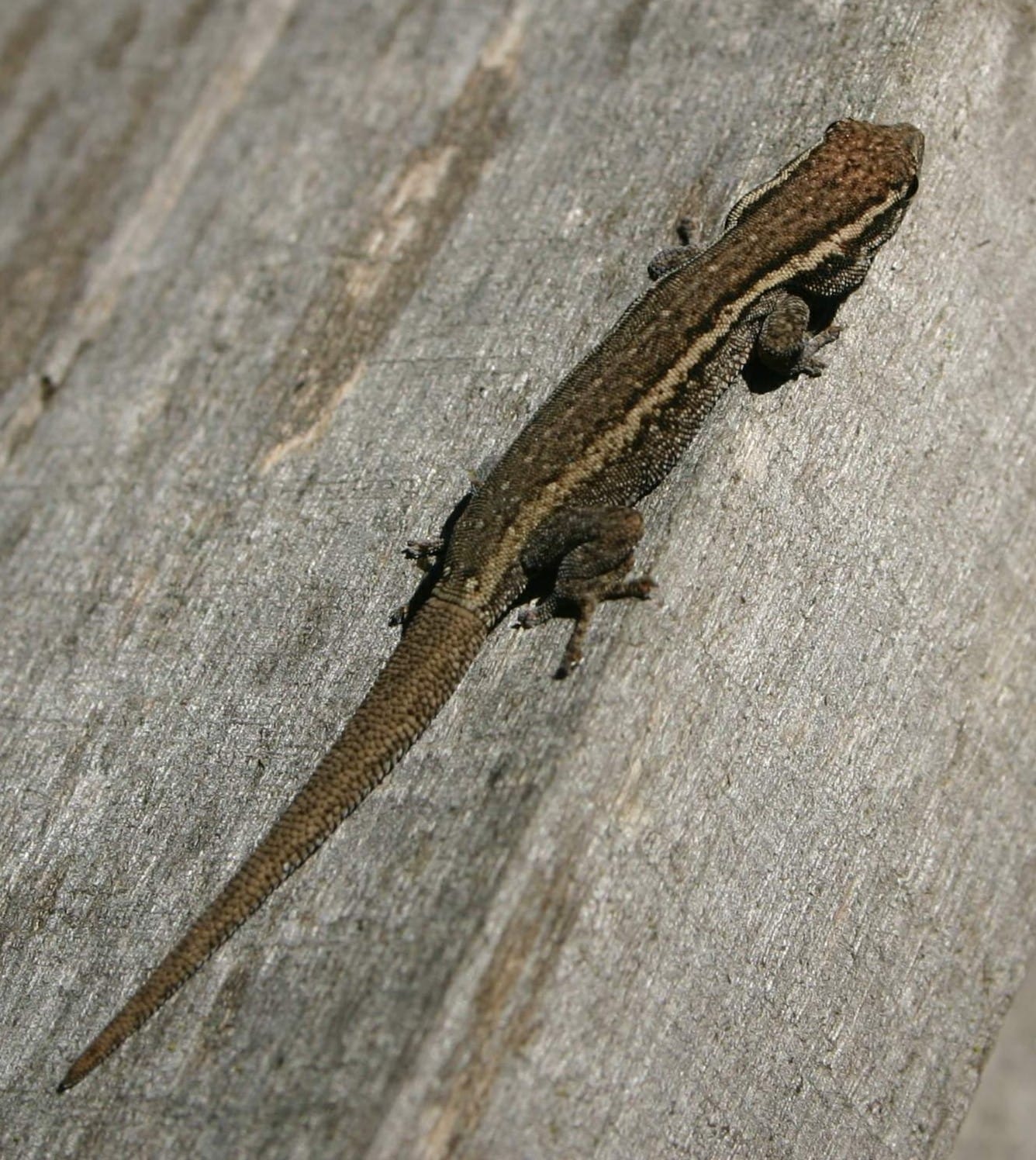
The Angolan Dwarf Gecko (Lygodactylus angolensis) is a tiny, diurnal gecko native to Angola and surrounding regions. Its diminutive size and quick movements allow it to evade predators and hunt efficiently for small insects and nectar. Coloration typically ranges from green to brown, often with faint stripes or spots that provide camouflage among leaves and branches.
Despite their small size, Angolan Dwarf Geckos display complex social behaviors, including territorial displays and subtle communication via body movements. They are arboreal, often navigating vertical surfaces with ease thanks to adhesive toe pads. Their reproductive strategy involves laying small clutches of eggs in secure microhabitats, ensuring offspring survival. Studying this species sheds light on how miniature geckos balance predation risk, foraging efficiency, and reproductive success. They exemplify the diversity and adaptability found within Types of Geckos.
35. Common Dwarf Gecko
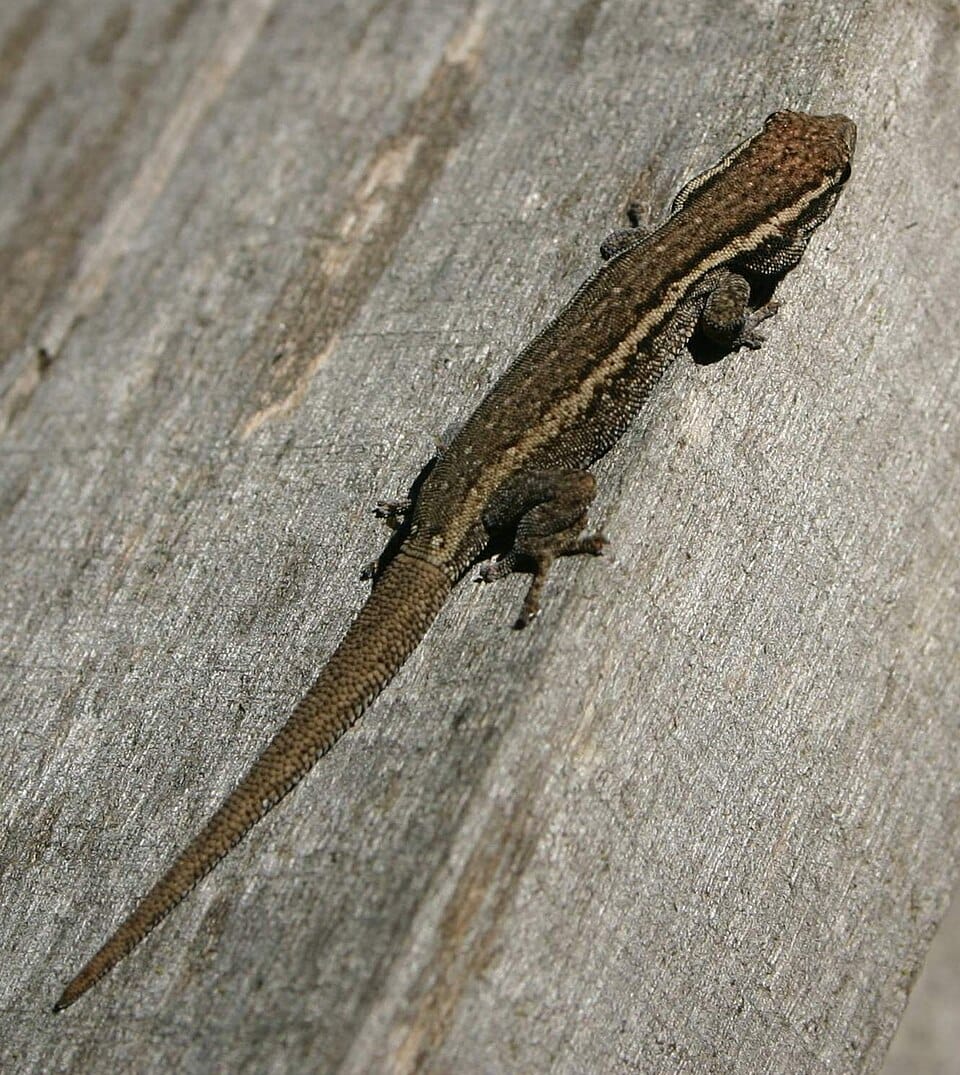
The Common Dwarf Gecko (Lygodactylus capensis) is widespread in southern Africa and known for its small size and active daytime behavior. These geckos are typically green with faint markings, allowing them to blend into leafy environments. They feed on tiny insects, mites, and other arthropods, displaying remarkable agility and hunting precision despite their small stature.
Common Dwarf Geckos are highly social, often forming loose groups where individuals engage in tail-waving, push-ups, and head-bobbing to establish hierarchy and communicate. They are arboreal and utilize adhesive toe pads to navigate leaves, bark, and even human structures. Reproduction involves laying small clutches of eggs in secure sites. Observing these geckos highlights how small species can exhibit complex behaviors and play crucial ecological roles, contributing to the diversity of Types of Geckos.
36. Black-spotted Dwarf Gecko
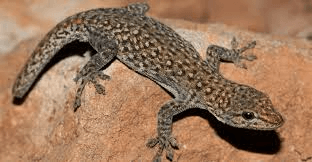
The Black-spotted Dwarf Gecko (Lygodactylus nigropunctatus) is a tiny gecko native to southern Africa, easily recognized by its small black spots over a pale green or brown body. Its nocturnal habits make it a stealthy hunter of insects, while its small size allows it to hide in narrow crevices or under leaves to avoid predators.
These geckos are arboreal and adept climbers, navigating branches and foliage with sticky toe pads. Social interactions include tail-flicking and soft chirps, particularly during mating season. Their reproductive strategy involves laying small clutches in secure locations, with rapid development ensuring survival. The Black-spotted Dwarf Gecko exemplifies how small geckos balance camouflage, social behavior, and hunting efficiency, enriching the diversity found in Types of Geckos.
37. Granite Dwarf Gecko

The Granite Dwarf Gecko (Lygodactylus graniticus) is endemic to rocky regions of southern Africa. Its name reflects both its habitat and coloration, which blends with granite boulders and rocky terrain. Nocturnal and insectivorous, it feeds on ants, beetles, and other small arthropods. Its small size and cryptic coloration help it avoid predators, while its adhesive toe pads allow agile climbing on rough surfaces.
Granite Dwarf Geckos are generally solitary, with social interactions limited to mating and territorial disputes. They lay eggs in rock crevices or under leaf litter, with hatchlings quickly learning to forage and avoid predators. Observing this species provides insight into how habitat specialization shapes behavior, morphology, and survival strategies, highlighting the adaptability present within Types of Geckos.
38. Waterberg Dwarf Gecko
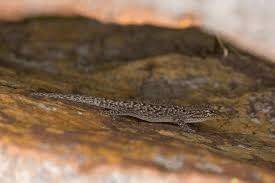
The Waterberg Dwarf Gecko (Lygodactylus waterbergensis) is a small, nocturnal gecko endemic to the Waterberg region of South Africa. Adapted to rocky outcrops and semi-arid habitats, it exhibits cryptic coloration of brown, gray, and cream tones. Feeding mainly on insects, it hunts with patience and precision, relying on both stealth and agility.
Waterberg Dwarf Geckos are arboreal and ground-dwelling, utilizing rock crevices, trees, and leaf litter for shelter. Social interactions are subtle, including tail-waving and chirping for communication during mating periods. Egg-laying occurs in secure microhabitats, ensuring hatchling survival. This species exemplifies how geckos adapt to specific microenvironments, illustrating behavioral, morphological, and ecological diversity among Types of Geckos.
39. Festive Gecko
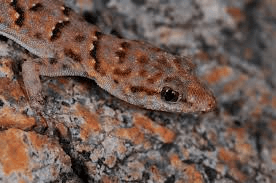
The Festive Gecko (Goniurosaurus luii) is native to the forests of China and Vietnam. Named for its bright, ornamental colors and striped patterns, it is a nocturnal hunter of insects and small invertebrates. Its vibrant appearance is both a form of camouflage among forest litter and a signal to rivals or potential mates.
Festive Geckos are arboreal and secretive, often hiding under rocks, logs, or dense foliage during the day. They communicate with subtle body movements and chirps, and reproductive behaviors include laying eggs in protected microhabitats. Observing the Festive Gecko offers insight into how color, behavior, and ecological niche interact to enhance survival, contributing to the rich diversity of Types of Geckos worldwide.
40. Carp’s Barking Gecko

Carp’s Barking Gecko (Hemidactylus carpi) is a nocturnal species found in southern Africa. Its common name derives from the barking-like calls males use to communicate territory or attract mates. Typically brown or gray with subtle patterns, this gecko blends well with tree bark or rocky surfaces.
Carp’s Barking Geckos are insectivores, feeding on beetles, crickets, and other arthropods. They are arboreal and excellent climbers, using adhesive toe pads to navigate smooth and rough surfaces. Social behaviors include vocalizations, tail movements, and posturing during territorial disputes. Egg-laying occurs in safe, hidden locations, and juveniles quickly learn hunting skills. Observing this species provides insight into nocturnal communication, arboreal adaptation, and survival strategies, highlighting the remarkable variety within Types of Geckos.
51. South American Dwarf Gecko

The South American Dwarf Gecko (Lygodactylus nigropunctatus) is a tiny, agile gecko native to the tropical forests and savannas of South America. Its small size, usually under three inches, allows it to navigate leaves, branches, and crevices effortlessly. The species is diurnal, often seen actively hunting insects during daylight hours, making it a valuable controller of pest populations.
Coloration in South American Dwarf Geckos typically ranges from light green to brown, often adorned with subtle spots or stripes for camouflage. Their climbing ability is enhanced by specialized toe pads, enabling them to move vertically and even cling to smooth surfaces. Social behavior includes territorial displays such as push-ups, tail-waving, and occasional vocalizations. Reproduction involves laying small clutches of eggs in secure microhabitats, with hatchlings quickly learning to hunt and evade predators. Observing these geckos provides insight into how miniature reptiles adapt to dynamic environments, highlighting their ecological importance within Types of Geckos.
52. Striped Caribbean Gecko

The Striped Caribbean Gecko (Sphaerodactylus lineatus) is a small, nocturnal species found on several Caribbean islands. As its name suggests, it has distinctive stripes along its body, providing camouflage among leaf litter, rocks, and tree bark. Primarily insectivorous, this gecko feeds on ants, termites, and small beetles, hunting with a combination of stealth and agility.
These geckos are terrestrial and arboreal, often hiding under leaves or climbing low vegetation to forage. Social interactions are subtle, involving tail movements or brief displays to communicate territorial boundaries. Reproduction is characterized by small clutches of one to two eggs, which are laid in concealed locations. Observing the Striped Caribbean Gecko highlights how coloration, size, and behavioral strategies combine to ensure survival in island habitats. Their adaptability and ecological role underscore the incredible diversity among Types of Geckos.
53. Navassa Gecko
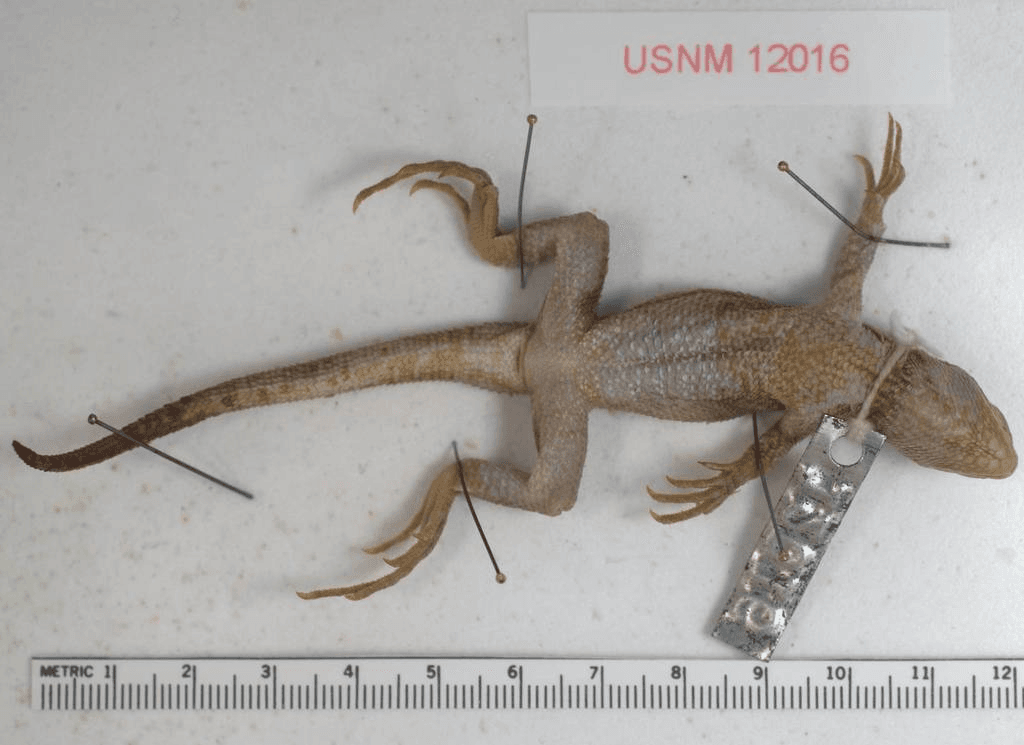
The Navassa Gecko (Sphaerodactylus becki) is a rare species endemic to Navassa Island in the Caribbean. This diminutive gecko is primarily terrestrial, inhabiting rocky crevices and leaf litter. Its coloration ranges from gray to brown with subtle markings that provide effective camouflage. Nocturnal in nature, it feeds mainly on insects and small arthropods, relying on stealth and patience to ambush prey.
Navassa Geckos are solitary, with limited social interactions except during mating periods. They communicate through subtle body movements and tail flicks. Reproduction involves laying tiny clutches of eggs in secure microhabitats, ensuring offspring survival in a predator-rich environment. Studying the Navassa Gecko offers insight into how isolation on small islands drives adaptation, survival strategies, and unique ecological roles within the Types of Geckos. Observing them in their natural habitat provides a fascinating glimpse into island biogeography and evolutionary processes.
54. Cochran’s Caribbean Gecko

Cochran’s Caribbean Gecko (Sphaerodactylus cochranae) is a tiny, diurnal gecko native to several Caribbean islands. Its small size, usually under two inches, allows it to navigate leaf litter and rocky terrain effectively. Coloration is generally pale brown with darker spots, blending seamlessly into its surroundings. As insectivores, they feed on small arthropods, including ants, termites, and mites.
Socially, Cochran’s Caribbean Geckos exhibit minimal interaction beyond mating, though territorial disputes involve subtle body movements. Reproduction involves laying single or paired eggs in concealed locations, with rapid development ensuring survival. Observing this species provides insight into how microhabitat specialization, nocturnal or diurnal activity, and reproductive strategies contribute to the diversity and ecological significance of Types of Geckos. Their adaptability to small islands underscores the intricate balance between isolation, evolution, and survival.
55. Hispaniolan Desert Gecko
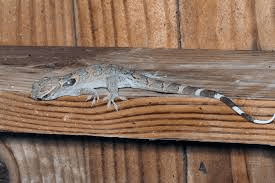
The Hispaniolan Desert Gecko (Sphaerodactylus vincenti) is a desert-adapted species native to Hispaniola. Its coloration, usually sandy or brown with subtle patterns, allows effective camouflage against desert sands and rocks. Nocturnal and terrestrial, it hunts small insects and arachnids under the cover of darkness. Their survival strategy relies on blending with the environment and conserving moisture in arid habitats.
These geckos are generally solitary, exhibiting brief social interactions only during the breeding season. They lay eggs in concealed microhabitats to protect offspring from predators and extreme temperatures. Studying the Hispaniolan Desert Gecko highlights adaptations to arid conditions, nocturnal hunting techniques, and behavioral strategies, illustrating the remarkable diversity of Types of Geckos. Observing them in the wild emphasizes the importance of specialized traits for survival in harsh ecosystems.
56. St. George Island Gecko

The St. George Island Gecko (Sphaerodactylus stella) is a diminutive, diurnal species found on St. George Island in the Caribbean. Its small size and subtle color patterns provide effective camouflage in leaf litter and rocky terrain. Feeding primarily on small insects, it is an efficient hunter despite its tiny stature. Its activity during the day distinguishes it from many nocturnal gecko species.
Social interactions are subtle, including tail flicks and push-ups to signal dominance or mating readiness. Reproduction involves laying one or two eggs in protected locations, ensuring high survival rates for hatchlings. Observing the St. George Island Gecko provides insight into island adaptations, microhabitat utilization, and behavioral diversity within Types of Geckos. These small reptiles demonstrate how isolation and limited resources drive evolutionary specialization.
57. Caicos Gecko

The Caicos Gecko (Sphaerodactylus caicosensis) is a small, nocturnal species endemic to the Caicos Islands. Its brown or gray body with subtle markings provides effective camouflage in rocky or leaf-littered habitats. They feed primarily on ants, termites, and other tiny invertebrates. Their small size and nocturnal habits help them evade predators and exploit microhabitats unavailable to larger reptiles.
Social behaviors are minimal, though they may display brief territorial signals through tail flicks. Reproduction involves laying one or two eggs in protected microhabitats. Observing Caicos Geckos provides a clear example of how small gecko species adapt to island life, balancing predator avoidance, food acquisition, and reproductive success. These strategies highlight the fascinating diversity among Types of Geckos in isolated ecosystems.
58. Jamaican Croaking Gecko
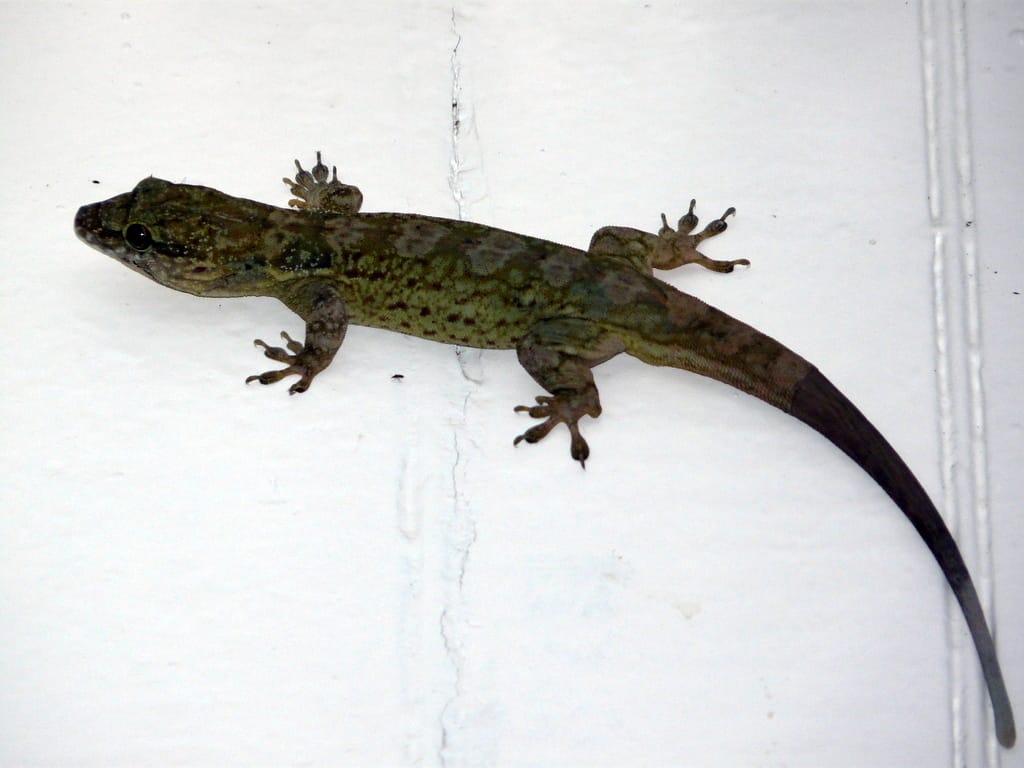
The Jamaican Croaking Gecko (Aristelliger georgeensis) is a nocturnal gecko endemic to Jamaica, named for its distinctive croaking sounds used to communicate during the night. Its coloration typically ranges from brown to gray with subtle mottling, providing camouflage among rocks, trees, and human structures. Feeding primarily on insects, it hunts silently and efficiently, using its keen senses to detect prey.
These geckos are territorial, especially males, who use vocalizations to establish dominance and attract mates. Reproduction involves laying small clutches of eggs in secure locations. Observing the Jamaican Croaking Gecko highlights how vocal communication, nocturnal hunting strategies, and territorial behaviors contribute to survival and ecological balance. This species demonstrates the diversity and adaptability of Types of Geckos across Caribbean habitats.
59. Hispaniolan Giant Gecko

The Hispaniolan Giant Gecko (Eleutherodactylus hispaniolae) is a large, nocturnal species native to Hispaniola. Its robust body and sizable limbs allow it to navigate rocky and forested habitats effectively. Coloration typically includes shades of brown and gray, aiding in camouflage. Feeding primarily on insects and small vertebrates, this gecko is an effective predator in its ecosystem.
Social interactions include territorial displays and subtle vocalizations. Females lay eggs in secure locations, with hatchlings quickly adapting to hunting and hiding techniques. Studying the Hispaniolan Giant Gecko provides insight into how size, behavior, and ecological role interact in geckos, enriching our understanding of the diversity within Types of Geckos. Observing this species offers a unique glimpse into the ecological dynamics of Caribbean forests.
60. Brazilian Pygmy Gecko

The Brazilian Pygmy Gecko (Lygodactylus klugei) is a small, diurnal species native to Brazil. Its coloration, typically green with subtle stripes or spots, provides effective camouflage among leaves and branches. Feeding on small insects and arthropods, it is an agile hunter, able to climb vertical surfaces using specialized toe pads.
Social behaviors include territorial displays, push-ups, and tail-flicking, especially during mating periods. Females lay eggs in secure microhabitats, ensuring offspring survival. Observing the Brazilian Pygmy Gecko illustrates how miniature reptiles adapt to arboreal life, balancing predator avoidance, efficient foraging, and reproduction. This species exemplifies the behavioral and ecological diversity among Types of Geckos in South America.
61. Goias Gecko
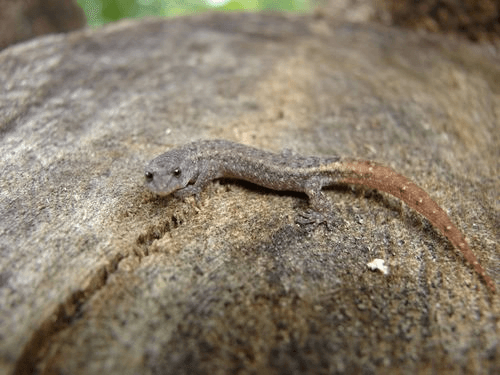
The Goias Gecko (Lygodactylus goiasensis) is a small, diurnal species native to central Brazil, particularly in the Goias region. Its vibrant green coloration with subtle patterns allows it to blend seamlessly with leaves, twigs, and shrubs. As an insectivore, it feeds on small insects such as ants, beetles, and spiders, using its agility and keen eyesight to ambush prey effectively.
Goias Geckos are arboreal and display territorial behaviors including push-ups, tail flicks, and subtle vocalizations to communicate with rivals or attract mates. Reproduction involves laying small clutches of eggs in hidden crevices or under bark, ensuring high survival rates for hatchlings. Observing the Goias Gecko highlights the adaptations of miniature reptiles to arboreal environments, demonstrating efficient hunting, predator avoidance, and social signaling. This species contributes to the rich diversity of Types of Geckos in South America.
62. Natal Pygmy Gecko
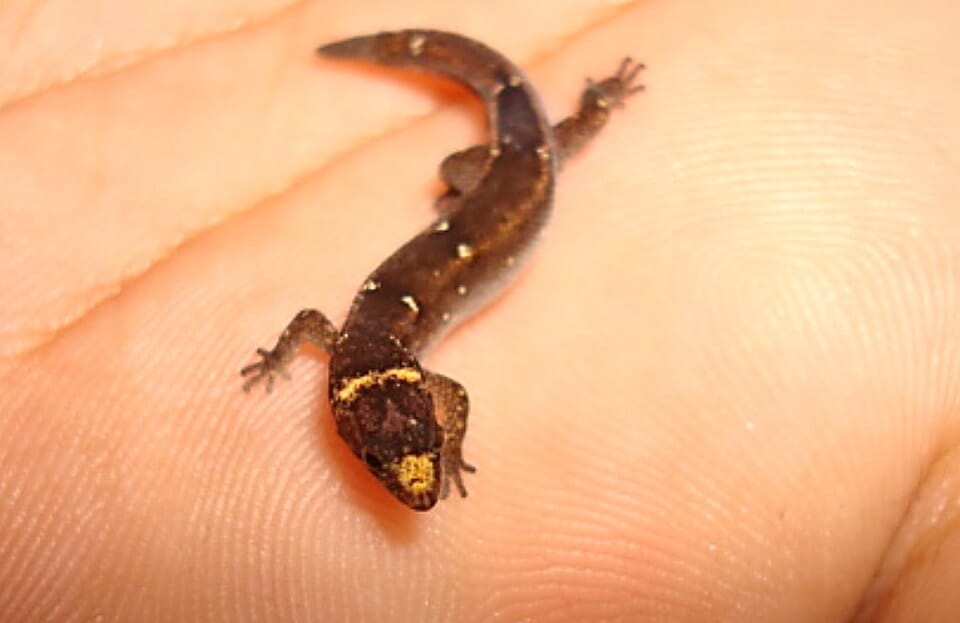
The Natal Pygmy Gecko (Lygodactylus natalensis) is a tiny gecko endemic to southern Africa, particularly the Natal region of South Africa. Its small size and greenish-brown coloration provide excellent camouflage among foliage and tree bark. Diurnal in habit, it actively hunts insects, mites, and other tiny invertebrates, displaying remarkable speed and dexterity.
Social behaviors include tail flicking and push-up displays to signal territory or mating readiness. Females lay small clutches of eggs in protected locations, allowing juveniles to grow and develop safely. Observing the Natal Pygmy Gecko offers insights into how miniature geckos thrive in dense vegetation and urban environments, highlighting the ecological importance and behavioral diversity of Types of Geckos in southern Africa.
63. European Leaf-Toed Gecko
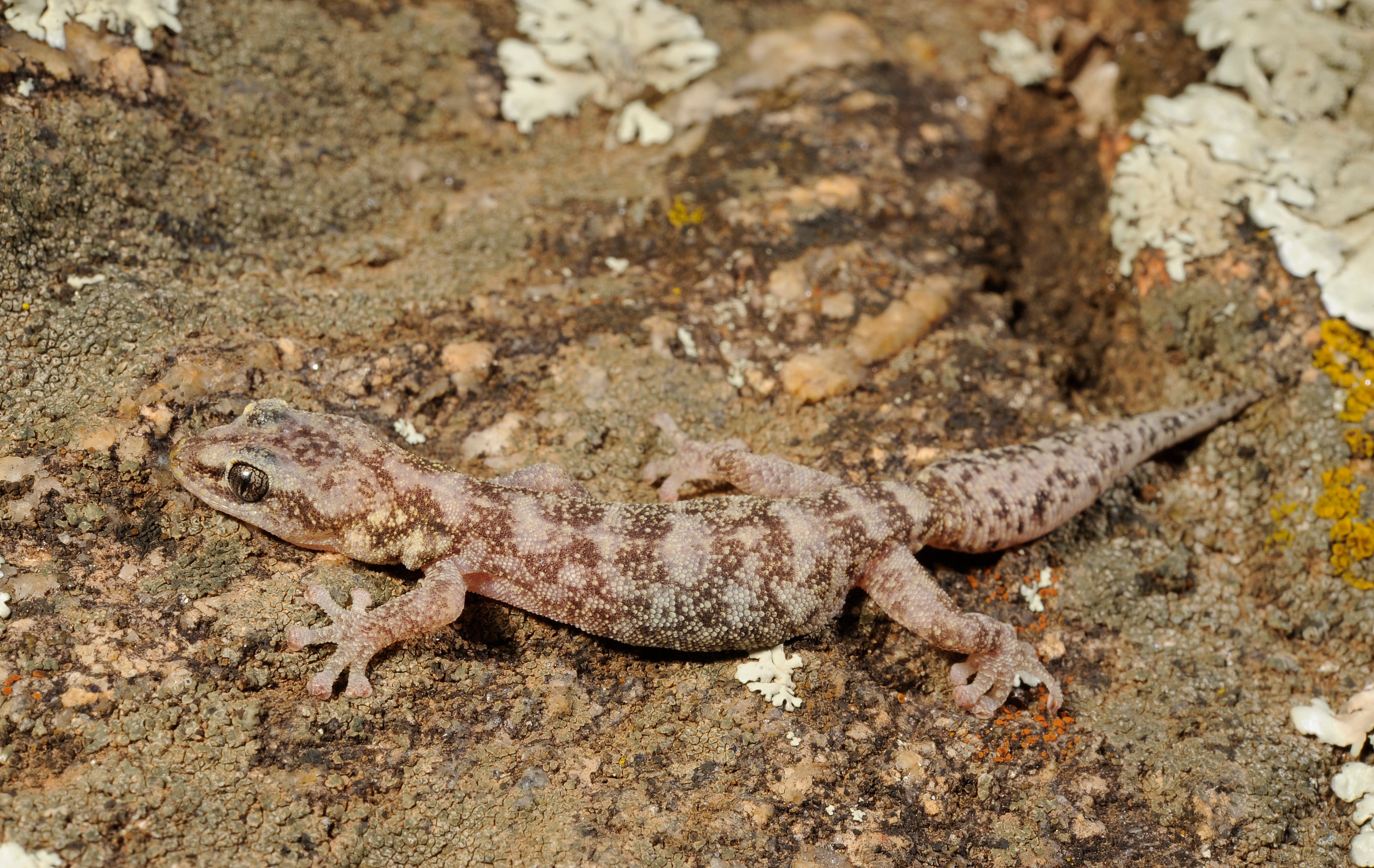
The European Leaf-Toed Gecko (Euleptes europaea) is a small, nocturnal species native to southern Europe. It is named for its flattened, leaf-like toe pads that enable it to climb smooth rock surfaces and walls efficiently. Its gray to brown coloration helps it blend with stone or rocky substrates, aiding in predator avoidance and stealthy hunting of insects and spiders.
European Leaf-Toed Geckos are solitary and exhibit subtle social behaviors such as tail movements and occasional chirping, especially during mating season. They lay eggs in protected crevices, with hatchlings quickly developing hunting and climbing skills. Studying this species provides insight into how geckos adapt to rocky environments and urbanized areas. Its specialized morphology and nocturnal lifestyle make it a fascinating example of the diversity found within Types of Geckos.
64. Yellow-Headed Gecko

The Yellow-Headed Gecko (Cnemaspis flaviventris) is a diurnal species endemic to India, notable for its bright yellow head contrasting with a muted brown or gray body. This distinctive coloration serves multiple purposes: camouflage within sunlit rocks, signaling to rivals, and attracting mates. It feeds primarily on small insects, hunting actively during daylight hours.
Yellow-Headed Geckos are arboreal and rock-dwelling, often seen climbing boulders, trees, or walls with agility. Social interactions include push-ups, head-bobbing, and tail flicking to communicate with conspecifics. Females lay small clutches of eggs in secure microhabitats, ensuring offspring survival. Observing this gecko provides insight into how coloration, behavior, and habitat preferences interact to support survival, illustrating the remarkable variety within Types of Geckos.
65. Cnemaspis gunasekarai

Cnemaspis gunasekarai is a recently described species of day gecko endemic to Sri Lanka. It exhibits cryptic coloration with subtle patterns that blend into rocky surfaces and tree trunks. As a diurnal insectivore, it hunts ants, beetles, and other small arthropods, relying on keen eyesight and swift movements to catch prey.
This gecko is arboreal and prefers rocky outcrops, cliffs, and forest edges. Social behavior is minimal, with occasional displays for territorial or mating purposes. Egg-laying occurs in protected niches, and juveniles quickly adapt to climbing and hunting. Studying Cnemaspis gunasekarai enhances understanding of species specialization, microhabitat adaptation, and ecological roles in Sri Lanka. Its presence highlights the remarkable diversity among Types of Geckos in island ecosystems.
66. Alsophylax ferganensis

Alsophylax ferganensis is a small, nocturnal gecko native to Central Asia, particularly in the Fergana Valley. It inhabits sandy and rocky deserts, using its muted coloration to blend with the arid environment. Primarily insectivorous, it hunts ants, beetles, and other arthropods under the cover of night.
These geckos are terrestrial, hiding in crevices and under rocks during the day. They display minimal social interaction beyond mating behaviors. Reproduction involves laying eggs in protected microhabitats, ensuring offspring survival. Observing Alsophylax ferganensis provides insight into desert adaptation strategies, nocturnal hunting efficiency, and behavioral traits that allow survival in harsh environments, emphasizing the diversity of Types of Geckos.
67. Hemiphyllodactylus typus

Hemiphyllodactylus typus, commonly known as the Indopacific Slender Gecko, is a diminutive, nocturnal species widely distributed across South and Southeast Asia. Its slender body and pale coloration allow it to navigate leaf litter, tree bark, and small crevices with ease. As a nocturnal hunter, it feeds on tiny insects and other invertebrates, making it a stealthy predator despite its size.
Social interactions are minimal, primarily limited to mating displays. Females lay small clutches of eggs in hidden locations. Hemiphyllodactylus typus is often overlooked due to its size and secretive habits, yet it plays a crucial ecological role as an insect predator. Studying this gecko sheds light on microhabitat specialization, nocturnal activity, and survival strategies, enriching the diversity among Types of Geckos.
68. Stenodactylus petrii

Stenodactylus petrii is a small, nocturnal desert gecko native to the Middle East and North Africa. Its sandy coloration allows it to blend seamlessly into desert environments. Feeding primarily on ants, beetles, and other small arthropods, it is a patient and efficient hunter. Adapted to extreme temperatures, it avoids daytime heat by remaining hidden under sand or rocks.
Social interactions are limited, though males may display territorial behaviors during breeding. Eggs are laid in secure, concealed locations, allowing hatchlings to survive in a predator-rich environment. Observing Stenodactylus petrii highlights desert adaptations, nocturnal hunting strategies, and the behavioral diversity present within Types of Geckos. Its survival reflects the remarkable evolutionary strategies geckos employ in arid ecosystems.
69. Coleonyx elegans

Coleonyx elegans, known as the Elegant Banded Gecko, is a nocturnal species native to Mexico and Central America. Its smooth body, muted coloration, and distinctive banding provide camouflage among rocks, soil, and leaf litter. It primarily feeds on insects, spiders, and small invertebrates, using stealth and quick reflexes to capture prey.
Elegant Banded Geckos are primarily solitary, exhibiting subtle social signals during mating. Females lay eggs in protected crevices, and hatchlings quickly learn hunting and hiding techniques. Studying this gecko provides insight into nocturnal predation, camouflage strategies, and behavioral ecology, illustrating the diversity and adaptability of Types of Geckos in Central America.
70. Phyllodactylus xanti
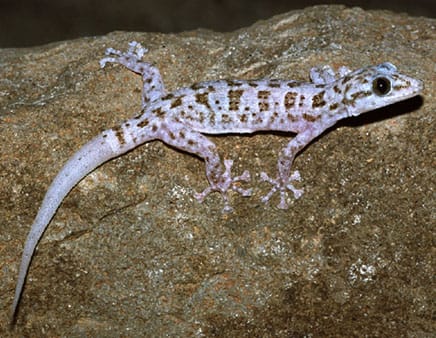
Phyllodactylus xanti, commonly called the Xantus’ Leaf-Toed Gecko, is a nocturnal species endemic to Baja California, Mexico. Its flattened, leaf-like toes allow it to climb smooth surfaces efficiently, while its brown or gray coloration provides excellent camouflage against rocks and cliffs. It primarily hunts insects and small arthropods, relying on stealth and precision.
Xantus’ Leaf-Toed Geckos are largely solitary, interacting socially only during mating season. Females lay eggs in protected rock crevices, ensuring offspring safety. Observing Phyllodactylus xanti provides insight into arboreal adaptation, nocturnal predation, and the specialized morphology of geckos. This species highlights the remarkable diversity within Types of Geckos and showcases evolutionary strategies in arid, rocky habitats.
71. Teratolepis fasciata

Teratolepis fasciata, commonly known as the Banded Spiny Gecko, is a nocturnal species found in arid regions of Central Asia. This gecko features striking banded patterns across its body, with spiny scales providing protection and aiding in camouflage against rocky terrain. Its sandy-brown and tan coloration allows it to blend into desert landscapes, making it an efficient ambush predator.
Teratolepis fasciata primarily feeds on insects and small arthropods, using patience and quick reflexes to catch prey. Its nocturnal behavior helps avoid extreme daytime temperatures and predators. Social interactions are minimal, limited mainly to territorial disputes during breeding. Females lay eggs in secure, concealed areas, ensuring that offspring survive in harsh desert conditions. Observing Teratolepis fasciata highlights the adaptations necessary for desert survival, including camouflage, nocturnal activity, and reproductive strategies, emphasizing the diversity of Types of Geckos.
72. Dixonius siamensis

Dixonius siamensis, or the Siamese Leaf-toed Gecko, is a small, nocturnal gecko native to Southeast Asia. Its coloration, typically pale brown or gray with subtle markings, allows it to hide effectively among leaves, rocks, and tree bark. Nocturnal and insectivorous, it primarily hunts ants, beetles, and other small arthropods, using stealth and agility to capture prey.
These geckos are largely solitary but may display brief territorial behaviors such as tail flicking and body posturing. Reproduction involves laying eggs in secure microhabitats, with hatchlings quickly adapting to climbing and hunting. Observing Dixonius siamensis illustrates how small geckos thrive in forested and urban areas, showcasing behavioral flexibility, predator avoidance, and ecological importance within Types of Geckos.
73. Nactus vankampeni

Nactus vankampeni is a nocturnal, ground-dwelling gecko endemic to New Guinea. Its muted brown and gray coloration provides excellent camouflage in leaf litter, rocky areas, and forest floors. Feeding mainly on small insects and arthropods, it exhibits stealthy hunting behavior that allows it to exploit a variety of microhabitats.
Social interactions are minimal, with individuals primarily interacting during mating season. Females lay eggs in hidden microhabitats, enhancing the survival rate of hatchlings. Studying Nactus vankampeni provides insight into ground-dwelling gecko adaptations, nocturnal activity, and survival strategies. This species highlights the diverse ecological roles within Types of Geckos, particularly in tropical forest ecosystems.
74. Goniurosaurus araneus
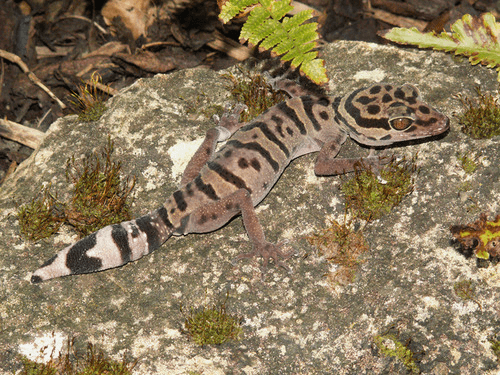
Goniurosaurus araneus, known as the Spider Web Gecko, is a nocturnal species endemic to parts of China and Vietnam. It has striking banded patterns that resemble spider webs, aiding in camouflage among rocky crevices and forest floors. Its diet consists primarily of insects, spiders, and other small invertebrates.
These geckos are territorial, with males displaying physical posturing and subtle vocalizations to communicate dominance. Females lay eggs in protected areas, ensuring offspring survival. Observing Goniurosaurus araneus provides insight into the adaptations and survival strategies of nocturnal geckos in rocky and forested habitats. Its unique patterns, hunting behavior, and reproductive strategy make it a fascinating example of the diversity within Types of Geckos.
75. Goniurosaurus catbaensis

Goniurosaurus catbaensis is a nocturnal gecko species endemic to Cat Ba Island in Vietnam. Its dark body with pale stripes allows camouflage among limestone rocks and forest litter. It is primarily insectivorous, feeding on beetles, ants, and other small invertebrates.
This gecko is solitary and exhibits subtle territorial displays using tail movements and body postures. Reproduction involves laying eggs in protected crevices, ensuring hatchling survival. Observing Goniurosaurus catbaensis highlights how geckos adapt to island ecosystems, balancing predator avoidance, foraging, and reproductive success. It is an important species to study for understanding the diversity of Types of Geckos in Southeast Asia.
76. Goniurosaurus chengzheng

Goniurosaurus chengzheng is a nocturnal gecko native to southern China. Its coloration includes dark brown and gray with subtle banding, which helps it blend into forested and rocky habitats. It primarily feeds on insects, spiders, and other small arthropods.
These geckos are solitary and mostly active at night, using stealth to capture prey. Males may display physical posturing during territorial disputes, while females lay eggs in hidden areas for protection. Studying Goniurosaurus chengzheng provides valuable insight into nocturnal predation, habitat specialization, and reproductive strategies, reflecting the diversity and ecological significance of Types of Geckos in Asia.
77. Goniurosaurus bawanglingensis

Goniurosaurus bawanglingensis, endemic to Hainan Island in China, is a nocturnal, forest-dwelling gecko. Its dark body with lighter stripes offers camouflage among rocks and dense leaf litter. Feeding on insects, spiders, and other arthropods, it is an efficient predator despite its medium size.
Social behaviors are limited, with most interactions occurring during breeding. Females lay eggs in protected crevices to increase survival chances. Observing this gecko reveals adaptations to tropical island habitats, nocturnal hunting strategies, and territorial behavior. Its ecological role underscores the rich diversity among Types of Geckos and the importance of preserving specialized habitats.
78. Teratoscincus keyserlingii

Teratoscincus keyserlingii, also known as the Central Asian Gecko, is a nocturnal, desert-dwelling species native to Iran, Afghanistan, and neighboring regions. Its sandy, mottled coloration allows it to blend into desert sands and rocks. Insectivorous, it hunts beetles, ants, and other arthropods with stealth and patience.
This gecko is primarily solitary, using burrows and crevices to avoid daytime heat and predators. Reproduction involves laying eggs in sandy soil or under rocks. Observing Teratoscincus keyserlingii provides insight into desert adaptations, nocturnal hunting strategies, and survival tactics, highlighting the ecological diversity of Types of Geckos in arid regions.
79. Phyllodactylus europaeus

Phyllodactylus europaeus, commonly called the European Leaf-Toed Gecko, is a nocturnal species native to southern Europe. It is named for its flattened, leaf-shaped toe pads that allow climbing on smooth rock and wall surfaces. Its coloration ranges from gray to brown, providing excellent camouflage in rocky and urban environments.
This gecko hunts insects and small arthropods at night. It is mostly solitary but may interact during mating periods. Females lay eggs in secure crevices, ensuring offspring survival. Studying Phyllodactylus europaeus reveals the importance of morphology, nocturnal behavior, and habitat adaptation within Types of Geckos. Its arboreal and rock-dwelling habits make it an interesting species for observing behavioral ecology in Mediterranean habitats.
80. Asaccus elisae
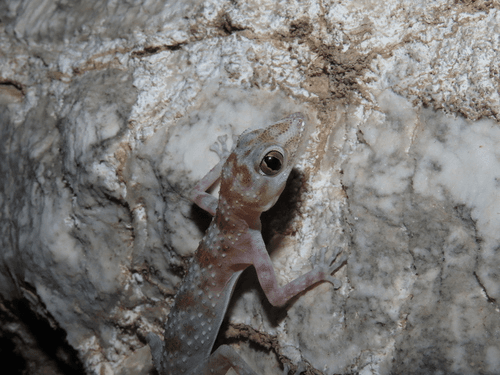
Asaccus elisae, also known as Elisa’s Leaf-Toed Gecko, is a nocturnal species native to the rocky and arid regions of Iraq and Iran. Named for its leaf-shaped toes, this gecko excels at climbing steep rock faces and navigating uneven terrain. Its coloration typically ranges from pale brown to sandy gray, providing camouflage against rocky outcrops, while subtle darker patterns help break up its outline, making it difficult for predators to spot.
Asaccus elisae is insectivorous, feeding on ants, beetles, spiders, and other small arthropods. It employs patience and agility to catch prey, often waiting motionless before a sudden strike. Social interactions are minimal, though males exhibit territorial behaviors such as tail flicking, body posturing, and chirping to ward off rivals. During the breeding season, females lay eggs in hidden rock crevices, ensuring the safety of their young. Observing this species reveals how geckos adapt to harsh desert climates, balancing survival, reproduction, and predator avoidance. It is a striking example of the diversity and ecological specialization found among Types of Geckos.
81. Dactyloperus variegatus

Dactyloperus variegatus, commonly called the Variegated Gecko, is a small nocturnal species found in southern Africa. Its mottled coloration, combining brown, gray, and cream, provides perfect camouflage in leaf litter, rocks, and sandy soil. This gecko primarily feeds on small insects, including beetles, ants, and termites, hunting with a combination of stealth and rapid movements.
Territorial behavior in Dactyloperus variegatus is subtle; males may display tail movements or body postures to signal dominance. Females lay eggs in concealed locations, often under rocks or leaf litter, providing protection from predators and environmental extremes. Studying this gecko demonstrates the ways small, nocturnal reptiles navigate microhabitats, hunt effectively, and survive in arid and semi-arid ecosystems. Its unique adaptations make it an important representative of Types of Geckos in southern Africa.
82. Goggia lineata

Goggia lineata, or the Striped Dwarf Gecko, is a tiny, nocturnal species endemic to South Africa. Its slender body and distinctive longitudinal stripes help it blend into rocky habitats and shrubbery. Feeding mainly on small insects, mites, and other arthropods, it relies on stealth and speed to capture prey. Despite its small size, Goggia lineata exhibits impressive climbing abilities thanks to specialized toe pads.
Social interactions are limited, although males may engage in brief territorial displays. Females lay eggs in hidden crevices, ensuring hatchlings are well-protected. Observing Goggia lineata provides insight into how miniature geckos adapt to specific microhabitats, balancing predator avoidance, efficient hunting, and reproduction. This species exemplifies the remarkable ecological and behavioral diversity among Types of Geckos in southern Africa.
83. Gekko japonicus

Gekko japonicus, commonly called the Japanese Gecko, is a nocturnal species native to Japan and parts of East Asia. It is medium-sized, with smooth, mottled brown or gray skin that provides camouflage on trees, rocks, and urban structures. Feeding on insects such as moths, beetles, and cockroaches, it plays a vital role in controlling pest populations.
These geckos are primarily nocturnal and arboreal, using their adhesive toe pads to climb walls, trees, and rocks effortlessly. Social interactions are limited but may include chirps or body movements during mating season. Females lay small clutches of eggs in protected locations, ensuring survival in both natural and urban environments. Observing Gekko japonicus highlights the adaptability of geckos to human-modified habitats and the diversity of behaviors present in Types of Geckos.
84. Gekko chinensis

Gekko chinensis, or the Chinese Gecko, is a nocturnal, medium-sized gecko native to China. Its mottled brown and gray coloration provides effective camouflage in forested areas and rocky outcrops. Feeding primarily on insects, spiders, and other small invertebrates, it is an adept nocturnal hunter.
Chinese Geckos are arboreal and climb trees, rocks, and buildings with ease using their adhesive toe pads. Males display subtle territorial behaviors during mating, including tail flicks and chirps. Females lay eggs in secure, concealed areas. Studying Gekko chinensis reveals adaptations to nocturnal life, arboreal navigation, and survival strategies, emphasizing the ecological diversity of Types of Geckos in East Asia.
85. Hemidactylus imbricatus

Hemidactylus imbricatus, commonly called the Scaly Gecko, is a nocturnal species found in South and Southeast Asia. Its overlapping scales give it a textured appearance that enhances camouflage on tree bark and rocky surfaces. Insectivorous, it feeds on ants, beetles, and small arthropods, hunting quietly under the cover of night.
These geckos are primarily solitary, with social interactions occurring during mating season. Females lay eggs in protected crevices, ensuring hatchlings develop safely. Hemidactylus imbricatus demonstrates adaptations to arboreal and rocky environments, nocturnal predation strategies, and reproductive success. Its behavior and morphology highlight the diversity of Types of Geckos in Asian ecosystems.
86. Hemidactylus platyurus
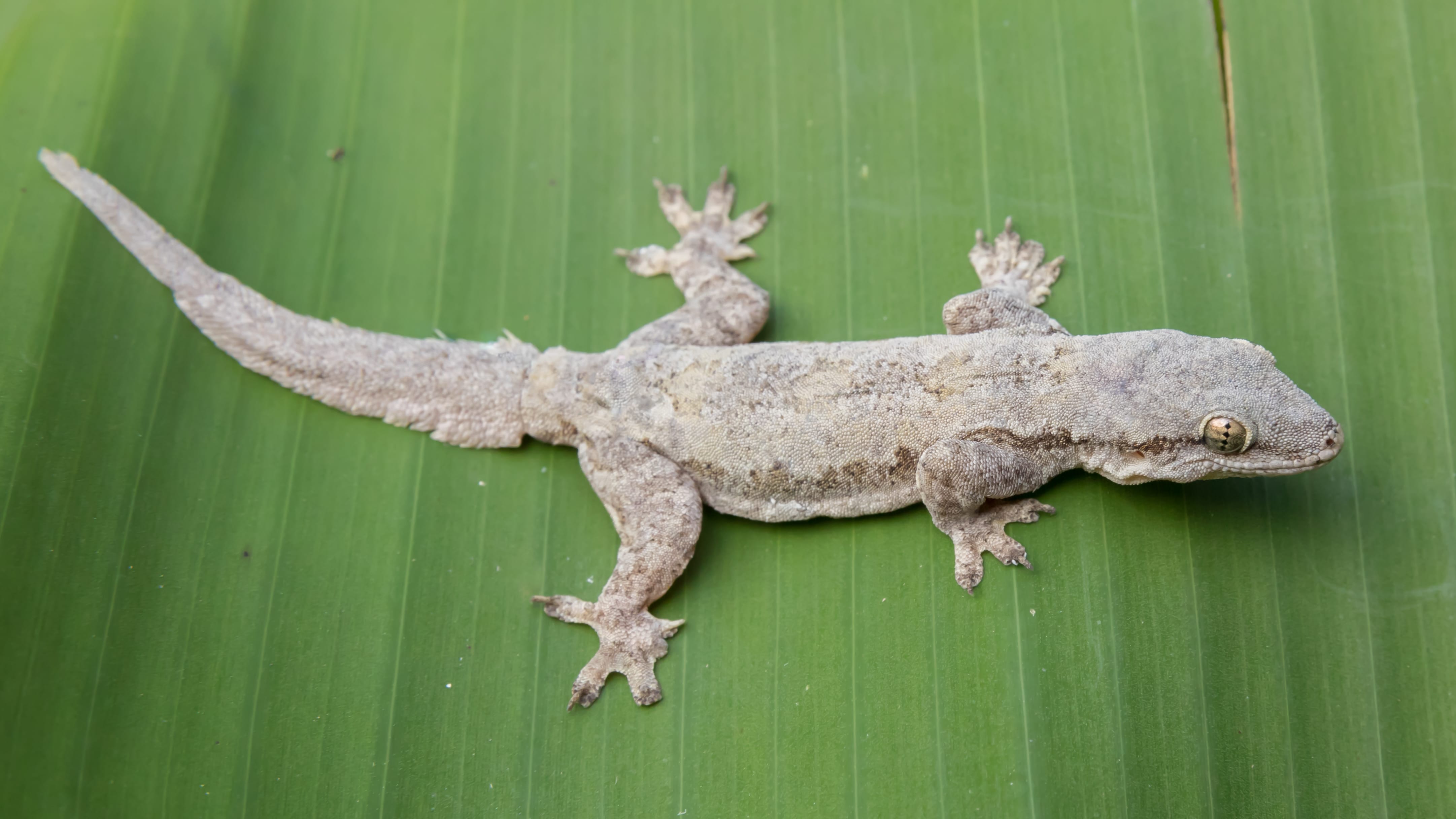
Hemidactylus platyurus, known as the Flat-Tailed Gecko, is a nocturnal, arboreal species native to Southeast Asia. Its flattened tail and adhesive toe pads allow it to navigate vertical surfaces with remarkable agility. Its mottled brown coloration provides camouflage among tree bark and rocky surfaces, aiding in predator avoidance.
Feeding primarily on insects, spiders, and other small arthropods, it hunts at night using stealth and precision. Social interactions are minimal, though males may display posturing during territorial disputes. Females lay eggs in secure locations, often in crevices or under bark. Observing Hemidactylus platyurus highlights how morphological adaptations, nocturnal habits, and arboreal behavior contribute to survival, illustrating the diversity of Types of Geckos.
87. Lepidodactylus ceylonensis
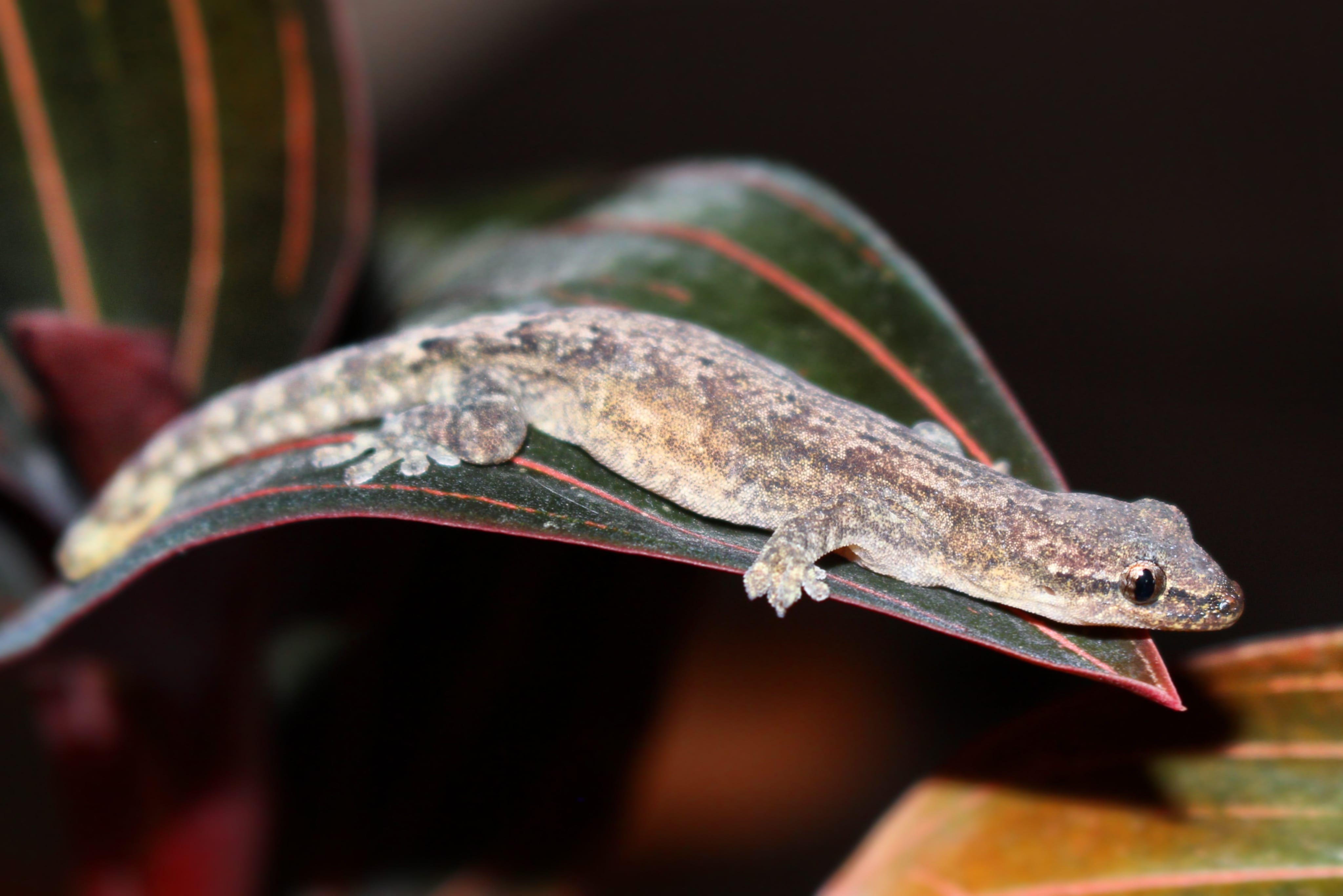
Lepidodactylus ceylonensis, or the Sri Lankan Scaly Gecko, is a small, nocturnal species endemic to Sri Lanka. Its scaly skin, typically brown or gray with subtle patterns, provides camouflage in leaf litter and tree bark. Feeding on ants, termites, and small insects, it is a stealthy hunter that moves quickly and quietly.
Social interactions are minimal; males may display tail movements during mating. Females lay eggs in secure crevices. Observing Lepidodactylus ceylonensis provides insight into nocturnal hunting strategies, arboreal navigation, and habitat specialization. It is an excellent example of the diversity and ecological importance of Types of Geckos in island ecosystems.
88. Lepidodactylus divergens
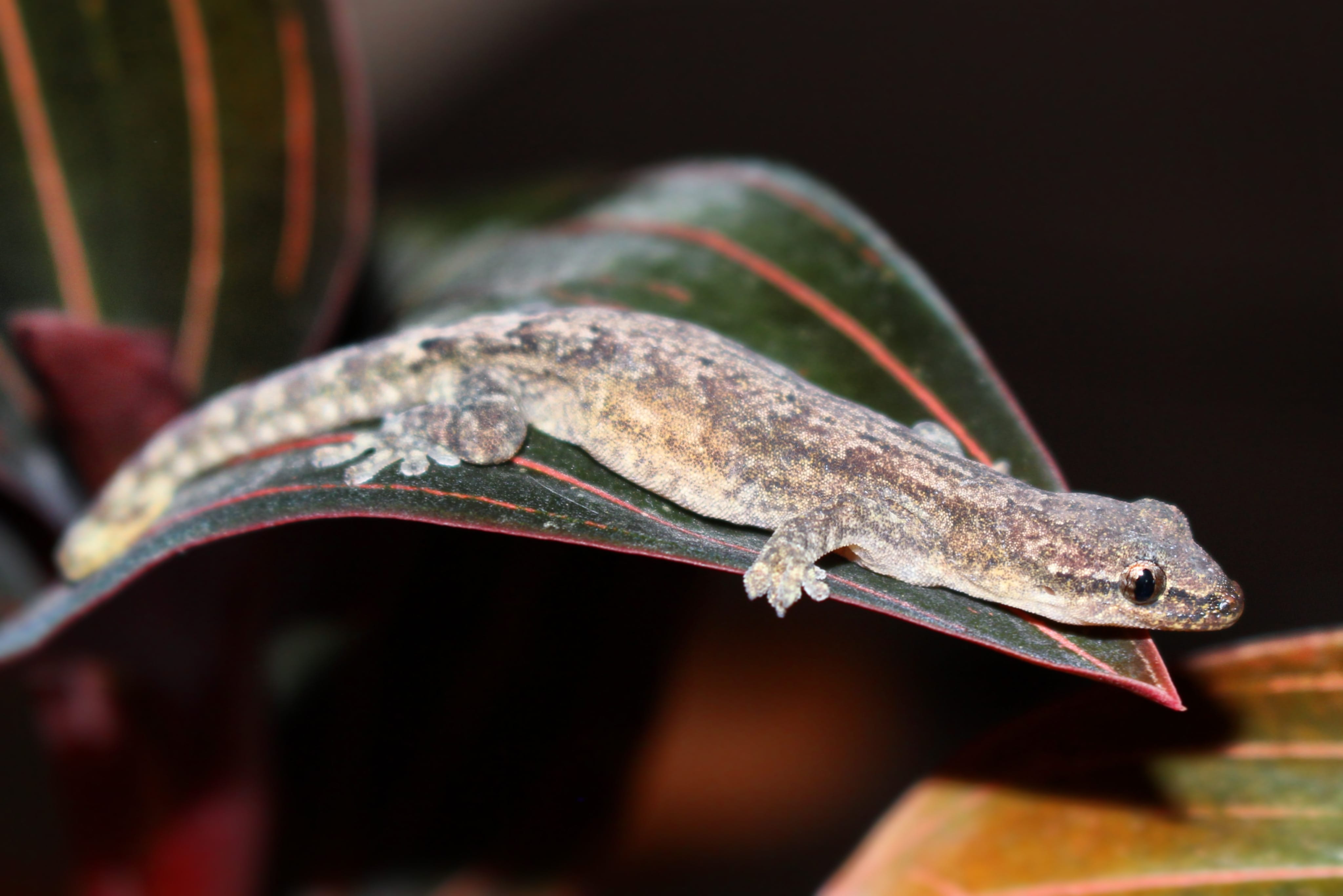
Lepidodactylus divergens, the Divergent Gecko, is a nocturnal, small gecko native to Southeast Asia and nearby islands. Its coloration ranges from brown to gray, blending seamlessly into rocks, tree bark, and foliage. Insectivorous, it feeds on ants, beetles, and other tiny invertebrates, hunting stealthily during the night.
This gecko is arboreal and adept at climbing using adhesive toe pads. Social behavior is minimal, mostly limited to mating interactions. Females lay eggs in concealed locations, protecting hatchlings from predators. Studying Lepidodactylus divergens highlights nocturnal adaptation, arboreal movement, and predator avoidance, contributing to understanding the diversity of Types of Geckos in Southeast Asian habitats.
89. Lepidodactylus mysorensis
Lepidodactylus mysorensis is a small, nocturnal gecko endemic to southern India. Its brown to gray coloration allows effective camouflage on tree bark and rocky surfaces. Feeding primarily on insects, spiders, and small arthropods, it hunts at night using patience and swift movements.
Social interactions are limited, though males may perform display behaviors during territorial disputes. Females lay eggs in protected crevices or leaf litter. Observing Lepidodactylus mysorensis illustrates arboreal navigation, nocturnal hunting techniques, and reproductive strategies, highlighting the remarkable diversity of Types of Geckos in India’s ecosystems.
90. Ptenopus garrulus

Ptenopus garrulus, commonly called the Barking Gecko, is a nocturnal, desert-dwelling gecko native to southern Africa. It is famous for its distinctive barking or chirping calls used to communicate territory and attract mates. Its sandy-brown coloration blends perfectly with desert sands, aiding in predator avoidance.
Barking Geckos are primarily insectivorous, feeding on ants, termites, beetles, and other small invertebrates. They are adapted to extreme temperatures, remaining hidden in burrows during the day and emerging at night to hunt. Males vocalize to signal dominance, while females lay eggs in safe burrows, ensuring the survival of hatchlings. Observing Ptenopus garrulus provides insight into desert adaptations, nocturnal hunting, and social communication in geckos, illustrating the ecological diversity and specialization found in Types of Geckos.
91. Ptenopus kochi
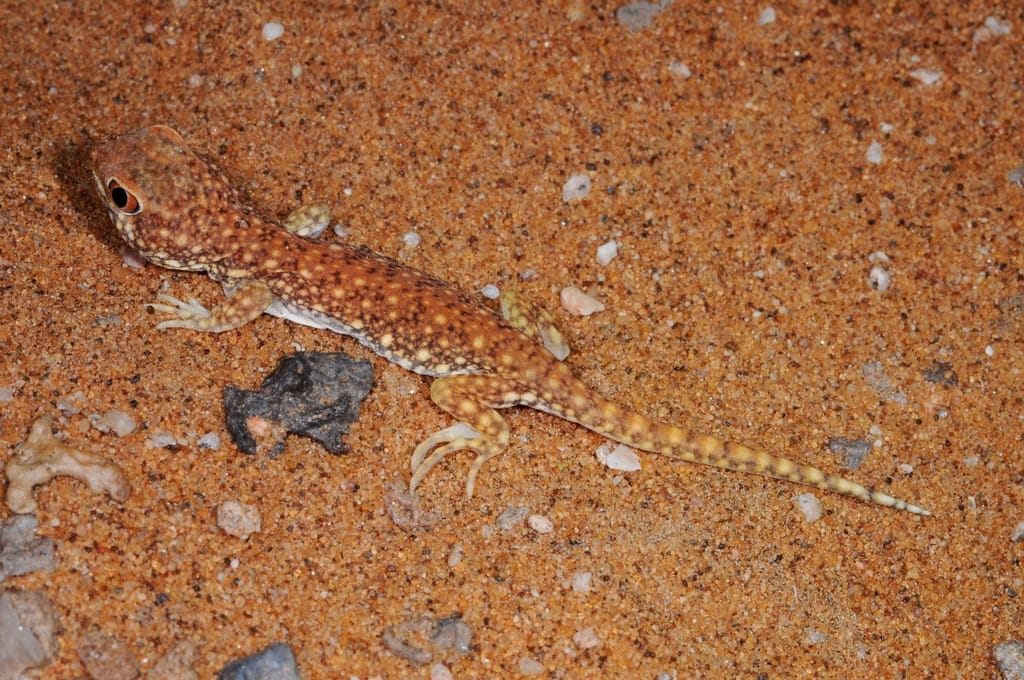
Ptenopus kochi, commonly called Koch’s Barking Gecko, is a nocturnal desert gecko native to Namibia and parts of South Africa. Similar to its relative Ptenopus garrulus, it produces distinctive vocalizations resembling barks or chirps, primarily used to establish territory and attract mates. Its sandy-brown coloration provides excellent camouflage in arid desert landscapes, blending with loose sand and rocks.
These geckos are highly adapted to extreme desert conditions. During the day, they remain hidden in burrows to avoid intense heat, emerging at night to hunt insects, termites, and small arthropods. Males often perform territorial calls while perched at the entrance of burrows, while females lay eggs underground, ensuring optimal humidity and temperature for incubation. Observing Ptenopus kochi highlights desert survival strategies, nocturnal predation, and unique vocal communication. This gecko exemplifies the ecological diversity and specialization seen across Types of Geckos in southern Africa.
92. Ramigekko swartbergensis

Ramigekko swartbergensis, known as the Swartberg Rock Gecko, is a nocturnal species endemic to the mountainous Swartberg region of South Africa. Its mottled brown, gray, and cream coloration provides camouflage against rocky outcrops and crevices, where it spends much of its time. Feeding primarily on insects, spiders, and other arthropods, it is an efficient and stealthy predator.
These geckos are solitary and territorial. Males exhibit tail flicking, push-ups, and subtle vocalizations during mating periods. Females lay eggs in hidden crevices or under rocks, providing protection from predators and environmental extremes. Observing Ramigekko swartbergensis provides insight into mountain-dwelling gecko adaptations, nocturnal activity, and survival strategies. Its ecological role illustrates the remarkable behavioral and morphological diversity found within Types of Geckos.
93. Pachydactylus capensis

Pachydactylus capensis, or the Cape Thick-Toed Gecko, is a nocturnal, medium-sized species found in the Western Cape region of South Africa. Its coloration ranges from gray to brown with mottled patterns, providing effective camouflage among rocks, leaf litter, and shrubbery. It feeds primarily on insects and small invertebrates, hunting with stealth and patience under the cover of night.
This gecko is largely solitary. Males display territorial behaviors including push-ups, tail flicks, and occasional chirping to ward off rivals. Females lay eggs in protected crevices or under rocks, ensuring that the hatchlings have a higher survival rate. Studying Pachydactylus capensis offers insights into adaptations to rocky habitats, nocturnal hunting techniques, and reproductive strategies. It is a vital example of the ecological diversity among Types of Geckos in southern Africa.
94. Pachydactylus fasciatus

Pachydactylus fasciatus, commonly called the Banded Thick-Toed Gecko, is a nocturnal gecko found in southwestern Africa. Its distinctive bands of dark and light coloration aid in camouflage against rocky and sandy terrain. This gecko primarily feeds on insects and other small arthropods, hunting at night with stealth and precision.
Solitary by nature, males use body posturing and tail movements to establish dominance during mating season. Females lay eggs in concealed locations, such as under rocks or within crevices. Observing Pachydactylus fasciatus highlights adaptations for nocturnal hunting, desert and rocky survival strategies, and reproductive behaviors, emphasizing the remarkable diversity of Types of Geckos in arid and semi-arid habitats.
95. Pachydactylus griffini
Pachydactylus griffini, or Griffin’s Thick-Toed Gecko, is a nocturnal species native to southern Africa. Its coloration ranges from gray to brown with subtle mottling, enabling camouflage in rocky environments. Insectivorous, it hunts beetles, ants, and other small arthropods, using patience and agility for efficient predation.
These geckos are largely solitary, though males may engage in territorial displays during the breeding season. Females lay eggs in protected crevices or under rocks, providing safety for their young. Studying Pachydactylus griffini provides insights into nocturnal hunting, territorial behaviors, and adaptation to rocky habitats. Its specialized morphology and ecological role contribute to the rich diversity of Types of Geckos in southern Africa.
96. Pachydactylus werneri
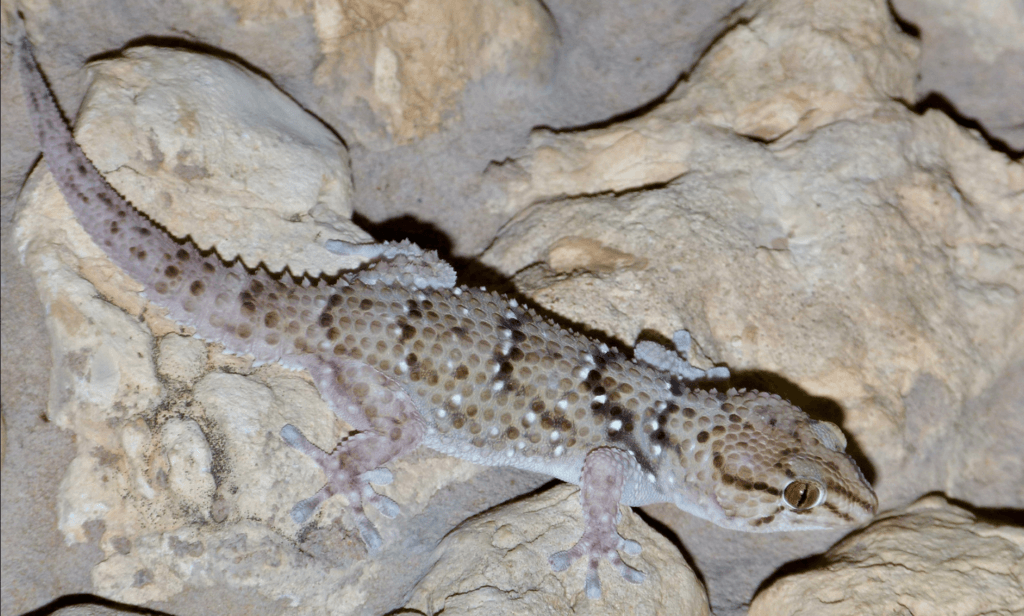
Pachydactylus werneri, also known as Werner’s Thick-Toed Gecko, is a nocturnal gecko found in Namibia and South Africa. Its brown and gray mottled coloration provides effective camouflage in rocky and sandy environments. It feeds on insects, spiders, and other arthropods, hunting primarily at night.
These geckos are solitary, with males using subtle postures and tail flicks to defend territories during breeding. Females lay eggs in protected crevices, ensuring hatchling survival. Observing Pachydactylus werneri highlights desert and rocky adaptations, nocturnal hunting behaviors, and reproductive strategies, emphasizing the ecological diversity of Types of Geckos in southern Africa.
97. Hemidactylus frenatus

Hemidactylus frenatus, commonly called the Common House Gecko, is a nocturnal species native to Southeast Asia but now widespread globally. Its pale brown to gray coloration helps it blend with walls, ceilings, and urban structures. Insectivorous, it feeds on mosquitoes, flies, and other household insects, making it a beneficial companion in human habitats.
These geckos are highly adaptable and thrive in both urban and natural environments. They exhibit minimal territorial behavior but may vocalize softly during mating. Females lay eggs in protected locations such as wall crevices or behind roof tiles. Observing Hemidactylus frenatus illustrates urban adaptation, nocturnal hunting, and reproductive strategies, showcasing how Types of Geckos can thrive alongside humans.
98. Gonatodes alexandermendesi
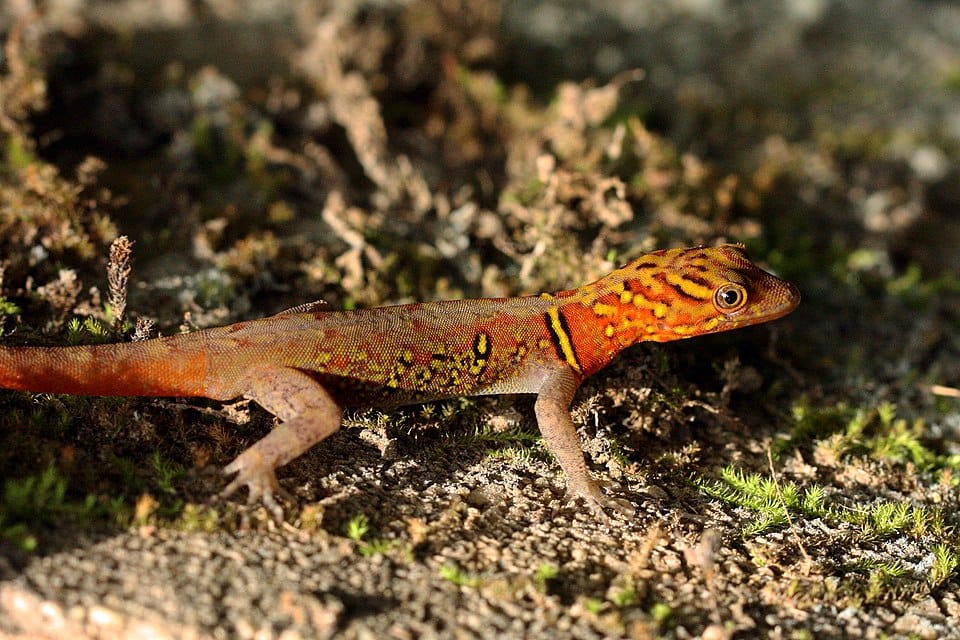
Gonatodes alexandermendesi, known as Alexander-Mendes’ Gecko, is a diurnal species native to northern South America. Its vibrant coloration, often with subtle stripes or spots, provides camouflage in leaf litter, rocks, and vegetation. Feeding primarily on small insects, ants, and spiders, it is an agile and precise hunter.
This gecko exhibits territorial behaviors, with males performing push-ups and tail flicks to ward off rivals. Females lay eggs in concealed locations to protect hatchlings. Observing Gonatodes alexandermendesi highlights adaptations to tropical forest habitats, diurnal hunting strategies, and social signaling behaviors, enriching our understanding of the diversity among Types of Geckos.
99. Coleodactylus elizae

Coleodactylus elizae, commonly called Eliza’s Dwarf Gecko, is a nocturnal gecko endemic to Brazil. Its small size and brown coloration provide effective camouflage in leaf litter and under rocks. It feeds on tiny insects and other invertebrates, hunting stealthily at night.
These geckos are primarily solitary, though males may display brief territorial behaviors during breeding. Females lay eggs in protected microhabitats. Observing Coleodactylus elizae demonstrates how miniature geckos thrive in tropical ecosystems, balancing hunting, predator avoidance, and reproduction. Its ecological role underscores the diversity and adaptability of Types of Geckos in South America.
100. Sphaerodactylus elegans

Sphaerodactylus elegans, or the Elegant Dwarf Gecko, is a tiny, nocturnal gecko native to the Caribbean. Its striking coloration, typically brown with subtle patterning, allows it to blend into leaf litter, rocks, and urban structures. Feeding on ants, termites, and small arthropods, it hunts efficiently despite its diminutive size.
These geckos are solitary and highly territorial. Males display push-ups, tail flicks, and subtle chirps during mating season. Females lay eggs in concealed areas, ensuring hatchling survival. Studying Sphaerodactylus elegans provides insights into nocturnal hunting, microhabitat specialization, and reproductive strategies. This species exemplifies the incredible diversity, adaptation, and ecological importance of Types of Geckos in island ecosystems.
Frequently Asked Questions about Geckos
1. What are geckos?
Geckos are small to medium-sized lizards belonging to the family Gekkonidae. They are found in warm climates worldwide and are known for their unique climbing ability, vocalizations, and diverse colors and patterns.
2. What are the different types of geckos?
There are hundreds of gecko species, ranging from the Common House Gecko to the exotic Flying Gecko. Geckos are classified based on size, habitat, coloration, and behavior, including arboreal, terrestrial, diurnal, and nocturnal types.
3. Where do geckos live?
Geckos inhabit various environments, including deserts, forests, mountains, islands, and urban areas. Each species adapts to its habitat, using camouflage, nocturnal activity, and specialized climbing abilities to survive.
4. Are geckos nocturnal or diurnal?
Some geckos are nocturnal, hunting at night and avoiding predators, while others, like day geckos, are diurnal and active during daylight hours. The activity pattern depends on the species and habitat.
5. What do geckos eat?
Most geckos are insectivores, feeding on ants, beetles, termites, and spiders. Some larger species may consume small lizards, eggs, or fruits, depending on their environment and size.
6. How do geckos climb walls?
Geckos have specialized toe pads covered in microscopic hair-like structures called setae. These allow them to adhere to smooth surfaces using van der Waals forces, enabling remarkable climbing abilities.
7. Do geckos make sounds?
Yes, certain gecko species are vocal and produce chirps, clicks, or barks to communicate with mates, signal territory, or warn rivals. Barking geckos, for example, are known for their distinctive vocalizations.
8. How long do geckos live?
Gecko lifespans vary by species. Small species typically live 3–6 years, while larger species like Tokay Geckos can live 10–15 years or longer in captivity with proper care.
9. How do geckos reproduce?
Most geckos reproduce by laying eggs, usually in concealed crevices or under rocks. Some species lay single eggs, while others lay small clutches. Hatchlings develop quickly and begin hunting shortly after emergence.
10. Can geckos drop their tails?
Yes, many geckos can autotomize, or drop, their tails to escape predators. The tail often regenerates over time, although it may differ in color or texture from the original.
11. Are geckos dangerous to humans?
No, geckos are harmless to humans. They do not bite unless provoked and are beneficial for controlling insect populations.
12. What is the largest gecko species?
The New Caledonian Giant Gecko, also known as Leachie, is the largest gecko species, growing up to 14 inches long. It inhabits forests and has a robust body with vibrant coloration.
13. What is the smallest gecko species?
Some dwarf geckos, like Sphaerodactylus elegans, are among the smallest, measuring just 1–2 inches long. Despite their size, they are active hunters and skilled climbers.
14. Are geckos endangered?
Several gecko species are threatened due to habitat loss, deforestation, and the pet trade. Conservation efforts are in place for rare and endemic species, especially island geckos.
15. How do geckos communicate?
Geckos communicate using vocalizations, body movements, and tail signals. Chirps, clicks, and barks are common for territorial, mating, or warning purposes.
16. Can geckos live in captivity?
Yes, many geckos are kept as pets, including Leopard Geckos, Crested Geckos, and Tokay Geckos. Proper care requires suitable habitat, temperature, humidity, and diet.
17. How do geckos avoid predators?
Geckos use camouflage, nocturnal activity, rapid movement, and tail autotomy to avoid predators. Their cryptic coloration helps them blend into natural surroundings effectively.
18. What is a day gecko?
Day geckos, such as the Peacock Day Gecko, are active during the day and often brightly colored. They are arboreal and feed on insects, nectar, and sometimes fruit.
19. What is a tokay gecko?
Tokay Geckos are large, nocturnal geckos native to Southeast Asia. They have vibrant blue and orange patterns and are known for their loud vocalizations and territorial behavior.
20. How do geckos survive in deserts?
Desert geckos, like Ptenopus species, survive by being nocturnal, hiding in burrows during the day, and feeding on nocturnal insects. Their coloration and behavior help conserve water and avoid predators.
21. Can geckos jump?
Yes, geckos are excellent jumpers. Many use their agility to capture prey or move between surfaces in their arboreal habitats.
22. Do geckos have teeth?
Yes, geckos have small, sharp teeth suited for gripping and consuming insects. Their teeth are not harmful to humans.
23. How do geckos eat?
Geckos hunt by stalking, pouncing, or ambushing prey. Some species lick or bite their prey to secure it before swallowing.
24. Can geckos live without food?
Geckos can survive several days without food but require water. Extended starvation can be fatal, so adequate feeding is essential in captivity.
25. Are geckos solitary animals?
Most gecko species are solitary, especially nocturnal ones. They usually interact during mating or territorial disputes.
26. How do geckos sleep?
Geckos sleep at night or during the day, depending on whether they are diurnal or nocturnal. They often rest hidden in crevices, under rocks, or in foliage to avoid predators.
27. Can geckos climb glass?
Yes, geckos can climb glass using specialized toe pads that adhere via microscopic hairs. This allows them to scale smooth vertical surfaces easily.
28. Do geckos shed skin?
Yes, geckos periodically shed their skin as they grow. They often eat the shed skin to recycle nutrients.
29. How do geckos stay hydrated?
Geckos drink water droplets from leaves, soil, or water dishes in captivity. Some species absorb moisture directly from their skin or dew.
30. What predators eat geckos?
Gecko predators include snakes, birds, mammals, and larger lizards. Camouflage, nocturnal habits, and tail autotomy help geckos evade these threats.
31. What is autotomy?
Autotomy is the ability of geckos to drop their tail when threatened. The tail may regenerate over time but may look slightly different than the original.
32. Do geckos hibernate?
Some geckos in temperate regions hibernate during cold months, becoming inactive until temperatures rise. Tropical species do not hibernate.
33. Are geckos venomous?
No, geckos are non-venomous and pose no threat to humans. They rely on agility and camouflage for defense.
34. How fast can geckos move?
Gecko speed varies by species, but many can run quickly to escape predators or catch prey, especially small arboreal and ground-dwelling geckos.
35. Do geckos climb trees?
Yes, many geckos are arboreal and spend most of their time in trees or shrubs, using their adhesive toe pads to navigate branches and leaves.
36. Can geckos live indoors?
Yes, geckos like Hemidactylus frenatus adapt well to human dwellings, feeding on insects and sheltering in walls, ceilings, and attics.
37. How do geckos attract mates?
Geckos attract mates using vocalizations, body displays, or bright coloration. Males may perform push-ups, tail flicks, or chirping to signal readiness.
38. Are geckos territorial?
Many gecko species are territorial, particularly males. They use body postures, tail movements, and vocalizations to defend their space.
39. Can geckos live together?
Some gecko species tolerate cohabitation, but many are solitary and may become aggressive if confined with others, especially males.
40. What is the diet of a day gecko?
Day geckos feed on insects, nectar, pollen, and occasionally fruit. Their active daytime behavior requires a diet rich in protein and energy.
41. Do geckos need light?
Diurnal geckos require natural sunlight or UVB lighting in captivity to maintain health, support vitamin D3 synthesis, and aid calcium absorption.
42. Can geckos recognize humans?
While geckos do not recognize humans like pets such as dogs or cats, they may become accustomed to presence and associate humans with feeding.
43. What is the role of geckos in ecosystems?
Geckos are insect predators, controlling pest populations, and serve as prey for larger animals. They contribute to ecological balance in tropical, desert, and urban ecosystems.
44. Are geckos silent?
Not all geckos are silent. Many vocal species produce chirps, clicks, or barks, particularly for mating or territorial communication.
45. How do geckos shed their skin?
Geckos shed their skin gradually, often in pieces or as a whole layer. They may consume shed skin for nutrition and cleanliness.
46. Do geckos bite?
Gecko bites are rare and harmless. They may bite if handled roughly or stressed, but their small teeth cause no injury.
47. Can geckos survive without tails?
Yes, geckos can survive without a tail. The tail may regenerate, though it often differs in color or shape from the original.
48. What is the lifespan of a dwarf gecko?
Dwarf geckos, like Sphaerodactylus species, live 3–5 years on average, depending on habitat, diet, and predation risk.
49. How do geckos keep warm?
Geckos are ectothermic and regulate body temperature using environmental heat sources. Diurnal species bask in sunlight, while nocturnal species rely on ambient warmth.
50. Do geckos carry diseases?
Geckos are generally safe for humans but can carry bacteria like Salmonella. Proper hygiene after handling is recommended.
51. Can geckos swim?
Most geckos are not adapted for swimming, but some can tolerate brief exposure to water and may climb wet surfaces.
52. What is the difference between day geckos and night geckos?
Day geckos are active during daylight and often brightly colored, while night geckos are nocturnal, using camouflage and stealth to hunt insects at night.