

“Daisy” is a common-name idea more than a single botanical group. The true English daisy is Bellis perennis, but gardeners also call many other Asteraceae flowers daisies because they have ray florets around a central disk. This guide labels 25 popular daisy and daisy-like plants accurately instead of implying they all belong to one genus.
What Are the Main Types of Daisy Flowers?
Familiar daisy groups include English daisy, oxeye daisy, Shasta daisy, Gerbera daisy, African daisy, marguerite daisy, fleabane, black-eyed Susan, coneflower, blanket flower, tickseed, cosmos, painted daisy, and asters. Most are in the Asteraceae family, but they belong to different genera and have very different climate, growth, and invasive-behavior profiles.
Related Flower Guides
Quick Comparison
| Daisy type | Scientific name | Main color | Bloom season | Garden use |
|---|---|---|---|---|
| English Daisy | Bellis perennis | white, pink, red-tinted | spring to early summer | lawns, edging, cool-season containers |
| Oxeye Daisy | Leucanthemum vulgare | white with yellow center | late spring to summer | meadows, naturalistic borders |
| Shasta Daisy | Leucanthemum × superbum | white with yellow center | summer | perennial borders, cutting |
| Gerbera Daisy | Gerbera jamesonii hybrids | white, yellow, orange, pink, red, bicolors | warm season or greenhouse | containers, cut flowers |
| African Daisy | Osteospermum ecklonis hybrids | white, purple, pink, yellow, blue-centered blends | spring to fall in mild conditions | containers, bedding |
| Marguerite Daisy | Argyranthemum frutescens | white, pink, yellow | spring to fall in mild climates | containers, bedding |
| Bush Daisy | Euryops pectinatus | yellow | much of year in warm climates | warm-climate borders |
| Mexican Fleabane | Erigeron karvinskianus | white aging pink | long warm-season bloom | walls, cracks, informal edging |
| Black-Eyed Susan | Rudbeckia hirta | yellow, gold, bronze | summer to fall | pollinator borders, cutting |
| Purple Coneflower | Echinacea purpurea | purple-pink, white, orange cultivars | summer | pollinator gardens, cutting |
| Blanket Flower | Gaillardia aristata and hybrids | red, yellow, orange bicolors | summer to frost | dry borders, pollinator gardens |
| Tickseed | Coreopsis grandiflora and related species | yellow, gold, red-eyed forms | summer | borders, pollinator gardens |
| Cosmos | Cosmos bipinnatus | white, pink, crimson | summer to frost | meadows, cutting |
| Golden Marguerite | Cota tinctoria | yellow | summer | dry cottage borders |
| Painted Daisy | Tanacetum coccineum | pink, red, white | late spring to summer | cottage borders, cutting |
| Blue Marguerite | Felicia amelloides | blue-violet with yellow center | warm season | containers, warm-climate edging |
| Swan River Daisy | Brachyscome iberidifolia | blue, purple, pink, white | spring through warm season | containers, edging |
| Dahlberg Daisy | Thymophylla tenuiloba | yellow | summer to frost | edging, hot dry containers |
| Cape Marigold | Dimorphotheca sinuata | orange, yellow, white | cool spring season | dry bedding, mass planting |
| Crown Daisy | Glebionis coronaria | yellow or yellow-white bicolor | spring | vegetable/ornamental gardens |
| Chocolate Daisy | Berlandiera lyrata | yellow with maroon center | spring to fall | dry native gardens |
| Seaside Daisy | Erigeron glaucus | lavender-pink, violet | spring to summer | coastal gardens, rock gardens |
| New England Aster | Symphyotrichum novae-angliae | purple, violet, pink | late summer to fall | native pollinator gardens |
| Sneezeweed | Helenium autumnale and hybrids | yellow, orange, red | late summer to fall | late-season borders, pollinators |
| Pot Marigold | Calendula officinalis | yellow, orange, cream | cool seasons | edging, cutting, edible-flower gardens |
25 Types of daisy flowers
The entries below are selected and labeled according to the article’s search intent. Names, botanical ranks, and horticultural categories are kept distinct so the list does not inflate the count with duplicate common names.
1. English Daisy
Scientific name: Bellis perennis
:max_bytes(150000):strip_icc()/english-daisy-plant-overview-4767251_01-1d5214b297d7411393e38e9370459db2.jpg)
English Daisy is a short perennial with white, pink, red-tinted flowers, typically blooming spring to early summer. It generally performs best in sun to part shade and is useful for lawns, edging, cool-season containers. The most reliable visual clue is small spoon-shaped ray florets around yellow disk.
Can naturalize readily and be considered weedy in lawns. Bloom time, size, and garden performance can shift with cultivar, weather, soil, and region, so use the botanical name and plant label when making a final selection.
2. Oxeye Daisy
Scientific name: Leucanthemum vulgare
:max_bytes(150000):strip_icc()/oxeye-daisy-growing-guide-5190951-hero-baed472653934a6da8c8f86237dcf7bc.jpg)
Oxeye Daisy is a perennial with white with yellow center flowers, typically blooming late spring to summer. It generally performs best in full sun and is useful for meadows, naturalistic borders. The most reliable visual clue is classic white rays around a yellow disk on upright stems.
Invasive or noxious-weed status varies by region; check before planting. Bloom time, size, and garden performance can shift with cultivar, weather, soil, and region, so use the botanical name and plant label when making a final selection.
3. Shasta Daisy
Scientific name: Leucanthemum × superbum
:max_bytes(150000):strip_icc()/shasta-daisy-growing-guide-5209135-hero-8519a22e0bce4f678bc3f8473d7e03c1.jpg)
Shasta Daisy is a perennial with white with yellow center flowers, typically blooming summer. It generally performs best in full sun and is useful for perennial borders, cutting. The most reliable visual clue is larger cultivated daisy heads on clumping plants.
A horticultural hybrid group rather than the same species as oxeye daisy. Bloom time, size, and garden performance can shift with cultivar, weather, soil, and region, so use the botanical name and plant label when making a final selection.
4. Gerbera Daisy
Scientific name: Gerbera jamesonii hybrids
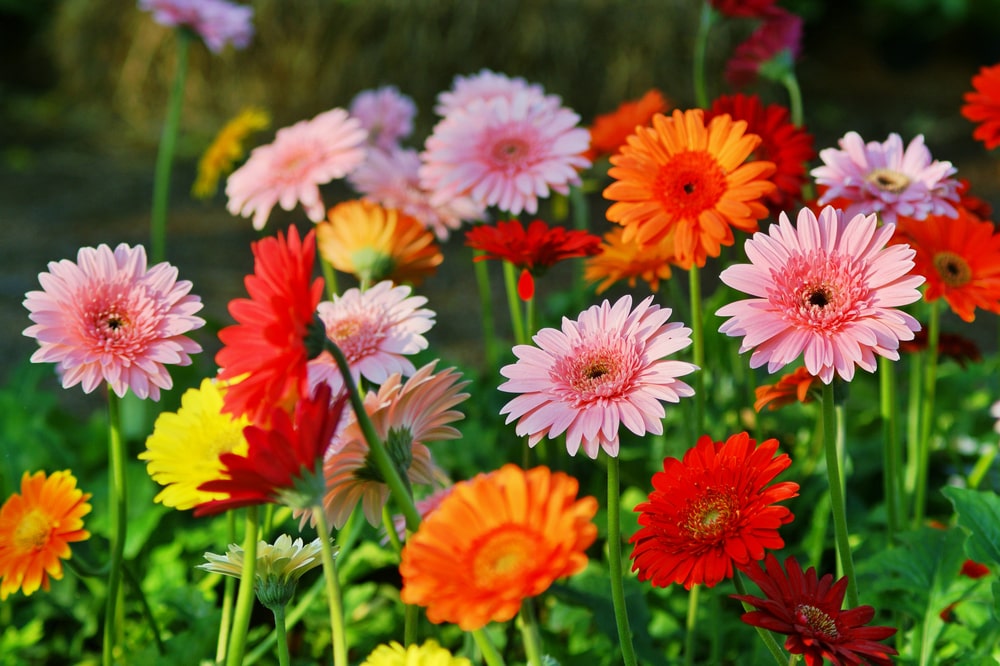
Gerbera Daisy is a tender perennial with white, yellow, orange, pink, red, bicolors flowers, typically blooming warm season or greenhouse. It generally performs best in full sun to bright light and is useful for containers, cut flowers. The most reliable visual clue is large colorful daisy heads on leafless stems.
Sensitive to crown rot in poorly drained conditions. Bloom time, size, and garden performance can shift with cultivar, weather, soil, and region, so use the botanical name and plant label when making a final selection.
5. African Daisy
Scientific name: Osteospermum ecklonis hybrids
African Daisy is a tender perennial with white, purple, pink, yellow, blue-centered blends flowers, typically blooming spring to fall in mild conditions. It generally performs best in full sun and is useful for containers, bedding. The most reliable visual clue is daisy heads often with contrasting dark centers.
Flowering may pause in extreme summer heat. Bloom time, size, and garden performance can shift with cultivar, weather, soil, and region, so use the botanical name and plant label when making a final selection.
6. Marguerite Daisy
Scientific name: Argyranthemum frutescens
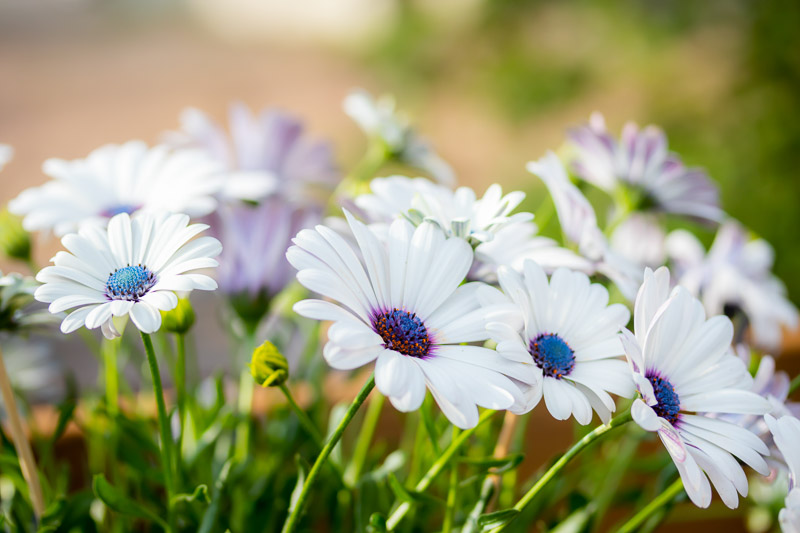
Marguerite Daisy is a tender shrub with white, pink, yellow flowers, typically blooming spring to fall in mild climates. It generally performs best in full sun and is useful for containers, bedding. The most reliable visual clue is many daisy heads on shrubby finely divided foliage.
Usually treated as an annual where winters freeze. Bloom time, size, and garden performance can shift with cultivar, weather, soil, and region, so use the botanical name and plant label when making a final selection.
7. Bush Daisy
Scientific name: Euryops pectinatus
Bush Daisy is a evergreen shrub with yellow flowers, typically blooming much of year in warm climates. It generally performs best in full sun and is useful for warm-climate borders. The most reliable visual clue is bright yellow daisies over grey-green cut foliage.
Frost tender compared with hardy temperate daisies. Bloom time, size, and garden performance can shift with cultivar, weather, soil, and region, so use the botanical name and plant label when making a final selection.
8. Mexican Fleabane
Scientific name: Erigeron karvinskianus
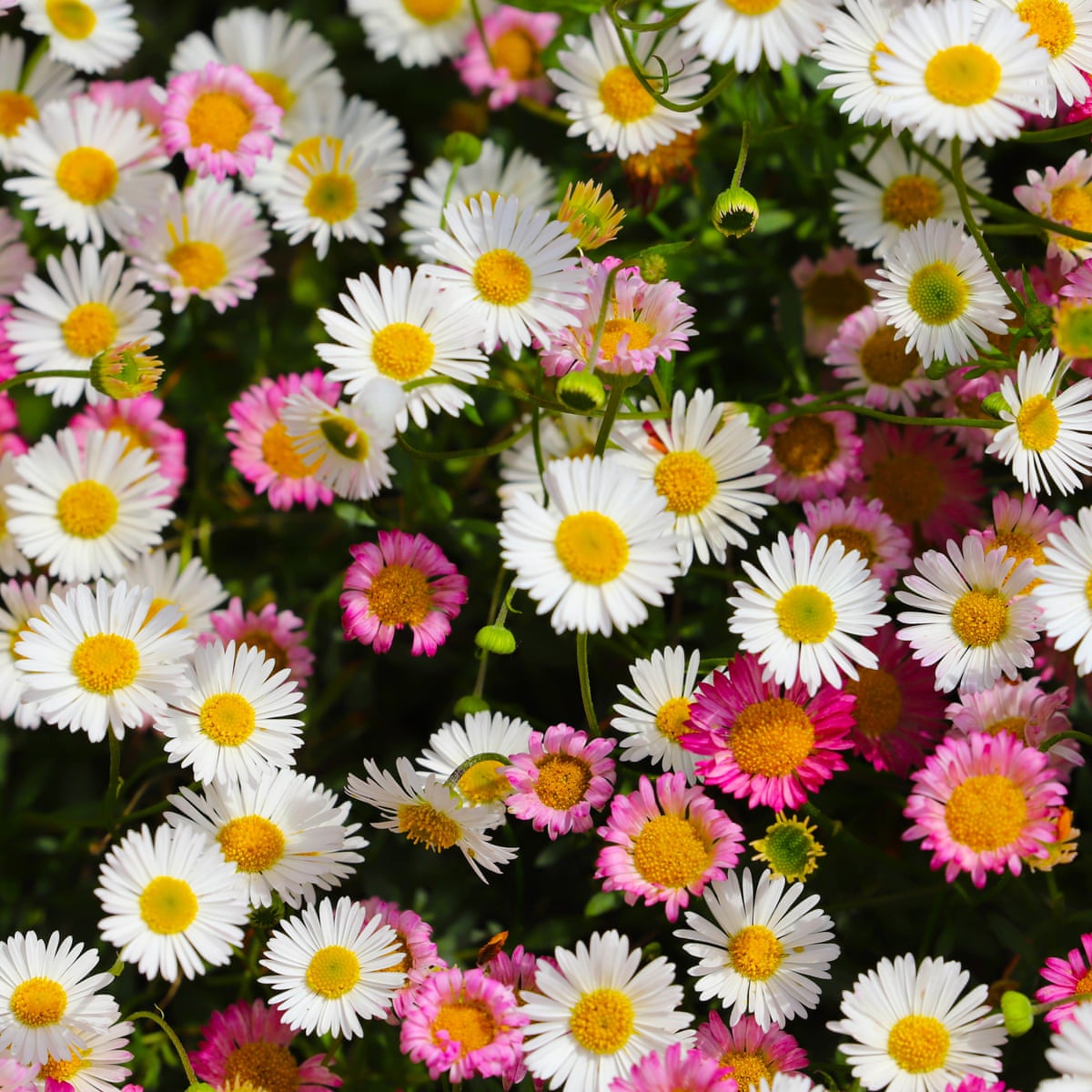
Mexican Fleabane is a short-lived perennial with white aging pink flowers, typically blooming long warm-season bloom. It generally performs best in full sun to light shade and is useful for walls, cracks, informal edging. The most reliable visual clue is tiny daisies change from white to pink on wiry stems.
Can self-seed strongly; invasive status varies by region. Bloom time, size, and garden performance can shift with cultivar, weather, soil, and region, so use the botanical name and plant label when making a final selection.
9. Black-Eyed Susan
Scientific name: Rudbeckia hirta
Black-Eyed Susan is a annual, biennial, or short-lived perennial with yellow, gold, bronze flowers, typically blooming summer to fall. It generally performs best in full sun and is useful for pollinator borders, cutting. The most reliable visual clue is gold ray florets around dark raised disk.
A daisy-family member but not a true daisy genus. Bloom time, size, and garden performance can shift with cultivar, weather, soil, and region, so use the botanical name and plant label when making a final selection.
10. Purple Coneflower
Scientific name: Echinacea purpurea
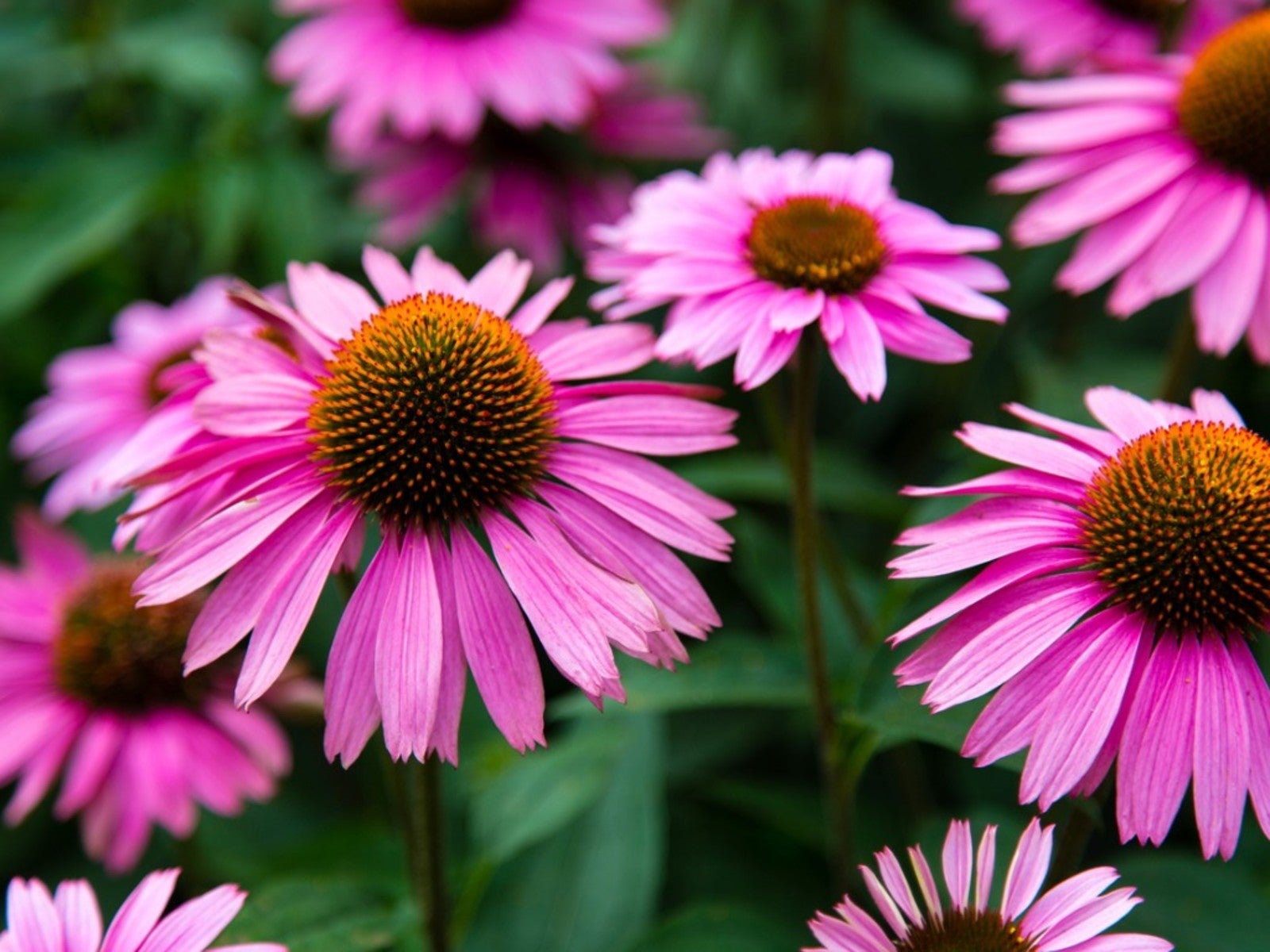
Purple Coneflower is a perennial with purple-pink, white, orange cultivars flowers, typically blooming summer. It generally performs best in full sun and is useful for pollinator gardens, cutting. The most reliable visual clue is drooping rays around a spiny cone.
Leave some seedheads for birds if desired. Bloom time, size, and garden performance can shift with cultivar, weather, soil, and region, so use the botanical name and plant label when making a final selection.
11. Blanket Flower
Scientific name: Gaillardia aristata and hybrids
Blanket Flower is a perennial with red, yellow, orange bicolors flowers, typically blooming summer to frost. It generally performs best in full sun and is useful for dry borders, pollinator gardens. The most reliable visual clue is warm-colored rays around a central disk.
Performs best with drainage and modest fertility. Bloom time, size, and garden performance can shift with cultivar, weather, soil, and region, so use the botanical name and plant label when making a final selection.
12. Tickseed
Scientific name: Coreopsis grandiflora and related species
Tickseed is a perennial with yellow, gold, red-eyed forms flowers, typically blooming summer. It generally performs best in full sun and is useful for borders, pollinator gardens. The most reliable visual clue is notched yellow ray florets around a disk.
Different Coreopsis species vary in longevity and spread. Bloom time, size, and garden performance can shift with cultivar, weather, soil, and region, so use the botanical name and plant label when making a final selection.
13. Cosmos
Scientific name: Cosmos bipinnatus

Cosmos is a annual with white, pink, crimson flowers, typically blooming summer to frost. It generally performs best in full sun and is useful for meadows, cutting. The most reliable visual clue is open daisy-like heads above feathery foliage.
Asteraceae, but not a true daisy in the narrow botanical sense. Bloom time, size, and garden performance can shift with cultivar, weather, soil, and region, so use the botanical name and plant label when making a final selection.
14. Golden Marguerite
Scientific name: Cota tinctoria
Golden Marguerite is a perennial with yellow flowers, typically blooming summer. It generally performs best in full sun and is useful for dry cottage borders. The most reliable visual clue is yellow daisy heads above aromatic divided foliage.
Often still sold under the synonym Anthemis tinctoria. Bloom time, size, and garden performance can shift with cultivar, weather, soil, and region, so use the botanical name and plant label when making a final selection.
15. Painted Daisy
Scientific name: Tanacetum coccineum
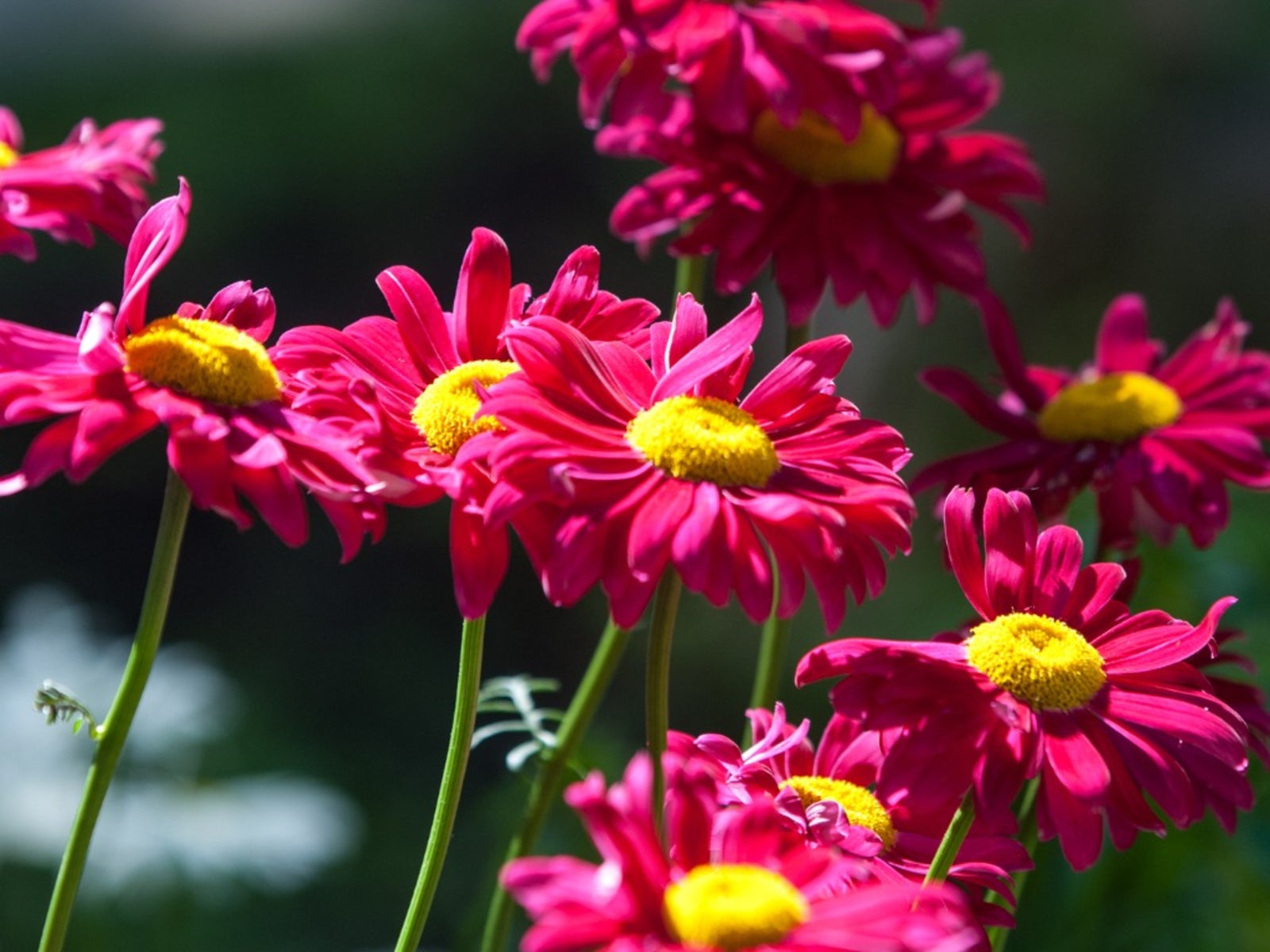
Painted Daisy is a perennial with pink, red, white flowers, typically blooming late spring to summer. It generally performs best in full sun and is useful for cottage borders, cutting. The most reliable visual clue is bright ray florets around yellow disks.
Also known historically as pyrethrum daisy. Bloom time, size, and garden performance can shift with cultivar, weather, soil, and region, so use the botanical name and plant label when making a final selection.
16. Blue Marguerite
Scientific name: Felicia amelloides
Blue Marguerite is a tender perennial with blue-violet with yellow center flowers, typically blooming warm season. It generally performs best in full sun and is useful for containers, warm-climate edging. The most reliable visual clue is small blue rays around a yellow disk.
Best treated as a tender plant in cold climates. Bloom time, size, and garden performance can shift with cultivar, weather, soil, and region, so use the botanical name and plant label when making a final selection.
17. Swan River Daisy
Scientific name: Brachyscome iberidifolia
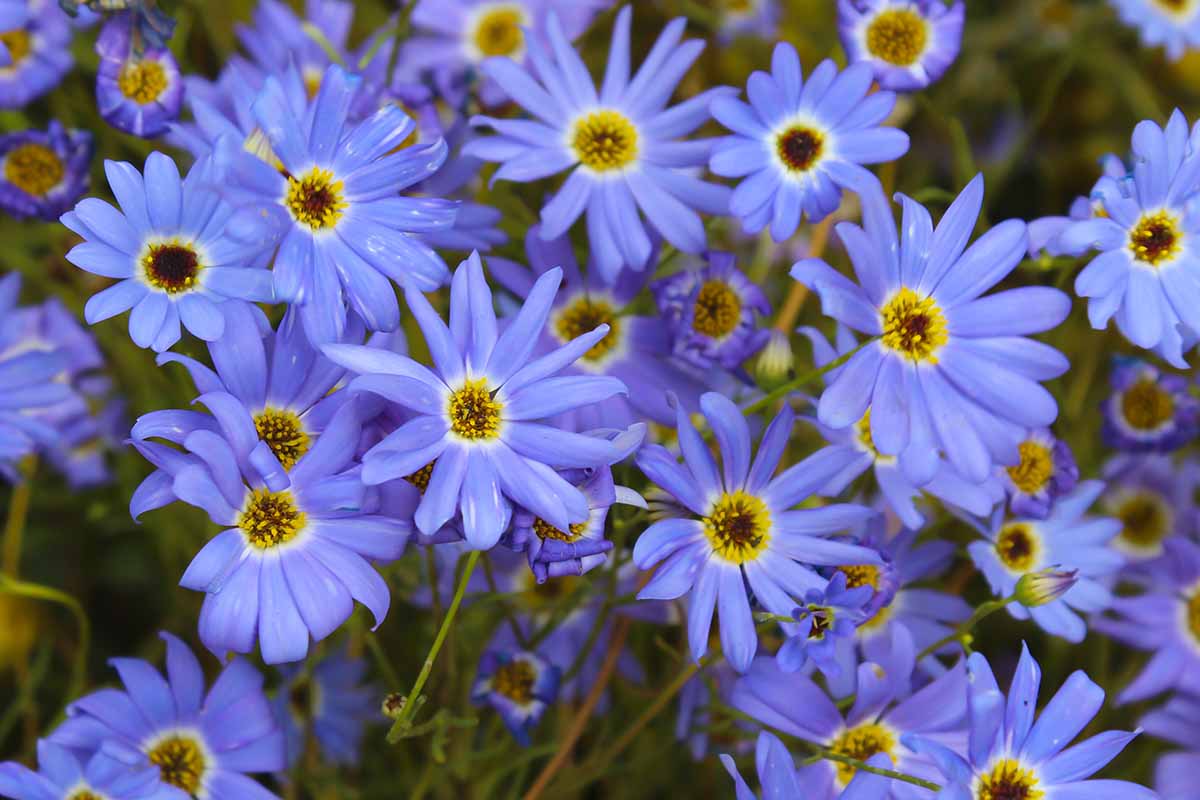
Swan River Daisy is a annual with blue, purple, pink, white flowers, typically blooming spring through warm season. It generally performs best in full sun and is useful for containers, edging. The most reliable visual clue is small delicate daisy heads over finely divided foliage.
Compact habit suits containers. Bloom time, size, and garden performance can shift with cultivar, weather, soil, and region, so use the botanical name and plant label when making a final selection.
18. Dahlberg Daisy
Scientific name: Thymophylla tenuiloba
Dahlberg Daisy is a annual with yellow flowers, typically blooming summer to frost. It generally performs best in full sun and is useful for edging, hot dry containers. The most reliable visual clue is tiny yellow daisies above threadlike aromatic foliage.
Tolerates heat and lean soil. Bloom time, size, and garden performance can shift with cultivar, weather, soil, and region, so use the botanical name and plant label when making a final selection.
19. Cape Marigold
Scientific name: Dimorphotheca sinuata
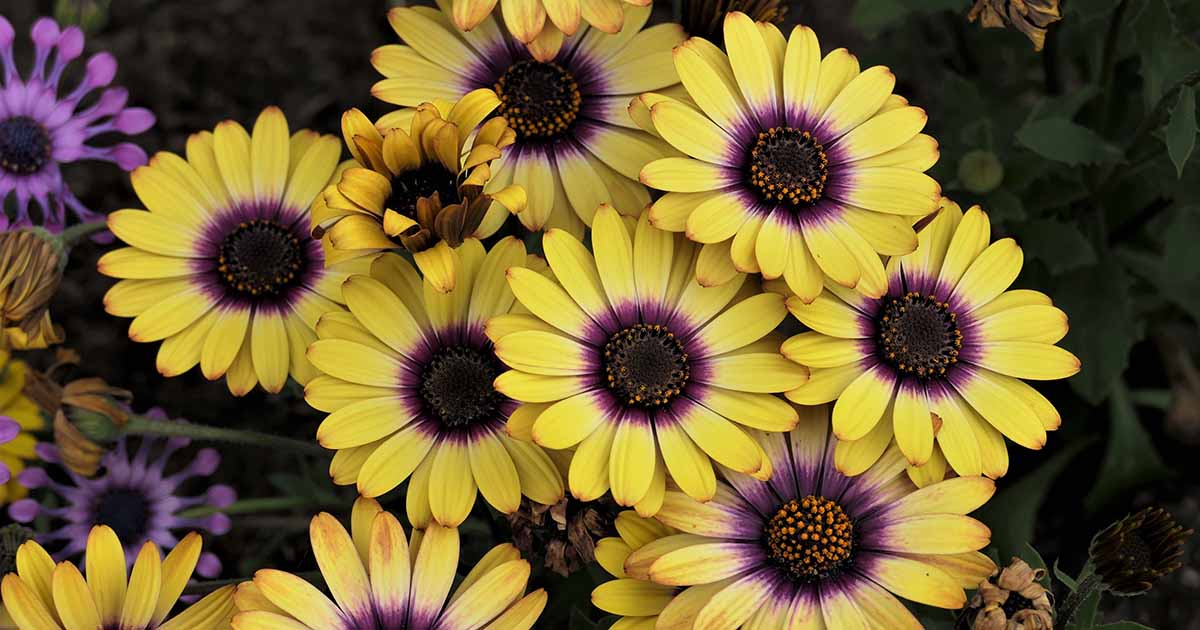
Cape Marigold is a annual with orange, yellow, white flowers, typically blooming cool spring season. It generally performs best in full sun and is useful for dry bedding, mass planting. The most reliable visual clue is bright daisy heads that may close in dull weather.
Closely related in appearance to some Osteospermum but botanically distinct. Bloom time, size, and garden performance can shift with cultivar, weather, soil, and region, so use the botanical name and plant label when making a final selection.
20. Crown Daisy
Scientific name: Glebionis coronaria
Crown Daisy is a annual with yellow or yellow-white bicolor flowers, typically blooming spring. It generally performs best in full sun and is useful for vegetable/ornamental gardens. The most reliable visual clue is yellow daisy heads above deeply lobed leaves.
Leaves and young shoots are eaten in some cuisines, but culinary use requires food-safe sourcing and correct identity. Bloom time, size, and garden performance can shift with cultivar, weather, soil, and region, so use the botanical name and plant label when making a final selection.
21. Chocolate Daisy
Scientific name: Berlandiera lyrata
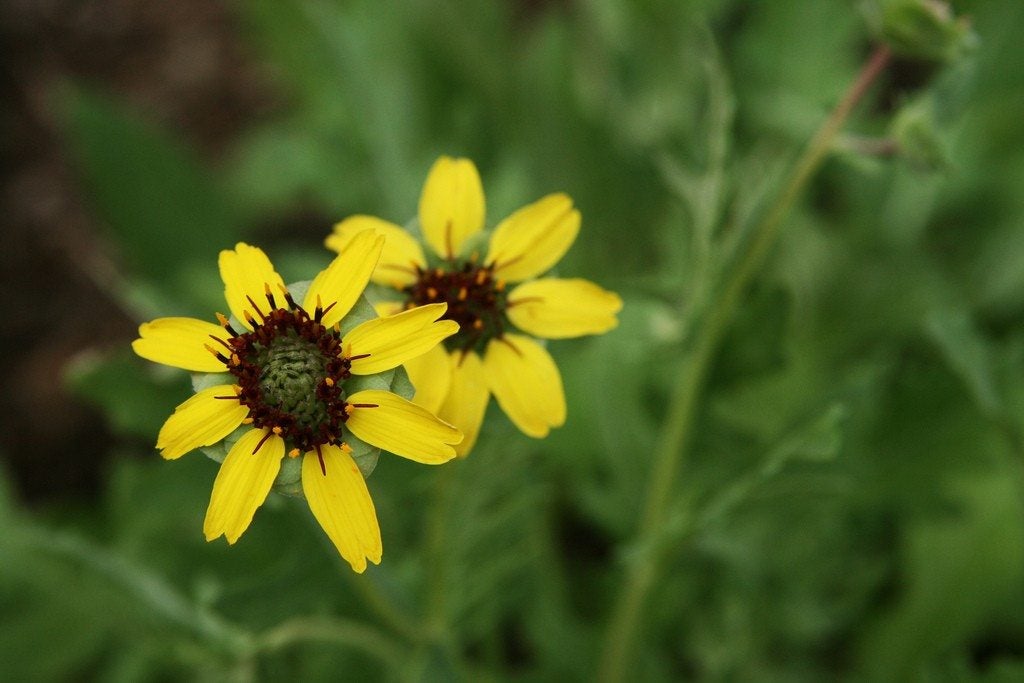
Chocolate Daisy is a perennial with yellow with maroon center flowers, typically blooming spring to fall. It generally performs best in full sun and is useful for dry native gardens. The most reliable visual clue is yellow rays around a dark disk with chocolate-like fragrance.
Native to parts of the south-central and southwestern United States and Mexico. Bloom time, size, and garden performance can shift with cultivar, weather, soil, and region, so use the botanical name and plant label when making a final selection.
22. Seaside Daisy
Scientific name: Erigeron glaucus
Seaside Daisy is a perennial with lavender-pink, violet flowers, typically blooming spring to summer. It generally performs best in full sun and is useful for coastal gardens, rock gardens. The most reliable visual clue is lavender daisies over fleshy evergreen foliage.
Useful in mild coastal conditions. Bloom time, size, and garden performance can shift with cultivar, weather, soil, and region, so use the botanical name and plant label when making a final selection.
23. New England Aster
Scientific name: Symphyotrichum novae-angliae
:max_bytes(150000):strip_icc()/how-to-grow-new-england-asters-4109086-02-a9a397a6602b430ab703c4d92e93d600.jpg)
New England Aster is a perennial with purple, violet, pink flowers, typically blooming late summer to fall. It generally performs best in full sun and is useful for native pollinator gardens. The most reliable visual clue is many purple daisy-like heads on tall stems.
A fall-blooming daisy-family native in eastern North America. Bloom time, size, and garden performance can shift with cultivar, weather, soil, and region, so use the botanical name and plant label when making a final selection.
24. Sneezeweed
Scientific name: Helenium autumnale and hybrids
Sneezeweed is a perennial with yellow, orange, red flowers, typically blooming late summer to fall. It generally performs best in full sun and is useful for late-season borders, pollinators. The most reliable visual clue is notched rays around a raised central disk.
The common name does not mean the flowers necessarily cause sneezing. Bloom time, size, and garden performance can shift with cultivar, weather, soil, and region, so use the botanical name and plant label when making a final selection.
25. Pot Marigold
Scientific name: Calendula officinalis

Pot Marigold is a annual with yellow, orange, cream flowers, typically blooming cool seasons. It generally performs best in full sun and is useful for edging, cutting, edible-flower gardens. The most reliable visual clue is daisy-like orange or yellow composite heads.
Petals are used as edible garnish when grown and identified for food use. Bloom time, size, and garden performance can shift with cultivar, weather, soil, and region, so use the botanical name and plant label when making a final selection.
What Counts as a Daisy?
A daisy “flower” is typically a composite head made of many small florets. The outer petal-like structures are ray florets, while the center is made of disc florets. Because this architecture appears throughout Asteraceae, many unrelated genera look daisy-like. A common name alone therefore does not establish close botanical relationship.
How to Identify Different Daisy Flowers
Compare disk shape, ray color, leaf shape, plant height, and bloom season. Gerberas have large heads on leafless stems; English daisies stay low; Shasta daisies form clumps of taller white flowers; black-eyed Susans have raised dark disks; coneflowers have a spiny cone; cosmos has very fine foliage. Regional habitat is also a strong clue.
How to Choose Daisies for the Garden
For classic white summer flowers, use Shasta daisy where it suits the climate. For hot sunny pollinator gardens, consider Rudbeckia, Gaillardia, Coreopsis, or regionally native asters. For containers, Gerbera, African daisy, Swan River daisy, and English daisy offer compact options. Always check mature size and local weed status before naturalizing a daisy-form plant.
Native and Invasive Considerations
Native status depends on location. New England aster is native to a large part of eastern North America, while oxeye daisy is introduced and can be invasive or regulated in some regions. Mexican fleabane and other prolific seeders may also escape cultivation. A native-garden label should always specify the geographic region.
Safety and Edibility Notes
Do not infer edibility from the word daisy. Calendula petals and some other Asteraceae are used culinarily when correctly identified and grown for food, while other daisy-family plants may be unsuitable or irritating. People with Asteraceae sensitivities should also be cautious. Never eat flowers from roadsides, florists, or pesticide-treated ornamental beds.
Common Mistakes When Choosing or Identifying Types of daisy flowers
- Assuming every daisy is Bellis.
- Planting oxeye daisy without checking local invasive status.
- Identifying daisies by petal color alone.
- Calling every Asteraceae flower edible.
- Expecting African daisies and Shasta daisies to have the same winter hardiness.
Fun Facts About Types of daisy flowers
- A daisy head is made of many individual florets.
- Ray florets form the petal-like outer ring.
- Disc florets form the center of many daisy heads.
- Shasta daisy is a horticultural hybrid.
- Gerbera and English daisy are in the same family but different genera.
- Black-eyed Susan is daisy-like but belongs to Rudbeckia.
- Many asters provide important late-season nectar and pollen.
- Some daisy-like annuals close flowers in cloudy weather.
- Common names such as African daisy can refer to more than one genus.
- Daisy-family seedheads can provide food for birds.
Final Thoughts on Types of daisy flowers
The best way to understand types of daisy flowers is to treat “daisy” as a visual form, then identify the actual genus and species. That reveals whether a plant is annual or perennial, native or introduced, compact or tall, and well behaved or potentially invasive in your region.
Frequently Asked Questions
1. What are the main types covered in this guide?
This guide compares 25 factual, useful examples, including English Daisy, Oxeye Daisy, Shasta Daisy, Gerbera Daisy. The entries may be species, cultivars, or horticultural groups depending on what the search term actually describes.
2. Are all of these entries separate botanical species?
No. Where a named cultivar or horticultural form is used, it is labeled as such rather than being presented as a species. Botanical rank matters for accurate identification.
3. Which types are easiest for beginners?
Beginner-friendly choices depend on climate, but English Daisy, Oxeye Daisy, Shasta Daisy are useful starting points when their light, soil, and temperature needs match the site.
4. Which types are best for full sun?
Many flowering plants in the list prefer full sun, but the exact requirement varies. Check the individual entry and local heat conditions before planting.
5. Which types tolerate part shade?
Several species tolerate some shade, especially woodland or cool-climate plants. Part shade should be interpreted in the context of local sun intensity.
6. When do these flowers bloom?
Bloom time ranges from spring through fall depending on species. Climate, latitude, elevation, cultivar, and weather can shift the stated season.
7. Are these flowers annuals or perennials?
The list can include annuals, perennials, bulbs, shrubs, or vines when they genuinely fit the topic. Each entry identifies its growth habit.
8. Can these flowers grow in containers?
Many can, provided the container is large enough and drains well. Match pot size to mature root system and plant height.
9. Which flowers are good for cutting?
Flowers with strong stems and good postharvest performance are best for cutting. The individual entries note arrangement or cutting value where it is important.
10. Which flowers attract pollinators?
Open, accessible flowers often provide nectar or pollen to bees, butterflies, or other visitors, but pollinator value varies by species and region.
11. How should I choose flowers for my climate?
Use local hardiness, summer heat, winter moisture, frost dates, and rainfall as filters. USDA zones are useful for cold hardiness in the United States but do not describe every climate factor.
12. What soil do these flowers need?
Most garden flowers benefit from well-drained soil, but moisture and pH preferences vary. Some species prefer consistently moist soil while others resent wet roots.
13. How often should flowering plants be watered?
Water according to plant type, soil, weather, and establishment stage rather than a fixed weekly rule. Deep, less frequent irrigation is appropriate for many established garden plants.
14. Should these flowers be deadheaded?
Many repeat-blooming annuals and perennials benefit from deadheading, while plants grown for seed, wildlife value, or ornamental seed heads may be left standing.
15. Can I grow these flowers from seed?
Many species can be seed-grown, but named cultivars may not come true from seed. Bulbs, divisions, cuttings, or tissue culture are used when clonal consistency is needed.
16. What is the difference between a species and a cultivar?
A species is a botanical taxonomic unit. A cultivar is a named plant selected and maintained for particular horticultural traits.
17. What is a hybrid flower?
A hybrid results from crossing genetically distinct parents. Horticultural hybrids may occur between species, cultivars, or breeding lines and should not be described as separate wild species.
18. Why do common names cause confusion?
One common name can refer to several unrelated plants, and one plant can have several common names. Scientific names help resolve that ambiguity.
19. Can flower color change with soil or climate?
Color can shift with temperature, light, plant age, and genetics. In a few plants such as some hydrangeas, soil chemistry also influences pigment expression.
20. Are all varieties the same height?
No. Cultivars within one species can differ dramatically in height and spread. Use the specific plant label rather than a genus-wide size assumption.
21. Can I use these flowers in bouquets?
Many can be cut, but vase life and stem strength vary. Harvest stage and conditioning are important for good performance.
22. Are any of these flowers edible?
Do not infer edibility from a general flower guide. Edibility must be confirmed for the exact species and plant part, with food-safe growing conditions.
23. Are any of these flowers toxic to pets?
Some ornamental flowers can be harmful to cats, dogs, horses, or livestock. Check species-specific veterinary guidance before planting or arranging flowers around animals.
24. Can these flowers become invasive?
Some ornamental plants spread aggressively or are invasive in particular regions. Invasiveness is location-specific, so check state or regional invasive-plant guidance.
25. How can I identify an unknown flower?
Compare flower shape, petal or floret arrangement, leaves, stems, growth habit, bloom season, and habitat. Avoid identifying from color alone.
26. What are the best flowers for a low-maintenance garden?
Choose species adapted to the site’s light, soil, moisture, and winter conditions. A well-matched plant is usually lower maintenance than one that must be constantly corrected.
27. How can I extend the bloom season?
Combine early-, mid-, and late-season plants, select long-blooming cultivars, deadhead where appropriate, and maintain steady nutrition and moisture without overfeeding.
28. Do flowers need fertilizer to bloom?
Many benefit from adequate nutrients, but excessive nitrogen can produce leaves instead of flowers. Test soil when possible and fertilize according to plant needs.
29. How far apart should flowers be planted?
Spacing depends on mature width, airflow needs, and design goals. Follow species- or cultivar-specific guidance rather than using one spacing for all flowers.
30. How do I choose the best type for my garden?
Start with site conditions—sun, drainage, climate, available space—then choose for bloom season, color, pollinator value, cut-flower use, maintenance, and safety.
SEO Title
Types of Daisy Flowers: 25 Beautiful Varieties
Meta Description
Suggested URL Slug
types-of-daisy-flowers