

Gardeners use “bulb flowers” as a convenient umbrella term for plants that grow from underground storage organs. Botanically, that group includes true bulbs as well as corms, tubers, tuberous roots, and rhizomes. This guide labels each structure accurately so you can compare 25 familiar spring- and summer-flowering choices without treating every underground organ as a true bulb.
What Are the Main Types of Bulb Flowers?
Classic true bulbs include tulips, daffodils, hyacinths, lilies, alliums, snowdrops, and grape hyacinths. Crocus and gladiolus grow from corms, ranunculus and anemones from tuberous structures, dahlias from tuberous roots, and cannas from rhizomes. Garden catalogs often sell all of them under “bulbs” because their storage organs are planted and handled in similar seasonal ways.
Related Flower Guides
Quick Comparison
| Flower | Storage organ | Main season | Typical colors | Best use |
|---|---|---|---|---|
| Tulip | true bulb | spring | nearly every color except true blue | beds, containers, cut flowers |
| Daffodil | true bulb | late winter to spring | yellow, white, orange, salmon, bicolors | naturalizing, borders, containers |
| Hyacinth | true bulb | spring | blue, purple, pink, white, red, yellow | fragrant beds, containers, forcing |
| Ornamental Allium | true bulb or bulbous perennial | late spring to summer | purple, violet, pink, white, yellow | architectural borders, pollinator gardens |
| Crocus | corm | late winter to spring; some fall | purple, blue-violet, white, yellow, striped | lawns, rock gardens, early color |
| Snowdrop | true bulb | late winter to early spring | white with green markings | woodland edges, naturalizing |
| Grape Hyacinth | true bulb | spring | blue, violet, white | edging, naturalizing, containers |
| Fritillary | true bulb | spring | purple, burgundy, orange, yellow, checkerboard | specialty borders, meadow-style planting |
| True Lily | true bulb | summer | white, yellow, orange, pink, red, bicolors | cutting gardens, borders |
| Hippeastrum | true bulb | winter to spring indoors; seasonal outdoors | red, white, pink, salmon, green, striped | indoor forcing, warm-climate containers |
| Scilla | true bulb | early spring | blue, blue-violet, white | woodland naturalizing, lawns |
| Glory-of-the-Snow | true bulb | early spring | blue with white centers, pink, white | naturalizing, rock gardens |
| Summer Snowflake | true bulb | spring to early summer | white with green tips | moist borders, naturalizing |
| Winter Aconite | tuber | late winter | bright yellow | woodland edges, under deciduous trees |
| Cyclamen | tuber | fall, winter, or spring depending on species | pink, magenta, white, red | woodland gardens, containers |
| Gladiolus | corm | summer | wide color range | cut flowers, vertical border accents |
| Freesia | corm | spring or cool-season under protection | white, yellow, orange, pink, purple, red | fragrant cut flowers, containers |
| Crocosmia | corm | summer | orange, red, yellow | hot-color borders, cut flowers |
| Ranunculus | tuberous root/claw | spring to early summer | white, yellow, orange, pink, red, purple | cut flowers, containers |
| Poppy Anemone | tuber | spring | red, blue-violet, pink, white | cut flowers, spring beds |
| Dahlia | tuberous-rooted perennial | summer to frost | nearly every color except true blue | cutting gardens, borders |
| Canna | rhizome | summer to frost | red, orange, yellow, pink | tropical-style borders, large containers |
| Calla Lily | rhizome | late spring to summer | white, yellow, pink, burgundy, near-black | cut flowers, containers |
| Agapanthus | rhizomatous/fleshy-rooted perennial | summer | blue, violet, white | containers, borders, cut flowers |
| Tuberose | tuberous rhizome | late summer to fall | white | fragrance gardens, cut flowers |
25 Types of Bulb Flowers
The entries below are selected and labeled according to the article’s search intent. Names, botanical ranks, and horticultural categories are kept distinct so the list does not inflate the count with duplicate common names.
1. Tulip
Scientific name: Tulipa spp.
:max_bytes(150000):strip_icc()/tulip-types-for-spring-garden-1315804-hero-5c10c927e00c459eb24c702be447e50d.jpg)
Tulip is grown from a true bulb and is valued for nearly every color except true blue flowers in spring. It generally prefers full sun. Look for single cup, lily-flowered, fringed, parrot, and double forms depending on class when identifying the plant in bloom.
Best use: beds, containers, cut flowers. Many garden tulips perform best when bulbs are planted in fall where winters are cold enough. Planting depth, dormancy, winter protection, and lifting requirements vary with the storage organ and local climate, so treat the botanical group rather than the word “bulb” as the care guide.
2. Daffodil
Scientific name: Narcissus spp.
:max_bytes(150000):strip_icc()/petitfourdaffodil-58ac8b0b3df78c345b716e66.jpg)
Daffodil is grown from a true bulb and is valued for yellow, white, orange, salmon, bicolors flowers in late winter to spring. It generally prefers sun to light shade. Look for six outer tepals around a central trumpet or cup when identifying the plant in bloom.
Best use: naturalizing, borders, containers. Bulbs and plant parts are toxic if eaten; keep away from curious pets and children. Planting depth, dormancy, winter protection, and lifting requirements vary with the storage organ and local climate, so treat the botanical group rather than the word “bulb” as the care guide.
3. Hyacinth
Scientific name: Hyacinthus orientalis
Hyacinth is grown from a true bulb and is valued for blue, purple, pink, white, red, yellow flowers in spring. It generally prefers sun to light shade. Look for dense spikes of waxy, strongly fragrant starry flowers when identifying the plant in bloom.
Best use: fragrant beds, containers, forcing. Bulbs can irritate skin; gloves are sensible when handling many. Planting depth, dormancy, winter protection, and lifting requirements vary with the storage organ and local climate, so treat the botanical group rather than the word “bulb” as the care guide.
4. Ornamental Allium
Scientific name: Allium spp.
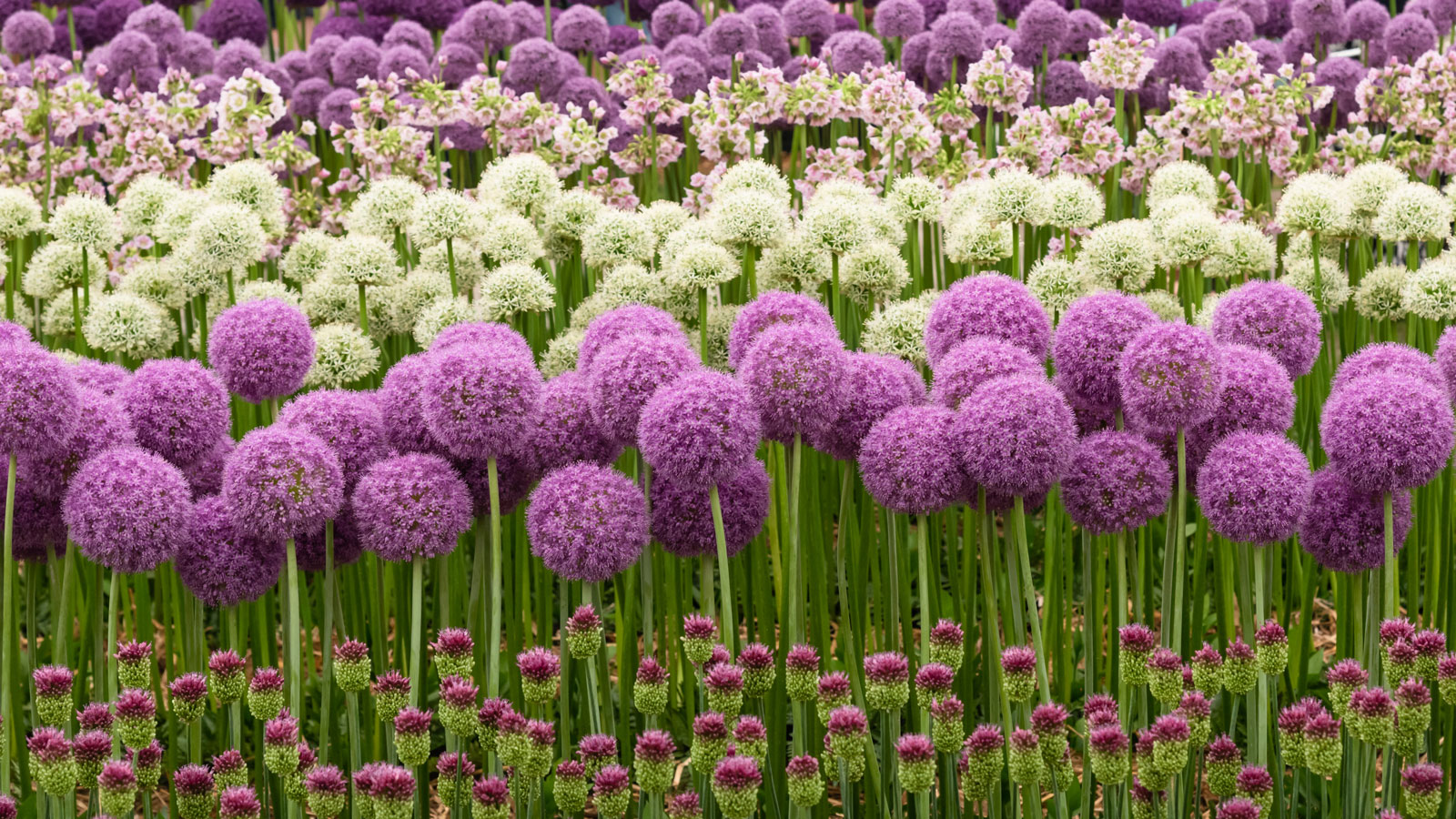
Ornamental Allium is grown from a true bulb or bulbous perennial and is valued for purple, violet, pink, white, yellow flowers in late spring to summer. It generally prefers full sun. Look for spherical umbels on tall leafless-looking stems when identifying the plant in bloom.
Best use: architectural borders, pollinator gardens. Ornamental alliums are related to onions, but do not assume every ornamental selection is intended for eating. Planting depth, dormancy, winter protection, and lifting requirements vary with the storage organ and local climate, so treat the botanical group rather than the word “bulb” as the care guide.
5. Crocus
Scientific name: Crocus spp.
Crocus is grown from a corm and is valued for purple, blue-violet, white, yellow, striped flowers in late winter to spring; some fall. It generally prefers full sun to light shade. Look for goblet-shaped blooms arising close to the ground when identifying the plant in bloom.
Best use: lawns, rock gardens, early color. Crocus is a corm, not a true bulb; autumn crocus belongs to a different genus and can be highly toxic. Planting depth, dormancy, winter protection, and lifting requirements vary with the storage organ and local climate, so treat the botanical group rather than the word “bulb” as the care guide.
6. Snowdrop
Scientific name: Galanthus spp.
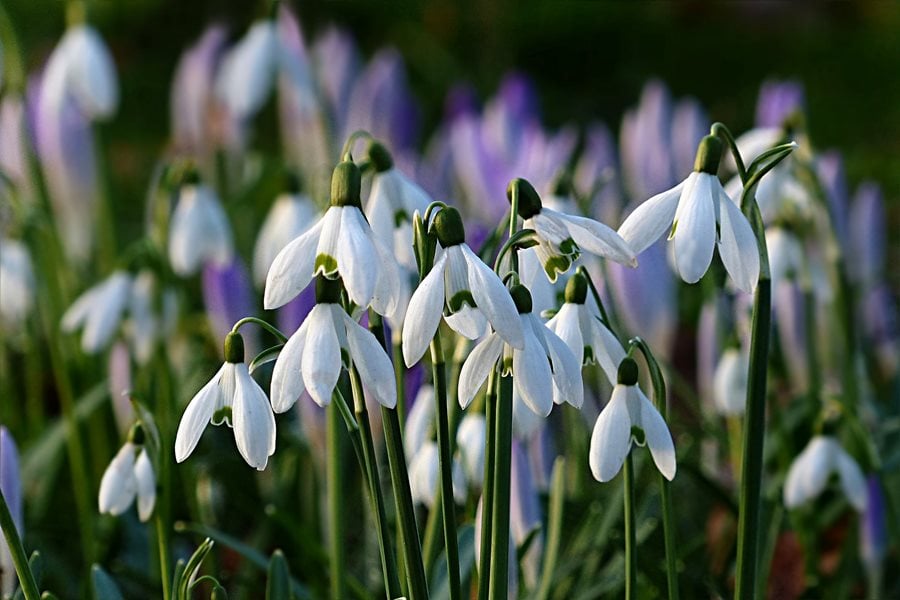
Snowdrop is grown from a true bulb and is valued for white with green markings flowers in late winter to early spring. It generally prefers part shade to sun. Look for nodding white flowers with three larger outer segments when identifying the plant in bloom.
Best use: woodland edges, naturalizing. Best sourced from reputable nurseries rather than wild collection. Planting depth, dormancy, winter protection, and lifting requirements vary with the storage organ and local climate, so treat the botanical group rather than the word “bulb” as the care guide.
7. Grape Hyacinth
Scientific name: Muscari spp.
Grape Hyacinth is grown from a true bulb and is valued for blue, violet, white flowers in spring. It generally prefers sun to light shade. Look for dense clusters of small urn-shaped flowers like bunches of grapes when identifying the plant in bloom.
Best use: edging, naturalizing, containers. Can spread by offsets and seed in favorable sites. Planting depth, dormancy, winter protection, and lifting requirements vary with the storage organ and local climate, so treat the botanical group rather than the word “bulb” as the care guide.
8. Fritillary
Scientific name: Fritillaria spp.

Fritillary is grown from a true bulb and is valued for purple, burgundy, orange, yellow, checkerboard flowers in spring. It generally prefers sun to light shade. Look for pendant bells, often checkered or crowned depending on species when identifying the plant in bloom.
Best use: specialty borders, meadow-style planting. Some species have strong odor and specific drainage needs. Planting depth, dormancy, winter protection, and lifting requirements vary with the storage organ and local climate, so treat the botanical group rather than the word “bulb” as the care guide.
9. True Lily
Scientific name: Lilium spp.
True Lily is grown from a true bulb and is valued for white, yellow, orange, pink, red, bicolors flowers in summer. It generally prefers sun with cool root zone. Look for six large tepals, prominent stamens, leaves along upright stems when identifying the plant in bloom.
Best use: cutting gardens, borders. True lilies are extremely dangerous to cats if ingested or even if pollen is groomed from fur. Planting depth, dormancy, winter protection, and lifting requirements vary with the storage organ and local climate, so treat the botanical group rather than the word “bulb” as the care guide.
10. Hippeastrum
Scientific name: Hippeastrum hybrids
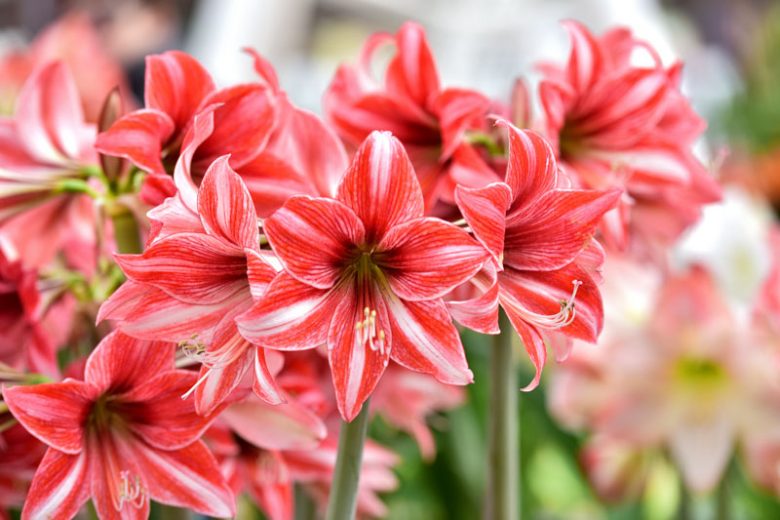
Hippeastrum is grown from a true bulb and is valued for red, white, pink, salmon, green, striped flowers in winter to spring indoors; seasonal outdoors. It generally prefers bright light. Look for large trumpet-shaped flowers on thick hollow scapes when identifying the plant in bloom.
Best use: indoor forcing, warm-climate containers. Commonly sold as “amaryllis”; true Amaryllis is a different genus. Planting depth, dormancy, winter protection, and lifting requirements vary with the storage organ and local climate, so treat the botanical group rather than the word “bulb” as the care guide.
11. Scilla
Scientific name: Scilla spp.
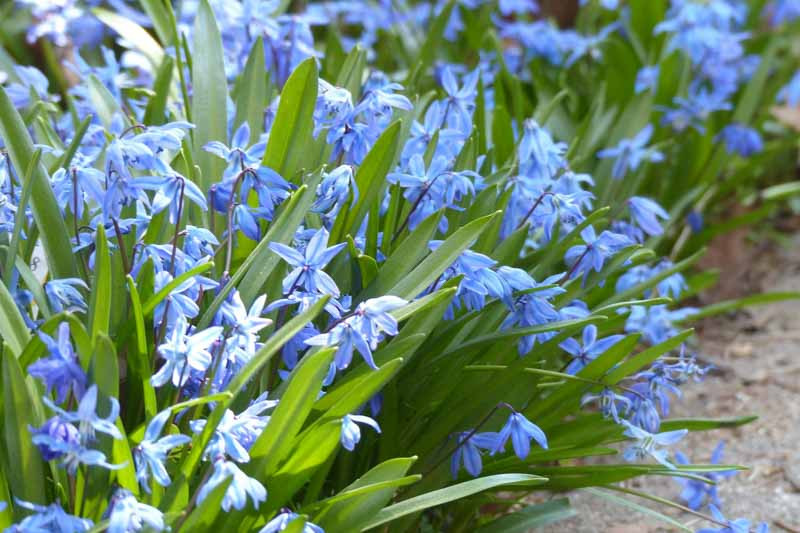
Scilla is grown from a true bulb and is valued for blue, blue-violet, white flowers in early spring. It generally prefers sun to part shade. Look for small starry blue flowers on short racemes when identifying the plant in bloom.
Best use: woodland naturalizing, lawns. Taxonomy has shifted for some species once placed in Scilla. Planting depth, dormancy, winter protection, and lifting requirements vary with the storage organ and local climate, so treat the botanical group rather than the word “bulb” as the care guide.
12. Glory-of-the-Snow
Scientific name: Scilla forbesii
Glory-of-the-Snow is grown from a true bulb and is valued for blue with white centers, pink, white flowers in early spring. It generally prefers sun to part shade. Look for small star-shaped blooms with bright pale centers when identifying the plant in bloom.
Best use: naturalizing, rock gardens. Often sold under the older genus name Chionodoxa. Planting depth, dormancy, winter protection, and lifting requirements vary with the storage organ and local climate, so treat the botanical group rather than the word “bulb” as the care guide.
13. Summer Snowflake
Scientific name: Leucojum aestivum
:max_bytes(150000):strip_icc()/GettyImages-577614512-2000-fbebaf09158245eab84f6fcf8aebf7a2.jpg)
Summer Snowflake is grown from a true bulb and is valued for white with green tips flowers in spring to early summer. It generally prefers sun to part shade. Look for nodding white bell-shaped flowers with green spots at tepal tips when identifying the plant in bloom.
Best use: moist borders, naturalizing. Tolerates moister soil than many spring bulbs. Planting depth, dormancy, winter protection, and lifting requirements vary with the storage organ and local climate, so treat the botanical group rather than the word “bulb” as the care guide.
14. Winter Aconite
Scientific name: Eranthis hyemalis
Winter Aconite is grown from a tuber and is valued for bright yellow flowers in late winter. It generally prefers sun to part shade. Look for yellow cup-like flowers above a green collar of bracts when identifying the plant in bloom.
Best use: woodland edges, under deciduous trees. Plant parts are not food; site away from children who might sample garden plants. Planting depth, dormancy, winter protection, and lifting requirements vary with the storage organ and local climate, so treat the botanical group rather than the word “bulb” as the care guide.
15. Cyclamen
Scientific name: Cyclamen spp.
Cyclamen is grown from a tuber and is valued for pink, magenta, white, red flowers in fall, winter, or spring depending on species. It generally prefers part shade. Look for reflexed petals above patterned heart-shaped leaves when identifying the plant in bloom.
Best use: woodland gardens, containers. Hardiness varies greatly among species; florist cyclamen is not the same as hardy garden species. Planting depth, dormancy, winter protection, and lifting requirements vary with the storage organ and local climate, so treat the botanical group rather than the word “bulb” as the care guide.
16. Gladiolus
Scientific name: Gladiolus hybrids
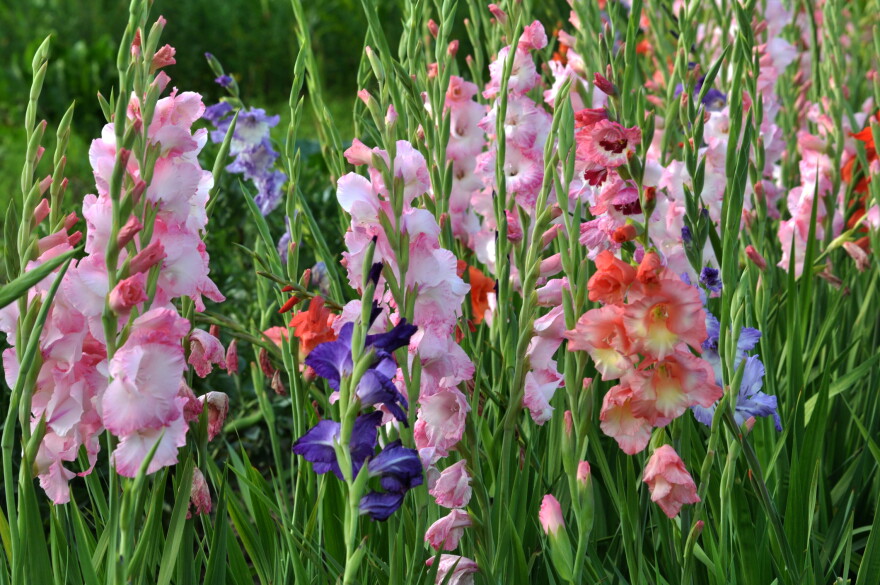
Gladiolus is grown from a corm and is valued for wide color range flowers in summer. It generally prefers full sun. Look for tall spikes with one-sided succession of funnel-shaped flowers when identifying the plant in bloom.
Best use: cut flowers, vertical border accents. Often lifted for winter storage in cold climates. Planting depth, dormancy, winter protection, and lifting requirements vary with the storage organ and local climate, so treat the botanical group rather than the word “bulb” as the care guide.
17. Freesia
Scientific name: Freesia hybrids
Freesia is grown from a corm and is valued for white, yellow, orange, pink, purple, red flowers in spring or cool-season under protection. It generally prefers sun in mild conditions. Look for one-sided arching stems of funnel-shaped strongly scented flowers when identifying the plant in bloom.
Best use: fragrant cut flowers, containers. Usually grown as a tender bulb-like crop in colder regions. Planting depth, dormancy, winter protection, and lifting requirements vary with the storage organ and local climate, so treat the botanical group rather than the word “bulb” as the care guide.
18. Crocosmia
Scientific name: Crocosmia × crocosmiiflora and hybrids
Crocosmia is grown from a corm and is valued for orange, red, yellow flowers in summer. It generally prefers full sun. Look for arching sprays of narrow funnel-shaped flowers above swordlike leaves when identifying the plant in bloom.
Best use: hot-color borders, cut flowers. Some crocosmia selections can spread strongly; invasive status varies by region. Planting depth, dormancy, winter protection, and lifting requirements vary with the storage organ and local climate, so treat the botanical group rather than the word “bulb” as the care guide.
19. Ranunculus
Scientific name: Ranunculus asiaticus
Ranunculus is grown from a tuberous root/claw and is valued for white, yellow, orange, pink, red, purple flowers in spring to early summer. It generally prefers full sun. Look for many thin petals in tight, rose-like layers when identifying the plant in bloom.
Best use: cut flowers, containers. The dry planting structures are tuberous roots, not true bulbs. Planting depth, dormancy, winter protection, and lifting requirements vary with the storage organ and local climate, so treat the botanical group rather than the word “bulb” as the care guide.
20. Poppy Anemone
Scientific name: Anemone coronaria
Poppy Anemone is grown from a tuber and is valued for red, blue-violet, pink, white flowers in spring. It generally prefers full sun. Look for single or double poppy-like flowers with dark centers when identifying the plant in bloom.
Best use: cut flowers, spring beds. The knobby planting piece is a tuber; plant parts are not treated as edible flowers. Planting depth, dormancy, winter protection, and lifting requirements vary with the storage organ and local climate, so treat the botanical group rather than the word “bulb” as the care guide.
21. Dahlia
Scientific name: Dahlia hybrids
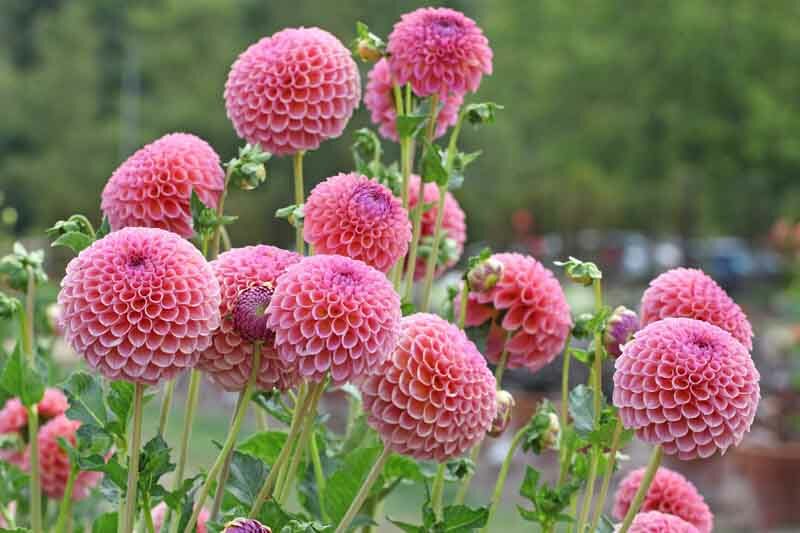
Dahlia is grown from a tuberous-rooted perennial and is valued for nearly every color except true blue flowers in summer to frost. It generally prefers full sun. Look for forms range from single to ball, cactus, decorative, and peony when identifying the plant in bloom.
Best use: cutting gardens, borders. Tubers are usually lifted and stored where winters freeze deeply. Planting depth, dormancy, winter protection, and lifting requirements vary with the storage organ and local climate, so treat the botanical group rather than the word “bulb” as the care guide.
22. Canna
Scientific name: Canna hybrids
Canna is grown from a rhizome and is valued for red, orange, yellow, pink flowers in summer to frost. It generally prefers full sun. Look for bold paddle-shaped foliage and asymmetric flower clusters when identifying the plant in bloom.
Best use: tropical-style borders, large containers. A rhizomatous perennial commonly grouped with summer bulbs in catalogs. Planting depth, dormancy, winter protection, and lifting requirements vary with the storage organ and local climate, so treat the botanical group rather than the word “bulb” as the care guide.
23. Calla Lily
Scientific name: Zantedeschia hybrids
Calla Lily is grown from a rhizome and is valued for white, yellow, pink, burgundy, near-black flowers in late spring to summer. It generally prefers sun to part shade. Look for a colored spathe wraps around a central spadix when identifying the plant in bloom.
Best use: cut flowers, containers. Contains calcium oxalate crystals and can irritate mouth tissues if chewed. Planting depth, dormancy, winter protection, and lifting requirements vary with the storage organ and local climate, so treat the botanical group rather than the word “bulb” as the care guide.
24. Agapanthus
Scientific name: Agapanthus spp. and hybrids
Agapanthus is grown from a rhizomatous/fleshy-rooted perennial and is valued for blue, violet, white flowers in summer. It generally prefers full sun. Look for rounded umbels of funnel-shaped flowers on tall leafless scapes when identifying the plant in bloom.
Best use: containers, borders, cut flowers. Hardiness varies by species and cultivar. Planting depth, dormancy, winter protection, and lifting requirements vary with the storage organ and local climate, so treat the botanical group rather than the word “bulb” as the care guide.
25. Tuberose
Scientific name: Agave amica
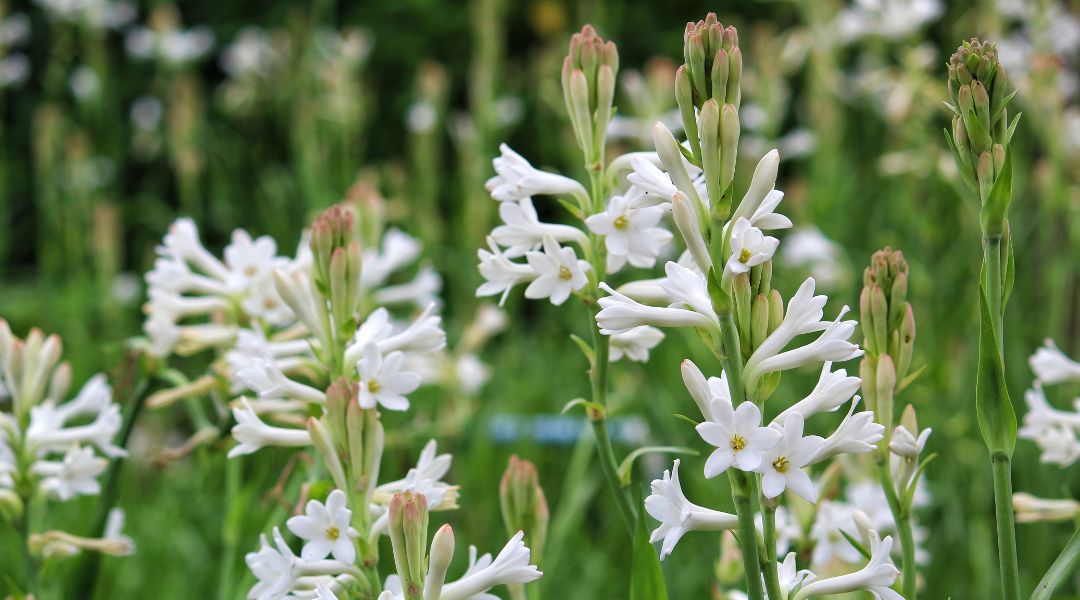
Tuberose is grown from a tuberous rhizome and is valued for white flowers in late summer to fall. It generally prefers full sun. Look for tall spikes of waxy white intensely fragrant tubular flowers when identifying the plant in bloom.
Best use: fragrance gardens, cut flowers. Often sold under the older name Polianthes tuberosa. Planting depth, dormancy, winter protection, and lifting requirements vary with the storage organ and local climate, so treat the botanical group rather than the word “bulb” as the care guide.
True Bulbs, Corms, Tubers, and Rhizomes Explained
A true bulb contains a compressed stem plate surrounded by fleshy storage scales or leaf bases; tulips and daffodils are familiar examples. A corm is a solid swollen stem, as in crocus and gladiolus. Tubers and tuberous roots store energy in enlarged underground tissues, while rhizomes are horizontal stems. These distinctions matter for propagation, storage, and disease management even though catalogs group them together.
How to Identify Bulb Flowers
Use flower structure and foliage first, not the underground organ alone. Daffodils have a central corona, tulips have cup-shaped six-part blooms, true lilies carry six tepals and prominent stamens, alliums form umbels, and gladiolus produces tall one-sided spikes. When the plant is dormant, the storage organ can confirm identification: layered bulbs, solid corms, claw-like ranunculus roots, or knobby dahlia tuberous roots.
How to Choose and Plant Bulb Flowers
Match planting season to the plant’s natural cycle and your climate. Many hardy spring bulbs are planted in fall, while tender summer “bulbs” are commonly planted after frost danger passes. Drainage is critical for most dormant storage organs. Planting depth varies by species, so follow cultivar-specific guidance rather than one universal rule. After flowering, allow foliage of hardy bulbs to remain until it yellows naturally so the storage organ can replenish energy.
Best Bulb Flowers by Climate and Season
Cold-winter climates are ideal for many tulips, daffodils, crocuses, and hyacinths. Warm-winter regions may require pre-chilling for some bulbs or may favor warm-climate geophytes such as cannas and agapanthus. Bloom dates shift with winter chill, spring temperature, elevation, and hemisphere, so a Northern Hemisphere planting calendar should not be applied globally.
Safety and Toxicity Notes
Bulb gardens contain several plants that should never be treated as food. Daffodil and hyacinth bulbs can cause poisoning if eaten, calla lilies contain irritating calcium oxalate crystals, and true lilies are a major emergency risk for cats. Crocus identification also matters because “autumn crocus” in Colchicum is not a true crocus and is highly toxic. Keep labels during dormancy so underground parts are not confused with edible onions.
Common Mistakes When Choosing or Identifying Types of bulb flowers
- Calling every underground storage organ a true bulb.
- Cutting spring-bulb foliage off while it is still green.
- Planting moisture-sensitive bulbs in heavy waterlogged soil.
- Assuming all tulips perennialize equally well in every climate.
- Confusing true lilies with daylilies or other plants called lily.
- Leaving toxic bulbs where pets or children may dig and chew them.
Fun Facts About Types of bulb flowers
- Tulips, daffodils, and lilies are true bulbs.
- Crocus and gladiolus grow from corms.
- Dahlias store energy in tuberous roots.
- Cannas spread from rhizomes.
- Many spring bulbs form flower buds inside the storage organ before they emerge.
- Some bulbs need a period of winter chill to flower well.
- Bulb foliage is important for rebuilding stored carbohydrates after bloom.
- Several bulb plants naturalize by offsets or seed.
- Catalog “summer bulbs” include multiple botanical storage-organ types.
- True lily pollen can be dangerous to cats as well as chewed plant material.
Final Thoughts on Types of bulb flowers
The most useful way to compare types of bulb flowers is to combine bloom season with the correct storage-organ type. That helps you know when to plant, whether winter chilling is needed, how to store tender plants, and which safety precautions matter.
Frequently Asked Questions
1. What are bulb flowers?
In everyday gardening, ‘bulb flowers‘ includes true bulbs plus other underground storage organs such as corms, tubers, tuberous roots, and rhizomes. Botanically, those structures are different.
2. What is a true bulb?
A true bulb has a shortened stem surrounded by fleshy storage scales or leaf bases. Tulips, daffodils, hyacinths, onions, and true lilies are familiar examples.
3. What is a corm?
A corm is a solid swollen underground stem. Crocus and gladiolus are commonly grown cormous ornamentals.
4. What is a tuber?
A tuber is an enlarged storage structure with buds capable of producing new shoots. Gardeners often include tuberous plants in the broad bulb-flower category.
5. What is a rhizome?
A rhizome is a usually horizontal stem that grows at or below the soil surface. Some plants sold alongside bulbs grow from rhizomes.
6. Which bulb flowers bloom in spring?
Tulips, daffodils, hyacinths, crocuses, snowdrops, grape hyacinths, scillas, and many fritillaries are classic spring bloomers.
7. Which bulb flowers bloom in summer?
Gladiolus, lilies, dahlias, cannas, callas, crocosmia, agapanthus, tuberose, and some alliums provide summer color depending on climate.
8. When should spring bulbs be planted?
Most hardy spring-flowering bulbs are planted in fall so they can establish before winter and receive the cold period many require.
9. When should summer bulbs be planted?
Tender summer bulbs, corms, tubers, and rhizomes are generally planted after frost danger has passed and the soil has warmed.
10. Do all bulbs need a cold winter?
No. Tulips and many spring bulbs benefit from winter chilling, while tender plants such as cannas, callas, and tuberose prefer warm conditions.
11. Can bulbs grow in containers?
Yes. Many bulbs perform well in pots with excellent drainage. Container hardiness can be lower than in-ground hardiness because roots and bulbs are more exposed to cold.
12. Do bulbs come back every year?
Some naturalize reliably, some return but decline, and others are treated as annuals outside ideal climates. Species, cultivar, drainage, climate, and post-bloom care all matter.
13. Should bulb foliage be cut after flowering?
Do not remove healthy foliage immediately. Leaves replenish the underground storage organ; wait until they yellow naturally unless the plant’s specific care differs.
14. Do bulbs need full sun?
Many do, but not all. Snowdrops, cyclamen, and some woodland bulbs tolerate part shade, while tulips, alliums, gladiolus, and dahlias generally flower best with more sun.
15. What soil is best for bulbs?
Good drainage is critical for most bulbous plants because prolonged waterlogging encourages rot. Soil fertility and pH preferences vary by species.
16. How deep should bulbs be planted?
Depth depends on species and bulb size. Follow the plant’s label rather than applying one universal formula, especially for corms, tubers, and rhizomes.
17. Which bulb flowers are fragrant?
Hyacinths, many true lilies, freesia, tuberose, some daffodils, and certain tulips can be fragrant.
18. Which bulbs are good cut flowers?
Tulips, daffodils, lilies, gladiolus, ranunculus, anemones, dahlias, callas, freesias, and alliums can all be useful for cutting.
19. Which bulbs are good for pollinators?
Open alliums, crocuses, scillas, and other accessible spring or summer flowers can provide nectar or pollen when insects are active.
20. Are daffodils deer-resistant?
Daffodils contain toxic alkaloids and are often avoided by deer and rodents, but no plant is completely browse-proof under all conditions.
21. Are tulips edible?
Do not treat ornamental tulip bulbs or flowers as food. Tulips can cause irritation and gastrointestinal effects, and ornamental bulbs may be chemically treated.
22. Are true lilies safe for cats?
No. True lilies in Lilium and daylilies in Hemerocallis are extremely dangerous to cats and should not be brought into homes where cats can access them.
23. Why do bulbs rot?
Common causes include poorly drained soil, planting damaged material, excessive irrigation, and storing bulbs too warm or wet for the species.
24. Why do bulbs produce leaves but no flowers?
Possible causes include insufficient chilling, too much shade, cutting foliage too early, overcrowding, immature offsets, or climate mismatch.
25. What does naturalizing mean for bulbs?
Naturalizing means bulbs persist and multiply over time, creating larger colonies with limited replanting.
26. Which bulbs naturalize well?
Daffodils, crocuses, grape hyacinths, scillas, snowdrops, and some species tulips can naturalize where climate and drainage suit them.
27. Should tender bulbs be lifted in winter?
In cold climates, tender corms, tubers, and rhizomes such as gladiolus, dahlias, and cannas are often lifted and stored frost-free.
28. Can I force bulbs indoors?
Yes. Hyacinths, daffodils, tulips, crocuses, and amaryllis-type bulbs are commonly forced, but chilling and timing requirements differ.
29. What are the easiest bulb flowers for beginners?
Daffodils, crocuses, grape hyacinths, alliums, and hardy lilies are dependable in many suitable climates when planted in well-drained sites.
30. How do I choose bulb flowers for year-round interest?
Combine early spring bulbs, late spring tulips and alliums, summer lilies and gladiolus, and tender late-season plants, adjusting choices to local winter and summer conditions.
SEO Title
Types of Bulb Flowers: 25 Essential Blooms
Meta Description
Compare 25 types of bulb flowers, including true bulbs, corms, tubers, and rhizomes, with bloom seasons, colors, planting uses, and safety notes.
Suggested URL Slug
types-of-bulb-flower