

The best types of hanging flowers do more than bloom: they trail, arch, or spill naturally over a container without hiding every plant beside them. This guide covers 25 popular flowering choices for outdoor baskets, balcony planters, and indoor hanging pots. The list mixes distinct species with clearly labeled horticultural groups because many familiar basket plants—petunias and begonias, for example—are sold mainly as hybrids or named cultivars rather than as wild species.
Most outdoor basket flowers are grown as annuals in the United States even when they are technically tender perennials. Bloom time, winter survival, and watering frequency vary with climate, exposure, and container size. USDA Hardiness Zones apply primarily to the United States, while planting seasons are reversed between the Northern and Southern Hemispheres.
Which Flowers Are Best for Hanging Baskets?
For sunny baskets, trailing petunias, calibrachoa, verbena, fan flower, moss rose, and ivy-leaf pelargoniums are dependable choices. Fuchsia, wishbone flower, bacopa, and many begonias perform better with morning sun or bright shade. Indoors, lipstick plant, goldfish plant, wax plant, and string of hearts provide cascading stems and distinctive flowers. The right choice depends on light, summer heat, wind, available moisture, and whether children or pets can reach the basket.
Types of Hanging Flowers at a Glance
| Flower | Scientific name or group | Best light | Main colors | Typical use |
|---|---|---|---|---|
| Trailing petunia | Petunia hybrids | Full sun | Nearly every color | Outdoor baskets |
| Calibrachoa | Calibrachoa hybrids | Full sun | Yellow, pink, red, purple, white | Outdoor baskets |
| Trailing verbena | Verbena hybrids | Full sun | Purple, pink, red, white | Hot, sunny sites |
| Trailing lobelia | Lobelia erinus | Sun to part shade | Blue, violet, white, pink | Cool-season edging |
| Bacopa | Chaenostoma cordatum | Sun to part shade | White, lavender, pink | Soft trailing filler |
| Fuchsia | Fuchsia hybrids | Part shade | Pink, red, purple, white | Shaded baskets |
| Tuberous begonia | Begonia Tuberhybrida Group | Part shade | Yellow, orange, red, pink, white | Large shaded displays |
| Ivy-leaf pelargonium | Pelargonium peltatum | Full sun | Red, pink, lavender, white | Sunny, airy baskets |
| Wishbone flower | Torenia fournieri | Part shade | Blue, purple, pink, white | Warm shaded sites |
| Fan flower | Scaevola aemula | Full sun | Blue, violet, pink, white | Heat-tolerant baskets |
| Sweet alyssum | Lobularia maritima | Sun to part shade | White, pink, purple | Fragrant basket edge |
| Nasturtium | Tropaeolum majus | Full sun | Yellow, orange, red | Edible ornamental baskets |
| Moss rose | Portulaca grandiflora | Full sun | Mixed bright colors | Dry, hot sites |
| Trailing lantana | Lantana montevidensis | Full sun | Lavender, purple, white | Heat and pollinator gardens |
| Black-eyed Susan vine | Thunbergia alata | Sun to part shade | Orange, yellow, white, pink | Trailing or climbing baskets |
| Lotus vine | Lotus berthelotii | Full sun | Scarlet to orange | Silvery foliage contrast |
| Licorice plant | Helichrysum petiolare | Sun to part shade | Cream flower heads | Foliage-led combinations |
| Trailing snapdragon | Asarina procumbens | Sun to part shade | Pale yellow | Walls and baskets |
| Blue rock bindweed | Convolvulus sabatius | Full sun | Lavender-blue | Mediterranean-style baskets |
| Million hearts | Dischidia ruscifolia | Bright indirect light | Small white flowers | Indoor tropical baskets |
| Lipstick plant | Aeschynanthus radicans | Bright indirect light | Red, orange-red | Indoor hanging pots |
| Goldfish plant | Nematanthus gregarius | Bright indirect light | Orange, red | Indoor hanging pots |
| Wax plant | Hoya carnosa | Bright indirect light | White to pink | Indoor hanging pots |
| String of hearts | Ceropegia woodii | Bright indirect light | Pinkish purple | Indoor succulent display |
| Tahitian bridal veil | Gibasis pellucida | Bright filtered light | White | Indoor or warm-climate baskets |
1. Trailing Petunia
Scientific name: Petunia hybrids
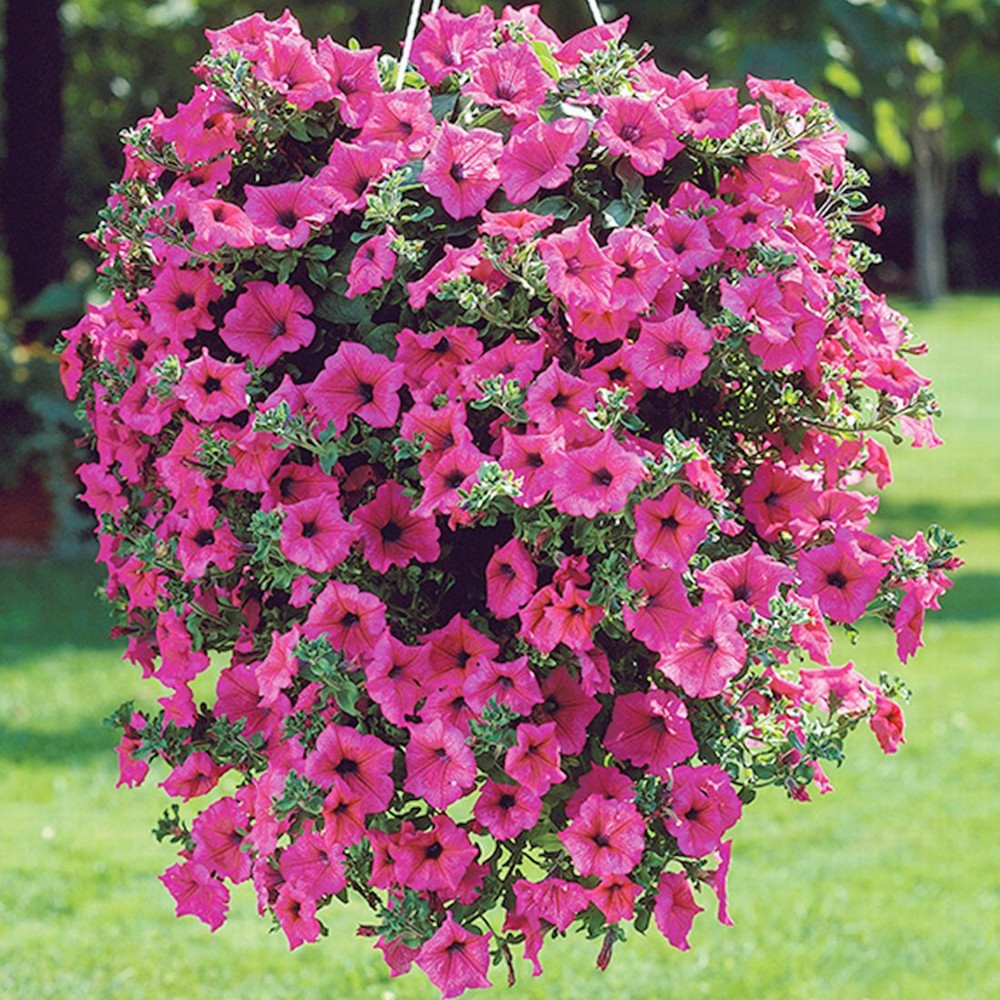
Trailing petunias form broad mounds and long flowering stems that can cover a basket in funnel-shaped blooms. Modern garden petunias are complex hybrids, so series such as Wave or Surfinia should be treated as cultivar groups, not separate species. Colors range from white and yellow to pink, red, blue-purple, near-black, bicolored, striped, and veined forms.
Give them at least six hours of direct sun, a freely draining potting mix, and consistent water. Large, vigorous baskets may need fertilizer regularly according to the product label. Some cultivars shed old flowers cleanly; others look better when spent blooms and seed capsules are removed. Petunias tolerate heat but stop looking full if repeatedly allowed to wilt.
2. Calibrachoa
Scientific name: Calibrachoa hybrids
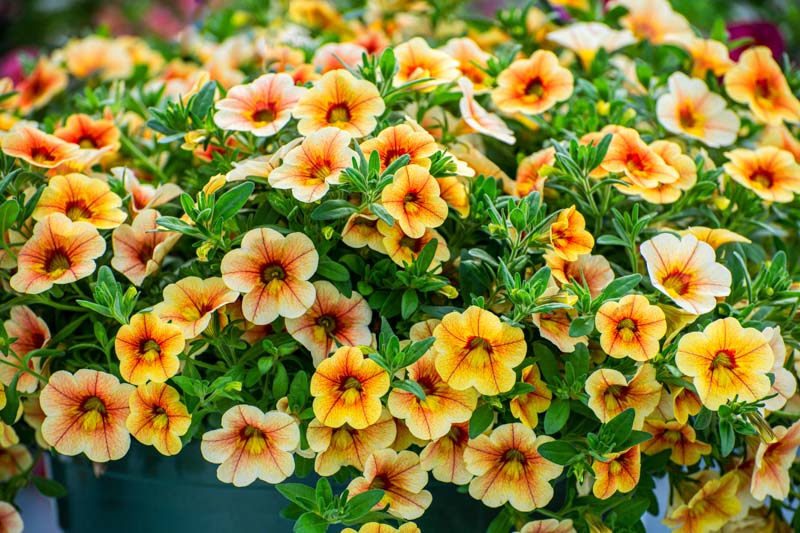
Often sold as million bells, calibrachoa resembles a miniature trailing petunia but belongs to a separate genus. Its small trumpet flowers appear densely along fine stems, creating a smooth cascade rather than a few oversized focal blooms. Many cultivars have contrasting throats, star patterns, or bicolored petals.
Calibrachoa performs best in full sun and an airy, slightly acidic container mix. Poor drainage and persistently high pH can cause root trouble or yellow foliage. Water when the surface begins to dry, but do not leave the basket standing in water. Most modern selections flower without routine deadheading and partner well with taller, sun-loving container plants.
3. Trailing Verbena
Scientific name: Verbena hybrids
Trailing verbenas carry rounded clusters of small, five-lobed flowers on spreading stems. They supply saturated purple, red, pink, coral, or white color while leaving enough visual space for contrasting plants. Cultivars sold for containers are often hybrids, and their vigor and resistance to powdery mildew differ.
Place verbena in full sun with excellent drainage. Allowing the mix to dry slightly between thorough waterings is safer than keeping roots constantly wet, although a hanging basket should not remain wilted for long. Light trimming can renew a stretched plant. Nectar-rich blooms attract various adult pollinators, but local insect use varies.
4. Trailing Lobelia
Scientific name: Lobelia erinus
Trailing lobelia produces fine stems covered with small two-lipped flowers, most famously in clear blue or violet. White, pink, and bicolored cultivars are also available. The plant’s airy texture makes it especially useful around the rim of a mixed basket.
It blooms most freely in mild weather with sun or partial shade and steady moisture. In regions with hot nights, flowering may decline during midsummer even with good care; plants can revive as temperatures moderate. Do not assume this ornamental lobelia is edible. Keep plant material away from curious children and pets and seek professional advice after a suspected ingestion.
5. Bacopa
Scientific name: Chaenostoma cordatum (often sold under the older name Sutera cordata)
Bacopa creates a neat curtain of slender stems, small leaves, and five-lobed white, lavender, blue, or pink flowers. It is a valuable soft-textured “spiller” around larger begonias, pelargoniums, or fuchsias. The common garden name should not be confused with the unrelated medicinal herb commonly called brahmi.
Grow it in sun where summers are moderate or partial shade in hotter regions. Consistent moisture is important: a severe dry spell can interrupt flowering, and buds may take time to return. A gentle trim encourages branching when stems become sparse. Good drainage remains essential even though the plant dislikes drought.
6. Fuchsia
Scientific name: Fuchsia hybrids
Fuchsias are classic hanging flowers because their pendent blooms are easiest to appreciate at eye level. Flared sepals surround a contrasting corolla, often in combinations of pink, red, purple, and white. Trailing cultivars produce a fountain-shaped habit, while upright cultivars are better used in the center of a container.
Most basket fuchsias prefer morning sun, bright shade, cool roots, and protection from drying wind. Maintain even moisture without waterlogging the mix. Extreme summer heat may cause bud drop. Hummingbirds commonly investigate the tubular flowers in parts of the Americas. Hardiness varies substantially by species and cultivar, so many are overwintered indoors or replaced annually in cold climates.
7. Trailing Tuberous Begonia
Scientific name: Begonia Tuberhybrida Group
Trailing tuberous begonias bear large single or double flowers that hang from fleshy stems. Their yellow, apricot, orange, pink, red, and white blooms make dramatic shaded displays. This is a horticultural group of complex parentage rather than one botanical species.
Provide bright shade or gentle morning sun, a loose mix, and shelter from strong wind. Water the medium rather than repeatedly soaking leaves and flowers, and let excess water drain. Tubers can be stored dormant where winters are cold. Begonias contain calcium oxalates; ingestion can irritate pets, with underground parts generally more concentrated, so position accessible baskets cautiously.
8. Ivy-Leaf Pelargonium
Scientific name: Pelargonium peltatum and its hybrids
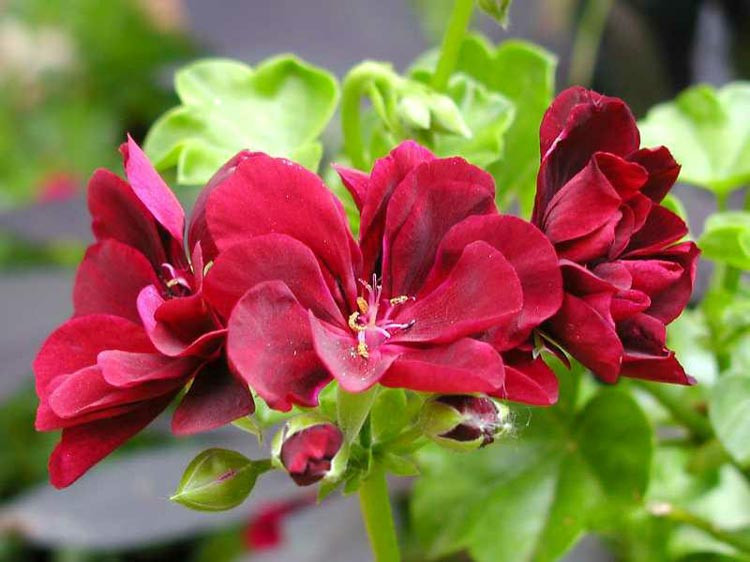
Frequently called a trailing geranium, this plant has glossy, ivy-shaped leaves and rounded clusters of red, pink, lavender, or white flowers. Botanically it belongs to Pelargonium, not the hardy geranium genus. Its somewhat succulent stems and leaves handle brief dry periods better than moisture-loving basket plants.
Use full sun in moderate climates and some afternoon protection where heat is intense. Air movement and sharp drainage reduce disease problems; remove damaged foliage and avoid keeping the crown wet. Pelargoniums can cause gastrointestinal or skin-related signs in pets, so they are not the best choice for a low basket within chewing range.
9. Wishbone Flower
Scientific name: Torenia fournieri
Wishbone flower has small trumpet-shaped blooms with a pale throat and two stamens that form the feature behind its common name. Blue-violet and white are traditional, while modern selections include pink, burgundy, and yellow markings. Trailing cultivars spill attractively without overwhelming nearby plants.
Torenia is useful for warm locations that receive bright shade or morning sun. It appreciates fertile, evenly moist potting mix but must still drain freely. Pinching young plants promotes branching. The flowers can attract small pollinators and hummingbirds, depending on region, while the compact growth works well on sheltered porches.
10. Fan Flower
Scientific name: Scaevola aemula

Fan flower is easy to recognize because each blossom appears to have its petals arranged on only one side, like a tiny folding fan. Blue-violet is common, but pink and white cultivars are also sold. The sturdy trailing stems hold up well in sunny patio containers.
Give fan flower abundant sun and fast drainage. Once established, it tolerates short dry spells better than lobelia or bacopa, yet container plants still need regular checks in hot weather. It generally flowers without deadheading. Avoid heavy, constantly wet soil, which undermines the plant’s heat-tolerant character.
11. Sweet Alyssum
Scientific name: Lobularia maritima

Sweet alyssum forms low, spreading cushions of tiny four-petaled flowers with a honey-like fragrance. White remains the most vigorous familiar color, while pink and purple selections provide softer contrast. Stems spill only modestly, making this plant ideal for masking a basket rim rather than forming a long curtain.
It grows in sun to partial shade and performs especially well during cool spring or fall weather. Heat-tolerant hybrid series last longer into summer but still need reliable moisture. Small flowers provide resources for various beneficial insects. In favorable climates, sweet alyssum may self-sow, so check its behavior and local recommendations before allowing seed to spread.
12. Nasturtium
Scientific name: Tropaeolum majus
Trailing nasturtiums combine round, shieldlike leaves with spurred flowers in yellow, orange, cream, and red. Long-vined selections are better hanging plants than compact bedding forms. Both flowers and leaves of correctly identified, untreated garden nasturtiums are commonly used as peppery garnishes.
Grow nasturtiums in full sun or light afternoon shade. A moderately lean, well-drained mix usually produces a better balance of foliage and flowers than excessive nitrogen. Never eat plants from florists, roadsides, or gardens treated with unsuitable pesticides, and confirm the identity before tasting. Aphids may gather on tender shoots and should be managed without contaminating edible portions.
13. Moss Rose
Scientific name: Portulaca grandiflora
:strip_icc()/static.onecms.io__wp-content__uploads__sites__37__2020__02__portulaca-pink-fuchsia-ff8892fa-2000-9daabff139474f0984a462e3bb8d9207.jpg)
Moss rose has fleshy, needlelike leaves and silky, rose-shaped flowers in vivid yellow, orange, pink, red, white, and bicolors. Its spreading stems drape over shallow baskets, while the succulent foliage stores water. Flowers open most fully in strong light; cloudy conditions can keep some selections partly closed.
This is one of the best options for a hot, exposed basket that drains rapidly. Use full sun, a gritty mix, and less frequent watering than petunias or fuchsias. Constantly wet roots are a greater danger than brief dryness. Although related purslane species are eaten, do not infer edibility from the genus; grow moss rose as an ornamental unless an authoritative source verifies the exact plant and intended use.
14. Trailing Lantana
Scientific name: Lantana montevidensis
Trailing lantana bears many small tubular flowers in rounded clusters, usually lavender-purple or white. The wiry stems spread outward and down, and aromatic leaves have a rough texture. It excels in hot, bright sites where more delicate hanging flowers collapse.
Provide full sun, excellent drainage, and room for airflow. Established plants tolerate intermittent dryness, but regular watering supports better container bloom. Lantanas can be invasive in some warm regions, and taxonomic confusion with hybrids is common; consult local invasive-plant guidance before planting outdoors. The plant can be toxic if eaten, particularly to grazing animals, so it is unsuitable where children, pets, or livestock may sample it.
15. Black-Eyed Susan Vine
Scientific name: Thunbergia alata
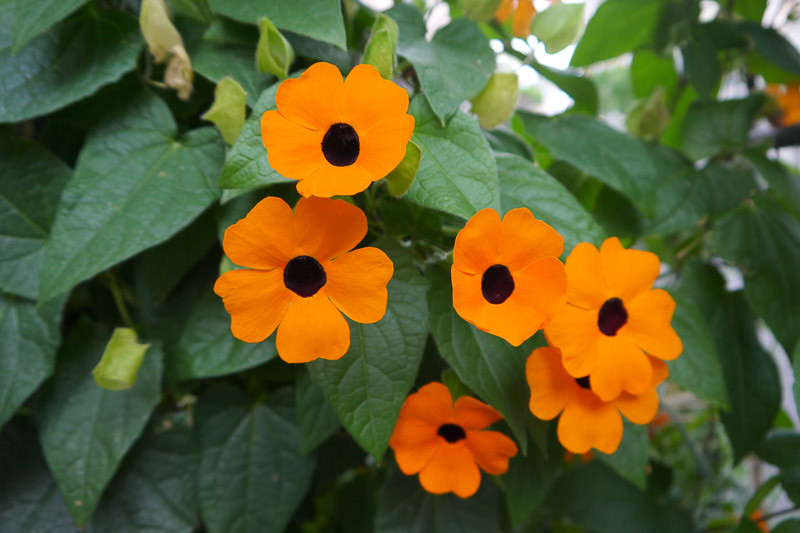
This fast-growing tropical vine produces flat, five-lobed flowers, often orange or yellow with a dark central eye. Cream, white, salmon, and rosy cultivars broaden the palette. Stems may trail from a basket or wind upward through a small support, so the display can be trained in either direction.
Use sun to partial shade, warmth, regular water, and a fertile but well-drained mix. Pinch early growth for more branches. It is usually grown as an annual in colder climates but can persist and spread where frost is absent. Because it has naturalized beyond gardens in some regions, check local guidance and prevent unwanted seed dispersal.
16. Lotus Vine
Scientific name: Lotus berthelotii
Lotus vine, also called parrot’s beak, combines narrow silver-gray leaflets with unusual curved scarlet or orange flowers. The blooms resemble little beaks or flames along trailing stems. Even when flowering pauses, the cool-colored foliage creates a strong contrast with dark leaves and purple flowers.
It prefers bright sun, excellent drainage, and moderate temperatures. Excessive heat can reduce flowering, while frost damages this tender perennial. Do not overwater or bury the crown. The species is rare in its native Canary Islands, so buy nursery-propagated plants rather than material of uncertain wild origin.
17. Licorice Plant
Scientific name: Helichrysum petiolare
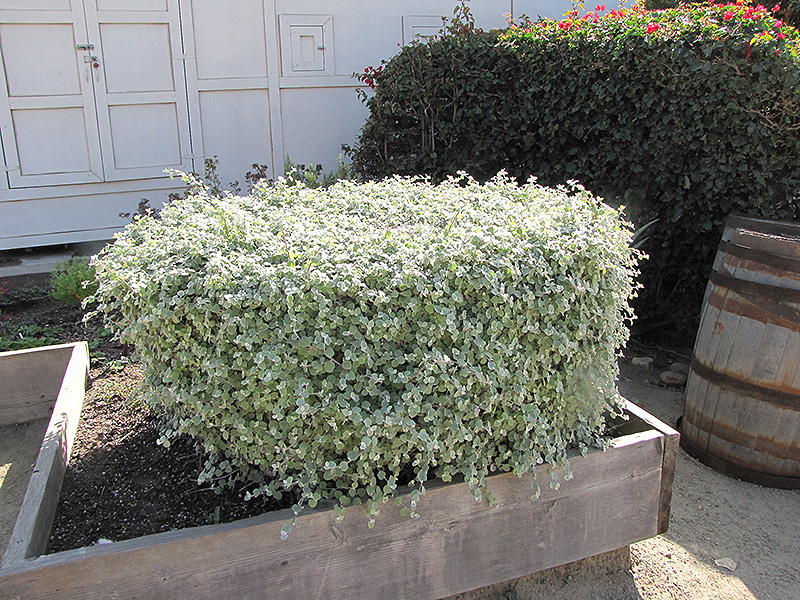
Licorice plant is grown mainly for softly felted, silver or chartreuse foliage, although it can produce small cream flower heads. Its vigorous stems spill well below a basket and make brightly colored petunias or pelargoniums appear more intense. It is not the culinary licorice plant, Glycyrrhiza glabra.
Grow it in sun to partial shade with quick drainage. It tolerates wind and brief dryness once established, but oversized stems may need trimming to keep companions visible. Helichrysum petiolare has become invasive in some mild coastal climates; use it in managed containers, prevent escape, and follow regional recommendations.
18. Trailing Snapdragon
Scientific name: Asarina procumbens
Trailing snapdragon forms slender, creeping stems with soft leaves and pale yellow snapdragon-like flowers marked with deeper veins. Despite the common name, it is not the familiar bedding snapdragon, Antirrhinum majus. It can drape from baskets, soften retaining walls, or scramble among rocks.
Offer sun to partial shade, moderate moisture, and good drainage. It is more cold-tolerant than many tropical basket flowers, although survival depends on winter wetness and local conditions. Its relaxed, fine-scale appearance suits naturalistic containers better than tightly formal displays.
19. Blue Rock Bindweed
Scientific name: Convolvulus sabatius
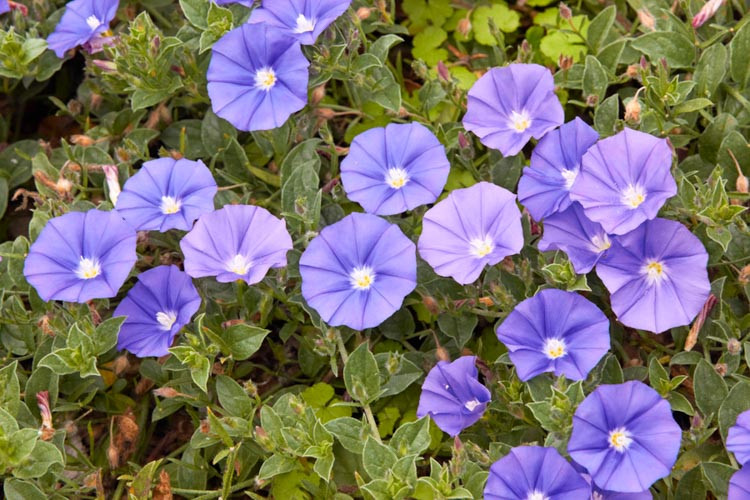
Blue rock bindweed, also called ground morning glory, produces open funnel-shaped lavender-blue flowers above gray-green leaves. It is a low, trailing perennial in mild climates and a seasonal container plant where winters are cold. Unlike aggressive field bindweed, it is grown intentionally as an ornamental, but regional behavior should still be checked.
Full sun brings the heaviest bloom. Use a freely draining mix and allow the surface to dry slightly between waterings once established. Trim lightly if growth becomes bare at the center. Its calm blue color pairs particularly well with silver foliage, white bacopa, and apricot flowers.
20. Million Hearts
Scientific name: Dischidia ruscifolia
Million hearts is an epiphytic tropical vine with dense strings of small heart-shaped leaves and tiny white flowers. It is grown primarily for foliage, but the flowers add close-up interest. The roots are adapted to airy conditions rather than heavy garden soil.
Indoors, provide bright filtered light, warmth, humidity with airflow, and a coarse epiphytic medium. Water thoroughly and let excess water escape; reduce watering when growth slows. Avoid large pots that stay wet for long periods. Its restrained scale fits a small hanging pot where the leaves can be viewed closely.
21. Lipstick Plant
Scientific name: Aeschynanthus radicans
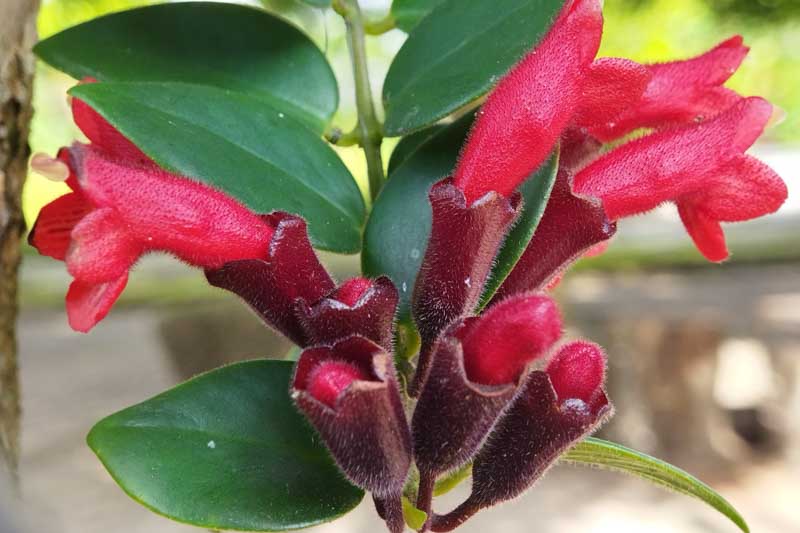
Lipstick plant develops arching to trailing stems with glossy leaves and tubular red flowers emerging from darker calyces. The lipstick-like profile explains its common name. Cultivars vary in leaf shape, flower color, and stem length, but all make their strongest impact in an elevated pot.
Give it bright indirect light, a porous mix, warmth, and moderate humidity. Water when the upper layer of medium begins to dry rather than following a rigid calendar. Insufficient light, cold drafts, or persistently wet roots can reduce flowering. Gentle pruning after bloom encourages a denser framework.
22. Goldfish Plant
Scientific name: Nematanthus gregarius
The inflated orange or red flowers of goldfish plant resemble tiny fish among glossy green leaves. Its semi-succulent trailing stems create a compact indoor basket and may flower repeatedly under favorable conditions. Plants sold under this common name can include other Nematanthus species or hybrids, so labels matter.
Place it in bright indirect light with a loose, well-aerated medium. Water thoroughly, then allow the upper portion of the mix to dry slightly. Warmth and moderate humidity support growth, but soggy roots cause trouble. Pinching stem tips helps young plants branch and carry more flowering points.
23. Wax Plant
Scientific name: Hoya carnosa
Wax plant has thick evergreen leaves and rounded umbels of star-shaped, waxy flowers, commonly pale pink and white with darker centers. The long stems can trail or climb, and established flower spurs may rebloom. Avoid cutting those persistent spurs when tidying the plant.
Bright indirect light and an airy, fast-draining medium encourage healthy growth. Let part of the mix dry before watering again, and never allow a decorative outer pot to trap water. Flowers may produce scented nectar droplets. Hoyas often bloom best after their roots have filled, but not been strangled by, a reasonably sized container.
24. String of Hearts
Scientific name: Ceropegia woodii
String of hearts creates long, threadlike stems lined with marbled, heart-shaped leaves. Its tubular pinkish flowers have dark joined tips and are botanically more unusual than the foliage. Small aerial tubers may form at nodes on older vines.
Provide bright indirect light or gentle morning sun and a very free-draining succulent mix. Water thoroughly only after much of the mix has dried; reduce water in cool, low-light periods. Sparse gaps between leaves often indicate insufficient light. Trim and propagate healthy stem sections to make the top of the pot fuller.
25. Tahitian Bridal Veil
Scientific name: Gibasis pellucida
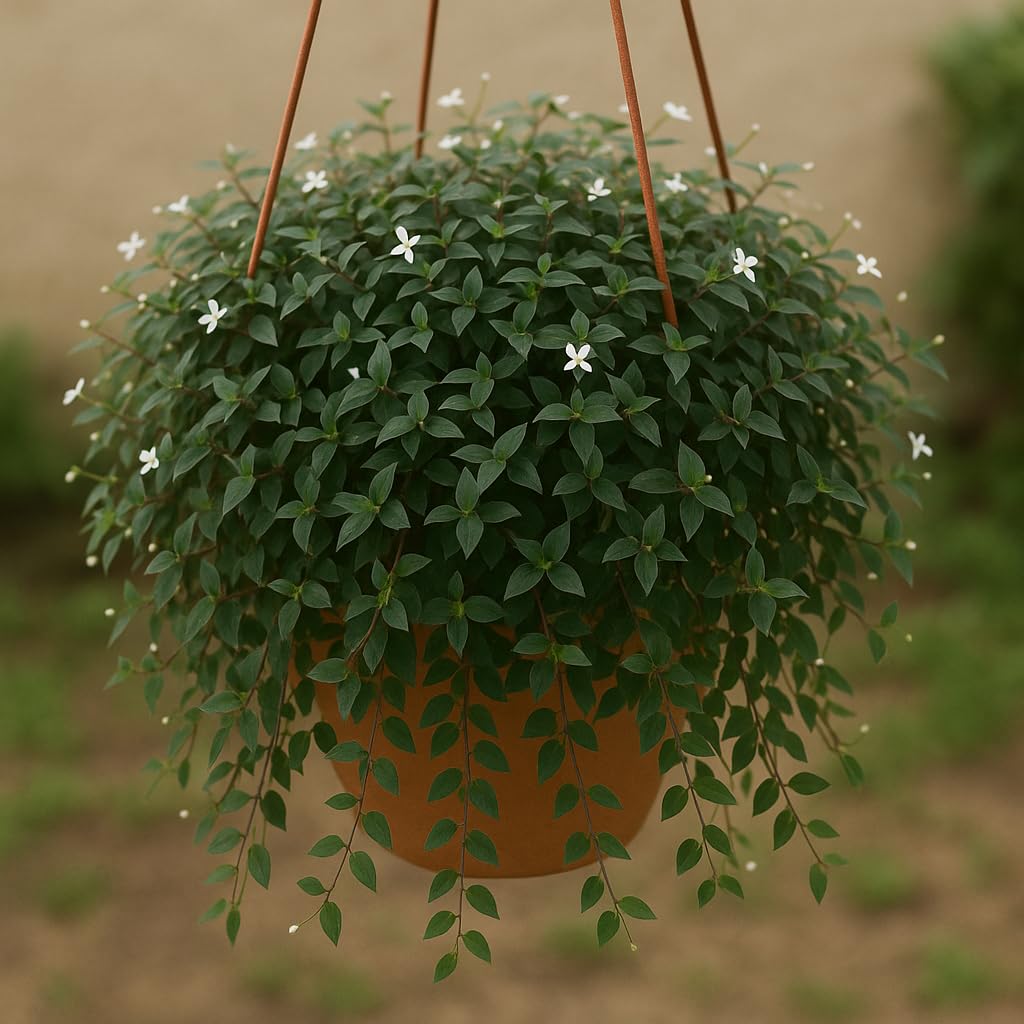
Tahitian bridal veil forms a cloud of wiry stems, small green leaves with purplish undersides, and tiny white three-petaled flowers. It is sometimes mislabeled as Gibasis geniculata, making the scientific name on a nursery tag worth checking. The light, airy growth looks especially effective against a dark wall.
Grow it in bright filtered light with warmth, moderate humidity, and evenly moist but draining mix. Harsh midday sun may scorch foliage, while deep shade makes growth thin. Stems root readily at nodes and can escape cultivation in suitable warm climates, so dispose of trimmings responsibly and consult local guidance before outdoor use.
How Are Hanging Flowers Classified?
“Hanging flower” is a gardening description, not a botanical category. A hanging basket may contain a true trailing plant, a vine allowed to fall, a mounding plant whose outer stems arch downward, or an epiphyte adapted to growing above the ground. The list therefore includes species, hybrids, and horticultural groups, each labeled accordingly. A trade series or named cultivar is not counted as a separate species.
How to Identify Different Types of Hanging Flowers
Begin with growth habit and leaf arrangement before relying on color. Petunia and calibrachoa both have trumpet flowers, but calibrachoa usually has much smaller leaves and blooms. Fan flower has a distinctive one-sided corolla; nasturtium has round peltate leaves and a floral spur; fuchsia flowers hang individually with strongly reflexed sepals. Indoors, wax plant bears starry flowers in round umbels, while lipstick plant has long tubular blooms.
Photographs of flowers alone may not establish an identification. Check stems, leaves, flower backs, seed structures, nursery labels, and overall scale. Cultivars can alter color, size, and habit, and several unrelated plants share common names.
How to Choose and Grow Hanging Flowers
- Match the light: reserve exposed sunny baskets for petunia, calibrachoa, verbena, fan flower, or moss rose; use fuchsia, torenia, and tuberous begonia in gentler light.
- Use drainage holes: a hanging container must release excess water. Add a quality potting mix rather than dense garden soil.
- Group compatible plants: do not combine drought-loving moss rose with moisture-loving lobelia in the same small basket.
- Check water often: wind and heat dry suspended containers quickly. Water thoroughly when the mix reaches the appropriate dryness for the plant.
- Feed proportionately: flowering annuals in small containers use nutrients rapidly. Follow a fertilizer label and avoid assuming more is better.
- Secure the support: calculate the basket’s saturated weight, use rated hardware, and keep it clear of doors, walkways, and electrical fixtures.
Best Choices by Climate and Season
Cool spring and fall conditions favor lobelia, sweet alyssum, and many fuchsias. Petunia, calibrachoa, fan flower, lantana, moss rose, and trailing pelargonium tolerate warmer sunny conditions, although every basket can suffer when roots overheat. Tropical houseplants should remain above their minimum safe temperatures and return indoors before cold weather. In frost-free areas, some tender plants become perennial or invasive; in cold regions, the same plants are seasonal annuals.
Pet, Child, and Ecological Safety
A high basket is not automatically inaccessible: fallen leaves, flowers, berries, and irrigation runoff can reach the ground. Begonias, pelargoniums, lantanas, and lobelias warrant particular caution around pets or children. Toxicity depends on species, plant part, dose, and animal, so confirm the exact botanical identity through a veterinarian or poison-control resource. After suspected ingestion, contact a veterinary or medical professional rather than waiting for symptoms.
Check invasive-plant lists for your state or region before growing lantana, licorice plant, black-eyed Susan vine, bridal veil, or any vigorous trailing ornamental outdoors. Do not release trimmings into natural areas. Choose locally native alternatives when ecological value is the primary goal, and avoid systemic insecticides on flowering plants visited by pollinators.
Common Mistakes When Choosing Hanging Flowers
- Choosing by flower color without checking whether the site is sunny or shaded.
- Combining plants with opposite moisture needs in one small container.
- Using a basket too small for a vigorous petunia, lantana, or vine.
- Assuming every trailing plant flowers heavily indoors.
- Letting a dry basket shrink away from its sides so water runs past the root ball.
- Ignoring the full wet weight of the container and the strength of its hook.
- Treating a common name, cultivar series, and botanical species as equivalent.
- Planting a potentially invasive ornamental without checking local guidance.
Fun Facts About Hanging Flowers
- Calibrachoa was once commonly grouped with petunias but is now recognized as a separate genus.
- The “wishbone” in torenia is formed by paired stamens inside the flower.
- Fuchsia flowers place their reproductive structures below the petals, where hovering pollinators can contact them.
- Nasturtium leaves are peltate, meaning the leaf stalk attaches near the center of the blade.
- Fan flower’s one-sided corolla gives the bloom its unmistakable half-circle shape.
- String of hearts can produce small tubers both underground and along its stems.
- Wax plants may rebloom from persistent flower spurs, so those short structures should not be removed casually.
- Lotus vine is native to the Canary Islands and is valued as much for silver foliage as for its beak-shaped flowers.
- Many “annual” basket flowers are actually tender perennials that cannot survive freezing winters.
- A freshly watered hanging basket can weigh far more than its dry weight, making rated supports essential.
Final Thoughts on Types of Hanging Flowers
The most useful way to compare types of hanging flowers is by light, moisture, temperature, and growth habit—not color alone. Choose petunia, calibrachoa, fan flower, or moss rose for abundant sun; fuchsia, torenia, or tuberous begonia for protected light; and lipstick plant, goldfish plant, hoya, or string of hearts for bright indoor positions. Confirm local invasive status and household safety, then combine only plants that share similar care needs.
Frequently Asked Questions
1. What are hanging flowers?
Hanging flowers are flowering plants displayed in suspended containers. They may trail naturally, arch over the rim, or climb before being allowed to cascade.
2. Which hanging flower blooms the most?
Trailing petunias and calibrachoa are among the heaviest bloomers in full sun when they receive adequate water, drainage, and nutrients. Performance varies by cultivar and climate.
3. Which hanging flowers are best for full sun?
Petunia, calibrachoa, trailing verbena, fan flower, moss rose, lantana, and ivy-leaf pelargonium are strong candidates for sunny sites.
4. Which hanging flowers grow in shade?
Fuchsia, wishbone flower, and many tuberous begonias prefer bright shade or morning sun. Deep shade usually reduces flowering even in shade-tolerant plants.
5. Are hanging basket flowers annuals or perennials?
They can be either. Many tropical perennials are sold and grown as annuals where freezing winters prevent outdoor survival.
6. How often should hanging flowers be watered?
Check them frequently rather than following a fixed schedule. Water when the medium reaches the dryness appropriate for the species, and soak until excess drains out.
7. Why do hanging baskets dry out so quickly?
Suspended containers are exposed to wind on several sides and hold limited soil. Sun, small pot volume, vigorous roots, and porous liners accelerate moisture loss.
8. Do hanging flowers need drainage holes?
Yes. Drainage holes prevent saturated roots and allow salts from fertilizer and tap water to wash through the mix.
9. Can I use garden soil in a hanging basket?
Garden soil is usually too dense and heavy. A quality container mix provides better air space, drainage, and manageable weight.
10. How many plants should go in one basket?
The number depends on mature vigor and basket diameter. A single vigorous petunia can fill a container that would need several smaller lobelia or alyssum plants.
11. What does “spiller” mean in container gardening?
A spiller is a plant placed near the rim so its stems trail down the container. It complements upright “thrillers” and mounding “fillers.”
12. Should hanging flowers be deadheaded?
Some benefit greatly, including older petunia and pelargonium cultivars. Many modern calibrachoa, fan flower, and self-cleaning petunia selections need little routine deadheading.
13. How can I revive a wilted hanging basket?
If the mix is dry, water slowly and thoroughly, repeating after several minutes if water initially runs around the root ball. Move the plant out of harsh sun while it recovers.
14. Why are my hanging flowers turning yellow?
Possible causes include saturated roots, drought, nutrient deficiency, unsuitable pH, cold, heat, or pests. Check root-zone moisture and drainage before adding fertilizer.
15. Why has my hanging basket stopped blooming?
Insufficient light, extreme heat, repeated wilting, excess nitrogen, or seed production can reduce bloom. The correct remedy depends on the plant and growing conditions.
16. Can hanging flowers survive winter?
Hardy survival depends on species, climate, and root protection. Roots in an exposed basket experience colder conditions than roots in the ground, so zone ratings need cautious interpretation.
17. Can I bring outdoor hanging baskets indoors?
Some tender plants can overwinter indoors, but inspect them for pests first and provide enough light. Outdoor petunias and calibrachoa are often easier to replace than maintain indoors.
18. What hanging flowers tolerate heat?
Fan flower, moss rose, trailing lantana, calibrachoa, and many modern petunias handle heat well when their root needs are met.
19. What hanging flowers tolerate wind?
Ivy-leaf pelargonium, fan flower, licorice plant, and smaller-flowered calibrachoa generally cope better than large, brittle, or heavy-flowered plants. Severe wind can damage any basket.
20. Are there fragrant hanging flowers?
Sweet alyssum has a honey-like fragrance, some petunias are scented, and mature wax plants may produce fragrant blooms. Scent intensity varies by cultivar and time of day.
21. Which hanging flowers attract hummingbirds?
Fuchsia is a classic choice, and hummingbirds may also visit tubular petunias, torenia, and other nectar-bearing flowers where the birds occur.
22. Which hanging flowers attract butterflies?
Verbena, lantana, sweet alyssum, and other accessible nectar flowers may attract adult butterflies. Local species, flower form, and pesticide use affect visitation.
23. Are any hanging flowers edible?
Correctly identified, pesticide-free nasturtium flowers and leaves are widely used in food. Never assume another basket plant is edible or consume florist- or nursery-treated flowers.
24. Are hanging flowers safe for cats and dogs?
Safety varies by species. Begonia, pelargonium, lantana, and lobelia require caution, while a plant should not be called safe simply because a toxicity report is absent.
25. Can I mix different flowers in one hanging basket?
Yes, if they need similar light, moisture, and soil conditions and have compatible vigor. Combining moss rose with moisture-loving fuchsia would make care difficult.
26. What size basket is best for flowers?
A larger basket holds moisture longer and supports more roots, but it becomes much heavier when wet. Match size to plant vigor and use hardware rated for the saturated load.
27. When should I plant a hanging basket?
Plant warm-season flowers after frost danger has passed and nights are suitable for the species. Timing varies by region and is reversed between hemispheres.
28. How do I make a hanging basket look fuller?
Start with healthy branching plants, space them for mature growth, pinch suitable species early, provide enough light, and rotate the basket if one side faces the sun.
29. Can indoor flowering plants grow in hanging pots?
Yes. Lipstick plant, goldfish plant, wax plant, string of hearts, and million hearts suit bright indoor hanging positions with species-appropriate drainage and watering.
30. What is the easiest hanging flower for beginners?
For a sunny outdoor site, a modern petunia or fan flower is forgiving; for hot, dry exposure, moss rose is simpler. Ease still depends on matching the plant to the site.