

The phrase types of red fish covers many unrelated freshwater and marine species that show red, crimson, scarlet, pink, copper, or orange-red coloration. This guide compares 40 real fish, from tiny aquarium tetras and reef fish to salmon, snapper, rockfish, and deep-sea species. Each profile highlights the scientific name, appearance, habitat, diet, size category, practical relevance, and important safety or conservation considerations.
What Are the Main Types of Red Fish?
Red fish are not one scientific family. The term is a visual description used for aquarium fish, reef species, sport fish, and seafood species whose bodies, fins, bellies, or breeding colors appear red. Common examples include cherry barbs, red rainbowfish, flame angelfish, red snapper, sockeye salmon, red drum, and several red rockfish.
Quick Comparison of 40 Red Fish
| Fish | Scientific Name | Group | Relative Size | Typical Habitat |
|---|---|---|---|---|
| Cherry Barb | Pethia titteya | freshwater barb | small | shaded forest streams |
| Red Phantom Tetra | Hyphessobrycon sweglesi | freshwater tetra | small | slow, plant-rich tributaries |
| Serpae Tetra | Hyphessobrycon eques | freshwater tetra | small | slow rivers, ponds, and floodplains |
| Flame Tetra | Hyphessobrycon flammeus | freshwater tetra | small | slow coastal streams |
| Ember Tetra | Hyphessobrycon amandae | freshwater tetra | tiny | soft, slow blackwater tributaries |
| Cardinal Tetra | Paracheirodon axelrodi | freshwater tetra | small | blackwater creeks |
| Bloodfin Tetra | Aphyocharax anisitsi | freshwater tetra | small | clear streams and river margins |
| Rosy Barb | Pethia conchonius | freshwater barb | small to medium | streams, lakes, and ponds |
| Denison Barb | Sahyadria denisonii | freshwater barb | medium | fast, oxygen-rich streams |
| Red Rainbowfish | Glossolepis incisus | freshwater rainbowfish | medium | vegetated lake margins |
| Red-Bellied Piranha | Pygocentrus nattereri | freshwater characin | medium | rivers, floodplains, and lakes |
| Redtail Black Shark | Epalzeorhynchos bicolor | freshwater cyprinid | medium | lowland rivers and floodplains |
| Rainbow Shark | Epalzeorhynchos frenatum | freshwater cyprinid | medium | rivers and floodplains |
| Red Devil Cichlid | Amphilophus labiatus | freshwater cichlid | large | rocky lakes |
| Jewel Cichlid | Hemichromis bimaculatus | freshwater cichlid | medium | rivers, swamps, and floodplains |
| Firemouth Cichlid | Thorichthys meeki | freshwater cichlid | medium | slow rivers and lagoons |
| Red Empress Cichlid | Protomelas taeniolatus | freshwater cichlid | medium | rocky shores |
| Flame Angelfish | Centropyge loricula | marine angelfish | small | coral and rocky reefs |
| Tomato Clownfish | Amphiprion frenatus | marine clownfish | small to medium | anemone-rich reefs |
| Maroon Clownfish | Premnas biaculeatus | marine clownfish | medium | lagoon and reef habitats |
| Firefish Goby | Nemateleotris magnifica | marine dartfish | small | reef slopes with rubble burrows |
| Flame Hawkfish | Neocirrhites armatus | marine hawkfish | small | branching coral reefs |
| Red Coris Wrasse | Coris gaimard | marine wrasse | large | sand-and-reef habitats |
| Red Lionfish | Pterois volitans | marine scorpionfish | large | reefs, ledges, and wrecks |
| Squirrelfish | Holocentrus adscensionis | marine squirrelfish | medium | reefs and rocky ledges |
| Pinecone Soldierfish | Myripristis murdjan | marine soldierfish | medium | caves and reef ledges |
| Red Snapper | Lutjanus campechanus | marine snapper | large | reefs, banks, and hard-bottom areas |
| Vermilion Snapper | Rhomboplites aurorubens | marine snapper | medium | offshore reefs and banks |
| Queen Snapper | Etelis oculatus | deepwater snapper | large | deep reefs and rocky slopes |
| Sockeye Salmon | Oncorhynchus nerka | anadromous salmon | large | ocean waters and cold spawning rivers |
| Red Drum | Sciaenops ocellatus | coastal drum | large | estuaries, bays, surf zones, and coastal waters |
| Orange Roughy | Hoplostethus atlanticus | deep-sea slimehead | medium | continental slopes and seamounts |
| Alfonsino | Beryx decadactylus | deepwater berycid | medium | seamounts and continental slopes |
| Red Mullet | Mullus barbatus | marine goatfish | small to medium | sandy and muddy seabeds |
| Red Gurnard | Chelidonichthys cuculus | marine gurnard | medium | sandy and gravel bottoms |
| Red Scorpionfish | Scorpaena scrofa | marine scorpionfish | medium | rocky reefs and seagrass edges |
| Red Porgy | Pagrus pagrus | marine seabream | medium to large | rocky reefs and offshore banks |
| Redbanded Rockfish | Sebastes babcocki | marine rockfish | large | deep rocky reefs |
| Canary Rockfish | Sebastes pinniger | marine rockfish | large | rocky reefs and continental shelf waters |
| Red Emperor | Lethrinus lentjan | marine emperor fish | large | reef flats, lagoons, and sandy reef margins |
1. Cherry Barb
Scientific name: Pethia titteya. Cherry Barb is a small freshwater barb associated with shaded forest streams in Sri Lanka. Its clearest identification feature is males develop a deep cherry-red body, especially when mature. That combination of color, body shape, habitat, and behavior is more reliable than color alone when comparing similar fish.
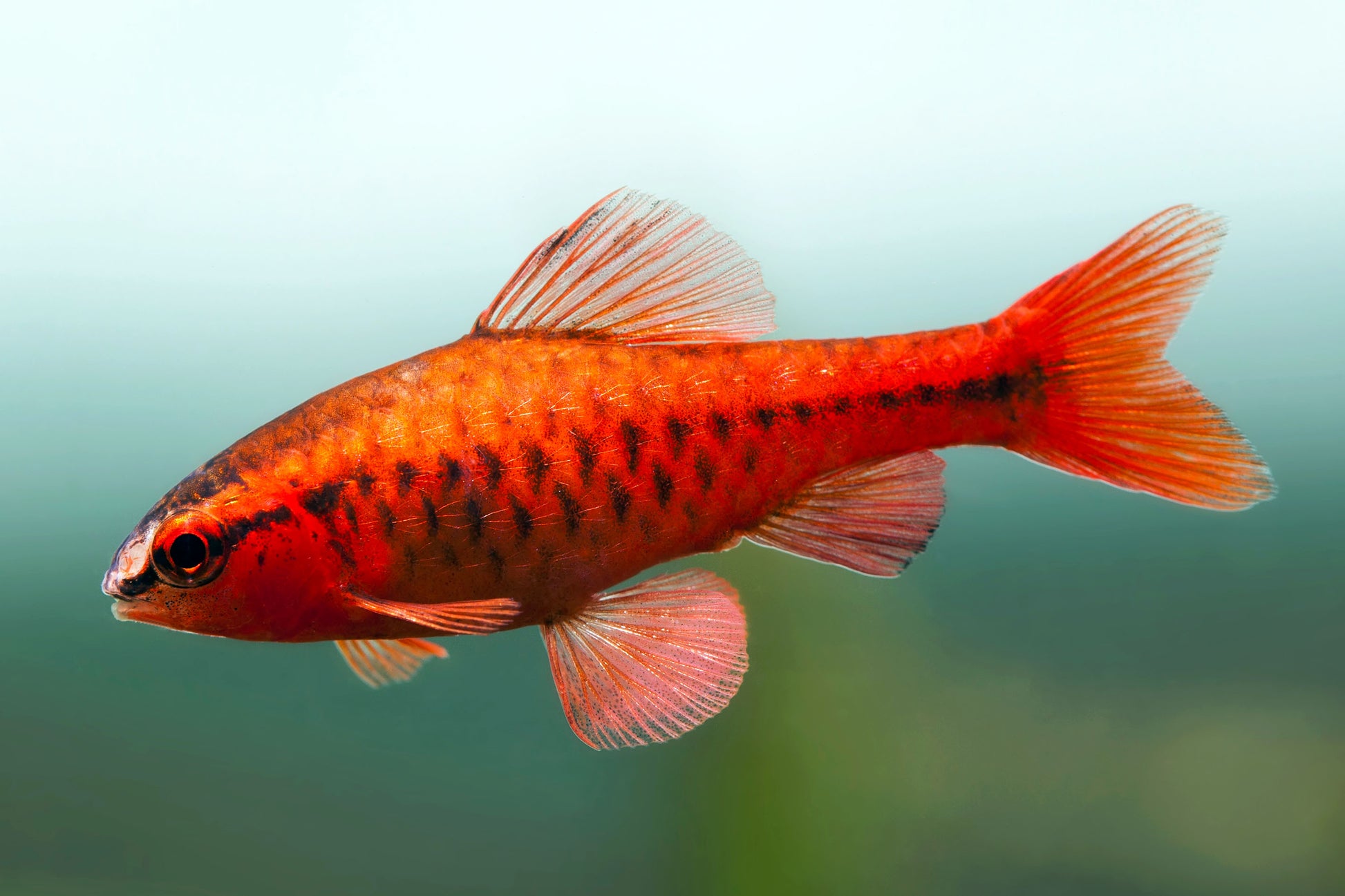
In the wild, it feeds mainly on small invertebrates, algae, and plant matter. For readers interested in fishing, wildlife observation, food fish, or aquariums, it matters because it is a peaceful schooling aquarium fish. Always check adult size, water conditions, legal harvest rules, and conservation guidance before collecting, keeping, or targeting this species.
2. Red Phantom Tetra
Scientific name: Hyphessobrycon sweglesi. Red Phantom Tetra is a small freshwater tetra associated with slow, plant-rich tributaries in Orinoco basin. Its clearest identification feature is a translucent red body with a dark shoulder patch. That combination of color, body shape, habitat, and behavior is more reliable than color alone when comparing similar fish.

In the wild, it feeds mainly on tiny crustaceans, insect larvae, and prepared foods. For readers interested in fishing, wildlife observation, food fish, or aquariums, it matters because it is best displayed in a calm planted community tank. Always check adult size, water conditions, legal harvest rules, and conservation guidance before collecting, keeping, or targeting this species.
3. Serpae Tetra
Scientific name: Hyphessobrycon eques. Serpae Tetra is a small freshwater tetra associated with slow rivers, ponds, and floodplains in South America. Its clearest identification feature is a copper-red body with black markings and dark-edged fins. That combination of color, body shape, habitat, and behavior is more reliable than color alone when comparing similar fish.

In the wild, it feeds mainly on insects, crustaceans, and plant material. For readers interested in fishing, wildlife observation, food fish, or aquariums, it matters because it is active schooling behavior but occasional fin-nipping. Always check adult size, water conditions, legal harvest rules, and conservation guidance before collecting, keeping, or targeting this species.
4. Flame Tetra
Scientific name: Hyphessobrycon flammeus. Flame Tetra is a small freshwater tetra associated with slow coastal streams in southeastern Brazil. Its clearest identification feature is a silver front half that grades into bright red toward the tail. That combination of color, body shape, habitat, and behavior is more reliable than color alone when comparing similar fish.
In the wild, it feeds mainly on small invertebrates and plant matter. For readers interested in fishing, wildlife observation, food fish, or aquariums, it matters because it is a compact choice for planted aquariums. Always check adult size, water conditions, legal harvest rules, and conservation guidance before collecting, keeping, or targeting this species.
5. Ember Tetra
Scientific name: Hyphessobrycon amandae. Ember Tetra is a tiny freshwater tetra associated with soft, slow blackwater tributaries in central Brazil. Its clearest identification feature is a warm orange-red body that glows against dark plants. That combination of color, body shape, habitat, and behavior is more reliable than color alone when comparing similar fish.

In the wild, it feeds mainly on microcrustaceans, larvae, and fine prepared foods. For readers interested in fishing, wildlife observation, food fish, or aquariums, it matters because it is ideal for peaceful nano communities. Always check adult size, water conditions, legal harvest rules, and conservation guidance before collecting, keeping, or targeting this species.
6. Cardinal Tetra
Scientific name: Paracheirodon axelrodi. Cardinal Tetra is a small freshwater tetra associated with blackwater creeks in upper Orinoco and Rio Negro basins. Its clearest identification feature is a vivid red stripe running along most of the lower body beneath an electric-blue line. That combination of color, body shape, habitat, and behavior is more reliable than color alone when comparing similar fish.
In the wild, it feeds mainly on zooplankton and tiny invertebrates. For readers interested in fishing, wildlife observation, food fish, or aquariums, it matters because it is a classic schooling fish for soft, warm water. Always check adult size, water conditions, legal harvest rules, and conservation guidance before collecting, keeping, or targeting this species.
7. Bloodfin Tetra
Scientific name: Aphyocharax anisitsi. Bloodfin Tetra is a small freshwater tetra associated with clear streams and river margins in Paraná basin. Its clearest identification feature is silvery scales contrasted by blood-red fins. That combination of color, body shape, habitat, and behavior is more reliable than color alone when comparing similar fish.
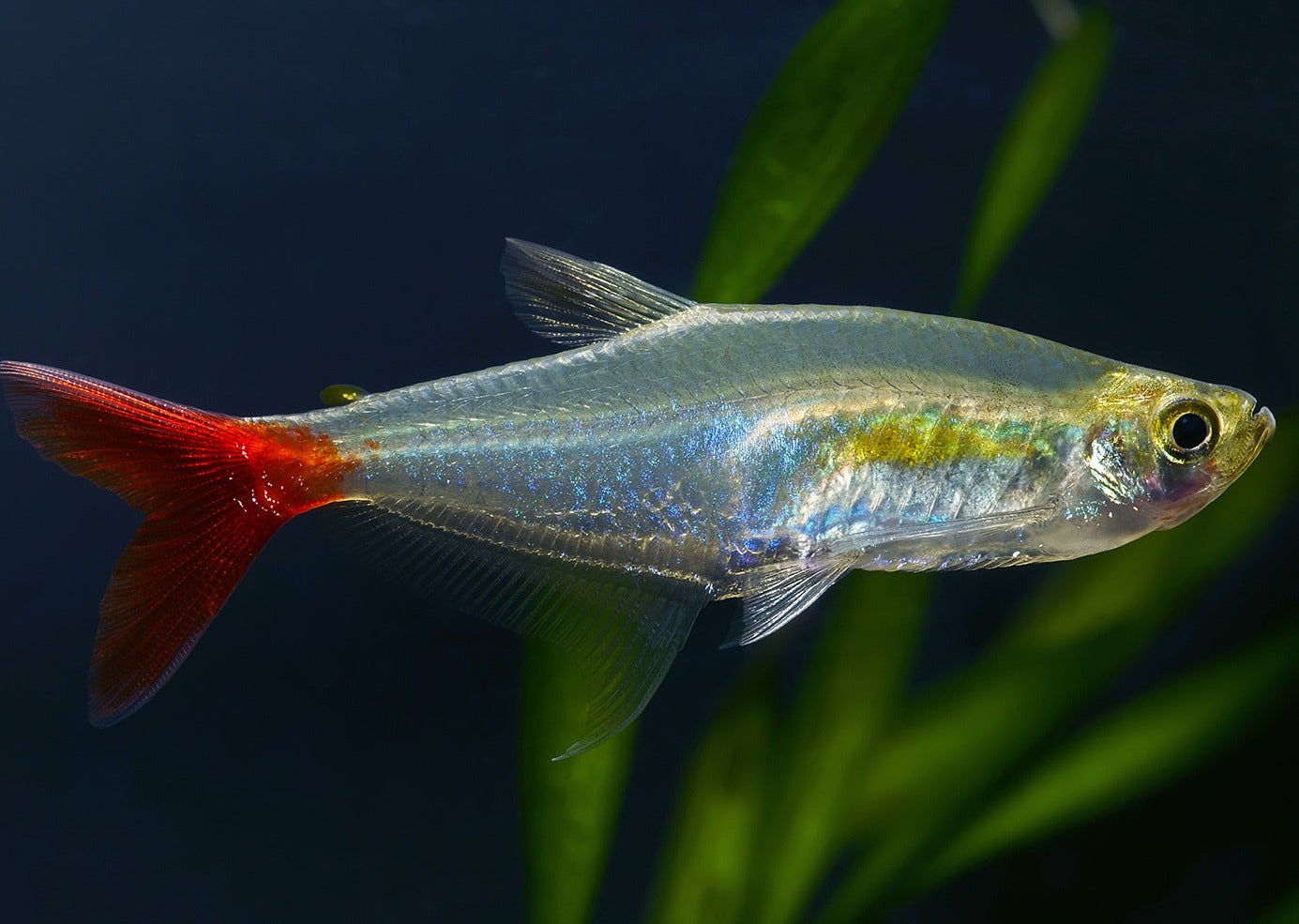
In the wild, it feeds mainly on insects, crustaceans, and prepared foods. For readers interested in fishing, wildlife observation, food fish, or aquariums, it matters because it is hardy and active in groups. Always check adult size, water conditions, legal harvest rules, and conservation guidance before collecting, keeping, or targeting this species.
8. Rosy Barb
Scientific name: Pethia conchonius. Rosy Barb is a small to medium freshwater barb associated with streams, lakes, and ponds in South Asia. Its clearest identification feature is breeding males become rosy red with dark fin accents. That combination of color, body shape, habitat, and behavior is more reliable than color alone when comparing similar fish.
In the wild, it feeds mainly on insects, algae, and plant matter. For readers interested in fishing, wildlife observation, food fish, or aquariums, it matters because it is adaptable but needs swimming room. Always check adult size, water conditions, legal harvest rules, and conservation guidance before collecting, keeping, or targeting this species.
9. Denison Barb
Scientific name: Sahyadria denisonii. Denison Barb is a medium freshwater barb associated with fast, oxygen-rich streams in Western Ghats of India. Its clearest identification feature is a bright red stripe extends from the snout through the front half of the body. That combination of color, body shape, habitat, and behavior is more reliable than color alone when comparing similar fish.
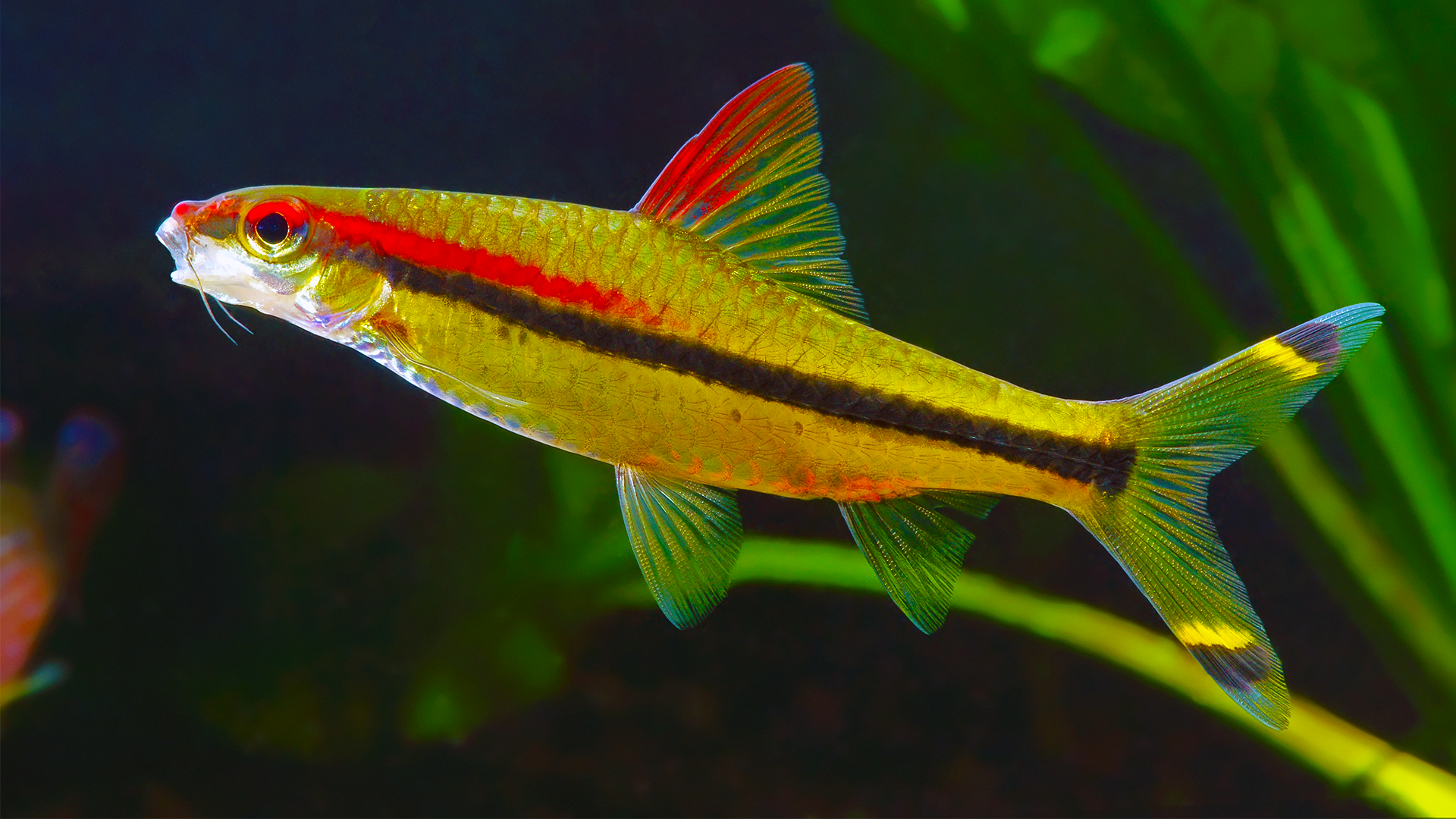
In the wild, it feeds mainly on insects, algae, and plant material. For readers interested in fishing, wildlife observation, food fish, or aquariums, it matters because it is a striking schooling species that needs strong filtration. Always check adult size, water conditions, legal harvest rules, and conservation guidance before collecting, keeping, or targeting this species.
10. Red Rainbowfish
Scientific name: Glossolepis incisus. Red Rainbowfish is a medium freshwater rainbowfish associated with vegetated lake margins in Lake Sentani, New Guinea. Its clearest identification feature is adult males can become almost entirely crimson red. That combination of color, body shape, habitat, and behavior is more reliable than color alone when comparing similar fish.
In the wild, it feeds mainly on insects, crustaceans, and plant matter. For readers interested in fishing, wildlife observation, food fish, or aquariums, it matters because it is best kept in spacious groups. Always check adult size, water conditions, legal harvest rules, and conservation guidance before collecting, keeping, or targeting this species.
11. Red-Bellied Piranha
Scientific name: Pygocentrus nattereri. Red-Bellied Piranha is a medium freshwater characin associated with rivers, floodplains, and lakes in South America. Its clearest identification feature is a silver body with a red-orange belly. That combination of color, body shape, habitat, and behavior is more reliable than color alone when comparing similar fish.
In the wild, it feeds mainly on fish, invertebrates, carrion, seeds, and fruit. For readers interested in fishing, wildlife observation, food fish, or aquariums, it matters because it is a powerful specialist species rather than a typical community fish. Always check adult size, water conditions, legal harvest rules, and conservation guidance before collecting, keeping, or targeting this species.
12. Redtail Black Shark
Scientific name: Epalzeorhynchos bicolor. Redtail Black Shark is a medium freshwater cyprinid associated with lowland rivers and floodplains in Thailand. Its clearest identification feature is a jet-black body with a sharply contrasting red tail. That combination of color, body shape, habitat, and behavior is more reliable than color alone when comparing similar fish.

In the wild, it feeds mainly on algae, plant matter, and small invertebrates. For readers interested in fishing, wildlife observation, food fish, or aquariums, it matters because it is territorial and best given caves and floor space. Always check adult size, water conditions, legal harvest rules, and conservation guidance before collecting, keeping, or targeting this species.
13. Rainbow Shark
Scientific name: Epalzeorhynchos frenatum. Rainbow Shark is a medium freshwater cyprinid associated with rivers and floodplains in mainland Southeast Asia. Its clearest identification feature is a dark body with red-orange fins. That combination of color, body shape, habitat, and behavior is more reliable than color alone when comparing similar fish.
In the wild, it feeds mainly on algae, biofilm, and small invertebrates. For readers interested in fishing, wildlife observation, food fish, or aquariums, it matters because it is territorial around the bottom of the aquarium. Always check adult size, water conditions, legal harvest rules, and conservation guidance before collecting, keeping, or targeting this species.
14. Red Devil Cichlid
Scientific name: Amphilophus labiatus. Red Devil Cichlid is a large freshwater cichlid associated with rocky lakes in Nicaragua. Its clearest identification feature is an orange-red body and heavy lips in many adults. That combination of color, body shape, habitat, and behavior is more reliable than color alone when comparing similar fish.
In the wild, it feeds mainly on invertebrates, fish, and plant material. For readers interested in fishing, wildlife observation, food fish, or aquariums, it matters because it is intelligent but highly territorial. Always check adult size, water conditions, legal harvest rules, and conservation guidance before collecting, keeping, or targeting this species.
15. Jewel Cichlid
Scientific name: Hemichromis bimaculatus. Jewel Cichlid is a medium freshwater cichlid associated with rivers, swamps, and floodplains in West and Central Africa. Its clearest identification feature is breeding fish glow ruby red with blue iridescent spots. That combination of color, body shape, habitat, and behavior is more reliable than color alone when comparing similar fish.

In the wild, it feeds mainly on insects, crustaceans, and small fish. For readers interested in fishing, wildlife observation, food fish, or aquariums, it matters because it is beautiful but assertive during spawning. Always check adult size, water conditions, legal harvest rules, and conservation guidance before collecting, keeping, or targeting this species.
16. Firemouth Cichlid
Scientific name: Thorichthys meeki. Firemouth Cichlid is a medium freshwater cichlid associated with slow rivers and lagoons in Mexico and Central America. Its clearest identification feature is a red throat and belly displayed during territorial posturing. That combination of color, body shape, habitat, and behavior is more reliable than color alone when comparing similar fish.
In the wild, it feeds mainly on small invertebrates and organic matter. For readers interested in fishing, wildlife observation, food fish, or aquariums, it matters because it is a manageable cichlid with clear social signals. Always check adult size, water conditions, legal harvest rules, and conservation guidance before collecting, keeping, or targeting this species.
17. Red Empress Cichlid
Scientific name: Protomelas taeniolatus. Red Empress Cichlid is a medium freshwater cichlid associated with rocky shores in Lake Malawi. Its clearest identification feature is dominant males show red-orange flanks with blue on the head. That combination of color, body shape, habitat, and behavior is more reliable than color alone when comparing similar fish.
In the wild, it feeds mainly on algae, plankton, and small invertebrates. For readers interested in fishing, wildlife observation, food fish, or aquariums, it matters because it is requires a Lake Malawi setup. Always check adult size, water conditions, legal harvest rules, and conservation guidance before collecting, keeping, or targeting this species.
18. Flame Angelfish
Scientific name: Centropyge loricula. Flame Angelfish is a small marine angelfish associated with coral and rocky reefs in central and western Pacific. Its clearest identification feature is a brilliant red-orange body crossed by vertical black bars. That combination of color, body shape, habitat, and behavior is more reliable than color alone when comparing similar fish.

In the wild, it feeds mainly on algae, detritus, and tiny invertebrates. For readers interested in fishing, wildlife observation, food fish, or aquariums, it matters because it is a popular marine aquarium centerpiece. Always check adult size, water conditions, legal harvest rules, and conservation guidance before collecting, keeping, or targeting this species.
19. Tomato Clownfish
Scientific name: Amphiprion frenatus. Tomato Clownfish is a small to medium marine clownfish associated with anemone-rich reefs in western Pacific. Its clearest identification feature is a red-orange body with one pale head bar. That combination of color, body shape, habitat, and behavior is more reliable than color alone when comparing similar fish.
In the wild, it feeds mainly on zooplankton, algae, and small benthic foods. For readers interested in fishing, wildlife observation, food fish, or aquariums, it matters because it is hardy but increasingly territorial with age. Always check adult size, water conditions, legal harvest rules, and conservation guidance before collecting, keeping, or targeting this species.
20. Maroon Clownfish
Scientific name: Premnas biaculeatus. Maroon Clownfish is a medium marine clownfish associated with lagoon and reef habitats in Indo-Pacific. Its clearest identification feature is deep maroon coloration with pale or golden bars. That combination of color, body shape, habitat, and behavior is more reliable than color alone when comparing similar fish.
In the wild, it feeds mainly on zooplankton, algae, and small invertebrates. For readers interested in fishing, wildlife observation, food fish, or aquariums, it matters because it is one of the largest and most assertive clownfish. Always check adult size, water conditions, legal harvest rules, and conservation guidance before collecting, keeping, or targeting this species.
21. Firefish Goby
Scientific name: Nemateleotris magnifica. Firefish Goby is a small marine dartfish associated with reef slopes with rubble burrows in Indian and Pacific Oceans. Its clearest identification feature is a white front fading into a fiery red tail. That combination of color, body shape, habitat, and behavior is more reliable than color alone when comparing similar fish.
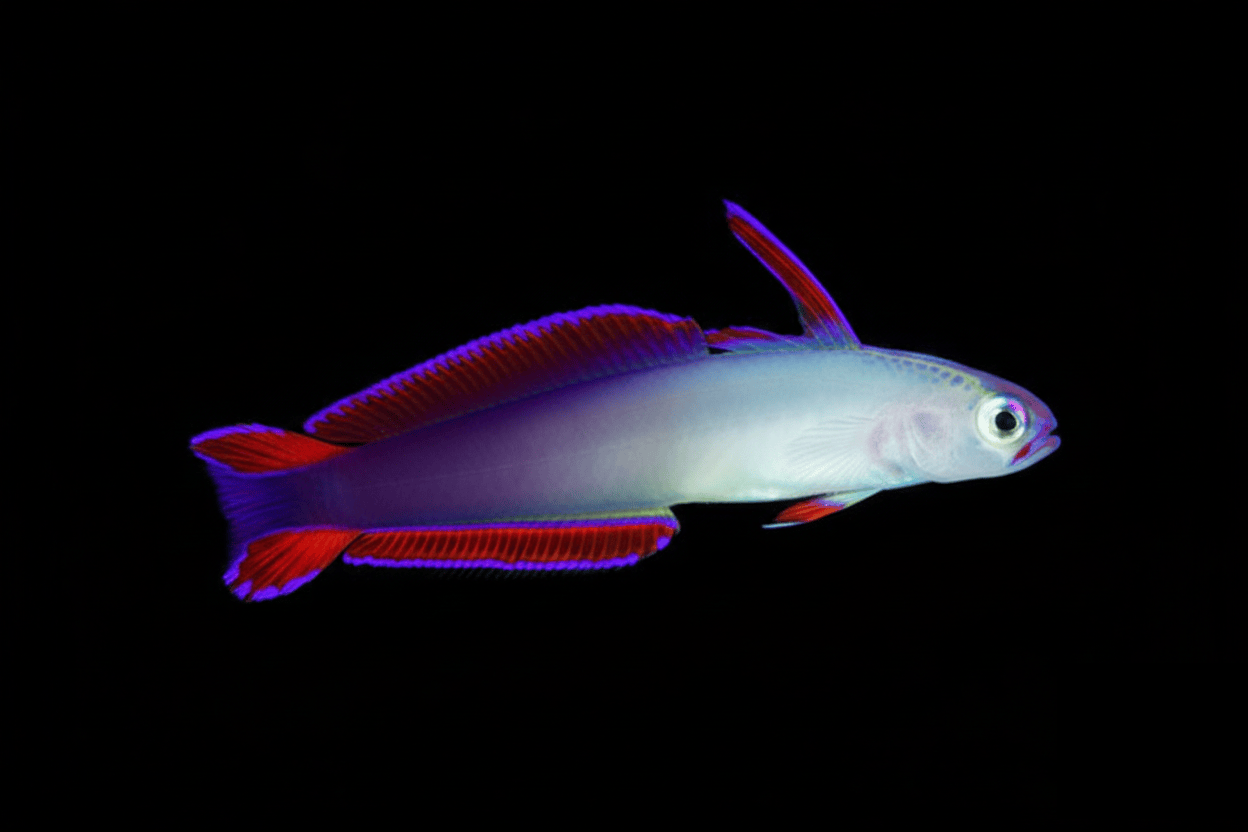
In the wild, it feeds mainly on zooplankton drifting in the water column. For readers interested in fishing, wildlife observation, food fish, or aquariums, it matters because it is peaceful but prone to jumping. Always check adult size, water conditions, legal harvest rules, and conservation guidance before collecting, keeping, or targeting this species.
22. Flame Hawkfish
Scientific name: Neocirrhites armatus. Flame Hawkfish is a small marine hawkfish associated with branching coral reefs in tropical Pacific. Its clearest identification feature is a solid scarlet body with darker fin markings. That combination of color, body shape, habitat, and behavior is more reliable than color alone when comparing similar fish.
In the wild, it feeds mainly on crustaceans and small benthic animals. For readers interested in fishing, wildlife observation, food fish, or aquariums, it matters because it is perches visibly on rock and coral. Always check adult size, water conditions, legal harvest rules, and conservation guidance before collecting, keeping, or targeting this species.
23. Red Coris Wrasse
Scientific name: Coris gaimard. Red Coris Wrasse is a large marine wrasse associated with sand-and-reef habitats in Indo-Pacific. Its clearest identification feature is juveniles are red with white markings while adults change dramatically. That combination of color, body shape, habitat, and behavior is more reliable than color alone when comparing similar fish.
In the wild, it feeds mainly on mollusks, crustaceans, and echinoderms. For readers interested in fishing, wildlife observation, food fish, or aquariums, it matters because it is requires a large tank and deep sand. Always check adult size, water conditions, legal harvest rules, and conservation guidance before collecting, keeping, or targeting this species.
24. Red Lionfish
Scientific name: Pterois volitans. Red Lionfish is a large marine scorpionfish associated with reefs, ledges, and wrecks in Indo-Pacific; invasive in the western Atlantic. Its clearest identification feature is red-brown bands and long fanlike venomous spines. That combination of color, body shape, habitat, and behavior is more reliable than color alone when comparing similar fish.
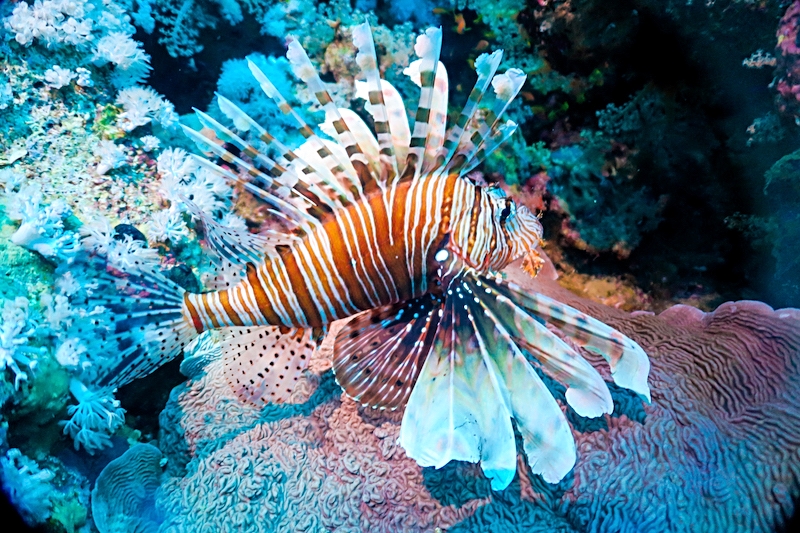
In the wild, it feeds mainly on fish and crustaceans. For readers interested in fishing, wildlife observation, food fish, or aquariums, it matters because it is spectacular but dangerous to handle. Always check adult size, water conditions, legal harvest rules, and conservation guidance before collecting, keeping, or targeting this species.
25. Squirrelfish
Scientific name: Holocentrus adscensionis. Squirrelfish is a medium marine squirrelfish associated with reefs and rocky ledges in tropical Atlantic. Its clearest identification feature is large eyes, red scales, and pale horizontal lines. That combination of color, body shape, habitat, and behavior is more reliable than color alone when comparing similar fish.
In the wild, it feeds mainly on crustaceans and small fish. For readers interested in fishing, wildlife observation, food fish, or aquariums, it matters because it is mostly nocturnal and often hides by day. Always check adult size, water conditions, legal harvest rules, and conservation guidance before collecting, keeping, or targeting this species.
26. Pinecone Soldierfish
Scientific name: Myripristis murdjan. Pinecone Soldierfish is a medium marine soldierfish associated with caves and reef ledges in Indo-Pacific. Its clearest identification feature is bright red scales with oversized eyes. That combination of color, body shape, habitat, and behavior is more reliable than color alone when comparing similar fish.
In the wild, it feeds mainly on zooplankton and small crustaceans. For readers interested in fishing, wildlife observation, food fish, or aquariums, it matters because it is forms nocturnal groups around reef shelters. Always check adult size, water conditions, legal harvest rules, and conservation guidance before collecting, keeping, or targeting this species.
27. Red Snapper
Scientific name: Lutjanus campechanus. Red Snapper is a large marine snapper associated with reefs, banks, and hard-bottom areas in western Atlantic and Gulf of Mexico. Its clearest identification feature is a pink-red body that is deeper in adults. That combination of color, body shape, habitat, and behavior is more reliable than color alone when comparing similar fish.
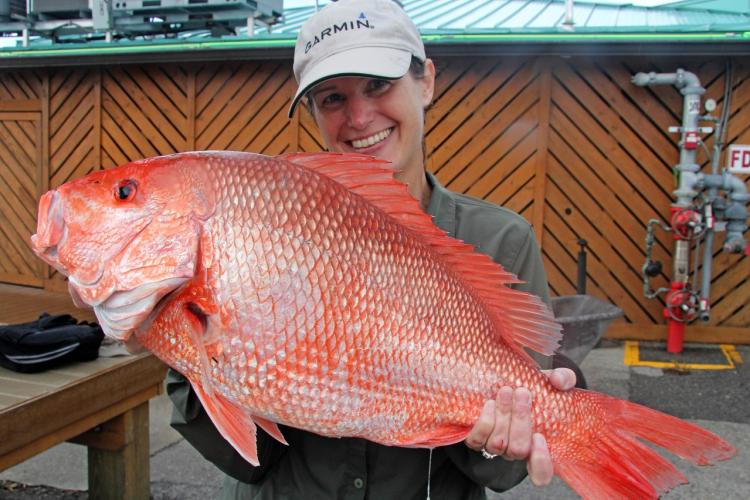
In the wild, it feeds mainly on fish, shrimp, crabs, and squid. For readers interested in fishing, wildlife observation, food fish, or aquariums, it matters because it is important to fisheries and tightly regulated in many regions. Always check adult size, water conditions, legal harvest rules, and conservation guidance before collecting, keeping, or targeting this species.
28. Vermilion Snapper
Scientific name: Rhomboplites aurorubens. Vermilion Snapper is a medium marine snapper associated with offshore reefs and banks in western Atlantic. Its clearest identification feature is a slender rose-red body with yellowish lines. That combination of color, body shape, habitat, and behavior is more reliable than color alone when comparing similar fish.
In the wild, it feeds mainly on small fish, squid, and crustaceans. For readers interested in fishing, wildlife observation, food fish, or aquariums, it matters because it is often schools above structure. Always check adult size, water conditions, legal harvest rules, and conservation guidance before collecting, keeping, or targeting this species.
29. Queen Snapper
Scientific name: Etelis oculatus. Queen Snapper is a large deepwater snapper associated with deep reefs and rocky slopes in western Atlantic. Its clearest identification feature is a vivid red streamlined body with a deeply forked tail. That combination of color, body shape, habitat, and behavior is more reliable than color alone when comparing similar fish.
In the wild, it feeds mainly on fish and squid. For readers interested in fishing, wildlife observation, food fish, or aquariums, it matters because it is a deepwater species valued by anglers. Always check adult size, water conditions, legal harvest rules, and conservation guidance before collecting, keeping, or targeting this species.
30. Sockeye Salmon
Scientific name: Oncorhynchus nerka. Sockeye Salmon is a large anadromous salmon associated with ocean waters and cold spawning rivers in North Pacific basin. Its clearest identification feature is spawning adults turn brilliant red with green heads. That combination of color, body shape, habitat, and behavior is more reliable than color alone when comparing similar fish.
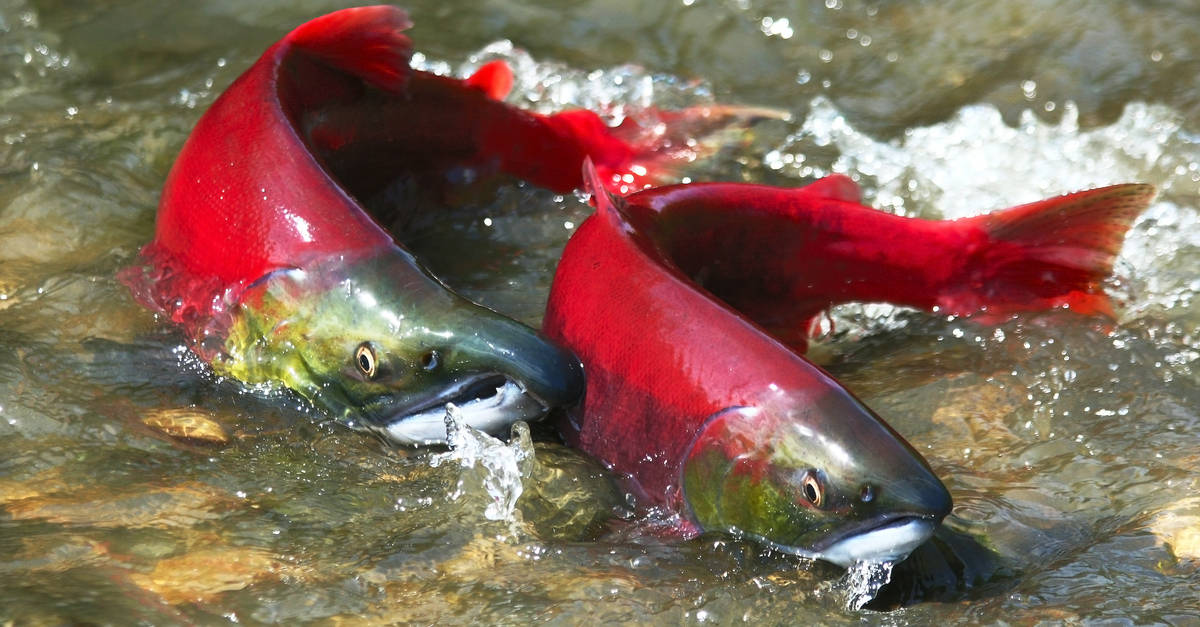
In the wild, it feeds mainly on plankton, insects, and small fish depending on life stage. For readers interested in fishing, wildlife observation, food fish, or aquariums, it matters because it is famous for migration and strongly colored flesh. Always check adult size, water conditions, legal harvest rules, and conservation guidance before collecting, keeping, or targeting this species.
31. Red Drum
Scientific name: Sciaenops ocellatus. Red Drum is a large coastal drum associated with estuaries, bays, surf zones, and coastal waters in western Atlantic and Gulf of Mexico. Its clearest identification feature is copper-red sides and one or more black tail spots. That combination of color, body shape, habitat, and behavior is more reliable than color alone when comparing similar fish.
In the wild, it feeds mainly on crabs, shrimp, and fish. For readers interested in fishing, wildlife observation, food fish, or aquariums, it matters because it is a major sport fish with regional harvest rules. Always check adult size, water conditions, legal harvest rules, and conservation guidance before collecting, keeping, or targeting this species.
32. Orange Roughy
Scientific name: Hoplostethus atlanticus. Orange Roughy is a medium deep-sea slimehead associated with continental slopes and seamounts in temperate oceans worldwide. Its clearest identification feature is a brick-red to orange body and large eyes. That combination of color, body shape, habitat, and behavior is more reliable than color alone when comparing similar fish.
In the wild, it feeds mainly on small fish and crustaceans. For readers interested in fishing, wildlife observation, food fish, or aquariums, it matters because it is very slow-growing, making sourcing choices important. Always check adult size, water conditions, legal harvest rules, and conservation guidance before collecting, keeping, or targeting this species.
33. Alfonsino
Scientific name: Beryx decadactylus. Alfonsino is a medium deepwater berycid associated with seamounts and continental slopes in warm and temperate oceans. Its clearest identification feature is a deep red body with large reflective eyes. That combination of color, body shape, habitat, and behavior is more reliable than color alone when comparing similar fish.
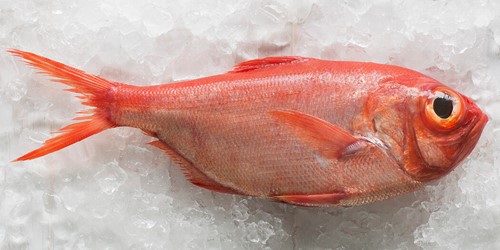
In the wild, it feeds mainly on fish, crustaceans, and squid. For readers interested in fishing, wildlife observation, food fish, or aquariums, it matters because it is a deepwater food fish. Always check adult size, water conditions, legal harvest rules, and conservation guidance before collecting, keeping, or targeting this species.
34. Red Mullet
Scientific name: Mullus barbatus. Red Mullet is a small to medium marine goatfish associated with sandy and muddy seabeds in eastern Atlantic and Mediterranean. Its clearest identification feature is rosy-red flanks and chin barbels used to probe sediment. That combination of color, body shape, habitat, and behavior is more reliable than color alone when comparing similar fish.
In the wild, it feeds mainly on worms, crustaceans, and small benthic prey. For readers interested in fishing, wildlife observation, food fish, or aquariums, it matters because it is valued in Mediterranean cooking. Always check adult size, water conditions, legal harvest rules, and conservation guidance before collecting, keeping, or targeting this species.
35. Red Gurnard
Scientific name: Chelidonichthys cuculus. Red Gurnard is a medium marine gurnard associated with sandy and gravel bottoms in eastern Atlantic and Mediterranean. Its clearest identification feature is a reddish armored head and fingerlike fin rays. That combination of color, body shape, habitat, and behavior is more reliable than color alone when comparing similar fish.
In the wild, it feeds mainly on crustaceans and small fish. For readers interested in fishing, wildlife observation, food fish, or aquariums, it matters because it is can make sounds using its swim bladder. Always check adult size, water conditions, legal harvest rules, and conservation guidance before collecting, keeping, or targeting this species.
36. Red Scorpionfish
Scientific name: Scorpaena scrofa. Red Scorpionfish is a medium marine scorpionfish associated with rocky reefs and seagrass edges in eastern Atlantic and Mediterranean. Its clearest identification feature is mottled red camouflage and venomous dorsal spines. That combination of color, body shape, habitat, and behavior is more reliable than color alone when comparing similar fish.
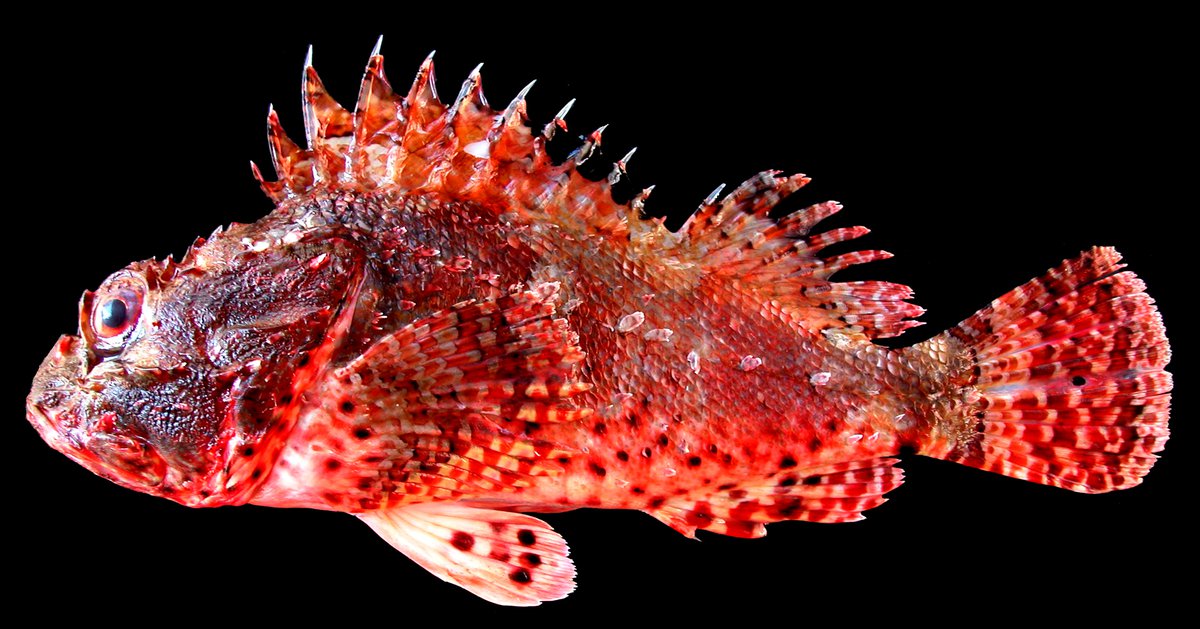
In the wild, it feeds mainly on fish and crustaceans. For readers interested in fishing, wildlife observation, food fish, or aquariums, it matters because it is should never be handled casually. Always check adult size, water conditions, legal harvest rules, and conservation guidance before collecting, keeping, or targeting this species.
37. Red Porgy
Scientific name: Pagrus pagrus. Red Porgy is a medium to large marine seabream associated with rocky reefs and offshore banks in Atlantic and Mediterranean. Its clearest identification feature is pink-red sides with a robust seabream shape. That combination of color, body shape, habitat, and behavior is more reliable than color alone when comparing similar fish.
In the wild, it feeds mainly on mollusks, crustaceans, and fish. For readers interested in fishing, wildlife observation, food fish, or aquariums, it matters because it is a food and sport fish. Always check adult size, water conditions, legal harvest rules, and conservation guidance before collecting, keeping, or targeting this species.
38. Redbanded Rockfish
Scientific name: Sebastes babcocki. Redbanded Rockfish is a large marine rockfish associated with deep rocky reefs in northeastern Pacific. Its clearest identification feature is broad red or orange bands over a pale body. That combination of color, body shape, habitat, and behavior is more reliable than color alone when comparing similar fish.
In the wild, it feeds mainly on fish and crustaceans. For readers interested in fishing, wildlife observation, food fish, or aquariums, it matters because it is long-lived and vulnerable to overharvest. Always check adult size, water conditions, legal harvest rules, and conservation guidance before collecting, keeping, or targeting this species.
39. Canary Rockfish
Scientific name: Sebastes pinniger. Canary Rockfish is a large marine rockfish associated with rocky reefs and continental shelf waters in northeastern Pacific. Its clearest identification feature is orange-red coloration with pale lateral lines. That combination of color, body shape, habitat, and behavior is more reliable than color alone when comparing similar fish.
In the wild, it feeds mainly on fish, krill, and crustaceans. For readers interested in fishing, wildlife observation, food fish, or aquariums, it matters because it is a slow-growing species managed carefully. Always check adult size, water conditions, legal harvest rules, and conservation guidance before collecting, keeping, or targeting this species.
40. Red Emperor
Scientific name: Lethrinus lentjan. Red Emperor is a large marine emperor fish associated with reef flats, lagoons, and sandy reef margins in Indo-West Pacific. Its clearest identification feature is a pink-red body with red fin margins. That combination of color, body shape, habitat, and behavior is more reliable than color alone when comparing similar fish.
In the wild, it feeds mainly on mollusks, crustaceans, and fish. For readers interested in fishing, wildlife observation, food fish, or aquariums, it matters because it is an important reef-associated food fish. Always check adult size, water conditions, legal harvest rules, and conservation guidance before collecting, keeping, or targeting this species.
How Are These Types of Fish Classified?
These fish belong to many orders and families. Freshwater examples include tetras, barbs, rainbowfish, cichlids, and characins. Marine examples include clownfish, wrasses, snappers, salmon, drums, rockfish, goatfish, gurnards, porgies, and deep-sea berycids. Red coloration may be permanent, seasonal, sex-linked, age-related, or intensified by diet and lighting.
Where Do Red Fish Live?
Red-colored fish occur in blackwater creeks, tropical lakes, fast streams, estuaries, coral reefs, rocky coasts, continental shelves, and the deep sea. Bright red can function differently by habitat: it may attract mates in clear freshwater, break up an outline on a reef, or appear dark and inconspicuous in deep water where red wavelengths are quickly absorbed.
How to Identify Different Types of Red Fish
- Color location: Note whether red covers the whole body or only the fins, belly, tail, throat, or spawning pattern.
- Body shape: Separate deep-bodied tetras and porgies from elongated wrasses, salmon, drums, and rockfish.
- Markings: Look for bars, shoulder spots, tail spots, blue lines, white bands, and fin borders.
- Habitat: Freshwater, estuarine, reef, open-ocean, and deepwater species rarely overlap.
- Life stage: Juveniles and breeding adults may look very different.
- Safety features: Venomous spines in lionfish and scorpionfish require extra caution.
Aquarium, Fishing, and Observation Tips
- Use neutral or dark backgrounds to view red aquarium fish without forcing unnatural lighting.
- Keep schooling species in appropriate groups and provide the adult tank size, not the juvenile size.
- For reef observation, avoid touching coral or chasing fish for photographs.
- Check current fishing rules before targeting salmon, snapper, drum, rockfish, or deepwater species.
- Use species-level identification before keeping or eating a red fish because similar colors can hide major differences.
Safety, Sustainability, and Conservation Notes
- Never release aquarium fish into local waterways.
- Follow harvest seasons, size limits, and protected-area rules.
- Handle venomous species only with trained procedures and suitable tools.
- Choose seafood from well-managed fisheries and ask for the exact species and origin.
- Protect mangroves, reefs, spawning rivers, and deepwater habitats that recover slowly.
Fun Facts About Red Fish
- Red light disappears rapidly underwater, so deep red fish may look dark at depth.
- Sockeye salmon change from silver at sea to red during spawning migration.
- Male red rainbowfish become much brighter than females.
- Several unrelated species are sold under broad names such as red snapper.
- Red coloration can come from pigments obtained or maintained through diet.
- Juvenile red coris wrasses look very different from adults.
- Lionfish and scorpionfish combine red camouflage with venomous spines.
- Many red reef fish are most active at dusk or night.
- Aquarium lighting can make the same fish look orange, crimson, or brown.
- Scientific names prevent confusion between regional common names.
Final Thoughts on types of red fish
These 40 types of red fish show that color is an identification clue, not a complete classification. The safest approach is to combine color with body shape, habitat, range, markings, and scientific names. Whether you keep a small red tetra, observe reef fish, target a regulated sport fish, or buy seafood, accurate identification and responsible choices protect both the fish and their habitats.
Frequently Asked Questions
1. What does the term “types of red fish” mean?
It is a broad descriptive phrase for fish that show noticeable red, pink, scarlet, crimson, copper, or orange-red coloration. It is not a formal taxonomic group.
2. How many types of red fish are covered in this guide?
This guide profiles 40 carefully selected examples. The number is a practical editorial list, not a claim that only 40 such fish exist worldwide.
3. Are all types of red fish closely related?
No. The list includes unrelated freshwater and marine fish from many families. Their shared red coloration evolved in different ecological and breeding contexts.
4. Which is the easiest types of red fish to identify?
Cherry Barb is a useful starting point because males develop a deep cherry-red body, especially when mature. However, identification should also consider body shape, fin placement, range, and habitat.
5. Which types of red fish is the largest in this list?
The largest examples include red drum, large snappers, red coris wrasse, and some rockfish. Exact maximum size varies by species and region.
6. Which types of red fish is the smallest in this list?
Ember tetras and other nano tetras are among the smallest examples, while several marine red fish grow many times larger.
7. Where do types of red fish live?
They occur from soft freshwater creeks and African lakes to estuaries, coral reefs, offshore banks, continental slopes, and deep ocean habitats.
8. What do types of red fish eat?
Diet ranges from plankton and algae to insects, crustaceans, mollusks, squid, and other fish. The correct diet depends on the species.
9. Can types of red fish live in freshwater?
Yes. Cherry barbs, tetras, rainbowfish, piranhas, cichlids, and red-tailed cyprinids are freshwater examples.
10. Can types of red fish live in saltwater?
Yes. Clownfish, wrasses, lionfish, snappers, rockfish, porgies, goatfish, and deepwater red fish live in marine environments.
11. Are any types of red fish suitable for home aquariums?
Several small freshwater and reef species are kept in aquariums, but adult size, aggression, diet, and water chemistry vary greatly.
12. Do types of red fish need to be kept in groups?
Many tetras, barbs, rainbowfish, soldierfish, and snappers form groups, while cichlids, hawkfish, and some predators may be territorial.
13. How can beginners identify types of red fish?
Begin with body shape, fin arrangement, mouth position, color pattern, adult size, and habitat. Photograph the fish from the side when possible and compare it with a regional field guide rather than relying on a single color.
14. Can fish color change with age or season?
Yes. Many fish change color as they mature, breed, migrate, become stressed, or move between habitats. Lighting and water clarity also affect how color appears.
15. Why are scientific names useful?
Common names vary between countries and fisheries. A scientific name points to one recognized species and helps prevent confusion between unrelated fish that share a similar nickname.
16. Are any types of red fish dangerous to handle?
Lionfish and scorpionfish have venomous spines. Large predatory fish can bite, and any wild fish may cause puncture wounds or infection.
17. Can people eat types of red fish?
Some, such as salmon, snapper, drum, porgy, mullet, gurnard, and alfonsino, are eaten. Others are aquarium fish or may be unsuitable because of regulations, toxins, or conservation concerns.
18. How should edible fish be stored?
Keep fresh fish cold immediately after capture or purchase, use clean food-safe containers, and follow local food-safety guidance. Refrigerate promptly and freeze portions that will not be used soon.
19. How can anglers fish responsibly for these species?
Follow current seasons, size limits, bag limits, protected-area rules, and gear restrictions. Use appropriate tackle, minimize handling, release unwanted fish quickly, and never transport live fish between waters.
20. Why should fish never be released from an aquarium?
Released aquarium fish can become invasive, spread disease, or die from unsuitable conditions. Rehome unwanted fish through a responsible aquarium store, club, rescue, or experienced keeper.
21. How does habitat loss affect these fish?
Dams, polluted runoff, sedimentation, wetland loss, reef damage, and coastal development can remove feeding, nursery, and spawning habitat. Species with small ranges are often especially vulnerable.
22. Are color-based fish names always accurate?
No. Names based on red, silver, black, or blue may describe only one life stage, sex, regional form, or market appearance. Taxonomy and location provide a more dependable identification.
23. What equipment helps with fish identification?
A camera, polarized sunglasses, regional field guide, ruler or measuring board, and notes about depth, water type, substrate, and location are useful. Handle wild fish only when legal and necessary.
24. Should I use an identification app?
An app can narrow the possibilities, but it should not be the only source for legal harvest or conservation decisions. Confirm important identifications with an authoritative regional guide or fisheries agency.
25. What is the most common identification mistake?
The most common mistake is choosing a species from color alone. Similar species may differ in fin rays, tail shape, mouth size, body proportions, spots, stripes, or geographic range.
26. Do juvenile fish look like adults?
Not always. Juveniles may have bars, spots, or colors that disappear with age, and some move from sheltered nursery areas to deeper adult habitats.
27. Are wild populations stable?
Status varies widely. Some are common, while others have restricted ranges, slow growth, heavy fishing pressure, or vulnerable spawning habitats.
28. Can climate change affect their distribution?
Yes. Warming water, altered river flow, ocean acidification, oxygen loss, and changing food webs can shift suitable habitat. Effects vary by species and region.
29. What should I check before buying one as a pet?
Confirm the exact species, adult size, social behavior, diet, water chemistry, temperature, tank length, filtration, and legal status. Avoid buying fish that cannot be housed responsibly for their full lifespan.
30. What is the best way to learn more about types of red fish?
Use regional fish guides, museum and university resources, fisheries agencies, responsible aquarium organizations, and direct observation. Keep notes and compare several identification features at once.