
Wisconsin, with its rich mix of forests, wetlands, and gardens, hosts an interesting variety of hummingbirds. Though the state is far north compared to the usual tropical habitats of many species, several hummingbirds visit Wisconsin each year. These tiny, fast-flying birds are a delight for birdwatchers, photographers, and backyard enthusiasts alike. In this guide, we’ll explore the types of hummingbirds in Wisconsin, highlighting their physical characteristics, behaviors, habitats, diets, and interactions with humans. By learning about these species, you’ll better appreciate their presence and maybe even attract them to your garden!
1. Ruby-throated Hummingbird (Archilochus colubris)
Physical Characteristics & Identification Tips
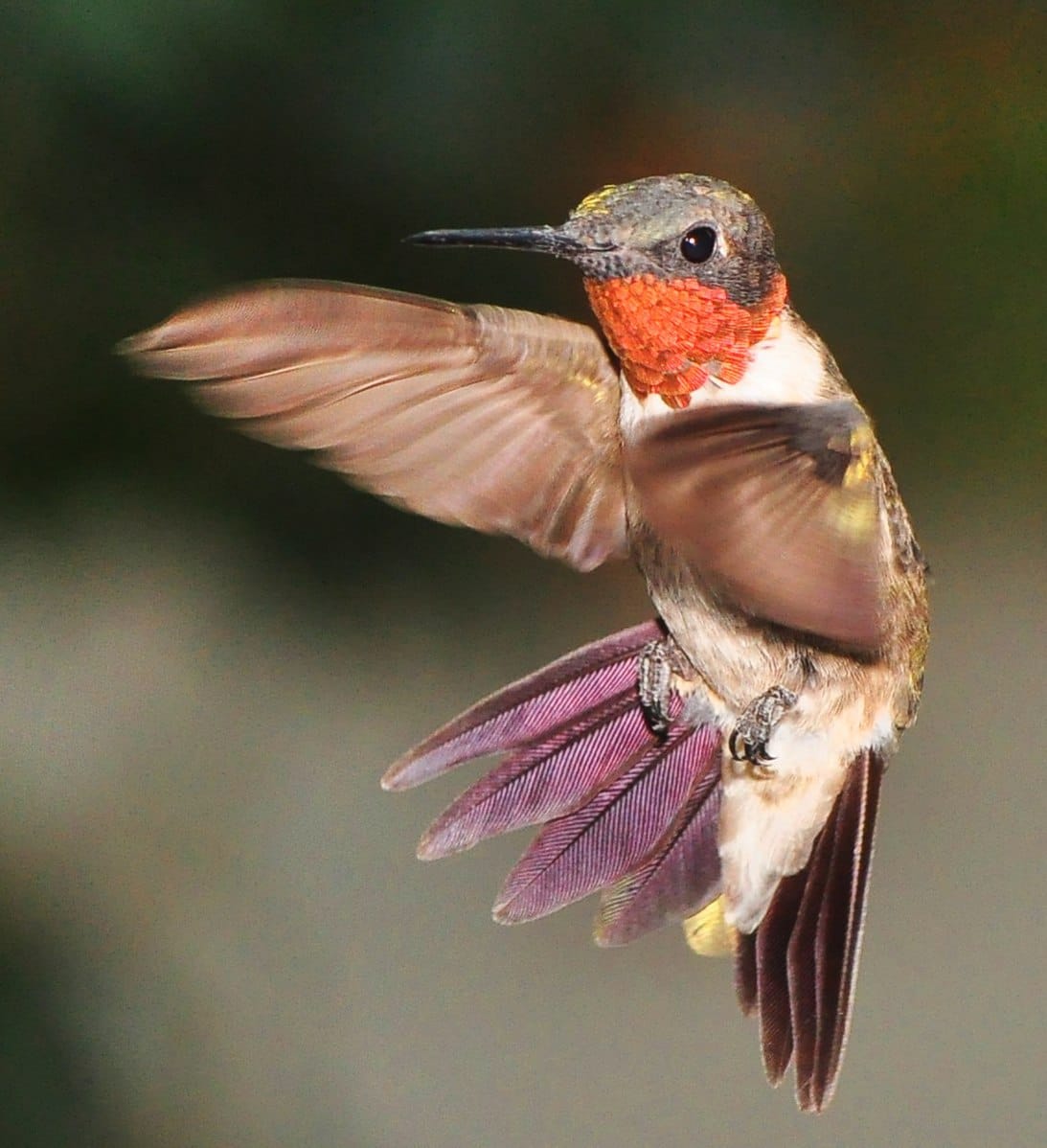
The Ruby-throated Hummingbird is the most common and widely recognized species in Wisconsin. Measuring just 3–3.5 inches in length, males boast a brilliant ruby-red throat that shimmers in sunlight, while their back is metallic green, and underparts are light gray. Females lack the red throat but have a subtle green back and a white chest. One of the easiest identification tips is watching for males’ tiny, forked tails and their characteristic darting flight patterns.
Behavior
These hummingbirds are incredibly energetic. They hover in front of flowers to feed, capable of rapid wing beats up to 53 times per second. Males are territorial, often chasing intruders from their feeding areas. During migration, these birds can fly hundreds of miles nonstop across the Gulf of Mexico. Despite their tiny size, they exhibit remarkable strength and stamina.
Habitat and Range
Ruby-throated Hummingbirds breed throughout Wisconsin, favoring open woodlands, forest edges, and gardens. They migrate to Central America and the southern U.S. during winter, returning to Wisconsin in spring to breed. Riparian zones, wildflower fields, and backyard gardens are common habitats where birdwatchers can spot them.
Diet
Nectar from tubular flowers is the primary food source, but they also consume insects and spiders for protein, especially when feeding young. Popular garden flowers include bee balm, trumpet vine, and cardinal flower, which provide high-energy nectar.
Reproduction and Life Cycle
Females build small cup-shaped nests using plant fibers, spider silk, and camouflaging materials like lichens. Clutches usually contain two eggs, incubated for 12–14 days. Fledglings leave the nest after 18–22 days but continue to receive parental feeding for a short period.
Fun Facts / Unique Traits
Ruby-throated Hummingbirds are the only species in eastern North America that migrates solo across the Gulf of Mexico. Males often perform impressive U-shaped dive displays to attract females.
Human Interaction
These birds readily visit backyard feeders. Providing sugar water and native flowers can help attract and support them during migration. Keeping feeders clean prevents disease and ensures healthy populations.
2. Rufous Hummingbird (Selasphorus rufus)
Physical Characteristics & Identification Tips
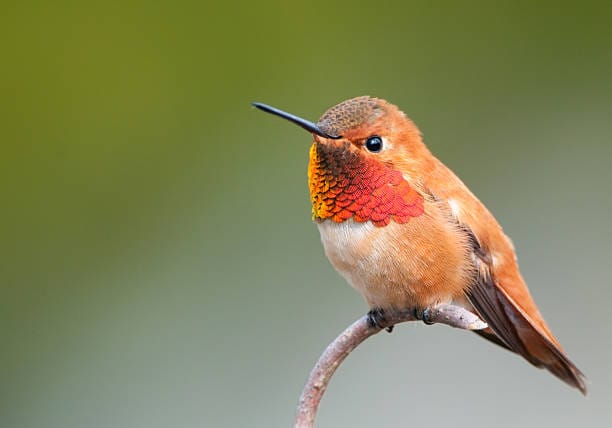
The Rufous Hummingbird is slightly smaller, around 2.75–3 inches long. Males exhibit a bright orange-red throat and rusty-colored back, with some green along the back edges. Females have green backs and paler underparts, often with some orange flecks on the sides. Their fiery coloration and feisty personality make them easy to spot in Wisconsin gardens during migration.
Behavior
Rufous Hummingbirds are highly aggressive, often dominating feeders against larger species. Males defend territories vigorously and display intense aerial acrobatics. Their flight includes backward and lateral movements that seem almost acrobatic. During migration, they travel long distances along the Pacific Coast and inland routes.
Habitat and Range
In Wisconsin, they appear primarily during spring and fall migration. They favor forest edges, gardens, and parks with abundant flowers. Their main breeding range is in the Pacific Northwest, and they winter in Mexico’s western regions.
Diet
Nectar from tubular flowers is the primary energy source, but they actively hunt insects and spiders for protein. Their aggressive nature ensures that they often have the first pick at abundant nectar sources.
Reproduction and Life Cycle
Females build nests using fine plant fibers, moss, and spider silk. Two eggs are laid per clutch, incubated for about two weeks. Young leave the nest roughly three weeks later but may still receive feeding for a short time afterward.
Fun Facts / Unique Traits
Rufous Hummingbirds are among the smallest migratory birds in North America yet have one of the longest migration routes relative to size. Their fiery temperament makes them fascinating to observe at feeders.
Human Interaction
Gardeners often attract Rufous Hummingbirds with red-colored feeders or native plants like columbines and bee balm. Due to their aggressive behavior, they may chase away other hummingbirds temporarily.
3. Anna’s Hummingbird (Calypte anna)
Physical Characteristics & Identification Tips
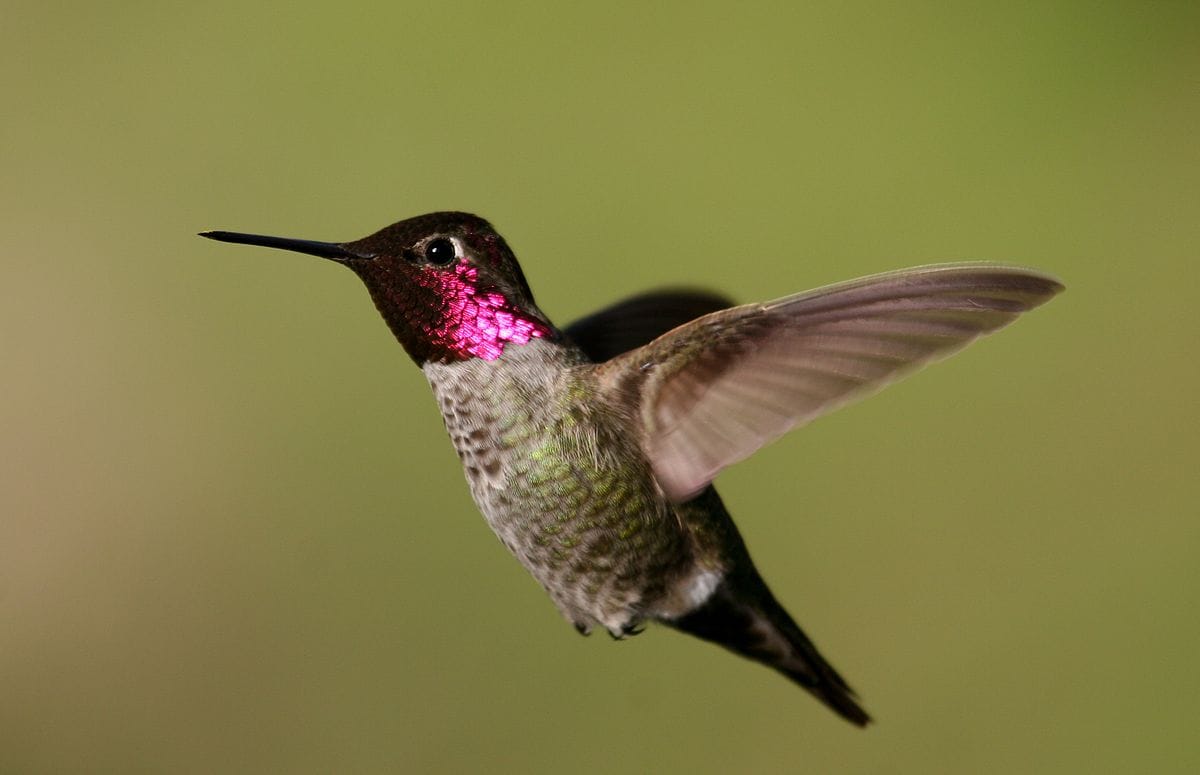
Anna’s Hummingbird is slightly larger at 3–3.75 inches. Males have an iridescent rose-red crown and throat, metallic green back, and grayish underparts. Females are duller with green backs and lighter chest areas. The rose-colored gorget in males catches sunlight beautifully, making it easy to identify them in bright conditions.
Behavior
These hummingbirds are bold, often feeding near humans. Males defend territories aggressively and perform display dives to attract females. Their hovering and fast wing movements make them remarkable flyers. Unlike most migratory hummingbirds, some Anna’s Hummingbirds remain year-round in urban areas.
Habitat and Range
While uncommon in Wisconsin, they occasionally appear as vagrants. More commonly, they are residents along the West Coast, favoring gardens, parks, and riparian zones. Their ability to adapt to urban environments allows them to thrive where food sources are available.
Diet
They feed primarily on nectar but also consume small insects and spiders. Backyard feeders with sugar water are often visited, supplementing natural nectar sources.
Reproduction and Life Cycle
Females build nests on shrubs or tree branches, laying two eggs per clutch. Incubation lasts about two weeks, and fledglings leave the nest after three weeks, receiving parental care for a few additional days.
Fun Facts / Unique Traits
Anna’s Hummingbirds can tolerate colder climates better than many species, allowing them to overwinter in some northern locations. Their bright gorget feathers reflect sunlight dramatically, especially during display flights.
Human Interaction
They are comfortable around humans, visiting feeders and garden flowers. Providing a mix of nectar plants and fresh sugar water helps support them during rare appearances in Wisconsin.
4. Black-chinned Hummingbird (Archilochus alexandri)
Physical Characteristics & Identification Tips
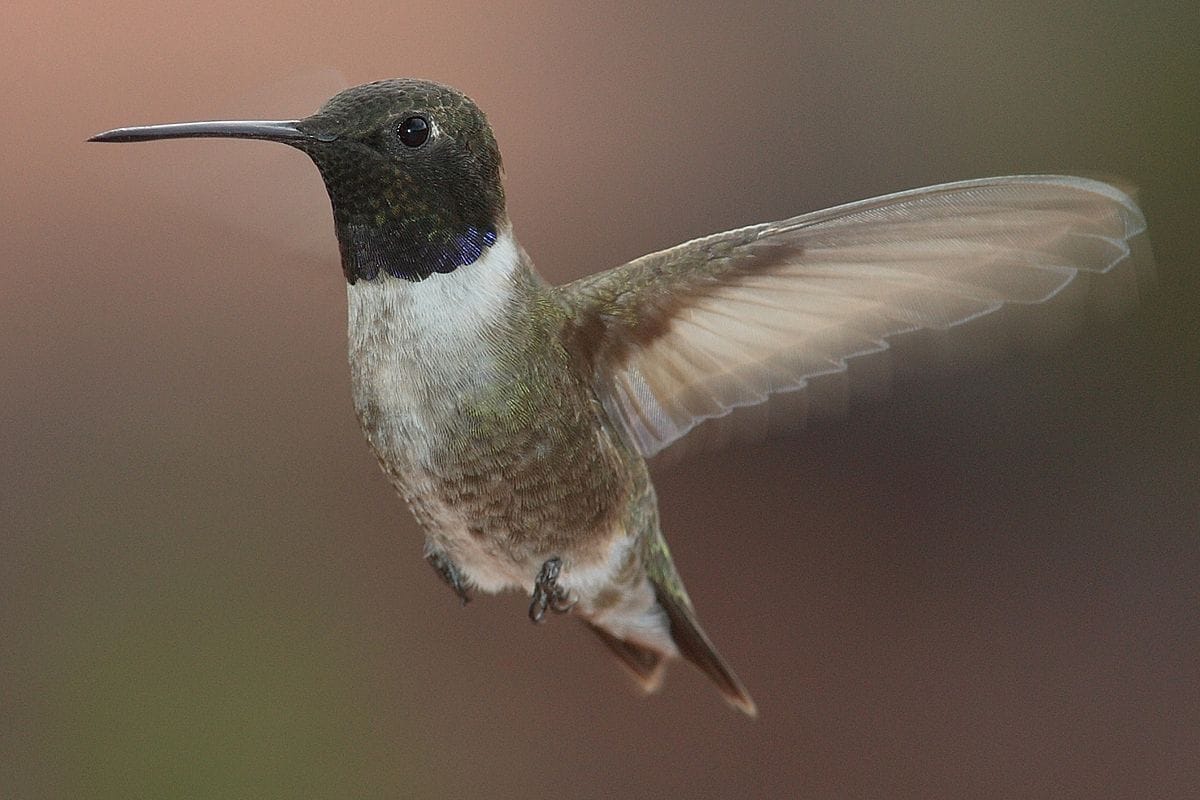
The Black-chinned Hummingbird is a medium-sized hummingbird, about 3 inches long. Males feature a black throat with a subtle violet band beneath it, metallic green back, and grayish underparts. Females are less colorful, with white underparts and greenish-gray backs. A distinctive identification tip is the slightly forked tail on males and the black chin, which becomes more apparent during display flights.
Behavior
Black-chinned Hummingbirds are energetic and agile. They hover effortlessly, dart between flowers, and are known for their aggressive defense of feeding territories. Males perform elaborate aerial displays to attract mates. Despite their small size, they show remarkable speed and precision while navigating dense flowering areas.
Habitat and Range
While not common year-round in Wisconsin, these hummingbirds appear as migrants. They breed in western North America, preferring canyons, scrublands, and riparian areas. During migration, they can be found in suitable gardens and woodland edges, returning southward to Mexico during winter.
Diet
They feed mainly on nectar from tubular flowers like penstemons and honeysuckle, supplementing their diet with small insects and spiders for protein. In urban and suburban areas, they readily visit hummingbird feeders, especially those with red accents.
Reproduction and Life Cycle
Females construct small, cup-shaped nests using plant down, spider silk, and lichens for camouflage. They lay two eggs per clutch, incubating them for roughly two weeks. Fledglings leave the nest after about three weeks but may continue receiving parental feeding for several days afterward.
Fun Facts / Unique Traits
The male’s violet band is often overlooked but flashes brilliantly in sunlight. These birds have long migratory routes relative to their size, demonstrating impressive endurance and navigational skills for such tiny creatures.
Human Interaction
Black-chinned Hummingbirds are attracted to backyard feeders and native flowering gardens. By placing feeders in sunny, protected areas and keeping them clean with fresh nectar, humans can enjoy observing these agile birds during migration periods.
5. Calliope Hummingbird (Selasphorus calliope)
Physical Characteristics & Identification Tips
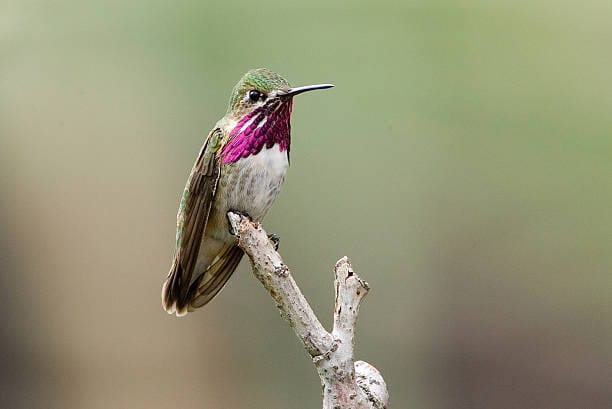
The Calliope Hummingbird is North America’s smallest long-distance migratory bird, measuring only 3 inches. Males exhibit a striking magenta throat with elongated throat feathers called gorget spikes, while their backs are dark green and underparts white or gray. Females are duller, with green backs and light underparts. Identification tips include watching for the male’s unique throat streaks and their tiny size compared to other hummingbirds.
Behavior
Calliope Hummingbirds are extremely agile. Males perform impressive shuttle displays, vibrating their wings rapidly while showing off their colorful gorget streaks. Both sexes hover while feeding and are known to chase intruders from prime nectar sources, demonstrating remarkable territoriality despite their small size.
Habitat and Range
These hummingbirds breed in northwestern North America, including mountain forests and shrublands. In Wisconsin, sightings are rare and primarily occur during migration. They favor gardens, parks, and areas with abundant flowering plants when passing through.
Diet
Primarily nectar feeders, Calliope Hummingbirds visit tubular flowers like columbine, fuchsia, and penstemons. Insects and spiders provide essential protein, especially for growing chicks and during migration when energy demands are high.
Reproduction and Life Cycle
Females build tiny, camouflaged nests using soft plant fibers, moss, and spider silk. Clutches consist of two eggs, incubated for 14–16 days. Chicks fledge after approximately three weeks and remain under maternal care briefly for additional feeding.
Fun Facts / Unique Traits
Despite their small size, Calliope Hummingbirds migrate thousands of miles from western breeding grounds to wintering areas in Mexico. The males’ gorget feathers produce a shimmering effect in sunlight, giving them a showy appearance during courtship displays.
Human Interaction
Due to their tiny size and rarity in Wisconsin, these hummingbirds are a treat for birdwatchers. Providing feeders and planting native nectar-rich flowers can help attract them during migration.
6. Costa’s Hummingbird (Calypte costae)
Physical Characteristics & Identification Tips
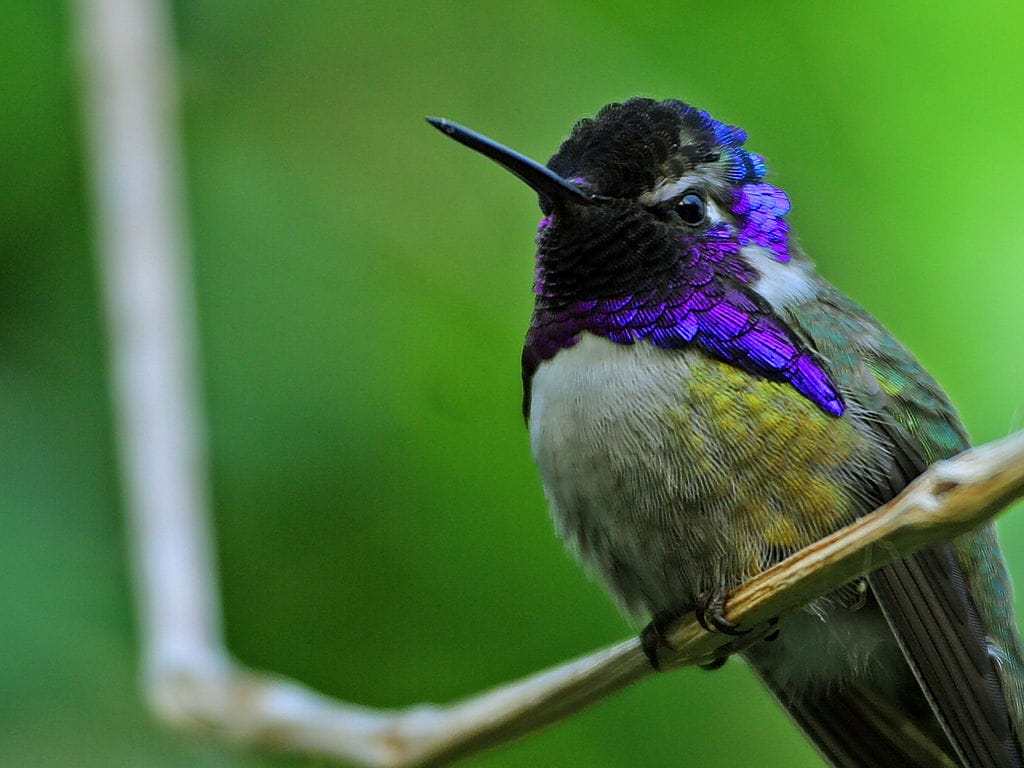
Costa’s Hummingbird is slightly larger than Calliope, at 3–3.25 inches. Males display a striking iridescent purple throat extending onto the sides of the head, metallic green back, and pale underparts. Females have grayish-green backs and pale chests. Their long, narrow bills and the male’s distinctive purple crown make them identifiable even at a distance.
Behavior
These hummingbirds are highly active and territorial. Males perform dramatic dive displays to impress females, often hovering and flaring their gorget. They are agile foragers, moving rapidly from flower to flower, and may chase other hummingbirds from their feeding territories.
Habitat and Range
Native to desert regions of the southwestern U.S., Costa’s Hummingbirds are rare visitors to Wisconsin, appearing mainly as vagrants. In their typical range, they inhabit arid scrublands, desert canyons, and areas with abundant flowering plants.
Diet
Nectar from desert-adapted tubular flowers is the main food source, supplemented with small insects and spiders. In rare appearances in Wisconsin, backyard feeders provide an important food source for these vagrant birds.
Reproduction and Life Cycle
Females build tiny nests using plant down, moss, and spider silk. Clutches contain two eggs, incubated for approximately two weeks. Fledglings leave the nest after 18–22 days but continue receiving some parental care afterward.
Fun Facts / Unique Traits
Costa’s Hummingbirds are adapted to arid climates, with males’ purple gorget feathers reflecting bright sunlight for display purposes. Their visits to northern regions like Wisconsin are rare and highly prized by birdwatchers.
Human Interaction
Providing nectar feeders and flowering plants can help attract these rare visitors. Observers often find them in suburban gardens during migration, giving a rare glimpse of their vibrant plumage.
7. Rivoli’s (Magnificent) Hummingbird (Eugenes fulgens)
Physical Characteristics & Identification Tips
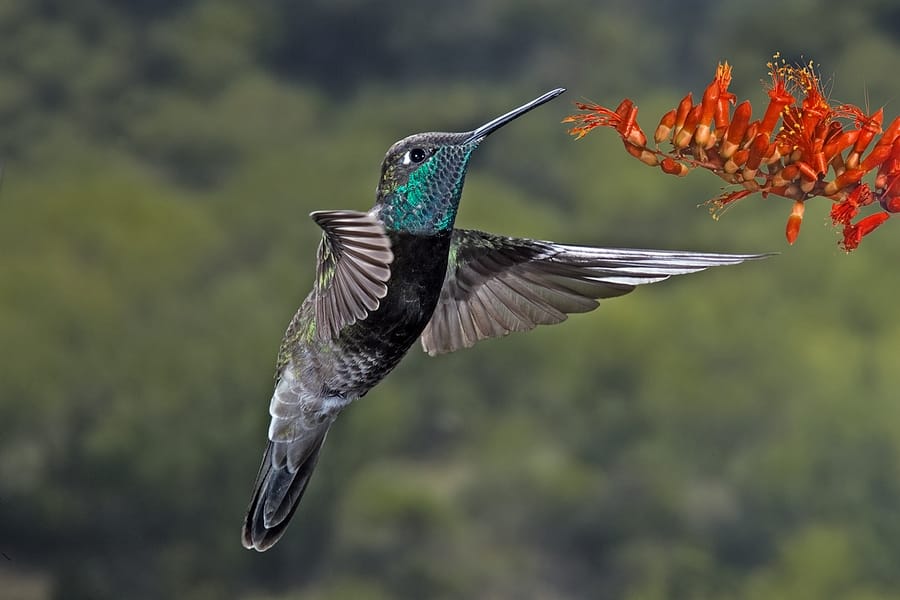
Rivoli’s Hummingbird is one of the larger North American hummingbirds, measuring around 4 inches. Males exhibit a striking emerald-green back, violet-blue throat, and white underparts. Females are smaller and more subdued, with green backs and pale underparts. One key identification tip is the broad tail with white tips, which contrasts nicely with the metallic back feathers.
Behavior
These hummingbirds are powerful fliers and can hover for extended periods while feeding. Males establish feeding territories and perform aerial displays to attract females. Rivoli’s Hummingbirds are known to be less aggressive than some smaller species but can still chase away intruders from prime feeding areas.
Habitat and Range
Primarily native to mountainous regions from the southwestern U.S. to Central America, Rivoli’s Hummingbirds are rare vagrants in Wisconsin. In their normal range, they favor pine-oak forests, canyons, and woodland edges at elevations between 4,000 and 8,000 feet.
Diet
Their diet consists mostly of nectar from tubular flowers, complemented by small insects and spiders for protein. During migration or rare northern visits, backyard feeders can serve as a crucial supplemental food source.
Reproduction and Life Cycle
Females build cup-shaped nests on tree branches or shrubs using soft plant fibers and spider silk. Two eggs are laid per clutch, incubated for 14–16 days. Chicks fledge after roughly three weeks but may continue receiving care from the mother for a short period afterward.
Fun Facts / Unique Traits
Rivoli’s Hummingbirds are impressive for their large size and striking gorget coloration. They tend to prefer higher elevations and show remarkable endurance during migration. Their presence in Wisconsin is extremely rare, making sightings a delight for bird enthusiasts.
Human Interaction
These birds may visit nectar feeders if they are within migration routes. Observers often find them in suburban gardens or parks with abundant flowering plants, especially during unusual weather patterns that bring them farther north than usual.
8. Violet-crowned Hummingbird (Amazilia / Ramosomyia violiceps)
Physical Characteristics & Identification Tips
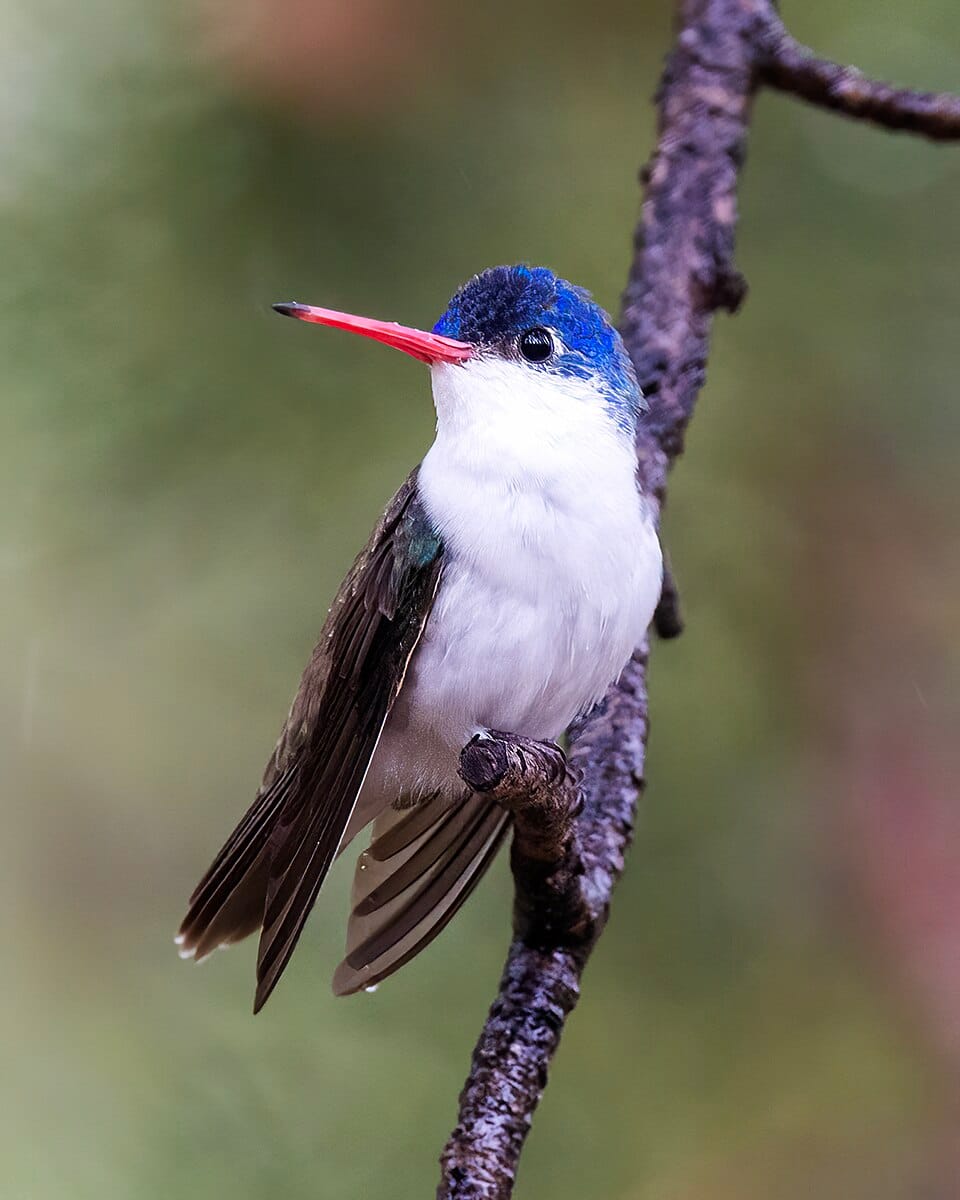
The Violet-crowned Hummingbird measures about 3.5 inches. Males feature a pale violet crown, green back, and grayish underparts, while females are similar but slightly duller. Identification is aided by the bright violet crown and a thin white line behind the eye, which is distinctive among Wisconsin vagrants.
Behavior
Violet-crowned Hummingbirds are quick and agile, hovering skillfully as they feed from flowers. Males perform courtship displays with rapid wing beats and short dives. They are territorial, especially around rich nectar sources, and can engage in brief chases to assert dominance.
Habitat and Range
Native to the southwestern United States and Mexico, they prefer desert scrub, arid canyons, and riparian areas with flowering vegetation. In Wisconsin, sightings are extremely rare and typically occur during migration events or unusual dispersal periods.
Diet
These hummingbirds primarily consume nectar from tubular flowers. Small insects and spiders provide additional protein, particularly important during breeding or migration when energy demands increase.
Reproduction and Life Cycle
Females build compact cup-shaped nests, often attached to slender branches. Two eggs are laid per clutch, incubated for 14–16 days. Chicks fledge about three weeks later and receive maternal care for a short time post-fledging.
Fun Facts / Unique Traits
The violet-crowned Hummingbird is admired for its striking crown coloration and its rarity in northern states like Wisconsin. They are highly efficient feeders, capable of visiting numerous flowers in quick succession during foraging.
Human Interaction
Providing nectar feeders and planting native flowering shrubs can occasionally attract these rare visitors. Birdwatchers treasure sightings, which are often shared in local birding communities as highlights of the season.
Comparison Table of 8 Hummingbirds in Wisconsin
| Species | Size (inches) | Male Identification | Female Identification | Common Habitat in Wisconsin | Diet | Migratory Pattern |
|---|---|---|---|---|---|---|
| Ruby-throated Hummingbird | 3–3.5 | Bright red throat (gorget), metallic green back | Duller green back, whitish underparts | Backyards, gardens, forest edges | Nectar and small insects | Spring–fall migratory |
| Black-chinned Hummingbird | 3 | Black throat with violet base, green back | Gray underparts, greenish back | Rare vagrant; gardens and riparian areas | Nectar and insects | Mostly migratory; occasional Wisconsin sightings |
| Calliope Hummingbird | 3 | Striking magenta throat streaks, green back | Duller green back, white/gray underparts | Rare vagrant; often seen at feeders | Nectar, small insects | Short migration through Wisconsin |
| Rufous Hummingbird | 3–3.25 | Bright orange-red throat, rufous back | Duller rufous-green back, whitish underparts | Vagrant; forest edges, feeders | Nectar and insects | Spring/fall migration; occasional in Wisconsin |
| Costa’s Hummingbird | 3 | Violet crown and throat, green back | Duller throat, greenish back | Rare desert-scrub visitor in Wisconsin | Nectar, small insects | Vagrant; mostly winter in southern range |
| Rivoli’s (Magnificent) Hummingbird | 4 | Emerald-green back, violet-blue throat | Pale green back, white underparts | Extremely rare vagrant | Nectar and insects | Migration north rare; usually southwestern U.S. |
| Violet-crowned Hummingbird | 3.5 | Pale violet crown, green back, grayish underparts | Duller version of male | Rare vagrant in gardens and riparian zones | Nectar, small insects | Mostly southwestern U.S.; occasional Wisconsin sightings |
| Blue-throated Mountain-gem | 4–4.5 | Blue throat, green back | Green back, pale underparts | Extremely rare; rarely seen in Wisconsin | Nectar, insects | Rare northern vagrant |
Conclusion
Wisconsin, though far from the hummingbirds’ typical southern ranges, offers a fascinating glimpse of these tiny marvels during migration and rare dispersal events. From the familiar Ruby-throated Hummingbird to the occasional Rivoli’s and Violet-crowned Hummingbirds, the state hosts a surprising diversity. Each species presents unique behaviors, feeding patterns, and striking physical traits that make birdwatching here both educational and rewarding.
Understanding the types of hummingbirds in Wisconsin can help enthusiasts and casual observers alike identify species, appreciate their life cycles, and contribute to local conservation efforts. Backyard feeders, native flowering plants, and thoughtful observation allow these delicate birds to thrive and offer enriching wildlife encounters right in your neighborhood.
Whether you are a seasoned birder or just starting, learning about Wisconsin’s hummingbirds encourages a deeper connection to nature. Keep a notebook, watch the feeders, and take note of the subtle differences that distinguish each species. Every sighting, from the common Ruby-throated to rare vagrants, adds a new chapter to your understanding of these remarkable creatures.
Exploring the hummingbirds in Wisconsin not only enhances local wildlife knowledge but also fosters conservation awareness, ensuring future generations can enjoy the vibrant display of these aerial jewels.
Frequently Asked Questions About Hummingbirds in Wisconsin
1. How many types of hummingbirds are found in Wisconsin?
Wisconsin hosts around 8 types of hummingbirds, including the Ruby-throated, Black-chinned, and Rivoli’s Hummingbirds. Some species are common visitors, while others appear as rare vagrants.
2. What is the most common hummingbird in Wisconsin?
The Ruby-throated Hummingbird is the most common species found in Wisconsin, especially during spring and summer when they migrate north for breeding.
3. When do hummingbirds migrate to Wisconsin?
Hummingbirds generally arrive in Wisconsin from late April to early May and depart by September to early October, following nectar availability and seasonal temperatures.
4. Can I attract hummingbirds to my Wisconsin backyard?
Yes, planting native flowering plants and maintaining fresh nectar feeders can attract several types of hummingbirds in Wisconsin, particularly during migration and breeding seasons.
5. What should I feed hummingbirds in Wisconsin?
A simple sugar-water solution (1 part sugar to 4 parts water) is ideal. Avoid honey or artificial sweeteners. Changing the solution every 2-3 days prevents fermentation or mold growth.
6. Do hummingbirds nest in Wisconsin?
Yes, some species like the Ruby-throated Hummingbird build small cup-shaped nests in trees or shrubs during the summer months in Wisconsin.
7. How can I identify hummingbirds in Wisconsin?
Look for iridescent throat colors, small size, long slender bills, and rapid wing beats. Ruby-throated males have bright red throats, while females are duller with green backs.
8. Are any hummingbirds endangered in Wisconsin?
Currently, most hummingbirds in Wisconsin are not endangered, but some rare vagrants like Rivoli’s or Violet-crowned Hummingbirds are occasional visitors and highly prized by birdwatchers.
9. How fast do hummingbirds in Wisconsin fly?
They can hover and fly at speeds up to 25-30 mph in short bursts while feeding or evading predators, demonstrating remarkable agility in Wisconsin’s gardens and forests.
10. Do hummingbirds hibernate in Wisconsin?
No, hummingbirds migrate south for the winter, as Wisconsin winters are too harsh for these small, nectar-dependent birds.
11. How do I protect hummingbirds in Wisconsin from predators?
Place feeders near shrubs or trees for cover, avoid using pesticides, and monitor pets. Hanging feeders in safe, sheltered areas reduces predation risk.
12. Can hummingbirds in Wisconsin survive cold nights?
Hummingbirds enter torpor—a hibernation-like state—during cold nights, slowing their metabolism to conserve energy, which is crucial during Wisconsin’s unpredictable spring weather.
13. What flowers attract hummingbirds in Wisconsin?
Trumpet-shaped flowers like bee balm, columbine, cardinal flower, and penstemon are highly attractive to hummingbirds in Wisconsin gardens.
14. Do hummingbirds in Wisconsin eat insects?
Yes, insects and spiders provide essential protein, especially during breeding or migration when energy demands are high.
15. How long do hummingbirds live in Wisconsin?
Most hummingbirds live 3-5 years in the wild, but some can survive up to a decade if they avoid predation and have abundant food sources in Wisconsin.
16. Are there rare hummingbirds in Wisconsin?
Yes, species like Rivoli’s, Violet-crowned, and Blue-throated Mountain-gem Hummingbirds are rare visitors to Wisconsin and are highly sought after by birdwatchers.
17. What time of day are hummingbirds in Wisconsin most active?
They are most active during early morning and late afternoon when nectar sources are plentiful and temperatures are moderate.
18. Do hummingbirds return to the same feeders in Wisconsin?
Yes, hummingbirds often memorize reliable food sources, returning to consistent feeders throughout their stay in Wisconsin.
19. How can I photograph hummingbirds in Wisconsin?
Use a fast shutter speed, patience, and position near feeders or flowering plants. Early morning light often yields the best photos of Wisconsin hummingbirds.
20. Can hummingbirds in Wisconsin coexist with other birds?
Yes, but they are territorial. Males may chase other hummingbirds or small birds away from prime feeding spots in Wisconsin, though conflicts are brief.
21. Do hummingbirds in Wisconsin migrate alone or in groups?
They migrate alone, using innate navigation skills, often following the same migratory routes each year through Wisconsin.
22. How do hummingbirds survive without food during migration through Wisconsin?
They rely on fat reserves accumulated before migration, feeding frequently along the way on nectar-rich flowers or feeders encountered in Wisconsin.
23. How can I tell male and female hummingbirds apart in Wisconsin?
Males typically have bright iridescent throat feathers (gorgets), while females are more muted in color with green backs and gray underparts.
24. Do hummingbirds in Wisconsin defend territories?
Yes, especially males during breeding season. They chase intruders from feeding territories and perform display flights to assert dominance.
25. Are hummingbirds in Wisconsin migratory or resident?
Most hummingbirds in Wisconsin are migratory, arriving in spring and leaving in fall. Some may stay longer if food is abundant, but year-round residency is rare.
26. What is the smallest hummingbird in Wisconsin?
The Calliope Hummingbird is one of the smallest visitors to Wisconsin, measuring just 3 inches and noted for its strikingly iridescent throat feathers in males.
27. How do hummingbirds in Wisconsin feed efficiently?
They hover in front of flowers or feeders and use their long, specialized bills to access nectar while catching insects midair for protein.
28. Can hummingbirds in Wisconsin be attracted with artificial feeders?
Yes, well-maintained sugar-water feeders can attract multiple species. Use red-colored feeders or add red accents to increase visibility to hummingbirds in Wisconsin.
29. Do hummingbirds in Wisconsin have predators?
Yes, common predators include domestic cats, larger birds, and some insects. Providing safe cover and careful feeder placement can reduce risks.
30. How do I clean hummingbird feeders in Wisconsin?
Rinse feeders every 2-3 days with warm water, and occasionally scrub with mild vinegar. Proper hygiene prevents mold growth and protects hummingbirds in Wisconsin.
31. What is the lifespan of a hummingbird in Wisconsin?
While most live 3-5 years, individuals that survive migration and avoid predators may reach 7-10 years in Wisconsin environments.
32. Are hummingbirds in Wisconsin territorial?
Yes, males vigorously defend feeding areas, often chasing away other hummingbirds and even smaller bird species from their territory.
33. How can I encourage hummingbirds to stay longer in Wisconsin?
Provide a steady supply of nectar-rich flowers and feeders, along with safe shelter like shrubs or trees. Consistency attracts returning birds during migration.
Read more: 5 Types of Hummingbirds in Missouri: Species, Identification, and Photos