

Trout are some of the most iconic and widely recognized freshwater and anadromous fish in the world. Known for their striking colors, predatory behavior, and ecological importance, they are highly valued both by anglers and wildlife enthusiasts. In this guide, we explore Types of Trout, highlighting their unique characteristics, habitats, diets, and identification tips. From the brilliant Rainbow Trout to the rare Paiute Cutthroat Trout, this article provides a comprehensive, beginner-friendly review of 30 trout species that are essential to freshwater and coastal ecosystems. Whether you’re a fishing enthusiast or simply love learning about wildlife, this guide will give you everything you need to know about trout.
30 Types of Trout
1. Rainbow Trout (Oncorhynchus mykiss)
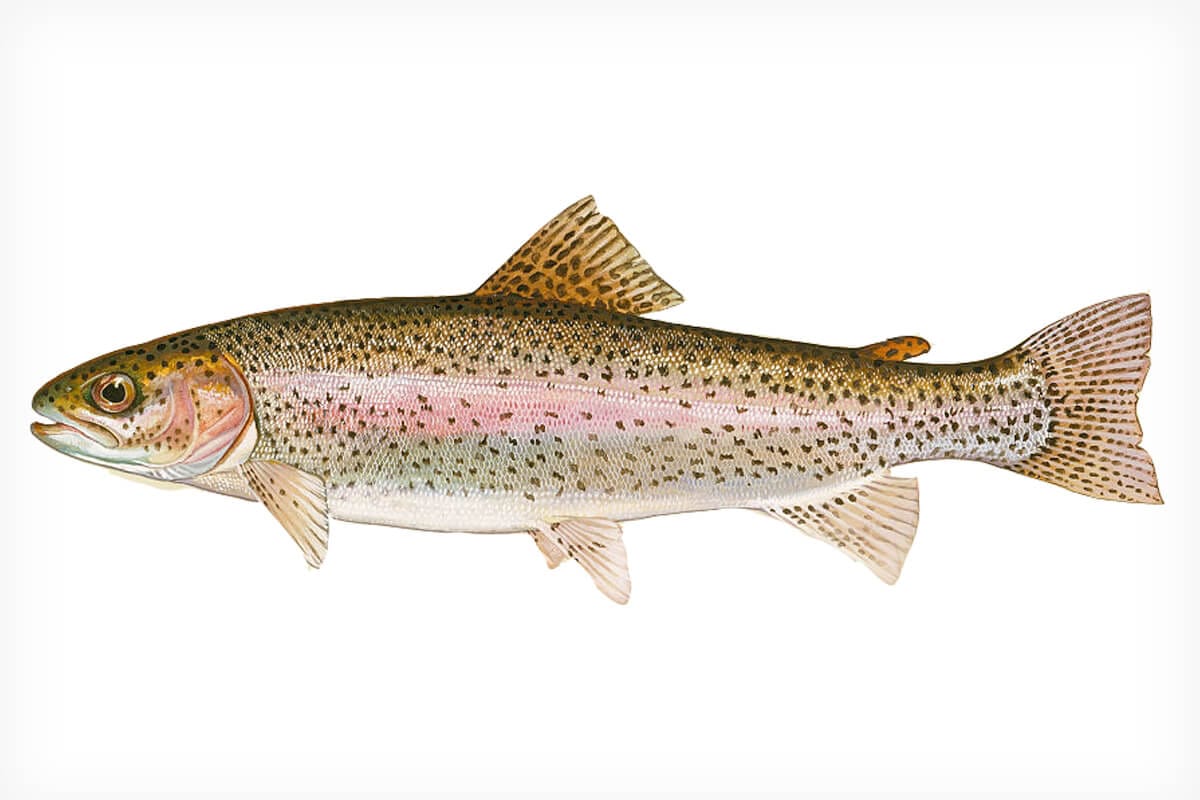
Rainbow Trout is one of the most widely recognized trout species globally. Native to North American rivers and lakes, it has been introduced across Europe, Asia, and South America for sport fishing and aquaculture. Rainbow Trout are known for their vibrant, iridescent colors, particularly the pink to red lateral stripe running along their silvery-green body. Their size can vary greatly, from 12 inches in small streams to over 30 inches in large lakes and rivers.
Rainbow Trout are opportunistic feeders, consuming insects, crustaceans, small fish, and aquatic invertebrates. They thrive in cold, oxygen-rich waters with steady currents, making them indicators of healthy ecosystems. Spawning occurs in spring, with females laying eggs in gravel nests called redds, and males fertilizing externally. The species is highly valued by anglers for its fighting ability, adaptability, and delicious taste. Rainbow Trout are also widely bred in hatcheries to support recreational fishing and conservation efforts. Their bright colors, adaptability, and ecological role make them a cornerstone of Types of Trout across North America and beyond.
2. Brown Trout (Salmo trutta)
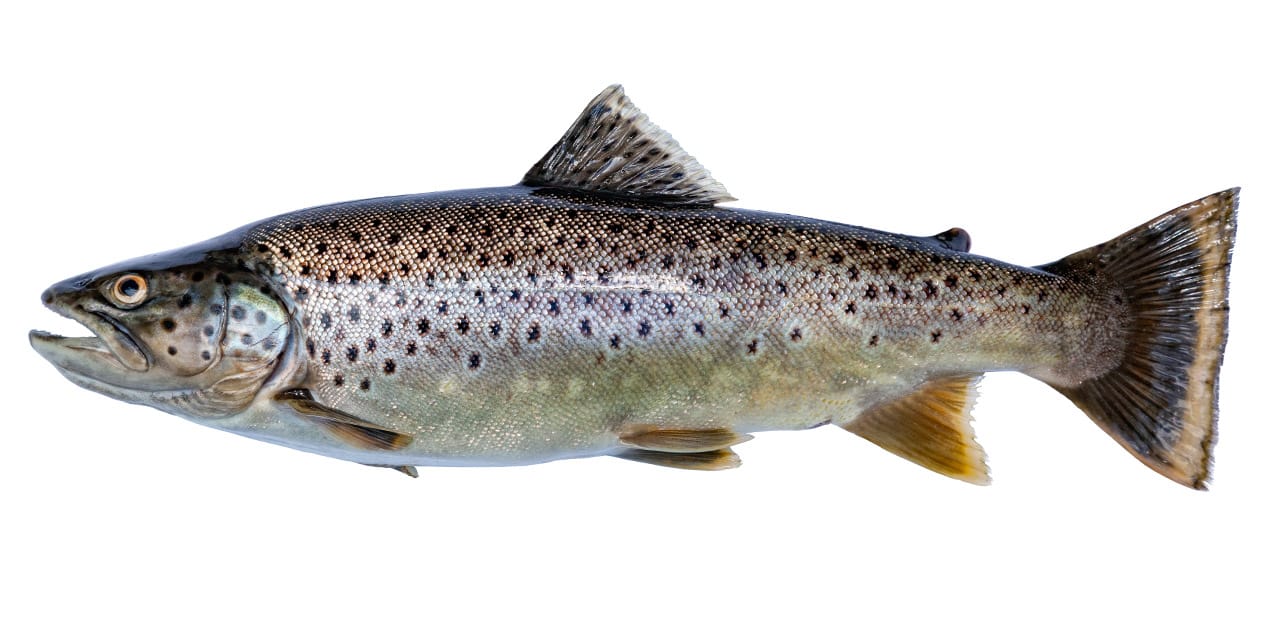
Brown Trout, native to Europe and western Asia, is now widely found across North America, Australia, and New Zealand. This trout is recognized by its golden-brown body, scattered black and red spots, and olive back. Brown Trout inhabit rivers, streams, and lakes, preferring cooler, well-oxygenated waters with ample cover such as rocks, logs, or undercut banks.
Dietarily, Brown Trout are flexible feeders, consuming insects, crustaceans, mollusks, and small fish. Some larger individuals become piscivorous, preying heavily on other fish species. They spawn in autumn, with females creating gravel nests where eggs develop until hatching. Brown Trout are revered in fly fishing circles for their elusive nature and strength, providing a challenging target for anglers. Ecologically, they help regulate invertebrate populations and serve as prey for larger predators. Their broad distribution, adaptability, and ecological significance firmly establish Brown Trout among the prominent Types of Trout.
3. Cutthroat Trout (Oncorhynchus clarkii)
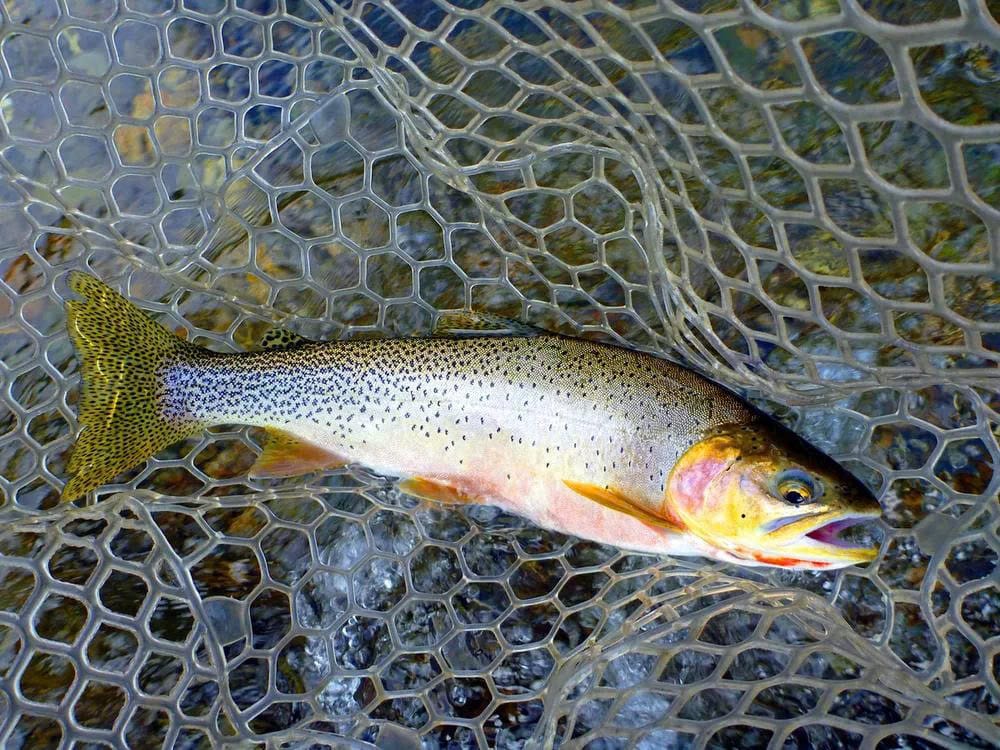
Cutthroat Trout is a North American native trout species, named for the distinctive red-orange streak along the underside of its jaw. This species occupies streams, rivers, and lakes across the western United States and Canada. Cutthroat Trout exhibit remarkable adaptability, with some populations remaining entirely freshwater while others migrate to estuaries or coastal waters.
They feed on aquatic insects, terrestrial invertebrates, and small fish, making them efficient predators in their ecosystems. Spawning typically occurs in spring, with females laying eggs in gravel beds. Cutthroat Trout play a critical ecological role by influencing invertebrate populations and providing prey for birds and larger fish. Anglers prize them for their challenging behavior, vibrant colors, and strong fight. Conservation efforts focus on protecting native populations, as hybridization with Rainbow Trout and habitat loss have threatened some subspecies. Cutthroat Trout remain a vital component of Types of Trout in North American waters.
4. Brook Trout (Salvelinus fontinalis)

Brook Trout, often referred to as Speckled Trout, is a char species native to eastern North America. Its distinctive appearance includes a dark green to brown back with light, worm-like markings and red spots surrounded by blue halos. Brook Trout prefer cold, clear streams, rivers, and small lakes with high oxygen content and abundant cover such as undercut banks and submerged logs.
They feed primarily on aquatic insects, crustaceans, and small fish. Brook Trout spawn in the fall, with females laying eggs in gravel beds where males fertilize them externally. This species is highly sensitive to water quality and temperature changes, making it an indicator of pristine aquatic environments. Anglers value Brook Trout for their beauty, elusive behavior, and excellent table quality. Conservation programs often focus on habitat restoration and preventing competition from non-native trout. As a highly adaptable and visually striking member, Brook Trout are a key species among Types of Trout.
5. Lake Trout (Salvelinus namaycush)
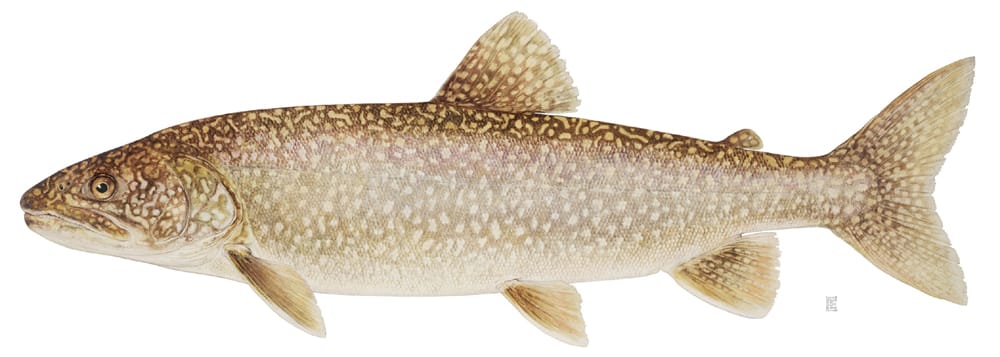
Lake Trout is a large, cold-water char native to North American lakes, particularly in Canada and the northern United States. Known for its silvery body with light spots, the Lake Trout can reach impressive sizes, with adults commonly exceeding 20 pounds. They inhabit deep, cold lakes and are apex predators within their aquatic ecosystems.
Lake Trout feed on smaller fish, including other trout, smelt, and invertebrates. Spawning occurs in rocky shallow areas during the fall, and juveniles grow slowly compared to other trout species. Anglers prize Lake Trout for both sport fishing and culinary value due to their size and fighting ability. Their ecological role is vital, helping regulate prey fish populations and maintain balanced freshwater food webs. Lake Trout’s adaptability to deep, cold waters and status as a top predator secure their place in the diverse spectrum of Types of Trout.
6. Golden Trout (Oncorhynchus aguabonita)
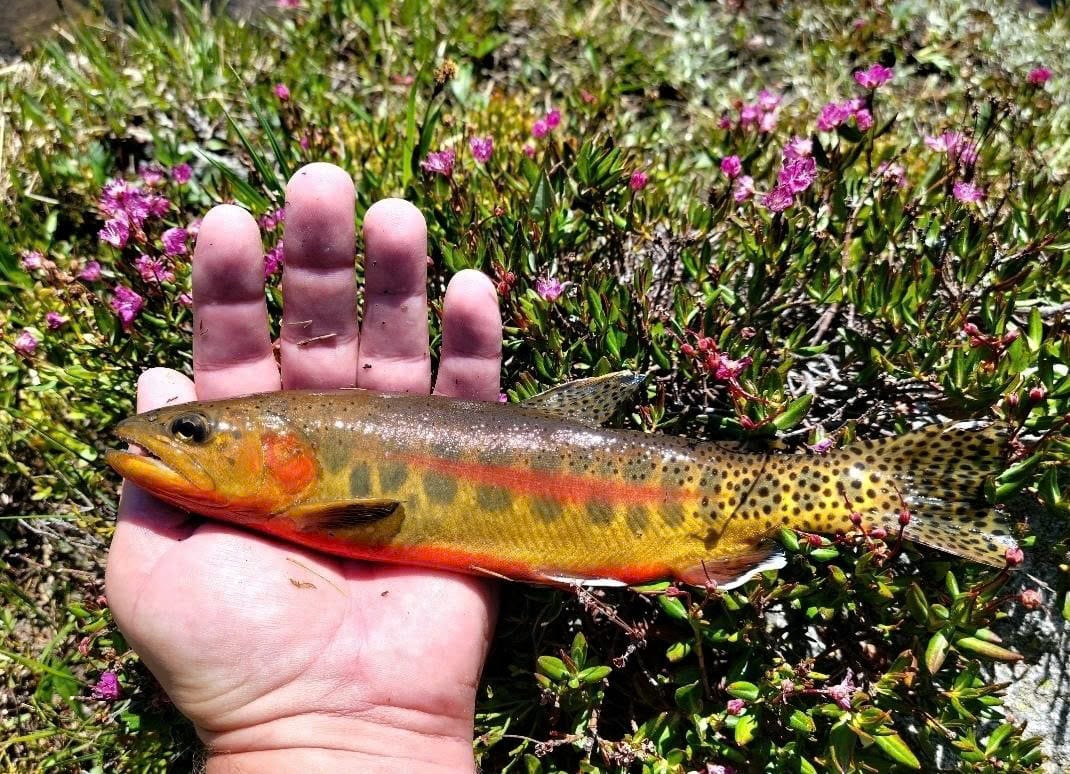
Golden Trout is one of the most visually stunning members of Types of Trout, native to California’s high-elevation Sierra Nevada streams. Known for its vibrant golden-yellow body, deep red lateral stripe, and olive-green back, this trout captivates anglers and wildlife enthusiasts alike. Golden Trout thrive in cold, pristine mountain waters, usually above 7,000 feet, with clear streams and rocky substrates providing ideal habitats.
These trout feed primarily on aquatic insects, crustaceans, and occasional small fish, exhibiting opportunistic predatory behavior. Spawning occurs in late summer, with females laying eggs in shallow gravel beds where males fertilize them externally. Golden Trout play an essential ecological role in mountain stream ecosystems by regulating insect populations and serving as prey for birds and larger fish. Due to their limited natural range, conservation efforts are critical, focusing on habitat restoration, water quality protection, and limiting non-native trout introductions. Their vivid colors and ecological importance make Golden Trout a highly sought-after species in the diverse category of Types of Trout.
7. Gila Trout (Oncorhynchus gilae)
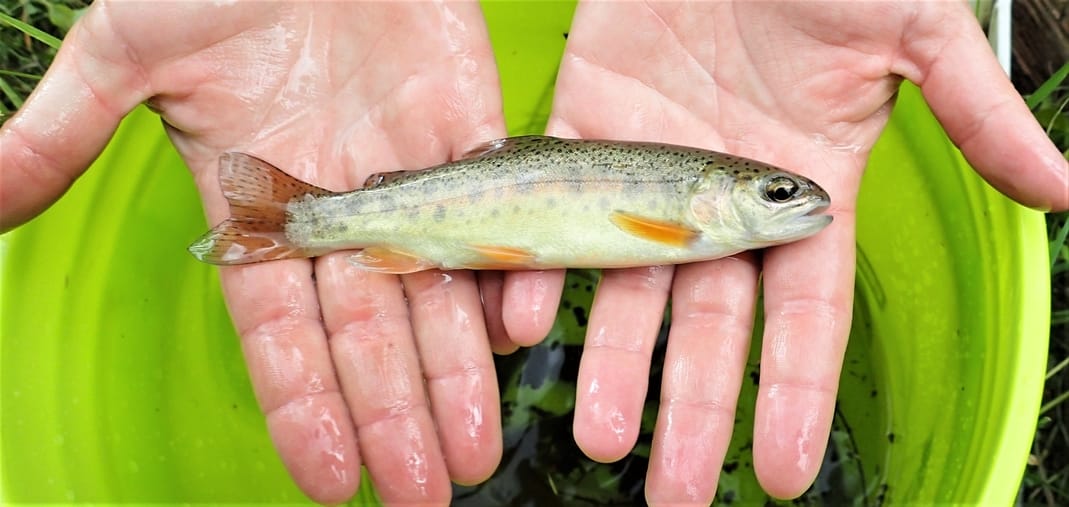
Gila Trout is a rare and endangered trout species native to the Gila River and its tributaries in Arizona and New Mexico. Its body ranges from golden-yellow to olive with distinctive dark spots, particularly along the dorsal and tail fins. Gila Trout inhabit cool, clear mountain streams with rocky substrates, preferring isolated and pristine waters that reduce competition from non-native trout species.
This trout feeds on insects, small invertebrates, and crustaceans. Spawning occurs in spring or early summer, with females laying eggs in gravel nests that are externally fertilized by males. Gila Trout is highly sensitive to habitat disturbance, making conservation and restocking programs crucial. Its limited distribution, ecological importance, and striking appearance solidify Gila Trout as an essential member of Types of Trout in the southwestern United States.
8. Apache Trout (Oncorhynchus apache)
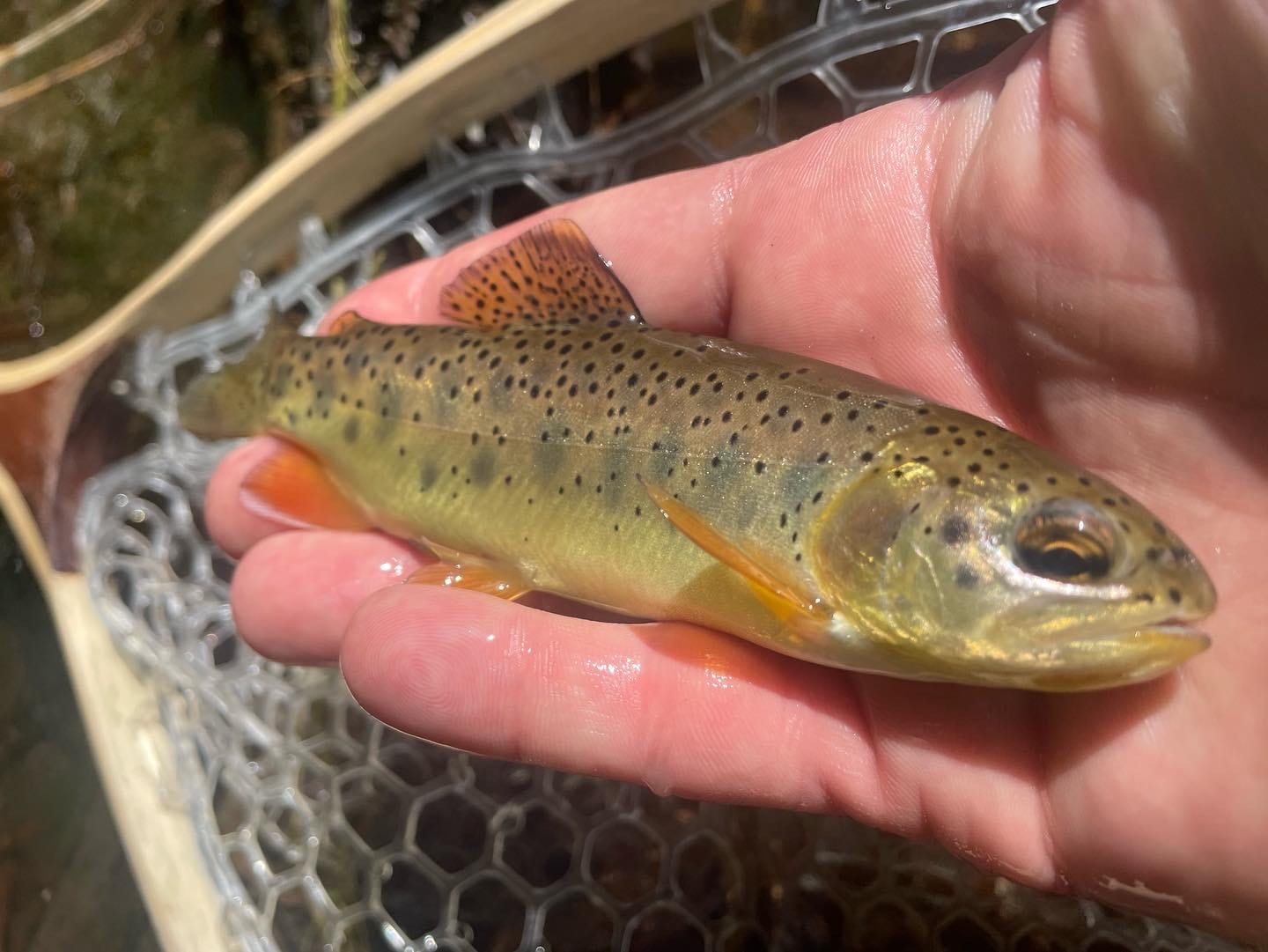
Apache Trout, native to eastern Arizona’s White Mountains, is another highly prized trout species. It displays a golden-yellow body with prominent black spots, particularly along the dorsal fin and tail, giving it a distinctive appearance. Apache Trout prefer cold, high-elevation streams with clean, well-oxygenated water and ample hiding spots like boulders and overhanging banks.
This trout’s diet primarily consists of aquatic insects, small fish, and invertebrates, reflecting its role as a mid-level predator in mountain stream ecosystems. Spawning typically occurs in spring, with females creating gravel redds where males fertilize the eggs. Conservation programs have been crucial in maintaining Apache Trout populations, which face threats from habitat degradation and hybridization with non-native trout. Anglers value Apache Trout for both sport and visual appeal, making it a standout in the list of Types of Trout.
9. Bull Trout (Salvelinus confluentus)
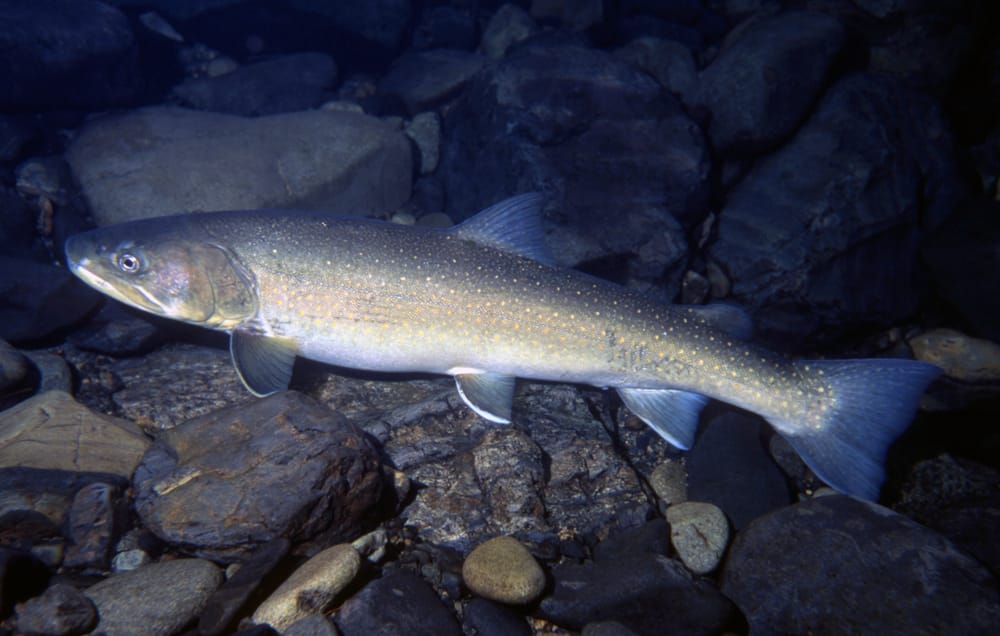
Bull Trout is a large char species native to the cold waters of the Pacific Northwest, western Canada, and parts of the northern United States. It is easily identified by its olive-green body with light, pale yellow spots and a broad head. Bull Trout thrive in cold, clean rivers and lakes, often inhabiting the upper reaches of river systems or deep lakes with abundant prey.
Their diet is highly piscivorous, feeding on smaller fish, amphibians, and aquatic insects. Bull Trout spawn in the fall, with females constructing redds in gravel or rocky streambeds where males fertilize the eggs. This species is sensitive to habitat degradation, temperature changes, and competition from non-native trout, making conservation programs essential. Ecologically, Bull Trout regulate prey populations and maintain balanced food webs in freshwater systems. Its predatory nature and ecological importance make Bull Trout a key member of Types of Trout.
10. Dolly Varden (Salvelinus malma)
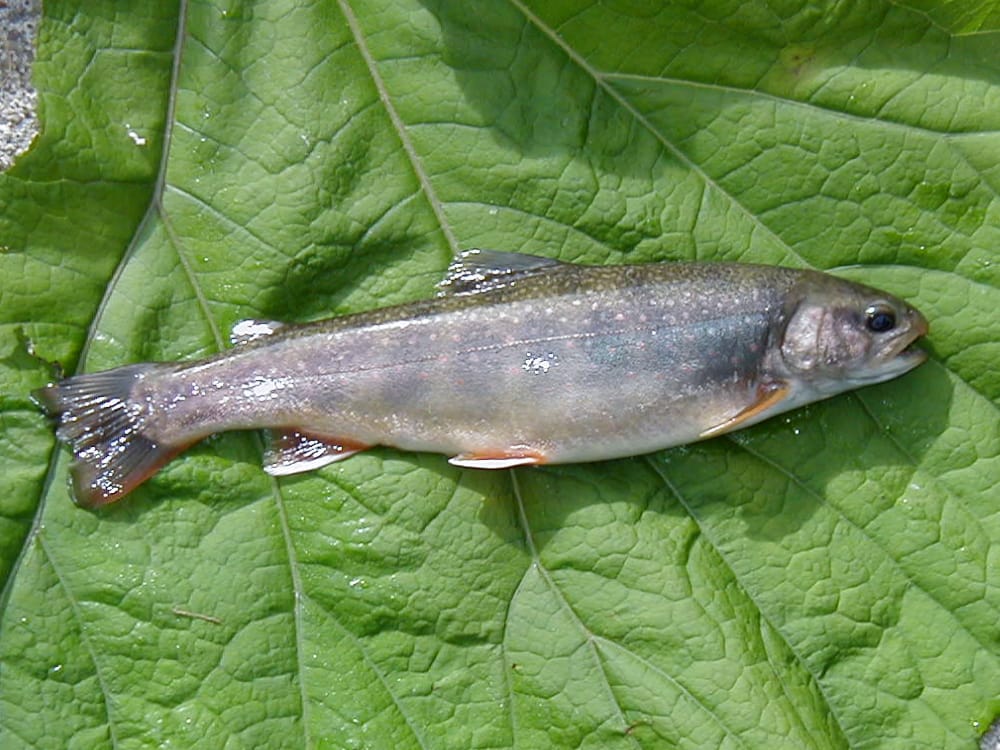
Dolly Varden is a cold-water char native to northern North America and northeastern Asia. It is distinguished by its dark green or brown body, adorned with light yellow or orange spots, and sometimes a pinkish belly. Dolly Varden inhabit both freshwater rivers and lakes, as well as anadromous environments, migrating to coastal waters during certain life stages.
This trout feeds on insects, small fish, and crustaceans, adapting its diet to available prey in its freshwater or marine environment. Spawning occurs in late summer to fall, with eggs deposited in gravel beds or stream bottoms. Dolly Varden plays a critical ecological role by regulating prey populations and serving as prey for birds, larger fish, and mammals. Conservation efforts aim to protect natural populations from habitat destruction and hybridization with other trout species. Its adaptability, migratory behavior, and ecological significance make Dolly Varden an essential species within the spectrum of Types of Trout.
11. Tiger Trout (Hybrid)

Tiger Trout is a unique and visually striking hybrid trout, produced by crossing a female Brook Trout (Salvelinus fontinalis) with a male Brown Trout (Salmo trutta). This hybrid is known for its dramatic, tiger-like vertical stripes across a golden-brown body, giving it a truly one-of-a-kind appearance among Types of Trout. Tiger Trout are sterile, meaning they do not reproduce naturally, so all populations are carefully managed and stocked by fisheries for recreational fishing purposes.
Tiger Trout are voracious feeders, preying on insects, small fish, and crustaceans. They thrive in cold, clean, oxygen-rich waters with rocky substrates or complex structures for cover. Because they are hybrids, Tiger Trout exhibit fast growth and remarkable fighting ability, making them highly sought-after by anglers seeking both challenge and beauty. Ecologically, they help control prey populations in stocked environments without risking competition with naturally reproducing trout species. Their rare hybrid nature, striking coloration, and sporting qualities make Tiger Trout a fascinating addition to any trout-focused guide.
12. Splake (Hybrid: Salvelinus namaycush × S. fontinalis)
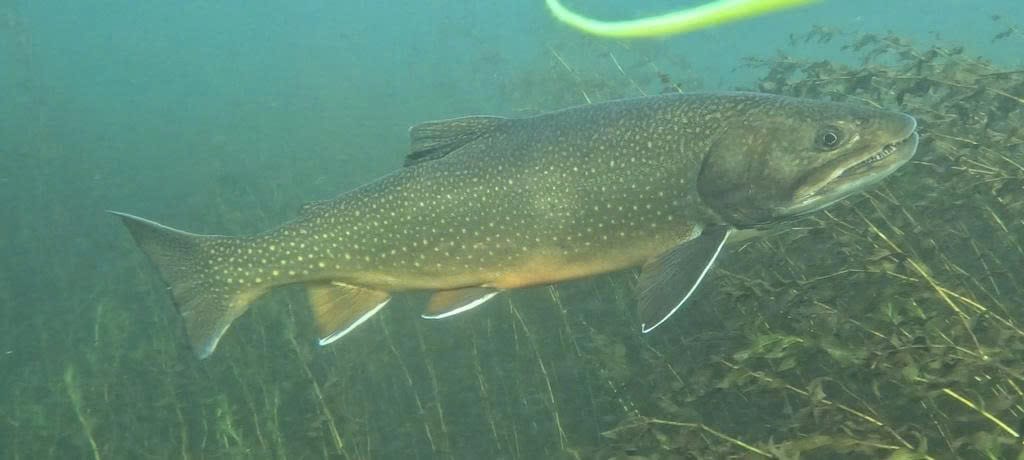
Splake is another hybrid trout, resulting from a cross between a male Lake Trout (Salvelinus namaycush) and a female Brook Trout (Salvelinus fontinalis). Splake combines the rapid growth and large size of Lake Trout with the adaptability and hardiness of Brook Trout. Its body is generally dark with lighter spotting and sometimes faint reticulations, making it visually distinct. As a hybrid, Splake are sterile and require human-assisted stocking for angling purposes.
Splake are primarily piscivorous, feeding on small fish, insects, and crustaceans, and they thrive in cold lakes and deep-water habitats. Spawning is unnecessary for fishery management, as all populations are stocked. They are prized by anglers for their aggressive strikes, large size, and adaptability to diverse freshwater habitats. Splake serve an important ecological function in managed lakes, controlling prey fish populations while minimizing competition with naturally reproducing trout. Their hybrid vigor and unique characteristics secure their place among notable Types of Trout.
13. Cutbow Trout (Hybrid: Rainbow × Cutthroat)
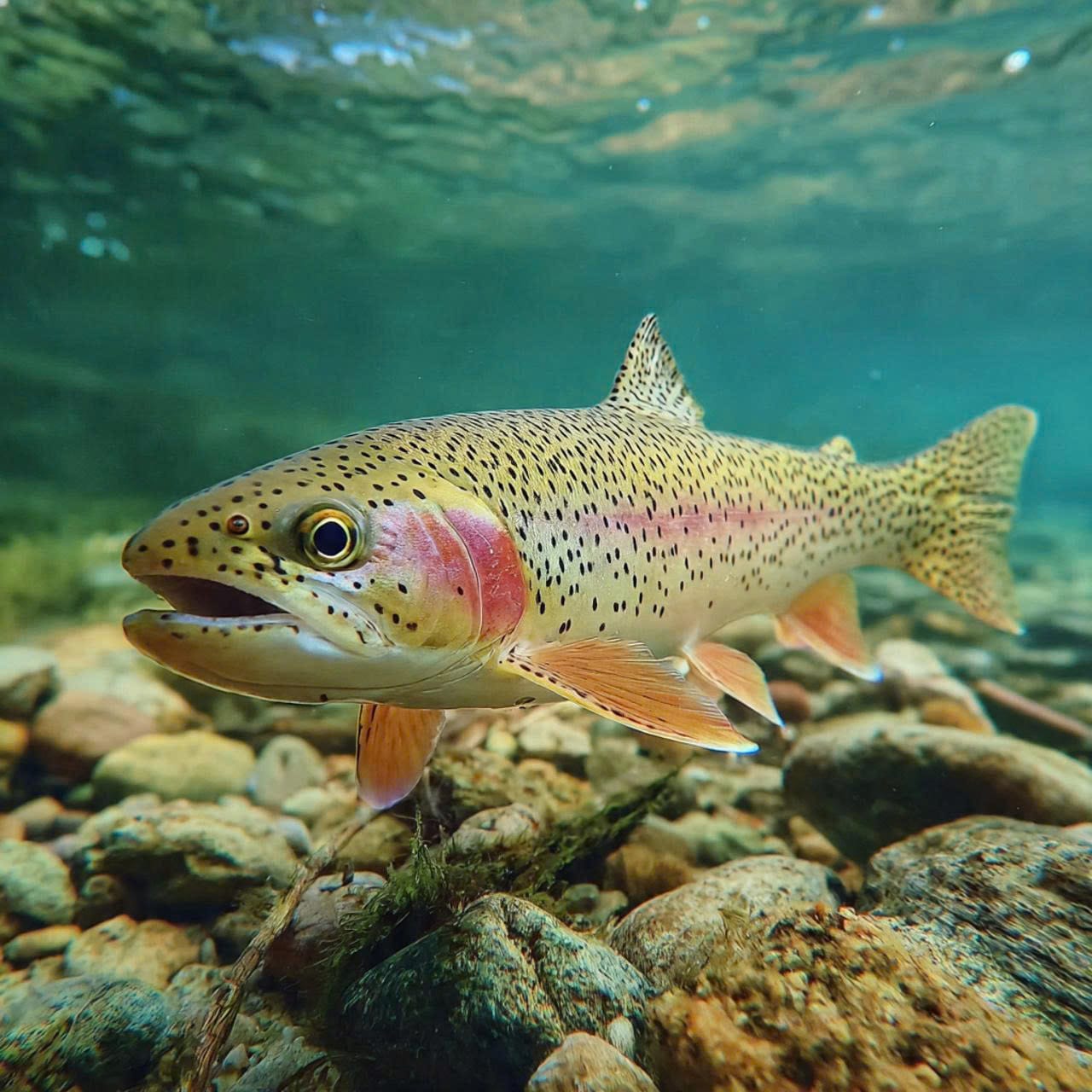
Cutbow Trout is a hybrid between Rainbow Trout (Oncorhynchus mykiss) and Cutthroat Trout (Oncorhynchus clarkii). These trout often exhibit characteristics from both parents, including a bright lateral stripe from Rainbow Trout and the throat coloration typical of Cutthroat Trout. Cutbows occur naturally where the ranges of Rainbow and Cutthroat Trout overlap, but they are also produced in hatcheries to enhance recreational fishing opportunities.
Cutbow Trout are opportunistic feeders, consuming insects, crustaceans, and small fish. They inhabit cold, clean rivers and streams, preferring areas with ample cover and riffles for feeding. Anglers value Cutbow Trout for their fighting ability, vibrant colors, and adaptability to a variety of freshwater habitats. Ecologically, they may influence invertebrate and small fish populations but can also hybridize with native trout, so management efforts aim to balance fishing opportunities with conservation. Cutbow Trout’s hybrid nature, beauty, and sporting qualities make them a fascinating member of Types of Trout.
14. Mexican Golden Trout (Oncorhynchus chrysogaster)
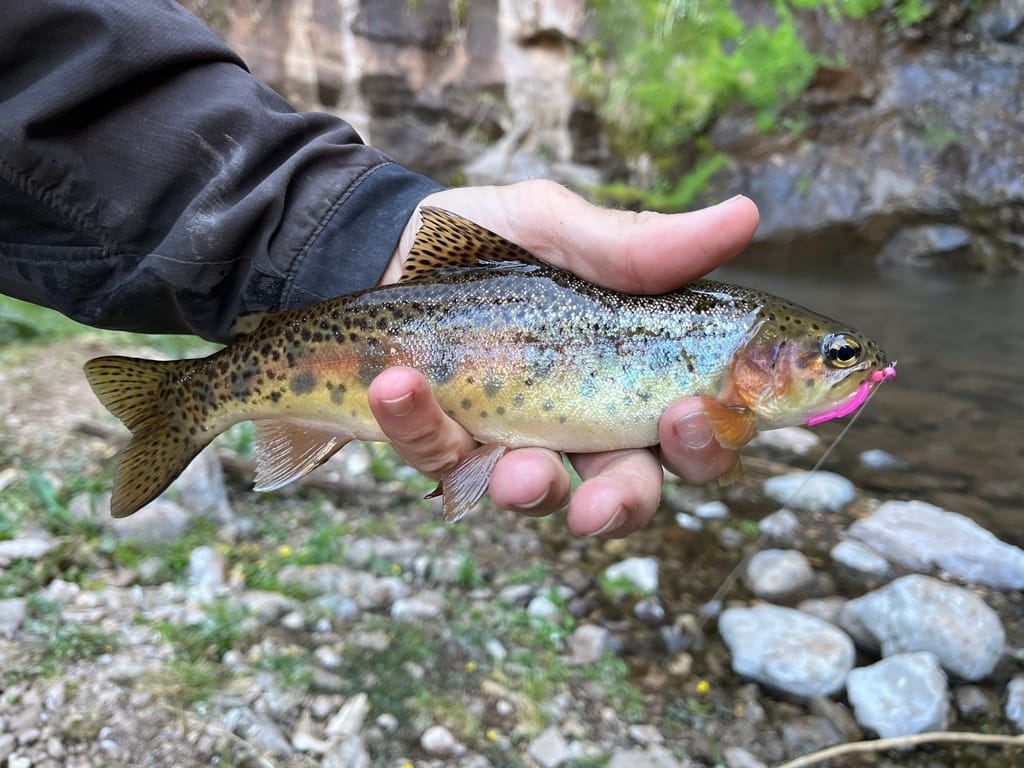
Mexican Golden Trout is a rare and highly localized trout species endemic to the high-altitude streams of Mexico’s Sierra Madre Occidental. It is renowned for its golden-yellow body, vibrant red lateral stripe, and dark spots along the dorsal and caudal fins. These trout prefer cold, fast-flowing mountain streams with rocky substrates and minimal human disturbance.
Their diet consists primarily of aquatic insects, small crustaceans, and terrestrial insects that fall into streams. Spawning typically occurs in late spring to early summer, with females depositing eggs in gravel nests and males fertilizing externally. Mexican Golden Trout are sensitive to habitat degradation, climate change, and competition with introduced trout species, making conservation critical. Due to its vivid coloration, ecological importance, and rarity, Mexican Golden Trout is one of the most prized species among Types of Trout for both anglers and wildlife enthusiasts.
15. Redband Trout (Oncorhynchus mykiss subspecies)
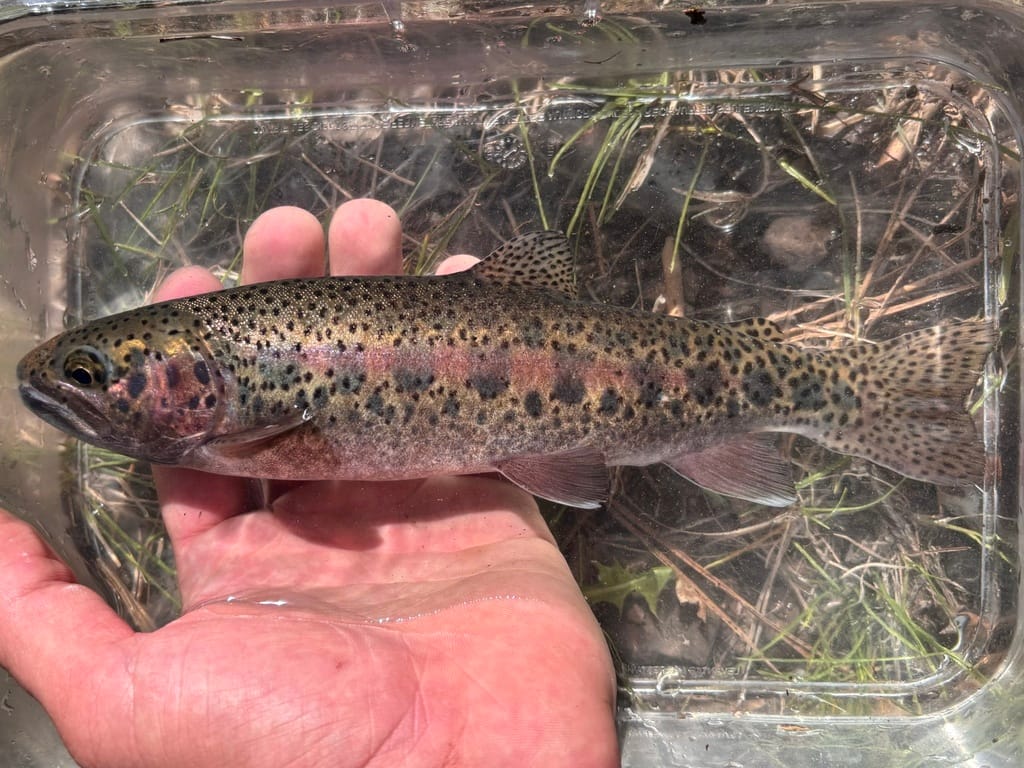
Redband Trout is a subspecies of Rainbow Trout, native to the western United States, particularly in arid and high-desert stream systems. They are easily recognized by the bright red or orange lateral stripe running along their sides, contrasted with a greenish-silver body dotted with black spots. Redband Trout are highly adaptable, surviving in variable flows and temperature conditions where other trout may struggle.
They feed on aquatic insects, small crustaceans, and occasionally smaller fish. Spawning occurs in spring, with females creating gravel nests for egg deposition. Redband Trout play an important ecological role in arid stream systems by regulating insect populations and serving as prey for birds and larger fish. Conservation efforts often focus on protecting their limited habitats from water diversion, pollution, and competition from introduced species. Their resilience, vibrant coloration, and ecological significance make Redband Trout a key member of Types of Trout.
16. Lahontan Cutthroat Trout (Oncorhynchus henshawi)
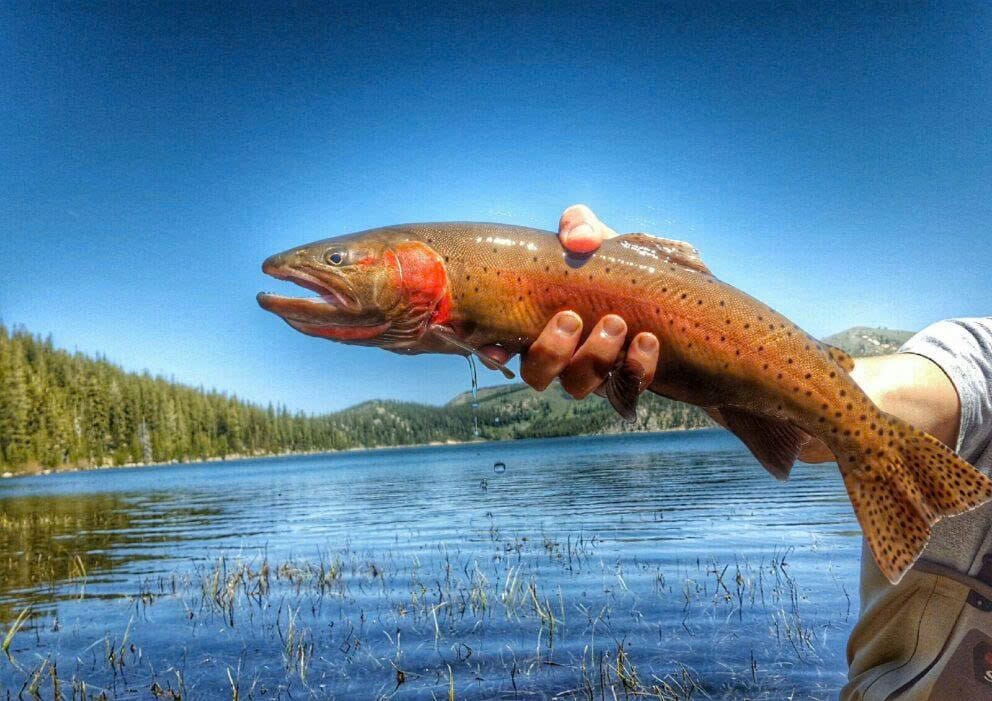
Lahontan Cutthroat Trout is a subspecies of Cutthroat Trout native to the Lahontan Basin in Nevada, California, and Oregon. Recognized by its golden-yellow body with large dark spots concentrated toward the tail, this trout thrives in cold, alkaline lakes and streams. Its resilience in high-desert waters makes it a unique member of Types of Trout.
They feed on aquatic insects, small fish, and crustaceans. Spawning occurs in spring, with females laying eggs in gravel beds. Lahontan Cutthroat Trout play a vital role in maintaining ecosystem balance by controlling invertebrate and small fish populations. Conservation programs have restored populations after historic overfishing and habitat loss. Their striking coloration, adaptability, and ecological importance make them a prized trout for anglers and wildlife enthusiasts alike.
17. Westslope Cutthroat Trout (Oncorhynchus clarkii lewisi)
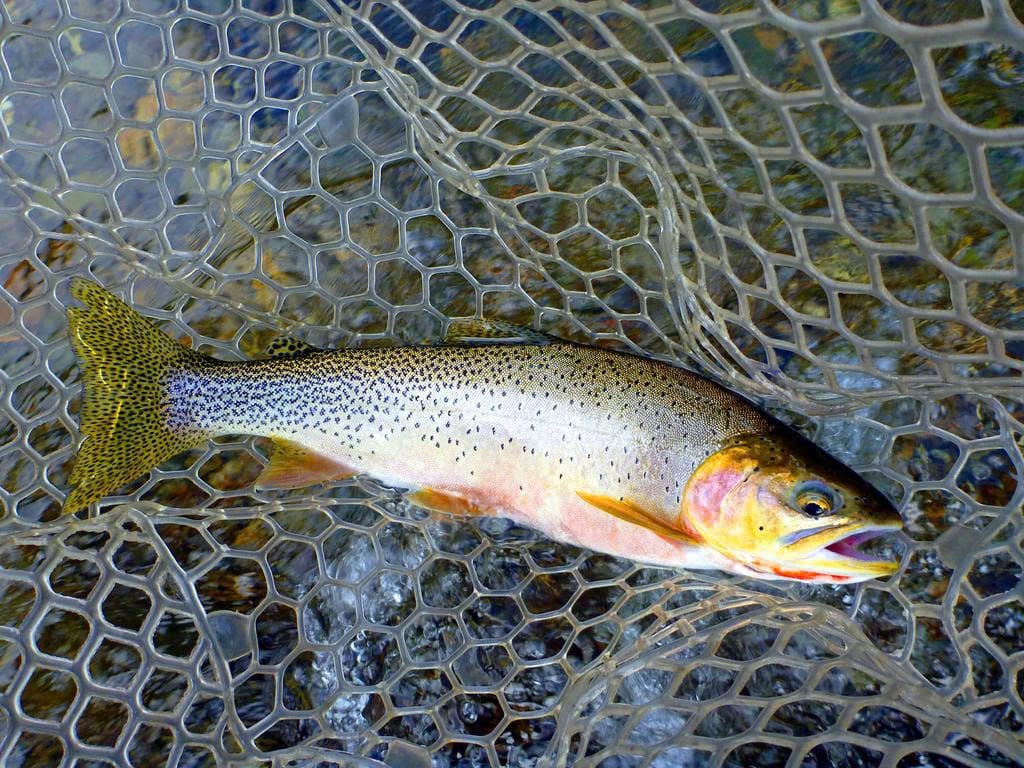
The Westslope Cutthroat Trout inhabits cold, clear rivers and lakes of the northern Rocky Mountains. It is characterized by a silvery body with red or orange markings beneath the jaw and small black spots along the back and fins. These trout prefer cool, oxygen-rich waters with gravelly substrates.
They feed primarily on insects, small crustaceans, and smaller fish. Spawning occurs in early spring, with females preparing gravel nests for fertilized eggs. Westslope Cutthroat Trout are sensitive to habitat changes, including dam construction and water pollution. Conservation efforts focus on habitat restoration and preventing hybridization with non-native trout. Their ecological role and beautiful coloration secure them a notable place in the diverse array of Types of Trout.
18. Rocky Mountain Cutthroat Trout (Oncorhynchus virginalis)
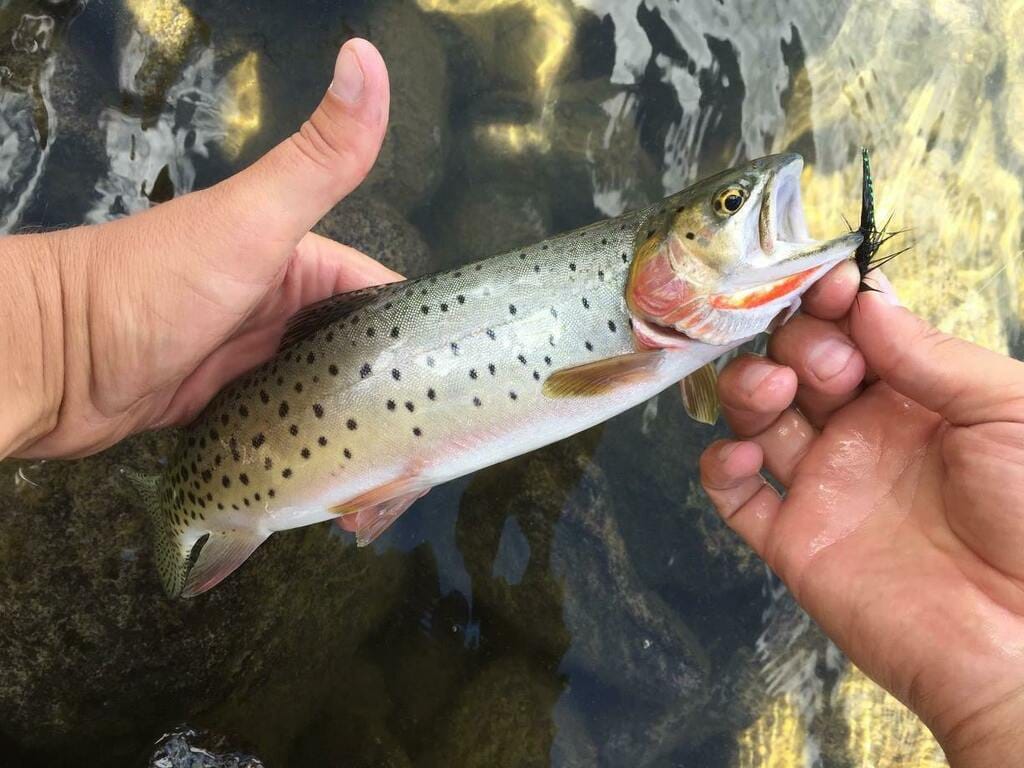
Native to the Rocky Mountains, the Rocky Mountain Cutthroat Trout is prized for its vibrant coloration and adaptability. It features a silvery body with prominent red or orange markings on the underside of the jaw and numerous black spots along its dorsal and tail fins. These trout thrive in cold, clear streams and lakes at high elevations.
Their diet includes aquatic insects, crustaceans, and smaller fish, reflecting their role as mid-level predators. Spawning occurs in spring, with eggs deposited in gravel nests. Conservation programs protect this species from habitat loss, water temperature changes, and competition with introduced trout. Its striking appearance, ecological significance, and sporting value make Rocky Mountain Cutthroat Trout a key member of Types of Trout.
19. Coastal Cutthroat Trout (Oncorhynchus clarkii clarkii)
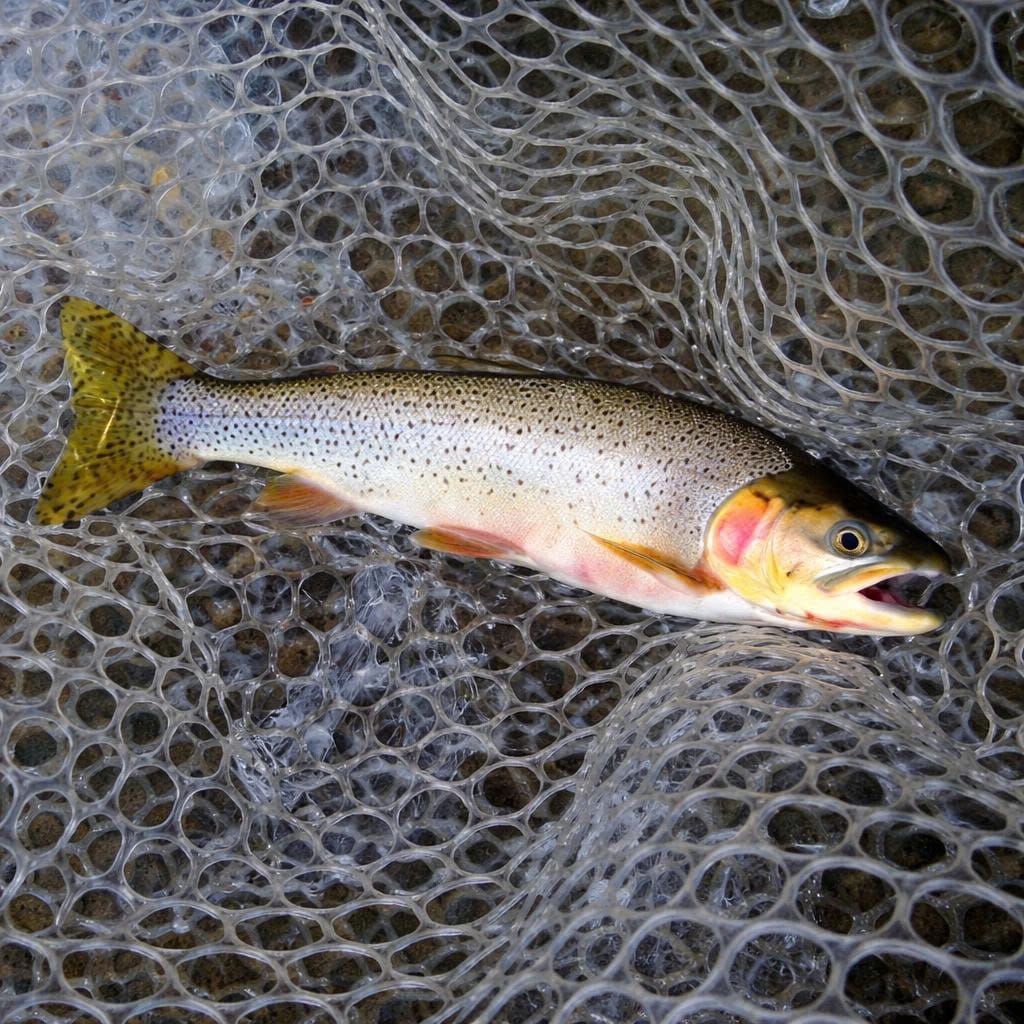
Coastal Cutthroat Trout inhabits rivers, estuaries, and nearshore coastal waters from California to Alaska. This trout displays a silvery body with red or orange marks beneath the jaw and numerous dark spots on its back and fins. Unlike other cutthroats, it can exhibit anadromous behavior, migrating between freshwater and saltwater.
Their diet is varied, including aquatic insects, small fish, and crustaceans. Spawning occurs in spring in freshwater streams, where females lay eggs in gravel nests. Coastal Cutthroat Trout contribute to both freshwater and nearshore marine ecosystems, serving as prey for larger fish, birds, and mammals. Conservation emphasizes habitat connectivity and preventing overfishing. Their adaptability and dual life cycle make Coastal Cutthroat Trout an interesting and ecologically important member of Types of Trout.
20. Arctic Char (Salvelinus alpinus)
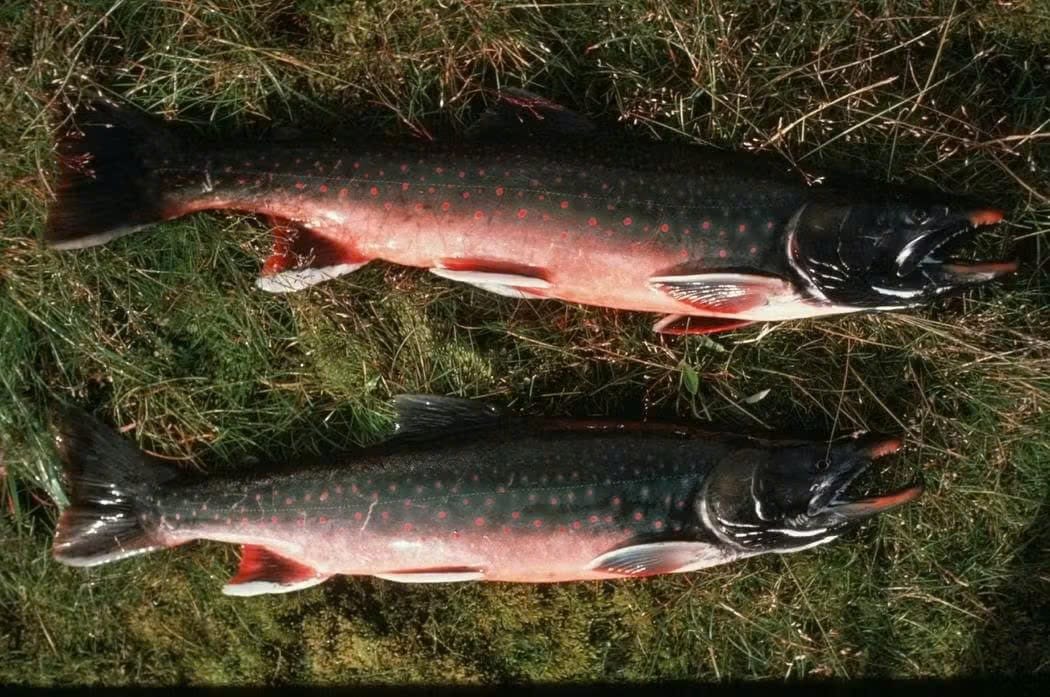
Arctic Char is a cold-water char found in northern North America, Europe, and Asia. Recognizable by its olive-green to bluish body with light spots and often a pinkish belly, Arctic Char inhabits deep, cold lakes and rivers, often in arctic or subarctic regions. It is highly adapted to extreme environments and low temperatures.
Arctic Char feeds on insects, crustaceans, and smaller fish, and some populations are anadromous, migrating to coastal waters. Spawning occurs in late autumn, with eggs deposited in gravel nests. This species plays a critical ecological role by regulating prey populations in cold freshwater systems and serving as a key food source for predators. Conservation focuses on protecting habitats from climate change and overfishing. Its resilience, distinctive appearance, and ecological importance make Arctic Char a notable trout among Types of Trout.
21. Aurora Trout (Salvelinus fontinalis timagamiensis)
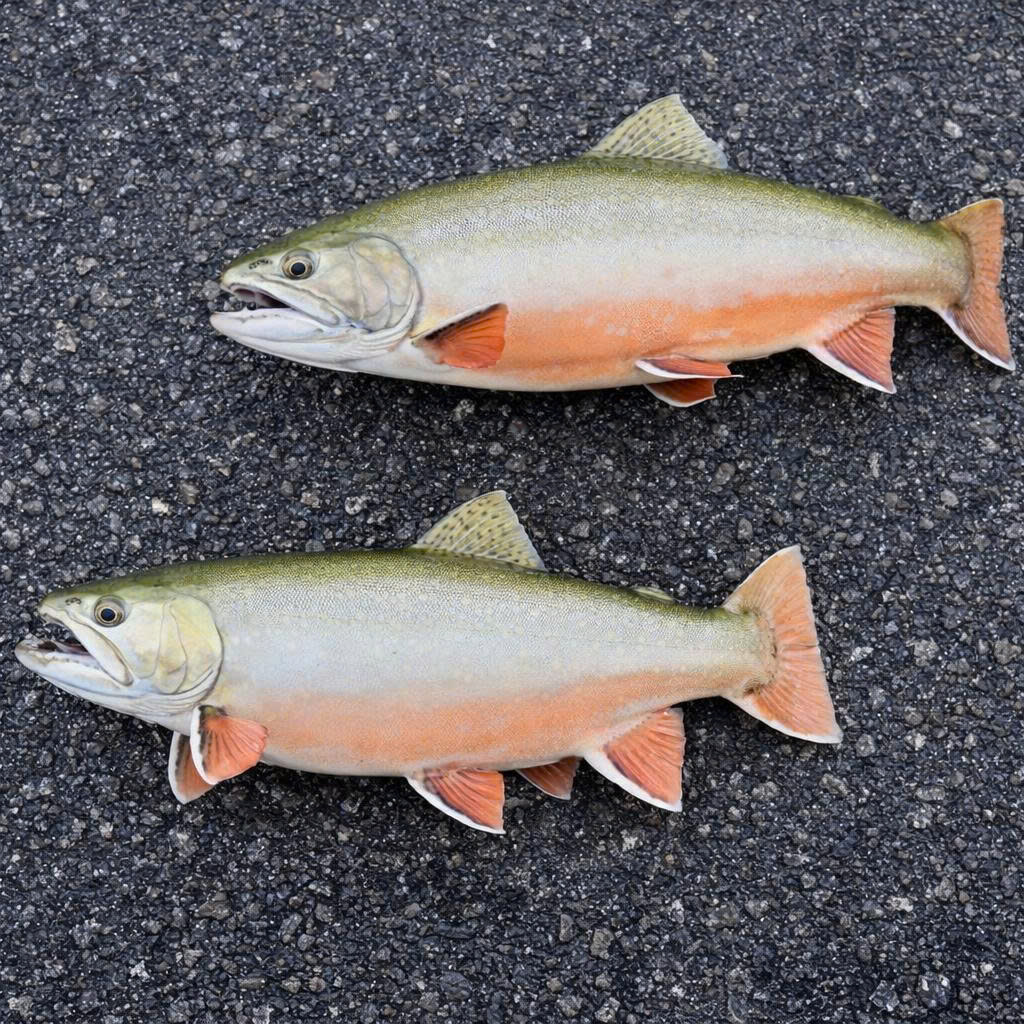
Aurora Trout is a rare color variant of Brook Trout, found historically in northeastern Ontario, Canada. Its name reflects its unique, vibrant coloration—bright pink to orange with contrasting olive-green upper body. Aurora Trout thrive in cold, clear lakes and streams, often in isolated and pristine habitats.
They feed primarily on aquatic insects, small crustaceans, and other invertebrates. Spawning occurs in fall, with females laying eggs in gravel beds. Aurora Trout populations faced severe declines due to acidification and habitat degradation, but restocking and conservation programs have helped restore some populations. Their rarity, brilliant coloration, and ecological role highlight Aurora Trout as a fascinating member of Types of Trout.
22. Silver Trout (Salvelinus agassizii) (extinct)
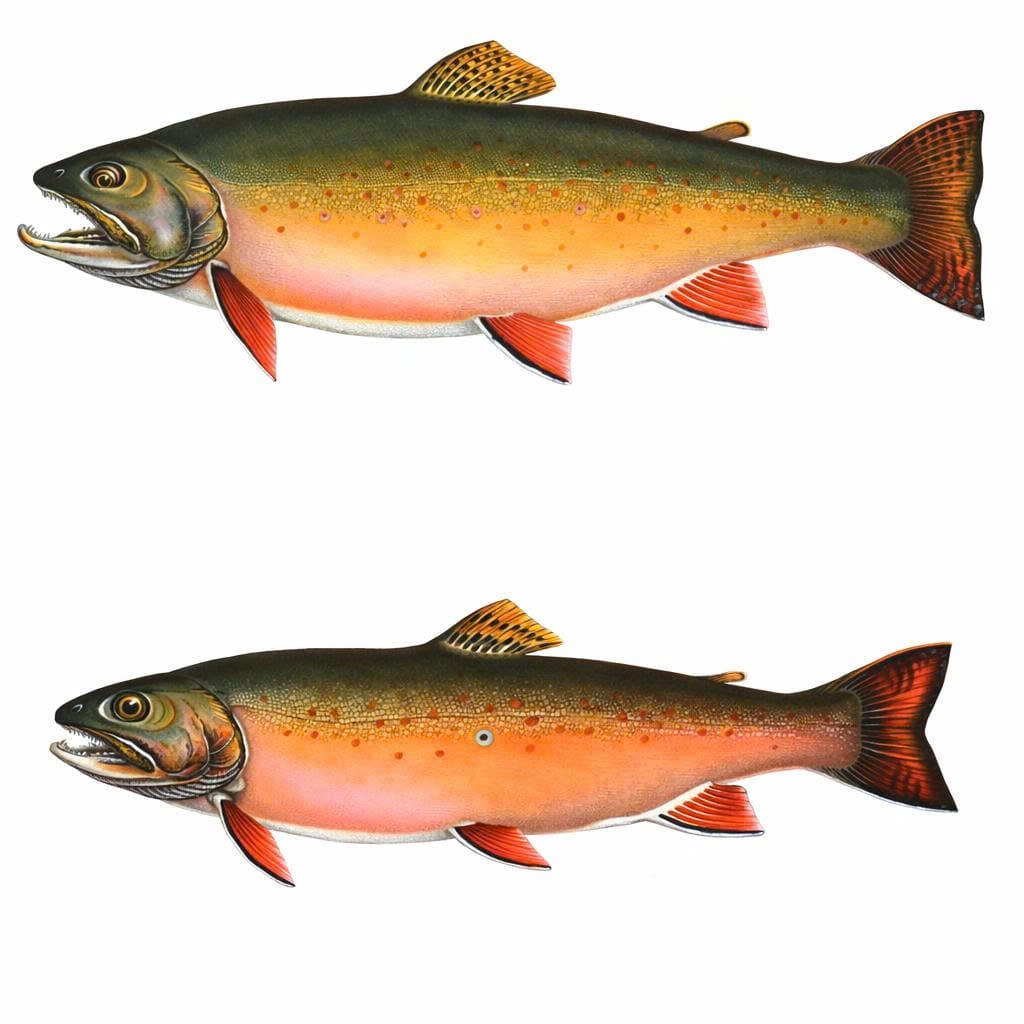
Silver Trout, a species of char formerly found in New Hampshire lakes, is now considered extinct. It had a silvery body with faint markings, adapted to cold, deep lakes. Silver Trout played a role in controlling prey fish populations and supporting local food webs.
Though extinct, Silver Trout reminds us of the importance of habitat protection, water quality, and responsible fisheries management. Documenting and studying extinct trout like Silver Trout provides lessons for conservation efforts for other sensitive trout species. Its historical significance ensures Silver Trout remains part of the ecological discussion surrounding Types of Trout.
23. Sunapee Trout (Salvelinus alpinus subspecies)
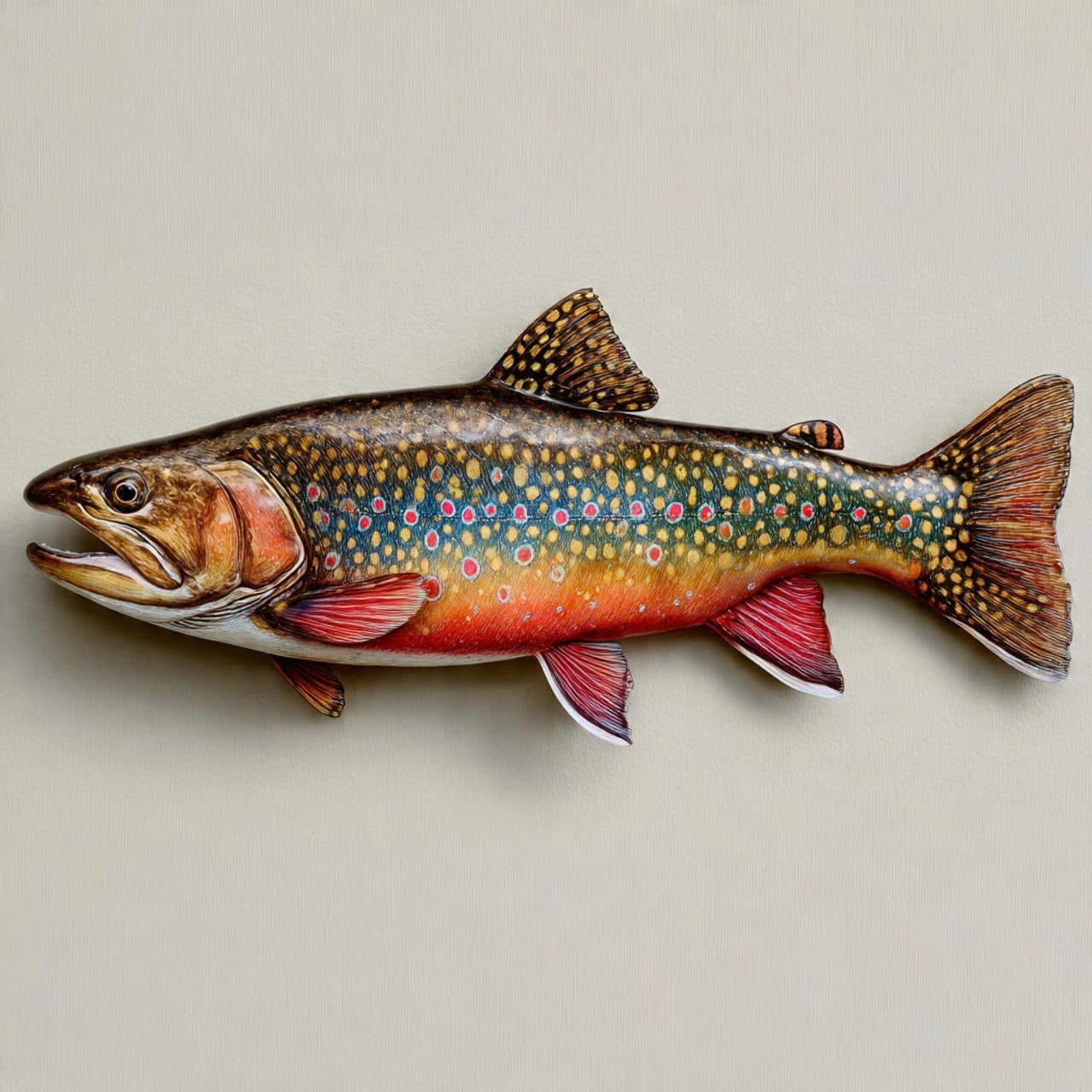
Sunapee Trout is a subspecies of Arctic Char historically found in Lake Sunapee, New Hampshire. It shares the typical Arctic Char silvery body with dark spots and exhibits adaptations to cold freshwater environments. Its diet included insects, crustaceans, and small fish.
Spawning occurred in the fall, with eggs deposited in shallow gravel beds. Sunapee Trout populations were historically vulnerable to habitat changes and non-native trout introductions. Studying this subspecies offers insights into trout conservation, population dynamics, and the ecological role of cold-water trout. Sunapee Trout remains a valuable reference point in the study of Types of Trout.
24. Masu or Japanese Trout (Oncorhynchus masou)
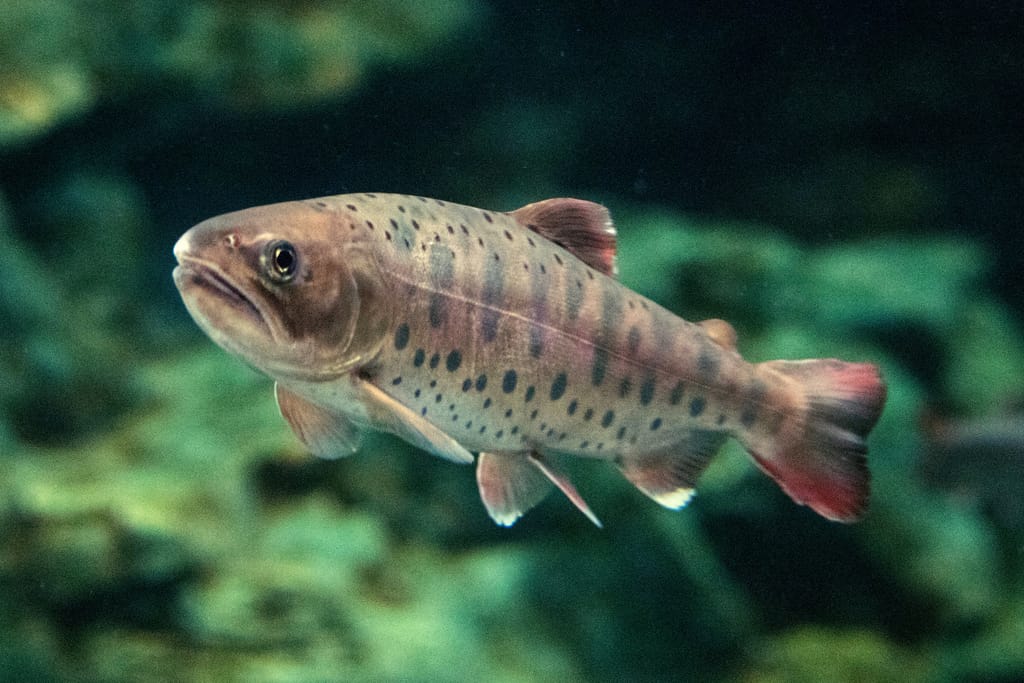
Masu Trout, native to Japan, Korea, and eastern Russia, is also known as Japanese Trout. It displays a silvery body with a pinkish lateral stripe and black spots on the dorsal side. Masu Trout inhabit rivers, streams, and lakes, often in mountainous regions with cold, oxygen-rich waters.
They feed on insects, crustaceans, and smaller fish, exhibiting opportunistic predatory behavior. Spawning occurs in fall or spring depending on local conditions, with females laying eggs in gravel nests. Masu Trout is culturally and ecologically significant in Japan, where it is valued for sport fishing and culinary purposes. Its adaptability, vibrant coloration, and ecological contributions make Masu Trout a prominent member of Types of Trout.
25. Biwa Trout (Oncorhynchus biwaensis)
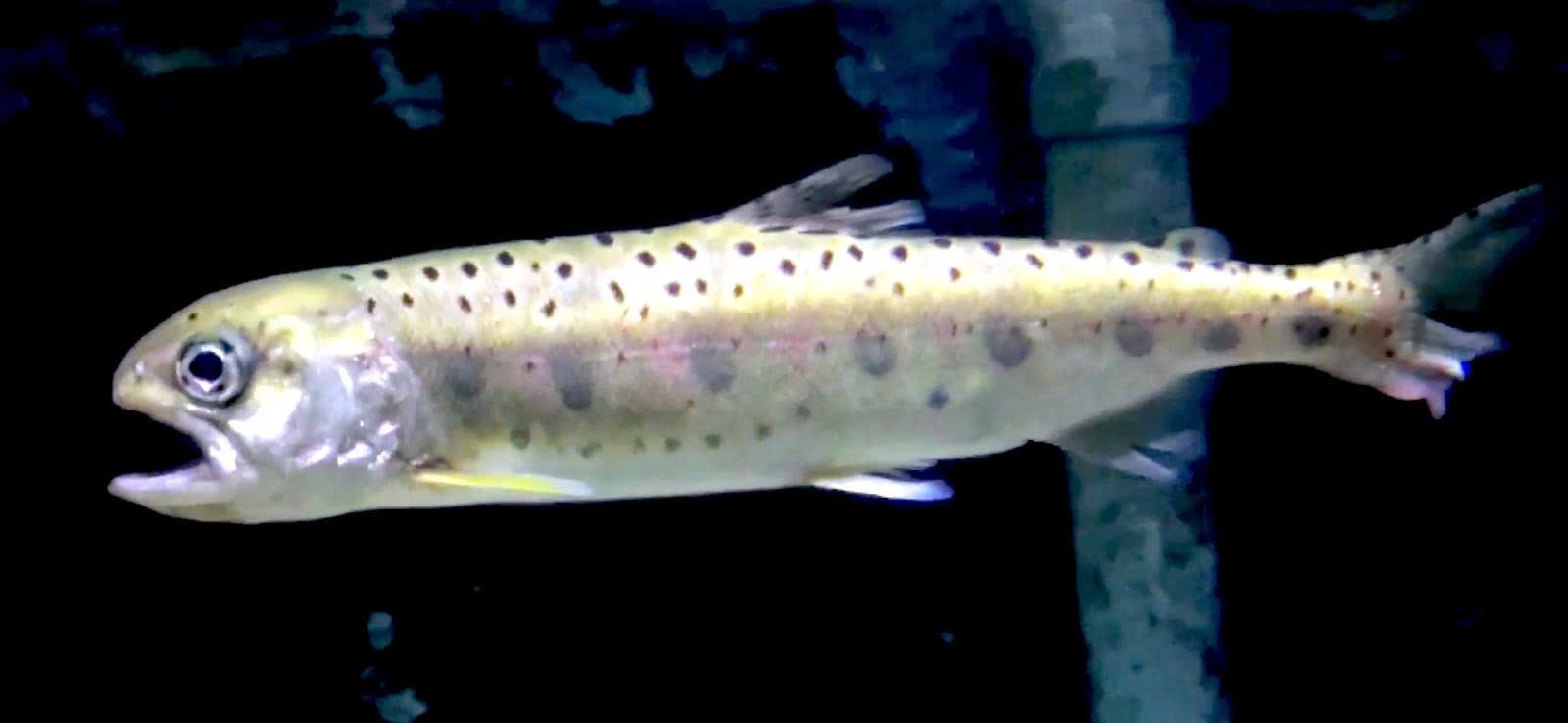
Biwa Trout is endemic to Lake Biwa in Japan, exhibiting a greenish-silver body with faint spots. This trout inhabits deep, cold freshwater environments and is adapted to lake ecosystems. Biwa Trout feeds on insects, crustaceans, and smaller fish, playing a critical role as a mid-level predator.
Spawning occurs in streams feeding into the lake, with eggs laid in gravel beds. Biwa Trout populations are closely monitored due to habitat changes, water pollution, and competition with introduced species. Their ecological significance and unique adaptations make Biwa Trout an essential species in the study of Types of Trout in East Asia.
26. Northern Dolly Varden (Salvelinus malma malma)

Northern Dolly Varden is a northern subspecies of Dolly Varden found in Arctic and subarctic rivers, lakes, and coastal areas of Alaska, Canada, and Russia. It has a dark olive to bluish-green body adorned with pale yellow or orange spots, a pinkish belly in some individuals, and a slightly forked tail. Northern Dolly Varden can live in freshwater or migrate anadromously to coastal waters, depending on environmental conditions.
This trout feeds on aquatic insects, small fish, crustaceans, and plankton, depending on the habitat. Spawning occurs in the fall in freshwater streams, with females depositing eggs in gravel nests. Northern Dolly Varden play a crucial ecological role by regulating invertebrate and small fish populations and providing prey for birds, mammals, and larger fish. Their adaptability to extreme northern environments and migratory behavior make them a fascinating member of Types of Trout.
27. Yellowstone Cutthroat Trout (Oncorhynchus clarkii bouvieri)
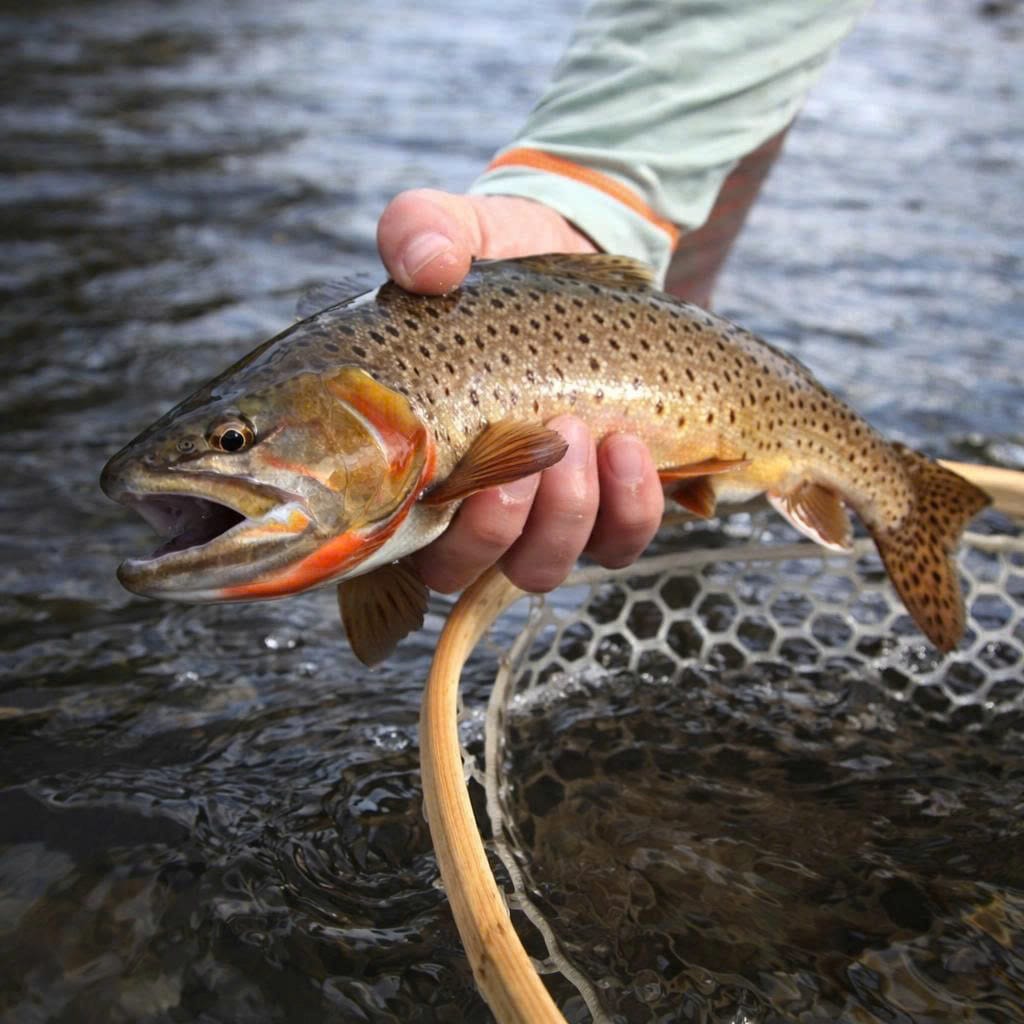
Yellowstone Cutthroat Trout is native to the Yellowstone River and surrounding tributaries in the northwestern United States. It displays a silvery body with golden hues, red or orange markings along the underside of the jaw, and small dark spots concentrated near the tail. This trout thrives in clear, cold rivers and streams with ample gravel beds for spawning.
Its diet includes aquatic insects, crustaceans, and small fish, making it an effective mid-level predator. Spawning occurs in the spring, and females prepare gravel redds where males fertilize the eggs. Yellowstone Cutthroat Trout is ecologically important, helping maintain balance in river ecosystems while supporting recreational angling. Conservation focuses on protecting habitat from invasive species, hybridization, and environmental changes. Its distinctive coloration and ecological significance secure its place among notable Types of Trout.
28. Paiute Cutthroat Trout (Oncorhynchus clarkii seleniris)
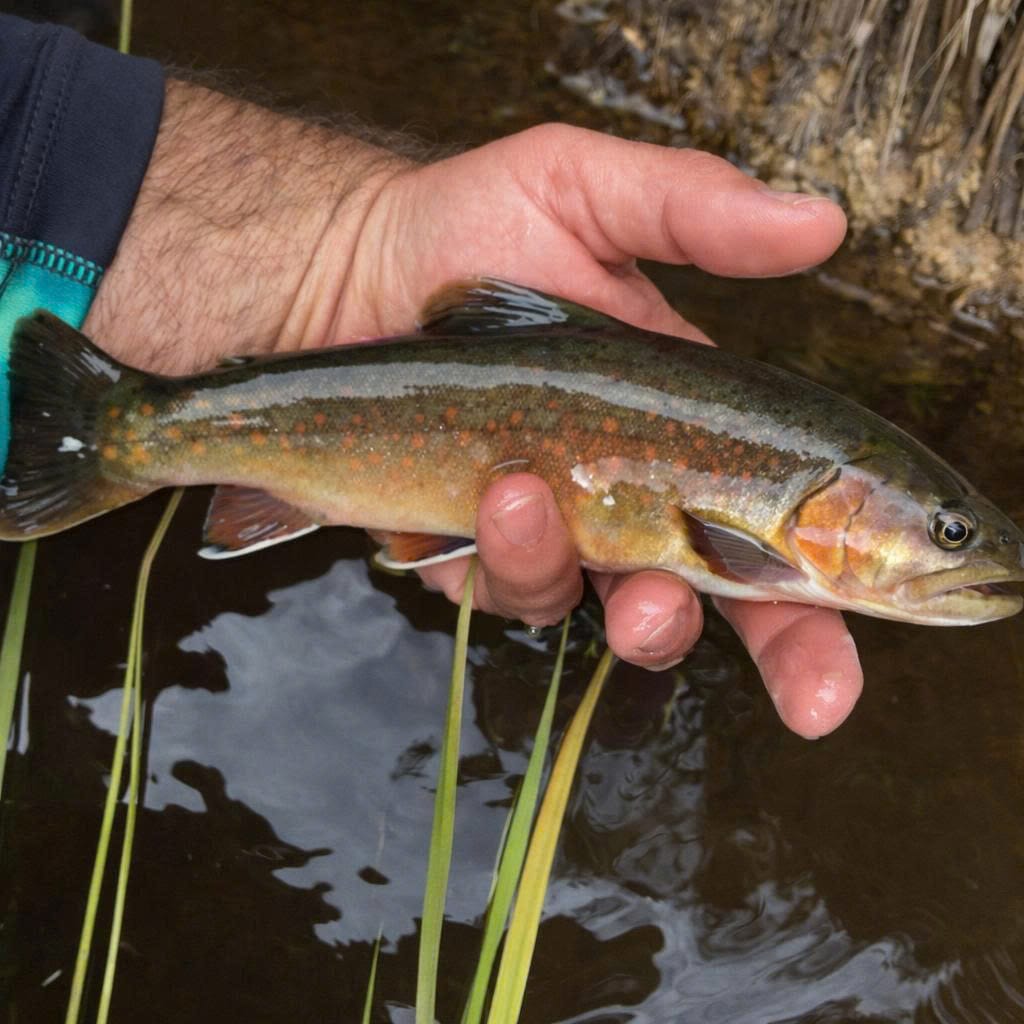
Paiute Cutthroat Trout is one of the rarest native trout species in North America, restricted to high-elevation streams in eastern California. It is easily recognized by its silver body, subtle spotting, and faint pink lateral line. Paiute Cutthroat Trout inhabits cold, isolated creeks and headwaters, requiring pristine water quality for survival.
This trout feeds on aquatic insects and small invertebrates. Spawning occurs in spring, with females laying eggs in shallow gravel beds. Due to its extremely limited range and vulnerability to non-native trout introductions, conservation efforts are critical for survival. Ecologically, it helps maintain insect populations in alpine stream ecosystems. Its rarity, fragile habitat, and unique appearance make Paiute Cutthroat Trout a remarkable member of Types of Trout.
29. Steelhead (Oncorhynchus mykiss, anadromous Rainbow Trout)
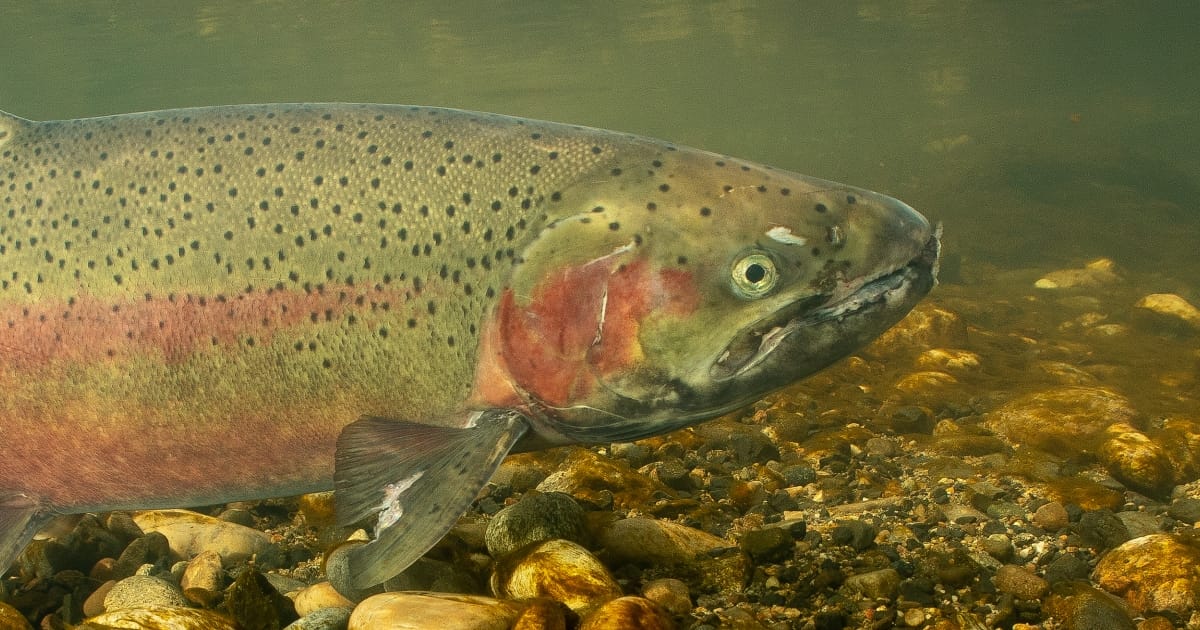
Steelhead is the anadromous form of Rainbow Trout, migrating from freshwater rivers to the ocean and returning to spawn. They are known for their silvery bodies, pinkish lateral stripes, and exceptional strength and size. Steelhead inhabit rivers across North America and parts of Asia, particularly in the Pacific Northwest, and thrive in cold, oxygen-rich waters.
Steelhead are opportunistic feeders, consuming insects, crustaceans, and smaller fish. Spawning occurs in freshwater streams, typically in winter or spring, with females creating gravel nests. Ecologically, Steelhead regulate prey populations in rivers and coastal estuaries, and they serve as prey for larger predators. Their migratory behavior, sporting appeal, and ecological impact make Steelhead a critical and iconic species within Types of Trout.
30. Sea Trout (Salmo trutta, anadromous Brown Trout)

Sea Trout is the anadromous form of Brown Trout, native to Europe but introduced to other continents for recreational fishing. It has a silvery body with scattered black and red spots, similar to Brown Trout in rivers but adapted for life at sea. Sea Trout migrate to coastal and estuarine waters to feed, returning to freshwater streams to spawn.
Their diet includes small fish, insects, crustaceans, and marine invertebrates. Spawning occurs in freshwater rivers during autumn, with females depositing eggs in gravel beds. Sea Trout plays a key ecological role in both freshwater and marine ecosystems, influencing prey populations and serving as a food source for larger predators. Their dual life cycle, adaptability, and sporting value make Sea Trout a notable member of Types of Trout, completing this comprehensive guide.
Conclusion
In summary, trout represent one of the most diverse and ecologically significant groups of freshwater and anadromous fish in the world. From the brilliantly colored Golden Trout in the Sierra Nevada to the migratory Steelhead and Sea Trout, each species exhibits unique adaptations, feeding behaviors, and ecological roles. They are essential for maintaining balanced aquatic ecosystems, controlling prey populations, and providing opportunities for sport fishing and wildlife observation. Understanding the variety among Types of Trout allows anglers, conservationists, and wildlife enthusiasts to appreciate the beauty, complexity, and importance of these remarkable fish across North America, Europe, and Asia.
Frequently Asked Questions About Types of Trout
1. What are trout?
Trout are freshwater and anadromous fish belonging to the genera Oncorhynchus, Salmo, and Salvelinus. They are prized for their colorful appearance, ecological role, and value to anglers.
2. What is the difference between Rainbow Trout and Brown Trout?
Rainbow Trout (Oncorhynchus mykiss) has a pinkish lateral stripe and silvery-green body, while Brown Trout (Salmo trutta) has golden-brown coloring with black and red spots. Rainbow Trout is native to North America, and Brown Trout is native to Europe but widely introduced globally.
3. What is a Cutthroat Trout?
Cutthroat Trout (Oncorhynchus clarkii) is a North American trout recognized by a red-orange streak under its jaw. It includes several subspecies like Yellowstone Cutthroat and Paiute Cutthroat.
4. What are the rarest trout species?
Some of the rarest trout include Paiute Cutthroat Trout, Mexican Golden Trout, Aurora Trout, and Gila Trout due to their limited ranges and specialized habitats.
5. What is a hybrid trout?
Hybrid trout are crosses between two trout species. Examples include Tiger Trout (Brook × Brown), Splake (Lake × Brook), and Cutbow Trout (Rainbow × Cutthroat). These hybrids are usually sterile and managed for fishing purposes.
6. What is the difference between Brook Trout and Lake Trout?
Brook Trout (Salvelinus fontinalis) is a small freshwater char found in cold streams, while Lake Trout (Salvelinus namaycush) inhabits deep, cold lakes and can grow much larger.
7. What is anadromous trout?
Anadromous trout migrate between freshwater and saltwater during their life cycle. Examples include Steelhead (Rainbow Trout) and Sea Trout (Brown Trout).
8. What do trout eat?
Trout are opportunistic feeders, consuming aquatic insects, crustaceans, small fish, and sometimes terrestrial insects that fall into the water.
9. Where do Golden Trout live?
Golden Trout (Oncorhynchus aguabonita) are native to high-elevation streams in California’s Sierra Nevada Mountains.
10. What is the largest trout species?
Lake Trout and Bull Trout can reach impressive sizes exceeding 20 pounds in large lakes. Steelhead can also grow large due to their migratory lifestyle.
11. What trout species are native to Europe?
Brown Trout and Sea Trout are native to Europe, with introductions of Rainbow Trout now widespread.
12. How do trout spawn?
Trout spawn by females creating gravel nests called redds in freshwater streams. Males fertilize the eggs externally, and eggs hatch in a few weeks depending on water temperature.
13. What is the lifespan of a trout?
Trout lifespan varies by species, generally ranging from 4 to 12 years, with some Lake Trout living over 20 years.
14. Why are some trout endangered?
Habitat loss, water pollution, climate change, and hybridization with non-native species have endangered trout like Gila Trout, Paiute Cutthroat, and Lahontan Cutthroat.
15. What is Dolly Varden Trout?
Dolly Varden (Salvelinus malma) is a cold-water char native to northern North America and northeastern Asia, often migrating between freshwater and coastal waters.
16. Can you eat trout?
Yes, trout are edible and highly valued for their mild, flavorful flesh. Popular species include Rainbow, Brook, and Steelhead.
17. What is Redband Trout?
Redband Trout is a subspecies of Rainbow Trout adapted to arid, high-desert streams in the western United States, notable for its bright lateral stripe.
18. What is the difference between Steelhead and Rainbow Trout?
Steelhead is the anadromous form of Rainbow Trout, spending part of its life in the ocean, whereas Rainbow Trout remains in freshwater.
19. What is Arctic Char?
Arctic Char (Salvelinus alpinus) is a cold-water char found in northern lakes and rivers, often in arctic and subarctic regions, known for its silvery body with light spots.
20. What is Aurora Trout?
Aurora Trout is a rare color variant of Brook Trout found in Ontario, Canada, with pink to orange coloration and olive-green upper body.
21. What is a Splake trout?
Splake is a hybrid trout (Lake × Brook Trout), combining rapid growth, large size, and adaptability, often stocked in lakes for recreational fishing.
22. What is Tiger Trout?
Tiger Trout is a sterile hybrid of Brook and Brown Trout, easily recognized by its bold vertical stripes and aggressive behavior.
23. How do you identify a Cutthroat Trout?
Cutthroat Trout are identified by a distinct red-orange streak under the jaw and spotting along the back and tail fins, with variations among subspecies.
24. What is the Paiute Cutthroat Trout?
Paiute Cutthroat Trout is a rare subspecies of Cutthroat Trout, endemic to high-elevation streams in eastern California, recognized by its silver body and faint lateral stripe.
25. What is Mexican Golden Trout?
Mexican Golden Trout is native to the Sierra Madre Occidental in Mexico, notable for its golden-yellow body and red lateral stripe.
26. Can trout live in warm water?
Most trout require cold, oxygen-rich water. Warm water can stress or kill them. Brook, Rainbow, and Brown Trout are sensitive to temperature increases.
27. What is Sea Trout?
Sea Trout is the anadromous form of Brown Trout, migrating between freshwater rivers and coastal marine environments for feeding and spawning.
28. What is Lahontan Cutthroat Trout?
Lahontan Cutthroat Trout is a large Cutthroat subspecies native to the Lahontan Basin, adapted to cold, alkaline waters with golden-yellow coloration.
29. What is Westslope Cutthroat Trout?
Westslope Cutthroat Trout is found in northern Rocky Mountain streams, identified by red-orange jaw markings and scattered black spots.
30. What is Rocky Mountain Cutthroat Trout?
This subspecies inhabits high-elevation streams and lakes in the Rockies, with silvery bodies and vibrant red or orange jaw markings.
31. What is Coastal Cutthroat Trout?
Coastal Cutthroat Trout lives in rivers and coastal waters from California to Alaska, sometimes migrating between fresh and saltwater.
32. What is Sunapee Trout?
Sunapee Trout is a subspecies of Arctic Char historically found in Lake Sunapee, New Hampshire, adapted to cold freshwater environments.
33. What is Biwa Trout?
Biwa Trout is endemic to Japan’s Lake Biwa, a freshwater trout adapted to deep lake habitats with moderate predatory behavior.
34. What is Masu Trout?
Masu or Japanese Trout is native to Japan and Korea, recognized by a pink lateral stripe and black dorsal spots, often found in cold streams and rivers.
35. What is the difference between freshwater and anadromous trout?
Freshwater trout spend their entire life in rivers and lakes, while anadromous trout migrate between freshwater and the ocean, like Steelhead and Sea Trout.
36. How do trout help ecosystems?
Trout regulate aquatic insect populations, serve as prey for larger predators, and contribute to nutrient cycling in freshwater and coastal ecosystems.
37. Are all trout edible?
Most trout species are edible and prized for their taste. Popular species include Rainbow, Brook, Brown, Steelhead, and Lake Trout.
38. What is Redband Trout?
Redband Trout is a Rainbow Trout subspecies adapted to high-desert streams, distinguished by a bright lateral stripe and small black spots.
39. What trout species are popular for fly fishing?
Rainbow, Brown, Brook, Cutthroat, and Steelhead are widely sought-after for fly fishing due to their aggressive feeding and scenic habitats.
40. Can trout live in lakes?
Yes, many species, including Lake Trout, Splake, and Arctic Char, thrive in lakes, especially deep, cold, oxygen-rich waters.
41. How fast do trout grow?
Growth varies by species and habitat. Lake Trout, Steelhead, and some Rainbow Trout can grow rapidly in nutrient-rich environments, while high-elevation species like Golden Trout grow slower.
42. What is Aurora Trout?
Aurora Trout is a rare color variant of Brook Trout with vibrant pink-orange coloration, historically found in northeastern Ontario.
43. What is the scientific name of Steelhead?
Steelhead is Oncorhynchus mykiss, the anadromous form of Rainbow Trout.
44. How do you distinguish between Rainbow and Cutbow Trout?
Cutbow Trout are hybrids between Rainbow and Cutthroat Trout, showing both the lateral stripe of Rainbow and throat coloration of Cutthroat.
45. What is the ecological importance of trout?
Trout maintain healthy aquatic ecosystems by controlling invertebrate populations, serving as prey, and supporting nutrient cycling.
46. What is the Paiute Cutthroat’s habitat?
High-elevation streams in eastern California, requiring pristine, cold water and minimal human disturbance.
47. What is a hybrid trout’s purpose?
Hybrid trout, like Tiger Trout or Splake, are often stocked for recreational fishing, combining desirable traits from two species while preventing natural reproduction.
48. How does climate change affect trout?
Rising water temperatures and habitat degradation threaten cold-water trout, impacting growth, survival, and spawning success.
49. Are trout migratory?
Some species are migratory. Anadromous trout, such as Steelhead and Sea Trout, migrate between freshwater and the ocean. Others remain in freshwater their entire life.
50. Can you fish for all types of trout?
Fishing regulations vary by species, location, and conservation status. Some rare or endangered trout, like Paiute Cutthroat or Gila Trout, are protected and cannot be harvested.
51. What is Sea Trout’s habitat?
Sea Trout inhabit coastal and estuarine waters, migrating to rivers for spawning, mostly in Europe and introduced regions elsewhere.
52. What is the difference between Lake Trout and Splake?
Lake Trout is a pure species adapted to deep lakes, while Splake is a sterile hybrid of Lake and Brook Trout, often stocked for recreational purposes.
Read more: 40 Types of Warbler Birds (Pictures And Identification)