

The phrase types of lean fish describes fish with relatively little total fat compared with oily fish such as salmon, herring, and many mackerels. It is a practical food category rather than a single biological group. Fat levels can change with season, cut, farming method, and preparation, so this guide focuses on generally lean choices, their textures, cooking uses, buying tips, and safety notes.
What Are the Main Types of Lean Fish?
Common lean choices include cod, haddock, pollock, hake, sole, flounder, tilapia, perch, walleye, snapper, grouper, and mahi-mahi. Delicate flatfish need quick, gentle cooking, while halibut, monkfish, barramundi, and mahi-mahi tolerate grilling or roasting. Cooking method matters because breading, deep-frying, butter, and creamy sauces add fat to the finished dish.
Quick Comparison of Lean Fish
| No. | Fish | Scientific Name | Texture | Best Uses |
|---|---|---|---|---|
| 1 | Atlantic Cod | Gadus morhua | mild, moist, flaky | bake, poach, steam, or use in chowder |
| 2 | Pacific Cod | Gadus macrocephalus | clean-tasting with large flakes | roast, fry, steam, or add to soup |
| 3 | Haddock | Melanogrammus aeglefinus | slightly sweet and finely flaky | bake, smoke, poach, or use in fish pie |
| 4 | Alaska Pollock | Gadus chalcogrammus | mild, soft, light | bake, make tacos, sandwiches, or surimi |
| 5 | European Pollock | Pollachius pollachius | firm and mild | grill, roast, curry, or stew |
| 6 | Saithe | Pollachius virens | firm with a fuller flavor | stew, smoke, pan-sear, or make fish cakes |
| 7 | Whiting | Merlangius merlangus | delicate and subtly sweet | pan-fry, bake, or use in soup |
| 8 | Blue Whiting | Micromesistius poutassou | light and mild | use in baked dishes, soups, or minced products |
| 9 | European Hake | Merluccius merluccius | tender and fine-flaked | poach, steam, bake, or stew |
| 10 | Pacific Hake | Merluccius productus | delicate and soft | bake, use in fish cakes, soup, or surimi |
| 11 | Atlantic Halibut | Hippoglossus hippoglossus | firm and meaty | roast, grill, poach, or skewer |
| 12 | Pacific Halibut | Hippoglossus stenolepis | firm and slightly sweet | grill, bake, broil, or use in tacos |
| 13 | Yellowfin Sole | Limanda aspera | mild and tender | pan-sear, bake, steam, or roll with fillings |
| 14 | Pacific Dover Sole | Microstomus pacificus | delicate and moist | poach, bake, or sauté gently |
| 15 | Common Sole | Solea solea | fine-textured and sweet | pan-fry, bake, or cook meunière-style |
| 16 | Summer Flounder | Paralichthys dentatus | mild and fine-flaked | broil, stuff, sear, or use in tacos |
| 17 | Winter Flounder | Pseudopleuronectes americanus | light and tender | bake, steam, or pan-cook |
| 18 | European Plaice | Pleuronectes platessa | mild and soft | bake whole, pan-fry, or steam |
| 19 | Petrale Sole | Eopsetta jordani | delicate but fairly firm | sauté, bake, or roll around fillings |
| 20 | Tilapia | Oreochromis niloticus | very mild and lean | bake, grill, curry, or use in tacos |
| 21 | Channel Catfish | Ictalurus punctatus | mild and moist | bake, grill, blacken, or fry |
| 22 | Yellow Perch | Perca flavescens | sweet and fine-flaked | pan-cook, bake, or make sandwiches |
| 23 | Walleye | Sander vitreus | clean, firm, mildly sweet | bake, grill, or pan-sear |
| 24 | Northern Pike | Esox lucius | lean and firm | bake, pickle, or make fish cakes |
| 25 | Black Crappie | Pomoxis nigromaculatus | mild and lightly sweet | pan-cook, bake, or use in tacos |
| 26 | Nile Perch | Lates niloticus | mild and firm | grill, bake, curry, or stew |
| 27 | Barramundi | Lates calcarifer | mild, firm, buttery | grill, steam, or roast |
| 28 | Mahi-Mahi | Coryphaena hippurus | firm and mildly sweet | grill, sear, skewer, or use in tacos |
| 29 | Red Snapper | Lutjanus campechanus | firm and mildly sweet | roast whole, grill, or bake |
| 30 | Yellowtail Snapper | Ocyurus chrysurus | light and sweet | roast whole, grill, or pan-sear |
| 31 | Red Grouper | Epinephelus morio | firm and large-flaked | grill, bake, stew, or use in sandwiches |
| 32 | Black Sea Bass | Centropristis striata | lean and delicate | roast whole, pan-sear, or steam |
| 33 | Monkfish | Lophius piscatorius | dense and lobster-like | roast, skewer, curry, or stew |
| 34 | Atlantic Croaker | Micropogonias undulatus | mild and fine-textured | bake whole, pan-cook, or soup |
| 35 | Red Drum | Sciaenops ocellatus | firm and versatile | blacken, grill, bake, or stew |
| 36 | Sheepshead | Archosargus probatocephalus | mild and firm | bake, grill, or make fish cakes |
1. Atlantic Cod
Atlantic Cod (Gadus morhua) comes from cold North Atlantic shelf waters. It is identified by mottled back, pale lateral line, chin barbel. The flesh is mild, moist, flaky, making it one of the practical types of lean fish for everyday cooking.
It works well when you bake, poach, steam, or use in chowder. Keep the fish cold, cook only until the center turns opaque and separates easily, and add broth, tomatoes, citrus, or a light oil coating when extra moisture is needed.
2. Pacific Cod
Found in North Pacific shelves and slopes, Pacific Cod is known scientifically as Gadus macrocephalus. Look for brown mottling, three dorsal fins, chin barbel. Its clean-tasting with large flakes flesh is useful when a recipe needs a mild fish.
Recommended preparations include: roast, fry, steam, or add to soup. Buy fillets with a clean smell, moist surface, and resilient texture; frozen portions should be tightly sealed without heavy frost.
3. Haddock
Haddock, or Melanogrammus aeglefinus, inhabits cool North Atlantic bottoms. Its clearest market or field clues are dark lateral line and black shoulder mark. Like many lean fish, it can dry if exposed to high heat for too long.
Use it to bake, smoke, poach, or use in fish pie. Thin pieces cook especially quickly, while thick portions benefit from moderate heat and a short rest before serving.
4. Alaska Pollock
The Alaska Pollock is associated with the Bering Sea and North Pacific and can be recognized by slender cod-like body and mottled color. Scientifically it is Gadus chalcogrammus, and its flesh is mild, soft, light.
Because the texture is mild, soft, light, cooks commonly bake, make tacos, sandwiches, or surimi. Confirm the market name and origin whenever one label may cover several related species.
5. European Pollock
European Pollock (Pollachius pollachius) comes from rocky northeastern Atlantic coasts. It is identified by projecting lower jaw and curved lateral line. The flesh is firm and mild, making it one of the practical types of lean fish for everyday cooking.
It works well when you grill, roast, curry, or stew. Keep the fish cold, cook only until the center turns opaque and separates easily, and add broth, tomatoes, citrus, or a light oil coating when extra moisture is needed.
6. Saithe
Found in North Atlantic coastal and offshore schools, Saithe is known scientifically as Pollachius virens. Look for dark back and nearly straight pale lateral line. Its firm with a fuller flavor flesh is useful when a recipe needs a mild fish.
Recommended preparations include: stew, smoke, pan-sear, or make fish cakes. Buy fillets with a clean smell, moist surface, and resilient texture; frozen portions should be tightly sealed without heavy frost.
7. Whiting
Whiting, or Merlangius merlangus, inhabits the northeastern Atlantic and North Sea. Its clearest market or field clues are slender silver body and small chin barbel. Like many lean fish, it can dry if exposed to high heat for too long.
Use it to pan-fry, bake, or use in soup. Thin pieces cook especially quickly, while thick portions benefit from moderate heat and a short rest before serving.
8. Blue Whiting
The Blue Whiting is associated with open North Atlantic water and can be recognized by slim blue-gray body and separated dorsal fins. Scientifically it is Micromesistius poutassou, and its flesh is light and mild.
Because the texture is light and mild, cooks commonly use in baked dishes, soups, or minced products. Confirm the market name and origin whenever one label may cover several related species.
9. European Hake
European Hake (Merluccius merluccius) comes from the eastern Atlantic and Mediterranean. It is identified by long body, large mouth, visible teeth. The flesh is tender and fine-flaked, making it one of the practical types of lean fish for everyday cooking.
It works well when you poach, steam, bake, or stew. Keep the fish cold, cook only until the center turns opaque and separates easily, and add broth, tomatoes, citrus, or a light oil coating when extra moisture is needed.
10. Pacific Hake
Found in the eastern North Pacific, Pacific Hake is known scientifically as Merluccius productus. Look for long silver-gray body and pointed head. Its delicate and soft flesh is useful when a recipe needs a mild fish.
Recommended preparations include: bake, use in fish cakes, soup, or surimi. Buy fillets with a clean smell, moist surface, and resilient texture; frozen portions should be tightly sealed without heavy frost.
11. Atlantic Halibut
Atlantic Halibut, or Hippoglossus hippoglossus, inhabits cold North Atlantic seafloors. Its clearest market or field clues are large right-eyed diamond-shaped body. Like many lean fish, it can dry if exposed to high heat for too long.
Use it to roast, grill, poach, or skewer. Thin pieces cook especially quickly, while thick portions benefit from moderate heat and a short rest before serving.
12. Pacific Halibut
The Pacific Halibut is associated with North Pacific shelves and slopes and can be recognized by large brown upper side and white underside. Scientifically it is Hippoglossus stenolepis, and its flesh is firm and slightly sweet.
Because the texture is firm and slightly sweet, cooks commonly grill, bake, broil, or use in tacos. Confirm the market name and origin whenever one label may cover several related species.
13. Yellowfin Sole
Yellowfin Sole (Limanda aspera) comes from the North Pacific and Bering Sea. It is identified by right-eyed flat body with yellowish fin edges. The flesh is mild and tender, making it one of the practical types of lean fish for everyday cooking.
It works well when you pan-sear, bake, steam, or roll with fillings. Keep the fish cold, cook only until the center turns opaque and separates easily, and add broth, tomatoes, citrus, or a light oil coating when extra moisture is needed.
14. Pacific Dover Sole
Found in deep eastern North Pacific soft bottoms, Pacific Dover Sole is known scientifically as Microstomus pacificus. Look for narrow flat body and small mouth. Its delicate and moist flesh is useful when a recipe needs a mild fish.

Recommended preparations include: poach, bake, or sauté gently. Buy fillets with a clean smell, moist surface, and resilient texture; frozen portions should be tightly sealed without heavy frost.
15. Common Sole
Common Sole, or Solea solea, inhabits the eastern Atlantic and Mediterranean. Its clearest market or field clues are oval flat body with eyes on the right side. Like many lean fish, it can dry if exposed to high heat for too long.
Use it to pan-fry, bake, or cook meunière-style. Thin pieces cook especially quickly, while thick portions benefit from moderate heat and a short rest before serving.
16. Summer Flounder
The Summer Flounder is associated with western North Atlantic coasts and estuaries and can be recognized by left-eyed body, teeth, and scattered spots. Scientifically it is Paralichthys dentatus, and its flesh is mild and fine-flaked.
Because the texture is mild and fine-flaked, cooks commonly broil, stuff, sear, or use in tacos. Confirm the market name and origin whenever one label may cover several related species.
17. Winter Flounder
Winter Flounder (Pseudopleuronectes americanus) comes from cool western North Atlantic bays. It is identified by right-eyed flat body and small mouth. The flesh is light and tender, making it one of the practical types of lean fish for everyday cooking.
It works well when you bake, steam, or pan-cook. Keep the fish cold, cook only until the center turns opaque and separates easily, and add broth, tomatoes, citrus, or a light oil coating when extra moisture is needed.
18. European Plaice
Found in sandy northeastern Atlantic bottoms, European Plaice is known scientifically as Pleuronectes platessa. Look for orange-red spots on a brown upper side. Its mild and soft flesh is useful when a recipe needs a mild fish.
Recommended preparations include: bake whole, pan-fry, or steam. Buy fillets with a clean smell, moist surface, and resilient texture; frozen portions should be tightly sealed without heavy frost.
19. Petrale Sole
Petrale Sole, or Eopsetta jordani, inhabits eastern North Pacific shelves. Its clearest market or field clues are right-eyed oval body and relatively large mouth. Like many lean fish, it can dry if exposed to high heat for too long.
Use it to sauté, bake, or roll around fillings. Thin pieces cook especially quickly, while thick portions benefit from moderate heat and a short rest before serving.
20. Tilapia
The Tilapia is associated with warm freshwater and farms worldwide and can be recognized by deep body and long dorsal fin. Scientifically it is Oreochromis niloticus, and its flesh is very mild and lean.
Because the texture is very mild and lean, cooks commonly bake, grill, curry, or use in tacos. Confirm the market name and origin whenever one label may cover several related species.
21. Channel Catfish
Channel Catfish (Ictalurus punctatus) comes from North American rivers and farms. It is identified by forked tail, barbels, and juvenile spots. The flesh is mild and moist, making it one of the practical types of lean fish for everyday cooking.
It works well when you bake, grill, blacken, or fry. Keep the fish cold, cook only until the center turns opaque and separates easily, and add broth, tomatoes, citrus, or a light oil coating when extra moisture is needed.
22. Yellow Perch
Found in North American lakes and rivers, Yellow Perch is known scientifically as Perca flavescens. Look for gold sides, dark bars, orange lower fins. Its sweet and fine-flaked flesh is useful when a recipe needs a mild fish.
Recommended preparations include: pan-cook, bake, or make sandwiches. Buy fillets with a clean smell, moist surface, and resilient texture; frozen portions should be tightly sealed without heavy frost.
23. Walleye
Walleye, or Sander vitreus, inhabits large North American lakes and rivers. Its clearest market or field clues are glassy eyes and white-tipped lower tail. Like many lean fish, it can dry if exposed to high heat for too long.
Use it to bake, grill, or pan-sear. Thin pieces cook especially quickly, while thick portions benefit from moderate heat and a short rest before serving.
24. Northern Pike
The Northern Pike is associated with vegetated northern lakes and slow rivers and can be recognized by long snout and pale spots on green sides. Scientifically it is Esox lucius, and its flesh is lean and firm.
Because the texture is lean and firm, cooks commonly bake, pickle, or make fish cakes. Confirm the market name and origin whenever one label may cover several related species.
25. Black Crappie
Black Crappie (Pomoxis nigromaculatus) comes from clear lakes and reservoirs. It is identified by compressed silver body with dark speckles. The flesh is mild and lightly sweet, making it one of the practical types of lean fish for everyday cooking.
It works well when you pan-cook, bake, or use in tacos. Keep the fish cold, cook only until the center turns opaque and separates easily, and add broth, tomatoes, citrus, or a light oil coating when extra moisture is needed.
26. Nile Perch
Found in large African lakes and rivers, Nile Perch is known scientifically as Lates niloticus. Look for large silver body and concave forehead. Its mild and firm flesh is useful when a recipe needs a mild fish.
Recommended preparations include: grill, bake, curry, or stew. Buy fillets with a clean smell, moist surface, and resilient texture; frozen portions should be tightly sealed without heavy frost.
27. Barramundi
Barramundi, or Lates calcarifer, inhabits Indo-Pacific rivers, estuaries, and coasts. Its clearest market or field clues are elongated silver body and large mouth. Like many lean fish, it can dry if exposed to high heat for too long.

Use it to grill, steam, or roast. Thin pieces cook especially quickly, while thick portions benefit from moderate heat and a short rest before serving.
28. Mahi-Mahi
The Mahi-Mahi is associated with warm open oceans and can be recognized by high forehead, long dorsal fin, vivid colors. Scientifically it is Coryphaena hippurus, and its flesh is firm and mildly sweet.
Because the texture is firm and mildly sweet, cooks commonly grill, sear, skewer, or use in tacos. Confirm the market name and origin whenever one label may cover several related species.
29. Red Snapper
Red Snapper (Lutjanus campechanus) comes from western Atlantic reefs and hard bottoms. It is identified by rosy-red body and pointed profile. The flesh is firm and mildly sweet, making it one of the practical types of lean fish for everyday cooking.
It works well when you roast whole, grill, or bake. Keep the fish cold, cook only until the center turns opaque and separates easily, and add broth, tomatoes, citrus, or a light oil coating when extra moisture is needed.
30. Yellowtail Snapper
Found in western Atlantic coral reefs, Yellowtail Snapper is known scientifically as Ocyurus chrysurus. Look for yellow side stripe and forked yellow tail. Its light and sweet flesh is useful when a recipe needs a mild fish.
Recommended preparations include: roast whole, grill, or pan-sear. Buy fillets with a clean smell, moist surface, and resilient texture; frozen portions should be tightly sealed without heavy frost.
31. Red Grouper
Red Grouper, or Epinephelus morio, inhabits western Atlantic reefs and ledges. Its clearest market or field clues are robust reddish-brown mottled body. Like many lean fish, it can dry if exposed to high heat for too long.
Use it to grill, bake, stew, or use in sandwiches. Thin pieces cook especially quickly, while thick portions benefit from moderate heat and a short rest before serving.
32. Black Sea Bass
The Black Sea Bass is associated with western Atlantic reefs and wrecks and can be recognized by dark mottled body and spiny dorsal fin. Scientifically it is Centropristis striata, and its flesh is lean and delicate.
Because the texture is lean and delicate, cooks commonly roast whole, pan-sear, or steam. Confirm the market name and origin whenever one label may cover several related species.
33. Monkfish
Monkfish (Lophius piscatorius) comes from eastern Atlantic and Mediterranean bottoms. It is identified by very broad head and tapering body. The flesh is dense and lobster-like, making it one of the practical types of lean fish for everyday cooking.
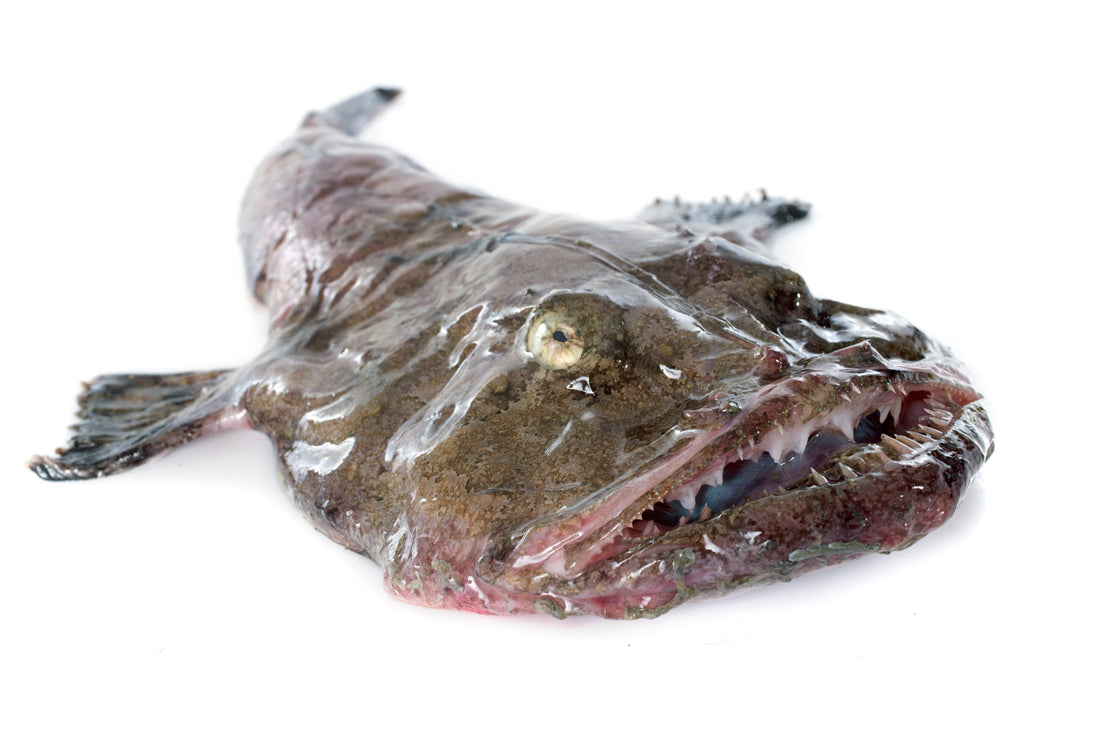
It works well when you roast, skewer, curry, or stew. Keep the fish cold, cook only until the center turns opaque and separates easily, and add broth, tomatoes, citrus, or a light oil coating when extra moisture is needed.
34. Atlantic Croaker
Found in western Atlantic estuaries, Atlantic Croaker is known scientifically as Micropogonias undulatus. Look for silver body and small chin barbels. Its mild and fine-textured flesh is useful when a recipe needs a mild fish.
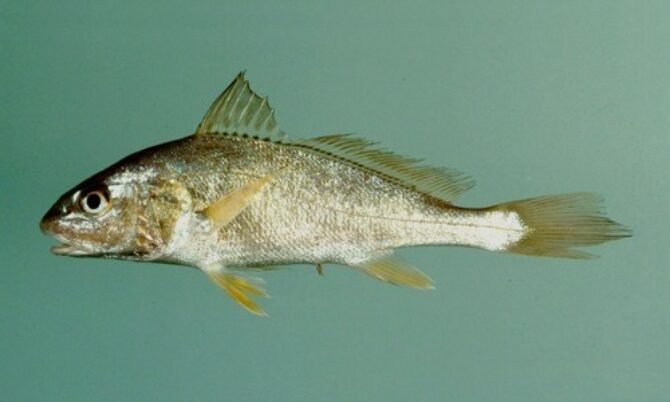
Recommended preparations include: bake whole, pan-cook, or soup. Buy fillets with a clean smell, moist surface, and resilient texture; frozen portions should be tightly sealed without heavy frost.
35. Red Drum
Red Drum, or Sciaenops ocellatus, inhabits western Atlantic estuaries and coasts. Its clearest market or field clues are copper sides and black tail-base spot. Like many lean fish, it can dry if exposed to high heat for too long.

Use it to blacken, grill, bake, or stew. Thin pieces cook especially quickly, while thick portions benefit from moderate heat and a short rest before serving.
36. Sheepshead
The Sheepshead is associated with western Atlantic jetties and oyster beds and can be recognized by dark vertical bars and crushing teeth. Scientifically it is Archosargus probatocephalus, and its flesh is mild and firm.
Because the texture is mild and firm, cooks commonly bake, grill, or make fish cakes. Confirm the market name and origin whenever one label may cover several related species.
How Are These Types of Lean Fish Classified?
Cod, haddock, pollock, and hake are round whitefish. Sole, plaice, halibut, and flounder are flatfish. Perch, walleye, pike, crappie, tilapia, catfish, and Nile perch are freshwater species. Snapper, grouper, croaker, drum, barramundi, monkfish, and mahi-mahi are marine or coastal fish from unrelated families. The culinary word lean therefore does not indicate one taxonomic group.
Where Do Lean Fish Come From?
Lean fish come from cold continental shelves, warm reefs, estuaries, rivers, lakes, and aquaculture systems. Origin affects taste, texture, availability, sustainability, and the advisories that may apply. Farmed and wild fish of the same common type can also differ in fat level and flavor.
How to Identify Different Types of Lean Fish
- Flatfish: Flattened bodies with both eyes on one side.
- Cod-like fish: Several dorsal fins and often a chin barbel.
- Perch-like fish: Spiny dorsal fins and compressed bodies.
- Reef fish: Robust shapes, large mouths, and firm flesh.
- Fresh fillets: Clean odor, moist surface, and resilient flesh.
- Frozen fish: Tight packaging with little frost or dehydration.
Cooking and Buying Tips
- Steam, poach, or quickly sauté delicate sole and flounder.
- Grill or roast firmer mahi-mahi, halibut, barramundi, monkfish, and drum.
- Pat fish dry before searing.
- Thaw frozen fish in the refrigerator.
- Ask for the exact species and harvest area.
- Check bones carefully before serving children.
Safety, Sustainability, and Conservation Notes
Follow current local advice for self-caught fish because contaminant guidance varies by waterbody, species, and size. Sensitive groups should follow official seafood-consumption guidance. Sustainability is stock-specific: the same species may be well managed in one area and depleted in another. Keep seafood cold, prevent cross-contamination, and cook it safely.
Fun Facts About Lean Fish
- Flatfish begin life with one eye on each side.
- Cod-like fishes may have three dorsal fins.
- Monkfish are ambush predators.
- Walleye eyes are adapted to dim light.
- Mahi-mahi colors fade after capture.
- Sheepshead have crushing teeth.
- Some market names cover unrelated species.
- Thin lean fillets cook very quickly.
- Smoking increases flavor and often sodium.
- Wild and farmed fish may differ in composition.
Final Thoughts on Types of Lean Fish
Exploring different types of lean fish helps cooks match texture with technique. Delicate sole favors gentle heat, cod and haddock suit family meals, and firm fish such as mahi-mahi, halibut, barramundi, and monkfish work well on the grill. Buy accurately labeled seafood, use current safety and sustainability guidance, and avoid overcooking.
Frequently Asked Questions
1. What is a lean fish?
A fish with relatively little total fat compared with oily fish; there is no single universal cutoff.
2. Are all white fish lean?
Many are, but flesh color alone does not determine fat content.
3. Is cod lean?
Cod is widely treated as a lean whitefish.
4. Is tilapia lean?
Tilapia is generally considered a lean, mild fish.
5. Is halibut lean?
Halibut is often called lean or moderately lean and is firmer than cod.
6. Is tuna lean?
Some cuts are leaner than others, so tuna is not one simple category.
7. Is salmon lean?
No. Salmon is normally classified as oily fish.
8. Is mackerel lean?
Most commonly eaten mackerels are oily fish.
9. Which lean fish tastes mildest?
Tilapia, cod, pollock, sole, flounder, and haddock are commonly mild.
10. Which lean fish is good for grilling?
Mahi-mahi, halibut, barramundi, monkfish, drum, and grouper are firm choices.
11. How do I stop lean fish drying out?
Use moderate heat, stop cooking promptly, and add moisture with broth, citrus, tomato, or light oil.
12. Can lean fish be fried?
Yes, but frying adds fat.
13. Is frozen fish a good option?
Plain frozen fish can be convenient and nutritious when well packaged.
14. How should fish be thawed?
In the refrigerator or according to safe package directions.
15. How can I tell fish is fresh?
Look for a clean smell, moist surface, and resilient flesh.
16. Why are market names confusing?
Names such as sole, sea bass, and pollock can vary by region.
17. Are freshwater fish lean?
Many perch, walleye, pike, crappie, tilapia, and catfish are relatively lean.
18. Should I remove fish skin?
It is optional and depends on texture, recipe, and local advice.
19. Do lean fish contain protein?
Fish is generally protein-rich, though exact values vary.
20. Do lean fish contain omega-3?
Many contain some omega-3, usually less total fat than oily fish.
21. Which lean fish is good in soup?
Cod, haddock, pollock, hake, monkfish, croaker, and catfish hold up well.
22. Which lean fish is good for tacos?
Mahi-mahi, tilapia, pollock, cod, flounder, and snapper are common.
23. Can I eat self-caught fish often?
Follow local consumption advisories.
24. Is wild fish always leaner than farmed fish?
No; it varies by species, feed, season, and production method.
25. Why was orange roughy not emphasized?
It is low in fat but raises mercury and sustainability concerns.
26. What is best for delicate flatfish?
Quick sautéing, steaming, poaching, or parchment baking.
27. Why does smoked fish taste richer?
Smoke, salt, and drying intensify flavor.
28. Can lean fish be used for ceviche?
Only with trusted fish and proper safety practices; citrus does not remove every hazard.
29. How many lean fish are there?
No fixed count exists because lean is a culinary category.
30. What is easiest for beginners?
Thicker cod, haddock, pollock, tilapia, barramundi, or mahi-mahi portions are forgiving.
Read more:
34 Types of Molly Fish: Species, Colors, and Care