

There are only three living types of manatees in the world: the West Indian manatee, Amazonian manatee, and African manatee. Although these slow-moving aquatic mammals share rounded bodies, flexible lips, paddle-shaped tails, and mostly plant-based diets, each species occupies a different geographic region and has several useful identification features.
This guide explains where each manatee species lives, how large it grows, what it eats, and how to distinguish it from the other species. It also covers West Indian manatee subspecies, habitat preferences, conservation concerns, responsible wildlife observation, and the differences between manatees and dugongs.
What Are the Main Types of Manatees?
The three recognized living manatee species are the West Indian manatee (Trichechus manatus), Amazonian manatee (Trichechus inunguis), and African manatee (Trichechus senegalensis). The West Indian species is further divided into Florida and Antillean subspecies, but these are not normally counted as separate species. All manatees belong to the genus Trichechus and the family Trichechidae.
| Manatee Type | Scientific Name | Main Range | Primary Habitat | Useful Identification Feature |
|---|---|---|---|---|
| West Indian manatee | Trichechus manatus | Southeastern United States, Caribbean, Central America, and northern South America | Coastal waters, estuaries, rivers, lagoons, and springs | Large body, wrinkled gray skin, and nails on the front flippers |
| Amazonian manatee | Trichechus inunguis | Amazon River Basin | Freshwater rivers, lakes, channels, and flooded forests | Smaller body, smoother dark skin, pale belly patch, and no flipper nails |
| African manatee | Trichechus senegalensis | Western Africa from Senegal toward Angola | Rivers, estuaries, lagoons, mangroves, lakes, and coastal waters | Blunt snout, flipper nails, and a range limited to western Africa |
1. West Indian Manatee
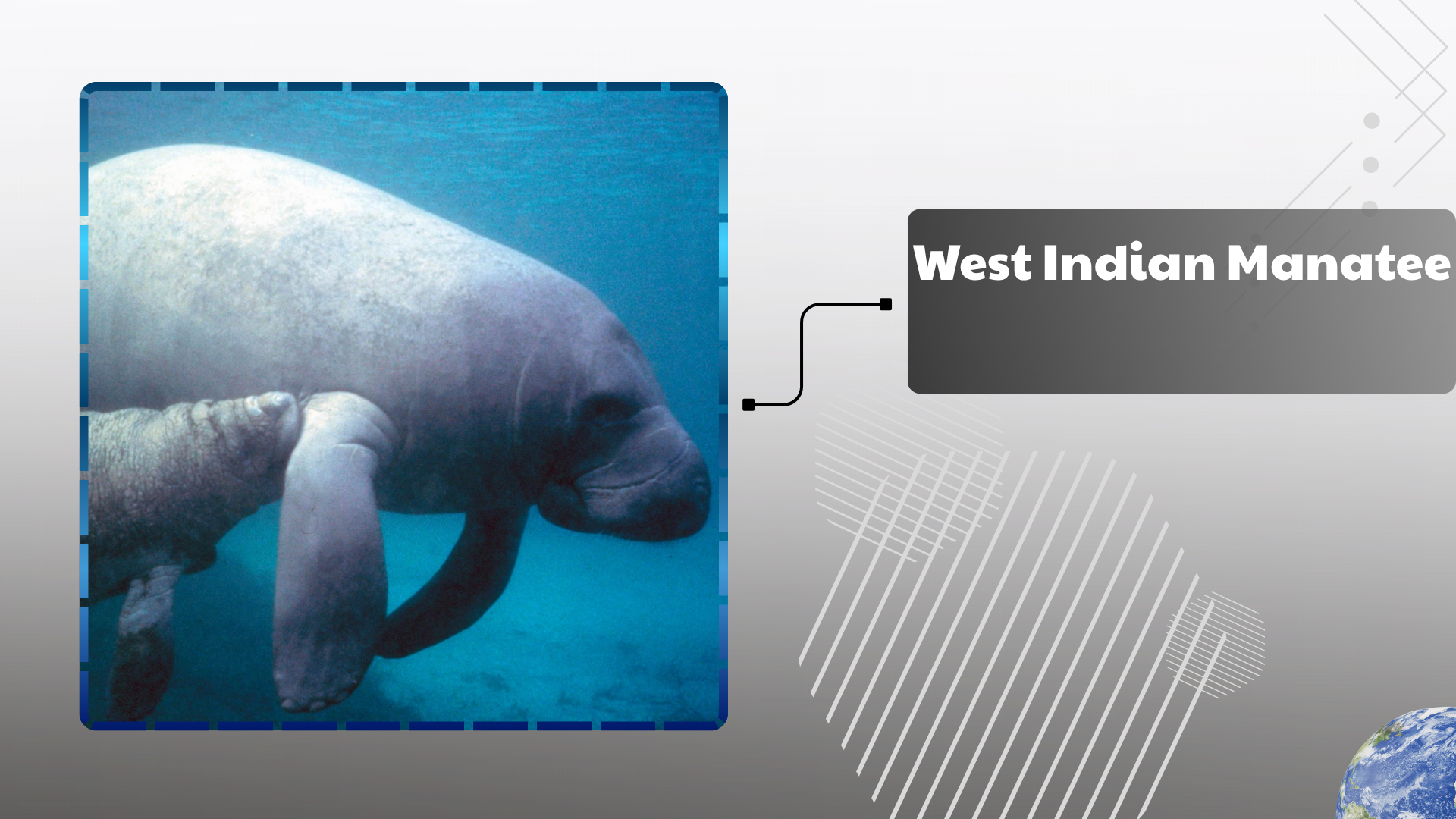
The West Indian manatee, scientifically known as Trichechus manatus, is the best-known and most thoroughly studied manatee species. Its range extends from the southeastern United States through the Gulf of Mexico and Caribbean region to parts of Central America and northern South America.
This manatee has a broad, rounded body that tapers into a flat, paddle-shaped tail. Its skin is normally gray or grayish brown and may appear green when algae grow on its back. Adults frequently have scars caused by boat strikes, fishing equipment, or other injuries. Researchers can sometimes use permanent scar patterns to recognize individual animals.
Adult West Indian manatees are commonly around 9 to 10 feet long, although some individuals grow larger. Their weight varies considerably according to age, sex, health, and location. They have small eyes, flexible whiskered lips, and front flippers that usually carry small nails.
The divided upper lip is especially important. Each side can move somewhat independently, helping the manatee grasp seagrasses, freshwater vegetation, mangrove leaves, and other plant material. Like other manatees, it continually replaces worn molars as new teeth move forward from the rear of the jaw.
West Indian manatees use marine, brackish, and freshwater environments. They may feed in shallow seagrass beds, rest in rivers, move through canals, and drink freshwater from natural sources. In colder parts of their range, particularly Florida, they depend on warm-water refuges during winter. Natural springs are important, although some animals also gather near heated industrial discharges.
These manatees are generally peaceful and may be seen alone, in mother-and-calf pairs, or in temporary groups. A gathering of manatees does not necessarily represent a permanent social herd. Food, freshwater, warm water, or mating activity may bring several animals to the same location.
Florida Manatee
The Florida manatee, Trichechus manatus latirostris, is one of two recognized West Indian manatee subspecies. It is centered in Florida but may travel farther north along the Atlantic Coast or west through the Gulf of Mexico during warm weather.
When temperatures fall, Florida manatees return to warm springs, rivers, canals, and other dependable thermal refuges. Prolonged exposure to cold water can lead to cold-stress syndrome, which may cause skin lesions, weakness, illness, and death.
Florida manatees face serious risks from watercraft collisions, loss of seagrass, entanglement, flood-control structures, habitat alteration, harmful algal blooms, and reductions in dependable warm-water habitat. Slow reproduction means that a population may require many years to recover after heavy losses.
Antillean Manatee
The Antillean manatee, Trichechus manatus manatus, is the second West Indian manatee subspecies. It occurs in parts of Mexico, Central America, the Caribbean, northern South America, and northeastern South America.
Antillean manatees occupy a patchwork of rivers, lagoons, estuaries, coastal wetlands, mangrove channels, and nearshore feeding areas. Populations may be small and separated from one another, making habitat connectivity particularly important.
They are threatened by illegal hunting in some locations, accidental capture in fishing equipment, boat traffic, coastal development, pollution, and wetland loss. Their secretive behavior and the murky water in much of their range can also make population surveys difficult.
2. Amazonian Manatee
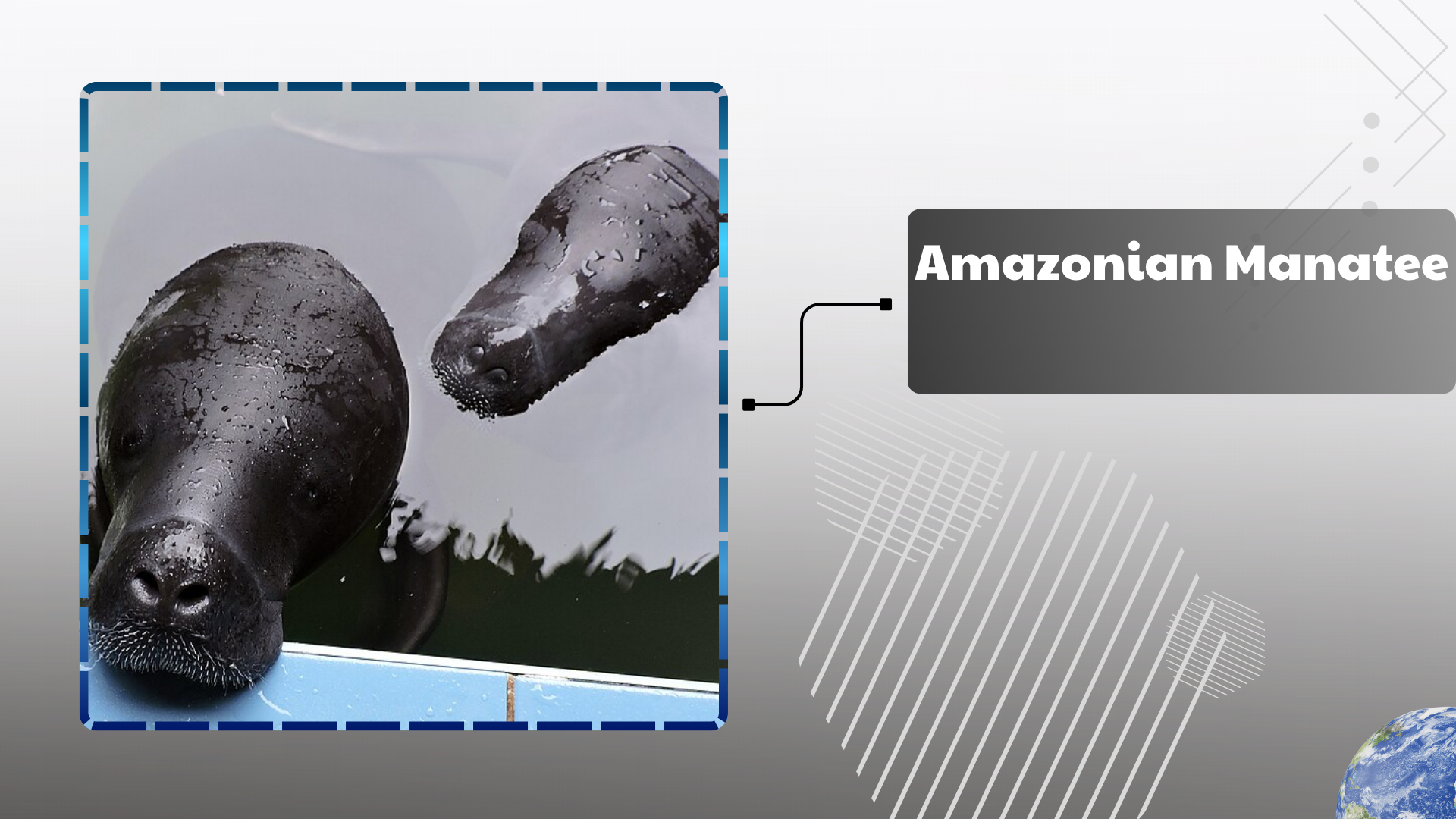
The Amazonian manatee, Trichechus inunguis, is the only living sirenian restricted entirely to freshwater. It inhabits the Amazon Basin, including interconnected rivers, lakes, floodplains, channels, and seasonally flooded forests in Brazil and neighboring South American countries.
It is generally considered the smallest of the three manatee species. Adults are often approximately 2.5 to 3 meters long, although body size varies. Compared with the West Indian and African species, the Amazonian manatee usually has smoother, darker skin and proportionally longer-looking flippers.
One of its most useful identification features is the absence of nails on its front flippers. Many individuals also have an irregular white, cream, or pinkish patch on the underside of the body. The size and shape of this pale marking vary, and it should not be treated as the only identification feature.
The Amazon River system changes dramatically between wet and dry seasons. During high water, manatees can enter flooded forests and productive floodplain areas where aquatic plants and other foods are abundant. As water levels fall, they may move toward deeper lakes and channels that remain accessible through the dry season.
Their diet includes aquatic grasses, floating plants, submerged vegetation, and seasonally available plant matter. Fruit or other plant material that falls into flooded areas may also be eaten. Food availability can change sharply with the annual flood cycle.
Amazonian manatees are extremely difficult to observe in the wild. The water is often dark or muddy, the animals spend most of their time submerged, and they can surface quietly. In areas where hunting has occurred, they may also avoid people and boats.
Threats include illegal hunting, accidental entanglement in fishing nets, disturbance, habitat degradation, dams, changing water conditions, and the loss of connected floodplain habitats. Orphaned calves are occasionally rescued after their mothers have been killed or separated from them.
A so-called dwarf manatee has occasionally been proposed from the Amazon region. However, it is not generally accepted as a separate living species by major modern taxonomic authorities. The recognized species count therefore remains three.
3. African Manatee
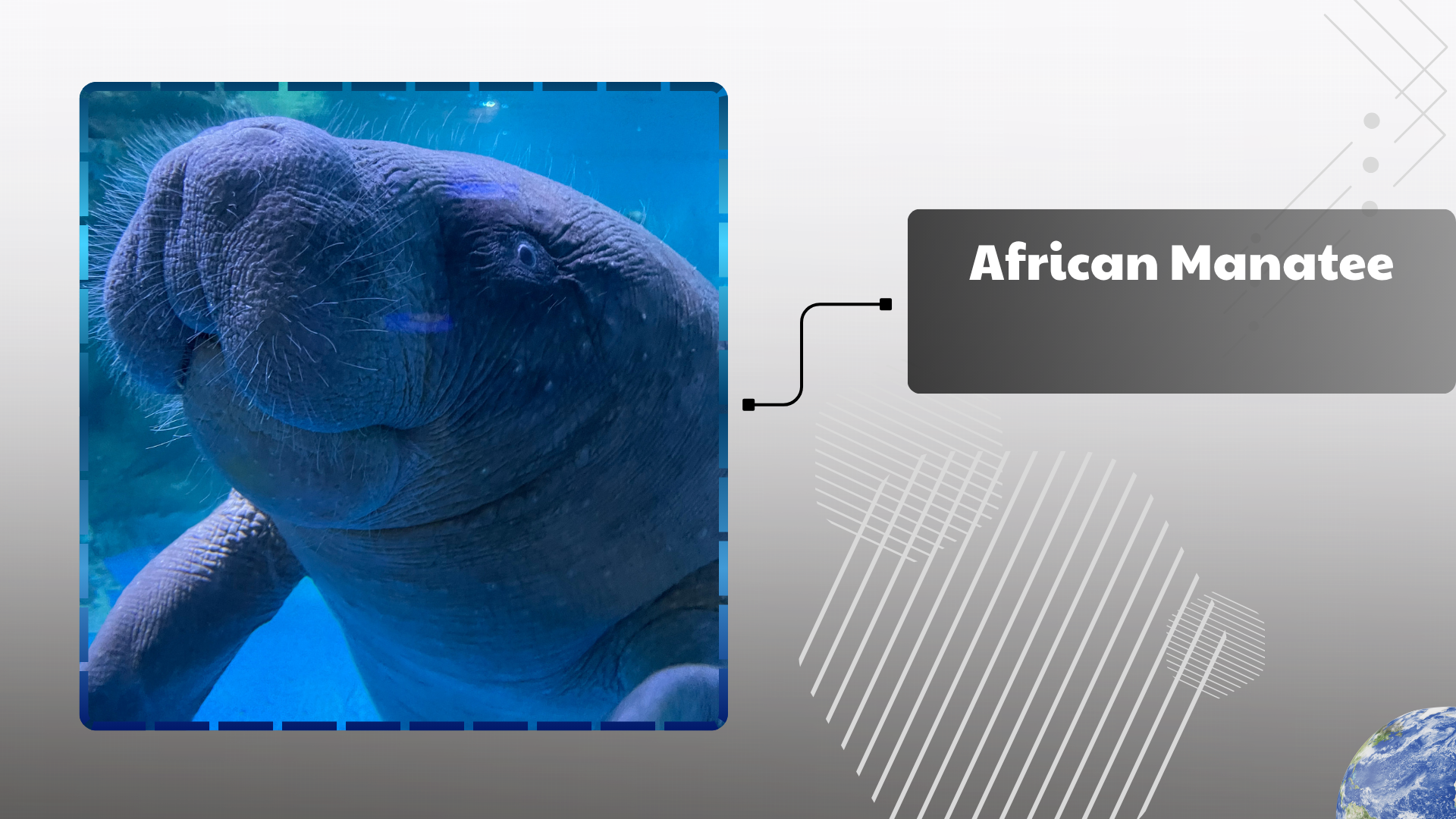
The African manatee, also called the West African manatee, has the scientific name Trichechus senegalensis. It occurs in western Africa, where its range includes coastal areas and inland waterways from the Senegal region southward toward Angola.
This species can use an unusually broad collection of aquatic environments. It has been recorded in coastal waters, estuaries, lagoons, mangrove systems, large rivers, lakes, reservoirs, wetlands, and tributaries located considerable distances inland.
The African manatee has the rounded body and paddle-shaped tail typical of all manatees. It is usually gray or brownish gray, although algae, mud, lighting, and water color may change its apparent appearance. Its front flippers possess nails, unlike those of the Amazonian manatee.
Its snout is sometimes described as relatively blunt, and the eyes may appear slightly more prominent than those of other species. However, field identification based only on facial proportions is difficult. Geographic location is normally the strongest clue because the African manatee is the only manatee native to Africa.
African manatees feed heavily on aquatic and waterside vegetation. Depending on the habitat, their diet may include grasses, floating plants, mangrove material, and vegetation growing along riverbanks. Reports also suggest occasional consumption of nonplant food, but plants form the central part of their diet.
This is the least extensively studied of the three living manatee species. Many populations occur in remote areas, and animals can be difficult to detect in deep, muddy, or vegetation-filled water. As a result, details about population size, seasonal movements, reproduction, and local behavior remain incomplete in many parts of its range.
Major threats include hunting, accidental capture in fishing nets, wetland alteration, dams, pollution, mangrove loss, boat traffic, and the isolation of suitable habitats. Fishing communities are important conservation partners because local residents often possess detailed knowledge of manatee movements and feeding areas.
How Are These Types of Manatees Classified?
Manatees are mammals in the order Sirenia, a small group of fully aquatic plant-eating mammals. Sirenians share several adaptations for living in water, including dense bones, streamlined bodies, front flippers, and the absence of external hind limbs.
The modern classification of manatees can be summarized as follows:
- Kingdom: Animalia
- Phylum: Chordata
- Class: Mammalia
- Order: Sirenia
- Family: Trichechidae
- Genus: Trichechus
- Living species: Three
The order Sirenia contains four living species. Three are manatees in the family Trichechidae, while the fourth is the dugong, Dugong dugon, in the family Dugongidae.
The West Indian manatee is divided into two commonly recognized subspecies:
- Florida manatee: Trichechus manatus latirostris
- Antillean manatee: Trichechus manatus manatus
A subspecies is a geographically or biologically distinct population within a species. Florida and Antillean manatees therefore increase the number of named manatee forms, but they do not increase the accepted number of living species beyond three.
Where Do the Different Types of Manatees Live?
All manatees need warm water, access to vegetation, places to rest, and routes connecting important feeding and refuge areas. However, each species occupies a separate major world region.
Western Atlantic and Caribbean Region
West Indian manatees live in the western Atlantic region. Florida manatees are concentrated around Florida and may travel seasonally along the southeastern coast of the United States and through parts of the Gulf of Mexico. Antillean manatees occupy portions of the Caribbean, Mexico, Central America, and northern South America.
Amazon River Basin
Amazonian manatees live only in freshwater environments within the Amazon drainage. Their habitat changes with seasonal flooding, so maintaining connections among rivers, floodplain lakes, channels, and flooded forests is essential.
Western Africa
African manatees inhabit coastal and inland waters across western Africa. They may travel between estuaries, rivers, lagoons, mangrove wetlands, lakes, and connected tributaries. Dams and other barriers can restrict these movements.
How to Identify Different Types of Manatees
Closely observing a wild manatee is not always possible or appropriate. Identification should be based on a combination of geographic range, flipper features, skin appearance, body size, and habitat rather than a single characteristic.
- Location: A native manatee in Florida or the Caribbean is a West Indian manatee. One in the Amazon Basin is likely an Amazonian manatee, while one in western Africa is an African manatee.
- Flipper nails: West Indian and African manatees have nails on their front flippers. Amazonian manatees lack them.
- Belly marking: Amazonian manatees often have a pale patch on the chest or belly.
- Body size: Amazonian manatees are generally smaller than West Indian and African manatees.
- Skin texture: Amazonian manatees frequently appear smoother and darker. West Indian manatees often have more wrinkled gray skin.
- Habitat: Amazonian manatees are strictly freshwater animals. The other two species can use fresh, brackish, and marine environments.
- Scarring: Heavy linear or curved scars are especially common among manatees living in areas with substantial boat traffic.
- Tail shape: Every manatee species has a broad, rounded, paddle-like tail.
Manatee vs. Dugong: What Is the Difference?
Manatees and dugongs are closely related sirenians, but a dugong is not a type of manatee. The easiest difference to see is the tail.
| Feature | Manatees | Dugongs |
|---|---|---|
| Number of living species | Three | One |
| Tail | Broad and rounded like a paddle | Forked or fluked like a whale’s tail |
| Main distribution | Americas and western Africa | Indian and western Pacific Ocean regions |
| Freshwater use | Common in several species; Amazonian manatees are freshwater-only | Primarily marine and strongly associated with coastal seagrass habitat |
| Snout | Flexible lips with a comparatively rounded muzzle | More strongly downturned for bottom feeding |
Steller’s sea cow was another member of the sirenian group, but it became extinct in the eighteenth century. It should not be included among the living types of manatees.
What Do Manatees Eat?
Manatees are primarily herbivorous. Their exact diet depends on the plants available within each species’ habitat.
- West Indian manatees: Seagrasses, submerged freshwater plants, floating vegetation, algae, and mangrove leaves.
- Amazonian manatees: Aquatic grasses, floating plants, freshwater vegetation, and plant material available in seasonally flooded forests.
- African manatees: Aquatic plants, grasses, mangrove vegetation, and plants growing along river and wetland margins.
The muscular, split upper lip helps a manatee collect and manipulate vegetation. Food is then processed by grinding teeth that are gradually replaced throughout the animal’s life. New molars emerge toward the back of the jaw and slowly move forward as older teeth wear down and fall out.
How Do Manatees Behave?
Manatees spend much of their time feeding, resting, traveling, and surfacing to breathe. They are often described as slow, but they can make short, powerful movements when frightened or avoiding danger.
Most do not form permanent herds. Adults are commonly solitary, while mothers remain with dependent calves. Temporary groups may develop around concentrated food, warm-water refuges, freshwater sources, or receptive females.
Manatees communicate using chirps, squeaks, and other underwater sounds. Communication is particularly important between mothers and calves. Touch, smell, hearing, and sensitive facial hairs also help them understand their environment.
Because manatees must surface for air, observers may notice a snout, circular ripple, moving shadow, feeding trail, or patch of disturbed vegetation before seeing the animal’s entire body.
Outdoor Tips for Finding and Observing Manatees
- Choose authorized viewing areas, boardwalks, wildlife refuges, and responsible guided tours.
- Learn local wildlife regulations before boating, kayaking, snorkeling, or swimming.
- Watch quietly from a distance and allow the animal to control the encounter.
- Use polarized sunglasses to reduce glare when viewing from above the water.
- Look for circular surface ripples, a nose briefly breaking the surface, or vegetation moving without an obvious current.
- Reduce boat speed in marked manatee zones and other shallow wildlife areas.
- Keep away from resting, feeding, mating, or nursing animals.
- Never surround a manatee or block its route to deeper water.
- Do not separate a mother from her calf.
- Use a zoom lens rather than moving close for a photograph.
Wild manatees should not be touched, ridden, chased, fed, or given water. Feeding and watering can alter their behavior, encourage them to approach boats and docks, and violate wildlife laws.
Safety, Sustainability, and Conservation Notes
All three living manatee species face substantial conservation pressures and are globally classified as Vulnerable. The type and intensity of each threat vary among regions.
Watercraft Collisions
Boat strikes are a major source of injury and mortality for West Indian manatees, particularly in heavily traveled waterways. Propellers can produce deep cuts, while impacts from hulls or lower units can cause internal injuries or death.
Boaters should follow speed limits, remain alert in shallow water, wear polarized glasses, and avoid seagrass beds where manatees may be feeding.
Fishing Equipment
Discarded line, nets, ropes, and other fishing equipment may wrap around a manatee’s flipper, body, or tail. Entanglement can cause severe wounds, restrict movement, and interfere with feeding.
Anglers should properly dispose of fishing line, retrieve lost equipment when it is safe to do so, and report entangled wildlife to local rescue authorities.
Habitat Loss
Manatees depend on productive wetlands, submerged vegetation, freshwater access, warm-water refuges, and unobstructed travel routes. Coastal development, wetland drainage, pollution, dredging, dams, and shoreline modification can reduce or fragment these resources.
Hunting
Illegal hunting remains an important concern for Amazonian, Antillean, and African manatee populations in some areas. Manatees reproduce slowly, so the loss of breeding adults can have long-lasting effects.
Food Availability
Seagrass and aquatic plant losses can leave manatees without adequate feeding habitat. Nutrient pollution, algal blooms, altered water flow, sediment, and reduced water clarity may all damage submerged vegetation.
Reporting a Manatee in Trouble
Do not attempt to capture, push, tow, or treat an injured or stranded manatee yourself. Record the exact location, observe from a safe distance, take photographs when possible, and contact the responsible wildlife authority or marine mammal rescue network.
Fun Facts About Manatees
- There are only three recognized living manatee species.
- Manatees are more closely related to elephants than to seals or whales.
- The Amazonian manatee is the only living sirenian restricted entirely to freshwater.
- All manatees have broad, rounded tails rather than the forked tail of a dugong.
- Manatee molars are continually replaced as new teeth move forward through the jaw.
- Their divided upper lips can grasp and manipulate aquatic plants.
- Amazonian manatees do not have nails on their front flippers.
- Florida and Antillean manatees are subspecies of the West Indian manatee.
- Temporary groups often form around warm water, food, or mating activity rather than permanent social bonds.
- Manatees communicate with squeaks, chirps, and other underwater sounds.
Final Thoughts on Types of Manatees
The three living types of manatees are the West Indian, Amazonian, and African manatees. The West Indian species occupies the western Atlantic and includes Florida and Antillean subspecies. The smaller, nail-free Amazonian manatee lives entirely in freshwater, while the elusive African manatee inhabits rivers, wetlands, estuaries, and coastal systems across western Africa.
Geographic range is usually the easiest way to identify a manatee species. Flipper nails, belly markings, body size, skin texture, and habitat provide additional clues. Regardless of species, every manatee benefits when people protect aquatic vegetation, reduce boat speeds, prevent fishing-line pollution, conserve wetlands, and observe wildlife without interfering with natural behavior.
Frequently Asked Questions
1. How many types of manatees are there?
There are three recognized living manatee species: the West Indian manatee, Amazonian manatee, and African manatee. The Florida and Antillean manatees are subspecies of the West Indian manatee rather than separate species.
2. What are the names of the three manatee species?
The three species are the West Indian manatee (Trichechus manatus), Amazonian manatee (Trichechus inunguis), and African or West African manatee (Trichechus senegalensis).
3. What is the most common type of manatee?
That depends on location and how abundance is measured. The West Indian manatee is the most familiar and extensively studied species, especially its Florida subspecies. However, no manatee should be considered common throughout its entire range.
4. What is the largest manatee species?
The West Indian manatee is generally described as the largest living manatee species. Large African manatees can overlap with it in body size, while Amazonian manatees are normally smaller.
5. What is the smallest type of manatee?
The Amazonian manatee is the smallest recognized manatee species. It is also distinguished by its freshwater-only habitat, lack of flipper nails, and frequent pale marking on the underside of the body.
6. Are Florida manatees a separate species?
No. The Florida manatee is a subspecies of the West Indian manatee. Its scientific name is Trichechus manatus latirostris.
7. What is an Antillean manatee?
The Antillean manatee is the tropical West Indian manatee subspecies found in parts of the Caribbean, Mexico, Central America, and northern South America. Its scientific name is Trichechus manatus manatus.
8. Do manatees live only in salt water?
No. West Indian and African manatees move among marine, brackish, and freshwater habitats. Amazonian manatees live entirely in freshwater rivers, lakes, channels, and floodplain environments.
9. Which manatee lives only in freshwater?
The Amazonian manatee is the only living manatee—and the only living sirenian—restricted entirely to freshwater. It is native to the Amazon River Basin.
10. Are there manatees in Africa?
Yes. The African or West African manatee inhabits western Africa. It lives in coastal waters, estuaries, lagoons, rivers, lakes, mangrove wetlands, and connected inland waterways.
11. Are there manatees in the Amazon River?
Yes. Amazonian manatees inhabit the Amazon Basin. West Indian manatees also occur near parts of the northeastern South American coast, but the Amazonian species is the manatee most strongly associated with inland Amazon waters.
12. How can you tell an Amazonian manatee from other species?
Look for a relatively small, dark, smooth-skinned manatee without nails on its flippers. Many Amazonian manatees also have a pale patch on the chest or belly. Its location within the Amazon freshwater system is the strongest clue.
13. Do all manatees have nails on their flippers?
No. West Indian and African manatees have small nails on their front flippers. Amazonian manatees do not, which explains the scientific name inunguis, referring to the absence of nails.
14. What color are manatees?
Most manatees are gray, brownish gray, or dark gray. Algae, mud, water color, scars, and lighting can alter their apparent color. Amazonian manatees are often darker and may have a pale underside marking.
15. Is a dugong a type of manatee?
No. Dugongs and manatees are different members of the order Sirenia. A dugong has a forked, whale-like tail, while a manatee has a broad, rounded, paddle-shaped tail.
16. Is a sea cow the same as a manatee?
“Sea cow” is an informal term used for manatees and other sirenians because they graze on aquatic vegetation. The term may also include dugongs and the extinct Steller’s sea cow, so it is less precise than “manatee.”
17. What do manatees eat?
Manatees primarily eat aquatic vegetation, including seagrasses, freshwater plants, floating vegetation, aquatic grasses, algae, and mangrove material. The plants available depend on the species and habitat.
18. Do manatees eat fish?
Manatees are primarily herbivorous. Occasional consumption of small animals or animal material has been reported, but it does not make fish a normal or important part of the typical manatee diet.
19. Do manatees have teeth?
Yes. Manatees have grinding molars but no front incisors for biting plants. New molars develop at the back of the jaw and gradually move forward as older teeth wear out.
20. Why are manatees called gentle giants?
The name reflects their large bodies, mostly plant-based diets, and generally calm behavior. However, they remain powerful wild animals and should always be observed respectfully from a distance.
21. Are manatees related to elephants?
Yes. Manatees and elephants share a distant evolutionary ancestor and belong to related groups of mammals. Manatees are not closely related to seals, dolphins, or whales despite their fully aquatic lifestyle.
22. How long can manatees stay underwater?
The time varies with activity. A resting manatee can remain submerged considerably longer than an active animal. Feeding, swimming, stress, water conditions, and individual health all influence breathing intervals.
23. Do manatees live in groups?
Manatees do not usually form permanent herds. They are often solitary, although mothers remain with calves and temporary groups may gather where food, freshwater, warm water, or mating opportunities are concentrated.
24. Are manatees dangerous to humans?
Manatees are not normally aggressive toward people. Nevertheless, they are large wild animals. People should avoid touching, chasing, cornering, feeding, riding, or attempting to handle them.
25. Can people swim with manatees?
Swimming rules vary by country, region, and protected area. Where swimming is legally permitted, visitors must follow local instructions and use passive observation. Touching, chasing, surrounding, feeding, or disturbing manatees may be prohibited.
26. Why should people not feed manatees?
Feeding can teach manatees to approach docks, boats, and people. This may increase collision risk, disrupt natural feeding behavior, expose animals to unsuitable food, and violate wildlife protection laws.
27. Why do manatees gather near warm water?
Manatees have relatively low cold tolerance for such large aquatic mammals. Florida manatees gather at warm springs and other thermal refuges during cold weather to reduce the risk of cold stress.
28. What are the main threats to manatees?
Important threats include watercraft collisions, hunting, entanglement, habitat loss, wetland alteration, pollution, dams, loss of aquatic vegetation, harmful algal blooms, and disruption of migration or refuge areas.
29. Are all manatee species endangered?
All three species face serious conservation concerns and are globally classified as Vulnerable. Legal categories can differ by country, subspecies, and wildlife law, so regional status should be checked through the appropriate government authority.
30. What should I do if I find an injured manatee?
Keep a safe distance and contact the local wildlife agency or marine mammal rescue network. Provide the exact location, time, observed injuries, direction of travel, and photographs or video when possible. Do not attempt a rescue without trained authorities.