

Moths are some of the most misunderstood insects on Earth. When people search for Types of Moths, they usually want simple names, clear identification tips, and real facts without the science overload. Moths live on every continent except Antarctica. They fly at night, hide during the day, and quietly support ecosystems by pollinating plants and feeding birds, bats, and reptiles.
Unlike butterflies, moths don’t show off. But if you slow down and look closely, their colors, shapes, and behaviors tell fascinating stories. Some moths glow white under moonlight. Others look like dead leaves or tree bark. A few are so large they can cover a human hand. This guide explains the most well-known Types of Moths in plain English. No jargon. No fluff. Just helpful information that actually sticks.
45 Types of Moths: Nocturnal Species You’re Most Likely to See
1. Luna Moth (Actias luna)
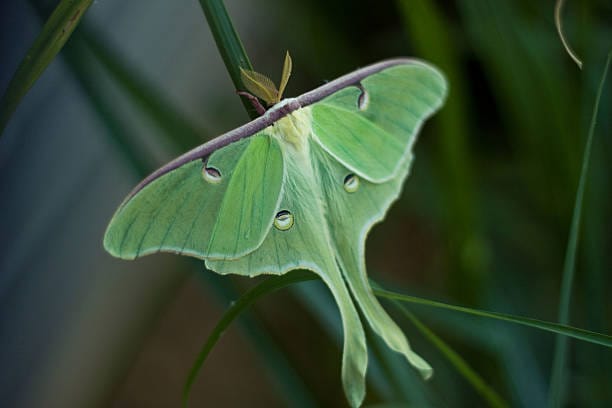
The Luna Moth is one of those insects people remember for life. Bright green wings. Long ribbon-like tails. A look that feels almost unreal. If moths had celebrities, this one would be on every poster.
Luna Moths live in North America, especially in wooded areas with plenty of deciduous trees. You’ll find them near walnut, hickory, birch, and sweetgum trees. Adults don’t eat at all. They exist only to mate and lay eggs, usually living for just one week. It’s a short life, but a memorable one.
At night, Luna Moths are drawn to porch lights and street lamps. That’s how many people see them for the first time. During the day, they rest quietly on tree trunks, blending in better than you’d expect for something so colorful. Their pale green wings reflect moonlight, which may confuse predators like bats.
The caterpillars are chunky and bright green. They look harmless, and they are. Birds still eat them, but not without effort. As the caterpillar grows, it sheds its skin several times before spinning a cocoon wrapped in leaves. Winter passes. Then, in spring, the adult moth emerges.
Luna Moths don’t bite. They don’t sting. They don’t damage homes. They’re just part of the night shift. Seeing one feels like luck. And honestly, it kind of is.
________________________________________
2. Atlas Moth (Attacus atlas)
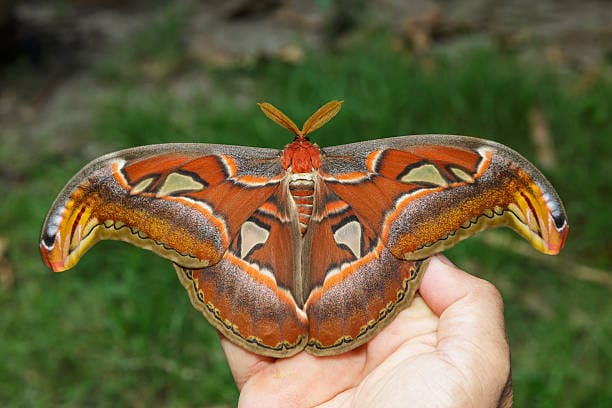
The Atlas Moth is massive. There’s no better word for it. It’s one of the largest moths on the planet by wing surface area. When fully spread, its wings can reach over 10 inches wide. People often mistake it for a small bird.
This moth lives in Southeast Asia, including India, Thailand, and parts of China. It prefers warm forests where food plants are plentiful. The wings are reddish-brown with cream, black, and pink patterns. The tips of the wings look like snake heads, which may scare off predators. Or at least make them hesitate.
Like the Luna Moth, the Atlas Moth doesn’t eat as an adult. All its energy comes from the caterpillar stage. That caterpillar is thick, pale green, and covered in a waxy coating. It feeds nonstop. When it’s ready, it spins a strong silk cocoon. The silk is coarse but durable and has been used locally to make small textiles.
Atlas Moths are calm flyers. They don’t dart around lights. They glide slowly through the air, usually at dusk. If one lands near you, it’s hard not to stare. People sometimes feel nervous because of the size, but the moth itself is gentle and fragile.
Despite its size, the Atlas Moth is vulnerable. Habitat loss affects it more than predators do. Big wings don’t help when forests disappear.
________________________________________
3. Death’s Head Hawkmoth (Acherontia atropos)
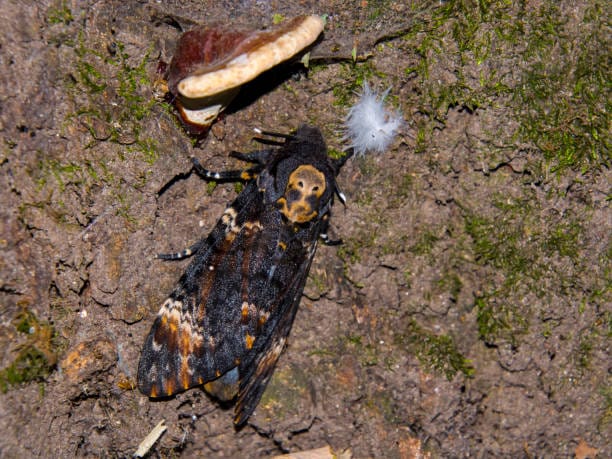
This moth has a reputation. The Death’s Head Hawkmoth gets its name from a skull-shaped marking on its thorax. That marking alone has landed it in horror movies, folklore, and old superstitions.
It lives across Europe, Africa, and parts of Asia. Unlike many moths, this one is bold. It can squeak when threatened by forcing air out of its body. The sound is soft but startling, especially if you’re not expecting it.
The wings are dark brown and yellow with strong patterns. When flying, it looks fast and purposeful. This is a strong flier, capable of long-distance travel. It often migrates north during warmer months.
One unusual habit sets this moth apart. It sneaks into beehives to steal honey. Its body odor mimics that of bees, allowing it to move around without triggering an attack. It’s risky behavior, but it works often enough to stick.
The caterpillars are large and colorful, usually yellow, green, or brown with diagonal stripes. They feed on plants like potatoes and nightshade. Farmers notice them, but they rarely cause serious damage.
Despite its spooky image, this moth is just another night insect trying to survive. No curses. No bad luck. Just good camouflage and a strange design.
4. Domestic Silk Moth (Bombyx mori)
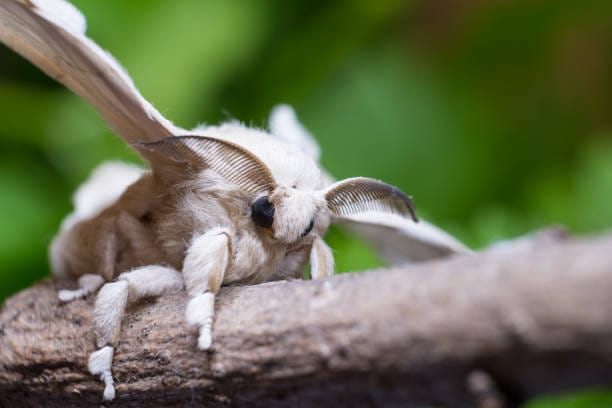
The Domestic Silk Moth is different from almost every other moth on this list. It no longer exists in the wild. Humans shaped it, bred it, and changed its life forever. For thousands of years, this moth has lived alongside people, quietly producing one of the most valuable natural fibers ever known.
Native to China, the Domestic Silk Moth depends fully on humans for survival. Adults cannot fly well. Some can’t fly at all. Their wings are short and weak, and their bodies are heavy. In nature, that would be a death sentence. In silk farms, it’s normal.
The caterpillars feed almost entirely on mulberry leaves. They eat constantly, growing fast and shedding their skin several times. When fully grown, the caterpillar spins a cocoon made of a single silk thread that can stretch hundreds of meters long. Humans unwind that thread to make silk fabric.
Adult moths live only a few days. They don’t eat. Their sole purpose is to mate and lay eggs. A female can lay hundreds of eggs in one short life. Those eggs hatch, and the cycle repeats.
From an ecological point of view, the Domestic Silk Moth doesn’t play the same role as wild moths. It doesn’t pollinate plants or feed wild predators. But culturally, it changed human history. Trade routes formed because of silk. Empires grew rich from it.
When discussing Types of Moths, this species reminds us that not all moths belong fully to nature anymore. Some belong to us, whether that’s a good thing or not.
________________________________________
5. European Grain Moth (Nemapogon granella)

The European Grain Moth is small, quiet, and rarely admired. But it matters. This moth lives close to humans, especially where grain, flour, and stored food exist. Unlike the silk moth, its relationship with people is far less friendly.
Native to Europe but now found worldwide, this moth thrives in barns, warehouses, mills, and old storage rooms. Adults are light brown or gray with subtle markings. They’re easy to miss until there are too many.
The real problem comes from the larvae. Caterpillars feed on stored grains, cereals, and flour. Over time, infestations can contaminate food supplies. This has made the European Grain Moth a well-known pest in agriculture and food storage.
Despite that reputation, the moth itself isn’t aggressive. It doesn’t bite. It doesn’t carry disease. It’s simply adapted well to human environments. Warm indoor spaces protect it from cold winters and predators.
In natural settings, related species help break down plant matter. This one just shifted its diet to stored crops. That shift brought it closer to people, and closer attention.
This moth shows that some Types of Moths survive not by beauty or size, but by learning how to live where humans gather food.
________________________________________
6. Bella Moth (Utetheisa ornatrix)
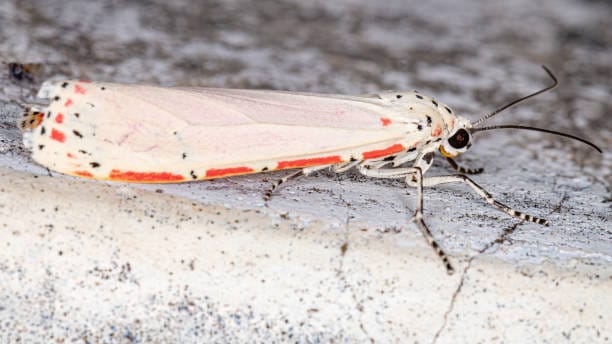
The Bella Moth looks cheerful. Bright white wings covered in pink, red, orange, and black spots make it look almost playful. But looks can fool you.
Found across North and South America, the Bella Moth is active both day and night. That alone sets it apart from many moths. It’s often seen resting on plants in open fields, gardens, and roadsides.
As caterpillars, Bella Moths feed on plants in the legume family, especially rattlebox. These plants contain toxic chemicals. The caterpillars store those toxins in their bodies instead of being harmed by them.
That toxicity carries into adulthood. Birds learn quickly that eating a Bella Moth leads to regret. The bright colors act as a warning sign, saying, “don’t try it.” It’s honest advertising.
Even the eggs are toxic. Males pass toxins to females during mating, increasing protection for future generations. It’s one of the few moth species where chemical defense plays such a clear role in reproduction.
The Bella Moth proves that moths don’t need camouflage to survive. Sometimes standing out is safer.
7. Cinnabar Moth (Tyria jacobaeae)
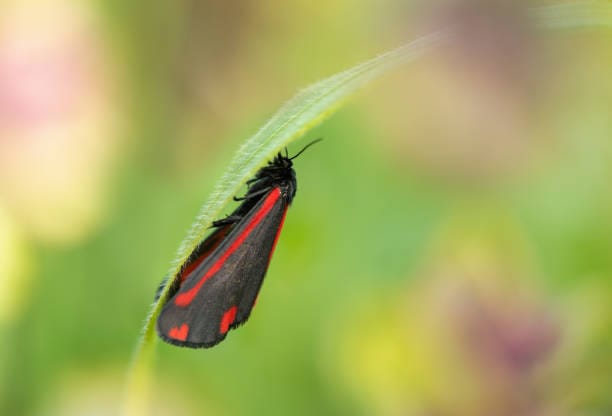
The Cinnabar Moth wears warning colors like a uniform. Its black wings are marked with bright red lines and spots. There’s nothing subtle about it.
This moth is native to Europe but has been introduced to other regions, including North America. It was released intentionally to help control ragwort, a toxic plant harmful to livestock.
Cinnabar caterpillars feed almost exclusively on ragwort. They absorb the plant’s toxins, making themselves unpleasant to predators. Like the Bella Moth, they advertise danger through color.
During outbreaks, caterpillars can strip ragwort plants bare. Farmers often welcome this. It reduces the spread of a harmful weed without chemicals.
Adults fly during the day, which is unusual for moths. They’re often mistaken for butterflies. But their antennae and resting posture give them away.
The Cinnabar Moth shows how some Types of Moths quietly help humans by keeping ecosystems balanced.
________________________________________
8. Lunar Hornet Moth (Sesia bembeciformis)
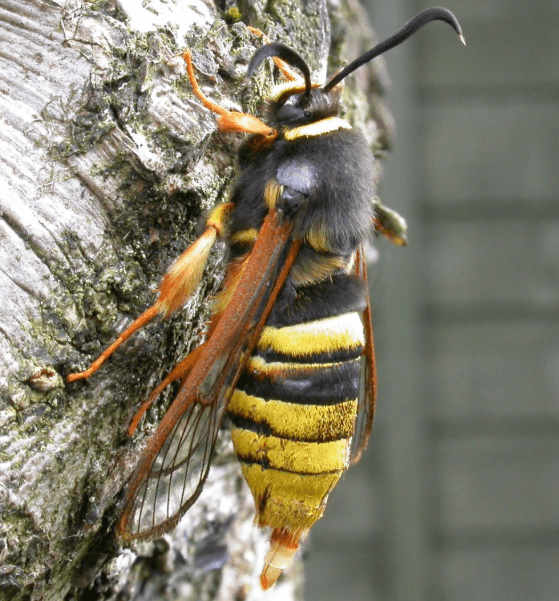
At first glance, the Lunar Hornet Moth doesn’t look like a moth at all. It looks like a hornet. Yellow and black stripes. Clear wings. Thick body. Even the way it flies mimics a wasp.
This is no accident. It’s mimicry. Predators that avoid stinging insects tend to avoid this moth too.
Found across Europe and parts of Asia, the Lunar Hornet Moth prefers wet woodlands. Its caterpillars live inside willow trees, boring into the wood and feeding quietly for years before emerging.
Adults are active during the day. They fly low and fast, often buzzing around tree trunks. If you didn’t know better, you’d step back.
Despite the intimidating look, the moth is harmless. No sting. No bite. Just a clever disguise.
This species is a reminder that among the many Types of Moths, survival often depends on illusion rather than strength.
9. Madagascan Sunset Moth (Chrysiridia rhipheus)
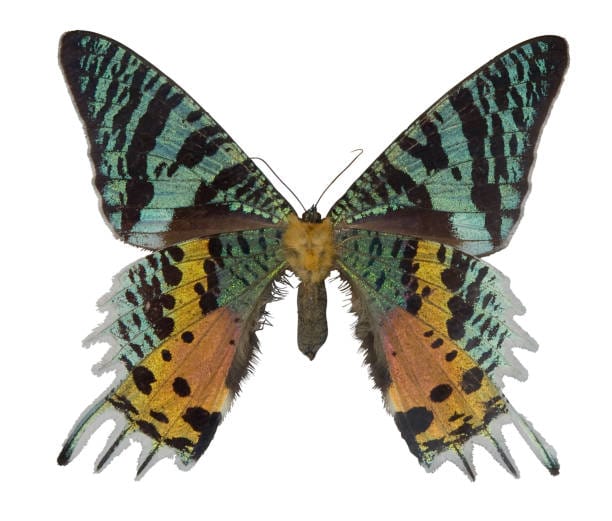
If someone told you moths are dull, the Madagascan Sunset Moth would prove them wrong in seconds. This species looks more like a flying gemstone than an insect. Its wings shimmer with green, red, blue, and gold, changing color as the light hits them.
This moth lives only in Madagascar. It depends closely on native plants, especially vines in the genus Omphalea. When those plants are scarce, the moth struggles. That tight connection makes it both special and vulnerable.
Unlike many moths, this one flies during the day. It often rests with wings spread wide, showing off colors that come from microscopic wing structures, not pigments. The color doesn’t fade because it isn’t paint. It’s physics.
The caterpillars feed on toxic plants and store those chemicals in their bodies. Birds learn quickly that this moth tastes terrible. Bright colors serve as a warning, not decoration.
For many people, this moth blurs the line between butterfly and moth. Antennae shape and body structure settle the debate, but visually, it still surprises.
Among all Types of Moths, this one often changes how people feel about moths altogether.
________________________________________
10. Codling Moth (Cydia pomonella)
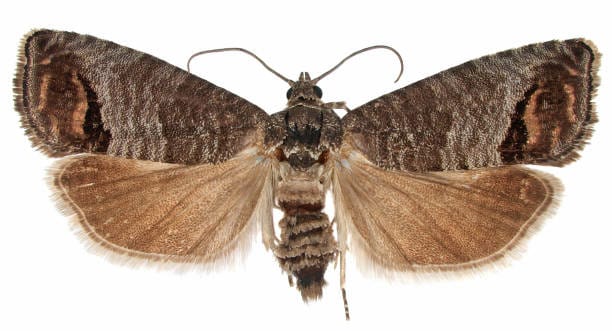
The Codling Moth isn’t flashy. Most people never notice the adult at all. But farmers know it well. This small gray moth is one of the most common pests of apple orchards worldwide.
Adults are active at dusk. They lay eggs on apple trees, pear trees, and walnuts. When the larvae hatch, they burrow straight into developing fruit. That’s how apples end up with worms inside.
The caterpillar feeds from the inside, protected from predators and weather. After feeding, it leaves the fruit, finds shelter in bark or soil, and pupates.
Despite its reputation, the Codling Moth plays a role in food webs. Birds, parasitic wasps, and small mammals feed on different life stages. It’s part of a larger system, even when inconvenient to humans.
This moth shows how some Types of Moths succeed not by beauty, but by timing and persistence.
________________________________________
11. Peppered Moth (Biston betularia)
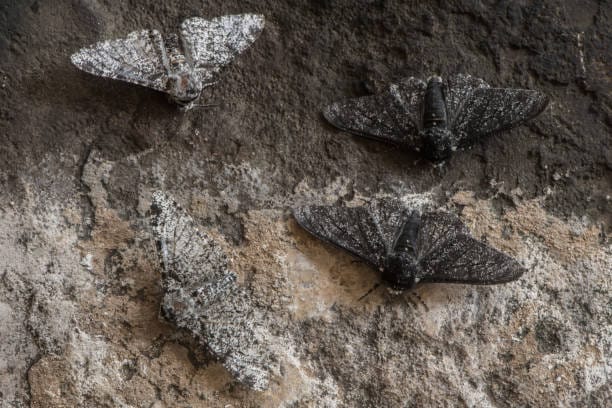
The Peppered Moth is famous for one reason: evolution in action. It became a textbook example of how species respond to environmental change.
This moth comes in light and dark forms. Before industrial pollution, light-colored moths blended into pale tree bark. During heavy pollution, soot darkened trees, and dark moths survived better.
Birds hunt visually. The moths that blended in lived longer and reproduced more. When pollution declined, lighter forms returned. No mystery. Just survival.
Peppered Moths rest during the day on tree trunks. At night, they fly and mate. Their life is simple but effective.
Among all Types of Moths, few have taught humans as much about natural selection as this one.
12. Case-Bearing Carpet Moth (Tinea pellionella)
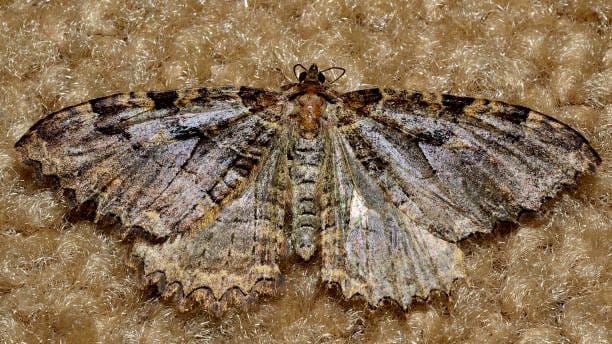
This moth lives indoors more often than outdoors. People usually meet it in closets, attics, or storage boxes.
The larvae build small silk cases and carry them around like sleeping bags. Inside those cases, they feed on wool, fur, feathers, and natural fibers.
Adults are small and rarely noticed. They don’t eat fabrics. Their job is reproduction.
This moth reminds us that some Types of Moths adapt perfectly to human homes without much attention.
________________________________________
13. Elephant Hawk Moth (Deilephila elpenor)
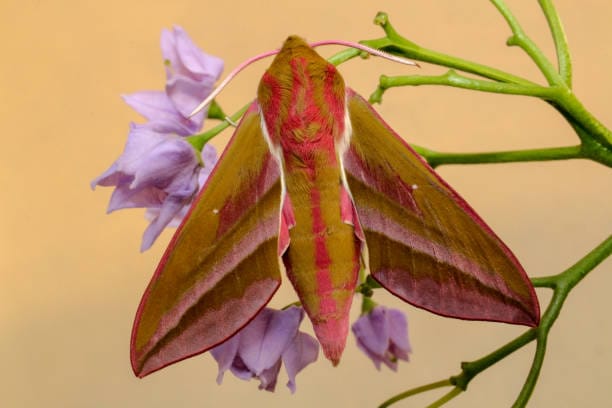
The Elephant Hawk Moth looks like it came from a children’s book. Pink and olive green wings give it a soft, friendly appearance.
It lives across Europe and parts of Asia. Adults fly at dusk and night, hovering near flowers to feed on nectar.
The caterpillar earned the name. When threatened, it pulls in its head and swells its body, resembling a tiny elephant with eye spots.
This display scares predators long enough for escape. It’s bluff, but a good one.
This moth shows how creativity helps many Types of Moths survive.
________________________________________
14. Hummingbird Hawk Moth (Macroglossum stellatarum)
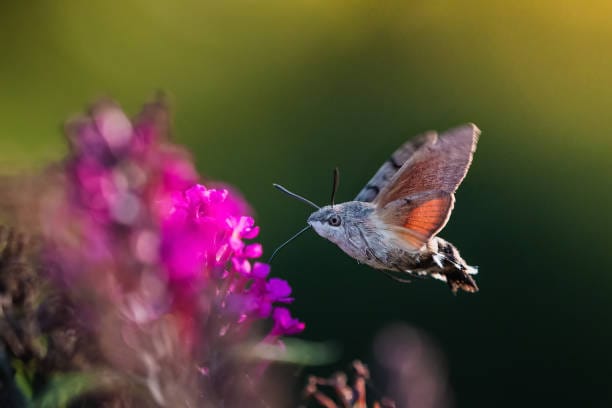
This moth behaves like a hummingbird. It hovers in front of flowers, drinks nectar mid-air, and moves fast.
It flies during the day, often confusing people. Brown wings blur as they beat rapidly.
Found across Europe, Africa, and Asia, this moth migrates long distances. It appears suddenly in gardens, then vanishes.
Its energy level is high. Watching one feels like watching a tiny engine with wings.
Among Types of Moths, this one breaks almost every stereotype.
________________________________________
15. White Witch Moth (Thysania agrippina)
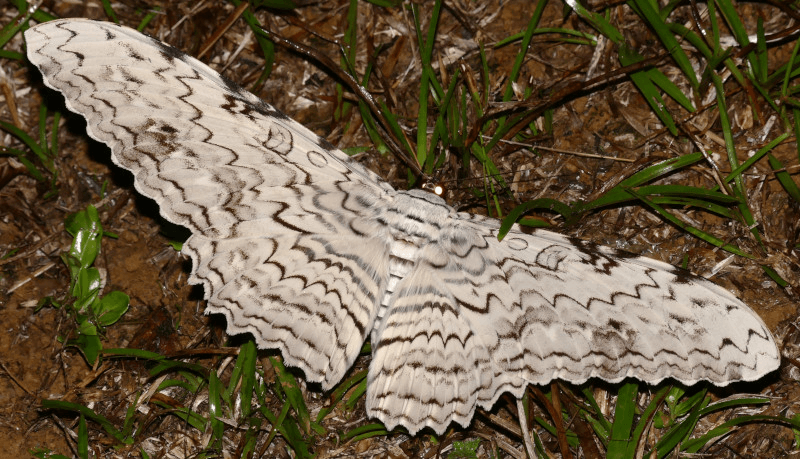
The White Witch Moth holds the record for the widest wingspan of any insect. Some reach over 12 inches.
It lives in Central and South America. Wings are pale gray with flowing patterns that resemble bark.
Despite its size, it’s hard to see when resting. Camouflage does the work.
At night, it flies silently through forests. Seeing one feels unreal, like spotting a ghost.
This moth reminds us that some Types of Moths rely on scale and stillness rather than speed.
16. Spanish Moon Moth (Graellsia isabellae)
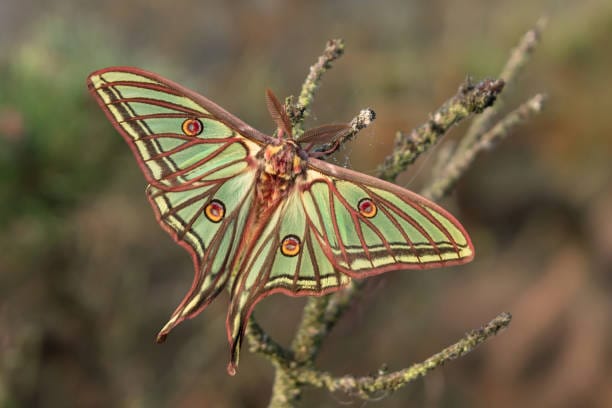
The Spanish Moon Moth looks delicate, almost fragile. Pale green wings stretch outward with long tails, giving it a floating appearance when it flies. Many people compare it to a leaf drifting on air.
This moth lives mainly in mountain forests of Spain and parts of France. It prefers pine forests at higher elevations, where cooler temperatures slow predators and human activity.
Adults live briefly and do not feed. Their focus is mating. Males use sensitive antennae to track females across long distances, guided by scent alone.
Caterpillars feed on pine needles and blend well with branches. Their survival depends on staying unnoticed.
Among Types of Moths, this species shows how beauty and restraint often go hand in hand.
________________________________________
17. Mandolin Moth (Rileyiana fovea)
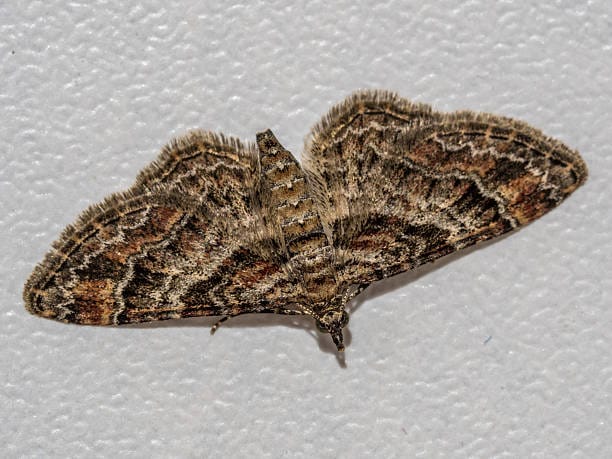
The Mandolin Moth gets its name from the pattern on its wings. The shape resembles a musical instrument when viewed from above.
Found mainly in parts of Africa, this moth prefers warm climates and wooded areas. Its brown and tan coloring helps it disappear against tree bark.
Little is known about its behavior compared to more famous species. That lack of attention doesn’t make it less important. It simply lives quietly, doing what moths do best.
This moth reminds us that many Types of Moths remain overlooked, even though they share the same night skies.
________________________________________
18. Vampire Moth (Calyptra species)
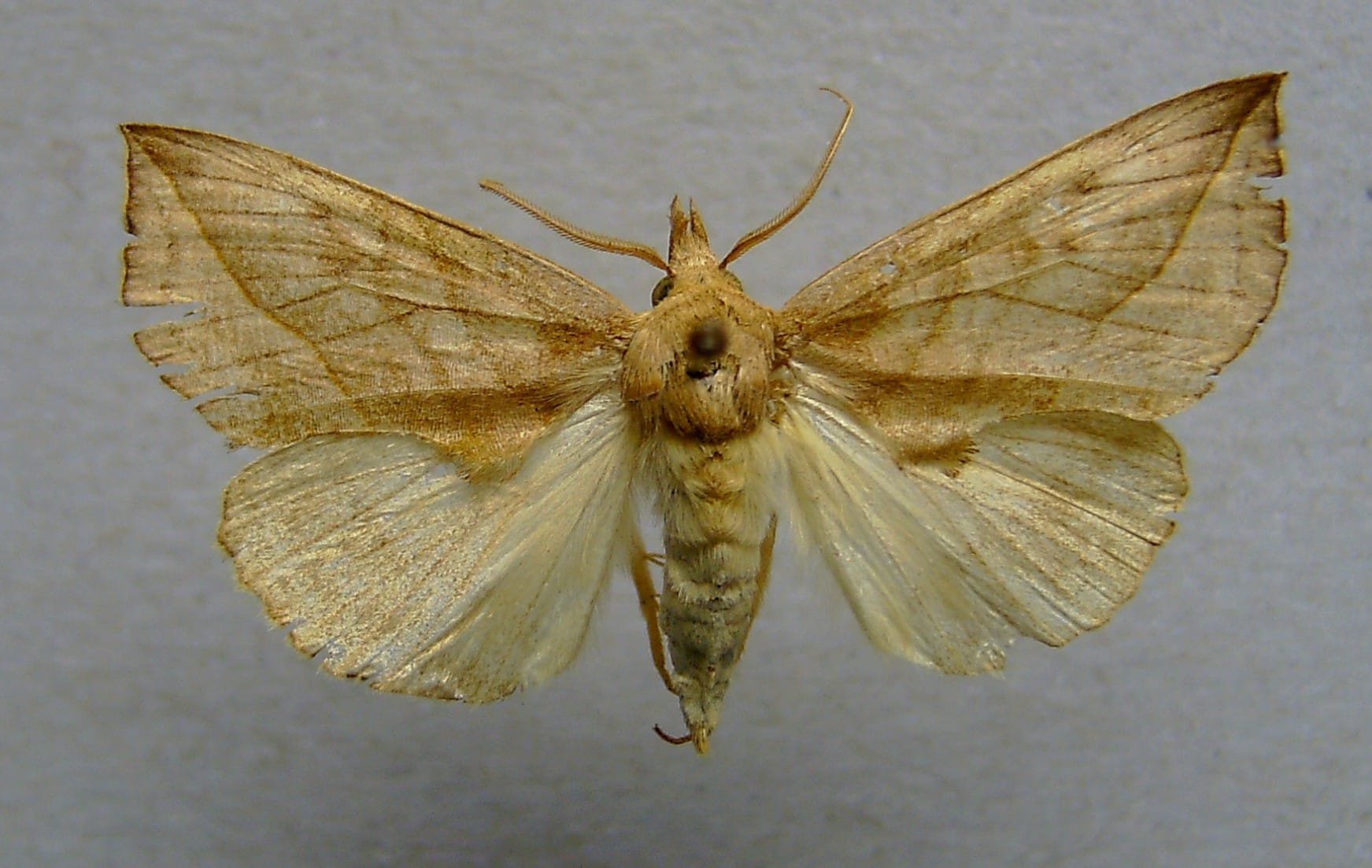
The Vampire Moth earns its name honestly. Some species can pierce fruit, animal skin, and even human skin to drink fluids.
This behavior is rare and limited to a few species. Most encounters involve fruit juices, not blood. Still, the idea alone makes people uneasy.
These moths live mainly in Asia. Their mouthparts are stronger than those of typical moths, allowing them to pierce surfaces.
Despite the reputation, Vampire Moths don’t hunt humans. Bites happen accidentally and are uncommon.
Among all Types of Moths, this one proves that nature doesn’t always follow our comfort rules.
________________________________________
19. Sloth Moth (Cryptoses choloepi)
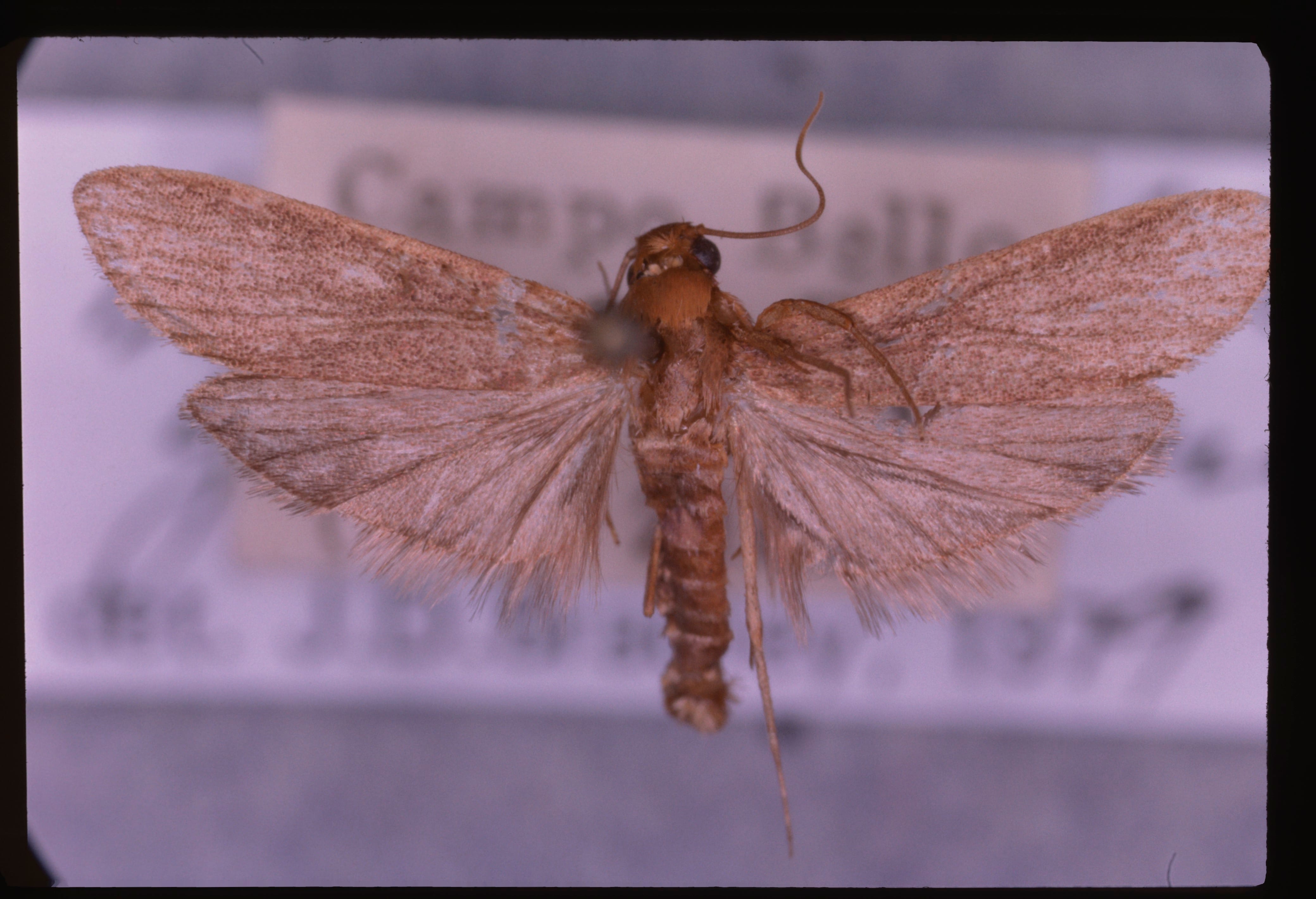
The Sloth Moth has one of the strangest life stories in the insect world. It lives almost entirely on sloths.
Adult moths stay in sloth fur. Females leave briefly to lay eggs in sloth droppings. Caterpillars feed there until they mature.
When adults emerge, they fly back to find another sloth. Algae growing in the fur provides camouflage and nutrients.
This tight partnership benefits both species. The moth helps fertilize algae. The algae feed the sloth.
Few Types of Moths show cooperation at this level.
20. Twin-spotted Sphinx Moth (Smerinthus jamaicensis)
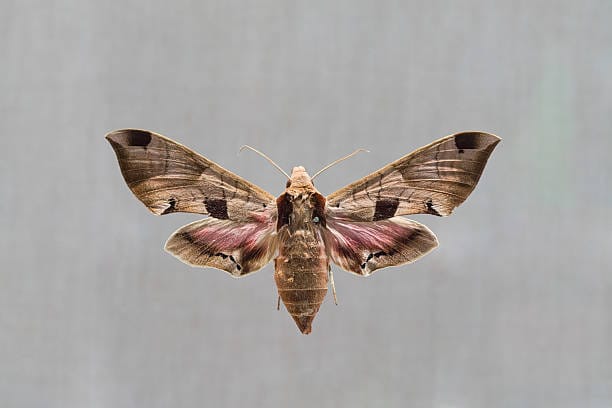
This moth is large, fast, and powerful. The Twin-spotted Sphinx Moth has muted brown wings with hidden eye spots underneath.
When threatened, it flashes those spots to scare predators. The effect is sudden and effective.
It lives across North America near forests and wetlands. Caterpillars feed on willow, poplar, and birch trees.
Adults fly at night and are drawn to lights. Their size often surprises people.
This moth shows how strength plays a role among certain Types of Moths.
________________________________________
21. Water Veneer Moth (Acentria ephemerella)
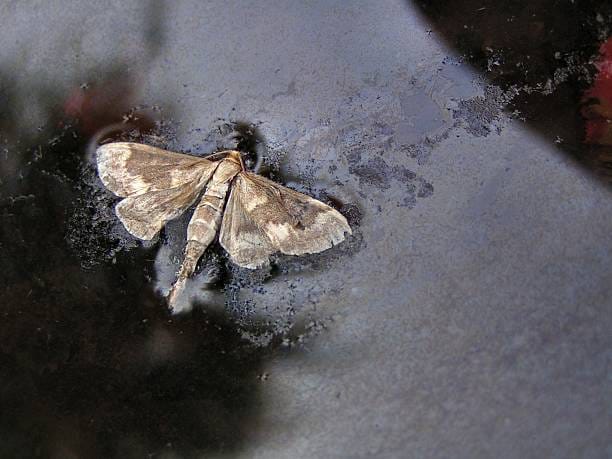
This moth lives where most insects wouldn’t survive. Its caterpillars live underwater.
Found across Europe and North America, larvae feed on aquatic plants. They breathe using air trapped along their bodies.
Adult females sometimes lack wings entirely. They remain near water to lay eggs.
This lifestyle reduces predators but limits movement.
Among Types of Moths, few adapt so fully to water.
________________________________________
22. Rosy Maple Moth (Dryocampa rubicunda)
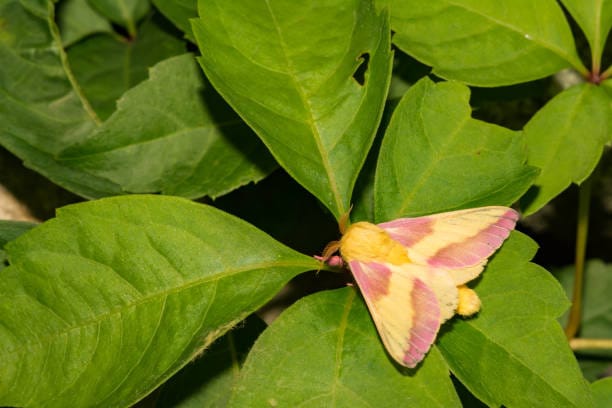
The Rosy Maple Moth looks like cotton candy. Pink and yellow wings make it instantly recognizable.
It lives in eastern North America. Adults rest during the day on tree trunks or leaves.
Caterpillars feed on maple and oak trees. They grow quickly and pupate in soil.
Despite the soft appearance, this moth survives harsh weather and predators.
It’s often one of the most loved Types of Moths online.
________________________________________
23. Cream-spot Tiger Moth (Arctia villica)
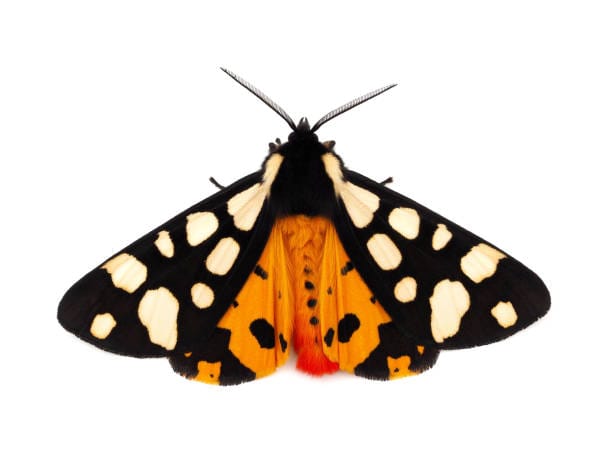
This moth wears bold contrast. Black wings with cream spots and red hindwings warn predators.
It lives across Europe and parts of Asia. Adults fly during the day and night.
Caterpillars are hairy and dark, feeding on many low-growing plants.
The colors signal toxicity, not beauty.
Among Types of Moths, warning patterns are a common survival strategy.
________________________________________
24. Corn Earworm Moth (Helicoverpa zea)
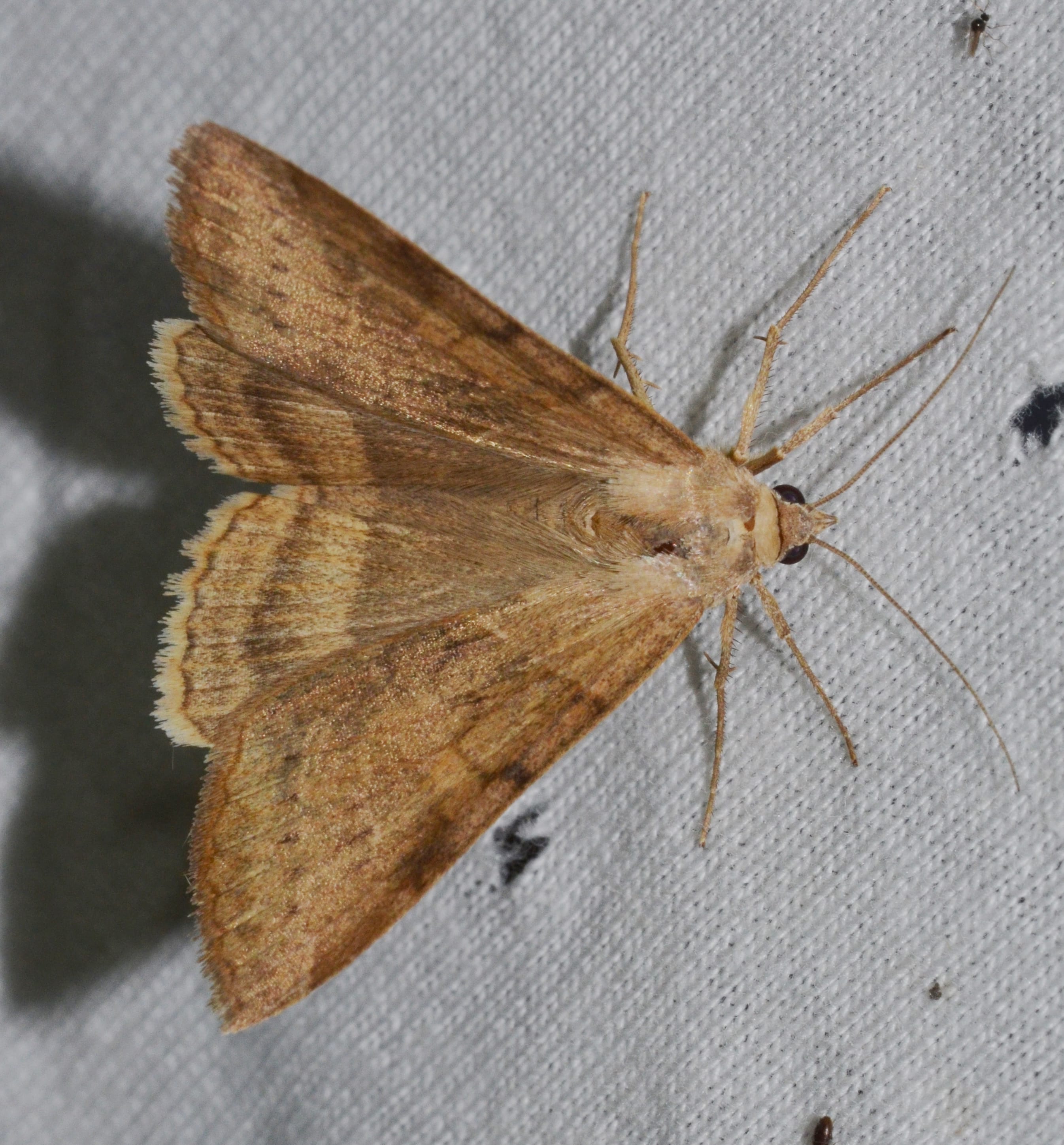
This moth is small but highly successful. It affects corn, cotton, tomatoes, and more.
Adults fly at night and lay eggs on crops. Larvae feed aggressively.
Farmers monitor this moth closely, but it remains adaptable.
This species shows how flexibility helps many Types of Moths thrive.
________________________________________
25. Barberry Carpet Moth (Pareulype berberata)
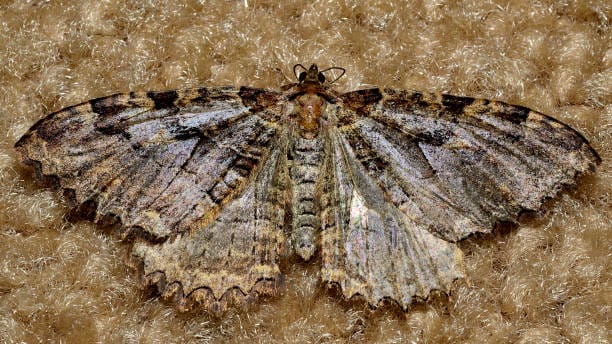
This moth relies on one plant: barberry.
Loss of barberry plants caused population declines. Conservation efforts brought it back.
Adults have patterned wings that blend with bark and stone.
This moth highlights how plant relationships shape Types of Moths.
26. Angle Shades (Phlogophora meticulosa)
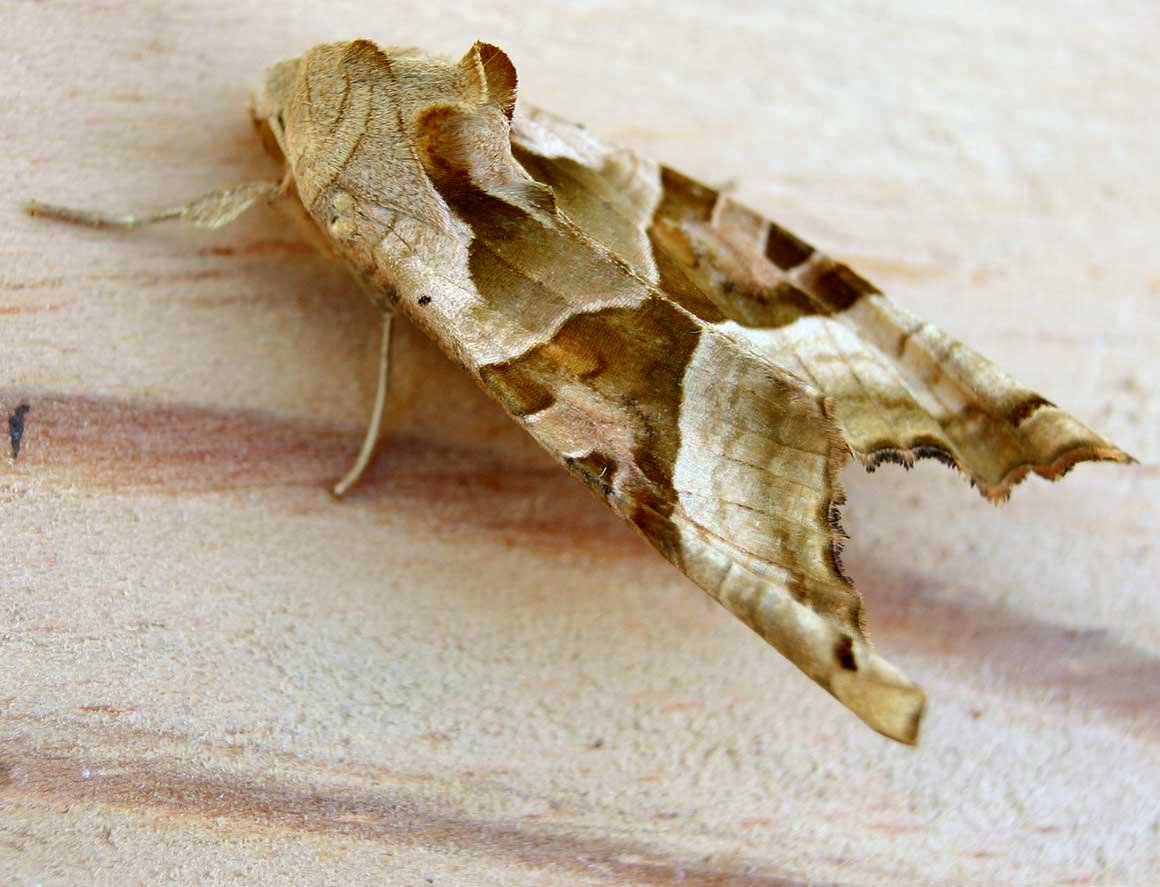
Angle Shades looks like a dead leaf. Brown, folded wings form sharp angles that mimic dry foliage on the forest floor.
This moth lives across Europe and parts of Asia. It often rests in plain sight, relying on camouflage rather than speed.
At night, it feeds on nectar from flowers. During the day, it barely moves.
Its success comes from looking boring. Predators pass right by.
Among Types of Moths, this species proves that blending in often beats standing out.
________________________________________
27. Antler Moth (Cerapteryx graminis)
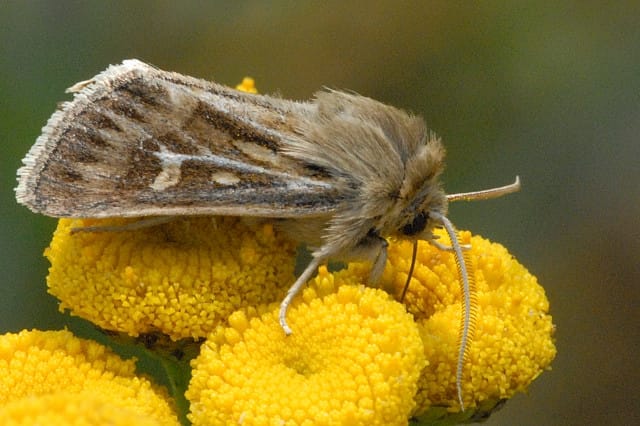
The Antler Moth gets its name from the shape of the male’s antennae, which branch like small antlers.
It lives in grasslands and moorlands across Europe. Adults emerge in large numbers during late summer.
Caterpillars feed on grasses and cereal crops. In outbreak years, they can affect grazing land.
This moth shows how population swings shape ecosystems.
Many Types of Moths go unnoticed until their numbers rise.
________________________________________
28. Black Rustic (Aporophyla nigra)
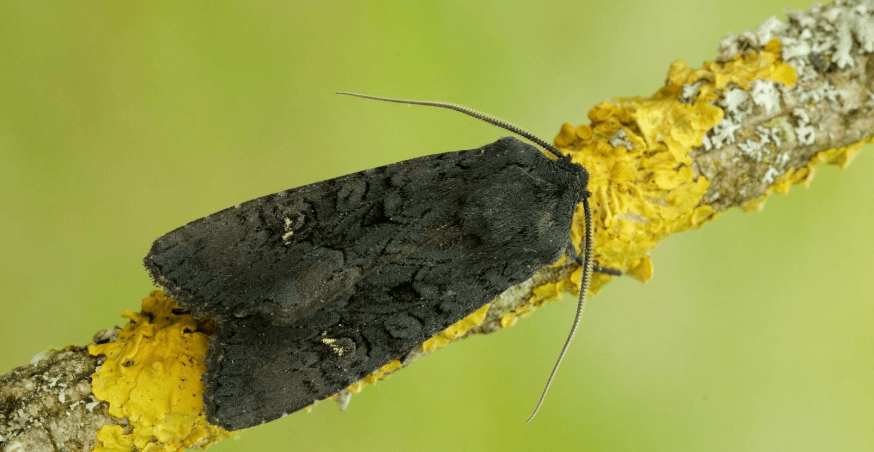
The Black Rustic is subtle and dark, with charcoal-brown wings and faint markings.
It prefers woodland edges and gardens. Adults fly late at night and rest quietly during the day.
Caterpillars feed on low plants and grasses.
It’s rarely noticed unless attracted to light.
This moth represents the quieter side of Types of Moths.
________________________________________
29. Buff-tip (Phalera bucephala)
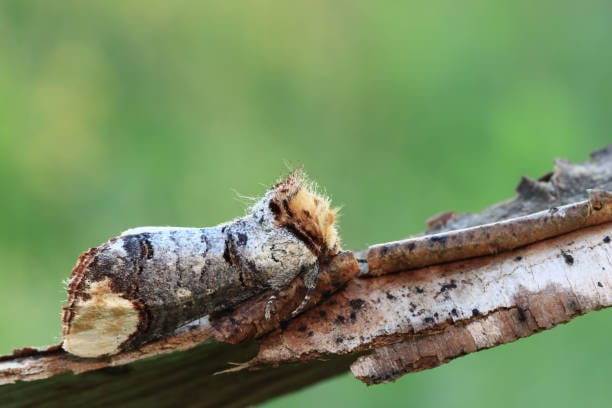
When resting, the Buff-tip looks exactly like a broken twig. Even experienced observers miss it.
Found across Europe and Asia, this moth rests openly on trees.
Caterpillars feed in groups on oak, birch, and willow.
Despite their appearance, outbreaks can strip trees of leaves.
Camouflage makes this one of the cleverest Types of Moths.
________________________________________
30. Burnet Companion (Euclidia glyphica)
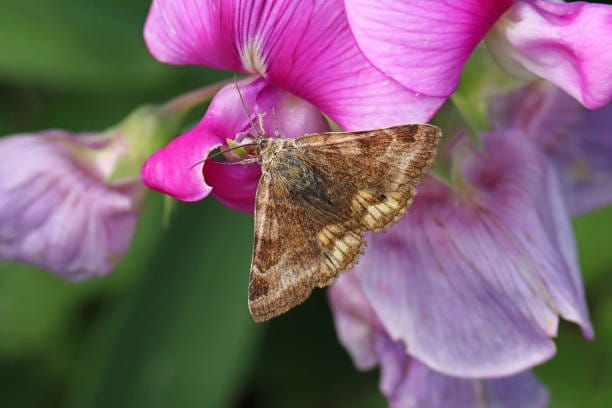
The Burnet Companion flies during the day. Dark wings with pale markings make it easy to spot in meadows.
It feeds on clover and grasses. Adults are strong, steady flyers.
Its behavior often causes confusion with butterflies.
This moth thrives in open landscapes.
Daytime activity sets some Types of Moths apart.
31. Common Footman (Eilema lurideola)
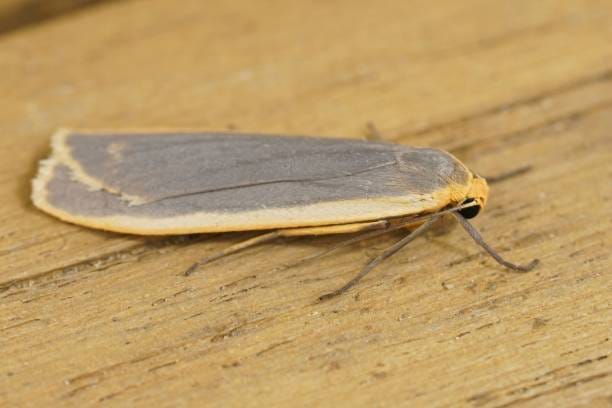
The Common Footman has narrow, pale yellow wings held tight to the body.
It lives near trees and old walls where lichens grow.
Caterpillars feed on algae and lichen, which few insects use.
This diet helps avoid competition.
Among Types of Moths, specialization can be an advantage.
________________________________________
32. Dark Crimson Underwing (Catocala sponsa)
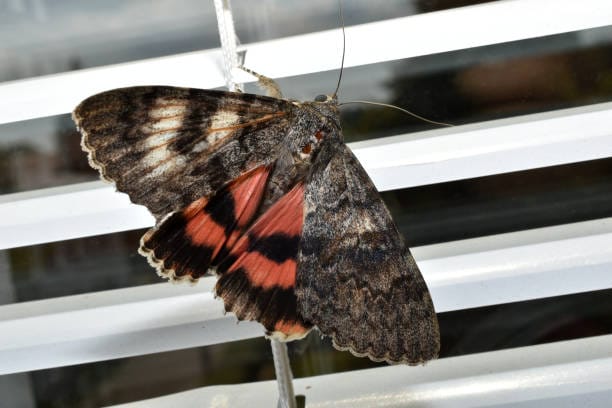
At rest, this moth blends into bark. In flight, it flashes bright red underwings.
This sudden contrast startles predators.
It lives in mature woodlands with oak trees.
Adults are active at night and rest on trunks by day.
Color contrast is a common trick among Types of Moths.
________________________________________
33. Essex Emerald (Thetidia smaragdaria)
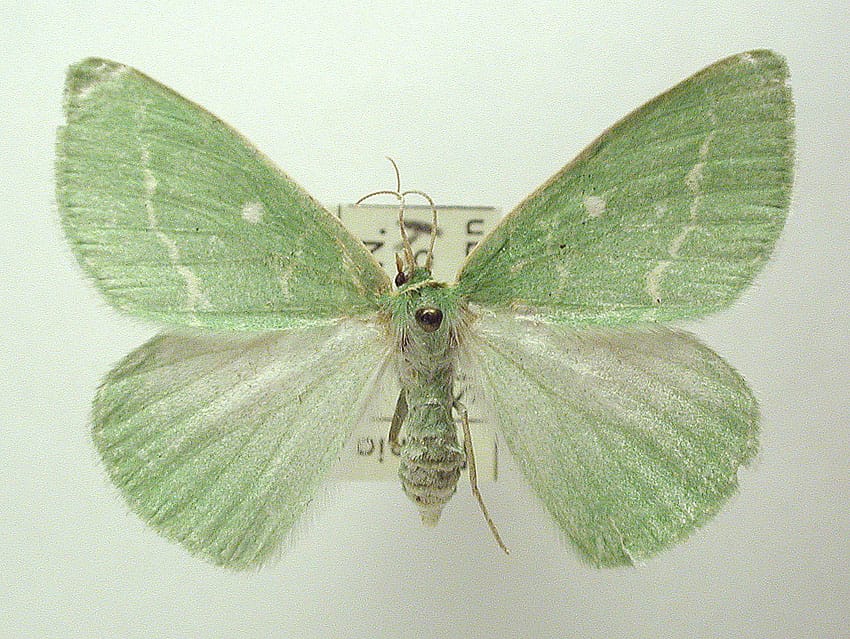
This moth wears bright green wings with white lines.
It lives in hedgerows and woodland edges in parts of Europe.
Caterpillars feed on shrubs like hawthorn.
Its green color fades after death, making live sightings special.
Few Types of Moths stay green for long.
________________________________________
34. Five-spot Burnet (Zygaena trifolii)
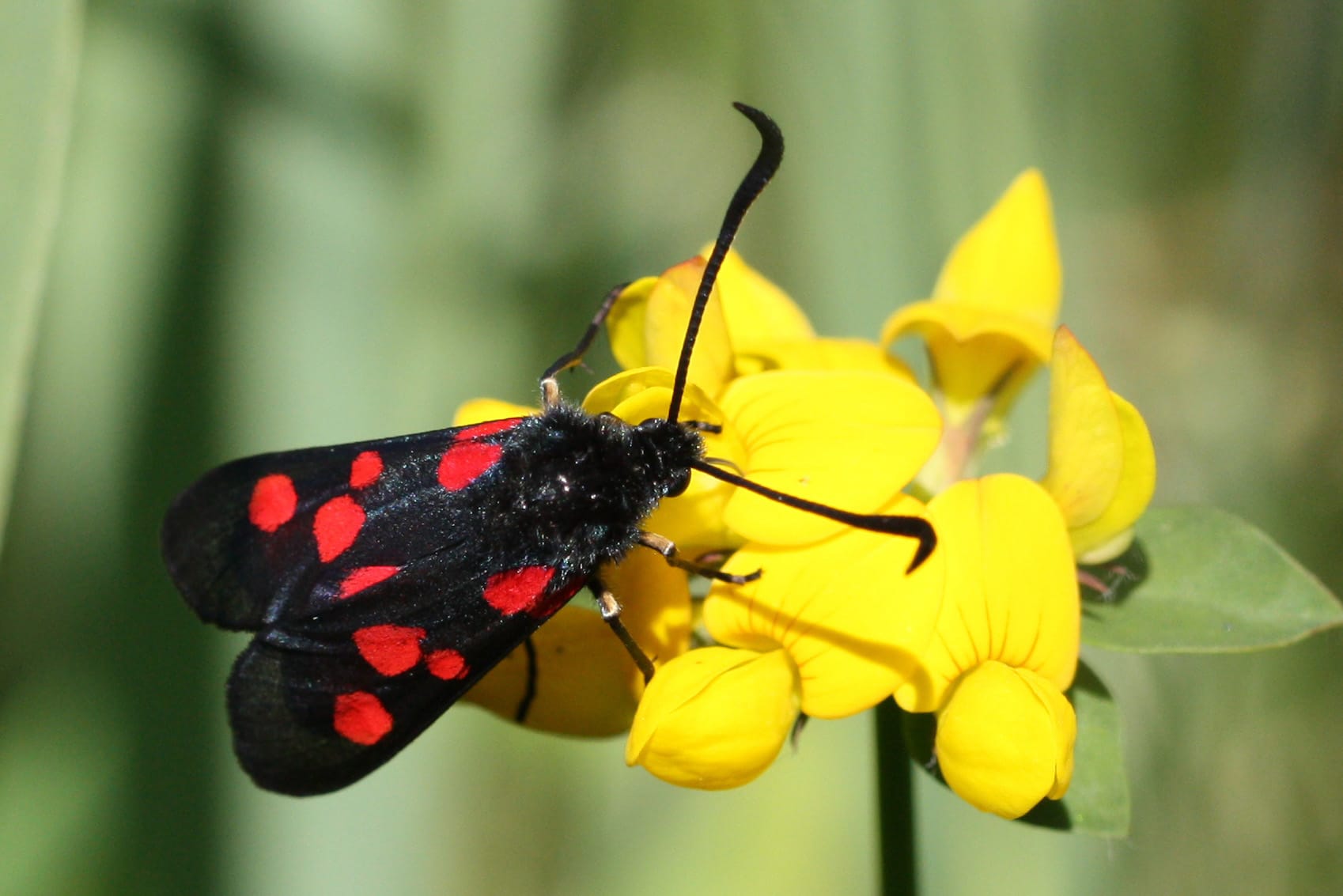
Five red spots on dark wings warn predators clearly.
This moth flies during the day in grassy areas.
Caterpillars store plant toxins.
The message is simple: don’t eat me.
Warning colors help several Types of Moths survive.
________________________________________
35. Garden Tiger Moth (Arctia caja)
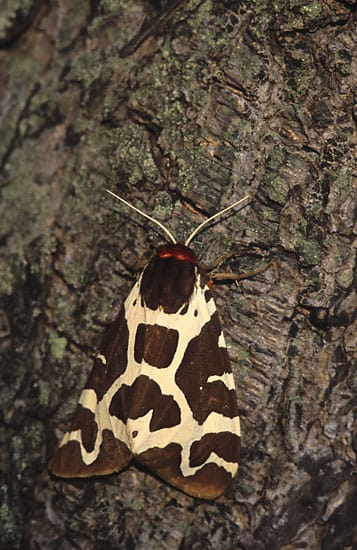
The Garden Tiger Moth is large and striking, with patterned forewings and bright hindwings.
It lives in gardens, meadows, and woodland edges.
Caterpillars, called woolly bears, are fuzzy and tough.
Adults can make clicking sounds to scare bats.
This moth shows how sound, color, and size combine among Types of Moths.
36. Gypsy Moth (Lymantria dispar)
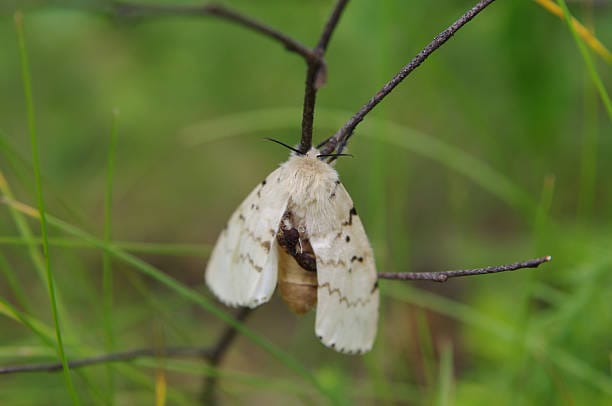
The Gypsy Moth is one of the most discussed moths in forest management. It spreads easily and feeds heavily.
Adults are pale with dark markings. Males fly well. Females are heavier and often stay near where they emerge.
Caterpillars feed on oak, birch, and many other trees. During outbreaks, entire forests can lose their leaves.
Despite the damage, the moth becomes food for birds and mammals.
This species shows how population balance affects many Types of Moths.
________________________________________
37. Hebrew Character (Orthosia gothica)
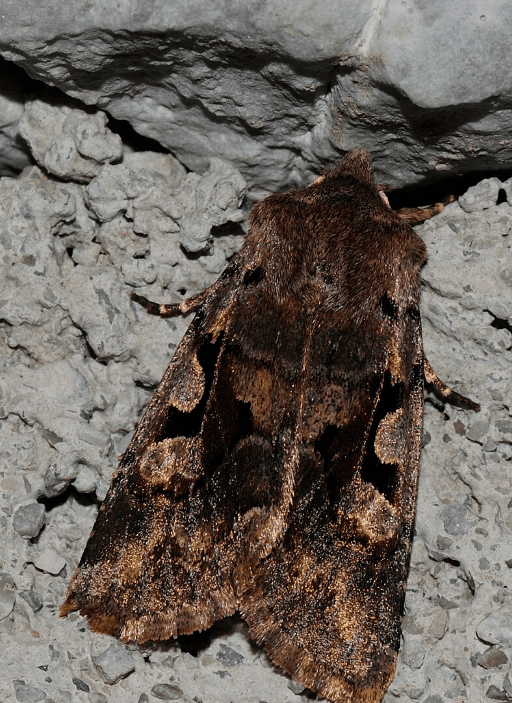
This moth gets its name from a marking on its wing that looks like a small written symbol.
It appears early in spring, often when nights are still cold.
Adults visit flowers and tree sap. Caterpillars feed on young leaves.
Its timing helps avoid competition.
Seasonal timing matters for many Types of Moths.
________________________________________
38. Leopard Moth (Zeuzera pyrina)
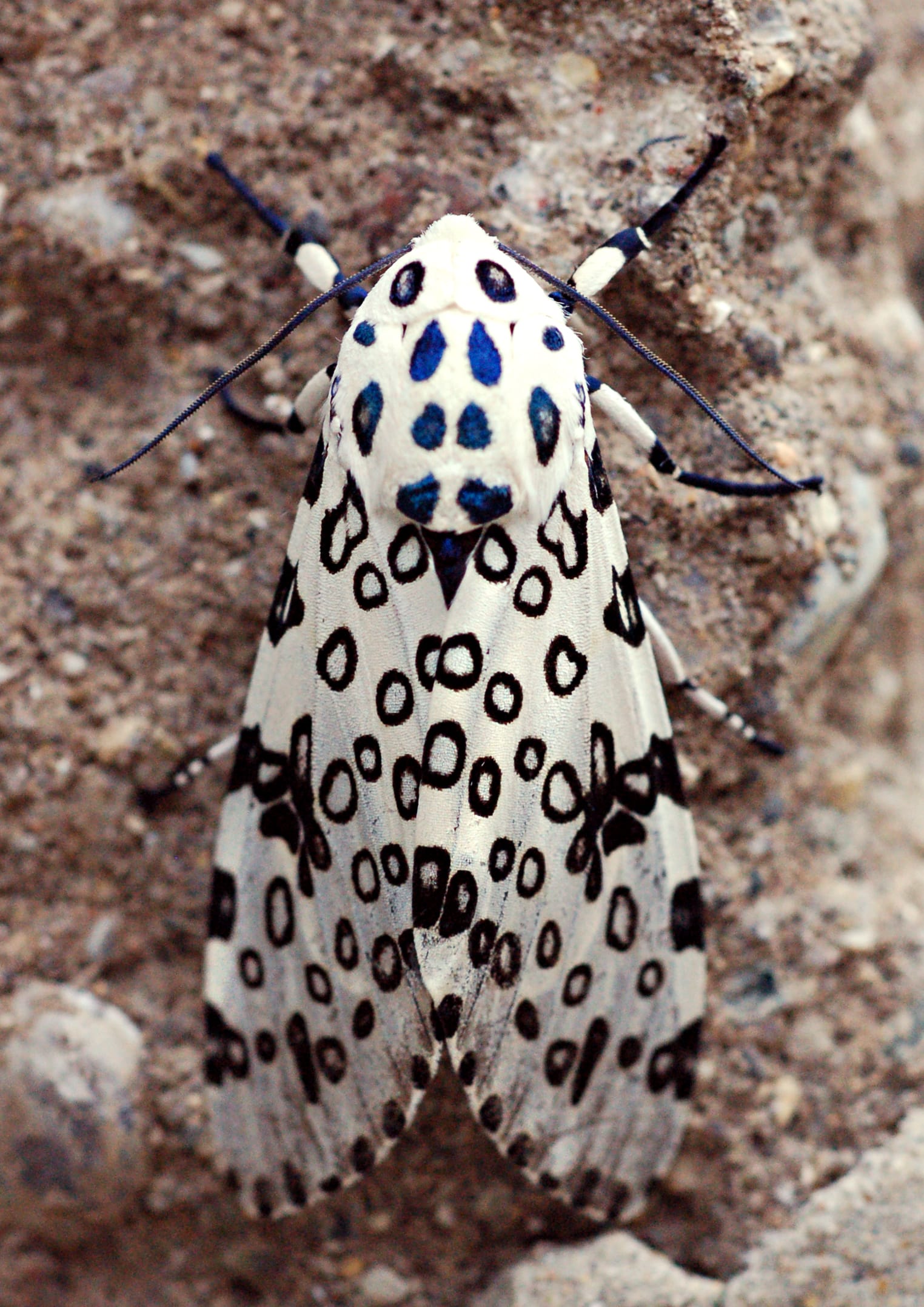
White wings with black spots give this moth its name.
It lives in Europe and parts of Asia. Adults fly at night.
Larvae bore into tree trunks, sometimes weakening branches.
Adults are harmless and striking.
Visual contrast helps this moth stand out among Types of Moths.
39. Lime Hawk-moth (Mimas tiliae)
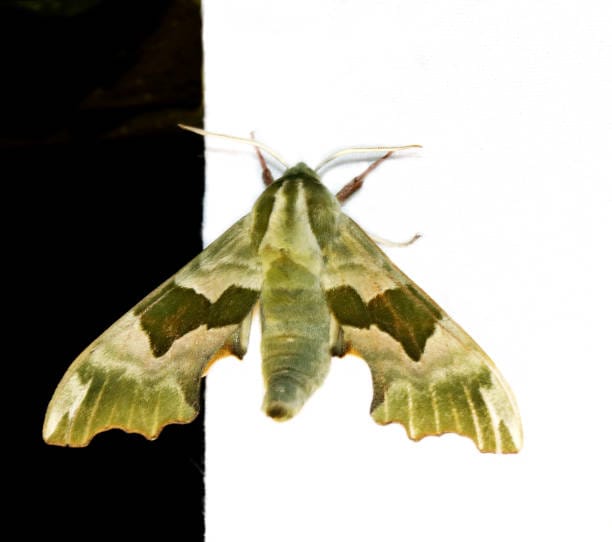
Fly Season: May-July.
Habitat: Lowland woods, Parks, Urban Gardens.
Food Plants: Limes, also elms, Birches and Common Alder.
This is a common Species in the Netherlands. Photographed on Light in May 2018.
This moth has green and brown wings shaped like leaves.
It rests flat against tree bark during the day.
Caterpillars feed on lime and elm trees.
Its shape hides it well.
Camouflage supports many Types of Moths.
________________________________________
40. Privet Hawk-moth (Sphinx ligustri)
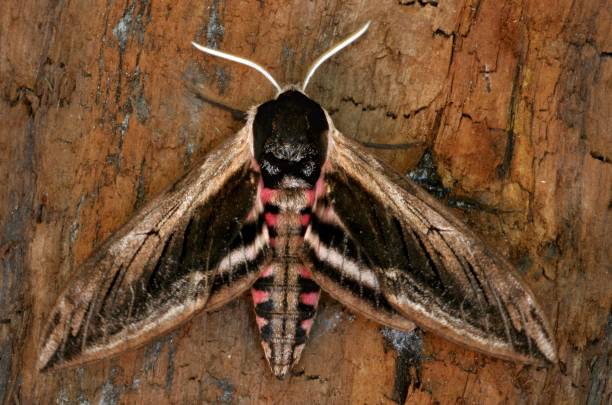
Eccles-on-sea, Norfolk, UK. July
The Privet Hawk-moth is one of the largest moths in Europe.
Pink and black bands flash when it flies.
Caterpillars feed on privet bushes and lilac.
Adults are strong night flyers.
Size gives some Types of Moths an edge.
________________________________________
41. Silver-ground Carpet (Xanthorhoe montanata)
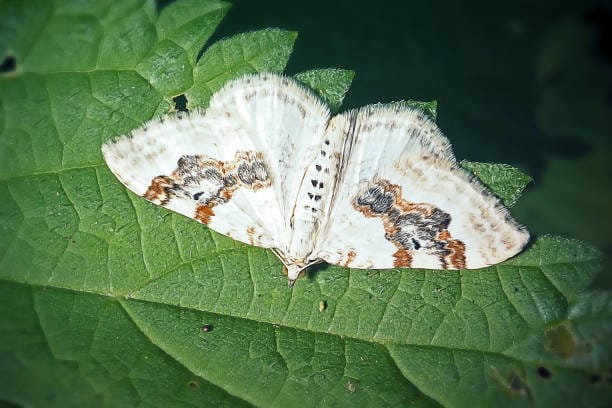
This moth has fine patterned wings that blend with stone and bark.
It lives in woodland and mountain areas.
Adults are active in summer.
Subtle patterns protect it from predators.
Quiet design helps many Types of Moths survive.
42. Emperor Moth (Saturnia pavonia)
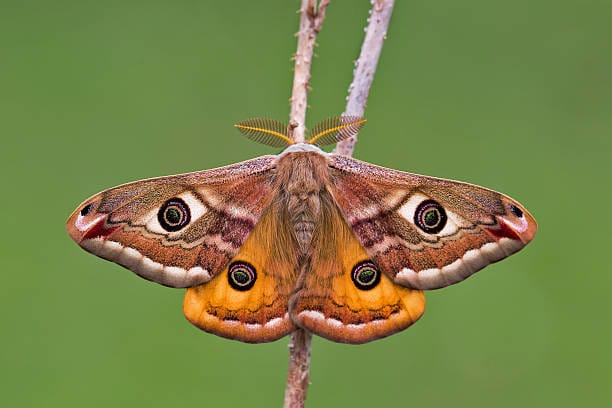
The Emperor Moth has large eye spots on its wings.
Males fly during the day. Females stay near bushes.
Caterpillars feed on heather and bramble.
Eye spots confuse predators.
Visual tricks appear across Types of Moths.
________________________________________
43. Polyphemus Moth (Antheraea polyphemus)
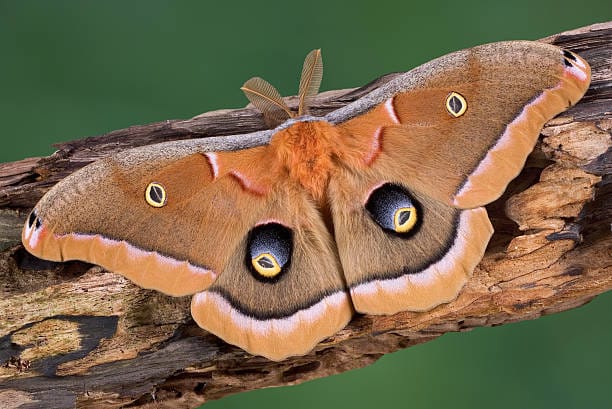
This North American moth has giant eye spots.
Adults do not feed and live briefly.
Caterpillars grow large and strong.
The wingspan is impressive.
Scale matters for some Types of Moths.
________________________________________
44. Io Moth (Automeris io)
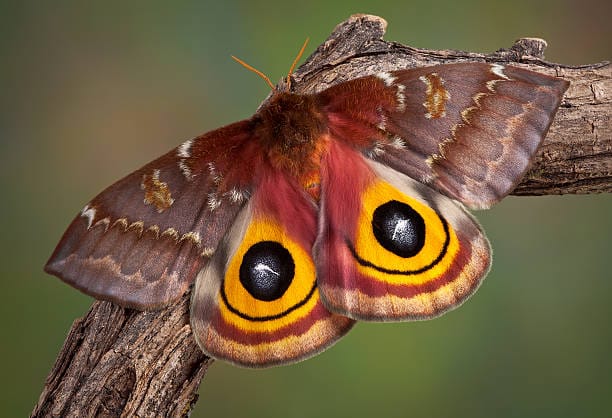
The Io Moth shows bright eye spots when threatened.
Caterpillars have stinging spines.
Adults fly at night.
Defense starts early in life.
Protection strategies vary across Types of Moths.
________________________________________
45. Oak Eggar (Lasiocampa quercus)
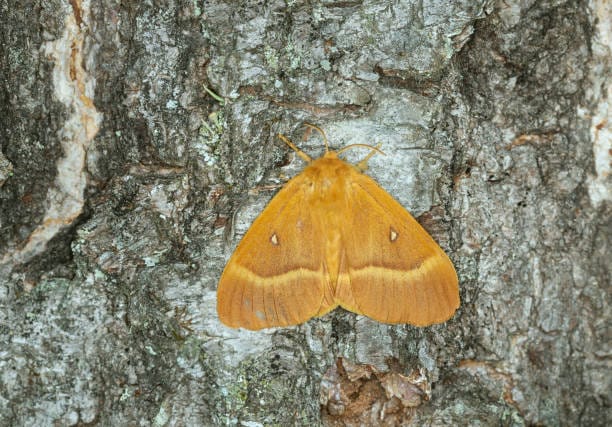
The Oak Eggar is thick-bodied and fuzzy.
It lives in heathlands and open woods.
Males fly during the day. Females remain grounded.
Caterpillars feed on heather and shrubs.
This moth closes our list of Types of Moths with strength and simplicity.
________________________________________
Conclusion: Why Types of Moths Matter More Than We Think
Moths are quiet workers. They pollinate plants, feed wildlife, recycle nutrients, and tell us when ecosystems shift. From massive hawk-moths to tiny indoor species, each one fills a role.
Learning about Types of Moths helps us notice patterns in nature we might otherwise miss. Next time you see one near a light or resting on a wall, pause for a second. That small moment connects you to forests, fields, and nights older than cities.
If this guide helped you, share it with someone curious. And keep looking closer. Nature hides its best stories in plain sight.
FAQ’s
1. What are moths?
Moths are insects closely related to butterflies. Most moths are active at night and belong to the order Lepidoptera.
2. How many types of moths are there?
Scientists estimate there are over 160,000 known moth species worldwide, with many more still undiscovered.
3. What is the difference between moths and butterflies?
Moths usually fly at night, have feathery antennae, and rest with wings flat, while butterflies are mostly active during the day.
4. Are moths harmful to humans?
Most moths are harmless. Only a few species damage crops or fabrics, and very few can irritate skin.
5. Why are moths attracted to light?
Moths may use natural light sources like the moon for navigation, and artificial lights confuse this system.
6. Do moths bite or sting?
Moths do not sting, and almost all species cannot bite humans.
7. What do moths eat?
Adult moths often drink nectar, while caterpillars feed on leaves, plants, or sometimes stored foods.
8. Do all moths fly at night?
No. Some moths, such as the Cinnabar Moth and Hummingbird Hawk Moth, are active during the day.
9. How long do moths live?
Adult moths usually live from a few days to a few weeks, depending on the species.
10. Do moths pollinate plants?
Yes. Many moths are important nighttime pollinators for flowers that bloom after sunset.
11. Why are some moths brightly colored?
Bright colors often warn predators that the moth is toxic or unpleasant to eat.
12. What is the largest moth in the world?
The White Witch Moth has the widest wingspan of any insect, reaching over 12 inches.
13. What is the smallest moth?
Some moths in the Nepticulidae family are only a few millimeters wide.
14. Are moths important to ecosystems?
Yes. Moths provide food for birds, bats, reptiles, and other insects.
15. Why do moth caterpillars look different from adults?
Moths undergo complete metamorphosis, changing body form entirely between life stages.
16. Can moths damage clothing?
Only the larvae of a few moth species eat natural fibers like wool and silk.
17. Do moths sleep?
Moths rest during inactive periods, but they do not sleep in the human sense.
18. How do moths protect themselves?
Moths use camouflage, warning colors, mimicry, sounds, and eye spots to avoid predators.
19. What eats moths?
Birds, bats, spiders, reptiles, amphibians, and other insects feed on moths.
20. Why do some moths have eye spots?
Eye spots scare predators by making the moth appear larger or more dangerous.
21. Are moths active in winter?
Most moths overwinter as eggs, larvae, or pupae rather than active adults.
22. Can moths hear?
Some moths can detect bat echolocation using special hearing organs.
23. What is a hawk moth?
Hawk moths are strong flyers known for hovering and fast movement.
24. Do moths migrate?
Yes. Species like the Hummingbird Hawk Moth migrate long distances.
25. Why do moths have fuzzy bodies?
Fur helps moths stay warm and can make them harder for predators to grip.
26. Can moths see color?
Many moths can see colors, especially ultraviolet light.
27. What plants attract moths?
Night-blooming flowers with strong scents attract moths.
28. Do moths remember locations?
Moths can learn and remember food sources and resting places.
29. Are moths endangered?
Some moth species face decline due to habitat loss and light pollution.
30. Why do moth populations change year to year?
Weather, predators, food availability, and human activity affect moth numbers.
31. Can moths survive indoors?
Only a few species can live indoors, usually those feeding on stored materials.
32. What is a silk moth?
Silk moths are species whose caterpillars produce silk fibers.
33. Do moths have good eyesight?
Moths see well in low light but rely heavily on scent.
34. Why are moth antennae feathery?
Feathery antennae help detect chemical signals from mates.
35. Can moths fly in the rain?
Most moths avoid flying in heavy rain to protect their wings.
36. Are moths older than butterflies?
Yes. Fossil evidence suggests moths appeared before butterflies.
37. Do moths feel pain?
Moths respond to harm but do not experience pain like mammals.
38. Why do moth wings look dusty?
The dust is made of tiny scales that protect wings and help with flight.
39. Can moths regenerate wings?
No. Once damaged, moth wings cannot regrow.
40. What time of year are moths most active?
Most moths are active from spring through early fall.
41. Why should we care about moths?
Moths support ecosystems, pollination, and food chains across the planet.
42. Are moths useful to science?
Yes. Moths help scientists study evolution, ecology, and environmental change.
Read more:
- 25 Types of Moth Caterpillars (Pictures and Identification)
- 40 Types of Black and Yellow Caterpillars | Identification & Pictures
- 20 Black and Brown Caterpillars (Pictures And Identification)
- 35 Types of Horned Caterpillars (Pictures and Identification)
- 25 Types of Arizona Caterpillars (Pictures And Identification)
- 40 Types of Striped Caterpillars (Pictures and Identification)
- 25 Types of Furry Caterpillars (Pictures and Identification)
- 40 Types of Butterflies (Pictures And Identification)
- 50 Types of Beetles (Pictures and Identification)
- 20 Types of Squid (Pictures And Identification)