

Apes are among the most intelligent and fascinating mammals on Earth. They inhabit forests, mountains, and swamps, demonstrating complex behaviors, social bonds, and problem-solving skills. When people search for Types of Apes, they often want clear identification, interesting facts, and insight into each species’ natural habitat. From the agile gibbons swinging across Southeast Asian canopies to the mighty gorillas of Africa, apes vary widely in size, appearance, and behavior. This guide presents thirty types of apes, giving each its own focus with details on habitat, distinctive features, and intriguing behaviors. Whether you are a wildlife enthusiast or a curious reader, this article provides a friendly, educational tour of these remarkable primates.
30 Types of Apes
1. Common Chimpanzee
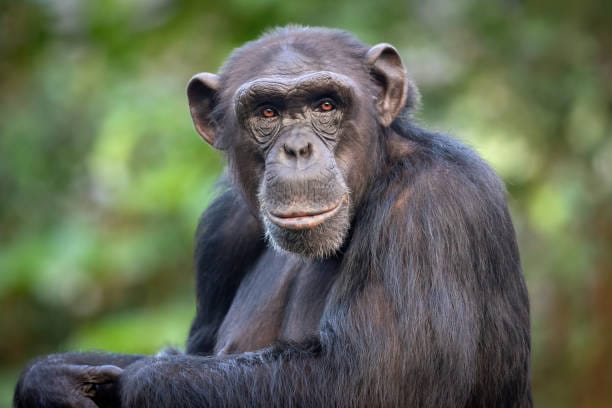
The common chimpanzee is a remarkable ape known for its intelligence and social behavior. These primates inhabit the forests and savannas of central and West Africa, often forming communities of up to 100 individuals. A fun fact: chimpanzees use tools, such as sticks to extract termites, showing advanced problem-solving skills.
Physically, common chimpanzees have long arms, a stocky torso, and dark hair covering most of their bodies. Their facial expressions are expressive, with the ability to communicate through gestures and vocalizations. Their diet is omnivorous, including fruits, leaves, insects, and occasionally small mammals. Social hierarchies govern group life, with dominant males maintaining order and access to resources.
Common chimpanzees are highly intelligent and curious. Researchers have observed them exhibiting empathy, strategic thinking, and even a form of culture, as tool use varies between communities. Despite their adaptability, habitat destruction and hunting pose significant threats. Conservation efforts across Africa aim to maintain protected areas and encourage coexistence between humans and chimpanzees.
2. Bonobo

Bonobos, often called the “peaceful chimpanzees,” are smaller and more slender than common chimpanzees. Native to the rainforests of the Congo Basin, bonobos live in matriarchal societies, where females play a central role in group decision-making. One fascinating behavior is their use of social interactions to resolve conflicts, often through grooming or playful contact.
Bonobos have black faces with pink lips, long limbs, and agile bodies suited for arboreal life. They are primarily frugivorous, eating fruits, leaves, and occasionally small animals. Communication is highly developed, involving vocalizations, facial expressions, and body postures. Bonobos are rarely aggressive, demonstrating that primate societies can thrive with social cohesion rather than dominance.
Habitat loss due to logging and human settlement threatens bonobos. Current conservation programs focus on protecting forest areas and promoting awareness of their intelligence and peaceful behavior. Observing bonobos offers a window into the diversity of ape social structures and emotional lives.
3. Western Chimpanzee
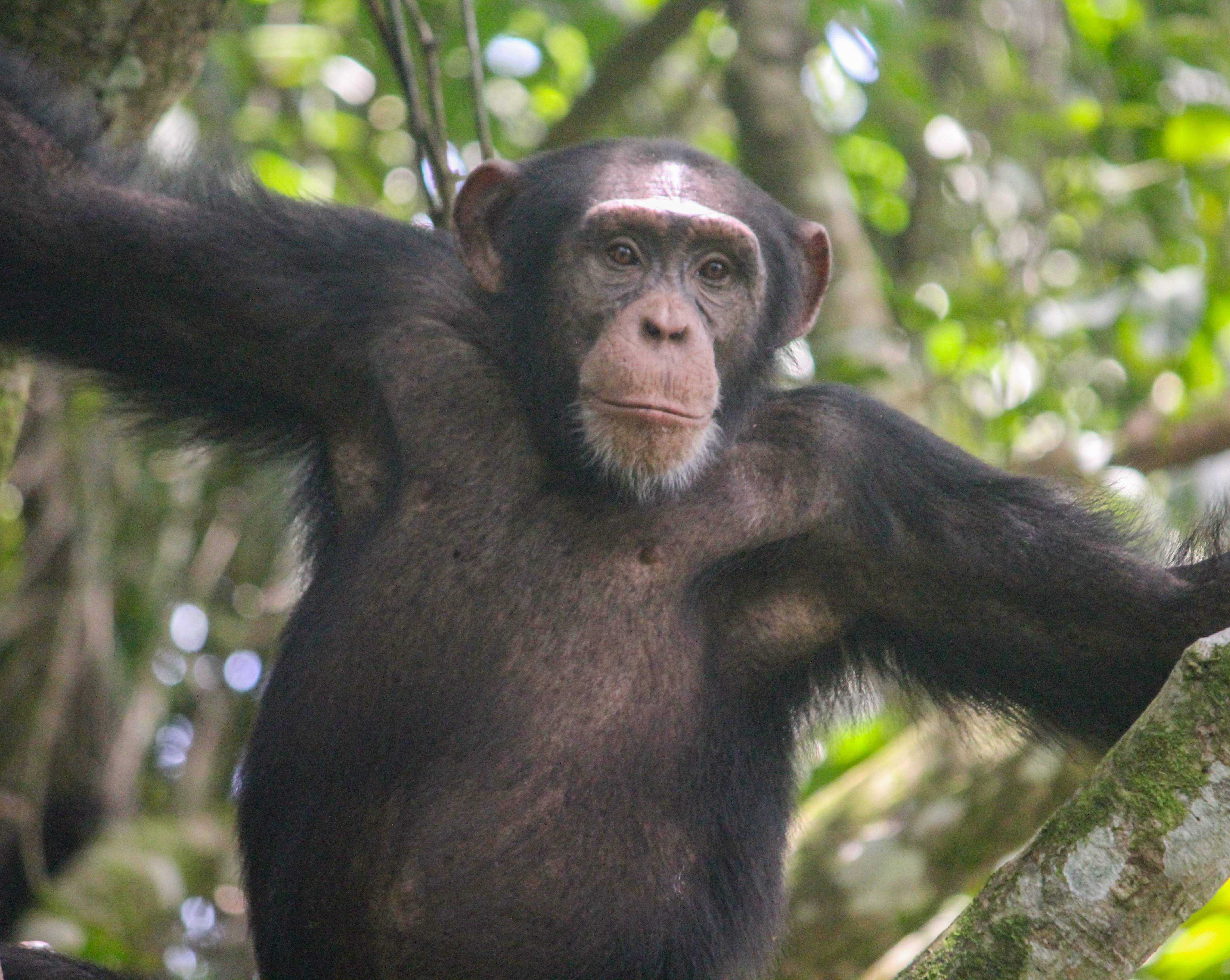
The western chimpanzee inhabits forests of West Africa, including Guinea, Sierra Leone, and Ivory Coast. Slightly smaller than other chimpanzee populations, these apes demonstrate advanced tool-use behavior, such as cracking nuts with stones or probing termite mounds with sticks.
Western chimpanzees have dark, coarse hair and a stocky frame, adapted for climbing and long-distance walking on the forest floor. Their groups are structured with complex social bonds, and males often compete for leadership within the community. Their diet is varied, focusing on fruits, seeds, leaves, and insects.
Conservation efforts emphasize protecting remaining forest patches and mitigating human conflict. Western chimpanzees are considered endangered, highlighting the need for habitat preservation and anti-poaching initiatives. Watching them in the wild reveals sophisticated intelligence combined with playful curiosity.
4. Central Chimpanzee
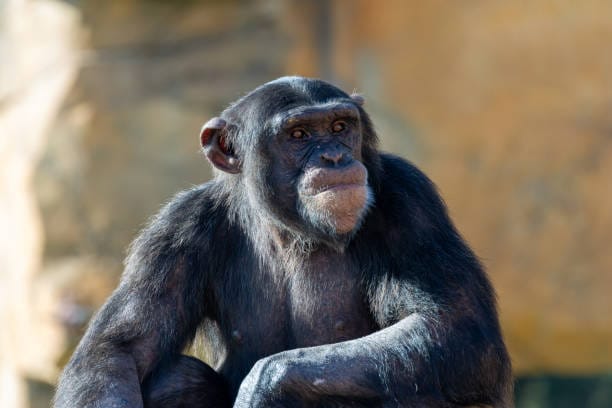
Central chimpanzees occupy the central African forests of Cameroon, Gabon, and the Democratic Republic of Congo. They are known for slightly larger body sizes compared to western chimpanzees and for unique tool-use traditions that vary between groups. Observers note that one community may fish termites with sticks while another uses leaf sponges, reflecting cultural diversity.
These apes have robust bodies, long arms, and dexterous hands, allowing them to climb, manipulate objects, and forage efficiently. Their diet consists mainly of fruits, leaves, flowers, and occasional animal prey. Group life is highly social, with grooming playing a key role in maintaining bonds and reducing tension.
Central chimpanzees face threats from deforestation, bushmeat hunting, and disease. Conservation programs work to create protected corridors and educate local populations. The central chimpanzee showcases how intelligence, social structure, and environmental adaptation converge in wild primates.
5. Eastern Chimpanzee
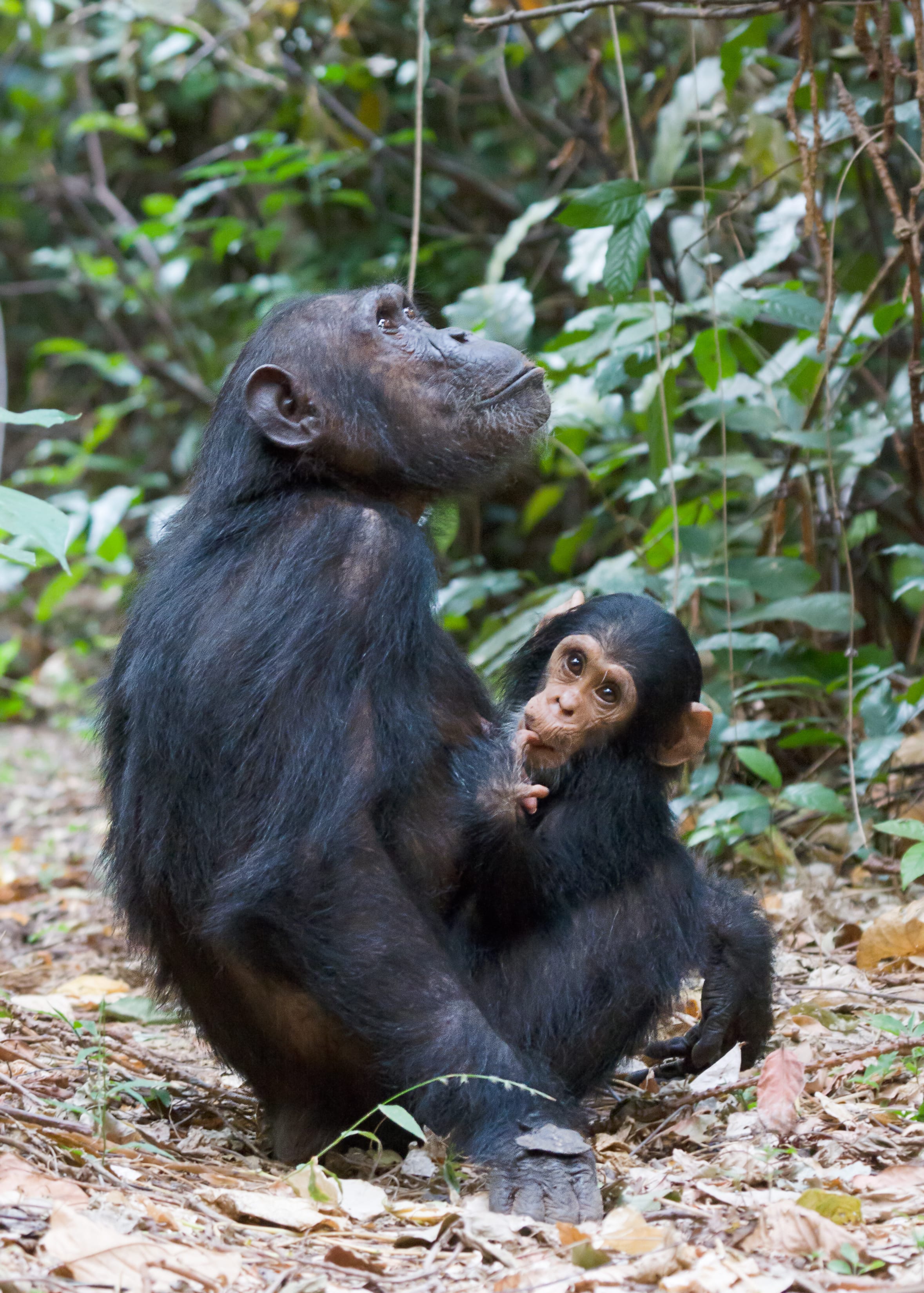
Eastern chimpanzees are found in the forests and savannas of eastern Africa, including Uganda, Rwanda, and Tanzania. Known for their slightly larger size and longer limbs, they excel in both arboreal and terrestrial movement. A fun observation: some eastern chimpanzee communities engage in group hunting of small monkeys, demonstrating coordinated teamwork.
They have dark, thick hair and expressive faces, capable of conveying complex emotions. Eastern chimpanzees communicate through vocalizations, facial expressions, and hand gestures. Their omnivorous diet includes fruits, leaves, insects, and occasional small mammals.
Habitat destruction and hunting remain critical threats. Conservationists focus on protecting national parks and promoting ecotourism that supports local communities while preserving chimpanzee populations. Observing eastern chimpanzees highlights the delicate balance between intelligence, adaptability, and vulnerability in wild primates.
6. Nigeria–Cameroon Chimpanzee

The Nigeria–Cameroon chimpanzee is a critically endangered subspecies found in a small range spanning southeastern Nigeria and southwestern Cameroon. These apes are smaller and more compact than other chimpanzee subspecies, adapted to the fragmented forests of this region. One interesting fact is that their tool use varies significantly between groups, showing remarkable cultural diversity within a limited habitat.
Physically, they have dark, coarse hair and long arms that aid in climbing and brachiation. Social groups are smaller, often containing 20–40 individuals, and rely heavily on grooming and vocal communication to maintain cohesion. Their diet is largely frugivorous but includes leaves, seeds, and occasional insects.
Conservation efforts for Nigeria–Cameroon chimpanzees focus on preventing deforestation and reducing hunting pressures. Protecting this subspecies provides a vital glimpse into the adaptability and resilience of chimpanzees in isolated forest patches.
7. Western Gorilla
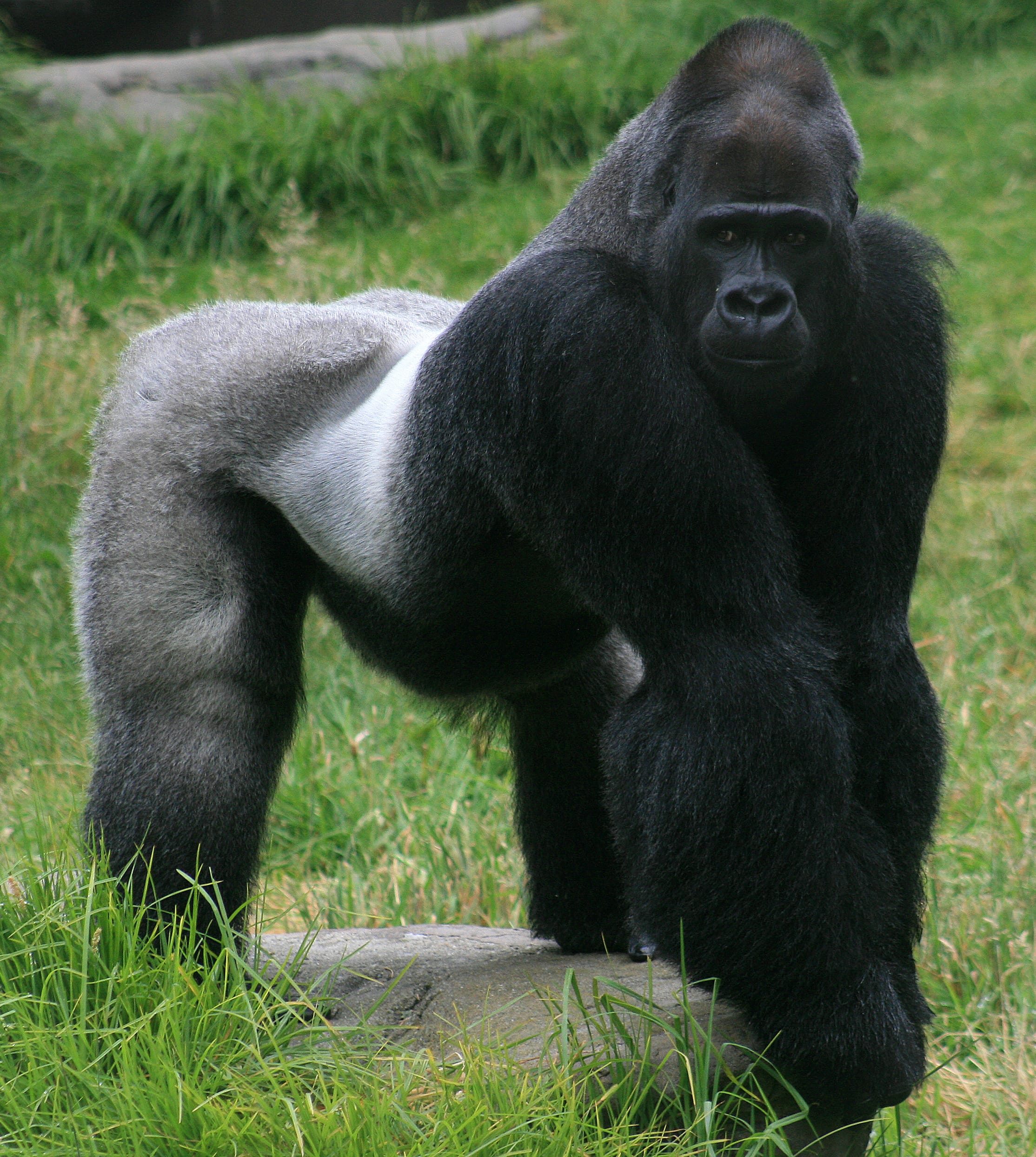
The western gorilla is native to the dense forests of central Africa, including Gabon, Republic of Congo, and Cameroon. It is one of the two living species of gorillas and is characterized by a robust build and impressive strength. A fun observation: western gorillas often travel in cohesive family groups led by a dominant silverback male, whose leadership ensures the safety and organization of the group.
Western gorillas have black or dark brown coats, with silverbacks developing a grey saddle on their backs as they mature. Their hands and feet are adapted for both climbing and walking on the ground. These apes are primarily herbivorous, consuming leaves, stems, fruits, and occasionally ants or termites.
Threats include habitat destruction, poaching, and diseases such as Ebola. Conservation strategies emphasize protected reserves and anti-poaching patrols. Western gorillas provide a striking example of how intelligence, social structure, and physical power coexist in one species.
8. Eastern Gorilla
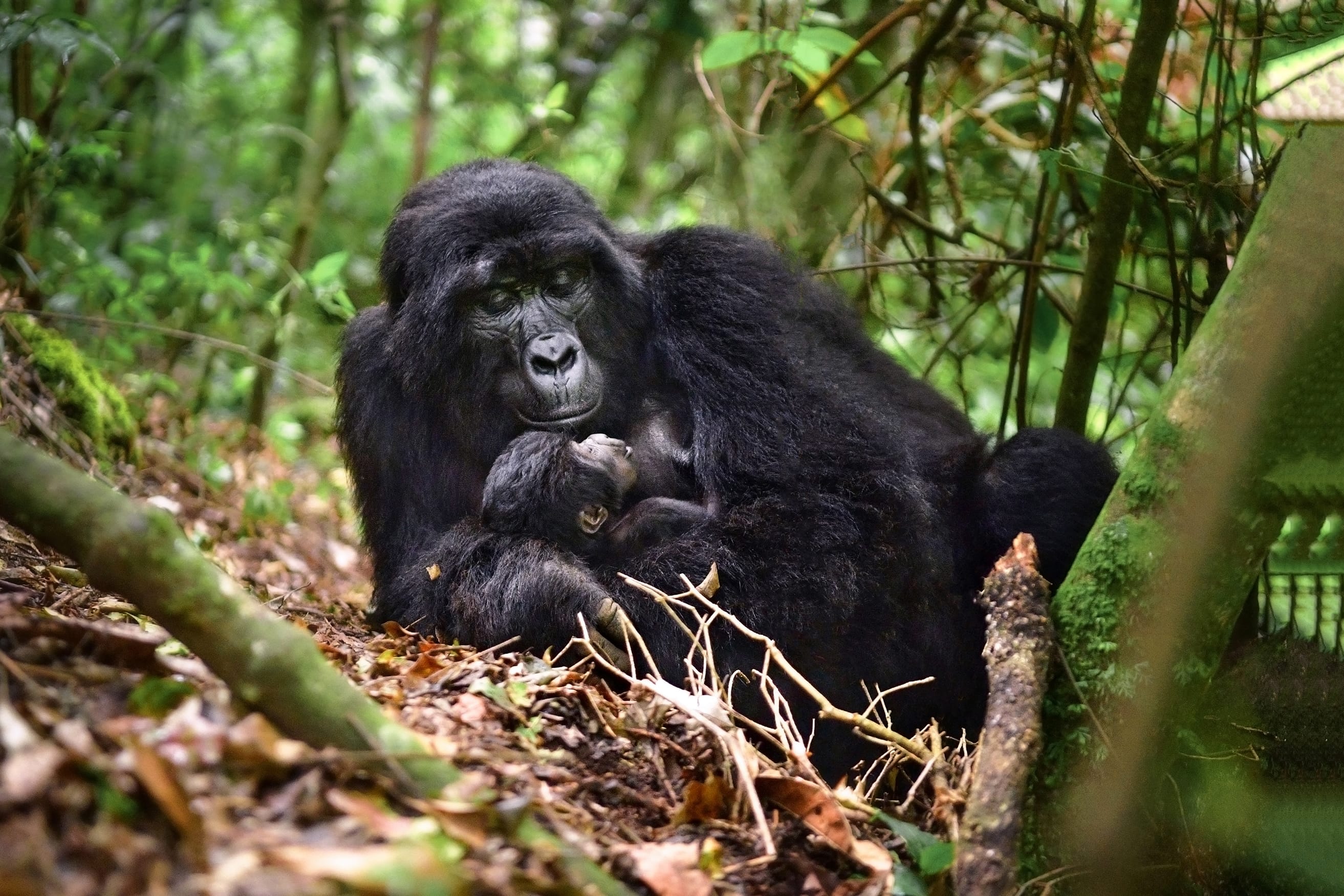
Eastern gorillas inhabit the montane forests of eastern Congo, Rwanda, and Uganda. They are larger and more muscular than western gorillas, with longer hair suited to cooler mountain climates. Observers note that eastern gorillas often move quietly through dense vegetation, relying on stealth and strength rather than speed.
Their groups are tightly knit, generally led by a silverback male who makes decisions and mediates conflicts. Eastern gorillas are primarily folivorous, eating leaves, stems, and bamboo shoots, though they occasionally consume fruits when available. Communication is complex, involving vocalizations, gestures, and chest-beating displays.
Eastern gorillas face severe threats from habitat loss, hunting, and disease, making conservation a critical concern. Efforts include eco-tourism, habitat protection, and research programs that allow scientists to monitor population health. Observing these gorillas highlights their intelligence, social sophistication, and adaptability to rugged environments.
9. Western Lowland Gorilla
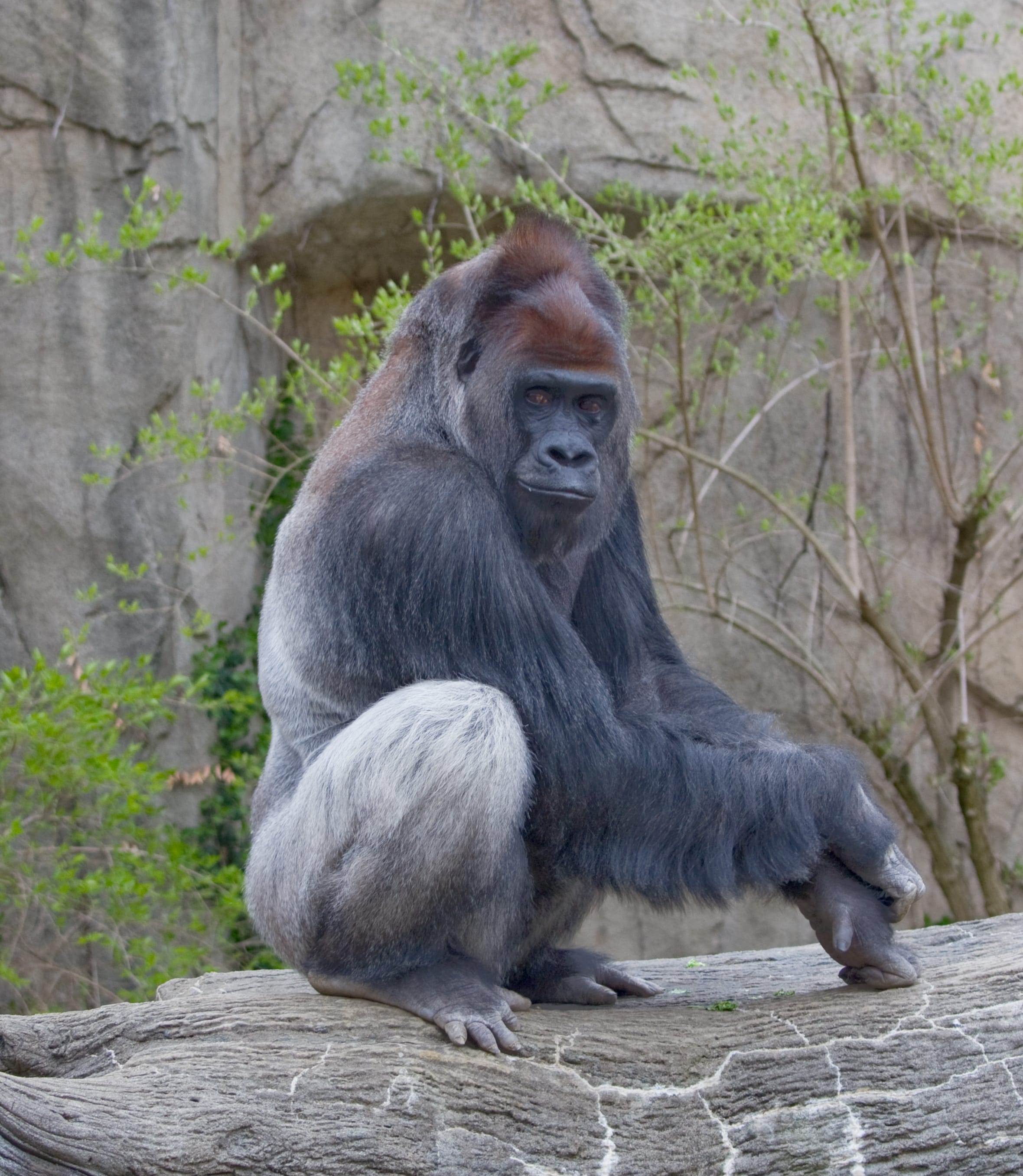
The western lowland gorilla is the most widespread gorilla subspecies, inhabiting lowland rainforests of Cameroon, Central African Republic, Gabon, and Republic of Congo. Known for its gentle demeanor, it forms smaller groups than mountain gorillas and exhibits remarkable problem-solving skills in captivity and in the wild.
They have a slightly lighter build than mountain gorillas and shorter hair, which suits the warmer climate of lowland forests. Silverbacks lead their groups with authority, using subtle signals to manage social interactions. Their diet consists mainly of fruits, leaves, stems, and occasionally invertebrates.
Despite being the most numerous gorilla subspecies, western lowland gorillas are threatened by poaching and diseases such as Ebola. Conservation programs focus on forest protection, anti-poaching initiatives, and community involvement to sustain their populations. Watching them in their natural habitat reveals intelligence, social complexity, and a surprisingly gentle nature.
10. Eastern Chimpanzee
The Eastern chimpanzee is native to the forests and savannas of East Africa, primarily in Uganda, Rwanda, and Tanzania. Known for their larger size compared to western populations, these chimpanzees display remarkable adaptability in both dense forest and open woodland environments. They exhibit advanced social behavior, forming communities that can include several dozen individuals. A fascinating fact: Eastern chimpanzees sometimes engage in coordinated group hunting of small monkeys, illustrating teamwork and strategic planning.
Physically, they possess long, muscular arms suited for climbing, and dark hair covering most of their body. Facial expressions and vocalizations are central to their communication, helping maintain group cohesion. Their diet is omnivorous, including fruits, leaves, seeds, and occasional small animals. Seasonal movement ensures access to ripe fruit and fresh vegetation.
Threats include habitat loss from agriculture, logging, and human settlement, as well as poaching. Conservation programs emphasize the creation of protected areas and wildlife corridors, alongside community education to reduce conflict. Observing Eastern chimpanzees in their natural habitat offers insight into intelligence, cooperation, and the subtle nuances of primate societies.
11. Cross River Gorilla
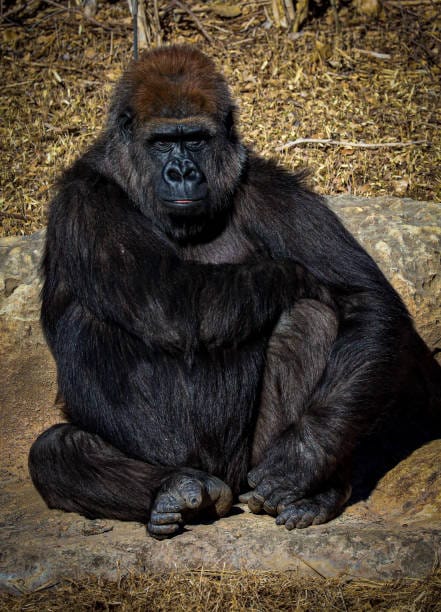
The Cross River gorilla is a rare and critically endangered subspecies inhabiting the forests along the Nigeria-Cameroon border. These gorillas are smaller and more elusive than their lowland relatives, adapted to fragmented forest patches and steep terrain. Due to their limited numbers, they are among the most threatened great apes in Africa.
Physically, Cross River gorillas are robust, with a dark coat and muscular limbs. They live in small groups, typically led by a dominant silverback male who manages group interactions and mediates disputes. Their diet consists primarily of leaves, fruit, and stems, with occasional bark consumption during lean seasons.
Conservation efforts focus on protecting remaining habitats, reducing hunting pressure, and monitoring population health. Community-based initiatives aim to involve locals in conservation while providing alternative livelihoods. The Cross River gorilla demonstrates both the fragility and resilience of primate populations surviving in highly fragmented landscapes.
12. Mountain Gorilla
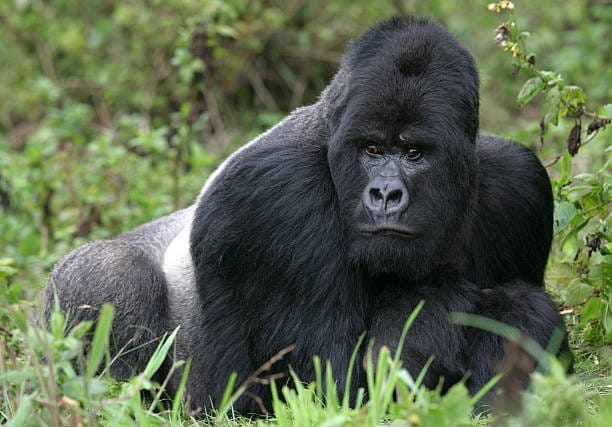
Mountain gorillas are one of the most iconic and well-studied apes, inhabiting the Virunga Mountains spanning Rwanda, Uganda, and the Democratic Republic of Congo. They are adapted to cool, misty montane forests, with long, thick hair that insulates against cold temperatures. These gorillas are renowned for their gentle demeanor despite immense strength.
Groups are tightly knit, generally led by a dominant silverback male who protects the family and makes critical decisions. Mountain gorillas primarily consume leaves, shoots, stems, and bamboo, occasionally supplemented with fruits. Their behavior emphasizes social bonding, with grooming, play, and close contact reinforcing group cohesion.
Conservation efforts have been remarkably successful, increasing population numbers through protected reserves and ecotourism programs. Despite these successes, threats from habitat encroachment, disease, and poaching remain. Mountain gorillas offer a compelling example of conservation triumph and the enduring appeal of wild apes.
13. Eastern Lowland Gorilla (Grauer’s Gorilla)
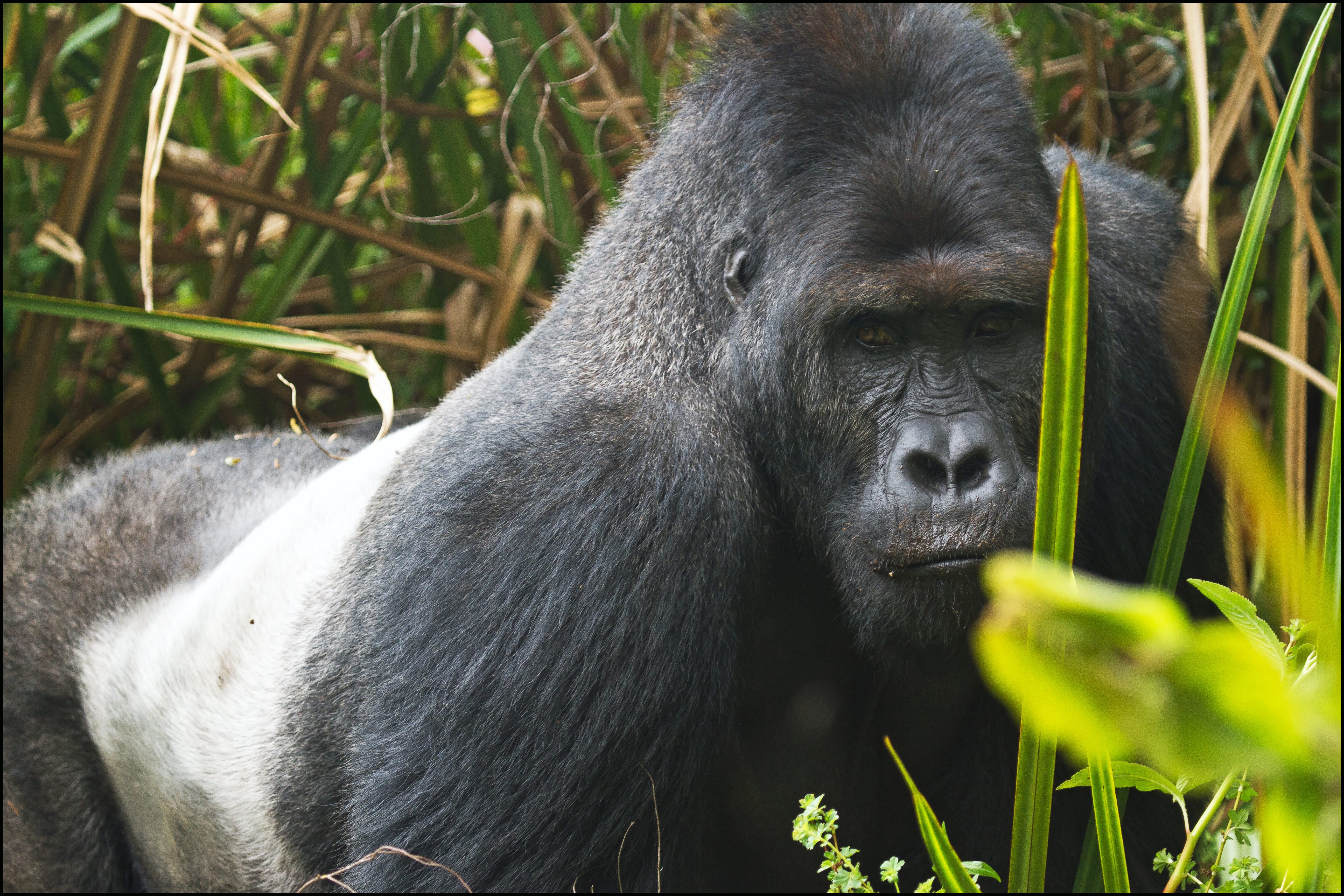
The Eastern Lowland Gorilla, also known as Grauer’s gorilla, inhabits the lowland and montane forests of the eastern Democratic Republic of Congo. Larger than western lowland gorillas but with shorter hair than mountain gorillas, they possess formidable strength and a calm temperament. Their distribution is limited and fragmented, making conservation a priority.
Grauer’s gorillas live in groups led by a silverback, with social dynamics emphasizing cooperation and gentle guidance. Their diet consists mainly of leaves, fruit, and bamboo shoots. Observations indicate a high degree of adaptability in feeding and nesting behavior, enabling them to survive in forests affected by seasonal changes and human activity.
Threats include illegal hunting, deforestation, and civil unrest in their habitat. Conservation strategies focus on protected areas, community engagement, and anti-poaching initiatives. Grauer’s gorillas illustrate how social intelligence and environmental adaptation combine to allow survival in challenging conditions.
14. Bornean Orangutan
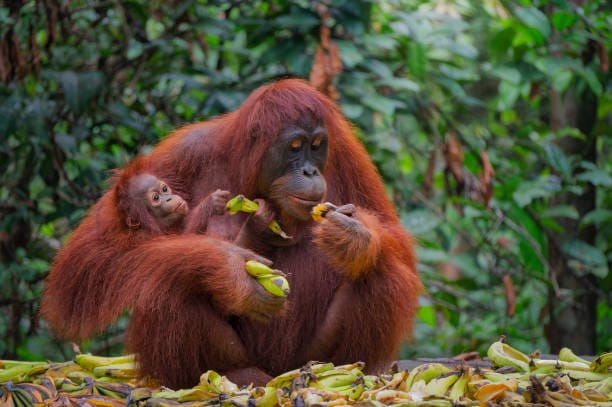
Bornean orangutans are native to the island of Borneo and are known for their striking red hair and highly intelligent behavior. They are primarily arboreal, moving through the forest canopy using long arms and strong hands. Orangutans are solitary compared to other great apes, though females and offspring maintain strong bonds.
Physically, Bornean orangutans have long, reddish-brown hair, a large face with flanges on dominant males, and highly dexterous hands for manipulating branches and tools. Their diet is mostly frugivorous, supplemented with leaves, bark, and insects. One fascinating behavior is their ability to construct sleeping nests in trees every night using branches and leaves.
Threats to Bornean orangutans include deforestation, palm oil plantations, and illegal wildlife trade. Conservation efforts focus on habitat protection, rehabilitation of rescued individuals, and education programs. Watching Bornean orangutans in the wild highlights intelligence, ingenuity, and adaptability in a forest environment that is rapidly changing.
15. Sumatran Orangutan
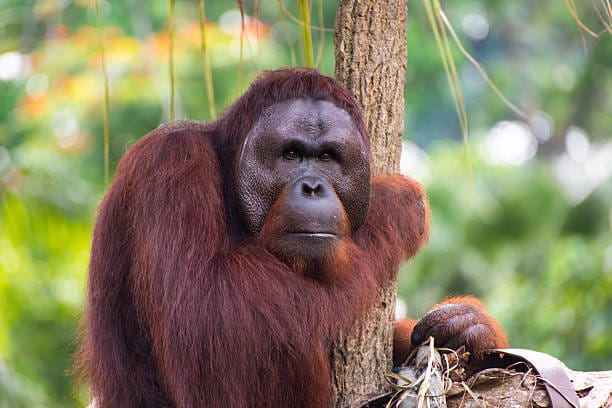
The Sumatran orangutan is native to the northern regions of Sumatra, Indonesia, and is critically endangered due to habitat loss and fragmentation. Known for their bright reddish-orange hair and elongated arms, these apes are highly arboreal, spending most of their lives in the forest canopy. Unlike Bornean orangutans, Sumatran orangutans are more social and may interact with other adults more frequently.
They construct sleeping nests from branches and leaves, often moving between trees to find optimal food sources. Their diet is predominantly frugivorous, but they also consume leaves, bark, and insects. Sumatran orangutans are exceptionally intelligent, demonstrating tool use, problem-solving abilities, and memory skills to locate fruiting trees over large distances.
Conservation programs focus on forest preservation, rehabilitation of rescued individuals, and anti-poaching measures. Observing Sumatran orangutans highlights their delicate balance between solitary behavior and remarkable adaptability in rapidly changing forest environments.
16. Tapanuli Orangutan
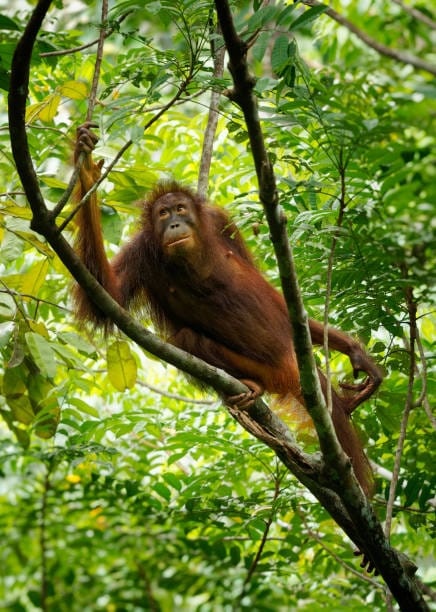
The Tapanuli orangutan is the rarest of all orangutan species, found in the Batang Toru forest of North Sumatra. Discovered relatively recently, it is distinguished by its smaller size, distinct facial features, and unique vocalizations. This species is critically endangered, with fewer than 800 individuals remaining in the wild.
Tapanuli orangutans are primarily arboreal and highly solitary, although mothers maintain strong bonds with their offspring for several years. Their diet consists mainly of fruits, leaves, and insects, reflecting the seasonal availability of resources in their forest habitat. Notably, they display innovative behaviors in feeding and nesting, highlighting their intelligence and adaptability.
Conservation efforts prioritize habitat protection and the prevention of further deforestation. Tapanuli orangutans are an important reminder of the fragility of highly specialized species and the urgent need for protective measures in biodiversity hotspots.
17. Lar Gibbon
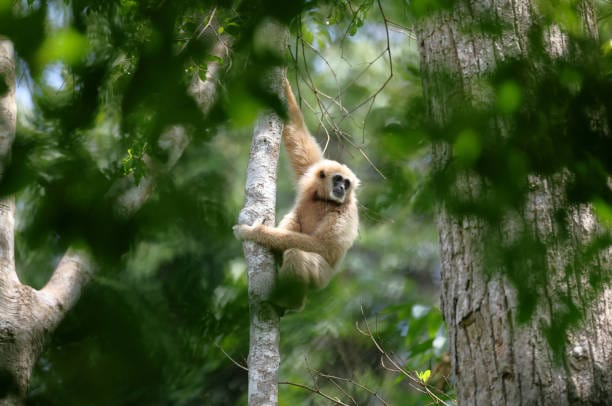
Lar gibbons, also called white-handed gibbons, inhabit the tropical forests of Southeast Asia. Known for their remarkable agility, they are accomplished brachiators, swinging effortlessly through trees with long arms and strong hands. A fun fact: lar gibbons produce elaborate songs to mark territory and strengthen pair bonds.
They have a slim, agile build, with light-colored hands contrasting against darker body fur. Lar gibbons are socially monogamous, living in family units consisting of a mated pair and their offspring. Their diet is primarily frugivorous, supplemented with leaves, flowers, and insects. Communication within groups is complex, combining calls, gestures, and visual displays.
Threats include logging, hunting, and habitat fragmentation. Conservation programs focus on forest protection and monitoring gibbon populations. Observing lar gibbons demonstrates the elegance, intelligence, and social sophistication of smaller apes.
18. Siamang

The siamang is the largest gibbon species, found in the forests of Sumatra and the Malay Peninsula. Distinguished by its black fur and throat sac, which inflates to amplify calls, the siamang is highly vocal, using duets between pairs to establish territory and strengthen social bonds.
Siamangs live in small family groups, usually consisting of a mated pair and their offspring. They are almost entirely arboreal, relying on swinging and leaping to navigate the canopy. Their diet consists mainly of fruits, leaves, and flowers, with occasional insects. One captivating observation is their coordinated calling, which can carry over long distances and communicate social status to neighboring groups.
Deforestation and hunting threaten siamang populations. Conservation strategies emphasize forest preservation and awareness campaigns. Siamangs illustrate the complexity of gibbon communication and the importance of social cohesion in primates.
19. Agile Gibbon
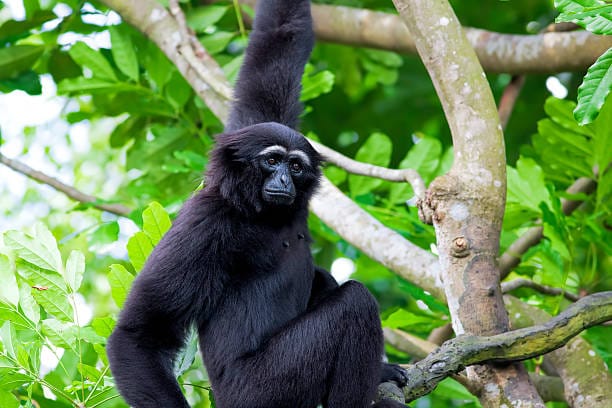
Agile gibbons inhabit the forests of Southeast Asia and are known for their rapid and graceful movement through the canopy. They have a small, slim body with long limbs and light-colored hands, making them exceptional brachiators. One intriguing behavior is their use of loud morning calls to reinforce pair bonds and warn neighboring groups.
Agile gibbons live in monogamous pairs with offspring, forming tightly knit family units. Their diet consists mainly of fruits, supplemented by leaves, flowers, and insects. They exhibit intelligence in navigation, food selection, and social interactions, often displaying playfulness and curiosity.
Threats include habitat destruction due to logging and agriculture. Conservation programs focus on maintaining forest corridors and supporting local communities to reduce hunting. Agile gibbons offer a vivid example of smaller apes’ acrobatics and social dynamics in forest ecosystems.
20. Muller’s Bornean Gibbon
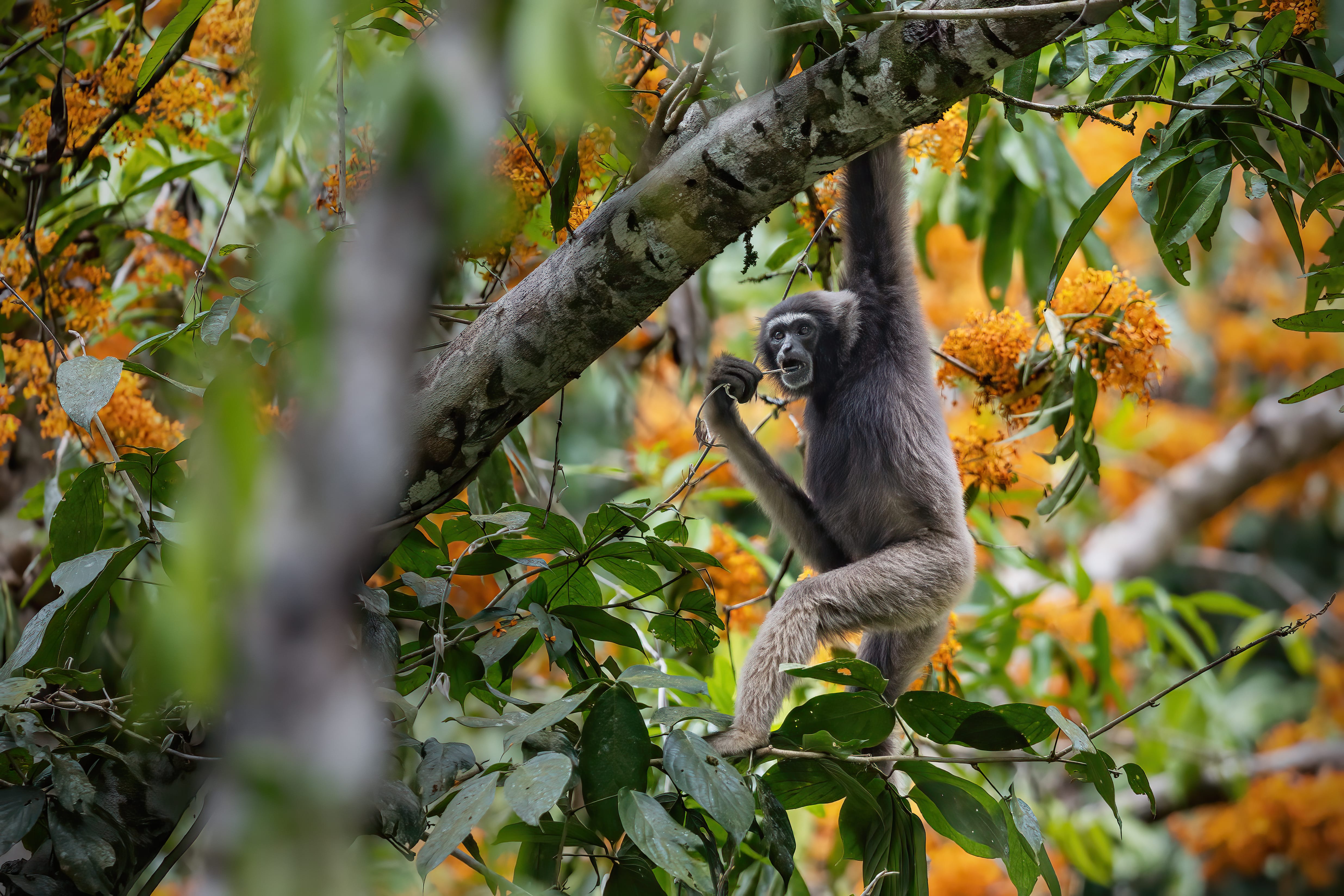
Muller’s Bornean gibbons are native to Borneo and are distinguished by their small size, dark fur, and melodious calls. They are highly agile, spending most of their lives in the trees where they swing and leap to forage and evade predators. A notable trait is their synchronized duets, which serve to communicate pair bonds and territorial claims.
They live in family groups consisting of a mated pair and offspring, maintaining strong social bonds. Their diet is primarily frugivorous, occasionally supplemented with leaves and insects. Muller’s gibbons demonstrate intelligence through problem-solving and complex communication behaviors.
Habitat loss due to deforestation is a major threat. Conservation measures include protecting forest habitats, anti-poaching initiatives, and public awareness programs. Observing Muller’s Bornean gibbons highlights their grace, vocal sophistication, and the intricacies of small ape social systems.
21. Silvery Gibbon
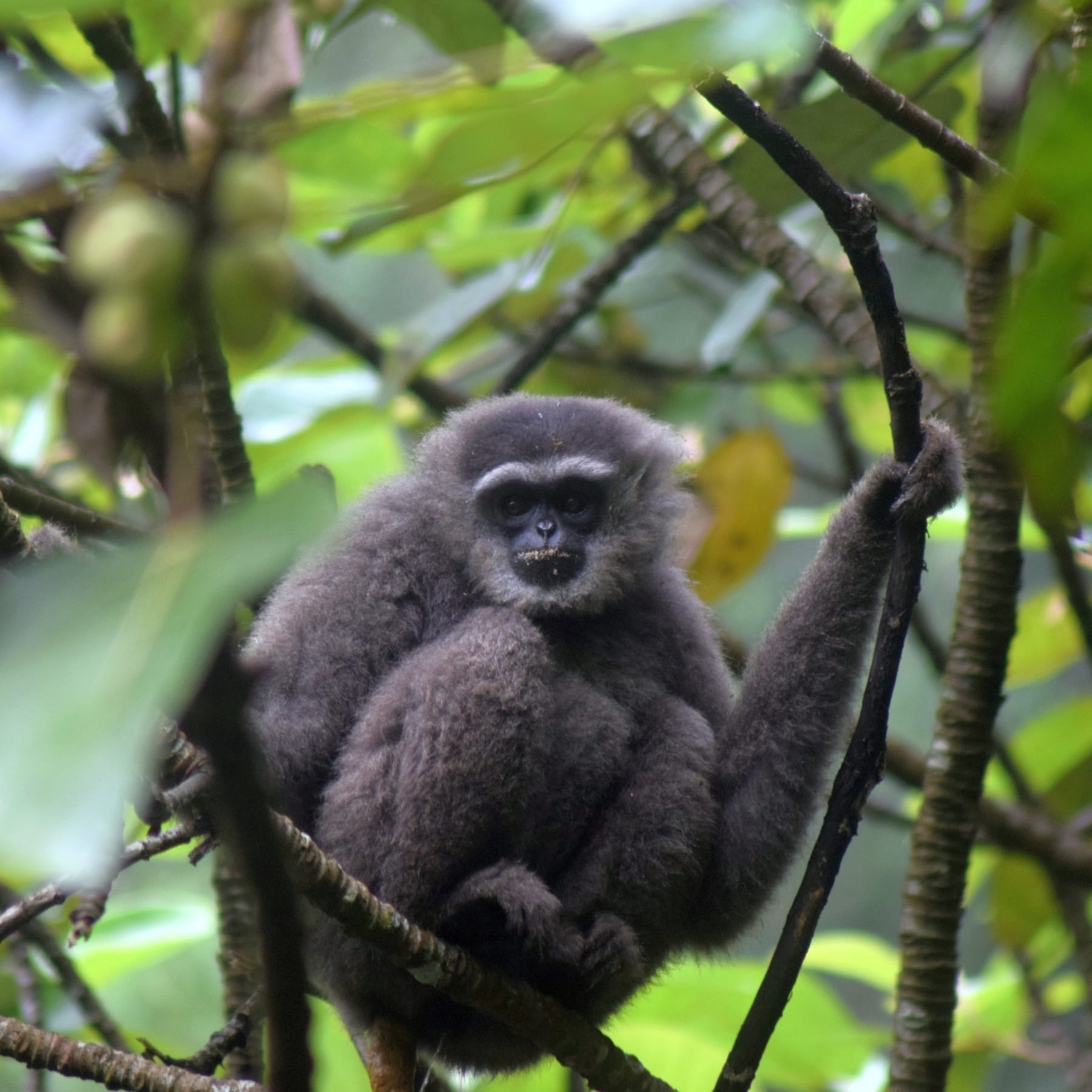
The silvery gibbon, native to Indonesia’s western Java forests, is renowned for its pale grey coat and distinctive melodious calls. Unlike many other gibbons, silvery gibbons are highly vocal, often producing duets between mated pairs at dawn to mark territory and strengthen pair bonds. Their vocalizations can carry over long distances, serving as an acoustic signature for each family group.
Silvery gibbons are arboreal and monogamous, living in small family units consisting of a male, female, and offspring. They move with remarkable agility through the forest canopy, swinging and leaping between trees using their long arms. Their diet mainly consists of fruits, complemented by leaves, flowers, and occasional insects. Their intelligence is evident in their social coordination, food selection, and problem-solving during foraging.
Threats include deforestation and habitat fragmentation. Conservation programs focus on protecting remaining forests and maintaining corridors that allow gibbons to move freely. Observing silvery gibbons reveals the elegance, social cohesion, and acrobatic skill that make gibbons such captivating primates.
22. Pileated Gibbon
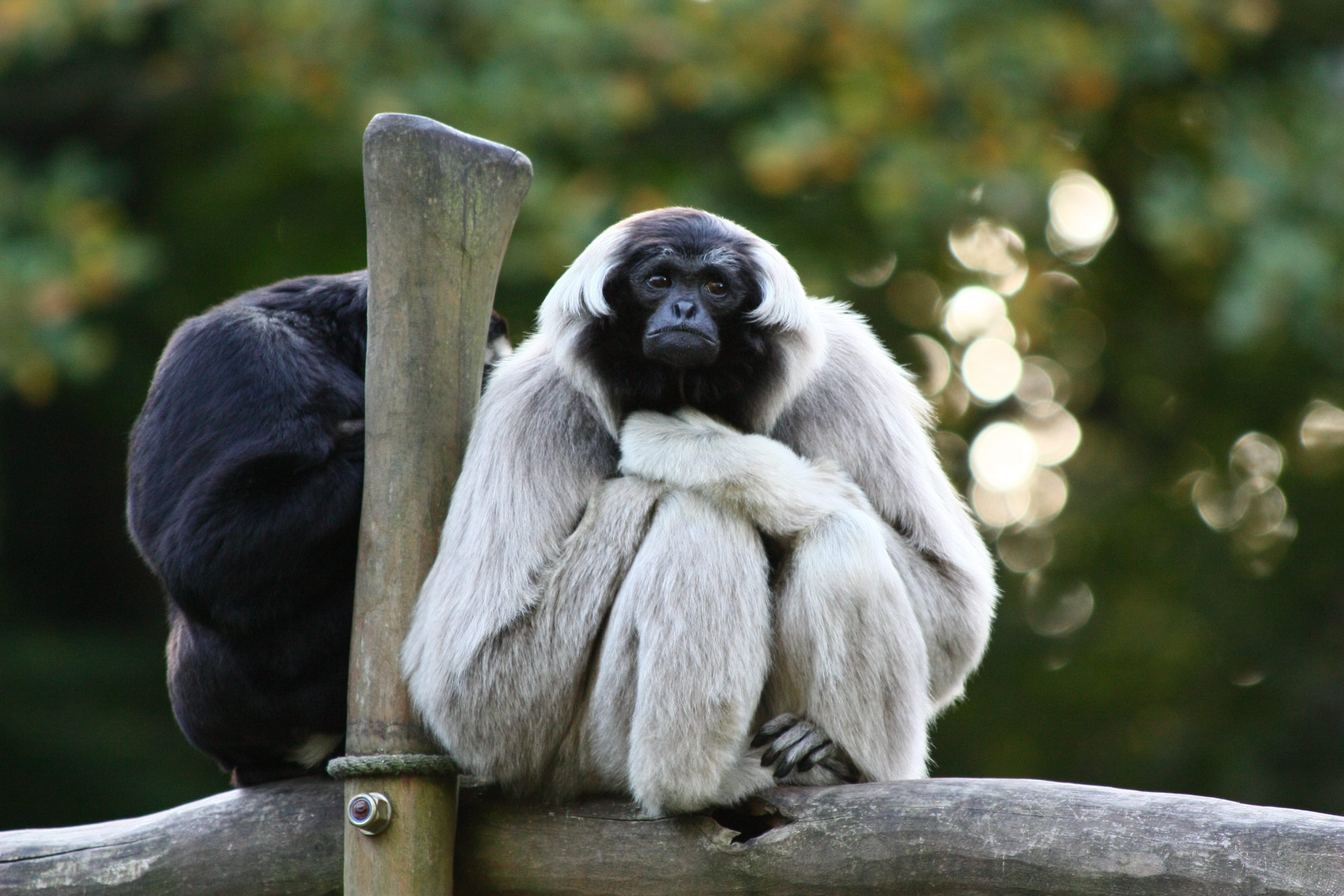
The pileated gibbon is a medium-sized ape found in the lowland and hill forests of Sumatra. Named for its distinctive dark crest of hair on the head, this species is known for its agility and complex vocal repertoire. Morning duets between pairs serve both territorial and social purposes, with synchronized calls that can travel across valleys and dense forests.
Pileated gibbons are highly arboreal and live in monogamous family units, usually consisting of a pair and their young. Their diet is primarily fruit-based but includes leaves, shoots, and occasional insects. They display intelligence through tool-like behaviors, nest building, and strategic foraging, often moving efficiently between food sources across the canopy.
Deforestation and hunting have reduced their populations. Conservation efforts include habitat protection, forest restoration, and local education programs. Watching pileated gibbons demonstrates their acrobatic grace, vocal sophistication, and the close bonds within family units.
23. Kloss’s Gibbon
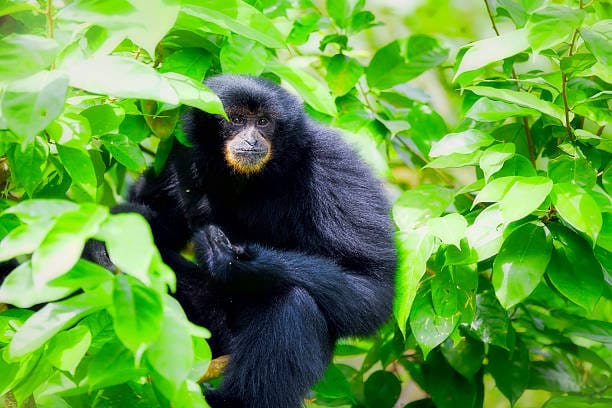
Kloss’s gibbon, native to the Mentawai Islands of Indonesia, is one of the most elusive and rare gibbon species. Known for its pure white coat in males and creamy coloring in females, this gibbon is highly arboreal and rarely descends to the forest floor. Their vocalizations, including complex duets, serve to maintain pair bonds and mark territory in dense rainforest environments.
Kloss’s gibbons live in monogamous family groups, typically consisting of a mated pair and their offspring. They feed primarily on fruits, supplemented by leaves, flowers, and insects. Their small size and long limbs allow exceptional maneuverability through the canopy, helping them avoid predators and locate dispersed food sources.
Threats include habitat loss and hunting. Conservation initiatives focus on habitat preservation and awareness campaigns. Observing Kloss’s gibbons offers a rare glimpse into a reclusive species whose acrobatics and vocalizations underscore the diversity of small apes in isolated forests.
24. White-cheeked Gibbon
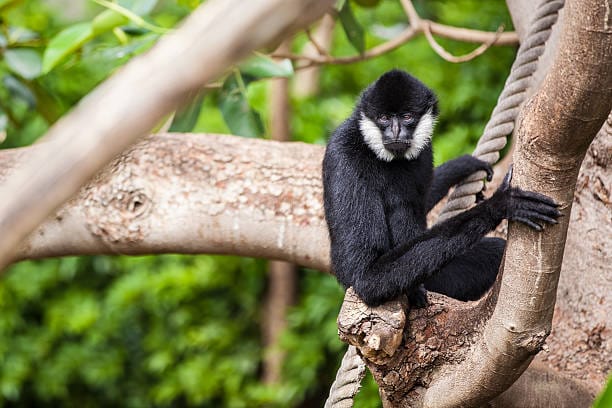
White-cheeked gibbons are native to southern China, Laos, and Vietnam. They are named for the striking white patches on their cheeks, which contrast with their darker body fur. Known for their melodious morning calls, they communicate with family members and neighboring groups through synchronized duets that carry over long distances.
These gibbons are highly arboreal, using their long arms to swing gracefully through the forest canopy. They live in monogamous pairs with offspring, forming tightly knit family units. Their diet consists mostly of fruits, supplemented with leaves, flowers, and insects. Social interactions emphasize grooming, play, and coordinated vocal communication.
White-cheeked gibbons face threats from deforestation and poaching. Conservation efforts include establishing protected forest reserves and fostering community involvement in habitat preservation. Observing these gibbons highlights the blend of intelligence, social sophistication, and physical agility characteristic of smaller apes.
25. Yellow-cheeked Gibbon
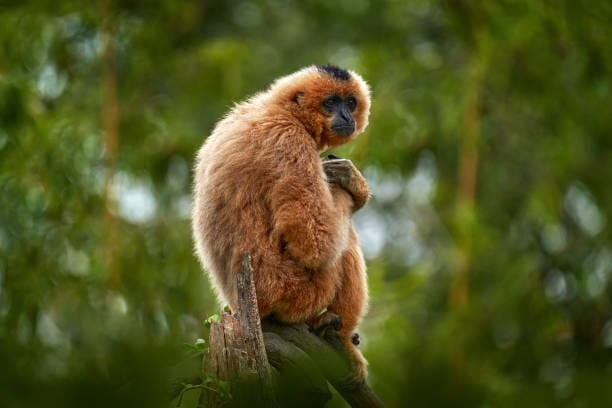
The yellow-cheeked gibbon, found in Cambodia, Vietnam, Laos, and Thailand, is easily recognized by the pale yellow patches on its cheeks, contrasting with dark brown or black body fur. These gibbons are agile, spending most of their time in the forest canopy, and are known for their elaborate duet songs that serve territorial and social purposes.
Yellow-cheeked gibbons live in monogamous family groups, usually consisting of a mated pair and their offspring. They move with remarkable agility through the trees, using their long arms for brachiation. Their diet is predominantly frugivorous, occasionally including leaves, shoots, and insects. Their intelligence is evident in social coordination, communication, and foraging strategies.
Threats include habitat destruction, logging, and human encroachment. Conservation strategies emphasize protected reserves, anti-poaching measures, and community-based forest management. Observing yellow-cheeked gibbons illustrates the combination of vocal sophistication, social cohesion, and aerial agility that makes gibbons such extraordinary primates.
26. Black Crested Gibbon
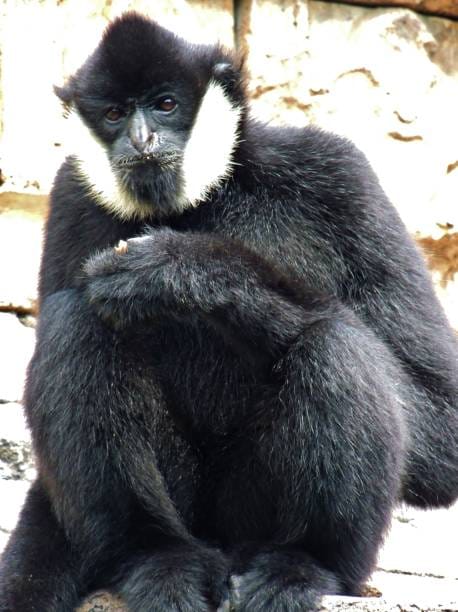
The black crested gibbon, native to Vietnam and southern China, is a critically endangered species known for its striking black fur and prominent crest on the head. These gibbons are highly arboreal, spending almost their entire lives in the canopy, swinging gracefully between branches with remarkable agility. One interesting trait is their morning duets, performed by mated pairs to mark territory and strengthen social bonds.
They live in monogamous family groups consisting of a male, female, and offspring. Their diet consists mainly of fruits, leaves, and flowers, supplemented with insects when available. Social behaviors include grooming, play, and vocal communication, which helps maintain cohesion within the family unit.
Major threats include habitat loss, logging, and hunting. Conservation efforts focus on forest protection, anti-poaching initiatives, and ecological monitoring. Observing black crested gibbons highlights their elegance, intelligence, and the importance of vocal communication in maintaining social bonds.
27. Hoolock Gibbon
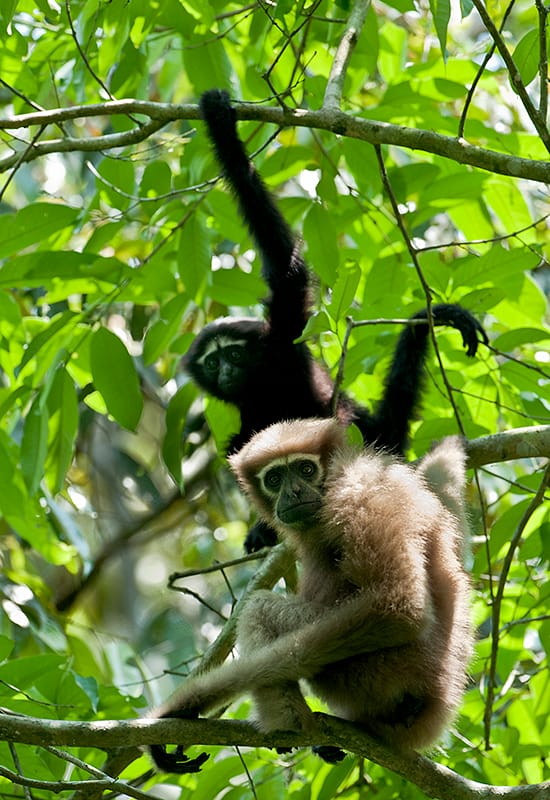
Hoolock gibbons are found across northeastern India, Bangladesh, and Myanmar. Recognized by their black or brown fur and expressive facial markings, these gibbons are highly agile and specialize in brachiation through the forest canopy. Hoolock gibbons are notable for their duet songs, which can last several minutes and serve both territorial and social functions.
They live in monogamous pairs with offspring, forming tight-knit family units. Their diet primarily consists of fruits, leaves, and flowers, with occasional insects. Hoolock gibbons exhibit intelligence in navigating the canopy, finding food, and maintaining social interactions within their family group.
Threats include deforestation, hunting, and habitat fragmentation. Conservation programs prioritize habitat protection, community awareness, and research initiatives. Observing hoolock gibbons provides insight into the acrobatic skills and social sophistication of medium-sized apes.
28. Eastern Hoolock Gibbon
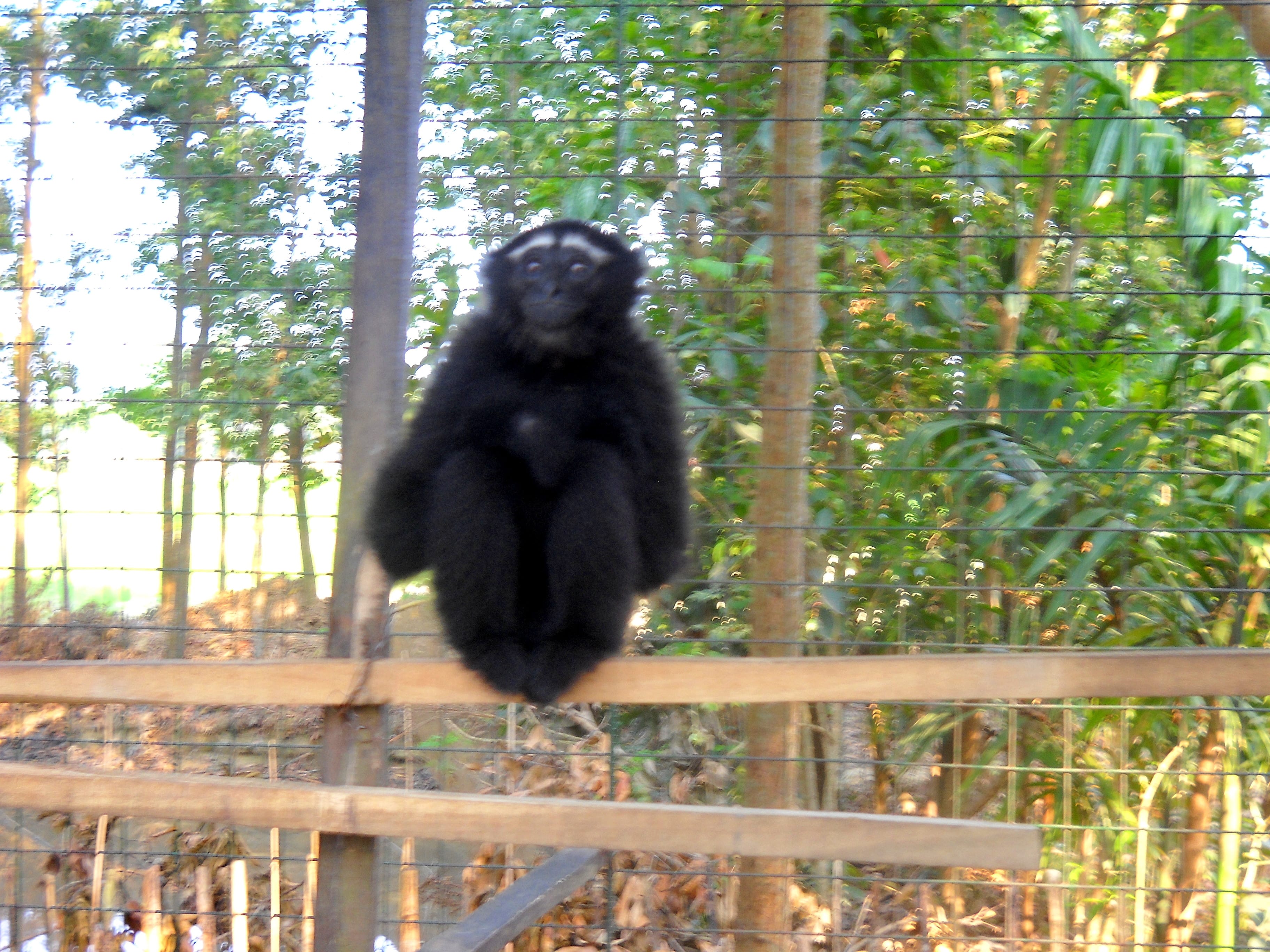
The eastern hoolock gibbon inhabits forests in northeastern India, western Myanmar, and southwestern China. This species is distinguished by lighter fur on the head and shoulders compared to its western counterpart. Eastern hoolock gibbons are primarily arboreal and spend most of their lives swinging and leaping through the forest canopy.
They live in monogamous pairs with offspring, using vocal duets to maintain territories and communicate with neighboring groups. Their diet is largely frugivorous, supplemented with leaves, shoots, and insects. Social interactions include grooming, play, and coordinated movement, all essential for family cohesion and survival.
Deforestation and human activity threaten eastern hoolock populations. Conservation measures focus on forest preservation, research, and community involvement. Observing these gibbons demonstrates their intelligence, vocal communication skills, and remarkable agility among the treetops.
29. Western Hoolock Gibbon
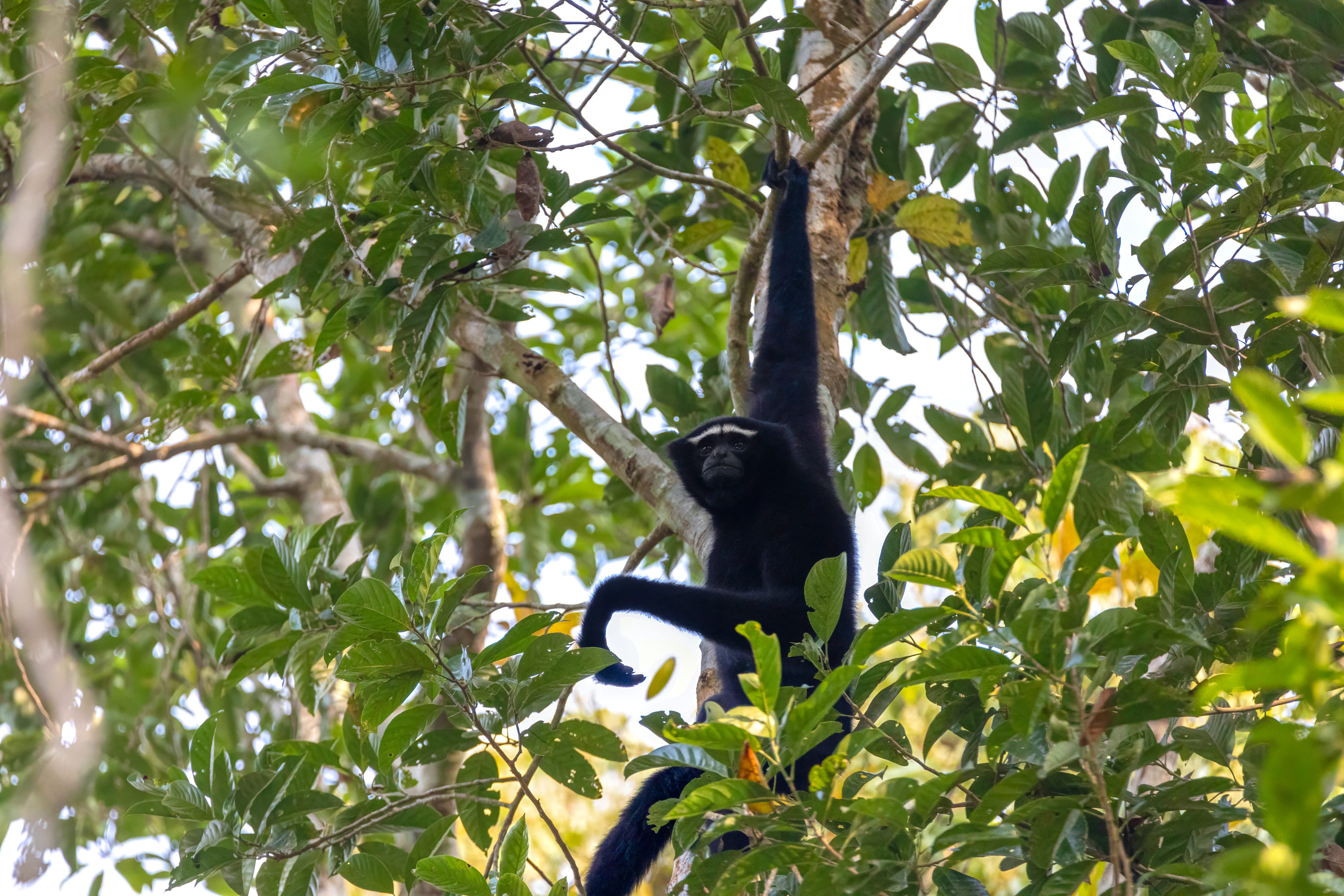
The western hoolock gibbon is native to Bangladesh, northeastern India, and Myanmar. Characterized by dark fur and a slightly more robust build than the eastern species, western hoolock gibbons are highly adept at brachiation and are mostly confined to forested regions. Their duet calls play a critical role in social bonding and territory defense.
These gibbons live in monogamous family groups, including a mated pair and their offspring. They are predominantly frugivorous but also consume leaves, shoots, and occasional insects. Social cohesion is maintained through grooming, vocalizations, and playful interactions, ensuring family stability and cooperation.
Threats include habitat loss, fragmentation, and hunting. Conservation efforts focus on protecting forests, restoring degraded habitats, and promoting local awareness. Observing western hoolock gibbons highlights the blend of agility, social sophistication, and communication skills essential to small ape species.
30. Cao Vit Gibbon
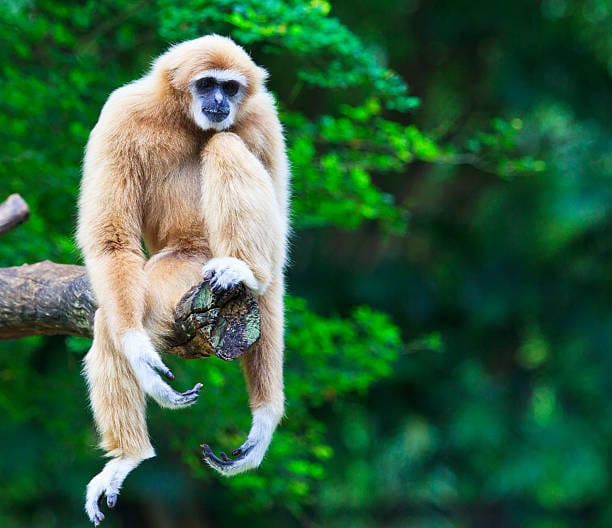
The Cao Vit gibbon, also known as the eastern black crested gibbon, is native to a small region along the China-Vietnam border. With striking black fur and a high-pitched, melodious call, this critically endangered species is one of the rarest gibbons in the world. Their duets serve both to reinforce pair bonds and to assert territorial boundaries.
Cao Vit gibbons are arboreal and monogamous, living in family units of a mated pair and offspring. They feed mainly on fruits, leaves, and flowers, displaying remarkable dexterity and intelligence in foraging. Their acrobatic movements allow them to traverse the canopy efficiently while avoiding predators.
Major threats include habitat loss, logging, and human encroachment. Conservation initiatives prioritize protecting remaining forest patches, monitoring populations, and supporting local communities to prevent hunting. Observing Cao Vit gibbons underscores the delicate balance between survival, social intelligence, and environmental challenges faced by rare apes.
Conclusion
Exploring the 30 Types of Apes reveals the incredible diversity, intelligence, and adaptability of these remarkable primates. From the solitary, inventive orangutans of Southeast Asia to the socially complex chimpanzees and gorillas of Africa, each species showcases unique behaviors, physical traits, and survival strategies. Apes are not only fascinating in their social structures and communication but also in their interaction with the environment, demonstrating problem-solving skills, tool use, and emotional depth.
Conservation remains a critical challenge for many ape species. Habitat loss, hunting, and human encroachment continue to threaten their populations, making protective measures, forest preservation, and community engagement essential. Understanding and appreciating these primates fosters respect for biodiversity and highlights the urgent need to safeguard their habitats for future generations.
Whether observing the acrobatic gibbons swinging through the canopy, the gentle mountain gorillas bonding in family groups, or the clever strategies of chimpanzees, apes provide endless fascination and learning opportunities. This guide to the Types of Apes offers insight into their lives, emphasizing the importance of conservation, scientific study, and empathy towards these intelligent relatives of ours.
Frequently Asked Questions About Types of Apes
1. What are apes?
Apes are a group of primates that include gorillas, chimpanzees, orangutans, and gibbons. They are characterized by larger brains, absence of tails, and complex social behaviors.
2. How many species of apes exist?
There are approximately 30 recognized species and subspecies of apes, including great apes and lesser apes like gibbons.
3. What is the difference between great apes and lesser apes?
Great apes include gorillas, chimpanzees, bonobos, and orangutans. They are larger, more intelligent, and have more complex social structures. Lesser apes, such as gibbons, are smaller, more agile, and primarily arboreal.
4. Where do apes live?
Apes inhabit forests, mountains, and swamps across Africa and Southeast Asia. Gorillas and chimpanzees are mostly African, while orangutans and gibbons are native to Asia.
5. What do apes eat?
Most apes are omnivorous or frugivorous, feeding on fruits, leaves, shoots, insects, and occasionally small animals depending on the species.
6. Are all apes endangered?
Many ape species are threatened or critically endangered due to habitat loss, hunting, and human activities, though some populations are stable or recovering under conservation programs.
7. How intelligent are apes?
Apes are highly intelligent, capable of problem-solving, tool use, social learning, and even basic communication with humans in some cases.
8. Can apes use tools?
Yes, especially chimpanzees and orangutans, which use sticks to extract insects, stones to crack nuts, and leaves as sponges or shields.
9. How do apes communicate?
Apes communicate through vocalizations, gestures, facial expressions, body language, and, in some species, duet calls to strengthen social bonds.
10. What is the social structure of apes?
Social structures vary: chimpanzees and gorillas form complex hierarchies, orangutans are more solitary, and gibbons usually live in monogamous pairs with offspring.
11. How long do apes live?
Apes can live from 25 to 50 years in the wild, with some individuals living longer in captivity under protected conditions.
12. Do apes have family bonds?
Yes, many apes form strong family bonds. Mothers often care for offspring for several years, and social grooming strengthens relationships within groups.
13. Can apes walk on two legs?
Apes are primarily quadrupedal but can stand and walk short distances on two legs, especially when carrying objects or displaying behaviors.
14. How do gorillas differ from chimpanzees?
Gorillas are larger, more herbivorous, and live in stable family groups led by a silverback male. Chimpanzees are smaller, more omnivorous, and live in larger, fluid communities.
15. Are orangutans solitary?
Yes, orangutans are largely solitary, with adults often living alone except for mothers with offspring or occasional social interactions.
16. What is brachiation?
Brachiation is the arm-over-arm swinging movement used by gibbons to travel efficiently through forest canopies.
17. Why are gibbons called lesser apes?
Gibbons are smaller, more agile, and primarily arboreal compared to great apes. They have simpler social hierarchies but exhibit complex vocal communication.
18. What is a silverback gorilla?
A silverback is a mature male gorilla with silver hair on its back, usually serving as the leader of a family group.
19. How do apes build nests?
Orangutans and some gorillas construct nests from branches and leaves to sleep in. Nests provide comfort, safety, and insulation.
20. Do apes use tools in the wild?
Yes, especially chimpanzees and orangutans, which use sticks, stones, and leaves for feeding, grooming, or shelter.
21. How fast can gibbons move?
Gibbons can move rapidly through trees using brachiation, covering distances of up to 15 meters per swing.
22. Are bonobos peaceful?
Bonobos are known for their peaceful and matriarchal societies, often using social interactions and play rather than aggression to resolve conflicts.
23. How do apes protect their young?
Mother apes provide care, protection, and teaching for several years, often using physical closeness, grooming, and guidance to ensure survival.
24. Do apes have culture?
Yes, some apes, particularly chimpanzees, exhibit culture through learned behaviors like tool use, grooming styles, and food-processing techniques passed down within communities.
25. Can apes swim?
Most apes avoid water and are poor swimmers. However, some orangutans have been observed crossing rivers or wading in shallow water.
26. How do apes sleep?
Apes like gorillas and orangutans build nests in trees or on the ground for resting, while gibbons sleep perched on branches in the canopy.
27. What threats do apes face?
Primary threats include habitat loss, hunting, human encroachment, logging, and disease outbreaks such as Ebola in African populations.
28. How do conservationists protect apes?
Conservation measures include creating protected areas, anti-poaching patrols, forest restoration, ecotourism, and education programs for local communities.
29. Are apes intelligent like humans?
Apes share cognitive traits with humans, including problem-solving, tool use, social learning, and understanding basic communication cues.
30. How do apes interact socially?
Social interaction includes grooming, playing, vocal communication, mating rituals, and coordinated group activities like hunting in chimpanzees.
31. How do apes mark territory?
Many apes use vocalizations, scent marking, and visual displays to establish and maintain territorial boundaries within their habitat.
32. Can apes learn sign language?
Some great apes, especially chimpanzees and orangutans, have been taught basic sign language or symbols to communicate with humans.
33. How long do orangutans care for their young?
Orangutans have prolonged parental care, with mothers nurturing offspring for 6–8 years, teaching survival skills like foraging and nest building.
34. What is a gibbon duet?
A gibbon duet is a coordinated vocal song between a mated pair, used to strengthen pair bonds, communicate with neighbors, and defend territory.
35. Do gorillas show emotions?
Yes, gorillas express emotions such as joy, anger, empathy, and grief, often through facial expressions, gestures, and vocalizations.
36. What is the difference between orangutans and gorillas?
Orangutans are mostly solitary and arboreal, with reddish hair, while gorillas are social, terrestrial, and have darker fur and larger bodies.
37. How do apes find food?
Apes use memory, observation, and social learning to locate fruiting trees, edible plants, insects, and other food sources in their habitat.
38. Do apes migrate?
Apes do not migrate long distances but may move seasonally or locally to follow food availability or establish new territories.
39. Can apes recognize themselves in mirrors?
Yes, many apes, especially great apes, pass the mirror self-recognition test, demonstrating self-awareness.
40. How do apes adapt to habitat loss?
Apes adapt by altering diet, changing nesting sites, or expanding territory, though rapid habitat destruction often exceeds their capacity to adjust.
41. Why are apes important to ecosystems?
Apes are keystone species, dispersing seeds, shaping forest structure, and maintaining biodiversity through their feeding and movement patterns.
42. Can apes coexist with humans?
With proper conservation and habitat management, apes can coexist near human communities, but conflict and encroachment must be minimized to ensure survival.
Read more:
- 15 Types of hippos (Pictures And Identification)
- 45 Types of Monkeys (Pictures And Identification)
- 3 Types of Monkeys in West Africa (Pictures and Identification)
- 3 Types of Monkeys in East Africa (Pictures and Identification)
- 7 Types of Baboons (Pictures And Identification)
- 6 Types of Chimpanzees (Pictures And Identification)
- 50 Types of Mammals (Pictures And Identification)
- 5 Types of Orangutans (Pictures And Identification)