

Pangolins are among the most fascinating and misunderstood mammals on Earth. Often called “scaly anteaters,” these shy, nocturnal animals are covered in protective keratin scales and live quiet lives in forests, grasslands, and tropical regions across Africa and Asia. When people search for Types of Pangolin, they usually want clear names, simple identification tips, and a friendly guide that explains what makes each species special. This article introduces ten remarkable pangolin species, focusing on how they look, where they live, and how they behave in the wild. The goal is simple: help you recognize each pangolin, appreciate its role in nature, and understand why protecting these animals matters so much today.
Types of Pangolin
1. Chinese Pangolin (Manis pentadactyla)
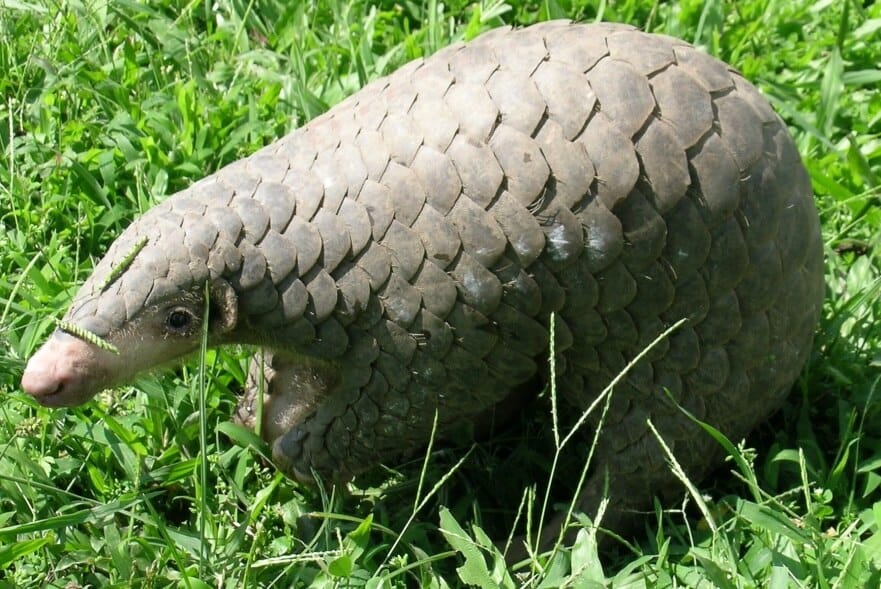
The Chinese Pangolin is one of the best-known Asian species and also one of the most endangered. It lives in parts of southern China, northern Vietnam, Nepal, Bhutan, and northeastern India. Despite its name, this pangolin is not limited to China alone. It prefers forested hillsides, bamboo groves, and areas with soft soil where it can dig burrows. If you were to walk through these landscapes at night, you would never notice it easily. This species is secretive, slow-moving, and mostly active after sunset.
At first glance, the Chinese Pangolin looks like a small armored tank on four legs. Its body is covered with overlapping brownish scales that feel hard but smooth at the edges. These scales are made of keratin, the same material as human nails. When threatened, the pangolin curls into a tight ball, hiding its soft belly and face. Predators find this defense frustrating, like trying to bite into a living pinecone. Adult Chinese Pangolins usually measure around 60 to 90 centimeters from nose to tail, with the tail making up nearly half that length.
One fun fact about this species is its digging skill. The Chinese Pangolin has strong, curved front claws that work like natural shovels. It uses them to tear open termite mounds and ant nests, then flicks out its long, sticky tongue to collect insects. The tongue can be longer than its entire body, folded neatly inside when not in use. Teeth are absent, but that is no problem when your meals are swallowed whole and ground in a muscular stomach.
In terms of behavior, the Chinese Pangolin is solitary. Adults meet mainly for breeding, and even then, the encounter is brief. During the day, it rests in underground burrows or sheltered spots under roots and rocks. These burrows can be surprisingly deep, offering protection from heat, cold, and unwanted visitors. One might imagine it as a quiet tenant living below the forest floor, emerging only when the lights go out.
Identification in the field relies on scale color, body size, and location. Compared to other Asian species, the Chinese Pangolin has smaller, more numerous scales and a relatively short snout. Its ears are visible but small, and its eyes are adapted to low light. Tracks in soft soil often show claw marks and a dragging tail line, a subtle signature left behind after a night of foraging.
Sadly, this pangolin faces immense pressure from habitat loss and illegal hunting. Its scales and meat have been heavily traded, pushing populations into steep decline. Conservation groups now work with local communities to protect remaining habitats and reduce demand. Education plays a big role here, helping people see the pangolin not as a product, but as a vital part of the ecosystem.
From an ecological point of view, the Chinese Pangolin is a natural pest controller. By consuming thousands of ants and termites each night, it helps maintain balance in forest systems. Remove the pangolin, and insect populations can explode, affecting plants and even human structures. In this way, the pangolin quietly supports the health of its environment, doing important work while staying out of sight.
The Chinese Pangolin reminds us that some of nature’s most valuable creatures are also the most overlooked. It does not roar or run fast, yet its story speaks loudly about the need for care and respect for wildlife. If you ever think of the Types of Pangolin found in Asia, this shy burrower is often the first to come to mind.
2. Sunda Pangolin (Manis javanica)
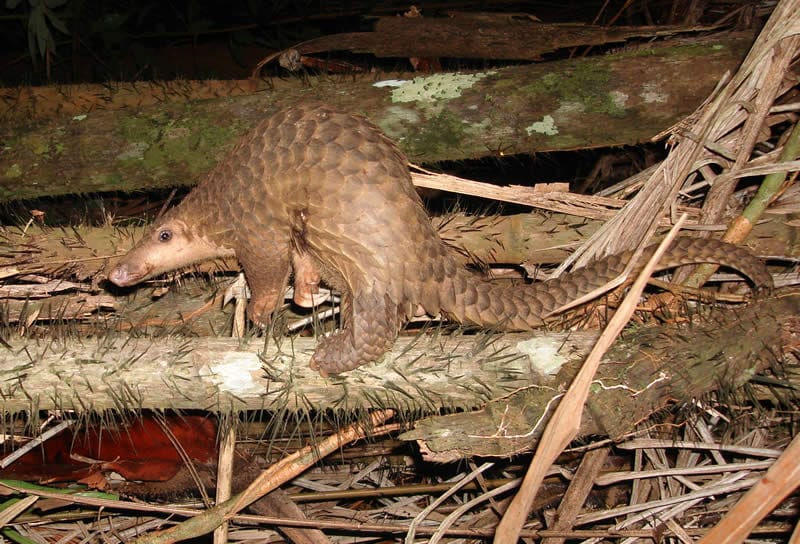
The Sunda Pangolin, also called the Malayan or Javan Pangolin, ranges across Southeast Asia. It lives in countries such as Malaysia, Indonesia, Thailand, Vietnam, and parts of Myanmar. This species is more adaptable than many people realize. It can be found in primary forests, secondary growth, plantations, and even near villages, as long as food and shelter are available. That flexibility has helped it survive in changing landscapes, though it still faces serious threats.
Physically, the Sunda Pangolin is slightly larger than the Chinese Pangolin and often has darker, more pointed scales. Its body can reach up to 100 centimeters in length, with a thick, muscular tail that aids in climbing. Yes, climbing. Unlike some ground-focused relatives, this pangolin is a skilled tree climber. It uses its tail like a living rope, gripping branches while searching for ants in tree hollows.
Watching a Sunda Pangolin move through branches would be like seeing a slow, careful acrobat. It does not rush. Each step is deliberate, testing the branch before shifting its weight. This calm style suits its nocturnal life. At night, it leaves its resting place and wanders through forest floors and trees, guided by a keen sense of smell rather than sharp eyesight.
Diet is simple but effective. Ants and termites make up most of its meals, though it may also eat larvae and other small insects. A single pangolin can consume tens of thousands of insects in one night. Its tongue, coated with sticky saliva, darts in and out like a living ribbon. If you imagine trying to eat rice with chopsticks in the dark, you get a sense of how impressive this feeding skill really is.
When it comes to identification, the Sunda Pangolin’s long tail and climbing habit are key clues. Its scales tend to be more sharply edged, giving it a spiky look compared to some other species. In regions where several pangolins overlap, these details help researchers tell them apart. Footprints, scratch marks on tree trunks, and feeding signs also offer hints for trained eyes.
Socially, the Sunda Pangolin prefers solitude. Each adult maintains a home range and does not welcome neighbors. Encounters are rare and often end with both animals calmly going their separate ways. Mothers carry their young on the base of the tail, a touching sight where the baby clings like a tiny backpack during nighttime walks.
Unfortunately, this species is heavily targeted in illegal wildlife trade. Its broad range has not protected it from overexploitation. Conservation efforts now focus on habitat protection, rescue centers, and public awareness. In some areas, local people are becoming proud guardians of the pangolin, proving that change is possible with the right support.
The Sunda Pangolin shows how adaptable a pangolin can be, climbing trees one moment and digging into soil the next. Among the Types of Pangolin in Southeast Asia, it stands out as a true all-rounder, quietly bridging life between ground and canopy.
3. Indian Pangolin (Manis crassicaudata)
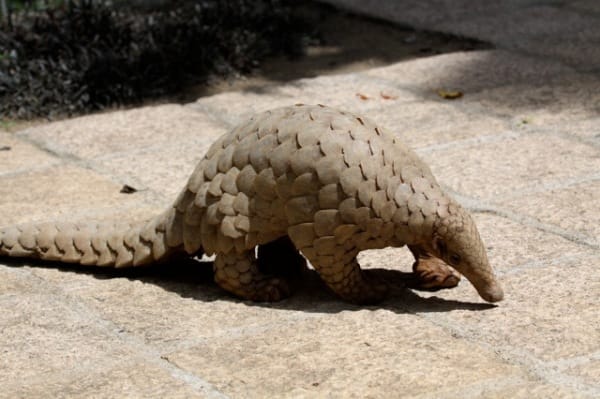
The Indian Pangolin ranges across the Indian subcontinent, including India, Sri Lanka, Pakistan, Nepal, and Bangladesh. It is the most widespread Asian species, found in dry forests, grasslands, scrublands, and even farmland edges. This adaptability allows it to live close to people, though it usually remains unseen due to its nocturnal habits.
In appearance, the Indian Pangolin has large, thick scales that give it a rugged look. The scales are often pale brown to yellowish, making it slightly lighter in color than other Asian pangolins. Adults can grow up to 120 centimeters long, making this one of the larger species in Asia. Its strong limbs and broad tail reflect its mostly ground-dwelling lifestyle.
Burrowing is where the Indian Pangolin truly shines. It digs deep tunnels that may extend several meters underground. These burrows serve as safe resting spots during the day and as shelters during extreme weather. Some burrows are used for months, while others are temporary stops during nightly foraging trips. One could think of it as a traveler with many quiet hideouts along the way.
Food habits remain familiar: ants and termites dominate the menu. The Indian Pangolin often visits termite mounds repeatedly, returning once insect numbers recover. This behavior prevents overfeeding in one spot and keeps food sources sustainable. It is a simple example of balance in nature, where taking just enough keeps the system healthy.
To identify this species, look for its heavy build and large scales, especially on the tail. The snout is long and slightly downcurved, perfect for probing into narrow openings. In regions like Sri Lanka, where it is the only pangolin species, identification becomes easier, though patience is still needed to catch even a glimpse.
Behaviorally, the Indian Pangolin is calm and non-aggressive. When startled, it freezes for a moment, then curls into a ball if danger persists. It rarely tries to bite or scratch. Its defense is patience and armor, trusting that most threats will give up eventually.
Despite its wide range, this species faces heavy hunting pressure. Traditional beliefs and illegal trade have reduced numbers in many areas. Conservation programs now work to monitor populations and involve local communities in protection efforts. In some villages, people share stories of seeing pangolins crossing fields at night, a small reminder that wildlife still lives alongside human routines.
Among the Types of Pangolin, the Indian Pangolin represents resilience. It survives in varied habitats and continues its quiet life, reminding us that even adaptable species need careful protection to last into the future.
4. Philippine Pangolin (Manis culionensis)
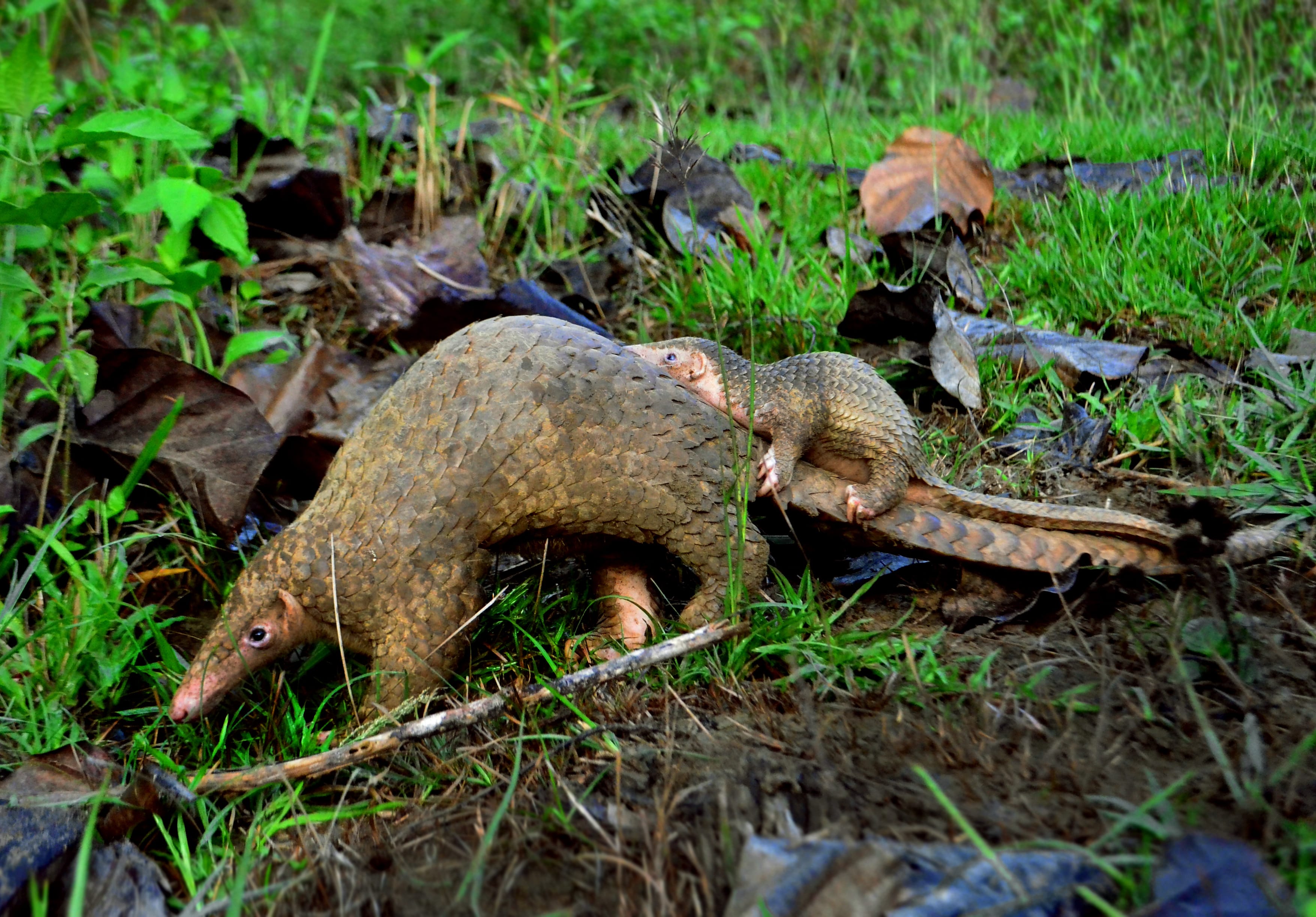
The Philippine Pangolin, also known as the Palawan Pangolin, is found only in the Philippines, mainly on Palawan Island and nearby smaller islands. This limited range makes it special but also vulnerable. It lives in lowland forests, mangroves, and sometimes agricultural areas where insect prey is plentiful.
This pangolin is medium-sized, with a body length similar to the Chinese Pangolin but often appearing slimmer. Its scales are light brown to olive, blending well with forest floors and leaf litter. The tail is long and flexible, helping it climb and balance when moving through dense vegetation.
One interesting trait of the Philippine Pangolin is its strong connection to forest habitats. While it may wander into nearby fields, it depends heavily on forest cover for shelter and breeding. Hollow logs, thick roots, and natural cavities serve as daytime resting spots. At night, it becomes active, moving slowly but steadily in search of ants and termites.
Feeding behavior mirrors that of other pangolins, yet local studies suggest it may favor certain ant species found in Palawan’s forests. This shows how pangolins adapt their diets to what each environment offers. The long tongue and sticky saliva once again play starring roles in this nightly hunt.
For identification, location is the biggest clue. If you see a pangolin in Palawan, chances are high it is this species. Its scale pattern is also distinct, with slightly fewer but broader scales compared to the Chinese Pangolin. Researchers also note its relatively smooth head and narrow snout.
Social life remains solitary, though mothers care for a single pup at a time. The young ride on the mother’s tail until they are strong enough to follow on their own. This period is critical, as young pangolins learn feeding routes and safe shelters by following their parent.
Threats are serious for this species because of its small range. Illegal hunting and habitat loss can quickly affect the entire population. Conservation groups in the Philippines now work with local authorities and communities to protect remaining forests and rescue pangolins caught in trade. Education programs help people see the animal as a natural treasure of Palawan, not just another forest creature.
The Philippine Pangolin stands as a symbol of island wildlife, shaped by isolation and rich ecosystems. Among the Types of Pangolin, it reminds us how location alone can define a species’ entire story.
5. White-bellied Pangolin (Phataginus tricuspis)
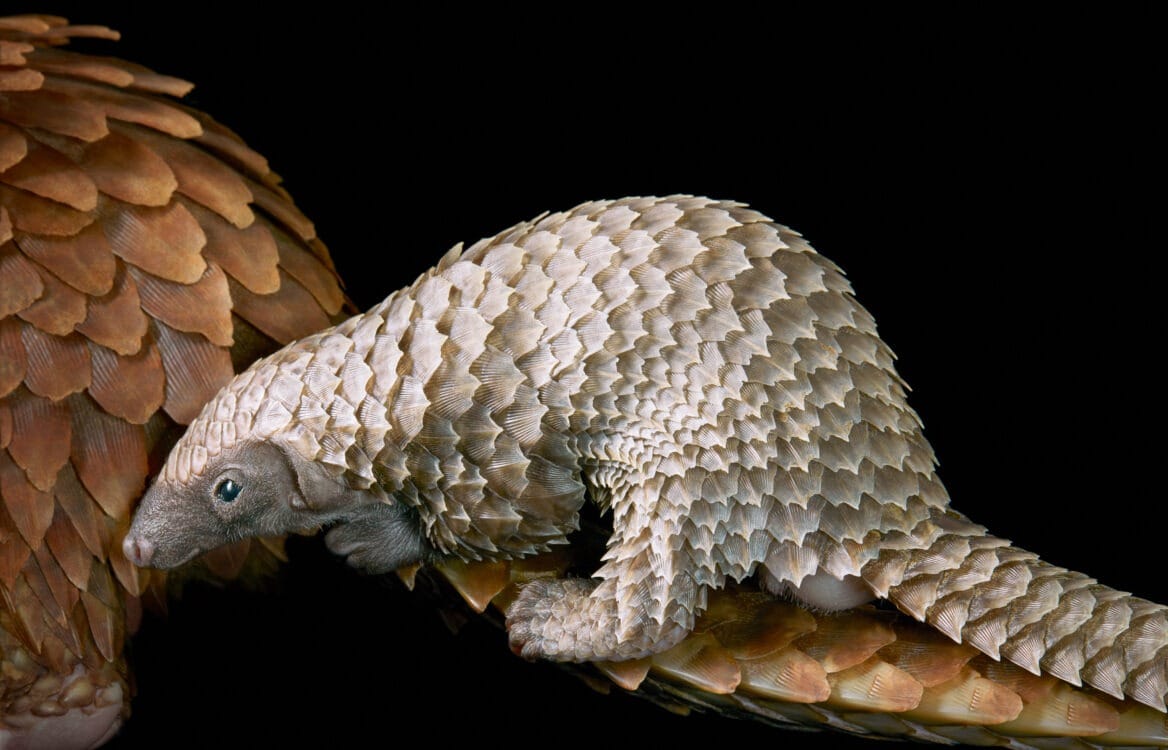
The White-bellied Pangolin is one of Africa’s smaller species and is often called the tree pangolin because of its climbing skills. It lives across West and Central Africa, from Senegal to Uganda, favoring tropical rainforests and dense woodlands. Unlike many Asian pangolins, this species spends much of its time off the ground.
Its name comes from the pale, almost creamy underside that contrasts with darker brown scales on its back. The body is slim, and the tail is long and prehensile, meaning it can grip branches like an extra hand. Adults usually reach about 60 to 80 centimeters in length, making them agile climbers rather than heavy diggers.
Life in the trees shapes much of this pangolin’s behavior. During the day, it rests in tree hollows or tangled vines, curled up and hidden from view. At night, it moves through branches, searching for ant nests and termite trails. Watching it climb would feel like seeing a slow-motion dance, each movement careful and balanced.
Diet still centers on ants and termites, but the White-bellied Pangolin often targets arboreal ants found high above the ground. Its sharp claws help tear into nests, while the tongue does the rest. This feeding style reduces competition with ground-dwelling pangolins, allowing different species to share the same forests without fighting for food.
Identification features include its small size, pale belly, and long gripping tail. In areas where both White-bellied and Black-bellied Pangolins live, the lighter underside is a helpful clue. Field researchers also look at scale shape and tail length to confirm species.
Social behavior remains quiet and solitary. Encounters between adults are rare, and most interactions involve mothers and their young. The pup clings tightly as the mother climbs, a sight that highlights both the fragility and strength of these animals.
Although still more common than some other species, the White-bellied Pangolin faces increasing pressure from hunting and forest loss. As roads and farms expand, forests shrink, and safe tree habitats become harder to find. Conservation efforts now aim to protect forest corridors and reduce hunting through education and community support.
Among the Types of Pangolin in Africa, the White-bellied Pangolin brings a touch of life to the treetops. It shows that pangolins are not just ground wanderers but also skilled climbers, perfectly suited to the layered world of tropical forests.
6. Black-bellied Pangolin (Phataginus tetradactyla)
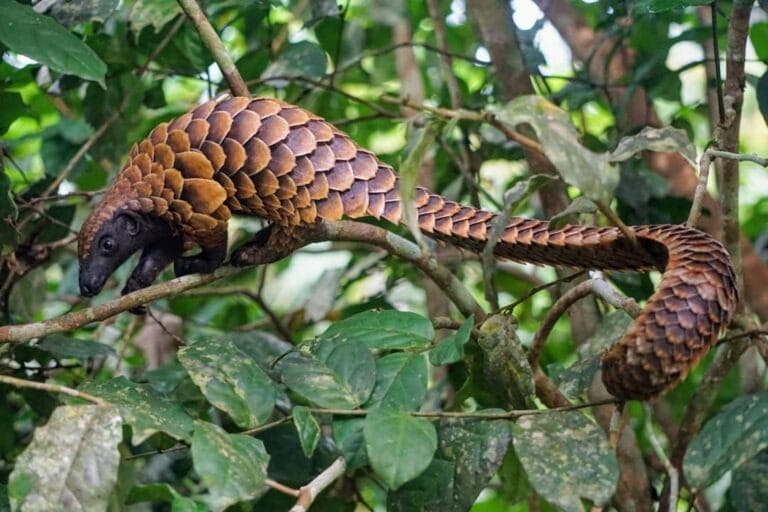
The Black-bellied Pangolin, often called the long-tailed pangolin, is one of Africa’s most agile species. It lives in the tropical forests of West and Central Africa, from Sierra Leone through Cameroon and into parts of the Congo Basin. This pangolin is closely tied to forest canopies and riverine woodlands, where dense vegetation offers both food and shelter. Among the Types of Pangolin found in Africa, this species stands out for its slender body and impressive tail length.
Its name comes from the dark, almost black skin on its belly, which contrasts with the brown to olive scales covering its back. The tail can be longer than the rest of the body, giving it a total length of up to 140 centimeters in some individuals. This long tail works like a fifth limb. It grips branches, supports the body during climbs, and even helps with balance when the pangolin stretches to reach insect nests.
Unlike ground-dwelling relatives, the Black-bellied Pangolin spends much of its life in trees. It sleeps in tree hollows or tangled vines during the day and becomes active at night. When darkness falls, it moves through the canopy with slow confidence, sniffing out ant trails along branches. Watching one in motion would feel like seeing a careful tightrope walker, never in a rush, always testing each step.
Its diet is dominated by ants, especially those that build nests in trees. Termites and small larvae may also be eaten when available. With sharp claws, it tears open nests, then uses its long, sticky tongue to collect insects in seconds. The lack of teeth does not slow it down. Food is swallowed whole and ground in the stomach, helped by small bits of sand taken in during feeding.
Field identification is aided by its long tail, dark belly, and tree-focused lifestyle. In areas where both African tree pangolins live, the Black-bellied species is slimmer and darker underneath than the White-bellied Pangolin. Researchers also note its relatively smooth scales and more delicate build.
Behavior is quiet and solitary. Adults keep their distance from one another, meeting mainly during the breeding season. Mothers carry a single pup, which clings tightly to the base of the tail during nighttime foraging. This bond lasts several months, giving the young pangolin time to learn safe routes and feeding spots.
Although not as well known as some Asian species, the Black-bellied Pangolin faces similar threats. Hunting for meat and scales, along with forest loss, is reducing populations in many areas. Conservation efforts now focus on protecting forest habitats and working with local communities to reduce hunting pressure.
The Black-bellied Pangolin shows how diverse pangolins can be. While many people picture pangolins as slow ground animals, this species proves they can also be skilled climbers, perfectly suited to life among branches and leaves.
7. Giant Pangolin (Smutsia gigantea)
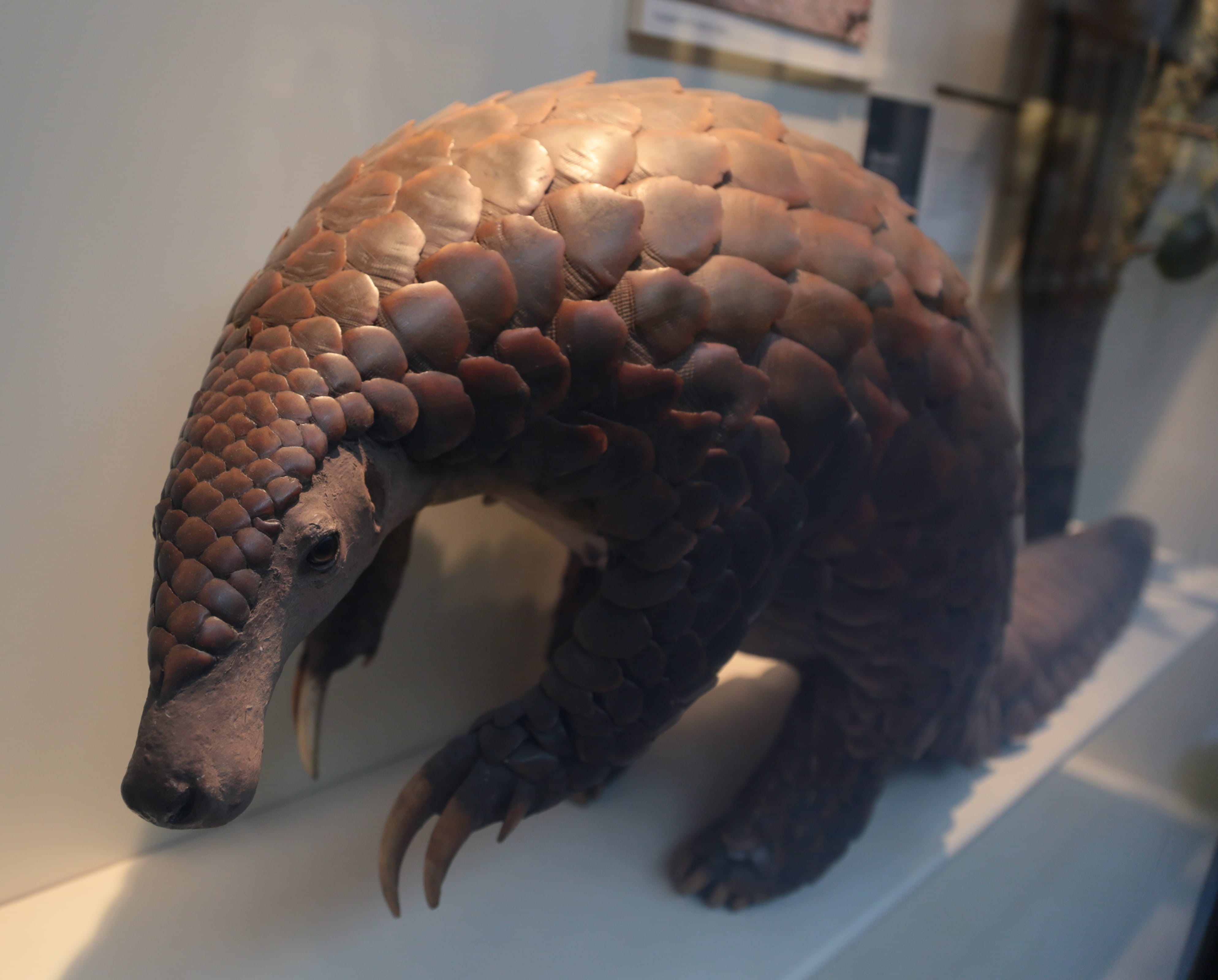
The Giant Pangolin truly lives up to its name. It is the largest of all pangolin species and one of the most striking mammals in Africa. Found across parts of Central and East Africa, from Senegal to western Kenya, it inhabits tropical forests, swamp edges, and savanna-forest mosaics. If the pangolin family had a heavyweight champion, this would be it.
Adults can reach lengths of over 170 centimeters from nose to tail and weigh more than 30 kilograms. Its body is thick and powerful, covered with large, dark brown scales that form strong armor. Compared to smaller pangolins, the Giant Pangolin looks like a walking fortress, moving slowly but with quiet authority through its habitat.
This species is mainly ground-dwelling. It digs deep burrows near water sources or termite-rich areas, using them as daytime shelters. These burrows can be several meters long and wide enough for the animal to turn around inside. At night, the Giant Pangolin emerges to forage, leaving behind large tracks and claw marks in soft soil.
Its feeding habits focus heavily on termites, especially large ground mounds. With powerful claws, it breaks into hard structures that would stop smaller animals. Once inside, the tongue goes to work, collecting thousands of insects in a single feeding session. One might say it eats like a slow but unstoppable vacuum cleaner, clearing out colonies with steady patience.
Identification is straightforward due to its size. No other pangolin comes close. The broad head, thick tail, and massive scales make it easy to recognize. Even indirect signs, such as large burrow entrances and broken termite mounds, often point to its presence.
Despite its size, the Giant Pangolin is shy and avoids confrontation. When threatened, it still curls into a ball, trusting its armor rather than its strength. This calm nature makes it vulnerable to human hunters, as it does not flee quickly.
Social behavior remains solitary, with adults meeting briefly for mating. Females give birth to a single young, which stays hidden in the burrow during early life. As it grows, the mother introduces it to nighttime foraging trips, slowly teaching it the skills needed to survive.
The Giant Pangolin faces serious threats from hunting and habitat degradation. Because of its large size, it is often targeted for meat. Conservation programs now work to monitor populations and protect key habitats, especially in regions where forests and wetlands still remain connected.
Among the Types of Pangolin, the Giant Pangolin represents strength and scale. It reminds us that even the largest and most armored creatures can be fragile when faced with human pressure.
8. Ground Pangolin (Smutsia temminckii)
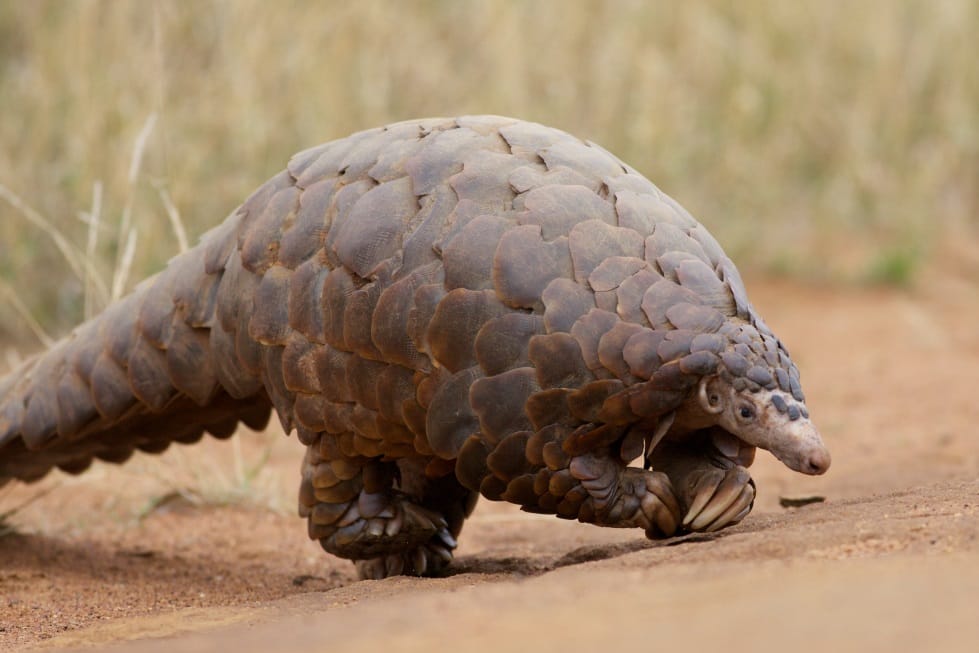
The Ground Pangolin, also known as Temminck’s Pangolin, is found in eastern and southern Africa. Its range stretches from Kenya and Tanzania down through Zambia, Zimbabwe, Botswana, and South Africa. Unlike forest-dwelling relatives, this species prefers savannas, grasslands, and open woodlands, where termite mounds dot the landscape.
This pangolin is medium to large in size, with a sturdy body and broad scales that give it a rugged look. The scales are usually dark brown to grayish, blending well with dry soils and grasses. Adults can reach around 100 to 140 centimeters in length, including the tail, making them well-built for a life on the ground.
As its name suggests, the Ground Pangolin spends most of its time on land. It does not climb much and instead walks steadily across open terrain at night, guided by smell. During the day, it rests in burrows, abandoned aardvark holes, or natural crevices. These shelters protect it from heat and predators alike.
Termites form the backbone of its diet, especially large ground species common in savannas. The pangolin visits mound after mound, breaking into them with strong claws. Its long tongue then sweeps through tunnels, collecting insects with ease. Over time, this feeding helps regulate termite populations, which can otherwise become overwhelming in some areas.
Identification features include its ground-focused behavior, broad scales, and thick tail. In southern Africa, it is the only pangolin species, making recognition easier for local rangers and researchers. Tracks often show a dragging tail line and deep claw marks, signs of its nighttime journeys.
The Ground Pangolin is generally calm and slow-moving. When threatened, it curls tightly, sometimes hissing or releasing a musky scent as a warning. It rarely attempts to bite, relying instead on its armor and stillness to discourage predators.
Like other pangolins, it lives a solitary life. Adults keep large home ranges and may travel several kilometers in a single night while foraging. Mothers care for one pup, which rides on the base of the tail during early outings, learning the routes and shelters of its mother’s range.
Threats to this species include illegal hunting, road accidents, and habitat fragmentation. In some regions, pangolins are rescued from fences or roads and released back into safe areas by conservation teams. Public awareness campaigns now highlight the pangolin as a symbol of savanna wildlife in need of care.
The Ground Pangolin brings pangolin life into open landscapes. Among the Types of Pangolin, it shows how these animals adapt not only to forests but also to wide, grassy plains under African skies.
Note
Across Africa and Asia, scientists currently recognize eight living species of pangolin. In this guide, we have covered all of them: four Asian species and four African species. Together, they paint a full picture of pangolin diversity and remind us how varied and remarkable these quiet, scaled mammals truly are.
“`html
9. Asian Pangolins – The Forest and Hillside Specialists
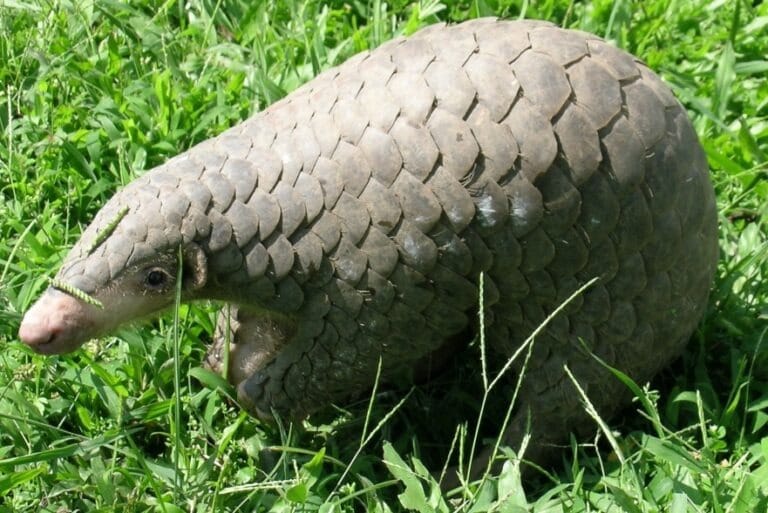
Rather than being a single species, “Asian pangolins” is a practical way to describe the four pangolin species that live across South and Southeast Asia: the Chinese, Sunda, Indian, and Philippine Pangolins. Grouping them together helps readers understand how pangolins of this region share common traits shaped by similar climates, forests, and landscapes. When people explore the Types of Pangolin, this Asian group often forms the first half of the story.
Asian pangolins are mostly adapted to forested habitats, ranging from dense tropical rainforests to dry deciduous woodlands and foothills. Many live close to human settlements, quietly foraging in plantations, farmland edges, and secondary forests. This closeness to people has made them more visible than some African species, but sadly also more vulnerable to hunting and habitat loss.
In appearance, Asian pangolins tend to have relatively smaller, more tightly packed scales compared to African species. Their scales are often lighter brown to yellowish, blending well with forest floors and leaf litter. The snout is long and narrow, and the ears are small but visible. Most species have strong digging claws, though some, like the Sunda and Philippine Pangolins, are also capable climbers.
Behavior across Asian pangolins is remarkably similar. They are nocturnal, solitary, and shy. During the day, they hide in burrows, hollow logs, or thick vegetation. At night, they roam quietly in search of ants and termites, guided more by smell than by sight. If startled, they freeze, then curl into a tight ball, trusting their scales to do the talking.
Diet is simple and consistent. Ants and termites dominate, with occasional larvae or small insects. Their long tongues, coated in sticky saliva, can reach deep into nests and tunnels. Without teeth, they swallow food whole, relying on strong stomach muscles to grind meals. It is a humble diet, yet it supports a body wrapped in armor.
One shared trait of Asian pangolins is their role in traditional cultures. In many regions, they appear in folklore as shy, gentle creatures of the forest. Unfortunately, this cultural attention has also fueled demand for their scales and meat, pushing all Asian species into threatened or critically endangered status.
Conservation efforts across Asia now focus on law enforcement, habitat protection, and community education. Rescue centers care for confiscated pangolins and release them back into safe areas. Slowly, attitudes are changing, with more people seeing pangolins as living treasures rather than resources.
Thinking of Asian pangolins as a group helps paint a broader picture. Together, they represent life in Asia’s forests and hills, moving quietly under moonlight, shaping ecosystems by keeping insect populations in check. They remind us that even animals that rarely show themselves can have a powerful impact on the natural balance.
10. African Pangolins – The Savanna and Rainforest Guardians
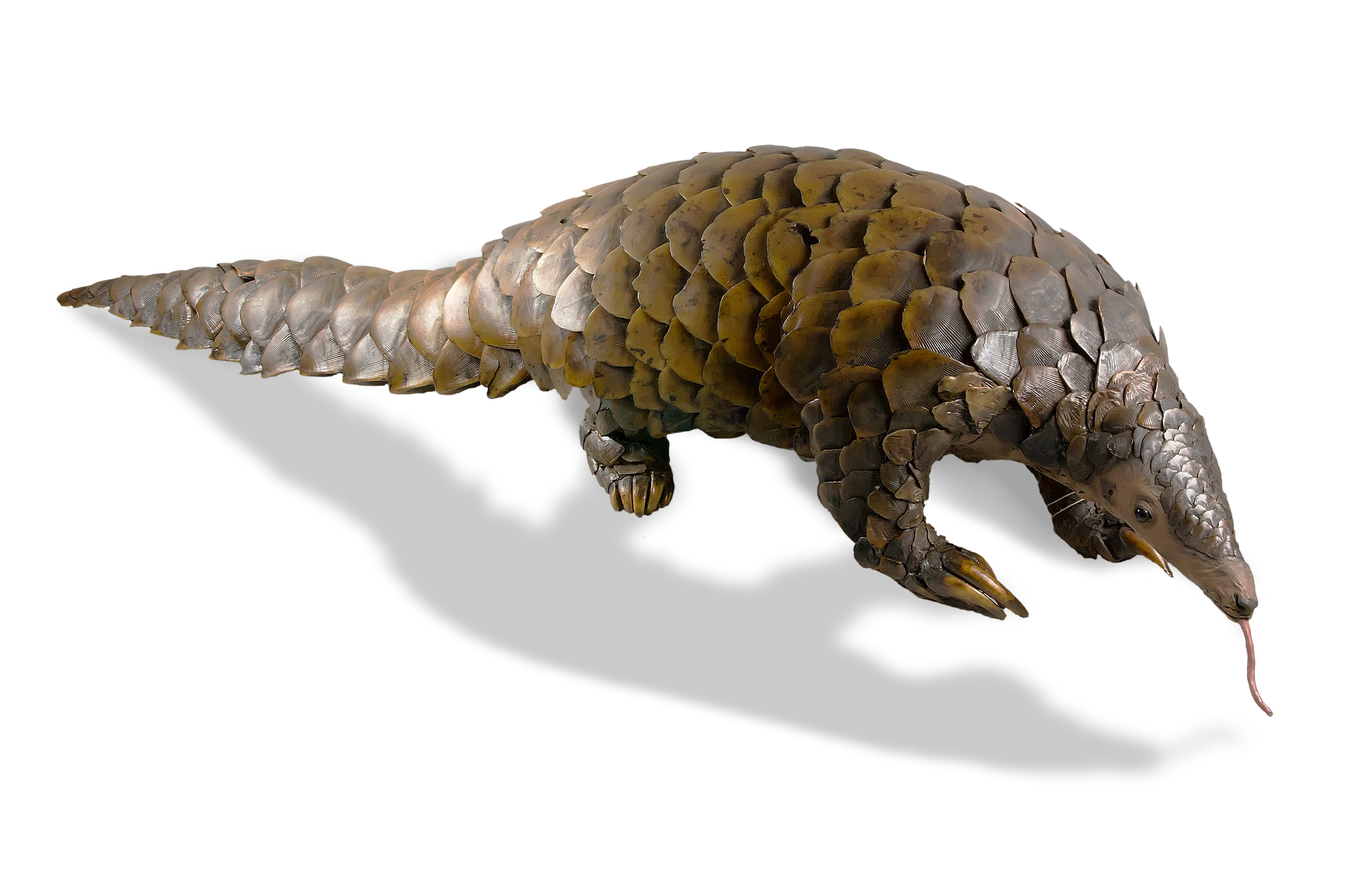
African pangolins form the second major group within the pangolin family, including the White-bellied, Black-bellied, Giant, and Ground Pangolins. Spread across West, Central, East, and Southern Africa, these species occupy a wide range of habitats, from dense rainforests to open savannas. Looking at them together helps highlight how pangolins adapt to Africa’s diverse landscapes.
Compared to their Asian relatives, African pangolins often have larger, more widely spaced scales and heavier builds, especially in species like the Giant and Ground Pangolins. Their colors range from dark brown to grayish, matching forest shadows or dusty plains. The two tree pangolins are slimmer, with long gripping tails, while the ground species are bulkier, built for digging and walking long distances.
African pangolins show a clear split in lifestyle. The White-bellied and Black-bellied Pangolins spend much of their time in trees, moving through branches in search of arboreal ants. The Giant and Ground Pangolins, on the other hand, are firmly tied to life on the ground, breaking into termite mounds and resting in deep burrows. Together, they cover almost every layer of the landscape, from forest floor to canopy.
Despite these differences, their core behavior is familiar. They are nocturnal, solitary, and quiet. Nights are spent foraging, days are spent hidden away. Encounters with humans are rare, and when they happen, the pangolin’s first response is stillness rather than flight. Curling into a ball remains their trusted defense, whether in a rainforest or on an open plain.
Diet across African pangolins leans heavily toward termites, especially for the larger species, though ants also play a role. In savannas, Ground Pangolins may visit mound after mound in a single night, while tree species focus on nests tucked into branches. This feeding keeps insect numbers under control, helping maintain healthy ecosystems.
Culturally, African pangolins appear in local stories and traditions, sometimes seen as symbols of patience or protection. Yet, like their Asian cousins, they face growing pressure from hunting and habitat change. Bushmeat trade, illegal trafficking, and expanding farmland all take a toll on their populations.
Across Africa, conservation groups now work with communities, rangers, and governments to protect pangolin habitats and reduce illegal hunting. In some regions, rescued pangolins are fitted with tracking devices after release, helping scientists learn more about their secretive lives. Each new piece of information feels like finding a page from a book that was almost lost.
Viewing African pangolins as a group shows how one family of animals can adapt to rainforests, swamps, woodlands, and wide open grasslands. Together with the Asian species, they complete the picture of the Types of Pangolin, reminding us that these quiet, armored mammals belong to many places, yet share one fragile future.
Conclusion
Pangolins may be quiet, shy, and rarely seen, but their story speaks loudly about the beauty and vulnerability of wildlife on our planet. From the forests of Southeast Asia to the savannas and rainforests of Africa, the ten Types of Pangolin highlighted in this guide show how one family of mammals can adapt to many landscapes while keeping the same gentle way of life. Whether climbing trees, digging deep burrows, or wandering across open plains, every pangolin plays a role in keeping insect populations in balance and ecosystems healthy.
What makes pangolins truly special is not just their armor of scales, but their calm nature and simple habits. They do not chase prey or defend territory with force. Instead, they rely on patience, smell, and a remarkable tongue to survive. In a way, they remind us that strength does not always come from speed or power, but from quiet persistence.
Sadly, all pangolin species today face serious threats. Habitat loss, illegal hunting, and wildlife trade have pushed these animals into a struggle for survival. Many people never see a pangolin in the wild, yet their choices still matter. Supporting conservation efforts, respecting wildlife laws, and sharing knowledge about pangolins can help change their future.
Learning about pangolins is the first step. When we understand who they are, where they live, and why they matter, it becomes easier to care. The next time you hear the word “pangolin,” picture not just a scaled animal curled into a ball, but a living part of forests and savannas, quietly working through the night.
In the end, the story of pangolins is also our story. It is about how humans choose to live alongside wildlife. With awareness and care, these remarkable mammals can continue their quiet journeys for generations to come.
Frequently Asked Questions About Pangolins
1. What is a pangolin?
A pangolin is a shy, scale-covered mammal that feeds mainly on ants and termites and lives in parts of Africa and Asia.
2. How many Types of Pangolin are there?
Scientists recognize eight living species of pangolin, divided between Africa and Asia.
3. Why are pangolins called scaly anteaters?
They eat ants like anteaters and have bodies covered in tough scales, which makes the nickname easy to remember.
4. Are pangolins reptiles or mammals?
Pangolins are mammals. They are warm-blooded, give birth to live young, and nurse their babies with milk.
5. What are pangolin scales made of?
The scales are made of keratin, the same material found in human fingernails and hair.
6. Where do pangolins live?
Pangolins live in forests, grasslands, and savannas across Africa and Asia, depending on the species.
7. Do pangolins live in trees or on the ground?
Some species are good climbers and live in trees, while others stay mostly on the ground and dig burrows.
8. What do pangolins eat?
They eat ants, termites, and sometimes larvae, using a long sticky tongue to catch their food.
9. Do pangolins have teeth?
No, pangolins do not have teeth. They swallow insects whole and grind them in their stomach.
10. How long is a pangolin’s tongue?
A pangolin’s tongue can be as long as its body, reaching deep into nests and tunnels.
11. Are pangolins dangerous to humans?
No, pangolins are gentle animals and avoid people. They rely on curling up for defense.
12. Why do pangolins curl into a ball?
They curl up to protect their soft belly and face, using their scales as natural armor.
13. Are pangolins active during the day?
Most pangolins are nocturnal, meaning they are active at night and rest during the day.
14. How big can a pangolin grow?
Size varies by species, from small tree pangolins to the Giant Pangolin, which can weigh over 30 kilograms.
15. What is the largest pangolin species?
The Giant Pangolin from Africa is the largest of all pangolin species.
16. What is the smallest pangolin species?
The White-bellied Pangolin is among the smallest, especially when compared to ground species.
17. How long do pangolins live?
In the wild, pangolins may live around 10 to 20 years, though exact ages are hard to track.
18. Do pangolins live alone?
Yes, pangolins are mostly solitary and meet others mainly for breeding.
19. How many babies does a pangolin have?
Usually just one baby at a time, which stays close to the mother for several months.
20. How do baby pangolins travel with their mother?
The young often ride on the base of the mother’s tail during nighttime foraging.
21. Are pangolins good climbers?
Tree pangolins are excellent climbers and use their tails to grip branches.
22. Can pangolins swim?
Yes, pangolins can swim when needed, using their tail to help them move in water.
23. Why are pangolins important to ecosystems?
They control ant and termite populations, helping keep forests and grasslands in balance.
24. Are pangolins endangered?
Yes, all pangolin species are threatened, with several listed as critically endangered.
25. What threatens pangolins the most?
Illegal hunting and habitat loss are the biggest dangers facing pangolins today.
26. Why are pangolins hunted?
They are hunted for their meat and scales, which are traded illegally in some regions.
27. Is it legal to trade pangolins?
No, international trade in pangolins is banned, and many countries protect them by law.
28. Can pangolins be kept as pets?
No, pangolins are wild animals with special needs and should never be kept as pets.
29. Do pangolins make sounds?
They are mostly quiet but can hiss or make soft noises when stressed.
30. How can you tell different Types of Pangolin apart?
Differences include size, scale shape, tail length, color, and where they live.
31. Are pangolins related to armadillos?
No, they look similar, but pangolins and armadillos are not closely related.
32. How fast can a pangolin move?
Pangolins are slow walkers, built for steady movement rather than speed.
33. Do pangolins dig burrows?
Yes, ground-dwelling species dig burrows for shelter and resting during the day.
34. What time do pangolins usually forage?
Most start foraging soon after sunset and continue through the night.
35. Can pangolins see well?
Their eyesight is weak, but their sense of smell is excellent and guides them to food.
36. How do researchers study pangolins?
Scientists use camera traps, tracking devices, and field signs like burrows and tracks.
37. What should you do if you see a pangolin in the wild?
Keep your distance, do not touch it, and report sightings to local wildlife authorities if needed.
38. Are pangolins found in zoos?
They are rarely kept in zoos because their diet and care are difficult to manage.
39. How can people help protect pangolins?
Support conservation groups, follow wildlife laws, and spread awareness about pangolins.
40. Do pangolins change habitats during the year?
Some may shift within their home range based on food and weather, but they do not migrate far.
41. What is the difference between Asian and African pangolins?
They differ in size, scale patterns, and habitat use, with some African species being much larger.
42. Why are pangolins hard to study?
They are nocturnal, shy, and live in hidden places, making sightings rare.
43. Do pangolins interact with other animals?
They usually avoid others, though their burrows may later be used by different species.
44. What role do pangolins play in culture?
In some regions, they appear in local stories as gentle and mysterious forest animals.
45. Why should we care about pangolins?
Pangolins help maintain healthy ecosystems, and protecting them also protects many other species.