

Pufferfish are famous for inflating, using beak-like teeth, and sometimes carrying potent toxins, but the different types of puffer fish have very different habitat and aquarium requirements. This guide covers freshwater, brackish, coastal, reef, and open-ocean species, with identification clues, range, feeding behavior, care cautions, and safety information.
What Are the Main Types of Puffer Fish?
Freshwater puffers include pea, Fahaka, Mbu, Congo, South American, and several Southeast Asian ambush species. Green spotted, figure-eight, Ceylon, and banded puffers use brackish or changing salinity habitats. Marine groups include large Arothron puffers, small sharpnose Canthigaster species, and temperate Takifugu puffers. They are not interchangeable in water chemistry, adult size, behavior, or diet.
Quick Comparison of Puffer Fish
| No. | Puffer Fish | Scientific Name | Water Type | Natural Range |
|---|---|---|---|---|
| 1 | Pea Puffer | Carinotetraodon travancoricus | freshwater | southwestern India |
| 2 | Red-Tailed Red-Eye Puffer | Carinotetraodon irrubesco | freshwater | Indonesia |
| 3 | Red-Eye Puffer | Carinotetraodon lorteti | freshwater | mainland Southeast Asia |
| 4 | Fahaka Puffer | Tetraodon lineatus | freshwater | the Nile basin and other African drainages |
| 5 | Mbu Puffer | Tetraodon mbu | freshwater | the Congo basin and Lake Tanganyika region |
| 6 | Spotted Congo Puffer | Tetraodon schoutedeni | freshwater | the Congo basin |
| 7 | Green Spotted Puffer | Dichotomyctere nigroviridis | brackish to marine as adult | South and Southeast Asian coastal waters |
| 8 | Figure-Eight Puffer | Dichotomyctere ocellatus | brackish | Southeast Asian estuaries and rivers |
| 9 | Ceylon Puffer | Dichotomyctere fluviatilis | brackish to marine | South Asian estuaries and coasts |
| 10 | South American Puffer | Colomesus asellus | freshwater | Amazon and Orinoco drainages |
| 11 | Banded Puffer | Colomesus psittacus | brackish to marine | northern South American coasts and estuaries |
| 12 | Bronze Puffer | Auriglobus modestus | freshwater | Southeast Asian rivers |
| 13 | Hairy Puffer | Pao baileyi | freshwater | Mekong basin |
| 14 | Arrowhead Puffer | Pao suvattii | freshwater | Mekong drainage |
| 15 | Dragon Puffer | Pao palembangensis | freshwater | Southeast Asian rivers |
| 16 | Fang’s Puffer | Pao cochinchinensis | freshwater | Mekong and nearby drainages |
| 17 | Abe’s Puffer | Pao abei | freshwater | Mekong basin |
| 18 | Target Puffer | Pao leiurus | freshwater | Southeast Asian rivers |
| 19 | Humpback Puffer | Pao palembangensis | freshwater | Southeast Asia |
| 20 | Tiger Puffer | Takifugu rubripes | marine to brackish | northwestern Pacific |
| 21 | Grass Puffer | Takifugu alboplumbeus | marine and estuarine | northwestern Pacific coasts |
| 22 | Panther Puffer | Takifugu pardalis | marine | northwestern Pacific |
| 23 | Yellowfin Puffer | Takifugu xanthopterus | marine and estuarine | East Asian coasts |
| 24 | Purple Puffer | Takifugu porphyreus | marine | northwestern Pacific |
| 25 | Obscure Puffer | Takifugu obscurus | brackish and marine | East Asian estuaries and coasts |
| 26 | White-Spotted Puffer | Arothron hispidus | marine | Indo-Pacific reefs and lagoons |
| 27 | Guineafowl Puffer | Arothron meleagris | marine | Indo-Pacific reefs |
| 28 | Blackspotted Puffer | Arothron nigropunctatus | marine | Indo-Pacific reefs |
| 29 | Starry Puffer | Arothron stellatus | marine | Indo-Pacific reefs and sandy areas |
| 30 | Map Puffer | Arothron mappa | marine | Indo-Pacific reefs |
| 31 | Immaculate Puffer | Arothron immaculatus | marine | Indo-Pacific coasts |
| 32 | Reticulated Puffer | Arothron reticularis | marine | Indo-Pacific coastal reefs |
| 33 | Blue-Spotted Puffer | Arothron caeruleopunctatus | marine | Indo-Pacific reefs |
| 34 | Saddled Toby | Canthigaster valentini | marine | Indo-Pacific reefs |
| 35 | Spotted Sharpnose Puffer | Canthigaster solandri | marine | Indo-Pacific reefs |
| 36 | Hawaiian Whitespotted Toby | Canthigaster jactator | marine | Hawaiian reefs |
| 37 | Caribbean Sharpnose Puffer | Canthigaster rostrata | marine | Caribbean and western Atlantic reefs |
| 38 | Oceanic Puffer | Lagocephalus lagocephalus | marine | tropical and temperate open oceans |
| 39 | Northern Puffer | Sphoeroides maculatus | marine and estuarine | western North Atlantic |
| 40 | Checkered Puffer | Sphoeroides testudineus | marine and estuarine | western Atlantic and Caribbean |
1. Pea Puffer
Pea Puffer (Carinotetraodon travancoricus) is a freshwater puffer from southwestern India. It is recognized by tiny body with dark irregular spots. A species-focused planted aquarium is more appropriate than a generic community aquarium.

Puffers need hard foods or other diet planning appropriate to the species, excellent water quality, and careful monitoring of tooth growth.
2. Red-Tailed Red-Eye Puffer
The Red-Tailed Red-Eye Puffer, scientifically Carinotetraodon irrubesco, occurs in Indonesia and uses freshwater conditions. Look for red tail, reddish eyes, dark body markings; adult size and salinity must be confirmed before purchase.
Temperament varies, but many puffers bite fins, hunt invertebrates, or defend territory. Compatibility claims should be treated cautiously.
3. Red-Eye Puffer
Among the different types of puffer fish, Red-Eye Puffer stands out for red eyes and sexually different coloration. It comes from mainland Southeast Asia, where it occupies freshwater habitat.

Never deliberately make a puffer inflate. Inflation is a stress response and air ingestion can be dangerous.
4. Fahaka Puffer
Fahaka Puffer is the common name of Tetraodon lineatus. This freshwater species is associated with the Nile basin and other African drainages and can be identified by bold horizontal pattern and large size.
Do not handle or prepare a wild puffer for food. Toxin risk is species- and tissue-dependent and requires legally trained professionals where consumption is permitted.
5. Mbu Puffer
Mbu Puffer (Tetraodon mbu) is a freshwater puffer from the Congo basin and Lake Tanganyika region. It is recognized by huge size and maze-like yellow markings. A expert public-aquarium-scale housing is more appropriate than a generic community aquarium.
Puffers need hard foods or other diet planning appropriate to the species, excellent water quality, and careful monitoring of tooth growth.
6. Spotted Congo Puffer
The Spotted Congo Puffer, scientifically Tetraodon schoutedeni, occurs in the Congo basin and uses freshwater conditions. Look for rounded body with dark spots; adult size and salinity must be confirmed before purchase.
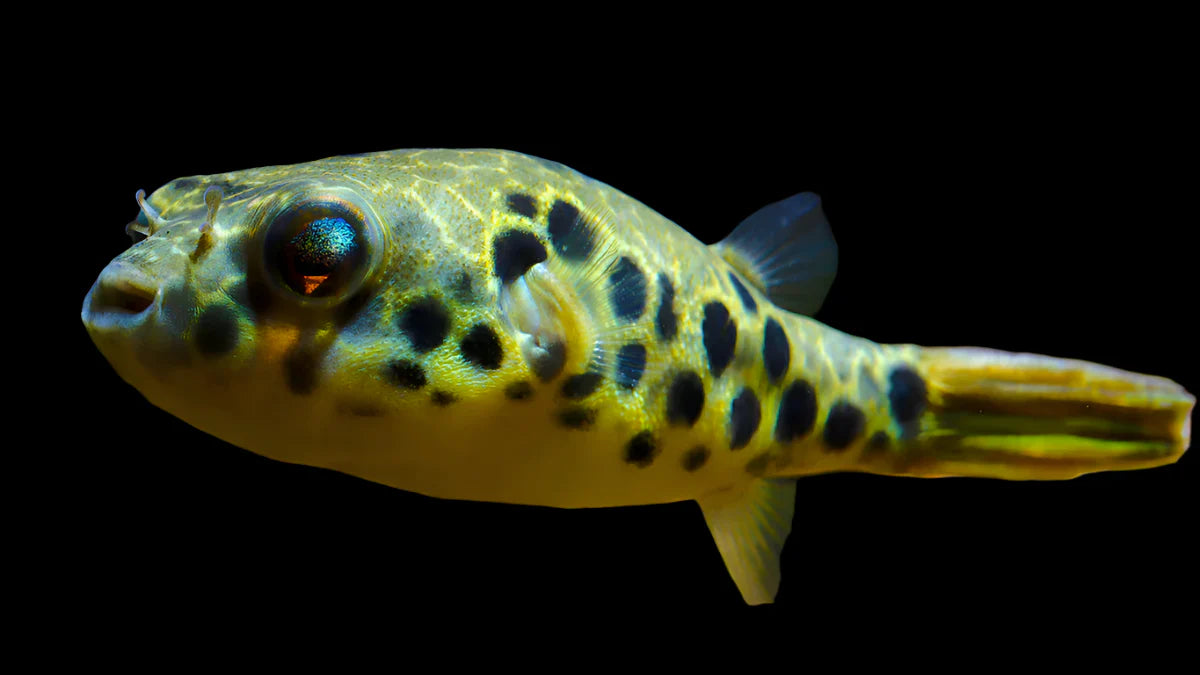
Temperament varies, but many puffers bite fins, hunt invertebrates, or defend territory. Compatibility claims should be treated cautiously.
7. Green Spotted Puffer
Among the different types of puffer fish, Green Spotted Puffer stands out for green back with black spots. It comes from South and Southeast Asian coastal waters, where it occupies brackish to marine as adult habitat.
Never deliberately make a puffer inflate. Inflation is a stress response and air ingestion can be dangerous.
8. Figure-Eight Puffer
Figure-Eight Puffer is the common name of Dichotomyctere ocellatus. This brackish species is associated with Southeast Asian estuaries and rivers and can be identified by figure-eight-like back markings.
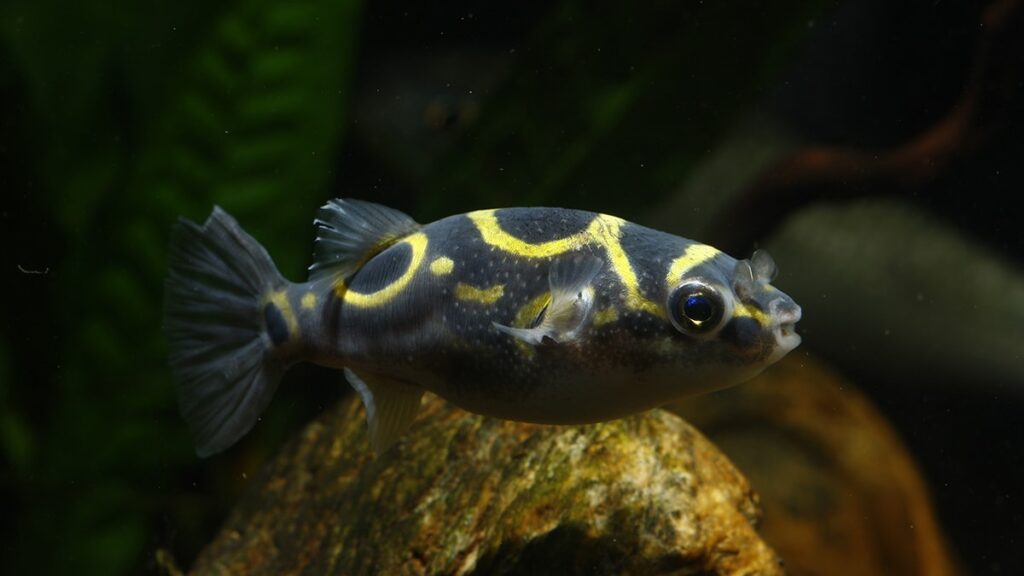
Do not handle or prepare a wild puffer for food. Toxin risk is species- and tissue-dependent and requires legally trained professionals where consumption is permitted.
9. Ceylon Puffer
Ceylon Puffer (Dichotomyctere fluviatilis) is a brackish to marine puffer from South Asian estuaries and coasts. It is recognized by greenish spotted body with pale belly. A large brackish or marine-oriented system is more appropriate than a generic community aquarium.
Puffers need hard foods or other diet planning appropriate to the species, excellent water quality, and careful monitoring of tooth growth.
10. South American Puffer
The South American Puffer, scientifically Colomesus asellus, occurs in Amazon and Orinoco drainages and uses freshwater conditions. Look for striped yellow-green body; adult size and salinity must be confirmed before purchase.

Temperament varies, but many puffers bite fins, hunt invertebrates, or defend territory. Compatibility claims should be treated cautiously.
11. Banded Puffer
Among the different types of puffer fish, Banded Puffer stands out for large banded body. It comes from northern South American coasts and estuaries, where it occupies brackish to marine habitat.
Never deliberately make a puffer inflate. Inflation is a stress response and air ingestion can be dangerous.
12. Bronze Puffer
Bronze Puffer is the common name of Auriglobus modestus. This freshwater species is associated with Southeast Asian rivers and can be identified by smooth bronze-gold body.

Do not handle or prepare a wild puffer for food. Toxin risk is species- and tissue-dependent and requires legally trained professionals where consumption is permitted.
13. Hairy Puffer
Hairy Puffer (Pao baileyi) is a freshwater puffer from Mekong basin. It is recognized by hair-like skin projections. A solitary ambush-predator setup is more appropriate than a generic community aquarium.
Puffers need hard foods or other diet planning appropriate to the species, excellent water quality, and careful monitoring of tooth growth.
14. Arrowhead Puffer
The Arrowhead Puffer, scientifically Pao suvattii, occurs in Mekong drainage and uses freshwater conditions. Look for flattened head with arrow-like markings; adult size and salinity must be confirmed before purchase.
Temperament varies, but many puffers bite fins, hunt invertebrates, or defend territory. Compatibility claims should be treated cautiously.
15. Dragon Puffer
Among the different types of puffer fish, Dragon Puffer stands out for mottled brown body and broad head. It comes from Southeast Asian rivers, where it occupies freshwater habitat.
Never deliberately make a puffer inflate. Inflation is a stress response and air ingestion can be dangerous.
16. Fang’s Puffer
Fang’s Puffer is the common name of Pao cochinchinensis. This freshwater species is associated with Mekong and nearby drainages and can be identified by brown pattern with a distinct dark side spot.
Do not handle or prepare a wild puffer for food. Toxin risk is species- and tissue-dependent and requires legally trained professionals where consumption is permitted.
17. Abe’s Puffer
Abe’s Puffer (Pao abei) is a freshwater puffer from Mekong basin. It is recognized by green-brown body with orange or red spots. A species-focused aquarium is more appropriate than a generic community aquarium.
Puffers need hard foods or other diet planning appropriate to the species, excellent water quality, and careful monitoring of tooth growth.
18. Target Puffer
The Target Puffer, scientifically Pao leiurus, occurs in Southeast Asian rivers and uses freshwater conditions. Look for target-like side marking; adult size and salinity must be confirmed before purchase.
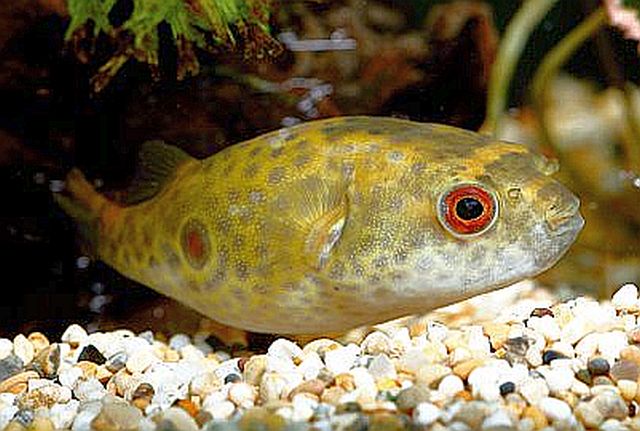
Temperament varies, but many puffers bite fins, hunt invertebrates, or defend territory. Compatibility claims should be treated cautiously.
19. Humpback Puffer
Among the different types of puffer fish, Humpback Puffer stands out for arched back and cryptic mottling. It comes from Southeast Asia, where it occupies freshwater habitat.
Never deliberately make a puffer inflate. Inflation is a stress response and air ingestion can be dangerous.
20. Tiger Puffer
Tiger Puffer is the common name of Takifugu rubripes. This marine to brackish species is associated with northwestern Pacific and can be identified by dark spots and robust body.
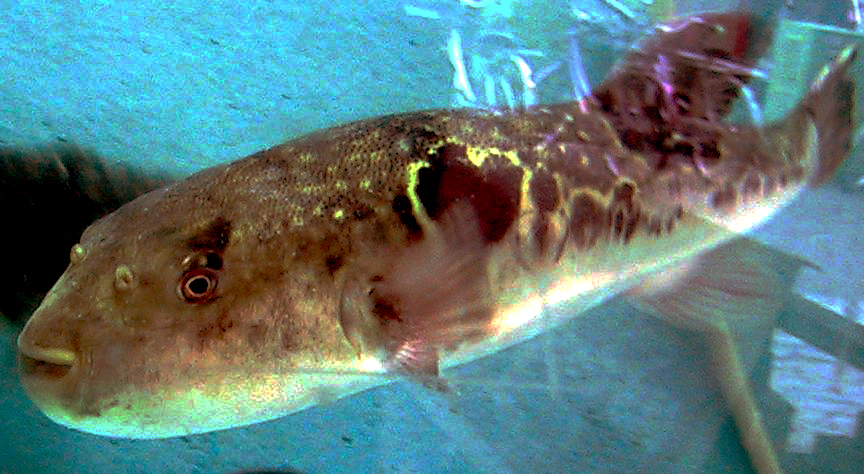
Do not handle or prepare a wild puffer for food. Toxin risk is species- and tissue-dependent and requires legally trained professionals where consumption is permitted.
21. Grass Puffer
Grass Puffer (Takifugu alboplumbeus) is a marine and estuarine puffer from northwestern Pacific coasts. It is recognized by small body with fine dark pattern. A specialist cool marine system is more appropriate than a generic community aquarium.
Puffers need hard foods or other diet planning appropriate to the species, excellent water quality, and careful monitoring of tooth growth.
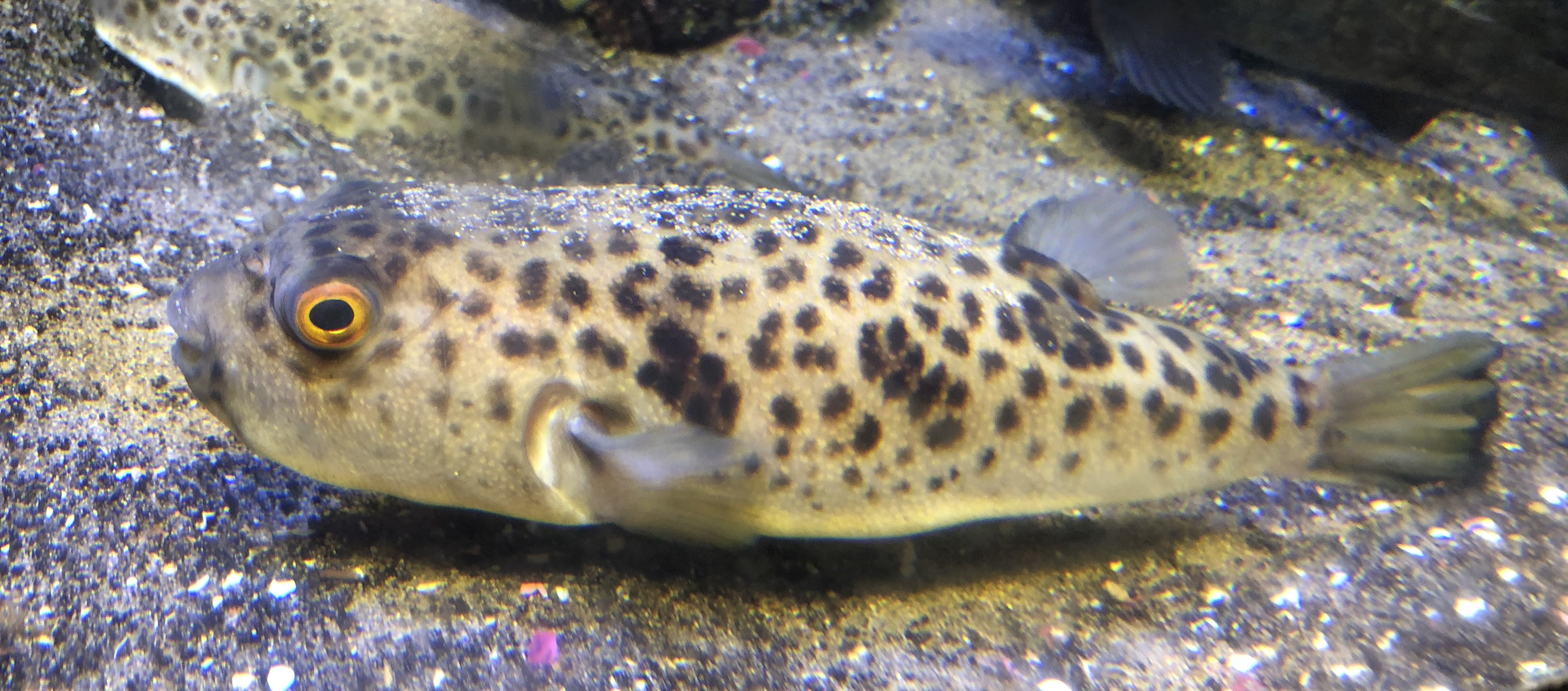
22. Panther Puffer
The Panther Puffer, scientifically Takifugu pardalis, occurs in northwestern Pacific and uses marine conditions. Look for bold dark blotches on pale body; adult size and salinity must be confirmed before purchase.
Temperament varies, but many puffers bite fins, hunt invertebrates, or defend territory. Compatibility claims should be treated cautiously.
23. Yellowfin Puffer
Among the different types of puffer fish, Yellowfin Puffer stands out for yellowish fins and spotted body. It comes from East Asian coasts, where it occupies marine and estuarine habitat.
Never deliberately make a puffer inflate. Inflation is a stress response and air ingestion can be dangerous.
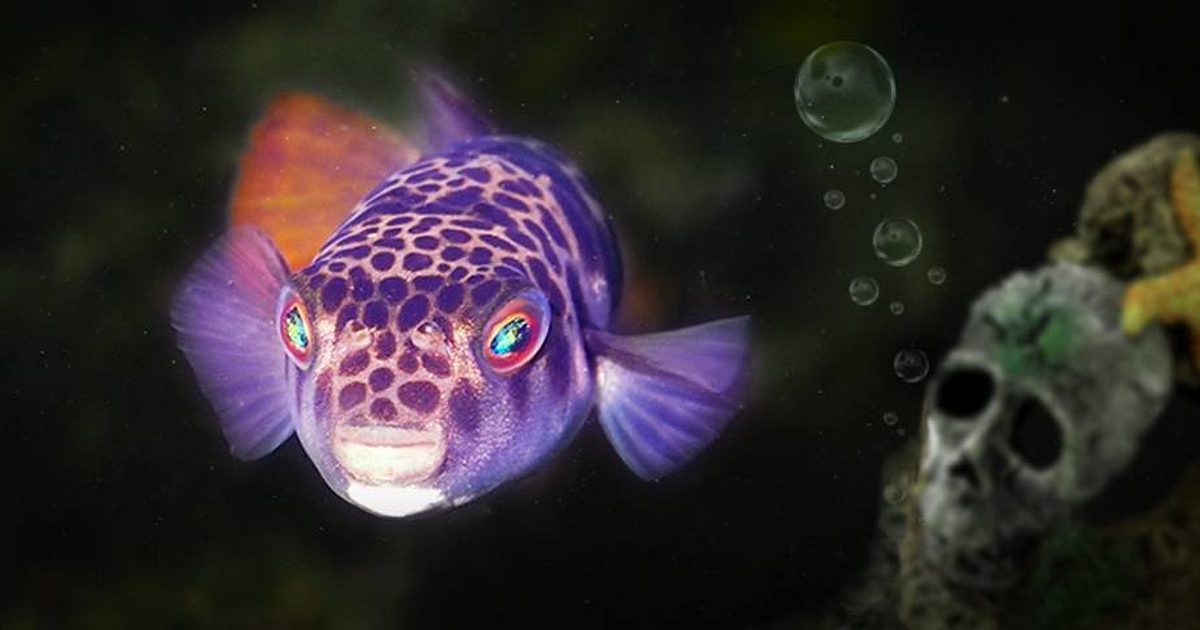
24. Purple Puffer
Purple Puffer is the common name of Takifugu porphyreus. This marine species is associated with northwestern Pacific and can be identified by dark purplish back and pale belly.
Do not handle or prepare a wild puffer for food. Toxin risk is species- and tissue-dependent and requires legally trained professionals where consumption is permitted.
25. Obscure Puffer
Obscure Puffer (Takifugu obscurus) is a brackish and marine puffer from East Asian estuaries and coasts. It is recognized by plain brown-gray body. A large specialist setup is more appropriate than a generic community aquarium.
Puffers need hard foods or other diet planning appropriate to the species, excellent water quality, and careful monitoring of tooth growth.
26. White-Spotted Puffer
The White-Spotted Puffer, scientifically Arothron hispidus, occurs in Indo-Pacific reefs and lagoons and uses marine conditions. Look for white spots on a gray-brown body; adult size and salinity must be confirmed before purchase.
Temperament varies, but many puffers bite fins, hunt invertebrates, or defend territory. Compatibility claims should be treated cautiously.
27. Guineafowl Puffer
Among the different types of puffer fish, Guineafowl Puffer stands out for black body with white spots or yellow adult form. It comes from Indo-Pacific reefs, where it occupies marine habitat.
Never deliberately make a puffer inflate. Inflation is a stress response and air ingestion can be dangerous.
28. Blackspotted Puffer
Blackspotted Puffer is the common name of Arothron nigropunctatus. This marine species is associated with Indo-Pacific reefs and can be identified by dog-like face and variable body color.

Do not handle or prepare a wild puffer for food. Toxin risk is species- and tissue-dependent and requires legally trained professionals where consumption is permitted.
29. Starry Puffer
Starry Puffer (Arothron stellatus) is a marine puffer from Indo-Pacific reefs and sandy areas. It is recognized by very large pale body with dark spots. A public-aquarium-scale housing is more appropriate than a generic community aquarium.
Puffers need hard foods or other diet planning appropriate to the species, excellent water quality, and careful monitoring of tooth growth.
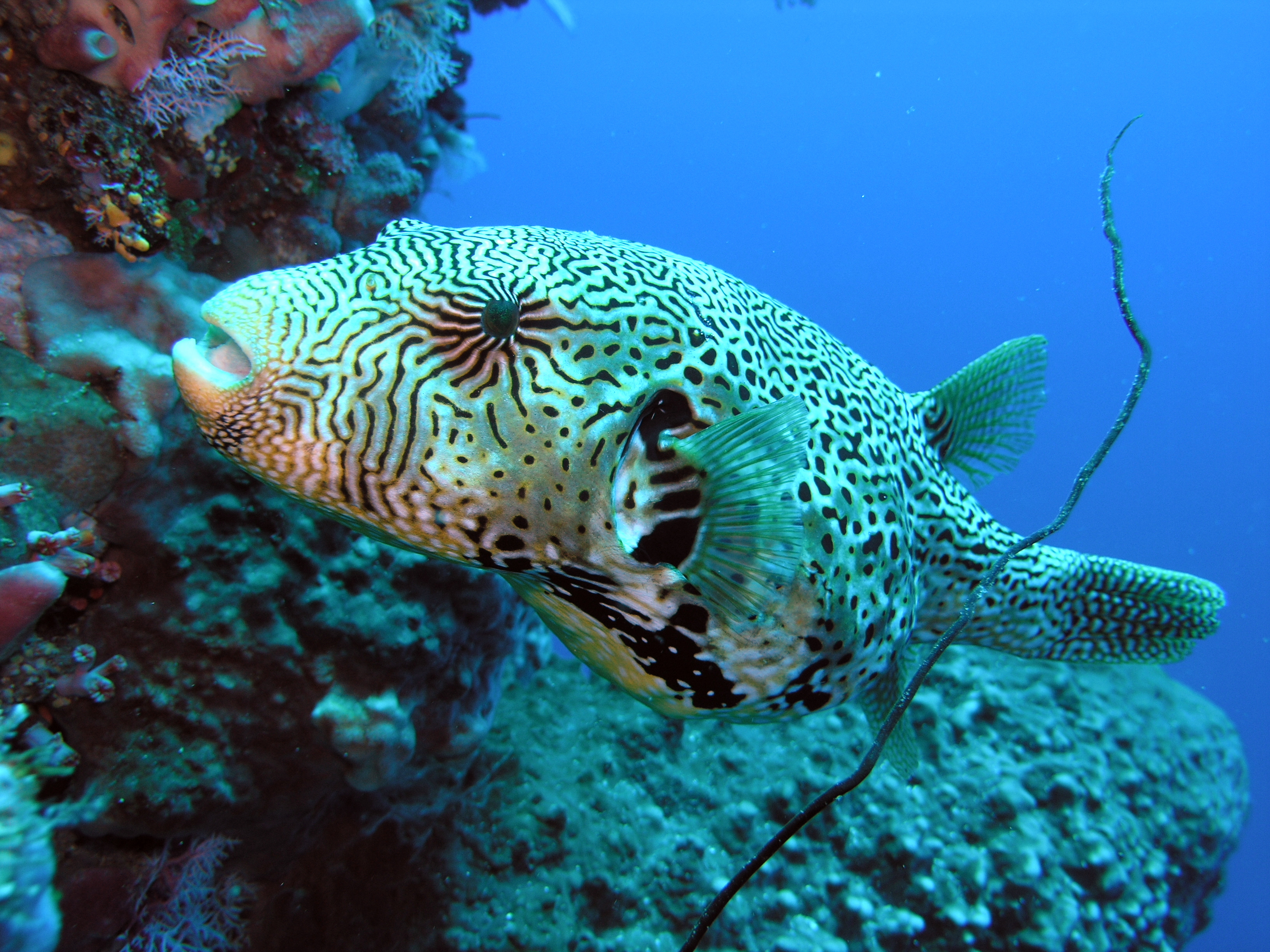
30. Map Puffer
The Map Puffer, scientifically Arothron mappa, occurs in Indo-Pacific reefs and uses marine conditions. Look for maze-like black lines over pale body; adult size and salinity must be confirmed before purchase.
Temperament varies, but many puffers bite fins, hunt invertebrates, or defend territory. Compatibility claims should be treated cautiously.
31. Immaculate Puffer
Among the different types of puffer fish, Immaculate Puffer stands out for plain pale body with darker fins. It comes from Indo-Pacific coasts, where it occupies marine habitat.
Never deliberately make a puffer inflate. Inflation is a stress response and air ingestion can be dangerous.
32. Reticulated Puffer
Reticulated Puffer is the common name of Arothron reticularis. This marine species is associated with Indo-Pacific coastal reefs and can be identified by net-like dark pattern.

Do not handle or prepare a wild puffer for food. Toxin risk is species- and tissue-dependent and requires legally trained professionals where consumption is permitted.
33. Blue-Spotted Puffer
Blue-Spotted Puffer (Arothron caeruleopunctatus) is a marine puffer from Indo-Pacific reefs. It is recognized by blue spots and irregular lines. A large marine specialist tank is more appropriate than a generic community aquarium.
Puffers need hard foods or other diet planning appropriate to the species, excellent water quality, and careful monitoring of tooth growth.
34. Saddled Toby
The Saddled Toby, scientifically Canthigaster valentini, occurs in Indo-Pacific reefs and uses marine conditions. Look for dark saddles, yellow tail, blue lines; adult size and salinity must be confirmed before purchase.
Temperament varies, but many puffers bite fins, hunt invertebrates, or defend territory. Compatibility claims should be treated cautiously.
35. Spotted Sharpnose Puffer
Among the different types of puffer fish, Spotted Sharpnose Puffer stands out for small body with fine spots and facial lines. It comes from Indo-Pacific reefs, where it occupies marine habitat.
Never deliberately make a puffer inflate. Inflation is a stress response and air ingestion can be dangerous.
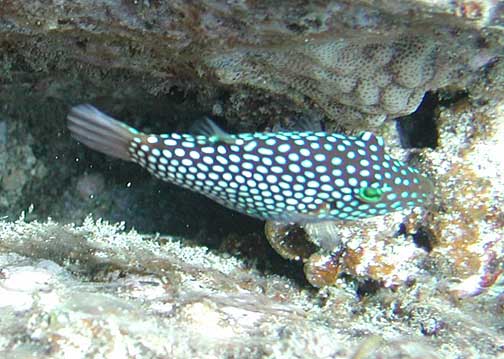
36. Hawaiian Whitespotted Toby
Hawaiian Whitespotted Toby is the common name of Canthigaster jactator. This marine species is associated with Hawaiian reefs and can be identified by white spots on dark upper body.
Do not handle or prepare a wild puffer for food. Toxin risk is species- and tissue-dependent and requires legally trained professionals where consumption is permitted.
37. Caribbean Sharpnose Puffer
Caribbean Sharpnose Puffer (Canthigaster rostrata) is a marine puffer from Caribbean and western Atlantic reefs. It is recognized by small pointed snout and blue markings. A mature marine system is more appropriate than a generic community aquarium.
Puffers need hard foods or other diet planning appropriate to the species, excellent water quality, and careful monitoring of tooth growth.
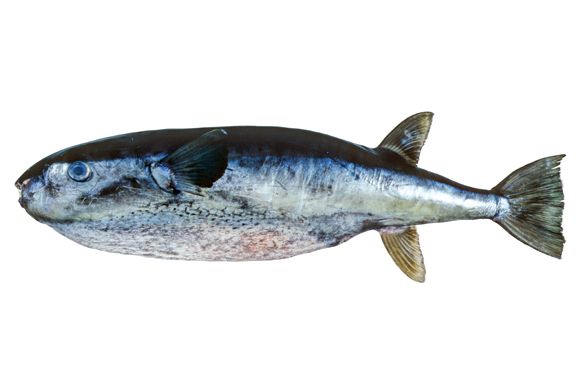
38. Oceanic Puffer
The Oceanic Puffer, scientifically Lagocephalus lagocephalus, occurs in tropical and temperate open oceans and uses marine conditions. Look for streamlined silver body and dark back; adult size and salinity must be confirmed before purchase.
Temperament varies, but many puffers bite fins, hunt invertebrates, or defend territory. Compatibility claims should be treated cautiously.
39. Northern Puffer
Among the different types of puffer fish, Northern Puffer stands out for small tan body with dark markings. It comes from western North Atlantic, where it occupies marine and estuarine habitat.
Never deliberately make a puffer inflate. Inflation is a stress response and air ingestion can be dangerous.
40. Checkered Puffer
Checkered Puffer is the common name of Sphoeroides testudineus. This marine and estuarine species is associated with western Atlantic and Caribbean and can be identified by checkered dark pattern.
Do not handle or prepare a wild puffer for food. Toxin risk is species- and tissue-dependent and requires legally trained professionals where consumption is permitted.
How Are These Types of Puffer Fish Classified?
True puffers belong to the family Tetraodontidae. Their relatives include porcupinefishes in Diodontidae, which have much longer external spines and are not included as true puffers here. Freshwater genera include Carinotetraodon, Tetraodon, Pao, Auriglobus, and Colomesus. Marine and brackish groups include Arothron, Canthigaster, Takifugu, Dichotomyctere, Lagocephalus, and Sphoeroides.
Where Do Puffer Fish Live?
Puffers live in African rivers, Asian streams, Amazonian systems, estuaries, mangroves, seagrass beds, coral reefs, sandy coasts, and open oceans. Some move between freshwater and saltwater as they mature. An aquarium label that says freshwater when a species eventually requires brackish or marine conditions can lead to long-term health problems.
How to Identify Different Types of Puffer Fish
- Body: Rounded or elongated body with small fins and no typical pelvic fins.
- Mouth: Four fused tooth plates form a powerful beak.
- Pattern: Spots, saddles, bands, maze lines, and eye-like targets distinguish species.
- Skin: Some are smooth; others have tiny prickles that become obvious when inflated.
- Water type: Range and salinity are essential identification clues.
- Size: Pea puffers are tiny, while Mbu, starry, and map puffers become enormous.
Aquarium Care Notes
- Research the exact scientific name before purchase.
- Cycle the aquarium fully and maintain very low waste levels.
- Provide species-appropriate snails, crustaceans, mollusks, or other meaty foods.
- Monitor tooth wear and feeding ability.
- Use separate feeding and visual barriers where aggression is likely.
- Move puffers underwater when possible to reduce air ingestion risk.
Safety, Sustainability, and Conservation Notes
Many puffers may contain tetrodotoxin or related toxins in organs, skin, eggs, or other tissues. Toxicity varies, but casual preparation is unsafe and cooking does not reliably make toxic fish safe. Aquarium keepers should wash hands after tank work, protect fingers from powerful bites, quarantine new fish, and never release puffers outdoors. Some species are collected from restricted habitats, making accurate sourcing important.
Fun Facts About Puffer Fish
- Puffers inflate by swallowing water and expanding the stomach.
- Their beak grows continuously.
- Many crack snails and shellfish.
- Pea puffers are among the smallest puffers.
- Mbu puffers become exceptionally large.
- Sharpnose puffers are small reef species.
- Some species change salinity as they grow.
- Puffer eyes can move somewhat independently.
- Several marine puffers have dramatic pattern variation.
- Porcupinefish are relatives but belong to a different family.
Final Thoughts on Types of Puffer Fish
The 40 types of puffer fish in this guide range from tiny freshwater pea puffers to huge marine Arothron species. Their water type, adult size, diet, aggression, dental needs, and toxin risks differ greatly. Confirm the scientific name, build the correct habitat before purchase, never force inflation, and never prepare wild pufferfish as food without legally qualified expertise.
Frequently Asked Questions
1. What is a puffer fish?
A fish in the family Tetraodontidae with an inflatable body and fused beak-like teeth.
2. Are porcupinefish pufferfish?
They are close relatives in a different family and have longer spines.
3. Why do puffers inflate?
Inflation is a defense response to danger or severe stress.
4. Should a pet puffer be made to inflate?
No, deliberately triggering inflation is harmful.
5. Are all pufferfish poisonous?
Toxin presence and concentration vary, but many species can be dangerous to eat.
6. Does cooking destroy puffer toxin?
No, normal cooking does not reliably neutralize tetrodotoxin.
7. Can pufferfish bite people?
Yes, their beaks are powerful.
8. Do puffer teeth keep growing?
Yes, feeding plans often need hard foods that promote wear.
9. What is the smallest pet puffer?
The pea puffer is among the smallest.
10. What is the largest freshwater puffer?
The Mbu puffer becomes extremely large.
11. Are pea puffers freshwater fish?
Yes, they are true freshwater puffers.
12. Are green spotted puffers freshwater fish?
Juveniles may be sold in freshwater, but adults generally need increasing salinity.
13. Are figure-eight puffers brackish?
They are commonly maintained in stable low-end brackish water.
14. Can puffers live in community tanks?
Many cannot be trusted because they may bite fins or hunt tankmates.
15. What do puffers eat?
Depending on species, snails, crustaceans, mollusks, worms, insects, and other meaty foods.
16. Do puffers eat flakes?
Some accept prepared foods, but many need a specialized varied diet.
17. Why are snails fed to puffers?
They provide natural feeding behavior and may help wear the beak.
18. Can pufferfish live with shrimp?
Many view shrimp as prey.
19. Do puffers need caves?
Many benefit from cover, visual barriers, plants, wood, rocks, or sand.
20. How often should puffers be fed?
Frequency depends on species, size, age, and food type.
21. How can overgrown teeth be recognized?
The fish may struggle to bite, close its mouth, or eat normally.
22. Can owners trim puffer teeth?
This is a specialist procedure best handled by an experienced aquatic veterinarian or qualified expert.
23. Do puffers need salt?
Only species that require brackish or marine water; freshwater puffers should not receive salt routinely.
24. How should salinity be measured?
Use a reliable refractometer or appropriate salinity instrument.
25. Why is scientific identification important?
Common names are inconsistent and water requirements differ dramatically.
26. Can marine puffers live in reef tanks?
They may eat corals or invertebrates, so compatibility is risky.
27. Are puffers good beginner fish?
Most are specialist fish because of diet, aggression, teeth, and water requirements.
28. Can a puffer be lifted in a net?
Avoid exposing it to air; use an underwater container when practical.
29. Can unwanted puffers be released?
Never; rehome them responsibly.
30. How long do pufferfish live?
Lifespan varies greatly by species and care.