

Oceans contain far more species than any practical single article can list, so this guide presents 45 representative types of marine fish. The selection spans coral reefs, seagrass beds, estuaries, continental shelves, open oceans, and the deep sea. It includes bony fish as well as sharks and rays, with identification clues, ecological roles, observation tips, aquarium cautions, fishing relevance, and conservation notes.
What Are the Main Types of Marine Fish?
Marine fish can be grouped as reef fish, coastal and estuarine fish, pelagic fish, bottom fish, deep-sea fish, and cartilaginous fish such as sharks and rays. Reef examples include clownfish, angelfish, parrotfish, wrasses, triggerfish, and groupers. Open-ocean species include tuna, mahi-mahi, swordfish, sailfish, and mackerel. Bottom and deep-water examples include halibut, cod, lanternfish, anglerfish, and coelacanths.
Quick Comparison of Marine Fish
| No. | Marine Fish | Scientific Name | Main Habitat |
|---|---|---|---|
| 1 | Ocellaris Clownfish | Amphiprion ocellaris | Indo-Pacific coral reefs and lagoons |
| 2 | Blue Tang | Paracanthurus hepatus | Indo-Pacific coral reefs |
| 3 | Yellow Tang | Zebrasoma flavescens | central Pacific rocky and coral reefs |
| 4 | Queen Angelfish | Holacanthus ciliaris | western Atlantic and Caribbean reefs |
| 5 | Emperor Angelfish | Pomacanthus imperator | Indo-Pacific reefs and lagoons |
| 6 | Copperband Butterflyfish | Chelmon rostratus | Indo-Pacific reefs, estuaries, and bays |
| 7 | Moorish Idol | Zanclus cornutus | tropical Indo-Pacific reefs |
| 8 | Stoplight Parrotfish | Sparisoma viride | Caribbean reefs and seagrass areas |
| 9 | Bluestreak Cleaner Wrasse | Labroides dimidiatus | Indo-Pacific coral reefs |
| 10 | Indo-Pacific Sergeant | Abudefduf vaigiensis | shallow tropical reefs and rocky coasts |
| 11 | Red Lionfish | Pterois volitans | native Indo-Pacific reefs and introduced Atlantic habitats |
| 12 | Titan Triggerfish | Balistoides viridescens | Indo-Pacific reefs and lagoons |
| 13 | Yellow Boxfish | Ostracion cubicum | Indo-Pacific reefs and lagoons |
| 14 | Long-Spine Porcupinefish | Diodon holocanthus | tropical and subtropical reefs worldwide |
| 15 | Longhorn Cowfish | Lactoria cornuta | Indo-Pacific lagoons, reefs, and seagrass |
| 16 | Yellowfin Tuna | Thunnus albacares | tropical and subtropical open oceans |
| 17 | Atlantic Bluefin Tuna | Thunnus thynnus | Atlantic Ocean and Mediterranean Sea |
| 18 | Skipjack Tuna | Katsuwonus pelamis | warm oceans worldwide |
| 19 | Mahi-Mahi | Coryphaena hippurus | warm offshore waters worldwide |
| 20 | Wahoo | Acanthocybium solandri | tropical and subtropical open oceans |
| 21 | Swordfish | Xiphias gladius | temperate and tropical oceans |
| 22 | Indo-Pacific Sailfish | Istiophorus platypterus | warm Indo-Pacific waters |
| 23 | Atlantic Mackerel | Scomber scombrus | North Atlantic and adjacent seas |
| 24 | European Anchovy | Engraulis encrasicolus | eastern Atlantic, Mediterranean, and Black Sea |
| 25 | Pacific Sardine | Sardinops sagax | productive Pacific coastal waters |
| 26 | Atlantic Herring | Clupea harengus | North Atlantic shelf seas |
| 27 | Atlantic Cod | Gadus morhua | cold North Atlantic shelves and banks |
| 28 | Pacific Halibut | Hippoglossus stenolepis | North Pacific shelves and slopes |
| 29 | Red Snapper | Lutjanus campechanus | western Atlantic reefs and hard bottoms |
| 30 | Nassau Grouper | Epinephelus striatus | Caribbean reefs and rocky habitats |
| 31 | Atlantic Goliath Grouper | Epinephelus itajara | western Atlantic reefs, wrecks, and mangroves |
| 32 | Great Barracuda | Sphyraena barracuda | tropical reefs, seagrass, and coastal water |
| 33 | Giant Trevally | Caranx ignobilis | Indo-Pacific reefs, channels, and coasts |
| 34 | Cobia | Rachycentron canadum | warm coastal and offshore waters worldwide |
| 35 | Atlantic Tarpon | Megalops atlanticus | western Atlantic coasts, estuaries, and rivers |
| 36 | Giant Moray | Gymnothorax javanicus | Indo-Pacific coral reefs |
| 37 | Ocean Sunfish | Mola mola | temperate and tropical open oceans |
| 38 | Leafy Seadragon | Phycodurus eques | southern Australian reefs and seagrass |
| 39 | Atlantic Flyingfish | Cheilopogon melanurus | warm western Atlantic surface waters |
| 40 | Lanternfish | Myctophum punctatum | deep Atlantic water |
| 41 | Black Swallower | Chiasmodon niger | deep tropical and subtropical oceans |
| 42 | Humpback Anglerfish | Melanocetus johnsonii | deep oceans worldwide |
| 43 | African Coelacanth | Latimeria chalumnae | deep western Indian Ocean rocky slopes |
| 44 | Whale Shark | Rhincodon typus | warm oceans worldwide |
| 45 | Giant Oceanic Manta Ray | Mobula birostris | tropical and subtropical oceans |
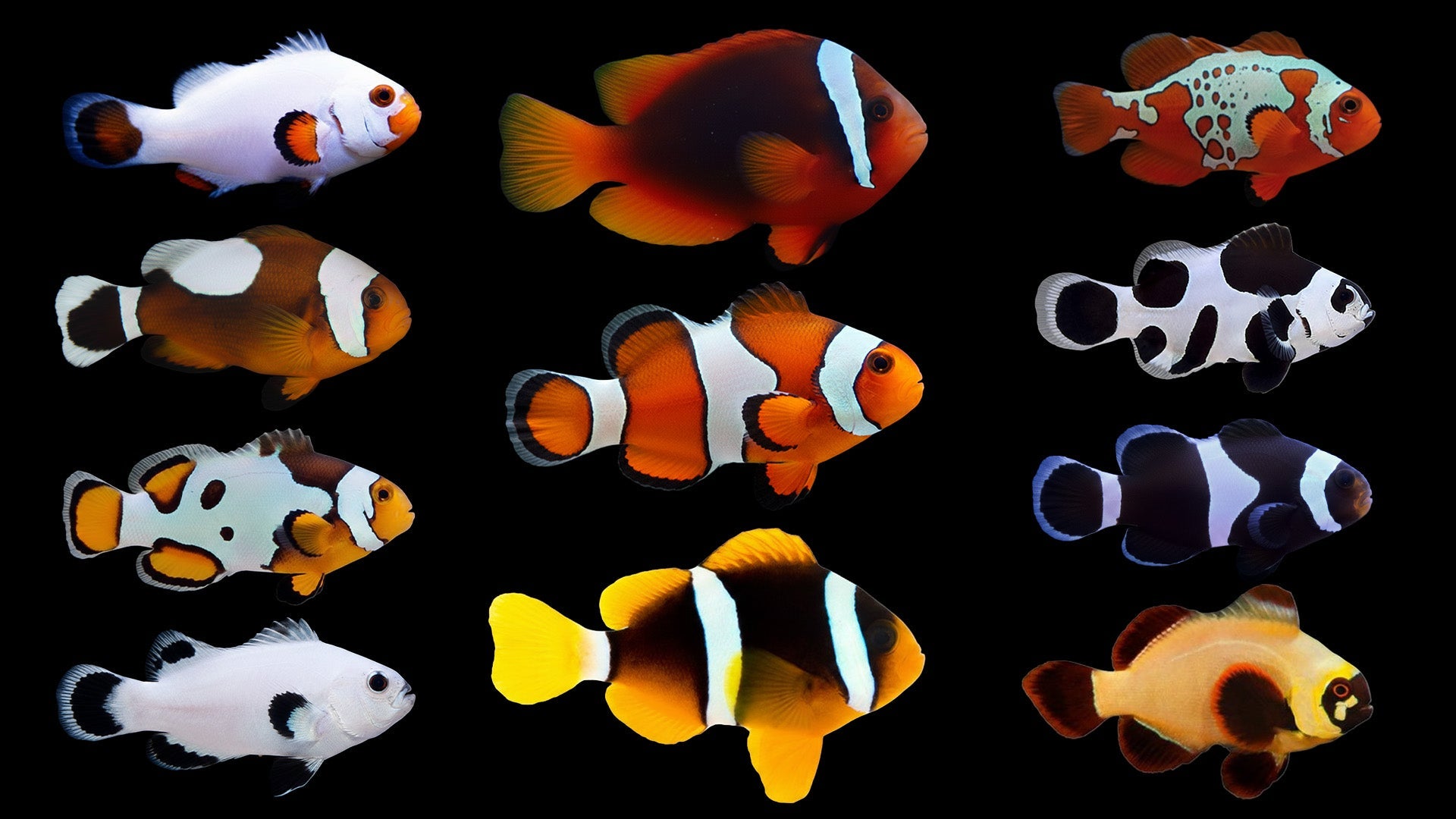
1. Ocellaris Clownfish
Ocellaris Clownfish (Amphiprion ocellaris) lives in Indo-Pacific coral reefs and lagoons. Its easiest identification feature is orange body with three white bars edged in black.
It lives closely with host anemones. Observe it from a respectful distance and avoid touching, feeding, chasing, or removing it from habitat.
2. Blue Tang
The Blue Tang, scientifically Paracanthurus hepatus, is associated with Indo-Pacific coral reefs. Look for bright blue body, black palette-shaped mark, yellow tail when identifying it.
It grazes and picks food around reefs. Its role is connected to a wider food web, so habitat and behavior are as useful as color for identification.
3. Yellow Tang
Among the world’s types of marine fish, Yellow Tang is notable for compressed body with uniform yellow color. It occurs in central Pacific rocky and coral reefs.
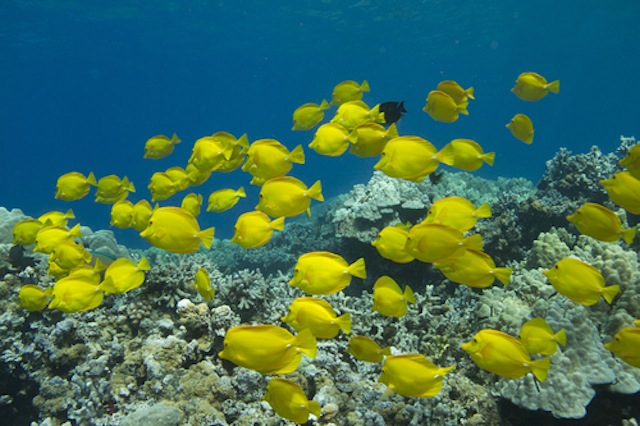
It acts as an active algal grazer. Aquarium suitability, fishing rules, and conservation status should be checked for the exact species and region.
4. Queen Angelfish
Queen Angelfish is the common name of Holacanthus ciliaris. This fish is found in western Atlantic and Caribbean reefs and is recognized by blue-yellow body with a crown-like head mark.

It feeds heavily on sponges. Photograph it without blocking movement, damaging coral, or stressing the animal.
5. Emperor Angelfish
Emperor Angelfish (Pomacanthus imperator) lives in Indo-Pacific reefs and lagoons. Its easiest identification feature is adult yellow-blue stripes; juvenile blue-white rings.
It changes pattern dramatically with age. Observe it from a respectful distance and avoid touching, feeding, chasing, or removing it from habitat.
6. Copperband Butterflyfish
The Copperband Butterflyfish, scientifically Chelmon rostratus, is associated with Indo-Pacific reefs, estuaries, and bays. Look for long snout and copper-orange vertical bands when identifying it.
It probes crevices for small invertebrates. Its role is connected to a wider food web, so habitat and behavior are as useful as color for identification.
7. Moorish Idol
Among the world’s types of marine fish, Moorish Idol is notable for black-white-yellow bands and long dorsal filament. It occurs in tropical Indo-Pacific reefs.
It has specialized feeding needs. Aquarium suitability, fishing rules, and conservation status should be checked for the exact species and region.
8. Stoplight Parrotfish
Stoplight Parrotfish is the common name of Sparisoma viride. This fish is found in Caribbean reefs and seagrass areas and is recognized by large scales and age-related color phases.
It scrapes algae and contributes to sand production. Photograph it without blocking movement, damaging coral, or stressing the animal.
9. Bluestreak Cleaner Wrasse
Bluestreak Cleaner Wrasse (Labroides dimidiatus) lives in Indo-Pacific coral reefs. Its easiest identification feature is slim body with a blue-black stripe.
It runs cleaning stations for larger fish. Observe it from a respectful distance and avoid touching, feeding, chasing, or removing it from habitat.
10. Indo-Pacific Sergeant
The Indo-Pacific Sergeant, scientifically Abudefduf vaigiensis, is associated with shallow tropical reefs and rocky coasts. Look for five dark vertical bars when identifying it.
It forms active plankton-feeding groups. Its role is connected to a wider food web, so habitat and behavior are as useful as color for identification.

11. Red Lionfish
Among the world’s types of marine fish, Red Lionfish is notable for red-brown bands and long venomous spines. It occurs in native Indo-Pacific reefs and introduced Atlantic habitats.
It is invasive in parts of the Atlantic. Aquarium suitability, fishing rules, and conservation status should be checked for the exact species and region.
12. Titan Triggerfish
Titan Triggerfish is the common name of Balistoides viridescens. This fish is found in Indo-Pacific reefs and lagoons and is recognized by robust body with bold yellow-black face.
It can defend nesting areas aggressively. Photograph it without blocking movement, damaging coral, or stressing the animal.

13. Yellow Boxfish
Yellow Boxfish (Ostracion cubicum) lives in Indo-Pacific reefs and lagoons. Its easiest identification feature is box-shaped yellow body with black spots.
It uses rigid body armor. Observe it from a respectful distance and avoid touching, feeding, chasing, or removing it from habitat.
14. Long-Spine Porcupinefish
The Long-Spine Porcupinefish, scientifically Diodon holocanthus, is associated with tropical and subtropical reefs worldwide. Look for long movable spines and large eyes when identifying it.
It inflates as a defense. Its role is connected to a wider food web, so habitat and behavior are as useful as color for identification.
15. Longhorn Cowfish
Among the world’s types of marine fish, Longhorn Cowfish is notable for boxy body with horn-like projections. It occurs in Indo-Pacific lagoons, reefs, and seagrass.
It searches the bottom for small prey. Aquarium suitability, fishing rules, and conservation status should be checked for the exact species and region.
16. Yellowfin Tuna
Yellowfin Tuna is the common name of Thunnus albacares. This fish is found in tropical and subtropical open oceans and is recognized by yellow finlets and long yellow fins.
It is a fast pelagic predator. Photograph it without blocking movement, damaging coral, or stressing the animal.
17. Atlantic Bluefin Tuna
Atlantic Bluefin Tuna (Thunnus thynnus) lives in Atlantic Ocean and Mediterranean Sea. Its easiest identification feature is massive streamlined body and short pectoral fins.
It makes long migrations. Observe it from a respectful distance and avoid touching, feeding, chasing, or removing it from habitat.
18. Skipjack Tuna
The Skipjack Tuna, scientifically Katsuwonus pelamis, is associated with warm oceans worldwide. Look for dark horizontal stripes on the lower sides when identifying it.
It forms surface schools. Its role is connected to a wider food web, so habitat and behavior are as useful as color for identification.
19. Mahi-Mahi
Among the world’s types of marine fish, Mahi-Mahi is notable for high forehead, long dorsal fin, vivid colors. It occurs in warm offshore waters worldwide.
It often follows floating objects. Aquarium suitability, fishing rules, and conservation status should be checked for the exact species and region.
20. Wahoo
Wahoo is the common name of Acanthocybium solandri. This fish is found in tropical and subtropical open oceans and is recognized by long narrow body with blue vertical bars.
It is an extremely fast predator. Photograph it without blocking movement, damaging coral, or stressing the animal.
21. Swordfish
Swordfish (Xiphias gladius) lives in temperate and tropical oceans. Its easiest identification feature is flattened sword-like bill and crescent tail.
It moves vertically between surface and deep water. Observe it from a respectful distance and avoid touching, feeding, chasing, or removing it from habitat.
22. Indo-Pacific Sailfish
The Indo-Pacific Sailfish, scientifically Istiophorus platypterus, is associated with warm Indo-Pacific waters. Look for huge sail-like dorsal fin and long bill when identifying it.
It attacks schooling prey with speed. Its role is connected to a wider food web, so habitat and behavior are as useful as color for identification.
23. Atlantic Mackerel
Among the world’s types of marine fish, Atlantic Mackerel is notable for wavy dark bars over a silver body. It occurs in North Atlantic and adjacent seas.
It forms dense pelagic schools. Aquarium suitability, fishing rules, and conservation status should be checked for the exact species and region.
24. European Anchovy
European Anchovy is the common name of Engraulis encrasicolus. This fish is found in eastern Atlantic, Mediterranean, and Black Sea and is recognized by small body with a large mouth.
It is a key forage fish. Photograph it without blocking movement, damaging coral, or stressing the animal.
25. Pacific Sardine
Pacific Sardine (Sardinops sagax) lives in productive Pacific coastal waters. Its easiest identification feature is silver body with dark side spots.
It feeds many ocean predators. Observe it from a respectful distance and avoid touching, feeding, chasing, or removing it from habitat.
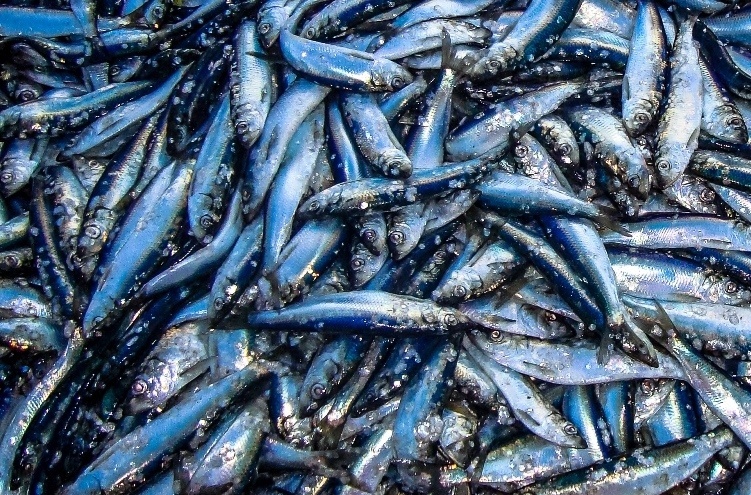
26. Atlantic Herring
The Atlantic Herring, scientifically Clupea harengus, is associated with North Atlantic shelf seas. Look for silver body with blue-green back when identifying it.
It spawns in large groups. Its role is connected to a wider food web, so habitat and behavior are as useful as color for identification.
27. Atlantic Cod
Among the world’s types of marine fish, Atlantic Cod is notable for three dorsal fins, pale lateral line, chin barbel. It occurs in cold North Atlantic shelves and banks.
It is a bottom-oriented predator. Aquarium suitability, fishing rules, and conservation status should be checked for the exact species and region.
28. Pacific Halibut
Pacific Halibut is the common name of Hippoglossus stenolepis. This fish is found in North Pacific shelves and slopes and is recognized by huge right-eyed flat body.
It rests on the seafloor and rises to feed. Photograph it without blocking movement, damaging coral, or stressing the animal.
29. Red Snapper
Red Snapper (Lutjanus campechanus) lives in western Atlantic reefs and hard bottoms. Its easiest identification feature is rosy-red body and pointed profile.
It is an important managed reef fish. Observe it from a respectful distance and avoid touching, feeding, chasing, or removing it from habitat.
30. Nassau Grouper
The Nassau Grouper, scientifically Epinephelus striatus, is associated with Caribbean reefs and rocky habitats. Look for dark bars and a black tail saddle when identifying it.
It forms vulnerable spawning aggregations. Its role is connected to a wider food web, so habitat and behavior are as useful as color for identification.

31. Atlantic Goliath Grouper
Among the world’s types of marine fish, Atlantic Goliath Grouper is notable for very large mottled body and rounded tail. It occurs in western Atlantic reefs, wrecks, and mangroves.
It uses mangroves as juvenile habitat. Aquarium suitability, fishing rules, and conservation status should be checked for the exact species and region.
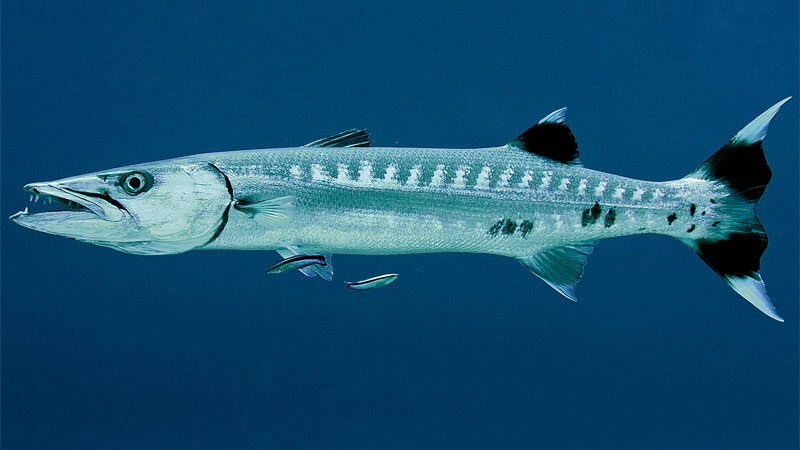
32. Great Barracuda
Great Barracuda is the common name of Sphyraena barracuda. This fish is found in tropical reefs, seagrass, and coastal water and is recognized by long silver body and large toothed jaw.
It is an ambush predator. Photograph it without blocking movement, damaging coral, or stressing the animal.
33. Giant Trevally
Giant Trevally (Caranx ignobilis) lives in Indo-Pacific reefs, channels, and coasts. Its easiest identification feature is deep powerful body that darkens with age.
It is a top coastal predator. Observe it from a respectful distance and avoid touching, feeding, chasing, or removing it from habitat.
34. Cobia
The Cobia, scientifically Rachycentron canadum, is associated with warm coastal and offshore waters worldwide. Look for long brown body with pale side stripes when identifying it.
It often follows rays, sharks, and floating structure. Its role is connected to a wider food web, so habitat and behavior are as useful as color for identification.

35. Atlantic Tarpon
Among the world’s types of marine fish, Atlantic Tarpon is notable for large silver scales and upturned mouth. It occurs in western Atlantic coasts, estuaries, and rivers.
It can gulp air in low-oxygen water. Aquarium suitability, fishing rules, and conservation status should be checked for the exact species and region.
36. Giant Moray
Giant Moray is the common name of Gymnothorax javanicus. This fish is found in Indo-Pacific coral reefs and is recognized by thick eel-like body with dark mottling.
It uses a second jaw set to move prey. Photograph it without blocking movement, damaging coral, or stressing the animal.
37. Ocean Sunfish
Ocean Sunfish (Mola mola) lives in temperate and tropical open oceans. Its easiest identification feature is huge disk-like body with truncated rear.
It feeds on gelatinous animals and other prey. Observe it from a respectful distance and avoid touching, feeding, chasing, or removing it from habitat.
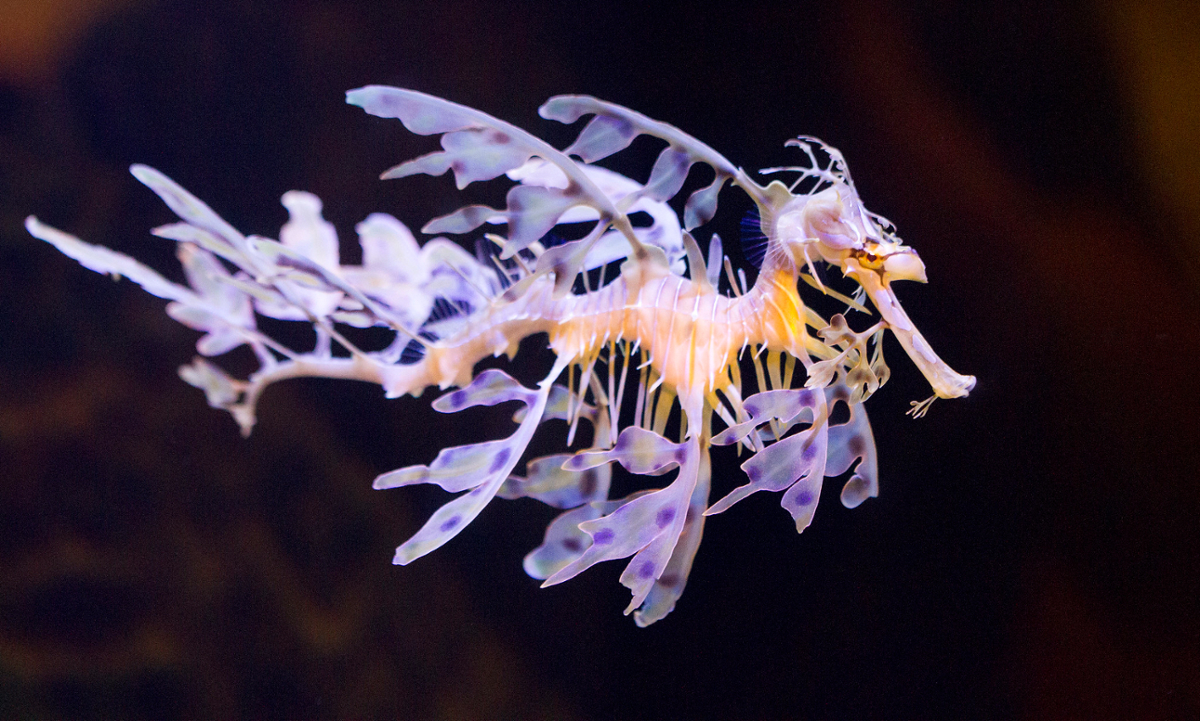
38. Leafy Seadragon
The Leafy Seadragon, scientifically Phycodurus eques, is associated with southern Australian reefs and seagrass. Look for leaf-like camouflage appendages when identifying it.
It has males that carry developing eggs. Its role is connected to a wider food web, so habitat and behavior are as useful as color for identification.
39. Atlantic Flyingfish
Among the world’s types of marine fish, Atlantic Flyingfish is notable for enlarged pectoral fins. It occurs in warm western Atlantic surface waters.
It glides above water to escape predators. Aquarium suitability, fishing rules, and conservation status should be checked for the exact species and region.
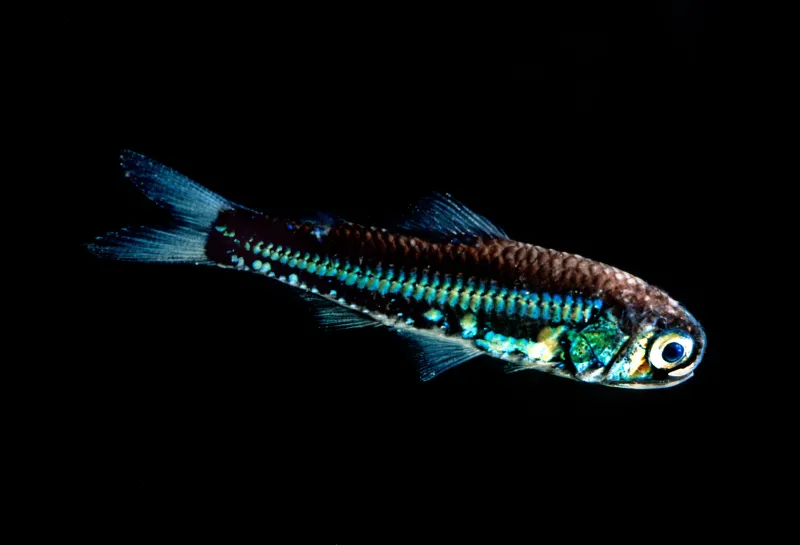
40. Lanternfish
Lanternfish is the common name of Myctophum punctatum. This fish is found in deep Atlantic water and is recognized by small body with rows of light organs.
It moves upward at night and links food webs. Photograph it without blocking movement, damaging coral, or stressing the animal.
41. Black Swallower
Black Swallower (Chiasmodon niger) lives in deep tropical and subtropical oceans. Its easiest identification feature is dark body and expandable stomach.
It can swallow prey larger than itself. Observe it from a respectful distance and avoid touching, feeding, chasing, or removing it from habitat.
42. Humpback Anglerfish
The Humpback Anglerfish, scientifically Melanocetus johnsonii, is associated with deep oceans worldwide. Look for rounded dark body and glowing lure when identifying it.
It uses bioluminescence to attract prey. Its role is connected to a wider food web, so habitat and behavior are as useful as color for identification.

43. African Coelacanth
Among the world’s types of marine fish, African Coelacanth is notable for lobed fins, thick scales, three-lobed tail. It occurs in deep western Indian Ocean rocky slopes.
It represents an ancient lobe-finned lineage. Aquarium suitability, fishing rules, and conservation status should be checked for the exact species and region.
44. Whale Shark
Whale Shark is the common name of Rhincodon typus. This fish is found in warm oceans worldwide and is recognized by huge spotted and striped body.
It is the largest living fish and a filter feeder. Photograph it without blocking movement, damaging coral, or stressing the animal.

45. Giant Oceanic Manta Ray
Giant Oceanic Manta Ray (Mobula birostris) lives in tropical and subtropical oceans. Its easiest identification feature is broad wing-like fins and cephalic lobes.
It filter-feeds on plankton. Observe it from a respectful distance and avoid touching, feeding, chasing, or removing it from habitat.
How Are These Types of Marine Fish Classified?
Most marine fish are bony fishes, but sharks and rays are cartilaginous fishes with skeletons made mainly of cartilage. Bony fish include ray-finned groups and the much smaller lobe-finned lineage represented here by the coelacanth. Everyday ecological labels such as reef fish, pelagic fish, bottom fish, and deep-sea fish describe habitat rather than one evolutionary family.
Where Do Marine Fish Live?
Marine fish occupy nearly every ocean environment. Coral reefs provide food, shelter, cleaning stations, and nurseries. Estuaries and mangroves protect juveniles of many coastal species. Continental shelves support cod, halibut, snapper, and grouper communities. Pelagic fish travel through open water, while deep-sea species use adaptations for darkness, pressure, cold, and scarce food.
How to Identify Different Types of Marine Fish
- Body shape: Tuna are torpedo-shaped, flatfish compressed, eels elongated, and boxfish rigid.
- Color: Reef fish often show bars, stripes, spots, and contrasting fins.
- Fin structure: Bills, sails, finlets, venomous spines, and wing-like fins are useful clues.
- Habitat: Location and depth narrow identification choices.
- Behavior: Cleaning, grazing, schooling, hovering, and gliding help confirm identity.
- Life stage: Juveniles may look completely different from adults.
Outdoor and Aquarium Observation Tips
- Use a regional field guide.
- Record habitat, depth, body shape, fin position, markings, and behavior.
- Do not touch coral, anemones, venomous fish, sharks, rays, or pufferfish.
- Never collect wild fish without permits and husbandry knowledge.
- Research adult size before buying aquarium fish.
- Choose captive-bred marine fish where available.
Safety, Sustainability, and Conservation Notes
Marine fish face pressure from overfishing, bycatch, habitat loss, warming water, pollution, and illegal wildlife trade. Rules differ by species and location, so anglers and collectors must check current regulations. Divers should give nesting triggerfish, venomous lionfish, large predators, and resting rays plenty of space. Seafood buyers should use fishery-specific guidance, and aquarists should avoid protected or unsuitable wild species.
Fun Facts About Marine Fish
- Clownfish live among anemone tentacles.
- Parrotfish scrape algae with beak-like teeth.
- Cleaner wrasses operate cleaning stations.
- Flyingfish glide rather than truly fly.
- Lanternfish use light-producing photophores.
- Male seadragons carry developing eggs.
- Ocean sunfish lack a typical tail.
- Whale sharks are giant filter feeders.
- Coelacanths have fleshy lobed fins.
- Juvenile emperor angelfish look unlike adults.
Final Thoughts on Types of Marine Fish
These 45 types of marine fish show how ocean life changes from bright shallow reefs to dark deep water. Shape, color, fins, habitat, and behavior are the most practical identification clues. Whether you dive, fish, keep aquariums, photograph wildlife, or buy seafood, accurate species identification supports safer decisions and more responsible treatment of ocean ecosystems.
Frequently Asked Questions
1. What is a marine fish?
A fish adapted primarily to saltwater habitats such as oceans, seas, reefs, estuaries, and lagoons.
2. How many marine fish species exist?
Many thousands; the count changes with discoveries and taxonomy.
3. Are all saltwater fish marine fish?
Generally yes, though some move between fresh and salt water.
4. What are reef fish?
Fish living on or near coral and rocky reefs.
5. What are pelagic fish?
Fish living in open water rather than close to the bottom.
6. What are demersal fish?
Fish living on or near the seafloor.
7. What are deep-sea fish?
Fish adapted to dark, cold, high-pressure water below the sunlit zone.
8. Are sharks marine fish?
Most sharks are marine cartilaginous fish.
9. Are rays fish?
Yes; they are cartilaginous fish related to sharks.
10. Are seahorses fish?
Yes; seahorses are specialized bony fish.
11. Is a coelacanth a marine fish?
Yes; living coelacanths inhabit deep marine slopes.
12. Which marine fish is largest?
The whale shark.
13. Which marine fish is fastest?
Exact rankings are difficult, but sailfish, wahoo, and tuna are exceptionally fast.
14. Why are reef fish colorful?
Color supports camouflage, recognition, warning, courtship, and social signaling.
15. Do marine fish drink seawater?
Many marine bony fish do and remove excess salts through gills and kidneys.
16. Can marine fish live in freshwater?
Most cannot, though euryhaline species tolerate changing salinity.
17. Can freshwater fish live in seawater?
Most cannot because their osmoregulation is adapted to freshwater.
18. What do marine fish eat?
Plankton, algae, sponges, crustaceans, mollusks, jellyfish, and other fish.
19. Why do fish form schools?
Schools can improve feeding, migration, mating, and protection.
20. What is a cleaning station?
A place where cleaner animals remove parasites and dead tissue from visitors.
21. Are lionfish dangerous?
Their venomous spines can cause painful injury.
22. Are triggerfish aggressive?
Some aggressively defend nests.
23. Should a pufferfish be made to inflate?
No; inflation is a stressful defense response.
24. Are all marine fish suitable for aquariums?
No; many grow too large or need specialized diets and habitats.
25. What is an easier marine aquarium fish?
Captive-bred clownfish are often more manageable than many wild reef species.
26. Should wild-caught reef fish be bought?
Investigate collection method, legality, adult size, and husbandry; prefer captive-bred options.
27. Can aquarium fish be released into the sea?
No; they may spread disease or become invasive.
28. How can a fish be identified from a photo?
Use location, habitat, body shape, fins, markings, mouth, and size.
29. Why do juveniles look different?
Different patterns can provide camouflage or signal different ecological roles.
30. How can visitors protect marine fish?
Do not touch wildlife, reduce litter, follow fishing rules, and support responsible seafood.
Read more:
9 Types of Marlin Fish: Identification Guide