

Searches for types of Ragdoll cats often mix together pattern names, point colors, and color-pattern combinations. Ragdoll is one breed, not a collection of separate breeds, and the clearest way to understand its variety is to separate those three layers.
This guide covers the three best-known patterns—colorpoint, mitted, and bicolor—the six classic point colors used by major standards, plus lynx, tortie, and newer registry-dependent colors such as cinnamon and fawn.
What Are the Main Types of Ragdoll Cats?
The main Ragdoll pattern families are colorpoint, mitted, and bicolor. Traditional point colors include seal, blue, chocolate, lilac, red, and cream, while lynx and tortie modify those colors. Some registries recognize additional colors, so the exact count depends on the standard being used.
A “seal mitted” Ragdoll, for example, combines a base color with a pattern. It is better to think in combinations than to treat every combination as a separate breed.
Ragdoll Patterns and Colors at a Glance
| Group | Examples | Main Visual Clue | Important Note |
|---|---|---|---|
| Pattern | Colorpoint | Dark points, no white spotting | Pattern can occur in many colors |
| Pattern | Mitted | White mitts, boots, chin, belly stripe | Still a pointed cat |
| Pattern | Bicolor | Inverted white V and extensive white | Color remains on ears, tail, mask areas |
| Color | Seal / Blue | Dark brown or cool gray points | Most familiar shades |
| Color | Chocolate / Lilac | Warmer brown or pale dilute | Often subtler |
| Color | Red / Cream | Orange-red or pale cream points | Can combine with lynx |
1. Colorpoint Ragdoll
Colorpoint is one of the defining Ragdoll pattern families. The ears, mask, legs, and tail are distinctly darker than the body, while white spotting is absent in the traditional colorpoint pattern. The contrast develops gradually because pointed coloration is temperature-sensitive.
Colorpoint Ragdolls still come in multiple point colors, so “colorpoint” is a pattern rather than a single color. A seal colorpoint and blue colorpoint share the same pattern layout but differ in pigment.
For pet owners, pattern does not change the core care needs: Ragdolls need regular grooming, weight management, indoor safety, enrichment, and appropriate veterinary care.
2. Mitted Ragdoll
Mitted Ragdolls have pointed coloration plus characteristic white markings. The front paws look as if they are wearing white mittens, while the hind legs have taller white “boots.” A white chin and belly stripe are also typical features in breed standards.
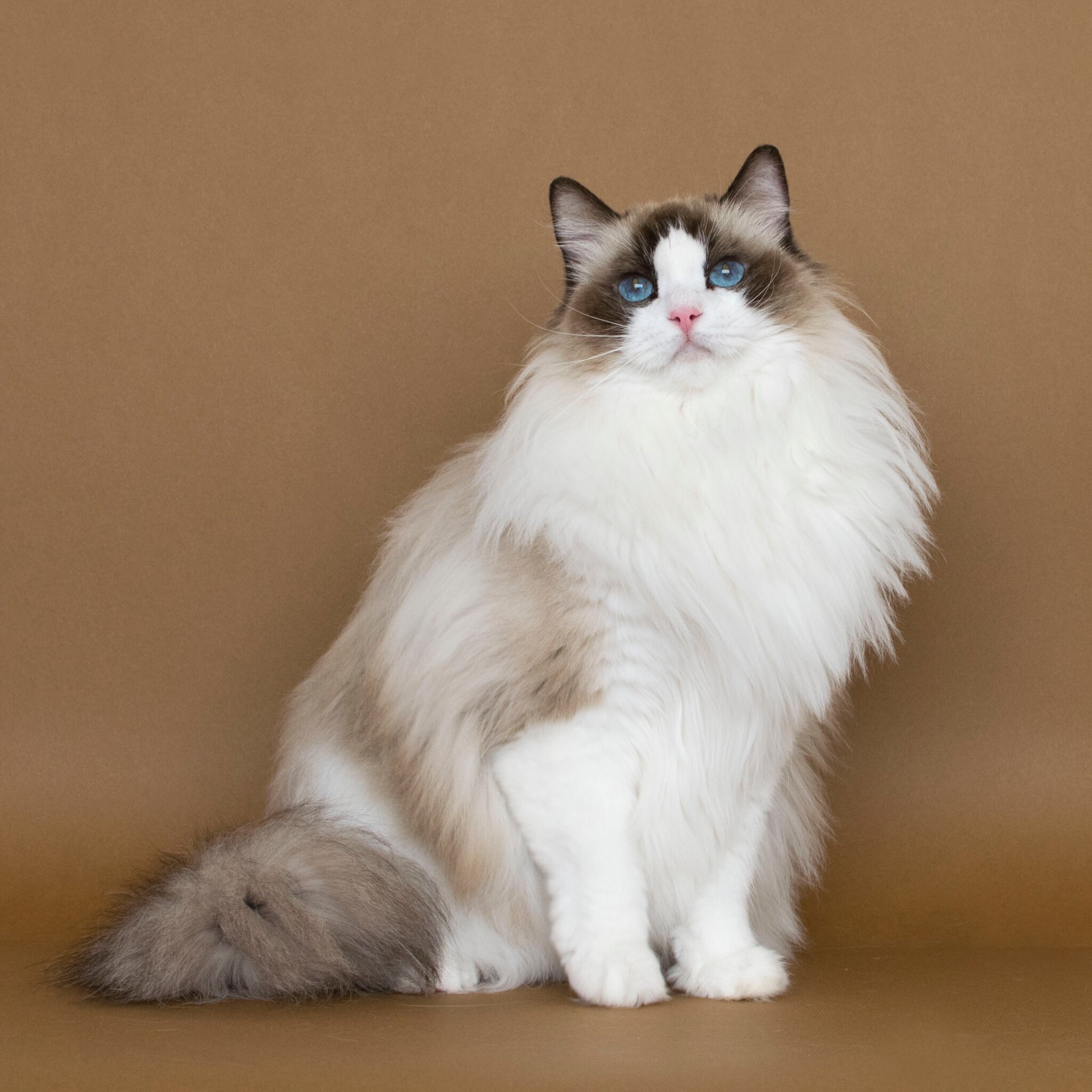
The amount and symmetry of white may matter in the show ring, but pet quality is not the same as pet worth. A companion with imperfect markings is still a Ragdoll if its pedigree and breed background are correct.
Mitted cats can appear in seal, blue, chocolate, lilac, red, cream, lynx, tortie, and other accepted combinations depending on registry rules.
3. Bicolor Ragdoll
Bicolor Ragdolls have more white than colorpoints or mitted cats. The best-known facial feature is an inverted white V that breaks up the darker mask. The chest, underside, and legs are largely white.
Bicolor is a pattern family, not a color. You may see seal bicolor, blue bicolor, chocolate bicolor, and other combinations. Some registries also describe additional white-overlay variations such as van.
The dramatic contrast makes bicolors easy to recognize, but owners should not use pattern alone to judge pedigree or health. Registration records and breeder documentation are more reliable.
4. Seal Ragdoll
Seal is the classic dark brown point color many people picture when they imagine a Ragdoll. On pointed areas, the pigment is deep brown, while the body is much lighter. The contrast can become richer as the cat matures.
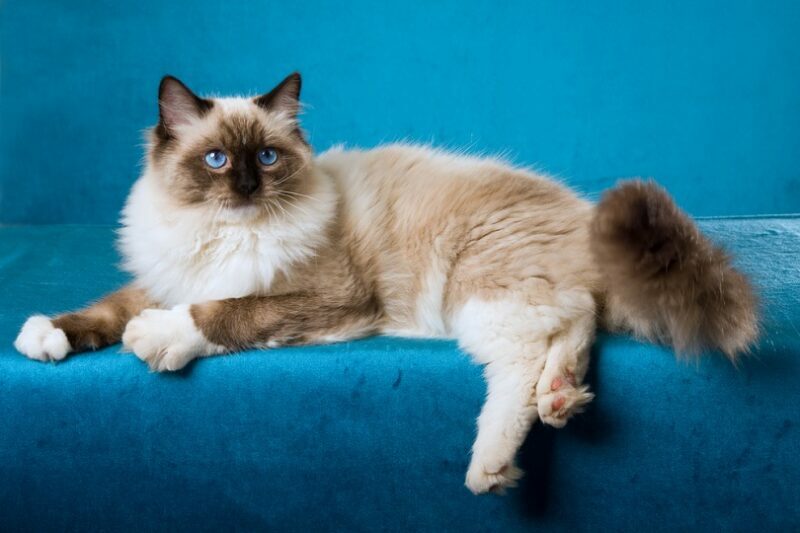
Seal can be combined with colorpoint, mitted, or bicolor patterning, and may also appear with lynx or tortie overlays. That means “seal Ragdoll” is a color description rather than a complete type label.
Adult Ragdolls can darken with age, so kitten photos may look much paler than the eventual mature coat.
5. Blue Ragdoll
Blue Ragdolls have diluted dark pigment, creating cool bluish-gray points instead of deep seal brown. The body remains lighter and the eyes are characteristically blue in the traditional breed standard.
Blue is popular because it gives a soft, cool-toned appearance. As with seal, it can occur in colorpoint, mitted, bicolor, lynx, and tortie-related combinations.
Do not confuse “blue” with a truly blue pigment; in cat color terminology it describes diluted black.
6. Chocolate Ragdoll
Chocolate Ragdolls have warm milk-chocolate point color rather than the nearly black-brown depth of seal. The body is pale, and the overall contrast can be gentler.
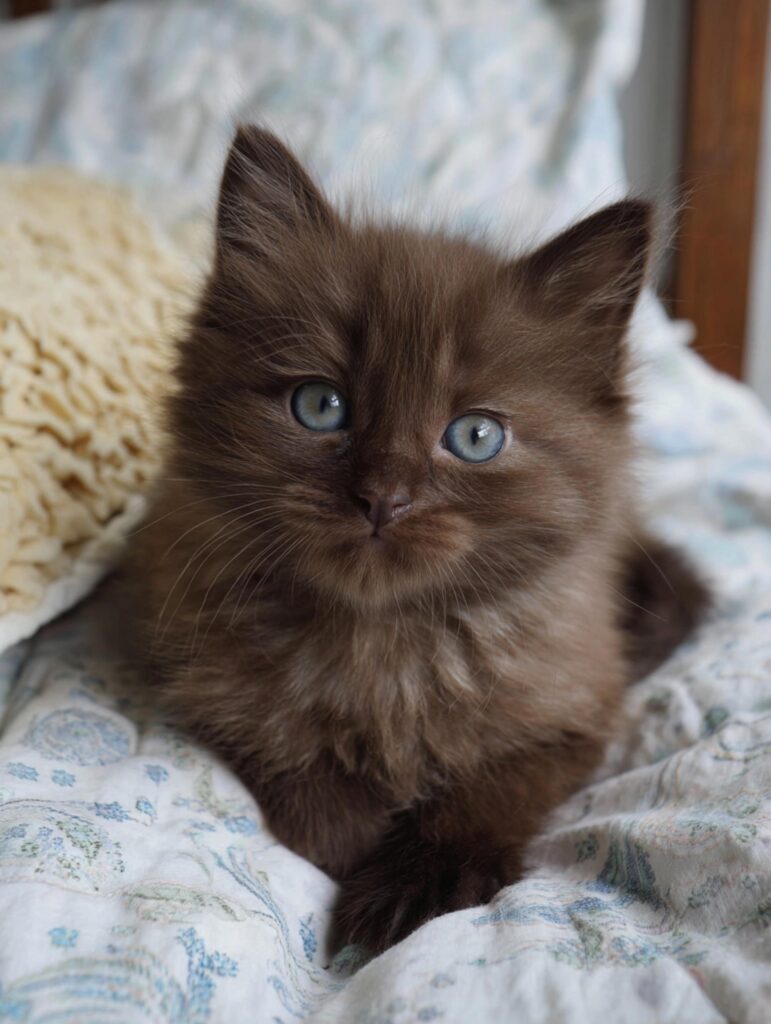
Chocolate may be less common than seal or blue in some populations, and accurate identification can be difficult in young kittens. Color continues developing as the cat matures.
A pedigree and breeder color records are more dependable than guessing from a single photograph, especially under warm or cool indoor lighting.
7. Lilac Ragdoll
Lilac is the diluted form of chocolate and produces pale, cool-toned points with a pinkish or frosted cast. It is one of the lightest traditional Ragdoll colors.
Because lilac is subtle, it can be confused with blue or very pale chocolate when kittens are young. Nose leather and paw-pad pigment can help experienced breeders distinguish colors.
Lilac Ragdolls require the same grooming, nutrition, and health care as darker colors; rarity does not make the coat medically different.
8. Red or Flame Ragdoll
Red, often called flame in pet circles, produces warm orange-to-red points. The body remains much lighter, and the color may combine with lynx striping or white overlay patterns.
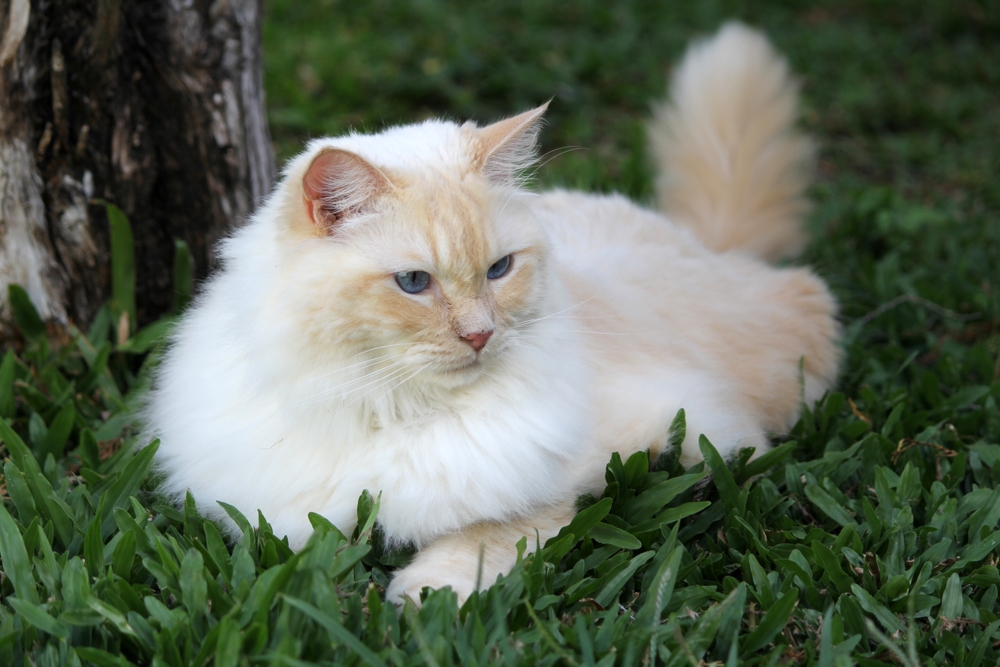
Red point color is sex-linked genetically, which influences how it appears in breeding populations. Owners, however, do not need to treat red Ragdolls differently in daily care.
Color names can vary between casual pet terminology and registry wording, so “red” is the safer standard term when checking formal breed information.
9. Cream Ragdoll
Cream is the diluted form of red and creates soft pale peach or cream-colored points. It can be subtle in young cats and become more obvious as the coat matures.
Cream may occur with colorpoint, mitted, or bicolor patterns and may also show lynx markings. Because the pigment is light, pattern identification may require good natural light.
As with every Ragdoll color, temperament is individual and should not be predicted from coat shade.
10. Lynx Ragdoll
Lynx describes tabby striping on the points. A lynx Ragdoll can be seal lynx, blue lynx, chocolate lynx, lilac lynx, red lynx, cream lynx, and more depending on the registry.
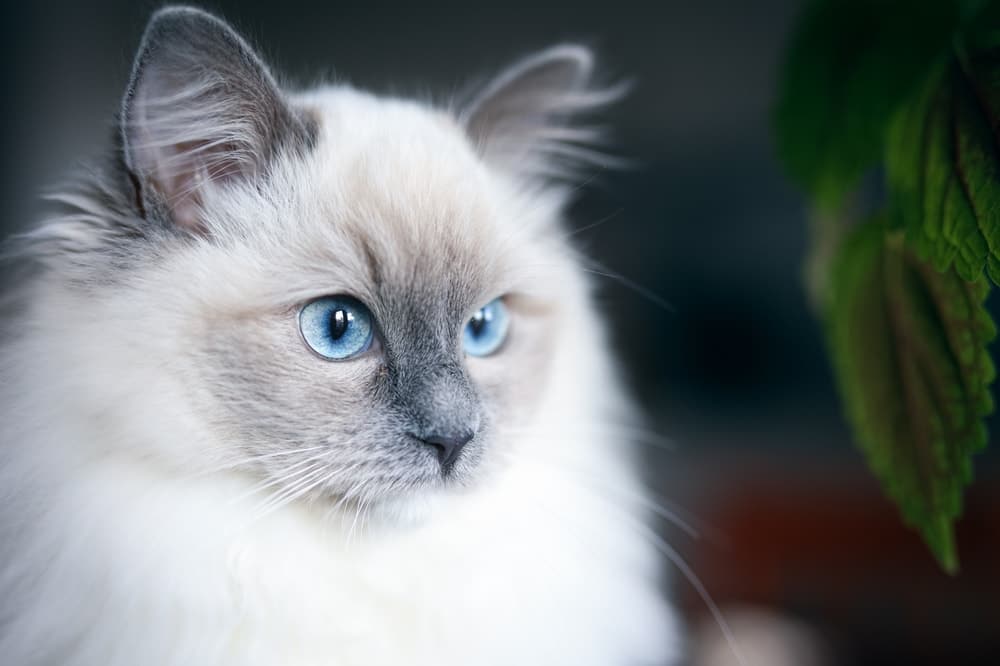
The stripes are most noticeable on the face, legs, and tail, while the body remains lighter because the cat is still genetically pointed. Lynx is therefore an overlay pattern rather than a separate base color.
Lynx markings can make facial expression look more dramatic, but they do not change the breed’s care requirements.
11. Tortie and Tortie-Lynx Ragdoll
Tortie Ragdolls combine red-based pigment with another point color, creating mottled or patched coloration. When tabby striping is also present, the result is often called tortie-lynx.
Because tortoiseshell color genetics are linked to the X chromosome, tortie cats are overwhelmingly female. Male torties are unusual and can have atypical sex-chromosome genetics.
Tortie and tortie-lynx are color-pattern combinations, not separate Ragdoll breeds. They can also be combined with mitted or bicolor white patterns.
12. Cinnamon and Fawn Ragdoll in Registries That Recognize Them
Some modern registry standards recognize cinnamon and fawn in Ragdolls, while others use a more traditional six-color list of seal, blue, chocolate, lilac, red, and cream. This is a good example of why the exact number of “Ragdoll types” changes depending on the registry being used.

Cinnamon is a warm lighter brown pigment and fawn is its dilute. These colors remain relatively uncommon compared with seal and blue.
When buying or showing a Ragdoll, check the rules of the specific registry rather than assuming every organization uses the same color list.
How Are Types of Ragdoll Cats Classified?
Ragdolls are classified primarily by point color and white-overlay pattern. Lynx striping and tortie coloring can modify those base colors. Registry rules differ, so a color accepted by one organization may be treated differently by another. This is why fixed internet lists of “10” or “24” Ragdoll types can be useful visually but are not universal scientific categories.
Where Did Ragdoll Cats Originate?
The Ragdoll breed was developed in California in the 1960s by breeder Ann Baker. The breed became known for its large size, semi-long coat, blue eyes, pointed coloration, and social companion temperament.
Modern standards emphasize balance rather than extremes. Ragdolls mature slowly, and both body size and coat color can continue developing well beyond kittenhood.
How to Identify Different Types of Ragdoll Cats
- First identify the white pattern: colorpoint, mitted, or bicolor.
- Then identify the point color: seal, blue, chocolate, lilac, red, cream, or another registry-recognized shade.
- Look for lynx striping on the mask, legs, and tail.
- Look for tortie mottling in female cats.
- Expect kittens to be much paler than adults.
- Use pedigree and registration records to confirm breed identity; appearance alone is not proof.
Practical Care Tips for Ragdoll Owners
- Brush at least weekly and increase grooming during seasonal shedding.
- Keep the cat at a healthy body condition because a large frame can hide gradual weight gain.
- Provide sturdy climbing furniture, scratching surfaces, interactive play, and social contact.
- Keep long fur clean around the hindquarters if needed.
- Use routine veterinary care and discuss breed-relevant screening with your veterinarian.
Health and Responsible Breeding Notes
Responsible Ragdoll breeding includes attention to inherited heart disease risk, general genetic health, structure, and temperament. Buyers should ask for documented health screening rather than focusing only on rare color.
Color and pattern do not make a cat healthier, friendlier, or more “pure.” A well-bred common-color Ragdoll is a better choice than a poorly bred cat marketed around rarity.
Fun Facts About Ragdoll Cats
- Ragdoll kittens begin life very pale and develop point color later.
- Seal is a dark brown pigment, while blue is its dilute form.
- Chocolate dilutes to lilac.
- Red dilutes to cream.
- Lynx means tabby striping on the points.
- Tortie Ragdolls are overwhelmingly female.
- Bicolor describes white distribution, not the base point color.
- Ragdolls are slow-maturing cats.
- Traditional Ragdoll standards call for blue eyes.
- The number of recognized colors can differ by cat registry.
Final Thoughts on Types of Ragdoll Cats
The most accurate way to understand types of Ragdoll cats is to separate pattern from point color. Colorpoint, mitted, and bicolor describe white distribution, while seal, blue, chocolate, lilac, red, and cream describe the main traditional colors. Lynx and tortie add further variation.
If pedigree matters, use the standard of the registry your breeder follows and confirm registration records rather than relying only on appearance.
Frequently Asked Questions
1. How many types of Ragdoll cats are there?
There is no single number because “type” can mean pattern, color, or a color-pattern combination. Major registries agree on core pointed patterns but differ in some accepted colors and white overlays.
2. What are the three main Ragdoll patterns?
Colorpoint, mitted, and bicolor are the three best-known pattern families. Some standards also describe van as a white-overlay pattern.
3. What are the classic Ragdoll colors?
A traditional six-color list is seal, blue, chocolate, lilac, red, and cream. Some registries also recognize cinnamon and fawn.
4. What is the most common Ragdoll color?
Seal and blue are among the most familiar and widely seen colors, although popularity varies by region and breeder.
5. What is a seal Ragdoll?
A seal Ragdoll has deep dark-brown points on a much lighter body.
6. What is a blue Ragdoll?
Blue is diluted black pigment, producing cool gray-blue points.
7. What is a chocolate Ragdoll?
Chocolate Ragdolls have warm brown points that are lighter than seal.
8. What is a lilac Ragdoll?
Lilac is diluted chocolate, creating pale cool-toned points with a pinkish cast.
9. What is a flame Ragdoll?
Flame is a common pet term for a red-point Ragdoll.
10. What is a cream Ragdoll?
Cream is the diluted version of red, producing pale peach or cream points.
11. What is a lynx Ragdoll?
A lynx Ragdoll has tabby striping on the darker pointed areas.
12. What is a tortie Ragdoll?
A tortie Ragdoll combines red-based pigment with another point color in a mottled or patched pattern.
13. What is a tortie-lynx Ragdoll?
It combines tortoiseshell color mixing with lynx or tabby striping on the points.
14. What is a mitted Ragdoll?
A mitted Ragdoll has pointed coloration plus white front mittens, white hind boots, a white chin, and usually a white belly stripe.
15. What is a bicolor Ragdoll?
A bicolor Ragdoll has extensive white, including an inverted white V on the face and white on the legs, chest, and underside.
16. What is a colorpoint Ragdoll?
A colorpoint Ragdoll has dark points and a lighter body without the white spotting seen in mitted or bicolor patterns.
17. Are all Ragdoll kittens born white?
Pointed kittens are born very pale because the temperature-sensitive color system is not active in the warm womb. Color develops after birth.
18. Do Ragdolls get darker with age?
Yes. Point color develops gradually, and adult Ragdolls often become darker as they mature.
19. Do all Ragdolls have blue eyes?
Traditional breed standards call for blue eyes in Ragdolls. Cats marketed as mink, sepia, or solid may belong to nontraditional lines or different registration categories depending on the organization.
20. What is a mink Ragdoll?
“Mink Ragdoll” is used by some breeders for cats with a different color-expression pattern and often aqua eyes, but acceptance and terminology vary by registry. Check pedigree and registry rules carefully.
21. What is a solid Ragdoll?
“Solid Ragdoll” is a nontraditional term in some breeding programs. It is not part of the classic pointed Ragdoll description used by all major registries.
22. Are Ragdolls hypoallergenic?
No. They produce cat allergens and are not considered reliably hypoallergenic.
23. Do Ragdolls shed?
Yes. Their semi-long coat sheds, with seasonal changes often increasing loose hair.
24. How often should a Ragdoll be brushed?
Weekly brushing is a useful baseline, with more frequent grooming during seasonal shedding or for cats prone to tangles.
25. Are Ragdolls good indoor cats?
Yes. Their social nature and value as companion cats make a safe indoor lifestyle, enriched with play and climbing opportunities, a sensible choice.
26. Are Ragdolls good with children?
Many are gentle and social, but individual temperament varies. Children should always handle cats respectfully.
27. Are Ragdolls large cats?
Yes. Ragdolls are generally medium-to-large and slow to mature compared with many domestic cats.
28. How long does Ragdoll color take to develop?
Color strengthens over the first months and can continue maturing for years.
29. Does color affect Ragdoll personality?
There is no reliable reason to choose a Ragdoll personality based on coat color or pattern.
30. How can I identify a purebred Ragdoll?
Pedigree and registration records are far more reliable than appearance alone. Many non-pedigree cats can have pointed coats and blue eyes.