

Texas is home to an impressive variety of spiders, and many people are surprised to learn just how many species live in fields, forests, backyards, and even inside homes across the state. This guide brings together 30 types of spiders in Texas, explained in a clear and friendly way so readers can quickly understand what each species looks like, where it hides, and how it behaves. The tone here is informative without being heavy, and the goal is simple: help you recognize the spiders you see every day without getting lost in scientific jargon. If you’ve ever wondered which species spin giant webs, which ones leap like tiny acrobats, or which ones prefer the quiet corners of your porch, this article walks you through each one with steady detail and easy comparisons. Now let’s start exploring Texas spiders step by step.
30 Types of Spiders in Texas
1. Black Widow Spider

The Black Widow is one of the most recognized spiders in Texas, partly because of its jet-black body and partly because folklore tends to exaggerate its danger. While it is indeed venomous, the species behaves far more calmly than its reputation suggests. When you observe this spider up close—preferably from a respectful distance—you notice how glossy its abdomen is and how the red marking underneath resembles an hourglass. It’s a spider that carries a sort of quiet confidence, as if it knows people talk about it more than they should. This species doesn’t chase or leap; it simply waits in its web, usually tucked away in a sheltered corner where it feels undisturbed.
Black Widows in Texas often build their webs in dim, protected spaces like woodpiles, garages, barns, or the underside of patio furniture. Their silk is unusually strong, sometimes feeling almost wiry compared to the delicate threads of other spiders. When a prey item stumbles into the web, everything happens quickly: the Black Widow darts forward, bites, and wraps the insect in a tight package. Many people imagine dramatic encounters with these spiders, but the reality is that they prefer avoiding humans altogether. If disturbed, they often drop from the web and hide beneath debris rather than attempt to bite.
Females are the iconic ones—the big, shiny individuals with the red hourglass. Males, by contrast, are smaller, slimmer, and lighter in color. They look like a completely different species until you learn to compare them side by side. If you picture a long-legged, narrow-waisted spider with pale stripes or speckles, that’s usually the male. He spends much of his adulthood searching for a mate, and in the process, he often wanders closer to human areas than the female does. Interestingly, the old myth that females always eat males after mating is far from accurate; it can happen, but far less frequently than movies imply.
Identifying a Black Widow is straightforward once you get used to the visual cues. The combination of a spherical abdomen, a satin-like sheen, and the hourglass marking creates a consistent pattern across the species. Juveniles, however, can throw observers off—they start out with bands of white or yellow and might not develop the classic red shape until they mature. A first-time observer might look at a juvenile and wonder whether it’s a completely different type of spider. The transition from patterned juveniles to the solid black adult form often surprises anyone tracking them through their development.
Behaviorally, Black Widows are solitary and shy. They don’t roam around like wolf spiders, and they certainly don’t jump like the energetic jumping spiders you might find on fences or exterior walls. Instead, they maintain a fixed home base. Many homeowners first discover them when reaching behind storage boxes or lifting an old planter. If you listen to conversations among people in rural Texas, someone always has a “found a widow under my lawn chair” story. These anecdotes usually end with the spider quietly removed, not with any medical emergency.
Ecologically, these spiders play a helpful role. They reduce populations of mosquitoes, beetles, roaches, and even other spiders. Like many predatory species, they act as a quiet housekeeping crew for the ecosystem. Their venom is potent because it rapidly immobilizes insects, not because nature intended to harm humans. Most bites occur only when the spider is trapped against the skin, such as when a person puts on gloves or boots that have been sitting outside. Even then, reported incidents remain low, and modern medicine handles these rare cases well.
From a visual standpoint, there’s something almost artistic about a Black Widow’s web. It lacks the perfect spiral pattern we see in orb-weavers. Instead, the web is chaotic, with angled swaths of silk that look scattered until you realize the spider knows exactly where every strand is. If you sit back quietly—perhaps with a porch light on behind you—you might see the Black Widow emerge at night to inspect her web. She moves with slow, deliberate grace, as if checking for structural weaknesses before returning to her hiding spot.
One interesting behavioral quirk is how they handle threats. Instead of responding aggressively, Black Widows freeze or retreat. Anyone expecting a dramatic stance or display will be disappointed. This quiet temperament stands in contrast to their infamy in popular culture. The more one observes Black Widows, the more one realizes they’re misunderstood creatures trying to live a peaceful life in a corner of the shed.
For identification purposes, remember these simple cues: smooth black body, spherical abdomen, red hourglass, messy web, and preference for shaded areas. If a spider matches all these traits and tends to remain motionless when spotted, you’re likely looking at a Black Widow. Avoid direct contact, give it space, and it will go on keeping the insect population in check without bothering anyone. Many Texans learn to coexist with these spiders the same way they do with scorpions or snakes—by developing a respectful awareness rather than fear.
So, while the Black Widow might seem intimidating on first encounter, it’s a species defined more by calmness than aggression. If anything, it represents a reminder that even the most talked-about animals often behave far more quietly than the stories surrounding them. Getting to know this spider becomes an exercise in observing subtlety, appreciating natural design, and recognizing the difference between myth and field experience.
2. Brown Widow Spider

Compared to the Black Widow, the Brown Widow tends to surprise people with its softer color palette. Instead of deep midnight black, its body carries shades of tan, brown, and even orange, making it seem less intimidating at first glance. But if you flip one over—gently and safely, of course—you’ll almost always spot the familiar hourglass marking. It’s usually orange rather than red, and that gives the Brown Widow its distinct charm. Despite sharing the same genus as the Black Widow, this species carries itself with slightly different habits, almost like a cousin who prefers urban life over the countryside.
In Texas, Brown Widows show up frequently on porches, mailboxes, fence corners, and old metal furniture. They enjoy human-made structures so much that some researchers joke they might as well start paying rent. Their webs hang in angular, irregular shapes similar to those of the Black Widow, though the silk feels slightly less stiff. When people discover them around doorframes, the spiders are usually hanging upside down with their legs tucked gently inward. Unlike more nervous species, the Brown Widow often doesn’t bolt immediately; it simply waits to see if the disturbance passes.
One reason homeowners notice Brown Widows more often is because the species thrives in suburban environments. Even in neighborhoods where other spiders remain scarce, Brown Widows find endless hiding spots. Their egg sacs are especially easy to identify—they look spiky, almost like tiny sea urchins made of silk. If you ever come across a batch of these distinctive sacs under patio chairs or beneath railings, there’s a good chance a Brown Widow is nearby. These egg sacs are such a strong identifying feature that many people recognize the species from the sacs alone before ever seeing the spider.
When examining their behavior, the Brown Widow tends to be more reactive than the Black Widow. Instead of dropping quickly or freezing, it often curls its legs and pulls its body close to the web. This posture looks defensive but not aggressive; it’s more like a person ducking their head when caught in surprise rain. The spider is trying to appear smaller, hoping that whatever caused the disturbance will lose interest. As with their black-bodied relatives, Brown Widows rarely attempt to bite except in extreme circumstances.
The species’ diet is similar to many other web-building spiders: small beetles, mosquitoes, moths, roaches, and occasionally other spiders. Their webs act like sticky traps, capturing passing insects with surprising efficiency. If you watch a Brown Widow after sunset, you might see it slowly repositioning strands of silk, adjusting tension, or inspecting caught prey. It doesn’t move as smoothly as a Black Widow; its steps look more segmented, almost like it’s carefully testing each strand before shifting its weight.
One notable detail about Brown Widows is their size. They are slightly smaller on average than Black Widows, and their legs appear thinner and more angular. The abdomen often carries mottled patterns in pale brown or gray, which helps camouflage them against wood, stone, and metal surfaces. Juveniles show even more patterning, sometimes displaying stripes or speckles that fade as they mature. Someone unfamiliar with the species might confuse juveniles with harmless house spiders, especially because the Brown Widow’s overall coloration blends so easily with man-made structures.
While their venom is biologically similar to that of the Black Widow, studies consistently show that the Brown Widow delivers a weaker bite. Even then, the species is reluctant to use its venom on humans. Field observations indicate that this spider prefers retreating deeper into its hiding places when confronted. For example, if someone picks up a lawn chair where a Brown Widow lives, the spider often runs to the underside of the chair rather than hold its ground. Everything about its behavior suggests a desire to avoid conflict.
To identify a Brown Widow confidently, look for three key traits:
1) mottled pale brown body,
2) orange hourglass marking, and
3) spiky egg sacs.
These three cues set the species apart even in places where multiple widow species coexist. Once you learn these features, it becomes easier to differentiate between similar species, even in dim lighting or cluttered corners.
Despite their widespread presence, Brown Widows tend to remain unnoticed until their numbers grow in a particular area. It’s not uncommon for someone to suddenly realize they have several around their property just because the egg sacs became more visible. This leads to conversations among neighbors—“Have you seen those bumpy little egg cases under your chairs?” It’s almost a rite of passage in some Texas communities, especially in regions near the coast.
Overall, the Brown Widow represents a species that quietly coexists with humans, slipping into structural crevices and taking advantage of sheltered spaces. Its muted colors, gentle behavior, and tendency to hunker down instead of flee give it a slightly more domestic personality than its iconic relative. Once you understand its habits, the Brown Widow becomes less of a mystery and more of a familiar neighbor—one that prefers to keep to itself and help reduce local insect populations without asking for much in return.
3. Brown Recluse Spider
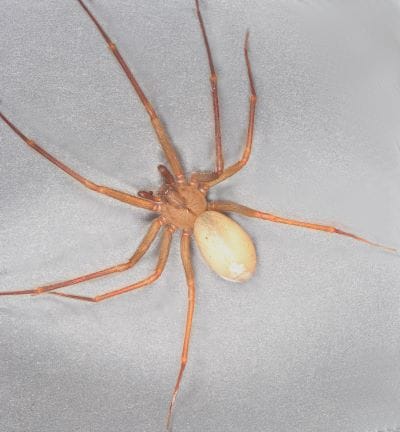
The Brown Recluse is one of the most discussed spiders in Texas, often surrounded by myths, exaggerations, and misunderstandings. Part of the confusion comes from how plain the spider looks—light brown body, long slender legs, and a subtle violin-shaped marking on its back. It doesn’t have the flashy colors of orb-weavers or the distinctive gloss of widow species. Instead, the Brown Recluse blends so well with cardboard, wood, and drywall that many encounters happen entirely by accident. You might lift a storage box or slide an old shoe out of the closet and suddenly realize a quiet little spider had been living there peacefully.
As its name suggests, this species actively avoids confrontation. Brown Recluses prefer undisturbed indoor spaces such as attics, closets, basements, and forgotten corners of garages. Outdoors, they hide under bark, logs, rocks, and debris piles. Their webs are simple and unstructured, more like loosely woven mats than the elegant spirals of orb-weavers. These webs often serve as hideouts or retreats rather than active hunting tools. The Brown Recluse prefers to hunt by roaming at night, seeking out insects and small arthropods rather than waiting passively in the web.
One of the most striking things about the Brown Recluse is its movement. When it walks, it seems to glide, almost floating across the surface in smooth motions. If startled, it runs in a short burst and then stops abruptly. That stop-and-go pattern is a helpful clue for identification. Jumping spiders leap, wolf spiders sprint continuously, but the Brown Recluse darts and freezes. Observers often describe its movement as “hesitant but quick,” like someone jogging in the dark and unsure of where the furniture is.
Although the violin marking is the most famous identifying trait, relying on it alone can be misleading. Lighting conditions, wear on the spider’s exoskeleton, and viewing angle can all distort the marking. Instead, a better way to identify a Brown Recluse is by checking the eyes. Most spiders have eight eyes, but this species has only six, arranged in a tight semicircle. Of course, getting close enough to count eyes isn’t ideal for most people, but this anatomical feature is distinctive. For those using magnifying glasses or zoom lenses, the eye pattern becomes a reliable confirmation.
Despite its reputation, the Brown Recluse is far from an aggressive species. Documented bites usually occur when the spider is accidentally pressed against the skin—inside clothing, bedding, or shoes. The spider reacts defensively, delivering a bite only because it is trapped with no way to escape. Field researchers often handle Brown Recluses carefully, and many report that the spiders attempt to flee before resorting to biting. This calm temperament contrasts with public perception, where the species is often portrayed as eager to attack.
Understanding the spider’s ecology helps explain its behavior. Brown Recluses thrive in environments with steady temperatures and predictable shelter. Human homes, with their abundance of cardboard boxes, stored linens, and quiet corners, provide ideal habitat. These spiders also have remarkable resilience. They can survive long periods without food, tolerate limited water availability, and adapt to both natural and artificial structures. This adaptability explains why they persist in regions where other spiders remain scarce.
Morphologically, Brown Recluses have slender legs without noticeable spines, giving them an elegant, minimalist appearance. Their coloration ranges from sandy tan to a deeper chestnut brown, and their abdomen lacks complex patterns. Everything about their appearance seems intentionally understated. If spiders held a fashion competition, the Brown Recluse would be the contestant wearing simple neutral colors while everyone else shows up in vibrant costumes.
Hunting behavior offers another interesting perspective. Brown Recluses are active predators, relying on stealth rather than web traps. They move quietly, relying on subtle cues like vibrations and faint air currents to track prey. A small roach or cricket wandering into its path might encounter a sudden burst of speed followed by a precise bite. Watching one hunt—if you’re patient enough to stay up late and use a red light—is like watching a miniature cat stalk a mouse. Every step is measured, every pause deliberate.
When discussing medically significant spiders, it’s important to maintain perspective. The Brown Recluse does possess necrotic venom, but severe outcomes are rare and often influenced by factors like individual allergies or delayed treatment. Many bites result in mild symptoms. In discussions with wildlife educators, there’s often a humorous refrain: “More people step on Lego bricks each year than encounter serious recluse bites.” It’s a playful exaggeration, but it highlights how fear can overshadow the actual risk.
Identifying Brown Recluses in Texas requires attention to subtle features:
– uniform brown coloration,
– long, thin legs,
– violin-shaped marking,
– six-eye arrangement,
– preference for dark, quiet spaces.
When homeowners report seeing dozens of “recluses,” experts often find that most are look-alikes such as cellar spiders or sac spiders. These misidentifications contribute to the species’ exaggerated reputation.
Despite the ongoing myths, the Brown Recluse remains an important part of Texas ecosystems. Outdoors, it helps control insect populations. Indoors, it fills a niche few other spiders occupy. Understanding the species—its behavior, appearance, and preferences—helps reduce unnecessary fear. The more one observes this spider, the more it becomes clear that it is cautious, understated, and deeply uninterested in interacting with humans. It simply wants a quiet corner to call home.
So, while the Brown Recluse might seem mysterious, spending time learning about it makes the species far less intimidating. The more myths are replaced with factual observations, the more this spider stands out as a calm, capable hunter that plays a subtle role in the environments it inhabits. Knowledge turns fear into familiarity, and familiarity often leads to a more balanced view of this often-misunderstood Texas resident.
4. Golden Silk Orb-Weaver
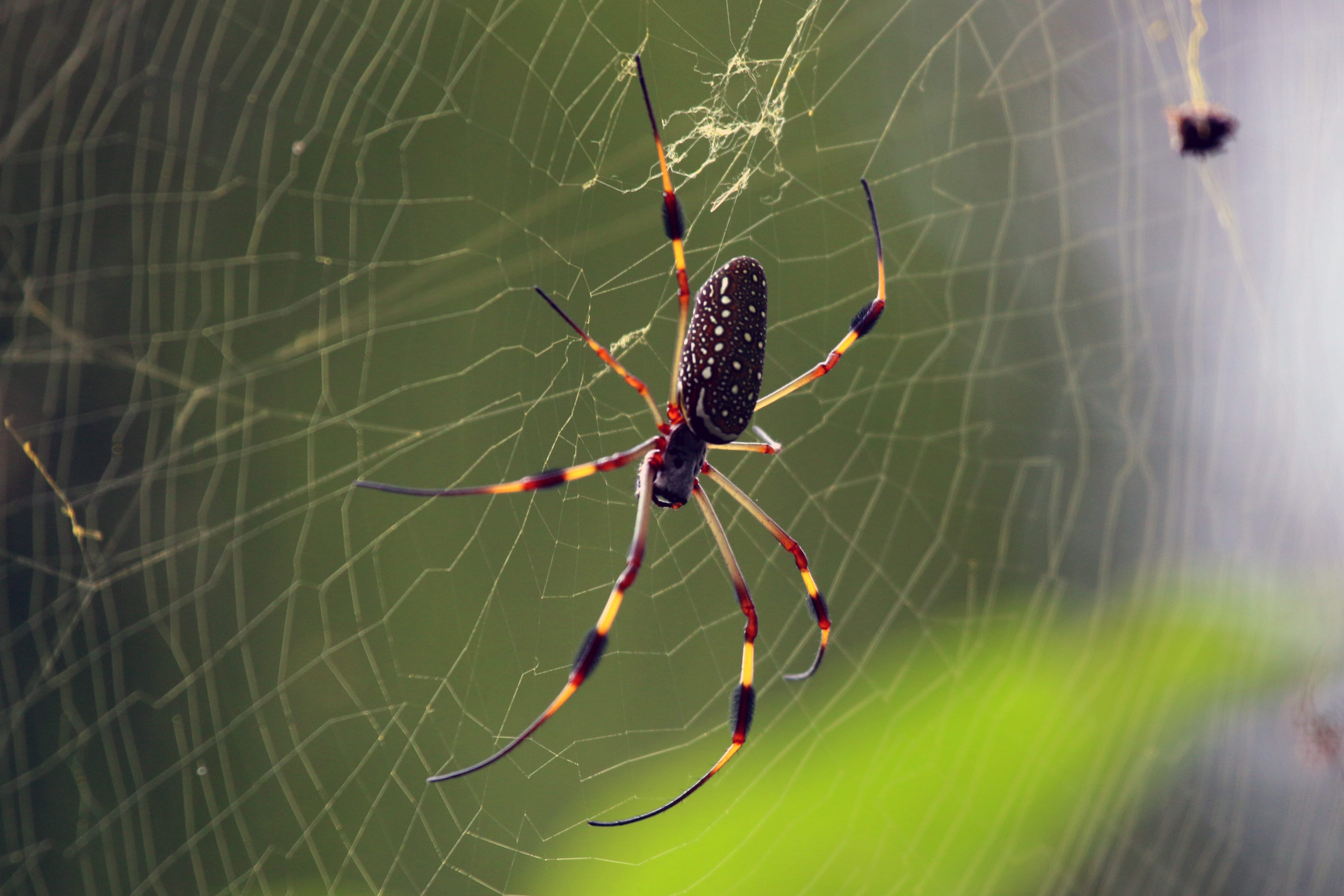
The Golden Silk Orb-Weaver is one of the most visually striking spiders in Texas, easily recognized by the shimmering golden hue of its silk. This species holds a special place in the ecosystem because it builds massive, durable webs capable of catching insects much larger than typical garden pests. Many people spot this spider during warm months when its webs glisten in low sunlight, stretching between trees, shrubs, or man-made structures. Although its size and coloring may look intimidating, this species is typically calm and avoids confrontation. Its behavior, hunting methods, and web-building skills make it an ideal species to highlight when exploring the diversity of spiders across Texas.
Golden Silk Orb-Weavers thrive in woodlands, grasslands, and humid regions across Texas. Their webs often act as natural indicators of insect density, as the spiders adjust the web’s location and size based on food availability. Because their silk is exceptionally strong, these webs can last through wind movement and occasional rainfall. This makes them an important part of natural pest control, as they catch mosquitoes, beetles, flies, and even small dragonflies. When observing one at work, you’ll notice its slow, deliberate movements and its precision while repairing damaged web sections.
While their bite is rare and generally mild to humans, they prefer retreating over standing their ground. Their calm disposition allows them to coexist with outdoor enthusiasts, gardeners, and hikers who frequently encounter them. The distinctive golden sheen of their silk is caused by microscopic pigments that reflect sunlight, making the webs visible at certain angles. This feature not only serves aesthetic appeal but also strengthens the spider’s web against UV exposure.
Female Golden Silk Orb-Weavers are significantly larger than males, often measuring over two inches in body length, not including leg span. Males, on the other hand, are small, slender, and often seen lingering alongside the female’s web, waiting for the right moment to approach. This size difference helps reduce competition and prevents unnecessary conflict during mating. After mating, females produce egg sacs that are safely fastened within protected parts of the web or under vegetation.
If you spot one in your garden, consider it a beneficial neighbor. These spiders help regulate insect populations naturally and rarely pose problems for humans. Observing them offers an excellent opportunity to appreciate the complexity of Texas wildlife and the delicate balance each species contributes to its surroundings.
5. Texas Tan Tarantula
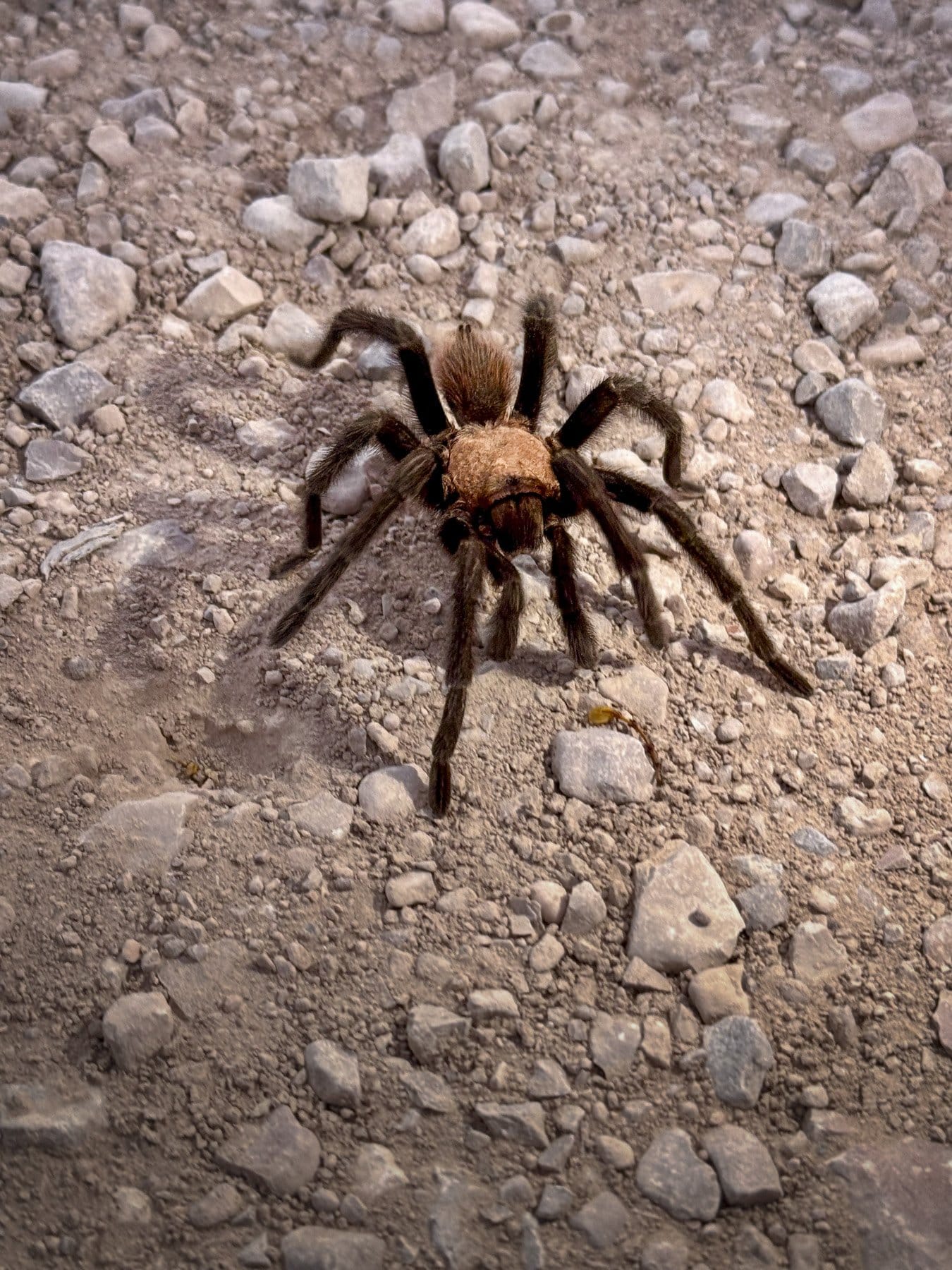
The Texas Tan Tarantula is one of the largest and most recognizable spiders in the state, known for its earthy brown coloration and calm demeanor. Despite its size, it is remarkably gentle and slow-moving, making it a fascinating species for nature lovers. This tarantula inhabits prairies, desert edges, and scrub regions throughout Texas, where it digs burrows or takes over abandoned rodent tunnels. These structures provide stable protection from extreme temperatures and predators.
Its body is covered in dense, velvety hairs that help regulate temperature and offer tactile sensitivity. When moving across uneven terrain, the Texas Tan Tarantula uses its specialized claws and hairs to maintain balance and grip. These adaptations make it a capable nocturnal hunter, feeding on insects, small grasshoppers, beetles, and occasionally tiny vertebrates. Its hunting technique involves stalking prey quietly, followed by a quick strike and the use of venom to immobilize the target.
The species’ calm behavior makes encounters surprisingly peaceful. When threatened, the tarantula typically attempts to retreat to its burrow. Only when cornered will it kick irritating hairs from its abdomen as a defensive tactic. These hairs can cause mild discomfort to the skin but are not dangerous. Most encounters with this spider happen at dusk, when it begins foraging or searching for mates during late summer and fall.
Texas Tan Tarantulas play an essential role in balancing populations of insects, making them valuable contributors to the ecosystem. Female tarantulas often live much longer than males, sometimes surpassing two decades in the wild. Their longevity makes them stable predators within their habitat, maintaining long-term control over insect populations. Males, however, have shorter life cycles, typically surviving only a few years after reaching maturity.
Spotting one around rural or suburban areas is not uncommon during certain times of year. Though large, they are slow and avoid confrontation, making them safe to observe from a distance. Their burrows are typically located near grassy patches or under logs, and they may leave silk-lined entrances as indicators of residency. As gentle giants of the spider world, Texas Tan Tarantulas symbolize the diversity and beauty of Texas wildlife.
6. Jumping Spider
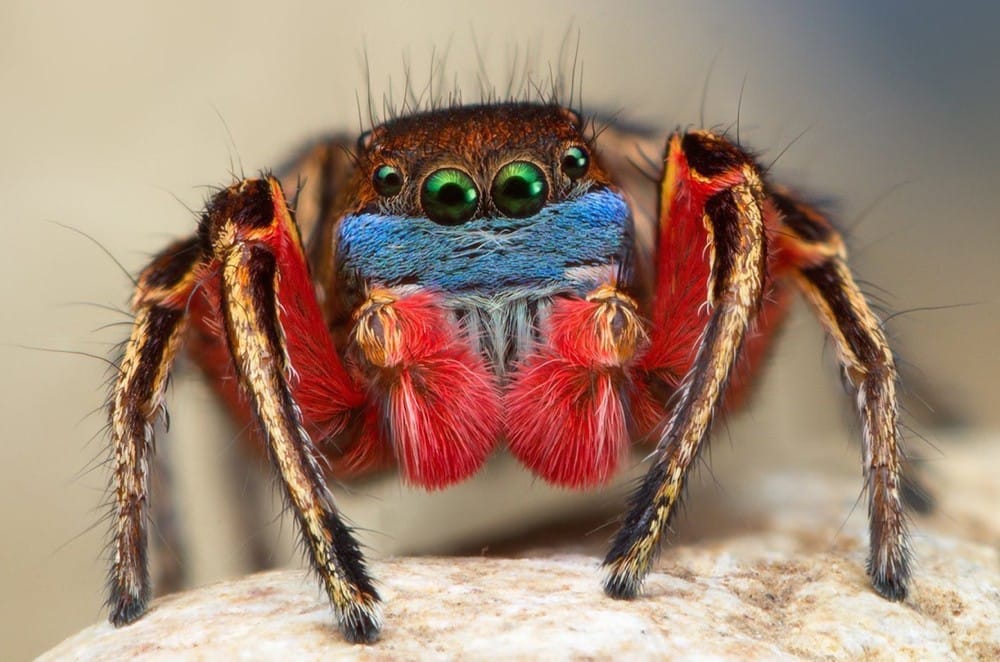
Jumping Spiders are among the most charismatic spiders in Texas, well known for their impressive agility, bright colors, and expressive eyes. This family of spiders includes dozens of species across the state, each with its own patterns and colors. However, they all share one defining trait: phenomenal jumping ability. Instead of relying on webs to catch prey, these spiders use sharp vision and powerful legs to pounce on insects with precision.
Their eyesight is among the best in the spider world, supported by a set of large, forward-facing eyes that create a curious, almost playful appearance. These eyes allow them to track movement, judge depth, and recognize changes in their surroundings. When observing humans or other animals, Jumping Spiders often tilt or raise their bodies as if inspecting the viewer. This behavior gives them a unique charm compared to many other spider species.
These spiders inhabit a wide variety of environments—forests, grasslands, deserts, suburban gardens, and even inside homes. They prefer sunny surfaces where their vision is most effective, such as windowsills, fences, patio furniture, and tree bark. Their daily routine includes exploring surfaces, searching for prey, and building small silk shelters called “retreats” under leaves or crevices.
Jumping Spiders feed on flies, ants, moths, small beetles, and other tiny invertebrates. Their hunting strategy resembles that of tiny felines: they stalk carefully, calculate the distance, and leap with surprising speed. Before jumping, they secure themselves with a silk safety line, preventing falls if they misjudge a target. This intelligent approach makes them extremely efficient hunters and valuable natural pest controllers.
Despite their bold movements and curious behavior, Jumping Spiders are harmless to humans. Their bites are rare and mild, usually occurring only when they are accidentally crushed. Their natural shyness combined with their ecological benefits makes them one of the most well-liked spider families in Texas.
7. Bold Jumping Spider

The Bold Jumping Spider is one of the most recognizable and widespread jumping spiders in Texas. It stands out with its black body, iridescent chelicerae, and bright white or orange spots across its abdomen. The species lives up to its name, displaying confidence and inquisitive behavior that often surprises people. When approached, it frequently turns to face the observer, studying movement with its large, forward eyes.
This spider prospers in open sunny spaces. You’ll often find it on exterior walls, garden beds, tree trunks, and outdoor furniture. Its agility allows it to navigate difficult surfaces with ease. Unlike many spiders that rely on webs, the Bold Jumping Spider uses speed and precision to capture prey. Its leaps are strong enough to cross distances many times its body length.
Its diet includes flies, moths, mosquitoes, gnats, and small insects that frequent gardens and yards. By reducing nuisance insects naturally, this spider contributes to a balanced and healthy backyard ecosystem. As with all jumping spiders, the Bold Jumping Spider produces silk only for retreats, egg sacs, and anchor lines, rather than for hunting webs.
During mating season, males perform elaborate dances to impress females, raising their forelegs and displaying reflective mouthparts. This behavior demonstrates the species’ high sensory awareness and complex communication system. Females lay eggs inside shelters they construct from silk, usually hidden under leaves or inside small cracks.
While their bold personality may startle people who encounter them up close, these spiders are harmless and extremely beneficial. Their visual charm and curious actions make them a favorite among wildlife photographers and insect enthusiasts across Texas.
8. Crab Spider
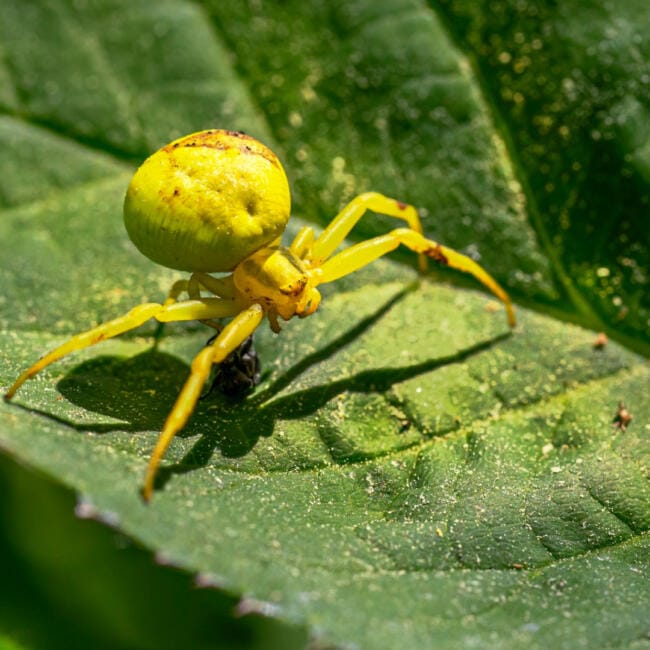
Crab Spiders are fascinating ambush predators found across Texas, known for their unique sideways movements and body shape that resembles small crabs. Instead of constructing webs to trap insects, they rely on camouflage and patience. These spiders often perch on flowers, blending into petals with remarkable accuracy. Their coloration—often white, yellow, or pale green—helps them remain hidden from unsuspecting prey.
Crab Spiders inhabit gardens, meadows, woodlands, and prairies across the state. They are especially common in areas with abundant flowering plants. Their hunting strategy involves waiting motionless until a bee, butterfly, or fly settles near them. Once the insect is within reach, they grab it with strong front legs and inject venom to subdue the prey quickly.
Their ability to change color slightly over time allows them to match different flowers, enhancing their ability to remain undetected. Although not rapid movers, they are powerful ambushers, capable of capturing insects larger than themselves. This makes them valuable contributors to controlling garden pests and maintaining ecological balance.
Crab Spiders are harmless to humans and rarely interact with people except when spotted on garden plants. Their compact size and cryptic appearance mean many individuals go unnoticed. Observing them closely reveals their specialized legs, compact bodies, and remarkable adaptability. These spiders demonstrate the diversity of hunting styles present in the Texas spider community, showcasing nature’s creativity in solving survival challenges.
9. Wolf Spider

Wolf Spiders are among the most widespread and frequently encountered spiders in Texas, known for their agility, excellent eyesight, and ground-dwelling lifestyle. Unlike species that rely on webs, Wolf Spiders actively hunt their prey on foot, using stealth, speed, and impressive reflexes. Their name comes from this wolf-like hunting behavior, where they track and chase insects rather than waiting passively for them to wander into a trap. With their sturdy bodies, long legs, and earthy brown coloration, Wolf Spiders blend well into leaf litter, soil, and grass, making them effective nocturnal hunters across the state.
These spiders inhabit an extraordinarily wide range of environments, including forests, grasslands, fields, backyards, and even suburban homes. They typically hide under rocks, logs, and debris during the day, emerging at night to forage. Their large eyes shine when light hits them, which makes them noticeable at night with a flashlight. The reflective layer in their eyes—similar to that found in cats—gives them an advantage in low-light hunting situations.
Wolf Spiders play a vital role in controlling insect populations. Their prey includes beetles, crickets, roaches, ants, grasshoppers, and other ground-dwelling invertebrates. They rely on stealth, ambush, and explosive bursts of speed to subdue prey. This energetic hunting style requires agility and specialized sensory adaptations. Tiny hairs covering their bodies detect vibrations and movement, allowing them to sense nearby threats or potential meals.
One of the most remarkable aspects of Wolf Spider biology is their maternal care. Females carry egg sacs attached to their spinnerets and continue hunting despite the extra weight. After the spiderlings hatch, they climb onto the female’s back and remain there for several days to a couple of weeks. This level of parental care is extremely rare among spiders and gives Wolf Spiders a unique place in Texas wildlife.
Although large and fast, Wolf Spiders are not dangerous to humans. They avoid confrontation whenever possible and will only bite if severely threatened. Their size often causes alarm, but they are generally harmless and beneficial. Observing them from a distance reveals fascinating hunting and parenting behaviors that highlight their importance in Texas ecosystems.
10. Orchard Orb-Weaver

The Orchard Orb-Weaver is one of Texas’s most colorful and delicate spiders, easily recognized by the vibrant patterns on its abdomen and the distinctive tilt of its web. Unlike many orb-weavers that build large, perfectly vertical webs, Orchard Orb-Weavers create slightly angled or horizontal webs suspended among shrubs, low tree branches, and garden vegetation. These carefully positioned webs intercept a variety of flying insects, making the Orchard Orb-Weaver a valuable insect-control ally.
With rich green, yellow, and silver markings, this spider stands out against the foliage it inhabits. Its slender legs and shimmering body give it a jewel-like appearance that wildlife enthusiasts enjoy observing. Despite its vibrant colors, the Orchard Orb-Weaver is small and easily overlooked unless you are actively searching for garden spiders or sunlight catches the web at the right angle.
These spiders prefer humid habitats such as orchards, wooded edges, gardens, and parks. Their webs often appear early in the morning when dew highlights their intricate patterns. Although they rebuild sections of their web daily, they remain in the same general area throughout the season, making them reliable visitors in well-vegetated environments.
Orchard Orb-Weavers feed on gnats, mosquitoes, leafhoppers, small beetles, and tiny flying insects. Their web is tuned to capture lightweight prey efficiently. When an insect becomes trapped, the spider quickly rushes to immobilize it with silk and a precise bite. After feeding, the spider often removes leftover debris to keep the web clean and effective.
These spiders are gentle and avoid human interaction. Their bite is extremely rare and mild. Many gardeners encourage Orchard Orb-Weavers to remain in their yards because of their beauty and ecological benefits. Their presence indicates a healthy, biodiverse habitat, and watching them spin delicate webs is a peaceful reminder of the complexity of Texas wildlife.
11. Long-Jawed Orb-Weaver
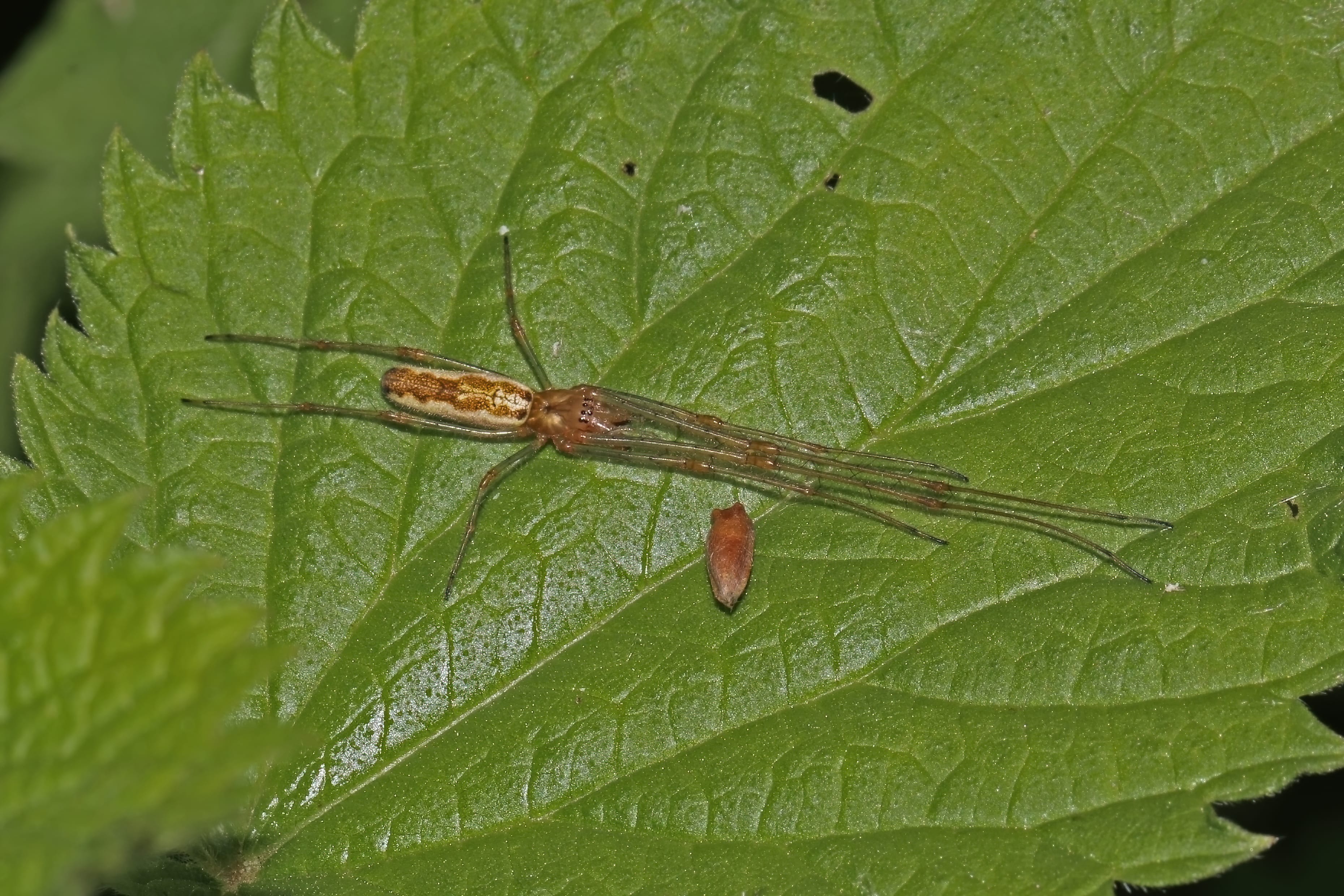
Long-Jawed Orb-Weavers are easily recognized by their extremely elongated bodies and legs, giving them a sleek, lightweight appearance. This family of spiders is commonly found near water sources in Texas—streams, ponds, marsh edges, and moist vegetation. Their long legs allow them to navigate narrow stems and reeds while balancing on thin, flexible surfaces. When disturbed, they often align themselves perfectly with plant stems, making them nearly invisible.
Their webs differ from classic orb shapes in that they are often sparse and delicate, positioned horizontally or diagonally between vegetation. These webs are engineered to intercept small flying insects such as midges, mosquitoes, and tiny moths. Although the webs may appear fragile, their structure is intentional and highly efficient, allowing the spiders to maintain control even in windy conditions common near water.
Long-Jawed Orb-Weavers rely heavily on their remarkable agility. Their lightweight bodies enable them to evade predators quickly and reposition themselves around their web with ease. They spend much of their time suspended beneath the center of their web, legs stretched outward, waiting patiently for vibrations. Once prey is detected, they move rapidly along their narrow web lines to capture it.
While these spiders look delicate, they are resilient and effective predators. Their elongated jaws, or chelicerae, give them their name and assist in quickly subduing small insects. They play an essential role in controlling populations of bothersome insects near water sources, contributing to ecological balance.
Long-Jawed Orb-Weavers rarely come into contact with humans, and when they do, they are harmless. Their slender bodies and cryptic behavior make them peaceful, unobtrusive members of Texas’s rich spider community. Observing them in natural wetland settings offers insight into the diversity of web designs and hunting strategies among spiders.
12. Green Lynx Spider

The Green Lynx Spider is one of the most visually striking species in Texas, known for its bright green body, elongated legs, and impressive hunting skills. Unlike orb-weavers, the Green Lynx Spider does not rely on webs to catch prey. Instead, it uses its agility, sharp vision, and ability to leap long distances to pursue insects actively. This hunting style has earned it the “lynx” name, comparing its movements to those of predatory cats.
Green Lynx Spiders thrive in sunny, open habitats such as gardens, fields, shrubs, and crop areas. Their green coloration blends perfectly with leaves and stems, allowing them to ambush unsuspecting insects. They are commonly seen on flowering plants where pollinating insects gather, giving them access to a steady food supply. Their diet includes wasps, moths, flies, grasshoppers, and other small pests that visit flowers.
While they do not create prey-catching webs, Green Lynx Spiders still use silk for egg sacs and anchoring lines. Females attach their egg sacs to sturdy vegetation and guard them aggressively. This protective behavior is rare among spiders and highlights the species’ strong maternal instincts. Females remain with their offspring until the young disperse, fending off predators that threaten the eggs.
The species’ vibrant color, long spines, and athletic movement make it easy to identify and fascinating to observe. Despite its bold appearance, the Green Lynx Spider is not dangerous to humans. Its bite is mild and infrequent, as the spider prefers to escape rather than confront threats. In agricultural areas, they are considered beneficial because they naturally help control crop pests.
Whether encountered in a backyard garden or a wild meadow, the Green Lynx Spider showcases the extraordinary diversity of hunting strategies among Texas spiders. Its beauty and skill highlight the adaptability of predatory species in dynamic environments.
13. Six-Spotted Fishing Spider

The Six-Spotted Fishing Spider is one of Texas’s most impressive semi-aquatic spiders, known for its ability to walk on water, dive beneath the surface, and hunt aquatic prey. Its large size, striking markings, and powerful legs make it a dominant predator around ponds, lakes, marshes, and slow-moving streams. This spider is often mistaken for a small tarantula due to its robust appearance, but its behavior and habitat are uniquely adapted to life near water.
The name “Six-Spotted” refers to the pattern of dark spots on the spider’s cephalothorax. Its coloration—usually brown or gray with pale stripes—helps it blend into wet rocks, vegetation, and tree bark near shorelines. This camouflage allows it to ambush aquatic insects, tadpoles, and even small fish. Its incredible ability to detect vibrations on the water’s surface makes it an efficient hunter in aquatic environments.
Six-Spotted Fishing Spiders can skate across water thanks to tiny hydrophobic hairs on their legs. They can also dive below the surface by trapping a thin layer of air against their bodies, allowing them to breathe temporarily underwater. This behavior not only helps them catch prey hiding below the surface but also allows them to evade predators.
These spiders build silk retreats in crevices, under logs, or inside vegetation near the waterline. While they do not rely on webs for hunting, they use silk to anchor themselves and protect their eggs. Females exhibit strong maternal care, carrying egg sacs beneath their bodies until hatching time. Afterward, they help guard the young in sheltered areas until they disperse.
The Six-Spotted Fishing Spider plays an essential role in wetland ecosystems by balancing insect and small aquatic animal populations. Although large, they are not aggressive toward humans and prefer to flee when disturbed. Encounters with them offer fascinating insights into the adaptability of spiders and their ability to thrive in diverse habitats across Texas.
14. Spinybacked Orbweaver

The Spinybacked Orbweaver is one of the most recognizable spiders in Texas, thanks to its bright colors and distinctive spiky shell. If you’ve ever walked through a Texas garden or wooded trail and spotted a tiny spider shaped like a living sticker with six sharp spines jutting from its abdomen, you’ve likely met this species. Despite its fierce appearance, the Spinybacked Orbweaver is gentle and incredibly beneficial. It spends its days creating neat, symmetrical webs that catch countless flying insects, quietly helping keep outdoor spaces comfortable and low in pests.
This species is often compared to a miniature shield because of its flattened, disk-like abdomen decorated with bold patterns. Individuals can appear white, red, orange, or yellow, with contrasting black spots. The six spines add to its odd design, making it easy to tell apart from other orb-weaving spiders. Many Texans describe their first encounter with one as a delightful surprise — like stumbling across a tiny piece of candy stuck in the middle of a web.
Found across yards, orchards, parks, and forest edges, these spiders prefer sunny locations where flying insects are abundant. They typically build their webs in open spaces between branches or fence lines, often at chest level. Their webs include small tufts or “stabilizer dots” along the strands — a detail that gives each web a distinct, beaded look. These additional silk spots may help prevent birds from accidentally flying through the web.
The Spinybacked Orbweaver’s diet includes small flying insects such as mosquitoes, gnats, midges, leafhoppers, and tiny beetles. They are efficient hunters despite their small size. When prey hits the web, the spider rapidly rushes toward the vibration and wraps it in silk before delivering a bite. Their hunting accuracy is impressive, especially considering how small they are compared to many other Texas orb-weavers.
One of the most engaging behaviors of this species is how females dominate the visible population. Males are extremely small, brownish, and rarely noticed. Females, on the other hand, grow to about the size of a fingernail and sport the bright colors and spiny armor. During late summer and fall, their numbers increase, making them a familiar sight in many Texan backyards.
Spinybacked Orbweavers are harmless to humans. Their bite is insignificant, and they rarely show defensive behaviors. Gardeners appreciate their presence because they reduce troublesome insects without harming plants. Their quirky shape and colorful appearance also make them popular among nature photographers and children exploring their backyard ecosystems.
From their unusual silhouette to their helpful role in maintaining ecological balance, the Spinybacked Orbweaver brings a bit of personality to the list of types of spiders in Texas. Watching one sit proudly in the center of its glittering web feels like spotting a tiny, armored sentinel standing guard over the garden.
15. Yellow Garden Spider

The Yellow Garden Spider is one of the most iconic spiders found across Texas — large, bold, and impossible to miss when perched in the center of its striking orb-shaped web. Known for its bright yellow and black abdomen, the species often draws attention from hikers, gardeners, and anyone who spends time around vegetation-rich areas. Despite its intimidating size, this spider is gentle, calm, and enormously beneficial, making it one of the most respected backyard predators in the state.
These spiders build massive vertical webs, often stretching several feet across, anchored between tall plants, fences, or porch supports. When the morning sunlight hits the web, its symmetrical shape shines like a piece of nature’s architecture. Running down the middle of the web is a zigzag band of thicker silk called a stabilimentum. Scientists have debated its purpose for years — some say it strengthens the web, others believe it reflects sunlight to draw in prey, and some argue it warns birds away. Whatever the reason, it adds a dramatic flare, almost like the signature of the spider itself.
Yellow Garden Spiders thrive in open, sunny habitats: gardens, agricultural fields, roadside vegetation, and backyard edges. They often set their webs in the same area for an entire season, adjusting them each day as necessary. This consistency allows people to watch their growth and habits over weeks or months, making them one of the more familiar members of Texas wildlife.
Their menu consists of large flying insects — grasshoppers, wasps, cicadas, beetles, dragonflies, and occasionally even small butterflies. When a strong insect collides with the web, the Yellow Garden Spider reacts instantly. It rushes over, shakes the web to tire out the prey, then wraps it securely in silk. Watching this process feels like observing a perfectly rehearsed routine.
Females are significantly larger than males, sometimes reaching the size of a silver dollar when fully grown. Males, much smaller and plain in color, linger near the female’s web until mating season. After mating, the female creates a papery, round egg sac and guards it fiercely, ensuring her offspring have a good chance at survival.
Despite their large size, Yellow Garden Spiders are not aggressive and rarely bite. They prefer to retreat or remain still when approached. Many Texans consider them good luck or a symbol of a healthy garden because of their ability to reduce insect pests naturally. Their presence adds a lively, almost theatrical quality to outdoor spaces — watching them maintain their webs feels like watching a skilled craftsperson at work.
Among all types of spiders in Texas, the Yellow Garden Spider stands out not just for its size and color but for its calm presence and ecological importance. It is one of the state’s most admired garden predators.
16. Southern House Spider

The Southern House Spider is a quiet, unassuming resident of many Texas homes, sheds, barns, and porches. Frequently confused with the Brown Recluse due to its brown coloration and long legs, this species is completely harmless and plays an important role in controlling indoor and outdoor insect populations. Once homeowners learn the difference between the two spiders, many find the Southern House Spider to be a charming, beneficial house guest.
These spiders are part of the crevice weaver family, which means they prefer narrow gaps, cracks, and recessed corners where they can build irregular, funnel-like webs. Their webs often appear dusty or chaotic, but they serve a clear purpose — they act as strategically placed traps for wandering insects such as roaches, beetles, and moths. The spider waits at the mouth of the funnel, ready to dart out when vibrations signal a potential meal.
Females are larger and remain close to their webs, while males are thinner, faster, and frequently encountered wandering around walls and ceilings in search of mates. This wandering behavior is one reason people sometimes mistake males for the more infamous Recluse. However, the Southern House Spider has distinctive features that help set it apart: longer legs, a more elongated body, and a lack of the violin-shaped marking associated with the Recluse.
The species thrives in warm, sheltered environments, making Texas an ideal place for it to flourish. They commonly inhabit barns, attics, porch overhangs, storage rooms, and outdoor structures. They rarely appear in frequently used living spaces unless a male happens to wander through. Even then, they avoid confrontation and quickly retreat to the nearest hiding spot.
One of the most fascinating aspects of the Southern House Spider is its ability to coexist quietly with people for years. Many individuals build stable webs in protected corners and help keep insect populations low. Because females stay in one location for most of their life, homeowners often become familiar with their presence — almost like watching a tiny roommate grow and maintain her territory.
Southern House Spiders are calm, nonaggressive, and reluctant to bite. When handled, they prefer to freeze or attempt slow escape rather than defend themselves. Their mild nature, combined with their helpful insect control habits, makes them underrated contributors to household ecosystems across Texas.
For those researching spiders in Texas or trying to identify the harmless species that live alongside them, the Southern House Spider offers an excellent example of how human structures can support beneficial wildlife.
17. American House Spider
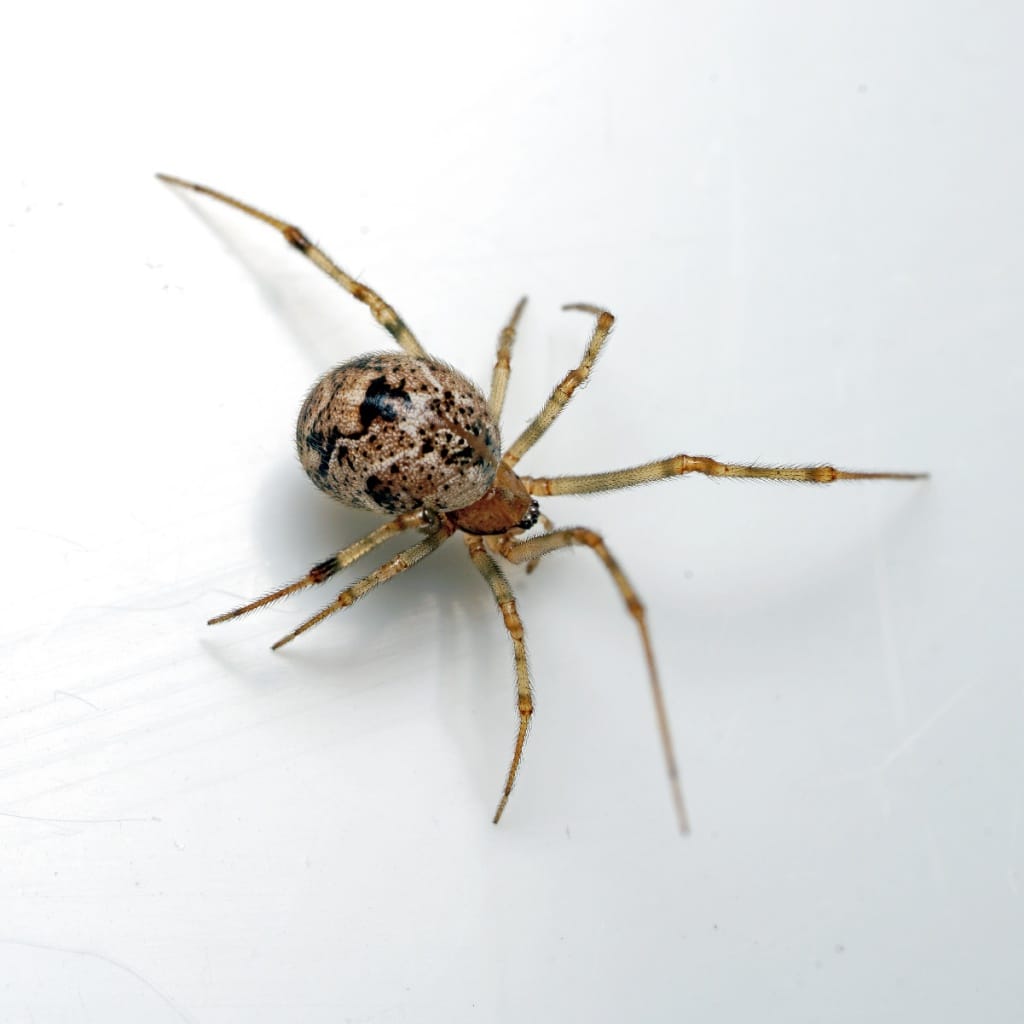
The American House Spider is one of the most common indoor spiders across Texas, known for its messy cobwebs and calm, nonthreatening behavior. This is the classic “corner cobweb spider” many people see in garages, sheds, porches, and occasionally in the corners of ceilings. While their presence may surprise homeowners, these spiders are gentle and extremely helpful at reducing the number of indoor pests such as flies, mosquitoes, and small roaches.
American House Spiders belong to the cobweb spider family, which means they build tangled, three-dimensional webs rather than neat, wheel-like ones. These webs appear in undisturbed locations — behind furniture, under eaves, in basement corners, and around windows. The spider typically hangs upside down in the web, waiting patiently for prey to become trapped in the sticky threads. Their hunting method is passive but efficient, relying on the unpredictable movements of insects indoors.
This species has a rounded abdomen, long thin legs, and a small head, giving it a delicate appearance. Colors vary from brown to gray, with faint mottled patterns that help camouflage the spider against dusty surfaces. Females remain near their webs most of their lives, while males roam to find mates. They often coexist peacefully with other household spiders, occasionally sharing webs or building new ones close by.
American House Spiders prey on flies, fruit flies, gnats, house moths, and other small pests that wander indoors. Their presence is often a sign of insect activity, leading many homeowners to appreciate their quiet pest-control services. Observing the spider work within its web reveals a steady patience: it approaches trapped prey with caution, gradually wrapping it before feeding.
These spiders are nonaggressive and rarely bite. In fact, they often drop from their webs and remain motionless if disturbed. Their timid nature makes them one of the safest spiders to encounter indoors. People who take the time to watch them instead of sweeping them away often discover a surprisingly endearing side to their behavior.
Because they thrive in human structures, American House Spiders have become one of the most familiar types of spiders in Texas. Their ability to live quietly among people makes them a subtle but important part of home ecosystems. For those curious about the wildlife sharing their living spaces, this species offers an excellent introduction to the hidden world tucked into the corners of everyday buildings.
18. Long-Bodied Cellar Spider

The Long-Bodied Cellar Spider, often called the “daddy long-legs spider,” is one of the most recognizable indoor spiders in Texas. With its extremely thin legs and tiny peanut-shaped body, this species looks fragile, almost like a creature assembled from wire. Yet despite its delicate appearance, the Long-Bodied Cellar Spider is a hardy survivor capable of living in dark, humid environments where other spiders struggle.
These spiders typically inhabit cellars, basements, garages, storage spaces, and shaded outdoor structures. They prefer undisturbed corners near ceilings or doorways, building loose, irregular webs that hang like thin curtains. Their webs lack the symmetry of orb-weavers or the tensioned traps of funnel weavers, but they function well for the spider’s needs. When prey becomes entangled, the Cellar Spider vibrates its web rapidly — a blur of motion that confuses predators and helps subdue captured insects.
Long-Bodied Cellar Spiders prey on mosquitoes, flies, moths, and even other spiders. They are surprisingly bold hunters within their web territory. Many people have witnessed them capturing species larger than themselves, especially if another spider accidentally wanders too close. Their hunting strategy relies on speed and coordination: once prey is detected, they extend their long legs to wrap it in silk while maintaining a safe distance.
Their long legs serve several purposes — improved balance, increased reach, and an ability to sense vibrations through extended contact with the web. When threatened, they often shake their bodies rapidly, becoming a vibrating blur that makes it nearly impossible for predators to focus on them. This defensive behavior has earned them the nickname “vibrating spiders” in some regions.
Long-Bodied Cellar Spiders are harmless to humans. They avoid contact and typically retreat into the highest corners of a room when approached. Although some myths claim they possess extremely potent venom, this is purely folklore. Their fangs are tiny, and their bite is too weak to harm humans. In reality, they provide consistent pest reduction, quietly removing unwanted insects.
Because they thrive in human structures, the Long-Bodied Cellar Spider has become one of the familiar faces among spiders in Texas. Their presence might not be glamorous, but it is a testament to how adaptable and beneficial spiders can be when allowed to live alongside people. Watching one tend to its web or perform its characteristic vibration routine adds a touch of understated charm to Texas households.
19. Giant Crab Spider (Olios spp.)
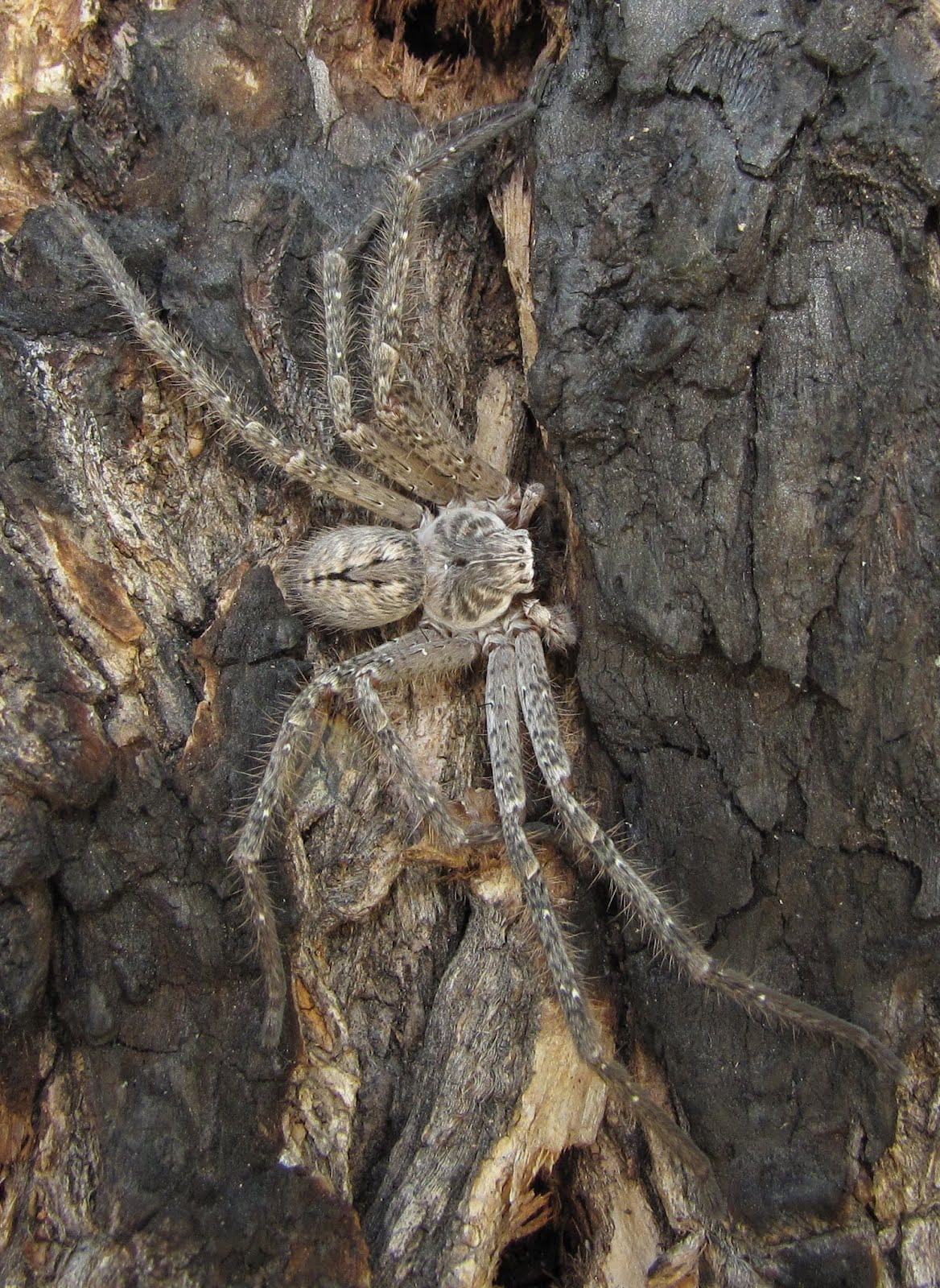
The Giant Crab Spider—sometimes called a “wall crab spider” by Texans who see one scuttle sideways across the patio—belongs to a group of large, flat-bodied hunting spiders found throughout warm regions of the state. These spiders immediately stand out because of their impressive leg span and confident movements. Many people encounter them on stucco walls, behind outdoor furniture, or resting on shaded tree trunks where their sandy coloration blends in remarkably well. Although their size can spark a little startle response, the Giant Crab Spider is a calm, non-aggressive species that quietly contributes to insect control around homes, barns, and wooded edges.
This spider’s broad, laterally spread legs give it a “crab-like” stance, which is where its name comes from. Rather than spinning intricate webs, the Giant Crab Spider is an active hunter. It relies on stealth and quick bursts of speed to catch insects such as moths, crickets, and beetles. Its eyes are arranged in two neat rows, giving it reliable depth perception and allowing it to maneuver with surprising precision, even in dim lighting. Texans sometimes see these spiders resting in crevices during the day, then emerging at dusk to roam for food. Their movements are smooth, almost silent, which adds to their air of mystery.
Although the Giant Crab Spider is often found outdoors, it occasionally wanders into homes—especially during hot, dry spells. When this happens, the spider is usually just looking for cooler, sheltered locations rather than attempting to take up residence. Gently guiding it outside is enough, and it rarely puts up a fuss. Its bite is considered mild, usually leaving only temporary redness or localized discomfort if it happens at all. Most individuals prefer to flee rather than stand their ground.
In Texas, these spiders are commonly associated with live oaks, pinyon pines, rocky hillsides, garages, and outdoor sheds. Their adaptability allows them to thrive in desert regions, urban edges, and rural homesteads alike. They can flatten their bodies to squeeze into tight gaps, something homeowners notice when one suddenly appears from behind a shutter or patio cushion. Their flattened shape also helps them cling to surfaces where other spiders might struggle, giving them excellent mobility on walls and smooth materials.
If one were to observe a Giant Crab Spider during a warm summer evening, they might see it “testing” the air with gentle vibrations of its front legs. These small exploratory movements help it detect airborne scents and subtle air currents generated by flying insects. While it lacks the elaborate silk structures of orb-weavers, it produces silk for anchoring itself during hunts, securing eggs, and constructing protective retreats. Females guard their egg sacs with surprising determination, often staying nearby until the spiderlings disperse.
The Giant Crab Spider plays an important ecological role across the state, especially in warmer regions where insects are abundant. By preying on pests that gather near porch lights, it effectively serves as an all-natural nighttime exterminator. Over time, many Texans have grown fond of these large spiders, appreciating their calm demeanor and helpful ecological function. With their sandy coloration, impressive size, and confident hunting style, Giant Crab Spiders remain one of the more memorable species included in discussions of types of spiders in Texas.
20. Nursery Web Spider (Pisaurina mira)
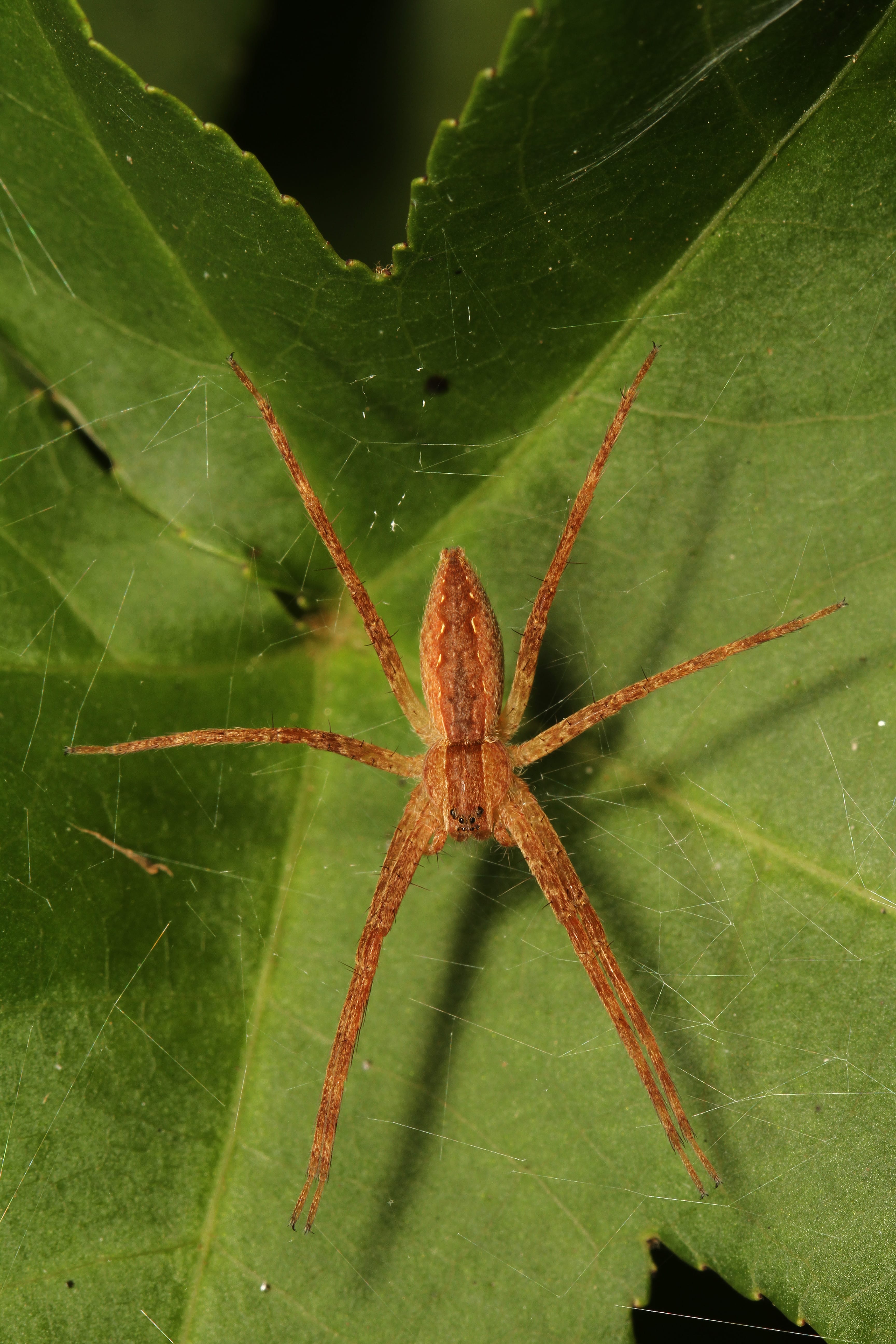
The Nursery Web Spider is famous in Texas for its attentive parenting habits, a trait that sets it apart from many other spiders in the region. While it resembles the Wolf Spider in build and coloration, its behaviors—especially the way females care for their egg sacs—make it a fascinating species for close observation. Instead of carrying their egg sacs attached to their spinnerets, females hold the sac delicately in their jaws. This gives them the freedom to move efficiently through tall grass, shrubs, and understory vegetation as they search for a safe place to raise their young.
Once a secure site is found, the female constructs a silken “nursery” among leaves or stems. She attaches the egg sac to the structure and then guards the area, often circling the perimeter or positioning herself above the webbing like a vigilant sentry. This parental devotion has earned the spider considerable respect among naturalists. While the name “Nursery Web Spider” may sound whimsical, it accurately reflects the remarkable care invested in each generation.
These spiders are agile hunters that rely on speed rather than webs to catch prey. During early mornings or late afternoons, they can be seen sitting quietly on vegetation with their legs extended forward, waiting for movement. Crickets, grasshoppers, beetles, and moths all fall within their usual diet. Their coloration—typically brown with a dark stripe running down the cephalothorax—helps them blend into leaf litter and dried vegetation. This camouflage is so effective that many hikers walk past dozens without realizing it.
Nursery Web Spiders prefer moist environments, though they are not restricted to watery habitats like fishing spiders. In Texas, they inhabit tall-grass prairies, woodland margins, suburban gardens, riparian edges, and shaded fields. These spiders often take advantage of the structural support offered by blackberry thickets, wildflowers, and young saplings. Their long, slender legs allow them to move effortlessly through dense foliage, almost like they’re gliding along invisible paths.
The mating behavior of this species includes a somewhat comical courtship ritual. Males frequently present females with food gifts wrapped in silk—a tactic that may reduce the risk of being mistaken for prey. Sometimes, the female accepts the offering before mating begins, although researchers have documented individuals that seem more interested in the meal than the suitor. It’s a tiny slice of the spider world that often makes observers chuckle.
Although the Nursery Web Spider can deliver a bite if handled roughly, its venom is mild and symptoms rarely amount to more than slight irritation. Most individuals flee when disturbed, relying on speed and vegetation for escape. Gardeners often appreciate the presence of these spiders since they help manage pest insects and contribute to biodiversity.
Among all spiders in Texas, the Nursery Web Spider stands out for its combination of agility, camouflage, and extraordinary maternal instincts, making it a staple species in wildlife guides throughout the region.
21. Trapdoor Spider (Cyclocosmia & Ummidia spp.)
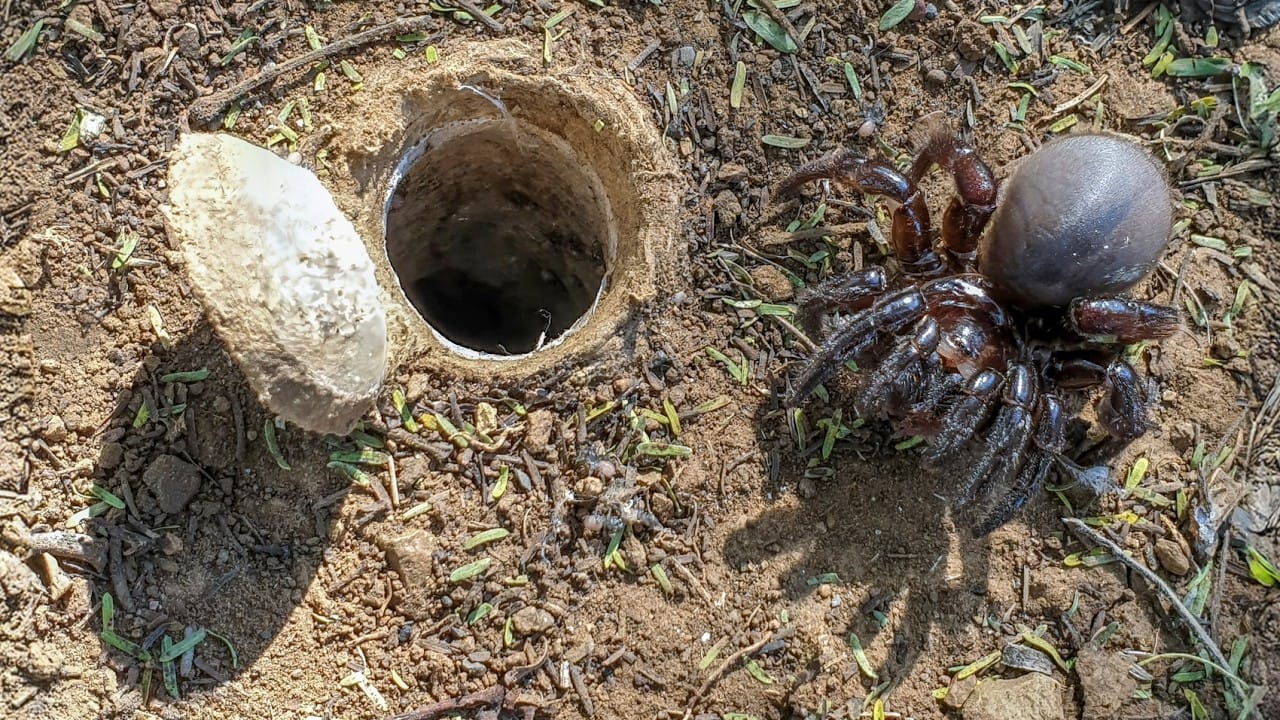
Trapdoor Spiders are one of the most intriguing groups covered in this guide, thanks to their underground lifestyle and impressive engineering skills. These spiders construct silk-lined burrows in the soil, complete with a hinged lid made of compacted earth, plant debris, and silk. The lid blends so seamlessly with the surrounding ground that even trained observers sometimes struggle to spot it. This camouflage is essential for survival, allowing the spider to ambush prey while remaining invisible to predators.
In Texas, several genera occur, including Ummidia and the armored-looking Cyclocosmia. Their burrows can be found in sandy soils, woodland floors, desert regions, and moist banks along streams. Each spider invests significant time into repairing and maintaining the entrance, keeping it flexible yet sturdy. When the spider senses vibrations from a passing insect, it opens the lid with lightning-like precision, grabs its prey, and disappears back into darkness. The entire event happens so fast that most people only witness a blur of movement.
Trapdoor Spiders have thick, robust bodies and powerful jaws, giving them a somewhat fearsome appearance. Yet their secretive nature means they rarely interact with people. They are slow-moving and cautious, preferring the safety of their tunnel to any kind of confrontation. Their bites are rated as mild to moderate, comparable to a bee sting, though such incidents are extremely rare due to the spiders’ reclusive behavior.
One of the most interesting aspects of Trapdoor Spider biology is their longevity. Some individuals can live for over a decade, spending nearly their entire lives inside the burrow. This lifestyle minimizes exposure to predators, weather extremes, and other environmental hazards. Females rarely leave their tunnels except during mating season, when males wander in search of partners. These wandering males occasionally attract attention from hikers, who mistake them for small tarantulas.
The genus Cyclocosmia includes species known for their armored, disc-shaped abdomens. When threatened, these spiders block the tunnel entrance with their hardened hind segments, functioning almost like a living manhole cover. This defensive strategy is surprisingly effective and adds to the spiders’ mystique.
Trapdoor Spiders contribute to local ecosystems by regulating ground-dwelling insect populations. Their presence indicates healthy soil and stable habitat conditions. For naturalists and wildlife enthusiasts, uncovering a Trapdoor Spider burrow feels like stumbling upon a quiet, subterranean secret—an insight into a way of life most people never notice.
With their engineering talents, long lifespans, and intriguing predatory style, Trapdoor Spiders deserve their place among the most captivating types of spiders in Texas.
22. Fishing Spider (Dolomedes spp.)
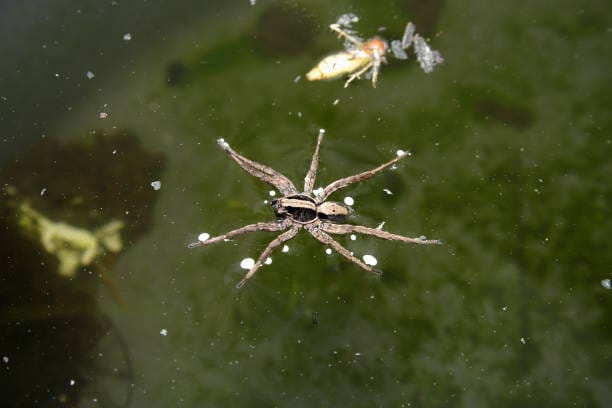
Fishing Spiders are among the largest and most dramatic spiders found near Texas waterways. Their long legs, aquatic abilities, and bold hunting strategies make them one of the standout species in this list. While many spiders avoid water entirely, Fishing Spiders embrace it. They can walk across the surface tension like it’s solid ground, dive underwater to escape predators, and even catch small fish, tadpoles, and aquatic insects. Watching one dart across a pond’s surface feels like observing a tiny water-skimming athlete.
These spiders often rest on tree trunks, vegetation, docks, and rocks along lakes, ponds, rivers, and slow-moving creeks. Their mottled brown coloration helps them blend into bark and mud, providing excellent camouflage. When startled, they sometimes flee across the water in quick, gliding strides, a behavior that surprises newcomers who thought spiders couldn’t swim. In reality, Fishing Spiders are among the most versatile hunters in the entire region.
Adults can grow impressively large, with leg spans rivaling or exceeding some tarantulas. Their eyesight is sharp, thanks to the two prominent, forward-facing eyes that give them binocular vision. This helps them track movement with uncanny precision. When waiting for prey, they adopt a characteristic pose: front legs extended forward and partly resting on the water surface. They can sense ripples from insects struggling nearby and react in a fraction of a second.
Fishing Spiders are fast but cautious. Despite their intimidating size, they are not aggressive toward people. If handled improperly, they can bite, but reactions are typically mild—redness, minor swelling, and irritation. Most would rather retreat into leaves, water, or nearby crevices than risk confrontation.
Their reproductive behaviors are also noteworthy. Females carry large, spherical egg sacs beneath their bodies using their jaws and pedipalps. Once the time is right, they spin a protective nursery web where spiderlings hatch and gather for a short time before dispersing. These spiderlings already possess miniature versions of their parents’ aquatic abilities, exploring vegetation and shallow water edges during their early life stages.
Texans often encounter Fishing Spiders during evenings near porch lights close to water, where insects gather in large numbers. Their predatory versatility helps control mosquitoes, water striders, and other nuisance pests, making them valuable residents of aquatic ecosystems. Their presence hints at a healthy waterway, as they rely on stable insect populations and clean, structured habitat.
Among all spiders in Texas, Fishing Spiders hold a special place due to their size, behavior, and remarkable relationship with water—one that continues to fascinate naturalists, campers, and lakeside homeowners alike.
23. American Grass Spider (Agelenopsis spp.)
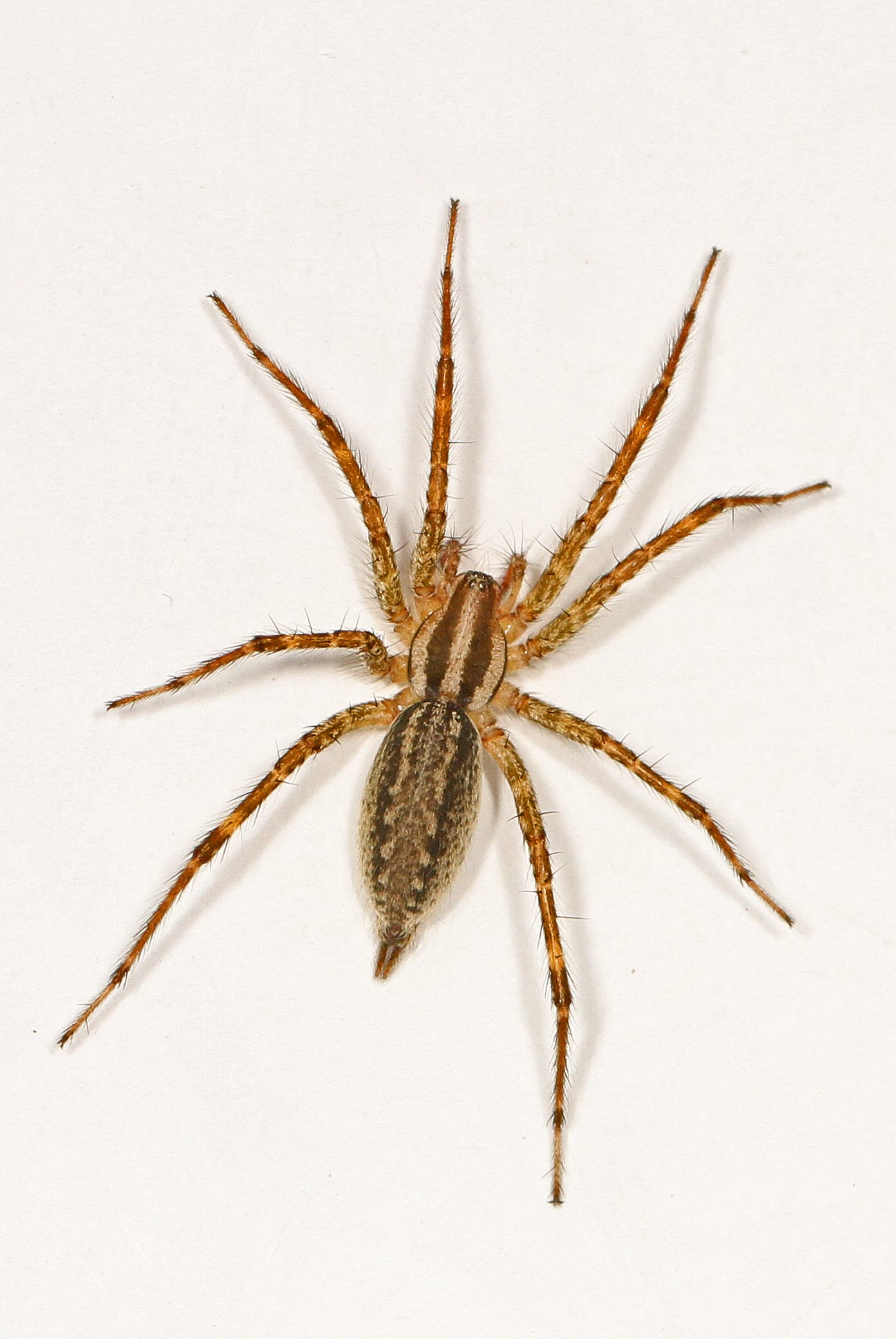
The American Grass Spider is one of the most commonly encountered spiders across Texas. Known for its distinctive funnel-shaped webs, this species frequently appears in lawns, fields, pastures, gardens, and even rooftops where dew settles in the early morning. Their webs often spark curiosity because of their sheet-like structure that tapers into a narrow retreat tunnel where the spider waits patiently. When sunlight catches the silk, it resembles a delicate blanket stretched across the grass, sparkling with tiny droplets like a natural work of art.
These spiders are exceptionally fast. When prey lands on the sheet portion of the web, the Grass Spider launches from the funnel with lightning speed, grabbing its target and dragging it back into the tunnel. Their agility is one of the reasons people seldom see them in open view—they retreat the moment they sense footsteps or changes in vibration.
American Grass Spiders have long, slender legs and bodies marked with subtle stripes along the cephalothorax and abdomen. While their appearance varies slightly depending on species, most share a similar pattern: brown or gray bodies with darker lateral bands. These patterns help them blend into ground vegetation and thatch. Unlike orb-weavers, Grass Spiders do not rely on sticky silk. Instead, they construct webs that act like a non-adhesive “tripwire” system. Once an insect stumbles onto the web, the spider relies on speed rather than sticky silk to secure the prey.
In Texas, the species thrives in suburban and rural landscapes. They prefer open environments with low vegetation, though they are equally comfortable near woodpiles, foundations, and fence lines. During late summer and early autumn, their webs become especially noticeable as populations reach their peak. Despite rumors, these webs do not indicate a spider “infestation.” Instead, they simply reflect healthy outdoor biodiversity.
Like most spiders included in this guide on types of spiders in Texas, the American Grass Spider rarely bites. Their jaws are small, and their venom is mild. They typically rely on speed rather than confrontation to avoid threats. Even if disturbed, they usually dash deeper into their funnel retreat, disappearing from sight before a person can blink.
Females create egg sacs inside sheltered areas of the web tunnel. After laying eggs, they remain hidden nearby, allowing the spiderlings to emerge when conditions are right. The juvenile spiders rapidly spread out, constructing miniature funnel webs that mimic the adult structures. Because of this, a single yard can host dozens of tiny funnels during early summer, giving homeowners a glimpse into the species’ lifecycle.
Grass Spiders contribute significantly to local insect control. They feed on flies, gnats, beetles, and even small moths, keeping pest populations manageable. Their webs, though sometimes mistaken for neglect or clutter, actually indicate a healthy interplay between predators and prey in outdoor spaces.
The American Grass Spider is an important part of Texas ecosystems, appreciated for its elaborate funnel webs, incredible speed, and subtle beauty. Many Texans consider it a familiar symbol of warm mornings and dew-covered lawns—a reminder of how much wildlife thrives quietly at ground level.
24. Daddy Long-Legs Cellar Spider (Pholcus phalangioides)
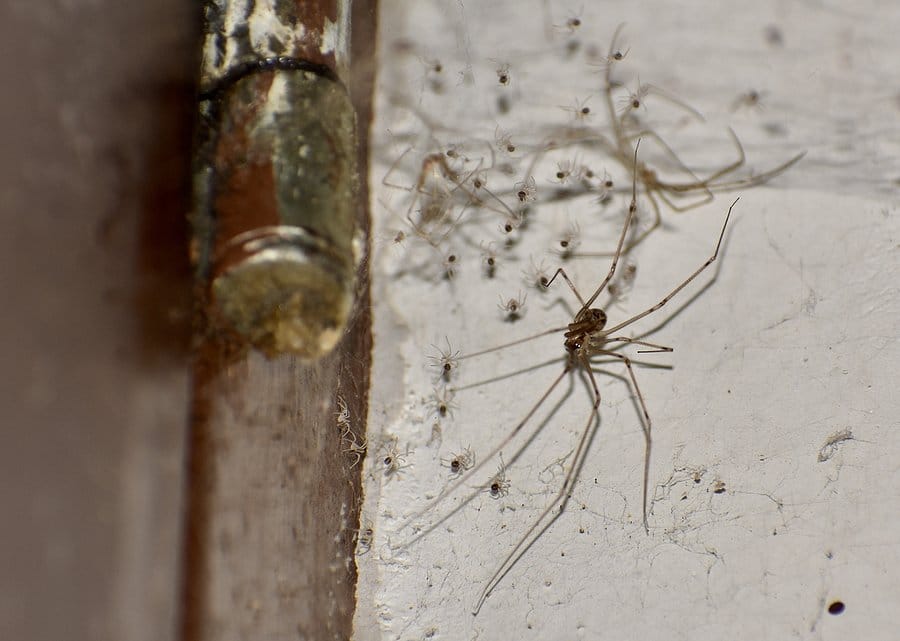
The Daddy Long-Legs Cellar Spider is one of the most recognizable spiders in Texas homes. With its tiny body and incredibly long, thread-like legs, this species appears surprisingly delicate at first glance. Texans often spot these spiders in corners of garages, basements, sheds, and quiet indoor nooks where humidity stays mild. Despite their fragile appearance, Cellar Spiders are effective predators that help keep indoor insect populations under control. Their long legs allow them to maneuver through the loose, irregular tangles of their webs with ease, navigating spaces where bulkier spiders would struggle.
Cellar Spiders construct messy, three-dimensional webs that appear loosely organized. These webs are not meant to be pretty, but they perform their job well—capturing mosquitoes, moths, houseflies, small roaches, and even other spiders. In fact, one of the daddy long-legs’ most interesting behaviors is its habit of preying on competitors. When a jumping spider, house spider, or small cobweb spider wanders too close, the Cellar Spider often shakes its web rapidly, creating a vibrating curtain of silk that confuses the intruder. Once the opposing spider becomes disoriented, the Cellar Spider rushes forward, wraps it in silk, and turns it into a meal.
Though many myths surround this species—especially the exaggerated claim that it has “the most dangerous venom but can’t bite humans”—the reality is far more ordinary. Cellar Spider venom is mild and medically insignificant. Their fangs can technically puncture human skin, but they rarely attempt to bite. Even when handled, they prefer to bounce wildly in their webs or retreat into cracks rather than stand their ground. Their bite, if it occurs at all, tends to produce nothing more than a brief tingling sensation.
The species has adapted beautifully to human structures. It thrives in Texas because of the state’s warm climate, which allows populations to remain active year-round. During winter, heated homes provide a stable refuge where these spiders continue to feed, reproduce, and build webs. Females carry their egg sacs delicately between their jaws rather than attaching them to the web. This floating, pearl-like bundle contains dozens of developing spiderlings. Once they hatch, the young stay near the female for a short period before dispersing to establish small, wispy webs of their own.
Although many homeowners sweep away the webs during cleaning, Cellar Spiders often rebuild within days. They are not aggressive, messy invaders but rather quiet tenants that mind their own business and help maintain a natural balance. In rural areas, they are especially valuable in barns and storage sheds where insects multiply quickly. Watching one suspend itself upside-down in its web, legs stretched outward, feels almost meditative—like a modern art installation made entirely of silk and patience.
Whether resting in dim corners or carefully wrapping a captured fly, the Daddy Long-Legs Cellar Spider remains a familiar member of the community of spiders in Texas. Its calm demeanor, subtle beauty, and pest-control talents earn it a deserved place on this list of species worth appreciating.
25. False Black Widow (Steatoda grossa)
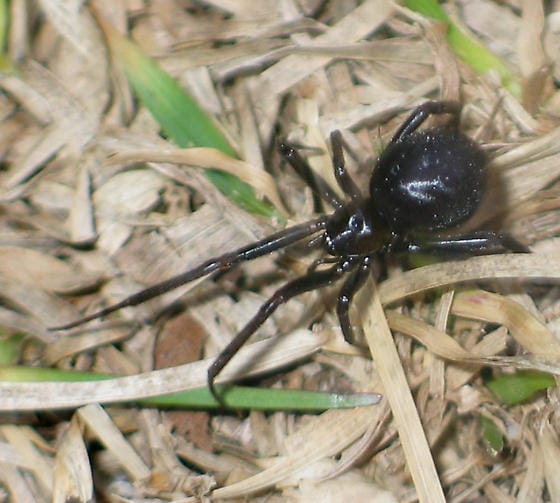
The False Black Widow is one of those spiders that causes unnecessary panic simply because of its resemblance to the famous and feared Black Widow. While it shares the same rounded abdomen and preference for dark, secluded areas, the False Black Widow lacks the iconic red hourglass marking. Instead, its abdomen is typically brownish or purplish with subtle patterning. This spider is far less dangerous than its notorious cousin, though its bite can still cause local discomfort—similar to a mild bee sting. For Texans, learning the differences between the two species brings a bit of peace of mind when flipping over old boards, pots, or patio furniture.
False Black Widows construct irregular, sticky webs in sheltered locations such as garages, woodpiles, crawl spaces, rock crevices, and garden sheds. These webs are small but strong, designed to restrain insects and small arthropods efficiently. When prey becomes entangled, the spider rushes forward with surprising speed, wraps it tightly in silk, and delivers a quick venomous bite. This hunting behavior mirrors the efficient style of true widows, a testament to the spider’s ability to fill similar ecological roles.
This species is calm and avoids confrontation. When disturbed, it either retreats deeper into its nest or drops to the ground, curling into a defensive posture. Unlike true widows, the False Black Widow rarely strikes without repeated provocation. Even when accidentally pressed, many individuals simply attempt to escape. Because of this, they coexist quietly with humans in many Texas households, especially those with dark storage corners or older structures where insects thrive.
Their diet includes cockroaches, beetles, ants, flies, woodlice, and even other spiders. This makes them surprisingly helpful to homeowners who prefer natural forms of pest control. Some Texans even refer to them affectionately as “basement guardians,” appreciating their appetite for unwelcome insects. In outdoor settings, False Black Widows settle beneath stones, along fences, under eaves, or within hollow logs, where they maintain stable populations throughout the year.
Reproduction in this species is fascinating. Females produce round, papery egg sacs that resemble tiny beige balloons. These sacs remain protected within the webbing, and the female stays nearby, monitoring her territory. Once spiderlings hatch, they linger briefly before dispersing. Their early life stages involve creating miniature cobweb structures where they capture gnats and tiny insects—a kind of training ground for adulthood.
While False Black Widows often gain attention because of mistaken identity, they deserve recognition for their ecological role and calm disposition. They are an integral part of many Texas habitats, both urban and rural, and are far from the dangerous threat people sometimes imagine. When included among types of spiders in Texas, they serve as an important reminder that appearance doesn’t always tell the whole story.
26. Green Crab Spider (Misumessus oblongus)
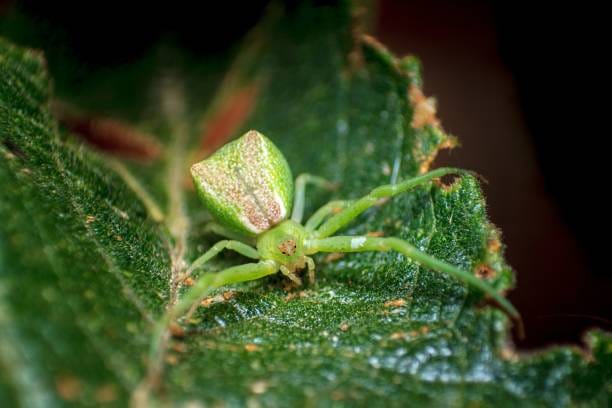
The Green Crab Spider is a small but striking arachnid that brightens Texas gardens during spring and summer. Its vibrant green coloration blends beautifully with foliage, making it nearly invisible among leaves, stems, and flower petals. Unlike orb-weavers or funnel-web spiders, the Green Crab Spider does not build intricate webs. Instead, it’s an ambush hunter. The spider sits perfectly still, often on wildflowers or tall grasses, waiting for unsuspecting insects to approach. When a bee, butterfly, or beetle lands within reach, the spider lunges sideways—a move made possible by its crab-like stance and unusually flexible leg joints.
This species belongs to a group known for their ability to move sideways and backward with ease. The Green Crab Spider’s flattened body and splayed legs make it look a bit like a miniature green crustacean perched among foliage. Many Texans don’t notice it until suddenly spotting a small green “petal” shifting out of place. Its camouflage is so effective that these spiders can sit on a flower for hours without detection.
One of the most memorable aspects of this spider’s life is its connection to blooming plants. You’ll often find Green Crab Spiders on daisies, black-eyed Susans, sunflowers, and coneflowers. They use the vibrant petals as both hunting platforms and hiding spots. Their green bodies blend with foliage while their pale undersides match the flower bases. This allows them to surprise pollinators, which make up a significant portion of their diet. While it may sound harsh that these spiders prey on bees and butterflies, it’s simply part of the broader ecological balance. For every pollinator taken, countless others live unaffected—and the spider’s presence keeps herbivorous insect numbers stable.
Green Crab Spiders are gentle creatures when it comes to human interaction. They rarely bite, and their venom is mild, typically causing only minimal irritation. Most individuals prefer to remain motionless or scurry away when disturbed. Their small size—usually no more than 5–7 millimeters—makes encounters brief and unobtrusive.
Texans can find this species across prairies, meadows, suburban gardens, agricultural fields, and roadside wildflower patches. During peak blooming seasons, their population becomes especially visible to those who take the time to look closely. Observing one sit patiently on a blossom is a small reminder of how even the quietest parts of nature can carry drama, strategy, and beauty.
Females create small silk retreats among leaves where they lay eggs. These retreats offer shelter from wind, rain, and predators. After the spiderlings hatch, they disperse into surrounding foliage, adapting quickly to an ambush lifestyle.
Despite their subtle presence, Green Crab Spiders remain a charming and important component of spiders in Texas, offering a splash of color and an impressive hunting strategy that feels almost like a miniature nature documentary playing out on flower petals.
27. Widow Family Spider

The Widow Family Spider is one of the most talked-about spiders in Texas, partly because it carries a reputation that precedes it. While many people instantly think of the famous Black Widow, this family actually includes several closely related species with similar lifestyles. They are known for their shiny, globular bodies, spindly legs, and the dramatic hourglass marking on the underside of females. In Texas, these spiders tend to settle anywhere that feels quiet, dry, and undisturbed. Barns, garages, wood piles, outdoor sheds, and forgotten corners under porches are common real estate for them. They prefer dim, sheltered spaces where they can stretch their sticky, chaotic webs into an effective trap.
Many Texans recognize these spiders from a distance, and for good reason. Their posture has a sort of poised elegance—like they’re always halfway between resting and reacting. Females frequently hang upside down, revealing the signature marking that alerts most observers to give them space. Males, on the other hand, look slimmer, lighter, and far less intimidating. They wander more often, using mobility as a way to locate potential mates, while the females anchor themselves to a web they maintain with unmatched consistency.
Despite their notorious status, Widow Family Spiders play a surprisingly important ecological role. They help regulate insect populations, especially beetles, roaches, mosquitoes, moths, and even other spiders. Think of them as the reclusive pest-control specialists that work quietly behind the scenes. Their webs may appear disorganized at first glance, but the structure is deliberate. Every line, every corner, every sticky spiral serves a purpose. It’s almost like watching a messy desk that somehow functions better than a tidy one.
The venom of a Widow Spider has been studied extensively, and yes, it is medically significant. But the image of these spiders “chasing” people is nothing more than a tall tale. Their first instinct is to avoid conflict. Most bites occur when someone accidentally presses against the spider without realizing it—while moving firewood, slipping a hand into a dark glove shelf, or brushing against the underside of outdoor furniture. Even then, reported bites remain rare. Modern medicine has made treatment straightforward, and fatal cases are virtually nonexistent today.
Identifying these spiders isn’t difficult once you know what to look for. The females are glossy black, with a rounded abdomen that looks almost like a polished bead. The hourglass marking is usually red, but occasionally orange. Males and juveniles can display stripes, speckles, or lighter tones. You might catch them feeding at night, especially during warm months when insects are plentiful. Their feeding pattern can look a bit dramatic—wrapping and tugging at prey like a fisherman reeling in a catch.
In Texas, Widow Family Spiders appear throughout the state, from the Gulf Coast to the Panhandle. Their adaptability is impressive. They can tolerate humid climates, semi-arid scrubland, urban suburbs, and even rural farmland. They are also active throughout most of the year, a trait that surprises newcomers who assume spiders vanish during winter. In truth, adults often survive cold spells by hiding away, and the egg sacs overwinter with remarkable resilience.
A fun little anecdote shared among field biologists goes something like this: “If you want to find a widow spider in Texas, knock over an old bucket and count to three.” It’s obviously exaggerated, but it hints at how common these spiders are in quiet corners of human spaces. Their secretive behavior, combined with their preference for sheltered spots, makes them easy to overlook until someone shifts an object that hasn’t moved in several months.
Despite the myths, these spiders aren’t villains of the backyard. They simply want to survive, eat well, and raise their young. Watching them construct their webs can be surprisingly calming—gentle movements, slow adjustments, deliberate choices. They behave like quiet artisans at work. And once you understand their habits and behaviors, their presence becomes less intimidating and more like observing an interesting, if reserved, neighbor.
In the broader conversation of spiders in Texas, Widow Family Spiders stand out as important predators, cautious residents, and fascinating creatures with a family history steeped in folklore. They’re not aggressive, they’re not lurking to cause trouble, and they certainly don’t deserve the villain status often placed upon them. They are simply part of Texas’s natural fabric—a small but essential thread that helps maintain balance in the region’s ecosystems.
28. Orb-Weaver Spider
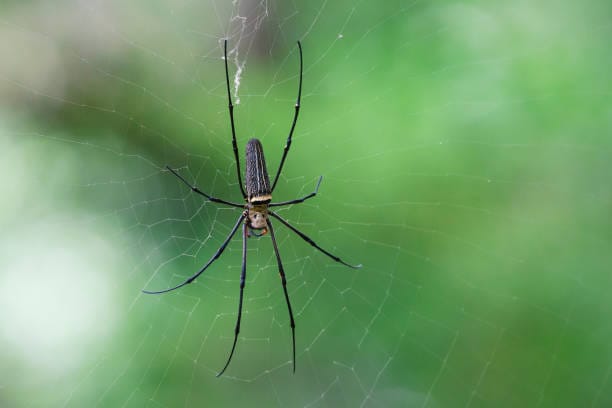
Orb-Weaver Spiders are among the most recognizable arachnids in Texas, thanks to their intricate webs that resemble perfectly spun wheels. These spiders bring a kind of artistic beauty to the outdoor landscape, transforming branches, porches, and fences into architectural showcases. Their webs glisten at sunrise with dew beads aligned so perfectly that many early-morning hikers treat them like nature’s jewelry displays. If you’ve ever walked through a park trail and accidentally “collected” a web across your face, chances are an orb-weaver was responsible—though the spider itself was probably watching from a safe distance, equally startled.
Texas hosts several species of orb-weavers, but they share similar traits: rounded abdomens, long legs, vivid patterns, and a calm, deliberate demeanor. They aren’t fast-moving hunters; instead, they operate by strategy. Each evening, they patiently rebuild or repair their webs, preparing for another night of catching moths, beetles, flying ants, and almost anything that wanders into their sticky lattice. Their behavior feels rhythmic and predictable, like a craftsman who ends each day by cleaning tools and preparing materials for the next morning.
One of the most charming things about orb-weavers is how peaceful they are. They rarely react aggressively, even when approached closely. Many photographers lean inches away from them with a macro lens, and the spiders simply remain still, trusting that their web is the best form of security. Their mild disposition makes them ideal for backyard observation. Children often become fascinated by watching them rebuild webs step-by-step—an activity that can be oddly hypnotic. If patience had a mascot, the orb-weaver would be a strong contender.
Their coloration varies widely, from bright yellows and oranges to muted browns designed to camouflage them during the day. Many species take shelter in curled leaves, hollow stems, or small corners of the web, sometimes with a single silk line alerting them to vibrations. If you watch them closely at night, you may see them perched right in the center of the orb, waiting for the faintest quiver that signals a catch. Their posture in these moments resembles a poised dancer, lightly balanced and ready to respond with fluid precision.
In Texas, orb-weavers thrive in nearly every environment—suburbs, forests, gardens, open fields, deserts, and even urban spaces with enough vegetation to support their web-building needs. They prefer areas where flying insects are abundant, which makes patios with porch lights especially attractive. If you ever notice a spider returning to the same spot nightly, it’s likely an orb-weaver taking full advantage of insects drawn to artificial lighting.
Despite their large size and sometimes intimidating appearance, orb-weavers pose almost no risk to humans. Their venom is mild, and their fangs aren’t strong enough to penetrate most skin easily. They would much rather freeze in place or drop from their web than bite in defense. Their defensive behavior feels almost comical at times—like someone avoiding conflict by stepping behind a curtain and hoping not to be noticed.
Another fascinating trait is their seasonal cycle. Orb-weavers typically grow rapidly through warmer months and reach maturity in late summer or fall. This is when their webs become noticeably larger, sometimes spanning an entire doorway or stretching between tall shrubs. Their presence peaks during the warm evenings of September through November. After mating, the females lay egg sacs that overwinter, while the adults naturally decline as temperatures fall. The next generation emerges in spring, continuing the quiet artistry of their lineage.
Their ecological contributions shouldn’t be underestimated. A single orb-weaver can capture hundreds of insects in a week. This helps reduce pest populations naturally without chemicals or intervention. Gardeners often consider them quiet allies—miniature guardians that work the night shift. Observing them also serves as a reminder of how interconnected ecosystems truly are. Without spiders like orb-weavers, insect populations would rise dramatically, throwing natural balance into disarray.
Orb-weaver behavior includes a few quirks that biologists love to highlight. For example, some species will “bounce” their web rapidly when threatened, creating a blur that confuses potential predators. Others consume their web entirely at dawn, recycling proteins into their bodies before rebuilding the structure the next evening. Imagine eating your house every morning, then rebuilding it from scratch by sunset—that’s an orb-weaver’s daily routine.
Whether seen as harmless neighbors, natural pest controllers, or living ornaments of the night, orb-weaver spiders remain some of Texas’s most admired arachnids. Their calm presence, impressive engineering skills, and predictable routines make them one of the best species for beginner spider observers. They bring beauty, function, and an unexpected sense of calm to the landscape—one perfectly spun circle at a time.
29. Shamrock Orbweaver
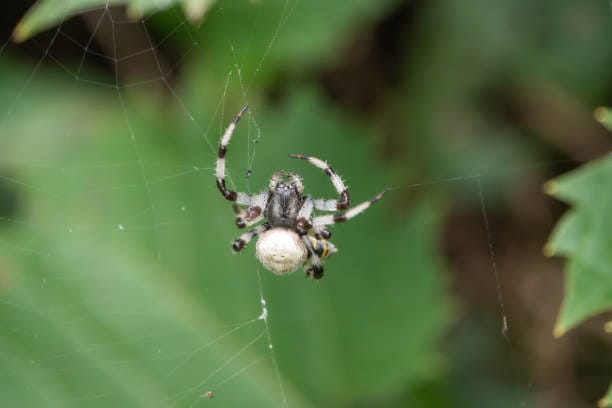
The Shamrock Orbweaver is one of Texas’s most captivating spiders, known for its plump body, vibrant patterns, and charming personality—if we might call a spider “charming.” It belongs to the same architectural guild as the more general orb-weaver family, but it stands out thanks to its distinctive markings that resemble clusters of shamrock shapes. Whether or not the spider is aware of its decorative theme is up for debate, but it certainly makes identification easier for anyone paying attention.
This spider typically appears in shades of green, orange, yellow, or reddish-brown. The abdomen often features dotted or leaf-like patterns that help it blend into foliage during the day. At rest, it looks like a quiet ornament hanging in a shrub, almost like a holiday decoration someone forgot to take down. Many observers describe them as “cute,” which may be the highest compliment a spider can reasonably hope to receive.
Shamrock Orbweavers spend much of their time constructing elegant circular webs in gardens, backyards, meadows, and wooded edges. They prefer spots with moderate humidity and plenty of airflow. Since they hunt primarily at dusk and through the night, you’ll often spot them rebuilding their webs during late afternoon. Unlike some orb-weavers that hide throughout the day, the Shamrock Orbweaver often sits quietly in the center of its web, looking like it’s supervising the neighborhood.
When night falls, this spider becomes an attentive hunter. Vibrations from flying insects travel cleanly through its web, and the spider reacts almost instantly. Watching one feed can feel like watching a chef in a busy kitchen—quick movements, precise decisions, and a quiet confidence that suggests it has done this countless times. While its feeding behavior is efficient, it never feels aggressive. Every motion is practical, controlled, and almost gentle.
In Texas, Shamrock Orbweavers can be found from spring through late fall, though they are most abundant during late summer and early autumn. Warm evenings help support their hunting success, and insect populations are at their peak during these months. They prefer environments that offer reliable anchor points for web building. Garden fences, trees, porch corners, and tall plants all make suitable foundation structures. Homeowners with an outdoor garden may find themselves sharing space with one or two of these spiders through the season.
One of the most intriguing aspects of the Shamrock Orbweaver is how calmly it reacts to nearby activity. While some spiders retreat instantly when disturbed, this species often freezes, relying on its camouflage to avoid attention. You might gently bend the branch it’s resting on and it will simply cling tighter, moving only when it feels completely safe. Their patience speaks volumes about their temperament.
Their egg sacs resemble dry leaves or small fibrous knots. Females typically deposit them on branches or tucked beneath sheltered spots where moisture and predators are less likely to cause trouble. After laying their eggs, females may continue hunting for a short period before their activity declines with cooler temperatures. Hatchlings emerge the following year, appearing as tiny, bright dots congregating together before dispersing.
Gardeners often appreciate Shamrock Orbweavers for their talent at reducing mosquito and moth populations. While they may occasionally build a web in an inconvenient location, gently relocating them or waiting a night or two usually resolves the situation. Their fleeting autumn presence makes them feel more like seasonal guests than permanent residents.
A common anecdote among wildlife observers involves walking out at night with a flashlight and spotting a Shamrock Orbweaver mid-web, glowing softly as the light hits its abdomen patterns. It’s a surprisingly peaceful moment. For many, this species serves as an easy entry point into appreciating spiders—visually attractive, harmless, and fascinating to watch. Once someone spends a little time around one, the fear tends to fade.
In the broader conversation about types of spiders in Texas, the Shamrock Orbweaver holds a comfortable spot among the most admired. Its gentle behavior, decorative appearance, and nighttime artistry make it a favorite among hikers, gardeners, and curious homeowners alike. It is a reminder that Texas’s wildlife isn’t only rugged or intimidating—it can also be delicate, colorful, and quietly delightful.
30. Araneus bonsallae
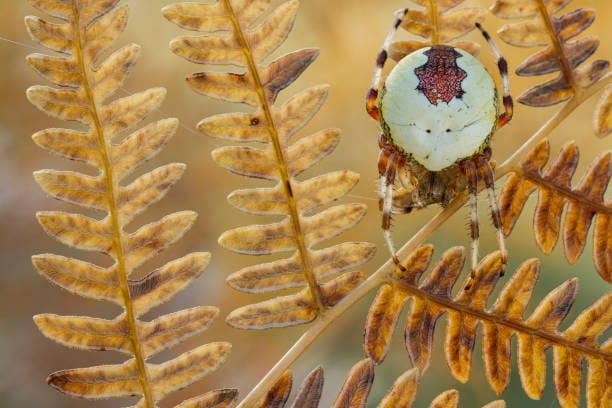
Araneus bonsallae is one of those spiders in Texas that quietly captures your attention once you actually notice it. Many Texans walk past this species without realizing they’re sharing the landscape with a surprisingly detailed little architect. A member of the larger orb-weaver group, this spider demonstrates the same signature traits—circular webs, steady habits, and a calm demeanor—but with its own subtle personality. While not as widely recognized as the yellow garden spider or the bold jumping spider, Araneus bonsallae holds a certain charm for observers who enjoy uncovering the lesser-known residents of the natural world. It’s a species that rewards curiosity with small discoveries.
This spider is typically medium-sized, with a rounded abdomen that may appear mottled, patchy, or leaf-like depending on the angle of the sunlight. Brown, tan, gray, and soft reddish tones blend across its body, giving it a natural camouflage that works remarkably well among tree bark and dried vegetation. When resting, the spider often folds its legs closely to its body, becoming a small, inconspicuous shape tucked into a crevice. At a quick glance, many people assume it’s nothing more than a curled leaf or a speck of debris clinging to bark.
While its appearance helps it stay hidden, its behavior reveals far more personality. Araneus bonsallae spends a good portion of the evening building or repairing its web. It follows a methodical pattern—laying the frame lines, stretching the radial spokes, and finally adding the spirals that hold everything together. Watching one weave its nightly structure can feel like observing a painter preparing a canvas, gently turning in small circles with precise movements. And because the webs are often positioned in quiet areas, such as between shrubs or across a shaded walkway, they create an unexpected encounter for anyone taking a nighttime stroll through the backyard.
The placement of the web often depends on wind direction and available anchor points. This spider shows a surprising knack for selecting spots with just enough airflow to bring prey but not enough breeze to damage the structure. Gardens, forest edges, porches, and trails all serve as potential habitat. In Texas, this species tends to appear from late spring through early autumn, with population peaks occurring when flying insects are most active. Long warm evenings allow the spider to catch a wide range of prey—including beetles, moths, gnats, and winged ants.
Once the web is complete, the spider usually positions itself at the center or slightly off to the side, depending on how confident it feels about nearby disturbances. If startled, it might drop straight down on a silk line, hanging like a small ornament until the situation seems safe again. This quick descent is a behavior shared by many orb-weavers and works like a built-in elevator system. More than one observer has accidentally triggered this move and found themselves staring at a dangling spider that seems equally surprised.
One endearing aspect of Araneus bonsallae is how calm it behaves even when approached closely. Photographers who enjoy macro shots often appreciate this species because it doesn’t bolt at the first sign of movement. Instead, it relies on stillness and camouflage to avoid detection. If someone gently touches the supporting branch or nearby foliage, the spider will usually either freeze or slowly shift to the underside of the leaf, as though it’s trying to politely excuse itself from attention. It’s a subtle, almost shy behavior.
Like other orb-weavers, this species plays an important role in controlling insect populations. In a single night, one spider may capture several mosquitoes, small moths, or flying pests that would otherwise cause problems. It acts like a quiet garden guardian—working the night shift, rarely seen during the day, and leaving only a glistening web as a sign of its efforts. Homeowners who appreciate natural pest control often find themselves thankful for these nighttime helpers, even if they don’t always see them directly.
The life cycle of Araneus bonsallae follows a familiar pattern. After mating in late summer or early fall, females produce egg sacs that are carefully wrapped in layers of silk and hidden in well-protected spaces. These sacs are round, dry-looking, and slightly textured. They remain in place through the colder months, with spiderlings emerging when temperatures rise again. Newly hatched spiders stay together briefly before dispersing through a process known as “ballooning,” where they release fine silk strands that catch the breeze and carry them to new locations. It’s one of nature’s most whimsical forms of travel.
Something often overlooked about this species is its subtle beauty when illuminated by soft light. During an evening walk with a flashlight, the spider’s patterned abdomen may shimmer slightly, revealing delicate tones that are easy to miss during the daytime. The web strands might reflect tiny sparks of light, making the spider appear as though it’s suspended in a constellation of its own making. For many wildlife enthusiasts, it’s these small, quiet moments that inspire a lasting appreciation for Araneus bonsallae.
While harmless to humans, this spider occasionally finds itself misunderstood. People sometimes panic when walking into a web, but the spider is usually already retreating before the person has time to react. They want absolutely nothing to do with confrontation. Their fangs are small, the venom mild, and their instinct firmly rooted in avoidance. If anything, they seem more afraid of people than people are of them. That’s saying something, given how many Texans instinctively wave their arms after brushing against a web.
There’s a slightly humorous story often shared by nature educators: a homeowner complained about finding “the same spider” rebuilding a web on his porch every night. He kept clearing the web, convinced the arachnid was stubbornly refusing to relocate. After several days, he discovered that he wasn’t dealing with one persistent individual—he had several Araneus bonsallae rotating through the porch lights to take advantage of the insects. The spiders weren’t being defiant; they were simply good at finding the buffet.
In the discussion of types of spiders in Texas, Araneus bonsallae represents the quieter, less flamboyant members of the orb-weaver clan. It doesn’t have the bold colors of the yellow garden spider or the dramatic patterns of the spiny orb-weaver. Instead, it thrives through subtlety—calm behavior, reliable routines, and an understated beauty that appears once you slow down enough to notice. Observers who take the time to watch one work often walk away with a deeper appreciation for how much patience and skill go into each web.
Araneus bonsallae may not be a household name, but its presence enriches Texas landscapes in countless small ways. It keeps insect populations under control, contributes to the health of backyard ecosystems, and offers curious minds a chance to witness the quiet craftsmanship of orb-weaving life. For anyone willing to pause for a moment and look closely, this spider proves that even the less-famous residents of Texas wildlife have stories worth telling.
Conclusion
Texas is home to an impressively wide range of spiders, and taking the time to explore them reveals far more variety than most people expect. Some are bold and brightly patterned, others prefer to blend in with bark or leaves, and many spend their nights quietly maintaining webs that help keep insect populations under control. Whether someone is fascinated by their hunting strategies, their extraordinary web designs, or simply wants to understand which species share space around the house and garden, these spiders offer plenty of stories to uncover.
Learning about different species also helps clear up many common misunderstandings. Most spiders in Texas are gentle, shy, and far more interested in catching insects than bothering humans. They retreat quickly when startled, rely on camouflage rather than confrontation, and make meaningful contributions to local ecosystems. Observing them closely—perhaps during an evening walk with a flashlight or while tending a backyard garden—can transform a moment of surprise into one of quiet appreciation.
As you’ve seen throughout this guide on various types of spiders in Texas, each species brings its own style of survival to the table. Some build elaborate spirals, others chase prey across open ground, and a few hide patiently until the right insect wanders past. Together, they paint a lively picture of the state’s biodiversity. For many Texans, these small creatures become familiar neighbors once you understand their behaviors, colors, and habits.
Whether you’re a homeowner, a curious hiker, or someone who simply enjoys watching wildlife from the porch, the spiders scattered across Texas landscapes can teach you plenty about balance, timing, and adaptability. They remind us that even the smallest animals play important roles. So the next time you spot a shimmering web or a tiny shape tucked into a corner of the garden, take a moment to look closer. There’s a good chance one of these remarkable spiders is quietly going about its nightly routine, doing far more good than most people realize.
FAQ’s
1. What are the most common spiders found in Texas?
Common spiders in Texas include Wolf Spiders, Orb-Weavers, Black Widows, Brown Recluses, Jumping Spiders, Crab Spiders, and Cellar Spiders.
2. Are there dangerous spiders in Texas?
Yes. Texas is home to two medically significant spiders: the Black Widow and the Brown Recluse.
3. How can I identify a Brown Recluse in Texas?
Brown Recluses have a distinct violin-shaped marking on their cephalothorax and six eyes arranged in pairs.
4. Do Black Widows live in Texas?
Yes, several species of Black Widow spiders are found throughout Texas, especially in warm, sheltered areas.
5. Are Wolf Spiders harmful in Texas?
Wolf Spiders can bite if provoked, but their bites are not considered dangerous to most people.
6. Where do spiders typically hide in Texas homes?
Common hiding spots include garages, sheds, closets, attics, basements, and areas behind furniture.
7. What attracts spiders to Texas homes?
Spiders are drawn to homes with abundant insect prey, clutter, moisture, and entry gaps.
8. Are Orb-Weaver spiders common in Texas?
Yes, many Orb-Weaver species thrive in Texas, often building large circular webs outdoors.
9. Do spiders in Texas bite humans often?
Most Texas spiders rarely bite and will only do so in self-defense.
10. What should I do if a spider bites me in Texas?
Clean the bite, apply ice, and seek medical attention if severe symptoms appear, especially for suspected widow or recluse bites.
11. Can Texas spiders be beneficial?
Yes, spiders help control insect populations and reduce pests around homes and gardens.
12. Are Jumping Spiders found in Texas?
Jumping Spiders are common throughout Texas and are known for their excellent vision and bold behavior.
13. How big do Texas Wolf Spiders get?
Wolf Spiders in Texas can grow over an inch in body length, with leg spans reaching several inches.
14. Are Tarantulas native to Texas?
Yes, Texas has several species of native tarantulas, mainly in dry grasslands and deserts.
15. What time of year are spiders most active in Texas?
Spiders are most active in late summer and fall when temperatures are warm and prey is abundant.
16. Do spiders enter Texas homes more during winter?
Yes, colder weather encourages spiders to seek warmth indoors.
17. How can I keep spiders out of my Texas home?
Seal cracks, reduce clutter, remove webs regularly, and reduce outdoor lighting that attracts insects.
18. Are baby spiders in Texas dangerous?
Most baby spiders are harmless and pose minimal risk to humans.
19. Do spiders in Texas jump?
Some do—especially Jumping Spiders, which use powerful legs to leap several times their body length.
20. Do spiders in Texas spin webs indoors?
Yes, especially Cellar Spiders and House Spiders, which build webs in corners and ceilings.
21. Are Crab Spiders found in Texas?
Yes, Green Crab Spiders and other species camouflage themselves in flowers to ambush prey.
22. What do spiders in Texas eat?
They primarily eat insects, including flies, mosquitoes, ants, roaches, and other small arthropods.
23. Are Garden Spiders common in Texas?
Yes, garden-friendly spiders like Yellow Garden Spiders and Orb-Weavers are abundant.
24. Do Texas spiders lay eggs indoors?
They can, especially in dark, undisturbed corners or storage areas.
25. What do spider eggs look like in Texas?
They are usually found in silk sacs that vary in shape and size depending on the species.
26. Can spiders swim in Texas?
Some spiders can survive briefly on water, while a few species can even dive underwater.
27. Do Texas spiders live in trees?
Many species, including Orb-Weavers and Jumping Spiders, live in trees and shrubs.
28. Are Huntsman Spiders found in Texas?
Yes, Huntsman Spiders occur in southern Texas and are known for their large size and speed.
29. Do Texas spiders hunt at night?
Many, such as Wolf Spiders and Black Widows, are primarily nocturnal hunters.
30. Are House Spiders in Texas poisonous?
Most house spiders in Texas are harmless and not considered medically significant.
31. Do spiders live in Texas deserts?
Yes, desert habitats support Tarantulas, Wolf Spiders, and various ground-dwelling species.
32. Are Cellar Spiders common in Texas homes?
Very common—these long-legged spiders often inhabit garages and damp areas.
33. Are Texas spiders aggressive?
No. Most spiders are timid and avoid humans.
34. Do Texas spiders make noise?
Spiders do not vocalize, though some species may create faint sounds while moving.
35. How long do spiders live in Texas?
Lifespan varies from one year for most species to several years for tarantulas.
36. Do spiders in Texas regenerate lost legs?
Young spiders can regenerate lost limbs during molting; adults generally cannot.
37. Are Funnel-Web Spiders found in Texas?
Yes, some harmless funnel-weavers are present but are not related to the deadly Australian species.
38. Do Texas spiders prefer indoor or outdoor habitats?
Most prefer outdoor environments, but some adapt well to indoor living.
39. Do Texas spiders have predators?
Yes—birds, lizards, wasps, frogs, and even other spiders prey on them.
40. Does Texas have giant spiders?
Texas Wolf Spiders and Tarantulas are among the largest but are not dangerous.
41. Can spiders climb walls in Texas homes?
Yes, many species have specialized hairs that allow them to climb vertical surfaces.
42. Do spiders in Texas glow under UV light?
Some species, especially scorpions (not spiders), glow brightly; a few spiders may reflect faint UV light.
Read more: 40 Types of Wild Turtles (Pictures And Identification)