

Alaska is one of the best places in North America to see whales in the wild. Its long coastline, cold productive waters, fjords, bays, and offshore feeding grounds attract several whale species throughout the year. This guide to the types of whales in Alaska covers the eight species most strongly associated with Alaska’s marine waters, including their appearance, size, habitat, diet, behavior, and conservation importance.
Some species are common near popular whale-watching destinations, while others are more likely to be seen offshore or in remote parts of the Bering Sea and Aleutian Islands. Understanding these differences makes wildlife viewing more rewarding and helps visitors observe whales responsibly.
What Are the Main Types of Whales in Alaska?
The main types of whales in Alaska are humpback, gray, orca, beluga, bowhead, fin, minke, and sperm whales. Humpbacks, orcas, gray whales, and belugas are among the most familiar species for visitors. Bowhead, fin, minke, and sperm whales also occur in Alaskan waters but can be more difficult to locate because of their offshore habits, seasonal movements, or smaller population concentrations.
1. Humpback Whale
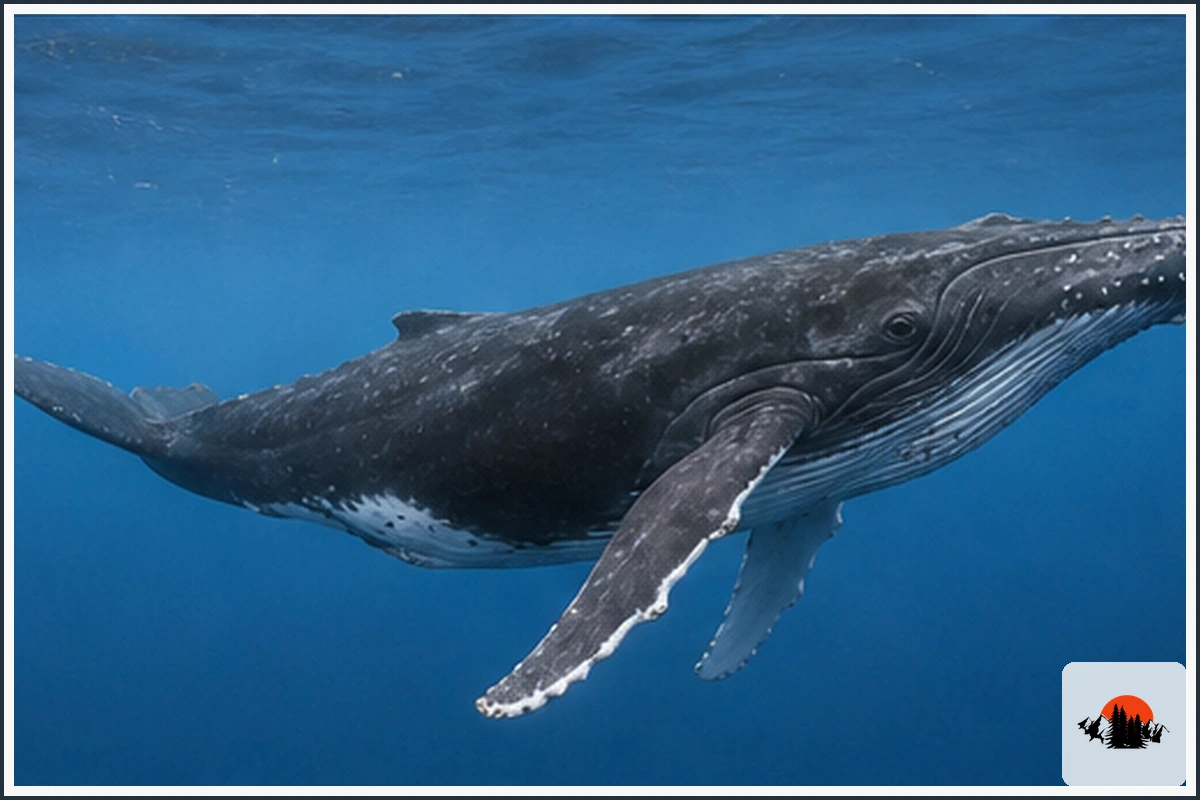
Scientific name: Megaptera novaeangliae
Humpback whales are among the most popular whales to see in Alaska. They are recognized by their very long front flippers, knobby head, dark back, and broad tail flukes. Many individuals have unique black-and-white patterns on the underside of the tail, allowing researchers to identify them photographically.
Adult humpbacks commonly measure about 40 to 50 feet long and may weigh roughly 30 to 40 tons. They migrate between warm breeding waters and productive feeding grounds. In Alaska, many arrive during spring and summer to feed on krill and small schooling fish such as herring, sand lance, and capelin.
Humpbacks are famous for breaching, tail slapping, flipper waving, and bubble-net feeding. During bubble-net feeding, a group may swim in a circle while blowing bubbles beneath a school of fish, concentrating the prey before lunging upward with open mouths. Juneau, Glacier Bay, Sitka, Kodiak, Seward, and parts of Southeast Alaska are well-known areas for sightings.
2. Orca or Killer Whale
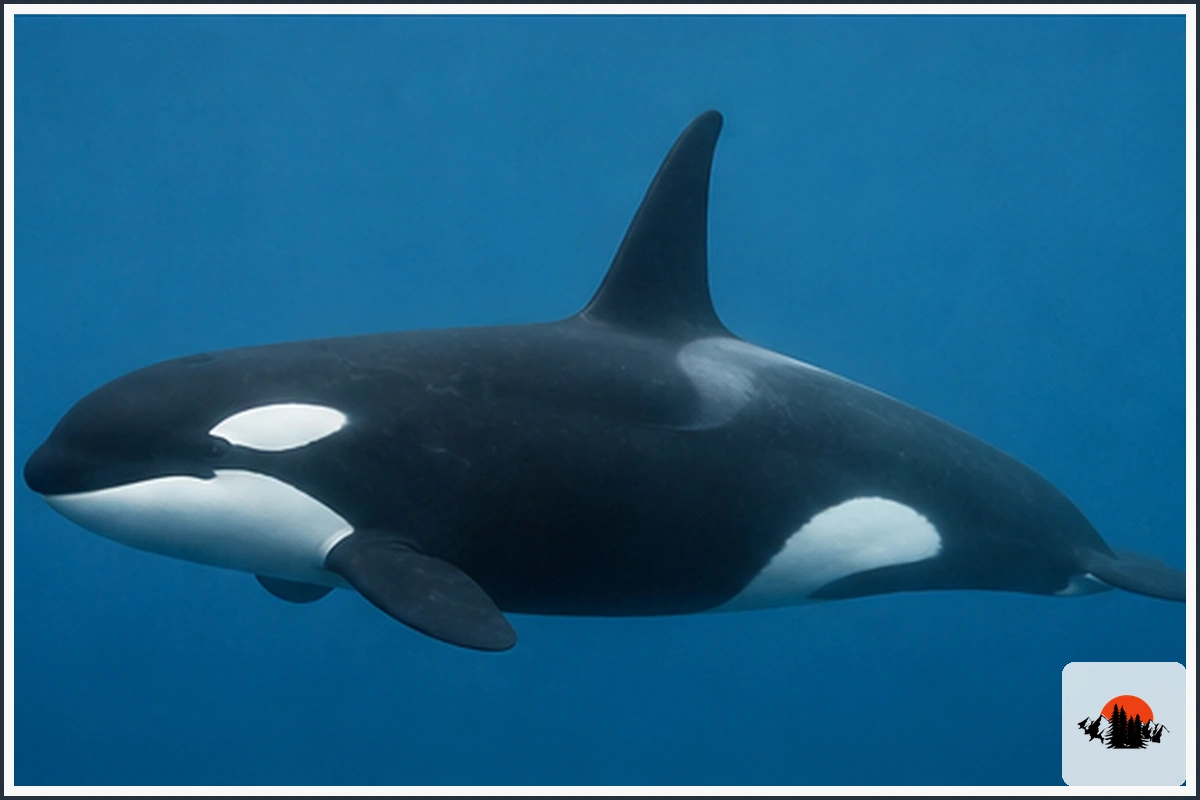
Scientific name: Orcinus orca
Orcas are the largest members of the dolphin family and one of Alaska’s most recognizable marine mammals. Their bold black-and-white pattern, tall dorsal fin, rounded white eye patch, and powerful swimming style make them relatively easy to identify.
Adult males can reach about 30 feet in length, while females are usually smaller. Alaska is home to several ecotypes and populations, including resident, Bigg’s, and offshore orcas. Resident orcas mainly eat fish, especially salmon, while Bigg’s orcas commonly hunt marine mammals such as seals, sea lions, and porpoises.
Orcas live in close social groups called pods. They communicate with calls and clicks, cooperate during hunts, and often travel with relatives. They may be seen in the Inside Passage, Prince William Sound, Resurrection Bay, the Gulf of Alaska, and around the Aleutian Islands. Their dorsal-fin shape and saddle patch can help experienced observers distinguish individuals.
3. Gray Whale
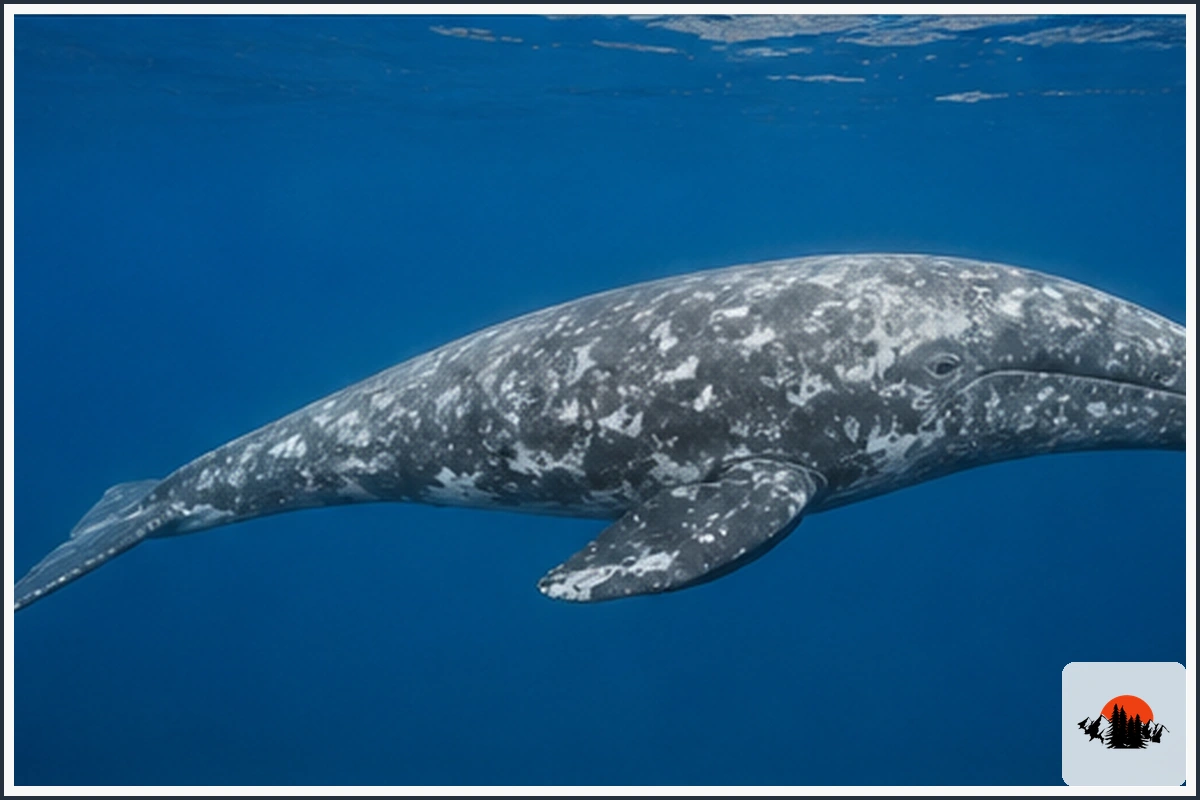
Scientific name: Eschrichtius robustus
Gray whales are medium-to-large baleen whales with mottled gray skin, a low hump instead of a tall dorsal fin, and several small knuckles along the back. Their skin often carries barnacles and whale lice, giving many adults a rough, patchy appearance.
Gray whales can grow to approximately 45 feet long. Most of the population migrates between breeding areas near Baja California and summer feeding grounds in the Arctic and sub-Arctic. Alaska is an important feeding region, particularly along the Bering, Chukchi, and Beaufort Sea coasts.
Unlike many baleen whales that filter prey from open water, gray whales often feed on bottom-dwelling animals. They roll onto one side and suction sediment from the seafloor, filtering out amphipods and other small organisms. Gray whales are commonly seen during spring migration and in northern Alaskan feeding areas later in the year.
4. Beluga Whale
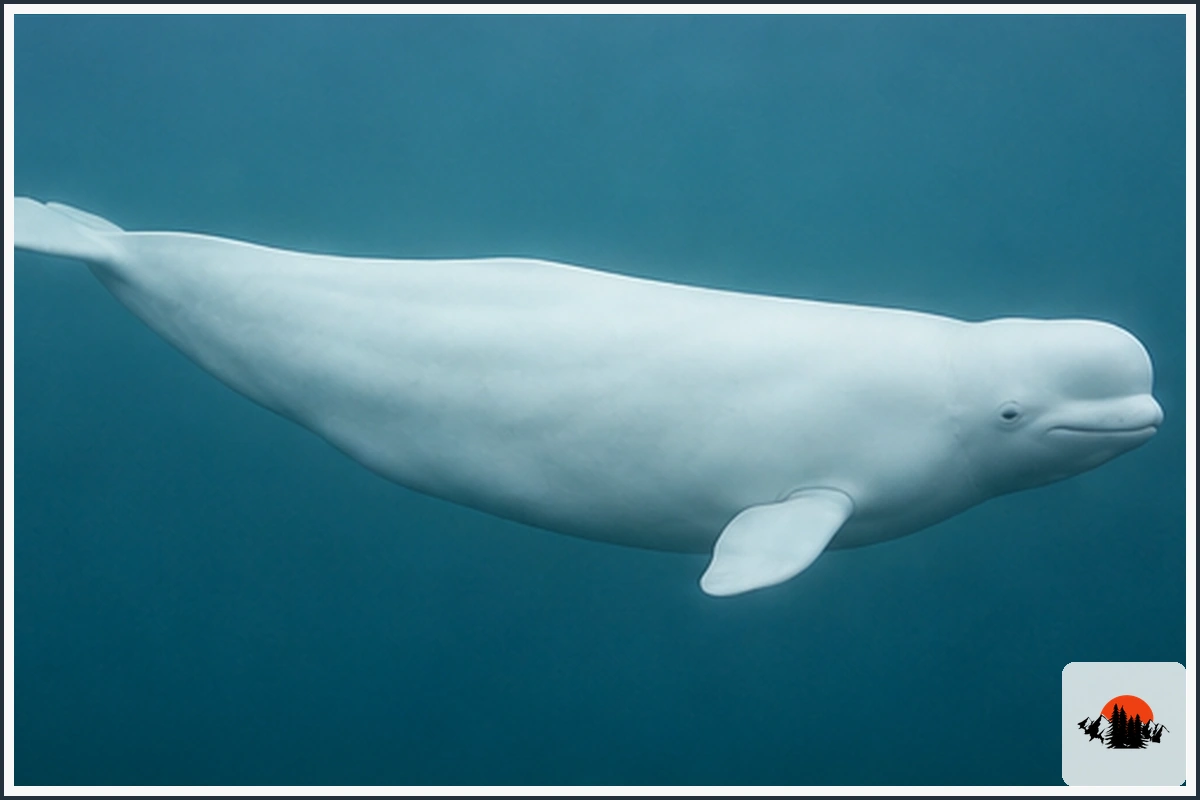
Scientific name: Delphinapterus leucas
Belugas are small, social toothed whales known for their pure white adult color, rounded forehead, and flexible neck. Calves are born gray or brown and gradually lighten as they mature. Belugas do not have a dorsal fin, which helps them move beneath sea ice.
Adults are generally 10 to 16 feet long. They eat fish, shrimp, crabs, squid, and other small marine animals. Belugas use echolocation to navigate and locate prey, and their broad range of whistles, clicks, and calls has earned them the nickname “sea canaries.”
Several beluga populations use Alaskan waters. The Cook Inlet beluga is especially well known because it lives near Anchorage and is listed as endangered in the United States. Belugas may also be found in Bristol Bay, the Yukon-Kuskokwim Delta, Norton Sound, and Arctic coastal waters. They often gather in estuaries and shallow bays during summer.
5. Bowhead Whale
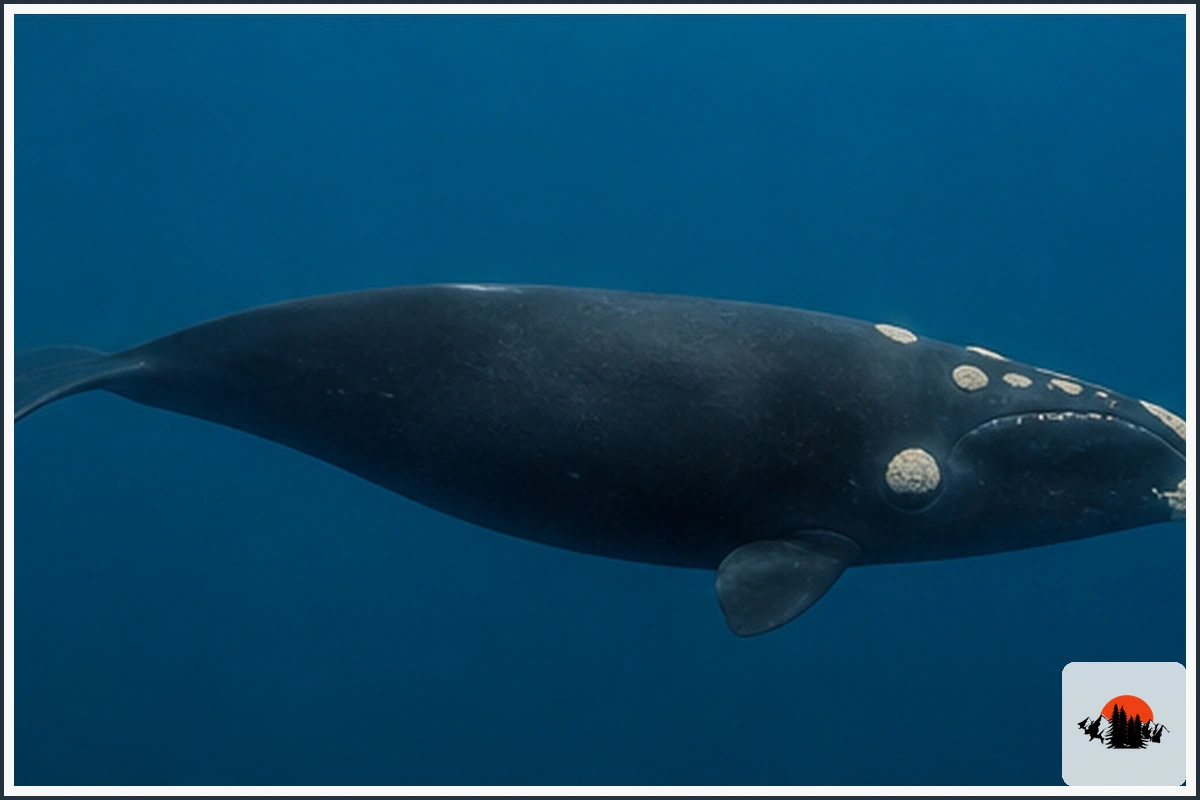
Scientific name: Balaena mysticetus
Bowhead whales are Arctic specialists with enormous triangular skulls, strongly arched jaws, dark bodies, and no dorsal fin. Their thick blubber helps them survive in freezing water, and their powerful heads can break through thin sea ice.
Bowheads may reach approximately 50 to 60 feet in length. They feed by swimming with their mouths open and filtering tiny prey, including copepods and krill, through exceptionally long baleen plates. Their feeding grounds include the Bering, Chukchi, and Beaufort seas.
Bowhead whales migrate with seasonal sea-ice changes. They are culturally important to Alaska Native communities, particularly those that practice regulated subsistence hunts under federal and international management systems. Their recovery from historical commercial whaling is an important conservation success, although changing sea-ice conditions and increased Arctic activity create new challenges.
6. Fin Whale
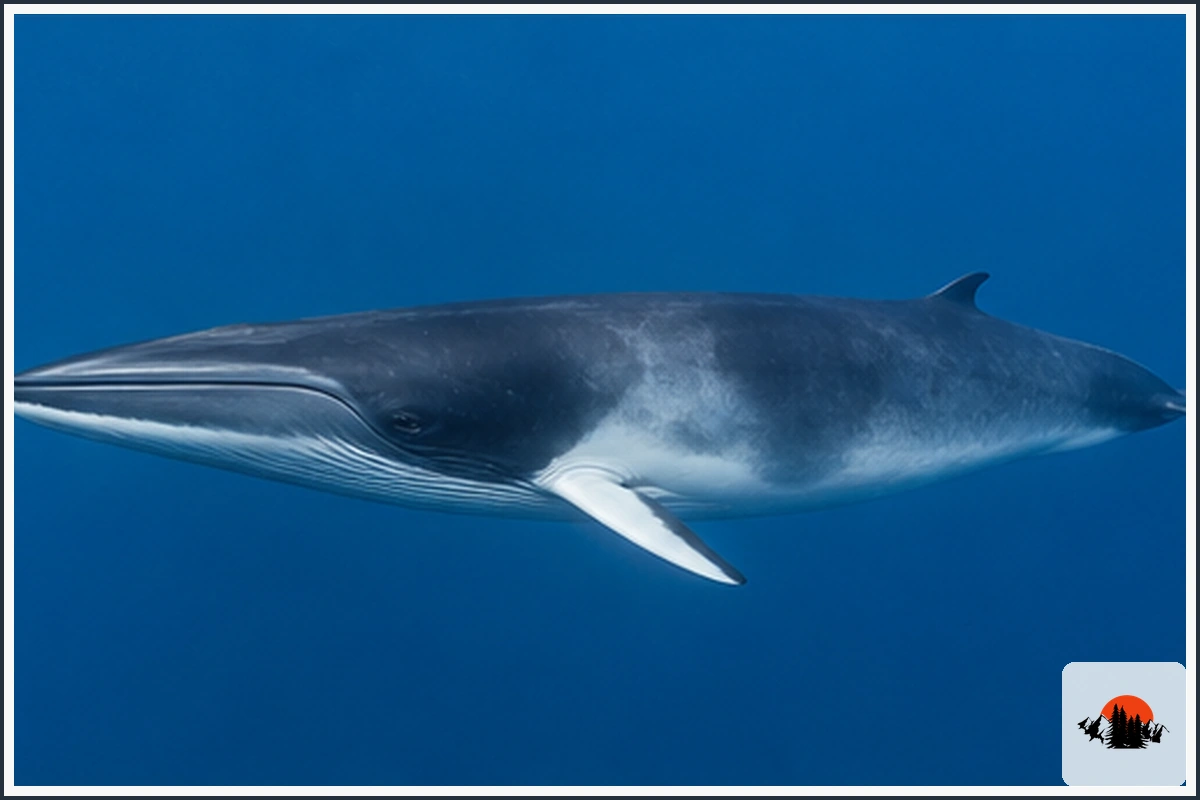
Scientific name: Balaenoptera physalus
Fin whales are among the largest whales on Earth, second only to blue whales in typical maximum size. They have long, streamlined bodies, a tall dorsal fin, a pointed head, and distinctive asymmetrical coloring on the lower jaw. One side of the jaw is often lighter than the other.
Fin whales can reach more than 70 feet in length, although individuals vary by region. They feed by lunging through dense schools of fish, squid, and krill. Their speed and streamlined shape have earned them the nickname “greyhounds of the sea.”
In Alaska, fin whales are more often associated with offshore waters, the Gulf of Alaska, the Aleutian region, and productive areas near continental slopes. They may surface in long, steady sequences and usually produce a tall, narrow blow. Their size, speed, and preference for deeper water can make them harder to observe from shore.
7. Minke Whale
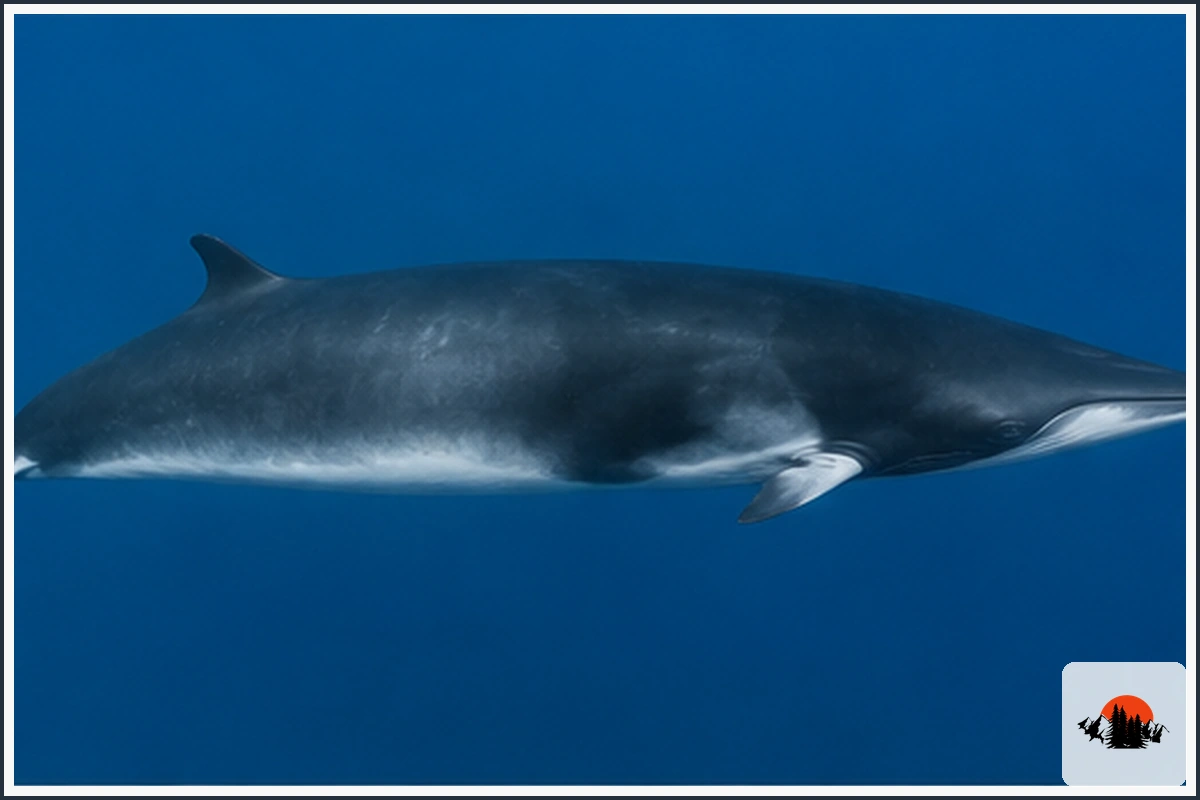
Scientific name: Balaenoptera acutorostrata
Minke whales are smaller baleen whales with pointed heads, slender bodies, and a relatively tall dorsal fin. Adults commonly measure about 20 to 30 feet long. A bright white band on the pectoral flippers is a useful identification feature, although it may be difficult to see in rough water.
Minke whales eat small fish, krill, and other schooling prey. They are generally fast swimmers and may surface briefly before disappearing. Unlike humpbacks, they do not usually perform dramatic breaches or extended surface displays, so sightings can be easy to miss.
They occur in Alaskan coastal and offshore waters, including the Gulf of Alaska, Southeast Alaska, the Aleutian Islands, and parts of the Bering Sea. Minke whales are often seen as single animals, although several may gather where prey is concentrated.
8. Sperm Whale
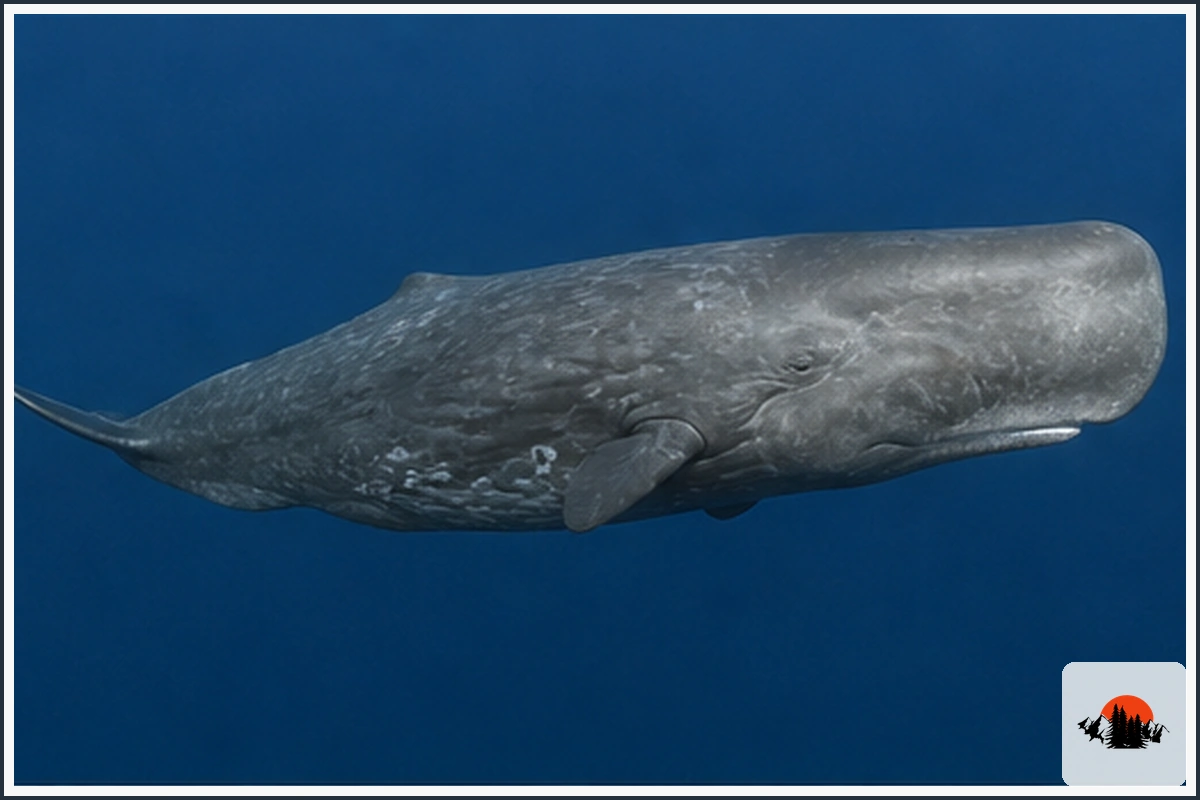
Scientific name: Physeter macrocephalus
Sperm whales are the largest toothed whales and are recognized by their enormous block-shaped heads, dark gray bodies, and low, angled blow. Their blow often projects slightly forward and to the left, which can help distinguish them from other large whales.
Adult males may reach about 50 to 60 feet long, while females are generally smaller. Sperm whales are deep-diving predators that commonly hunt squid, fish, and other animals in deep offshore waters. They use powerful echolocation clicks to find prey in darkness.
In Alaska, sperm whales are most strongly associated with deep waters along the Gulf of Alaska, the Aleutian Islands, and the continental slope. They may remain underwater for long periods, making them less predictable for whale watchers. Their deep-diving lifestyle also means that sightings often involve a blow, back, and distinctive fluke dive rather than prolonged surface activity.
How Are These Types of Whales Classified?
Alaskan whales can be divided into two broad groups: baleen whales and toothed whales.
- Baleen whales: Humpback, gray, bowhead, fin, and minke whales use baleen plates to filter small fish, krill, and other prey from seawater.
- Toothed whales: Orcas, belugas, and sperm whales have teeth and use echolocation to locate prey. Their diets range from fish and squid to marine mammals.
- Coastal and estuarine species: Belugas and some humpbacks often use bays, fjords, and nearshore waters.
- Offshore species: Fin, minke, sperm, and some orcas are more frequently encountered in deep or open water.
- Migratory species: Many Alaskan whales move between seasonal feeding and breeding areas, while some populations remain in the region for much of the year.
Where Do These Whales Live?
Alaska’s whales occupy a wide variety of marine habitats. Humpbacks commonly gather in protected channels, fjords, and coastal feeding areas. Orcas travel through the Inside Passage, Prince William Sound, the Gulf of Alaska, and the Aleutian chain. Gray, bowhead, and beluga whales are strongly associated with northern and western Alaska, while fin, minke, and sperm whales often use deeper offshore habitats.
| Region | Whales Commonly Associated With It |
|---|---|
| Inside Passage and Southeast Alaska | Humpback whales, orcas, minke whales |
| Juneau, Glacier Bay, and Icy Strait | Humpback whales, orcas |
| Prince William Sound and Resurrection Bay | Humpback whales, orcas, gray whales, fin whales |
| Cook Inlet | Beluga whales, humpback whales, occasional orcas |
| Bering, Chukchi, and Beaufort seas | Bowhead whales, gray whales, belugas |
| Aleutian Islands and Gulf of Alaska | Orcas, humpback whales, fin whales, minke whales, sperm whales |
What Do Alaskan Whales Eat?
- Humpback whales: Herring, sand lance, capelin, krill, and other small schooling prey.
- Orcas: Salmon and other fish, seals, sea lions, porpoises, and whales, depending on the population.
- Gray whales: Amphipods and other bottom-dwelling invertebrates.
- Belugas: Fish, shrimp, crabs, squid, and worms.
- Bowhead whales: Copepods, krill, and other tiny drifting animals.
- Fin whales: Krill, herring, capelin, and squid.
- Minke whales: Small fish, krill, and other schooling prey.
- Sperm whales: Squid, fish, and deep-water cephalopods.
How to Identify Different Types of Whales in Alaska
- Look at body shape: Humpbacks have long flippers, fin whales are slender, and gray whales have a mottled body with a low dorsal ridge.
- Watch the blow: Fin whales produce a tall narrow blow, while sperm whale blows angle forward and left.
- Check the dorsal fin: Orcas have a very tall fin, especially adult males; humpbacks have a smaller rounded fin.
- Notice the color: Adult belugas are white, orcas are black and white, and bowheads are mostly dark.
- Observe the dive: Humpbacks and sperm whales often raise their flukes before a deep dive.
- Consider location: Belugas favor shallow estuaries, while sperm whales are more likely in deep offshore water.
- Use behavior: Bubble-net feeding suggests humpbacks, coordinated hunting may indicate orcas, and repeated bottom feeding can point to gray whales.
- Estimate scale carefully: A whale’s distance from the boat can make size difficult to judge.
Best Whale-Watching Tips in Alaska
Choose a reputable operator that follows marine-mammal viewing regulations and gives whales plenty of space. Bring binoculars, layered waterproof clothing, and sun protection, because conditions can change quickly. Early-season and summer trips often provide good opportunities, but sightings are never guaranteed.
Look for blows, birds, bait balls, ripples, and groups of seals or sea lions. Seabirds and feeding fish can reveal areas where whales are hunting. Remain patient and scan broadly rather than watching only one point on the horizon.
Safety, Sustainability, and Conservation Notes
- Never approach whales closely, chase them, or attempt to surround them with boats.
- Keep noise low and follow current federal and state viewing rules.
- Do not feed whales or throw anything into the water.
- Keep a safe distance from whales, calves, seals, and sea lions.
- Report entangled or stranded marine mammals to the appropriate wildlife authorities.
- Reduce plastic waste and secure fishing line, nets, and other gear.
- Support responsible whale-watching businesses that prioritize wildlife welfare.
- Respect Alaska Native communities and the cultural importance of whales.
Why Whales Matter in Alaska
Whales are important predators, consumers, and nutrient recyclers in Alaska’s marine ecosystems. Their feeding activities move nutrients through the water column, while their migrations connect distant ocean regions. Whales also support scientific research, education, responsible tourism, and local economies. Protecting them requires clean water, healthy prey populations, safe migration routes, and careful management of vessel traffic and fishing gear.
Fun Facts About Whales in Alaska
- Humpback whales can use bubble nets to concentrate schools of fish.
- Orcas are the largest members of the dolphin family.
- Beluga calves are born darker than adults and gradually become white.
- Bowhead whales have extremely thick blubber for Arctic conditions.
- Gray whales often feed by disturbing sediment on the seafloor.
- Fin whales are among the fastest large whales.
- Sperm whales can dive to remarkable depths in search of squid.
- Humpback tail patterns can help researchers identify individual whales.
- Some orca populations specialize in fish, while others hunt marine mammals.
- Alaska provides important feeding habitat for whales that migrate across entire ocean basins.
Final Thoughts on Types of Whales in Alaska
The types of whales in Alaska range from coastal humpbacks and white belugas to deep-diving sperm whales and Arctic bowheads. Learning their body shapes, blows, habitats, feeding styles, and seasonal movements makes every sighting more meaningful. Whether you are exploring a fjord, visiting Cook Inlet, or traveling through the Aleutian Islands, responsible observation helps protect Alaska’s remarkable whale populations for the future.
Frequently Asked Questions
1. How many types of whales live in Alaska?
Eight major whale species are commonly associated with Alaska’s waters: humpback, gray, orca, beluga, bowhead, fin, minke, and sperm whales.
2. What is the most common whale to see in Alaska?
Humpback whales are among the most commonly seen whales, especially in Southeast Alaska, Juneau, Icy Strait, Glacier Bay, and other productive coastal areas.
3. Can you see orcas in Alaska?
Yes. Orcas occur in the Inside Passage, Prince William Sound, Resurrection Bay, the Gulf of Alaska, and the Aleutian Islands.
4. Where can you see beluga whales in Alaska?
Cook Inlet is one of the best-known areas for belugas. They also occur in Bristol Bay, Norton Sound, western Alaska, and Arctic coastal waters.
5. Are Alaska’s beluga whales endangered?
The Cook Inlet beluga population is listed as endangered in the United States. Other beluga populations in Alaska have different population sizes and management concerns.
6. What is the largest whale found in Alaska?
Blue whales can occur in Alaskan waters, but among the species covered in this guide, fin whales are among the largest regularly encountered. Bowheads and sperm whales are also exceptionally large.
7. Are killer whales actually dolphins?
Yes. Orcas are the largest members of the dolphin family, even though they are commonly called whales.
8. What do humpback whales eat in Alaska?
Humpbacks commonly eat herring, sand lance, capelin, krill, and other small schooling prey.
9. What do orcas eat in Alaska?
Diet depends on the population. Resident orcas primarily eat fish, especially salmon, while Bigg’s orcas often hunt seals, sea lions, porpoises, and other marine mammals.
10. Do whales migrate through Alaska?
Many whales migrate through or to Alaska. Humpbacks, gray whales, and bowheads make seasonal movements between feeding and breeding areas, while some orcas and belugas remain in the region year-round.
11. What is the best season for whale watching in Alaska?
Late spring through summer is generally productive because many whales arrive to feed. Exact timing varies by species and location.
12. Can you see whales from shore in Alaska?
Yes. Whales may be visible from beaches, overlooks, harbors, coastal trails, and fjord viewpoints, although binoculars improve the experience.
13. What whale has a white body in Alaska?
Adult beluga whales are white. Their calves are darker before gradually becoming pale as they mature.
14. How can you identify a humpback whale?
Look for long flippers, a rounded dorsal fin, a knobby head, a broad tail, and occasional breaching or bubble-net feeding.
15. How can you identify an orca?
Orcas have a sharply contrasting black-and-white pattern, a white eye patch, and a prominent dorsal fin. Adult males usually have especially tall dorsal fins.
16. How can you identify a gray whale?
Gray whales have mottled gray skin, a low dorsal ridge, small back knuckles, and often visible barnacles or pale patches.
17. Which Alaskan whale dives the deepest?
Sperm whales are famous for deep dives and commonly hunt squid and fish in offshore waters.
18. Are minke whales common in Alaska?
Minke whales occur in Alaskan waters but are often less noticeable than humpbacks because they surface briefly and usually avoid dramatic surface behaviors.
19. Where do bowhead whales live in Alaska?
Bowheads use the Bering, Chukchi, and Beaufort seas, following seasonal movements associated with sea ice and feeding conditions.
20. Are fin whales found near Alaska?
Yes. Fin whales occur in the Gulf of Alaska, Aleutian waters, and other offshore areas, especially where prey is abundant.
21. Do whales live in Alaska year-round?
Some whales, including certain orca and beluga populations, may remain in Alaskan waters year-round. Others migrate seasonally.
22. What is a baleen whale?
A baleen whale has flexible plates instead of teeth. It uses those plates to filter small prey from seawater.
23. Which Alaskan whales have teeth?
Orcas, belugas, and sperm whales are toothed whales. They use teeth and echolocation to catch prey.
24. Do whales attack boats in Alaska?
Whales generally avoid boats, but a close approach can disturb them and create safety risks. Vessels should keep away and follow marine-mammal regulations.
25. What should you bring whale watching in Alaska?
Bring warm layers, waterproof clothing, binoculars, sunglasses, water, snacks, and motion-sickness medication if needed.
26. Can whale watching harm whales?
Repeated close approaches, chasing, noise, and blocking travel routes can disturb whales. Responsible operators maintain distance and limit pressure on animals.
27. Why do humpback whales slap their tails?
Tail slapping may be used for communication, display, irritation, or other social purposes. Its exact meaning can vary.
28. Why do whales breach?
Breaching may be connected with communication, social behavior, play, parasite removal, or other activities. Scientists do not assign one definite purpose to every breach.
29. What is bubble-net feeding?
Bubble-net feeding is a cooperative humpback hunting technique in which whales use bubbles and coordinated movement to concentrate fish before feeding.
30. Are whales important to Alaska’s ecosystem?
Yes. Whales influence food webs, move nutrients, and help connect coastal and offshore ecosystems through their feeding and migration.
31. What should I do if I find a stranded whale?
Keep away, do not touch or push the animal, keep pets and crowds back, and contact local wildlife authorities or a marine mammal stranding network.
32. Can whale bones be found on Alaska beaches?
Whale bones may occasionally be found, but visitors should follow local rules and avoid disturbing cultural sites, protected areas, or active research locations.
33. Are Alaska whales protected?
Whales are protected under federal marine mammal laws, although specific populations and subsistence regulations may differ.
34. Why are gray whales sometimes seen during spring?
Gray whales migrate northward from breeding areas toward summer feeding grounds, bringing them past portions of the Alaskan coast during spring.
35. Can children identify Alaska’s whales?
Yes. Start with simple features: white beluga bodies, black-and-white orcas, long-flippered humpbacks, mottled gray whales, and the tall blows of fin whales.
36. What is the easiest whale to identify in Alaska?
Belugas and orcas are often easiest because of their distinctive colors. Humpbacks are also recognizable by their long flippers and tail displays.
37. Do whales have predators in Alaska?
Adult whales have few natural predators. Orcas may prey on calves or smaller whales, while humans remain an important source of conservation pressure through vessel traffic, entanglement, noise, and habitat changes.
38. Why are some whale species difficult to see?
Some whales spend much of their time underwater, surface briefly, travel offshore, or blend into rough ocean conditions. Weather and sea state also affect visibility.
39. Are sperm whales common near shore?
Sperm whales usually prefer deep offshore water, so they are less commonly seen from shore or in shallow coastal bays.
40. What is the best way to photograph whales?
Use a fast shutter speed, keep the lens ready, watch the whale’s breathing pattern, and avoid chasing the animal for a better image.