

Kenya’s fish diversity spans Lake Victoria, Lake Turkana, inland rivers and wetlands, aquaculture ponds, estuaries, coral reefs, and the western Indian Ocean. This guide to types of fish in Kenya introduces 40 representative freshwater and marine species, combining identification, habitat, fisheries importance, and conservation context.
What Are the Main Types Of Fish In Kenya?
The main fish groups in Kenya include tilapias and other cichlids, catfish, cyprinids, lungfish, bichirs, Nile-basin predators, tunas, billfish, jacks, snappers, groupers, rabbitfish, and coastal schooling fish. Nile perch, Nile tilapia, omena, and African sharptooth catfish dominate public awareness inland, while tuna, sailfish, marlin, trevally, rabbitfish, and snappers are familiar along the coast.
Quick Comparison of Types Of Fish In Kenya
| # | Common Name | Scientific Name | Group | Typical Habitat |
|---|---|---|---|---|
| 1 | Nile Perch | Lates niloticus | Large predatory freshwater fish | Lake Victoria and parts of the Nile basin |
| 2 | Nile Tilapia | Oreochromis niloticus | Cichlid | Lakes, reservoirs, rivers, ponds, and aquaculture systems |
| 3 | Silver Cyprinid | Rastrineobola argentea | Small cyprinid | Open waters of Lake Victoria |
| 4 | African Sharptooth Catfish | Clarias gariepinus | Air-breathing catfish | Rivers, wetlands, lakes, ponds, and farms |
| 5 | Marbled Lungfish | Protopterus aethiopicus | Lungfish | Lake Victoria basin, wetlands, and slow freshwater habitats |
| 6 | Semutundu | Bagrus docmak | Bagrid catfish | Lake Victoria and connected rivers |
| 7 | Victoria Tilapia | Oreochromis variabilis | Cichlid | Lake Victoria basin and associated waters |
| 8 | Singida Tilapia | Oreochromis esculentus | Cichlid | Lake Victoria region and waters where it has been introduced |
| 9 | Redbelly Tilapia | Coptodon zillii | Cichlid | Warm lakes, rivers, reservoirs, and coastal-influenced freshwater |
| 10 | Redbreast Tilapia | Coptodon rendalli | Cichlid | Vegetated warm lakes, ponds, and slow rivers |
| 11 | Ningu | Labeo victorianus | African labeo | Rivers entering Lake Victoria and lake margins |
| 12 | Ripon Barbel | Labeobarbus altianalis | Large cyprinid | Lake Victoria basin rivers and lake shore zones |
| 13 | Victoria Squeaker | Synodontis victoriae | Mochokid catfish | Lake Victoria basin |
| 14 | Victoria Stonebasher | Marcusenius victoriae | Mormyrid elephantfish | Lake Victoria drainage |
| 15 | Turkana Perch | Lates longispinis | Freshwater perch | Lake Turkana |
| 16 | Nile Tigerfish | Hydrocynus forskahlii | Predatory characin | Lake Turkana and northern river systems |
| 17 | Baremoze | Alestes baremoze | African tetra | Lake Turkana and connected northern waters |
| 18 | Nile Labeo | Labeo niloticus | Cyprinid | Nile-related drainage waters including the Turkana basin |
| 19 | Horie Labeo | Labeo horie | Cyprinid | Lake Turkana, the Omo system, and connected waters |
| 20 | Bayad | Bagrus bajad | Bagrid catfish | Lake Turkana and Nile-associated waters |
| 21 | Vundu | Heterobranchus longifilis | Large air-breathing catfish | Lake Turkana basin and large African rivers |
| 22 | African Butter Catfish | Schilbe intermedius | Schilbid catfish | Lakes and rivers of western and northern Kenya |
| 23 | Nile Bichir | Polypterus bichir | Bichir | Lake Turkana and Nile drainage habitats |
| 24 | Nile Distichodus | Distichodus niloticus | Large characin | Lake Turkana and Nile-related waters |
| 25 | Schall Squeaker | Synodontis schall | Mochokid catfish | Lake Turkana and associated rivers |
| 26 | Yellowfin Tuna | Thunnus albacares | Oceanic tuna | Kenya’s offshore Indian Ocean waters |
| 27 | Skipjack Tuna | Katsuwonus pelamis | Oceanic tuna | Warm offshore and coastal waters |
| 28 | Bigeye Tuna | Thunnus obesus | Oceanic tuna | Deep offshore waters of the western Indian Ocean |
| 29 | Kawakawa | Euthynnus affinis | Small tuna | Coastal and offshore Indian Ocean waters |
| 30 | Wahoo | Acanthocybium solandri | Fast pelagic predator | Offshore reefs, drop-offs, and open Indian Ocean water |
| 31 | Common Dolphinfish | Coryphaena hippurus | Pelagic game fish | Warm offshore waters and floating-object habitats |
| 32 | Indo-Pacific Sailfish | Istiophorus platypterus | Billfish | Kenya’s coastal and offshore Indian Ocean |
| 33 | Black Marlin | Istiompax indica | Billfish | Offshore Indian Ocean waters |
| 34 | Giant Trevally | Caranx ignobilis | Jack | Reefs, channels, lagoons, and coastal drop-offs |
| 35 | Great Barracuda | Sphyraena barracuda | Barracuda | Coastal reefs, lagoons, and offshore structures |
| 36 | Milkfish | Chanos chanos | Coastal schooling fish | Lagoons, estuaries, and nearshore waters |
| 37 | Peacock Grouper | Cephalopholis argus | Reef grouper | Coral and rocky reefs along the Kenyan coast |
| 38 | Emperor Red Snapper | Lutjanus sebae | Snapper | Coastal reefs and deeper offshore structure |
| 39 | Shoemaker Spinefoot | Siganus sutor | Rabbitfish | Seagrass beds, reefs, and coastal lagoons |
| 40 | Green Jobfish | Aprion virescens | Snapper relative | Offshore reefs, drop-offs, and rocky banks |
1. Nile Perch
Nile Perch (Lates niloticus) belongs to the large predatory freshwater fish group. It is most closely associated with lake victoria and parts of the nile basin. Look for a massive body, large mouth, spiny dorsal fin, and silver-gray coloring when making an identification.

Nile perch is central to Kenya’s Lake Victoria commercial fishery. It is an introduced apex predator in the lake, so its economic importance is closely tied to major ecological changes.
2. Nile Tilapia
The Nile Tilapia, scientifically known as Oreochromis niloticus, is a cichlid. It is most closely associated with lakes, reservoirs, rivers, ponds, and aquaculture systems. Look for a deep body with vertical tail bands and gray to olive coloration when making an identification.

Nile tilapia is one of Kenya’s most familiar food and farmed fish. It grazes and filters a broad diet and adapts well to warm freshwater.
3. Silver Cyprinid
Among the most recognizable fish in this guide is the Silver Cyprinid (Rastrineobola argentea), a small cyprinid. It is most closely associated with open waters of lake victoria. Look for a tiny slender body with bright silver sides when making an identification.

Known locally as omena, this schooling fish supports food, feed, and livelihood markets. It is commonly dried soon after landing because of its small size.
4. African Sharptooth Catfish
African Sharptooth Catfish is the common name used here for Clarias gariepinus, a member of the air-breathing catfish group. It is most closely associated with rivers, wetlands, lakes, ponds, and farms. Look for an elongated scaleless body, long dorsal fin, broad head, and four pairs of barbels when making an identification.
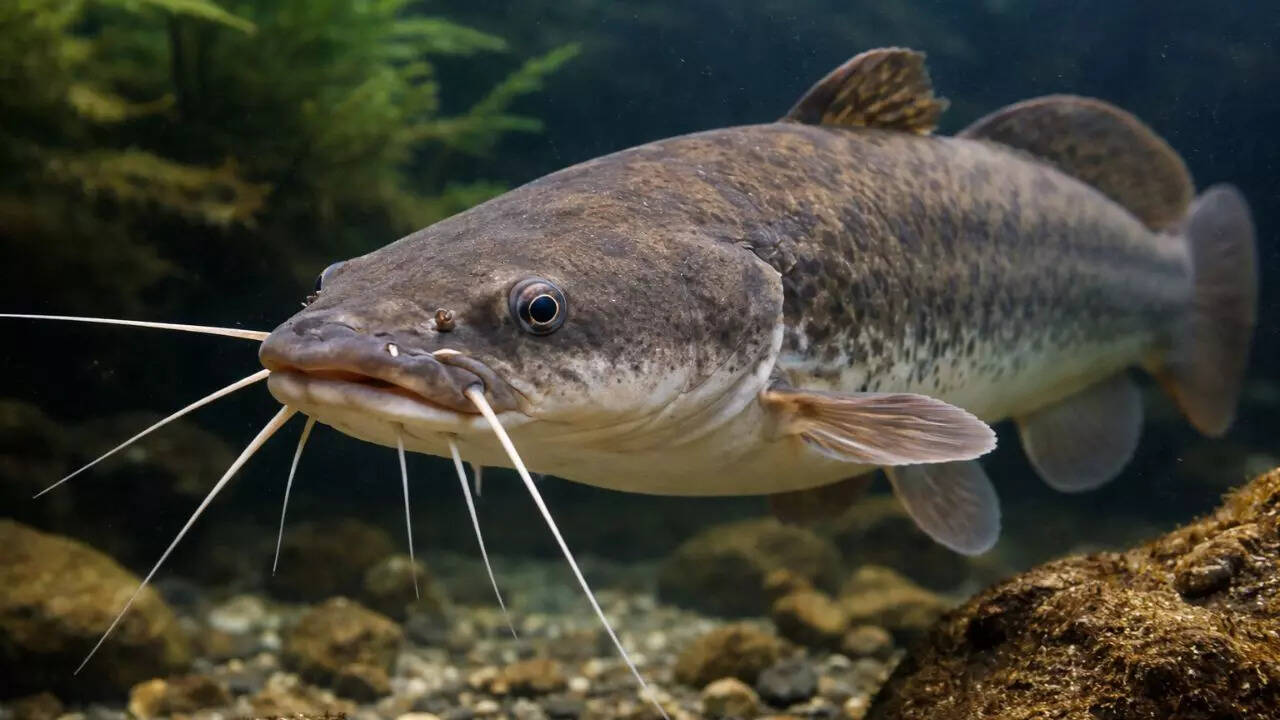
This adaptable predator and scavenger can gulp atmospheric air, helping it survive low-oxygen conditions. It is important in both capture fisheries and aquaculture.
5. Marbled Lungfish
Marbled Lungfish (Protopterus aethiopicus) belongs to the lungfish group. It is most closely associated with lake victoria basin, wetlands, and slow freshwater habitats. Look for a long eel-like body, marbled pattern, and thin filament-like paired fins when making an identification.

The marbled lungfish breathes with lungs as well as gills. During unfavorable conditions, lungfish can reduce activity and survive where many other fish cannot.
6. Semutundu
The Semutundu, scientifically known as Bagrus docmak, is a bagrid catfish. It is most closely associated with lake victoria and connected rivers. Look for a robust body, forked tail, broad head, and long barbels when making an identification.
This large catfish is a native predator that feeds on fish and bottom animals. It has long been valued in regional fisheries, although local abundance varies.
7. Victoria Tilapia
Among the most recognizable fish in this guide is the Victoria Tilapia (Oreochromis variabilis), a cichlid. It is most closely associated with lake victoria basin and associated waters. Look for a deep-bodied tilapia with variable bars and breeding colors when making an identification.

Victoria tilapia is native to the Lake Victoria region. Its populations have been affected by introduced species, fishing pressure, and habitat change.
8. Singida Tilapia
Singida Tilapia is the common name used here for Oreochromis esculentus, a member of the cichlid group. It is most closely associated with lake victoria region and waters where it has been introduced. Look for a compact deep body with a small mouth and subtle dark markings when making an identification.
Once a major Lake Victoria food fish, this native tilapia declined sharply after ecosystem changes. It remains culturally and scientifically important.
9. Redbelly Tilapia
Redbelly Tilapia (Coptodon zillii) belongs to the cichlid group. It is most closely associated with warm lakes, rivers, reservoirs, and coastal-influenced freshwater. Look for a deep body, reddish belly in breeding fish, and vertical banding when making an identification.
Redbelly tilapia eats substantial plant material and tolerates a wide range of conditions. It is present in several African drainage systems and may be moved beyond its original range.
10. Redbreast Tilapia
The Redbreast Tilapia, scientifically known as Coptodon rendalli, is a cichlid. It is most closely associated with vegetated warm lakes, ponds, and slow rivers. Look for a deep body with red tones on the chest and belly, especially in adults when making an identification.
This plant-eating tilapia uses shallow vegetated habitats. It can support fisheries but may also alter aquatic plants where introduced.
11. Ningu
Among the most recognizable fish in this guide is the Ningu (Labeo victorianus), a african labeo. It is most closely associated with rivers entering lake victoria and lake margins. Look for a streamlined body with a downward-facing scraping mouth when making an identification.
Ningu historically migrated into rivers to breed. Dams, sedimentation, fishing pressure, and loss of spawning habitat have contributed to declines in many areas.
12. Ripon Barbel
Ripon Barbel is the common name used here for Labeobarbus altianalis, a member of the large cyprinid group. It is most closely associated with lake victoria basin rivers and lake shore zones. Look for a strong torpedo-shaped body, large scales, and fleshy lips when making an identification.
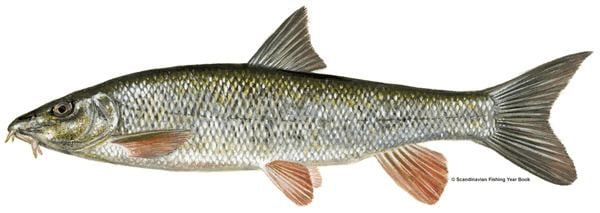
This native barbel is an important angling and food fish. It feeds on invertebrates, plant material, and other available foods near the bottom.
13. Victoria Squeaker
Victoria Squeaker (Synodontis victoriae) belongs to the mochokid catfish group. It is most closely associated with lake victoria basin. Look for a bony head, strong fin spines, barbels, and spotted or mottled markings when making an identification.
Like other squeaker catfish, it can produce sounds by moving its fin spines. It usually forages near the bottom for insects, mollusks, and organic material.
14. Victoria Stonebasher
The Victoria Stonebasher, scientifically known as Marcusenius victoriae, is a mormyrid elephantfish. It is most closely associated with lake victoria drainage. Look for a compressed body, narrow tail base, and a slightly extended snout when making an identification.
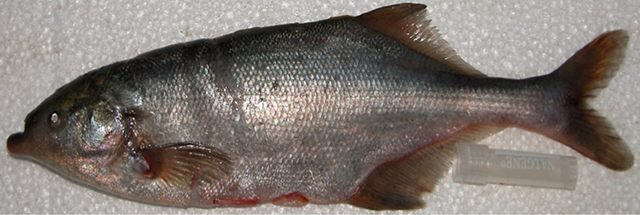
This fish uses weak electric fields for navigation and communication in cloudy water. It feeds mainly on small bottom-dwelling invertebrates.
15. Turkana Perch
Among the most recognizable fish in this guide is the Turkana Perch (Lates longispinis), a freshwater perch. It is most closely associated with lake turkana. Look for a predatory perch shape with a large mouth and prominent dorsal spines when making an identification.
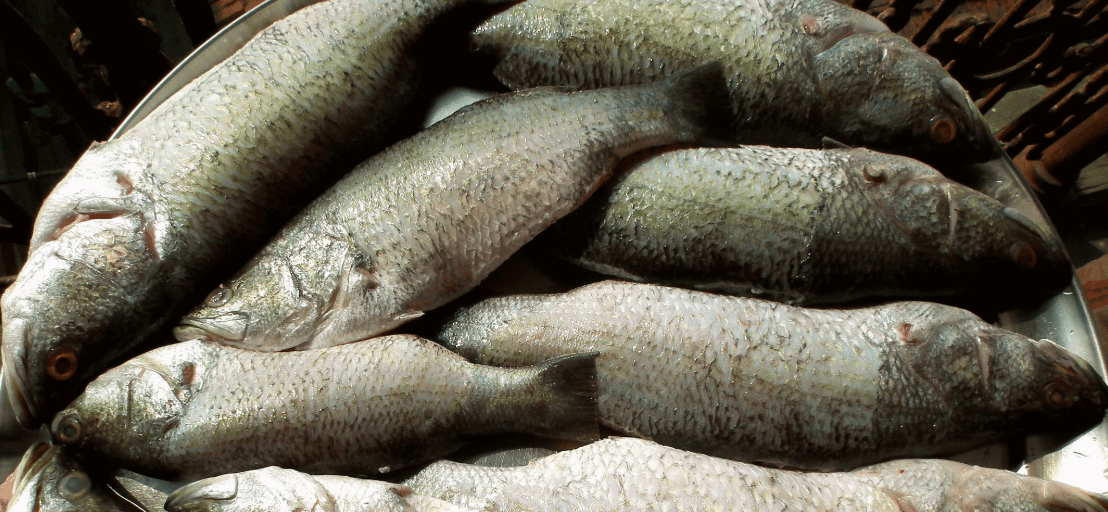
Turkana perch is closely associated with Lake Turkana and is smaller than the best-known Nile perch. Its restricted setting makes careful fisheries management important.
16. Nile Tigerfish
Nile Tigerfish is the common name used here for Hydrocynus forskahlii, a member of the predatory characin group. It is most closely associated with lake turkana and northern river systems. Look for a streamlined silver body, forked tail, and conspicuous sharp teeth when making an identification.
Tigerfish are fast open-water hunters. Their teeth and speed make them memorable sport fish, but safe handling is essential.
17. Baremoze
Baremoze (Alestes baremoze) belongs to the african tetra group. It is most closely associated with lake turkana and connected northern waters. Look for a bright silver, laterally compressed body with a forked tail when making an identification.
Baremoze forms schools and feeds on insects, plankton, and small aquatic organisms. It contributes to local subsistence and commercial catches.
18. Nile Labeo
The Nile Labeo, scientifically known as Labeo niloticus, is a cyprinid. It is most closely associated with nile-related drainage waters including the turkana basin. Look for a long dark body with a ventral, thick-lipped mouth when making an identification.
This bottom-oriented fish scrapes and sucks food from surfaces. Seasonal movements and river connectivity can be important to its life cycle.
19. Horie Labeo
Among the most recognizable fish in this guide is the Horie Labeo (Labeo horie), a cyprinid. It is most closely associated with lake turkana, the omo system, and connected waters. Look for a robust body, large scales, and a downward-facing mouth when making an identification.
Horie labeo is an important large cyprinid in the Turkana fishery. It depends on productive lake and river habitats.
20. Bayad
Bayad is the common name used here for Bagrus bajad, a member of the bagrid catfish group. It is most closely associated with lake turkana and nile-associated waters. Look for a large fork-tailed catfish with long barbels when making an identification.
Bayad is a predatory catfish that takes fish and invertebrates. It is valued as food and typically occupies deeper channels and open water.
21. Vundu
Vundu (Heterobranchus longifilis) belongs to the large air-breathing catfish group. It is most closely associated with lake turkana basin and large african rivers. Look for a long body, broad head, barbels, and an extended adipose fin when making an identification.
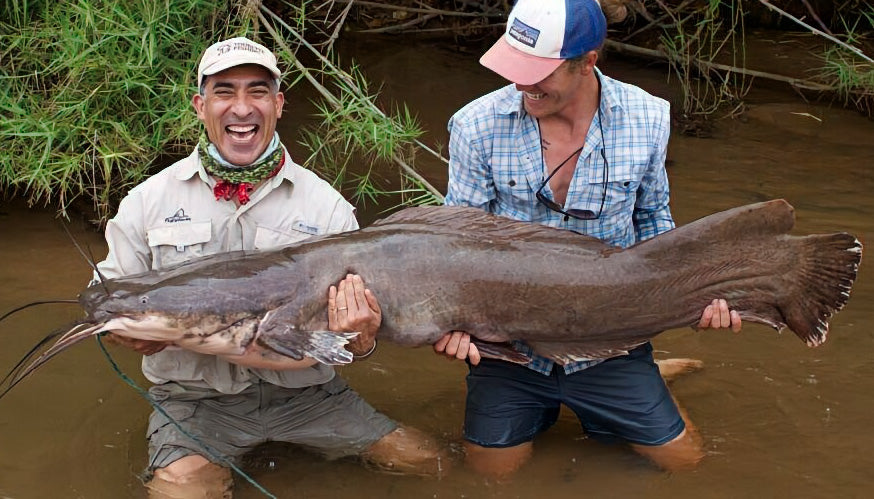
Vundu can become very large and is an opportunistic predator. Like Clarias catfish, it can use atmospheric oxygen in stressful water conditions.
22. African Butter Catfish
The African Butter Catfish, scientifically known as Schilbe intermedius, is a schilbid catfish. It is most closely associated with lakes and rivers of western and northern kenya. Look for a compressed silvery body, forked tail, and long anal fin when making an identification.
This active catfish often feeds in open water on insects, crustaceans, and small fish. It is taken in local fisheries throughout parts of Africa.
23. Nile Bichir
Among the most recognizable fish in this guide is the Nile Bichir (Polypterus bichir), a bichir. It is most closely associated with lake turkana and nile drainage habitats. Look for an armored elongated body, separate dorsal finlets, and paddle-like pectoral fins when making an identification.
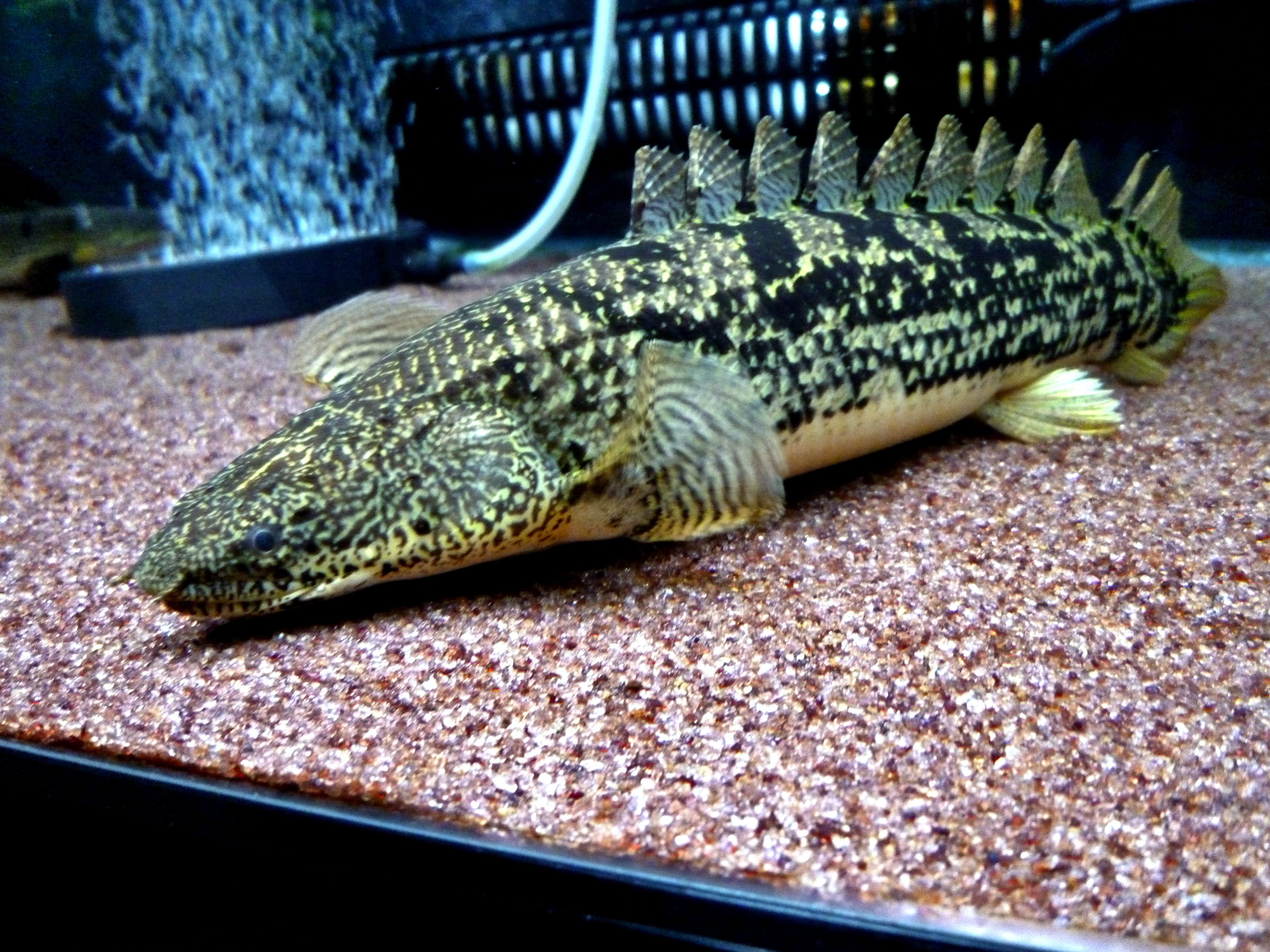
Bichirs are ancient-looking air-breathing fish. They usually stay near the bottom and hunt small fish and invertebrates, especially at night.
24. Nile Distichodus
Nile Distichodus is the common name used here for Distichodus niloticus, a member of the large characin group. It is most closely associated with lake turkana and nile-related waters. Look for a deep silver-gray body with strong fins and large scales when making an identification.
This large freshwater fish consumes plant material and invertebrates. It is part of the diverse northern Kenyan fish community.
25. Schall Squeaker
Schall Squeaker (Synodontis schall) belongs to the mochokid catfish group. It is most closely associated with lake turkana and associated rivers. Look for a stout body, strong fin spines, barbels, and spotted gray-brown sides when making an identification.
Schall squeakers are hardy bottom feeders. They eat insects, mollusks, plant material, and other available foods.
26. Yellowfin Tuna
The Yellowfin Tuna, scientifically known as Thunnus albacares, is a oceanic tuna. It is most closely associated with kenya’s offshore indian ocean waters. Look for bright yellow finlets, a metallic blue back, and long yellow dorsal and anal fins in adults when making an identification.
Yellowfin tuna is a fast pelagic predator and an important commercial and sport fish. Responsible harvest and accurate identification matter because tuna fisheries cross national boundaries.
27. Skipjack Tuna
Among the most recognizable fish in this guide is the Skipjack Tuna (Katsuwonus pelamis), a oceanic tuna. It is most closely associated with warm offshore and coastal waters. Look for dark horizontal stripes on the lower sides and a streamlined body when making an identification.
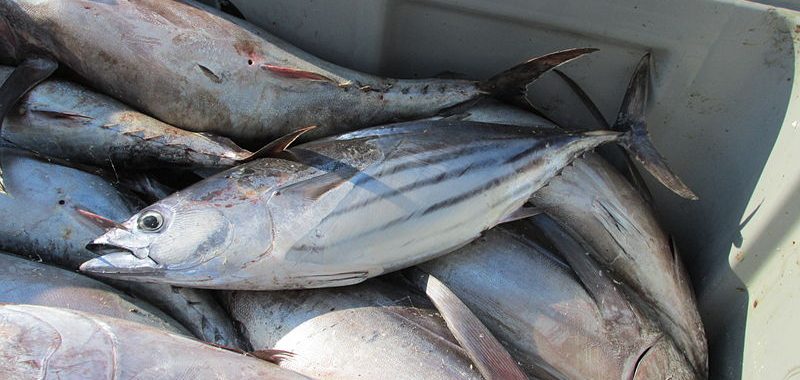
Skipjack forms large schools and often feeds around surface baitfish. It is smaller and matures faster than several larger tunas.
28. Bigeye Tuna
Bigeye Tuna is the common name used here for Thunnus obesus, a member of the oceanic tuna group. It is most closely associated with deep offshore waters of the western indian ocean. Look for large eyes, a robust body, and yellow-edged finlets when making an identification.
Bigeye tuna moves between deeper cool water and warmer surface layers. It is valuable but vulnerable to heavy fishing pressure across its range.
29. Kawakawa
Kawakawa (Euthynnus affinis) belongs to the small tuna group. It is most closely associated with coastal and offshore indian ocean waters. Look for dark wavy markings on the upper back and several dark spots near the pectoral area when making an identification.

Kawakawa is common in tropical coastal fisheries. It travels in schools and feeds on small fish, squid, and crustaceans.
30. Wahoo
The Wahoo, scientifically known as Acanthocybium solandri, is a fast pelagic predator. It is most closely associated with offshore reefs, drop-offs, and open indian ocean water. Look for a very long body, pointed snout, blue vertical bars, and razor-sharp teeth when making an identification.
Wahoo is prized by offshore anglers for speed and powerful runs. It is usually caught by fast trolling near productive current edges.
31. Common Dolphinfish
Among the most recognizable fish in this guide is the Common Dolphinfish (Coryphaena hippurus), a pelagic game fish. It is most closely associated with warm offshore waters and floating-object habitats. Look for a tall forehead, long dorsal fin, and brilliant green, blue, and gold colors when making an identification.
Also called mahi-mahi, this fast-growing fish often gathers near drifting debris and weed lines. Its colors fade quickly after capture.
32. Indo-Pacific Sailfish
Indo-Pacific Sailfish is the common name used here for Istiophorus platypterus, a member of the billfish group. It is most closely associated with kenya’s coastal and offshore indian ocean. Look for a long bill and an enormous sail-like dorsal fin when making an identification.
Sailfish use speed and coordinated attacks to hunt schooling fish. Kenya’s coast is well known among anglers for seasonal billfish opportunities.
33. Black Marlin
Black Marlin (Istiompax indica) belongs to the billfish group. It is most closely associated with offshore indian ocean waters. Look for a heavy body, rigid pectoral fins, long bill, and dark blue-black back when making an identification.
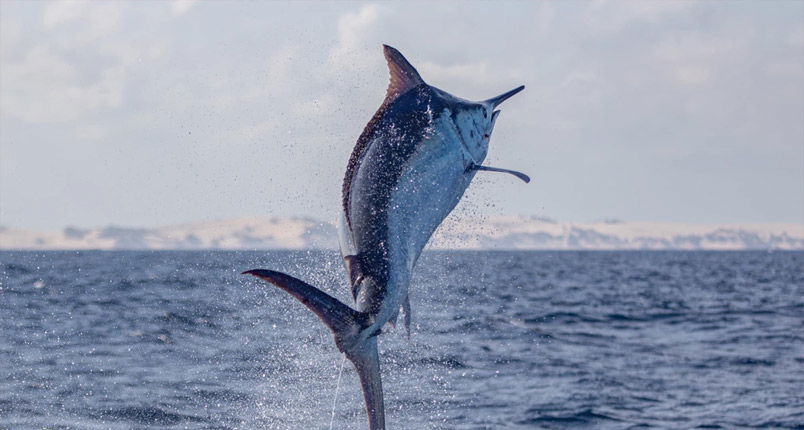
Black marlin is one of the ocean’s largest game fish. Catch-and-release handling should minimize fight time and keep the fish in the water whenever possible.
34. Giant Trevally
The Giant Trevally, scientifically known as Caranx ignobilis, is a jack. It is most closely associated with reefs, channels, lagoons, and coastal drop-offs. Look for a deep muscular body, steep forehead, and dark gray to silver coloration when making an identification.
Known as GT, this powerful predator attacks fish, squid, and crustaceans. It is a premier lure-fishing target around East African reefs.
35. Great Barracuda
Among the most recognizable fish in this guide is the Great Barracuda (Sphyraena barracuda), a barracuda. It is most closely associated with coastal reefs, lagoons, and offshore structures. Look for a long body, pointed head, dark bars or spots, and large fang-like teeth when making an identification.
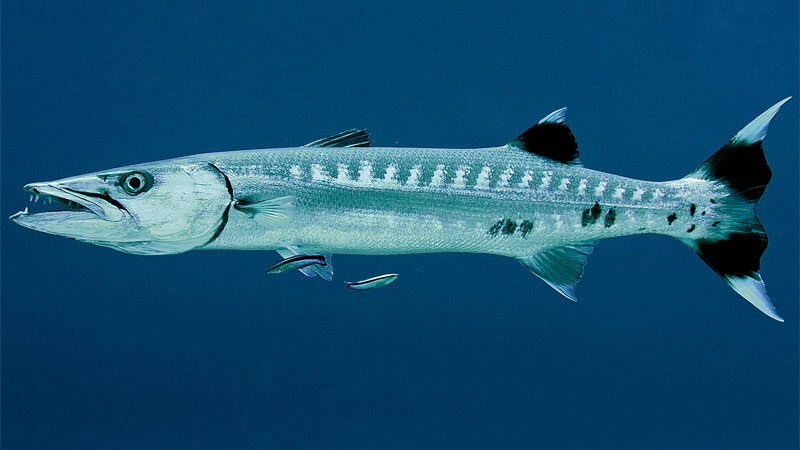
Great barracuda are ambush predators. They should be handled carefully, and local seafood advisories should be checked because large tropical reef predators can carry ciguatera toxins in some regions.
36. Milkfish
Milkfish is the common name used here for Chanos chanos, a member of the coastal schooling fish group. It is most closely associated with lagoons, estuaries, and nearshore waters. Look for a streamlined silver body, small toothless mouth, and deeply forked tail when making an identification.
Milkfish tolerates changing salinity and feeds mainly on algae and small organisms. It is an important aquaculture species in tropical regions.
37. Peacock Grouper
Peacock Grouper (Cephalopholis argus) belongs to the reef grouper group. It is most closely associated with coral and rocky reefs along the kenyan coast. Look for a brown body covered with bright blue spots and darker bars when making an identification.

This reef predator hides near structure and strikes fish and crustaceans. Groupers often grow slowly, so size limits and protected areas are important management tools.
38. Emperor Red Snapper
The Emperor Red Snapper, scientifically known as Lutjanus sebae, is a snapper. It is most closely associated with coastal reefs and deeper offshore structure. Look for a red to pink body with broad darker red bands in younger fish when making an identification.
This large snapper is associated with reef and shelf habitats. It is valued as food, but harvest rules and local identification guides should be followed.
39. Shoemaker Spinefoot
Among the most recognizable fish in this guide is the Shoemaker Spinefoot (Siganus sutor), a rabbitfish. It is most closely associated with seagrass beds, reefs, and coastal lagoons. Look for an oval body, small mouth, mottled pattern, and venomous dorsal and anal spines when making an identification.
Known locally in parts of East Africa as tafi, this herbivorous fish supports important coastal fisheries. Handle it carefully because the fin spines can cause painful punctures.
40. Green Jobfish
Green Jobfish is the common name used here for Aprion virescens, a member of the snapper relative group. It is most closely associated with offshore reefs, drop-offs, and rocky banks. Look for an elongated greenish-gray body, pointed head, and powerful tail when making an identification.
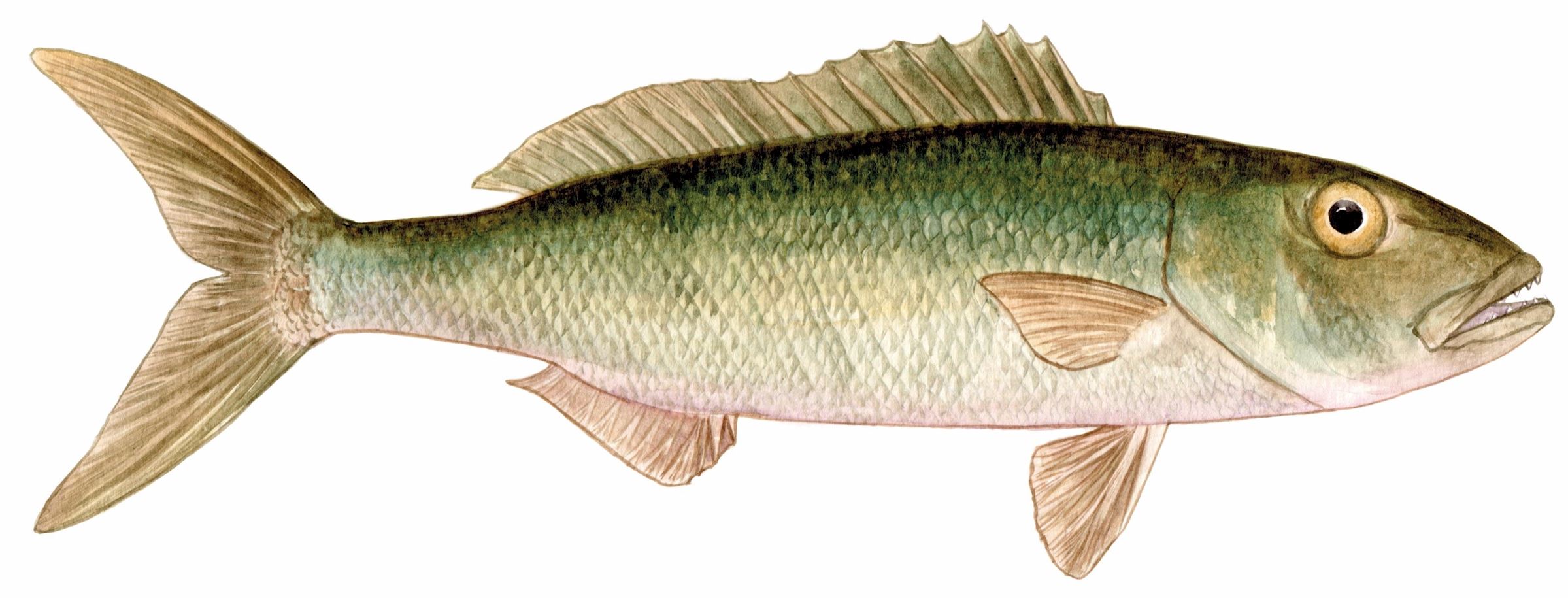
Green jobfish is a strong reef-edge predator sought by handline and sport anglers. It feeds on fish and larger invertebrates.
How Are These Types of Fish Classified?
Kenya’s freshwater fish include cichlids, cyprinids, catfish, African tetras, mormyrids, bichirs, lungfish, and freshwater perches. Its marine fish include tunas and other pelagic predators, reef-associated groupers and snappers, herbivorous rabbitfish, and coastal schooling species. Some important fish are native, some have been introduced, and some move between fresh, brackish, and marine habitats.
Where Do These Fish Live?
Freshwater diversity is concentrated in large lake basins such as Victoria and Turkana, as well as rivers, floodplains, wetlands, and highland or coastal drainages. Marine species use coral reefs, seagrass meadows, mangroves, lagoons, estuaries, continental-shelf waters, and the open Indian Ocean. A species common in Lake Victoria may be absent from Turkana or the coast, so regional context is essential.
How to Identify Different Types of Fish
- Body shape: Decide whether the fish is deep-bodied, eel-like, torpedo-shaped, flattened, or armored.
- Mouth and teeth: Note whether the mouth points upward, forward, or downward and whether teeth or barbels are visible.
- Tail shape: Forked, rounded, squared, and three-lobed tails are valuable clues.
- Fin pattern: Count separate dorsal fins and look for spines, spots, colored margins, or long filaments.
- Color and markings: Use bars, spots, stripes, mottling, and breeding colors, but do not rely on color alone.
- Habitat: Match the fish to water temperature, depth, current, vegetation, reef, or bottom type.
- Range: Confirm that the species is documented in the state, country, drainage, lake, or ocean region.
Fishing and Outdoor Observation Tips
- Use a guide specific to Lake Victoria, Lake Turkana, or the Kenyan coast rather than a single national photo chart.
- Ask local fisheries officers or experienced fishers about regional names, which may differ between communities.
- For reef fish, note fin spines before handling and avoid touching living coral.
- For large pelagic fish, use tackle strong enough to shorten fights and reduce release stress.
- When buying fish, favor legal sizes, traceable sources, and clean cold-chain handling.
Safety, Sustainability, and Conservation Notes
Kenya’s fisheries support food security and livelihoods, but they also face pressure from habitat change, pollution, illegal gear, excessive effort, invasive species, and climate variability. Follow current national and county rules, respect protected areas, avoid undersized fish, and never assume that an economically important introduced species is ecologically harmless.
Fun Facts About Types Of Fish In Kenya
- Kenya has major freshwater fisheries and an Indian Ocean coastline.
- Omena is the local market name widely used for the silver cyprinid of Lake Victoria.
- African lungfish can breathe atmospheric air.
- Bichirs have separate dorsal finlets rather than one continuous dorsal fin.
- Mormyrid fish use weak electric fields for orientation and communication.
- Nile perch is economically important in Lake Victoria but was introduced there.
- Rabbitfish have sharp venomous fin spines.
- Tuna and billfish cross national boundaries during their movements.
- Lake Turkana supports a fish community adapted to a large arid-region lake.
- Mangroves, seagrass beds, reefs, rivers, wetlands, and lakes all function as fish habitat.
Final Thoughts on types of fish in Kenya
These 40 types of fish in Kenya show why the country cannot be described by one fishery alone. Learning whether a fish belongs to Lake Victoria, Lake Turkana, inland wetlands, coastal reefs, or open ocean is the first step toward accurate identification and responsible use.
Frequently Asked Questions
1. How many fish are included in this types of fish in Kenya guide?
This guide covers 40 carefully selected fish. The number is kept below 50 and focuses on species or common-name groups that directly match the topic.
2. What are the best-known types of fish in Kenya?
Widely recognized examples include Nile Perch, Nile Tilapia, Silver Cyprinid, African Sharptooth Catfish, Marbled Lungfish. Which fish is best known depends on location, fishing culture, and whether the reader is interested in food, sport, aquariums, or conservation.
3. Why do common fish names sometimes cause confusion?
A single common name may refer to different species in different countries, while one species may have several local names. Scientific names are included where useful to reduce confusion.
4. How can beginners identify a fish accurately?
Start with body shape, fin placement, mouth size, color pattern, tail shape, scales or skin, and habitat. Then compare those features with a trusted regional field guide.
5. Does habitat help with fish identification?
Yes. A fish seen on a coral reef, in a cold deep lake, in a muddy pond, or in a fast river belongs to a very different set of likely species.
6. Can fish color change?
Yes. Color can vary with age, sex, breeding condition, stress, water clarity, depth, and lighting. Shape and fin features are often more reliable than color alone.
7. Why is fish size not always a reliable clue?
Young fish may look very different from adults, and growth depends on food, temperature, habitat, and age. Use size together with several other traits.
8. What is the safest way to handle an unfamiliar fish?
Keep hands wet, support the body, avoid gills and eyes, and watch for sharp teeth, fin spines, or venomous spines. When uncertain, minimize contact and use appropriate tools.
9. Should every caught fish be released?
Release decisions depend on local regulations, species status, harvest goals, and whether the fish is invasive. Learn the rules before fishing and never release a prohibited invasive species where regulations forbid it.
10. Why are fishing regulations different between waters?
Fish populations and habitat conditions vary across Kenyan lakes, rivers, wetlands, estuaries, reefs, and offshore waters. Managers adjust seasons, size limits, bag limits, and permitted methods to protect breeding stocks and balance fisheries.
11. What equipment helps with identification?
A regional fish guide, measuring board, camera, polarized glasses, and small notebook are useful. Photograph both sides, the mouth, fins, and distinctive markings when legal and safe.
12. Can an aquarium fish be released into the wild?
No. Aquarium releases can introduce disease, invasive populations, and genetic problems. Rehome unwanted fish through responsible aquarium channels instead.
13. What do these fish eat?
Diets range from plankton and algae to insects, mollusks, crustaceans, and other fish. Mouth position and tooth shape often provide clues to feeding style.
14. Why do some fish school?
Schooling can reduce predation risk, improve feeding efficiency, and help fish find mates. Open-water species are especially likely to form large coordinated groups.
15. Why do some fish stay near the bottom?
Bottom habitats provide insects, mollusks, shelter, and cooler or calmer water. Catfish, loaches, suckers, and many reef fish are adapted to feeding near the substrate.
16. What is the difference between freshwater and marine fish?
Freshwater fish maintain body salts in water with very low salinity, while marine fish manage water loss in salty environments. Some species move between both and are called diadromous or euryhaline.
17. Can the same fish live in rivers and lakes?
Many species use both. Rivers may provide spawning habitat, while lakes offer feeding and nursery areas. Dams and barriers can interrupt these movements.
18. Why are wetlands important to fish?
Wetlands provide nursery habitat, shelter, seasonal food, and flood connections. Losing wetlands can reduce recruitment even when the main lake or river remains.
19. What are the biggest threats to fish diversity?
Common threats include habitat loss, pollution, excessive harvest, dams, water withdrawal, climate change, and invasive species. The most important threat differs by region.
20. How can anglers support conservation?
Follow regulations, prevent litter, clean and dry gear, avoid moving live bait, report tagged or unusual fish, and handle released fish quickly and gently.
21. Why should live bait not be moved between waters?
Bait buckets can carry invasive fish, plants, parasites, and pathogens. Use bait legally and dispose of unused bait on land where required.
22. Are all fish safe to eat?
No. Some species may be protected, too small, contaminated, naturally toxic, or subject to local health advisories. Check current regional guidance before keeping fish for food.
23. How should a fish photograph be taken for identification?
Use natural light, include a size reference, and capture the side profile, head, tail, and fins. Avoid delaying release merely to obtain a perfect photo.
24. What is a native fish?
A native fish occurs naturally in a region without human introduction. Native status can be specific to a drainage basin, not just a country or state.
25. What is an introduced fish?
An introduced fish has been moved by people beyond its natural range, intentionally or accidentally. Some introductions support fisheries, while others damage native ecosystems.
26. What is an invasive fish?
An invasive fish is a non-native species that spreads and causes ecological, economic, or social harm. Not every introduced species becomes invasive.
27. Why are scientific names useful?
Scientific names identify one species consistently across languages and regions. They are especially valuable when common names overlap or change.
28. Can hybrids be included in fish guides?
Yes, when they are common, stocked, or important to anglers. Hybrids should be labeled clearly because they are not the same as naturally occurring parent species.
29. What season is best for observing fish?
Spring and early summer often bring fish into shallow water for spawning, while hot or cold periods may push them deeper. Timing varies by climate and species.
30. What is the main lesson from this guide to types of fish in Kenya?
Use several identification clues, respect local rules, and consider habitat and conservation status. A careful observer learns more than someone relying on color or a single common name.
Read more:
31 Fish Beginning With K: Names and Facts