

Wild cattle species live in forests, mountains, wetlands, and grasslands across the globe, and each has its own story. In this guide, you’ll find clear, friendly explanations that help you recognize different wild cows, understand their behavior, and learn how they survive in changing habitats. If you’re curious about how these animals look, where they live, and how they interact with people, this overview will give you a strong starting point. It focuses on straightforward details rather than heavy jargon, so readers of all backgrounds can follow along without trouble. This article covers 20 types of wild cows, and each section breaks down appearance, diet, breeding, and habits to help you understand how these cattle species fit into their environments. By the end, you’ll have a grounded picture of wild cows and what separates one species from another.
1. Gaur
Physical Characteristics & Identification Tips
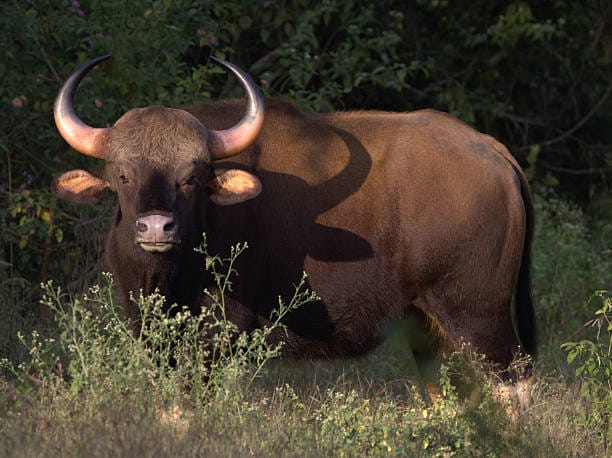
The gaur, sometimes called the “Indian bison,” is one of the largest living wild cows. These animals look powerful at first glance, with a heavy body, high shoulder ridge, and smooth, dark coat. Adult males often appear almost bluish-black, while females carry a brown tone. Both sexes have long pale-colored socks on their lower legs, which makes them easy to identify in dense forest shadows. Their horns curve outward and then sweep inward and upward, forming a pale yellow base that contrasts with the dark head. A mature bull can weigh over a ton, and its massive frame gives it a presence that’s unmistakable. Even those who see a gaur only once usually remember the sheer scale of the animal.
Behavior and Social Structure
Gaurs are mostly gentle, but they show their strength when they feel threatened. They live in small herds led by females, while adult bulls may wander alone except during breeding season. Their daily rhythm tends to shift with temperature; they rely heavily on morning and late-afternoon feeding. Even though their size suggests a slow-moving nature, gaurs can trot quickly when needed. Observers often note how quietly they move for such large animals—sometimes appearing almost silent as they pass through bamboo and tall grass. This behavior helps them avoid conflict with predators such as tigers.
Habitat and Range
The gaur lives in South and Southeast Asia, often choosing forested regions with thick vegetation and nearby water sources. These habitats include moist deciduous forests, evergreen forests, and hilly landscapes. They tend to avoid open plains where cover is limited. Their range includes India, Nepal, Bhutan, Cambodia, Laos, Vietnam, Thailand, and parts of Malaysia. Because gaurs depend on forested land, habitat loss has influenced where they can settle and how large their herds remain over time.
Diet
These wild cows rely heavily on grasses, leaves, and stems. They browse and graze depending on the season, adjusting as food availability shifts. Bamboo shoots, shrubs, and certain fruiting plants form part of their diet. A gaur’s digestive system allows it to break down fibrous plant material very efficiently. Because they need large quantities of food, they travel steadily through their territories rather than staying in one spot for long.
Reproduction and Life Cycle
Cows give birth to a single calf after a gestation period of around nine months. Calves remain close to their mothers during the early months, learning feeding patterns by mimicking browsing behavior. Young males eventually move into bachelor groups or live alone once they mature. Gaurs generally live between 20 and 25 years in the wild when conditions allow.
Fun Facts
One interesting aspect of gaur behavior is their calm curiosity. Some field researchers describe situations where gaurs simply stand and observe rather than flee immediately. Their impressive shoulder bump is formed by extended vertebrae, giving them extra height and strength.
Human Interaction
Gaurs occasionally graze near farms, which causes conflict with local communities. Much of the concern comes from crop damage rather than direct aggression. Conservation programs focus on protecting forest corridors and reducing encounters that bring people and livestock too close to wild herds.
2. Wild Water Buffalo
Physical Characteristics & Identification Tips
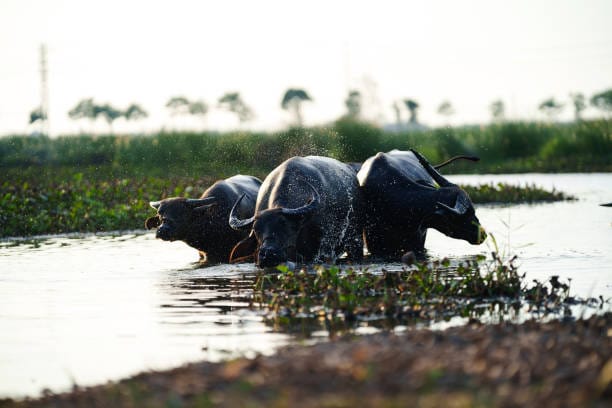
The wild water buffalo is larger and heavier than domestic buffalo breeds, with a long, deep body and exceptionally wide horns. These horns can stretch outward in arcs far wider than the width of the animal’s body, giving them an almost sweeping, crescent-like appearance. Their coat ranges from dark gray to black, often appearing mud-covered because they spend so much time wallowing. The head is long, the neck is thick, and the shoulders appear high due to their muscular frame. Even from a distance, the shape of their horns distinguishes them from domestic relatives.
Behavior and Social Structure
Wild buffalo live in herds, often led by older females. Adult males may form bachelor groups or live alone, returning to herds during mating season. Their behavior revolves heavily around water; they depend on mud wallows to stay cool, avoid parasites, and maintain skin health. Observers often see them submerge most of their body, leaving only the nose, eyes, and horns visible. They remain calm most of the time but can show remarkable power and speed when disturbed.
Habitat and Range
The wild population now exists mostly in parts of India, Nepal, Bhutan, and Cambodia. Historically, they ranged across a far larger area, including much of Southeast Asia. They prefer grasslands, swamps, floodplains, and river valleys—anywhere water remains available through the dry season. These wetlands also support the lush vegetation they depend on, making them essential for survival.
Diet
Wild water buffalo eat long grasses, reeds, aquatic plants, and herbaceous vegetation. They graze for several hours each day and spend additional time submerged in water to digest their meals comfortably. Their feeding patterns shift with water levels, especially during monsoon seasons when new plants become available.
Reproduction and Life Cycle
The breeding season varies by region, and females give birth to one calf after roughly ten to eleven months. Calves stay with their mothers for up to three years, learning herd behavior and feeding habits. Fully grown individuals may live around 25 years in the wild.
Fun Facts
The wild water buffalo holds the record for the widest horns among modern wild cows. Some spans exceed six feet from tip to tip. Their mud-bathing behavior also influences their ecosystems, helping shape small wetlands over years of use.
Human Interaction
Hybridization with domestic buffalo is one of the biggest threats they face. Habitat loss, hunting, and conflict with farmers also affect population numbers. Conservation groups focus on genetic protection and habitat restoration to help remaining herds survive.
3. Banteng
Physical Characteristics & Identification Tips
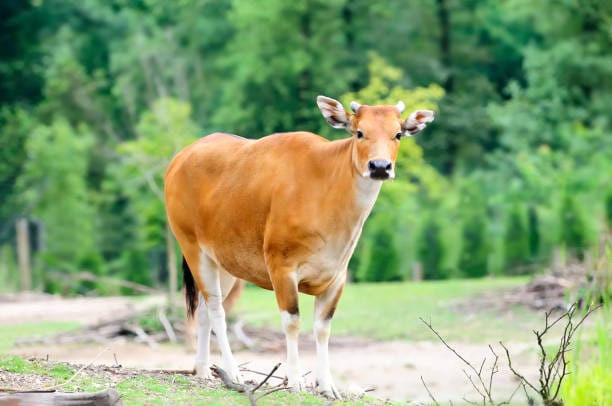
The banteng is recognizable by its slender frame, smooth coat, and contrasting leg markings. Males typically have a deep chestnut or dark brown color, while females carry a lighter reddish tone. Their white socks, rump patches, and black-tipped tail make them easy to distinguish in forests. Horns vary by sex: males have strong, upward-curving horns, and females have thinner versions that angle more gently. These cattle look more delicate than some other wild cows, yet they maintain strong muscle tone, especially around the shoulders.
Behavior and Social Structure
Banteng live in small herds usually led by a single mature female. Bulls often roam separately except during the breeding season. Their behavior tends to be cautious, and they stay close to dense vegetation where they can retreat quickly. Although quieter than species like the gaur, banteng communicate through short calls, body signals, and scent markings. Their herding behavior is structured but flexible, allowing them to shift groups when needed.
Habitat and Range
Banteng inhabit Southeast Asia, including Cambodia, Thailand, Myanmar, Indonesia, and Laos. They prefer tropical forests, grasslands, and open woodlands. In places with human activity, they often move deeper into forests where disturbance is lower. Wild populations still exist on islands such as Borneo and Java, although their numbers have changed over time due to shrinking forest cover.
Diet
The banteng relies on grasses, herbs, bamboo shoots, fruits, and leaves. During dry periods, they may browse more often and graze less, balancing their diet based on available vegetation. Their feeding habits help maintain forest clearings and encourage plant diversity, especially in mixed habitats.
Reproduction and Life Cycle
Calves are born after a gestation period of about nine to ten months. Mothers remain protective during the early weeks, often standing between their young and any disturbance. Juveniles stay with the herd until adulthood, with males eventually forming bachelor groups. Banteng can live between 20 and 25 years in the wild under stable conditions.
Fun Facts
The banteng is the wild ancestor of the Bali cattle breed, still raised on farms today. They are also strong swimmers and sometimes cross rivers that appear surprisingly wide for such slim-bodied cattle.
Human Interaction
Hunting, domestic cattle expansion, and land conversion challenge their wild populations. Conservation efforts emphasize protected areas and community involvement to reduce conflict and avoid genetic mixing with domestic breeds.
4. African Buffalo (Cape Buffalo)
Physical Characteristics & Identification Tips
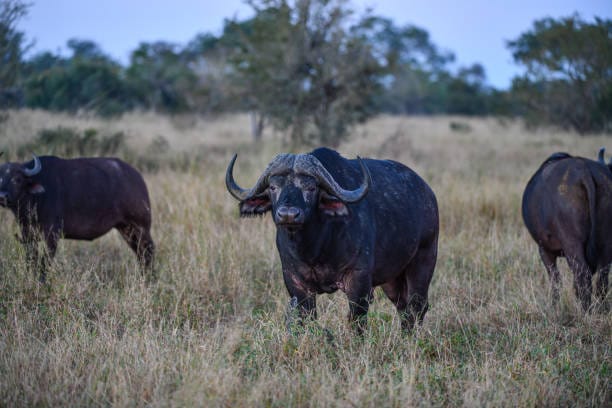
The African buffalo—often called the Cape buffalo—is one of the most recognizable wild cows. Its heavy frame, deep chest, and broad shoulders make it look like it was carved from solid stone. Adults often weigh between 1,000 and 1,900 pounds, and the overall impression is power first, questions later. The curved horns form a wide arc, meeting in the middle at a thick, helmet-like shield known as the “boss.” This feature helps people distinguish Cape buffalo from other African bovines instantly. Their coat ranges from dark brown to pitch black, and older individuals often appear dusty because they spend so much time cooling off in mud. Younger buffalo have slimmer bodies and smaller horns, but they grow into the iconic look quickly. When observing a herd, the largest bulls usually stay on the edges, scanning for danger—or potential rivals.
Behavior and Social Dynamics
African buffalo are famous for their strong herd behavior. Some groups reach several hundred individuals, all communicating through grunts, snorts, and low rumbles. These calls help them coordinate movement, warn others of danger, or remind stragglers to keep up. Daily routines often follow a simple pattern: grazing, resting, wallowing, and more grazing. During the hotter hours, buffalo gather under trees or stand in shallow water to cool their bodies. Young calves always stay close to their mothers, and if a calf bleats sharply, adults react with surprising speed. Despite their bulky build, buffalo can gallop at impressive speeds when threatened. A common comparison among field guides is that “buffalo look slow until you see them run.” Dominant bulls may challenge one another with head-to-head pushing matches, the horns clacking like wooden logs.
Habitat and Range
Cape buffalo inhabit a wide area across sub-Saharan Africa. They thrive in savannas, grasslands, wetlands, and even lightly forested regions. Water is essential to them—herds rarely remain far from a reliable source. In the dry season, buffalo may travel long distances daily, moving slowly across the landscape like a living tide. Countries with some of the largest populations include Tanzania, Kenya, Botswana, and South Africa. Their ability to adapt to various vegetation types allows them to coexist with other large herbivores, from zebras to hippos. During wetter periods, buffalo wander freely across lush plains. As water sources shrink, predictable travel corridors form, and many wildlife researchers use these movements to study long-term habitat health.
Diet
African buffalo are strict grazers. They prefer tall, coarse grasses that many other herbivores ignore. Their digestive system handles fibrous plants easily, allowing them to eat huge amounts throughout the day. When grass becomes scarce, buffalo may shift to shrubs, but this is more of a last resort than a preference. Calves depend on milk for several months but begin nibbling on short green shoots early in life. One interesting behavior involves “group feeding waves,” where the herd sweeps across a plain together, leaving behind neatly trimmed patches. This organized movement helps protect individuals from predators, especially when lions attempt to ambush the herd. Lions often target isolated individuals, so buffalo stay tightly packed while feeding.
Reproduction and Life Cycle
Breeding occurs throughout the year, though peaks appear during rainy months. Bulls compete for access to cows, but most confrontations end with a few horn clashes rather than long battles. The gestation period lasts about 11 months, and cows usually give birth to a single calf. For the first days, the mother keeps the calf hidden in tall grass, allowing it to gain strength before joining the herd. Calves grow rapidly, and by the time they reach a year old, they can keep pace with adults on long migrations. Buffalo can live more than 20 years in the wild, though predators and environmental factors often shorten this lifespan. Older bulls sometimes leave the main herd and form smaller bachelor groups, roaming more slowly and occupying quieter areas.
Fun Facts
Many field rangers refer to Cape buffalo as “the landscapers,” because their grazing helps shape African grasslands. Their herds also create natural firebreaks by trimming vegetation along their paths. Another surprising fact: buffalo wallowing helps control parasites. Mud creates a protective barrier that dries and flakes off, removing ticks in the process. Cape buffalo are also known for fierce group defense—if a lion takes down a member of the herd, others may charge the predator and attempt to rescue their companion.
Human Interaction
Humans have respected and feared buffalo for centuries. Their unpredictable temper has earned them stories and warnings across rural communities. Farmers occasionally struggle with buffalo feeding on crops or competing with livestock for water. In protected areas, buffalo contribute to tourism and ecological balance. Many conservation programs monitor herd numbers carefully because diseases like bovine tuberculosis can spread quickly among them. Despite challenges, the species remains widespread due to strong population numbers and effective management strategies.
5. Wild Yak
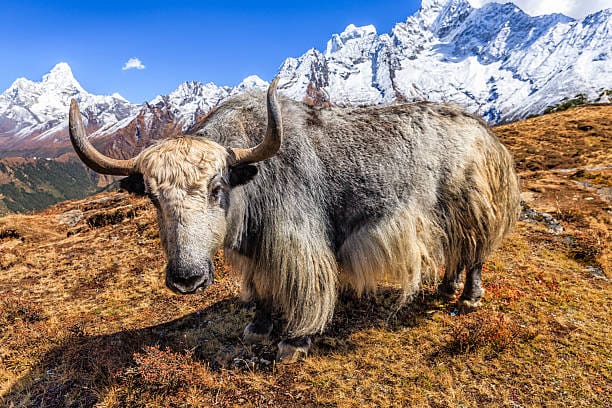
Physical Characteristics & Identification Tips
Wild yaks are built for cold mountains. Their long, shaggy coat hangs down almost to their ankles, giving them a dramatic silhouette against snowy slopes. The coat color ranges from dark brown to almost black. Beneath the fur is a layer of dense wool that traps warmth even in freezing winds. Adult males weigh between 1,200 and 2,200 pounds, making them one of the heaviest wild cows in Asia. Their horns sweep outward and upward, reaching impressive lengths—sometimes over a meter long. These horns help with defense, snow-digging, and dominance contests. The tail resembles that of a horse, and their large lungs support survival at high altitudes. Observers often describe them as “walking snow forts,” and that description fits well.
Behavior and Social Structure
Wild yaks form herds mostly composed of females and calves, while mature bulls prefer smaller bachelor groups. During certain seasons, males join the larger herds to mate. Their behavior is calm but alert; a sudden noise can cause a herd to shift position instantly. Yaks move in a steady, rhythmic gait, saving energy on steep terrain. They communicate through grunts and short snorts. When threatened, they gather in a tight formation, calves in the center and adults facing outward—an effective defense against wolves. Dominance battles between males involve horn wrestling and loud snorts, though injuries are less common than one might expect. Their daily routine revolves around grazing, resting on rocky ground, and traveling to safer elevations.
Habitat and Range
Wild yaks live at some of the highest elevations any large mammal can tolerate. Most populations reside in Tibet, Qinghai, and parts of western China. They roam open plateaus, windswept valleys, and icy slopes above 12,000 feet. Water sources are limited in these areas, so yaks often rely on snowmelt. Their hooves grip rocky ground well, allowing them to move quietly across cliffs and ridges. In winter, they descend slightly to reach exposed grass patches. Despite harsh terrain, yaks maintain wide ranges, traveling long distances to find grazing grounds. Some protected reserves were established specifically to safeguard yak herds because habitat loss and genetic mixing with domestic yaks pose ongoing issues.
Diet
The wild yak diet consists mostly of grasses, herbs, shrubs, and mosses. High-altitude plants grow slowly, so yaks graze patiently and systematically. Their strong sense of smell helps them locate greenery beneath snow. During summer, they feed on lush alpine meadows, storing energy for colder months. In winter, they may paw snow aside to reach frozen plants. Their digestive system is well adapted for extracting nutrients from tough vegetation, and they spend long hours each day feeding. Calves begin sampling plants early but rely on milk for several months. Because food availability shapes much of yak behavior, they often migrate in loose patterns that align with seasonal plant growth.
Reproduction and Life Cycle
Breeding occurs in late summer. Males compete for females by bellowing, displaying their massive horns, and occasionally clashing. Gestation lasts around 9 months, with calves born in spring when temperatures rise. Newborn yaks are surprisingly strong and able to stand soon after birth. They remain close to their mothers for protection and warmth. As they grow, calves develop thicker coats and begin practicing climbing and grazing habits. Wild yaks can live 20–25 years in natural conditions, though predation, harsh winters, and human disturbance affect survival rates. Their slow reproductive rate makes population recovery challenging, making conservation efforts vital.
Fun Facts
A wild yak’s heart and lungs are significantly larger than those of many other cattle species, allowing them to operate efficiently in low-oxygen environments. Their fur is so insulating that snow often remains frozen on their backs without melting. Another interesting detail: their grunts are so deep that they echo across valleys like rolling thunder. Some herders refer to them as “mountain shadows” because their dark shapes appear suddenly against bright snow.
Human Interaction
Wild yaks have a long history with local communities. Domestic yaks came from these wild ancestors, providing milk, meat, wool, and transport. Modern challenges include habitat encroachment and hybridization when domestic and wild herds overlap. Conservation programs focus on separating these populations and protecting untouched high-elevation areas. Eco-tourism also plays a small role in raising awareness about the species. While wild yaks avoid people, they rarely show aggression unless approached too closely. Their survival depends largely on maintaining quiet, open landscapes where they can graze without interruption.
6. American Bison
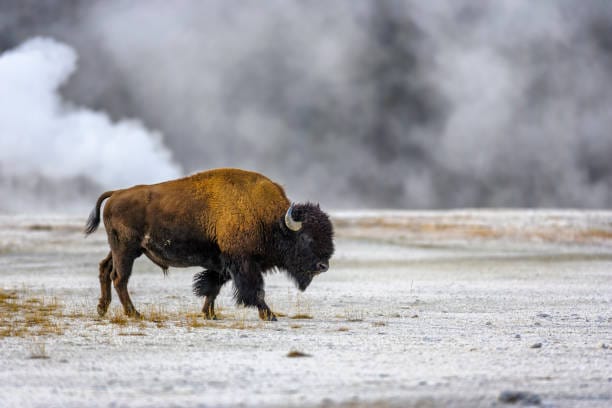
Physical Characteristics & Identification Tips
The American bison is one of North America’s most iconic wild cows. Its massive front shoulders create a hump that gives the animal a distinctive profile. The thick mane around its head and neck adds to its rugged appearance. Coats vary from deep brown to black, and the hair becomes longer and shaggier in winter. Males can weigh over 2,000 pounds, with females generally smaller but still formidable. Short, curved horns sit on either side of the head. Even young bison—called “red dogs” because of their bright orange coats—are easy to identify thanks to their compact bodies and playful movements. Adults walk with a slow, deliberate stride, but they can sprint at surprising speed when necessary.
Behavior and Social Habits
Bison are social animals, forming herds that shift in size throughout the year. Female herds tend to include calves and younger animals, while males form separate groups. During mating season, bulls join the female herds and compete for access to cows. Their communication includes grunts, bellows, and body postures. Dust wallowing is a common behavior—they roll on the ground to remove parasites and soothe skin. Bison also graze in a steady pattern, often moving in lines across grasslands. Their calm appearance shouldn’t fool anyone; they can become defensive quickly when startled. In protected parks, visitors often underestimate their speed and strength, leading to dangerous encounters. Bison prefer personal space, and they make that clear through head shaking or short charges.
Habitat and Range
Historically, bison roamed across most of North America. Today, wild herds survive in regions such as Yellowstone, North Dakota, Wyoming, and parts of Canada. The species thrives in open grasslands, prairies, and sagebrush areas. They migrate seasonally, following fresh plant growth. In winter, bison sweep their large heads side to side to clear snow and uncover grass beneath. Many herds live in protected areas where conservation measures focus on maintaining healthy genetic diversity. Their presence helps shape ecosystems—bison grazing patterns influence plant growth, soil turnover, and habitat structure for many other species.
Diet
Bison feed mainly on grasses. Their diet includes buffalo grass, blue grama, needlegrass, and sedges. Occasionally, they browse on shrubs when grass is scarce. Their broad jaws and strong molars efficiently grind fibrous plants, making long feeding sessions effective. Calves begin nibbling on grass early but rely on milk for several months. Bison often graze at dawn and dusk to avoid heat. The herd’s constant grazing can create short vegetation patches that help prairie dogs, ground birds, and even insects flourish. In this way, bison act as natural landscapers of the Great Plains.
Reproduction and Life Cycle
Mating occurs in late summer. Bulls compete through displays, bellowing, and occasional pushing matches. Gestation lasts around nine months, and most calves arrive in spring. Mothers are protective, guiding calves through the early stages of learning to graze, avoid danger, and keep pace with the herd. Bison can live more than 20 years, though wild conditions often reduce that lifespan. Seasonal migration is a major part of their life cycle, with herds traveling long distances to locate quality forage and suitable wintering grounds.
Fun Facts
Despite their size, bison can jump fences, run up to 35 mph, and pivot sharply when needed. Their thick fur sheds water so effectively that snow can accumulate on their backs without melting. Bison are also excellent swimmers. During spring, visitors often see “red dog nurseries,” where several calves gather and play while adults rest nearby. Their bellows during mating season can carry over long distances, sounding almost like distant thunder.
Human Interaction
Bison hold great cultural significance for many Indigenous nations across North America. Historically, these communities relied on bison for food, clothing, tools, and shelter materials. Modern conservation efforts aim to restore wild herds to more regions, honoring traditional knowledge and strengthening ecosystems. Human-bison conflict tends to arise mainly in areas where tourists approach them too closely. Conservationists emphasize respecting their space and recognizing the animal’s important ecological role.
7. European Bison (Wisent)
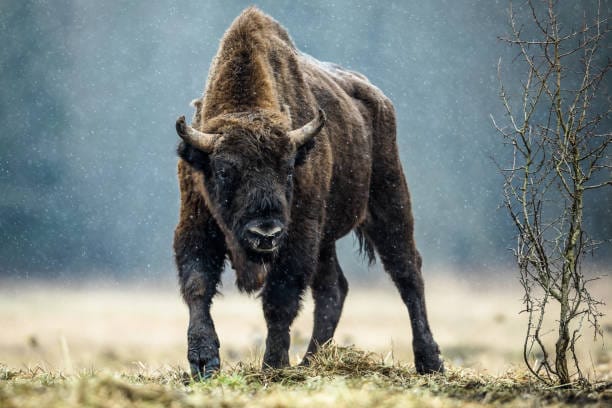
Physical Characteristics & Identification Tips
The European bison, or wisent, is the largest land mammal in Europe. It stands tall on long legs compared to its American cousin, giving it a straighter posture. The hump over its shoulders is present but less pronounced. Its coat is shorter and lighter in color, often appearing golden-brown in summer and darker in winter. Adult males can weigh over 1,800 pounds. The horns of a wisent curve forward rather than outward, a useful identification feature. Their faces appear narrower, and their tails longer, giving them a distinguished look. Calves are smaller and lighter in color, gradually developing the adult coat texture.
Behavior and Social Dynamics
Wisent herds follow a matriarchal structure, with adult females leading group movements. Males live separately for most of the year but join during mating season. Wisent are cautious animals, often pausing to observe surroundings before continuing to graze. Their communication includes soft grunts, snorts, and subtle body cues. They may appear slower than American bison, but they can charge quickly if threatened. During winter, wisent gather in smaller groups to conserve energy. Dominance among males is usually established through displays and minimal contact. They spend significant time foraging and resting in shaded woodland edges.
Habitat and Range
European bison once wandered across much of the continent, but populations declined drastically. Today, conservation projects have reintroduced wisent to Poland, Belarus, Romania, Germany, and several Eastern European countries. They prefer mixed forests, meadows, and transitional areas where grass and shrubs remain accessible. In winter, they rely on evergreen shrubs and bark as food sources. Their movements cover large distances, making habitat connectivity crucial. The Białowieża Forest in Poland is one of the most well-known strongholds for the species.
Diet
Wisent eat grasses, herbs, bark, leaves, and occasionally shrubs. Their varied diet allows them to thrive in forest ecosystems. They browse more than American bison, selecting tender shoots and stripping bark when needed. Calves start grazing young, mimicking adults. Seasonal changes shape their feeding habits: spring brings fresh greenery, while winter forces them to rely on woody plants. Their diet plays an important role in shaping forest structure, helping keep vegetation from becoming too dense.
Reproduction and Life Cycle
Breeding peaks in late summer. Males compete by bellowing, circling one another, and occasionally clashing horns. Gestation lasts about nine months. Cows hide calves in vegetation for the first few days before introducing them to the herd. Wisent can live around 20–25 years. Throughout their lives, they move between open and wooded areas depending on season and food availability. Reintroduced populations are monitored closely to maintain genetic health.
Fun Facts
The wisent’s recovery is considered one of Europe’s greatest conservation stories. All modern wisent descend from a small number of individuals kept in captivity, making their comeback remarkable. Their vocalizations are softer than those of American bison, often described as a blend of snorts and soft growls. Wisent also use dust baths to control parasites and mark territory.
Human Interaction
Human pressure almost pushed wisent to extinction, but widespread conservation efforts have reversed the decline. Today, they attract eco-tourism and support forest biodiversity. Conflicts mainly occur when wisent wander into farmland. Many countries have designated protected corridors to allow safe movement. The species remains a conservation symbol and a reminder of Europe’s ecological history.
8. Lowland Anoa
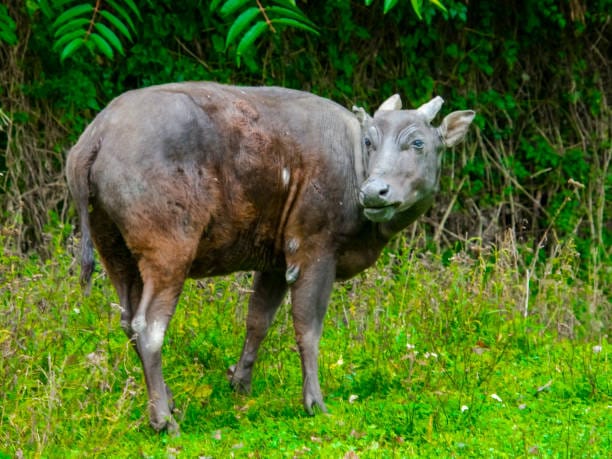
Physical Characteristics & Identification Tips
The lowland anoa is the smallest wild cow in this guide, standing much shorter than bison or buffalo. It resembles a stocky deer or goat at first glance, but closer inspection reveals features typical of wild cattle. Its coat is dark brown or black, often glossy in appearance. The horns are short, straight, and triangular in cross-section, giving the anoa a distinct profile. Adults weigh between 350 and 550 pounds. Their compact build helps them move easily through thick forest. Juveniles have lighter fur and softer facial features, gradually developing thicker coats as they mature. Unlike larger wild cows with sweeping horns, the anoa’s modest size makes it harder to spot in dense vegetation.
Behavior and Social Habits
Anoa tend to live alone or in very small groups—usually pairs or mother-calf units. They are shy and cautious, avoiding open areas. Their behavior is quiet and deliberate, with slow movements through forest understory. They vocalize rarely, using soft grunts when interacting with calves. When threatened, they retreat into thick brush rather than stand their ground. Despite their small size, they can be unexpectedly bold when cornered, using their sharp horns to defend themselves. Grooming behaviors include rubbing against tree trunks and wallowing in shallow mud to cool off. Their solitary habits make them one of the least observed wild cows.
Habitat and Range
Lowland anoa live exclusively in Indonesia, particularly on the island of Sulawesi. They inhabit tropical forests, swampy lowlands, and dense understory vegetation. Their range has shrunk due to habitat loss, creating fragmented populations. They prefer quiet, shaded environments where they can move unnoticed. Because they rely on thick forest cover, deforestation poses a major challenge. Conservation programs focus on protecting lowland forests and preventing hunting.
Diet
Anoa feed on leaves, grasses, shoots, fruits, and aquatic plants. Their diet varies with season and habitat. They may browse on woody plants more frequently than large grazing species. Their small size allows them to forage on plants many other wild cows ignore. Calves begin nibbling on vegetation early, staying close to their mothers for guidance. Anoa often visit mineral deposits in the forest, licking salt-rich soil that helps maintain strong bones.
Reproduction and Life Cycle
Breeding occurs throughout the year. Gestation lasts about 9–10 months, resulting in a single calf. Mothers hide newborns in thick plants for protection, returning regularly for nursing. Calves grow steadily and stay with their mothers for up to two years. Anoa can live around 20 years in captivity, though their lifespan in the wild may be shorter due to pressures from hunting and habitat disturbance.
Fun Facts
The lowland anoa is sometimes nicknamed the “forest dwarf buffalo.” Despite its modest stature, it is an important part of Sulawesi’s ecological web. Their small herds and quiet behavior make sightings rare, and many locals consider it a secretive animal. Anoa tracks are often one of the only signs researchers find when studying the species.
Human Interaction
Anoa face challenges from habitat loss, illegal hunting, and conflict with expanding agriculture. Conservationists emphasize the need for stronger protection of Indonesian forests. Local communities play a key role in preserving remaining habitats. Education and sustainable practices help reduce pressures on the species. With focused efforts, the lowland anoa still has a chance to recover.
9. Mountain Anoa (Bubalus quarlesi)
Physical Characteristics & Identification Tips
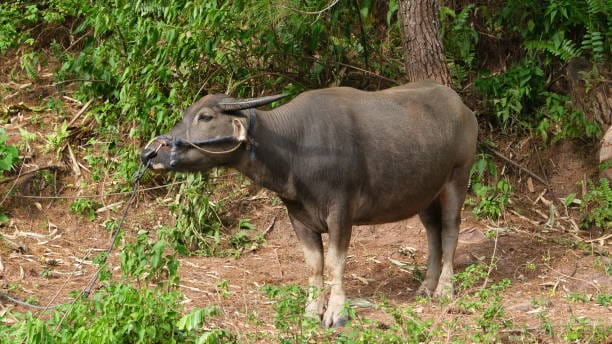
The Mountain Anoa is one of those animals that always surprises newcomers because of its size. People hear “wild cow” and immediately picture something the size of a small car. But the Mountain Anoa, found in parts of Sulawesi, almost feels like nature’s compact edition of a buffalo. Adults typically stand around 30–40 inches at the shoulder, giving them a short, sturdy silhouette that blends easily into dense forest shadows.
Their coat is darker than that of their Lowland Anoa cousins, often jet-black or soot-brown, giving them a dramatic look in photos and a vanishing-act quality in real life. Short, triangular horns curve gently backward, and while they look modest compared to other wild cattle, they’re more than enough for a defensive shove when needed. A good identification tip is the coat texture: Mountain Anoas usually have thicker, fluffier hair—an adaptation to their cooler high-elevation habitats.
Their faces have a soft, almost deer-like expression, but the heavily built neck and compact body leave no doubt that these animals come from the bovine branch of the family tree. If you ever find yourself trying to distinguish the two Anoa species, look for the longer, woollier coat and slightly stockier build in the Mountain Anoa.
Behavior and Nesting Habits
Anoas are famously shy. Think of that one friend who avoids group photos and quietly slips away at family gatherings — that’s the Mountain Anoa. They tend to be solitary, except during mating season or when a mother is raising a calf. Their day usually revolves around foraging, resting, and finding the kind of thick underbrush that offers safety.
They rarely travel in herds, which is unusual for wild cattle. Instead, they live a quiet life in the forest understory, relying heavily on stealth. Unlike many bovines that dig or step down vegetation to create bedding areas, Mountain Anoas prefer natural sheltered pockets in the forest where they can rest with minimal disturbance.
Habitat and Range
This species is native to the mountainous regions of Sulawesi, Indonesia. They favor mossy forests, montane woodlands, and cool, humid valleys. These habitats naturally offer protection through dense vegetation, narrow slopes, and thick canopies.
Their range is shrinking, mainly due to habitat loss, but the remaining pockets of suitable terrain still hold stable micro-populations. In some areas, Mountain Anoas are found at higher elevations than any other wild cattle species.
Diet
Their diet is consistent with forest-dwelling bovines. They browse on low-hanging leaves, shrubs, tender stems, palms, fruits, and sometimes vine shoots. Their smaller body size actually works in their favor, allowing them to maneuver through dense vegetation where larger grazers would struggle.
They also take advantage of mineral-rich mud and natural salt licks, a behavior many hoofed mammals share. These spots often become silent meeting grounds for multiple forest species.
Reproduction and Life Cycle
Mountain Anoas typically breed once per year. Females give birth to a single calf after an 8–9 month gestation. Calves are fully mobile within hours but stay close to their mother for protection. Juveniles remain dependent for up to a year before venturing out alone, though they may linger near their mother’s home range for long periods.
Fun Facts / Unique Traits
- They’re sometimes called the “dwarf buffalo,” though they’re more muscular than the name suggests.
- They are excellent at standing still—almost statue-like—making them extremely difficult to spot in the forest.
- Anoas remain one of the least studied wild cattle species because of their reclusive nature.
Human Interaction
Human interaction hasn’t been kind to the Mountain Anoa. Poaching, habitat loss, and occasional conflict with local agriculture place significant pressure on them. Conservation groups in Indonesia prioritize education and patrols to protect this species, emphasizing its ecological importance and its role as a flagship animal for Sulawesi’s highland forests.
10. Tamaraw (Bubalus mindorensis)
Physical Characteristics & Identification Tips
The Tamaraw is one of the Philippines’ most iconic mammals, though ironically, few people have ever seen one in person. This wild cow is compact, robust, and unmistakably built for rugged terrain. It stands smaller than most buffalo species, usually around 35–42 inches tall at the shoulder.
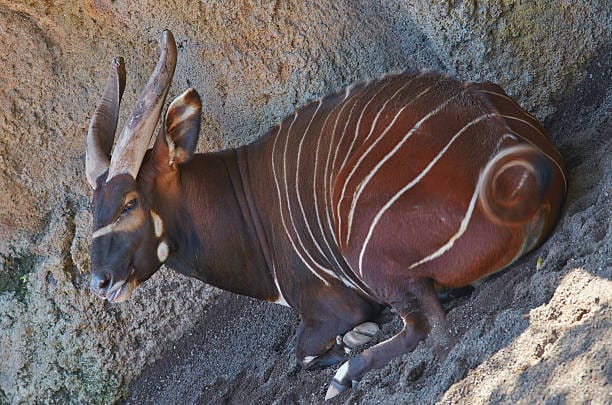
Its most recognizable trait is the shape of its horns. Rather than curving out and upward like typical buffalo horns, Tamaraw horns form a sharp “V,” pointing vertically before tapering into needle-like tips. This gives them a striking profile—almost like a bovine crown.
Their coat is dark gray to charcoal black, and unlike some other wild cattle, it has fewer gloss patches. Tamaraws also have distinct white markings on their faces, often appearing as faint stripes near the eyes or muzzle.
Behavior and Nesting Habits
Tamaraws are naturally wary. They prefer to avoid confrontation, using dense vegetation to hide rather than stand their ground. But when threatened, they can be incredibly fast and surprisingly agile for their size.
They typically live alone or in tiny groups consisting of a female and her offspring. Large herds used to be common in the past, but due to population declines, modern sightings often involve one or two individuals at most.
Habitat and Range
The Tamaraw is found only on Mindoro Island in the Philippines. Historically, they roamed across much of the island, but today their distribution is limited to a few protected areas, including Mounts Iglit–Baco National Park.
They thrive in tropical grasslands, forest edges, and lightly wooded mountainsides. During the dry season, they favor areas with stable water sources.
Diet
Their diet consists of grasses, bamboo shoots, palms, and shrubs. They are primarily grazers but will switch to browsing when forage becomes scarce. They spend a large portion of the day feeding, especially during early morning and late afternoon.
Reproduction and Life Cycle
Tamaraws produce one calf per pregnancy after a gestation of about 10–11 months. Calves stay near their mothers for up to two years and gradually become independent. Females reproduce slowly, which unfortunately contributes to their critically endangered status.
Fun Facts / Unique Traits
- The Tamaraw is the only wild cow species endemic to the Philippines.
- It appears on the Mindoro provincial seal and is a cultural symbol of resilience.
- Despite their size, Tamaraws are remarkably quick and can sprint short distances with surprising speed.
Human Interaction
Tamaraws face ongoing challenges from habitat loss, hunting, and disease. Conservation programs now prioritize habitat restoration and population monitoring, and local communities increasingly participate in protection efforts. With steady support, there is hope that Tamaraws can rebound.
11. Kouprey (Bos sauveli)
Physical Characteristics & Identification Tips
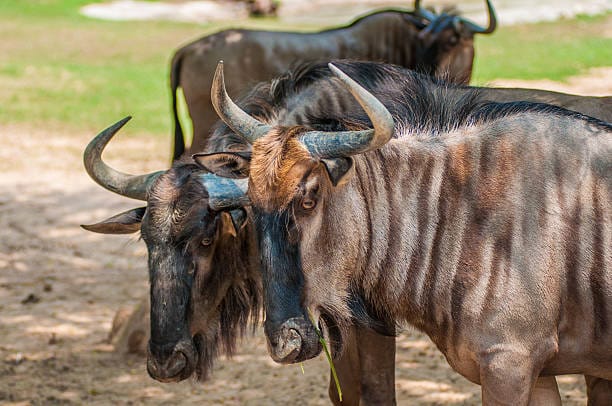
The Kouprey is often described as one of the rarest and most elusive wild cows on the planet — a ghost in the forests of Southeast Asia. Standing up to 6.5 feet tall at the shoulder, it is impressively tall and slender for a wild bovine.
Their horns can be spectacular. Females have long, lyre-shaped horns that twist slightly outward, while males develop thick, rugged horns that fray at the tips as they age. This fraying effect gives older males a rugged, almost prehistoric appearance.
Coat colors range from ash gray to dark brown, and mature males develop a dewlap — a loose fold of skin under the neck — that can extend nearly to the knees.
Behavior and Nesting Habits
Koupreys are thought to be crepuscular, moving most during early morning and late afternoon. They travel in small herds composed mostly of females and calves, with males appearing during the breeding season.
Because sightings have been extremely rare since the 1970s, much of what we know is based on older field notes, local accounts, and historical photographs.
Habitat and Range
Historically, the Kouprey ranged across Cambodia, Laos, Vietnam, and parts of Thailand. They favored open forests, savannas, and lightly wooded plains.
Today, experts debate whether any still exist in the wild. If surviving populations remain, they are likely in remote, heavily forested terrain where human access is limited.
Diet
They primarily grazed on grasses, herbs, and shrubs. In the dry season, they may have shifted to browsing on leaves and young branches.
Reproduction and Life Cycle
Little is known, but patterns likely resembled those of other wild cattle: single calves, seasonal breeding, and maternal care lasting up to a year.
Fun Facts / Unique Traits
- The Kouprey was discovered by Western science only in 1937.
- They may be the most endangered — or possibly extinct — wild cow species.
- Their horn fraying is one of the most recognizable features of aging males.
Human Interaction
Political instability, habitat destruction, hunting, and disease severely impacted Kouprey populations throughout the 20th century. Conservationists still hope a small group survives somewhere in Cambodia, hidden far from human disturbance.
12. Saola (Pseudoryx nghetinhensis)
Physical Characteristics & Identification Tips
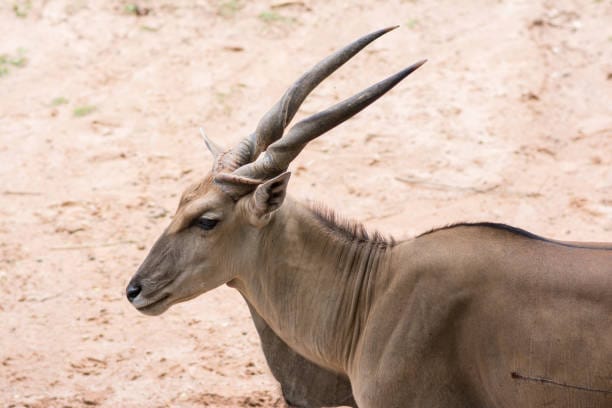
Often called the “Asian Unicorn,” the Saola is one of the most mysterious large mammals discovered in modern times. Although it resembles an antelope in shape, genetic research places it firmly within the wild cattle group.
Saolas have long, parallel horns that point straight back, reaching up to 20 inches. Their coat is smooth and chocolate brown, accented by white facial markings and dark stripes along the muzzle.
They have a delicate build compared to most wild cows, with long legs and a narrow chest that helps them move gracefully through mountain forests.
Behavior and Nesting Habits
Saolas are extremely shy and solitary. They avoid open areas and prefer dense forest interiors. Few people have ever seen them in the wild; most knowledge comes from brief encounters, camera traps, and local interviews.
Habitat and Range
This species inhabits the Annamite Mountains along the border of Vietnam and Laos. They select evergreen forests with fast-flowing streams and steep terrain.
Their range is fragmented, and ongoing habitat loss increases their vulnerability.
Diet
Saolas browse on leafy plants, small shrubs, ferns, and tender shoots. They appear to favor moist vegetation and often stay near streams.
Reproduction and Life Cycle
Little is documented, but researchers believe Saolas give birth to a single calf after a nine-month pregnancy. Calving likely aligns with seasonal rainfall.
Fun Facts / Unique Traits
- Discovered in 1992 — one of the newest large mammals known to science.
- Locals long knew of its existence but kept it within cultural stories.
- No Saola has ever survived long in captivity.
Human Interaction
Saolas suffer mainly from habitat loss and accidental snaring. They are rarely targeted directly, but traps set for other animals often harm them. Conservation relies heavily on anti-snare patrols and habitat protection.
13. Aurochs (Bos primigenius)
Physical Characteristics & Identification Tips
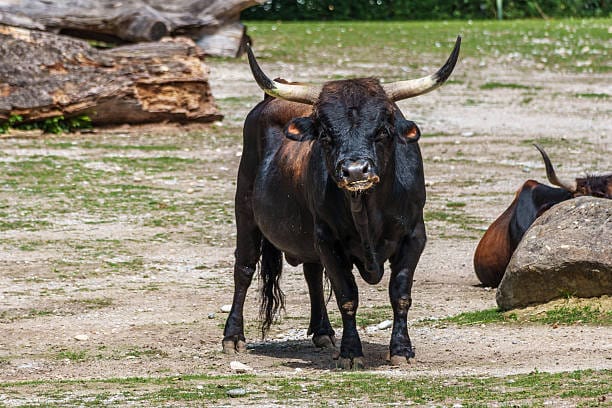
The Aurochs was the ancestor of all domestic cattle, and it lived across Europe, Asia, and North Africa until its extinction in the 17th century. Historical descriptions and preserved skeletons reveal an impressive animal: tall, muscular, and imposing.
Bulls stood up to 6.8 feet at the shoulder, with long, forward-curving horns shaped like extended crescents. Their coats were typically dark with a lighter dorsal stripe. Cows were smaller and more reddish in color.
Behavior and Nesting Habits
Aurochs lived in herds that varied seasonally. Males and females often stayed in separate groups except during the breeding season. Dominance displays involved horn clashes, loud vocalizations, and intense posturing.
They rested in sheltered grasslands or forest edges, creating bedding sites by trampling vegetation into circular depressions.
Habitat and Range
Aurochs inhabited a broad range from open plains and woodlands to river valleys. They preferred areas with fresh water and abundant grasses.
Though extinct today, their ecological role as large grazers helped shape landscapes across Eurasia.
Diet
Their diet consisted mostly of grasses, herbs, and aquatic vegetation. Seasonal changes meant shifting between grazing and browsing depending on food availability.
Reproduction and Life Cycle
Cows typically gave birth to one calf each year. Young Aurochs matured slowly, reaching full size at around five years of age. Their lifespan likely exceeded 20 years in the wild.
Fun Facts / Unique Traits
- The last known Aurochs died in Poland in 1627.
- Modern cattle breeds still carry many of their traits.
- Multiple programs aim to “breed back” Aurochs-like cattle using selective breeding.
Human Interaction
Humans hunted Aurochs for millennia and eventually domesticated them, giving rise to all modern cattle. Their extinction resulted from overhunting, disease spread by livestock, and habitat loss.
14. Forest Buffalo (Syncerus caffer nanus)
Physical Characteristics & Identification Tips
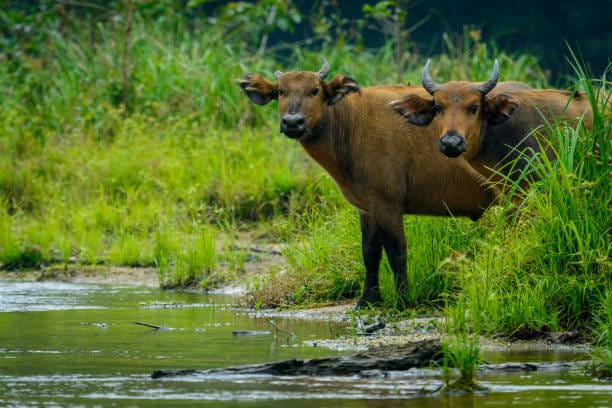
The Forest Buffalo is the smaller, more compact cousin of the Cape Buffalo. Standing around 3 to 4 feet at the shoulder, it boasts a stocky build perfect for moving through dense African forests. Its coat is a rich dark brown, almost black, and it often has a shiny, sleek appearance. A distinguishing feature is its horns: short, crescent-shaped, and swept sideways, which differentiate it from the massive horns of open-plains buffalo.
Forest Buffaloes have relatively large heads with wide, alert eyes that help them monitor predators. Their ears are rounded and fringed with hair, and their thick neck and strong shoulders provide strength for pushing through thick underbrush. When identifying them in the wild, look for the combination of small stature, dark color, and sideways-curving horns.
Behavior and Nesting Habits
These buffaloes are shy and secretive, rarely forming the large herds seen in savanna buffalo. Typically, they travel in small groups of 5–15 individuals, usually females with calves, while males may roam alone. They are primarily crepuscular, moving actively during dawn and dusk, while resting under dense canopy during the hottest hours of the day.
Unlike savanna species, Forest Buffaloes rarely mark territory with scent; their dense habitats provide natural boundaries. They bed down in small clearings or near water sources, often using trampled leaves as bedding pads. Their movements are deliberate and cautious, minimizing noise to avoid predators like leopards and large snakes.
Habitat and Range
Forest Buffaloes inhabit the rainforests of Central and West Africa, including Gabon, Cameroon, and the Democratic Republic of Congo. They prefer lowland tropical forests, swamps, and riverine woodlands where vegetation is dense and predators can approach unseen. Their range is patchy due to habitat loss and fragmentation, but protected areas still support healthy populations.
Diet
These buffaloes are primarily grazers and browsers, consuming a mix of grasses, shrubs, herbs, and fallen fruits. During dry periods, they may feed on woody plants and aquatic vegetation. Mineral-rich waterholes and salt licks are vital, especially for calves, as they supply essential nutrients not available in foliage alone.
Reproduction and Life Cycle
Females reach sexual maturity at around 3–4 years, while males mature closer to 5–6 years. Breeding usually peaks during the rainy season when food is abundant. After a gestation of about 11 months, a single calf is born. Calves are mobile almost immediately but remain close to the mother for protection and guidance. Juveniles stay with the maternal group for several years, learning how to forage and recognize threats.
Fun Facts / Unique Traits
- Forest Buffaloes are excellent swimmers and often cross streams unnoticed.
- They communicate with low grunts and snorts, detectable only at close range.
- Unlike savanna buffalo, they rarely charge unless cornered, preferring stealth and avoidance.
Human Interaction
Forest Buffaloes face threats from hunting and deforestation. Local communities sometimes hunt them for bushmeat, but protected reserves help maintain stable populations. Ecotourism initiatives highlight these shy forest dwellers, giving people a rare chance to observe them without disturbing natural behavior.
15. Congo Buffalo (Syncerus caffer nanus var. Congo)
Physical Characteristics & Identification Tips
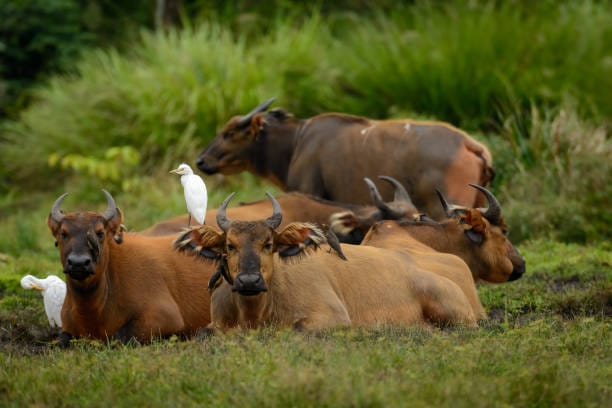
Congo Buffalo are a subspecies of the Forest Buffalo but exhibit subtle differences. They are slightly smaller, with an average height of 2.5–3.5 feet at the shoulder, and their horns tend to be thicker at the base and curve slightly inward. Their coat is dark brown to black, with occasional lighter patches on the legs or muzzle.
Identification often relies on their habitat and horn shape. While similar in size to Forest Buffalo, the Congo variety has a rounder body and slightly shorter legs, adaptations for navigating swampy areas and dense forests. Eyes are large and reflective, aiding in nocturnal vigilance.
Behavior and Nesting Habits
Congo Buffaloes are elusive and mostly nocturnal. They forage in small groups, often led by an older female. Males tend to be solitary or form bachelor groups. These buffaloes use swampy areas for concealment and water access. They communicate with low, guttural sounds that resonate in the forest, helping groups coordinate movements without revealing their location to predators.
They bed down in thick vegetation, trampling small patches of undergrowth to create comfortable resting areas. Unlike open plains species, they rarely travel long distances, preferring predictable territories rich in food and water.
Habitat and Range
Native to the Congo Basin, they occupy swamp forests, lowland rainforests, and riverine zones. Protection is crucial as human encroachment and logging have reduced continuous habitat. Populations are scattered but can thrive in deep forest interiors where poaching pressure is lower.
Diet
Congo Buffaloes feed on grasses, young shoots, aquatic plants, and fallen fruits. They also consume mineral-rich mud and soil to supplement nutrients. They have a selective diet, often avoiding overly fibrous plants that are common in dense forests.
Reproduction and Life Cycle
Similar to Forest Buffalo, females produce a single calf per year after an 11-month gestation. Young remain with the mother’s group for learning and protection. Males join female groups primarily during the breeding season.
Fun Facts / Unique Traits
- Congo Buffaloes are rarely seen during daylight due to their nocturnal habits.
- They exhibit excellent agility for forest terrain, capable of leaping over obstacles up to 3 feet high.
- They are highly adaptable to seasonal flooding, moving to higher ground when waters rise.
Human Interaction
Local hunting is the main threat, but strict protected zones offer safety. Conservation efforts emphasize awareness and patrols, particularly around rivers and swamps where these buffaloes congregate.
16. Wild Asian Water Buffalo (Bubalus arnee)
Physical Characteristics & Identification Tips
The Wild Asian Water Buffalo is a large, powerful species found in South and Southeast Asia. Adult bulls may reach up to 6.5 feet at the shoulder and weigh over 1,500 kg, making them one of the largest wild bovines. Their massive, crescent-shaped horns can span more than 6 feet tip-to-tip.
The coat is dark gray to black, often with sparse hair along the body. The hump over the shoulders is subtle but muscular, and the dewlap is pronounced in males. Females are smaller with slightly thinner horns. Identification tips include horn size, body bulk, and their broad muzzles, which distinguish them from domestic buffalo.
Behavior and Nesting Habits
These buffaloes are social animals, usually forming herds of 10–20 individuals. Herds often contain females and calves, while males may form separate bachelor groups. They are semi-aquatic, spending much of the day wallowing in mud or shallow water to cool off and deter parasites.
They create bedding areas near waterholes and graze in open grasslands or flooded plains. When threatened, herds may form defensive circles around calves, horns facing outward — a classic bovine defense tactic.
Habitat and Range
Found across India, Nepal, Bhutan, and parts of Southeast Asia, Wild Asian Water Buffaloes prefer marshes, floodplains, and tropical grasslands with nearby water sources. Populations are now fragmented due to habitat loss and hybridization with domestic buffalo.
Diet
They are grazers and browsers, consuming grasses, aquatic plants, reeds, and shrubs. Wallowing in mud also provides minerals and helps regulate body temperature.
Reproduction and Life Cycle
Females mature around 3–4 years, males slightly later. Calves are born after a 10–11 month gestation and stay with the mother for 1–2 years. Breeding usually peaks during the wet season when forage is abundant.
Fun Facts / Unique Traits
- Wild Asian Water Buffalo are excellent swimmers and often cross rivers or flooded plains.
- They wallow in mud for protection against insects and heat.
- These buffaloes are ancestors of domestic water buffalo used worldwide.
Human Interaction
Hunting, habitat loss, and hybridization with domestic buffalo are major threats. Conservation programs protect critical wetland habitats and promote genetic integrity to maintain pure populations.
17. Plains Bison (Bison bison bison)
Physical Characteristics & Identification Tips
The Plains Bison is the iconic North American bison, symbolizing the prairies. Bulls can weigh up to 1,000 kg and stand 5–6.5 feet tall at the shoulder. They have a large, muscular hump and a dense, shaggy dark brown coat in winter that sheds in summer.
Horns curve upward and inward, measuring 2–3 feet long, and the massive head is broad and covered with thick hair. Calves are born lighter in color, gradually darkening as they grow. Identification relies on size, hump, coat density, and horn shape.
Behavior and Nesting Habits
Plains Bison are social, forming large herds that migrate seasonally across grasslands. Herds are matriarchal, with females leading and bulls joining primarily for mating. They wallow in dust or mud to repel insects, leaving depressions that other species later use for shelter or water collection.
Habitat and Range
Historically, they roamed vast North American prairies, from Canada to Mexico. Today, conservation herds exist in national parks, reserves, and private lands.
Diet
Bison graze on grasses, sedges, and flowering plants. They have specialized teeth and rumen bacteria that help digest coarse prairie grasses efficiently.
Reproduction and Life Cycle
Females give birth to a single calf after a 9-month gestation, typically in spring. Young join the herd immediately, learning grazing patterns and predator awareness.
Fun Facts / Unique Traits
- Plains Bison can run up to 35 mph.
- They shape grassland ecosystems by grazing and trampling, creating microhabitats for plants and animals.
- Historically, they were so numerous they influenced climate patterns through grazing cycles.
Human Interaction
Overhunting in the 19th century nearly wiped them out. Today, reintroduction projects and strict park protection have revived populations, though genetic diversity remains a concern.
18. Mountain Bison (Bison bison athabascae)
Physical Characteristics & Identification Tips
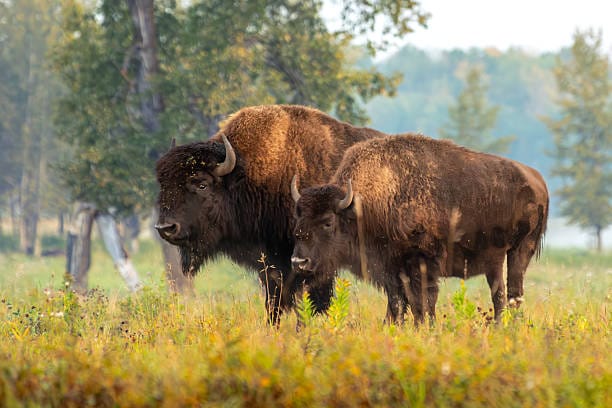
Mountain Bison are slightly smaller than Plains Bison but stockier and better adapted to rugged terrain. Adults stand 5–6 feet at the shoulder and have a thick, dark brown winter coat with a prominent mane around the head and neck.
Their horns are shorter but more robust, useful for navigating rocky mountain slopes. Identification tips include their denser winter fur, pronounced muscular shoulders, and compact frame that contrasts with the open-plain cousins.
Behavior and Nesting Habits
Mountain Bison travel in smaller herds than Plains Bison, often divided by gender outside mating season. They graze in alpine meadows and retreat to forested valleys in winter. Wallowing behavior is present but less frequent due to rocky terrain.
Habitat and Range
Found in the mountainous regions of Canada and northern U.S., including Yukon, British Columbia, and parts of Montana. They thrive in high-elevation meadows, subalpine forests, and valleys with reliable forage and water sources.
Diet
Their diet is similar to Plains Bison: grasses, sedges, and shrubs. Snow cover in winter forces them to dig through snow or move to lower elevations for grazing.
Reproduction and Life Cycle
Females give birth to a single calf after a 9-month gestation, usually in late spring. Calves are agile within hours and learn herd behavior from mothers and older females.
Fun Facts / Unique Traits
- Mountain Bison are excellent climbers for such large mammals.
- They can withstand extreme winter temperatures due to their dense coat and fat reserves.
- They play a crucial role in alpine ecosystems by shaping vegetation patterns.
Human Interaction
Mountain Bison face habitat fragmentation and occasional poaching. Conservation programs focus on protected parks, habitat corridors, and genetic monitoring to maintain population health.
19. Highland Wild Yak (Bos mutus – Highland Population)
Physical Characteristics & Identification Tips
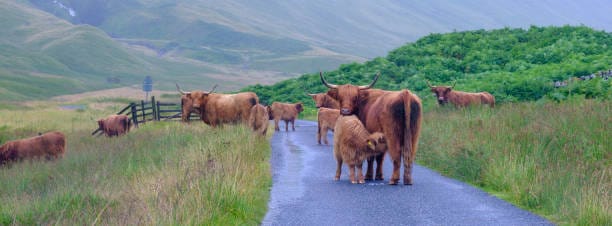
The Highland Wild Yak is a large, powerful bovine adapted to extreme high-altitude environments. Males stand about 5–6 feet at the shoulder and can weigh up to 1,000–1,200 kg, while females are smaller, around 400–600 kg. Their most distinctive feature is their long, thick, shaggy coat, which provides insulation against freezing temperatures. The coat ranges from dark brown to black and often covers their legs almost to the hooves. Males have massive, crescent-shaped horns that sweep outward and upward, while females have slightly smaller horns. Identifying Highland Yaks in the wild relies on observing their robust build, long hair, and horn shape.
Behavior and Nesting Habits
Highland Wild Yaks are social, typically forming herds of 10–50 individuals, led by dominant females. Male yaks may separate outside the breeding season and join female herds only to mate. These yaks are diurnal but may move to higher or lower altitudes depending on temperature and forage availability. They graze, rest, and shelter in alpine valleys and ridges, often seeking snow-covered slopes for cooling in summer and sheltered valleys for winter survival. Nesting habits are minimal as they are grazers; calves are born in open grassland clearings rather than hidden nests.
Habitat and Range
Highland Wild Yaks are found primarily on the Tibetan Plateau and surrounding Himalayan highlands, including parts of Nepal, Bhutan, and India. They occupy elevations of 3,000–5,500 meters, where oxygen levels are low and temperatures can plunge far below freezing. Their habitat consists of alpine meadows, rocky ridges, and sparse grasslands, with occasional shrub cover. Seasonal migrations occur, with yaks descending to lower altitudes during harsh winters.
Diet
These yaks are primarily grazers, feeding on hardy alpine grasses, sedges, and lichens. In winter, they scrape snow away to access buried vegetation. Mineral-rich soil and occasional salt licks are essential, particularly for pregnant females and growing calves. Their digestive system is well-adapted to low-nutrient forage, allowing them to extract maximum energy from sparse alpine vegetation.
Reproduction and Life Cycle
Highland Wild Yaks breed once a year, typically in late summer. Females give birth to a single calf after a gestation of approximately 9 months, usually in spring when forage is abundant. Calves are able to stand and walk shortly after birth, following the herd. Sexual maturity occurs at 3–4 years for females and 4–5 years for males. Herd dynamics include protective behavior around calves and intricate social hierarchies among males during the rut.
Fun Facts / Unique Traits
- Highland Wild Yaks can survive temperatures below -40°C thanks to their dense coat and thick subcutaneous fat.
- They are excellent long-distance walkers, covering several kilometers daily to find food in sparse alpine areas.
- Their long hair and unique horns have made them iconic symbols of the Tibetan Plateau.
Human Interaction
These yaks are threatened by poaching, habitat loss, and hybridization with domestic yaks. Local communities traditionally use yaks for meat, milk, and transport. Conservation programs focus on preserving wild populations in high-altitude reserves and minimizing crossbreeding with domestic stock.
20. Lowland Gaur (Bos gaurus – Wild Subspecies)
Physical Characteristics & Identification Tips
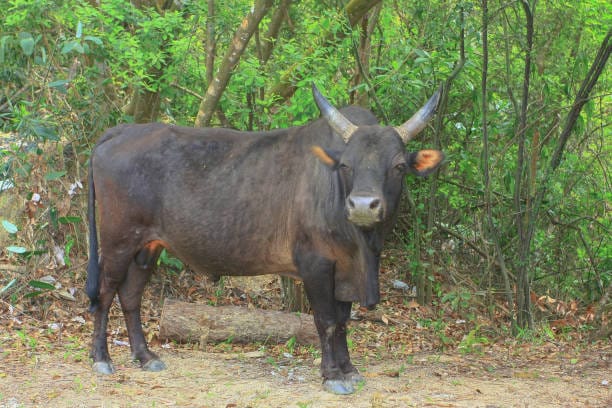
The Lowland Gaur is the world’s largest wild cattle, with bulls standing up to 6 feet at the shoulder and weighing over 1,000 kg. Females are slightly smaller. They have a distinctive muscular build, broad shoulders, and a convex dorsal profile. Their coat is dark brown to black, sometimes lighter on the lower limbs. Horns are curved and extend outward, then upward, with a smooth base. Identification relies on size, muscular hump, and horn shape, as well as habitat context; lowland gaurs are rarely confused with other bovines.
Behavior and Nesting Habits
Lowland Gaurs are social and generally form herds of 10–30 individuals, often dominated by females. Bulls may form bachelor groups or remain solitary until the breeding season. They are diurnal, grazing actively during morning and late afternoon, resting in forested shade during midday. Gaurs create bedding areas using trampled vegetation, often near water sources, but do not build nests. Herds are alert, communicating with low grunts, bellows, and visual signals to warn of predators such as tigers and leopards.
Habitat and Range
Native to South and Southeast Asia, Lowland Gaurs occupy tropical and subtropical forests, evergreen and deciduous woodlands, and lowland grasslands. Key countries include India, Thailand, Cambodia, and Malaysia. They prefer areas with abundant food and access to water and avoid human settlements. Habitat fragmentation poses a significant threat to population stability.
Diet
Gaurs are herbivorous browsers and grazers, feeding on grasses, leaves, shoots, and fruits. They require abundant forage and regular water access to maintain their large body mass. During dry seasons, they rely more heavily on leaves and woody plants, demonstrating flexibility in diet based on availability.
Reproduction and Life Cycle
Breeding occurs year-round but peaks in dry seasons. Females give birth to a single calf after 9 months of gestation. Calves remain close to mothers for protection and learning. Sexual maturity occurs around 3–4 years for females and 4–5 years for males. Herd hierarchies play a crucial role in mating opportunities, with dominant males controlling access to females during rut.
Fun Facts / Unique Traits
- Lowland Gaurs are excellent swimmers and can cross rivers to reach forage areas.
- Their vocalizations include grunts, bellows, and low-frequency rumblings audible over long distances.
- They are considered “eco-engineers,” shaping forest vegetation and providing opportunities for other species through grazing patterns.
Human Interaction
Lowland Gaurs face threats from hunting, habitat loss, and disease transmission from domestic cattle. Conservation measures include protected areas, anti-poaching patrols, and community-based programs that reduce human-wildlife conflict. Ecotourism helps raise awareness and supports habitat preservation.
Conclusion
Exploring the world of wild cows reveals the incredible diversity, strength, and adaptability of these magnificent animals. From the towering Highland Wild Yak surviving freezing alpine heights to the powerful Lowland Gaur roaming lush tropical forests, each species showcases unique adaptations that allow them to thrive in challenging environments. Their social structures, diets, and behaviors provide insights into how herbivorous megafauna shape ecosystems and interact with other wildlife. Understanding wild cows helps us appreciate their role in nature, as well as the importance of conservation efforts to protect them from poaching, habitat loss, and hybridization with domestic cattle. By learning about these 20 remarkable species, we gain a deeper respect for the resilience and beauty of wild cows, and the vital ecosystems they inhabit. Protecting these animals ensures future generations can witness their majesty in the wild.
Frequently Asked Questions (FAQs) about Wild Cows
1. What are wild cows?
Wild cows are undomesticated species of the Bovidae family that live freely in forests, grasslands, mountains, and other natural habitats around the world.
2. How many types of wild cows exist?
There are at least 20 recognized species of wild cows, including bison, buffalo, yaks, gaurs, and other regional varieties.
3. Where do wild cows live?
Wild cows inhabit a variety of ecosystems including grasslands, tropical forests, mountains, wetlands, and savannas across Asia, Africa, Europe, and North America.
4. Are wild cows dangerous to humans?
Wild cows can be dangerous if threatened, cornered, or during mating season. They are generally not aggressive unless provoked.
5. What do wild cows eat?
Most wild cows are herbivorous and feed on grasses, leaves, shoots, fruits, and other vegetation depending on their habitat.
6. How big can wild cows get?
Sizes vary widely: for example, Lowland Gaurs can weigh over 1,000 kg, while smaller species like the Anoa weigh around 150 kg.
7. Do wild cows live in herds?
Yes, most species are social and live in herds, which provide protection, mating opportunities, and social interaction.
8. How do wild cows reproduce?
Wild cows typically have one calf per year, after a gestation period ranging from 8–10 months depending on the species.
9. Are wild cows endangered?
Many wild cow species are threatened or endangered due to hunting, habitat loss, and hybridization with domestic cattle.
10. Can wild cows survive in cold climates?
Yes, species like the Highland Wild Yak are adapted to freezing alpine conditions with thick fur and fat layers.
11. How do wild cows communicate?
They use vocalizations, body language, and horn displays to signal danger, establish dominance, or coordinate herd movements.
12. What predators hunt wild cows?
Predators include large carnivores like tigers, leopards, lions, and crocodiles, depending on the species’ habitat.
13. Do wild cows migrate?
Some species migrate seasonally to find food and water, such as yaks moving to lower altitudes in winter.
14. How long do wild cows live?
Wild cows typically live 15–25 years, though this can vary by species and environmental conditions.
15. Are all wild cows horned?
Yes, most wild cow species have horns, which vary in size and shape depending on the species and sex.
16. Can wild cows interbreed with domestic cattle?
Some species, like yaks and gaurs, can interbreed with domestic cattle, producing hybrids in certain regions.
17. How do wild cows affect their ecosystems?
They influence vegetation patterns, provide prey for predators, and create habitats for other species through grazing and trampling.
18. What adaptations help wild cows survive in forests?
Forest-dwelling wild cows often have camouflaged coats, strong legs for navigating dense terrain, and keen senses to detect predators.
19. What is the largest species of wild cow?
The Lowland Gaur is the largest, with bulls weighing over 1,000 kg and standing up to 6 feet at the shoulder.
20. What is the smallest species of wild cow?
The Anoa, found in Indonesia, is among the smallest wild cows, weighing only 150–300 kg.
21. How do wild cows survive dry seasons?
They move to areas with water and available forage, eat drought-resistant vegetation, and reduce activity during peak heat.
22. Are wild cows diurnal or nocturnal?
Most species are diurnal, grazing during the day and resting at night, though some adjust based on predator pressure or temperature.
23. Do wild cows have predators when young?
Yes, calves are vulnerable to predators, so mothers often keep them close and protect them until they are strong enough to join the herd safely.
24. How do humans impact wild cow populations?
Humans affect wild cows through hunting, habitat fragmentation, livestock competition, and in some cases, conservation efforts.
25. Are wild cows found in Africa?
Yes, species like the African Buffalo (Cape Buffalo) inhabit savannas and forests throughout sub-Saharan Africa.
26. Are wild cows found in Asia?
Yes, species like the Gaur, Wild Yak, and Banteng are native to South and Southeast Asia.
27. Are wild cows solitary?
Most are social, but certain males may be solitary outside the mating season or form bachelor groups.
28. How do wild cows protect themselves?
They use horns, size, herd formation, and alert behaviors to defend against predators and intruders.
29. Can wild cows adapt to human-modified landscapes?
Some species can adapt to limited human activity, but most require natural habitats to thrive and reproduce successfully.
30. Why are wild cows important?
They play vital roles in ecosystem balance, contribute to biodiversity, and help maintain grassland and forest health.
31. How can wild cows be conserved?
Conservation involves protected areas, anti-poaching measures, habitat restoration, and community engagement to reduce conflicts and preserve populations.
Read more: 30 Types of Wild Betta Fish (Pictures and Identification)