
If you are curious about wildlife in Colorado, understanding the types of wild rabbits in Colorado is a great place to start. From bustling fields to quiet forests, Colorado hosts a variety of rabbits and hares that play important roles in ecosystems. This guide will help you identify these animals, understand their behavior, and learn about their habitats and diets. Whether you’re a beginner naturalist or just love observing wildlife, this article is your friendly guide to Colorado’s wild rabbits.
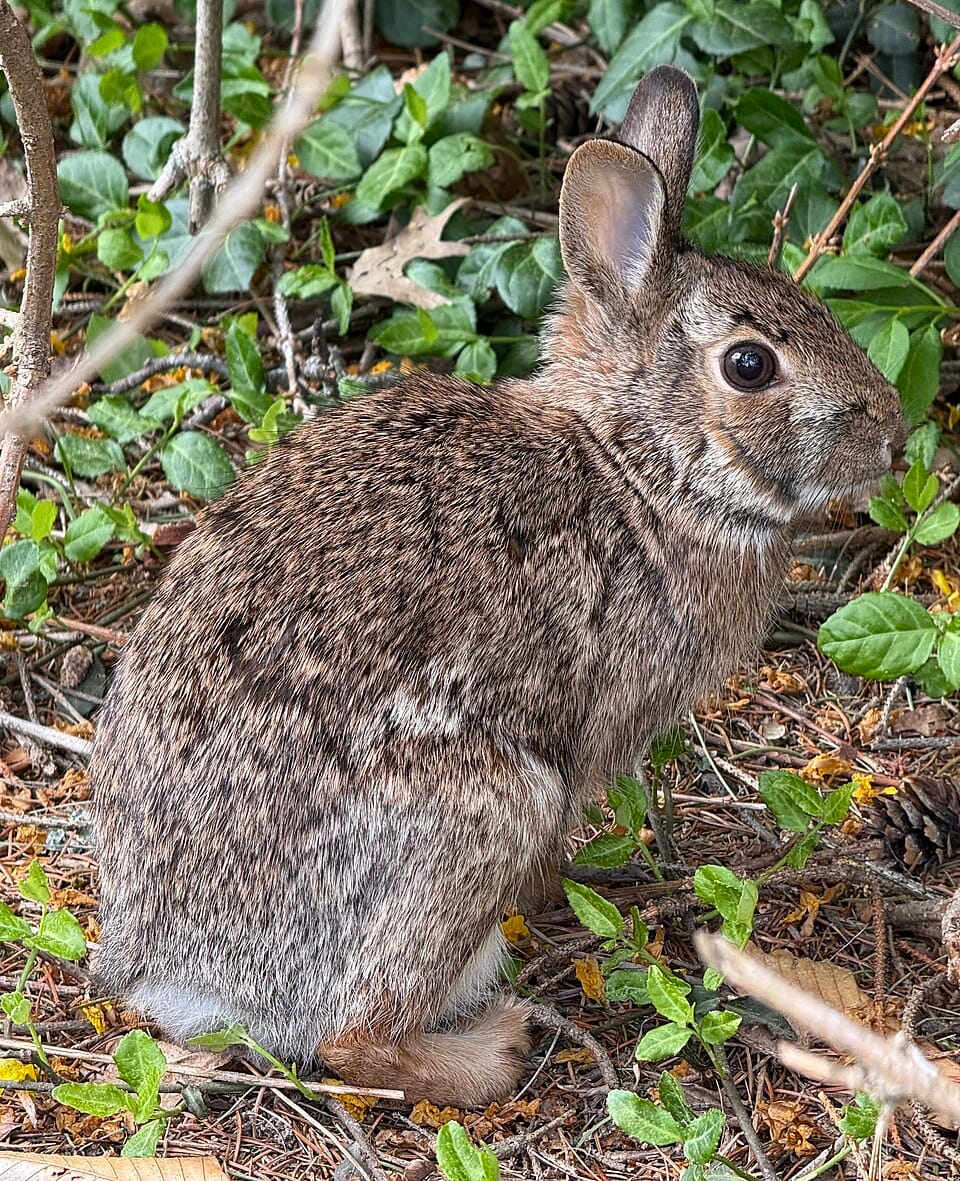
1. Eastern Cottontail (Sylvilagus floridanus)
Physical Characteristics & Identification Tips
The Eastern Cottontail is one of the most common rabbits in Colorado. Adults usually weigh 2 to 4 pounds and measure about 15 to 19 inches in length. They have a reddish-brown or gray-brown coat with a white, fluffy tail. Their ears are moderately long, and the fur is soft but dense, which helps in colder months. One key identification tip is their tail: when alarmed, they flash it as a warning signal to other rabbits.
Behavior
Eastern Cottontails are primarily crepuscular, meaning they are most active at dawn and dusk. They are generally solitary except during mating season. If startled, they dart in a zigzag pattern to confuse predators. They often sit upright on their haunches to scan for danger and thump their hind legs to warn nearby rabbits.
Habitat and Range
These rabbits thrive in areas with a mix of open fields and dense shrubs. You can find them near gardens, parks, edges of forests, and even suburban areas. They are adaptable and can survive in fragmented habitats as long as there is cover for protection and a source of food.
Diet
Eastern Cottontails are herbivores. They eat grasses, clovers, and garden plants in the warmer months. In winter, they feed on bark, twigs, and buds. Their digestive system allows them to extract nutrients from tough plant materials, and they practice coprophagy—eating their own fecal pellets—to maximize nutrient absorption.
Reproduction and Life Cycle
The breeding season usually starts in early spring and lasts until late fall. A female can have 3 to 5 litters per year, with 3 to 8 kits per litter. The young are born blind and hairless, staying in the nest for about 3 weeks. They grow quickly, becoming independent by 4 to 5 weeks.
Fun Facts / Unique Traits
Eastern Cottontails have excellent vision and hearing. Their eyes are positioned to give nearly a 360-degree view of their surroundings. They can run up to 18 miles per hour. And when threatened, they freeze to blend in with the environment, a tactic that often works against predators.
Human Interaction
Eastern Cottontails are common in suburban areas and may nibble on garden plants, causing minor conflicts with humans. However, they also provide enjoyment for wildlife watchers and photographers. They are important prey for hawks, foxes, and bobcats, supporting local ecosystems.
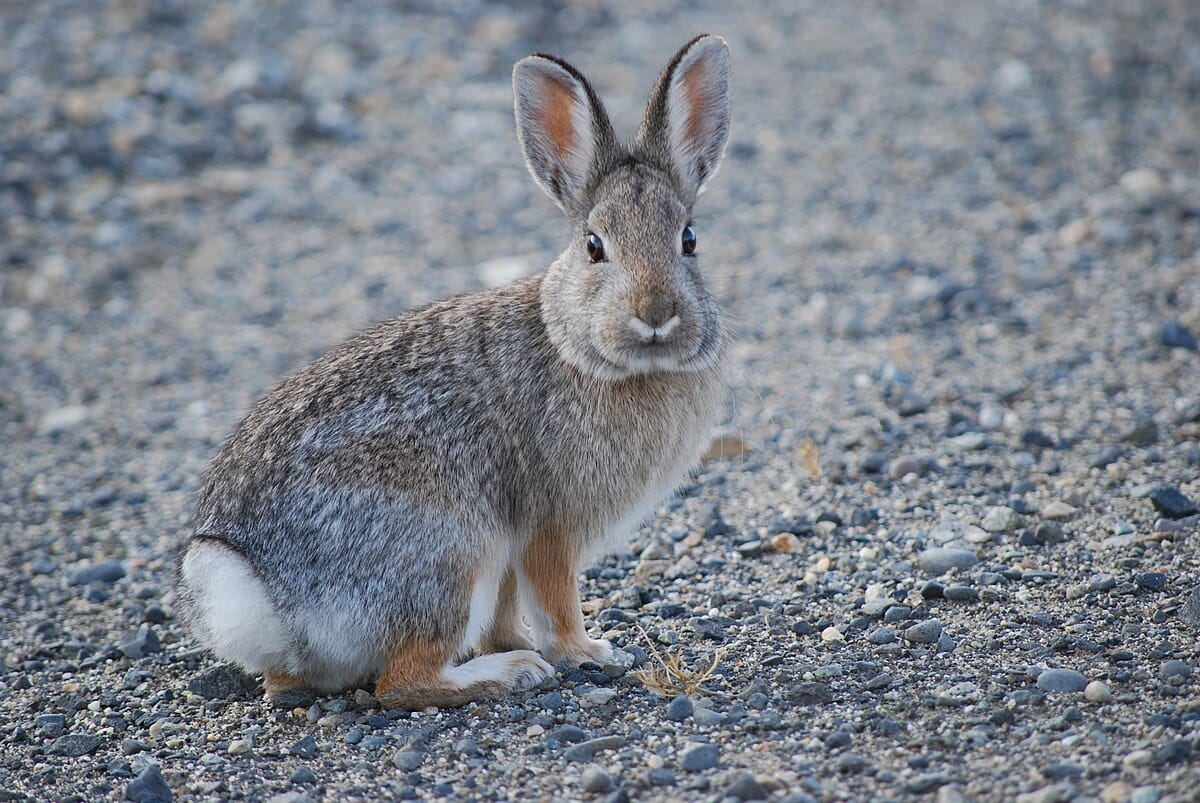
2. Mountain Cottontail (Sylvilagus nuttallii)
Physical Characteristics & Identification Tips
The Mountain Cottontail is slightly smaller than the Eastern Cottontail, weighing 1.5 to 3 pounds and measuring 14 to 17 inches long. Its coat is gray-brown with a subtle reddish tint, and the tail is white but smaller than that of the Eastern Cottontail. Its ears are relatively short and rounded. One way to distinguish it from other cottontails is the dark stripe along its back in some populations.
Behavior
Mountain Cottontails are shy and secretive. They are active mostly at night (nocturnal) and during early morning and evening hours. Unlike Eastern Cottontails, they prefer to stay close to dense brush for quick escape routes. They rely heavily on camouflage, staying low to the ground when predators are nearby.
Habitat and Range
This species prefers rocky hillsides, brushy slopes, and open forests. They are common in mountainous regions of Colorado and are rarely found in flat plains. Their nests are shallow depressions in the soil, often hidden under shrubs or grasses.
Diet
Mountain Cottontails eat a variety of grasses, herbs, and shrubs. In winter, they feed on twigs, buds, and bark. They have a selective diet, often preferring younger plant shoots, which are easier to digest and more nutritious.
Reproduction and Life Cycle
Breeding occurs from early spring to late summer. Females can have 2 to 3 litters per year, each with 2 to 6 kits. The kits are born in hidden nests and are fully furred within a week. They begin exploring the area around the nest after 3 weeks and are independent by 4 to 5 weeks of age.
Fun Facts / Unique Traits
Mountain Cottontails are excellent at blending with rocky and brushy environments. They rarely leave cover and are known for being very alert and cautious. Their fur provides insulation in high-altitude, cooler environments, allowing them to survive snowy winters.
Human Interaction
Humans seldom notice Mountain Cottontails because of their secretive behavior. They are not typically garden pests. They are, however, hunted in some areas for sport and are an important food source for local predators.
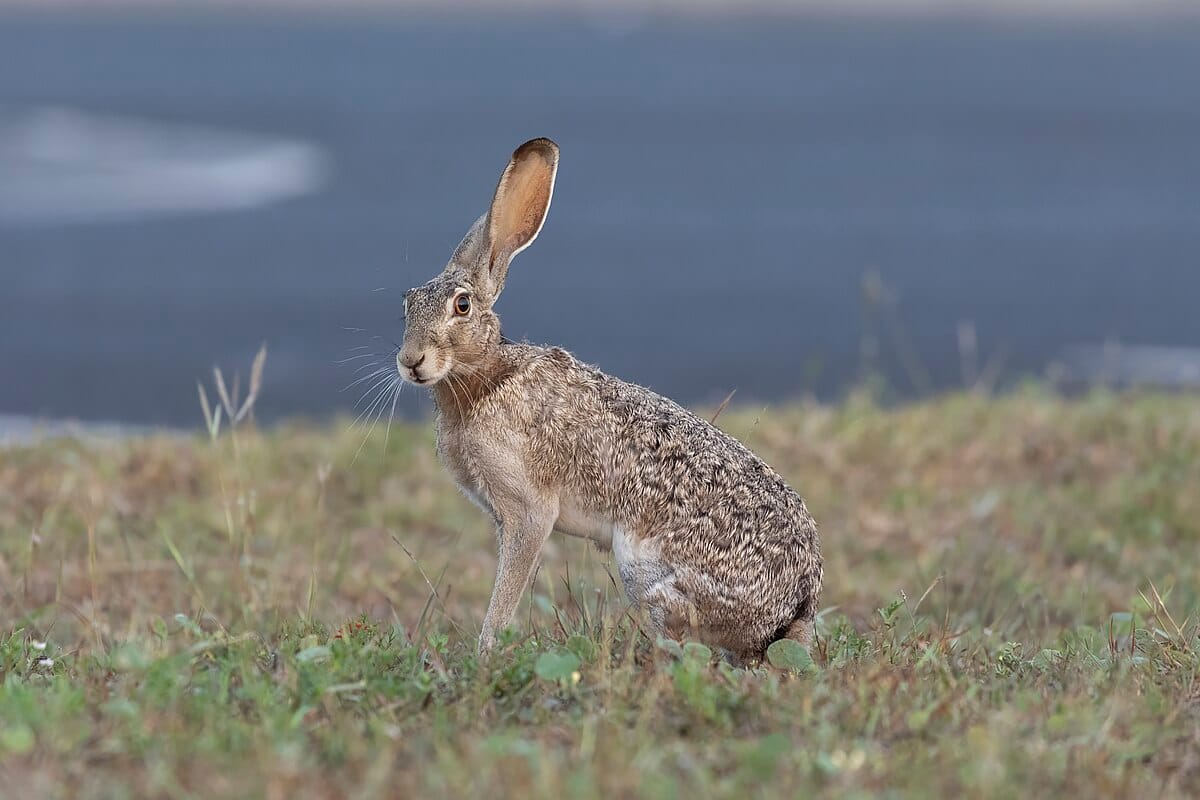
3. Black-Tailed Jackrabbit (Lepus californicus)
Physical Characteristics & Identification Tips
The Black-Tailed Jackrabbit is larger than most cottontails, weighing 4 to 6 pounds and measuring 18 to 24 inches in length. It has long ears tipped with black, a gray-brown coat, and a black stripe running along the tail. Its powerful hind legs are designed for speed and long leaps. You can identify it from cottontails by its long ears, larger size, and distinctive tail pattern.
Behavior
Black-Tailed Jackrabbits are crepuscular and nocturnal. They rely on speed to escape predators, running in long, straight bursts or leaping in zigzags. Unlike cottontails, they do not hide in burrows but seek cover in tall grasses or shrubs. They are solitary and territorial animals.
Habitat and Range
These jackrabbits inhabit open grasslands, prairies, deserts, and scrublands. They are well-adapted to arid environments and are common in eastern and southern Colorado. Their nests are simple depressions in the ground, often lined with fur and plant material.
Diet
Black-Tailed Jackrabbits feed on grasses, shrubs, and leaves. During dry seasons, they may consume cacti or desert plants. Their strong teeth and digestive system allow them to handle tough, fibrous vegetation. Like cottontails, they practice coprophagy to maximize nutrient absorption.
Reproduction and Life Cycle
The breeding season extends from late winter to early fall. Females can have up to 4 litters per year, with 2 to 5 leverets per litter. The young are born fully furred with open eyes, ready to move quickly after birth—a contrast to cottontail kits, which are helpless at birth.
Fun Facts / Unique Traits
Black-Tailed Jackrabbits can run at speeds up to 40 miles per hour. Their long ears help regulate body temperature in hot environments. They have keen eyesight and can detect predators from great distances.
Human Interaction
These jackrabbits are sometimes considered game species and are hunted in Colorado. They occasionally enter farmland or gardens but are generally less of a nuisance than cottontails. They also play a critical role in food webs, sustaining hawks, eagles, coyotes, and foxes.
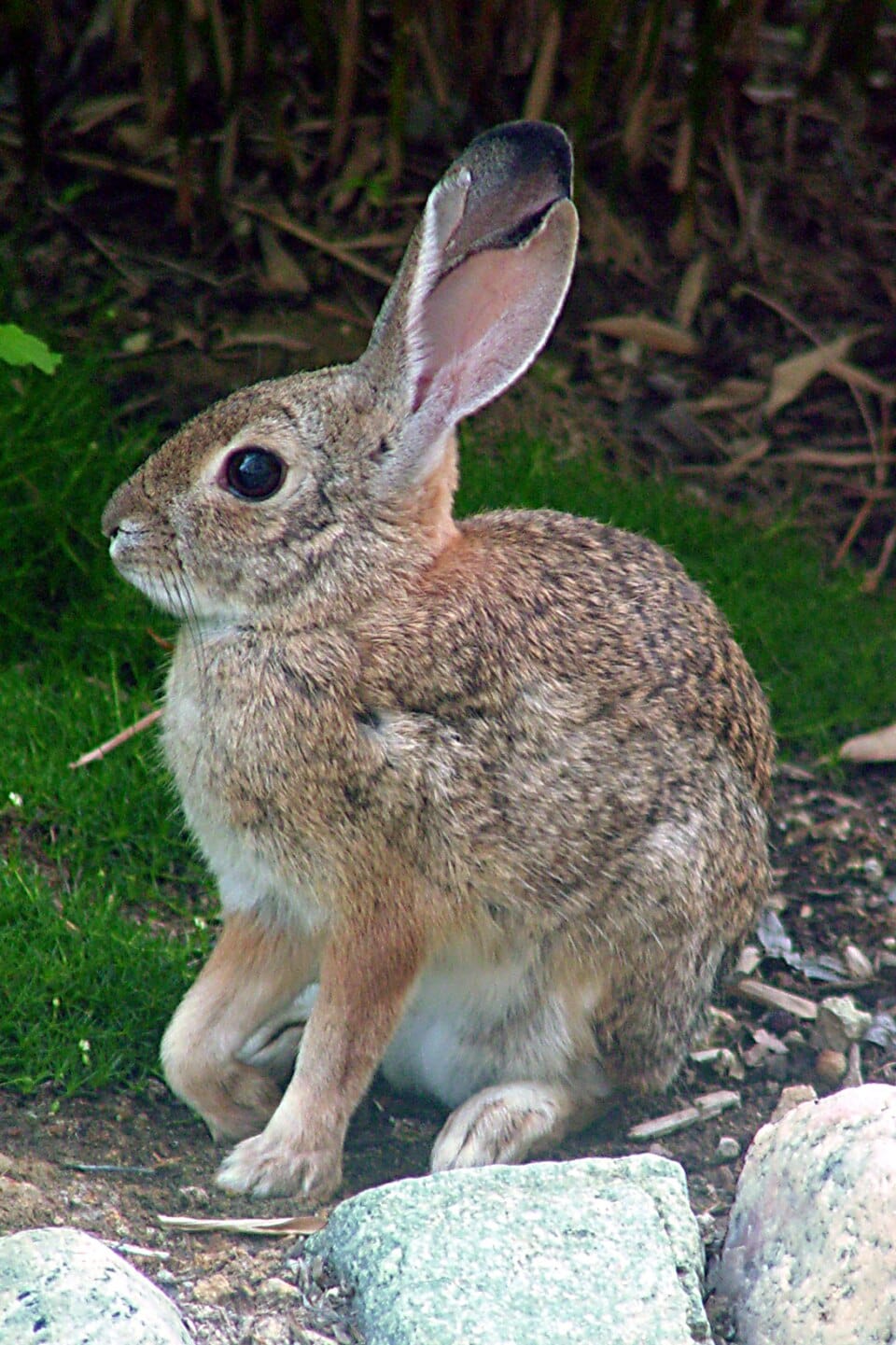
4. Desert Cottontail (Sylvilagus audubonii)
Physical Characteristics & Identification Tips
The Desert Cottontail is medium-sized, weighing around 2.5 to 4 pounds and measuring 14 to 18 inches long. Its fur is sandy-brown, blending perfectly with desert landscapes, with a white underbelly and tail. The ears are relatively short and rounded compared to jackrabbits. One quick identification tip is its fur color and habitat; if you spot a sandy-colored rabbit in arid regions of Colorado, it’s likely a Desert Cottontail.
Behavior
Desert Cottontails are primarily crepuscular, active during dawn and dusk. They are highly alert and will dash in a zigzag pattern to evade predators. Unlike mountain or eastern cottontails, they are well adapted to dry climates and can go longer periods without water, obtaining moisture mainly from plants.
Habitat and Range
These rabbits thrive in arid and semi-arid regions, including desert plains, scrublands, and grasslands. They are common in the southern and western parts of Colorado. Their nests are shallow depressions, often tucked under shrubs for cover.
Diet
The Desert Cottontail is herbivorous, feeding on grasses, forbs, and desert shrubs. During dry seasons, it may eat cacti and other succulents to stay hydrated. They are selective feeders, often choosing the tender, juicy parts of plants.
Reproduction and Life Cycle
Breeding occurs from late winter to early fall. Females can produce 3 to 4 litters per year, with 4 to 7 kits per litter. Young are born blind and hairless, depending on the mother for warmth and protection for the first three weeks. After about a month, they become independent.
Fun Facts / Unique Traits
Desert Cottontails have adapted to extreme heat by being more active at cooler times of day. Their sandy-colored fur provides excellent camouflage. They can leap impressive distances to escape threats and are often seen in open areas where they can spot predators early.
Human Interaction
Desert Cottontails may occasionally feed on crops and garden plants, but they generally cause minimal issues for humans. They are popular among wildlife watchers and are important prey for hawks, snakes, and foxes.
5. Pygmy Rabbit (Brachylagus idahoensis)
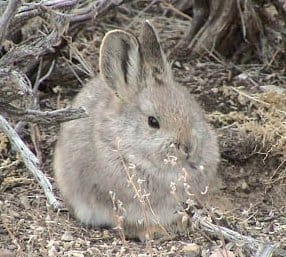
Physical Characteristics & Identification Tips
The Pygmy Rabbit is the smallest rabbit species in North America, weighing only 0.5 to 1 pound and measuring about 9 to 11 inches. It has grayish-brown fur, a short, stubby tail, and small rounded ears. Their diminutive size makes them difficult to spot in the wild, but their preference for dense sagebrush habitats is a good clue.
Behavior
Pygmy Rabbits are highly secretive and mostly nocturnal. They rarely venture far from dense sagebrush, which provides food and protection. They dig shallow burrows and tunnels for shelter, unlike other cottontails that rely on surface nests. Their small size allows them to move quickly through dense brush to avoid predators.
Habitat and Range
Pygmy Rabbits inhabit sagebrush steppes and open desert regions of western Colorado. They are closely tied to areas with dense sagebrush cover and do not stray far from these shrubs. Their burrows are often shared with other small mammals and insects.
Diet
These tiny rabbits feed almost exclusively on sagebrush, which provides both food and moisture. In winter, they rely on bark and stems of sagebrush. They are highly selective feeders, taking only the most nutritious parts of the plant.
Reproduction and Life Cycle
Breeding occurs in early spring. Females may produce 2 to 3 litters per year, each with 2 to 6 kits. The young are born in burrows and remain hidden for the first few weeks. Their small size and hidden nests provide protection from predators and harsh weather.
Fun Facts / Unique Traits
Pygmy Rabbits are considered a sensitive species due to habitat loss. Despite their tiny size, they are excellent at navigating dense shrubs and digging shallow burrows. They are one of the few rabbits that rely heavily on digging for survival.
Human Interaction
Due to their small size and secretive habits, Pygmy Rabbits are rarely seen by humans. Conservation efforts focus on preserving sagebrush habitats, which are crucial for their survival. They are sometimes monitored as indicators of healthy shrubland ecosystems.
6. Snowshoe Hare (Lepus americanus)
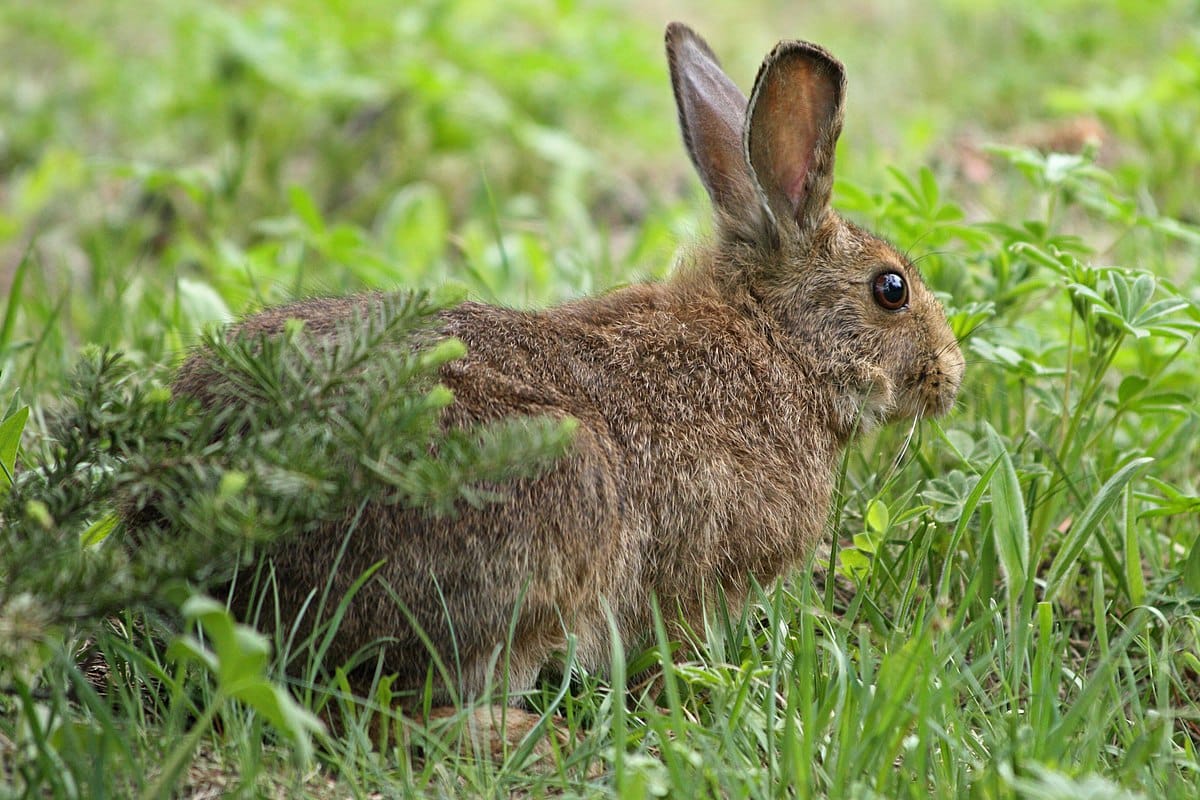
Physical Characteristics & Identification Tips
The Snowshoe Hare is a medium-sized hare weighing 3 to 4 pounds and measuring 17 to 20 inches long. It has large, furry hind feet—hence the name—which act like snowshoes in winter. Its fur changes color seasonally: brown in summer and white in winter for camouflage in snow. Long ears with black tips and a short tail help distinguish it from other hares.
Behavior
Snowshoe Hares are crepuscular and nocturnal. They rely heavily on camouflage and quick bursts of speed to escape predators. Unlike cottontails, they do not hide in dense brush during the day but instead freeze when threatened. Their large feet allow them to move easily across snowy terrain.
Habitat and Range
These hares inhabit forests and woodlands, particularly areas with dense understory and brush. In Colorado, they are found in mountainous regions where snow is common in winter. They prefer habitats that provide both cover and access to shrubs and low-growing vegetation for food.
Diet
Snowshoe Hares are herbivorous. They eat grasses, leaves, and bark in summer, switching to twigs, buds, and bark during the snowy months. Their digestive system allows them to process tough plant material efficiently.
Reproduction and Life Cycle
Breeding occurs from March to September. Females can produce 3 to 5 litters per year, with 1 to 8 leverets per litter. Young are born fully furred with open eyes and can hop around shortly after birth. This readiness helps them survive in predator-rich environments.
Fun Facts / Unique Traits
The Snowshoe Hare’s seasonal fur color change is a famous survival adaptation. Their large feet prevent sinking in snow, and they can leap up to 10 feet to escape predators. They are an essential prey species for lynx, foxes, and owls.
Human Interaction
Snowshoe Hares are rarely a nuisance to humans. They are sometimes hunted for sport and fur. Wildlife watchers enjoy spotting them during the snowy months, as the white fur blends into winter landscapes, making sightings special.
7. White-Tailed Jackrabbit (Lepus townsendii)

Physical Characteristics & Identification Tips
The White-Tailed Jackrabbit is large, weighing 5 to 8 pounds and measuring 20 to 26 inches long. It has long ears with black tips, a grayish-brown summer coat, and a distinctive white underside of the tail. Its powerful hind legs are built for speed and long leaps. You can distinguish it from the Black-Tailed Jackrabbit by the white tail and slightly larger body size.
Behavior
White-Tailed Jackrabbits are mostly crepuscular and nocturnal. They rely on speed and agility to escape predators, running in straight bursts or zigzag patterns. They are solitary and territorial, rarely forming groups. Their alertness and ability to detect predators from a distance help them survive in open habitats.
Habitat and Range
These jackrabbits prefer open grasslands, prairies, and alpine meadows. They are common in northern and central Colorado, especially at higher elevations. They do not burrow like rabbits but find shelter in grasses, shrubs, or natural depressions.
Diet
White-Tailed Jackrabbits are herbivorous, feeding on grasses, shrubs, and leafy vegetation. During winter, they may eat twigs, bark, and buds. Their strong teeth allow them to chew tough plant material efficiently, and they practice coprophagy to extract maximum nutrients.
Reproduction and Life Cycle
Breeding occurs from late winter to early fall. Females can have 2 to 3 litters per year, each with 2 to 5 leverets. The young are born fully furred and with open eyes, capable of moving shortly after birth, which helps them avoid predators in open terrain.
Fun Facts / Unique Traits
White-Tailed Jackrabbits can leap over 10 feet in a single bound. Their large size and speed make them formidable prey for coyotes, eagles, and foxes. They are well-adapted to open, windy habitats and can survive extreme temperatures.
Human Interaction
These jackrabbits are sometimes hunted for sport and are an important part of Colorado’s wildlife heritage. They rarely interfere with crops but may graze on grasslands near farmland. Their presence supports predator populations, maintaining ecological balance.
8. American Pika (Ochotona princeps)

Physical Characteristics & Identification Tips
The American Pika is a small, compact mammal, weighing 4 to 6 ounces and measuring 6 to 8 inches long. They have round bodies, short limbs, small ears, and no visible tail. Their fur is soft and grayish-brown. While not a rabbit or hare, they belong to the lagomorph family, closely related to rabbits. Look for tiny, round creatures hopping among rocks at high altitudes to identify pikas.
Behavior
Pikas are diurnal, active during the day. They are highly vocal, producing sharp calls to warn of predators or mark territory. Unlike rabbits, they do not hop long distances but move quickly among rocks. They collect and store food in “haypiles” for winter, showing remarkable foresight.
Habitat and Range
American Pikas inhabit rocky talus slopes and alpine meadows, typically above 8,000 feet in Colorado. They require cool climates and are rarely found at lower elevations. Their shelters are crevices between rocks that provide protection from predators and harsh weather.
Diet
Pikas are herbivores, feeding on grasses, flowers, and alpine plants. During summer, they gather vegetation and dry it in “haypiles” to sustain them through snow-covered winters. They are highly selective, choosing the most nutritious plants for storage.
Reproduction and Life Cycle
Breeding occurs in late spring and early summer. Females typically produce one or two litters per year, with 2 to 6 young per litter. The young are born fully furred and emerge from hiding within weeks. Pikas have a short lifespan of 3 to 4 years in the wild.
Fun Facts / Unique Traits
American Pikas are sensitive to heat, making them indicators of climate change. They are known for their industrious hay-gathering behavior. Their high-pitched alarm calls are distinctive and often heard echoing across alpine valleys.
Human Interaction
Pikas are rarely seen by humans due to their high-altitude habitats. They attract attention from wildlife enthusiasts and photographers. Conservationists monitor pikas as climate-sensitive species, helping track ecosystem changes in alpine regions.
Conclusion
Colorado is home to a diverse array of rabbits and lagomorphs, from the common Eastern Cottontail to the high-altitude American Pika. Understanding types of wild rabbits in Colorado helps us appreciate their role in ecosystems, whether as prey, herbivores, or contributors to plant propagation. Observing these animals provides insight into nature’s balance, their behaviors, and adaptations to various environments. If you enjoy wildlife watching, take time to notice the differences between cottontails, jackrabbits, hares, and pikas—they each have a story to tell. Next time you explore Colorado’s fields, forests, or alpine meadows, keep an eye out for these fascinating creatures.
Comparison Table: 8 Types of Wild Rabbits in Colorado
| Rabbit Type | Size & Weight | Coat / Color | Habitat | Diet | Behavior | Reproduction | Interesting Fact |
|---|---|---|---|---|---|---|---|
| Eastern Cottontail | 12–16 in; 2–4 lbs | Brownish-gray; white belly | Grasslands, brush, forests | Grasses, herbs, vegetables | Crepuscular; hides in brush | 3–5 litters/year, 3–6 young | Known for “cottontail” white tail |
| Mountain Cottontail | 12–16 in; 2–4 lbs | Grayish-brown; lighter belly | Rocky slopes, sagebrush, desert areas | Grasses, shrubs, leaves | Nocturnal; fast runner | 3 litters/year, 2–6 young | Adapted to higher elevations |
| Desert Cottontail | 12–16 in; 2–4 lbs | Sandy-brown; white underbelly | Arid regions, deserts, scrubland | Grasses, shrubs, desert plants | Crepuscular; solitary | 2–4 litters/year, 3–5 young | Thrives in dry, hot climates |
| Black-Tailed Jackrabbit | 20–24 in; 5–7 lbs | Gray-brown; black tail | Open prairies, deserts, grasslands | Grasses, shrubs, herbs | Fast runner; mostly nocturnal | 2–3 litters/year, 2–5 young | Can run 35–45 mph |
| White-Tailed Jackrabbit | 20–26 in; 5–8 lbs | Gray-brown; white tail underside | Grasslands, alpine meadows | Grasses, shrubs, twigs | Crepuscular; solitary | 2–3 litters/year, 2–5 young | Can leap over 10 feet in a single bound |
| Pygmy Rabbit | 9–11 in; 0.6–1 lb | Grayish-brown; pale belly | Sagebrush areas, dry grasslands | Sagebrush, grasses, herbs | Nocturnal; burrows in sagebrush | 2 litters/year, 2–6 young | Smallest rabbit in North America |
| Snowshoe Hare | 14–20 in; 2.5–4 lbs | Brown in summer; white in winter | Forests, woodland edges | Leaves, twigs, bark, buds | Crepuscular; changes color seasonally | 1–3 litters/year, 3–8 young | White winter coat camouflages in snow |
| American Pika | 6–8 in; 4–6 oz | Grayish-brown; soft fur | Rocky talus slopes, alpine meadows | Grasses, flowers, alpine plants | Diurnal; vocal alarm calls | 1–2 litters/year, 2–6 young | Collects “haypiles” for winter survival |
FAQ: Types of Wild Rabbits in Colorado
1. What are the most common types of wild rabbits in Colorado?
The most common types include the Eastern Cottontail, Mountain Cottontail, Desert Cottontail, White-Tailed Jackrabbit, Black-Tailed Jackrabbit, Pygmy Rabbit, Snowshoe Hare, and American Pika.
2. Are all wild rabbits in Colorado cottontails?
No, while cottontails are common, Colorado also has jackrabbits, snowshoe hares, and the American Pika, which are all part of the lagomorph family but not cottontails.
3. What is the difference between a cottontail and a jackrabbit?
Cottontails are smaller with shorter ears and tails, and they typically hide in brush. Jackrabbits are larger, have long ears, and rely on speed to escape predators instead of hiding.
4. Which Colorado rabbit is the smallest?
The Pygmy Rabbit is the smallest, weighing less than 1 pound and measuring around 9–11 inches long.
5. Which Colorado rabbit is the largest?
The White-Tailed Jackrabbit is the largest, often weighing up to 8 pounds and measuring over 2 feet in length.
6. What habitats do Colorado wild rabbits prefer?
Cottontails prefer grasslands, brushy areas, and forests. Jackrabbits favor open prairies and alpine meadows. Pygmy Rabbits stick to sagebrush, Snowshoe Hares to forests, and Pikas to rocky alpine slopes.
7. Are Colorado wild rabbits nocturnal?
Most are crepuscular, active at dawn and dusk. Some, like Pygmy Rabbits and Snowshoe Hares, may also be active at night.
8. What do wild rabbits in Colorado eat?
They are herbivores, feeding on grasses, leaves, shrubs, bark, and seasonal plants. Pikas store haypiles of vegetation for winter months.
9. How do rabbits adapt to Colorado’s winters?
Some, like Snowshoe Hares, grow white fur for camouflage in snow. Others, like cottontails and jackrabbits, rely on dense vegetation or burrows for protection.
10. How can I identify a Desert Cottontail?
Look for sandy-colored fur, short ears, and a white underbelly. They are mostly found in arid southern and western regions of Colorado.
11. Are Pygmy Rabbits endangered in Colorado?
Yes, due to habitat loss of sagebrush areas, Pygmy Rabbits are considered a sensitive species requiring conservation efforts.
12. Can you see American Pikas easily?
Pikas live at high altitudes on rocky slopes, so they are harder to spot. Look for small, round animals hopping between rocks and listen for their sharp calls.
13. How many litters do cottontails have per year?
Eastern, Mountain, and Desert Cottontails can have 3–5 litters annually, depending on the season and food availability.
14. How long do wild rabbits live in Colorado?
Smaller rabbits like Pygmy Rabbits live 3–4 years. Cottontails and jackrabbits can live 3–5 years in the wild, while Pikas also have short lifespans around 3–4 years.
15. What predators eat wild rabbits in Colorado?
Common predators include foxes, coyotes, hawks, eagles, bobcats, and snakes. Snowshoe Hares and Pikas are hunted by lynx and owls as well.
16. Do wild rabbits in Colorado burrow?
Cottontails make shallow nests called forms. Pygmy Rabbits dig small burrows. Jackrabbits and Snowshoe Hares generally do not burrow but use natural cover for shelter.
17. How fast can jackrabbits run?
White-Tailed and Black-Tailed Jackrabbits can reach speeds up to 35–45 mph in short bursts to evade predators.
18. Can wild rabbits damage gardens?
Yes, cottontails may feed on vegetables and ornamental plants. Jackrabbits may nibble on shrubs and young trees, but most damage is minor unless populations are high.
19. Do Colorado rabbits hibernate?
No, rabbits do not hibernate. They remain active year-round, relying on stored food, thick fur, or cover for survival during cold months.
20. How do Snowshoe Hares escape predators in winter?
Their seasonal white fur blends with snow, and they use zigzag running patterns to confuse predators.
21. Are wild rabbits in Colorado social?
Most are solitary or live in loose groups. Jackrabbits and cottontails generally do not form large colonies, except during high-density seasons.
22. How do rabbits communicate?
They use thumping of hind legs, alarm calls, scent marking, and in the case of Pikas, high-pitched vocalizations to warn of danger.
23. Can wild rabbits survive without water?
Desert-adapted species like the Desert Cottontail can survive mostly on plant moisture. Other rabbits drink water if available but obtain much from vegetation.
24. Do rabbits eat their own droppings?
Yes, many rabbits practice coprophagy, consuming soft fecal pellets to extract additional nutrients.
25. How do rabbits avoid predators in open terrain?
Jackrabbits rely on speed and alertness, while cottontails hide in brush. Snowshoe Hares blend into the snow, and Pikas stay within rocky crevices.
26. Are all rabbits in Colorado herbivores?
Yes, all native rabbits and hares feed exclusively on plant matter.
27. Which rabbit is best for wildlife photography in Colorado?
Snowshoe Hares in winter and Pikas in alpine areas offer unique photo opportunities. Cottontails are easier to observe in grasslands.
28. How do Colorado rabbits reproduce quickly?
High reproductive rates and multiple litters per year help populations recover quickly despite predation.
29. Are American Pikas true rabbits?
They are lagomorphs like rabbits and hares but are more closely related to rabbits than to rodents. Their habits and habitat are distinct.
30. What role do rabbits play in Colorado ecosystems?
They are crucial herbivores, controlling plant growth, and serve as prey for many predators. Their burrows and foraging behavior also support other wildlife.
31. How can I observe wild rabbits responsibly?
Maintain distance, avoid feeding, and use binoculars. Observe quietly during dawn or dusk for the best chances of seeing them in natural behavior.
32. Are there any conservation concerns for Colorado rabbits?
Yes, Pygmy Rabbits and habitats of some cottontails face threats from development, agriculture, and climate change. Protecting grasslands, sagebrush, and alpine regions is important.
Read more: 5 Types of Wild Rabbits in Florida (Pictures And Identification)