

Florida is home to a fascinating variety of wild rabbits, each with its own behaviors, habitats, and survival strategies. From the marshy wetlands to dry scrublands, understanding the types of wild rabbits in Florida can help nature enthusiasts, students, and wildlife watchers identify these creatures more easily. In this guide, we’ll explore the top 5 species of wild rabbits in Florida, providing detailed insights on their appearance, behavior, diet, reproduction, and interactions with humans. By the end, you’ll have a solid understanding of how these rabbits live, thrive, and adapt to Florida’s diverse environments.
1. Eastern Cottontail (Sylvilagus floridanus)

Physical Characteristics & Identification Tips
The Eastern Cottontail is one of Florida’s most familiar wild rabbits. Adults measure about 12–16 inches in length and weigh between 2–4 pounds. Their fur is a mix of brown, gray, and reddish hues with a distinctive white belly and a fluffy white “cottontail” that is easy to spot when they hop away. Look for large, dark eyes and long ears with rounded tips. Juveniles are slightly lighter in color, but the tail and overall shape remain key identifying features.
Behavior
Eastern Cottontails are primarily crepuscular, meaning they are most active during dawn and dusk. They are timid and rely on speed and camouflage to avoid predators. When threatened, they can dart away in a zigzag pattern that confuses predators. Interestingly, they often use a network of runways—paths through tall grass or shrubs—that help them escape danger quickly. Solitary by nature, these rabbits communicate using a combination of thumps, squeaks, and scent markings.
Habitat and Range
These rabbits thrive in open areas, including meadows, fields, and forest edges. They are adaptable and can also be found near suburban areas with gardens and hedgerows. In Florida, Eastern Cottontails are widely distributed throughout most counties, preferring locations with dense cover for shelter and nesting.
Diet
Eastern Cottontails are herbivores with a diet consisting of grasses, herbs, clover, and vegetables. They are known for nibbling on garden plants, which sometimes brings them into conflict with humans. Seasonal variation in diet occurs: in winter, they feed more on bark, twigs, and buds.
Reproduction and Life Cycle
Eastern Cottontails breed multiple times per year, typically producing 3–5 litters with 3–6 kits per litter. Nests are shallow depressions lined with grass and fur, hidden under brush or vegetation. Kits are born blind and helpless but develop rapidly, leaving the nest in about two weeks. Sexual maturity occurs quickly, allowing populations to recover swiftly after declines.
Fun Facts / Traits
One fascinating fact is their tail, which acts as a signal to other rabbits. When alarmed, they raise it to warn nearby cottontails of danger. They are also surprisingly fast runners, capable of reaching speeds up to 18 mph.
Human Interaction
Eastern Cottontails often live near human settlements, which can lead to garden damage. However, they are also popular among wildlife watchers and photographers due to their distinctive tails and lively behavior. Conservation efforts focus on maintaining suitable habitats and controlling predators in urbanized areas.
2. Marsh Rabbit (Sylvilagus palustris)
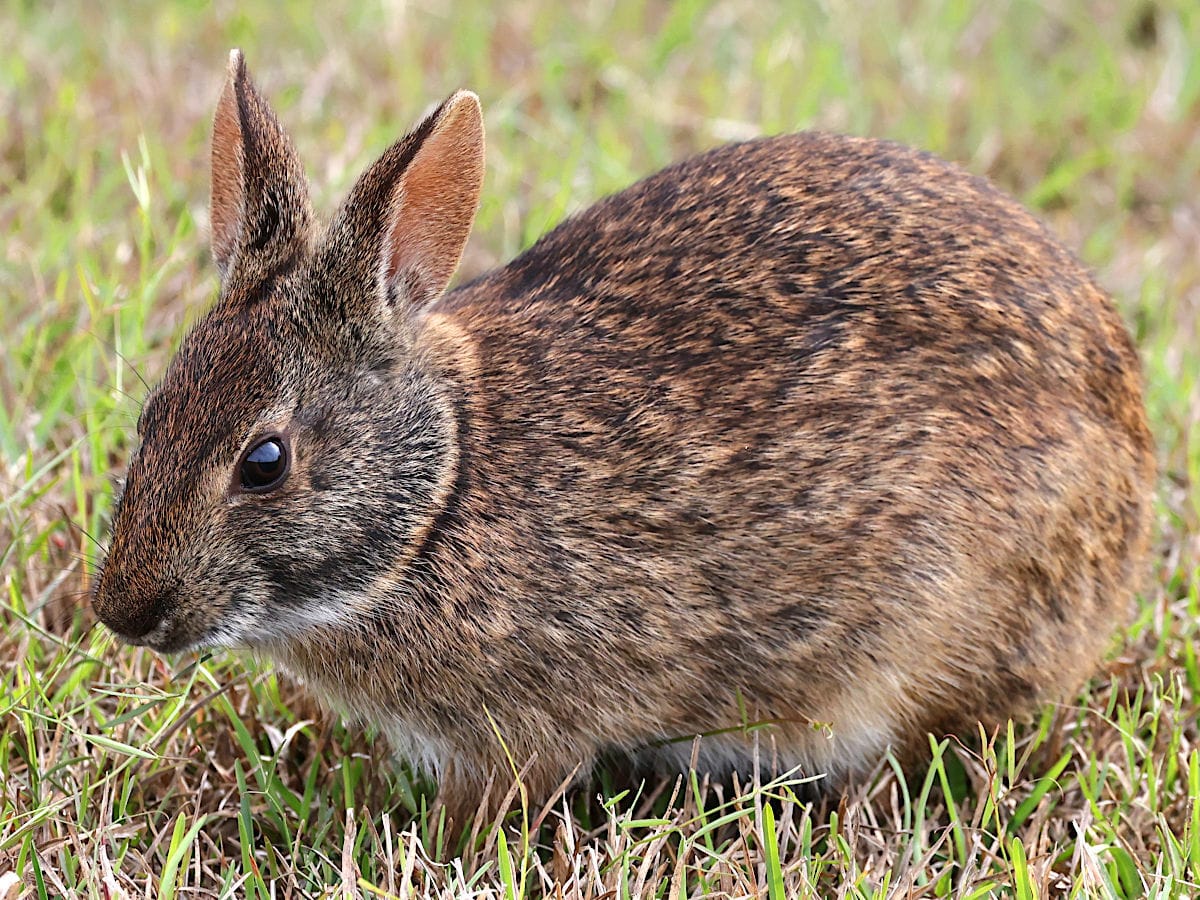
Physical Characteristics & Identification Tips
Marsh Rabbits are smaller than the Eastern Cottontail, measuring 12–16 inches with a weight of 1.5–2.5 pounds. Their fur is dark brown to blackish with a slightly reddish belly. They have shorter ears compared to cottontails and a very short tail. They are well adapted for swimming and often spotted near water bodies, making them distinct from other rabbits.
Behavior
Marsh Rabbits are excellent swimmers and spend a lot of time near freshwater marshes, swamps, and mangroves. They can escape predators by diving into water and swimming underwater for short distances. They are mainly nocturnal but can also be active at dawn or dusk. Marsh Rabbits tend to be solitary and territorial, using scent markings to communicate.
Habitat and Range
They inhabit saltwater and freshwater marshes, swamps, and coastal wetlands across Florida, especially in southern regions. Dense aquatic vegetation provides both food and shelter. Their range is tightly linked to wetland availability.
Diet
Marsh Rabbits feed on a variety of wetland plants, including grasses, sedges, rushes, and shoots of shrubs. They also consume some aquatic vegetation. Unlike cottontails, they have adapted to nibbling on more fibrous, water-rich plants.
Reproduction and Life Cycle
Marsh Rabbits produce 2–3 litters per year, with 2–5 kits per litter. Nests are hidden in tall marsh vegetation, above water level to prevent flooding. Young develop quickly and leave the nest in about two weeks. Breeding usually occurs year-round in Florida’s mild climate.
Fun Facts / Traits
Marsh Rabbits are unique for their swimming ability and preference for dense wetland habitats. They also leave trails through marshes, which are helpful for tracking and observation.
Human Interaction
Marsh Rabbits are rarely seen in urban areas but can occasionally damage crops near wetlands. Wildlife enthusiasts value them for their secretive, elusive behavior and ecological role in marsh ecosystems.
3. Swamp Rabbit (Sylvilagus aquaticus)
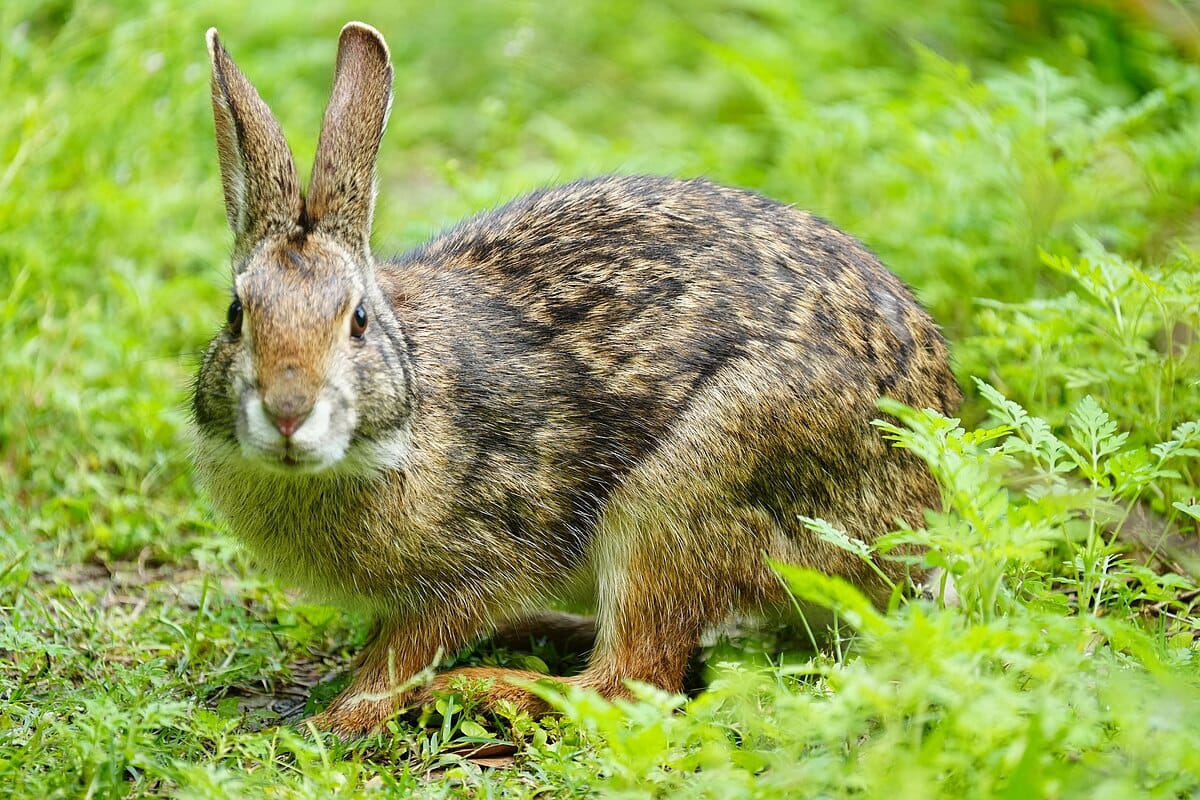
Physical Characteristics & Identification Tips
The Swamp Rabbit is one of the largest rabbits in Florida, measuring 18–24 inches long and weighing 3–5 pounds. Their fur is dark brown with a slightly grizzled appearance. They have long ears and strong hind legs, allowing for rapid running and occasional swimming. Their bulky size and dark coloration distinguish them from cottontails and marsh rabbits.
Behavior
Swamp Rabbits are semi-aquatic and skilled swimmers. They often flee into water to escape predators. These rabbits are mostly nocturnal, feeding and moving at night. During the day, they hide in dense vegetation along riverbanks and wetlands.
Habitat and Range
They inhabit bottomland forests, swamps, and river floodplains in northern and central Florida. Their distribution is closely tied to water availability and dense plant cover for protection.
Diet
Swamp Rabbits primarily consume grasses, leaves, shoots, and aquatic vegetation. In winter, they may feed on twigs and bark when fresh greens are scarce.
Reproduction and Life Cycle
They produce 2–3 litters per year with 3–5 young per litter. Nests are built in dense cover to avoid flooding. Young develop quickly, and adults are capable of multiple breeding cycles per year.
Fun Facts / Traits
Swamp Rabbits are strong swimmers and sometimes mistaken for muskrats due to their aquatic habits. They can leap considerable distances and leave swimming trails through water channels.
Human Interaction
Swamp Rabbits occasionally come into conflict with humans when near agricultural fields. However, they are mostly beneficial to ecosystems, providing prey for many predators and helping with vegetation control.
Part 2 will continue with the remaining 2 types: Lower Keys Marsh Rabbit and Desert Cottontail, including detailed sections on each.
4. Lower Keys Marsh Rabbit (Sylvilagus palustris hefneri)
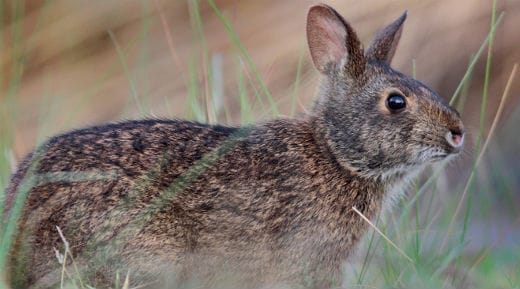
Physical Characteristics & Identification Tips
The Lower Keys Marsh Rabbit is a small, endangered subspecies of the marsh rabbit. Adults typically measure 12–14 inches long and weigh around 1.5–2 pounds. Their fur is a dark brown to blackish color, which helps them blend into the mangrove and marsh vegetation. They have short ears, a compact body, and a very short tail. This rabbit is slightly smaller and darker than the common marsh rabbit, making careful observation important for identification.
Behavior
These rabbits are extremely shy and mostly nocturnal. They hide in thick mangrove roots and dense marsh plants during the day. When threatened, they may dive into water or dense vegetation to escape predators. Lower Keys Marsh Rabbits are territorial, and they use scent markings to communicate boundaries with neighbors. Observing them requires patience, as they rarely venture into open areas.
Habitat and Range
This subspecies is found exclusively in the Lower Florida Keys, primarily in coastal mangroves and freshwater marshes. Their habitat is highly limited, making conservation crucial. Dense vegetation, freshwater availability, and minimal human disturbance are essential for their survival.
Diet
Their diet consists of grasses, sedges, and other marsh plants, supplemented with shoots and leaves. They have adapted to feeding on more fibrous and salt-tolerant plants than other Florida rabbits due to their coastal habitat.
Reproduction and Life Cycle
Breeding occurs year-round, but most activity happens during the wet season. Females produce 1–2 litters per year, with 2–4 kits per litter. Nests are carefully concealed among dense vegetation. Young develop rapidly, leaving the nest in roughly two weeks, but survival rates are low due to predation and habitat loss.
Fun Facts / Traits
Lower Keys Marsh Rabbits are excellent swimmers, often using water channels as escape routes. Their dark fur helps them remain unseen in mangroves at night, and they play a critical role in maintaining marsh plant diversity.
Human Interaction
Human development, habitat destruction, and introduced predators have significantly impacted their population. Conservation programs focus on preserving mangroves and controlling invasive species to protect this rare rabbit. Sightings are rare, making encounters a special experience for wildlife enthusiasts.
5. Desert Cottontail (Sylvilagus audubonii)
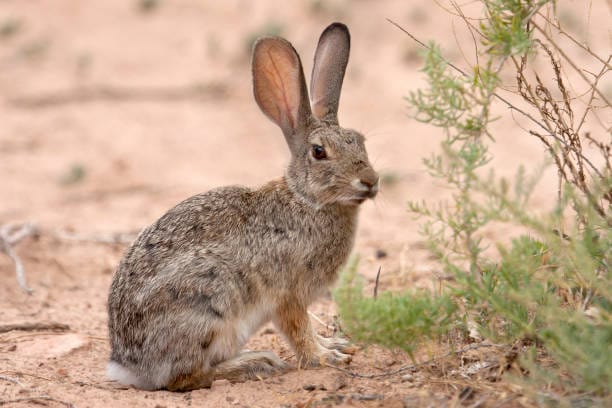
Physical Characteristics & Identification Tips
The Desert Cottontail is slightly larger than the Eastern Cottontail, measuring 14–18 inches long and weighing 2.5–4 pounds. Their fur is pale brown or gray with a white belly and the characteristic “cottontail.” Ears are long and tipped with black, helping with heat dissipation in sunny environments. In Florida, they are typically found in drier regions, which contrasts with the wetland preference of marsh species.
Behavior
Desert Cottontails are mostly crepuscular and adapt well to open scrubland and dry habitats. They are fast runners and use zigzag patterns to evade predators. They are also highly alert and rely on their keen sense of hearing and smell to detect danger. These rabbits are solitary, but sometimes multiple individuals share feeding areas.
Habitat and Range
In Florida, Desert Cottontails prefer dry, scrubby habitats, including sandhill and pine flatwoods areas. They use burrows or dense vegetation for daytime shelter and for nesting. Their range in Florida is more limited than other rabbit species, mostly in central and southern parts with suitable dry conditions.
Diet
They feed primarily on grasses, herbs, and young shoots. Desert Cottontails are adaptable, occasionally eating bark or leaves during the dry season when green vegetation is scarce. They play an important role in controlling plant growth and maintaining ecosystem balance.
Reproduction and Life Cycle
Desert Cottontails breed multiple times per year, producing 2–5 litters annually with 3–5 kits per litter. Nests are shallow depressions lined with grass and fur. Young are born blind and helpless but grow quickly, reaching independence within a few weeks. Breeding success depends on food availability and predator pressure.
Fun Facts / Traits
Desert Cottontails are highly adaptable to dry environments and can survive in sandy soils with sparse vegetation. Their large ears help regulate body temperature in hot climates, and their swift running makes them difficult prey.
Human Interaction
These rabbits are sometimes spotted in suburban dry scrub areas or gardens near their natural habitats. They rarely cause serious damage but may nibble on ornamental plants. Conservation focuses on habitat protection, as urban development can fragment their territories.
Comparison of 5 Types of Wild Rabbits in Florida
| Species | Size | Fur Color | Habitat | Diet | Behavior | Reproduction |
|---|---|---|---|---|---|---|
| 1. Eastern Cottontail | 14–18 in, 2–4 lbs | Brown/gray with white belly & tail | Fields, meadows, forest edges, suburban areas | Grasses, herbs, fruits, bark in winter | Crepuscular, fast runners, alert, solitary | Multiple litters/year, 3–6 kits per litter |
| 2. Marsh Rabbit | 12–16 in, 1.5–2.5 lbs | Dark brown to black | Freshwater marshes, swamps, coastal wetlands | Marsh plants, grasses, shoots | Nocturnal, shy, swimmers, use dense cover | Breeds year-round, 2–4 kits per litter |
| 3. Swamp Rabbit | 16–20 in, 3–5 lbs | Dark brown with white belly | Freshwater swamps, floodplains | Grasses, aquatic plants, sedges | Excellent swimmer, nocturnal, territorial | 1–3 litters/year, 3–6 kits per litter |
| 4. Lower Keys Marsh Rabbit | 12–14 in, 1.5–2 lbs | Dark brown to black | Lower Florida Keys, mangroves & marshes | Grasses, sedges, marsh plants | Nocturnal, shy, swims, territorial | 1–2 litters/year, 2–4 kits per litter |
| 5. Desert Cottontail | 14–18 in, 2.5–4 lbs | Pale brown/gray with white belly & tail | Dry scrub, sandhill, pine flatwoods | Grasses, herbs, shoots, bark in dry season | Crepuscular, alert, fast runner, solitary | 2–5 litters/year, 3–5 kits per litter |
Conclusion
Florida hosts a diverse range of wild rabbits, from the familiar Eastern Cottontail to the specialized Lower Keys Marsh Rabbit. Understanding the types of wild rabbits in Florida helps us appreciate their unique adaptations, behaviors, and ecological roles. Whether you are a wildlife observer, student, or conservation enthusiast, recognizing these species can enrich your experience of Florida’s natural landscapes. Protecting their habitats ensures that these rabbits continue to thrive and remain an integral part of Florida’s ecosystems.
Frequently Asked Questions About Wild Rabbits in Florida
1. What types of wild rabbits are found in Florida?
Florida hosts five main types: Eastern Cottontail, Marsh Rabbit, Swamp Rabbit, Lower Keys Marsh Rabbit, and Desert Cottontail. Each has unique adaptations to its habitat.
2. How can I identify an Eastern Cottontail?
Look for a medium-sized rabbit with brown or gray fur, a white belly, and the classic fluffy white tail. They measure 14–18 inches and weigh 2–4 pounds.
3. What is special about the Marsh Rabbit?
Marsh Rabbits are dark brown to black, smaller than cottontails, and excellent swimmers. They inhabit freshwater marshes and swamps.
4. Are Swamp Rabbits the same as Marsh Rabbits?
No. Swamp Rabbits are larger, weigh more, and prefer swampy floodplains, whereas Marsh Rabbits are smaller and stick to dense freshwater marsh vegetation.
5. Why is the Lower Keys Marsh Rabbit endangered?
Its limited range in the Lower Florida Keys and habitat loss due to development and invasive species make it highly vulnerable.
6. Where do Desert Cottontails live in Florida?
They prefer dry, sandy areas like scrub, sandhills, and pine flatwoods in central and southern Florida.
7. What do wild rabbits in Florida eat?
Diet varies: Eastern and Desert Cottontails eat grasses, herbs, and fruits; Marsh, Swamp, and Lower Keys Marsh Rabbits feed on marsh plants, sedges, and shoots.
8. Are Florida’s wild rabbits nocturnal?
Many are nocturnal or crepuscular, especially marsh and swamp species. Eastern and Desert Cottontails are more active at dawn and dusk.
9. How large do Florida wild rabbits get?
Sizes range from 12 inches and 1.5 pounds (Lower Keys Marsh Rabbit) to 20 inches and 5 pounds (Swamp Rabbit).
10. Can wild rabbits swim?
Yes. Marsh, Swamp, and Lower Keys Marsh Rabbits are strong swimmers and use water to escape predators.
11. How many litters do wild rabbits have per year?
Eastern and Desert Cottontails can have multiple litters (2–5), while Marsh and Swamp Rabbits usually have 1–3 litters annually.
12. How many kits are in a litter?
Most species produce 2–6 kits per litter, depending on species and environmental conditions.
13. Are wild rabbits dangerous to humans?
No, they are generally harmless. However, they may carry ticks or fleas, so avoid handling wild individuals without protection.
14. Do wild rabbits cause damage to gardens?
Yes, Eastern and Desert Cottontails may feed on garden plants, young shrubs, or vegetables if available.
15. How long do wild rabbits live in Florida?
Life expectancy varies: 1–2 years in the wild for cottontails, longer in protected areas. Predation heavily influences survival.
16. How do wild rabbits escape predators?
They rely on speed, zigzag running, dense vegetation, and, for marsh species, swimming to evade predators.
17. Are any wild rabbits in Florida threatened or protected?
Yes, the Lower Keys Marsh Rabbit is endangered and legally protected. Conservation efforts focus on habitat preservation.
18. Can wild rabbits coexist with humans?
Yes. Many species tolerate suburban areas with nearby vegetation. Avoid feeding to prevent dependency.
19. How do I tell the difference between a Marsh Rabbit and a Swamp Rabbit?
Marsh Rabbits are smaller, darker, and stick to marshes. Swamp Rabbits are larger, often near floodplains, and may have lighter brown fur.
20. Do Desert Cottontails adapt well to urban areas?
They can inhabit dry suburban areas but prefer natural scrublands for cover and food.
21. What predators do wild rabbits in Florida face?
Common predators include foxes, bobcats, hawks, snakes, and domestic pets like cats and dogs.
22. Can wild rabbits swim in saltwater?
No, they mainly swim in freshwater or mangrove channels. Saltwater exposure can be harmful to them.
23. How can I observe wild rabbits safely?
Use binoculars, watch during dawn or dusk, and stay quiet. Avoid sudden movements to prevent startling them.
24. Do wild rabbits mark territories?
Yes, many use scent markings to establish boundaries, especially Marsh and Lower Keys Marsh Rabbits.
25. How do rabbits adapt to Florida’s seasonal changes?
Rabbits adjust diet, nesting, and activity patterns based on rainfall, temperature, and food availability.
26. Are Florida’s wild rabbits solitary?
Mostly, yes. Cottontails and Desert Cottontails are solitary, while some marsh species may share feeding areas.
27. Can wild rabbits carry diseases?
They can host ticks, fleas, and occasionally diseases like tularemia. Avoid direct contact.
28. Do rabbits in Florida hibernate?
No, rabbits remain active year-round, even in cooler months, adjusting feeding and shelter behavior.
29. How do wild rabbits affect ecosystems?
They influence plant growth, provide food for predators, and help disperse seeds in their habitats.
30. How can I help protect wild rabbits in Florida?
Support habitat conservation, avoid introducing invasive species, and follow local wildlife protection laws. Educating others about their ecological role is also helpful.
31. Are there any rare sightings of wild rabbits in Florida?
Yes, spotting a Lower Keys Marsh Rabbit is rare due to its limited population. These sightings often occur during nocturnal surveys.
Read more: 5 Types of Wild Rabbits in Massachusetts (Pictures And Identification)