

Illinois offers a surprising variety of squirrel species that brighten both urban parks and rural forests. From bushy-tailed acrobats leaping among branches to ground-dwelling diggers busy with seeds, squirrels play an essential role in local ecosystems. Observing these small mammals can teach us about behavior, diet, and interactions with humans, making them fascinating subjects for wildlife enthusiasts. In this article, we explore 8 types of squirrels found in Illinois, detailing their physical traits, habitats, life cycles, and fun facts, giving you a comprehensive guide to spotting and understanding these charismatic creatures.
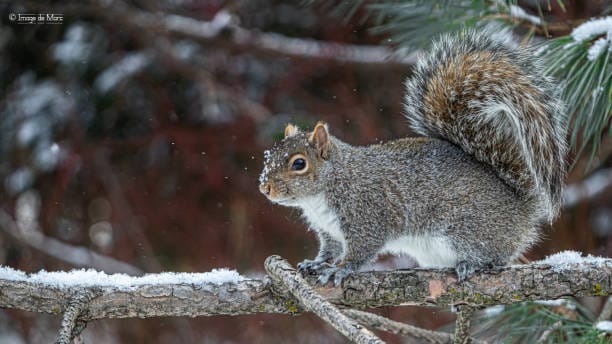
1. Eastern Gray Squirrel (Sciurus carolinensis)
Physical Characteristics & Identification Tips
The Eastern Gray Squirrel is easily recognized by its silver-gray fur, sometimes tinged with brown, and its bushy tail that often curls over the back. Adults typically measure 16–20 inches in length, including the tail, and weigh 400–600 grams. Their eyes are large and dark, aiding in low-light vision, and their nimble paws are adept at climbing and manipulating food. Subtle variations in coat color may occur, with some individuals appearing almost black due to melanism.
Behavior
Gray squirrels are diurnal and highly active, displaying a mix of foraging, caching, and social interaction. They communicate through tail flicks, vocalizations, and scent markings, especially during the breeding season. Agile climbers and jumpers, they can navigate tree canopies with impressive skill, often leaping 10–12 feet between branches. Their memory for stored food is remarkable, though they sometimes forget buried nuts, which contributes to forest regeneration.
Habitat and Range
Eastern Gray Squirrels are widely distributed across Illinois, inhabiting deciduous forests, urban parks, and suburban yards. They prefer areas with oak, hickory, and walnut trees, which provide both food and nesting sites. Nests, or dreys, are usually constructed high in trees from twigs and leaves, although some squirrels may occupy abandoned bird nests or attics in urban settings.
Diet
Gray squirrels are primarily herbivorous, feeding on nuts, seeds, fruits, buds, and fungi. They occasionally eat bird eggs or insects, but this is rare. Their habit of caching food in the ground and in tree crevices helps them survive winter shortages. Acorns and hickory nuts are particularly favored.
Reproduction and Life Cycle
Breeding occurs twice a year, typically in late winter and mid-summer. Gestation lasts about 44 days, after which 2–6 kits are born blind and hairless. They open their eyes around 4–5 weeks, start venturing outside at about 10 weeks, and achieve independence by 12 weeks. Lifespan in the wild averages 6–12 years, though many fall prey to predators.
Fun Facts / Unique Traits
Gray squirrels have excellent spatial memory, allowing them to locate cached food months later. Their front teeth never stop growing, which helps them gnaw through tough nuts and tree bark. Despite their small size, they are fearless and sometimes approach humans for food in urban parks.
Human Interaction
These squirrels are familiar to park-goers and homeowners. While generally harmless, they can damage bird feeders and gnaw on wiring if they enter attics. People enjoy watching their acrobatics, and they play a key role in spreading seeds, aiding forest growth.
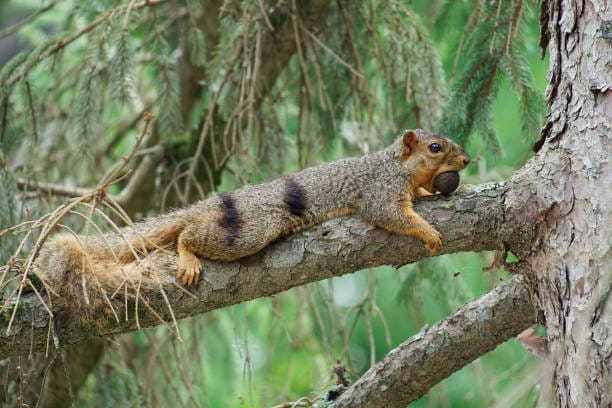
2. Eastern Fox Squirrel (Sciurus niger)
Physical Characteristics & Identification Tips
The Eastern Fox Squirrel is the largest tree squirrel in Illinois, measuring 18–27 inches including the tail and weighing 500–1,000 grams. Their fur is typically reddish-brown or rusty, with a pale underbelly. A long, bushy tail helps with balance and signaling. Compared to the gray squirrel, fox squirrels have a more robust body and longer limbs, which support their powerful leaps.
Behavior
Fox squirrels are primarily diurnal and less social than gray squirrels. They spend more time on the ground foraging but remain proficient climbers. They are known for their boldness and can often be seen sunbathing on tree branches. Communication includes tail flicking, chattering sounds, and scent marking to establish territories.
Habitat and Range
Fox squirrels inhabit open woodlands, forest edges, and parklands in Illinois. They prefer areas with mature oak, hickory, and pine trees, which supply both food and nesting sites. They construct large, leaf-lined dreys high in trees or sometimes use tree cavities for shelter.
Diet
The diet of fox squirrels overlaps with gray squirrels but emphasizes acorns, nuts, seeds, fruits, and occasional fungi. They are skilled at caching food, often burying nuts several inches underground. Unlike gray squirrels, fox squirrels forage more on the ground and are less likely to raid bird feeders.
Reproduction and Life Cycle
Breeding occurs once or twice per year, with litters of 2–7 kits. Young are born blind and helpless, developing fur in 3–4 weeks and opening their eyes shortly after. Independence is reached around 12 weeks. Fox squirrels have an average lifespan of 8–12 years in the wild but face predation from hawks, owls, and foxes.
Fun Facts / Unique Traits
Fox squirrels are excellent jumpers and can leap up to 15 feet between branches. They are sometimes called “tree foxes” for their size and coloration. Their memory for cached nuts rivals that of gray squirrels, which supports forest regeneration.
Human Interaction
Fox squirrels are generally appreciated by humans for their striking appearance and bold behavior. They may occasionally damage landscaping or bird feeders, but they play an important ecological role in seed dispersal. In rural areas, they are sometimes hunted for sport.
3. American Red Squirrel (Tamiasciurus hudsonicus)

Physical Characteristics & Identification Tips
American Red Squirrels are small, measuring 7–9 inches in body length with a 5–7 inch tail and weighing 200–250 grams. Their reddish fur, white underbelly, and distinctive ear tufts make them easily identifiable. Their sharp claws and strong teeth help them climb trees and open tough cones.
Behavior
These squirrels are highly territorial and vocal, using chirps and tail flicks to ward off intruders. Unlike gray and fox squirrels, they rely heavily on caches of conifer seeds and defend these territories aggressively. They are diurnal and exhibit constant activity, particularly in the early morning and late afternoon.
Habitat and Range
Red squirrels prefer coniferous forests in Illinois, especially areas with dense pine, spruce, and fir trees. They construct small nests in tree branches or use abandoned woodpecker cavities. Their range overlaps minimally with gray squirrels, reducing competition for food.
Diet
Red squirrels feed mostly on conifer seeds, but they also eat fruits, fungi, and occasionally insects. They are prolific hoarders, storing seeds in underground caches or in tree crevices to survive winter scarcity. Their diet and caching behavior are critical for forest seed dispersal.
Reproduction and Life Cycle
Breeding occurs twice annually, with 2–5 kits per litter. Kits are born blind and hairless, opening their eyes at around 4 weeks and leaving the nest after 8–10 weeks. Red squirrels typically live 5–7 years in the wild, facing threats from hawks, owls, and larger mammals.
Fun Facts / Unique Traits
Red squirrels are known for their vocal “chatter” and energetic behavior. Their territorial aggression is more pronounced than that of gray or fox squirrels. They are excellent climbers and rarely descend to the ground unless foraging.
Human Interaction
Red squirrels are mostly observed in forested areas and are less common in urban settings. They can sometimes damage young conifer seedlings or bird feeders. However, they are a favorite subject for wildlife photographers and naturalists due to their vivid coloration and spirited personality.
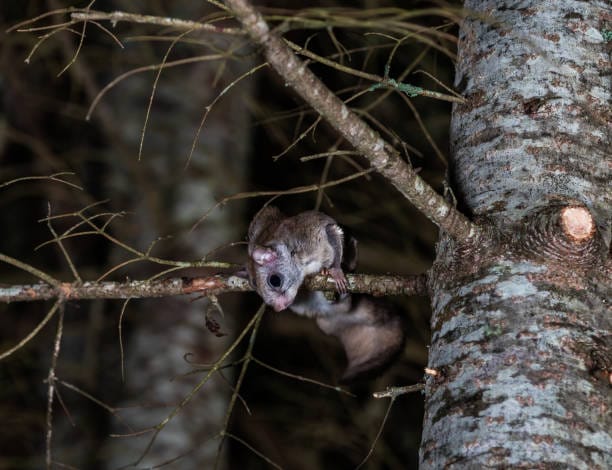
4. Southern Flying Squirrel (Glaucomys volans)
Physical Characteristics & Identification Tips
The Southern Flying Squirrel is small, with a body length of 8–10 inches and a tail of 4–5 inches, weighing only 40–60 grams. Its soft, gray-brown fur and paler underbelly give it a subtle, muted appearance. Large black eyes are adapted for night vision, and the patagium — a flap of skin stretching from wrist to ankle — allows gliding between trees, sometimes covering distances up to 150 feet.
Behavior
These nocturnal squirrels are social, often nesting in groups to conserve heat. They glide silently from tree to tree, using their tail for stability and steering. Their diet consists of nuts, seeds, fruits, fungi, and occasional insects. Southern Flying Squirrels are vocal, producing high-pitched squeaks to communicate with family members and other squirrels.
Habitat and Range
They inhabit mixed hardwood and coniferous forests in Illinois, preferring areas with abundant tree cavities for nesting. Southern Flying Squirrels often share old woodpecker holes or nest boxes and are rarely seen in open urban spaces due to their nocturnal habits.
Diet
Omnivorous in nature, they eat nuts, acorns, seeds, berries, fungi, and insects. They sometimes raid bird feeders or consume eggs from unattended nests. Food caching is common, helping them survive winter shortages.
Reproduction and Life Cycle
Breeding occurs twice per year, producing 2–7 young per litter. Kits are born blind and hairless, opening their eyes at 25–30 days and becoming independent around 2 months. Lifespan ranges 5–6 years in the wild.
Fun Facts / Unique Traits
Despite their small size, Southern Flying Squirrels are excellent gliders and use their patagium like a parachute. They are highly social compared to other squirrels and frequently share dens for warmth during winter.
Human Interaction
Rarely seen during the day, these squirrels attract attention when visiting nest boxes. They are generally harmless but may take birdseed or raid attic spaces if homes are accessible.
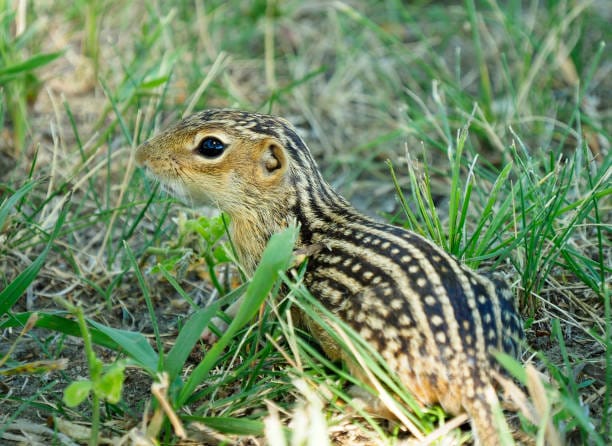
5. Thirteen-lined Ground Squirrel (Ictidomys tridecemlineatus)
Physical Characteristics & Identification Tips
This small, diurnal ground squirrel measures 7–10 inches in length, with a short tail of 2–3 inches and a weight of 85–140 grams. Its most notable feature is 13 alternating light and dark stripes along its back, which act as camouflage in grassy habitats. The fur is brownish-gray, and its small, rounded ears help with heat retention and predator detection.
Behavior
Thirteen-lined Ground Squirrels are highly active during the day, feeding, burrowing, and defending territories. They hibernate in winter and are known for their quick, darting movements when escaping predators. Vocalizations and tail flicks are used to warn neighbors of danger.
Habitat and Range
They inhabit open fields, prairies, and meadows in Illinois. Burrow systems provide shelter, nesting areas, and escape routes. Each burrow may have multiple entrances and chambers to store food and house young.
Diet
Omnivorous, feeding on seeds, grains, insects, and small vertebrates. They store food in burrows for hibernation periods. Their foraging helps control insect populations and disperse seeds.
Reproduction and Life Cycle
Breeding occurs shortly after hibernation in spring. Litter sizes range from 4–10, with kits developing rapidly in the burrow before emerging at about 4 weeks. Lifespan is typically 2–4 years, though predation is a major limiting factor.
Fun Facts / Unique Traits
These squirrels hibernate for up to 5–6 months, relying on stored fat. Their striped pattern is both decorative and functional, aiding in camouflage and predator avoidance. They are agile diggers, creating intricate burrow systems.
Human Interaction
Thirteen-lined Ground Squirrels are generally harmless, though they may damage crops in agricultural areas. Bird watchers and wildlife enthusiasts enjoy observing their curious and energetic daytime antics.
6. Franklin’s Ground Squirrel (Spermophilus franklinii)
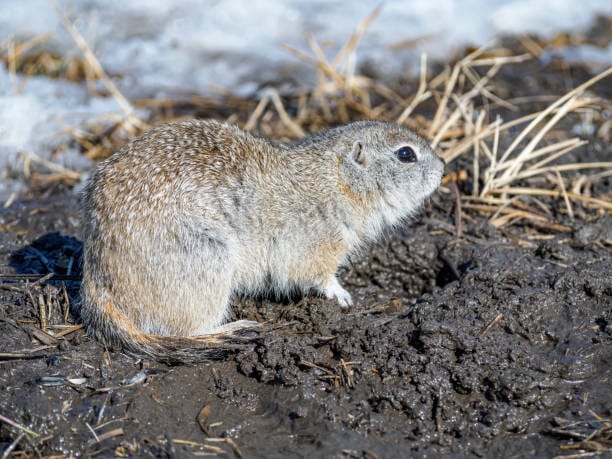
Physical Characteristics & Identification Tips
Franklin’s Ground Squirrel is a medium-sized rodent, measuring 8–11 inches with a 3–4 inch tail and weighing 150–250 grams. Its fur is brownish-gray with faint spots or stripes, blending with prairie environments. Rounded ears and sharp claws make it an efficient digger and forager.
Behavior
These ground squirrels are diurnal, spending daylight hours foraging and maintaining burrows. They hibernate in winter and are generally solitary outside the breeding season. Alarm calls, tail flicks, and foot stamping alert neighbors to predators.
Habitat and Range
Franklin’s Ground Squirrels inhabit prairies, fields, and open woodlands in Illinois. Burrow systems provide protection and food storage. They prefer sandy or loamy soils, which are easier to excavate.
Diet
Omnivorous, consuming seeds, roots, insects, and occasionally small vertebrates. Food caching is common, supporting hibernation survival. They also play a role in aerating soil and dispersing seeds.
Reproduction and Life Cycle
Breeding occurs shortly after emergence from hibernation. Litters contain 5–8 kits, which stay in the burrow for several weeks. Independence is reached at around 6–8 weeks, and adults live approximately 3–5 years.
Fun Facts / Unique Traits
Franklin’s Ground Squirrels are known for their intricate burrow systems, which include multiple escape routes and storage chambers. They hibernate deeply and emerge quickly in spring to resume foraging. Their quiet and cautious nature often makes them difficult to observe.
Human Interaction
They rarely interact with humans due to their preference for open fields. While not considered pests, they may occasionally feed on garden vegetables or crops. Observers enjoy spotting them during the day as they scurry across prairie landscapes.
7. Black Squirrel (Melanistic Variant of Eastern Gray Squirrel)
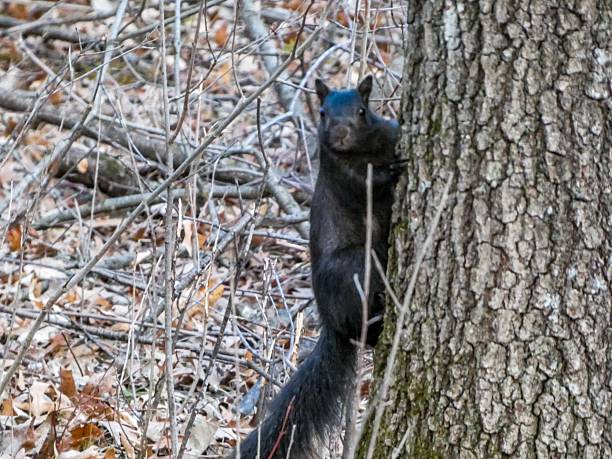
Physical Characteristics & Identification Tips
The Black Squirrel is essentially an Eastern Gray Squirrel with a melanistic coat, resulting in black fur that absorbs more sunlight, which can help with warmth in cooler months. Body length ranges from 16–20 inches, including a bushy tail, and they typically weigh 400–600 grams. Their eyes are dark and alert, and sharp claws make them agile climbers.
Behavior
These squirrels are diurnal and exhibit typical gray squirrel behavior, such as foraging, caching food, and vocal alarm calls. They are highly active and can leap distances of 4–6 feet between trees. While they resemble Eastern Gray Squirrels in habits, the darker fur sometimes influences social dynamics, as some studies suggest dominance in interactions.
Habitat and Range
Black Squirrels occupy forests, urban parks, and suburban neighborhoods across Illinois. They thrive in deciduous woodlands with abundant nut-bearing trees and are frequently seen around bird feeders and backyard gardens.
Diet
Primarily herbivorous, they feed on nuts, seeds, fruits, and buds. Occasional insects or fungi supplement their diet. Food caching is a key survival strategy, allowing them to endure winter scarcity.
Reproduction and Life Cycle
Breeding occurs twice per year, producing 2–4 offspring per litter. Kits are born blind and helpless, opening their eyes around 4 weeks and leaving the nest at 10–12 weeks. Lifespan in the wild averages 6–12 years.
Fun Facts / Unique Traits
The black coat can provide camouflage in dense forests and aids in thermoregulation. They share many habits with Eastern Gray Squirrels but often attract extra attention due to their striking appearance.
Human Interaction
These squirrels are generally well-tolerated in urban and suburban areas. They may raid bird feeders and occasionally chew on wooden structures, but their playful antics often make them beloved backyard visitors.
8. Eastern Chipmunk (Tamias striatus)
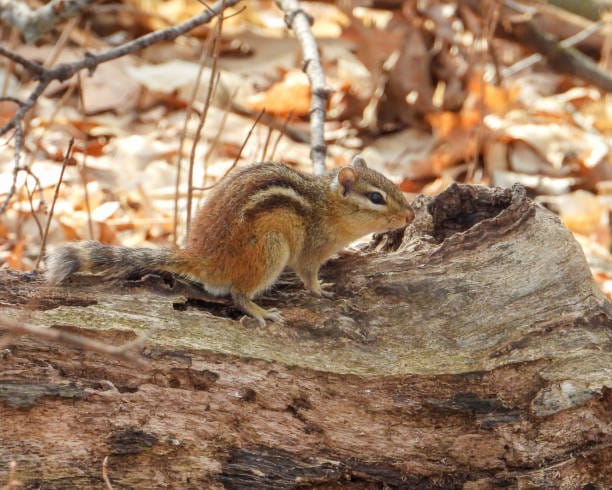
Physical Characteristics & Identification Tips
Eastern Chipmunks are small rodents, measuring 5–6 inches in body length with a 3-inch tail, and weighing 70–120 grams. Their reddish-brown fur with distinctive dark and light stripes along the back and face makes them easy to identify. Cheek pouches are used for transporting food to their burrows.
Behavior
Chipmunks are primarily diurnal and highly active, engaging in foraging, burrowing, and vocal communications. They are known for their energetic movements and territorial behavior. Burrow entrances are often concealed, and chipmunks are quick to retreat when threatened.
Habitat and Range
They inhabit woodlands, gardens, and suburban areas throughout Illinois. Chipmunks dig complex burrows with multiple chambers for nesting, storing food, and escaping predators.
Diet
Omnivorous, feeding on nuts, seeds, fruits, berries, insects, and occasionally small vertebrates. They collect and store food in burrows to survive winter months when resources are scarce.
Reproduction and Life Cycle
Breeding occurs twice annually, with 2–5 young per litter. Kits are born blind and hairless, remaining in burrows for several weeks. Young emerge independently around 6–8 weeks, and adults typically live 3–4 years in the wild.
Fun Facts / Unique Traits
Chipmunks are excellent diggers, creating burrow networks that can span several meters. Their cheek pouches allow them to carry impressive loads of food in a single trip. Their striped appearance and energetic antics make them a favorite among wildlife watchers.
Human Interaction
Eastern Chipmunks are commonly seen in gardens and backyards. They are generally harmless, though they may nibble on vegetables or raid bird feeders. Their charming behavior often makes them a delight to observe for casual naturalists and enthusiasts alike.
FAQ’s
1. What is the most common squirrel in Illinois?
The most common squirrel in Illinois is the Eastern Gray Squirrel. They are widespread across forests, parks, and suburban areas throughout the state.
2. Does Illinois have squirrels?
Yes, Illinois is home to multiple squirrel species, including Eastern Gray Squirrels, Eastern Fox Squirrels, and smaller populations of Red Squirrels and Black Squirrels.
3. Does Illinois have fox squirrels?
Yes, the Eastern Fox Squirrel is found in Illinois, particularly in southern and central regions. They are larger than gray squirrels with reddish-brown fur and bushy tails.
4. What town in Illinois is known for white squirrels?
Olney, Illinois, is famous for its population of white squirrels. The city celebrates them with a yearly festival and has become a popular tourist attraction.
5. Is it squirrel season in IL?
Yes, Illinois has designated squirrel hunting seasons. Typically, there are separate seasons for Spring and Fall for both Gray and Fox Squirrels, regulated by the Illinois Department of Natural Resources (IDNR).
6. Are there black squirrels in Illinois?
Yes, black squirrels, a melanistic variant of the gray squirrel, exist in parts of Illinois, especially in northern and central areas. They are less common than gray or fox squirrels.
7. How to tell the difference between a Fox Squirrel and a Gray Squirrel?
Fox Squirrels are larger with reddish-brown fur, a longer tail, and a more robust build. Gray Squirrels are smaller, with gray fur and white underbellies.
8. Can I shoot squirrels on my property in Illinois?
Yes, you can hunt squirrels on your property in Illinois during legal seasons, provided you have a valid hunting license and follow IDNR regulations.
9. Can I keep a squirrel as a pet in Illinois?
Generally, it is illegal to keep wild squirrels as pets in Illinois without a wildlife possession permit. Only licensed rehabilitators or certain facilities may legally care for them.
10. What is the lifespan of a squirrel in Illinois?
In the wild, squirrels in Illinois typically live 6–12 years, though most do not reach the upper end due to predators, accidents, and harsh winters.
11. Where do squirrels go in the winter in Illinois?
Squirrels remain active during the winter but spend more time in nests (dreys) or tree cavities. They rely on stored food such as nuts and acorns to survive the colder months.
12. Is it illegal to feed squirrels in Illinois?
Feeding squirrels is generally legal on private property, but feeding them in public parks may be restricted. Overfeeding can lead to dependency and health issues for the squirrels.
13. Do you have to wear orange when squirrel hunting in Illinois?
Yes, hunters are required to wear hunter orange during squirrel hunting season in Illinois to ensure safety, especially during firearms season.
14. Is it legal to have a squirrel as a pet in Illinois?
No, owning a wild squirrel as a pet without a state permit is illegal. Only licensed rehabilitators or wildlife facilities can legally possess squirrels.
Conclusion
Illinois is home to a fascinating diversity of squirrels, ranging from the agile Southern Flying Squirrel to the industrious Eastern Chipmunk. Each species plays a vital role in the ecosystem, from dispersing seeds and nuts to supporting the food web. Observing these creatures offers insights into their behaviors, diets, and interactions with both humans and other wildlife. While some squirrels thrive in urban environments, others prefer the quietude of forests and woodlands, highlighting the adaptability of these rodents. Whether you are a backyard observer, a nature enthusiast, or a budding wildlife photographer, understanding the habits and traits of Illinois squirrels deepens appreciation for these charismatic mammals. Next time you spot a bushy tail darting through the trees, take a moment to observe—it’s a small glimpse into the vibrant wildlife that surrounds us every day.
Read more:
- 40 Types of Squirrels: Species Identification with Pictures
- Ultimate Guide for Squirrel Hunting
- 12 Types of Squirrels in Canada (Pictures And Identification)
- Squirrel Hunting in the Rain: The Ultimate Guide
- What Do Squirrels Eat? 50 Foods They Love the Most
- 18 Types of Squirrels in Idaho (Pictures And Identification)
- 8 Types of Squirrels in Arizona (Pictures And Identification)
- What Is The Best Time To Go Squirrel Hunting?
- How to Trap Squirrels
- 8 Types of Squirrels in Massachusetts (Pictures And Identification)
- 10 Types of Squirrels in Texas (Pictures and Identification)
- 15 Types of Squirrels in Wisconsin (Pictures and Identification)
- 5 Types of Squirrels in Indiana (Pictures And Identification)
- 10 Types of Squirrels in New York | Identification and Facts
- 8 Squirrels in Ohio (Pictures And Identification)
- 10 Types of Squirrels in Michigan (Pictures And Identification)