

Frogs are among the most widespread and ecologically important amphibians on Earth, found on every continent except Antarctica. From tropical rainforests and wetlands to backyard ponds and slow-moving streams, these adaptable creatures play a vital role in maintaining the balance of ecosystems. Their diet is one of the key reasons they are so successful in so many environments.
Understanding what frogs eat is not just useful for curiosity—it is essential for ecology, conservation, and even pet care. In the wild, frogs act as both predators and prey, forming a crucial link in the food chain. By consuming large numbers of insects and small invertebrates, they help control pest populations such as mosquitoes and flies. At the same time, frogs provide food for birds, snakes, fish, and mammals, making them a central part of biodiversity networks.
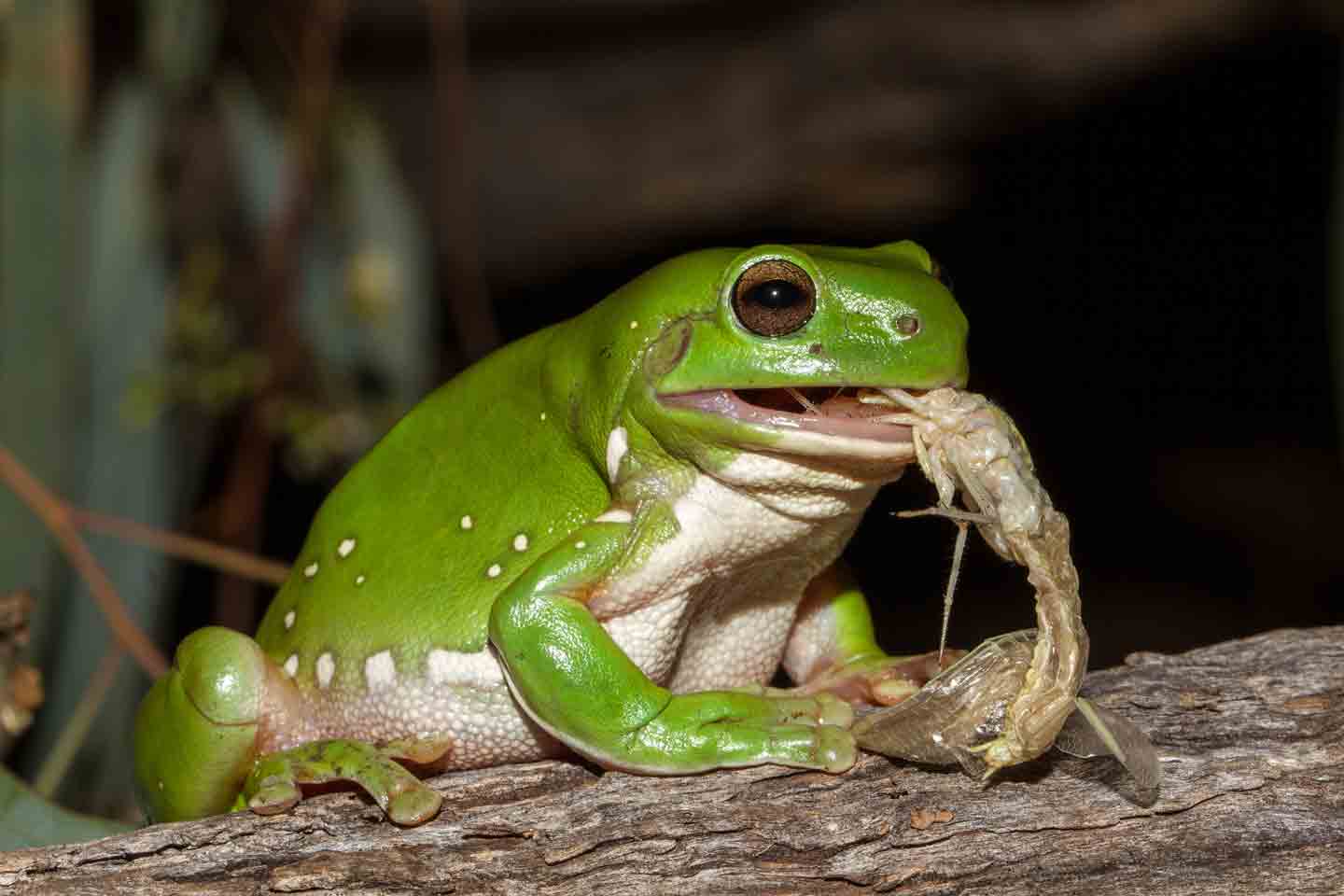
Most frogs are carnivorous and highly opportunistic feeders. This means they do not rely on a single type of food but instead eat whatever moving prey they can successfully capture. Their feeding behavior is closely tied to their anatomy: frogs have sticky, fast-extending tongues designed to catch prey in a fraction of a second. Once captured, food is swallowed whole without chewing.
A frog’s diet changes significantly depending on its species, size, habitat, and life stage. Tadpoles, for example, often feed on algae and plant matter, while adult frogs transition into carnivorous hunters. Smaller frog species typically consume insects like ants and flies, while larger species such as bullfrogs can eat surprisingly large prey, including small fish, mice, and even other frogs.
Environmental conditions also influence what frogs eat. In wet seasons, when insect populations explode, frogs feed actively and grow rapidly. During dry or cold periods, their feeding activity may slow down significantly, and they rely on stored energy reserves. Aquatic species tend to consume more water-based organisms, while tree frogs specialize in catching flying insects.
Another fascinating aspect of frog feeding behavior is their reliance on movement detection. Frogs do not hunt by smell or detailed visual recognition like mammals. Instead, they respond primarily to motion. If a prey item is still, a frog may ignore it completely—even if it is edible. This explains why insects such as flies, crickets, and grasshoppers are such important food sources; their movement triggers the frog’s hunting instinct.
Frogs are also important bioindicators. Because they consume insects and live in both aquatic and terrestrial environments, their diet reflects the health of local ecosystems. Changes in frog populations or feeding habits can signal pollution, habitat loss, or climate shifts.
In this detailed guide, we will explore 30 foods that frogs commonly eat in the wild. Each item reveals something about how frogs survive, hunt, and adapt to their environment. From tiny mosquitoes to larger prey like mice and snakes, the frog’s diet is far more diverse and fascinating than many people realize.
Let’s begin by breaking down their diet step by step and uncovering exactly what fuels these remarkable amphibians in nature.
What Do Frogs Eat in the Wild ?
1. Crickets
Crickets are one of the most important staple foods for frogs across many ecosystems. Their abundance in grasslands, forests, wetlands, and even human-altered environments makes them a consistent and reliable prey source. Frogs actively hunt crickets during nighttime and twilight hours when these insects are most active.
From a nutritional perspective, crickets provide high-quality protein, moderate fat content, and essential amino acids that support muscle development, tissue repair, and overall energy metabolism. For growing frogs, especially juveniles, crickets are critical for healthy development.
Frogs use their highly specialized hunting mechanism to catch crickets. Their sticky tongues can extend and retract in less than a fraction of a second, allowing them to capture fast-moving prey with remarkable precision. Once caught, crickets are swallowed whole without chewing.
2. Grasshoppers
Grasshoppers are another major food source for frogs, particularly in open fields and meadows where these insects are abundant. They are larger than crickets and provide a more substantial meal in a single capture.
Grasshoppers are rich in protein and contain valuable fats that provide sustained energy. However, their jumping ability makes them more challenging to catch compared to slower insects.
Frogs typically ambush grasshoppers from concealed positions near vegetation. They rely on precise timing, striking when the insect lands or pauses movement, ensuring a successful capture.
3. Flies
Flies are one of the most common and widely consumed foods for frogs. They are found in nearly every environment, from forests and wetlands to urban areas, making them a dependable food source year-round.
Flies provide quick energy and are easy to digest. Although small, they are consumed in large quantities, especially by smaller frog species.
Frogs often catch flies mid-air or when they land on surfaces. Their tongue speed and accuracy allow them to snatch flies in milliseconds, making them highly efficient predators of airborne insects.
4. Mosquitoes
Mosquitoes are a vital part of the frog diet, especially in wetland ecosystems where these insects breed in large numbers. Frogs play an important ecological role in controlling mosquito populations.
While small, mosquitoes are highly nutritious when consumed in large numbers. They provide protein and contribute to hydration due to their fluid-rich bodies.
Frogs feed on mosquitoes near water surfaces or vegetation, using rapid tongue strikes to capture them as they fly or rest.
5. Beetles
Beetles are one of the most diverse insect groups consumed by frogs. They are commonly found in soil, leaf litter, and vegetation, making them easily accessible prey.
Beetles provide protein and structural nutrients, including minerals from their hard exoskeletons. However, their tough outer shells can make digestion more challenging.
Frogs typically target smaller beetles or softer-bodied species. They use quick strikes to immobilize prey before swallowing it whole.
6. Ants
Ants are a common food source for many small frog species. They are abundant, easy to find, and available in almost all terrestrial environments.
Although individually small, ants provide protein and form a significant part of the diet when consumed in large numbers. Some frog species specialize in ant feeding.
Frogs capture ants near trails or nests, snapping them up quickly as they move. Their rapid feeding behavior allows them to consume multiple ants in short bursts.
7. Termites
Termites are highly nutritious insects that often appear in large swarms, making them an excellent feeding opportunity for frogs. They are especially important in tropical and subtropical regions.
Termites are rich in protein and fats, providing a dense energy source that supports growth and reproduction in frogs.
Frogs take advantage of termite swarming events, capturing them in large quantities either in flight or as they emerge from colonies.
8. Caterpillars
Caterpillars are soft-bodied larvae of butterflies and moths and are an easy and nutritious food source for frogs. They are commonly found on leaves and vegetation.
Caterpillars are high in protein and fat, making them especially valuable for energy storage and growth.
Frogs locate caterpillars on plants and strike quickly, taking advantage of their slow movement and limited defense mechanisms.
9. Moths
Moths are nocturnal insects that frequently become prey for frogs, especially during nighttime feeding activity. Their slow flight patterns make them easier to catch compared to other flying insects.
They provide protein and energy-rich nutrients, particularly useful for active and growing frogs.
Frogs often catch moths in mid-air or when they land near water or vegetation, using rapid tongue strikes.
10. Butterflies
Butterflies are less commonly eaten than moths but are still part of the frog diet in many ecosystems. They are more active during the day and are often found near flowers and vegetation.
Butterflies provide moderate protein and energy, though their consumption is opportunistic rather than essential.
Frogs typically catch butterflies when they rest or fly low, relying on quick reflexes and precise timing to succeed.
Part 3: What Do Frogs Eat in the Wild? (Foods #11–#20)
11. Earthworms
Earthworms are one of the most reliable and nutrient-rich foods for frogs living in moist environments. They are commonly found in soil after rainfall or in damp forest floors, making them an easily accessible prey item for many species.
Earthworms are rich in protein, moisture, and essential minerals such as iron and calcium. This combination supports hydration, muscle function, and overall growth, especially in juvenile frogs that require energy-dense foods.
Frogs detect earthworms through movement in the soil or on the surface. Once located, they use their sticky tongue to capture the worm and swallow it whole. Their soft bodies make them easy to digest compared to harder insects.
12. Mealworms
Mealworms, the larval stage of darkling beetles, are commonly consumed by frogs in both wild and controlled environments. In nature, they are found in decaying plant matter, soil, and organic debris.
They are high in protein and fat, making them a valuable energy source. However, due to their higher fat content, they are often consumed alongside other leaner prey items.
Frogs hunt mealworms by foraging through leaf litter or soil, quickly striking when movement is detected. Their soft bodies make them easy to swallow.
13. Waxworms
Waxworms are soft-bodied larvae of wax moths and are considered a high-energy food source for frogs. They are often found in beehives or stored organic material in natural settings.
Waxworms are extremely rich in fat, making them an excellent energy reserve food, especially for frogs preparing for breeding or periods of low food availability.
Frogs consume waxworms opportunistically, quickly capturing them when encountered due to their slow movement.
14. Bloodworms
Bloodworms are aquatic larvae commonly found in freshwater sediments. They are a key food source for aquatic frog species and tadpoles transitioning into adulthood.
They are rich in protein and iron, which supports oxygen transport and muscle development in frogs.
Frogs feed on bloodworms by hunting in shallow water or along the substrate, using quick strikes to capture multiple larvae in succession.
15. Blackworms
Blackworms are another aquatic worm species that serve as an important food source for frogs in freshwater habitats. They are often found in oxygen-rich, muddy environments.
These worms are high in protein and provide essential nutrients that support growth and energy metabolism.
Frogs locate blackworms by detecting movement in sediment or water, quickly snapping them up before they can escape.
16. Maggots (Fly Larvae)
Maggots are fly larvae commonly found in decaying organic matter. They are an important food source for frogs in nutrient-rich environments.
Maggots are highly protein-rich and easy to digest, making them especially valuable for young or recovering frogs.
Frogs consume maggots by foraging in decomposing material or near carrion sites, using rapid tongue strikes to capture multiple larvae.
17. Spiders
Spiders are widely consumed by frogs across many habitats. They are found in vegetation, under rocks, and in human-altered environments, making them easily accessible prey.
Spiders provide protein and essential nutrients, although some larger species may pose a mild defensive risk.
Frogs carefully approach spiders and strike quickly to avoid entanglement or defensive bites, swallowing them whole once captured.
18. Centipedes
Centipedes are fast-moving arthropods that are occasionally eaten by larger frog species. They are found in moist soil, under logs, and in leaf litter.
Centipedes are rich in protein but can be dangerous due to their venomous bite, making them a risky but rewarding prey item.
Frogs rely on speed and precision to capture centipedes before they can defend themselves or escape.
19. Small scorpions
Small scorpions are occasionally consumed by larger, more robust frog species in arid and semi-arid environments. These arachnids are typically nocturnal and active at night.
They provide protein and fat but require careful handling due to their stingers.
Frogs hunt scorpions cautiously, using rapid strikes to avoid being stung while subduing the prey quickly.
20. Pill bugs (Woodlice)
Pill bugs, also known as woodlice, are small crustaceans commonly found in damp environments under rocks and logs. They are a regular part of the diet for many frogs.
They provide moderate protein and moisture, contributing to hydration and nutritional balance.
Frogs forage in moist areas to locate pill bugs, capturing them with quick tongue movements before they can roll into defensive positions.
Part 4: What Do Frogs Eat in the Wild? (Foods #21–#30)
21. Small fish
Small fish are an important food source for many larger frog species, especially aquatic frogs such as bullfrogs that live in ponds, lakes, and slow-moving rivers. These frogs are sit-and-wait predators, often remaining still at the water’s edge or partially submerged until prey swims within striking distance.
From a nutritional perspective, small fish provide a dense source of protein, healthy fats, and essential micronutrients such as phosphorus and calcium. This makes them especially valuable for growth, reproduction, and long-term energy storage. Because fish are more calorie-rich than insects, they are typically targeted by larger, mature frogs that require higher energy intake.
The hunting behavior used to capture small fish is highly specialized. Frogs rely on rapid reflexes and explosive tongue projection, striking in milliseconds when a fish comes close enough. Aquatic frogs may also lunge forward or use their forelimbs to assist in securing slippery prey. Once caught, fish are swallowed whole, often headfirst to aid digestion and reduce resistance.
Small fish are usually targeted in shallow waters where visibility is high and escape routes are limited. Frogs tend to hunt near vegetation, submerged roots, or rocky edges where fish naturally congregate. This environment gives frogs a tactical advantage, allowing them to ambush prey effectively.
However, fish are not always easy prey. Their speed and agility make them challenging targets, and frogs must rely on perfect timing. This is why fish often become part of the diet only for larger or more experienced frogs capable of handling active vertebrate prey.
22. Tadpoles
Tadpoles are the larval stage of frogs, and surprisingly, they can become both prey and competitors depending on the situation. In many aquatic ecosystems, larger frog species consume tadpoles, including those of other frogs. This behavior is especially common in environments where food resources are limited.
Tadpoles provide moderate protein and are easy to catch due to their relatively slow movement compared to adult aquatic insects or fish. While they are not as nutrient-dense as vertebrate prey, they are abundant in seasonal ponds and wetlands, making them a reliable food source.
Frogs typically hunt tadpoles in shallow water where they gather in groups. The feeding strategy involves quick snapping motions, often capturing multiple tadpoles in succession. Because tadpoles lack strong defense mechanisms, they are vulnerable to a wide range of aquatic predators, including fish, birds, and larger frogs.
In some ecosystems, cannibalism among frogs helps regulate population density and reduces competition for resources. This is particularly important in temporary water bodies where food availability can fluctuate significantly.
Interestingly, tadpole consumption reflects the opportunistic nature of frogs. Even though they represent the next stage in the frog life cycle, survival in the wild often depends on taking advantage of all available food sources, including conspecific larvae.
23. Aquatic insect larvae
Aquatic insect larvae form a crucial part of the diet for many frog species, especially those living in or near freshwater habitats. These larvae include the immature stages of dragonflies, mayflies, midges, and other aquatic insects that develop in ponds, streams, and marshes.
These organisms are highly nutritious, providing a balanced combination of protein, fats, and essential minerals. Because they live in water, they are particularly accessible to fully aquatic frogs and semi-aquatic species that forage at the water’s surface or just below it.
Frogs detect aquatic larvae through subtle movement in the water. Many species remain hidden among plants or sediment, so frogs rely on precise visual tracking and rapid strikes to capture them. Once detected, the prey is quickly engulfed using the frog’s extendable tongue or direct mouth suction in aquatic species.
One advantage of aquatic larvae is their abundance in nutrient-rich waters. During breeding seasons or warm months, insect populations can explode, providing frogs with an energy-rich feeding opportunity that supports growth and reproduction.
Aquatic insect larvae also serve as an important transitional food for young frogs moving from a tadpole stage to a carnivorous adult diet. Their small size and soft bodies make them easier to digest than larger prey items.
24. Freshwater shrimp
Freshwater shrimp are small crustaceans found in rivers, lakes, and ponds, and they are an important dietary component for aquatic frogs. These organisms thrive in clean, oxygen-rich water and often inhabit vegetation or submerged debris where frogs actively hunt.
Nutritionally, freshwater shrimp provide high-quality protein along with essential minerals such as iodine and calcium. These nutrients support metabolic health, bone development, and overall vitality in frogs. Because they are relatively soft-bodied, they are also easy to swallow and digest.
Frogs hunt freshwater shrimp by scanning the water for movement. Once located, they strike quickly, often capturing multiple shrimp in a short feeding session. Aquatic frogs are particularly efficient at this type of hunting due to their ability to remain submerged for extended periods.
Shrimp are especially important in ecosystems where fish populations are low or seasonal. They provide a consistent food source that helps sustain frog populations even when larger prey is scarce.
Their role in the diet highlights the adaptability of frogs in aquatic environments. By feeding on both vertebrates and invertebrates, frogs maintain ecological balance and ensure their survival across diverse habitats.
25. Small snails
Small snails are another common food source for frogs, particularly in moist environments such as wetlands, gardens, and forest floors near water bodies. These slow-moving mollusks are easy targets for opportunistic predators.
Snails provide a combination of protein, calcium, and trace minerals. Calcium is especially important for frogs, as it supports bone health and proper muscle function. The shells also contribute additional mineral intake when consumed.
Frogs typically hunt snails by locating them on vegetation, soil, or submerged surfaces. Once found, they use their sticky tongues or direct mouth contact to extract the soft body from the shell or swallow smaller snails whole.
Although snails are not as energy-dense as insects or fish, they play an important role in dietary diversity. They are particularly useful in environments where other prey is limited or seasonal fluctuations reduce insect availability.
Some frog species specialize in mollusk consumption, developing stronger jaw muscles to handle harder shells. This adaptation allows them to exploit food sources that are inaccessible to many other predators.
26. Small frogs
Small frogs are often consumed by larger frog species, making this a notable example of intra-species predation. This behavior is especially common among opportunistic and highly carnivorous frogs such as bullfrogs.
Small frogs provide a rich source of protein, fats, and essential nutrients due to their vertebrate composition. They offer a substantial energy return compared to insect prey, making them a valuable food source when available.
Frogs hunt other frogs using ambush tactics. They remain motionless near water edges or vegetation until a smaller frog comes within striking distance. The attack is swift and efficient, leaving little chance for escape.
This behavior plays a role in regulating population density and maintaining ecological balance within frog communities. It also demonstrates the highly opportunistic and sometimes aggressive feeding strategies of larger species.
Cannibalism among frogs is not uncommon in nature and reflects survival-driven feeding behavior rather than preference. When food is scarce, frogs will exploit any available protein source, including members of their own species.
27. Lizards
Some larger frog species are capable of preying on small lizards, particularly in tropical and subtropical environments where both groups coexist. These interactions typically occur when lizards come close to water sources.
Lizards are rich in protein and fat, making them a high-energy meal. Their vertebrate structure provides a substantial nutritional boost, especially for large predatory frogs.
Frogs capture lizards through rapid ambush strikes. They rely on patience and precise timing, often waiting motionless before launching a sudden attack when the lizard is within range.
Although not a primary food source, lizards represent an opportunistic prey item that highlights the frog’s ability to exploit a wide range of animal types beyond insects and aquatic organisms.
This predatory behavior reinforces the frog’s role as a flexible and adaptive carnivore within its ecosystem.
28. Small snakes
Small snakes are occasionally eaten by large frog species, particularly in wetland ecosystems where both animals overlap. These encounters are rare but demonstrate the frog’s capacity for handling vertebrate prey.
Small snakes provide high levels of protein and fats, making them a dense energy source. However, they can be dangerous prey due to their defensive behavior and agility.
Frogs typically rely on surprise attacks to capture snakes, striking quickly before the reptile can react. Once subdued, the prey is swallowed whole.
This type of feeding behavior is generally limited to larger species capable of handling similarly sized or slightly larger prey items. It is not common among small or medium frogs.
The inclusion of snakes in the diet illustrates the extreme opportunism seen in certain frog species and their ability to exploit nearly any available food source.
29. Baby birds
Baby birds, or nestlings, may occasionally be consumed by large frogs, particularly in areas where nesting sites are close to water bodies. These opportunistic feeding events are rare but documented.
Nestlings are extremely nutrient-rich, providing concentrated protein and fat essential for growth and reproduction in frogs that can consume them.
Frogs typically access baby birds by ambushing them near ground nests or shallow nesting areas. Timing is critical, as adult birds often defend their young aggressively.
This feeding behavior highlights the opportunistic nature of larger frog species and their ability to exploit unexpected food sources in their environment.
30. Small mice
Small mice are among the largest prey items consumed by certain frog species, such as bullfrogs. These events occur when frogs encounter vulnerable or juvenile rodents near water sources.
Mice are extremely rich in protein, fats, and essential nutrients, making them a highly energy-dense meal. However, they require significant size and strength to capture and consume.
Frogs use ambush tactics to catch mice, striking quickly when the rodent is within reach. Once captured, the prey is swallowed whole despite its size.
While not a regular food source, small mice demonstrate the upper limits of frog predatory capability and their role as opportunistic apex feeders in certain ecosystems.
Conclusion
Frogs are highly adaptable carnivorous amphibians with a diet that reflects both opportunity and environment. From tiny insects like flies, mosquitoes, and ants to larger prey such as fish, mice, and even snakes, their feeding habits show just how flexible and efficient they are as predators.
Most frogs rely heavily on protein-rich invertebrates such as crickets, beetles, and worms, which form the foundation of their daily energy intake. Aquatic species expand their diet to include fish, shrimp, and aquatic larvae, while larger frogs can take advantage of vertebrate prey when available. This wide dietary range allows frogs to survive in diverse ecosystems, from tropical rainforests to urban ponds.
Beyond individual survival, frogs play a critical ecological role. By consuming large numbers of insects, they help control pest populations, including mosquitoes that can spread disease. At the same time, they serve as an essential food source for birds, snakes, fish, and mammals, making them a key link in many food chains.
Overall, the frog’s diet highlights its role as both predator and prey, contributing to ecological balance and biodiversity. Their ability to exploit a wide range of food sources ensures their survival in changing environments and reinforces their importance in maintaining healthy ecosystems worldwide.
50+ FAQs About What Frogs Eat
1. What do frogs eat in the wild?
Frogs primarily eat live prey such as insects, worms, spiders, and small invertebrates. Larger frogs may also consume small vertebrates like fish, lizards, and even other frogs.
2. Are frogs carnivores or omnivores?
Adult frogs are carnivores, meaning they eat only animal-based food. However, tadpoles are often herbivores or omnivores, feeding on algae and plant matter.
3. Do frogs eat insects?
Yes, insects are the main food source for most frogs. They commonly eat crickets, flies, beetles, and grasshoppers.
4. Do frogs eat worms?
Yes, earthworms and other soft-bodied worms are a favorite food because they are easy to catch and digest.
5. Do frogs eat spiders?
Yes, frogs will eat spiders when they encounter them, especially smaller species.
6. Do frogs eat flies?
Yes, flies are commonly eaten by frogs using their long, sticky tongues to catch them quickly.
7. Do frogs eat mosquitoes?
Yes, frogs eat mosquitoes and help control mosquito populations naturally.
8. Do frogs eat beetles?
Yes, frogs consume beetles, although they prefer softer-bodied insects when available.
9. Do frogs eat ants?
Yes, many frogs eat ants, especially smaller frog species.
10. Do frogs eat caterpillars?
Yes, caterpillars are commonly eaten due to their soft bodies and high nutritional value.
11. Do frogs eat moths and butterflies?
Yes, frogs will catch moths and butterflies if they come within reach.
12. Do frogs eat grasshoppers?
Yes, grasshoppers are a common prey item, especially for larger frogs.
13. Do frogs eat mealworms?
Yes, mealworms are often fed to frogs in captivity and are also eaten in the wild when available.
14. Do frogs eat maggots?
Yes, frogs eat maggots (fly larvae), especially in moist or decaying environments.
15. Do frogs eat aquatic insects?
Yes, frogs consume aquatic insect larvae such as mosquito larvae and other small water-dwelling insects.
16. Do frogs eat small fish?
Yes, larger frogs may eat small fish, especially in ponds and streams.
17. Do frogs eat tadpoles?
Yes, some frogs are cannibalistic and will eat tadpoles, including those of their own species.
18. Do frogs eat other frogs?
Yes, larger frogs may eat smaller frogs if given the opportunity.
19. Do frogs eat lizards?
Yes, larger frog species can prey on small lizards.
20. Do frogs eat snakes?
Yes, some large frogs can eat small snakes.
21. Do frogs eat birds?
Rarely, but very large frogs may eat small birds or nestlings.
22. Do frogs eat mice?
Yes, some large frogs like bullfrogs can eat small mice.
23. Do frogs eat snails?
Yes, frogs may eat small snails, especially soft-bodied ones.
24. Do frogs eat shrimp?
Yes, aquatic frogs may consume small shrimp and crustaceans.
25. Do frogs eat crabs?
Some larger frogs may eat small crabs in coastal or freshwater habitats.
26. Do frogs eat slugs?
Yes, slugs are a common prey item for frogs in damp environments.
27. Do frogs eat centipedes?
Yes, frogs may eat centipedes, though some species may avoid highly venomous ones.
28. Do frogs eat scorpions?
Some frogs can eat small scorpions, but it depends on the species and size.
29. Do frogs eat pill bugs?
Yes, frogs eat pill bugs (woodlice) as part of their insect diet.
30. Do frogs eat worms every day?
Not necessarily every day, but worms are a frequent part of their diet when available.
31. Do frogs need live food?
Yes, frogs usually require live, moving prey because they rely on motion to trigger feeding behavior.
32. Do frogs eat dead insects?
Most frogs prefer live prey and may ignore dead insects unless they are moving.
33. How do frogs catch their food?
Frogs use their long, sticky tongues to catch prey quickly and swallow it whole.
34. Do frogs chew their food?
No, frogs do not chew. They swallow their prey whole.
35. How often do frogs eat?
Frogs typically eat every 1–3 days depending on size, species, and food availability.
36. Do frogs eat at night?
Most frogs are nocturnal and hunt primarily at night.
37. Do frogs eat during the day?
Some species may feed during the day, but most prefer nighttime activity.
38. Do frogs eat plants?
Adult frogs do not eat plants, but tadpoles often consume algae and plant material.
39. What do tadpoles eat?
Tadpoles typically eat algae, plant matter, and organic debris.
40. Do frogs eat harmful pests?
Yes, frogs help control pests like mosquitoes, flies, and crop-damaging insects.
41. Are frogs important for ecosystems?
Yes, frogs help regulate insect populations and serve as prey for larger animals.
42. Do frogs change diet as they grow?
Yes, they shift from herbivorous tadpoles to carnivorous adults.
43. Do frogs eat large prey?
Some large frogs can eat prey nearly their own size.
44. Do frogs drink water?
Frogs absorb water through their skin rather than drinking it.
45. Do frogs eat every day?
Not always; feeding frequency depends on species and food availability.
46. What attracts frogs to food?
Movement is the main trigger—frogs are highly sensitive to motion.
47. Can frogs overeat?
Yes, in captivity frogs can overeat if food is constantly available.
48. Do frogs hunt alone?
Yes, frogs are solitary hunters and do not hunt in groups.
49. What is the biggest prey a frog can eat?
Large frogs can eat rodents, birds, reptiles, and even other amphibians.
50. Why are frogs considered beneficial animals?
Because they control insect populations and contribute to ecological balance.
51. Do frogs eat everything that moves?
Frogs will attempt to eat most moving prey that fits into their mouths.
Read more: